EP1720109A2 - Appareil et procédé de stockage et de gestion de données supplémentaires dans un système de fichier - Google Patents
Appareil et procédé de stockage et de gestion de données supplémentaires dans un système de fichier Download PDFInfo
- Publication number
- EP1720109A2 EP1720109A2 EP06113153A EP06113153A EP1720109A2 EP 1720109 A2 EP1720109 A2 EP 1720109A2 EP 06113153 A EP06113153 A EP 06113153A EP 06113153 A EP06113153 A EP 06113153A EP 1720109 A2 EP1720109 A2 EP 1720109A2
- Authority
- EP
- European Patent Office
- Prior art keywords
- file
- data
- additional data
- directory
- region
- Prior art date
- Legal status (The legal status is an assumption and is not a legal conclusion. Google has not performed a legal analysis and makes no representation as to the accuracy of the status listed.)
- Withdrawn
Links
Images





Classifications
-
- G—PHYSICS
- G06—COMPUTING OR CALCULATING; COUNTING
- G06F—ELECTRIC DIGITAL DATA PROCESSING
- G06F3/00—Input arrangements for transferring data to be processed into a form capable of being handled by the computer; Output arrangements for transferring data from processing unit to output unit, e.g. interface arrangements
- G06F3/06—Digital input from, or digital output to, record carriers, e.g. RAID, emulated record carriers or networked record carriers
-
- G—PHYSICS
- G06—COMPUTING OR CALCULATING; COUNTING
- G06F—ELECTRIC DIGITAL DATA PROCESSING
- G06F16/00—Information retrieval; Database structures therefor; File system structures therefor
- G06F16/10—File systems; File servers
- G06F16/14—Details of searching files based on file metadata
-
- G—PHYSICS
- G06—COMPUTING OR CALCULATING; COUNTING
- G06F—ELECTRIC DIGITAL DATA PROCESSING
- G06F9/00—Arrangements for program control, e.g. control units
- G06F9/06—Arrangements for program control, e.g. control units using stored programs, i.e. using an internal store of processing equipment to receive or retain programs
Definitions
- Apparatuses and methods consistent with the present invention relate to storage and management of additional data in a file system. More particularly, the present invention relates to an apparatus and a method capable of storing additional data using an unused region of the file allocation table (FAT) file system without adversely affecting its compatibility with other file systems.
- FAT file allocation table
- a file allocation table (FAT) file system is most widely used in mobile devices and Windows environment, and has the best compatibility with other file systems.
- the FAT organizes the storage space of a hard disk. This table is composed of information on files in the hard disk, and has a series of numbers to identify where each fragment of a single file is positioned. Like a table of contents in a book, the FAT system is designed such that an operating system can know in which cluster of the hard disk a file or directory is recorded.
- the FAT file system consists of a data block 130 to store data therein, and a FAT 120 to indicate use or non-use of the data block 130 and relationships between blocks.
- the data block 130 is managed on a cluster 132 basis, and each cluster corresponds to each element 122 of the FAT 120.
- Each file is represented by a data structure called a directory entry 110.
- the directory entry includes the name of the file, attributes of the file, the date of generation of the file, write and access permissions of the file, a size variable to indicate the size of the file, and a start cluster variable to indicate the cluster where the file starts.
- a next cluster of a file is the cluster where a portion of the files is written.
- the FAT represents positions of data of a file scattered on a cluster basis and stored in the data block in a mapping list format, and indicates whether a corresponding cluster is used.
- the FAT 120 stores values to indicate whether data mapped to the file is present in a corresponding data block and, if present, whether it is the last part of the file.
- the symbol "X” indicates that the corresponding cluster is empty
- the symbol "EOF” End of File indicates the corresponding data is the last portion of data of the file.
- numerals indicate the number of the next cluster.
- a new file is created and data is written through the following operations.
- a directory entry corresponding to the new file is allocated.
- the operating system searches for an empty cluster of the data block and allocates it to the new file.
- the operating system writes "EOF" in the element of the FAT corresponding to the allocated cluster in order to indicate that this cluster is allocated to the file, and then records data in the corresponding cluster.
- the cluster number in the start cluster variable of the directory entry the first cluster of the file can be known.
- a file is read through the following operations.
- a directory entry of a file to be read (“target file”) is searched for using the name of the target file.
- As much data as the size value in the directory entry is read from the cluster recorded in the start cluster variable to the cluster written with "EOF".
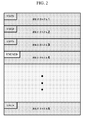
- Figure 2 illustrates the storing of file information in a directory entry of the file system according to the conventional art. This manner of storage in the FAT file system is designed to write file information.
- a directory entry 110 is divided into a file data portion and a use (or non-use) portion to designate whether data stored in the file data portion is currently available for use.
- the file system determines whether a file is present by distinguishing whether the file data of the directory entry is available for use. In this process of the file system, although there are many unused portions, there is no file system compatibility problem. In the FAT file system, the unused portions are ignored and only the portions available for use are processed.
- the FAT is also a general purpose system that represents both small files and large files and considers data insertion and size change due to modification of the recorded data of files.
- a file system whose storage method is fixed like this FAT file system, has no functions for recovery and storage of additional data.
- the search has to be conducted from the start, thereby considerably degrading the speed of a mass storage device.
- the size of the FAT disk partition is 32 kB x 4 B (32 bit). Assuming that a hard disk size is 80 GB, a 10 MB (80 GB / (32 kB x 4 B)) FAT partition is needed. To find an empty cluster, at the worst a 10 MB search is required.
- the FAT file system represents data chains in the form of a mapping list.
- modes of forward/backward high speed search, reverse play, and forward/backward search on a frame basis should all be supported.
- the FAT file system only supports a unidirectional mapping list. Accordingly, the search should be conducted from the start cluster of the file in order to move a file pointer in a reverse direction as much as the fixed offset from a specific file position.
- the FAT file system can only read the corresponding data in the latter portion of a file after having located the cluster mapping. In this case, locating the cluster information causes a serious degradation in performance.
- To store a long filename several file and directory data regions are additionally used. In this case, to locate the file, all the data within these regions should be processed.
- the FAT file system also has no function to write information for file recovery, and thus, data not stored is lost when power is abruptly interrupted.
- An aspect of the present invention is to provide an apparatus and a method for storing and managing additional data in a file system, wherein the additional data is stored using unused regions for file data of a directory entry to thereby enhance the performance of the file system, without degrading the compatibility of the file system in the FAT file system.
- Another aspect of the present invention is to provide an apparatus and a method for rapidly accessing the stored additional data.
- a further aspect of the present invention is to provide an apparatus and a method for rapidly moving read and write positions within a file, using additional position data in the file.
- a still further aspect of the present invention is to provide an apparatus and a method for analyzing attributes of a file, using additional attribute data of the file.
- a still further aspect of the present invention is to provide an apparatus and a method for easily locating a file having a long name, using additional data of the file name.
- a still further aspect of the present invention is to provide an apparatus and a method for easily obtaining the number of directories or the size of each directory, using additional data of the directories.
- a still further aspect of the present invention is to provide an apparatus and a method for easily restoring a file, using additional data for restoration of the file.
- an apparatus for storing and managing additional data in a file system comprising a search unit to search for an unused region in a directory entry, a storage unit to store additional data in the unused region, and an additional data managing unit to locate the position of the additional data using a signature and a checksum of the additional data.
- a method comprising (a) searching for an unused region of a directory entry, (b) storing additional data in the unused region, and (c) locating the position of the additional data using a signature and a checksum of the additional data.
- FIG. 3 is a block diagram illustrating an apparatus for storing and managing additional data in a file system according to an exemplary embodiment of the present invention.
- This apparatus comprises a search unit 310, a control unit 320, a storage unit 330, a file/directory search unit 340, a file data search unit 350 and an additional data managing unit 360.
- the search unit 310 searches for unused regions in the directory entry 110 according to direction of the control unit 320.
- the control unit 320 concurrently controls the storage unit 330 (to be described later) and the search unit 310 so that a variety of additional data for a file or directory are stored in the unused regions.
- the storage unit 330 stores metadata of a file or directory in a directory entry of the FAT file system.
- the storage unit 330 also operates according to the direction of the control unit 320.
- the additional data managing unit 360 manages additional data stored by the storage unit 330.
- a main function of the additional data managing unit 360 is to search for the added data using a signature and a checksum.
- the file/directory search unit 340 searches for the position of a file or directory when opening a file or directory. As an example, when data for the filename was added in an empty region of the directory entry, it compares the checksum of the filename with the checksum of the name of a file being searched for ("target file"), generates the filename according to the checksum of the additional data if the checksums are identical, and compares the generated filename with the name of the target file, thereby locating the target file.
- the file data search unit 350 is controlled by the control unit 320 and moves a pointer within the file when reading data. When position data within the file is added, it allows a user to quickly move to read and write positions that are desired by a user within the file according to the position data.
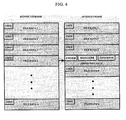
- Figure 4 illustrates states before and after the additional data is stored according to an exemplary embodiment of the present invention.
- the additional data may be written before or after the file data #4 region as depicted in the right figure thereof.
- General file or directory data is used as it is, and data is added to the empty region only when it is required for improved performance (detailed in the following).
- the checksum is an error detecting method used to inspect the accuracy of the data.
- a checksum which is a sum of all the data, is sent separately before the data is sent. The receiving side adds up the data every time it receives the data, and compares the result thereof with the checksum to thereby check any error therein.
- Figure 5 is a flow chart illustrating a method of storing and managing the additional data in a file system according to an exemplary embodiment of the present invention.
- the search unit 310 searches for an unused region (S502).
- the search unit 330 stores a variety of additional data in the unused region (S504).
- the additional data managing unit 360 manages the additional data using the signature and the checksum of the stored additional data (S506). Management of the added data implies utilizing the stored additional data via various methods, and enhancing the performance of the file system. Several examples will be described with reference to FIGS. 6 to 11.
- Figure 6 is a flow chart illustrating a method of accessing the added data according to an exemplary embodiment of the present invention.
- the additional data managing unit 360 inspects whether a directory entry before or next to a directory entry containing file data is empty, according to control by the control unit 320 (S602). Although additional data is stored in the region, since the first sector of the 32 Bytes of data starts with "0," it is recognized as an empty region according to the FAT specification. Accordingly, if the inspected directory entry is recognized as an empty region, the additional data managing unit 360 first inspects whether a signature (signaling that added data is included) is present in order to determine whether the region has added data (S604).
- a signature signalaling that added data is included
- the additional data managing unit 360 inspects whether the checksum of the data has been changed since the added data is likely to be changed in a different file system (5606). As a result of comparing the checksum of the added data with the newly created checksum, it determines that added data has been found, if there is no change in the checksum (S608). However, if no empty region is present in S602, no signature is present in S604, or no checksum change is present in S606, the additional data managing unit 360 determines that there is no added data.
- Figure 7 illustrates a method of moving read and write positions within a file according to another exemplary embodiment of the present invention.
- the file data search unit 350 moves read and write positions within the file according to the added position data.
- the upper figure in Figure 7 depicts a method of storing position data within the file in the conventional FAT file system.
- the conventional FAT file system stores file position data in several regions in a distributed manner.
- the region numbers may be sequenced as: 3 ⁇ 10 ⁇ 89 ⁇ 50 ⁇ 19, as in the upper figure.
- the next data position is recorded in each region of the FAT, and thus, the region #10 should be read in order to read region #89.
- region #10 can be searched for sequentially from region #3, which is the start position of the file.
- the region indicated by the FAT uses several sectors, and accordingly, the quantity of data to be read by the storage unit 330 considerably increases.
- the regions can be sequentially searched and read from the start position. If, however, the user wants to return to region #89 while the user is reading region #50, a search in the sequence 3 ⁇ 10 ⁇ 89 should be conducted. Accordingly, in case of a large file, the number of searches would considerably increase, thereby causing degradation in the speed.
- the additional data managing unit 360 analyzes several attributes of the file according to the attribute data.
- digital media is recorded in various file formats. There are over 10 moving image or music file formats, and the file content must be read in order to analyze each file. However, if attribute data of the file is stored, an improvement in the speed in analyzing the file can be expected.
- the attributes that can be stored in the conventional FAT file system are limited to: “hidden,” “read only,” “system,” “volume,” “directory,” “archive,” and “long name.” Referring to the lower region of Figure 7, additional attributes can be stored in the position labeled "added file attribute data," and several attributes of the file can be simultaneously stored.
- the attribute data that can be added includes, e.g., attribute data for a compressed file or a shortcut attribute data of a file.
- Figure 8 shows the storage of a long filename in a directory entry.
- the name is separated and distributed in several directory entries.
- the distributed filenames are combined in a single long filename and compared with the name of a target file when searching for the target file. In this case, many operations are required to produce the long filename and the quantity of data to be compared increases.
- the file/directory search unit 340 compares the checksum of the filename with the checksum of the target filename according to direction by the control unit 320 (S902). As a result, if the checksums are identical, the file/directory search unit 340 generates the filename (S904) and compares the generated filename with the target file name (S906). When the filenames are identical, the file searched for is located (S908).
- step S902 If, however, it is determined that the checksums are different in step S902, or the generated filename is different from the target file name in step S906, the file is not located (S910), and thus, the process returns to step S902 in order to compare the checksums.
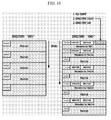
- Figure 10 illustrates a concept of additionally storing information on a directory according to another exemplary embodiment of the present invention.
- the left side of Figure 10 shows the storing of files in a directory of the conventional FAT file system.
- the files and directories have to be read by moving from the first region to the last region of the directory. In this case, several regions in a directory need to be read and operations to discriminate a file from a directory are needed.
- an operation to sum the sizes of the respective files is also needed, thereby producing inefficiency.
- the additional data managing unit 360 can read all the data through a single read operation when needed, including data for the directories, i.e., the numbers and sizes of files within a directory/directories, in a region before the position of the first file within the directory.
- the right side of Figure 10 storing of metadata of each file in an unused region of the directory entry, the unused region being positioned before the location of each file.
- Figure 11 illustrates a concept of additionally storing data for recovery of a file according to another exemplary embodiment of the present invention.
- This embodiment is applied when recovery data for a file is additionally stored.
- the conventional FAT file system has no space for storing information for recovery of a file or directory, and thus, this file system is occasionally damaged when power is abruptly interrupted.
- the recovery data is recorded in the additional data region according to the present embodiment, and the secure recovery can be conducted using this data despite a power interruption.
- the recovery method will not be described in detail but a region to store data available for recovery is provided in the present embodiment.
- mapping data of clusters storing data of a file may be additionally stored in an empty region of a directory entry. Data relating to security of a file may also be additionally stored.
- the present invention is applied to the FAT file system but is not limited thereto since additional data can be recorded and utilized in other file systems.
- additional data can be stored, used and managed utilizing unused regions of a directory entry without degrading the compatibility of the file system, and enhancing the performance of the FAT file system.
- the attributes of a file can be analyzed, a file with the long name can be easily located, the number and size of directories can be easily obtained, and log data of the file can be additionally recorded, thereby easily recovering the file.
Landscapes
- Engineering & Computer Science (AREA)
- Theoretical Computer Science (AREA)
- Physics & Mathematics (AREA)
- General Engineering & Computer Science (AREA)
- General Physics & Mathematics (AREA)
- Library & Information Science (AREA)
- Data Mining & Analysis (AREA)
- Databases & Information Systems (AREA)
- Software Systems (AREA)
- Human Computer Interaction (AREA)
- Information Retrieval, Db Structures And Fs Structures Therefor (AREA)
Applications Claiming Priority (1)
| Application Number | Priority Date | Filing Date | Title |
|---|---|---|---|
| KR1020050037676A KR100714691B1 (ko) | 2005-05-04 | 2005-05-04 | 파일 시스템에 추가 정보를 저장하고 관리하는 장치 및방법 |
Publications (2)
| Publication Number | Publication Date |
|---|---|
| EP1720109A2 true EP1720109A2 (fr) | 2006-11-08 |
| EP1720109A3 EP1720109A3 (fr) | 2007-11-21 |
Family
ID=36870586
Family Applications (1)
| Application Number | Title | Priority Date | Filing Date |
|---|---|---|---|
| EP06113153A Withdrawn EP1720109A3 (fr) | 2005-05-04 | 2006-04-26 | Appareil et procédé de stockage et de gestion de données supplémentaires dans un système de fichier |
Country Status (5)
| Country | Link |
|---|---|
| US (1) | US20070094315A1 (fr) |
| EP (1) | EP1720109A3 (fr) |
| JP (1) | JP2006313548A (fr) |
| KR (1) | KR100714691B1 (fr) |
| CN (1) | CN1858746A (fr) |
Cited By (1)
| Publication number | Priority date | Publication date | Assignee | Title |
|---|---|---|---|---|
| US7685211B2 (en) | 2007-03-27 | 2010-03-23 | Microsoft Corporation | Deterministic file content generation of seed-based files |
Families Citing this family (16)
| Publication number | Priority date | Publication date | Assignee | Title |
|---|---|---|---|---|
| JP4653035B2 (ja) * | 2006-07-26 | 2011-03-16 | キヤノン株式会社 | 映像記録装置及びその制御方法、並びにプログラム |
| KR100944240B1 (ko) * | 2007-12-17 | 2010-02-24 | 주식회사 텔레칩스 | 파일 액세스 속도 향상 방법 |
| WO2009122743A1 (fr) * | 2008-04-04 | 2009-10-08 | パナソニック株式会社 | Dispositif d'accès, dispositif d'enregistrement d'informations, système d'enregistrement d'informations, procédé de gestion de fichier et programme |
| KR100987320B1 (ko) * | 2008-07-24 | 2010-10-12 | 강릉원주대학교산학협력단 | 고속 파일 복구가 가능한 fat 파일시스템을 사용한데이터 처리장치 및 데이터 처리방법 |
| TW201124839A (en) * | 2010-01-08 | 2011-07-16 | Silicon Motion Inc | Method for enhancing file system performance, and associated memory device and controller thereof |
| US8484256B2 (en) * | 2010-01-13 | 2013-07-09 | International Business Machines Corporation | Transformation of logical data objects for storage |
| CN102541957A (zh) * | 2010-12-30 | 2012-07-04 | 北大方正集团有限公司 | 一种基于数据流磁带操作数据文件的方法及装置 |
| US8972466B1 (en) * | 2011-12-15 | 2015-03-03 | Symantec Corporation | Efficient reverse name lookup in a file system |
| KR20130071850A (ko) * | 2011-12-21 | 2013-07-01 | 삼성전자주식회사 | 파일 시스템 및 파일 저장 방법 |
| KR101365292B1 (ko) * | 2012-06-07 | 2014-02-20 | 엘에스산전 주식회사 | 파일 관리 장치 및 파일 관리 방법 |
| US9858314B2 (en) * | 2012-11-27 | 2018-01-02 | International Business Machines Corporation | System and method for refining search results |
| CN106775500A (zh) * | 2017-02-10 | 2017-05-31 | 郑州云海信息技术有限公司 | 一种计算机硬盘存储文件的方法与装置 |
| CN107145530A (zh) * | 2017-04-18 | 2017-09-08 | 北京明朝万达科技股份有限公司 | 一种基于附加数据的文档检索方法及系统 |
| CN107908967A (zh) * | 2017-10-30 | 2018-04-13 | 上海威固信息技术股份有限公司 | 一种Exfat文件系统的文件隐藏和恢复方法 |
| KR102167167B1 (ko) * | 2018-08-09 | 2020-10-16 | 넵코어스 주식회사 | Ssd 장치를 관리하는 방법 및 그 ssd 장치 |
| CN112800007B (zh) * | 2021-01-28 | 2022-06-14 | 上海华元创信软件有限公司 | 适用于fat32文件系统的目录项扩展方法和系统 |
Citations (1)
| Publication number | Priority date | Publication date | Assignee | Title |
|---|---|---|---|---|
| US5557674A (en) | 1993-07-22 | 1996-09-17 | Kok-Wah Yeow | Absolute static lock of files and directories on magnetic disk storage media in single machine personal microcomputers |
Family Cites Families (22)
| Publication number | Priority date | Publication date | Assignee | Title |
|---|---|---|---|---|
| US5371885A (en) * | 1989-08-29 | 1994-12-06 | Microsoft Corporation | High performance file system |
| GB2251324B (en) * | 1990-12-31 | 1995-05-10 | Intel Corp | File structure for a non-volatile semiconductor memory |
| JPH1063555A (ja) | 1996-08-19 | 1998-03-06 | Hitachi Ltd | ファイル管理方法 |
| JPH10301818A (ja) * | 1997-04-28 | 1998-11-13 | Matsushita Electric Ind Co Ltd | ファイルシステム及びその管理方法 |
| JPH1185580A (ja) * | 1997-09-11 | 1999-03-30 | Matsushita Electric Ind Co Ltd | ファイル管理システム及びファイル管理方法 |
| EP0962866A1 (fr) * | 1997-12-18 | 1999-12-08 | Matsushita Electric Industrial Co., Ltd. | Procede de memorisation de fichiers, appareil de memorisation de donnees, procede de gestion de supports d'information, procede de gestion de fichiers, procede d'ecriture des donnees recues dans les supports d'information, et supports de memorisation de programmes |
| JP2000010842A (ja) | 1998-06-25 | 2000-01-14 | Nec Corp | ファイル管理方法および方式 |
| JP3335314B2 (ja) * | 1998-10-29 | 2002-10-15 | インターナショナル・ビジネス・マシーンズ・コーポレーション | データ記録装置及びこれの制御方法 |
| US6567887B2 (en) * | 2000-01-03 | 2003-05-20 | Texas Instruments Incorporated | Buffering of partition tables, file system directory structures and individual file cluster chains in a mass storage device |
| US6625591B1 (en) * | 2000-09-29 | 2003-09-23 | Emc Corporation | Very efficient in-memory representation of large file system directories |
| EP1204028A1 (fr) * | 2000-10-31 | 2002-05-08 | Hewlett-Packard Company, A Delaware Corporation | Stockage de fichiers d'ordinateurs et méthode de récupération |
| US7054927B2 (en) * | 2001-01-29 | 2006-05-30 | Adaptec, Inc. | File system metadata describing server directory information |
| US20020147739A1 (en) * | 2001-04-10 | 2002-10-10 | Netvoyage Corporation | Methods and systems for tracking storage resources associated with a document distribution system |
| KR100452631B1 (ko) * | 2002-02-28 | 2004-10-14 | 한국전자통신연구원 | 대용량 파일 저장 시스템을 이용한 대용량 파일의 동적 비트맵 관리 방법 |
| US6829561B2 (en) * | 2002-03-16 | 2004-12-07 | International Business Machines Corporation | Method for determining a quality for a data clustering and data processing system |
| JP2004021632A (ja) | 2002-06-17 | 2004-01-22 | Gaia:Kk | 記録媒体の未使用領域を有する記録単位に対して特定の情報を記録再生する方法 |
| JP2004038595A (ja) | 2002-07-03 | 2004-02-05 | Seiko Epson Corp | 情報処理装置およびプログラム |
| US6678828B1 (en) * | 2002-07-22 | 2004-01-13 | Vormetric, Inc. | Secure network file access control system |
| US7610329B2 (en) * | 2002-07-30 | 2009-10-27 | Storediq, Inc. | Method and apparatus for managing file systems and file-based data storage |
| DE60318477T2 (de) * | 2002-10-17 | 2008-04-30 | Matsushita Electric Industrial Co., Ltd., Kadoma | Vorrichtung zur dateiaktualisierung |
| KR20040047996A (ko) * | 2002-12-02 | 2004-06-07 | 디비코 주식회사 | 실시간 데이터 파일을 위한 파일시스템 관리방법과 그기록매체, 및 이에 따른 실시간 데이터 저장장치 |
| US20040148476A1 (en) * | 2003-01-28 | 2004-07-29 | Altare William Christopher | Performance-predicated automatic defragmentation of hard disks, particularly for non-pc mobile digital devices including music recorder/players |
-
2005
- 2005-05-04 KR KR1020050037676A patent/KR100714691B1/ko not_active Expired - Fee Related
-
2006
- 2006-04-13 US US11/402,925 patent/US20070094315A1/en not_active Abandoned
- 2006-04-26 EP EP06113153A patent/EP1720109A3/fr not_active Withdrawn
- 2006-04-28 JP JP2006126021A patent/JP2006313548A/ja active Pending
- 2006-04-28 CN CNA2006100781571A patent/CN1858746A/zh active Pending
Patent Citations (1)
| Publication number | Priority date | Publication date | Assignee | Title |
|---|---|---|---|---|
| US5557674A (en) | 1993-07-22 | 1996-09-17 | Kok-Wah Yeow | Absolute static lock of files and directories on magnetic disk storage media in single machine personal microcomputers |
Cited By (1)
| Publication number | Priority date | Publication date | Assignee | Title |
|---|---|---|---|---|
| US7685211B2 (en) | 2007-03-27 | 2010-03-23 | Microsoft Corporation | Deterministic file content generation of seed-based files |
Also Published As
| Publication number | Publication date |
|---|---|
| KR20060115235A (ko) | 2006-11-08 |
| JP2006313548A (ja) | 2006-11-16 |
| CN1858746A (zh) | 2006-11-08 |
| EP1720109A3 (fr) | 2007-11-21 |
| KR100714691B1 (ko) | 2007-05-04 |
| US20070094315A1 (en) | 2007-04-26 |
Similar Documents
| Publication | Publication Date | Title |
|---|---|---|
| EP1720109A2 (fr) | Appareil et procédé de stockage et de gestion de données supplémentaires dans un système de fichier | |
| KR100622801B1 (ko) | 파일 시스템 액세스 방법, 파일 시스템 복원 방법, 컴퓨터 판독 가능 기록 매체 및 데이터 처리 시스템 | |
| KR100600933B1 (ko) | 파일 시스템 백업 방법, 컴퓨터 판독 가능 기록 매체 및 데이터 처리 시스템 | |
| EP1808784A2 (fr) | Procédé de création d'un lien symbolique pouvant être compatible avec le système de fichier, procédé et appareil d'accès au fichier ou répertoire en utilisant le lien symbolique | |
| US8271456B2 (en) | Efficient backup data retrieval | |
| US20090049260A1 (en) | High performance data deduplication in a virtual tape system | |
| US20140059313A1 (en) | Apparatus and method for recovering partition using backup boot record information | |
| KR20110110099A (ko) | 정의된 호스트 성능과 호환할 수 있는 파일들만을 호스트들에 나타내는 스토리지 디바이스 | |
| US20060277226A1 (en) | System and method for controlling storage of electronic files | |
| US20100280998A1 (en) | Metadata for data storage array | |
| CN102289526B (zh) | 一种hfs+文件系统数据恢复方法及装置 | |
| US20050175317A1 (en) | Method of converting file system format and apparatus thereof | |
| US20140244582A1 (en) | Apparatus and Methods for Selective Location and Duplication of Relevant Data | |
| EP1845461A1 (fr) | Recherche rapide d'attributs de fichiers | |
| CN111382126B (zh) | 删除文件及阻碍文件恢复的系统和方法 | |
| US20140244699A1 (en) | Apparatus and Methods for Selective Location and Duplication of Relevant Data | |
| CN113986838B (zh) | 基于文件系统的海量小文件处理方法、系统及存储介质 | |
| CN111831224A (zh) | 一种擦除exFAT分区文件剩余空间的方法,系统及设备 | |
| JP4944033B2 (ja) | 情報処理システム、情報処理方法、実行バイナリイメージ作成装置、実行バイナリイメージ作成方法、実行バイナリイメージ作成プログラム、実行バイナリイメージ作成プログラムを記録したコンピュータ読み取り可能な記録媒体、実行バイナリイメージ実行装置、実行バイナリイメージ実行方法、実行バイナリイメージ実行プログラム及び実行バイナリイメージ実行プログラムを記録したコンピュータ読み取り可能な記録媒体 | |
| JPWO2007026484A6 (ja) | 実行バイナリイメージの作成及び実行を行う装置、方法、プログラム、該プログラムを記録したコンピュータ読み取り可能な記録媒体 | |
| Currier | The flash-friendly file system (f2fs) | |
| US10810303B1 (en) | Apparatus and methods for selective location and duplication of relevant data | |
| JP2008226137A (ja) | ファイル管理方法及びファイル管理システム | |
| KR20090012455A (ko) | 디지털 기기에서의 파일 관리방법 | |
| KR100887547B1 (ko) | 데이터 손상률 확인 방법 및 장치 |
Legal Events
| Date | Code | Title | Description |
|---|---|---|---|
| PUAI | Public reference made under article 153(3) epc to a published international application that has entered the european phase |
Free format text: ORIGINAL CODE: 0009012 |
|
| 17P | Request for examination filed |
Effective date: 20060426 |
|
| AK | Designated contracting states |
Kind code of ref document: A2 Designated state(s): AT BE BG CH CY CZ DE DK EE ES FI FR GB GR HU IE IS IT LI LT LU LV MC NL PL PT RO SE SI SK TR |
|
| AX | Request for extension of the european patent |
Extension state: AL BA HR MK YU |
|
| PUAL | Search report despatched |
Free format text: ORIGINAL CODE: 0009013 |
|
| AK | Designated contracting states |
Kind code of ref document: A3 Designated state(s): AT BE BG CH CY CZ DE DK EE ES FI FR GB GR HU IE IS IT LI LT LU LV MC NL PL PT RO SE SI SK TR |
|
| AX | Request for extension of the european patent |
Extension state: AL BA HR MK YU |
|
| 17Q | First examination report despatched |
Effective date: 20080111 |
|
| AKX | Designation fees paid |
Designated state(s): DE GB |
|
| GRAP | Despatch of communication of intention to grant a patent |
Free format text: ORIGINAL CODE: EPIDOSNIGR1 |
|
| RIN1 | Information on inventor provided before grant (corrected) |
Inventor name: SHIN, HEE-SUB Inventor name: KIM, CHAN-KYU Inventor name: KWON, MOON-SANG Inventor name: BAE, SUNG-HWAN Inventor name: SEO, DONG-YOUNG |
|
| STAA | Information on the status of an ep patent application or granted ep patent |
Free format text: STATUS: THE APPLICATION IS DEEMED TO BE WITHDRAWN |
|
| 18D | Application deemed to be withdrawn |
Effective date: 20090807 |