EP1721966B1 - Souche bactérienne et composition utilisée pour accélérer le compostage et comme engrais - Google Patents
Souche bactérienne et composition utilisée pour accélérer le compostage et comme engrais Download PDFInfo
- Publication number
- EP1721966B1 EP1721966B1 EP20050381022 EP05381022A EP1721966B1 EP 1721966 B1 EP1721966 B1 EP 1721966B1 EP 20050381022 EP20050381022 EP 20050381022 EP 05381022 A EP05381022 A EP 05381022A EP 1721966 B1 EP1721966 B1 EP 1721966B1
- Authority
- EP
- European Patent Office
- Prior art keywords
- composting
- composition according
- micro
- accelerates
- organisms
- Prior art date
- Legal status (The legal status is an assumption and is not a legal conclusion. Google has not performed a legal analysis and makes no representation as to the accuracy of the status listed.)
- Expired - Lifetime
Links
Images







Classifications
-
- C—CHEMISTRY; METALLURGY
- C12—BIOCHEMISTRY; BEER; SPIRITS; WINE; VINEGAR; MICROBIOLOGY; ENZYMOLOGY; MUTATION OR GENETIC ENGINEERING
- C12N—MICROORGANISMS OR ENZYMES; COMPOSITIONS THEREOF; PROPAGATING, PRESERVING, OR MAINTAINING MICROORGANISMS; MUTATION OR GENETIC ENGINEERING; CULTURE MEDIA
- C12N1/00—Microorganisms; Compositions thereof; Processes of propagating, maintaining or preserving microorganisms or compositions thereof; Processes of preparing or isolating a composition containing a microorganism; Culture media therefor
- C12N1/20—Bacteria; Culture media therefor
-
- C—CHEMISTRY; METALLURGY
- C05—FERTILISERS; MANUFACTURE THEREOF
- C05F—ORGANIC FERTILISERS NOT COVERED BY SUBCLASSES C05B, C05C, e.g. FERTILISERS FROM WASTE OR REFUSE
- C05F17/00—Preparation of fertilisers characterised by biological or biochemical treatment steps, e.g. composting or fermentation
- C05F17/20—Preparation of fertilisers characterised by biological or biochemical treatment steps, e.g. composting or fermentation using specific microorganisms or substances, e.g. enzymes, for activating or stimulating the treatment
-
- C—CHEMISTRY; METALLURGY
- C12—BIOCHEMISTRY; BEER; SPIRITS; WINE; VINEGAR; MICROBIOLOGY; ENZYMOLOGY; MUTATION OR GENETIC ENGINEERING
- C12N—MICROORGANISMS OR ENZYMES; COMPOSITIONS THEREOF; PROPAGATING, PRESERVING, OR MAINTAINING MICROORGANISMS; MUTATION OR GENETIC ENGINEERING; CULTURE MEDIA
- C12N1/00—Microorganisms; Compositions thereof; Processes of propagating, maintaining or preserving microorganisms or compositions thereof; Processes of preparing or isolating a composition containing a microorganism; Culture media therefor
- C12N1/20—Bacteria; Culture media therefor
- C12N1/205—Bacterial isolates
-
- C—CHEMISTRY; METALLURGY
- C12—BIOCHEMISTRY; BEER; SPIRITS; WINE; VINEGAR; MICROBIOLOGY; ENZYMOLOGY; MUTATION OR GENETIC ENGINEERING
- C12R—INDEXING SCHEME ASSOCIATED WITH SUBCLASSES C12C - C12Q, RELATING TO MICROORGANISMS
- C12R2001/00—Microorganisms ; Processes using microorganisms
- C12R2001/01—Bacteria or Actinomycetales ; using bacteria or Actinomycetales
- C12R2001/07—Bacillus
- C12R2001/11—Bacillus megaterium
-
- Y—GENERAL TAGGING OF NEW TECHNOLOGICAL DEVELOPMENTS; GENERAL TAGGING OF CROSS-SECTIONAL TECHNOLOGIES SPANNING OVER SEVERAL SECTIONS OF THE IPC; TECHNICAL SUBJECTS COVERED BY FORMER USPC CROSS-REFERENCE ART COLLECTIONS [XRACs] AND DIGESTS
- Y02—TECHNOLOGIES OR APPLICATIONS FOR MITIGATION OR ADAPTATION AGAINST CLIMATE CHANGE
- Y02P—CLIMATE CHANGE MITIGATION TECHNOLOGIES IN THE PRODUCTION OR PROCESSING OF GOODS
- Y02P20/00—Technologies relating to chemical industry
- Y02P20/141—Feedstock
- Y02P20/145—Feedstock the feedstock being materials of biological origin
-
- Y—GENERAL TAGGING OF NEW TECHNOLOGICAL DEVELOPMENTS; GENERAL TAGGING OF CROSS-SECTIONAL TECHNOLOGIES SPANNING OVER SEVERAL SECTIONS OF THE IPC; TECHNICAL SUBJECTS COVERED BY FORMER USPC CROSS-REFERENCE ART COLLECTIONS [XRACs] AND DIGESTS
- Y02—TECHNOLOGIES OR APPLICATIONS FOR MITIGATION OR ADAPTATION AGAINST CLIMATE CHANGE
- Y02W—CLIMATE CHANGE MITIGATION TECHNOLOGIES RELATED TO WASTEWATER TREATMENT OR WASTE MANAGEMENT
- Y02W30/00—Technologies for solid waste management
- Y02W30/40—Bio-organic fraction processing; Production of fertilisers from the organic fraction of waste or refuse
Definitions
- the present invention relates to the development of a composition based on natural micro-organisms, able to accelerate the composting process of agricultural organic residues, solid urban residues and sludge from residual water purification stations among others, as well as being used as a fertilizer.
- the present invention relates to the enrichment of the residues with a beneficial microbial population that can intervene into, accelerate and complete the decay process in optimum time, as well as the decay of the volatile components (sulphur by-products, amines and fatty acids) responsible for the bad odour.
- the composition of the present invention increases the number of micro-organisms present naturally to decay organic waste.
- the bacterial strains used in the composition of this invention thanks to the creation of a battery of extracellular enzymes, are able to breakdown relatively large molecular chains (proteins, carbo-hydrates and fats) converting them into more soluble and assimilable products.
- composition can also be used as a fertilizer.
- the applicant of the present invention has isolated new strains which belong to the Bacillus megaterium and Bacillus subtilis species.
- the invention is characterised by a composition for accelerating composting processes which at least comprises the two strains isolated for the first time, as well as its use to accelerate fermentative processes and as a fertilizer.
- Waste resulting from industrial and agricultural activities, as well as municipal solid waste and residual water sludge, are closely related to environmental pollution.
- the plan follows the hierarchical principle considered in the Law on Waste of 1998, which requires recycling waste as much as possible this is, making full use of its matter before using the energy contained in it. This implies prioritising composting in all of its varieties.
- the composting process involves a microbial transformation in aerobic conditions of organic matter. This process requires a solid substrate on which act various populations of micro-organisms (bacteria, actinomycetes and fungi) responsible for decomposing organic matter, to produce a stabilized organic product that can be used in agriculture to improve the soil.
- Inoculation of waste to be composed with a microbial biomass is a strategy of vital importance to accelerate these processes.
- This strategy consists of adding micro-organisms (bacteria, fungi and actinomycetes) to organic waste. These micro-organisms can be isolated from the waste or from elsewhere, and are selected for their special properties of accelerating the composting process and concluding it successfully.
- micro-organisms bacteria, fungi and actinomycetes
- Vargas-Garcia et al. have studied the ability of six ligno-cellulitic fungal strains to grow in agricultural waste and produce inocula for composting. ( Vargas-Garcia, M.C., López, M.J., Suárez, F. and Moreno, J. (2005), Laboratory study of inocula production for composting processes. Bioresource Technology, 96: 797-803 ).
- Lei and VanderGheynst have studied the effect of inoculation with micro-organisms and pH on the microbial population during the composting process ( Lei, F. and VanderGheynst, J.S., (2000). The effects of microbial inoculation and pH on microbial community structure changes during composting. Process Biochemistry, 35: 923-929 ).
- Patent with publication number JP2003009848 describes a method for decaying organic matter which uses Bacillus subtilis among other micro-organisms.
- the present invention relates to the isolation of a bacterial strain, a composition that accelerates the composting process and the use made of it.
- composition of the present invention includes at least two strains, isolated by the same applicant.
- strains were isolated and selected from soil samples obtained from areas around healthy plants and hosts, taken from different geographical areas; specifically, they have been isolated from onion roots.
- the isolated strains were maintained with a high survival rate in a 25% glycerol solution and stored at -80 °C.
- the strains were easily recovered in normal laboratory culture mediums such as nutritional agar (NA), nutritional broth (NB), tryptone-soy-agar (TSA) and potato-dextrose-agar (PDA).
- NA nutritional agar
- NB nutritional broth
- TSA tryptone-soy-agar
- PDA potato-dextrose-agar
- Biochemical assays were performed five-fold to establish a reliable analysis of the bacteria regarding their growth and behaviour with different reagents.
- a positive result in this test means that the micro-organism can use nitrogen in any oxidation state, but is always assimilated as the ammonium ion. Specifically, for the strains under study the result was negative form AMCB1 and positive for AMCB3.
- the strain AMCB3 presents nitrate reductase but not nitrite reductase enzyme.
- the capacity to hydrolyse urea was also determined. The result was positive but weak for AMCB1 and negative for AMCB3.
- the PGPR (Plant Growth Promoting Rhizobacteria) activity of the strains object of this patent was studied by their growth in different mediums: ACC (1-amino-cyclopropan-1-carboxylate), MLACC (medium lacking 1-amino-cyclopropan-1-carboxylate), PDYA (potato-dextrose-yeast-agar), the production of siderophora was aqlso determined and the capacity to produce auxins.
- strains AMCB1 and AMCB3 have a good PGPR activity, as they were able to grow in all media except the one with siderophora and presented a greater production of auxins. Therefore, they can exert a beneficial influence on the plant both directly, improving their nutrition by solubilising the phosphates in the medium, and indirectly by the activity of the enzyme ACC deaminase, which causes a reduction in the ethylene levels of the plant which results in an increased root length.
- strains AMCB1 and AMCB3 show great variability in the composition of fatty acids, as well as containing fatty acids of the type 18:2w6 or 17:1w8 characteristic of Bacillus species among others.
- strain AMCB3 shows a low use of glucogen, while AMCB1 shows a high use of glucogen, with a moderate use of the remaining polymers.
- i-erytritol produced a composite in which the strains grew very little or not at all.
- strain AMCB1 shows the greatest growth in all mediums with glucose precursors.
- AMCB3 grew well only in the presence of D- galacturonic acid and pyruvic methylester.
- strain AMCB3 showed the greatest requirement for them and grew very well in their presence.
- AMCB1 presented a capacity to use them significantly, although did not show high grow with ethylamine.
- Phenolic compounds were not used by any of the two strains.
- the AMCB1 and AMCB2 strains were characterised genetically.
- strain AMCB1 was identified as Bacillus megaterium.
- strain AMCB3 was identified as Bacillus subtilis.
- the applicants of the present invention isolated two strains, AMCB1 and AMCB3, which belong to the species Bacillus megaterium and Bacillus subtillis respectively, and which are accelerators of the composting processes.
- the invention relates to the compositions which include various combinations of these strains and/or other strains which are compatible.
- composition containing at least the bacterial strain of Bacillus megaterium AMCB1 and the bacterial strain of Bacillus subtillis AMCB3, which are composting processes accelerators, and/or the strain Azospirillum brasilense; and/or Azotobacter chroococcum and/or Saccharomyces cerevisae, together with a nutritional reserve.
- compositions may be applied in solid or liquid form including adjuvants such as emulsifying agents and resuspension agents.
- Solid compositions can be in the form of powder, granules or wettable powder, while liquid compositions can be in the form of aqueous or nonaqueous solutions, suspensions, dispersions or concentrated formulations.
- the preferred concentration of micro-organisms in the solid formulation must be from 10 3 to 10 9 colony forming units per gram (CFU/g), preferably from 10 5 to 10 7 CFU/g.
- the preferred concentration of micro-organisms in the liquid formulation must be from 10 3 to 10 9 colony forming units per millilitre (CFU/ml), preferably from 10 5 to 10 7 CFU/ml.
- these ranges may vary according to the residue to be treated, among other factors.
- the "carrier” or vehicle constitutes a nutritional reserve for the micro-organisms, as well as providing them with the protection required for a greater survival to colonise the residue in question.
- biomass is collected at the same time as the substrate, the latter providing physical protection and a nutritional base for the micro-organism.
- composition of the invention can also be used as a fertilizer due to the good PGPR activity shown by strains AMCB1 and AMCB3.
- the present invention consists of a composition for acceleraterating composting processes.
- the present invention provides a liquid formulation with the following quantitative composition: ⁇ Molasses 40-100 g/l ⁇ Mn AEDT 40-100 g/l ⁇ Zn AEDT 0.1-40 g/l ⁇ Fe AEDT 50-200 g/l ⁇ Sodium molybdate 0.1-1 g/l ⁇ Boric acid 0.1-1 g/l ⁇ pH 6.5-7.5 ⁇ strains of the species Bacillus megaterium AMCB1 (CECT 7012); Bacillus subtilis AMCB3 (CECT 7014); Azospirillum brasilense; Azotobacter chroococcum and/or Saccharomyces cerevisae.
- CECT 7012 Bacillus megaterium AMCB1
- Bacillus subtilis AMCB3 Bacillus subtilis AMCB3
- Azospirillum brasilense Azotobacter chroococcum and/or Saccharomyces cerevisae.
- the present invention provides a solid formulation composed by a solid support and a combination of biological components, with the following quantitative composition: ⁇ Raw protein 10-50 % ⁇ Raw fatty matter 10-30 % ⁇ Cellulose 1-10% ⁇ Lactose 10-60 % ⁇ Copper sulphate (CuSO4.5H2O) 5-20 mg/Kg ⁇ pH 6.5-7.5 ⁇ strains belonging other species Bacillus megaterium AMCB1 (CECT 7012); Bacillus subtilis AMCB3 (CECT 7014); Azospirillum brasilense; Azotobacter chroococcum and/or Saccharomyces cerevisae.
- CECT 7012 Bacillus megaterium AMCB1
- CECT 7014 Bacillus subtilis AMCB3
- Azospirillum brasilense Azotobacter chroococcum and/or Saccharomyces cerevisae.
- a first example of the invention studies the application of the liquid composition during the composting process of waste water purification station sludge, to test its effectiveness in accelerating the process and reducing process operation tasks (turns).
- the test was performed in the biosolids composting plant of the company EMASESA located in the southern waste-water purification station (Copero, province of Seville) on 24 September 2004.
- the raw material used in this experience is sludge obtained from the municipal waste water purification stations of the company EMASESA.
- biosolids are dumped in the drying checks, extended by loading scoops and exposed to natural drying until their humidity level is 40-50% (the optimum humidity for the performance of micro-organisms).
- control stack (A) the control stack (B)
- treated stack (B) the treated stack
- the treatment with the liquid composition was performed in this stage, as the material is well extended so that an even application of the product can be ensured.
- An orientative initial dose of 3 litres of liquid composition was used initially (equivalent to 1.5 kg of the solid formula) per 11m 3 ; these doses may be optimised afterward.
- a stock of the product was prepared with a minimum amount of water (7 litres) in order not to change the humidity of the raw material to be composted and it was sprayed on the extended sludge using a backpack sprayer with a 10 litre capacity. It was then piled up and turned to form semicircular stacks.
- the control stack (A) was prepared in the same conditions but was not treated with the composition.
- Fermentation usually begins in this stage, and it must be maintained in suitable conditions by turns at variable frequency. A greater frequency of turns will accelerate the transformation by providing a greater aeration to the stacks. The aeration accelerates the decomposition of the mixtures, which generates high temperatures of 50-70°C, thereby allowing the pathogens present to be eliminated.
- the composting process is completed with a maturation period which in normal conditions (without being treated with the composition) is extended for at least three months. In this last stage a greater decomposition, stabilisation, destruction of pathogens and degasification occur, thereby contributing to a final compost of higher quality.
- an optional drying and screening stage can be applied, ranging from a few days to several months.
- the temperature readings of the control stack (A) and the treated stack (B) is provided in the following table. The composition was applied on 24/152004 and the turns were performed on 30/9/04, 14/10/04 and 29/10/04. Temperature reading date Control stack (A) temperature in °C Stack (B) temperature in °C 24/1504 31 32 27/1504 31 33 28/1504 33 32 29/1504 33 32 30/1504 33 33 1/10/04 36 37 04/10/04 37 37 05/10/04 38 38 38 06/10/04 37 39 07/10/04 37 40 08/10/04 37 42 11/10/04 38 43 13/10/04 38 44 14/10/04 29 31 15/10/04 34 45 18/10/04 35 46 19/10/04 35 47 20/10/04 36 44 21/10/04 36 45 22/10/04 37 46 25/10/04 38 46 24/1504 31 32 27/1504 31 33 28/1504 33 32 29/1504 33 32 30/1504 33 33 33 1/10/04 36 37 04/10/04 37 37 05/10/04 38 38 06/10/04 37 39 07/10/04 37 40 08/10/04 37 42 11/10/04 38 43 13/10/04 38 44 26/10/04 37
- the temperature readings were characterised by a favourable evolution in the treated stack (B) with the formulations. This increase was quick in comparison to the control stack (A). In fact, the temperature differences reached up to 12°C (19 October). The maximum temperature in the control stack (A) was 38°C, while in the stack (B) treated with the formulations it reached 47°C. After the first turn of the stacks the temperature increase was greater in the treated stack (B) than in the control stack (A). The stack (B) treated with the formulations reached favourable temperatures for operation of thermophile micro-organisms (>45°C), allowing the pathogens present to be eliminated.
- the method employed was pyrolysis with gas chromatography - mass spectrometry (Py-GC-MS), for a direct characterisation of the organic matter (OM) present in complex matrices.
- optimised measurement conditions for both chromatography and pyrolysis were obtained for analysing compost samples, basically involving a first heating from 100 to 300°C (sub-pyrolysis temperature) at a rate of 30°C per minute, followed by a flash pyrolysis at 500°C for one minute.
- the first step can be considered a thermal desorption treatment, not a true pyrolysis, and it is suggested that it is especially suited for release by thermodesorption of volatile and semi-volatile compounds weakly associated to the substrate being analysed.
- the second phase pyrolysis at 500°C gives rise to the release of pyrolysis products obtained from the cracking of the organic macromolecules present in the matrix being analysed.
- Figure 1 shows the Py/desorption (300°C)-GC-MS analysis chromatograms for the control pairs (A) and treated pairs (B) samples. Clear alterations, mainly of a quantitative type, can be seen in the pyrolytic profile of the samples. Specifically, the treatment results in a significant reduction in the abundance of long chain fatty acids (C 14 -C 18 ). In addition, the abundant thermo evaporation of sterols of microbial origin is observed in both samples. Nearly all pyrolysis products were unequivocally identified by their mass spectrograms.
- Figure 1 shows the chemical identity of some significant pyrolysis products, such as dodecanoic acid (1), tetradecanoic acid (2), palmitic acid (3), oleic acid (4), stearic acid (5), dialkyl phthalate (6), 5-alpha cholestane (7).
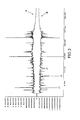
- Figure 2 shows the Pyrolysis (500°C)-GC-MS analysis chromatograms where a similar behaviour is observed. This is, the quantitative differences between the pyrolysis products released in the control (A) and treated (B) samples, although the changes are less marked.
- the destruction of pyrolysis products indicates the presence of aliphatic biopolymers (alkane-alkene pairs), lipids (fatty acids) cellular walls (sterols), aromatic non-lignic components (toluene and phenols) among the components of both samples.
- the alkane-alkene pair pattern typical of the pyrolysis of aliphatic polymers is less clear, and the reduction of fatty acids mentioned above is equally significant.
- Figure 2 points out the chemical nature of representative pyrolysis products such as toluene (8), styrene (9), methylstyrene (10), methyl phenol (11), hexadecanitril (12), palmitic acid (13), oleic acid (14), steric acid (15) and 5-alpha cholestane (16).
- Figure 3 shows the paired direct pyrolysis (500°C)-GC-MS chromatograms, i.e. eliminating the prior phase of desorption at 300°C, confirming the trend observed in the sequential pyrolyses, particularly the reduction of fatty acids in the treated samples.
- a point worth noting is the apparent incorporation of pyrolysis products typical of proteins and polysaccharides in the treated sample (B), as shown by the appearance of furfural (17) and levoglucosane (19) and by the increased indene peak (18).
- results obtained by pyrolysis or desorption show an excellent reproducibility of pyrograms for samples taken one week after applying the formulations: control and treated pyrolysed on different days.
- composition of the invention is studied during the composting of waste water treatment plant sludge mixed with vegetable biomass (VB), in order to test its effectiveness in accelerating the process and reducing operation tasks (turns).
- VB vegetable biomass
- the raw material used in this example is treatment plant sludge and vegetable biomass as a structure agent, obtained from forest and garden pruning.
- This last agent aside from acting as a source of carbon during the compost formation, plays an essential role by increasing the porosity and therefore the contact area of the sludge exposed to oxygen during the process. It also reduces the initial humidity level of the mixture.
- the break-up of the matter increases its surface area exposed to microbial attack, affecting the speed of the process.
- the sludge and biomass require a prior treatment.
- sludge depending on their humidity it may or may not require a drying treatment performed in a number of checks provided for such a purpose.
- the biomass must be in chips, obtained by grinding until fragments smaller than 15 cm long and 2 cm wide are obtained.
- the ridge method is used, providing the following advantages: fast drying of the compost (humidity lost when the stacks are turned); drier compost material; possibility of handling a large volume of material; great stability of the product; low economic cost.
- the various materials are deposited in layers for stacking or forming the ridge. Layers of the different raw materials are placed consecutively and alternately. After stacking, a first mixing is performed and fermentation begins.
- the treatment with the formulations is performed during the first mixing of the stacked materials.
- a dose of 1 to 1.5 litres of bacterial formulation per 10 m 3 of substrate is used initially.
- a broth of the product is prepared using a minimum amount of water and it is sprayed on the ridge, which is later turned to homogenise the treatment.
- Another ridge is prepared in the same conditions without applying the treatment with the formulation, in order to use it as a control.
- a greater turning frequency accelerates the transformation by providing a greater aeration of the ridges.
- the composting process is completed with a maturing period which in normal conditions (without treatment with the formulation) will last at least two months. In this last phase, a greater decomposition, stabilisation, destruction of pathogens and degasification takes place, contributing to produce a final compost of greater quality.
- the temperature readings of the control and treated ridges are characterised by a favourable evolution. However, this increase was very fast in the ridge treated with the formulation (the maximum temperatures obtained in the control ridge were between 50 and 52°C, while in the treated ridge they were 10 degrees higher). This is due to a correct aerobic fermentation process carried out by the inoculated micro-organisms.
- Figure 4 shows a (300°C)-GC-MS Py/desorption analysis showing alterations in the pyrolytic profile of the control sample (C) and the treated sample (D), both in a qualitative and a quantitative sense.
- Treatment with the formulations causes a brusque change in the behaviour of the sample in thermal desorption, shown in the abundant thermo evaporation of aliphatic compounds (fatty acids with a low molecular mass and saturated straight-chain n-alkanes).
- Figure 5 shows a pyrolysis (500°C)-GC-MS y analysis in which the aforementioned behaviour is reproduced, i.e. there are differences between the control sample (C) and the treated sample (D), although the changes are less marked.
- Molecular data indicate that the pyrogram of the control sample (C) clearly shows pyrolysis products of lignin (20). In the treated sample the lignin pattern is less obvious, and the pyrogram is dominated by aliphatic compounds with a high molecular mass (ketones, unsaturated fatty acids, etc.), probably from the microbial cell walls.
- Figure 6 shows the excellent reproducibility of the pyrograms in the tests described above.
- the raw material used is fresh municipal solid waste (MSW) supplied by the company EDIFESA- Seville.
- MSW fresh municipal solid waste
- the organic fraction of the raw material (MSW) was selected, crushed and homogenised.
- the different materials are deposited in layers for stacking or forming the ridge. After they are stacked a first mixing is performed and fermentation begins.
- the treatment with the composition of this invention is performed during the previously described phase, specifically in the first mixing of the stacked materials.
- the initial dose is 1 litre of formulation per 10 m 3 .
- a stock of the product is prepared in 50 litres of water approximately and is sprayed on the ridge, which is then turned to homogenise the treatment.
- another ridge is prepared in the same conditions without treating with the formulation, in order to use it as a control.
- Figure 7 shows the thermal desorption chromatograms. Clear differences can be seen in the pyrolytic profiles of the control sample (E) and the treated samples (F, G). The pyrolytic behaviour of one of the treated samples (G) corresponds to a material of high stability, resulting from a great maturity.
- Figure 8 shows chromatograms from pyrolysis at 500°C of the control sample (E) and the treated samples (F, G).
- results obtained from pyrolysis or desorption show an excellent reproducibility of pyrograms of samples taken 10 days after applying the formulation: control and treated pyrolysed on different days. Validation of the sample selection for analysis and the technique.
- test stacks with a volume of 10 m 3 were used containing vegetable waste matter from crops of Western Almeria, Spain. This volume allows simple handling of the stacks when turning and applying the various preparations to them.
- Prog refers to Progrowth, a product for potentiating microbial growth in soil manufactured by the applicant of this patent.
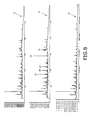
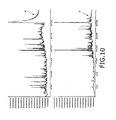
- Figures 9-12 allow comparing the pyrograms of the control compost (which showed excellent reproducibility in various tests) and the treated composts collected at various maturing stages (I, J).
- FIGS 9 and 11 show the treated compost (I) collected in May and June respectively.
- FIG. 10 and 12 show the treated compost (J) collected in May and June respectively.
Landscapes
- Chemical & Material Sciences (AREA)
- Health & Medical Sciences (AREA)
- Life Sciences & Earth Sciences (AREA)
- Engineering & Computer Science (AREA)
- Biotechnology (AREA)
- Organic Chemistry (AREA)
- Genetics & Genomics (AREA)
- Zoology (AREA)
- Bioinformatics & Cheminformatics (AREA)
- Wood Science & Technology (AREA)
- Tropical Medicine & Parasitology (AREA)
- Biochemistry (AREA)
- Microbiology (AREA)
- Medicinal Chemistry (AREA)
- Virology (AREA)
- General Engineering & Computer Science (AREA)
- General Health & Medical Sciences (AREA)
- Biomedical Technology (AREA)
- Chemical Kinetics & Catalysis (AREA)
- General Chemical & Material Sciences (AREA)
- Molecular Biology (AREA)
- Fertilizers (AREA)
- Processing Of Solid Wastes (AREA)
- Treatment Of Sludge (AREA)
Claims (15)
- Souche bactérienne de Bacillus megaterium AMCB1 déposée à la Collection Espagnole de Cultures Type (Colección Española de Cultivos Tipo, CECT) le 27 juillet 2004 sous le numéro d'accès CECT 7012 qui accélère les processus de compostage.
- Une composition caractérisée en ce qu'elle comprend au moins la souche bactérienne de la revendication 1, conjointement avec la souche bactérienne Bacillus subtillis déposée à la Collection Espagnole de Cultures Type (Colección Española de Cultivos Tipo, CECT) le 27 juillet 2004 sous le numéro d'accès CECT 7014 qui accélère les processus de compostage.
- Une composition selon la revendication 2, caractérisée en ce qu'elle contient des souches d'Azospirillum brasilense, d'Azotobacter chroococcum et de Saccharomyces cerevisiae, conjointement avec une réserve nutritionnelle.
- Une composition selon la revendication 3, caractérisée en ce que la concentration préférée des micro-organismes dans une formulation liquide est de 103 à 109 unités formant colonie par millilitre (ufc/ml).
- Une composition selon la revendication 4, caractérisée en ce que la concentration préférée des micro-organismes dans une formulation liquide est de 105 à 107 unités formant colonie par millilitre (ufc/ml).
- Une composition selon la revendication 3, caractérisée en ce que la concentration préférée des micro-organismes dans une formulation solide est de 103 à 109 ufc/g.
- Une composition selon la revendication 6, caractérisée en ce que la concentration préférée des micro-organismes dans une formulation solide est de 105 à 107 ufc/g.
- Une composition selon la revendication 3, caractérisée en ce que la réserve nutritionnelle contient au moins :
Mélasse 40-100 g/l Mn AEDT 40-100 g/l Zn AEDT 0,1-40 g/l Fe AEDT 50-200 g/l Molybdate de sodium 0,1-1 g/l Acide borique 0,1-1 g/l pH 6,5-7,5 - Une composition selon la revendication 3, caractérisée en ce que la réserve nutritionnelle contient au moins :
Protéine brute : 10-50% Matière grasse brute 10-30% Cellulose 1-10% Lactose 10-60% Sulfate de cuivre (Cu SO4. 5H2O) 5-20 mg/Kg pH 6,5-7,5 - Utilisation de la composition selon les revendications 2 à 9 pour accélérer le compostage.
- Utilisation selon la revendication 10, caractérisée en ce qu'elle accélère le processus de compostage de la boue des installations de traitement des eaux résiduaires.
- Utilisation selon la revendication 10, caractérisée en ce qu'elle accélère le processus de compostage de la boue des installations de traitement des eaux résiduaires mélangée avec la biomasse végétale.
- Utilisation selon la revendication 10, caractérisée en ce qu'elle accélère le processus de compostage des résidus solides urbains (RSU).
- Utilisation selon la revendication 10, caractérisée en ce qu'elle accélère le processus de compostage des matières végétales.
- Utilisation de la composition selon les revendications 2 à 9 comme engrais.
Priority Applications (4)
| Application Number | Priority Date | Filing Date | Title |
|---|---|---|---|
| AT05381022T ATE447007T1 (de) | 2005-05-11 | 2005-05-11 | Bakterienstamm und zusammensetzung verwendet zum beschleunigten kompostieren sowie als dünger |
| EP20050381022 EP1721966B1 (fr) | 2005-05-11 | 2005-05-11 | Souche bactérienne et composition utilisée pour accélérer le compostage et comme engrais |
| DE200560017364 DE602005017364D1 (de) | 2005-05-11 | 2005-05-11 | Bakterienstamm und Zusammensetzung verwendet zum beschleunigten Kompostieren sowie als Dünger |
| ES05381022T ES2334147T3 (es) | 2005-05-11 | 2005-05-11 | Cepa bacteriana y composicion utilizada para acelerar el compostaje y como fertilizante. |
Applications Claiming Priority (1)
| Application Number | Priority Date | Filing Date | Title |
|---|---|---|---|
| EP20050381022 EP1721966B1 (fr) | 2005-05-11 | 2005-05-11 | Souche bactérienne et composition utilisée pour accélérer le compostage et comme engrais |
Publications (2)
| Publication Number | Publication Date |
|---|---|
| EP1721966A1 EP1721966A1 (fr) | 2006-11-15 |
| EP1721966B1 true EP1721966B1 (fr) | 2009-10-28 |
Family
ID=34942810
Family Applications (1)
| Application Number | Title | Priority Date | Filing Date |
|---|---|---|---|
| EP20050381022 Expired - Lifetime EP1721966B1 (fr) | 2005-05-11 | 2005-05-11 | Souche bactérienne et composition utilisée pour accélérer le compostage et comme engrais |
Country Status (4)
| Country | Link |
|---|---|
| EP (1) | EP1721966B1 (fr) |
| AT (1) | ATE447007T1 (fr) |
| DE (1) | DE602005017364D1 (fr) |
| ES (1) | ES2334147T3 (fr) |
Families Citing this family (16)
| Publication number | Priority date | Publication date | Assignee | Title |
|---|---|---|---|---|
| ES2328758B1 (es) * | 2005-08-09 | 2010-05-14 | Entorn Quimic, S.L. | Compuesto bacteriologico enzimatico acelerador de la descomposicion de la materia organica. |
| CN101298597B (zh) * | 2007-04-30 | 2011-03-23 | 中国科学院沈阳应用生态研究所 | 一种海洋枯草芽孢杆菌及其筛选方法 |
| WO2009031874A1 (fr) * | 2007-09-04 | 2009-03-12 | Jorge Olmos Soto | Souche de bacillus subtilis utilisée à des fins agricoles |
| CN102583925B (zh) * | 2012-02-03 | 2013-08-28 | 哈尔滨工业大学 | 一种生物强化预处理剩余污泥的方法 |
| US10334856B2 (en) | 2012-05-29 | 2019-07-02 | Neozyme International, Inc. | Non-toxic pest control compositions and methods and uses thereof |
| CA2874807C (fr) * | 2012-05-29 | 2022-06-07 | Neozyme International, Inc. | Procede de traitement d'une substance organique |
| US10681914B2 (en) | 2012-05-29 | 2020-06-16 | Neozyme International, Inc. | Non-toxic plant agent compositions and methods and uses thereof |
| US10557234B2 (en) | 2012-05-29 | 2020-02-11 | Neozyme International, Inc. | Papermaking additive compositions and methods and uses thereof |
| CN103214282B (zh) * | 2013-04-28 | 2014-08-20 | 山东省农业科学院农业资源与环境研究所 | 一种微生物有机肥料及其制备方法 |
| CN104945122A (zh) * | 2015-06-16 | 2015-09-30 | 王金生 | 一种小麦专用肥 |
| CN107384812A (zh) * | 2017-09-19 | 2017-11-24 | 张震 | 一种生物制剂及其在农作物秸秆还田中的应用 |
| CN107502578A (zh) * | 2017-09-28 | 2017-12-22 | 林伟 | 一种腐熟制剂及其在水稻秸秆还田中的用途 |
| CA3177023A1 (fr) | 2020-04-26 | 2021-11-04 | Neozyme International, Inc. | Compositions en poudre seche et procedes et utilisations de celles-ci |
| CA3181385A1 (fr) | 2020-04-26 | 2021-11-04 | Neozyme International, Inc. | Compositions d'extinction d'incendie non toxiques, dispositifs et procedes d'utilisation de ceux-ci |
| CN111705022B (zh) * | 2020-07-17 | 2022-02-08 | 中国科学院成都生物研究所 | 一株堆肥气杆菌及其应用 |
| CN120192877B (zh) * | 2025-03-24 | 2026-04-28 | 江西农业大学 | 一种微生物复合菌剂、促进有机肥快速腐熟的方法和应用 |
Family Cites Families (3)
| Publication number | Priority date | Publication date | Assignee | Title |
|---|---|---|---|---|
| US5464766A (en) * | 1994-04-04 | 1995-11-07 | Enzyme Research & Development Corporation | Multienzyme powdered composition containing bacteria for treatment of waste |
| JP2000210647A (ja) * | 1999-01-20 | 2000-08-02 | Heiwa Bussan Kk | 生ごみ消滅及び脱臭方法 |
| JP2003009848A (ja) * | 2001-06-29 | 2003-01-14 | Kiyomoto Bio Co Ltd | 微生物組成物および該組成物を用いた有機廃棄物の分解方法 |
-
2005
- 2005-05-11 AT AT05381022T patent/ATE447007T1/de not_active IP Right Cessation
- 2005-05-11 EP EP20050381022 patent/EP1721966B1/fr not_active Expired - Lifetime
- 2005-05-11 ES ES05381022T patent/ES2334147T3/es not_active Expired - Lifetime
- 2005-05-11 DE DE200560017364 patent/DE602005017364D1/de not_active Expired - Fee Related
Also Published As
| Publication number | Publication date |
|---|---|
| ATE447007T1 (de) | 2009-11-15 |
| ES2334147T3 (es) | 2010-03-05 |
| EP1721966A1 (fr) | 2006-11-15 |
| DE602005017364D1 (de) | 2009-12-10 |
Similar Documents
| Publication | Publication Date | Title |
|---|---|---|
| Bhattacharyya et al. | Biochar as soil amendment in climate-smart agriculture: opportunities, future prospects, and challenges | |
| Bohacz | Microbial strategies and biochemical activity during lignocellulosic waste composting in relation to the occurring biothermal phases | |
| Zhang et al. | Influence of sugar beet pulp and paper waste as bulking agents on physical, chemical, and microbial properties during green waste composting | |
| Abdel-Rahman et al. | Biotechnological application of thermotolerant cellulose-decomposing bacteria in composting of rice straw | |
| Nozhevnikova et al. | Composition of a microbial community at different stages of composting and the prospects for compost production from municipal organic waste | |
| Akça et al. | Effects of poultry litter biochar on soil enzyme activities and tomato, pepper and lettuce plants growth. | |
| EP1721966A1 (fr) | Souche bactérienne et composition utilisée pour accélerer le compostage et comme engrais | |
| Thomas et al. | Co-composting of coconut coir pith with solid poultry manure | |
| Singh et al. | Impact of rice husk biochar on nitrogen mineralization and methanotrophs community dynamics in paddy soil | |
| Ventorino et al. | Chestnut biomass biodegradation for sustainable agriculture | |
| Arab et al. | Benefits to decomposition rates when using digestate as compost co-feedstock: Part II–Focus on microbial community dynamics | |
| US6664100B2 (en) | Conversion of organic waste into humic products using multiple aerobic fermentations for soils restoration | |
| Cai et al. | Sugarcane bagasse amendment improves the quality of green waste vermicompost and the growth of Eisenia fetida | |
| Novo et al. | SIGNIFICANCE OF HARVEST RESIDUES IN SUSTAINABLE MANAGEMENT OF ARABLE LAND I. DECOMPOSITION OF HARVEST RESIDUES. | |
| CN111621446A (zh) | 一种有机物料腐熟剂及其制备方法 | |
| Khyalia et al. | Comparative analysis of compost quality produced from fungal consortia and rice straw by varying C/N ratio and its effect on germination of Vigna radiata | |
| Afifi et al. | Biological, chemical and physical properties of organic wastes as indicators maturation of compost | |
| Tester | Role of soil and residue microorganisms in determining the extent of residue decomposition in soil | |
| Etesami et al. | Microbial bioconversion of agricultural wastes for rural sanitation and soil carbon enrichment | |
| Irawan et al. | Application of Trichoderma sp in pineapple biomass composting | |
| Arokiyaraj et al. | Sustainable Composting of Vegetable Waste, Cow Dung, Grasses, and Food Wastes into Soil Amendment using Starter Culture and Growth Characteristics in Guava Plant. | |
| Saha et al. | Application of highly efficient lignocellulolytic fungi in cocomposting of paddy straw amended poultry droppings for the production of humus rich compost | |
| CN103483028B (zh) | 香蒲有机肥的制备方法 | |
| Devi et al. | Isolation and selection of cellulose-degrading microorganisms for utilization along with earthworms in efficient conversion of municipality waste mix to compost | |
| Xu et al. | Applying Ammonifying Microorganism Cultures Markedly Improvedthe Efficiency of Cow Manure Composting |
Legal Events
| Date | Code | Title | Description |
|---|---|---|---|
| PUAI | Public reference made under article 153(3) epc to a published international application that has entered the european phase |
Free format text: ORIGINAL CODE: 0009012 |
|
| AK | Designated contracting states |
Kind code of ref document: A1 Designated state(s): AT BE BG CH CY CZ DE DK EE ES FI FR GB GR HU IE IS IT LI LT LU MC NL PL PT RO SE SI SK TR |
|
| AX | Request for extension of the european patent |
Extension state: AL BA HR LV MK YU |
|
| RIN1 | Information on inventor provided before grant (corrected) |
Inventor name: ARDI, KHALIDC/O TRICHODEX, S.A. Inventor name: EXPOSITO CUBERO, CARMELOC/O TRICHODEX, S.A. Inventor name: GOMIS GARCIA, M DOLORESC/O TRICHODEX, S.A. Inventor name: PEREZ BARRERA, FRANCISCOC/O TRICHODEX, S.A. |
|
| RIN1 | Information on inventor provided before grant (corrected) |
Inventor name: PEREZ BARRERA, FRANCISCOC/O TRICHODEX, S.A. Inventor name: GOMIS GARCIA, M DOLORESC/O TRICHODEX, S.A. Inventor name: EXPOSITO CUBERO, CARMELOC/O TRICHODEX, S.A. Inventor name: AKTI, KHALIDC/O TRICHODEX, S.A. |
|
| 17P | Request for examination filed |
Effective date: 20070217 |
|
| AKX | Designation fees paid |
Designated state(s): AT BE BG CH CY CZ DE DK EE ES FI FR GB GR HU IE IS IT LI LT LU MC NL PL PT RO SE SI SK TR |
|
| GRAP | Despatch of communication of intention to grant a patent |
Free format text: ORIGINAL CODE: EPIDOSNIGR1 |
|
| RIN1 | Information on inventor provided before grant (corrected) |
Inventor name: AKTI, KHALIDC/O TRICHODEX, S.A. Inventor name: GOMIS GARCIA, M DOLORESC/O TRICHODEX, S.A. Inventor name: EXPOSITO CUBERO, CARMELOC/O TRICHODEX, S.A Inventor name: PEREZ BARRERA, FRANCISCOC/O TRICHODEX, S.A. |
|
| GRAS | Grant fee paid |
Free format text: ORIGINAL CODE: EPIDOSNIGR3 |
|
| GRAA | (expected) grant |
Free format text: ORIGINAL CODE: 0009210 |
|
| AK | Designated contracting states |
Kind code of ref document: B1 Designated state(s): AT BE BG CH CY CZ DE DK EE ES FI FR GB GR HU IE IS IT LI LT LU MC NL PL PT RO SE SI SK TR |
|
| REG | Reference to a national code |
Ref country code: GB Ref legal event code: FG4D |
|
| REG | Reference to a national code |
Ref country code: CH Ref legal event code: EP |
|
| REG | Reference to a national code |
Ref country code: IE Ref legal event code: FG4D |
|
| REF | Corresponds to: |
Ref document number: 602005017364 Country of ref document: DE Date of ref document: 20091210 Kind code of ref document: P |
|
| REG | Reference to a national code |
Ref country code: ES Ref legal event code: FG2A Ref document number: 2334147 Country of ref document: ES Kind code of ref document: T3 |
|
| LTIE | Lt: invalidation of european patent or patent extension |
Effective date: 20091028 |
|
| NLV1 | Nl: lapsed or annulled due to failure to fulfill the requirements of art. 29p and 29m of the patents act | ||
| PG25 | Lapsed in a contracting state [announced via postgrant information from national office to epo] |
Ref country code: IS Free format text: LAPSE BECAUSE OF FAILURE TO SUBMIT A TRANSLATION OF THE DESCRIPTION OR TO PAY THE FEE WITHIN THE PRESCRIBED TIME-LIMIT Effective date: 20100228 Ref country code: LT Free format text: LAPSE BECAUSE OF FAILURE TO SUBMIT A TRANSLATION OF THE DESCRIPTION OR TO PAY THE FEE WITHIN THE PRESCRIBED TIME-LIMIT Effective date: 20091028 Ref country code: FI Free format text: LAPSE BECAUSE OF FAILURE TO SUBMIT A TRANSLATION OF THE DESCRIPTION OR TO PAY THE FEE WITHIN THE PRESCRIBED TIME-LIMIT Effective date: 20091028 Ref country code: SE Free format text: LAPSE BECAUSE OF FAILURE TO SUBMIT A TRANSLATION OF THE DESCRIPTION OR TO PAY THE FEE WITHIN THE PRESCRIBED TIME-LIMIT Effective date: 20091028 Ref country code: PT Free format text: LAPSE BECAUSE OF FAILURE TO SUBMIT A TRANSLATION OF THE DESCRIPTION OR TO PAY THE FEE WITHIN THE PRESCRIBED TIME-LIMIT Effective date: 20100301 |
|
| PG25 | Lapsed in a contracting state [announced via postgrant information from national office to epo] |
Ref country code: CY Free format text: LAPSE BECAUSE OF FAILURE TO SUBMIT A TRANSLATION OF THE DESCRIPTION OR TO PAY THE FEE WITHIN THE PRESCRIBED TIME-LIMIT Effective date: 20091028 Ref country code: SI Free format text: LAPSE BECAUSE OF FAILURE TO SUBMIT A TRANSLATION OF THE DESCRIPTION OR TO PAY THE FEE WITHIN THE PRESCRIBED TIME-LIMIT Effective date: 20091028 Ref country code: PL Free format text: LAPSE BECAUSE OF FAILURE TO SUBMIT A TRANSLATION OF THE DESCRIPTION OR TO PAY THE FEE WITHIN THE PRESCRIBED TIME-LIMIT Effective date: 20091028 |
|
| PG25 | Lapsed in a contracting state [announced via postgrant information from national office to epo] |
Ref country code: BE Free format text: LAPSE BECAUSE OF FAILURE TO SUBMIT A TRANSLATION OF THE DESCRIPTION OR TO PAY THE FEE WITHIN THE PRESCRIBED TIME-LIMIT Effective date: 20091028 Ref country code: AT Free format text: LAPSE BECAUSE OF FAILURE TO SUBMIT A TRANSLATION OF THE DESCRIPTION OR TO PAY THE FEE WITHIN THE PRESCRIBED TIME-LIMIT Effective date: 20091028 |
|
| PG25 | Lapsed in a contracting state [announced via postgrant information from national office to epo] |
Ref country code: BG Free format text: LAPSE BECAUSE OF FAILURE TO SUBMIT A TRANSLATION OF THE DESCRIPTION OR TO PAY THE FEE WITHIN THE PRESCRIBED TIME-LIMIT Effective date: 20100128 Ref country code: DK Free format text: LAPSE BECAUSE OF FAILURE TO SUBMIT A TRANSLATION OF THE DESCRIPTION OR TO PAY THE FEE WITHIN THE PRESCRIBED TIME-LIMIT Effective date: 20091028 Ref country code: EE Free format text: LAPSE BECAUSE OF FAILURE TO SUBMIT A TRANSLATION OF THE DESCRIPTION OR TO PAY THE FEE WITHIN THE PRESCRIBED TIME-LIMIT Effective date: 20091028 Ref country code: RO Free format text: LAPSE BECAUSE OF FAILURE TO SUBMIT A TRANSLATION OF THE DESCRIPTION OR TO PAY THE FEE WITHIN THE PRESCRIBED TIME-LIMIT Effective date: 20091028 |
|
| PG25 | Lapsed in a contracting state [announced via postgrant information from national office to epo] |
Ref country code: CZ Free format text: LAPSE BECAUSE OF FAILURE TO SUBMIT A TRANSLATION OF THE DESCRIPTION OR TO PAY THE FEE WITHIN THE PRESCRIBED TIME-LIMIT Effective date: 20091028 Ref country code: SK Free format text: LAPSE BECAUSE OF FAILURE TO SUBMIT A TRANSLATION OF THE DESCRIPTION OR TO PAY THE FEE WITHIN THE PRESCRIBED TIME-LIMIT Effective date: 20091028 |
|
| PLBE | No opposition filed within time limit |
Free format text: ORIGINAL CODE: 0009261 |
|
| STAA | Information on the status of an ep patent application or granted ep patent |
Free format text: STATUS: NO OPPOSITION FILED WITHIN TIME LIMIT |
|
| 26N | No opposition filed |
Effective date: 20100729 |
|
| PG25 | Lapsed in a contracting state [announced via postgrant information from national office to epo] |
Ref country code: GR Free format text: LAPSE BECAUSE OF FAILURE TO SUBMIT A TRANSLATION OF THE DESCRIPTION OR TO PAY THE FEE WITHIN THE PRESCRIBED TIME-LIMIT Effective date: 20100129 |
|
| PG25 | Lapsed in a contracting state [announced via postgrant information from national office to epo] |
Ref country code: MC Free format text: LAPSE BECAUSE OF NON-PAYMENT OF DUE FEES Effective date: 20100531 |
|
| REG | Reference to a national code |
Ref country code: CH Ref legal event code: PL |
|
| GBPC | Gb: european patent ceased through non-payment of renewal fee |
Effective date: 20100511 |
|
| REG | Reference to a national code |
Ref country code: FR Ref legal event code: ST Effective date: 20110131 |
|
| PG25 | Lapsed in a contracting state [announced via postgrant information from national office to epo] |
Ref country code: LI Free format text: LAPSE BECAUSE OF NON-PAYMENT OF DUE FEES Effective date: 20100531 Ref country code: CH Free format text: LAPSE BECAUSE OF NON-PAYMENT OF DUE FEES Effective date: 20100531 |
|
| PG25 | Lapsed in a contracting state [announced via postgrant information from national office to epo] |
Ref country code: IT Free format text: LAPSE BECAUSE OF FAILURE TO SUBMIT A TRANSLATION OF THE DESCRIPTION OR TO PAY THE FEE WITHIN THE PRESCRIBED TIME-LIMIT Effective date: 20091028 |
|
| PG25 | Lapsed in a contracting state [announced via postgrant information from national office to epo] |
Ref country code: IE Free format text: LAPSE BECAUSE OF NON-PAYMENT OF DUE FEES Effective date: 20100511 Ref country code: DE Free format text: LAPSE BECAUSE OF NON-PAYMENT OF DUE FEES Effective date: 20101201 |
|
| PG25 | Lapsed in a contracting state [announced via postgrant information from national office to epo] |
Ref country code: FR Free format text: LAPSE BECAUSE OF NON-PAYMENT OF DUE FEES Effective date: 20100531 |
|
| PG25 | Lapsed in a contracting state [announced via postgrant information from national office to epo] |
Ref country code: GB Free format text: LAPSE BECAUSE OF NON-PAYMENT OF DUE FEES Effective date: 20100511 |
|
| PG25 | Lapsed in a contracting state [announced via postgrant information from national office to epo] |
Ref country code: LU Free format text: LAPSE BECAUSE OF NON-PAYMENT OF DUE FEES Effective date: 20100511 Ref country code: NL Free format text: LAPSE BECAUSE OF FAILURE TO SUBMIT A TRANSLATION OF THE DESCRIPTION OR TO PAY THE FEE WITHIN THE PRESCRIBED TIME-LIMIT Effective date: 20091028 Ref country code: HU Free format text: LAPSE BECAUSE OF FAILURE TO SUBMIT A TRANSLATION OF THE DESCRIPTION OR TO PAY THE FEE WITHIN THE PRESCRIBED TIME-LIMIT Effective date: 20100429 |
|
| PG25 | Lapsed in a contracting state [announced via postgrant information from national office to epo] |
Ref country code: TR Free format text: LAPSE BECAUSE OF FAILURE TO SUBMIT A TRANSLATION OF THE DESCRIPTION OR TO PAY THE FEE WITHIN THE PRESCRIBED TIME-LIMIT Effective date: 20091028 |
|
| PGFP | Annual fee paid to national office [announced via postgrant information from national office to epo] |
Ref country code: ES Payment date: 20170301 Year of fee payment: 13 |
|
| REG | Reference to a national code |
Ref country code: ES Ref legal event code: FD2A Effective date: 20190913 |
|
| PG25 | Lapsed in a contracting state [announced via postgrant information from national office to epo] |
Ref country code: ES Free format text: LAPSE BECAUSE OF NON-PAYMENT OF DUE FEES Effective date: 20180512 |