EP1721984A2 - Procédé de clonage et d'expresion de l'endonucléase de restriction Nhe I dans E. coli - Google Patents
Procédé de clonage et d'expresion de l'endonucléase de restriction Nhe I dans E. coli Download PDFInfo
- Publication number
- EP1721984A2 EP1721984A2 EP06011340A EP06011340A EP1721984A2 EP 1721984 A2 EP1721984 A2 EP 1721984A2 EP 06011340 A EP06011340 A EP 06011340A EP 06011340 A EP06011340 A EP 06011340A EP 1721984 A2 EP1721984 A2 EP 1721984A2
- Authority
- EP
- European Patent Office
- Prior art keywords
- nhe
- gene
- dna
- expression
- nheir
- Prior art date
- Legal status (The legal status is an assumption and is not a legal conclusion. Google has not performed a legal analysis and makes no representation as to the accuracy of the status listed.)
- Ceased
Links
- 108091008146 restriction endonucleases Proteins 0.000 title claims abstract description 35
- 230000014509 gene expression Effects 0.000 title claims abstract description 29
- 238000000034 method Methods 0.000 title claims description 13
- 241000588724 Escherichia coli Species 0.000 title abstract description 30
- 238000010367 cloning Methods 0.000 title description 15
- 108020004414 DNA Proteins 0.000 claims abstract description 89
- 108020004511 Recombinant DNA Proteins 0.000 claims abstract description 7
- 239000013598 vector Substances 0.000 claims description 15
- 108010042407 Endonucleases Proteins 0.000 claims description 4
- 239000013599 cloning vector Substances 0.000 claims description 4
- 102000004533 Endonucleases Human genes 0.000 claims 1
- 102000055027 Protein Methyltransferases Human genes 0.000 claims 1
- 108700040121 Protein Methyltransferases Proteins 0.000 claims 1
- 238000012258 culturing Methods 0.000 claims 1
- 102000053602 DNA Human genes 0.000 abstract description 3
- 102000016397 Methyltransferase Human genes 0.000 abstract description 3
- 108060004795 Methyltransferase Proteins 0.000 abstract description 3
- 241000588653 Neisseria Species 0.000 abstract 1
- 108090000623 proteins and genes Proteins 0.000 description 108
- 230000029087 digestion Effects 0.000 description 27
- 238000007852 inverse PCR Methods 0.000 description 25
- 239000013612 plasmid Substances 0.000 description 21
- 238000011144 upstream manufacturing Methods 0.000 description 17
- 241000588659 Neisseria mucosa Species 0.000 description 15
- 239000012634 fragment Substances 0.000 description 15
- 239000000284 extract Substances 0.000 description 12
- 238000012986 modification Methods 0.000 description 12
- 230000000694 effects Effects 0.000 description 11
- 238000006243 chemical reaction Methods 0.000 description 9
- 239000013604 expression vector Substances 0.000 description 9
- 230000004048 modification Effects 0.000 description 9
- 102000004169 proteins and genes Human genes 0.000 description 9
- 230000037432 silent mutation Effects 0.000 description 9
- 102000004190 Enzymes Human genes 0.000 description 6
- 108090000790 Enzymes Proteins 0.000 description 6
- 108091028043 Nucleic acid sequence Proteins 0.000 description 6
- 108700026244 Open Reading Frames Proteins 0.000 description 6
- 230000003321 amplification Effects 0.000 description 6
- 238000010276 construction Methods 0.000 description 6
- 238000004520 electroporation Methods 0.000 description 6
- 229940088598 enzyme Drugs 0.000 description 6
- BPHPUYQFMNQIOC-NXRLNHOXSA-N isopropyl beta-D-thiogalactopyranoside Chemical compound CC(C)S[C@@H]1O[C@H](CO)[C@H](O)[C@H](O)[C@H]1O BPHPUYQFMNQIOC-NXRLNHOXSA-N 0.000 description 6
- 238000003199 nucleic acid amplification method Methods 0.000 description 6
- 238000010790 dilution Methods 0.000 description 5
- 239000012895 dilution Substances 0.000 description 5
- 241000894006 Bacteria Species 0.000 description 4
- 108010044289 DNA Restriction-Modification Enzymes Proteins 0.000 description 4
- 102000006465 DNA Restriction-Modification Enzymes Human genes 0.000 description 4
- LFQSCWFLJHTTHZ-UHFFFAOYSA-N Ethanol Chemical compound CCO LFQSCWFLJHTTHZ-UHFFFAOYSA-N 0.000 description 4
- 108010006785 Taq Polymerase Proteins 0.000 description 4
- 101000865057 Thermococcus litoralis DNA polymerase Proteins 0.000 description 4
- 239000002253 acid Substances 0.000 description 4
- 150000007513 acids Chemical class 0.000 description 4
- 125000003275 alpha amino acid group Chemical group 0.000 description 4
- 238000003556 assay Methods 0.000 description 4
- 230000001580 bacterial effect Effects 0.000 description 4
- 108010015866 endodeoxyribonuclease NheI Proteins 0.000 description 4
- 239000013613 expression plasmid Substances 0.000 description 4
- 238000003780 insertion Methods 0.000 description 4
- 230000037431 insertion Effects 0.000 description 4
- 238000002844 melting Methods 0.000 description 4
- 230000009466 transformation Effects 0.000 description 4
- HEDRZPFGACZZDS-UHFFFAOYSA-N CHCl3 Substances ClC(Cl)Cl HEDRZPFGACZZDS-UHFFFAOYSA-N 0.000 description 3
- 108091026890 Coding region Proteins 0.000 description 3
- 108091081024 Start codon Proteins 0.000 description 3
- 239000007984 Tris EDTA buffer Substances 0.000 description 3
- 239000011543 agarose gel Substances 0.000 description 3
- 230000008018 melting Effects 0.000 description 3
- 231100000350 mutagenesis Toxicity 0.000 description 3
- 238000002703 mutagenesis Methods 0.000 description 3
- 230000002018 overexpression Effects 0.000 description 3
- 102000013381 DNA Modification Methylases Human genes 0.000 description 2
- 108010090738 DNA Modification Methylases Proteins 0.000 description 2
- 238000001712 DNA sequencing Methods 0.000 description 2
- 102000003960 Ligases Human genes 0.000 description 2
- 108090000364 Ligases Proteins 0.000 description 2
- 101710163270 Nuclease Proteins 0.000 description 2
- 238000013459 approach Methods 0.000 description 2
- OPTASPLRGRRNAP-UHFFFAOYSA-N cytosine Chemical compound NC=1C=CNC(=O)N=1 OPTASPLRGRRNAP-UHFFFAOYSA-N 0.000 description 2
- 238000000502 dialysis Methods 0.000 description 2
- 238000012869 ethanol precipitation Methods 0.000 description 2
- 230000004927 fusion Effects 0.000 description 2
- 208000015181 infectious disease Diseases 0.000 description 2
- 101150109249 lacI gene Proteins 0.000 description 2
- 231100000219 mutagenic Toxicity 0.000 description 2
- 230000003505 mutagenic effect Effects 0.000 description 2
- 239000002773 nucleotide Substances 0.000 description 2
- 125000003729 nucleotide group Chemical group 0.000 description 2
- 238000002360 preparation method Methods 0.000 description 2
- 238000012216 screening Methods 0.000 description 2
- 238000013207 serial dilution Methods 0.000 description 2
- 238000010561 standard procedure Methods 0.000 description 2
- 241001515965 unidentified phage Species 0.000 description 2
- HWPZZUQOWRWFDB-UHFFFAOYSA-N 1-methylcytosine Chemical compound CN1C=CC(N)=NC1=O HWPZZUQOWRWFDB-UHFFFAOYSA-N 0.000 description 1
- 101710112984 20 kDa protein Proteins 0.000 description 1
- CKOMXBHMKXXTNW-UHFFFAOYSA-N 6-methyladenine Chemical compound CNC1=NC=NC2=C1N=CN2 CKOMXBHMKXXTNW-UHFFFAOYSA-N 0.000 description 1
- 108010077805 Bacterial Proteins Proteins 0.000 description 1
- 101710110830 Beta-agarase Proteins 0.000 description 1
- 101100098985 Caenorhabditis elegans cct-3 gene Proteins 0.000 description 1
- 108020004638 Circular DNA Proteins 0.000 description 1
- 230000005778 DNA damage Effects 0.000 description 1
- 231100000277 DNA damage Toxicity 0.000 description 1
- 241001453175 Deinococcus radiophilus Species 0.000 description 1
- 101100063439 Escherichia coli (strain K12) dinD gene Proteins 0.000 description 1
- 241000282326 Felis catus Species 0.000 description 1
- 108010054278 Lac Repressors Proteins 0.000 description 1
- 239000006142 Luria-Bertani Agar Substances 0.000 description 1
- 239000006137 Luria-Bertani broth Substances 0.000 description 1
- 108010059724 Micrococcal Nuclease Proteins 0.000 description 1
- 101710159910 Movement protein Proteins 0.000 description 1
- 102000016943 Muramidase Human genes 0.000 description 1
- 108010014251 Muramidase Proteins 0.000 description 1
- 101100202339 Mus musculus Slc6a13 gene Proteins 0.000 description 1
- PJKKQFAEFWCNAQ-UHFFFAOYSA-N N(4)-methylcytosine Chemical compound CNC=1C=CNC(=O)N=1 PJKKQFAEFWCNAQ-UHFFFAOYSA-N 0.000 description 1
- 108010062010 N-Acetylmuramoyl-L-alanine Amidase Proteins 0.000 description 1
- 108020002230 Pancreatic Ribonuclease Proteins 0.000 description 1
- 102000005891 Pancreatic ribonuclease Human genes 0.000 description 1
- 101100202330 Rattus norvegicus Slc6a11 gene Proteins 0.000 description 1
- 230000027151 SOS response Effects 0.000 description 1
- 229920004890 Triton X-100 Polymers 0.000 description 1
- 239000013504 Triton X-100 Substances 0.000 description 1
- 108010064978 Type II Site-Specific Deoxyribonucleases Proteins 0.000 description 1
- 101710090398 Viral interleukin-10 homolog Proteins 0.000 description 1
- 241000700605 Viruses Species 0.000 description 1
- 239000000872 buffer Substances 0.000 description 1
- 238000004113 cell culture Methods 0.000 description 1
- 230000006037 cell lysis Effects 0.000 description 1
- 230000008859 change Effects 0.000 description 1
- 238000012512 characterization method Methods 0.000 description 1
- 238000003776 cleavage reaction Methods 0.000 description 1
- 230000000295 complement effect Effects 0.000 description 1
- 229940104302 cytosine Drugs 0.000 description 1
- 238000010586 diagram Methods 0.000 description 1
- 238000005516 engineering process Methods 0.000 description 1
- 238000000605 extraction Methods 0.000 description 1
- 208000002153 familial abdominal 3 aortic aneurysm Diseases 0.000 description 1
- 239000000499 gel Substances 0.000 description 1
- 238000010438 heat treatment Methods 0.000 description 1
- 101150066555 lacZ gene Proteins 0.000 description 1
- 229960000274 lysozyme Drugs 0.000 description 1
- 239000004325 lysozyme Substances 0.000 description 1
- 235000010335 lysozyme Nutrition 0.000 description 1
- 238000013507 mapping Methods 0.000 description 1
- 239000012528 membrane Substances 0.000 description 1
- 125000002496 methyl group Chemical group [H]C([H])([H])* 0.000 description 1
- 230000011987 methylation Effects 0.000 description 1
- 238000007069 methylation reaction Methods 0.000 description 1
- 238000010369 molecular cloning Methods 0.000 description 1
- 230000035772 mutation Effects 0.000 description 1
- 230000008520 organization Effects 0.000 description 1
- 239000008188 pellet Substances 0.000 description 1
- 239000013600 plasmid vector Substances 0.000 description 1
- 238000000746 purification Methods 0.000 description 1
- 150000003839 salts Chemical class 0.000 description 1
- 230000007017 scission Effects 0.000 description 1
- 238000010187 selection method Methods 0.000 description 1
- 238000012163 sequencing technique Methods 0.000 description 1
- 241000894007 species Species 0.000 description 1
- 239000000758 substrate Substances 0.000 description 1
- 230000004083 survival effect Effects 0.000 description 1
- 108700026220 vif Genes Proteins 0.000 description 1
Images


Classifications
-
- C—CHEMISTRY; METALLURGY
- C12—BIOCHEMISTRY; BEER; SPIRITS; WINE; VINEGAR; MICROBIOLOGY; ENZYMOLOGY; MUTATION OR GENETIC ENGINEERING
- C12N—MICROORGANISMS OR ENZYMES; COMPOSITIONS THEREOF; PROPAGATING, PRESERVING, OR MAINTAINING MICROORGANISMS; MUTATION OR GENETIC ENGINEERING; CULTURE MEDIA
- C12N9/00—Enzymes; Proenzymes; Compositions thereof; Processes for preparing, activating, inhibiting, separating or purifying enzymes
- C12N9/14—Hydrolases (3)
- C12N9/16—Hydrolases (3) acting on ester bonds (3.1)
- C12N9/22—Ribonucleases [RNase]; Deoxyribonucleases [DNase]
-
- C—CHEMISTRY; METALLURGY
- C12—BIOCHEMISTRY; BEER; SPIRITS; WINE; VINEGAR; MICROBIOLOGY; ENZYMOLOGY; MUTATION OR GENETIC ENGINEERING
- C12N—MICROORGANISMS OR ENZYMES; COMPOSITIONS THEREOF; PROPAGATING, PRESERVING, OR MAINTAINING MICROORGANISMS; MUTATION OR GENETIC ENGINEERING; CULTURE MEDIA
- C12N9/00—Enzymes; Proenzymes; Compositions thereof; Processes for preparing, activating, inhibiting, separating or purifying enzymes
- C12N9/10—Transferases (2.)
- C12N9/1003—Transferases (2.) transferring one-carbon groups (2.1)
- C12N9/1007—Methyltransferases (general) (2.1.1.)
Definitions
- the present invention relates to recombinant DNA which encodes the Nhe I restriction endonuclease as well as Nhe I methyltransferase; expression of Nhe I restriction endonuclease from E . coli cells containing the recombinant DNA.
- the present application is a divisional application of EP-1096015-A, filed 26 October 2000 .
- Nhe I restriction endonuclease is found in the strain of Neisseria mucosa heidelbergensis (ATCC 25999). It cleaves double-stranded DNA G/CTAGC to generate a 4-base 5' overhanging ends.
- Type II restriction endonucleases are a class of enzymes that occur naturally in bacteria and in some viruses. When they are purified away from other bacterial proteins, restriction endonucleases can be used in the laboratory to cleave DNA molecules into small fragments for molecular cloning and gene characterization.
- Restriction endonucleases act by recognizing and binding to particular sequences of nucleotides (the 'recognition sequence') along the DNA molecule. Once bound, they cleave the molecule within, to one side of, or to both sides of the recognition sequence. Different restriction endonucleases have affinity for different recognition sequences. Over two hundred and eleven restriction endonucleases with unique specificities have been identified among the many hundreds of bacterial species that have been examined to date ( Roberts and Macelis, Nucl. Acids Res. 27:312-313, (1999) ).
- Restriction endonucleases typically are named according to the bacteria from which they are derived. Thus, the species Deinococcus radiophilus for example, produces three different restriction endonucleases, named Dra I, Dra II and Dra III. These enzymes recognize and cleave the sequences 5'TTT/AAA3', 5'PuG/GNCCPy3' and 5'CACNNN/GTG3' respectively. Escherichia coli RY13, on the other hand, produces only one enzyme, Eco RI, which recognizes the sequence 5'G/AATTC3'.
- R-M restriction-modification
- methylases methyltransferase
- Modification methylases recognize and bind to the same recognition sequence as the corresponding restriction endonuclease, but instead of cleaving the DNA, they chemically modify one particular nucleotide within the sequence by the addition of a methyl group (C5 methyl cytosine, N4 methyl cytosine, or N6 methyl adenine). Following methylation, the recognition sequence is no longer cleaved by the cognate restriction endonuclease.
- the DNA of a bacterial cell is always fully modified by the activity of its modification methylase. It is therefore completely insensitive to the presence of the endogenous restriction endonuclease. It is only unmodified, and therefore identifiably foreign DNA, that is sensitive to restriction endonuclease recognition and cleavage.
- the key to isolating clones of restriction endonuclease genes is to develop a simple and reliable method to identify such clones within complex genomic DNA libraries, i.e. populations of clones derived by 'shotgun' procedures, when they occur at frequencies as low as 10 -3 to 10 -4 .
- the method should be selective, such that the unwanted majority of clones are destroyed while the desirable rare clones survive.
- restriction-modification systems A large number of type II restriction-modification systems have been cloned.
- the first cloned systems used bacteriophage infection as a means of identifying or selecting restriction endonuclease clones ( Eco RII: Kosykh et al., Mol. Gen. Genet. 178: 717-719, (1980) ; Hha II: Mann et al., Gene 3: 97-112, (1978) ; Pst I: Walder et al., Proc. Nat. Acad. Sci. 78: 1503-1507, (1981) ).
- Another cloning approach involves transferring systems initially characterized as plasmid-borne into E . coli cloning plasmids ( Eco RV: Bougueleret et al., Nucl. Acids. Res. 12: 3659-3676, (1984) ; PaeR7: Gingeras and Brooks, Proc. Natl. Acad. Sci. USA 80: 402-406, (1983) ; Theriault and Roy, Gene 19: 355-359 (1982) ; Pvu II: Blumenthal et al., J. Bacteriol. 164: 501-509, (1985) ; Tsp 45I: Wayne et al. Gene 202:83-88, (1997) ).
- a third approach is to select for active expression of methylase genes (methylase selection) PCT/US98/18124, filed September 1, 1998 , PCT/US99/13295 filed June 11, 1999 , US Patent No. 5,200,333 issued April 6, 1993 and BsuRI: Kiss et al., Nucl. Acids. Res. 13: 6403-6421, (1985) ). Since R-M genes are often closely linked together, both genes can often be cloned simultaneously.
- restriction endonucleases and to a lesser extent, modification methylases, are useful tools for creating recombinant molecules in the laboratory, there is a commercial incentive to obtain bacterial strains through recombinant DNA techniques that produce large quantities of restriction enzymes. Such overexpression strains should also simplify the task of enzyme purification.
- Neisseria mucosa heidelbergensis genomic DNA was digested partially with Apo I and genomic DNA fragments in the range of 2 - 10 kb were purified through a low melting agarose gel.
- the sammlung I partial DNA fragments were ligated to Eco RI digested and CIP treated pRRS vector.
- the ligated DNA was transferred into E. coli RR1 competent cells by electroporation. Transformants were pooled and amplified. Plasmid DNA was prepared from the cells and challenged with Bfa I.
- Bfa I recognition sequence C/TAG is the internal 4 bp of Nhe I recognition sequence G/CTAGC.
- Nhe I methylase may confer resistance to Bfa I digestion.
- the Bfa I challenged DNA was transformed into RR1 cells. Survivors were screened for resistance to Nhe I digestion. However, no Nhe I resistant clones were detected.
- Nhe I methylase gene In order to clone the Nhe I methylase gene ( nheIM ), one Nhe I linker was inserted into Ssp I and Hinc II sites respectively in pRRS. The modified plasmid with two Nhe I sites was named pRRS10. Vector pRRS10 was digested with Eco RI, treated with CIP, and gel-purified. The ApoI partial DNA fragments were ligated to pRRS10 with compatible ends. The methylase selection method was used to clone nheIM gene. Ten resistant clones were isolated from the Apo I partial library. One resistant clone #22 contains an insert of about 2.8 - 3 kb. The entire insert was sequenced by primer walking. The nheIM gene is 882 bp, encoding a 293-aa protein with predicted molecular mass of 33,268 daltons.
- nheIM gene downstream of nheIM gene There is one gene downstream of nheIM gene that has 43% identity to a 20 kDa hypothetical protein (047152) of E . coli.
- mucosa heidelbergensis genomic DNA was digested with Alu I, Hae II, Hha I, Nhe I, Nla III, Nsp I, Sph I , Ssp I , Sty I, Taq I, and Tfi I, respectively.
- the digested DNA was self-ligated at a low DNA concentration and then used for inverse PCR amplification of the nheIR gene.
- Inverse PCR products were found in Alu I, Nla III, Nsp I, Sty I, and Taq I digested/self-ligated DNA.
- the inverse PCR products were gel-purified and sequenced which provided 339-bp new DNA sequence.
- a second round of inverse PCR was performed to amplify more of the upstream sequence.
- the nheIR gene was amplified in PCR, digested with BamHI and ligated into pUC19lacI q or pAII17.
- the expression level from pUC19lacI q -NheIR was approximately 10,000 units of Nhe I per gram of wet cells.
- the native Nhe I producing strain N. mucosa heidelbergensis produces about 100,000 units of Nhe I per gram of wet cells. So the Nhe I yield in the first recombinant strain is about 10-fold lower than the native strain.
- the second expression strain carrying pAII17-NheIR1 produces approximately 100,000 units of Nhe I, which is about the same level as that produced in the native strain N. mucosa heidelbergensis.
- the internal NdeI site within nheIR gene was mutagenized by introduction of a silent mutation.
- a new NdeI site was engineered at the beginning of the gene in the forward primer.
- a BamHI site was introduced in the reverse primer.
- the nheIR gene was amplified in PCR, digested with Nde I and BamHI and cloned into the T7 expression vector pAII17.
- the fusion of ATG start codon of nheIR gene to the NdeI site in the expression vector increased Nhe I expression level to 10 million units Nhe I per gram of wet E. coli cells.
- the recombinant Nhe I expression level in the E . coli overproducing strain is 100-fold higher than the native source.
- Nhe I methylase gene and the Nhe I restriction endonuclease genes are preferably cloned and expressed in E . coli using the following steps:
- Genomic DNA is prepared from Neisseria mucosa heidelbergensis (ATCC 25999) by the standard procedure. The genomic DNA was digested partially with ApoI ( Apo I recognition sequence R/AATTY. Genomic DNA fragments in the range of 2 - 10 kb are purified through a low melting agarose gel.
- the Apo I partial DNA fragments are ligated to Eco RI digested and CIP treated pRRS vector.
- the ligated DNA is transferred into E. coli RR1 competent cells by electroporation. Transformants are pooled and amplified.
- Plasmid DNA is prepared from the cells and challenged with Bfa I.
- Bfa I recognition sequence C/TAG is the internal 4 bp of NheI recognition sequence G/CTAGC. It is reasoned that cloning and expression of Nhe I methylase may confer resistance to Bfa I digestion.
- the Bfa I challenged DNA is transformed into RR1 cells. Survivors are screened for resistance to Nhe I digestion. No NheI resistant clones are found in the library.
- NheI sites in the cloning vector pRRS.
- NheI linkers are inserted into Ssp I and Hinc II sites.
- the resulting plasmid is called pRRS10.
- Plasmid pRRS10 is digested with Eco RI and treated with CIP.
- the gel-purified Apo I partial DNA fragments are ligated into Eco RI-digested and CIP-treated pRRS10.
- the ligated DNA is transferred into E. coli RR1 competent cells by electroporation.
- Transformants are pooled and amplified in 1 liter culture. Plasmid DNA library is prepared from the cells and challenged with Nhe I. The challenged DNA is used for transformation into RR1 cells. Transformants are cultured overnight and plasmid DNA is prepared.
- the plasmid DNA is digested with Nhe I to check any resistance. Ten isolates are found to be resistant to Nhe I digestion. Resistance to Nhe I digestion could be due to loss of Nhe I sites in the vector or modification of Nhe I sites by Nhe I methylase.
- One resistant clone #22 contains an insert of about 2.8 - 3 kb.
- the forward and reverse primers of pUC19 are used to sequence the insert.
- An Nhe I site is found inserted in the previous HincII site, indicating the resistance is caused by methylase modification and not due to the loss of Nhe I site.
- N4 cytosine methylase motifs are also found in the amino acid sequence predicted from the DNA sequence. The entire insert is sequenced by primer walking.
- the nheIM gene is 882 bp, encoding a 293-aa protein with predicted molecular mass of 33,268 daltons.
- nheIM gene There is one gene downstream of nheIM gene that has 43% identity to a 20 kDa hypothetical protein (047152) of E. coli.
- Upstream of nheIM gene there is one open reading frame (orf) that does not show any homology to known genes in GenBank. Since restriction endonucleases usually are not homologous to each other (except among some isoschizomers), it is concluded that the upstream orf is most likely the nheIR gene. Efforts are made to obtain the upstream DNA coding sequence by inverse PCR amplification. N.
- mucosa heidelbergensis genomic DNA is digested with Alu I, Hae II, Hha I, Nhe I, Nla III, NspI, Sph I , Ssp I , Sty I, Taq I, and Tfi I, respectively.
- the digested DNA is ligated at a low DNA concentration and then used for inverse PCR amplification of nheIR gene.
- Inverse PCR products are found in Alu I, Nla III, Nsp I , Sty I, and Taq I digested/self-ligated DNA.
- the inverse PCR products are gel-purified and sequenced which provided 339 bp of new DNA sequence.
- a second round of inverse PCR is performed to amplify more of the upstream sequence.
- nheIM gene which encodes a 328-aa protein with predicted molecular mass of 38,197 daltons.
- Two primers are synthesized to amplify nheIM gene in PCR. Following digestion with Bam HI and Sph I , the PCR product is ligated into pACYC184 with the compatible ends. The ligated DNA is transformed into ER2683 competent cells. Plasmids with nheIM gene inserts are tested for resistance to NheI digestion. Eleven clones out of 18 are resistant to Nhe I digestion, indicating efficient M. Nhe I expression in E. coli cells and Nhe I site modification on the expression plasmid. The host cell ER2683 [pACYC-NheIM] is used for expression of nheIR gene.
- nheIR gene is amplified in PCR, digested with Bam HI and ligated into pUC19lacI q (BamHI digested and CIP treated). After transformation of the ligated DNA into ER2683 [pACYC-NheIM], transformants are screened for the endonuclease gene insert.
- Four clones out of 36 contain nheIR gene insert. All four clones (#2, #11, #12, and #30) are induced with IPTG and cell extracts are prepared and assayed for Nhe I endonuclease activity.
- Clone #12 produces approximately 10,000 units of Nhe I per gram of wet cells.
- the native Nhe I producing strain N . mucosa heidelbergensis produces about 100,000 units of Nhe I per gram of wet cells. So the Nhe I yield in the recombinant strain is about 10-fold lower than the native strain.
- the T7 expression vector pAII17 uses Nde I and BamHI sites for insertion of target gene into the vector. There is a ribosome-binding site upstream of the NdeI site. The start codon (ATG) of the gene to be expressed is fused to the NdeI site (CATATG). However, there is one Nde I site within the nheIR gene so that the Nde I site cannot be used for cloning into pAII17. To solve this problem, BamHI sites are engineered in the forward and reverse primers. A ribosome binding site is also included in the forward primer.
- the nheIR gene is amplified in PCR, digested with BamHI and ligated to Bam HI-digested and CIP treated pAII17 vector.
- the ligated DNA is transformed into ER2683 [pACYC-NheIM].
- Three clones out of 36 contain the nheIR gene insert.
- Cells ER2683 [pACYC-NheIM, pAII17-NheIR1] are induced with IPTG and cell extracts are prepared and assayed for Nhe I activity.
- the T7 expression strain produces approximately 100,000 units of Nhe I, which is about the same level as that produced in the native strain N . mucosa heidelbergensis. Further overexpression work is needed to improve the Nhe I yield.
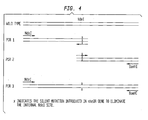
- a silent mutation is introduced into the PCR primers.
- PCR mutagenesis is performed in PCR reactions 1, 2, and 3 as diagrammed in Figure 4.
- the PCR product in reaction 3 is digested with Nde I and Bam HI.
- the Nde I digestion destroye any surviving wild type sequences with the internal Nde I site and enriches the PCR products with the silent mutation.
- the Nde I- Bam HI fragment containing the nheIR gene is ligated to the T7 expression vector pAII17 with compatibel ends and transformed into premodified host ER2566 [pACYC-NheIM]. Transformants are screened for nheIR gene insert. E .
- coli strain ER2566 [pACYC-NheIM, pAII17-NheIR2] is induced with IPTG for 3 h at 37°C.
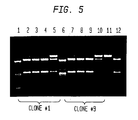
- Cells extracts are prepared and assayed for Nhe I activity. It produces 10 7 units of recombinant Nhe I per gram of wet cells, which is approximately 100-fold higher than the native source.
- the recombinant Nhe I activity assay in two cell extracts is shown in Figure 5.
- Genomic DNA was prepared from Neisseria mucosa heidelbergensis (ATCC 25999) by the standard procedure with the following steps: 1. cell lysis with lysozyme, Triton X-100, and SDS; 2. phenol-CHCl 3 and CHCl 3 extractions; 3. ethanol precipitation; 4. dialysis in TE buffer (change buffer 4 times); 5. RNase A treatment; 6. ethanol precipitation and resuspension of genomic DNA in TE buffer.
- N. mucosa heidelbergensis genomic DNA Five ⁇ g of N. mucosa heidelbergensis genomic DNA was digested with 1 and 0.5 units of ApoI at 50°C for 30 min.
- the ApoI partially digested genomic DNA in the range of 2-10 kb was gel-purified.
- the ApoI partially digested genomic DNA was ligated into Eco RI cut and CIP treated vector pRRS at 16°C overnight. After the ligation reaction, the ligase was inactivated at 65°C for 30 min.
- the ligated DNA was dialyzed by drop dialysis on a membrane on top of 2 liters of sdH 2 O.
- the DNA was transferred into RR1 (TonA - , DnaseI - ) competent cells by electroporation. Transformants were plated on LB agar plus Amp (100 ⁇ g/ml). About 10,000 colonies were obtained in the electroporation. All the transformants were pooled and inoculated into 1 liter of LB broth plus Amp and incubated at 37°C overnight. Plasmid DNA was prepared from the overnight cells by a Qiagen Mega-prep column.
- Bfa I recognition sequence C/TAG is the internal 4 bp of Nhe I recognition sequence G/CTAGC. It was reckoned that cloning and expression of Nhe I methylase may confer resistance to Bfa I digestion. Noncognate methylase modifications sometimes can block overlapping restriction sites. 1-5 ⁇ g of the library DNA were digested with Bfa I overnight. The Bfa I challenged DNA was used to transform RR1 competent cells. Ap R survivors were screened for resistance to Nhe I digestion. After screening and digestion of 8 DNA samples, no Nhe I resistant clones were found.
- Plasmid vector pRRS does not contain any Nhe I sites.
- two Nhe I linkers were inserted into Ssp I and Hinc II sites in pRRS.
- the resulting plasmid was named pRRS10.
- Plasmid pRRS10 was prepared by Qiagen spin columns and digested with Eco RI and treated with CIP. The Eco RI-digested DNA was purified through a low melting agarose gel. Following ⁇ -agarase treatment, the DNA was precipitated by ethanol and salt. The DNA pellet was resuspended in TE buffer.
- the gel-purified Apo I partial DNA fragments were ligated into Eco RI-digested and CIP-treated pRRS10.
- the ligated DNA was transferred into E. coli RR1 competent cells by electroporation. More than 10,000 Ap R transformants were pooled and amplified in 1 liter overnight cell culture.
- Primary plasmid DNA library was prepared from the cells and challenged with Nhe I at 37°C for 3 h. The challenged DNA was used for transformation into RR1 cells. About 110 Ap R survivors were found. The transformants were individually cultured overnight and plasmid DNA was prepared by Qiagen spin columns.
- the plasmid DNA was digested with Nhe I to check any resistance. Ten plasmid isolates were resistant to Nhe I digestion among 36 screened. Resistance to Nhe I digestion could be due to loss of Nhe I sites in the vector pRRS10 or modification of Nhe I sites by NheI methylase.
- the universal forward and reverse primers of pUC19 were used to sequence the insert.
- An Nhe I site was found inserted in the previous Hinc II site at the multiple cloning sites, indicating the resistance was caused by methylase modification and not due to the loss of Nhe I site.
- N4 methylase motifs were also found in the amino acid sequence predicted from the DNA sequence.
- Three ApoI fragments were gel-purified from resistant clone #22 and subcloned into pUC19. The entire insert was sequenced by primer walking and subcloning.
- the nheIM gene is 882 bp, encoding a 293-aa protein with predicted molecular mass of 33,268 daltons.
- nheIM gene There is one gene downstream of nheIM gene that has 43% identity to a 20 kDa hypothetical protein (047152) of E . coli.
- Upstream of nheIM gene there is one partial open reading frame (orf) that doe not show any homology to known genes in GenBank. Since restriction endonucleases usually are not homologous to each other (except among some isoschizomers), it was concluded that the upstream orf is most likely the nheIR gene. Efforts were made to obtain the upstream coding DNA sequence by inverse PCR amplification. N.
- mucosa heidelbergensis genomic DNA was digested with Alu I, Hae II, Hha I, Nhe I, Nla III, Nsp I, Sph I, Ssp I, Sty I, Taq I, and Tfi I, respectively.
- the digested DNA was self-ligated at a low DNA concentration at 16°C overnight. After ligation the ligase was inactivated by heating at 65°C for 30 min and the DNA was precipitated by ethanol. The circular DNA was then used for inverse PCR amplification of nheIR gene.
- Two primers were synthesized with the following sequence:
- Inverse PCR was performed using primers 214-141, 214-142, self-ligated DNA template, dNTP, and Taq DNA polymerase plus Vent DNA polymerase (50:1 ratio). Inverse PCR conditions were 95°C for 1 min, 55°C for 1 min, and 72°C for 2 min for 30-35 cycles. Inverse PCR products were found in Alu I, Nla III, Nsp I, Sty I, and Taq I digested/self-ligated DNA samples. The inverse PCR products were gel-purified and sequenced using primers 214-141 and 214-142. After first round of inverse PCR, 339-bp new sequence was obtained. A second round of inverse PCR was performed to amplify more of the upstream sequence. N.
- mucosa heidelbergensis genomic DNA was digested with Apo I, Ase I, Bss SI, Bst UI, Hae III, Hinf I , Mse I , Nde I , Rsa I , Sph I , Ssp I , Taq I, Tfi I, Tsp RI, and Xba I, respectively.
- the following primers were synthesized:
- Inverse PCR was performed using primers 216-100, 216-101, self-ligated DNA template, dNTP, and Taq DNA polymerase plus Vent DNA polymerase (50:1 ratio). Inverse PCR conditions were 95°C for 1 min, 55°C for 1 min, and 72°C for 2 min for 35 cycles. Inverse PCR products were found in Apo I, Ase I, Rsa I, Ssp I, and Taq I digested/self-ligated DNA. The PCR products were gel-purified through low-melting agrose gels and sequenced directly using primers 216-100 and 216-101. An additional 329 bp of new sequence were derived. One open reading frame of 987 bp was found upstream of nheIM gene. This orf is designated as nheIR gene, which encodes a 328-aa protein with predicted molecular mass of 38,197 daltons.
- primer sequences Two primers were synthesized to amplify nheIM gene in PCR. Bam HI and Sph I sites were engineered into the forward and reverse primers.
- the primer sequences are:
- nheIM gene was amplified in PCR using 217-138 and 217-123, dNTP, and Taq DNA polymerase plus Vent DNA polymerase (50:1 ratio). Inverse PCR conditions were 95°C for 1 min, 60°C for 1 min, and 72°C for 1.5 min for 25 cycles.
- telomere sequence was screened for resistance to Nhe I digestion. Eleven clones out of 18 were resistant to Nhe I digestion, indicating efficient M. Nhe I expression in E. coli cells and Nhe I site modification on the expression plasmid.
- the host cell ER2683 [pACYC-NheIM] was used for expression of nheIR gene (see section 9).
- lacI q gene An Eco RI fragment containing the lacI q gene was gel-purified and ligated into Eco RI site of pUC19 to generate expression plasmid pUC19lacI q .
- the lacI q gene encodes Lac repressor which can regulate Nhe I expression from the lac promoter.
- the nheIR gene was amplified in PCR, using 217-139 and 217-124 primers, dNTP, and Taq DNA polymerase plus Vent DNA polymerase (50:1 ratio). Inverse PCR conditions were 95°C for 1 min, 60°C for 1 min, and 72°C for 1.5 min for 20 cycles. The PCR products were digested with BamHI and purified through a Qiagen spin column. The PCR DNA was ligated into pUC19lacI q (BamHI digested and CIP treated). After transformation of the ligated DNA into ER2683 [pACYC-NheIM], transformants were screened for the endonuclease gene insert. Four clones out of 36 contained nheIR gene insert.
- the T7 expression vector pAII17 uses Nde I and BamHI sites for insertion of target gene into the vector. There is a ribosome-binding site upstream of the Nde I site. The start codon (ATG) of the gene to be expressed is fused to the NdeI site (CAT ATG). There is one Nde I site within the nheIR gene so NdeI digestion would disrupt the endonuclease gene. Therefore the Nde I site cannot be used for cloning into pAII17. To solve this problem, Bam HI sites were engineered in the forward and reverse primers. A ribosome binding site GGAGGT was also included in the forward primer (see primer 217-139).
- the nheIR gene was amplified in PCR, digested with BamHI and ligated to Bam HI-digested and CIP-treated pAII17 vector.
- the ligated DNA was transformed into competent cells ER2683 [pACYC-NheIM].
- Cells ER2683 [pACYC-NheIM, pAII17-NheIR1] were induced with IPTG and cell extracts were prepared to assay Nhe I activity.
- the T7 expression strains #9 and #19 produced approximately 100,000 units of Nhe I, which is about the same level as that produced in the native strain N. mucosa heidelbergensis. Further overexpression work was needed to improve the Nhe I yield.
- the following primers were used in three PCR reactions to eliminate the internal Nde I site.
- Reverse mutagenic primer 5' ttcagctacaacat cgtatg t tctatt 3' (225-82) (SEQ ID NO:14) (The internal wild type sequence catatg is changed to cgtatg, thus removing the internal Nde I site).
- Forward mutagenic primer 5' aatagaa catacg atgttgtagct gaa 3' (225-81) (SEQ ID NO:15) (the internal sequence catatg is changed to catacg, thus removing the internal Nde I site).
- the PCR product in reaction 3 was digested with Nde I and Bam HI.
- the Nde I digestion destroyed any surviving wild type sequences with the internal NdeI site and enriched the PCR products with the silent mutation.
- the Nde I- Bam HI fragment containing the nheIR gene was ligated to the T7 expression vector pAII17 with compatible ends and transformed into premodified host ER2566 [pACYC-NheIM]. Transformants were screened for nheIR gene insert.
- E. coli strain ER2566 [pACYC-NheIM, pAII17-NheIR2] was induced with IPTG for 3 h at 37°C.
- Nhe I activity assay in cell extracts is shown in Figure 5.
- the entire nheIR gene was sequenced using three primers and the C to T silent mutation within the gene was confirmed by sequencing. No other PCR mutations were detected.
- the E . coli strain ER2566 [pACYC-NheIM, pAII17-NheIR2] has been deposited under the terms and conditions of the Budapest Treaty with the American Type Culture Collection on October, 28 1999 and received ATCC Patent Accession No. PTA-887 .
Landscapes
- Life Sciences & Earth Sciences (AREA)
- Health & Medical Sciences (AREA)
- Chemical & Material Sciences (AREA)
- Genetics & Genomics (AREA)
- Organic Chemistry (AREA)
- Engineering & Computer Science (AREA)
- Bioinformatics & Cheminformatics (AREA)
- Zoology (AREA)
- Wood Science & Technology (AREA)
- Molecular Biology (AREA)
- Microbiology (AREA)
- Biotechnology (AREA)
- Biomedical Technology (AREA)
- Biochemistry (AREA)
- General Engineering & Computer Science (AREA)
- General Health & Medical Sciences (AREA)
- Medicinal Chemistry (AREA)
- Micro-Organisms Or Cultivation Processes Thereof (AREA)
- Enzymes And Modification Thereof (AREA)
Applications Claiming Priority (2)
| Application Number | Priority Date | Filing Date | Title |
|---|---|---|---|
| US09/428,747 US6387681B1 (en) | 1999-10-28 | 1999-10-28 | Method for cloning and expression of NHEI restriction endonuclease in E. coli. |
| EP00203710A EP1096015B1 (fr) | 1999-10-28 | 2000-10-26 | Procédé de clonage et d'expresion de l'endonucléase de restriction Nhe I dans E. coli |
Related Parent Applications (2)
| Application Number | Title | Priority Date | Filing Date |
|---|---|---|---|
| EP00203710A Division EP1096015B1 (fr) | 1999-10-28 | 2000-10-26 | Procédé de clonage et d'expresion de l'endonucléase de restriction Nhe I dans E. coli |
| EP00203710.9 Division | 2000-10-26 |
Publications (2)
| Publication Number | Publication Date |
|---|---|
| EP1721984A2 true EP1721984A2 (fr) | 2006-11-15 |
| EP1721984A3 EP1721984A3 (fr) | 2006-12-13 |
Family
ID=23700240
Family Applications (2)
| Application Number | Title | Priority Date | Filing Date |
|---|---|---|---|
| EP00203710A Expired - Lifetime EP1096015B1 (fr) | 1999-10-28 | 2000-10-26 | Procédé de clonage et d'expresion de l'endonucléase de restriction Nhe I dans E. coli |
| EP06011340A Ceased EP1721984A3 (fr) | 1999-10-28 | 2000-10-26 | Procédé de clonage et d'expresion de l'endonucléase de restriction Nhe I dans E. coli |
Family Applications Before (1)
| Application Number | Title | Priority Date | Filing Date |
|---|---|---|---|
| EP00203710A Expired - Lifetime EP1096015B1 (fr) | 1999-10-28 | 2000-10-26 | Procédé de clonage et d'expresion de l'endonucléase de restriction Nhe I dans E. coli |
Country Status (4)
| Country | Link |
|---|---|
| US (1) | US6387681B1 (fr) |
| EP (2) | EP1096015B1 (fr) |
| JP (1) | JP4719347B2 (fr) |
| DE (1) | DE60028685T2 (fr) |
Families Citing this family (1)
| Publication number | Priority date | Publication date | Assignee | Title |
|---|---|---|---|---|
| CN101802183B (zh) * | 2007-07-12 | 2016-02-24 | 新英格兰生物实验室公司 | 高保真度限制性内切核酸酶 |
Family Cites Families (6)
| Publication number | Priority date | Publication date | Assignee | Title |
|---|---|---|---|---|
| US5200333A (en) | 1985-03-01 | 1993-04-06 | New England Biolabs, Inc. | Cloning restriction and modification genes |
| IN166864B (fr) * | 1985-03-01 | 1990-07-28 | New England Biolabs Inc | |
| US5498535A (en) | 1994-05-24 | 1996-03-12 | New England Biolabs, Inc. | Method for direct cloning of nuclease genes in E. coli |
| US5476768A (en) * | 1995-03-10 | 1995-12-19 | Becton, Dickinson And Company | Mycobacteriophage DSGA specific for the mycobacterium tuberculosis complex |
| US6383770B1 (en) | 1997-09-02 | 2002-05-07 | New England Biolabs, Inc. | Method for screening restriction endonucleases |
| WO1999064632A1 (fr) | 1998-06-12 | 1999-12-16 | New England Biolabs, Inc. | Decouverte de genes d'enzymes de restriction |
-
1999
- 1999-10-28 US US09/428,747 patent/US6387681B1/en not_active Expired - Lifetime
-
2000
- 2000-10-26 JP JP2000326324A patent/JP4719347B2/ja not_active Expired - Fee Related
- 2000-10-26 EP EP00203710A patent/EP1096015B1/fr not_active Expired - Lifetime
- 2000-10-26 EP EP06011340A patent/EP1721984A3/fr not_active Ceased
- 2000-10-26 DE DE60028685T patent/DE60028685T2/de not_active Expired - Lifetime
Non-Patent Citations (2)
| Title |
|---|
| NEW ENGLAND BIOLABS. 1990-1991 CATALOG, 1990, page 30, XP002164211 * |
| XU S-Y ET AL: "Cloning and expresion of the ApaLI, NspI, NspHI, SacI, ScaI and SapI restriction-modification systems in Escherichia coli" MOLECULAR AND GENERAL GENETICS, SPRINGER VERLAG, BERLIN, DE, vol. 260, 1998, pages 226-231, XP002103324 ISSN: 0026-8925 * |
Also Published As
| Publication number | Publication date |
|---|---|
| DE60028685T2 (de) | 2007-05-24 |
| EP1096015A3 (fr) | 2001-05-30 |
| JP2001197889A (ja) | 2001-07-24 |
| DE60028685D1 (de) | 2006-07-27 |
| EP1096015A2 (fr) | 2001-05-02 |
| US6387681B1 (en) | 2002-05-14 |
| EP1096015B1 (fr) | 2006-06-14 |
| EP1721984A3 (fr) | 2006-12-13 |
| JP4719347B2 (ja) | 2011-07-06 |
Similar Documents
| Publication | Publication Date | Title |
|---|---|---|
| US6335190B1 (en) | Method for cloning and producing the BsmI restriction endonuclease in E. coli | |
| EP0778346B1 (fr) | Procédé de clonage et de production de l'endonucléase Sca1 dans E. coli | |
| US6723546B2 (en) | Method for cloning and expression of BsaI restriction endonuclease and BsaI methylase in E. coli | |
| EP0959131B1 (fr) | Méthode pour le clonage et la préparation de l'endonucléase de restriction AgeI dans E. coli | |
| EP0931835B1 (fr) | Procédé de clonage et de production de l'endonucléase de restriction PmeI | |
| EP1199365B1 (fr) | Méthode pour le clonage et l'expression de l'endonucléase de restriction BpmI dans E.coli | |
| EP0885964B1 (fr) | Procédé de clonage et de production de l'endonucléase BssHII dans E.coli | |
| EP1096015B1 (fr) | Procédé de clonage et d'expresion de l'endonucléase de restriction Nhe I dans E. coli | |
| EP1164189B1 (fr) | Méthode pour le clonage et la préparation de l'endonucléase de restriction RsaI dans E. coli | |
| EP0985730B1 (fr) | Méthode pour le clonage et la production de l'endonucléase de restriction SnaBI et purification de celle-ci | |
| EP1225219B1 (fr) | Méthode de clonage et expression de l'enzyme endonclease BstYI et BstYI methylase en E. coli et la purification des enzymes BstYI et M.BstYI | |
| US6869786B1 (en) | Method for cloning and expression of BsrGI restriction endonuclease and BsrGI methyltransferase in E. coli | |
| WO2003016519A1 (fr) | Procede de clonage et expression de l'endonuclease de restriction asisi et de la methylase asisi dans e.coli | |
| US6764843B2 (en) | Method of cloning and expression of BsmBI restriction endonuclease and BsmBI methylase in E. coli and purification of BsmBI endonuclease | |
| US6586220B1 (en) | Method for cloning and expression of BsaWI restriction endonuclease and BsaWI methylase in E. coli | |
| US6673588B2 (en) | Method for cloning and expression of MspA1l restriction endonuclease and MspA1l methylase in E. coli | |
| US6596524B2 (en) | Method for cloning and expression of BsmAi restriction endonuclease and BsmAI methylase in E. coli | |
| US6589769B1 (en) | Method for cloning and expression of TspRI restriction endonuclease and TspRI methylase in E. coli | |
| US6391608B1 (en) | Method for cloning and expression of PleI restriction endonuclease and PleI and BstNBII methylases in E. coli | |
| EP1451313B1 (fr) | Technique de clonage et expression de l'endonuclease de restriction bseri et de la methylase bseri dans e. coli | |
| US6919194B2 (en) | Method for cloning and expression of Tth111II restriction endonuclease-methylase in E. coli | |
| WO1998051783A1 (fr) | DECOUVERTE DE L'ENDONUCLEASE DE RESTRICTION PspGI ET SES PROCEDES DE CLONAGE ET DE PRODUCTION | |
| MFYYY | US Patent Feb. 15, 2000 Sheet 6,025,179 |
Legal Events
| Date | Code | Title | Description |
|---|---|---|---|
| PUAI | Public reference made under article 153(3) epc to a published international application that has entered the european phase |
Free format text: ORIGINAL CODE: 0009012 |
|
| PUAL | Search report despatched |
Free format text: ORIGINAL CODE: 0009013 |
|
| 17P | Request for examination filed |
Effective date: 20060630 |
|
| AC | Divisional application: reference to earlier application |
Ref document number: 1096015 Country of ref document: EP Kind code of ref document: P |
|
| AK | Designated contracting states |
Kind code of ref document: A2 Designated state(s): AT BE CH CY DE DK ES FI FR GB GR IE IT LI LU MC NL PT SE |
|
| AX | Request for extension of the european patent |
Extension state: AL LT LV MK RO SI |
|
| AK | Designated contracting states |
Kind code of ref document: A3 Designated state(s): AT BE CH CY DE DK ES FI FR GB GR IE IT LI LU MC NL PT SE |
|
| AX | Request for extension of the european patent |
Extension state: AL LT LV MK RO SI |
|
| 17Q | First examination report despatched |
Effective date: 20070629 |
|
| AKX | Designation fees paid |
Designated state(s): DE FR GB |
|
| STAA | Information on the status of an ep patent application or granted ep patent |
Free format text: STATUS: THE APPLICATION HAS BEEN REFUSED |
|
| 18R | Application refused |
Effective date: 20100402 |