EP1728149B1 - Computersystem zum speichern von unendlichen, infinitisimalen, und endlichen grössen und durchführen von arithmetischen operationen damit - Google Patents
Computersystem zum speichern von unendlichen, infinitisimalen, und endlichen grössen und durchführen von arithmetischen operationen damit Download PDFInfo
- Publication number
- EP1728149B1 EP1728149B1 EP04718386A EP04718386A EP1728149B1 EP 1728149 B1 EP1728149 B1 EP 1728149B1 EP 04718386 A EP04718386 A EP 04718386A EP 04718386 A EP04718386 A EP 04718386A EP 1728149 B1 EP1728149 B1 EP 1728149B1
- Authority
- EP
- European Patent Office
- Prior art keywords
- operand
- finite
- grosspowers
- powers
- grossdigits
- Prior art date
- Legal status (The legal status is an assumption and is not a legal conclusion. Google has not performed a legal analysis and makes no representation as to the accuracy of the status listed.)
- Expired - Lifetime
Links
Images

Classifications
-
- G—PHYSICS
- G06—COMPUTING OR CALCULATING; COUNTING
- G06F—ELECTRIC DIGITAL DATA PROCESSING
- G06F7/00—Methods or arrangements for processing data by operating upon the order or content of the data handled
- G06F7/60—Methods or arrangements for performing computations using a digital non-denominational number representation, i.e. number representation without radix; Computing devices using combinations of denominational and non-denominational quantity representations, e.g. using difunction pulse trains, STEELE computers, phase computers
-
- G—PHYSICS
- G06—COMPUTING OR CALCULATING; COUNTING
- G06F—ELECTRIC DIGITAL DATA PROCESSING
- G06F7/00—Methods or arrangements for processing data by operating upon the order or content of the data handled
- G06F7/38—Methods or arrangements for performing computations using exclusively denominational number representation, e.g. using binary, ternary, decimal representation
- G06F7/48—Methods or arrangements for performing computations using exclusively denominational number representation, e.g. using binary, ternary, decimal representation using non-contact-making devices, e.g. tube, solid state device; using unspecified devices
- G06F7/499—Denomination or exception handling, e.g. rounding or overflow
- G06F7/49905—Exception handling
- G06F7/4991—Overflow or underflow
Definitions
- the present invention describes a new type of computer which is able to execute arithmetical operations with infinite, infinitesimal, and finite numbers.
- fractional numbers are expressed by the record ( a n ⁇ a n - 1 ... a 1 ⁇ a 0 . a - 1 ⁇ a - 2 ... a - q - 1 ⁇ a - q ⁇ ) b where numerals a i , -q ⁇ i ⁇ n , are called digits, belong to the alphabet ⁇ 0,1, ..., b- 1 ⁇ , and the dot is used to separate the fractional part from the integer one.
- the numeral (1) is equal to the sum a n ⁇ b n + a n - I ⁇ b n - 1 + ... + a 1 ⁇ b 1 + a 0 ⁇ b 0 + a - 1 ⁇ b - 1 + ... + a - q - 1 ⁇ b - q - 1 + a - q ⁇ b - q .
- a floating-point representation expresses a number in four parts: a sign, a mantissa, a radix, and an exponent.
- the sign is either a 1 or -1.
- the mantissa always a positive number, holds the significant digits of the floating-point number.
- the exponent indicates the positive or negative power of the radix that the mantissa and sign should be multiplied by.
- Examples of mathematical objects that can be taken as the radix ⁇ the number of elements of the set of natural numbers (see [1]), the number of elements of the set of integer numbers, the number of elements of the set of odd numbers.
- Theories wheres ⁇ + ⁇ ⁇ ⁇ are studied in the field of mathematics called non-standard analysis.
- ⁇ is the number of elements of the set of natural numbers.
- ⁇ - 2 is defined as the number of elements of the set of natural numbers, , from which two any numbers have been taken out; ⁇ + 3 as the number of elements of the set ⁇ ⁇ a, b, c ⁇ where numbers a, b, c ⁇ ; and ⁇ 2 as the number of elements of the set ⁇ .
- Numbers obtained in such a way can be ordered.
- We can write the difference ⁇ 2 - ⁇ ⁇ ⁇ - 1 . Due to (i), ⁇ is greater than any finite natural number, therefore, ⁇ > 1 and as a consequence ⁇ -1 > 0. It follows from this inequality and (4) that the number 0 2 - 0 is a positive number and, therefore, ⁇ 2 > ⁇ .
- C c p m ⁇ ⁇ p m + ... + c p 1 ⁇ ⁇ p 1 + c p 0 ⁇ ⁇ p 0 + c p - 1 ⁇ ⁇ p - 1 + ... + c p - k ⁇ ⁇ p - k .
- the record C c p m ⁇ ⁇ p m ... c p 1 ⁇ ⁇ p 1 ⁇ c p 0 ⁇ ⁇ p 0 ⁇ c p - 1 ⁇ ⁇ p - 1 ... c p - k ⁇ ⁇ p - k .
- symbols c i are called infinite grossdigits
- symbols p i are called grosspowers.
- a digit a i shows how many powers b i are present in the number and the radix b is not written explicitly.
- Finite numbers in this new numeral system are represented by numerals having only one grosspower equal to zero.
- the number C in this case does not contain infinite units and is equal to the grossdigit c 0 which being a conventional finite number can be expressed in the form (1), (2) by any positional system with finite base b (or by another numeral system). It is important to emphasize that the grossdigit c 0 can be integer or fractional and can be expressed by a few symbols in contrast to the traditional record (1) where each digit is integer and is represented by one symbol from the alphabet ⁇ 0,1, 2, ...
- Grossdigits can be written in positional systems, in the form p q where p and q are integer numbers, or in any other finite numeral system.
- all grossdigits c i , -k ⁇ i ⁇ m can be integer or fractional and expressed by many symbols.
- Infinite numbers are written in this numeral system as numerals having grosspowers grater than zero, for example 7 ⁇ 244.5 3 ⁇ -32 and -2 ⁇ 74 3 ⁇ 0 37 ⁇ -2 11 ⁇ -15 are infinite numbers.
- the number A is constructed as follows (see Example 3).
- the numbers B and C are represented in the form (10).
- R i + 1 R i - a k K ⁇ ⁇ k K - i ⁇ B , i ⁇ 1.
- the infinity computer has a special memory to store infinite, infinitesimal, and finite numbers where the following three rules of storage are fixed: (i) for the radix, ⁇ , of the infinite positional system; (ii) for grossdigits; (iii) for grosspowers.
- infinity computer works with a base-two representation of grossdigits and grosspowers, however, the whole discussion holds for computing systems using any radix for storage of finite numbers.
- Each ith part c i ⁇ pi ,1 ⁇ i ⁇ L, of the number C is represented by two registers (for example, with floating-point having single or higher precision): the first one for the grossdigit c i and the second for the grosspower p i .
- Registers representing the parts c i ⁇ pi of the number C are linked by pointers. If the number C contains m positive grosspowers, k negative grosspowers, and the grosspower equal to zero, then L registers used to store grossdigits are related to the L corresponding registers used to store grosspowers: m for the grossdigits corresponding to positive grosspowers, k corresponding to negative grosspowers, and one register corresponding to the grosspower equal to zero if it is present in the number.
- the register of this grosspower contains the pointer to the address where the number A is stored in the same manner as the number C . If the number A has again an infinite grosspower A 1 , we again put in the register corresponding to this grosspower a pointer to the address where the number A 1 is stored.
- the obtained chains of pointers finish when all finite grosspowers are found.
- the record of the type 2 for writing down infinite numbers ensures that all grossdigits are finite.
- the record of the type 1 see definition at p. 7
- not only grosspowers p i but also grossdigits c i can be infinite numbers. If this is the case and a grossdigit c i is an infinite number B , then the register of c i contains the pointer to the address where the number B is stored in the same manner as the number C .
- Infinitesimal numbers are stored analogously. The only difference with infinite numbers is in the fact that infinitesimal numbers do not contain grosspowers greater or equal to zero. Finite numbers are stored in the same manner but they contain only one grossdigit corresponding to the grosspower equal to zero. Other grosspowers and grossdigits are absent in the record and, therefore, only two registers are sufficient to store finite numbers: the first one contains the grossdigit and the second registermatie for the corresponding grosspower contains zero.
- the infinity computer we can represent a finite number M of infinite, infinitesimal, and finite numbers.
- the number M can be increased by enlarging the memory of the computer and by augmenting the length of the string of digits for representation of finite grossdigits and grosspowers.
- the infinity computer uses the NALU which is different from that of classical computers.
- the NALU works with numbers of the form (16) by executing arithmetical operations introduced above. It consists of a control unit (CU), an internal memory unit (IMU) for storage intermediate results, and traditional ALUs (TALUs) working as low level tools inside the NALU and executing usual arithmetical operations only with finite numbers.
- CU control unit
- IMU internal memory unit
- ALUs traditional ALUs
- the NALU During every arithmetical operation the NALU reads numbers (16) from external memory to its IMU. Then, it decomposes the operands in finite grossdigits and the corresponding finite grosspowers using, if necessary, chains of pointers leading to final finite numbers (see the description of the memory unit above). Then the NALU calculates intermediate results and the final result according to the introduced operations: addition and subtraction by formula (10), multiplication by (10), (11), division by (10),(12)-(15). In order to execute these operations with infinite, infinitesimal, or finite numbers the NALU uses TALUs as follows.
- the CU sends the operands (i.e., finite grossdigits and grosspowers) obtained after decomposition to TALUs and communicates to them which standard low level operations (i.e., operation of addition, subtraction, multiplication, or division with standard finite operands) should be executed with the sent operands in order to realize one of the required operations (10)-(15).
- a TALU When a TALU has calculated a result of the required operation, it sends it back to the CU which receives it and writes in the corresponding register of the IMU (i.e., as a grossdigit or as a grosspower) of the infinite number.
- TALUs calculate results of arithmetic operations with finite numbers.
- the CU does not store the corresponding term a i ⁇ p i .
- the underflow or overflow situations during calculating finite grossdigits or grosspowers hold. In this case the CU sends a message to the user describing the event and the user (or the compiler) makes a decision about elaboration of the situation.
- the introduced new memory and the NALU can be used in different ways in computer systems with various architectures, for example, in the following forms: single processor computers, parallel computers, distributed computer systems, single processor quantum computers, parallel and distributed quantum computers.
- the first grossdigit is 5 and it corresponds to the grosspower 4 ⁇ 15 (-16) ⁇ -15 being an infinite number which we call A .
- A is infinite, there is a pointer to its location in the memory shown in Figure 1 by the arrow ⁇ .
- the symbol ⁇ shows that there are no other pointers in a number representation.
- the arrow links the first part of the number C to the second one.
- the second part, -2 ⁇ 6 , of the number C has both grossdigit and grosspower finite and they are stored in the corresponding registers.
- the third part, 3 ⁇ 7 ⁇ -2 , of the number C has the pointer to its infinite grosspower 7 ⁇ -2 which, in its turn, has both grossdigit and grosspower finite.
Landscapes
- Engineering & Computer Science (AREA)
- General Physics & Mathematics (AREA)
- Theoretical Computer Science (AREA)
- Physics & Mathematics (AREA)
- Pure & Applied Mathematics (AREA)
- Mathematical Analysis (AREA)
- Mathematical Optimization (AREA)
- Computing Systems (AREA)
- General Engineering & Computer Science (AREA)
- Computational Mathematics (AREA)
- Mathematical Physics (AREA)
- Complex Calculations (AREA)
- Management, Administration, Business Operations System, And Electronic Commerce (AREA)
- Steroid Compounds (AREA)
- Micro-Organisms Or Cultivation Processes Thereof (AREA)
- Error Detection And Correction (AREA)
- Detection And Correction Of Errors (AREA)
Claims (6)
- Computersystem für die Durchführung von Operationen mit Datenstrukturen, die infinite, infinitesimale und/oder finite Operanden (X) repräsentieren, wobei dieses System mit Datenstrukturen arbeitet, die einen ersten Operanden (A) und einen zweiten Operanden (B) haben, um eine Datenstruktur zu erhalten, die einen Ergebnisoperanden (C) repräsentiert, wobei jeder Operand ausgedrückt wird durch die Formel

in der□ eine infinite Basis darstellt,xi Koeffizienten (grossdigits) dieser Basis sind,Pi Potenzen (grosspowers) dieser Basis sind, wobei jede von diesen einem xi entspricht, und wobei diese Koeffizienten und Potenzen infinite, infinitesimale und/oder finite Operanden sind, wobei das Computersystem einen Speicher (IMU) mitwenigstens einer ersten Reihe von Registern undwenigstens einer zweiten Reihe von Registern hat,wobei jede Datenstruktur eine verknüpfte Liste von Registerpaaren umfasst und jeder Teil xi□Pi der Operanden durch ein entsprechendes Paar repräsentiert wird,
wobei jedes erste Paar des entsprechenden Registerpaares ein Register aus der ersten Reihe ist, in der Pi gespeichert ist, wenn Pi ein finiter Operand ist, und in der ein Zeiger (pointer) zu einer weiteren, Pi repräsentierenden Datenstruktur gespeichert ist, wenn Pi ein infiniter oder infinitesimale Operand ist,
wobei jedes zweite Paar des entsprechenden Registerpaares ein Register aus der zweiten Reihe ist, in der xi gespeichert ist, wenn xi ein finiter Operand ist, und in der ein Zeiger (pointer) zu einer weiteren, xi repräsentierenden Datenstruktur gespeichert ist, wenn xi ein infiniter oder infinitesimaler Operand ist,
und wobei das Computersystem außerdem eine logische Einheit (NALU) hat, umfassend:eine Steuereinheit (CU), die so ausgelegt ist, dass sie die genannten finiten Potenzen und finiten Koeffizienten aus den Datenstrukturen liest, welche die ersten und zweiten Operanden (A, B) repräsentieren, undwenigstens eine arithmetische Logikeinheit (TALU), die so ausgelegt ist, dass sie mit den finiten Potenzen und den finiten Koeffizienten arithmetische Operationen durchführt, um Ergebnisse zu erzeugen und diese Ergebnisse als entsprechende finite Potenzen und finite Koeffizienten in den Registern zu speichern, die in den Datenstrukturen enthalten sind, welche den Ergebnisoperanden (C) repräsentieren. - Computersystem nach Anspruch 1, das so ausgelegt ist, dass die zweite Reihe der Register eine Anzahl von Koeffizienten (grossdigits) umfasst, die gleich der Anzahl von Potenzen (grosspowers) ist, die in der ersten Reihe der Register gespeichert sind, wobei die Register der ersten Registerreihe für die Speicherung der Potenzen (grosspowers) in Beziehung stehen zu entsprechenden Registern der zweiten Registerreihe für die Speicherung der Koeffizienten (grossdigits).
- Computersystem nach Anspruch 2, das so ausgelegt ist, dass ein Operand, der positive Potenzen (grosspowers) mit einer Anzahl m, negative Potenzen (grosspower) mit einer Anzahl k und eine Potenz Null hat, gespeichert wird in Registern der ersten Reihe mit einer Zahl gleich m für die positiven Potenzen (grosspowers), in Registern der ersten Reihe mit einer Zahl gleich k für die negativen Potenzen (grosspowers) und in einem Register der ersten Reihe für die Potenz Null, während die Koeffizienten (grossdigits) des Operanden gespeichert werden in entsprechenden Registern der zweiten Reihe mit einer Zahl m für die Koeffizienten (grossdigits), die den positiven Potenzen (grosspowers) entsprechen, in entsprechenden Registern der zweiten Reihe mit einer Zahl k für die Koeffizienten (grossdigits), die den positiven Potenzen (grosspowers) entspricht, in entsprechenden Registern der zweiten Reihe mit einer Zahl k für die Koeffizienten (grossdigits), die den negativen Potenzen (grossdigits) entsprechen, und in ein Register für einen Koeffizienten, der der Potenz Null entspricht.
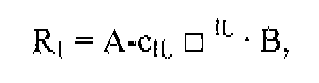
- Computersystem nach einem der Ansprüche 1 bis 3, das so ausgelegt ist, dass die Operationen zwischen den Operanden (A, B) die Operationen Addition, Multiplikation und Division umfassen, und dass• bei der Additionsoperation das Ergebnis (C) alle Potenzen (grosspowers) der Operanden und entsprechenden Koeffizienten (grossdigits), wenn die Potenzen (grosspowers) aus dem ersten Operanden (A) verschieden von den Potenzen (grosspowers) aus dem zweiten Operanden (B) sind, oder die Addition der Koeffizienten (grossdigits) enthält, wenn die Potenzen (grosspowers) aus dem ersten Operanden (A) gleich den Potenzen (grosspowers) aus dem zweiter Operanden (B) sind, wobei die Addition dieser Koeffizienten (grossdigits) erhalten wird durch arithmetische Additionen der finiten Koeffizienten (grossdigits), die von der arithmetischen Logikeinheit (TALU) ermittelt werden;• bei der Multiplikationsoperation die resultierenden Potenzen (grosspowers) erhalten werden durch Additionen jeder einzelnen Potenz (grosspower) aus dem ersten Operanden (A) und jeder einzelnen Potenz (grosspower) aus dem zweiten Operanden (B) und die resultierenden Koeffizienten (grossdigits) erhalten werden durch Multiplikation jedes einzelnen Koeffizienten (grossdigits) des ersten Operanden (A) mit jedem einzelnen Koeffizienten (grossdigit) des zweiten Operanden (B), wobei diese Additionen und Multiplikationen durch arithmetische Additionen bzw. Multiplikationen der finiten Potenzen (grosspowers) und der finiten Koeffizienten (grossdigits), die von der arithmetischen Logikeinheit (TALU) ermittelt werden;• bei der Divisionsoperation ein erster resultierender Koeffizient (grossdigit) CIL des Ergebnisses (C) erhalten wird durch arithmetische Division eines ersten Koeffizienten (grossdigit) des ersten Operanden (A) durch einen ersten Koeffizienten (grossdigit) des zweiten Operanden (B) und eine entsprechende maximale Potenz (grosspower) IL des Ergebnisses (C) erhalten wird durch arithmetische Subtraktion einer maximalen Potenz (grosspower) des zweiten Operanden (B) von einer maximalen Potenz (grosspower) des ersten Operanden (A), so dass ein ersten Teilrest (R1) erhalten wird alswobei dieser Prozess wiederholt wird, so dass ein i + 1 resultierender Koeffizient (grossdigit) erhalten wird mittels Division des i-ten Koeffizienten (grossdigit) eines i-ten Teilrestes (Ri) durch einen ersten Koeffizienten (grossdigit) des zweiten Operanden (B) und eine resultierende allgemeine i + 1 Potenz (grosspower) des Ergebnisses (C) erhalten wird durch Subtraktion einer maximalen Potenz (grosspower) der zweiten Operanden (B) von einer maximalen Potenz (grosspower) des i-ten Teilrestes (Ri), wobei dieser Prozess wiederholt wird, bis der Teilrest (Ri) Null ist oder eine geforderte Genauigkeit des Ergebnisses (C) erreicht ist, wobei die Subtraktionen und Divisionen erhalten werden durch arithmetische Subtraktionen bzw. Divisionen der finiten Potenzen (grosspowers) und finiten Koeffizienten (grossdigits), die von der arithmetischen Logikeinheit (TALU) ermittelt werden.
- Computersystem nach einem der Ansprüche 1 bis 4, das so ausgelegt ist, dass die Basis während der Operationen durch die arithmetischen Logikeinheiten (NALU, TALU) und der Speicher nicht gespeichert werden.
- Computersystem nach einem der Ansprüche 1 bis 5, das so ausgelegt ist, dass die finiten Koeffizienten (grossdigits) und die finiten Potenzen (grosspowers) in einer Widergabe mit Basis 2 repräsentiert werden.
Priority Applications (1)
| Application Number | Priority Date | Filing Date | Title |
|---|---|---|---|
| PL04718386T PL1728149T3 (pl) | 2004-03-08 | 2004-03-08 | System komputerowy do przechowywania wielkości nieskończonych, nieskończenie małych i skończonych oraz do wykonywania na nich operacji arytmetycznych |
Applications Claiming Priority (1)
| Application Number | Priority Date | Filing Date | Title |
|---|---|---|---|
| PCT/IT2004/000116 WO2005085991A1 (en) | 2004-03-08 | 2004-03-08 | Computer system for storing infinite, infinitesimal, and finite quantities and executing arithmetical operations with them |
Publications (2)
| Publication Number | Publication Date |
|---|---|
| EP1728149A1 EP1728149A1 (de) | 2006-12-06 |
| EP1728149B1 true EP1728149B1 (de) | 2009-06-03 |
Family
ID=34917569
Family Applications (1)
| Application Number | Title | Priority Date | Filing Date |
|---|---|---|---|
| EP04718386A Expired - Lifetime EP1728149B1 (de) | 2004-03-08 | 2004-03-08 | Computersystem zum speichern von unendlichen, infinitisimalen, und endlichen grössen und durchführen von arithmetischen operationen damit |
Country Status (7)
| Country | Link |
|---|---|
| US (1) | US7860914B2 (de) |
| EP (1) | EP1728149B1 (de) |
| AT (1) | ATE433147T1 (de) |
| DE (1) | DE602004021432D1 (de) |
| ES (1) | ES2329040T3 (de) |
| PL (1) | PL1728149T3 (de) |
| WO (1) | WO2005085991A1 (de) |
Cited By (1)
| Publication number | Priority date | Publication date | Assignee | Title |
|---|---|---|---|---|
| CN107770734A (zh) * | 2016-08-18 | 2018-03-06 | 中国移动通信集团安徽有限公司 | 移动用户常驻地识别方法及装置 |
Families Citing this family (1)
| Publication number | Priority date | Publication date | Assignee | Title |
|---|---|---|---|---|
| US7004928B2 (en) | 2002-02-08 | 2006-02-28 | Rosedale Medical, Inc. | Autonomous, ambulatory analyte monitor or drug delivery device |
Family Cites Families (2)
| Publication number | Priority date | Publication date | Assignee | Title |
|---|---|---|---|---|
| JP3421933B2 (ja) * | 1994-10-31 | 2003-06-30 | 弘之 河▲崎▼ | 演算処理装置及び電子計算機 |
| US6658443B1 (en) * | 1999-11-03 | 2003-12-02 | Sun Microsystems, Inc. | Method and apparatus for representing arithmetic intervals within a computer system |
-
2004
- 2004-03-08 EP EP04718386A patent/EP1728149B1/de not_active Expired - Lifetime
- 2004-03-08 PL PL04718386T patent/PL1728149T3/pl unknown
- 2004-03-08 WO PCT/IT2004/000116 patent/WO2005085991A1/en not_active Ceased
- 2004-03-08 AT AT04718386T patent/ATE433147T1/de not_active IP Right Cessation
- 2004-03-08 ES ES04718386T patent/ES2329040T3/es not_active Expired - Lifetime
- 2004-03-08 DE DE602004021432T patent/DE602004021432D1/de not_active Expired - Lifetime
-
2006
- 2006-09-08 US US11/530,200 patent/US7860914B2/en active Active
Cited By (2)
| Publication number | Priority date | Publication date | Assignee | Title |
|---|---|---|---|---|
| CN107770734A (zh) * | 2016-08-18 | 2018-03-06 | 中国移动通信集团安徽有限公司 | 移动用户常驻地识别方法及装置 |
| CN107770734B (zh) * | 2016-08-18 | 2021-03-02 | 中国移动通信集团安徽有限公司 | 移动用户常驻地识别方法及装置 |
Also Published As
| Publication number | Publication date |
|---|---|
| PL1728149T3 (pl) | 2009-11-30 |
| DE602004021432D1 (de) | 2009-07-16 |
| US20080126457A1 (en) | 2008-05-29 |
| ATE433147T1 (de) | 2009-06-15 |
| EP1728149A1 (de) | 2006-12-06 |
| US7860914B2 (en) | 2010-12-28 |
| ES2329040T3 (es) | 2009-11-20 |
| WO2005085991A1 (en) | 2005-09-15 |
Similar Documents
| Publication | Publication Date | Title |
|---|---|---|
| Sauer | Numerical analysis | |
| KR102491789B1 (ko) | 중첩 표현을 이용한 제1 및 제2 피연산자의 승산 | |
| Protter et al. | A first course in real analysis | |
| JP6853777B2 (ja) | プログラム可能な有効度データを使用するデータ処理装置および方法 | |
| Holmes | Introduction to scientific computing and data analysis | |
| KR102557657B1 (ko) | 중첩 비트를 이용한 수치 값의 중복 표현 | |
| EP1728149B1 (de) | Computersystem zum speichern von unendlichen, infinitisimalen, und endlichen grössen und durchführen von arithmetischen operationen damit | |
| Grabner et al. | Analysis of linear combination algorithms in cryptography | |
| Ruiz et al. | Algebraic circuits | |
| Mora et al. | Mathematical model and implementation of rational processing | |
| CN101300544B (zh) | 大数乘法方法和装置 | |
| Landriault et al. | Analysis of IBNR claims in renewal insurance models | |
| Jo et al. | Arithmetic matrix of quadratic polynomial with negative exponent by Pascal matrix. | |
| Voutier | Rational approximations to ${\@ root 3\of {2}} $ and other algebraic numbers revisited | |
| Linowitz | Brauer equivalent number fields and the geometry of quaternionic Shimura varieties | |
| RU2395111C2 (ru) | Компьютерная система для хранения бесконечных, бесконечно малых и конечных величин и выполнения с ними арифметических операций | |
| Rao et al. | Numerical Methods: With Programs in basic, fortran, pascal and c++ | |
| Besset | Object-Oriented Implementation of Numerical Methods An Introduction with Smalltalk | |
| CN100416490C (zh) | 一种用于左移数据的方法与系统 | |
| Kalkan et al. | Representation of Data | |
| Croot et al. | The abc conjecture and correctly rounded reciprocal square roots | |
| Roettger et al. | Division, Factors, Primes, Congruences, GCD, etc. | |
| Smotherman | IBM Stretch (7030)--Aggressive Uniprocessor Parallelism | |
| Hunkrajok et al. | A simple algorithm for computing the probabilities of count models based on pure birth processes | |
| Taekyun et al. | Generalized degenerate Bernoulli numbers and polynomials arising from Gauss hypergeometric function |
Legal Events
| Date | Code | Title | Description |
|---|---|---|---|
| PUAI | Public reference made under article 153(3) epc to a published international application that has entered the european phase |
Free format text: ORIGINAL CODE: 0009012 |
|
| 17P | Request for examination filed |
Effective date: 20061007 |
|
| AK | Designated contracting states |
Kind code of ref document: A1 Designated state(s): AT BE BG CH CY CZ DE DK EE ES FI FR GB GR HU IE IT LI LU MC NL PL PT RO SE SI SK TR |
|
| 17Q | First examination report despatched |
Effective date: 20070226 |
|
| DAX | Request for extension of the european patent (deleted) | ||
| GRAP | Despatch of communication of intention to grant a patent |
Free format text: ORIGINAL CODE: EPIDOSNIGR1 |
|
| GRAS | Grant fee paid |
Free format text: ORIGINAL CODE: EPIDOSNIGR3 |
|
| GRAA | (expected) grant |
Free format text: ORIGINAL CODE: 0009210 |
|
| AK | Designated contracting states |
Kind code of ref document: B1 Designated state(s): AT BE BG CH CY CZ DE DK EE ES FI FR GB GR HU IE IT LI LU MC NL PL PT RO SE SI SK TR |
|
| REG | Reference to a national code |
Ref country code: GB Ref legal event code: FG4D |
|
| REG | Reference to a national code |
Ref country code: CH Ref legal event code: EP |
|
| REG | Reference to a national code |
Ref country code: IE Ref legal event code: FG4D |
|
| REF | Corresponds to: |
Ref document number: 602004021432 Country of ref document: DE Date of ref document: 20090716 Kind code of ref document: P |
|
| REG | Reference to a national code |
Ref country code: SE Ref legal event code: TRGR |
|
| PG25 | Lapsed in a contracting state [announced via postgrant information from national office to epo] |
Ref country code: AT Free format text: LAPSE BECAUSE OF FAILURE TO SUBMIT A TRANSLATION OF THE DESCRIPTION OR TO PAY THE FEE WITHIN THE PRESCRIBED TIME-LIMIT Effective date: 20090603 |
|
| NLV1 | Nl: lapsed or annulled due to failure to fulfill the requirements of art. 29p and 29m of the patents act | ||
| REG | Reference to a national code |
Ref country code: ES Ref legal event code: FG2A Ref document number: 2329040 Country of ref document: ES Kind code of ref document: T3 |
|
| PG25 | Lapsed in a contracting state [announced via postgrant information from national office to epo] |
Ref country code: NL Free format text: LAPSE BECAUSE OF FAILURE TO SUBMIT A TRANSLATION OF THE DESCRIPTION OR TO PAY THE FEE WITHIN THE PRESCRIBED TIME-LIMIT Effective date: 20090603 Ref country code: SI Free format text: LAPSE BECAUSE OF FAILURE TO SUBMIT A TRANSLATION OF THE DESCRIPTION OR TO PAY THE FEE WITHIN THE PRESCRIBED TIME-LIMIT Effective date: 20090603 |
|
| REG | Reference to a national code |
Ref country code: PL Ref legal event code: T3 |
|
| PG25 | Lapsed in a contracting state [announced via postgrant information from national office to epo] |
Ref country code: EE Free format text: LAPSE BECAUSE OF FAILURE TO SUBMIT A TRANSLATION OF THE DESCRIPTION OR TO PAY THE FEE WITHIN THE PRESCRIBED TIME-LIMIT Effective date: 20090603 Ref country code: CZ Free format text: LAPSE BECAUSE OF FAILURE TO SUBMIT A TRANSLATION OF THE DESCRIPTION OR TO PAY THE FEE WITHIN THE PRESCRIBED TIME-LIMIT Effective date: 20090603 Ref country code: RO Free format text: LAPSE BECAUSE OF FAILURE TO SUBMIT A TRANSLATION OF THE DESCRIPTION OR TO PAY THE FEE WITHIN THE PRESCRIBED TIME-LIMIT Effective date: 20090603 |
|
| PG25 | Lapsed in a contracting state [announced via postgrant information from national office to epo] |
Ref country code: SK Free format text: LAPSE BECAUSE OF FAILURE TO SUBMIT A TRANSLATION OF THE DESCRIPTION OR TO PAY THE FEE WITHIN THE PRESCRIBED TIME-LIMIT Effective date: 20090603 Ref country code: BE Free format text: LAPSE BECAUSE OF FAILURE TO SUBMIT A TRANSLATION OF THE DESCRIPTION OR TO PAY THE FEE WITHIN THE PRESCRIBED TIME-LIMIT Effective date: 20090603 |
|
| PG25 | Lapsed in a contracting state [announced via postgrant information from national office to epo] |
Ref country code: PT Free format text: LAPSE BECAUSE OF FAILURE TO SUBMIT A TRANSLATION OF THE DESCRIPTION OR TO PAY THE FEE WITHIN THE PRESCRIBED TIME-LIMIT Effective date: 20091003 Ref country code: BG Free format text: LAPSE BECAUSE OF FAILURE TO SUBMIT A TRANSLATION OF THE DESCRIPTION OR TO PAY THE FEE WITHIN THE PRESCRIBED TIME-LIMIT Effective date: 20090903 |
|
| PLBE | No opposition filed within time limit |
Free format text: ORIGINAL CODE: 0009261 |
|
| STAA | Information on the status of an ep patent application or granted ep patent |
Free format text: STATUS: NO OPPOSITION FILED WITHIN TIME LIMIT |
|
| PG25 | Lapsed in a contracting state [announced via postgrant information from national office to epo] |
Ref country code: DK Free format text: LAPSE BECAUSE OF FAILURE TO SUBMIT A TRANSLATION OF THE DESCRIPTION OR TO PAY THE FEE WITHIN THE PRESCRIBED TIME-LIMIT Effective date: 20090603 |
|
| 26N | No opposition filed |
Effective date: 20100304 |
|
| PG25 | Lapsed in a contracting state [announced via postgrant information from national office to epo] |
Ref country code: MC Free format text: LAPSE BECAUSE OF NON-PAYMENT OF DUE FEES Effective date: 20100331 Ref country code: GR Free format text: LAPSE BECAUSE OF FAILURE TO SUBMIT A TRANSLATION OF THE DESCRIPTION OR TO PAY THE FEE WITHIN THE PRESCRIBED TIME-LIMIT Effective date: 20090904 |
|
| PGFP | Annual fee paid to national office [announced via postgrant information from national office to epo] |
Ref country code: IT Payment date: 20110329 Year of fee payment: 8 |
|
| REG | Reference to a national code |
Ref country code: CH Ref legal event code: PL |
|
| REG | Reference to a national code |
Ref country code: CH Ref legal event code: AEN Free format text: WEITERBEHANDLUNG GUTGEHEISSEN |
|
| REG | Reference to a national code |
Ref country code: PL Ref legal event code: LAPE |
|
| PG25 | Lapsed in a contracting state [announced via postgrant information from national office to epo] |
Ref country code: DE Free format text: LAPSE BECAUSE OF NON-PAYMENT OF DUE FEES Effective date: 20111001 |
|
| REG | Reference to a national code |
Ref country code: DE Ref legal event code: R119 Ref document number: 602004021432 Country of ref document: DE Effective date: 20111001 |
|
| PG25 | Lapsed in a contracting state [announced via postgrant information from national office to epo] |
Ref country code: PL Free format text: LAPSE BECAUSE OF NON-PAYMENT OF DUE FEES Effective date: 20100308 |
|
| REG | Reference to a national code |
Ref country code: DE Ref legal event code: R073 Ref document number: 602004021432 Country of ref document: DE |
|
| REG | Reference to a national code |
Ref country code: DE Ref legal event code: R073 Ref document number: 602004021432 Country of ref document: DE |
|
| REG | Reference to a national code |
Ref country code: DE Ref legal event code: R074 Ref document number: 602004021432 Country of ref document: DE |
|
| PGRI | Patent reinstated in contracting state [announced from national office to epo] |
Ref country code: DE Effective date: 20120613 |
|
| REG | Reference to a national code |
Ref country code: DE Ref legal event code: R074 Ref document number: 602004021432 Country of ref document: DE Effective date: 20120616 |
|
| PG25 | Lapsed in a contracting state [announced via postgrant information from national office to epo] |
Ref country code: CY Free format text: LAPSE BECAUSE OF FAILURE TO SUBMIT A TRANSLATION OF THE DESCRIPTION OR TO PAY THE FEE WITHIN THE PRESCRIBED TIME-LIMIT Effective date: 20090603 |
|
| PG25 | Lapsed in a contracting state [announced via postgrant information from national office to epo] |
Ref country code: HU Free format text: LAPSE BECAUSE OF FAILURE TO SUBMIT A TRANSLATION OF THE DESCRIPTION OR TO PAY THE FEE WITHIN THE PRESCRIBED TIME-LIMIT Effective date: 20091204 Ref country code: LU Free format text: LAPSE BECAUSE OF NON-PAYMENT OF DUE FEES Effective date: 20100308 |
|
| PG25 | Lapsed in a contracting state [announced via postgrant information from national office to epo] |
Ref country code: TR Free format text: LAPSE BECAUSE OF FAILURE TO SUBMIT A TRANSLATION OF THE DESCRIPTION OR TO PAY THE FEE WITHIN THE PRESCRIBED TIME-LIMIT Effective date: 20090603 |
|
| PG25 | Lapsed in a contracting state [announced via postgrant information from national office to epo] |
Ref country code: IT Free format text: LAPSE BECAUSE OF NON-PAYMENT OF DUE FEES Effective date: 20120308 |
|
| REG | Reference to a national code |
Ref country code: FR Ref legal event code: PLFP Year of fee payment: 13 |
|
| REG | Reference to a national code |
Ref country code: FR Ref legal event code: PLFP Year of fee payment: 14 |
|
| REG | Reference to a national code |
Ref country code: FR Ref legal event code: PLFP Year of fee payment: 15 |
|
| REG | Reference to a national code |
Ref country code: DE Ref legal event code: R082 Ref document number: 602004021432 Country of ref document: DE Representative=s name: KUHNEN & WACKER PATENT- UND RECHTSANWALTSBUERO, DE |
|
| PGFP | Annual fee paid to national office [announced via postgrant information from national office to epo] |
Ref country code: IE Payment date: 20230316 Year of fee payment: 20 Ref country code: FR Payment date: 20230314 Year of fee payment: 20 Ref country code: FI Payment date: 20230315 Year of fee payment: 20 |
|
| PGFP | Annual fee paid to national office [announced via postgrant information from national office to epo] |
Ref country code: SE Payment date: 20230316 Year of fee payment: 20 Ref country code: GB Payment date: 20230314 Year of fee payment: 20 Ref country code: DE Payment date: 20230315 Year of fee payment: 20 |
|
| PGFP | Annual fee paid to national office [announced via postgrant information from national office to epo] |
Ref country code: ES Payment date: 20230411 Year of fee payment: 20 Ref country code: CH Payment date: 20230402 Year of fee payment: 20 |
|
| REG | Reference to a national code |
Ref country code: DE Ref legal event code: R071 Ref document number: 602004021432 Country of ref document: DE |
|
| REG | Reference to a national code |
Ref country code: CH Ref legal event code: PL |
|
| REG | Reference to a national code |
Ref country code: ES Ref legal event code: FD2A Effective date: 20240326 |
|
| REG | Reference to a national code |
Ref country code: GB Ref legal event code: PE20 Expiry date: 20240307 |
|
| PG25 | Lapsed in a contracting state [announced via postgrant information from national office to epo] |
Ref country code: ES Free format text: LAPSE BECAUSE OF EXPIRATION OF PROTECTION Effective date: 20240309 |
|
| REG | Reference to a national code |
Ref country code: IE Ref legal event code: MK9A |
|
| PG25 | Lapsed in a contracting state [announced via postgrant information from national office to epo] |
Ref country code: ES Free format text: LAPSE BECAUSE OF EXPIRATION OF PROTECTION Effective date: 20240309 Ref country code: GB Free format text: LAPSE BECAUSE OF EXPIRATION OF PROTECTION Effective date: 20240307 |
|
| REG | Reference to a national code |
Ref country code: SE Ref legal event code: EUG |
|
| PG25 | Lapsed in a contracting state [announced via postgrant information from national office to epo] |
Ref country code: IE Free format text: LAPSE BECAUSE OF EXPIRATION OF PROTECTION Effective date: 20240308 |
|
| PG25 | Lapsed in a contracting state [announced via postgrant information from national office to epo] |
Ref country code: IE Free format text: LAPSE BECAUSE OF EXPIRATION OF PROTECTION Effective date: 20240308 |