EP1728799B1 - Human Kinase interacting Protein 2 (KIP2)-related gene variant (KIP2V1) im Zusammenhang mit Prostatakrebs - Google Patents
Human Kinase interacting Protein 2 (KIP2)-related gene variant (KIP2V1) im Zusammenhang mit Prostatakrebs Download PDFInfo
- Publication number
- EP1728799B1 EP1728799B1 EP05011950A EP05011950A EP1728799B1 EP 1728799 B1 EP1728799 B1 EP 1728799B1 EP 05011950 A EP05011950 A EP 05011950A EP 05011950 A EP05011950 A EP 05011950A EP 1728799 B1 EP1728799 B1 EP 1728799B1
- Authority
- EP
- European Patent Office
- Prior art keywords
- nucleotides
- seq
- sequence
- nucleic acid
- nucleotide
- Prior art date
- Legal status (The legal status is an assumption and is not a legal conclusion. Google has not performed a legal analysis and makes no representation as to the accuracy of the status listed.)
- Expired - Lifetime
Links
Images




Classifications
-
- C—CHEMISTRY; METALLURGY
- C07—ORGANIC CHEMISTRY
- C07K—PEPTIDES
- C07K14/00—Peptides having more than 20 amino acids; Gastrins; Somatostatins; Melanotropins; Derivatives thereof
- C07K14/435—Peptides having more than 20 amino acids; Gastrins; Somatostatins; Melanotropins; Derivatives thereof from animals; from humans
- C07K14/46—Peptides having more than 20 amino acids; Gastrins; Somatostatins; Melanotropins; Derivatives thereof from animals; from humans from vertebrates
- C07K14/47—Peptides having more than 20 amino acids; Gastrins; Somatostatins; Melanotropins; Derivatives thereof from animals; from humans from vertebrates from mammals
- C07K14/4701—Peptides having more than 20 amino acids; Gastrins; Somatostatins; Melanotropins; Derivatives thereof from animals; from humans from vertebrates from mammals not used
- C07K14/4748—Tumour specific antigens; Tumour rejection antigen precursors [TRAP], e.g. MAGE
Definitions
- the invention relates to the nucleic acid of a novel human kinase interacting protein 2 (KIP2)-related gene variant (KIP2V1), the polypeptide encoded thereby, the preparation process thereof, and the uses of the same in diagnosing diseases associated with the presence of KIP2V1, in particular, prostate cancer.
- KIP2V1 human kinase interacting protein 2
- Prostate cancer is the second leading cause of cancer death in men.
- the risk of prostate cancer is increased with age. Incidence of prostate cancer was estimated to be doubled by the year 2030 ( Boyle, (1996) Eur Urol. 29 Suppl 2:3-9 ).
- Much progress has been made toward understanding the molecular and cellular biology of prostate cancer. Many important contributions have been made by the identification of several key genetic factors associated with prostate cancer ( Gimba and Barcinski, (2003) Int Braz J Urol. 29:401-410 ).
- biological markers for detecting prostate cancer Lindstedt et al., (1990) Clin Chem. 36(1):53-58 ; Stamey et al., (1987) N Engl J Med. 317(15):909-16 ; Oesterling et al., (1988) J Urol. 139(4):766-772 ), suggesting that identification of new markers for diagnosing prostate cancer is needed.
- a human kinase interacting protein 2 (KIP2) gene candidate tumor suppressor gene ( Matsuoka et al. (1995) Genes Dev 9:650-62 ), is a member of Cip/Kip family involved in the negative regulation of the cell cycle at the G1 checkpoint ( Lee et al.
- US20030190622 A1 discloses a KIP2-related gene variant (KIP2V) and its use in diagnosing lung cancers. It does not disclose or suggest any other KIP2-related variants.
- the present invention provides a KIP2-related gene variant (KIP2V1) present in human prostate cancer.
- KIP2V1 KIP2-related gene variant
- the nucleotide sequence of KIP2V1 and the polypeptide sequence encoded thereby can be used for the diagnosis of diseases associated with the presence of KIPV1, in particular, prostate cancer.
- the invention further provides an expression vector and host cell for expressing KIP2V1.
- the invention further provides a method for producing the polypeptide of KIP2V1.
- the invention also provides methods for diagnosing diseases associated with the presence of KIP2V1, in particular, prostate cancer.
- the invention also provides kits for diagnosing diseases associated with the presence of KIP2V1, in particular, prostate cancer.
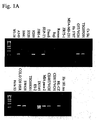
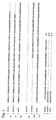
- Figs. 1A and 1B show the RT-PCR analysis of KIP2V1 and GAPDH (internal control) expression, respectively, in 27 cell lines.
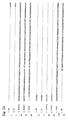
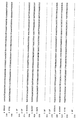
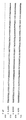
- Figs. 2A to 2D show the nucleotide sequence alignment of human KIP2, KIP2V (SEQ ID NO. 1), and KIP2V1 (SEQ ID NO. 3) genes and two cDNA fragments 235bp (LF) and 203bp (SF) obtained from RT-PCR analysis of Fig 1A .
- Fig. 3 shows the amino acid sequence alignment of human KIP2 protein and the polypeptides of KIP2V (SEQ ID NO: 2) and KIP2V1 (SEQ ID NO: 4)
- antibody denotes intact molecules (a polypeptide or group of polypeptides) as well as fragments thereof, such as Fab, R(ab') 2 , and Fv fragments, which are capable of binding the epitopic determinutesant.
- Antibodies are produced by specialized B cells after stimulation by an antigen. Structurally, antibody consists of four subunits including two heavy chains and two light chains. The internal surface shape and charge distribution of the antibody binding domain are complementary to the features of an antigen. Thus, antibody can specifically act against the antigen in an immune response.
- base pair denotes nucleotides composed of a purine on one strand of DNA which can be hydrogen bonded to a pyrimidine on the other strand. Thymine (or uracil) and adenine residues are linked by two hydrogen bonds. Cytosine and guanine residues are linked by three hydrogen bonds.
- BLAST Basic Local Alignment Search Tool
- Altschul et al. (1997) Nucleic Acids Res. 25: 3389-3402 )
- BLAST programs for evaluation of homologies between a query sequence (amino or nucleic acid) and a test sequence as described by Altschul et al. (Nucleic Acids Res. 25: 3389-3402, 1997 ).
- Specific BLAST programs are described as follows:
- BLASTN compares a nucleotide query sequence against a nucleotide sequence database
- BLASTX compares the six-frame conceptual translation products of a query nucleotide sequence against a protein sequence database
- TBLASTN compares a query protein sequence against a nucleotide sequence database translated in all six reading frames
- TBLASTX compares the six-frame translations of a nucleotide query sequence against the six-frame translations of a nucleotide sequence database.
- cDNA denotes nucleic acids that synthesized from a mRNA template using reverse transcriptase.
- cDNA library denotes a library composed of complementary DNAs which are reverse-transcribed from mRNAs.
- complement denotes a polynucleotide sequence capable of forming base pairing with another polynucleotide sequence.
- sequence 5'-ATGGACTTACT-3' (SEQ ID NO: 5) binds to the complementary sequence 5'- AGTAAGTCCAT-3' (SEQ ID NO: 6).
- deletion denotes a removal of a portion of one or more amino acid residues/nucleotides from a gene.
- ESTs expressed sequence tags
- expression vector denotes nucleic acid constructs which contain a cloning site for introducing the DNA into vector, one or more selectable markers for selecting vectors containing the DNA, an origin of replication for replicating the vector whenever the host cell divides, a terminator sequence, a polyadenylation signal, and a suitable control sequence which can effectively express the DNA in a suitable host.
- the suitable control sequence may include promoter, enhancer and other regulatory sequences necessary for directing polymerases to transcribe the DNA.
- host cell denotes a cell which is used to receive, maintain, and allow the reproduction of an expression vector comprising DNA.
- Host cells are transformed or transfected with suitable vectors constructed using recombinant DNA methods. The recombinant DNA introduced with the vector is replicated whenever the cell divides.
- insertion denotes the addition of a portion of one or more amino acid residues/nucleotides to a gene.
- in silico denotes a process of using computational methods (e.g., BLAST) to analyze DNA sequences.
- PCR polymerase chain reaction
- protein or "polypeptide,” as used herein, denotes a sequence of amino acids in a specific order that can be encoded by a gene or by a recombinant DNA. It can also be chemically synthesized.
- nucleic acid sequence or "polynucleotide,” as used herein, denotes a sequence of nucleotide (guanine, cytosine, thymine or adenine) in a specific order that can be a natural or synthesized fragment of DNA or RNA. It may be single-stranded or double-stranded.
- RT-PCR reverse transcriptase-polymerase chain reaction
- transformation denotes a process describing the uptake, incorporation, and expression of exogenous DNA by prokaryotic host cells.
- transfection a process describing the uptake, incorporation, and expression of exogenous DNA by eukaryotic host cells.
- variant denotes a fragment of sequence (nucleotide or amino acid) inserted or deleted by one or more nucleotides/amino acids.
- the present invention provides the nucleic acid sequence of the novel human KIP2-related gene variant (KIP2V1) as well as the polypeptide of KIP2V1.
- KIP2V1 KIP2 gene variant 1
- the full-length of the KIP2V1 cDNA is a 1091bp clone (SEQ ID NO: 3) containing a 416bp open reading frame (ORF) extending from 11bp to 427bp, which corresponds to an encoded protein of 139 amino acid residues (SEQ ID NO: 4) with a predicted molecular mass of 15.9 kDa.
- the sequence around the initiation ATG codon of KIP2V1 (located at nucleotide 11 to 13bp) was matched to the Kozak consensus sequence (A/GCCATGG) ( Kozak, (1987) Nucleic Acids Res. 15: 8125-48 ; Kozak, (1991) J Cell Biol. 115: 887-903 .).
- One 112bp deletion is located in the sequence of KIP2 from nucleotides 94 to 205 and the other 32bp deletion is located in the sequence of KIP2 from nucleotides 352 to 385. It is also found that 1) the N-terminal section (the first 29 amino acids) of the predicted amino acid sequence of KIP2V1 (SEQ ID NO: 4) is conserved with those of KIP2 and KIP2V; 2) the amino acid sequence (30-78 amino acids) of KIP2V1 is conserved with that of KIP2V (30-78 amino acids) but different from that of KIP2; 3) the amino acid sequence (79-139 amino acids) of KIP2V1 is conserved with the amino acid sequence (127-187 amino acids) of KIP2 but different from that of KIP2V.
- KIP2V1 protein contains three protein kinase C phosphorylation sites (33-35aa, 37-39aa and 68-70aa), one cAMP- and cGMP-dependent protein kinase phosphorylation site (34-37aa), two N-myristoylation sites (2-7aa and 47-52aa), one Tyrosine sulfation site (9-23aa), two Casein kinase II phosphorylation site (88-91aa and 91-93 aa) and one EF-hand calcium-binding domain (109-121aa).
- the polypeptide of KIP2V1 and its fragment thereof may be produced through genetic engineering techniques. For instance, they may be produced by using appropriate host cells which have been transformed with recombinant DNAs that code for the desired polypeptides or fragments thereof.
- the nucleotide sequence of KIP2V1 or the fragments thereof is inserted into an appropriate expression vector, i.e., a vector which contains the necessary elements for the transcription and translation of the inserted coding sequence in a suitable host.
- the nucleotide sequence is inserted into the vector in a manner that it will be expressed under appropriate conditions (e.g., in proper orientation and correct reading frame and with appropriate expression sequences, including an RNA polymerase binding sequence and a ribosomal binding sequence).
- any method that is known to those skilled in the art may be used to construct expression vectors containing the sequence of KIP2V1 and appropriate transcriptional/translational control elements. These methods may include in vitro recombinant DNA and synthetic techniques, and in vivo genetic recombinant techniques. (See, e.g., Sambrook, J. Cold Spring Harbor Press, Plainview N.Y., Ch. 4, 8, and 16-17 ; Ausubel, R. M. et al. (1995) Current protocols in Molecular Biology, John Wiley & Sons, New York N.Y., ch. 9, 13, and 16 .)
- a variety of expression vector/host systems may be utilized to express KIP2V1. These include, but not limited to, microorganisms such as bacteria transformed with recombinant bacteriophage, plasmid, or cosmid DNA expression vector; yeast transformed with yeast expression vector; insect cell systems infected with virus (e.g., baculovirus); plant cell system transformed with viral expression vector (e.g., cauliflower mosaic virus, CaMV, or tobacco mosaic virus, TMV); or animal cell system infected with virus (e.g., vaccina virus, adenovirus, etc.).
- the host cell is a bacterium, and more preferably, the bacterium is E. coli.
- polypeptide of KIP2V1 or fragments thereof may be synthesized using chemical methods.
- peptide synthesis can be performed using various solid-phase techniques ( Roberge, J. Y. et al. (1995) Science 269: 202 to 204 ). Automated synthesis may be achieved using the ABI 431A peptide synthesizer (Perkin-Elmer).
- the fragments of the nucleotide sequence of KIP2V1 and the polypeptide encoded thereby are used as primers or probes and immunogens, respectively.
- the purified fragments are used.
- the fragments may be produced by enzyme digestion, chemical cleavage of isolated or purified polypeptide or nucleotide sequences, or chemical synthesis and then may be isolated or purified.
- Such isolated or purified fragments of the polypeptides and nucleotide sequences can be used directed as immunogens and primers or probes, respectively.
- Immunization of mammals with immunogens described herin, preferably humans, rabbits, rats, mice, sheep, goats, cows, or horses, is performed by following the procedures well known to those skilled in the art, for the purpose of obtaining antisera containing polyclonal antibodies or hybridoma lines secreting monoclonal antibodies.
- Monoclonal antibodies can be prepared by standard techniques, given the teachings contained herein. Such techniques are disclosed, for example, in U.S. Patent Nos. 4,271,145 and 4,196,265 . Briefly, an animal is immunized with the immunogen. Hybridomas are prepared by fusing spleen cells from the immunized animal with myeloma cells. The fusion products are screened for those producing antibodies that bind to the immunogen. The positive hybridoma clones are isolated, and the monoclonal antibodies are recovered from those clones.
- Immunization regimens for production of both polyclonal and monoclonal antibodies are well-known in the art.
- the immunogen may be injected by any of a number of routes, including subcutaneous, intravenous, intraperitoneal, intradermal, intramuscular, mucosal, or a combination thereof.
- the immunogen may be injected in soluble form, aggregate form, attached to a physical carrier, or mixed with an adjuvant, using methods and materials well-known in the art.
- the antisera and antibodies may be purified using column chromatography methods well known to those skilled in the art.
- Antibody fragments which contain specific binding sites for the polypeptides or fragments thereof may also be generated.
- fragments include, but are not limited to, F(ab')2 fragments produced by pepsin digestion of the antibody molecule and Fab fragments generated by reducing the disulfide bridges of the F(ab')2 fragments.
- KIP2V1 clone was found to be expressed in prostate cancer, it is advisable that KIP2V1 may be served as a marker for the diagnosis of prostate cancer.
- the expression level of KIP2V1 relative to KIP2 may be a useful indicator for screening of patients suspected of having such disease, and the index of relative expression level (mRNA or protein) may confer an increased susceptibility to the same.
- the subject invention further provides methods for diagnosing the diseases associated with the presence of human KIP2V1 gene in a mammal, in particular, prostate cancer.
- the method for diagnosing the diseases associated with prostate cancer may be performed by detecting the nucleotide sequence of the KIP2V1 of the invention, which comprises the steps of: (1) extracting the total RNA of cells obtained from the mammal; (2) amplifying the RNA by reverse transcriptase-polymerase chain reaction (RT-PCR) with a set of primers to obtain a cDNA comprising the fragments comprising nucleotides 242 to 247 of SEQ ID NO: 3; and (3) detecting whether the cDNA is obtained. If necessary, the amount of the obtained cDNA sample may be determined.
- RT-PCR reverse transcriptase-polymerase chain reaction
- one of the primers may be designed to have a sequence comprising the nucleotides of SEQ ID NO: 3 containing nucleotides 242 to 247, and the other may be designed to have a sequence complementary to the nucleotides of SEQ ID NO: 3 at any other locations downstream of nucleotide 247.
- one of the primers may be designed to have a sequence complementary to the nucleotides of SEQ ID NO: 3 containing nucleotides 242 to 247, and the other may be designed to have a sequence comprising the nucleotides of SEQ ID NO: 3 at any other locations upstream of nucleotide 242.
- KIP2V1 will be amplified.
- one of the primers may be designed to have a sequence comprising the nucleotides of SEQ ID NO: 3 upstream of nucleotide 242 and the other may be designed to have a sequence complementary to the nucleotides of SEQ ID NO: 3 downstream of nucleotide 247.
- both KIP2 and KIP2V1 will be amplified.
- the length of the PCR fragment from KIP2V1 will be 144bp shorter than that from KIP2. If both KIP2V and KIP2V1 are amplified, the length of the PCR fragment from KIP2V1 will be 32bp shorter than that from KIP2V.
- the primer of the present invention contains 6 to 50 nucleotides, preferably 10 to 40 nucleotides, more preferably 15 to 30 nucleotides.
- Total RNA may be isolated from patient samples by using TRIZOL reagents (Life Technology). Tissue samples (e.g., biopsy samples) are powdered under liquid nitrogen before homogenization. RNA purity and integrity are assessed by absorbance at 260/280 nm and by agarose gel electrophoresis. The set of primers designed to amplify the expected sizes of specific PCR fragments of KIP2V1 can be used. PCR fragments are analyzed on a 1% agarose gel using five microliters (10%) of the amplified products. To determine the expression levels for each gene variants, the intensity of the PCR products may be determined by using the Molecular Analyst program (version 1.4.1; Bio-Rad).
- the RT-PCR experiment may be performed according to the manufacturer instructions (Boehringer Mannheim).
- a 50 ⁇ l reaction mixture containing 2 ⁇ l total RNA (0.1 ⁇ g/ ⁇ l), 1 ⁇ l each primer (20 pM), 1 ⁇ l each dNTP (10 mM), 2.5 ⁇ l DTT solution (100 mM), 10 ⁇ l 5X RT-PCR buffer, 1 ⁇ l enzyme mixture, and 28.5 ⁇ l sterile distilled water may be subjected to the conditions such as reverse transcription at 60°C for 30 minutes followed by 35 cycles of denaturation at 94°C for 2 minutes, annealing at 60°C for 2 minutes, and extension at 68°C for 2 minutes.
- the RT-PCR analysis may be repeated twice to ensure reproducibility, for a total of three independent experiments.
- Another embodiment of the method for diagnosing prostate cancer may be performed by detecting the nucleotide sequence of KIP2V1, which comprises the steps of: (1) extracting total RNA from a sample obtained from the mammal; (2) amplifying the RNA by reverse transcriptase-polymerase chain reaction (RT-PCR) to obtain a cDNA sample; (3) bringing the cDNA sample into contact with the nucleic acid encoding KIP2V1 or a nucleic acid fragment comprising nucleotides 242 to 247 of SEQ ID NO: 3; and (4) detecting whether the cDNA sample hybridizes with the nucleic acid encoding KIP2V1 or the nucleic acid fragment comprising nucleotides 242 to 247 of SEQ ID NO: 3. If necessary, the amount of the hybridized sample may be determined.
- RT-PCR reverse transcriptase-polymerase chain reaction
- the expression of gene variants can also be analyzed using Northern blot hybridization approach.
- Specific fragments comprising nucleotides 242 to 247 of KIP2V1 may be amplified by polymerase chain reaction (PCR) using primer set designed for RT-PCR.
- the amplified PCR fragment contains 6 to 50 nucleotides, preferably 10 to 40 nucleotides, more preferably 15 to 30 nucleotides, and may be labeled and serve as a probe to hybridize the membranes containing total RNAs extracted from the samples under the conditions of 55°C in a suitable hybridization solution for 3 hr.
- Blots may be washed twice in 2 x SSC, 0.1% SDS at room temperature for 15 minutes each, followed by two washes in 0.1 x SSC and 0.1% SDS at 65°C for 20 minutes each. After these washes, blots may be rinsed briefly in suitable washing buffer and incubated in blocking solution for 30 minutes, and then incubated in suitable antibody solution for 30 minutes. Blots may be washed in washing buffer for 30 minutes and equilibrated in suitable detection buffer before detecting the signals. Alternatively, the presence of gene variants (cDNAs or PCR) can be detected using microarray approach.
- the cDNAs or PCR products corresponding to the nucleotide sequences of the invention may be immobilized on a suitable substrate such as a glass slide.
- Hybridization can be preformed using the labeled mRNAs extracted from samples. After hybridization, nonhybridized mRNAs are removed.
- the relative abundance of each labeled transcript, hybridizing to a cDNA/PCR product immobilized on the microarray, can be determined by analyzing the scanned images.
- the method for diagnosing prostate cancer may also be performed by detecting the polypeptide encoded by the KIP2V1 of the invention.
- the polypeptide in protein samples obtained from the mammal may be determined by, but not limited to, the immunoassay wherein the antibodies specifically binding to the polypeptides of the invention is contacted with the sample, and the antibody-polypeptide complex is detected. If necessary, the amount of antibody-polypeptide complex can be determined.
- the polypeptide encoded by KIP2V 1 may be expressed in prokaryotic cells by using suitable prokaryotic expression vectors.
- the cDNA fragments of KIP2V1 may be PCR-amplified using primer set with restriction enzyme digestion sites incorporated in the 5' and 3' ends, respectively.
- the PCR products can then be enzyme digested, purified, and inserted into the corresponding sites of prokaryotic expression vector in-frame to generate recombinant plasmids. Sequence fidelity of this recombinant DNA can be verified by sequencing.
- the prokaryotic recombinant plasmids may be transformed into host cells (e.g., E. coli BL21 (DE3)). Recombinant protein synthesis may be stimulated by the addition of 0.4 mM isopropylthiogalactoside (IPTG) for 3h.
- IPTG isopropylthiogalactoside
- the polypeptide encoded by the KIP2V1 may be expressed in animal cells by using eukaryotic expression vectors.
- Cells may be maintained in Dulbecco's modified Eagle's medium (DMEM) supplemented with 10% fetal bovine serum (FBS; Gibco BRL) at 37oC in a humidified 5% CO2 atmosphere.
- DMEM Dulbecco's modified Eagle's medium
- FBS fetal bovine serum
- the nucleotide sequence of each of the gene variant may be amplified with PCR primers containing restriction enzyme digestion sites and ligated into the corresponding sites of eukaryotic expression vector in-frame. Sequence fidelity of this recombinant DNA can be verified by sequencing.
- the cells may be plated in 12-well plates one day before transfection at a density of 5 x 10⁴ cells per well.
- Transfections may be carried out using Lipofectaminutese Plus transfection reagent according to the manufacturer's instructions (Gibco BRL). Three hours following transfection, medium containing the complexes may be replaced with fresh medium. Forty-eight hours after incubation, the cells may be scraped into lysis buffer (0.1 M Tris HCl, pH 8.0, 0.1% Triton X-100) for purification of expressed proteins. After these proteins are purified, monoclonal antibodies against these purified proteins may be generated using hybridoma technique according to the conventional methods ( de StGroth and Scheidegger, (1980) J Immunol Methods 35:1-21 ; Cote et al. (1983) Proc Natl Acad Sci U S A 80: 2026-30 ; and Kozbor et al. (1985) J Immunol Methods 81:31-42 ).
- the presence of the polypeptide encoded by KIP2V1 in samples of normal prostate and prostate cancer may be determined by, but not limited to, Western blot analysis.
- Proteins extracted from samples may be separated by SDS-PAGE and transferred to suitable membranes such as polyvinylidene difluoride (PVDF) in transfer buffer (25 mM Tris-HCl, pH 8.3, 192 mM glycine, 20% methanol) with a Trans-Blot apparatus for 1h at 100 V (e.g., Bio-Rad).
- PVDF polyvinylidene difluoride
- transfer buffer 25 mM Tris-HCl, pH 8.3, 192 mM glycine, 20% methanol
- Trans-Blot apparatus for 1h at 100 V (e.g., Bio-Rad).
- the proteins can be immunoblotted with specific antibodies.
- membrane blotted with extracted proteins may be blocked with suitable buffers such as 3% solution of BSA or 3% solution of nonfat milk powder in TBST buffer (10 mM Tris-HCl, pH 8.6, 150 mM NaCl, 0.1% Tween 20) and incubated with monoclonal antibody specific to the polypeptide encoded by these gene variants. Unbound antibody is removed by washing with TBST for 5 X 1 minutes. Bound antibody may be detected using commercial ECL Western blotting detecting reagents.
- suitable buffers such as 3% solution of BSA or 3% solution of nonfat milk powder in TBST buffer (10 mM Tris-HCl, pH 8.6, 150 mM NaCl, 0.1% Tween 20) and incubated with monoclonal antibody specific to the polypeptide encoded by these gene variants. Unbound antibody is removed by washing with TBST for 5 X 1 minutes. Bound antibody may be detected using commercial ECL Western blotting detecting reagents.
- the present invention also provides kits for diagnosing diseases associated with the presence of human KIP2V1 gene in a mammal, in particular, prostate cancer.
- the kit of the present invention may be in any form suitable for providing (i) a pair of primers, (ii) a nucleic acid encoding KIP2V1, (iii) a nucleic acid fragment comprising nucleotides 242 to 247 of SEQ ID NO: 3, or (iv) the combination thereof for detecting the presence of human KIP2V1, together with written instructions for diagnosing the diseases associated with human KIP2V1 and/or prostate cancer.
- Examples include, but not limited to, various containers (e.g., bottles, cartons, blister packs, and ampoules) either accompanied by a package insert describing the detecting instructions, or wherein the instructions are printed on or affixed to the container.
- ESTs Expressed sequence tags (ESTs) deposited at the National Center for Biotechnology Information (NCBI) was used as a source of EST sequence similarity search. Sequence comparisons against the nonredundant nucleotide and protein databases were performed using BLASTN and BLASTX programs ( Altschul et al., (1997) Nucleic Acids Res. 25: 3389-3402 ; Gish and States, (1993) Nat Genet 3:266-272 ), at NCBI with a significance cutoff of p ⁇ 10-10. No EST was found to represent KIP2V1 gene comprising the 32bp deletion from KIP2 nucleotides suggesting that KIP2V1 is a novel gene.
- One cDNA clone showing sequence comprising 32bp deletion was isolated from a prostate cancer cDNA library and named KIP2V1.
- the inserts of this clone was subsequently excised in vivo from the ⁇ ZAP Express vector using the ExAssist/XLOLR helper phage system (Stratagene). Phagemid particles were excised by coinfecting XL1-BLUE MRF' cells with ExAssist helper phage. The excised pBluescript phagemids were used to infect E. coli XLOLR cells, which lack the amber suppressor necessary for ExAssist phage replication. Infected XLOLR cells were selected using kanamycin resistance. Resultant colonies contained the double stranded phagemid vector with the cloned cDNA insert. A single colony was grown overnight in LB-kanamycin, and DNA was purified using a Qiagen plasmid purification kit.
- Phagemid DNA was sequenced using the Epicentre#SE9101LC SequiTherm EXCELTMII DNA Sequencing Kit for 4200S-2 Global NEW IR2 DNA sequencing system (LI-COR). Using the primer-walking approach, full-length sequence was determined. Nucleotide and protein searches were performed using BLAST against the non-redundant database of NCBI.
- the coding sequence for each cDNA clones was searched against the dbEST sequence database ( Boguski et al., (1993) Nat Genet. 4: 332-3 ) using the BLAST algorithm at the NCBI website. ESTs derived from each tissue were used as a source of information for transcript tissue expression analysis. Tissue distribution for each isolated cDNA clone was determined by ESTs matching to that particular sequence variants (insertions or deletions) with a significance cutoff of p ⁇ 10-10.
- RT-PCR analysis of KIP2V1 was conducted in 27 human cell lines (WI38: lung, fetus; A549: lung cancer; H661: large cell carcinoma, lung; H520: squamous cell carcinoma, lung; H209: small cell carcinoma, lung; JHH-4: hepatoma; SUP-T1: T-cell lymophoblastic lymphoma; Daudi: Burkitt,s lymophoma; RAJI: Burkitt,s lymophoma; Ramo: Burkitt,s lymophoma; ZR75-1: breast carcinoma; MDA-MB-231: breast adenocarcinoma; Hs 578T: breast carcinoma; G5T/VGH: glioblastoma multiforme; TSGH9201: gastric carcinoma; Ca Ski: cervix epidermoid carcinoma; Hela S3: cervical epitheloid carcinoma; COLO 320 HSR: colon adenocarcinoma; SW620
- a pair of primers (forward: ACATCCTCAAGAGAATCCCTTC (SEQ ID NO: 7); reverse: GCTCACTAAGTCAGAGCTGGAT( SEQ ID NO: 8)) were designed for the RT-PCR analysis.
- the alignment of the nucleotide sequences of LF (235bp) and SF (203bp) shown in Figs. 2A to 2D indicates that that LF matches to KIP2V and SF matches to KIP2V1.
- RT-PCR analysis of Glyceraldehyde phosphate dehydrogenase was used as an internal control ( Fig. 1B ). Shown on the left side of Figs. 1A and 1B are 100 bp DNA ladder markers. It should be noted that KIP2V1 mRNA was only expressed in the cell line of prostate carcinoma suggesting that KIP2V1 may be used for diagnosing prostate cancer.
Landscapes
- Health & Medical Sciences (AREA)
- Chemical & Material Sciences (AREA)
- Organic Chemistry (AREA)
- Life Sciences & Earth Sciences (AREA)
- Biophysics (AREA)
- Medicinal Chemistry (AREA)
- Zoology (AREA)
- Biochemistry (AREA)
- Toxicology (AREA)
- General Health & Medical Sciences (AREA)
- Genetics & Genomics (AREA)
- Gastroenterology & Hepatology (AREA)
- Molecular Biology (AREA)
- Proteomics, Peptides & Aminoacids (AREA)
- Immunology (AREA)
- Medicines That Contain Protein Lipid Enzymes And Other Medicines (AREA)
- Peptides Or Proteins (AREA)
- Measuring Or Testing Involving Enzymes Or Micro-Organisms (AREA)
- Enzymes And Modification Thereof (AREA)
Claims (15)
- Isoliertes Polypeptid, welches die Aminosäuresequenz von SEQ ID Nr. 4 umfasst.
- Isolierte Nukleinsäure, welche das isolierte Polypeptide nach Anspruch 1 kodiert.
- Isolierte Nukleinsäure nach Anspruch 2, welche die Nukleotidsequenz von SEQ ID Nr. 3 umfasst.
- Expressionsvektor, welcher die Nukleinsäure nach Anspruch 2 umfasst.
- Wirtszelle, die mit dem Expressionsvektor nach Anspruch 4 transformiert ist.
- Verfahren zum Herstellen des isolierten Polypeptids nach Anspruch 1, das die Schritte umfasst von:(1) Kultivieren der Wirtszelle nach Anspruch 5 unter einer für die Expression des Polypeptids geeigneten Bedingung; und(2) Gewinnen des Polypeptids aus der Wirtszellkultur.
- Verfahren zum Diagnostizieren von Prostatakrebs, das ein Erfassen des Vorliegens der isolierten Nukleinsäure nach Anspruch 2 oder 3 aus einer von einem Säugetier erhaltenen Probe umfasst.
- Verfahren nach Anspruch 7, wobei das Erfassen des Vorliegens der isolierten Nukleinsäure nach Anspruch 2 oder 3 die Schritte umfasst von:(1) Extrahieren von Gesamt-RNA aus der von dem Säugetier erhaltenen Probe;(2) Amplifizieren der RNA durch Reverse Transkriptase-Polymerasekettenreaktion (RT-PCR) mit einem Primerpaar, um eine cDNA-Probe zu erhalten, welche die Nukleotide 242 bis 247 von SEQ ID Nr. 3 umfasst; und(3) Erfassen, ob die cDNA-Probe erhalten wurde.
- Verfahren nach Anspruch 8, wobei einer der Primer eine Sequenz aufweist, welche die Nukleotide von SEQ ID Nr. 3, die Nukleotide 242 bis 247 enthalten, umfasst, und der andere eine Sequenz aufweist, die zu den Nukleotiden von SEQ ID Nr. 3 an beliebigen anderen Stellen stromabwärts von Nukleotid 247 komplementär ist, oder wobei einer der Primer eine Sequenz aufweist, die zu den Nukleotiden von SEQ ID Nr. 3, die Nukleotide 242 bis 247 enthalten, komplementär ist, und der andere eine Sequenz aufweist, welche die Nukleotide von SEQ ID Nr. 3 an beliebigen anderen Stellen stromaufwärts von Nukleotid 242 umfasst.
- Verfahren nach Anspruch 8, wobei einer der Primer eine Sequenz aufweist, welche die Nukleotide von SEQ ID Nr. 3 stromaufwärts von Nukleotid 242 umfasst, und der andere eine Sequenz aufweist, welche zu den Nukleotiden von SEQ ID Nr. 3 stromabwärts von Nukleotid 247 komplementär ist.
- Verfahren nach Anspruch 10, wobei die von SEQ ID Nr. 3 amplifizierte cDNA-Probe 144 bp kürzer ist als die vom KIP2-Gen des Menschen amplifizierte cDNA-Probe oder 32 bp kürzer ist als die vom KIP2V-Gen des Menschen amplifizierte cDNA-Probe.
- Verfahren nach einem der Ansprüche 8 bis 11, das weiterhin den Schritt eines Erfassens der Menge der amplifizierten cDNA-Probe umfasst.
- Verfahren nach Anspruch 7, wobei das Erfassen des Vorliegens der isolierten Nukleinsäure nach Anspruch 2 oder 3 die Schritte umfasst von:(1) Extrahieren von Gesamt-RNA aus der von dem Säugetier erhaltenen Probe;(2) Amplifizieren der RNA durch Reverse Transkriptase-Polymerasekettenreaktion (RT-PCR), um eine cDNA-Probe zu erhalten;(3) In Kontakt bringen der cDNA-Probe mit der isolierten Nukleinsäure nach Anspruch 2 oder 3 oder einem Nukleinsäurefragment, welches Nukleotide 242 bis 247 von SEQ ID Nr. 3 umfasst; und(4) Erfassen, ob die cDNA-Probe mit der Nukleinsäure nach Anspruch 2 oder 3 oder dem Nukleinsäurefragment, welches Nukleotide 242 bis 247 von SEQ ID Nr. 3 umfasst, hybridisiert.
- Verfahren nach Anspruch 13, welches weiterhin den Schritt eines Erfassens der Menge der hybridisierten Probe umfasst.
- Kit, welches umfasst:(a) ein Primerpaar, welches aus den folgenden Paaren ausgewählt ist:einer der Primer weist eine Sequenz auf, welche die Nukleotide von SEQ ID Nr. 3, die Nukleotide 242 bis 247 enthalten, umfasst, und der andere weist eine Sequenz auf, die zu den Nukleotiden von SEQ ID Nr. 3 an beliebigen anderen Stellen stromabwärts von Nukleotid 247 komplementär ist,einer der Primer weist eine Sequenz auf, die zu den Nukleotiden von SEQ ID Nr. 3, die Nukleotide 242 bis 247 enthalten, komplementär ist, und der andere weist eine Sequenz auf, welche die Nukleotide von SEQ ID Nr. 3 an beliebigen anderen Stellen stromaufwärts von Nukleotid 242 umfasst, undeiner der Primer weist eine Sequenz auf, welche die Nukleotide von SEQ ID Nr. 3 stromaufwärts von Nukleotid 242 umfasst, und der andere weist eine Sequenz auf, die zu den Nukleotiden von SEQ ID Nr. 3 stromabwärts von Nukleotid 247 komplementär ist;eine isolierte Nukleinsäure nach Anspruch 2 oder 3;ein die Nukleotide 242 bis 247 von SEQ ID Nr. 3 umfassendes Nukleinsäurefragment
odereine Kombination davon; und(b) gedruckte Anleitungen zum Erfassen des Vorliegens des Polypeptids nach Anspruch 1 und/oder der Nukleinsäure nach Anspruch 2 oder 3.
Priority Applications (3)
| Application Number | Priority Date | Filing Date | Title |
|---|---|---|---|
| AT05011950T ATE405583T1 (de) | 2005-06-02 | 2005-06-02 | Human kinase interacting protein 2 (kip2)-related gene variant (kip2v1) im zusammenhang mit prostatakrebs |
| EP05011950A EP1728799B1 (de) | 2005-06-02 | 2005-06-02 | Human Kinase interacting Protein 2 (KIP2)-related gene variant (KIP2V1) im Zusammenhang mit Prostatakrebs |
| DE602005009154T DE602005009154D1 (de) | 2005-06-02 | 2005-06-02 | Human Kinase interacting Protein 2 (KIP2)-related gene variant (KIP2V1) im Zusammenhang mit Prostatakrebs |
Applications Claiming Priority (1)
| Application Number | Priority Date | Filing Date | Title |
|---|---|---|---|
| EP05011950A EP1728799B1 (de) | 2005-06-02 | 2005-06-02 | Human Kinase interacting Protein 2 (KIP2)-related gene variant (KIP2V1) im Zusammenhang mit Prostatakrebs |
Publications (2)
| Publication Number | Publication Date |
|---|---|
| EP1728799A1 EP1728799A1 (de) | 2006-12-06 |
| EP1728799B1 true EP1728799B1 (de) | 2008-08-20 |
Family
ID=34937190
Family Applications (1)
| Application Number | Title | Priority Date | Filing Date |
|---|---|---|---|
| EP05011950A Expired - Lifetime EP1728799B1 (de) | 2005-06-02 | 2005-06-02 | Human Kinase interacting Protein 2 (KIP2)-related gene variant (KIP2V1) im Zusammenhang mit Prostatakrebs |
Country Status (3)
| Country | Link |
|---|---|
| EP (1) | EP1728799B1 (de) |
| AT (1) | ATE405583T1 (de) |
| DE (1) | DE602005009154D1 (de) |
Family Cites Families (4)
| Publication number | Priority date | Publication date | Assignee | Title |
|---|---|---|---|---|
| US4196265A (en) | 1977-06-15 | 1980-04-01 | The Wistar Institute | Method of producing antibodies |
| US4271145A (en) | 1979-10-22 | 1981-06-02 | The Massachusetts General Hospital | Process for producing antibodies to hepatitis virus and cell lines therefor |
| AU2001241541A1 (en) * | 2000-02-17 | 2001-08-27 | Millennium Predictive Medicine, Inc. | Novel genes, compositions, kits, and methods for identification, assessment, prevention, and therapy of human prostate cancer |
| US20030190622A1 (en) | 2002-03-21 | 2003-10-09 | Ken-Shwo Dai | Human kinase interacting protein 2 (KIP2)-related gene variant associated with lung cancers |
-
2005
- 2005-06-02 AT AT05011950T patent/ATE405583T1/de not_active IP Right Cessation
- 2005-06-02 DE DE602005009154T patent/DE602005009154D1/de not_active Expired - Lifetime
- 2005-06-02 EP EP05011950A patent/EP1728799B1/de not_active Expired - Lifetime
Also Published As
| Publication number | Publication date |
|---|---|
| EP1728799A1 (de) | 2006-12-06 |
| ATE405583T1 (de) | 2008-09-15 |
| DE602005009154D1 (de) | 2008-10-02 |
Similar Documents
| Publication | Publication Date | Title |
|---|---|---|
| KR101828290B1 (ko) | 자궁내막암 마커 | |
| US7902347B2 (en) | Human Ron-related gene variant associated with cancers | |
| EP1728799A1 (de) | Human Kinase interacting Protein 2 (KIP2)-related gene variant (KIP2V1) im Zusammenhang mit Prostatakrebs | |
| US7342109B2 (en) | Human kinase interacting protein 2 (KIP2)-related gene variant associated with cancers | |
| US20060263788A1 (en) | Human kinase interacting protein 2 (KIP2)-related gene variant (KIP2V1) associated with prostate cancer | |
| US20030190622A1 (en) | Human kinase interacting protein 2 (KIP2)-related gene variant associated with lung cancers | |
| US7087733B2 (en) | Human ARL-related gene variants associated with cancers | |
| EP1892291B1 (de) | Mit Krebs assoziierte menschliche RON verwandte Genvariante | |
| EP1903109B1 (de) | Menschliche protein phosphatase mit EF-hände-1 (PPEF-1)- ähnliches genvariant assoziert mit T-zellen lymphoblastisches Lymphom | |
| US7022510B2 (en) | Human megakaryocyte-associated tyrosine kinase (MATK)-related gene variant associated with lung cancers | |
| US7186537B2 (en) | Human GAK-related gene variants associated with lung cancer | |
| US20030186241A1 (en) | Human choline/ethanolamine kinase (HCEK)-related gene variant associated with lung cancers | |
| US20050013817A1 (en) | Human SMAPK3-related gene variants associated with cancers | |
| US20030207274A1 (en) | Human NjmuR1-related gene variant associated with lung cancers | |
| US20030180727A1 (en) | Human RPS6KA6-related gene variant associated with lung cancers | |
| US20050048502A1 (en) | Human SACH-related gene variants associated with cancers | |
| US20040116658A1 (en) | Human KAP/Cdi1-related gene variant associated with small cell lung cancer | |
| US20080076124A1 (en) | Human Protein Phosphatase With EF-Hands-1(PPEF-1)-Related Gene Variant Associated With T-Cell Lymphoblastic Lymphoma | |
| US20050048504A1 (en) | Human SGII-related gene variants associated with cancers | |
| EP1580282B1 (de) | Benutzung einer Variante des humanen RPS6KA6-Gen für die Diagnose des T-Zellen lymphoblastischem Lymphoms | |
| US20050266446A1 (en) | Human ITPase-related gene variants associated with lung cancers | |
| EP1895004A1 (de) | Eine Variante des menschlichen Hippocalcingens, die mit Krebs assoziiert ist | |
| US20030190621A1 (en) | Human CrkRS-related gene variant associated with lung cancers | |
| US20030207276A1 (en) | Human G protein beta subunit 1-related gene variant associated with lung cancers | |
| US20040023214A1 (en) | Human PHKA1-related gene variant associated with cancers |
Legal Events
| Date | Code | Title | Description |
|---|---|---|---|
| PUAI | Public reference made under article 153(3) epc to a published international application that has entered the european phase |
Free format text: ORIGINAL CODE: 0009012 |
|
| AK | Designated contracting states |
Kind code of ref document: A1 Designated state(s): AT BE BG CH CY CZ DE DK EE ES FI FR GB GR HU IE IS IT LI LT LU MC NL PL PT RO SE SI SK TR |
|
| AX | Request for extension of the european patent |
Extension state: AL BA HR LV MK YU |
|
| 17P | Request for examination filed |
Effective date: 20070423 |
|
| 17Q | First examination report despatched |
Effective date: 20070522 |
|
| AKX | Designation fees paid |
Designated state(s): AT BE BG CH CY CZ DE DK EE ES FI FR GB GR HU IE IS IT LI LT LU MC NL PL PT RO SE SI SK TR |
|
| GRAP | Despatch of communication of intention to grant a patent |
Free format text: ORIGINAL CODE: EPIDOSNIGR1 |
|
| GRAS | Grant fee paid |
Free format text: ORIGINAL CODE: EPIDOSNIGR3 |
|
| GRAL | Information related to payment of fee for publishing/printing deleted |
Free format text: ORIGINAL CODE: EPIDOSDIGR3 |
|
| GRAS | Grant fee paid |
Free format text: ORIGINAL CODE: EPIDOSNIGR3 |
|
| GRAA | (expected) grant |
Free format text: ORIGINAL CODE: 0009210 |
|
| AK | Designated contracting states |
Kind code of ref document: B1 Designated state(s): AT BE BG CH CY CZ DE DK EE ES FI FR GB GR HU IE IS IT LI LT LU MC NL PL PT RO SE SI SK TR |
|
| REG | Reference to a national code |
Ref country code: GB Ref legal event code: FG4D |
|
| REG | Reference to a national code |
Ref country code: CH Ref legal event code: EP |
|
| REG | Reference to a national code |
Ref country code: IE Ref legal event code: FG4D |
|
| REF | Corresponds to: |
Ref document number: 602005009154 Country of ref document: DE Date of ref document: 20081002 Kind code of ref document: P |
|
| PG25 | Lapsed in a contracting state [announced via postgrant information from national office to epo] |
Ref country code: NL Free format text: LAPSE BECAUSE OF FAILURE TO SUBMIT A TRANSLATION OF THE DESCRIPTION OR TO PAY THE FEE WITHIN THE PRESCRIBED TIME-LIMIT Effective date: 20080820 Ref country code: ES Free format text: LAPSE BECAUSE OF FAILURE TO SUBMIT A TRANSLATION OF THE DESCRIPTION OR TO PAY THE FEE WITHIN THE PRESCRIBED TIME-LIMIT Effective date: 20081201 Ref country code: IS Free format text: LAPSE BECAUSE OF FAILURE TO SUBMIT A TRANSLATION OF THE DESCRIPTION OR TO PAY THE FEE WITHIN THE PRESCRIBED TIME-LIMIT Effective date: 20081220 Ref country code: LT Free format text: LAPSE BECAUSE OF FAILURE TO SUBMIT A TRANSLATION OF THE DESCRIPTION OR TO PAY THE FEE WITHIN THE PRESCRIBED TIME-LIMIT Effective date: 20080820 |
|
| PG25 | Lapsed in a contracting state [announced via postgrant information from national office to epo] |
Ref country code: SI Free format text: LAPSE BECAUSE OF FAILURE TO SUBMIT A TRANSLATION OF THE DESCRIPTION OR TO PAY THE FEE WITHIN THE PRESCRIBED TIME-LIMIT Effective date: 20080820 Ref country code: AT Free format text: LAPSE BECAUSE OF FAILURE TO SUBMIT A TRANSLATION OF THE DESCRIPTION OR TO PAY THE FEE WITHIN THE PRESCRIBED TIME-LIMIT Effective date: 20080820 Ref country code: FI Free format text: LAPSE BECAUSE OF FAILURE TO SUBMIT A TRANSLATION OF THE DESCRIPTION OR TO PAY THE FEE WITHIN THE PRESCRIBED TIME-LIMIT Effective date: 20080820 |
|
| PG25 | Lapsed in a contracting state [announced via postgrant information from national office to epo] |
Ref country code: BE Free format text: LAPSE BECAUSE OF FAILURE TO SUBMIT A TRANSLATION OF THE DESCRIPTION OR TO PAY THE FEE WITHIN THE PRESCRIBED TIME-LIMIT Effective date: 20080820 |
|
| PG25 | Lapsed in a contracting state [announced via postgrant information from national office to epo] |
Ref country code: DK Free format text: LAPSE BECAUSE OF FAILURE TO SUBMIT A TRANSLATION OF THE DESCRIPTION OR TO PAY THE FEE WITHIN THE PRESCRIBED TIME-LIMIT Effective date: 20080820 Ref country code: BG Free format text: LAPSE BECAUSE OF FAILURE TO SUBMIT A TRANSLATION OF THE DESCRIPTION OR TO PAY THE FEE WITHIN THE PRESCRIBED TIME-LIMIT Effective date: 20081120 |
|
| PG25 | Lapsed in a contracting state [announced via postgrant information from national office to epo] |
Ref country code: CZ Free format text: LAPSE BECAUSE OF FAILURE TO SUBMIT A TRANSLATION OF THE DESCRIPTION OR TO PAY THE FEE WITHIN THE PRESCRIBED TIME-LIMIT Effective date: 20080820 Ref country code: RO Free format text: LAPSE BECAUSE OF FAILURE TO SUBMIT A TRANSLATION OF THE DESCRIPTION OR TO PAY THE FEE WITHIN THE PRESCRIBED TIME-LIMIT Effective date: 20080820 Ref country code: PT Free format text: LAPSE BECAUSE OF FAILURE TO SUBMIT A TRANSLATION OF THE DESCRIPTION OR TO PAY THE FEE WITHIN THE PRESCRIBED TIME-LIMIT Effective date: 20090120 Ref country code: SK Free format text: LAPSE BECAUSE OF FAILURE TO SUBMIT A TRANSLATION OF THE DESCRIPTION OR TO PAY THE FEE WITHIN THE PRESCRIBED TIME-LIMIT Effective date: 20080820 |
|
| PLBE | No opposition filed within time limit |
Free format text: ORIGINAL CODE: 0009261 |
|
| STAA | Information on the status of an ep patent application or granted ep patent |
Free format text: STATUS: NO OPPOSITION FILED WITHIN TIME LIMIT |
|
| 26N | No opposition filed |
Effective date: 20090525 |
|
| PG25 | Lapsed in a contracting state [announced via postgrant information from national office to epo] |
Ref country code: EE Free format text: LAPSE BECAUSE OF FAILURE TO SUBMIT A TRANSLATION OF THE DESCRIPTION OR TO PAY THE FEE WITHIN THE PRESCRIBED TIME-LIMIT Effective date: 20080820 |
|
| PG25 | Lapsed in a contracting state [announced via postgrant information from national office to epo] |
Ref country code: IT Free format text: LAPSE BECAUSE OF FAILURE TO SUBMIT A TRANSLATION OF THE DESCRIPTION OR TO PAY THE FEE WITHIN THE PRESCRIBED TIME-LIMIT Effective date: 20080820 |
|
| PG25 | Lapsed in a contracting state [announced via postgrant information from national office to epo] |
Ref country code: SE Free format text: LAPSE BECAUSE OF FAILURE TO SUBMIT A TRANSLATION OF THE DESCRIPTION OR TO PAY THE FEE WITHIN THE PRESCRIBED TIME-LIMIT Effective date: 20081120 Ref country code: MC Free format text: LAPSE BECAUSE OF NON-PAYMENT OF DUE FEES Effective date: 20090630 |
|
| REG | Reference to a national code |
Ref country code: CH Ref legal event code: PL |
|
| PG25 | Lapsed in a contracting state [announced via postgrant information from national office to epo] |
Ref country code: IE Free format text: LAPSE BECAUSE OF NON-PAYMENT OF DUE FEES Effective date: 20090602 Ref country code: CH Free format text: LAPSE BECAUSE OF NON-PAYMENT OF DUE FEES Effective date: 20090630 Ref country code: LI Free format text: LAPSE BECAUSE OF NON-PAYMENT OF DUE FEES Effective date: 20090630 |
|
| PG25 | Lapsed in a contracting state [announced via postgrant information from national office to epo] |
Ref country code: PL Free format text: LAPSE BECAUSE OF FAILURE TO SUBMIT A TRANSLATION OF THE DESCRIPTION OR TO PAY THE FEE WITHIN THE PRESCRIBED TIME-LIMIT Effective date: 20080820 |
|
| PG25 | Lapsed in a contracting state [announced via postgrant information from national office to epo] |
Ref country code: GR Free format text: LAPSE BECAUSE OF FAILURE TO SUBMIT A TRANSLATION OF THE DESCRIPTION OR TO PAY THE FEE WITHIN THE PRESCRIBED TIME-LIMIT Effective date: 20081121 |
|
| PG25 | Lapsed in a contracting state [announced via postgrant information from national office to epo] |
Ref country code: LU Free format text: LAPSE BECAUSE OF NON-PAYMENT OF DUE FEES Effective date: 20090602 |
|
| PG25 | Lapsed in a contracting state [announced via postgrant information from national office to epo] |
Ref country code: HU Free format text: LAPSE BECAUSE OF FAILURE TO SUBMIT A TRANSLATION OF THE DESCRIPTION OR TO PAY THE FEE WITHIN THE PRESCRIBED TIME-LIMIT Effective date: 20090221 |
|
| PG25 | Lapsed in a contracting state [announced via postgrant information from national office to epo] |
Ref country code: TR Free format text: LAPSE BECAUSE OF FAILURE TO SUBMIT A TRANSLATION OF THE DESCRIPTION OR TO PAY THE FEE WITHIN THE PRESCRIBED TIME-LIMIT Effective date: 20080820 |
|
| PG25 | Lapsed in a contracting state [announced via postgrant information from national office to epo] |
Ref country code: CY Free format text: LAPSE BECAUSE OF FAILURE TO SUBMIT A TRANSLATION OF THE DESCRIPTION OR TO PAY THE FEE WITHIN THE PRESCRIBED TIME-LIMIT Effective date: 20080820 |
|
| REG | Reference to a national code |
Ref country code: FR Ref legal event code: PLFP Year of fee payment: 12 |
|
| PGFP | Annual fee paid to national office [announced via postgrant information from national office to epo] |
Ref country code: DE Payment date: 20160524 Year of fee payment: 12 Ref country code: GB Payment date: 20160601 Year of fee payment: 12 |
|
| PGFP | Annual fee paid to national office [announced via postgrant information from national office to epo] |
Ref country code: FR Payment date: 20160516 Year of fee payment: 12 |
|
| REG | Reference to a national code |
Ref country code: DE Ref legal event code: R119 Ref document number: 602005009154 Country of ref document: DE |
|
| GBPC | Gb: european patent ceased through non-payment of renewal fee |
Effective date: 20170602 |
|
| REG | Reference to a national code |
Ref country code: FR Ref legal event code: ST Effective date: 20180228 |
|
| PG25 | Lapsed in a contracting state [announced via postgrant information from national office to epo] |
Ref country code: GB Free format text: LAPSE BECAUSE OF NON-PAYMENT OF DUE FEES Effective date: 20170602 Ref country code: DE Free format text: LAPSE BECAUSE OF NON-PAYMENT OF DUE FEES Effective date: 20180103 |
|
| PG25 | Lapsed in a contracting state [announced via postgrant information from national office to epo] |
Ref country code: FR Free format text: LAPSE BECAUSE OF NON-PAYMENT OF DUE FEES Effective date: 20170630 |