EP1729535B1 - Procede et systeme de decompte dans un service de diffusion/multidiffusion de multimedias - Google Patents
Procede et systeme de decompte dans un service de diffusion/multidiffusion de multimedias Download PDFInfo
- Publication number
- EP1729535B1 EP1729535B1 EP05795443A EP05795443A EP1729535B1 EP 1729535 B1 EP1729535 B1 EP 1729535B1 EP 05795443 A EP05795443 A EP 05795443A EP 05795443 A EP05795443 A EP 05795443A EP 1729535 B1 EP1729535 B1 EP 1729535B1
- Authority
- EP
- European Patent Office
- Prior art keywords
- recounting
- ues
- indication information
- ran
- mbms
- Prior art date
- Legal status (The legal status is an assumption and is not a legal conclusion. Google has not performed a legal analysis and makes no representation as to the accuracy of the status listed.)
- Expired - Lifetime
Links
Images



Classifications
-
- H—ELECTRICITY
- H04—ELECTRIC COMMUNICATION TECHNIQUE
- H04L—TRANSMISSION OF DIGITAL INFORMATION, e.g. TELEGRAPHIC COMMUNICATION
- H04L12/00—Data switching networks
- H04L12/02—Details
- H04L12/16—Arrangements for providing special services to substations
- H04L12/18—Arrangements for providing special services to substations for broadcast or conference, e.g. multicast
- H04L12/189—Arrangements for providing special services to substations for broadcast or conference, e.g. multicast in combination with wireless systems
-
- H—ELECTRICITY
- H04—ELECTRIC COMMUNICATION TECHNIQUE
- H04W—WIRELESS COMMUNICATION NETWORKS
- H04W76/00—Connection management
- H04W76/40—Connection management for selective distribution or broadcast
-
- H—ELECTRICITY
- H04—ELECTRIC COMMUNICATION TECHNIQUE
- H04L—TRANSMISSION OF DIGITAL INFORMATION, e.g. TELEGRAPHIC COMMUNICATION
- H04L12/00—Data switching networks
- H04L12/02—Details
- H04L12/16—Arrangements for providing special services to substations
- H04L12/18—Arrangements for providing special services to substations for broadcast or conference, e.g. multicast
- H04L12/185—Arrangements for providing special services to substations for broadcast or conference, e.g. multicast with management of multicast group membership
-
- H—ELECTRICITY
- H04—ELECTRIC COMMUNICATION TECHNIQUE
- H04W—WIRELESS COMMUNICATION NETWORKS
- H04W60/00—Affiliation to network, e.g. registration; Terminating affiliation with the network, e.g. de-registration
- H04W60/04—Affiliation to network, e.g. registration; Terminating affiliation with the network, e.g. de-registration using triggered events
-
- H—ELECTRICITY
- H04—ELECTRIC COMMUNICATION TECHNIQUE
- H04W—WIRELESS COMMUNICATION NETWORKS
- H04W72/00—Local resource management
- H04W72/30—Resource management for broadcast services
-
- H—ELECTRICITY
- H04—ELECTRIC COMMUNICATION TECHNIQUE
- H04W—WIRELESS COMMUNICATION NETWORKS
- H04W76/00—Connection management
- H04W76/20—Manipulation of established connections
- H04W76/27—Transitions between radio resource control [RRC] states
Definitions
- the present invention relates to techniques for implementing Multimedia Broadcast/Multicast Service (MBMS), and more particularly, to a recounting technique in Multimedia Broadcast/Multicast Service.
- MBMS Multimedia Broadcast/Multicast Service
- multicast and broadcast are techniques for transferring data from one source to multiple destinations.
- IGMP Internet Group Management Protocol
- IP Internet Protocol
- CBS Cell Broadcast Service
- This service is categorized as a message service.
- IP multicast makes it possible to implement these multimedia services in form of multicast or broadcast on cabled IP networks.
- mobile networks have special network architecture, functional entities and radio interfaces, which are all different from those of a cabled IP network, existing IP multicast techniques are not applicable to mobile networks.
- the Wideband Code Division Multiple Access (WCDMA)/Global System for mobile Communication (GSM) and the 3 rd Generation Partnership Project (3GPP) have put forward the Multimedia Broadcast/Multicast Service (MBMS), designed to provide services of forwarding data from one source to multiple users in mobile networks so as to share and improve the utility rate of network resources, especially the utility rate of radio interface resources.
- the MBMS defined by the 3GPP can implement not only multicast and broadcast of low-rate text messages, but also multicast and broadcast of high-rate multimedia traffic, which is no doubt in accordance with the trend of future development of mobile data.
- BM-SC Broadcast Multicast-Service Center
- UE user equipment
- UTRAN UMTS Terrestrial Radio Access Network
- GERAN GSM EDGE Radio Access Network
- SGSN Serving GPRS Support Node
- GGSN GPRS Gateway Support Node
- the MBMS is implemented in two modes, the multicast mode and the broadcast mode. As there is difference between the multicast mode and the broadcast mode in service demands, the service procedures thereof are different.
- the flowchart of MBMS multicast mode is as shown in Fig. 2 .
- a user joins an MBMS multicast service by an MBMS activation procedure so that the network could know which user desires to receive some particular MBMS service.
- the network nodes create, through an MBMS registration procedure, a distribution tree from a BM-SC to a Base Station Controller (BSC)/Radio Network Controller (RNC) via a GGSN and SGSN so as to allow the session attributes and data of MBMS to be transferred.
- BSC Base Station Controller
- RNC Radio Network Controller
- the registration procedure creates an MBMS bearer context at relevant nodes.
- the Session Start procedure activates all requested bearer resources for transferring MBMS data in the network and notifies the interested UEs (As used herein and hereafter, the term "UEs" encompasses zero, one or more UEs.) that the data transfer is about to start.
- the BM-SC provides the interested and relevant network nodes with the session attributes, such as Quality of Service (QoS), MBMS Service Area and parameter of estimated session duration.
- QoS Quality of Service
- MBMS Service Area MBMS Service Area
- This procedure also triggers such procedures as session notification, counting of cell users, selection of radio bearer type, set-up of radio and cabled bearer planes on the access network by the RNC.
- the BM-SC starts transferring multicast data after the down-stream nodes completing corresponding jobs. Each node transfers the multicast data to the UEs through the bearer created in the Session Start procedure.
- the service procedure of MBMS broadcast mode is as shown in Fig. 3 .
- each network node In the MBMS broadcast mode, as information of a broadcast service is sent to all users in the radio network, each network node does not need to implement the MBMS registration procedure.
- an MBMS Session Start procedure is triggered which activates all the bearer resources requested by transferring MBMS data in the network.
- the BM-SC provides the relevant interested network nodes with the session attributes, such as the Terminal Mobile Group Identity (TMGI) of the MBMS bearer service, QoS, MBMS Service Area, and parameter of estimated session duration (if there is).
- TMGI Terminal Mobile Group Identity
- This procedure also triggers such jobs as set-up of radio and cabled bearer planes.
- the BM-SC starts transferring broadcast data after the down-stream nodes completing corresponding jobs.
- Each node transfers the broadcast data to the UEs through the bearer created in the Session Start procedure.
- the main service procedures of MBMS broadcast mode and multicast mode are similar, both including the process of the successive procedures of Service announcement, Session Start, MBMS notification, Data transfer, and Session Stop.
- the difference between the two modes lies in that the multicast mode also includes the step for the UE subscribing to the appropriate multicast group, activating the MBMS service, and generating corresponding accounting information based on the time when the UE joins and leaves.
- PTM point to multipoint
- PTP point to point
- MTCH MBMS PTM traffic channel
- DTCH dedicated traffic channel
- one MBMS service may be provided in one cell in two modes.
- PTP transmission mode As power control can be used in the PTP transmission mode, this mode is used when there are fewer users. If the number of users increases, the PTP transmission mode will consume a lot of radio resources and the transmitting power of the base station may have to become higher. If the PTM transmission mode is used when there are more users, not only the resources of radio interface but also the transmitting power of the base station will be saved.
- the radio access network RAN
- the MBMS system introduces a counting procedure and a recounting procedure.
- the counting procedure refers to the procedure of the RAN counting the number of users who receive a particular MBMS service when an MBMS session starts, while the recounting procedure is introduced because it is necessary to recount the users during the MBMS session so as to determine whether the PTM transmission mode is still the currently suitable bearer mode.
- the present invention is aimed primarily at the recounting procedure requested by recounting the number of users during MBMS data transfer.
- the UTRAN will continue using the PTM transmission mode. Otherwise, the UTRAN will repeat the counting procedure with different probability factor values, if the threshold has not been reached during each counting procedure, it is necessary for the UTRAN to change from the PTM transmission mode to the PTP transmission mode.
- the UTRAN may make the UEs return to the idle mode by an RRC connection releasing procedure.
- the main reason for this problem is that the purpose of the counting procedure is to determine the number of the UEs which receive a particular MBMS service within a cell.
- the concrete cell locations in the UTRAN of the UEs in the idle mode and the UEs in a state of UTRAN Registration Area Paging Channel (URA-PCH) can not be determined. Therefore, if it is desired to obtain accurate number of the UEs which receive a particular MBMS service, it is necessary to take the number of UEs in these two states into consideration.
- the UTRAN does not know at which specific cell this UE is located. If the UEs in this state are not counted, it is quite likely to make the accuracy of recounting mistaken.
- the UTRAN knows at which cell the connected UEs are located.
- the present protocol has not taken the URA-PCH state which is somewhat special into consideration.
- the URA-PCH state is a connected state, but it is only possible to know at which URA the UEs in the URA-PCH state are located rather than which cell they are in.
- the UEs may switch to the CELL-PCH state and do not receive any signal in normal time, except for receiving signals at the agreed time with the network and reporting the information to the uplink when the located cell changes every time, that has an effect of saving power.
- the information reported to the uplink will be over frequent if the UEs move rather fast. Therefore, in order to avoid this situation, a UE in the CELL-PCH state will switch to the URA-PCH state if there is no service for a long time. Then the UE will not report the change of cell at which it is located to the network if it is still in the same URA, which may include several cells. In this way, power can be further saved. Therefore, the network does not know the cell at which the UE in the URA-PCH state is located.
- the switching threshold between the PTM and the PTP is usually rather low, in some cases, even the difference of one or two users may cause the UTRAN establishing an unsuitable bearer mode for a cell so as to make the recounting meaningless and even have a negative impact in some cases. For example, a switch from the PTM to the PTP when a UE is receiving an MBMS service will make the UE unable to receive signals of the MBMS service.
- a PCT application WO 2005/006596 which is filed on July 8th 2004 and published on Jan 20 th 2005, discloses a method for initiating uplink signaling proactively by the MBMS UE, in which the UE in URA_PCH mode and IDLE mode can response to the MBMS Notification message sent by the RNC and is relevant for the purpose of Article 54(3)EPC.
- a 3GPP TSG-RAN2/RAN3 #35 Meeting document discloses a technical scheme about when and through which interface these information are provided to the RNC.
- embodiments of the present invention provide a method, UE and a system for recounting the number of the users in the MBMS service so as to make the recounting during MBMS data transfer more accurate and the selection of the MBMS bearer mode by the access network more suitable.
- the step for a RAN sending the recounting indication information and the MBMS access information includes:
- the step for the UE(s) detecting the recounting indication information and responding to the recounting indication information includes:
- the method further includes: before sending the recounting indication information, the RAN counting the number of the UE(s) within the RAN being in the URA-PCH state and deciding whether to use a second probability factor for the UE(s) within the RAN being in the URA-PCH state according to the counting result; if the second probability factor is decided to be used, the RAN setting the recounting indication information which comprises the MBMS service identity and indicates that the second probability factor is used therein, adding the MBMS service identity, the first probability factor, and the second probability factor to the MBMS access information and sending the recounting indication information and the MBMS access information to the UE(s) via the MCCH, respectively.
- the step for determining whether to use the second probability factor for the UE(s) within the RAN being in the URA-PCH state according to the counting result includes:
- Whether the number of the UE(s) within the RAN being in the URA-PCH state is small or large is determined by a pre-defined threshold of the number of the UE(s) within the RAN being in the URA-PCH state; and whether the estimated second probability factor is close to the first access probability factor is determined by a pre-defined range of difference value between the probability factors, if the difference value is within the range, the factors are close; if the difference is beyond the range the factors are not close.
- the step for the UE(s) detecting the recounting indication information and responding to the recounting indication information includes:
- the method according further includes:
- the step for the UE(s) detecting the recounting indication information includes:
- the step for the RAN counting the number of the UE(s) which have joined the MBMS service and are within a cell according to the state of the UE(s) respectively includes: the RAN counting the UE(s) interested in the MBMS service by combining the UE linking from the CN and the received counting response from the UE.
- the RAN counting the number of the UE(s) within the RAN being in the URA-PCH state before sending the recounting indication information if the number of the UE(s) within the RAN being in the URA-PCH state is large, the RAN indicating that needs to recount the number of the UE(s) in the URA-PCH state which have joined the MBMS service and are within the cell through the recounting indication information.
- Whether the number of the UE(s) within the RAN being in the URA-PCH state is small or large is determined by defining a threshold of the number of the UE(s) within the RAN being in the URA-PCH state or by pre-defining a threshold of ratio of the UE(s) in the URA-PCH state among all of the UE(s) within the RAN being in the RRC connected state.
- PTM point-to-multipoint
- the RAN Before sending the recounting indication information, the RAN counting the number of the UE(s) in each state of the CELL-FACH and the CELL-PCH before sending the recounting indication information, if the counting result shows that the total number of the UE(s) in those two states reaches the threshold for determining whether to use the point-to-multipoint (PTM) transmission mode, the RAN querying the UE(s) in those two states whether interested in receiving the MBMS service and performing the recounting procedure again until the threshold used for determining whether to use the PTM transmission mode is reached.
- PTM point-to-multipoint
- the RAN makes query of the UE(s) in the two connected states directly via a dedicated or the common channel.
- Whether the number of the UE(s) in the two states added together is close to the threshold is determined by a pre-defined range for being close to the threshold, if the number is within the range, it is close to the threshold; otherwise, it is not close to the threshold.
- the method further includes:
- the method further includes: if the counting result of the number of the UE(s) is less than the pre-defined threshold for determining whether to use the PTM transmission mode, repeating the recounting procedure for pre-defined times, if the results of the repeated recounting for continuous pre-defined times are all less than the threshold for determining whether to use the PTM transmission mode, determining to use the PTP transmission mode.
- the method further includes: the RAN determining to use the PTM transmission mode, making the UE(s) return to the idle mode by an RRC connection releasing procedure or making the UE(s) in the URA-PCH state return to the previous state.
- An embodiment of the present invention also provides a system for recounting in Multimedia Broadcast/Multicast Service, MBMS, which includes:
- the method for recounting the number of the UEs in an MBMS in accordance with the present invention not only make the UEs in the idle mode recounted, but also make the UEs in the URA-PCH state recounted according to the needs so that the number obtained by recounting is more accurate, the selection made between the PTM and PTP transmission mode is more appropriate, and the UEs needing to receive the service when the PTM transmission mode is switched to the PTP transmission mode are guaranteed to be able to receive the service signals.
- an access probability factor for the URA-PCH state may be used in the present invention so that the counting result of the UEs in the idle mode and URA-PCH state could be more reliable.
- the present invention makes it possible to recount the number of the UEs according to the numbers of UEs in the CELL-FACH and CELL-PCH states so that decisions based on counting results of higher accuracy could be made in many cases with less system resources consumed.
- the idea of the present invention makes it possible to recount not only the number of the UEs in the idle mode but also the number of the UEs in the URA-PCH state according to the recounting indication information.
- the network side indicates whether to recount only the number of the UEs in the idle mode or to recount the number of the UEs in both idle mode and the URA-PCH state through the recounting indication information.
- the UEs in the idle mode and the UEs in the URA-PCH state respond to the recounting indication information according to the indication.
- the network either provides an access probability factor for the use of the UEs in the URA-PCH state or just uses the access probability factor for the use of the UEs in the idle mode. Whether to provide this factor for the use of the UEs in the URA-PCH state can be decided by the network based on the number of the UEs in the URA-PCH state in the particular URA. Or the network just separately sets the factor for the UEs in the URA-PCH state. It is a matter of how to implement the method.
- the present invention can be implemented in various ways. Hereinafter six preferred embodiments are described in detail.
- FIG. 5 is a flowchart for recounting during MBMS data transfer in accordance with the first preferred embodiment of the present invention.
- the specific procedure includes following steps:
- the counted UEs may be kept in the RRC connected state as well.
- the network side decides whether to use the second probability factor for the UEs in the URA-PCH state according to the number of the UEs in the URA-PCH state, and the UEs in the URA-PCH state decide whether to use the first probability factor generally used or use the second probability factor according to the recounting indication information.
- the UEs in the idle mode use the first probability factor generally used while the UEs in the URA-PCH state use the second probability factor.
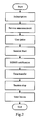
- a flowchart for recounting during MBMS data transfer of the second embodiment in accordance with the present invention includes the steps of:
- the UE first decides whether it is in the idle mode, and then decides whether it is in the URA-PCH state.
- this order of making decision has no effect on the result and can be set at will.
- a step for deciding is added based on the first preferred embodiment, i.e. when preparing to initiate a recounting procedure, the UTRAN decides how many UEs are in the URA-PCH state, if the number of the UEs is very small, these UEs will not be counted.
- Whether the number of the UEs in the URA-PCH is small or large can be determined by setting a threshold of the number of the UEs in the URA-PCH state, or by setting a threshold of the ratio of the UEs in the URA-PCH state among all UEs in the RRC connected state, for example, if the UEs in the URA-PCH state are less than 5% of all of the UEs in the RRC connected state, it will be considered that the number of the UEs in the URA-PCH state is small.
- the network side when notifying the UEs, the network side indicates through the recounting indication information that no recounting is to be carried out for the UEs in the URA-PCH state.
- the UEs in the URA-PCH state do not respond to this recounting indication information according to the indication after receiving this indication.
- the advantage of doing so is that the step for the few UEs currently in the URA-PCH state returning to the previous state can be omitted when the UTRAN still uses the PTM transmission mode so that unnecessary resource occupation could be reduced.
- This embodiment is an improvement of the first preferred embodiment.
- the UTRAN when preparing to initiate a recounting procedure, the UTRAN first counts the number of the UEs in both the CELL-FACH and the CELL-PCH states, if the counting result shows that the number of the UEs in the two states added together is much larger than the threshold, no recounting will be carried out, i.e. this procedure is terminated. For example, when the total number of the UEs in the two states exceeds a pre-defined threshold of the exceeding number, no recounting will be carried out.
- This embodiment improves the fourth preferred embodiment.
- the UTRAN when preparing to initiate a recounting procedure, the UTRAN will also count the number of the UEs in both the CELL-FACH and the CELL-PCH states. If the counting result shows that the number of the UEs in the two states added together is much larger than the threshold, the UEs in these two states are first inquired about whether they receive this MBMS service, then recounting is carried out if the counting result of the number of the UEs which receive the MBMS service is less than the threshold. The UTRAN may inquire the UEs in these two states directly via a dedicated or a common channel.
- the UTRAN may also adopt the approach described in the above second preferred embodiment, i.e. indicating that recounting is to be made for the UEs in the CELL-FACH and the CELL-PCH states through the recounting indication information.
- the UEs in the CELL-FACH and the CELL-PCH states are then counted according to the recounting indication information. This procedure is the same as Step 608 in Fig. 6 , and is not repeated herein.
- This embodiment also improves the fourth preferred embodiment.
- the number of the UEs in both the CELL-FACH and the CELL-PCH states is counted firstly, if the counting result shows that the number of the UEs in these two states added together is already close to the threshold, then the network side indicates through the recounting indication information not to recount the number of the UEs in the URA-PCH state. After receiving this indication, the UEs in the URA-PCH state do not respond to this indication of recounting according to the indication.
- Whether the number of the UEs in the two states added together is already close to the threshold is determined by pre-defining a range for being close to the threshold. If the number is within the range, it is close to the threshold, otherwise it is not close.
- the number of the UEs in the two connected states is already large, it is quite likely that the number of the UEs in the idle mode and the UEs in these two connected states has exceeded the threshold by querying, that is, the enquiry on the UEs in the URA-PCH state is omitted.
- the advantage of doing so is to omit the step of the UEs currently in the URA-PCH state returning to the previous state such that unnecessary occupation of resources could be avoided.
- the prominent feature of the present invention is that the UEs in the URA-PCH state also respond to the recounting indication.
- the UEs in the URA-PCH state which seldom occur to the mind of persons skilled in the art are ignored.
- recounting in accordance with the present invention presents a more accurate counting result than in the prior art and the selection of an MBMS bearer mode by the UTRAN based on this counting result is more appropriate.
Landscapes
- Engineering & Computer Science (AREA)
- Computer Networks & Wireless Communication (AREA)
- Signal Processing (AREA)
- Mobile Radio Communication Systems (AREA)
- Information Transfer Between Computers (AREA)
Claims (22)
- Procédé de recomptage dans un service de diffusion/multidiffusion multimédia, dit MBMS, lorsqu'un réseau d'accès radio, dit RAN, se prépare à lancer une procédure de recomptage, le procédé comprenant les étapes suivantes :envoi par le RAN d'informations d'indication de recomptage associées à un service MBMS et d'informations d'accès MBMS à un ou plusieurs équipements d'utilisateur, dits UE, (501) situés dans la zone de desserte du RAN, les informations de recomptage étant envoyées au cours de l'utilisation d'un mode de transmission point à multipoint, dit PTM ;détection par le ou les UE des informations d'indication de recomptage (502) et réponse du ou des UE aux informations d'indication de recomptage, si le ou les UE est/sont dans un mode inactif, ledit ou lesdits UE établissant une connexion de commande de ressources radio, dite RRC, compte tenu des informations d'indication de recomptage et des informations d'accès MBMS reçues (505) pour répondre aux informations d'indication de recomptage ;si le ou les UE est/sont dans un état de canal d'appel unilatéral de zone d'enregistrement de réseau d'accès radio UMTS, dit UTRAN, dit URA-PCH, ledit ou lesdits UE lance(nt) une procédure de mise à jour de cellule compte tenu des informations d'indication de recomptage et des informations d'accès MBMS reçues (505) pour répondre aux informations d'indication de recomptage ; etcomptage par le RAN du nombre d'UE qui ont rejoint le service MBMS et se situent dans une cellule compte tenu de l'état respectif des UE (507), le nombre d'UE comprenant le nombre d'UE dans le mode inactif qui ont rejoint le service MBMS et le nombre d'UE dans l'état URA-PCH qui ont rejoint le service MBMS ;établissement par le RAN si le nombre d'UE atteint un seuil préalablement défini utilisé pour établir s'il convient de poursuivre l'utilisation du mode de transmission PTM ;poursuite de l'utilisation par le RAN du mode de transmission PTM si le nombre d'UE atteint le seuil préalablement défini ;commutation par le RAN du mode de transmission pour passer du mode de transmission PTM à un mode de transmission point à point, dit PTP, si le nombre d'UE n'atteint pas le seuil préalablement défini.
- Procédé selon la revendication 1, l'étape d'envoi par le RAN des informations d'indication de recomptage et des informations d'accès MBMS comprenant les étapes suivantes :configuration des informations d'indication de recomptage de sorte qu'elles contiennent une identité de service MBMS,ajout de l'identité de service MBMS et d'un premier facteur de probabilité aux informations d'accès MBMS, etenvoi respectif des informations d'indication de recomptage et des informations d'accès MBMS aux UE par un canal de commande point à multipoint MBMS, dit MCCH (501).
- Procédé selon la revendication 2, l'étape de détection par les UE des informations d'indication de recomptage et de réponse des UE aux informations d'indication de recomptage comprenant les étapes suivantes :réception par les UE dans le mode inactif des informations d'accès MBMS, identification par les UE du premier facteur de probabilité de l'identité de service MBMS qui est identique à celui contenu dans les informations d'indication de recomptage, vérification par les UE du premier facteur de probabilité, et réponse des UE aux informations d'indication de recomptage en lançant la procédure d'établissement de connexion RRC en cas de succès de la vérification ; etréception par les UE dans l'état URA-PCH des informations d'accès MBMS, identification par les UE du premier facteur de probabilité de l'identité de service MBMS qui est identique à celui contenu dans les informations d'indication de recomptage, vérification par les UE du premier facteur de probabilité, et réponse des UE aux informations d'indication de recomptage en lançant la procédure de mise à jour de cellule en cas de succès de la vérification.
- Procédé selon la revendication 2, comprenant en outre les étapes suivantes :préalablement à l'envoi des informations d'indication de recomptage, comptage par le RAN du nombre d'UE dans le RAN dans l'état URA-PCH, et décision par le RAN s'il convient d'utiliser un deuxième facteur de probabilité pour les UE dans le RAN dans l'état URA-PCH compte tenu du résultat du comptage (601) ;en cas de décision qu'il convient d'utiliser le deuxième facteur de probabilité, configuration par le RAN des informations d'indication de recomptage qui contiennent l'identité de service MBMS et indiquent que le deuxième facteur de probabilité y est utilisé, ajout de l'identité de service MBMS, du premier facteur de probabilité et du deuxième facteur de probabilité aux informations d'accès MBMS, etenvoi respectif des informations d'indication de recomptage et des informations d'accès MBMS aux UE par le MCCH (602).
- Procédé selon la revendication 4, l'étape de décision s'il convient d'utiliser le deuxième facteur de probabilité pour les UE dans le RAN dans l'état URA-PCH compte tenu du résultat du comptage (601) comprenant les étapes suivantes :estimation par le RAN de la valeur du deuxième facteur de probabilité compte tenu du nombre d'UE dans le RAN dans l'état URA-PCH, en utilisant un deuxième facteur de probabilité plus élevé si le nombre est petit, en utilisant un deuxième facteur de probabilité moins élevé si le nombre est grand ; si le deuxième facteur de probabilité estimé est proche du premier facteur de probabilité, choix par le RAN du premier facteur de probabilité à la place du deuxième facteur de probabilité ; dans le cas contraire, choix par le RAN du deuxième facteur de probabilité.
- Procédé selon la revendication 5, un seuil préalablement défini du nombre d'UE dans le RAN dans l'état URA-PCH permettant d'établir si le nombre d'UE dans le RAN dans l'état URA-PCH est petit ou grand ; et
un intervalle de différence préalablement défini entre les facteurs de probabilité permettant d'établir si le deuxième facteur de probabilité estimé est proche du premier facteur de probabilité, autrement dit si la différence s'inscrit dans l'intervalle, les facteurs sont proches, et si la différence ne s'inscrit pas dans l'intervalle, les facteurs ne sont pas proches. - Procédé selon la revendication 4, en cas de décision par le RAN qu'il convient d'utiliser le deuxième facteur de probabilité pour les UE dans le RAN dans l'état URA-PCH, l'étape de détection par les UE des informations d'indication de recomptage et de réponse des UE aux informations d'indication de recomptage comprenant les étapes suivantes :dès réception des informations d'accès MBMS, lecture par les UE dans le mode inactif du premier facteur de probabilité de l'identité de service MBMS qui est identique à celui contenu dans les informations d'indication de recomptage, et vérification par les UE du premier facteur de probabilité ; lancement par les UE dans le mode inactif pour lesquels la vérification a été couronnée de succès de la procédure d'établissement de connexion RRC (609) ;dès réception des informations d'accès MBMS, lecture par les UE dans l'état URA-PCH du deuxième facteur de probabilité de l'identité de service MBMS qui est identique à celui contenu dans les informations d'indication de recomptage et vérification par les UE du deuxième facteur de probabilité ; lancement par les UE dans l'état URA-PCH de la procédure de mise à jour de cellule (607).
- Procédé selon la revendication 3 ou 4, comprenant en outre les étapes suivantes :détection par un UE dans un état de canal d'appel unilatéral de cellule, dit CELL-PCH, des informations d'indication de recomptage, réception par l'UE des informations d'accès MBMS, et identification par l'UE du facteur de probabilité correspondant à l'identité de service MBMS qui est identique à l'identité de service MBMS contenue dans les informations d'indication de recomptage, vérification par l'UE de ce facteur de probabilité ; en cas de succès de la vérification, réponse de l'UE aux informations d'indication de recomptage en lançant la procédure de mise à jour de cellule ; ousurveillance par un UE dans un état de canal d'accès aller de cellule, dit CELL-FACH, des informations d'indication de recomptage, réception par l'UE des informations d'accès MBMS, identification par l'UE du facteur de probabilité correspondant à l'identité de service MBMS qui est identique à l'identité de service MBMS contenue dans les informations d'indication de recomptage, vérification par l'UE du facteur de probabilité ; en cas de succès de la vérification, réponse de l'UE aux informations d'indication de recomptage en lançant une procédure de mise à jour de cellule ou réponse de l'UE par un canal de commande.
- Procédé selon la revendication 1, l'étape de détection par les UE des informations d'indication de recomptage (502) comprenant les étapes suivantes :surveillance du MCCH pour la réception d'un message de notification ; etdétection d'informations d'indication de recomptage pour un service MBMS dans le message de notification reçu du MCCH.
- Procédé selon la revendication 1, l'étape de comptage par le RAN du nombre d'UE qui ont rejoint le service MBMS et se situent dans une cellule compte tenu de l'état respectif des UE comprenant : le comptage par le RAN des UE intéressés par le service MBMS par combinaison des UE en liaison avec le CN et de la réponse de comptage reçue des UE.
- Procédé selon la revendication 1, comprenant en outre l'étape suivante : comptage par le RAN du nombre d'UE dans le RAN dans l'état URA-PCH préalablement à l'envoi des informations d'indication de recomptage ; si le nombre d'UE dans le RAN dans l'état URA-PCH est grand, indication par le RAN de la nécessité de recompter le nombre d'UE dans l'état URA-PCH qui ont rejoint le service MBMS et se situent dans la cellule par le biais des informations d'indication de recomptage.
- Procédé selon la revendication 11, la définition d'un seuil du nombre d'UE dans le RAN dans l'état URA-PCH ou la définition préalable d'un seuil d'une proportion d'UE dans le RAN dans l'état URA-PCH parmi tous les UE dans l'état de connexion RRC permettant d'établir si le nombre d'UE dans le RAN dans l'état URA-PCH est petit ou grand.
- Procédé selon la revendication 1, comprenant en outre le comptage par le RAN du nombre d'UE dans chaque état CELL-FACH et CELL-PCH préalablement à l'envoi des informations d'indication de recomptage ; si le résultat du comptage montre que le nombre total d'UE dans ces deux états atteint le seuil utilisé pour établir s'il convient d'utiliser le mode de transmission point à multipoint, dit PTM, interruption par le RAN de la procédure de recomptage.
- Procédé selon la revendication 1, comprenant en outre le comptage par le RAN du nombre d'UE dans chaque état CELL-FACH et CELL-PCH préalablement à l'envoi des informations d'indication de recomptage ; si le résultat du comptage montre que le nombre total d'UE dans ces deux états atteint le seuil utilisé pour établir s'il convient d'utiliser le mode de transmission point à multipoint, dit PTM, interrogation par le RAN des UE dans ces deux états pour établir si les UE sont intéressés par une nouvelle réception et une nouvelle exécution de la procédure de recomptage jusqu'à ce que le seuil utilisé pour établir s'il convient d'utiliser le mode de transmission PTM soit atteint.
- Procédé selon la revendication 13 ou 14, la fixation d'un seuil de nombre en excès permettant d'établir si le nombre total d'UE dans ces deux états combinés excède largement le seuil utilisé pour établir s'il convient d'utiliser le mode de transmission PTM.
- Procédé selon la revendication 14, le RAN interrogeant les UE dans les deux états connectés directement par un canal dédié ou commun.
- Procédé selon la revendication 1, comprenant en outre le comptage par le RAN du nombre d'UE dans les deux états connectés de CELL-FACH et de CELL-PCH préalablement à l'envoi des informations d'indication de recomptage ; si le résultat du comptage montre que le nombre combiné d'UE dans ces deux états n'est pas proche du seuil utilisé pour établir s'il convient d'utiliser le mode de transmission PTM, indication par le RAN de la nécessité de recompter le nombre d'UE dans l'état URA-PCH qui ont rejoint le service MBMS et se situent dans la cellule par le biais des informations d'indication de recomptage.
- Procédé selon la revendication 17, un intervalle préalablement défini de proximité vis-à-vis du seuil permettant d'établir si le nombre combiné d'UE dans les deux états est proche du seuil, autrement dit si le nombre s'inscrit dans l'intervalle, il est proche du seuil, dans le cas contraire il n'est pas proche du seuil.
- Procédé selon la revendication 18, comprenant en outre l'étape suivante :détection par l'UE dans l'état CELL-PCH des informations d'indication de recomptage et réponse de l'UE aux informations d'indication de recomptage en lançant la procédure de mise à jour de cellule compte tenu des informations d'indication de recomptage et des informations d'accès MBMS reçues ; oudétection par l'UE dans l'état CELL-FACH des informations d'indication de recomptage et réponse de l'UE aux informations d'indication de recomptage en lançant la procédure de mise à jour de cellule, ou réponse de l'UE par le canal de commande compte tenu des informations d'indication de recomptage et des informations d'accès MBMS reçues.
- Procédé selon la revendication 1, dans lequel, si le résultat du comptage du nombre d'UE est inférieur au seuil préalablement défini utilisé pour établir s'il convient d'utiliser le mode de transmission PTM, la procédure de recomptage est répétée un nombre de fois préalablement défini ; si les résultats du recomptage répété un nombre de fois continu préalablement défini sont tous inférieurs au seuil utilisé pour établir s'il convient d'utiliser le mode de transmission PTM, établir qu'il convient d'utiliser le mode de transmission PTP.
- Procédé selon la revendication 1, comprenant en outre la décision par le RAN qu'il convient d'utiliser le mode de transmission PTM, le renvoi par le RAN des UE dans le mode inactif par une procédure de libération de connexion RRC ou le renvoi par le RAN des UE dans l'état URA-PCH à l'état précédent.
- Système de recomptage dans un service de diffusion/multidiffusion multimédia, dit MBMS, le système comprenant :un ou plusieurs équipements d'utilisateur, UE, comprenant :un premier module, permettant la détection d'informations d'indication de recomptage pour un service MBMS (502) ;un deuxième module, permettant la détection d'informations d'accès MBMS ;un troisième module, permettant la réponse aux informations d'indication de recomptage par établissement d'une connexion de commande de ressources radio, dite RRC, compte tenu des informations d'indication de recomptage et des informations d'accès MBMS reçues (505) si le ou les UE est/sont dans un mode inactif, ; etun quatrième module, permettant la réponse aux informations d'indication de recomptage par lancement d'une procédure de mise à jour de cellule, compte tenu des informations d'indication de recomptage et des informations d'accès MBMS reçues (505) si le ou les UE est/sont dans un état de canal d'appel unilatéral de zone d'enregistrement de réseau d'accès radio UMTS, dit UTRAN, dit URA-PCH ; etle système comprenant en outre :un réseau d'accès radio, dit RAN, conçu pour envoyer des informations d'indication de recomptage et les informations d'accès MBMS à un ou plusieurs équipements d'utilisateur, dits UE, (501) situés dans la zone de desserte du RAN, les informations de recomptage étant envoyées au cours de l'utilisation d'un mode de transmission point à multipoint, dit PTM ; et conçu pour :compter le nombre d'UE qui ont rejoint le service MBMS et se situent dans une cellule compte tenu de l'état respectif des UE (507), le nombre d'UE comprenant le nombre d'UE dans le mode inactif qui ont rejoint le service MBMS et le nombre d'UE dans l'état URA-PCH qui ont rejoint le service MBMS ;établir si le nombre d'UE atteint un seuil préalablement défini utilisé pour établir s'il convient de poursuivre l'utilisation du mode de transmission PTM ;poursuivre l'utilisation du mode de transmission PTM si le nombre d'UE atteint le seuil préalablement défini ;commuter le mode de transmission pour passer du mode de transmission PTM à un mode de transmission point à point, dit PTP, si le nombre d'UE n'atteint pas le seuil préalablement défini.
Applications Claiming Priority (2)
| Application Number | Priority Date | Filing Date | Title |
|---|---|---|---|
| CNB2004100793565A CN1315309C (zh) | 2004-09-30 | 2004-09-30 | 多媒体广播组播业务系统中重新计数的方法 |
| PCT/CN2005/001632 WO2006034656A1 (fr) | 2004-09-30 | 2005-09-30 | Procede de decompte dans un service de diffusion/multidiffusion de multimedias |
Publications (3)
| Publication Number | Publication Date |
|---|---|
| EP1729535A1 EP1729535A1 (fr) | 2006-12-06 |
| EP1729535A4 EP1729535A4 (fr) | 2007-05-09 |
| EP1729535B1 true EP1729535B1 (fr) | 2011-03-16 |
Family
ID=36118594
Family Applications (1)
| Application Number | Title | Priority Date | Filing Date |
|---|---|---|---|
| EP05795443A Expired - Lifetime EP1729535B1 (fr) | 2004-09-30 | 2005-09-30 | Procede et systeme de decompte dans un service de diffusion/multidiffusion de multimedias |
Country Status (8)
| Country | Link |
|---|---|
| US (1) | US20070070972A1 (fr) |
| EP (1) | EP1729535B1 (fr) |
| CN (1) | CN1315309C (fr) |
| AT (1) | ATE502495T1 (fr) |
| BR (1) | BRPI0510531B1 (fr) |
| CA (1) | CA2561045C (fr) |
| DE (1) | DE602005026920D1 (fr) |
| WO (1) | WO2006034656A1 (fr) |
Families Citing this family (39)
| Publication number | Priority date | Publication date | Assignee | Title |
|---|---|---|---|---|
| GB2456930B (en) * | 2004-03-24 | 2010-01-06 | Samsung Electronics Co Ltd | Mobile communications |
| DE602004003933T2 (de) | 2004-08-06 | 2007-04-12 | Matsushita Electric Industrial Co., Ltd., Kadoma | Rückkopplungssteuerung für Multicast und Broadcast Dienste |
| CN1286332C (zh) * | 2004-08-12 | 2006-11-22 | 华为技术有限公司 | Mbms业务传输方法 |
| US20070248088A1 (en) * | 2006-04-21 | 2007-10-25 | Lim Seau S | Method and apparatus for transmitting a multicast message |
| CN101064558B (zh) * | 2006-04-26 | 2011-12-28 | 大唐移动通信设备有限公司 | 一种无线通信系统中实现广播组播的方法 |
| GB2439369A (en) * | 2006-06-26 | 2007-12-27 | Samsung Electronics Co Ltd | Grouping and transmitting mobile television services available to a mobile device user |
| CN101115263B (zh) * | 2006-07-27 | 2010-07-14 | 中兴通讯股份有限公司 | 一种测量小区更新频度的系统及方法 |
| GB2441165B (en) * | 2006-08-21 | 2011-02-09 | Ipwireless Inc | Cellular communication system, network controller and method for obtaining feedback from subscriber communication units |
| JP4981813B2 (ja) * | 2006-09-26 | 2012-07-25 | シャープ株式会社 | 位置管理装置、移動局装置、基地局装置、周波数層制御方法、プログラムおよび記録媒体 |
| CN101155379B (zh) * | 2006-09-30 | 2011-01-19 | 诺基亚西门子网络两合公司 | 一种计数方法及网络控制设备 |
| CN101163321B (zh) * | 2006-10-13 | 2012-04-18 | 华为技术有限公司 | 多播广播业务用户数目统计方法及基站 |
| CN101166104B (zh) * | 2006-10-16 | 2010-05-19 | 中兴通讯股份有限公司 | 用于ptm承载模式下的重计数周期调整装置及方法 |
| CN101170720B (zh) * | 2006-10-27 | 2010-12-29 | 中兴通讯股份有限公司 | Mbms广播模式下的无线接口计数方法和装置 |
| CN1946237B (zh) * | 2006-10-30 | 2010-08-11 | 华为技术有限公司 | 多播广播系统中小区传输模式确定方法及其设备 |
| CN100466532C (zh) * | 2006-10-30 | 2009-03-04 | 华为技术有限公司 | 广播多播业务传输模式的设置方法及其系统 |
| US8442233B2 (en) * | 2006-11-01 | 2013-05-14 | Telefonaktiebolaget Lm Ericsson (Publ) | Telecommunication systems and encryption of control messages in such systems |
| CN101193341B (zh) * | 2006-11-29 | 2010-09-29 | 中兴通讯股份有限公司 | 发送方式选择和切换方法 |
| CN101212392B (zh) * | 2006-12-30 | 2012-02-22 | 上海瑞高信息技术有限公司 | 移动多媒体广播卫星分发数据封装及同步方法 |
| CN101212394B (zh) * | 2006-12-31 | 2012-10-10 | 华为技术有限公司 | 激活mbms服务的方法及系统、传输组播数据的方法及系统 |
| KR100969318B1 (ko) * | 2007-01-25 | 2010-07-09 | 엘지전자 주식회사 | 멀티캐스트 데이터 송수신 방법 |
| US7852795B2 (en) | 2007-04-20 | 2010-12-14 | Research In Motion Limited | Polling method and apparatus for long term evolution multimedia broadcast multicast services |
| US8780777B2 (en) | 2007-04-20 | 2014-07-15 | Blackberry Limited | Method and apparatus for user equipment for long term evolution multimedia broadcast multicast services |
| US8130687B2 (en) | 2007-04-27 | 2012-03-06 | Research In Motion Limited | Multi-stage setup for long-term evolution multimedia broadcast multicast service transmissions |
| ATE432000T1 (de) * | 2007-06-19 | 2009-06-15 | Alcatel Lucent | Auswahlverfahren zwischen mehreren betriebsmodi für die bereitstellung eines rundfunk- oder multicast-dienstes |
| US7715342B2 (en) | 2007-06-22 | 2010-05-11 | Research In Motion Limited | Location of packet data convergence protocol in a long-term evolution multimedia broadcast multicast service |
| CN101374060B (zh) * | 2007-08-22 | 2011-06-15 | 鼎桥通信技术有限公司 | 一种多媒体广播/组播业务传输方法及装置 |
| US20090109912A1 (en) * | 2007-10-25 | 2009-04-30 | Interdigital Patent Holdings, Inc. | Method and apparatus for pre-allocation of uplink channel resources |
| JP5183746B2 (ja) * | 2007-11-01 | 2013-04-17 | トムソン ライセンシング | マルチキャスト方法 |
| CN101304560B (zh) * | 2008-06-10 | 2011-05-04 | 中国科学院计算技术研究所 | 一种无线广播多播系统及方法 |
| JP5191830B2 (ja) * | 2008-07-22 | 2013-05-08 | パナソニック株式会社 | 無線基地局、無線通信端末、無線通信システム |
| WO2010112046A1 (fr) * | 2009-04-02 | 2010-10-07 | Telefonaktiebolaget Lm Ericsson (Publ) | Technique de multidiffusion pour couches multimédias à codage hiérarchique |
| US8891427B2 (en) * | 2009-04-24 | 2014-11-18 | Telefonaktiebolaget Lm Ericsson (Publ) | Method and a system for providing MBMS counting |
| CN101969602B (zh) * | 2009-07-28 | 2012-06-27 | 电信科学技术研究院 | 信道内容变更通知及信道重检测方法、系统和设备 |
| KR101742321B1 (ko) | 2010-12-21 | 2017-06-01 | 한국전자통신연구원 | 멀티미디어 브로드캐스트 및 멀티캐스트 서비스 카운팅 방법 및 장치 |
| CN102695130B (zh) * | 2011-03-21 | 2016-12-21 | 中兴通讯股份有限公司 | Mbms业务发送方式切换方法、装置和用户设备 |
| US8817690B2 (en) * | 2011-04-04 | 2014-08-26 | Qualcomm Incorporated | Method and apparatus for scheduling network traffic in the presence of relays |
| US8750179B2 (en) | 2011-08-15 | 2014-06-10 | Blackberry Limited | Efficient multimedia broadcast multicast service continuity methods |
| KR102353202B1 (ko) | 2015-11-06 | 2022-01-19 | 삼성전자 주식회사 | 공공 안전 망 서비스를 지원하는 통신 시스템에서 서비스 향상 방법 및 장치 |
| US11799710B2 (en) * | 2020-12-10 | 2023-10-24 | Qualcomm Incorporated | Techniques for signaling a source of dominant noise at a user equipment |
Family Cites Families (12)
| Publication number | Priority date | Publication date | Assignee | Title |
|---|---|---|---|---|
| US7957721B2 (en) * | 2001-02-13 | 2011-06-07 | Telefonaktiebolaget Lm Ericsson (Publ) | Coordinated subscriber access handling for shared network support |
| US7076248B2 (en) * | 2001-09-10 | 2006-07-11 | Telefonaktiebolaget Lm Ericsson (Publ) | Recovery of mobile station(s) in connected mode upon RNC failure |
| CN1496142A (zh) * | 2002-08-16 | 2004-05-12 | 北京三星通信技术研究有限公司 | Mbms点对点信道和点对多点信道的转换方法 |
| CN1496141A (zh) * | 2002-08-16 | 2004-05-12 | 北京三星通信技术研究有限公司 | Mbms点对点信道和点对多点信道的转换方法 |
| CN1486005A (zh) * | 2002-09-23 | 2004-03-31 | 华为技术有限公司 | 多媒体广播/多播业务方法 |
| CN1499765A (zh) * | 2002-11-11 | 2004-05-26 | 北京三星通信技术研究有限公司 | 控制无线单元控制器中多媒体广播组播业务上下文的更新方法 |
| JP4411842B2 (ja) * | 2003-01-10 | 2010-02-10 | 日本電気株式会社 | 移動通信システム及びそれに用いる無線制御装置及びその動作制御方法 |
| CN101505459A (zh) * | 2003-01-13 | 2009-08-12 | 北京三星通信技术研究有限公司 | 解决处于rrc连接模式ue移动的方法 |
| WO2004073256A1 (fr) * | 2003-02-12 | 2004-08-26 | Samsung Electronics Co., Ltd. | Procede pour gerer un service d'appel de personnes servant a appeler des equipements utilisateur dans un service de diffusion / de diffusion selective de multimedia |
| WO2005006596A1 (fr) * | 2003-07-09 | 2005-01-20 | Samsung Electronics Co., Ltd. | Procede de declenchement d'une signalisation de liaison montante proactivement par un equipement de service multimedia de multidiffusion/diffusion |
| US7400593B2 (en) * | 2003-08-15 | 2008-07-15 | Samsung Electronics Co., Ltd | Method for distinguishing MBMS service request from other service requests |
| SE0400340D0 (sv) * | 2004-02-11 | 2004-02-11 | Ericsson Telefon Ab L M | Method in a communication system |
-
2004
- 2004-09-30 CN CNB2004100793565A patent/CN1315309C/zh not_active Expired - Lifetime
-
2005
- 2005-09-30 AT AT05795443T patent/ATE502495T1/de not_active IP Right Cessation
- 2005-09-30 BR BRPI0510531-5A patent/BRPI0510531B1/pt active IP Right Grant
- 2005-09-30 WO PCT/CN2005/001632 patent/WO2006034656A1/fr not_active Ceased
- 2005-09-30 EP EP05795443A patent/EP1729535B1/fr not_active Expired - Lifetime
- 2005-09-30 CA CA2561045A patent/CA2561045C/fr not_active Expired - Lifetime
- 2005-09-30 DE DE602005026920T patent/DE602005026920D1/de not_active Expired - Lifetime
-
2006
- 2006-09-25 US US11/526,491 patent/US20070070972A1/en not_active Abandoned
Also Published As
| Publication number | Publication date |
|---|---|
| ATE502495T1 (de) | 2011-04-15 |
| CN1315309C (zh) | 2007-05-09 |
| BRPI0510531A (pt) | 2007-10-30 |
| EP1729535A1 (fr) | 2006-12-06 |
| CA2561045A1 (fr) | 2006-04-06 |
| WO2006034656A1 (fr) | 2006-04-06 |
| DE602005026920D1 (de) | 2011-04-28 |
| EP1729535A4 (fr) | 2007-05-09 |
| CN1756231A (zh) | 2006-04-05 |
| BRPI0510531B1 (pt) | 2018-10-09 |
| CA2561045C (fr) | 2013-09-03 |
| US20070070972A1 (en) | 2007-03-29 |
Similar Documents
| Publication | Publication Date | Title |
|---|---|---|
| CA2561045C (fr) | Procede de decompte dans un service de diffusion/multidiffusion de multimedias | |
| CA2522186C (fr) | Methode de comptage du nombre d'abonnes de service de diffusion multidiffustion multimedia | |
| KR100664278B1 (ko) | Mbms 무선통신 시스템 | |
| EP1777842B1 (fr) | Procede de transmission de service de serveur de diffusion/multi-diffusion multimedia | |
| US7197333B2 (en) | Paging system and method for providing multicast multimedia broadcast/multicast service | |
| KR101233904B1 (ko) | 가입자 통신 유닛으로부터의 피드백을 획득하기 위한 셀룰라 통신 시스템, 네트워크 컨트롤러 및 방법 | |
| EP1761079B1 (fr) | Methode de simplification de procede de transmission de message | |
| CN100442701C (zh) | 网络侧获知用户接收多媒体广播/组播业务情况的方法 | |
| EP1796405A1 (fr) | Procede et appareil d'identification et d'acheminement de services dans un systeme de services de diffusion multimedia/multidiffusion | |
| EP1793636B1 (fr) | Procede pour commander un terminal utilisateur selectionnant une cellule dans un systeme de radiocommunications | |
| CN1585316A (zh) | 为mbms业务建立公共传输信道的方法 | |
| WO2004043025A1 (fr) | Procede d'etablissement de support d'acces radio (rab) pour un service de multidiffusion et diffusion multimedia (mbms) | |
| EP1804547B1 (fr) | Procede de realisation d'operations au niveau de la frequence dans les services de diffusion/multiplexage multimedia | |
| CN100527751C (zh) | 多媒体广播组播业务用户数量的统计方法 | |
| CN100396147C (zh) | 一种无线通信中控制移动设备选择小区的方法 | |
| CN101090392B (zh) | 一种多业务接收方法 | |
| CN101207910A (zh) | 选择业务的上报方法和装置 |
Legal Events
| Date | Code | Title | Description |
|---|---|---|---|
| PUAI | Public reference made under article 153(3) epc to a published international application that has entered the european phase |
Free format text: ORIGINAL CODE: 0009012 |
|
| 17P | Request for examination filed |
Effective date: 20060928 |
|
| AK | Designated contracting states |
Kind code of ref document: A1 Designated state(s): AT BE BG CH CY CZ DE DK EE ES FI FR GB GR HU IE IS IT LI LT LU LV MC NL PL PT RO SE SI SK TR |
|
| A4 | Supplementary search report drawn up and despatched |
Effective date: 20070411 |
|
| RIC1 | Information provided on ipc code assigned before grant |
Ipc: H04L 29/06 20060101ALI20070403BHEP Ipc: H04L 12/56 20060101ALI20070403BHEP Ipc: H04Q 7/22 20060101AFI20070403BHEP Ipc: H04L 12/18 20060101ALI20070403BHEP |
|
| DAX | Request for extension of the european patent (deleted) | ||
| 17Q | First examination report despatched |
Effective date: 20080821 |
|
| RTI1 | Title (correction) |
Free format text: RECOUNTING METHOD, SYSTEM AND USER EQUIPMENT IN MULTIMEDIA BROADCAST/MULTICAST SERVICE |
|
| GRAP | Despatch of communication of intention to grant a patent |
Free format text: ORIGINAL CODE: EPIDOSNIGR1 |
|
| RIC1 | Information provided on ipc code assigned before grant |
Ipc: H04L 29/06 20060101ALI20101203BHEP Ipc: H04W 4/06 20090101AFI20101203BHEP Ipc: H04L 12/56 20060101ALI20101203BHEP |
|
| RTI1 | Title (correction) |
Free format text: RECOUNTING METHOD AND SYSTEM IN MULTIMEDIA BROADCAST/MULTICAST SERVICE |
|
| GRAS | Grant fee paid |
Free format text: ORIGINAL CODE: EPIDOSNIGR3 |
|
| GRAA | (expected) grant |
Free format text: ORIGINAL CODE: 0009210 |
|
| AK | Designated contracting states |
Kind code of ref document: B1 Designated state(s): AT BE BG CH CY CZ DE DK EE ES FI FR GB GR HU IE IS IT LI LT LU LV MC NL PL PT RO SE SI SK TR |
|
| REG | Reference to a national code |
Ref country code: GB Ref legal event code: FG4D |
|
| REG | Reference to a national code |
Ref country code: CH Ref legal event code: EP |
|
| REG | Reference to a national code |
Ref country code: IE Ref legal event code: FG4D |
|
| REF | Corresponds to: |
Ref document number: 602005026920 Country of ref document: DE Date of ref document: 20110428 Kind code of ref document: P |
|
| REG | Reference to a national code |
Ref country code: DE Ref legal event code: R096 Ref document number: 602005026920 Country of ref document: DE Effective date: 20110428 |
|
| REG | Reference to a national code |
Ref country code: NL Ref legal event code: VDEP Effective date: 20110316 |
|
| PG25 | Lapsed in a contracting state [announced via postgrant information from national office to epo] |
Ref country code: LV Free format text: LAPSE BECAUSE OF FAILURE TO SUBMIT A TRANSLATION OF THE DESCRIPTION OR TO PAY THE FEE WITHIN THE PRESCRIBED TIME-LIMIT Effective date: 20110316 Ref country code: LT Free format text: LAPSE BECAUSE OF FAILURE TO SUBMIT A TRANSLATION OF THE DESCRIPTION OR TO PAY THE FEE WITHIN THE PRESCRIBED TIME-LIMIT Effective date: 20110316 Ref country code: GR Free format text: LAPSE BECAUSE OF FAILURE TO SUBMIT A TRANSLATION OF THE DESCRIPTION OR TO PAY THE FEE WITHIN THE PRESCRIBED TIME-LIMIT Effective date: 20110617 Ref country code: SE Free format text: LAPSE BECAUSE OF FAILURE TO SUBMIT A TRANSLATION OF THE DESCRIPTION OR TO PAY THE FEE WITHIN THE PRESCRIBED TIME-LIMIT Effective date: 20110316 Ref country code: ES Free format text: LAPSE BECAUSE OF FAILURE TO SUBMIT A TRANSLATION OF THE DESCRIPTION OR TO PAY THE FEE WITHIN THE PRESCRIBED TIME-LIMIT Effective date: 20110627 |
|
| LTIE | Lt: invalidation of european patent or patent extension |
Effective date: 20110316 |
|
| PG25 | Lapsed in a contracting state [announced via postgrant information from national office to epo] |
Ref country code: FI Free format text: LAPSE BECAUSE OF FAILURE TO SUBMIT A TRANSLATION OF THE DESCRIPTION OR TO PAY THE FEE WITHIN THE PRESCRIBED TIME-LIMIT Effective date: 20110316 Ref country code: SI Free format text: LAPSE BECAUSE OF FAILURE TO SUBMIT A TRANSLATION OF THE DESCRIPTION OR TO PAY THE FEE WITHIN THE PRESCRIBED TIME-LIMIT Effective date: 20110316 Ref country code: BG Free format text: LAPSE BECAUSE OF FAILURE TO SUBMIT A TRANSLATION OF THE DESCRIPTION OR TO PAY THE FEE WITHIN THE PRESCRIBED TIME-LIMIT Effective date: 20110616 Ref country code: AT Free format text: LAPSE BECAUSE OF FAILURE TO SUBMIT A TRANSLATION OF THE DESCRIPTION OR TO PAY THE FEE WITHIN THE PRESCRIBED TIME-LIMIT Effective date: 20110316 Ref country code: CY Free format text: LAPSE BECAUSE OF FAILURE TO SUBMIT A TRANSLATION OF THE DESCRIPTION OR TO PAY THE FEE WITHIN THE PRESCRIBED TIME-LIMIT Effective date: 20110316 |
|
| PG25 | Lapsed in a contracting state [announced via postgrant information from national office to epo] |
Ref country code: BE Free format text: LAPSE BECAUSE OF FAILURE TO SUBMIT A TRANSLATION OF THE DESCRIPTION OR TO PAY THE FEE WITHIN THE PRESCRIBED TIME-LIMIT Effective date: 20110316 |
|
| PG25 | Lapsed in a contracting state [announced via postgrant information from national office to epo] |
Ref country code: EE Free format text: LAPSE BECAUSE OF FAILURE TO SUBMIT A TRANSLATION OF THE DESCRIPTION OR TO PAY THE FEE WITHIN THE PRESCRIBED TIME-LIMIT Effective date: 20110316 Ref country code: PT Free format text: LAPSE BECAUSE OF FAILURE TO SUBMIT A TRANSLATION OF THE DESCRIPTION OR TO PAY THE FEE WITHIN THE PRESCRIBED TIME-LIMIT Effective date: 20110718 |
|
| PG25 | Lapsed in a contracting state [announced via postgrant information from national office to epo] |
Ref country code: RO Free format text: LAPSE BECAUSE OF FAILURE TO SUBMIT A TRANSLATION OF THE DESCRIPTION OR TO PAY THE FEE WITHIN THE PRESCRIBED TIME-LIMIT Effective date: 20110316 Ref country code: IS Free format text: LAPSE BECAUSE OF FAILURE TO SUBMIT A TRANSLATION OF THE DESCRIPTION OR TO PAY THE FEE WITHIN THE PRESCRIBED TIME-LIMIT Effective date: 20110716 Ref country code: CZ Free format text: LAPSE BECAUSE OF FAILURE TO SUBMIT A TRANSLATION OF THE DESCRIPTION OR TO PAY THE FEE WITHIN THE PRESCRIBED TIME-LIMIT Effective date: 20110316 Ref country code: SK Free format text: LAPSE BECAUSE OF FAILURE TO SUBMIT A TRANSLATION OF THE DESCRIPTION OR TO PAY THE FEE WITHIN THE PRESCRIBED TIME-LIMIT Effective date: 20110316 |
|
| PG25 | Lapsed in a contracting state [announced via postgrant information from national office to epo] |
Ref country code: NL Free format text: LAPSE BECAUSE OF FAILURE TO SUBMIT A TRANSLATION OF THE DESCRIPTION OR TO PAY THE FEE WITHIN THE PRESCRIBED TIME-LIMIT Effective date: 20110316 |
|
| PLBE | No opposition filed within time limit |
Free format text: ORIGINAL CODE: 0009261 |
|
| STAA | Information on the status of an ep patent application or granted ep patent |
Free format text: STATUS: NO OPPOSITION FILED WITHIN TIME LIMIT |
|
| 26N | No opposition filed |
Effective date: 20111219 |
|
| PG25 | Lapsed in a contracting state [announced via postgrant information from national office to epo] |
Ref country code: DK Free format text: LAPSE BECAUSE OF FAILURE TO SUBMIT A TRANSLATION OF THE DESCRIPTION OR TO PAY THE FEE WITHIN THE PRESCRIBED TIME-LIMIT Effective date: 20110316 Ref country code: PL Free format text: LAPSE BECAUSE OF FAILURE TO SUBMIT A TRANSLATION OF THE DESCRIPTION OR TO PAY THE FEE WITHIN THE PRESCRIBED TIME-LIMIT Effective date: 20110316 |
|
| REG | Reference to a national code |
Ref country code: DE Ref legal event code: R097 Ref document number: 602005026920 Country of ref document: DE Effective date: 20111219 |
|
| PG25 | Lapsed in a contracting state [announced via postgrant information from national office to epo] |
Ref country code: MC Free format text: LAPSE BECAUSE OF NON-PAYMENT OF DUE FEES Effective date: 20110930 |
|
| REG | Reference to a national code |
Ref country code: CH Ref legal event code: PL |
|
| PG25 | Lapsed in a contracting state [announced via postgrant information from national office to epo] |
Ref country code: IT Free format text: LAPSE BECAUSE OF FAILURE TO SUBMIT A TRANSLATION OF THE DESCRIPTION OR TO PAY THE FEE WITHIN THE PRESCRIBED TIME-LIMIT Effective date: 20110316 |
|
| REG | Reference to a national code |
Ref country code: IE Ref legal event code: MM4A |
|
| REG | Reference to a national code |
Ref country code: DE Ref legal event code: R119 Ref document number: 602005026920 Country of ref document: DE Effective date: 20120403 |
|
| PG25 | Lapsed in a contracting state [announced via postgrant information from national office to epo] |
Ref country code: IE Free format text: LAPSE BECAUSE OF NON-PAYMENT OF DUE FEES Effective date: 20110930 Ref country code: LI Free format text: LAPSE BECAUSE OF NON-PAYMENT OF DUE FEES Effective date: 20110930 Ref country code: DE Free format text: LAPSE BECAUSE OF NON-PAYMENT OF DUE FEES Effective date: 20120403 Ref country code: CH Free format text: LAPSE BECAUSE OF NON-PAYMENT OF DUE FEES Effective date: 20110930 |
|
| PG25 | Lapsed in a contracting state [announced via postgrant information from national office to epo] |
Ref country code: LU Free format text: LAPSE BECAUSE OF NON-PAYMENT OF DUE FEES Effective date: 20110930 |
|
| PG25 | Lapsed in a contracting state [announced via postgrant information from national office to epo] |
Ref country code: TR Free format text: LAPSE BECAUSE OF FAILURE TO SUBMIT A TRANSLATION OF THE DESCRIPTION OR TO PAY THE FEE WITHIN THE PRESCRIBED TIME-LIMIT Effective date: 20110316 |
|
| PG25 | Lapsed in a contracting state [announced via postgrant information from national office to epo] |
Ref country code: HU Free format text: LAPSE BECAUSE OF FAILURE TO SUBMIT A TRANSLATION OF THE DESCRIPTION OR TO PAY THE FEE WITHIN THE PRESCRIBED TIME-LIMIT Effective date: 20110316 |
|
| REG | Reference to a national code |
Ref country code: FR Ref legal event code: PLFP Year of fee payment: 12 |
|
| REG | Reference to a national code |
Ref country code: FR Ref legal event code: PLFP Year of fee payment: 13 |
|
| REG | Reference to a national code |
Ref country code: FR Ref legal event code: PLFP Year of fee payment: 14 |
|
| PGFP | Annual fee paid to national office [announced via postgrant information from national office to epo] |
Ref country code: GB Payment date: 20240808 Year of fee payment: 20 |
|
| PGFP | Annual fee paid to national office [announced via postgrant information from national office to epo] |
Ref country code: FR Payment date: 20240808 Year of fee payment: 20 |
|
| REG | Reference to a national code |
Ref country code: GB Ref legal event code: PE20 Expiry date: 20250929 |