EP1730255B1 - Verfahren und anlage zur herstellung eines aus abfall gewonnenen festen brennstoffs - Google Patents
Verfahren und anlage zur herstellung eines aus abfall gewonnenen festen brennstoffs Download PDFInfo
- Publication number
- EP1730255B1 EP1730255B1 EP04724112.0A EP04724112A EP1730255B1 EP 1730255 B1 EP1730255 B1 EP 1730255B1 EP 04724112 A EP04724112 A EP 04724112A EP 1730255 B1 EP1730255 B1 EP 1730255B1
- Authority
- EP
- European Patent Office
- Prior art keywords
- process according
- rdsf
- msw
- weight
- component
- Prior art date
- Legal status (The legal status is an assumption and is not a legal conclusion. Google has not performed a legal analysis and makes no representation as to the accuracy of the status listed.)
- Expired - Lifetime
Links
Images
Classifications
-
- C—CHEMISTRY; METALLURGY
- C10—PETROLEUM, GAS OR COKE INDUSTRIES; TECHNICAL GASES CONTAINING CARBON MONOXIDE; FUELS; LUBRICANTS; PEAT
- C10L—FUELS NOT OTHERWISE PROVIDED FOR; NATURAL GAS; SYNTHETIC NATURAL GAS OBTAINED BY PROCESSES NOT COVERED BY SUBCLASSES C10G OR C10K; LIQUIFIED PETROLEUM GAS; USE OF ADDITIVES TO FUELS OR FIRES; FIRE-LIGHTERS
- C10L5/00—Solid fuels
- C10L5/40—Solid fuels essentially based on materials of non-mineral origin
- C10L5/46—Solid fuels essentially based on materials of non-mineral origin on sewage, house, or town refuse
-
- C—CHEMISTRY; METALLURGY
- C08—ORGANIC MACROMOLECULAR COMPOUNDS; THEIR PREPARATION OR CHEMICAL WORKING-UP; COMPOSITIONS BASED THEREON
- C08J—WORKING-UP; GENERAL PROCESSES OF COMPOUNDING; AFTER-TREATMENT NOT COVERED BY SUBCLASSES C08B, C08C, C08F, C08G or C08H
- C08J11/00—Recovery or working-up of waste materials
- C08J11/04—Recovery or working-up of waste materials of polymers
- C08J11/06—Recovery or working-up of waste materials of polymers without chemical reactions
-
- F—MECHANICAL ENGINEERING; LIGHTING; HEATING; WEAPONS; BLASTING
- F23—COMBUSTION APPARATUS; COMBUSTION PROCESSES
- F23G—CREMATION FURNACES; CONSUMING WASTE PRODUCTS BY COMBUSTION
- F23G5/00—Incineration of waste; Incinerator constructions; Details, accessories or control therefor
- F23G5/02—Incineration of waste; Incinerator constructions; Details, accessories or control therefor with pretreatment
-
- C—CHEMISTRY; METALLURGY
- C08—ORGANIC MACROMOLECULAR COMPOUNDS; THEIR PREPARATION OR CHEMICAL WORKING-UP; COMPOSITIONS BASED THEREON
- C08J—WORKING-UP; GENERAL PROCESSES OF COMPOUNDING; AFTER-TREATMENT NOT COVERED BY SUBCLASSES C08B, C08C, C08F, C08G or C08H
- C08J2300/00—Characterised by the use of unspecified polymers
- C08J2300/30—Polymeric waste or recycled polymer
-
- C—CHEMISTRY; METALLURGY
- C08—ORGANIC MACROMOLECULAR COMPOUNDS; THEIR PREPARATION OR CHEMICAL WORKING-UP; COMPOSITIONS BASED THEREON
- C08J—WORKING-UP; GENERAL PROCESSES OF COMPOUNDING; AFTER-TREATMENT NOT COVERED BY SUBCLASSES C08B, C08C, C08F, C08G or C08H
- C08J2319/00—Characterised by the use of rubbers not provided for in groups C08J2307/00 - C08J2317/00
-
- C—CHEMISTRY; METALLURGY
- C08—ORGANIC MACROMOLECULAR COMPOUNDS; THEIR PREPARATION OR CHEMICAL WORKING-UP; COMPOSITIONS BASED THEREON
- C08J—WORKING-UP; GENERAL PROCESSES OF COMPOUNDING; AFTER-TREATMENT NOT COVERED BY SUBCLASSES C08B, C08C, C08F, C08G or C08H
- C08J2321/00—Characterised by the use of unspecified rubbers
-
- F—MECHANICAL ENGINEERING; LIGHTING; HEATING; WEAPONS; BLASTING
- F23—COMBUSTION APPARATUS; COMBUSTION PROCESSES
- F23G—CREMATION FURNACES; CONSUMING WASTE PRODUCTS BY COMBUSTION
- F23G2201/00—Pretreatment
- F23G2201/70—Blending
- F23G2201/702—Blending with other waste
-
- F—MECHANICAL ENGINEERING; LIGHTING; HEATING; WEAPONS; BLASTING
- F23—COMBUSTION APPARATUS; COMBUSTION PROCESSES
- F23G—CREMATION FURNACES; CONSUMING WASTE PRODUCTS BY COMBUSTION
- F23G2201/00—Pretreatment
- F23G2201/80—Shredding
-
- F—MECHANICAL ENGINEERING; LIGHTING; HEATING; WEAPONS; BLASTING
- F23—COMBUSTION APPARATUS; COMBUSTION PROCESSES
- F23G—CREMATION FURNACES; CONSUMING WASTE PRODUCTS BY COMBUSTION
- F23G2205/00—Waste feed arrangements
- F23G2205/12—Waste feed arrangements using conveyors
- F23G2205/121—Screw conveyor
-
- F—MECHANICAL ENGINEERING; LIGHTING; HEATING; WEAPONS; BLASTING
- F23—COMBUSTION APPARATUS; COMBUSTION PROCESSES
- F23G—CREMATION FURNACES; CONSUMING WASTE PRODUCTS BY COMBUSTION
- F23G2209/00—Specific waste
- F23G2209/28—Plastics or rubber like materials
-
- F—MECHANICAL ENGINEERING; LIGHTING; HEATING; WEAPONS; BLASTING
- F23—COMBUSTION APPARATUS; COMBUSTION PROCESSES
- F23G—CREMATION FURNACES; CONSUMING WASTE PRODUCTS BY COMBUSTION
- F23G2900/00—Special features of, or arrangements for incinerators
- F23G2900/50209—Compacting waste before burning
-
- Y—GENERAL TAGGING OF NEW TECHNOLOGICAL DEVELOPMENTS; GENERAL TAGGING OF CROSS-SECTIONAL TECHNOLOGIES SPANNING OVER SEVERAL SECTIONS OF THE IPC; TECHNICAL SUBJECTS COVERED BY FORMER USPC CROSS-REFERENCE ART COLLECTIONS [XRACs] AND DIGESTS
- Y02—TECHNOLOGIES OR APPLICATIONS FOR MITIGATION OR ADAPTATION AGAINST CLIMATE CHANGE
- Y02E—REDUCTION OF GREENHOUSE GAS [GHG] EMISSIONS, RELATED TO ENERGY GENERATION, TRANSMISSION OR DISTRIBUTION
- Y02E50/00—Technologies for the production of fuel of non-fossil origin
- Y02E50/10—Biofuels, e.g. bio-diesel
-
- Y—GENERAL TAGGING OF NEW TECHNOLOGICAL DEVELOPMENTS; GENERAL TAGGING OF CROSS-SECTIONAL TECHNOLOGIES SPANNING OVER SEVERAL SECTIONS OF THE IPC; TECHNICAL SUBJECTS COVERED BY FORMER USPC CROSS-REFERENCE ART COLLECTIONS [XRACs] AND DIGESTS
- Y02—TECHNOLOGIES OR APPLICATIONS FOR MITIGATION OR ADAPTATION AGAINST CLIMATE CHANGE
- Y02E—REDUCTION OF GREENHOUSE GAS [GHG] EMISSIONS, RELATED TO ENERGY GENERATION, TRANSMISSION OR DISTRIBUTION
- Y02E50/00—Technologies for the production of fuel of non-fossil origin
- Y02E50/30—Fuel from waste, e.g. synthetic alcohol or diesel
-
- Y—GENERAL TAGGING OF NEW TECHNOLOGICAL DEVELOPMENTS; GENERAL TAGGING OF CROSS-SECTIONAL TECHNOLOGIES SPANNING OVER SEVERAL SECTIONS OF THE IPC; TECHNICAL SUBJECTS COVERED BY FORMER USPC CROSS-REFERENCE ART COLLECTIONS [XRACs] AND DIGESTS
- Y02—TECHNOLOGIES OR APPLICATIONS FOR MITIGATION OR ADAPTATION AGAINST CLIMATE CHANGE
- Y02W—CLIMATE CHANGE MITIGATION TECHNOLOGIES RELATED TO WASTEWATER TREATMENT OR WASTE MANAGEMENT
- Y02W30/00—Technologies for solid waste management
- Y02W30/50—Reuse, recycling or recovery technologies
- Y02W30/62—Plastics recycling; Rubber recycling
Definitions
- EP-A-0 930 353 discloses a solid fuel composition having a bulk density of less than 0.6 g/cm 3 , consisting of a mixture comprising a first fraction consisting of the dry fraction deriving from municipal solid waste (MSW), a second fraction consisting of elastomeric material and a third fraction consisting of non-elastomeric polymer material. The ratios between the fractions vary as the desired calorific value varies.
- EP-A-0 953 628 discloses a combustible composition which burns instantaneously comprising from 40 to 95% by weight of a fossil fuel and from 60 to 5% by weight of a non-fossil solid fuel selected from the group comprising municipal solid waste (MSW), elastomeric polymer material and non-elastomeric polymer material and mixtures thereof.
- MSW municipal solid waste
- elastomeric polymer material elastomeric polymer material and non-elastomeric polymer material and mixtures thereof.
- the non-fossil solid fuel is stored in a silo from which it is then delivered to the burner.
- the Applicant has first noted that direct feed of the RDSF from the production plant to the combustion plant without storage stages is not normally practicable, since the flow rates required by the latter are generally different from those provided by a plant for the production of RDSF. It should be noted that typically a combustion plant works continuously for 24 hours a day, while the output of RDSF is subject to its production methods, in particular the material collection, which is inherently of a discontinuous nature, and, for example, may be carried out in two shifts a day, for about 16 hours per day.
- RDSF consisting of the dry fraction deriving from municipal solid waste (MSW) when mixed with elastomeric polymer material and/or thermoplastic (non-elastomeric) polymer material gives rise to a number of disadvantages.
- dry fraction deriving from municipal solid waste is meant a fraction obtained by treating MSW as such by: removal of the wet fraction consisting of putrescible organic material, separation of metal materials, shredding and possibly, if necessary, drying.
- a first disadvantage of the storage of RDSF derives from the fact that during storage the aforesaid materials, in particular the dry fraction deriving from the MSW, tend to aggregate, forming compact agglomerations. This could be avoided by using large storage containers provided with complex mixing equipments, for example paddle machines, capable of keeping the stored materials under constant stirring.
- a further problem derives from the fact that it is frequently necessary to vary the composition of the RDSF produced in relation to use requirements in a combustion process, in particular the desired calorific value. It would therefore be necessary to provide a plurality of containers for the storage of different types of RDSF required by the users.
- an RDSF comprising a dry fraction of municipal solid waste (MSW) in admixture with elastomeric polymer material and/or thermoplastic polymer material through a process wherein the dry fraction of the MSW, the elastomeric polymer material and/or the thermoplastic polymer material are stored in separate containers and, when required, are metered and fed in successive layers onto a continuous conveyor which discharges them into a temporary accumulation container, for example the box body of a lorry, intended to directly feed the combustion plant where the RDSF is burnt.
- MSW municipal solid waste
- the so obtained mixing is surprisingly effective and is in any event sufficient to guarantee substantial uniformity of composition in the RDSF fed to the combustion plant.
- the temporary accumulation container (for example an articulated trailer) is then transported to the combustion plant and the RDSF contained therein is taken from the said container, metered and fed to the burners of the combustion plant, for example by means of an extraction, weighing and pneumatic transportation line.
- the period of time from the mixing of the various RDSF fractions to the use of the RDSF in the combustion plant is reduced to a few hours; in addition to this, the volume of mixed RDSF is a relatively small quantity, for example approximately 80-100 cubic metres.
- This solution allows to avoid the formation of agglomerations and imparting of the materials constituting the RDSF, and to control the moisture content of the final product so that the physical and thermal characteristics of the product are guaranteed. Additionally, large storage silos are not present both at the RDSF production plant and at the combustion plant, thus avoiding investment and maintenance costs and the use of dedicated spaces.
- this invention therefore relates to a process for producing a refuse derived solid fuel (RDSF) and feeding the said fuel to a combustion plant, which comprises:
- the RDSF produced is subjected to a compaction phase, is transported to the combustion plant and then, before the stage of being fed to the combustion plant, is subjected to a disaggregation stage.
- the continuous conveyor collects the various components in the form of successively overlapping layers having a bulk density which increases from the bottom to the top.
- this invention relates to a plant for the production of a refuse derived solid fuel, comprising:
- the plant according to the invention also comprises at least one storage container for at least one third component in a shredded form also selected from an elastomeric material and a thermoplastic material, but different from the second component.
- the third component if present, will be an elastomeric material and vice versa.
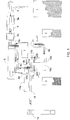
- the plant according to the present invention comprises a first zone (1) for storage of the dry fraction of the MSW, a second zone (2) for the storage of a thermoplastic polymer material, and a third zone (3) for the storage of an elastomeric polymer material.
- thermoplastic polymer material mainly consisting of material obtained from the shredding of disposable chlorine-free plastics materials originating from separate collection (PLA) and an elastomeric material mainly consisting of material obtained from the shredding of vulcanised rubber articles, in particular waste tyres, after separation of the metal and/or textile reinforcing members, (WT), reach the plant ready to be metered and fed to a continuous conveyor (18).
- the dry fraction of the MSW may be obtained by removing the wet fraction (essentially consisting of putrescible organic components, such as plant waste, food waste, etc.) from the raw MSW using purely mechanical processes (for example shredding and subsequent screening), as described for example in the already mentioned patent application EP-A-0 930 353 . Subsequently the dry fraction of the MSW may be further shredded and, if necessary, dried to obtain a water content not higher than 15% by weight, preferably not higher than 10% by weight.
- the dry fraction of the MSW may be obtained in accordance with the known art by subjecting the MSW to a process of biostabilisation, and subsequently to a process of removal of the fine fraction (by screening, for example).
- the biostabilisation process is a process of biological degradation, in general through microorganisms acting under anaerobic conditions (biooxidation) under controlled temperature and humidity conditions (see for example F. Adani et al., Waste Management and Research, Volume 18 Issue 5, page 471 - October 2000 ).
- the organic fraction which has been transformed by the microorganisms is removed by screening as a fine fraction, that is as a fraction having average dimensions which are generally less than 80 mm, preferably less than 60 mm.
- the dry fraction so obtained in general has a low moisture content, not more than 15% by weight, preferably not more than 10% by weight, as a result of which a subsequent drying process is not required.
- the particle size of the dry fraction of the MSW obtained according to the methods described above is generally further reduced by shredding in order to achieve dimensions not exceeding 25 mm for at least 90% by weight of the material.
- the dry fraction of the MSW generally comprises paper and its derivatives (cardboard, multi-ply materials), wood, fabrics, leather and wastes from other fractions of materials.
- a unit is provided in the plant according to the invention for its processing, which may comprise a first magnetic separator (5a), a conveyor belt for manual sorting (6), a second magnetic separator (5b) and a drier (9).
- the dry fraction of the MSW is discharged to the appropriate storage area (1) from motor vehicles.
- a mechanical rubber-coated loader (not illustrated) picks up the dry fraction of the MSW from the storage area (1) and discharges it into a hopper lying above a feed conveyor (4).
- the dry fraction of the MSW is subjected to a first sorting with a magnetic separator (5a) in order to remove any ferrous materials.
- the dry fraction may possibly be caused to pass on a sorting conveyor belt (6) where a manual sorting may be performed to remove any undesirable wastes, such as for example stones or other inert materials which might accidentally be present in the MSW which could damage the equipment used in the subsequent stages.
- a further sorting using a magnetic separator (5b) may remove any residual ferrous materials.
- a conveyor belt (8a) then carries the MSW to a shredding device (7), preferably comprising two shredders in series.
- the residual moisture content of the dry fraction of the MSW is greater than that predetermined value it is delivered to a drier (9) via a conveyor belt (8c).
- the drier generally operates on hot air at a temperature of between 60°C and 80°C, obtained for example by heating ambient air with a methane burner.
- the drier (9) also comprises a blower system to remove the exiting moist air.
- the dry fraction of the MSW is delivered to the storage container (10a) by means of a conveyor (8d).
- the storage container (10a) which is closed at the top, is provided with a walking floor (23a) and containing sides.
- the metering screw has a rate of advance which is regulated in relation to the quantity of each component weighed by the corresponding weighing system. In this way a substantially constant composition of the RDSF is obtained.
- the characteristics of the dry fraction of the MSW stored in the storage container (10a) are preferably the following: - Residual moisture content: not greater than 15% by weight - Dimensions of at least 90% by weight of the particles: not larger than 25 mm - Average net calorific value (NCV): not less than 3,500 Kcal/kg - Bulk density: 0.10-0.20 g/cm 3
- the thermoplastic polymer material mainly comprises material obtained from the shredding of chlorine-free waste plastics materials (PLA) originating from separate collection, such as for example polyethylene terephthalate (PET), polypropylene (PP), polyethylene (PE) and polystyrene (PS).
- PPA chlorine-free waste plastics materials
- PET polyethylene terephthalate
- PP polypropylene
- PE polyethylene
- PS polystyrene
- the shredded PLA is taken from the storage zone (2) by a mechanical loader and discharged into the loading hopper (12).
- a conveyor (8e) for example a chain conveyor, carries it to the storage container (10b), which has a structure similar to that of the container (10a) previously illustrated.
- the storage container (10b) is provided with a walking floor (23b) and containing sides.
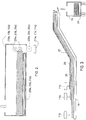
- a system of rotating paddles (21 b) for moving the shredded PLA before delivering it to the metering screw (22b) ( Figure 2 ) and subsequently to a weighing system (11b) is installed close to the discharge head.
- the characteristics of the shredded PLA stored in the storage container (10b) are preferably as follows: - Dimension of at least 90% by weight of the particles: not larger than 25 mm - Average net calorific value (NCV): not less than 7,000 Kcal/kg - Bulk density: 0.10-0.15 g/cm 3 .
- the elastomeric polymer material mainly comprises material obtained from the shredding of vulcanised rubber articles, in particular waste tyres (WT), after separation of the metal and/or textile reinforcing members.
- WT waste tyres
- the VVT are taken from the storage area (3) and charged into the storage container (10c), which has a structure similar to that of the storage containers (10a, 10b) previously illustrated.
- Storage container (10c) is generally provided with a walking floor (23c) and containing sides.
- a system of rotating paddles (21 c) to move the shredded WT before delivering it to the metering screw (22c) ( Figure 2 ) and subsequently to a weighing system (11 c) is installed close to the discharge head.
- the characteristics of the shredded WT stored in the storage container (10c) are preferably as follows: - Dimensions of at least 90% by weight of the particles: not larger than 25 mm - Average net calorific value (NCV): not less than 7,000 Kcal/kg - Bulk density: 0.40-0.70 g/cm 3
- the three materials pass onto a continuous conveyor (18), for example a conveyor belt or a chain conveyor.
- the advancing rate in the metering screws (22a, 22b and 22c) of the three components of the RDSF is controlled in relation to data obtained from the weighing systems (11 a, 11 b, 11 c) so as to guarantee a substantially constant composition for the exiting RDSF.
- the continuous conveyor (18) preferably first collects the PLA fraction stored in the container (10b), then the dry fraction of MSW stored in the container (10a) and finally the WT fraction stored in the container (10c),
- the lower layer (25) is formed of the lightest material (PLA)
- the intermediate layer (26) is formed of the material having an intermediate weight (dry fraction of the MSW)
- the upper layer (27) is formed from the heaviest material (WT). In this way the lightest fraction is prevented from dispersing in the environment during the movement of the so stratified materials.
- the continuous conveyor (18) discharges the collected material into a temporary accumulation container, for example in the articulated trailer (19) of a motor vehicle.
- the said articulated, trailer (19) is provided with a walking floor (24) for loading and discharging the RDSF.
- the lower layer (25) is formed of the lightest material (PLA)
- the intermediate layer (26) is formed of the material having an intermediate weight (MSW)
- the upper layer (27) is formed of the heaviest material (WT).
- the bulk density of the RDSF so obtained is generally less than 0.60 g/cm 3 , preferably it ranges from 0.35 to 0.12 g/cm 3 .
- the RDSF so obtained can be subjected to a compaction stage (for example by mechanical compression) so as to provide a compacted RDSF in any form suitable for transport, for example substantially rectangular or cylindrical.
- the compaction stage may be carried out by any mechanical device suitable for the purpose, for example a press (not shown in the Figures).
- Compaction is carried out in such a way as to obtain a bulk density for the compacted RDSF which generally lies between 0.50 and 0.95 g/cm 3 , preferably between 0.60 and 0.90 g/cm 3 . This makes it possible to reduce the volume of the conveyed material and therefore the transport costs, particularly over long distances.
- the compacted RDSF may be again disaggregated in order to reacquire the physical characteristics (in particular the bulk density values indicated above) which render it particularly suitable for combustion processes with suspension burners, and in particular co-combustion processes with fossil fuels, such as those disclosed in the already cited patent application EP-A-0 953 628 .
- at least one mechanical device capable of disaggregating the compacted RDSF for example a shredder, is provided close to the combustion plant.
- This control system essentially comprises a programmable control unit (PCU).
- PCU programmable control unit
- the control system offers the following main control choices:
- the starting sequence is structured on the basis of first starting the last machine in the selected lines (tail) and then moving backwards starting up all the others in succession until the machines at the head of the lines (moving floor feeders) are started. This makes it possible to prevent the loaded material from accumulating in machines which are still stopped, clogging them. Vice versa, on the same principle, stopping of the system causes the machines to stop in succession away from the head.
- a typical composition of a solid fuel deriving from wastes (RDSF) produced according to this invention is as follows:
- the solid fuel deriving from wastes (RDSF) produced according to this invention has the following composition:
- the bulk density of the RDSF delivered to a combustion plant is generally less than 0.60 g/cm 3 , preferably ranging from 0.35 to 0.12 g/cm 3 .
- the RDSF obtained according to this invention may comprise the primary fuel of a combustion plant, or it may be used as a secondary fuel in co-combustion plants, as illustrated in the already cited patent application EP-A-0 953 628 in which the primary fuel comprises a fossil fuel, for example powdered coal, methane gas or fuel oil.
- the combustion plant may be of any type, for example a thermal plant for the generation of heat, a thermoelectric plant for the generation of electrical power, a plant for the manufacture of cement, and the like.
Landscapes
- Chemical & Material Sciences (AREA)
- Engineering & Computer Science (AREA)
- Organic Chemistry (AREA)
- Life Sciences & Earth Sciences (AREA)
- Sustainable Development (AREA)
- Health & Medical Sciences (AREA)
- Chemical Kinetics & Catalysis (AREA)
- Medicinal Chemistry (AREA)
- Polymers & Plastics (AREA)
- Oil, Petroleum & Natural Gas (AREA)
- Mechanical Engineering (AREA)
- General Engineering & Computer Science (AREA)
- Solid Fuels And Fuel-Associated Substances (AREA)
- Processing Of Solid Wastes (AREA)
Claims (29)
- Verfahren zur Herstellung von aus Abfall gewonnenem Sekundärfestbrennstoff (refuse derived solid fuel oder RDSF) und Zuführen des Brennstoffs an eine Verbrennungsanlage, wobei das Verfahren umfasst:- Bereitstellen einer ersten Komponente, die aus einer Trockenfraktion von festem Hausmüll (MSW) in zerkleinerter Form besteht,- Bereitstellen zumindest einer zweiten Komponente in zerkleinerter Form, ausgewählt aus einem Elastomermaterial und einem thermoplastischen Material, oder Mischungen davon,- separates Dosieren und Zuführen der ersten Komponente und der zumindest einen zweiten Komponente auf eine Endlos-Fördereinrichtung auf solche Weise, dass überlappende Schichten der Komponenten gebildet werden,- Abladen der so angeordneten Komponenten in zumindest einen temporären Sammelbehälter, um den RDSF zu bilden,- Zuführen und Dosieren des so erhaltenen RDSF an eine Verbrennungsanlage.
- Verfahren nach Anspruch 1, wobei das thermoplastische Polymermaterial hauptsächlich Material umfasst, das durch Zerkleinern von chlorfreien Kunststoffabfallmaterialien erhalten wird.
- Verfahren nach Anspruch 2, wobei zumindest 90 % des Gewichts des thermoplastischen Materials eine durchschnittliche Teilchengröße aufweisen, die 25 mm nicht überschreitet.
- Verfahren nach einem der vorhergehenden Ansprüche, wobei das elastomere Polymermaterial hauptsächlich aus Material besteht, das durch Zerkleinern von Altreifen nach Abtrennung der Verstärkungselemente aus Metall und/oder Gewebe erhalten wird.
- Verfahren nach Anspruch 4, wobei zumindest 90 Gew.-% des Elastomermaterials eine durchschnittliche Teilchengröße aufweisen, die 25 mm nicht überschreitet.
- Verfahren nach einem der vorhergehenden Ansprüche, wobei die Trockenfraktion des MSW aus unbehandeltem MSW durch mechanische Abtrennung der verrottbaren Materialien, Zerkleinern und ggf. Trocknen erhalten wird.
- Verfahren nach einem der Ansprüche 1 bis 5, wobei die Trockenfraktion des MSW erhalten wird, indem roher MSW einem Verfahren zur Biostabilisierung und in der Folge einem Verfahren zur Entfernung der Feinfraktion unterzogen wird.
- Verfahren nach Anspruch 7, wobei die entfernte Feinfraktion eine Dimension von kleiner als 80 mm aufweist.
- Verfahren nach einem der vorhergehenden Ansprüche, wobei zumindest 90 Gew.-% der Trockenfraktion des MSW eine durchschnittliche Teilchengröße aufweist, die 25 mm nicht überschreitet.
- Verfahren nach einem der vorhergehenden Ansprüche, wobei die Trockenfraktion des MSW einen Feuchtegehalt aufweist, der 15 Gew.-% nicht überschreitet.
- Verfahren nach einem der vorhergehenden Ansprüche, wobei die Trockenfraktion des MSW einen Feuchtegehalt aufweist, der 10 Gew.-% nicht überschreitet.
- Verfahren nach einem der vorhergehenden Ansprüche, wobei der hergestellte RDSF vor der Phase zur Einleitung in die Verbrennungsanlage einer Verdichtungsstufe unterworfen und an die Verbrennungsanlage transportiert und dann einer Auflockerungsstufe unterworfen wird.
- Verfahren nach Anspruch 12, wobei die Verdichtungsstufe so ausgeführt wird, dass ein verdichteter RDSF mit einer Schüttdichte im Bereich von 0,50 bis 0,95 g/ cm3 erhalten wird.
- Verfahren nach Anspruch 13, wobei die Verdichtungsstufe so ausgeführt wird, dass ein verdichteter RDSF mit einer Schüttdichte im Bereich von 0,60 bis 0,90 g/ cm3 erhalten wird.
- Verfahren nach einem der vorhergehenden Ansprüche, wobei die Stufe zur Dosierung und Zufuhr der ersten Komponente und der zumindest einen zweiten Komponente auf eine Endlos-Fördereinrichtung separat jeweils durch zumindest eine Dosierschnecke gefolgt von einem Wiegesystem erfolgt.
- Verfahren nach Anspruch 15, wobei die zumindest eine Dosierschnecke eine Vorschubrate aufweist, die in Relation zur Menge jeder Komponente, die von dem entsprechenden Wiegesystem gewogen wird, geregelt wird.
- Verfahren nach einem der vorhergehenden Ansprüche, wobei die Endlos-Fördereinrichtung die verschiedenen Komponenten in der Form von aufeinanderfolgenden überlappenden Schichten mit einer Schüttdichte sammelt, die von unten nach oben zunimmt.
- Verfahren nach Anspruch 17, wobei eine untere Schicht, bestehend aus dem thermoplastischen Material, eine Zwischenschicht, bestehend aus der Trockenfraktion des MSW, und eine obere Schicht, bestehend aus dem Elastomermaterial, auf dem Endlos-Förderband gebildet werden.
- Verfahren nach einem der vorhergehenden Ansprüche, wobei der erhaltene RDSF die folgende Zusammensetzung aufweist:40 - 90 Gew.-% der Trockenfraktion des RDSF,10 - 60 Gew.-% zumindest eines Polymermaterials ausgewählt aus Elastomermaterial und thermoplastischem Material, oder Mischungen davon.
- Verfahren nach Anspruch 19, wobei der erhaltene RDSF die folgende Zusammensetzung aufweist:60 - 80 Gew.-% der Trockenfraktion des MSW,20 - 40 Gew.-% zumindest eines Polymermaterials ausgewählt aus Elastomermaterial und thermoplastischem Material, oder Mischungen davon.
- Verfahren nach Anspruch 19 oder 20, wobei der erhaltene RDSF die folgende Zusammensetzung aufweist:40 - 90 Gew.-% der Trockenfraktion des RDSF,5 - 55 Gew.-% zumindest eines elastomeren Polymermaterials,5 - 55 Gew.-% zumindest eines thermoplastischen Polymermaterials.
- Verfahren nach Anspruch 21, wobei der erhaltene RDSF die folgende Zusammensetzung aufweist:60 - 80 Gew.-% der Trockenfraktion des MSW,10 - 30 Gew.-% zumindest eines elastomeren Polymermaterials,10 - 30 Gew.-% zumindest eines thermoplastischen Polymermaterials.
- Verfahren nach einem der vorhergehenden Ansprüche, wobei der erhaltene RDSF eine Schüttdichte von weniger als 0,60 g/cm3 aufweist.
- Verfahren nach Anspruch 23, wobei der erhaltene RDSF eine Schüttdichte von 0,35 bis 0,12 g/ cm3 aufweist.
- Anlage zur Herstellung von aus Abfall gewonnenem Sekundärfestbrennstoff, wobei die Anlage umfasst: eine Zerkleinerungseinrichtung für eine erste Komponente bestehend aus einer Trockenfraktion von festem Hausmüll (MSW),
zumindest einen Speicherbehälter für die erste Komponente bestehend aus einer Trockenfraktion von festem Hausmüll (MSW) in zerkleinerter Form,
zumindest eine Dosier- und Zuführeinrichtung für die erste Komponente,
zumindest einen Speicherbehälter für die zumindest eine zweite Komponente in zerkleinerter Form, die ausgewählt ist aus einem Elastomermaterial und einem thermoplastischen Material,
zumindest eine Dosier- und Zuführeinrichtung für die zumindest eine zweite Komponente,
zumindest eine Endlos-Fördereinrichtung, auf welche die Komponenten separat durch die Zuführ- und Dosiereinrichtungen zugeführt werden, um überlappende Schichten der Komponenten zu bilden,
zumindest einen temporären Sammelbehälter, in welchen die Komponenten durch die zumindest eine Endlos-Fördereinrichtung abgeladen werden. - Anlage nach Anspruch 25, ebenfalls umfassend zumindest einen Speicherbehälter für zumindest eine dritte Komponente in zerkleinerter Form, die ebenfalls ausgewählt ist aus einem Elastomermaterial und einem thermoplastischen Material, sich aber von der zweiten Komponente unterscheidet,
zumindest eine Dosier- und Zuführeinrichtung für die zumindest eine dritte Komponente. - Anlage nach einem der Ansprüche 25 und 26, wobei die Dosier- und Zuführeinrichtungen zumindest eine Dosierschnecke und ein Wiegesystem umfassen.
- Anlage nach Anspruch 27, wobei die zumindest eine Dosierschnecke eine Vorschubrate aufweist, die in Relation zur Menge jeder Komponente, die von dem entsprechenden Wiegesystem gewogen wird, geregelt wird.
- Anlage nach einem der Ansprüche 25 bis 28, ebenfalls umfassend eine Einrichtung zur Verdichtung des erhaltenen RDSF.
Applications Claiming Priority (1)
| Application Number | Priority Date | Filing Date | Title |
|---|---|---|---|
| PCT/IT2004/000154 WO2005093019A1 (en) | 2004-03-29 | 2004-03-29 | Process and plant for producing a refuse derived solid fuel |
Publications (2)
| Publication Number | Publication Date |
|---|---|
| EP1730255A1 EP1730255A1 (de) | 2006-12-13 |
| EP1730255B1 true EP1730255B1 (de) | 2017-05-10 |
Family
ID=34957521
Family Applications (1)
| Application Number | Title | Priority Date | Filing Date |
|---|---|---|---|
| EP04724112.0A Expired - Lifetime EP1730255B1 (de) | 2004-03-29 | 2004-03-29 | Verfahren und anlage zur herstellung eines aus abfall gewonnenen festen brennstoffs |
Country Status (8)
| Country | Link |
|---|---|
| US (1) | US8091492B2 (de) |
| EP (1) | EP1730255B1 (de) |
| CN (1) | CN1938405B (de) |
| AU (1) | AU2004317574B2 (de) |
| BR (1) | BRPI0418689B1 (de) |
| CA (1) | CA2561236C (de) |
| RS (1) | RS20060539A (de) |
| WO (1) | WO2005093019A1 (de) |
Families Citing this family (9)
| Publication number | Priority date | Publication date | Assignee | Title |
|---|---|---|---|---|
| ES2277782B1 (es) * | 2005-12-21 | 2008-06-01 | Reciclados Vicente Mallen, S.L. | Uso como combustible de briquetas y/o granulados elaborados a partir de residuos. |
| DE102009007783B3 (de) * | 2009-02-06 | 2010-08-26 | Karlsruher Institut für Technologie | Verfahren zur Reduzierung des Schadstoffpotentials in Abgasen und Rückständen von Verbrennungsanlagen |
| IT1395382B1 (it) * | 2009-09-09 | 2012-09-14 | Eni Spa | Procedimento per la produzione di bio- olio da rifiuti solidi urbani |
| CN103154098B (zh) * | 2010-07-14 | 2015-11-25 | Ubq材料有限公司 | 来自废弃物以及硫化橡胶和轮胎帘布中的至少一种成分的复合材料 |
| US11046839B2 (en) | 2010-07-14 | 2021-06-29 | Ubq Materials Ltd. | Plastic compositions |
| US9262870B2 (en) | 2010-10-28 | 2016-02-16 | Intralot S.A.—Integrated Lottery Systems and Services | Methods and a system for dispensing |
| EP4530362A3 (de) * | 2019-05-13 | 2025-07-02 | I.BLU S.r.l. | Verfahren zur herstellung eines polymerprodukts |
| CZ310411B6 (cs) * | 2020-06-10 | 2025-05-28 | Gp Novatech S.R.O. | Způsob výroby paliva ze syntetického polymerního materiálu |
| CN111649335B (zh) * | 2020-06-13 | 2023-03-28 | 宁波世茂能源股份有限公司 | 垃圾焚烧发电系统及工艺 |
Family Cites Families (11)
| Publication number | Priority date | Publication date | Assignee | Title |
|---|---|---|---|---|
| US1772285A (en) * | 1927-03-14 | 1930-08-05 | Paul S Knittel | Method and apparatus for disposing of refuse |
| DE1801533A1 (de) * | 1968-10-05 | 1970-05-27 | Schnitzler Dr Ing Erwin F | Vorrichtung zum kontinuierlichen Herstellen eines Vlieses aus Spaenen,Fasern u.dgl. |
| US4314887A (en) * | 1978-06-19 | 1982-02-09 | Peabody Coal Company, Inc. | Apparatus for producing coke from fine and coarse coal |
| NL8701601A (nl) * | 1987-07-08 | 1989-02-01 | Mosa Koninkl Bv | Set vloertegels, werkwijze voor het vervaardigen van een vloertegel behorende tot de set en inrichting voor het uitvoeren van de werkwijze. |
| DE4126838C2 (de) | 1991-08-14 | 1994-06-09 | Hoelter Heinz | Verfahren zur Müllentsorgung |
| RO111101B (ro) | 1994-03-29 | 1996-06-28 | Jesus Hernandez Del Cast Maria | Procedeu pentru producerea unui combustibil solid, din materiale combustibile, solide, cu valoare scazuta |
| IT1297030B1 (it) | 1997-12-30 | 1999-08-03 | Pirelli Ambiente S P A | Composizione combustibile solida |
| US6375691B1 (en) * | 1998-04-30 | 2002-04-23 | Pirelli Ambiente S.P.A. | Fuel composition which combusts instantaneously, method and plant therefor |
| EP0953628B1 (de) | 1998-04-30 | 2006-04-05 | Pirelli & C Ambiente S.p.A. | Sofort verbrennbare Brennstoffzusammensetzung und Brennverfahren |
| DE10224133A1 (de) * | 2001-08-22 | 2003-03-06 | Emschergenossenschaft Lippever | Verfahren zur Behandlung von Schlamm |
| RU2253668C1 (ru) | 2003-11-12 | 2005-06-10 | Хрусталёв Евгений Николаевич | Способ переработки мусора городских свалок и устройство для переработки мусора городских свалок |
-
2004
- 2004-03-29 EP EP04724112.0A patent/EP1730255B1/de not_active Expired - Lifetime
- 2004-03-29 BR BRPI0418689-3B1A patent/BRPI0418689B1/pt not_active IP Right Cessation
- 2004-03-29 AU AU2004317574A patent/AU2004317574B2/en not_active Ceased
- 2004-03-29 RS YUP20060539 patent/RS20060539A/sr unknown
- 2004-03-29 CN CN2004800426225A patent/CN1938405B/zh not_active Expired - Fee Related
- 2004-03-29 CA CA 2561236 patent/CA2561236C/en not_active Expired - Fee Related
- 2004-03-29 WO PCT/IT2004/000154 patent/WO2005093019A1/en not_active Ceased
- 2004-03-29 US US10/594,269 patent/US8091492B2/en not_active Expired - Fee Related
Non-Patent Citations (1)
| Title |
|---|
| None * |
Also Published As
| Publication number | Publication date |
|---|---|
| BRPI0418689A (pt) | 2007-06-12 |
| CA2561236A1 (en) | 2005-10-06 |
| RS20060539A (sr) | 2008-09-29 |
| CN1938405B (zh) | 2010-12-08 |
| CN1938405A (zh) | 2007-03-28 |
| US8091492B2 (en) | 2012-01-10 |
| BRPI0418689B1 (pt) | 2014-02-18 |
| CA2561236C (en) | 2012-09-25 |
| EP1730255A1 (de) | 2006-12-13 |
| WO2005093019A1 (en) | 2005-10-06 |
| AU2004317574B2 (en) | 2010-08-12 |
| US20070283861A1 (en) | 2007-12-13 |
| AU2004317574A1 (en) | 2005-10-06 |
Similar Documents
| Publication | Publication Date | Title |
|---|---|---|
| US7252691B2 (en) | Conversion of municipal solid waste to high fuel value | |
| US20180015515A1 (en) | A novel method and an apparatus in converting unsorted municipal solid waste into geo-polymer pellets/briquettes and geo-polymer bricks/paver blocks | |
| US6165238A (en) | Fuel pellet and method for its production | |
| EP1730255B1 (de) | Verfahren und anlage zur herstellung eines aus abfall gewonnenen festen brennstoffs | |
| JP6785017B1 (ja) | きのこ廃培地由来の有価物製造システム構築方法及びきのこ廃培地由来の有価物製造システム | |
| EP1022391A1 (de) | Verfahren zum Recycling von Teer und/oder bituminösem Material mittels thermischer Konversion in Kombination mit Asphaltproduktion | |
| TWI889997B (zh) | 混雜廢棄物之廢棄處理的方法和設備 | |
| JP2002356689A (ja) | 混合燃料および燃料供給方法 | |
| CN115431431A (zh) | 塑料填充复/组合再生质粗粒及制法 | |
| RU99778U1 (ru) | Технологический комплекс по производству продукции из торфа | |
| RU2334786C2 (ru) | Способ и установка для производства твердого топлива из отходов | |
| ZA200607738B (en) | Process and plant for producing a refuse derived solid fuel | |
| KR19990068789A (ko) | 폐슬러지와톱밥을이용한유기질비료제조방법및장치 | |
| US12275016B2 (en) | Treatment plant with optimised densimetric sorting and related treatment process | |
| KR101535628B1 (ko) | 혼합폐기물을 이용한 고형연료 및 이것의 제조방법 | |
| WO2002051969A1 (en) | Fuel pellet and method for its production | |
| CN219580714U (zh) | 生物质燃料原料循环粉碎系统 | |
| JP4302053B2 (ja) | 可燃物の燃焼方法 | |
| JP2510128B2 (ja) | おがくず再生処理装置およびおがくず再生処理方法 | |
| CZ147697A3 (en) | Biological waste treatment plant | |
| WO2004110634A1 (en) | Method and installation for processing waste | |
| PT11138Y (pt) | Processo de agregação de vários tipos de resíduos com destino a aterro | |
| IES20080986A2 (en) | Wet recyclable material processing |
Legal Events
| Date | Code | Title | Description |
|---|---|---|---|
| PUAI | Public reference made under article 153(3) epc to a published international application that has entered the european phase |
Free format text: ORIGINAL CODE: 0009012 |
|
| 17P | Request for examination filed |
Effective date: 20060929 |
|
| AK | Designated contracting states |
Kind code of ref document: A1 Designated state(s): AT BE BG CH CY CZ DE DK EE ES FI FR GB GR HU IE IT LI LU MC NL PL PT RO SE SI SK TR |
|
| 17Q | First examination report despatched |
Effective date: 20070601 |
|
| DAX | Request for extension of the european patent (deleted) | ||
| RAP1 | Party data changed (applicant data changed or rights of an application transferred) |
Owner name: PIRELLI & C. AMBIENTE S.P.A. |
|
| RAP1 | Party data changed (applicant data changed or rights of an application transferred) |
Owner name: PIRELLI & C. AMBIENTE S.R.L. |
|
| GRAP | Despatch of communication of intention to grant a patent |
Free format text: ORIGINAL CODE: EPIDOSNIGR1 |
|
| GRAJ | Information related to disapproval of communication of intention to grant by the applicant or resumption of examination proceedings by the epo deleted |
Free format text: ORIGINAL CODE: EPIDOSDIGR1 |
|
| GRAP | Despatch of communication of intention to grant a patent |
Free format text: ORIGINAL CODE: EPIDOSNIGR1 |
|
| INTG | Intention to grant announced |
Effective date: 20161024 |
|
| INTG | Intention to grant announced |
Effective date: 20161117 |
|
| GRAS | Grant fee paid |
Free format text: ORIGINAL CODE: EPIDOSNIGR3 |
|
| GRAJ | Information related to disapproval of communication of intention to grant by the applicant or resumption of examination proceedings by the epo deleted |
Free format text: ORIGINAL CODE: EPIDOSDIGR1 |
|
| GRAL | Information related to payment of fee for publishing/printing deleted |
Free format text: ORIGINAL CODE: EPIDOSDIGR3 |
|
| GRAR | Information related to intention to grant a patent recorded |
Free format text: ORIGINAL CODE: EPIDOSNIGR71 |
|
| INTC | Intention to grant announced (deleted) | ||
| GRAA | (expected) grant |
Free format text: ORIGINAL CODE: 0009210 |
|
| INTG | Intention to grant announced |
Effective date: 20170315 |
|
| AK | Designated contracting states |
Kind code of ref document: B1 Designated state(s): AT BE BG CH CY CZ DE DK EE ES FI FR GB GR HU IE IT LI LU MC NL PL PT RO SE SI SK TR |
|
| REG | Reference to a national code |
Ref country code: GB Ref legal event code: FG4D |
|
| REG | Reference to a national code |
Ref country code: AT Ref legal event code: REF Ref document number: 892331 Country of ref document: AT Kind code of ref document: T Effective date: 20170515 Ref country code: CH Ref legal event code: EP |
|
| REG | Reference to a national code |
Ref country code: IE Ref legal event code: FG4D |
|
| REG | Reference to a national code |
Ref country code: DE Ref legal event code: R096 Ref document number: 602004051233 Country of ref document: DE |
|
| REG | Reference to a national code |
Ref country code: NL Ref legal event code: MP Effective date: 20170510 |
|
| REG | Reference to a national code |
Ref country code: AT Ref legal event code: MK05 Ref document number: 892331 Country of ref document: AT Kind code of ref document: T Effective date: 20170510 |
|
| PG25 | Lapsed in a contracting state [announced via postgrant information from national office to epo] |
Ref country code: GR Free format text: LAPSE BECAUSE OF FAILURE TO SUBMIT A TRANSLATION OF THE DESCRIPTION OR TO PAY THE FEE WITHIN THE PRESCRIBED TIME-LIMIT Effective date: 20170811 Ref country code: ES Free format text: LAPSE BECAUSE OF FAILURE TO SUBMIT A TRANSLATION OF THE DESCRIPTION OR TO PAY THE FEE WITHIN THE PRESCRIBED TIME-LIMIT Effective date: 20170510 Ref country code: FI Free format text: LAPSE BECAUSE OF FAILURE TO SUBMIT A TRANSLATION OF THE DESCRIPTION OR TO PAY THE FEE WITHIN THE PRESCRIBED TIME-LIMIT Effective date: 20170510 Ref country code: AT Free format text: LAPSE BECAUSE OF FAILURE TO SUBMIT A TRANSLATION OF THE DESCRIPTION OR TO PAY THE FEE WITHIN THE PRESCRIBED TIME-LIMIT Effective date: 20170510 |
|
| PG25 | Lapsed in a contracting state [announced via postgrant information from national office to epo] |
Ref country code: SE Free format text: LAPSE BECAUSE OF FAILURE TO SUBMIT A TRANSLATION OF THE DESCRIPTION OR TO PAY THE FEE WITHIN THE PRESCRIBED TIME-LIMIT Effective date: 20170510 Ref country code: NL Free format text: LAPSE BECAUSE OF FAILURE TO SUBMIT A TRANSLATION OF THE DESCRIPTION OR TO PAY THE FEE WITHIN THE PRESCRIBED TIME-LIMIT Effective date: 20170510 Ref country code: BG Free format text: LAPSE BECAUSE OF FAILURE TO SUBMIT A TRANSLATION OF THE DESCRIPTION OR TO PAY THE FEE WITHIN THE PRESCRIBED TIME-LIMIT Effective date: 20170810 Ref country code: PL Free format text: LAPSE BECAUSE OF FAILURE TO SUBMIT A TRANSLATION OF THE DESCRIPTION OR TO PAY THE FEE WITHIN THE PRESCRIBED TIME-LIMIT Effective date: 20170510 |
|
| PG25 | Lapsed in a contracting state [announced via postgrant information from national office to epo] |
Ref country code: CZ Free format text: LAPSE BECAUSE OF FAILURE TO SUBMIT A TRANSLATION OF THE DESCRIPTION OR TO PAY THE FEE WITHIN THE PRESCRIBED TIME-LIMIT Effective date: 20170510 Ref country code: RO Free format text: LAPSE BECAUSE OF FAILURE TO SUBMIT A TRANSLATION OF THE DESCRIPTION OR TO PAY THE FEE WITHIN THE PRESCRIBED TIME-LIMIT Effective date: 20170510 Ref country code: SK Free format text: LAPSE BECAUSE OF FAILURE TO SUBMIT A TRANSLATION OF THE DESCRIPTION OR TO PAY THE FEE WITHIN THE PRESCRIBED TIME-LIMIT Effective date: 20170510 Ref country code: EE Free format text: LAPSE BECAUSE OF FAILURE TO SUBMIT A TRANSLATION OF THE DESCRIPTION OR TO PAY THE FEE WITHIN THE PRESCRIBED TIME-LIMIT Effective date: 20170510 Ref country code: DK Free format text: LAPSE BECAUSE OF FAILURE TO SUBMIT A TRANSLATION OF THE DESCRIPTION OR TO PAY THE FEE WITHIN THE PRESCRIBED TIME-LIMIT Effective date: 20170510 |
|
| REG | Reference to a national code |
Ref country code: DE Ref legal event code: R097 Ref document number: 602004051233 Country of ref document: DE |
|
| PLBE | No opposition filed within time limit |
Free format text: ORIGINAL CODE: 0009261 |
|
| STAA | Information on the status of an ep patent application or granted ep patent |
Free format text: STATUS: NO OPPOSITION FILED WITHIN TIME LIMIT |
|
| 26N | No opposition filed |
Effective date: 20180213 |
|
| PG25 | Lapsed in a contracting state [announced via postgrant information from national office to epo] |
Ref country code: SI Free format text: LAPSE BECAUSE OF FAILURE TO SUBMIT A TRANSLATION OF THE DESCRIPTION OR TO PAY THE FEE WITHIN THE PRESCRIBED TIME-LIMIT Effective date: 20170510 |
|
| REG | Reference to a national code |
Ref country code: DE Ref legal event code: R119 Ref document number: 602004051233 Country of ref document: DE |
|
| REG | Reference to a national code |
Ref country code: CH Ref legal event code: PL |
|
| GBPC | Gb: european patent ceased through non-payment of renewal fee |
Effective date: 20180329 |
|
| PG25 | Lapsed in a contracting state [announced via postgrant information from national office to epo] |
Ref country code: MC Free format text: LAPSE BECAUSE OF FAILURE TO SUBMIT A TRANSLATION OF THE DESCRIPTION OR TO PAY THE FEE WITHIN THE PRESCRIBED TIME-LIMIT Effective date: 20170510 |
|
| REG | Reference to a national code |
Ref country code: BE Ref legal event code: MM Effective date: 20180331 |
|
| REG | Reference to a national code |
Ref country code: IE Ref legal event code: MM4A |
|
| PG25 | Lapsed in a contracting state [announced via postgrant information from national office to epo] |
Ref country code: LU Free format text: LAPSE BECAUSE OF NON-PAYMENT OF DUE FEES Effective date: 20180329 |
|
| PG25 | Lapsed in a contracting state [announced via postgrant information from national office to epo] |
Ref country code: IE Free format text: LAPSE BECAUSE OF NON-PAYMENT OF DUE FEES Effective date: 20180329 Ref country code: DE Free format text: LAPSE BECAUSE OF NON-PAYMENT OF DUE FEES Effective date: 20181002 |
|
| PG25 | Lapsed in a contracting state [announced via postgrant information from national office to epo] |
Ref country code: CH Free format text: LAPSE BECAUSE OF NON-PAYMENT OF DUE FEES Effective date: 20180331 Ref country code: BE Free format text: LAPSE BECAUSE OF NON-PAYMENT OF DUE FEES Effective date: 20180331 Ref country code: GB Free format text: LAPSE BECAUSE OF NON-PAYMENT OF DUE FEES Effective date: 20180329 Ref country code: LI Free format text: LAPSE BECAUSE OF NON-PAYMENT OF DUE FEES Effective date: 20180331 |
|
| PG25 | Lapsed in a contracting state [announced via postgrant information from national office to epo] |
Ref country code: FR Free format text: LAPSE BECAUSE OF NON-PAYMENT OF DUE FEES Effective date: 20180331 |
|
| PG25 | Lapsed in a contracting state [announced via postgrant information from national office to epo] |
Ref country code: TR Free format text: LAPSE BECAUSE OF FAILURE TO SUBMIT A TRANSLATION OF THE DESCRIPTION OR TO PAY THE FEE WITHIN THE PRESCRIBED TIME-LIMIT Effective date: 20170510 |
|
| PG25 | Lapsed in a contracting state [announced via postgrant information from national office to epo] |
Ref country code: PT Free format text: LAPSE BECAUSE OF FAILURE TO SUBMIT A TRANSLATION OF THE DESCRIPTION OR TO PAY THE FEE WITHIN THE PRESCRIBED TIME-LIMIT Effective date: 20170510 Ref country code: HU Free format text: LAPSE BECAUSE OF FAILURE TO SUBMIT A TRANSLATION OF THE DESCRIPTION OR TO PAY THE FEE WITHIN THE PRESCRIBED TIME-LIMIT; INVALID AB INITIO Effective date: 20040329 |
|
| PG25 | Lapsed in a contracting state [announced via postgrant information from national office to epo] |
Ref country code: CY Free format text: LAPSE BECAUSE OF FAILURE TO SUBMIT A TRANSLATION OF THE DESCRIPTION OR TO PAY THE FEE WITHIN THE PRESCRIBED TIME-LIMIT Effective date: 20170510 |
|
| PGFP | Annual fee paid to national office [announced via postgrant information from national office to epo] |
Ref country code: IT Payment date: 20230321 Year of fee payment: 20 |