EP1733210B1 - Chemischer Sensor auf der Basis von konjugierten, fluoreszierenden Polymeren als Sensor-Materialien, und deren Verwendung für den Nachweis oder die Dosierung von Nitroverbindungen - Google Patents
Chemischer Sensor auf der Basis von konjugierten, fluoreszierenden Polymeren als Sensor-Materialien, und deren Verwendung für den Nachweis oder die Dosierung von Nitroverbindungen Download PDFInfo
- Publication number
- EP1733210B1 EP1733210B1 EP05746923.1A EP05746923A EP1733210B1 EP 1733210 B1 EP1733210 B1 EP 1733210B1 EP 05746923 A EP05746923 A EP 05746923A EP 1733210 B1 EP1733210 B1 EP 1733210B1
- Authority
- EP
- European Patent Office
- Prior art keywords
- group
- represent
- substituted
- use according
- repeat unit
- Prior art date
- Legal status (The legal status is an assumption and is not a legal conclusion. Google has not performed a legal analysis and makes no representation as to the accuracy of the status listed.)
- Expired - Lifetime
Links
- 0 CCC(C)(C)*#CNC#CP*NC(C)(C)CC Chemical compound CCC(C)(C)*#CNC#CP*NC(C)(C)CC 0.000 description 8
- KVZJLSYJROEPSQ-HTQZYQBOSA-N C[C@H]1[C@H](C)CCCC1 Chemical compound C[C@H]1[C@H](C)CCCC1 KVZJLSYJROEPSQ-HTQZYQBOSA-N 0.000 description 1
Images

Classifications
-
- C—CHEMISTRY; METALLURGY
- C09—DYES; PAINTS; POLISHES; NATURAL RESINS; ADHESIVES; COMPOSITIONS NOT OTHERWISE PROVIDED FOR; APPLICATIONS OF MATERIALS NOT OTHERWISE PROVIDED FOR
- C09K—MATERIALS FOR MISCELLANEOUS APPLICATIONS, NOT PROVIDED FOR ELSEWHERE
- C09K11/00—Luminescent materials, e.g. electroluminescent or chemiluminescent
- C09K11/06—Luminescent materials, e.g. electroluminescent or chemiluminescent containing organic luminescent materials
-
- G—PHYSICS
- G01—MEASURING; TESTING
- G01N—INVESTIGATING OR ANALYSING MATERIALS BY DETERMINING THEIR CHEMICAL OR PHYSICAL PROPERTIES
- G01N33/00—Investigating or analysing materials by specific methods not covered by groups G01N1/00 - G01N31/00
- G01N33/0004—Gaseous mixtures, e.g. polluted air
- G01N33/0009—General constructional details of gas analysers, e.g. portable test equipment
- G01N33/0027—General constructional details of gas analysers, e.g. portable test equipment concerning the detector
- G01N33/0036—General constructional details of gas analysers, e.g. portable test equipment concerning the detector specially adapted to detect a particular component
- G01N33/0057—Warfare agents or explosives
-
- C—CHEMISTRY; METALLURGY
- C09—DYES; PAINTS; POLISHES; NATURAL RESINS; ADHESIVES; COMPOSITIONS NOT OTHERWISE PROVIDED FOR; APPLICATIONS OF MATERIALS NOT OTHERWISE PROVIDED FOR
- C09K—MATERIALS FOR MISCELLANEOUS APPLICATIONS, NOT PROVIDED FOR ELSEWHERE
- C09K2211/00—Chemical nature of organic luminescent or tenebrescent compounds
- C09K2211/14—Macromolecular compounds
- C09K2211/1408—Carbocyclic compounds
- C09K2211/1433—Carbocyclic compounds bridged by heteroatoms, e.g. N, P, Si or B
-
- C—CHEMISTRY; METALLURGY
- C09—DYES; PAINTS; POLISHES; NATURAL RESINS; ADHESIVES; COMPOSITIONS NOT OTHERWISE PROVIDED FOR; APPLICATIONS OF MATERIALS NOT OTHERWISE PROVIDED FOR
- C09K—MATERIALS FOR MISCELLANEOUS APPLICATIONS, NOT PROVIDED FOR ELSEWHERE
- C09K2211/00—Chemical nature of organic luminescent or tenebrescent compounds
- C09K2211/14—Macromolecular compounds
- C09K2211/1441—Heterocyclic
- C09K2211/1466—Heterocyclic containing nitrogen as the only heteroatom
-
- Y—GENERAL TAGGING OF NEW TECHNOLOGICAL DEVELOPMENTS; GENERAL TAGGING OF CROSS-SECTIONAL TECHNOLOGIES SPANNING OVER SEVERAL SECTIONS OF THE IPC; TECHNICAL SUBJECTS COVERED BY FORMER USPC CROSS-REFERENCE ART COLLECTIONS [XRACs] AND DIGESTS
- Y10—TECHNICAL SUBJECTS COVERED BY FORMER USPC
- Y10T—TECHNICAL SUBJECTS COVERED BY FORMER US CLASSIFICATION
- Y10T436/00—Chemistry: analytical and immunological testing
- Y10T436/13—Tracers or tags
-
- Y—GENERAL TAGGING OF NEW TECHNOLOGICAL DEVELOPMENTS; GENERAL TAGGING OF CROSS-SECTIONAL TECHNOLOGIES SPANNING OVER SEVERAL SECTIONS OF THE IPC; TECHNICAL SUBJECTS COVERED BY FORMER USPC CROSS-REFERENCE ART COLLECTIONS [XRACs] AND DIGESTS
- Y10—TECHNICAL SUBJECTS COVERED BY FORMER USPC
- Y10T—TECHNICAL SUBJECTS COVERED BY FORMER US CLASSIFICATION
- Y10T436/00—Chemistry: analytical and immunological testing
- Y10T436/17—Nitrogen containing
Definitions
- the present invention relates to the use of chemical sensors comprising fluorescent conjugated polymers as sensitive materials, for detecting or measuring nitro compounds, in particular nitroaromatic compounds such as nitrobenzene (NB), dinitrobenzene (DNB), trinitrobenzene (TNB), nitrotoluene (NT), dinitrotoluene (DNT), 2,4,6-trinitrotoluene (TNT) and the like, as well as particular chemical sensors.
- nitroaromatic compounds such as nitrobenzene (NB), dinitrobenzene (DNB), trinitrobenzene (TNB), nitrotoluene (NT), dinitrotoluene (DNT), 2,4,6-trinitrotoluene (TNT) and the like, as well as particular chemical sensors.
- Such sensors are useful for the detection of explosives, whether to ensure the safety of public places such as airports, to control the lawfulness of goods in circulation on a territory, to fight against terrorism, to disarmament operations, to locate antipersonnel mines or to clear industrial or military sites.
- the size of the equipment they use, their energy consumption and their implementation costs preclude the development of easily transportable and autonomous detection systems and, therefore, suitable for use on any type of sites.
- nitro compounds and, in particular, nitroaromatic compounds various families of compounds have been proposed for use as sensitive materials in sensors, including polysiloxanes, polyethylene glycols, amines, phthalocyanines, cyclodextrins, adsorbents such as coal, and fluorescent compounds.
- ⁇ -conjugated polymers generally have a high sensitivity to nitro compounds and, in particular, nitroaromatic compounds.
- these ⁇ -conjugated polymers should, in addition, have excellent properties of permeability, chemical affinity and selectivity with regard to the nitro compounds, as well as a high fluorescence yield. In addition, these properties should be stable over time so as to give the sensors a satisfactory life, that is to say in practice of several weeks, or even several months.
- the present invention aims precisely to provide a chemical sensor which comprises fluorescent ⁇ -conjugated polymers satisfying all these criteria, as sensitive materials.
- heteroatom is understood to mean any atom other than carbon or hydrogen such as, for example, an oxygen, sulfur, nitrogen, fluorine or chlorine atom, phosphorus, boron or silicon, the oxygen, sulfur and nitrogen atoms being preferred.
- aromatic group means any mono- or polycyclic group satisfying the Hückel rule, that is to say having a number of delocalized ⁇ electrons equal to (4n + 2) and, for example, "heteroaromatic group” means any mono- or polycyclic group as defined above, but comprising, in the ring or at least one of the rings which constitute it, one or more heteroatoms.
- aromatic groups examples include cyclopentadienyl, phenyl, benzyl, biphenyl, phenylacetylenyl, pyrenyl or anthracenyl
- heteroaromatic groups include furanyl, pyrrolyl, thienyl, oxazolyl, pyrazolyl, thiazolyl, imidazolyl, triazolyl, pyridinyl, pyranyl, quinolinyl, pyrazinyl and pyrimidinyl groups.
- this aromatic or heteroaromatic group may be substituted, in particular by one or more chemical functions comprising at least one heteroatom, such as those mentioned above.
- repeating units other than those of the particular formulas (IA) and (IB) can also be envisaged, such as, for example, repeating units of the general formula (I) in which A 1 , A 2 and A 3 are each a thienyl group.
- R 5 , R 6 , R 7 , R 8 , R 9 , R 10 , R 11 , R 12 , R 13 , R 14 , R 15 and / or R 16 represent, in the particular formulas (IA ) and (IB), a hydrocarbon group comprising two or more carbon atoms and that this group comprises one or more heteroatoms and / or one or more chemical functions and / or one or more aromatic or heteroaromatic groups, then this (these) heteroatom (s), this (these) function (s)
- the aromatic group (s) or heteroaromatic group (s) may as well form a bridge within this hydrocarbon group as may be carried laterally by it or may be located at its end.
- R 1 and / or R 2 represent, in the formulas (a), (b) and (c), a hydrocarbon group comprising two or more carbon atoms and that this group comprises one or more heteroatoms and / or one or more chemical functions and / or one or more aromatic or heteroaromatic groups, then this (these) heteroatom (s), this (these) chemical function (s) and this (these) group (s) aromatic (s) or heteroaromatic (s) can also form bridge within this hydrocarbon group, be carried laterally by him or be located at its end.
- R 1 and / or R 2 in formulas (a), (b) and (c) may comprise up to 100 carbon atoms, it is preferred generally they do not comprise more than 50 carbon atoms and more preferably not more than 30 carbon atoms. This is also true for all the other C 1 to C 100 hydrocarbon groups envisaged in the context of the present invention.
- B is a group corresponding to one of formulas (a), (b) and (c) as previously defined, and in particular that B is a group of formula (a), (b) or ( c) in which X is a chiral hydrocarbon group of symmetry C2, the association between the functionality diimine or diamine present in these groups and a chirality of C2 symmetry having in fact been shown to lead to an optimization at a time the chemical affinity of the polymer for the nitro compounds, its fluorescence yield and the porosity of the thin films or monoliths prepared therefrom.
- polymers comprising at least one repeating unit of general formula (I) in which B represents a group corresponding to one of formulas (a), (b) and (c) where X is a chiral hydrocarbon group are preferred of C2 symmetry selected from the groups of formulas (i) to (vii) as previously defined.
- At least one of R 5 to R 16 represents a linear or branched C 1 to C 20 alkoxy group, one or more of R 5 to R 16 which do not represent an alkoxy group, if any, then preferably representing a hydrogen atom.
- At least one of R 5 , R 6 , R 9 , R 10 and R 13 to R 16 represents a linear or branched alkoxy group, C 1 to C 20 and, more preferably, C 5 to C 10 , the one or those of R 5 , R 6 , R 9 , R 10 and R 13 to R 16 which do not represent an alkoxy group, s' there is, then representing a hydrogen atom.
- the polymer comprises at least one repeating unit of particular formula (IAa), (IAb) or (IAc) in which R 14 and R 15 represent a linear or branched C 1 to C 20 and, more preferably, C 5 to C 10 , while R 5 to R 13 and R 16 represent a hydrogen atom.
- Such a polymer may in particular be a polymer having the repetitive pattern, the pattern of particular formula (IAa) or (IAb) wherein R 14 and R 15 represent an octoxy group, and R 5 to R 13 and R 16 represent a hydrogen atom.
- the polymer comprises at least one repeating unit of particular formula (IBa), (IBb) or (IBc) in which R 14 and R 15 represent a linear or branched alkoxy group, C 1 to C 20 and, more preferably, C 5 to C 10 , while R 5 , R 6 , R 9 , R 10 , R 13 and R 16 represent a hydrogen atom.
- Such a polymer may in particular be a polymer having the repeating unit, the repeating unit of particular formula (IBa) in which R 14 and R 15 represent an octoxy group, while R 5 , R 6 , R 9 , R 10 , R 13 and R 16 represents a hydrogen atom.
- the polymer is preferably a homopolymer, that is to say that it consists of the repetition of a single repeating unit of general formula (I), this pattern being repeatable up to 'to 10000 times.
- the polymer may also be a copolymer, in which case it may equally well consist of different repeating units all of the general formula (I), that include one or more repeating units of general formula (I) and a or several repetitive patterns that do not meet this formula.
- polymer repeating units derived from a monomer of the siloxane type in order to increase its resistance to aging, or a monomer of the diethynyl dibromobenzene or diethynyl diiodobenzene type to give it a higher mechanical strength.
- the polymer is present in the sensor in the form of a thin film which covers one or both sides of a substrate, this thin film having a thickness of 10 angstroms at 100 microns.
- a monolith such as, for example, a cylinder having a certain porosity so as to make accessible to the compounds to detect or to measure all the molecules forming said polymer.
- the substrate and the measuring system of the sensor are chosen according to the physical property of the polymer, the variations induced by the presence of the compounds to be detected or assayed are intended to be measured by the sensor.
- the variations of two physical properties have proved particularly interesting to measure: on the one hand, there are variations in the intensity of the fluorescence emitted by the polymer and, on the other hand, variations in the mass of this polymer.
- the senor is it, preferably, an optical sensor whose operation is based on the measurement of the variations of the intensity of the fluorescence emitted by the polymer, or a gravimetric sensor whose operation is based on the measurement of the variations the mass of the polymer.
- fluorescence-based optical sensors have in particular been described by B. Value in Molecular Fluorescence: Principles and Applications, 2002, Wiley VCH, New York [3].
- these sensors comprise an optical quality glass substrate, one of whose faces is covered with a thin film of the sensitive material.
- the intensity of the fluorescence emitted by the sensitive material can be measured over the entire emission spectrum of this material.
- gravimetric sensors examples include sensors of the quartz microbalance type, surface wave sensors, better known by the acronym SAW (" Surface Acoustic Wave ”) , such as sensors Love waves and Lamb wave sensors, as well as microleviers.
- SAW Surface Acoustic Wave
- quartz microbalance sensors are more particularly preferred.
- This type of sensor whose operating principle has been described by JAO Sanchez-Pedrono et al. in Anal. Chem. Acta, 182, 1986, 285 [4], schematically comprises a piezoelectric substrate (or resonator), generally a quartz crystal covered on both sides with a metal layer, for example gold or platinum, serving as an electrode.
- the sensitive material covering one or both sides of the substrate any mass variation of this material results in a variation of the vibration frequency of the substrate.
- a polymer as defined above as a sensitive material in sensors designed to measure variations of a physical property other than the fluorescence intensity and the mass such as, for example, variations.
- an electrical property such as conductivity, or an optical property other than fluorescence such as, for example, absorbance.
- the senor may be of the multi-sensor type, that is to say that it may consist of several elementary sensors comprising sensitive materials different from each other, or provided with substrates and measurement systems different from one another as, for example, one or more fluorescence-based sensors and / or one or more gravimetric sensors, the essential fact being that at least one of these elementary sensors comprises a polymer as previously defined, in as a sensitive material.
- the nitro compounds may also be in solid, liquid or gaseous form (vapors), but preferably being in gaseous form.
- the nitro compound (s) intended to be detected or assayed are chosen from nitroaromatic compounds, nitramines, nitrosamines and nitric esters.
- nitroaromatic compounds examples include nitrobenzene, dinitrobenzene, trinitrobenzene, nitrotoluene, dinitrotoluene, trinitrotoluene, dinitrofluorobenzene, dinitrotrifluoromethoxybenzene, amino-dinitrotoluene, dinitrotrifluoromethylbenzene, chlorodinitrotrifluoromethylbenzene, hexanitrostilbene or trinitrophenol (or picric acid).
- Nitramines are, for example, cyclotetramethylenetetranitramine (or octogen), cyclotrimethylenetrinitramine (or hexogen) and trinitrophenylmethylnitramine (or tetryl), while nitrosamines are, for example, nitrosodimethylamine.
- nitric esters it is, for example, pentrite, ethylene glycol dinitrate, of diethylene glycol dinitrate, nitroglycerine or nitroguanidine.
- the senor is used for detecting or dosing explosives.
- the invention also relates to a chemical sensor as defined in claims 23 to 28.
- DNTFMB 2,4-dinitrotrifluoromethoxybenzene
- DNT dinitrotoluene
- TNT trinitrotoluene
- the fluorescence intensity measurements are carried out using a FluoroMax-3 Fluorometer from the company JOBIN YVON, under dynamic conditions in a cell swept at 20 L / h. These measurements are made using the excitation wavelength of the sensitive material leading to the best signal-to-noise ratio for the acquisition of the fluorescence intensities, and the emission wavelength giving the maximum fluorescence intensities for this excitation wavelength. The emission and excitation wavelengths thus retained are specified in each example.
- Example 1 Detection of the DNTFMB by a first example of a sensor
- a sensor is produced whose operation is based on the variation of the intensity of the fluorescence emitted by the sensitive material that this sensor comprises in the presence of a nitrated compound.
- the polymer is synthesized from ( 1R , 2R ) -diaminocyclohexane and 4-bromo-benzaldehyde as described by JP Lere-Porte et al. in reference [5], then deposited on the glass substrate by making three sprays of 0.2 seconds each of a solution of said polymer in chloroform, with a concentration of 1.5 g / l.
- the thin film thus obtained has a fluorescence intensity of 2.10 7 cps (counts / second, ⁇ emission : 507 nm, ⁇ excitation : 404 nm).
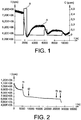
- the figure 1 illustrates the evolution of the fluorescence intensity emitted by the sensor during these exposures ( ⁇ emission : 507 nm, ⁇ excitation : 404 nm).
- the curve A represents the values of the fluorescence intensity (I), expressed in cps, as a function of time (t), expressed in seconds
- the curve B represents the values of the concentration of DNTFMB ( C), expressed in ppm, also as a function of time.
- Example 2 a sensor identical to that described in Example 1 is used.
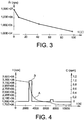
- the figure 2 illustrates the evolution of the fluorescence intensity (I), expressed in cps ( ⁇ emission : 507 nm, ⁇ excitation : 404 nm), as emitted by the sensor as a function of time (t), expressed in seconds.
- Arrow f1 signals the onset of the first exposure to the nitrogen / DNTFMB mixture;
- arrow f2 signals the start of exposure to the nitrogen / dichloromethane mixture;
- arrow f3 signals the end of exposure to the nitrogen / ethyl acetate mixture, while arrow f4 signals the start of the second exposure to the nitrogen / DNTFMB mixture.
- Example 3 Demonstration of the maintenance over time of the detection properties of the first example of a sensor
- Example 2 a sensor identical to that described in Example 1 is used.
- This sensor is subjected to a series of exposures to DNTFMB at a concentration of 1 ppm in nitrogen of 10 minutes each, the first exposure taking place on the day of the deposition of the polymer thin film on the glass substrate (J0 ), and the following at time intervals over a period of 96 days. Between two exposures to the DNTFMB, the sensor is kept in the ambient air.
- Example 4 Detection of the DNTFMB by a second example of a sensor
- the polymer is synthesized from ( 1R , 2R ) -diaminocyclohexane and 4-bromobenzaldehyde as described by JP Lere-Porte et al . in reference [6], then deposited on the glass substrate by dropwise deposition of a solution of said polymer in methylene chloride, of concentration equal to 1 g / l.
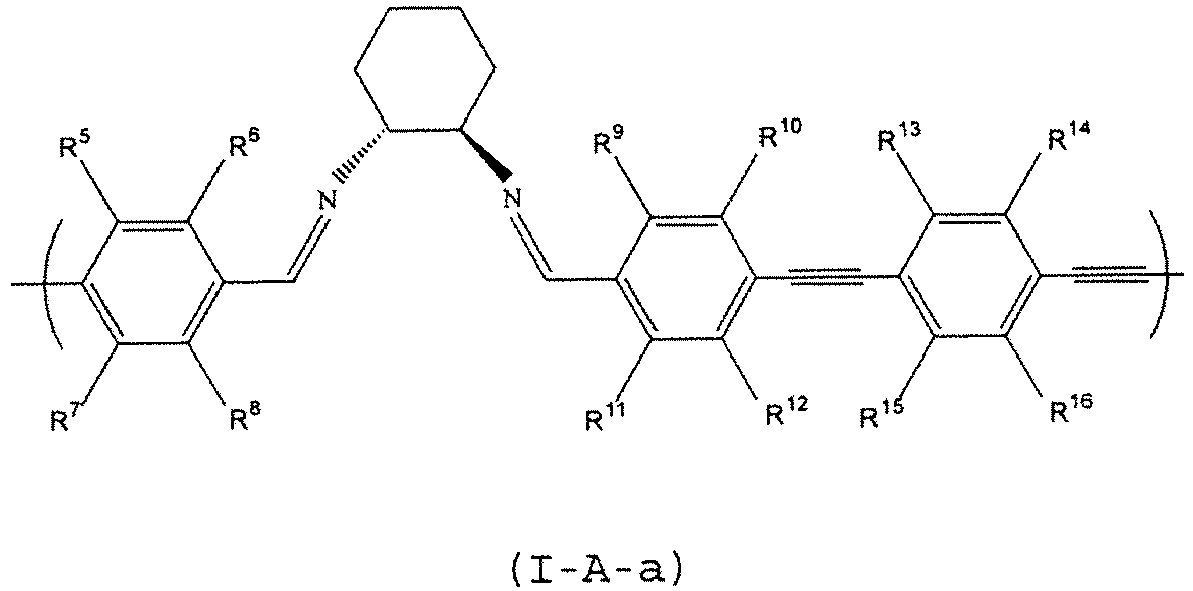
- the figure 4 illustrates the evolution of the fluorescence intensity emitted by the sensor during these exposures ( ⁇ emission : 500 nm, ⁇ excitation : 397 nm).
- curve A represents the values of the fluorescence intensity (I), expressed in cps, as a function of time (t), expressed in seconds
- curve B represents the values of the variation of the concentration.
- DNTFMB (C) expressed in ppm, also as a function of time.
- Example 5 Detection of the DNTFMB by a third example of a sensor
- This thin film is obtained by proceeding on each side of the quartz with five sprays of 0.2 seconds each of a solution of said polymer in chloroform, with a concentration of 1.5 g / l. The formation of this film results in a variation of the quartz vibration frequency of 0.6 kHz.
- the figure 5 illustrates the evolution of quartz vibration frequency during these exposures.
- curve A represents the values of the vibration frequency (F), expressed in Hz (hertz), as a function of time (t), expressed in seconds
- curve B represents the values of the concentration of DNTFMB (C), expressed in ppm, also as a function of time.
- Example 6 Detection of the DNTFMB by a fourth example of a sensor
- a sensor is produced whose operation is based on the variation of the intensity of the fluorescence emitted by the sensitive material of this sensor in the presence of a nitrated compound and in which the sensitive material is constituted by a polymer.
- the polymer is synthesized from ( 1R , 2R ) -diaminocyclohexane and 5-bromothiophene-2-carboxaldehyde as described by JP Lere-Porte et al. in reference [5], then deposited on the glass substrate by carrying out 4 sprays of 0.15 second each of a solution of said polymer in tetrahydrofuran, of concentration equal to 3 g / l.
- the figure 6 illustrates the evolution of the fluorescence intensity emitted by the sensor during these exposures ( ⁇ emission : 491 nm, ⁇ excitation : 397 nm).
- curve A represents the values of the fluorescence intensity (I), expressed in cps, as a function of time (t), expressed in seconds
- curve B represents the values of the variation of the concentration.
- DNTFMB (C) expressed in ppm, also as a function of time.
Landscapes
- Chemical & Material Sciences (AREA)
- Engineering & Computer Science (AREA)
- Life Sciences & Earth Sciences (AREA)
- Health & Medical Sciences (AREA)
- General Health & Medical Sciences (AREA)
- Pathology (AREA)
- Medicinal Chemistry (AREA)
- Physics & Mathematics (AREA)
- Analytical Chemistry (AREA)
- Biochemistry (AREA)
- Combustion & Propulsion (AREA)
- General Physics & Mathematics (AREA)
- Immunology (AREA)
- Food Science & Technology (AREA)
- Materials Engineering (AREA)
- Organic Chemistry (AREA)
- Investigating, Analyzing Materials By Fluorescence Or Luminescence (AREA)
- Investigating Or Analysing Materials By The Use Of Chemical Reactions (AREA)
- Polyoxymethylene Polymers And Polymers With Carbon-To-Carbon Bonds (AREA)
- Organic Low-Molecular-Weight Compounds And Preparation Thereof (AREA)
- Investigating Or Analyzing Non-Biological Materials By The Use Of Chemical Means (AREA)
Claims (28)
- Verwendung eines chemischen Sensors, der als empfindliches Material wenigstens ein Polymer umfasst, das wenigstens ein sich wiederholendes Motiv umfasst, das der nachfolgenden allgemeinen Formel (I) genügt:
 A1, A2 und A3 unabhängig voneinander eine Phenyl- oder Thienyl-Gruppe darstellen, die substituiert oder nicht substituiert ist; undB eine Chiralgruppe der Symmetrie C2 darstellt, die substituiert oder nicht substituiert ist, oder aber eine Gruppe, die einer der nachfolgenden Formeln (a), (b) und (c) genügt:für die Erfassung oder die Dosierung einer oder mehrerer Nitroverbindungen.

 X eine lineare, verzweigte oder zyklische Kohlenwasserstoffgruppe darstellt, gesättigt oder ungesättigt, die von 1 bis 100 Kohlenstoffatome umfasst, wobei diese Kohlenwasserstoffgruppe ein oder mehrere Heteroatome und/oder eine oder mehrere chemische Funktionen umfassen kann, die wenigstens ein Heteroatom umfassen, und eine aromatische oder heteroaromatische Gruppe sein kann, substituiert oder nicht substituiert, oder eine oder mehrere aromatische oder heteroaromatische Gruppen umfassen kann, substituiert oder nicht substituiert;R1 und R2 unabhängig voneinander folgendes darstellen:• ein Wasserstoff- oder Halogenatom• eine lineare, verzweigte oder zyklische Kohlenwasserstoffgruppe, gesättigt oder ungesättigt, die von 1 bis 100 Kohlenstoffatome umfasst, wobei diese Kohlenwasserstoffgruppe ein oder mehrere Heteroatome und/oder eine oder mehrere chemische Funktionen umfassen kann, die wenigstens ein Heteroatom umfassen, und eine aromatische oder heteroaromatische Gruppe sein kann, substituiert oder nicht substituiert, oder eine oder mehrere aromatische oder heteroaromatische Gruppen umfassen kann, substituiert oder nicht substituiert; oder auch• eine chemische Funktion, die wenigstens ein Heteroatom umfasst;
 - Verwendung nach Anspruch 1, wobei das Polymer wenigstens ein sich wiederholendes Motiv der allgemeinen Formel (I) umfasst, wobei A1, A2 und A3 jeweils eine Phenylgruppe sind.
- Verwendung nach Anspruch 2, wobei das Polymer wenigstens ein sich wiederholendes Motiv umfasst, das der nachfolgenden speziellen Formel (I-A) genügt:
 R5, R6, R7, R8, R9, R10, R11, R12, R13, R14, R15 und R16 unabhängig voneinander folgendes darstellen• ein Wasserstoff- oder Halogenatom• eine lineare, verzweigte oder zyklische Kohlenwasserstoffgruppe, gesättigt oder ungesättigt, die von 1 bis 100 Kohlenstoffatome umfasst, wobei diese Kohlenwasserstoffgruppe ein oder mehrere Heteroatome und/oder eine oder mehrere chemische Funktionen umfassen kann, die wenigstens ein Heteroatom umfassen, und eine aromatische oder heteroaromatische Gruppe sein kann, substituiert oder nicht substituiert, oder eine oder mehrere aromatische oder heteroaromatische Gruppen umfassen kann, substituiert oder nicht substituiert; oder auch• eine chemische Funktion, die wenigstens ein Heteroatom umfasst; undB die gleiche Bedeutung wie in Anspruch 1 hat.
 - Verwendung nach Anspruch 1, wobei das Polymer wenigstens ein sich wiederholendes Motiv der allgemeinen Formel (I) umfasst, wobei A1 und A2 jeweils eine Thienylgruppe sind und A3 eine Phenylgruppe ist.
- Verwendung nach Anspruch 4, wobei das Polymer wenigstens ein sich wiederholendes Motiv umfasst, das der nachfolgenden speziellen Formel (I-B) genügt:
 R5, R6, R9, R10, R13, R14, R15 und R16 unabhängig voneinander folgendes darstellen:• ein Wasserstoff- oder Halogenatom• eine lineare, verzweigte oder zyklische Kohlenwasserstoffgruppe, gesättigt oder ungesättigt, die von 1 bis 100 Kohlenstoffatome umfasst, wobei diese Kohlenwasserstoffgruppe ein oder mehrere Heteroatome und/oder eine oder mehrere chemische Funktionen umfassen kann, die wenigstens ein Heteroatom umfassen, und eine aromatische oder heteroaromatische Gruppe sein kann, substituiert oder nicht substituiert, oder eine oder mehrere aromatische oder heteroaromatische Gruppen umfassen kann, substituiert oder nicht substituiert; oder auch• eine chemische Funktion, die wenigstens ein Heteroatom umfasst; undB die gleiche Bedeutung wie in Anspruch 1 hat.
 - Verwendung nach Anspruch 1, wobei das Polymer wenigstens ein sich wiederholendes Motiv der allgemeinen Formel (I) umfasst, wobei B eine Gruppe darstellt, die einer der Formeln (a), (b) und (c) genügt.
- Verwendung nach Anspruch 6, wobei das Polymer wenigstens ein sich wiederholendes Motiv der allgemeinen Formel (I) umfasst, wobei B eine Gruppe darstellt, die einer der Formeln (a), (b) und (c) genügt, wobei X eine Chiral-Kohlenwasserstoffgruppe der Symmetrie C2 ist.
- Verwendung nach Anspruch 7, wobei das Polymer ein sich wiederholendes Motiv der allgemeinen Formel (I) umfasst, wobei B eine Gruppe darstellt, die einer der Formeln (a), (b) und (c) genügt, wobei X eine Kohlenwasserstoffgruppe ist, die aus den Gruppen der nachfolgenden Formeln (i) bis (vii) ausgewählt ist:


 • R17 ein Halogenatom darstellt, eine lineare, verzweigte oder zyklische Kohlenwasserstoffgruppe, gesättigt oder ungesättigt, umfassend von 1 bis 100 Kohlenstoffatome, wobei diese Kohlenwasserstoffgruppe ein oder mehrere Heteroatome und/oder eine oder mehrere chemische Funktionen umfassen kann, die wenigstens ein Heteroatom umfassen, und eine aromatische oder heteroaromatische Gruppe sein kann, substituiert oder nicht substituiert, oder eine oder mehrere aromatische oder heteroaromatische Gruppen umfassen kann, substituiert oder nicht substituiert, oder auch eine chemische Funktion, die wenigstens ein Heteroatom umfasst;• R18, R19, R20 und R21 unabhängig voneinander ein Wasserstoff- oder Halogenatom darstellen, eine lineare, verzweigte oder zyklische Kohlenwasserstoffgruppe, gesättigt oder ungesättigt, die von 1 bis 100 Kohlenstoffatomen umfasst, wobei diese Kohlenwasserstoffgruppe ein oder mehrere Heteroatome und/oder eine oder mehrere chemische Funktionen umfassen kann, die wenigstens ein Heteroatom umfassen, und eine aromatische oder heteroaromatische Gruppe sein kann, substituiert oder nicht substituiert, oder eine oder mehrere aromatische oder heteroaromatische Gruppen umfassen kann, substituiert oder nicht substituiert, oder auch eine chemische Funktion, die wenigstens ein Heteroatom umfasst;• W ein Sauerstoffatom darstellt, eine Gruppe -NH oder eine Gruppe-CH2, gegebenenfalls substituiert durch eine lineare, verzweigte oder zyklische Kohlenwasserstoffgruppe, gesättigt oder ungesättigt, die von 1 bis 100 Kohlenstoffatomen umfasst, wobei diese Kohlenwasserstoffgruppe ein oder mehrere Heteroatome und/oder eine oder mehrere chemische Funktionen umfassen kann, die wenigstens ein Heteroatom umfassen, und eine aromatische oder heteroaromatische Gruppe sein kann, substituiert oder nicht substituiert, oder eine oder mehrere aromatische oder heteroaromatische Gruppen umfassen kann, substituiert oder nicht substituiert; oder auch eine chemische Funktion, die wenigstens ein Heteroatom umfasst.
 - Verwendung nach Anspruch 3, wobei das Polymer wenigstens ein sich wiederholendes Motiv umfasst, das einer der nachfolgenden speziellen Formeln (I-A-a), (I-A-b) und (I-A-c) genügt:


- Verwendung nach Anspruch 3, wobei das Polymer wenigstens ein sich wiederholendes Motiv der speziellen Formel (I-A) umfasst, wobei wenigstens eines der R5 bis R16 eine lineare oder verzweigte Alcoxy-Gruppe mit C1 bis C20 darstellt, und bevorzugt mit C5 bis C10, wobei diejenige oder diejenigen der R5 bis R16, die keine Alcoxy-Gruppe darstellen, falls vorhanden, dann ein Wasserstoffatom darstellen.
- Verwendung nach Anspruch 9, wobei das Polymer wenigstens ein sich wiederholendes Motiv der speziellen Formel (I-A-a), (I-A-b) oder (I-A-c) umfasst, wobei R14 und R15 eine lineare oder verzweigte Alcoxy-Gruppe mit C1 bis C20 darstellen, und bevorzugt mit C5 bis C10, wohingegen R5 bis R13 und R16 ein Wasserstoffatom darstellen.
- Verwendung nach Anspruch 11, wobei das Polymer wenigstens ein sich wiederholendes Motiv der speziellen Formel (I-A-a) oder (I-A-b) umfasst, wobei R14 und R15 eine Octoxy-Gruppe darstellen, wohingegen R5 bis R13 und R16 ein Wasserstoffatom darstellen.
- Verwendung nach Anspruch 5, wobei das Polymer wenigstens ein sich wiederholendes Motiv umfasst, das einer nachfolgenden speziellen Formeln (I-B-a), (I-B-b) und (I-B-c) genügt:


- Verwendung nach Anspruch 5, wobei das Polymer wenigstens ein sich wiederholendes Motiv der speziellen Formel (I-B) umfasst, wobei wenigstens eines der R5, R6, R9, R10 und R13 bis R16 eine lineare oder verzweigte Alcoxy-Gruppe mit C1 bis C20 darstellen, und bevorzugt mit C5 bis C10, wohingegen dasjenige oder diejenigen der R5, R6, R9, R10 und R13 bis R16, die keine Alcoxy-Gruppe darstellen, falls vorhanden, dann ein Wasserstoffatom darstellen.
- Verwendung nach Anspruch 13, wobei das Polymer wenigstens ein sich wiederholendes Motiv der speziellen Formel (I-B-a), (I-B-b) oder (I-B-c) umfasst, wobei R14 und R15 eine lineare oder verzweigte Alcoxy-Gruppe mit C1 bis C20 darstellen, und bevorzugt mit C5 bis C10, wohingegen R5, R6, R9, R10, R13 und R16 ein Wasserstoffatom darstellen.
- Verwendung nach Anspruch 15, wobei das Polymer wenigstens ein sich wiederholendes Motiv der speziellen Formel (I-B-a) umfasst, wobei R14 und R15 eine Octoxy-Gruppe darstellen, wohingegen R5, R6, R9, R10, R13 und R16 ein Wasserstoffatom darstellen.
- Verwendung nach einem der vorhergehenden Ansprüche, wobei das Polymer ein Homopolymer ist.
- Verwendung nach einem der vorhergehenden Ansprüche, wobei das Polymer in Form eines dünnen Films vorhanden ist, der eine oder beide Flächen eines Substrats bedeckt, wobei dieser dünne Film in der Dicke von 10 Angström bis 100 Mikrometer misst.
- Verwendung nach einem der vorhergehenden Ansprüche, wobei der Sensor ein optischer Sensor auf Fluoreszenzbasis oder ein gravimetrischer Sensor ist.
- Verwendung nach einem der vorhergehenden Ansprüche, wobei die Nitroverbindung(en) gasförmig ist/sind.
- Verwendung nach einem der vorhergehenden Ansprüche, wobei die Nitroverbindung(en) ausgewählt ist/sind aus den nitroaromatischen Verbindungen, den Nitraminen, den Nitrosaminen und den Nitratestern.
- Verwendung nach einem der vorhergehenden Ansprüche zur Erfassung von Sprengstoffen.
- Chemischer Sensor, der als empfindliches Material wenigstens ein Polymer umfasst, das wenigstens ein sich wiederholendes Motiv umfasst, das einer der nachfolgenden speziellen Formeln (I-A-b) und (I-A-c) genügt:

 • ein Wasserstoff- oder Halogenatom• eine lineare, verzweigte oder zyklische Kohlenwasserstoffgruppe, gesättigt oder ungesättigt, die von 1 bis 100 Kohlenstoffatome umfasst, wobei diese Kohlenwasserstoffgruppe ein oder mehrere Heteroatome und/oder eine oder mehrere chemische Funktionen umfassen kann, die wenigstens ein Heteroatom umfassen, und eine aromatische oder heteroaromatische Gruppe sein kann, substituiert oder nicht substituiert, oder eine oder mehrere aromatische oder heteroaromatische Gruppen umfassen kann, substituiert oder nicht substituiert; oder auch• eine chemische Funktion, die wenigstens ein Heteroatom umfasst.
 - Sensor nach Anspruch 23, wobei das Polymer wenigstens ein sich wiederholendes Motiv der speziellen Formel (I-A-b) oder (I-A-c) umfasst, wobei R14 und R15 eine lineare oder verzweigte Alcoxy-Gruppe mit C1 bis C20 darstellen, und bevorzugt mit C5 bis C10, wohingegen R5 bis R13 und R16 ein Wasserstoffatom darstellen.
- Sensor nach Anspruch 23, wobei das Polymer wenigstens ein sich wiederholendes Motiv der speziellen Formel (I-A-b) umfasst, wobei R14 und R15 eine Octoxy-Gruppe darstellen, wohingegen R5 bis R13 und R16 ein Wasserstoffatom darstellen.
- Sensor nach einem der Ansprüche 23 bis 25, wobei das Polymer ein Homopolymer ist.
- Sensor nach einem der Ansprüche 23 bis 26, wobei das Polymer in der Form eines dünnen Films vorhanden ist, der eine oder beide Flächen eines Substrats bedeckt, wobei dieser dünne Film in der Dicke von 10 Angström bis 100 Mikrometer misst.
- Sensor nach einem der Ansprüche 23 bis 27, der ein optischer Sensor auf Fluoreszenzbasis oder ein gravimetrischer Sensor ist.
Applications Claiming Priority (2)
| Application Number | Priority Date | Filing Date | Title |
|---|---|---|---|
| FR0450719A FR2868842B1 (fr) | 2004-04-09 | 2004-04-09 | Capteurs chimiques comprenant des polymeres conjugues fluorescents comme materiaux sensibles, et leur utilisation pour la detection ou le dosage de composes nitres |
| PCT/FR2005/050222 WO2005103653A1 (fr) | 2004-04-09 | 2005-04-08 | Capteurs chimiques comprenant des polymeres conjugues fluorescents comme materiaux sensibles, et leur utilisation pour la detection ou le dosage de composes nitres |
Publications (2)
| Publication Number | Publication Date |
|---|---|
| EP1733210A1 EP1733210A1 (de) | 2006-12-20 |
| EP1733210B1 true EP1733210B1 (de) | 2017-03-22 |
Family
ID=34944367
Family Applications (1)
| Application Number | Title | Priority Date | Filing Date |
|---|---|---|---|
| EP05746923.1A Expired - Lifetime EP1733210B1 (de) | 2004-04-09 | 2005-04-08 | Chemischer Sensor auf der Basis von konjugierten, fluoreszierenden Polymeren als Sensor-Materialien, und deren Verwendung für den Nachweis oder die Dosierung von Nitroverbindungen |
Country Status (6)
| Country | Link |
|---|---|
| US (1) | US8178354B2 (de) |
| EP (1) | EP1733210B1 (de) |
| JP (1) | JP4767249B2 (de) |
| ES (1) | ES2629302T3 (de) |
| FR (1) | FR2868842B1 (de) |
| WO (1) | WO2005103653A1 (de) |
Families Citing this family (11)
| Publication number | Priority date | Publication date | Assignee | Title |
|---|---|---|---|---|
| US7704751B2 (en) * | 2006-09-18 | 2010-04-27 | 3M Innovative Properties Company | Polymeric fluorescent chemical sensor |
| FR2950629B1 (fr) | 2009-09-25 | 2013-12-06 | Commissariat Energie Atomique | Composes fluorescents, polymerisables, de la 7-hydroxycoumarine, leur preparation, polymeres fluorescents de ceux-ci et capteurs chimiques les comprenant. |
| WO2011093429A1 (ja) * | 2010-01-29 | 2011-08-04 | 財団法人北九州産業学術推進機構 | 高感度雰囲気センサーの製造方法、高感度雰囲気センサーおよびそれを用いた物質の検知方法 |
| CN102391649B (zh) * | 2011-10-17 | 2013-06-26 | 上海理工大学 | 一种光致发蓝光的齐聚苯并菲与聚砜共混膜及其制备方法和应用 |
| US9265458B2 (en) | 2012-12-04 | 2016-02-23 | Sync-Think, Inc. | Application of smooth pursuit cognitive testing paradigms to clinical drug development |
| US9380976B2 (en) | 2013-03-11 | 2016-07-05 | Sync-Think, Inc. | Optical neuroinformatics |
| KR20160145652A (ko) * | 2014-04-08 | 2016-12-20 | 윌리엄 마쉬 라이스 유니버시티 | 전자 장치의 플렉서블 도전성 필름 및 무기층의 제조 및 용도 |
| CN103940794B (zh) * | 2014-04-11 | 2016-04-06 | 齐鲁工业大学 | 一种均三嗪衍生物化学修饰玻璃表面传感器及其制备方法和应用 |
| CN106977700B (zh) * | 2017-03-30 | 2019-04-12 | 苏州大学 | 检测芳香胺水溶液的荧光共轭高分子传感体系、制备方法及应用 |
| FR3085957B1 (fr) | 2018-09-14 | 2021-01-29 | Commissariat Energie Atomique | Procede de collage temporaire avec adhesif thermoplastique incorporant une couronne rigide |
| CN113061237B (zh) * | 2021-03-29 | 2022-08-30 | 安庆师范大学 | 一种苯基噻咯基共轭微孔聚合物及其制备方法、应用 |
Family Cites Families (2)
| Publication number | Priority date | Publication date | Assignee | Title |
|---|---|---|---|---|
| GB9604627D0 (en) * | 1996-03-04 | 1996-05-01 | Neotronics Ltd | Sensor for volatile materials and gases |
| EP1281744B1 (de) * | 1998-05-05 | 2008-09-24 | Massachusetts Institute Of Technology | Emittierende Polymere und Vorrichtungen diese Polymere enthaltend |
-
2004
- 2004-04-09 FR FR0450719A patent/FR2868842B1/fr not_active Expired - Lifetime
-
2005
- 2005-04-08 WO PCT/FR2005/050222 patent/WO2005103653A1/fr not_active Ceased
- 2005-04-08 JP JP2007506820A patent/JP4767249B2/ja not_active Expired - Fee Related
- 2005-04-08 EP EP05746923.1A patent/EP1733210B1/de not_active Expired - Lifetime
- 2005-04-08 US US11/547,598 patent/US8178354B2/en not_active Expired - Fee Related
- 2005-04-08 ES ES05746923.1T patent/ES2629302T3/es not_active Expired - Lifetime
Non-Patent Citations (1)
| Title |
|---|
| None * |
Also Published As
| Publication number | Publication date |
|---|---|
| FR2868842B1 (fr) | 2006-05-26 |
| JP2007532870A (ja) | 2007-11-15 |
| JP4767249B2 (ja) | 2011-09-07 |
| EP1733210A1 (de) | 2006-12-20 |
| US20080044910A1 (en) | 2008-02-21 |
| FR2868842A1 (fr) | 2005-10-14 |
| ES2629302T3 (es) | 2017-08-08 |
| US8178354B2 (en) | 2012-05-15 |
| WO2005103653A1 (fr) | 2005-11-03 |
Similar Documents
| Publication | Publication Date | Title |
|---|---|---|
| CA2548252C (fr) | Utilisation de polymeres ou de composites a base de siloxanes dans des capteurs chimiques pour la detection de composes nitres | |
| Salinas et al. | Optical chemosensors and reagents to detect explosives | |
| JP2007513347A5 (de) | ||
| WO2005103653A1 (fr) | Capteurs chimiques comprenant des polymeres conjugues fluorescents comme materiaux sensibles, et leur utilisation pour la detection ou le dosage de composes nitres | |
| EP1817363B1 (de) | Chemische sensoren, die anilinpolysiloxane als empfindliche substanzen enthalten, und ihre verwendung zum nachweis und zur quantitativen analyse von nitroverbindungen | |
| CA2774956A1 (fr) | Polymeres fluorescents de composes de la 7-hydroxycoumarine, capteurs chimiques les comprenant, et compose fluorescent polymerisable de la 7-hydroxycoumarine | |
| US20100291698A1 (en) | Detection of nitro- and nitrate-containing compounds | |
| EP1731548B1 (de) | Verwendung von fluoreszierenden Polysiloxanen in chemischen Sensoren zum Nachweis oder zur Bestimmung von Nitroverbindungen | |
| FR2861175A1 (fr) | Utilisation de polymeres conducteurs ou semi-conducteurs dans des capteurs chimiques pour la detection de composes nitres. | |
| EP1844329B1 (de) | Verwendung molekularer clips als empfindliche materialien in chemischen sensoren zum nachweis oder testen organischer verbindungen im dampfzustand | |
| WO2008140635A2 (en) | Fluorescence detection of nitrogen-containing explosives and blue organic led | |
| US7927881B2 (en) | Inorganic polymers and use of inorganic polymers for detecting nitroaromatic compounds | |
| EP2643496B1 (de) | Verwendung von mesoporösen silica dünnfilmen als sensitives element in gravimetrischen sensoren zur bestimmung von nitrierten verbindungen in gasen | |
| Çimen et al. | 13 ExplosiveUsing Plasmonic Detection | |
| Sailor et al. | Amplified detection of chemicals using photoluminescence and interferometry from a porous silicon chip: detection of nitrobenzene and 2, 4-dinitrotoluene in air |
Legal Events
| Date | Code | Title | Description |
|---|---|---|---|
| PUAI | Public reference made under article 153(3) epc to a published international application that has entered the european phase |
Free format text: ORIGINAL CODE: 0009012 |
|
| 17P | Request for examination filed |
Effective date: 20060928 |
|
| AK | Designated contracting states |
Kind code of ref document: A1 Designated state(s): AT BE BG CH CY CZ DE DK EE ES FI FR GB GR HU IE IS IT LI LT LU MC NL PL PT RO SE SI SK TR |
|
| RIN1 | Information on inventor provided before grant (corrected) |
Inventor name: MOREAU, JOEL Inventor name: MONTMEAT, PIERRE Inventor name: SEREIN-SPIRAU, FRANCOISE Inventor name: PASQUINET, ERIC Inventor name: HAIRAULT, LIONEL Inventor name: LERE-PORTE, JEAN-PIERRE Inventor name: WAKIM, SALEM |
|
| RIN1 | Information on inventor provided before grant (corrected) |
Inventor name: WAKIM, SALEM Inventor name: MOREAU, JOEL Inventor name: MONTMEAT, PIERRE Inventor name: HAIRAULT, LIONEL Inventor name: LERE-PORTE, JEAN-PIERRE Inventor name: PASQUINET, ERIC Inventor name: SEREIN-SPIRAU, FRANCOISE |
|
| DAX | Request for extension of the european patent (deleted) | ||
| 17Q | First examination report despatched |
Effective date: 20090609 |
|
| RAP1 | Party data changed (applicant data changed or rights of an application transferred) |
Owner name: COMMISSARIAT A L'ENERGIE ATOMIQUE ET AUX ENERGIES |
|
| GRAP | Despatch of communication of intention to grant a patent |
Free format text: ORIGINAL CODE: EPIDOSNIGR1 |
|
| RIC1 | Information provided on ipc code assigned before grant |
Ipc: G01N 33/22 20060101ALI20160725BHEP Ipc: G01N 21/64 20060101AFI20160725BHEP Ipc: C09K 11/06 20060101ALI20160725BHEP Ipc: G01N 33/00 20060101ALI20160725BHEP |
|
| GRAJ | Information related to disapproval of communication of intention to grant by the applicant or resumption of examination proceedings by the epo deleted |
Free format text: ORIGINAL CODE: EPIDOSDIGR1 |
|
| INTG | Intention to grant announced |
Effective date: 20160901 |
|
| INTC | Intention to grant announced (deleted) | ||
| GRAP | Despatch of communication of intention to grant a patent |
Free format text: ORIGINAL CODE: EPIDOSNIGR1 |
|
| INTG | Intention to grant announced |
Effective date: 20161014 |
|
| GRAS | Grant fee paid |
Free format text: ORIGINAL CODE: EPIDOSNIGR3 |
|
| STAA | Information on the status of an ep patent application or granted ep patent |
Free format text: STATUS: GRANT OF PATENT IS INTENDED |
|
| GRAA | (expected) grant |
Free format text: ORIGINAL CODE: 0009210 |
|
| STAA | Information on the status of an ep patent application or granted ep patent |
Free format text: STATUS: THE PATENT HAS BEEN GRANTED |
|
| AK | Designated contracting states |
Kind code of ref document: B1 Designated state(s): AT BE BG CH CY CZ DE DK EE ES FI FR GB GR HU IE IS IT LI LT LU MC NL PL PT RO SE SI SK TR |
|
| REG | Reference to a national code |
Ref country code: GB Ref legal event code: FG4D Free format text: NOT ENGLISH |
|
| REG | Reference to a national code |
Ref country code: CH Ref legal event code: EP |
|
| REG | Reference to a national code |
Ref country code: AT Ref legal event code: REF Ref document number: 878279 Country of ref document: AT Kind code of ref document: T Effective date: 20170415 |
|
| REG | Reference to a national code |
Ref country code: IE Ref legal event code: FG4D Free format text: LANGUAGE OF EP DOCUMENT: FRENCH |
|
| REG | Reference to a national code |
Ref country code: DE Ref legal event code: R096 Ref document number: 602005051576 Country of ref document: DE |
|
| REG | Reference to a national code |
Ref country code: FR Ref legal event code: PLFP Year of fee payment: 13 |
|
| REG | Reference to a national code |
Ref country code: NL Ref legal event code: FP |
|
| REG | Reference to a national code |
Ref country code: SE Ref legal event code: TRGR |
|
| PG25 | Lapsed in a contracting state [announced via postgrant information from national office to epo] |
Ref country code: LT Free format text: LAPSE BECAUSE OF FAILURE TO SUBMIT A TRANSLATION OF THE DESCRIPTION OR TO PAY THE FEE WITHIN THE PRESCRIBED TIME-LIMIT Effective date: 20170322 Ref country code: GR Free format text: LAPSE BECAUSE OF FAILURE TO SUBMIT A TRANSLATION OF THE DESCRIPTION OR TO PAY THE FEE WITHIN THE PRESCRIBED TIME-LIMIT Effective date: 20170623 Ref country code: FI Free format text: LAPSE BECAUSE OF FAILURE TO SUBMIT A TRANSLATION OF THE DESCRIPTION OR TO PAY THE FEE WITHIN THE PRESCRIBED TIME-LIMIT Effective date: 20170322 |
|
| REG | Reference to a national code |
Ref country code: ES Ref legal event code: FG2A Ref document number: 2629302 Country of ref document: ES Kind code of ref document: T3 Effective date: 20170808 |
|
| REG | Reference to a national code |
Ref country code: LT Ref legal event code: MG4D |
|
| REG | Reference to a national code |
Ref country code: AT Ref legal event code: MK05 Ref document number: 878279 Country of ref document: AT Kind code of ref document: T Effective date: 20170322 |
|
| PG25 | Lapsed in a contracting state [announced via postgrant information from national office to epo] |
Ref country code: BG Free format text: LAPSE BECAUSE OF FAILURE TO SUBMIT A TRANSLATION OF THE DESCRIPTION OR TO PAY THE FEE WITHIN THE PRESCRIBED TIME-LIMIT Effective date: 20170622 |
|
| PG25 | Lapsed in a contracting state [announced via postgrant information from national office to epo] |
Ref country code: AT Free format text: LAPSE BECAUSE OF FAILURE TO SUBMIT A TRANSLATION OF THE DESCRIPTION OR TO PAY THE FEE WITHIN THE PRESCRIBED TIME-LIMIT Effective date: 20170322 Ref country code: EE Free format text: LAPSE BECAUSE OF FAILURE TO SUBMIT A TRANSLATION OF THE DESCRIPTION OR TO PAY THE FEE WITHIN THE PRESCRIBED TIME-LIMIT Effective date: 20170322 Ref country code: SK Free format text: LAPSE BECAUSE OF FAILURE TO SUBMIT A TRANSLATION OF THE DESCRIPTION OR TO PAY THE FEE WITHIN THE PRESCRIBED TIME-LIMIT Effective date: 20170322 Ref country code: RO Free format text: LAPSE BECAUSE OF FAILURE TO SUBMIT A TRANSLATION OF THE DESCRIPTION OR TO PAY THE FEE WITHIN THE PRESCRIBED TIME-LIMIT Effective date: 20170322 Ref country code: CZ Free format text: LAPSE BECAUSE OF FAILURE TO SUBMIT A TRANSLATION OF THE DESCRIPTION OR TO PAY THE FEE WITHIN THE PRESCRIBED TIME-LIMIT Effective date: 20170322 |
|
| PG25 | Lapsed in a contracting state [announced via postgrant information from national office to epo] |
Ref country code: IS Free format text: LAPSE BECAUSE OF FAILURE TO SUBMIT A TRANSLATION OF THE DESCRIPTION OR TO PAY THE FEE WITHIN THE PRESCRIBED TIME-LIMIT Effective date: 20170722 Ref country code: PL Free format text: LAPSE BECAUSE OF FAILURE TO SUBMIT A TRANSLATION OF THE DESCRIPTION OR TO PAY THE FEE WITHIN THE PRESCRIBED TIME-LIMIT Effective date: 20170322 Ref country code: PT Free format text: LAPSE BECAUSE OF FAILURE TO SUBMIT A TRANSLATION OF THE DESCRIPTION OR TO PAY THE FEE WITHIN THE PRESCRIBED TIME-LIMIT Effective date: 20170724 |
|
| REG | Reference to a national code |
Ref country code: CH Ref legal event code: PL |
|
| REG | Reference to a national code |
Ref country code: DE Ref legal event code: R097 Ref document number: 602005051576 Country of ref document: DE |
|
| REG | Reference to a national code |
Ref country code: IE Ref legal event code: MM4A |
|
| PLBE | No opposition filed within time limit |
Free format text: ORIGINAL CODE: 0009261 |
|
| STAA | Information on the status of an ep patent application or granted ep patent |
Free format text: STATUS: NO OPPOSITION FILED WITHIN TIME LIMIT |
|
| PG25 | Lapsed in a contracting state [announced via postgrant information from national office to epo] |
Ref country code: MC Free format text: LAPSE BECAUSE OF FAILURE TO SUBMIT A TRANSLATION OF THE DESCRIPTION OR TO PAY THE FEE WITHIN THE PRESCRIBED TIME-LIMIT Effective date: 20170322 Ref country code: DK Free format text: LAPSE BECAUSE OF FAILURE TO SUBMIT A TRANSLATION OF THE DESCRIPTION OR TO PAY THE FEE WITHIN THE PRESCRIBED TIME-LIMIT Effective date: 20170322 |
|
| 26N | No opposition filed |
Effective date: 20180102 |
|
| PG25 | Lapsed in a contracting state [announced via postgrant information from national office to epo] |
Ref country code: LU Free format text: LAPSE BECAUSE OF NON-PAYMENT OF DUE FEES Effective date: 20170408 Ref country code: LI Free format text: LAPSE BECAUSE OF NON-PAYMENT OF DUE FEES Effective date: 20170430 Ref country code: CH Free format text: LAPSE BECAUSE OF NON-PAYMENT OF DUE FEES Effective date: 20170430 Ref country code: SI Free format text: LAPSE BECAUSE OF FAILURE TO SUBMIT A TRANSLATION OF THE DESCRIPTION OR TO PAY THE FEE WITHIN THE PRESCRIBED TIME-LIMIT Effective date: 20170322 |
|
| REG | Reference to a national code |
Ref country code: BE Ref legal event code: MM Effective date: 20170430 |
|
| REG | Reference to a national code |
Ref country code: FR Ref legal event code: PLFP Year of fee payment: 14 |
|
| PG25 | Lapsed in a contracting state [announced via postgrant information from national office to epo] |
Ref country code: IE Free format text: LAPSE BECAUSE OF NON-PAYMENT OF DUE FEES Effective date: 20170408 |
|
| PG25 | Lapsed in a contracting state [announced via postgrant information from national office to epo] |
Ref country code: BE Free format text: LAPSE BECAUSE OF NON-PAYMENT OF DUE FEES Effective date: 20170430 |
|
| PG25 | Lapsed in a contracting state [announced via postgrant information from national office to epo] |
Ref country code: HU Free format text: LAPSE BECAUSE OF FAILURE TO SUBMIT A TRANSLATION OF THE DESCRIPTION OR TO PAY THE FEE WITHIN THE PRESCRIBED TIME-LIMIT; INVALID AB INITIO Effective date: 20050408 |
|
| PG25 | Lapsed in a contracting state [announced via postgrant information from national office to epo] |
Ref country code: CY Free format text: LAPSE BECAUSE OF NON-PAYMENT OF DUE FEES Effective date: 20170322 |
|
| PG25 | Lapsed in a contracting state [announced via postgrant information from national office to epo] |
Ref country code: TR Free format text: LAPSE BECAUSE OF FAILURE TO SUBMIT A TRANSLATION OF THE DESCRIPTION OR TO PAY THE FEE WITHIN THE PRESCRIBED TIME-LIMIT Effective date: 20170322 |
|
| PGFP | Annual fee paid to national office [announced via postgrant information from national office to epo] |
Ref country code: NL Payment date: 20240424 Year of fee payment: 20 |
|
| PGFP | Annual fee paid to national office [announced via postgrant information from national office to epo] |
Ref country code: GB Payment date: 20240418 Year of fee payment: 20 |
|
| PGFP | Annual fee paid to national office [announced via postgrant information from national office to epo] |
Ref country code: DE Payment date: 20240418 Year of fee payment: 20 |
|
| PGFP | Annual fee paid to national office [announced via postgrant information from national office to epo] |
Ref country code: ES Payment date: 20240517 Year of fee payment: 20 |
|
| PGFP | Annual fee paid to national office [announced via postgrant information from national office to epo] |
Ref country code: IT Payment date: 20240430 Year of fee payment: 20 Ref country code: FR Payment date: 20240422 Year of fee payment: 20 |
|
| PGFP | Annual fee paid to national office [announced via postgrant information from national office to epo] |
Ref country code: SE Payment date: 20240423 Year of fee payment: 20 |
|
| REG | Reference to a national code |
Ref country code: DE Ref legal event code: R071 Ref document number: 602005051576 Country of ref document: DE |
|
| REG | Reference to a national code |
Ref country code: NL Ref legal event code: MK Effective date: 20250407 |
|
| REG | Reference to a national code |
Ref country code: GB Ref legal event code: PE20 Expiry date: 20250407 |
|
| REG | Reference to a national code |
Ref country code: ES Ref legal event code: FD2A Effective date: 20250529 |
|
| REG | Reference to a national code |
Ref country code: SE Ref legal event code: EUG |
|
| PG25 | Lapsed in a contracting state [announced via postgrant information from national office to epo] |
Ref country code: ES Free format text: LAPSE BECAUSE OF EXPIRATION OF PROTECTION Effective date: 20250409 Ref country code: GB Free format text: LAPSE BECAUSE OF EXPIRATION OF PROTECTION Effective date: 20250407 |