EP1733754A1 - Appareil pour l'application d'une composition - Google Patents
Appareil pour l'application d'une composition Download PDFInfo
- Publication number
- EP1733754A1 EP1733754A1 EP05111304A EP05111304A EP1733754A1 EP 1733754 A1 EP1733754 A1 EP 1733754A1 EP 05111304 A EP05111304 A EP 05111304A EP 05111304 A EP05111304 A EP 05111304A EP 1733754 A1 EP1733754 A1 EP 1733754A1
- Authority
- EP
- European Patent Office
- Prior art keywords
- week
- score
- water
- skin
- pain
- Prior art date
- Legal status (The legal status is an assumption and is not a legal conclusion. Google has not performed a legal analysis and makes no representation as to the accuracy of the status listed.)
- Withdrawn
Links
- 239000000203 mixture Substances 0.000 title claims abstract description 39
- 239000002245 particle Substances 0.000 claims abstract description 66
- XLYOFNOQVPJJNP-UHFFFAOYSA-N water Substances O XLYOFNOQVPJJNP-UHFFFAOYSA-N 0.000 claims abstract description 44
- 238000001816 cooling Methods 0.000 claims abstract description 28
- LCGLNKUTAGEVQW-UHFFFAOYSA-N Dimethyl ether Chemical compound COC LCGLNKUTAGEVQW-UHFFFAOYSA-N 0.000 claims abstract description 24
- 239000003915 liquefied petroleum gas Substances 0.000 claims abstract description 8
- 230000000699 topical effect Effects 0.000 claims abstract description 4
- 229910052799 carbon Inorganic materials 0.000 claims abstract description 3
- 239000007789 gas Substances 0.000 claims description 8
- 239000000126 substance Substances 0.000 claims description 7
- 208000003251 Pruritus Diseases 0.000 description 56
- JYGXADMDTFJGBT-VWUMJDOOSA-N hydrocortisone Chemical compound O=C1CC[C@]2(C)[C@H]3[C@@H](O)C[C@](C)([C@@](CC4)(O)C(=O)CO)[C@@H]4[C@@H]3CCC2=C1 JYGXADMDTFJGBT-VWUMJDOOSA-N 0.000 description 54
- 208000002193 Pain Diseases 0.000 description 47
- 210000003491 skin Anatomy 0.000 description 40
- 238000011282 treatment Methods 0.000 description 34
- 229960000890 hydrocortisone Drugs 0.000 description 27
- 230000007803 itching Effects 0.000 description 21
- 238000012360 testing method Methods 0.000 description 20
- 201000008937 atopic dermatitis Diseases 0.000 description 19
- 125000000017 cortisol group Chemical group 0.000 description 19
- 230000000694 effects Effects 0.000 description 19
- 206010012438 Dermatitis atopic Diseases 0.000 description 18
- 230000007423 decrease Effects 0.000 description 17
- 208000024891 symptom Diseases 0.000 description 15
- 208000037265 diseases, disorders, signs and symptoms Diseases 0.000 description 12
- 210000001519 tissue Anatomy 0.000 description 12
- 238000000585 Mann–Whitney U test Methods 0.000 description 10
- 201000010099 disease Diseases 0.000 description 10
- 238000012544 monitoring process Methods 0.000 description 10
- 230000001225 therapeutic effect Effects 0.000 description 10
- LFQSCWFLJHTTHZ-UHFFFAOYSA-N Ethanol Chemical compound CCO LFQSCWFLJHTTHZ-UHFFFAOYSA-N 0.000 description 9
- 238000007427 paired t-test Methods 0.000 description 9
- 230000000638 stimulation Effects 0.000 description 9
- 206010015150 Erythema Diseases 0.000 description 8
- NTYJJOPFIAHURM-UHFFFAOYSA-N Histamine Chemical compound NCCC1=CN=CN1 NTYJJOPFIAHURM-UHFFFAOYSA-N 0.000 description 8
- 231100000321 erythema Toxicity 0.000 description 8
- 230000003902 lesion Effects 0.000 description 8
- 208000035874 Excoriation Diseases 0.000 description 7
- 206010024438 Lichenification Diseases 0.000 description 7
- 238000005336 cracking Methods 0.000 description 7
- NOOLISFMXDJSKH-UTLUCORTSA-N (+)-Neomenthol Chemical compound CC(C)[C@@H]1CC[C@@H](C)C[C@@H]1O NOOLISFMXDJSKH-UTLUCORTSA-N 0.000 description 6
- NOOLISFMXDJSKH-UHFFFAOYSA-N DL-menthol Natural products CC(C)C1CCC(C)CC1O NOOLISFMXDJSKH-UHFFFAOYSA-N 0.000 description 6
- 239000004479 aerosol dispenser Substances 0.000 description 6
- 230000001419 dependent effect Effects 0.000 description 6
- 229940041616 menthol Drugs 0.000 description 6
- 239000007921 spray Substances 0.000 description 6
- 238000002646 transcutaneous electrical nerve stimulation Methods 0.000 description 6
- 208000008035 Back Pain Diseases 0.000 description 5
- 208000024780 Urticaria Diseases 0.000 description 5
- 208000010668 atopic eczema Diseases 0.000 description 5
- 239000004615 ingredient Substances 0.000 description 5
- 238000000034 method Methods 0.000 description 5
- 239000002904 solvent Substances 0.000 description 5
- CURLTUGMZLYLDI-UHFFFAOYSA-N Carbon dioxide Chemical compound O=C=O CURLTUGMZLYLDI-UHFFFAOYSA-N 0.000 description 4
- 201000004624 Dermatitis Diseases 0.000 description 4
- 208000007514 Herpes zoster Diseases 0.000 description 4
- 206010027627 Miliaria Diseases 0.000 description 4
- 239000003908 antipruritic agent Substances 0.000 description 4
- NKDDWNXOKDWJAK-UHFFFAOYSA-N dimethoxymethane Chemical compound COCOC NKDDWNXOKDWJAK-UHFFFAOYSA-N 0.000 description 4
- 239000003814 drug Substances 0.000 description 4
- 229940079593 drug Drugs 0.000 description 4
- 229960001340 histamine Drugs 0.000 description 4
- 201000004169 miliaria rubra Diseases 0.000 description 4
- 208000017520 skin disease Diseases 0.000 description 4
- 238000002560 therapeutic procedure Methods 0.000 description 4
- 230000000007 visual effect Effects 0.000 description 4
- GVJHHUAWPYXKBD-IEOSBIPESA-N α-tocopherol Chemical compound OC1=C(C)C(C)=C2O[C@@](CCC[C@H](C)CCC[C@H](C)CCCC(C)C)(C)CCC2=C1C GVJHHUAWPYXKBD-IEOSBIPESA-N 0.000 description 4
- 208000006820 Arthralgia Diseases 0.000 description 3
- 206010012442 Dermatitis contact Diseases 0.000 description 3
- 206010019233 Headaches Diseases 0.000 description 3
- 206010061218 Inflammation Diseases 0.000 description 3
- 241001465754 Metazoa Species 0.000 description 3
- 206010033425 Pain in extremity Diseases 0.000 description 3
- 108091005804 Peptidases Proteins 0.000 description 3
- 102000035195 Peptidases Human genes 0.000 description 3
- 208000004550 Postoperative Pain Diseases 0.000 description 3
- 201000004681 Psoriasis Diseases 0.000 description 3
- 210000003169 central nervous system Anatomy 0.000 description 3
- 208000010247 contact dermatitis Diseases 0.000 description 3
- 201000005884 exanthem Diseases 0.000 description 3
- 239000003205 fragrance Substances 0.000 description 3
- 230000006870 function Effects 0.000 description 3
- 230000036571 hydration Effects 0.000 description 3
- 238000006703 hydration reaction Methods 0.000 description 3
- 230000004054 inflammatory process Effects 0.000 description 3
- 210000003041 ligament Anatomy 0.000 description 3
- 230000008569 process Effects 0.000 description 3
- 229940024999 proteolytic enzymes for treatment of wounds and ulcers Drugs 0.000 description 3
- 206010037844 rash Diseases 0.000 description 3
- 230000009885 systemic effect Effects 0.000 description 3
- 208000025978 Athletic injury Diseases 0.000 description 2
- IJGRMHOSHXDMSA-UHFFFAOYSA-N Atomic nitrogen Chemical compound N#N IJGRMHOSHXDMSA-UHFFFAOYSA-N 0.000 description 2
- 208000005171 Dysmenorrhea Diseases 0.000 description 2
- 208000010201 Exanthema Diseases 0.000 description 2
- 208000001640 Fibromyalgia Diseases 0.000 description 2
- 206010020751 Hypersensitivity Diseases 0.000 description 2
- 208000008930 Low Back Pain Diseases 0.000 description 2
- 206010027304 Menopausal symptoms Diseases 0.000 description 2
- 208000000112 Myalgia Diseases 0.000 description 2
- 206010028836 Neck pain Diseases 0.000 description 2
- 206010067482 No adverse event Diseases 0.000 description 2
- 206010039509 Scab Diseases 0.000 description 2
- 208000008765 Sciatica Diseases 0.000 description 2
- 206010040880 Skin irritation Diseases 0.000 description 2
- 206010047139 Vasoconstriction Diseases 0.000 description 2
- 206010048222 Xerosis Diseases 0.000 description 2
- 230000009471 action Effects 0.000 description 2
- 230000002411 adverse Effects 0.000 description 2
- 239000012670 alkaline solution Substances 0.000 description 2
- 230000007815 allergy Effects 0.000 description 2
- 229940087168 alpha tocopherol Drugs 0.000 description 2
- 230000001139 anti-pruritic effect Effects 0.000 description 2
- 239000001569 carbon dioxide Substances 0.000 description 2
- 229910002092 carbon dioxide Inorganic materials 0.000 description 2
- 239000003795 chemical substances by application Substances 0.000 description 2
- 230000001684 chronic effect Effects 0.000 description 2
- 208000035475 disorder Diseases 0.000 description 2
- 238000007710 freezing Methods 0.000 description 2
- 230000008014 freezing Effects 0.000 description 2
- 231100000869 headache Toxicity 0.000 description 2
- 230000035876 healing Effects 0.000 description 2
- 238000002169 hydrotherapy Methods 0.000 description 2
- CGIGDMFJXJATDK-UHFFFAOYSA-N indomethacin Chemical compound CC1=C(CC(O)=O)C2=CC(OC)=CC=C2N1C(=O)C1=CC=C(Cl)C=C1 CGIGDMFJXJATDK-UHFFFAOYSA-N 0.000 description 2
- 230000005764 inhibitory process Effects 0.000 description 2
- 201000011486 lichen planus Diseases 0.000 description 2
- OSWPMRLSEDHDFF-UHFFFAOYSA-N methyl salicylate Chemical compound COC(=O)C1=CC=CC=C1O OSWPMRLSEDHDFF-UHFFFAOYSA-N 0.000 description 2
- 201000006417 multiple sclerosis Diseases 0.000 description 2
- 230000007383 nerve stimulation Effects 0.000 description 2
- JCXJVPUVTGWSNB-UHFFFAOYSA-N nitrogen dioxide Inorganic materials O=[N]=O JCXJVPUVTGWSNB-UHFFFAOYSA-N 0.000 description 2
- 239000003921 oil Substances 0.000 description 2
- 201000008482 osteoarthritis Diseases 0.000 description 2
- 231100000475 skin irritation Toxicity 0.000 description 2
- 230000036556 skin irritation Effects 0.000 description 2
- 231100000046 skin rash Toxicity 0.000 description 2
- 208000019116 sleep disease Diseases 0.000 description 2
- 208000022925 sleep disturbance Diseases 0.000 description 2
- 230000003637 steroidlike Effects 0.000 description 2
- 208000011580 syndromic disease Diseases 0.000 description 2
- 229960000984 tocofersolan Drugs 0.000 description 2
- 230000036572 transepidermal water loss Effects 0.000 description 2
- 238000012546 transfer Methods 0.000 description 2
- 230000025033 vasoconstriction Effects 0.000 description 2
- 239000002076 α-tocopherol Substances 0.000 description 2
- 235000004835 α-tocopherol Nutrition 0.000 description 2
- DSSYKIVIOFKYAU-XCBNKYQSSA-N (R)-camphor Chemical compound C1C[C@@]2(C)C(=O)C[C@@H]1C2(C)C DSSYKIVIOFKYAU-XCBNKYQSSA-N 0.000 description 1
- JCAYXDKNUSEQRT-UHFFFAOYSA-N 2-aminoethoxyboronic acid Chemical compound NCCOB(O)O JCAYXDKNUSEQRT-UHFFFAOYSA-N 0.000 description 1
- 208000004998 Abdominal Pain Diseases 0.000 description 1
- 206010063409 Acarodermatitis Diseases 0.000 description 1
- 208000035143 Bacterial infection Diseases 0.000 description 1
- 208000006373 Bell palsy Diseases 0.000 description 1
- WVDDGKGOMKODPV-UHFFFAOYSA-N Benzyl alcohol Chemical compound OCC1=CC=CC=C1 WVDDGKGOMKODPV-UHFFFAOYSA-N 0.000 description 1
- 206010006811 Bursitis Diseases 0.000 description 1
- 208000001387 Causalgia Diseases 0.000 description 1
- 201000006082 Chickenpox Diseases 0.000 description 1
- 206010008635 Cholestasis Diseases 0.000 description 1
- 208000017667 Chronic Disease Diseases 0.000 description 1
- 208000000094 Chronic Pain Diseases 0.000 description 1
- 108090000317 Chymotrypsin Proteins 0.000 description 1
- 241000723346 Cinnamomum camphora Species 0.000 description 1
- 208000023890 Complex Regional Pain Syndromes Diseases 0.000 description 1
- 208000034656 Contusions Diseases 0.000 description 1
- 208000018035 Dental disease Diseases 0.000 description 1
- 206010012468 Dermatitis herpetiformis Diseases 0.000 description 1
- 208000032131 Diabetic Neuropathies Diseases 0.000 description 1
- QXNVGIXVLWOKEQ-UHFFFAOYSA-N Disodium Chemical compound [Na][Na] QXNVGIXVLWOKEQ-UHFFFAOYSA-N 0.000 description 1
- 206010013554 Diverticulum Diseases 0.000 description 1
- 206010013786 Dry skin Diseases 0.000 description 1
- 206010013935 Dysmenorrhoea Diseases 0.000 description 1
- 108090000790 Enzymes Proteins 0.000 description 1
- 102000004190 Enzymes Human genes 0.000 description 1
- 201000011275 Epicondylitis Diseases 0.000 description 1
- 206010017076 Fracture Diseases 0.000 description 1
- 241000233866 Fungi Species 0.000 description 1
- 201000005569 Gout Diseases 0.000 description 1
- 241000238631 Hexapoda Species 0.000 description 1
- XQFRJNBWHJMXHO-RRKCRQDMSA-N IDUR Chemical compound C1[C@H](O)[C@@H](CO)O[C@H]1N1C(=O)NC(=O)C(I)=C1 XQFRJNBWHJMXHO-RRKCRQDMSA-N 0.000 description 1
- 208000006877 Insect Bites and Stings Diseases 0.000 description 1
- FAIXYKHYOGVFKA-UHFFFAOYSA-N Kinetin Natural products N=1C=NC=2N=CNC=2C=1N(C)C1=CC=CO1 FAIXYKHYOGVFKA-UHFFFAOYSA-N 0.000 description 1
- 208000007914 Labor Pain Diseases 0.000 description 1
- 208000035945 Labour pain Diseases 0.000 description 1
- 208000019695 Migraine disease Diseases 0.000 description 1
- 208000028373 Neck injury Diseases 0.000 description 1
- 206010030113 Oedema Diseases 0.000 description 1
- 206010033733 Papule Diseases 0.000 description 1
- 206010034277 Pemphigoid Diseases 0.000 description 1
- 206010034464 Periarthritis Diseases 0.000 description 1
- 208000010886 Peripheral nerve injury Diseases 0.000 description 1
- 208000004983 Phantom Limb Diseases 0.000 description 1
- 206010056238 Phantom pain Diseases 0.000 description 1
- 206010037779 Radiculopathy Diseases 0.000 description 1
- 208000003782 Raynaud disease Diseases 0.000 description 1
- 208000012322 Raynaud phenomenon Diseases 0.000 description 1
- 208000025747 Rheumatic disease Diseases 0.000 description 1
- 241000208225 Rhus Species 0.000 description 1
- 235000014220 Rhus chinensis Nutrition 0.000 description 1
- 241000447727 Scabies Species 0.000 description 1
- 206010040914 Skin reaction Diseases 0.000 description 1
- UIIMBOGNXHQVGW-DEQYMQKBSA-M Sodium bicarbonate-14C Chemical compound [Na+].O[14C]([O-])=O UIIMBOGNXHQVGW-DEQYMQKBSA-M 0.000 description 1
- 206010041591 Spinal osteoarthritis Diseases 0.000 description 1
- 208000010040 Sprains and Strains Diseases 0.000 description 1
- 206010042496 Sunburn Diseases 0.000 description 1
- 206010043220 Temporomandibular joint syndrome Diseases 0.000 description 1
- 208000000491 Tendinopathy Diseases 0.000 description 1
- 206010043255 Tendonitis Diseases 0.000 description 1
- 206010044074 Torticollis Diseases 0.000 description 1
- 241000159243 Toxicodendron radicans Species 0.000 description 1
- 208000025865 Ulcer Diseases 0.000 description 1
- 208000003443 Unconsciousness Diseases 0.000 description 1
- 208000036826 VIIth nerve paralysis Diseases 0.000 description 1
- 206010046980 Varicella Diseases 0.000 description 1
- 208000036142 Viral infection Diseases 0.000 description 1
- 238000001793 Wilcoxon signed-rank test Methods 0.000 description 1
- UJNOLBSYLSYIBM-WISYIIOYSA-N [(1r,2s,5r)-5-methyl-2-propan-2-ylcyclohexyl] (2r)-2-hydroxypropanoate Chemical compound CC(C)[C@@H]1CC[C@@H](C)C[C@H]1OC(=O)[C@@H](C)O UJNOLBSYLSYIBM-WISYIIOYSA-N 0.000 description 1
- 230000002159 abnormal effect Effects 0.000 description 1
- 230000037236 achy joints Effects 0.000 description 1
- 208000005298 acute pain Diseases 0.000 description 1
- 239000000443 aerosol Substances 0.000 description 1
- 208000026935 allergic disease Diseases 0.000 description 1
- 230000000202 analgesic effect Effects 0.000 description 1
- 229940035676 analgesics Drugs 0.000 description 1
- 210000003423 ankle Anatomy 0.000 description 1
- 239000000730 antalgic agent Substances 0.000 description 1
- 239000003242 anti bacterial agent Substances 0.000 description 1
- 229940121363 anti-inflammatory agent Drugs 0.000 description 1
- 239000002260 anti-inflammatory agent Substances 0.000 description 1
- 230000003110 anti-inflammatory effect Effects 0.000 description 1
- 239000000427 antigen Substances 0.000 description 1
- 102000036639 antigens Human genes 0.000 description 1
- 108091007433 antigens Proteins 0.000 description 1
- 239000004599 antimicrobial Substances 0.000 description 1
- 239000003963 antioxidant agent Substances 0.000 description 1
- 230000003078 antioxidant effect Effects 0.000 description 1
- 235000006708 antioxidants Nutrition 0.000 description 1
- 210000000617 arm Anatomy 0.000 description 1
- 206010003246 arthritis Diseases 0.000 description 1
- 230000001580 bacterial effect Effects 0.000 description 1
- 208000022362 bacterial infectious disease Diseases 0.000 description 1
- 230000004888 barrier function Effects 0.000 description 1
- 238000003287 bathing Methods 0.000 description 1
- 230000009286 beneficial effect Effects 0.000 description 1
- 230000003115 biocidal effect Effects 0.000 description 1
- 230000015572 biosynthetic process Effects 0.000 description 1
- 230000017531 blood circulation Effects 0.000 description 1
- 208000000594 bullous pemphigoid Diseases 0.000 description 1
- 229960000846 camphor Drugs 0.000 description 1
- 229930008380 camphor Natural products 0.000 description 1
- 230000008859 change Effects 0.000 description 1
- 238000006243 chemical reaction Methods 0.000 description 1
- 238000000546 chi-square test Methods 0.000 description 1
- 230000007870 cholestasis Effects 0.000 description 1
- 231100000359 cholestasis Toxicity 0.000 description 1
- 229960002376 chymotrypsin Drugs 0.000 description 1
- 230000000052 comparative effect Effects 0.000 description 1
- 208000014439 complex regional pain syndrome type 2 Diseases 0.000 description 1
- 230000003750 conditioning effect Effects 0.000 description 1
- 239000002826 coolant Substances 0.000 description 1
- 239000000498 cooling water Substances 0.000 description 1
- 230000007797 corrosion Effects 0.000 description 1
- 238000005260 corrosion Methods 0.000 description 1
- 239000003246 corticosteroid Substances 0.000 description 1
- 229960001334 corticosteroids Drugs 0.000 description 1
- 230000006378 damage Effects 0.000 description 1
- 239000000645 desinfectant Substances 0.000 description 1
- 238000003745 diagnosis Methods 0.000 description 1
- GZVBAOSNKYQKIT-UHFFFAOYSA-N dimethoxymethane Chemical compound COCOC.COCOC GZVBAOSNKYQKIT-UHFFFAOYSA-N 0.000 description 1
- 230000009266 disease activity Effects 0.000 description 1
- 230000037336 dry skin Effects 0.000 description 1
- 230000002500 effect on skin Effects 0.000 description 1
- 239000003995 emulsifying agent Substances 0.000 description 1
- 229940088598 enzyme Drugs 0.000 description 1
- 206010015037 epilepsy Diseases 0.000 description 1
- 230000008020 evaporation Effects 0.000 description 1
- 238000001704 evaporation Methods 0.000 description 1
- 239000004744 fabric Substances 0.000 description 1
- 239000000835 fiber Substances 0.000 description 1
- 239000010419 fine particle Substances 0.000 description 1
- 238000011010 flushing procedure Methods 0.000 description 1
- 239000006260 foam Substances 0.000 description 1
- 210000002683 foot Anatomy 0.000 description 1
- 201000010603 frozen shoulder Diseases 0.000 description 1
- 230000002070 germicidal effect Effects 0.000 description 1
- 210000004247 hand Anatomy 0.000 description 1
- 230000036074 healthy skin Effects 0.000 description 1
- 208000019622 heart disease Diseases 0.000 description 1
- 210000003630 histaminocyte Anatomy 0.000 description 1
- 230000003116 impacting effect Effects 0.000 description 1
- 229960000905 indomethacin Drugs 0.000 description 1
- 208000015181 infectious disease Diseases 0.000 description 1
- 208000018197 inherited torticollis Diseases 0.000 description 1
- 239000003112 inhibitor Substances 0.000 description 1
- 230000003993 interaction Effects 0.000 description 1
- 230000003834 intracellular effect Effects 0.000 description 1
- QANMHLXAZMSUEX-UHFFFAOYSA-N kinetin Chemical compound N=1C=NC=2N=CNC=2C=1NCC1=CC=CO1 QANMHLXAZMSUEX-UHFFFAOYSA-N 0.000 description 1
- 229960001669 kinetin Drugs 0.000 description 1
- 208000024765 knee pain Diseases 0.000 description 1
- 210000002414 leg Anatomy 0.000 description 1
- 239000007788 liquid Substances 0.000 description 1
- 231100000053 low toxicity Toxicity 0.000 description 1
- 210000003141 lower extremity Anatomy 0.000 description 1
- 230000002879 macerating effect Effects 0.000 description 1
- 230000014759 maintenance of location Effects 0.000 description 1
- 230000007246 mechanism Effects 0.000 description 1
- 229960001047 methyl salicylate Drugs 0.000 description 1
- 239000003595 mist Substances 0.000 description 1
- 230000004048 modification Effects 0.000 description 1
- 238000012986 modification Methods 0.000 description 1
- 230000004118 muscle contraction Effects 0.000 description 1
- 210000005036 nerve Anatomy 0.000 description 1
- 210000001640 nerve ending Anatomy 0.000 description 1
- 208000004296 neuralgia Diseases 0.000 description 1
- 231100000957 no side effect Toxicity 0.000 description 1
- 230000000474 nursing effect Effects 0.000 description 1
- 239000003002 pH adjusting agent Substances 0.000 description 1
- 230000008058 pain sensation Effects 0.000 description 1
- 244000052769 pathogen Species 0.000 description 1
- 230000002093 peripheral effect Effects 0.000 description 1
- 206010035114 pityriasis rosea Diseases 0.000 description 1
- 210000004044 posterior horn cell Anatomy 0.000 description 1
- 230000035935 pregnancy Effects 0.000 description 1
- 102000004196 processed proteins & peptides Human genes 0.000 description 1
- 108090000765 processed proteins & peptides Proteins 0.000 description 1
- 206010061928 radiculitis Diseases 0.000 description 1
- 230000000552 rheumatic effect Effects 0.000 description 1
- 206010039073 rheumatoid arthritis Diseases 0.000 description 1
- 230000001020 rhythmical effect Effects 0.000 description 1
- 208000005687 scabies Diseases 0.000 description 1
- 230000035807 sensation Effects 0.000 description 1
- 230000001953 sensory effect Effects 0.000 description 1
- 210000002966 serum Anatomy 0.000 description 1
- 230000036620 skin dryness Effects 0.000 description 1
- 206010040882 skin lesion Diseases 0.000 description 1
- 231100000444 skin lesion Toxicity 0.000 description 1
- 231100000430 skin reaction Toxicity 0.000 description 1
- 230000035483 skin reaction Effects 0.000 description 1
- WXMKPNITSTVMEF-UHFFFAOYSA-M sodium benzoate Chemical compound [Na+].[O-]C(=O)C1=CC=CC=C1 WXMKPNITSTVMEF-UHFFFAOYSA-M 0.000 description 1
- 239000004299 sodium benzoate Substances 0.000 description 1
- 235000010234 sodium benzoate Nutrition 0.000 description 1
- 239000000243 solution Substances 0.000 description 1
- 210000000278 spinal cord Anatomy 0.000 description 1
- 208000005801 spondylosis Diseases 0.000 description 1
- 239000003381 stabilizer Substances 0.000 description 1
- 230000004936 stimulating effect Effects 0.000 description 1
- 210000000434 stratum corneum Anatomy 0.000 description 1
- 201000004595 synovitis Diseases 0.000 description 1
- 238000012353 t test Methods 0.000 description 1
- 201000004415 tendinitis Diseases 0.000 description 1
- 201000005060 thrombophlebitis Diseases 0.000 description 1
- 208000004371 toothache Diseases 0.000 description 1
- 231100000331 toxic Toxicity 0.000 description 1
- 230000002588 toxic effect Effects 0.000 description 1
- 230000009466 transformation Effects 0.000 description 1
- 206010044652 trigeminal neuralgia Diseases 0.000 description 1
- 231100000397 ulcer Toxicity 0.000 description 1
- 210000001364 upper extremity Anatomy 0.000 description 1
- 230000009385 viral infection Effects 0.000 description 1
- 230000004580 weight loss Effects 0.000 description 1
Images


Classifications
-
- A—HUMAN NECESSITIES
- A61—MEDICAL OR VETERINARY SCIENCE; HYGIENE
- A61F—FILTERS IMPLANTABLE INTO BLOOD VESSELS; PROSTHESES; DEVICES PROVIDING PATENCY TO, OR PREVENTING COLLAPSING OF, TUBULAR STRUCTURES OF THE BODY, e.g. STENTS; ORTHOPAEDIC, NURSING OR CONTRACEPTIVE DEVICES; FOMENTATION; TREATMENT OR PROTECTION OF EYES OR EARS; BANDAGES, DRESSINGS OR ABSORBENT PADS; FIRST-AID KITS
- A61F7/00—Heating or cooling appliances for medical or therapeutic treatment of the human body
- A61F7/10—Cooling bags, e.g. ice-bags
-
- A—HUMAN NECESSITIES
- A61—MEDICAL OR VETERINARY SCIENCE; HYGIENE
- A61K—PREPARATIONS FOR MEDICAL, DENTAL OR TOILETRY PURPOSES
- A61K9/00—Medicinal preparations characterised by special physical form
- A61K9/0012—Galenical forms characterised by the site of application
- A61K9/0014—Skin, i.e. galenical aspects of topical compositions
-
- A—HUMAN NECESSITIES
- A61—MEDICAL OR VETERINARY SCIENCE; HYGIENE
- A61M—DEVICES FOR INTRODUCING MEDIA INTO, OR ONTO, THE BODY; DEVICES FOR TRANSDUCING BODY MEDIA OR FOR TAKING MEDIA FROM THE BODY; DEVICES FOR PRODUCING OR ENDING SLEEP OR STUPOR
- A61M11/00—Sprayers or atomisers specially adapted for therapeutic purposes
- A61M11/001—Particle size control
-
- A—HUMAN NECESSITIES
- A61—MEDICAL OR VETERINARY SCIENCE; HYGIENE
- A61P—SPECIFIC THERAPEUTIC ACTIVITY OF CHEMICAL COMPOUNDS OR MEDICINAL PREPARATIONS
- A61P17/00—Drugs for dermatological disorders
-
- A—HUMAN NECESSITIES
- A61—MEDICAL OR VETERINARY SCIENCE; HYGIENE
- A61F—FILTERS IMPLANTABLE INTO BLOOD VESSELS; PROSTHESES; DEVICES PROVIDING PATENCY TO, OR PREVENTING COLLAPSING OF, TUBULAR STRUCTURES OF THE BODY, e.g. STENTS; ORTHOPAEDIC, NURSING OR CONTRACEPTIVE DEVICES; FOMENTATION; TREATMENT OR PROTECTION OF EYES OR EARS; BANDAGES, DRESSINGS OR ABSORBENT PADS; FIRST-AID KITS
- A61F7/00—Heating or cooling appliances for medical or therapeutic treatment of the human body
- A61F2007/0059—Heating or cooling appliances for medical or therapeutic treatment of the human body with an open fluid circuit
- A61F2007/0063—Heating or cooling appliances for medical or therapeutic treatment of the human body with an open fluid circuit for cooling
-
- A—HUMAN NECESSITIES
- A61—MEDICAL OR VETERINARY SCIENCE; HYGIENE
- A61K—PREPARATIONS FOR MEDICAL, DENTAL OR TOILETRY PURPOSES
- A61K9/00—Medicinal preparations characterised by special physical form
- A61K9/10—Dispersions; Emulsions
- A61K9/12—Aerosols; Foams
-
- A—HUMAN NECESSITIES
- A61—MEDICAL OR VETERINARY SCIENCE; HYGIENE
- A61M—DEVICES FOR INTRODUCING MEDIA INTO, OR ONTO, THE BODY; DEVICES FOR TRANSDUCING BODY MEDIA OR FOR TAKING MEDIA FROM THE BODY; DEVICES FOR PRODUCING OR ENDING SLEEP OR STUPOR
- A61M11/00—Sprayers or atomisers specially adapted for therapeutic purposes
- A61M11/02—Sprayers or atomisers specially adapted for therapeutic purposes operated by air or other gas pressure applied to the liquid or other product to be sprayed or atomised
Definitions
- Such sprays are capable of reducing the outer surface of the skin temperature from the normal 37°C to close to or at 0°C and have similar effect to applying ice cubes on the skin to reduce inflammation and bruising through vasoconstriction.
- One of the purposes of the present invention is to cool the outer surface of the skin and not to freeze it or cool it below 5°C. Applying very cold spray, the temperature of which is below 0°C which may cause the outer surface of the skin to freeze or reach a temperature close to or at 0°C will work against the intended processes of the present invention and is not within the scope of the present invention.
- Mast cells are broken by direct damage and by abnormal tissue chemistry including antigens and peptides released by excited unmyelinated sensory fibres. They release histamine and proteolytic enzymes such as chymotrypsin. Proteolytic enzymes produce intense itching. Such enzymes are known to function best at an optimum pH range. Alkaline solutions reduce itching [ Madden EJ. Itch, J Pain Symptom Management 1986 Spring;1(2): 97-9 ] e.g. sodium bicarbonate, added to bath water has been found beneficial in atopic eczema [ Litt JZ: Topical treatments of itching without corticosteroids; Bernhard JD(ed): Itch Mechanisms and management of Pruritis.
- Transcutaneous Electrical Nerve Stimulation and Mechanical Stimulation are also proven to have therapeutic effects on itching and pain
- the applied pulse frequency seems to have an effect on the therapeutic results
- Low-frequency TENS (2Hz) significantly reduced itch and the rhythmic muscle contractions induced by this type of stimulation were shown to have a pain-reducing effect.
- TENS has disadvantages. It is dependent on an electrical power supply, it starts to relieve pain or itch only after continuous use for thirty minutes on average. It must not be used by patients using a demand type pacemaker, it cannot be used everywhere on the body e.g. not on the neck, and it should not be used when driving or operating machinery. It is not suitable for use by pregnant women and patients who have heart disease or epilepsy. TENS is not suitable for use when the area required treating is large or covers the greater part of the body; it is more suitable for treating localised pain or itching affecting a specific point on the body or a small area. Consequently, to date, TENS has not come into clinical use on a wide scale; furthermore patient compliance is poor.
- an apparatus containing a water-based composition the viscosity of which composition is from 0.2 to 30 mPa.s at 20°C
- which apparatus is adapted in use to release cool water-based particles for the simultaneous topical application of thermal (cooling) and mechanical kinetic energy stimuli for skin or body tissue cooling and for the generation of pulses in the body respectively
- which apparatus is arranged in use to release non-flammable, water-based particles at a pressure of from 0.5 to 11 bars at 20°C, which pressure is created by using dimethyl ether or liquefied petroleum gas or a mixture of the two, to discharge said water-based particles at a rate of from 0.1 to 8 gm/sec at 20°C at a discharge angle of from 0.0° to 145° at 20°C, at a temperature which is higher than 0°C and lower than the ambient temperature and with a particle diameter of from 10 to 600 microns
- which apparatus is used for, but not limited to, the treatment of human and veterinary diseases and symptoms of diseases
- the cool water-based particles which the apparatus of the present invention is adapted in use to produce have an alkaline composition and preferably a pH of from 7.01 -12.6, thereby also to apply chemical stimulus for skin or body tissue e.g. to counteract the effect of proteolytic enzymes and reduce the itching.
- the present invention provides an apparatus containing a composition adapted in use simultaneously to apply thermal, chemical and mechanical kinetic energy stimuli, so as to effect skin or body tissue cooling, to deliver water-based particles with the required pH level on the skin or body tissue and to generate mechanical kinetic energy pulses in the body respectively, which apparatus is used for, but not limited to, the treatment of human and veterinary diseases and symptoms of diseases.
- the apparatus and composition of the present invention is capable of achieving an efficacy far exceeding that of each stimulus i.e. cooling, mechanical or chemical acting independently.
- the apparatus containing the composition produces instant central (CNS) and peripheral inhibition action within a few seconds of application e.g. to abolish or reduce itching and pain.
- the apparatus is suitable for use anywhere on the body, is suitable for all adults, including pregnant women, children and infants and is free from side-effects.
- the present invention has been proven to be effective in treating cutaneous diseases e.g. atopic dermatitis, prickly heat, urticaria as well as relieving their symptoms.
- the apparatus releases particles which carry kinetic energy and impact the skin or tissues.
- the impact pressure of each particle on the skin is converted to vibration or pulses.
- kinetic energy There are many types of kinetic energy.
- the quantity of kinetic energy generated is directly proportional to the mass of the particle travelling in space and also directly proportional to the square of the velocity. Therefore the velocity of the particle has greater impact on the value of the KE than does the mass.
- the apparatus of the present invention contains a non-flammable composition and permits the release of non-flammable water-based particles at a pressure of from 0.5 to 11 bar at 20°C, preferably at a pressure of from 1.5 to 8 bar at 20°C; the particles travel freely in space at a given velocity and the majority impact the skin or body tissues to create pulses of varying frequency.
- the temperature of the water-based particles when utilised is greater than 0°C and lower than the ambient temperature.
- the pressure at which the water-based particles is released is such that the velocity of the particles gives rise to the optimum amount of kinetic energy which is sufficient to create an optimum pulse frequency so as to result in maximum therapeutic efficacy.
- the apparatus of the present invention is adapted on the one hand to prevent the particles to float freely and aimlessly in air and on the other hand to prevent the formation of a foam or sherbet-like spray as the particles must be directional, aimed to travel in space in a specific direction and to impact the skin or body tissues at a pressure.
- the number of particles released is dependent on the discharge rate which is selected to be from 0.1 to 8 gm/sec at 20°C, preferably from 0.4 to 3 gm/sec at 20°C.
- the angle of discharge affects the size of the skin area impacted by the particles and is selected to be from 0.0° to 145° at 20°C, preferably from to 5° to 60° at 20°C. This permits the treatment of large areas of the body in one application and the possibility of treating within seconds as much or as little body surface area as required.
- the diameter of the released particles is from 10 to 600 microns, preferably from 15 to 300 microns in order that the particles possess adequate mass and velocity and to prevent inhalation of the particles.
- One possible means of achieving the required particle size, discharge rate and angle of discharge at 20°C is by selecting an appropriate aerosol valve, actuator and actuator insert from those currently available on the market and supplied by third parties in conjunction with the selected composition ( with appropriate viscosity) contained in the apparatus which composition also determines the pressure within the apparatus at a specific temperature ( if the composition includes a pressurized gas then the pressure of that gas within the apparatus will affect the overall pressure and will be taken in account), the valves, actuators and actuator inserts release the composition at the required discharge rate and angle of discharge after breaking it into the required particle size.
- the discharge rate may be determined e.g. by measuring the weight loss from the apparatus in a specified time e.g. 10 seconds at a specified temperature e.g.
- a spray particle analyzer may be used e.g. one which uses Light Interaction Method e.g. laser diffraction.
- a spray particle analyzer supplied by Malvern Instruments Ltd of Enigma Business Park, Grovewood Rd, Malvern, WR14 1XZ, UK or Microtrac S3500 supplied by Microtrac Inc. of 12501A-62 nd St, North Largo, FL 33773, USA.
- the required cooling level is achieved by dimethyl ether or liquefied gas or a mixture of the two.
- the latent heat of transformation of dimethyl ether or the liquefied gas or a mixture of the two from liquid to gas is absorbed from the said composition thus cooling the water-based particles to a temperature which when utilized is greater than 0°C and lower than the ambient temperature.
- Cooling ingredients e.g. menthol, menthyl lactate may be added to enhance the cooling effect on the skin.
- the discharge rate (from 0.1 to 8 gm/sec at 20°C, preferably from 0.4 to 3 gm/sec at 20°C) decides the level of skin cooling as the level of skin cooling is directly proportional to the discharge rate.
- the pressure of from 0.5-11 bar at 20°C is achieved by using dimethyl ether or liquefied petroleum gas or a mixture of the two. Pressurized gases e.g. Nitrogen or Carbon Dioxide may be added as well to help achieve the adequate pressure level.
- Pressurized gases e.g. Nitrogen or Carbon Dioxide may be added as well to help achieve the adequate pressure level.
- the skin or tissues should be bare.
- a thin perforated cover e.g. ladies' stockings may still allow transfer of the kinetic energy and may be used. If the skin is covered by a thick dressing or clothing the mechanical kinetic energy will be absorbed by that dressing or clothing and will be prevented from being transmitted further to the skin. Excessive hair ( or fur in case of animals) should preferably be shaved to allow transfer of kinetin energy to the skin.
- the present invention permits the flexibility of altering the stimulating pulse frequency and amplitude.
- the pulse frequency is dependent on the speed of the released particles which is dependent on a pressure within the apparatus of from 0.5 to 11 bar at 20°C.
- the pulse amplitude is dependent on the mass of the released particles which is dependent on the viscosity of the composition (from 0.2 to 30 mPa.s at 20°C, preferably from 0.3 to 15 mPa.s. at 20°C) and the particle size (from 10 to 600 microns, preferably from 15-300 microns).
- the pulse frequency in Hz and the amplitude of the released particles can be measured by an accelerometer fitted with an appropriate sensor. Different diseases and symptoms seem to respond better to specific pulse frequencies and amplitudes.
- the optimum therapeutic pulse frequency for specific diseases are decided by clinical studies. Therefore by adjusting the apparatus pressure, viscosity and particle size, the treatment of specific diseases can be targeted.
- each patient can control the dosage that best suits their needs by controlling the number and duration of applications until symptoms ease. A factor which only the patient can determine, especially when the symptoms are subjective e.g. pain or itching.
- the water-based particles released at the specified pressure mechanically cleanse and debride the skin lesions, if available and prevent serum and crust from accumulating. They also help in macerating vesicles.
- the particles released from the apparatus according to the present invention travel in air for impacting the body and for safety reasons the particles must be non-flammable i.e. the flammable content of the composition contained in the apparatus must not exceed 45% by weight in accordance with BS3914. This safety feature allows the users to use it safely anywhere.
- the water content is from 36 % to 92%, preferably from 45% to 75% to reduce any proposed toxic content and in order to prevent the water-based particles from freezing or reaching low temperatures close to 0°C when going through the cooling process.
- low temperatures are not desirable as the purpose of the present invention is to cool the skin and not to freeze it or cool it below 5°C.
- the high water content allows the apparatus to be used anywhere on the body including the face, due to the low toxicity.
- the water also evaporates slowly off the skin or tissue surface resulting in an increase in the cooling effect and an increase in the duration of the cooling effect, which are therapeutically desirable.
- Hydration is important to compensate for the transepidermal water loss, especially for itchy xerotic skin. Hydrotherapy reduces the transepidermal water loss and blood flow associated with skin irritation. It accelerates the healing of underlying skin properties. Water has known hygroscopic characteristics and may therefore increase the capacity for intracellular moisture retention. Additionally water improves the barrier function and reduces inflammation.
- the cool particles have a vasoconstriction, anti-inflammatory effect on inflamed skin or tissues.
- the energy transferred including thermal (cooling) and mechanical, via the particles released from the said apparatus to the human or animal body, has the function of cooling, revitalising the body, combating exhaustion and fatigue or prolonging sport performance.
- Other functions may include but are not limited to, instant relief of menopausal symptoms, First Aid usages e.g. resuscitating a person or animal which has fainted or lost consciousness or the treatment of burns.
- solvents e.g. alcohol or dimethoxymethane (methylal) may be added to the composition contained in the apparatus to stabilise the composition used in the apparatus, to adjust the vapour pressure or to assist in producing a one-phase mixture.
- the amount of solvent included is preferably limited to up to 15 % by weight of the composition.
- the latent heat of evaporation of water is relatively high compared with other solvents therefore reducing the solvent content and increasing water content results in enhanced cooling in the presence of dimethyl ether or liquefied petroleum gas or a mixture of the two.
- composition contained in the apparatus of the present invention may contain, but not limited to any one or more of the following:
- An analgestic agent an anti-inflammatory agent, an anti-pruritic agent, an antiseptic agent, a disinfectant, a germicide, an antibiotic, an antifungicide, an emulsifier, an anti-oxidant, a corrosion inhibitor, a fragrance, a cooling agent, an aromatic alcohol e.g. menthol, camphor, a stabilizing agent, a solubilizing agent, a pH adjusting agent and a skin conditioning agent.
- An aerosol dispenser is produced containing a cooling water-based composition.
- the pressure inside the aerosol dispenser is created by using dimethyl ether or liquefied petroleum gas or a mixture of the two. Pressurized gas e.g. Nitrogen or Carbon Dioxide may be added to achieve the required pressure.
- the cool water- based particles, released from the dispenser travel at a reasonable speed in space in the form of a mist of fine particles from 30-70 microns approximately.
- the aerosol dispenser contained the following : INGREDIENTS % BY WEIGHT Water 60% Methylal 3.1% Ethanol 2.5% Alpha-tocopherol 0.5% Fragrance 0.01% Ethanolamine Borate 0.25% Dimethyl Ether 31% Liquefied petroleum gas 2.64% Pressure at 20°C : 4.5 bar 100% Particle size : 50 microns Discharge rate at 20°C: 1.3 gm/sec Discharge angle at 20° C : 25° pH : 9.2 Viscosity at 20°C : 0.71
- the patients were given a sample of N1 and a questionnaire to take home for three days self-monitoring period. The patients were requested to return on day 4 with completed questionnaire.
- the questionnaire includes a 10 cm Visual Analogue Scale (VAS), graded from 0 (no itch) to 10 (severe itch).
- VAS Visual Analogue Scale
- the efficacy of N1 is evaluated by the patients in abolishing, reducing itching, effect on their sleep pattern, whether it is more effective than the traditional treatment they used in the past in abolishing, reducing itching and whether they experienced any adverse events.
- VAS itch level
- the itch free period after successfully applying N1 and breaking the itch-scratch cycle ranged from two hours to seventy two hours (the full three days of self-monitoring) with a mean of 32.03 ⁇ 27.25 hours.
- the longest itch free duration was experienced by contact dermatitis cases ( 48 ⁇ 18.59 hours), followed by prickly heat cases (47.79 ⁇ 26.95 hours).
- the least itch free duration was recorded by psoriasis cases (5.85 ⁇ 3 hours).
- male and females were similarly distributed among the two studied groups where males constituted 40% approximately of each of the two groups.
- the scoring system used to evaluate the results of both groups is "Six area, six sign atopic dermatitis (SASSAD) severity score [ Jones JB. Six area, six sign atopic dermatitis (SASSAD) severity score : A simple system for monitoring disease activity in atopic dermatitis. Br J Dermatol. 1996; 135 (Suppl 48): 25-30 ]
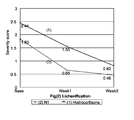
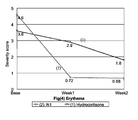
- the six signs of atopic dermatitis were evaluated in each patient of the N1 and Hydrocortisone Groups, in six areas of the body. The signs are: Dryness, lichenification , cracking, erythema , exudation and excoriation .
- the six areas of the body are head, neck , trunk, arms, hands, legs and feet.
- the severity of the lesions are assessed as 0, 1, 2 and 3 for no lesion, mild, moderate and severe lesions respectively for each sign in each body area resulting in a score of maximum 18 for each sign.
- the six signs were evaluated objectively by the investigating physicians. Itching being a subjective symptom was evaluated by the patient.
- the atopic dermatitis diagnosis was based on [ Hanifin J.M., Rajka G. Diagnostic Features of Atopic Dermatitis, Acta Derma (Stock) Suppl. 92:44-47, 1980 ].
- SASSAD score for each patient was evaluated at baseline, at end of week 1 and at the end of week 2 following treatment by either N1 or Hydrocortisone 1%.
- Table I Mean SASSAD score before and after N1 and Hydrocortisone use in the two groups.
- a SASSAD score of 0 or 1 is considered as a cleared lesion. Accordingly it was found that in N1 group after one week of treatment, 23 patients (37.7%) scored 0 and 2 cases (3.2%) scored 1; therefore 42.7% of the N1 group were cleared of atopic dermatitis after Week One compared to 14% in the Hydrocortisone group. At the end of Week Two 24 patients of the N1 group (39%) were cleared of atopic dermatitis compared to 4 patients in the Hydrocortisone group (6.3%).
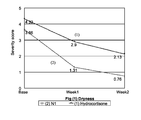
- Fig (1) shows the mean dryness score comparison between the two groups.
- Table III Mean Dryness score before and after N1 and Hydrocortisone use in each group N1 Hydrocortisone Mann-Whitney U test P n Mean SD n Mean SD Base score 61 3.66 2.56 64 4.32 1.98 -3.45 .001 Week 1 score 61 1.31 1.81 64 2.9 2.1 -7.16 .000 Week 2 score 36 .76 1.4 55 2.13 1.7 -6.29 .000 Wilcoxon sign rank test P Wilcoxon sign rank test P Week 1-Base -9.04 .000 -7.73 .000 Week 2-Week 1 -5.87 .000 -7.05 .000
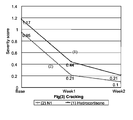
- Fig(3) shows the mean score of cracking in both groups throughout the study period.
- Table V Mean Cracking score before and after N1 and Hydrocortisone use in both groups.
- N1 Hydrocortisone Mann-Whitney U test P n Mean SD n Mean SD Base score 61 .95 1.7 64 1.17 1.1 -3.31 .001 Week 1 score 61 .21 .78 64 .44 .84 -3.32 .001 Week 2 score 36 .11 .16 55 .21 .61 -2.72 .006 Wilcoxon sign rank test P Wilcoxon sign rank test P Week 1-Base -6.15 .000 -6.29 .000 Week 2-Week 1 -2.97 .003 -3.59 .000
- the decline in score in both groups at end of week one and week two are statistically significant as shown in Table VI.
- Table IX clarify the mean VAS score in both groups after treatment with their respective intervention.
- VAS Visual analogue scale
- VAS Group I N1 Group II Hydrocortisone n Mean SD Paired t test P n Mean SD Paired t test P Day 5 Morning 61 2.53 1.26 6.96 .001 64 8.01 1.65 7.69 .001 Evening 61 2.29 1.31 64 7.69 1.76 Day 6 Morning 61 1.79 1.17 6.74 .001 64 7.17 1.74 2.35 .020 Evening 61 1.52 1.31 64 7.06 1.78 Day 7 Morning 61 1.09 1.55 2.76 .006 64 6.63 1.93 0.86 .386 Evening 61 0.92 1.57 64 6.58 1.97 Table X: Comparison between VAS recordings of the 5 th day, morning and 7 th day, evening in both groups VAS Group I N1 Group II Hydrocortisone n Mean SD n Mean SD t test P 5th day Morning 61 2.53 1.26 64 8.01 1.65 -32.79 .0001 7th day Evening 61 .92 1.57 64 6.58 1.97 -27.95 .001 Paired t test 20.98
- the aerosol dispenser contained the following : INGREDIENTS % BY WEIGHT Water 57.0% Methylal 4.69% Ethanol 3.3% Menthol 1.7% Alpha-tocopherol 0.05% Fragrance 0.01% Dimethyl Ether 26.25% Liquefied petroleum gas 7.0% Pressure at 20° C : 4.8 bar 100% Particle size : 70 microns Discharge Rate at 20°C : 0.9 gm/sec Discharge angle at 20° C : 30° pH: 6.9 Viscosity at 20°C : 0.73
- the new intervention which is the apparatus of the present invention, as detailed in Example 2 shall be referred to in the clinical studies as N2.
- the efficacy of N2 is evaluated by the patients in abolishing, reducing pain, effect on their sleep pattern, whether it is more effective than the traditional treatment they used in the past in abolishing or reducing pain and whether they experienced any adverse events.
- the pain free period after applying N2 ranged from one hour to seventy two hours (the full three days of self-monitoring) with a mean of 26.02 ⁇ 16.26 hours.
- the longest pain free duration was experienced by Post Operative pain cases ( 52 ⁇ 14.32 hours), followed by shingles cases (46.02 ⁇ 24.34 hours).
- the least pain free duration was recorded by Pulled ligaments cases (2.87 ⁇ 1.56 hours).
- the aerosol dispenser contained the following: INGREDIENTS % BY WEIGHT Water 59% Methylal 6.2% Ethanol 5.1% Menthol 1.5% Indomethacin 0.2% Dimethyl Ether 28 % Pressure at 20° C : 4.1 bar 100% Particle size : 30 microns Discharge Rate at 20°C : 0.8 gm/sec Discharge angle at 20° C : 33° pH: 7.8 Viscosity at 20°C: 0.82
- the aerosol dispenser contained the following: INGREDIENTS % BY WEIGHT Water 62.85% Methylal 5.1% Ethanol 5.0% Menthol 1.5% Methyl salicylate 0.2% Sodium Benzoate/ Disodium 0.35% dodecenyl-sulfo-succinate Dimethyl Ether 25% Pressure at 20° C : 4.5 bar 100% Particle size : 60 microns Discharge Rate at 20°C : 0.85 gm/sec Discharge angle at 20° C : 31° pH: 8.2 Viscosity at 20°C: 0.77
- Tests were carried out to compare the result of each stimulus i.e. cooling, mechanical and chemical acting independently and consecutively, using products available on the market e.g. skin cooling products, TENS or home therapy as detailed above, and using the apparatus as described in Example one or Example two where the three stimuli (cooling, mechanical and chemical) or two stimuli ( cooling and mechanical) respectively act simultaneously on the same area of the same patients.
- the simultaneous application of the three or two stimuli yielded dramatic results and proved to be far more effective than the three or two independent stimuli acting independently and consecutively.
- Patient compliance, including children, when applying the simultaneous stimuli proved to be superior due to the convenience, ease of use and portability.
- the apparatus of the embodiment of the invention detailed in examples one and two is free from side effects, is non-steroidal and the particles do not stain the fabric.
- the apparatus of the present invention ease the symptoms but, as proven in the clinical study two above, it treated a chronic disease e.g. atopic dermatitis which none of the above stimuli acting independently are known to treat.
- the results of the embodiment apparatus containing the composition of the present invention in Clinical Study two were significant and superior to the results of the traditional treatment Hydrocortisone 1%.
- there were no side effects and the patient compliance of the apparatus of the present invention was superior to the established traditional treatment e.g. steroidal hydrocortisone 1% or known cooling products or home therapies.
- the apparatus and composition according to the present invention can be effective in treating any one or more of the following diseases and symptoms of diseases.
- the invention is not however to be limited thereto :
- Bursitis Causalgia, Multiple Sclerosis, Fibrositis, Neuralgia, Raynaud's Syndrome, Synovitis, Diabetic Peripheral Neuropathy. Head and Neck pain e.g. Dental Disorders, Spondylosis, Sprains/Strains, Suboccipital Headaches, TMJ Syndrome, Torticollis. Abdominal Pain: Diverticulosis. Back Pain: Facet Syndrome, IVD Syndrome, Lumbosacral Pain, Radiculitis, Thoracodynia.
- Pruritis general or localized, skin dryness, lichenification, cracking, erythema, exudation, excoriation, wheals, scales, ulcers, papules, vesicles, edema, crusts, scabies, urticaria, eczema, atopic dermatitis and neurodermatitis, lichen planus, dermatitis herpetiformis, psoriasis, pityriasis rosea, xerosis, personal itching, itching related to systemic disorders e.g. drug reaction, allergy, cholestasis.
- systemic disorders e.g. drug reaction, allergy, cholestasis.
Landscapes
- Health & Medical Sciences (AREA)
- Life Sciences & Earth Sciences (AREA)
- Veterinary Medicine (AREA)
- Public Health (AREA)
- General Health & Medical Sciences (AREA)
- Animal Behavior & Ethology (AREA)
- Engineering & Computer Science (AREA)
- Heart & Thoracic Surgery (AREA)
- Biomedical Technology (AREA)
- Medicinal Chemistry (AREA)
- Chemical & Material Sciences (AREA)
- Pharmacology & Pharmacy (AREA)
- Dermatology (AREA)
- Anesthesiology (AREA)
- Hematology (AREA)
- Vascular Medicine (AREA)
- Epidemiology (AREA)
- Physics & Mathematics (AREA)
- Thermal Sciences (AREA)
- Nuclear Medicine, Radiotherapy & Molecular Imaging (AREA)
- Bioinformatics & Cheminformatics (AREA)
- General Chemical & Material Sciences (AREA)
- Organic Chemistry (AREA)
- Chemical Kinetics & Catalysis (AREA)
- Pharmaceuticals Containing Other Organic And Inorganic Compounds (AREA)
- Medicinal Preparation (AREA)
- Thermotherapy And Cooling Therapy Devices (AREA)
- Colloid Chemistry (AREA)
- Acyclic And Carbocyclic Compounds In Medicinal Compositions (AREA)
Priority Applications (8)
| Application Number | Priority Date | Filing Date | Title |
|---|---|---|---|
| EP05111304A EP1733754A1 (fr) | 2005-06-14 | 2005-11-25 | Appareil pour l'application d'une composition |
| AT06090077T ATE414493T1 (de) | 2005-06-14 | 2006-05-16 | Vorrichtung zum auftragen einer zusammensetzung |
| DE602006003684T DE602006003684D1 (de) | 2005-06-14 | 2006-05-16 | Vorrichtung zum Auftragen einer Zusammensetzung |
| EP06090077A EP1733755B1 (fr) | 2005-06-14 | 2006-05-16 | Appareil pour l'application d'une composition |
| CA2547322A CA2547322C (fr) | 2005-06-14 | 2006-05-23 | Un appareil a aerosol contenant une composition pour appliquer simultanement plusieurs stimuli topiques |
| US11/419,879 US20070154405A1 (en) | 2005-06-14 | 2006-05-23 | aerosol apparatus containing a composition for applying simultaneously several topical stimuli |
| AU2006202164A AU2006202164B2 (en) | 2005-06-14 | 2006-05-23 | An aerosol apparatus containing a composition for applying simultaneously several topical stimuli |
| JP2006154260A JP2006346448A (ja) | 2005-06-14 | 2006-06-02 | 複数の局部刺激を同時に与えるための組成物を含む噴霧装置 |
Applications Claiming Priority (2)
| Application Number | Priority Date | Filing Date | Title |
|---|---|---|---|
| EP05105216A EP1733753A1 (fr) | 2005-06-14 | 2005-06-14 | Appareil pour l'application d'une composition |
| EP05111304A EP1733754A1 (fr) | 2005-06-14 | 2005-11-25 | Appareil pour l'application d'une composition |
Publications (1)
| Publication Number | Publication Date |
|---|---|
| EP1733754A1 true EP1733754A1 (fr) | 2006-12-20 |
Family
ID=35094114
Family Applications (3)
| Application Number | Title | Priority Date | Filing Date |
|---|---|---|---|
| EP05105216A Withdrawn EP1733753A1 (fr) | 2005-06-14 | 2005-06-14 | Appareil pour l'application d'une composition |
| EP05111304A Withdrawn EP1733754A1 (fr) | 2005-06-14 | 2005-11-25 | Appareil pour l'application d'une composition |
| EP06090077A Expired - Lifetime EP1733755B1 (fr) | 2005-06-14 | 2006-05-16 | Appareil pour l'application d'une composition |
Family Applications Before (1)
| Application Number | Title | Priority Date | Filing Date |
|---|---|---|---|
| EP05105216A Withdrawn EP1733753A1 (fr) | 2005-06-14 | 2005-06-14 | Appareil pour l'application d'une composition |
Family Applications After (1)
| Application Number | Title | Priority Date | Filing Date |
|---|---|---|---|
| EP06090077A Expired - Lifetime EP1733755B1 (fr) | 2005-06-14 | 2006-05-16 | Appareil pour l'application d'une composition |
Country Status (9)
| Country | Link |
|---|---|
| US (1) | US20070154405A1 (fr) |
| EP (3) | EP1733753A1 (fr) |
| JP (1) | JP2006346448A (fr) |
| CN (1) | CN100522272C (fr) |
| AT (1) | ATE414493T1 (fr) |
| AU (1) | AU2006202164B2 (fr) |
| CA (1) | CA2547322C (fr) |
| DE (1) | DE602006003684D1 (fr) |
| ZA (1) | ZA200604523B (fr) |
Families Citing this family (4)
| Publication number | Priority date | Publication date | Assignee | Title |
|---|---|---|---|---|
| DE102007023641B4 (de) | 2007-05-22 | 2015-04-02 | Ibs Filtran Kunststoff-/ Metallerzeugnisse Gmbh | Ölfiltervorrichtung |
| JP5612914B2 (ja) * | 2010-06-15 | 2014-10-22 | 株式会社ダイゾー | エアゾール製品および該エアゾール製品の噴射方法 |
| FI124546B (en) * | 2012-01-19 | 2014-10-15 | Pkv Housing Oy | Cold Therapy Device |
| USD1015533S1 (en) | 2019-11-07 | 2024-02-20 | 623 Medical, Llc | Vapocoolant device |
Citations (8)
| Publication number | Priority date | Publication date | Assignee | Title |
|---|---|---|---|---|
| WO1995004522A1 (fr) * | 1993-08-10 | 1995-02-16 | The Boots Company Plc | Formulation d'aerosol a effet rafraichissant |
| JPH09173926A (ja) * | 1995-12-28 | 1997-07-08 | Murata Mfg Co Ltd | 薬液散布装置 |
| US20020000236A1 (en) * | 1997-10-08 | 2002-01-03 | Laughlin Thomas J. | System for automatically coating the human body |
| EP1195173A1 (fr) * | 2000-04-17 | 2002-04-10 | Daizo Corporation | Produit aerosol pour la peau vaporise de maniere intermittente |
| US20030062042A1 (en) * | 2001-06-05 | 2003-04-03 | Wensley Martin J. | Aerosol generating method and device |
| DE10252917A1 (de) * | 2002-11-12 | 2004-05-27 | Lothar Bode | Druckinjektions-Handgerät zum Einbringen von Substanzen unter Druck eines gasförmigen oder flüssigen Druckmittels in eine zu behandelnde Hautstelle |
| US20040102768A1 (en) * | 2000-10-13 | 2004-05-27 | Christian Cluzeau | Hand-held apparatus for spray cryotherapy |
| US20040131696A1 (en) * | 2003-01-06 | 2004-07-08 | Gilbert Buchalter | Skin treatment for relief of itch |
Family Cites Families (11)
| Publication number | Priority date | Publication date | Assignee | Title |
|---|---|---|---|---|
| FR2413596A1 (fr) * | 1977-12-29 | 1979-07-27 | Oreal | Valve perfectionnee pour la distribution de melange pressurise inflammable |
| DE69006401T2 (de) * | 1989-05-19 | 1994-05-11 | Beecham Group Plc | Aerosolzusammensetzungen zur topischen Anwendung. |
| US5196459A (en) * | 1990-10-22 | 1993-03-23 | Fox Valley Systems, Inc. | Water-based aerosol coating compositions |
| FR2684874B1 (fr) * | 1991-12-13 | 1994-07-01 | Oreal | Systeme aerosol pour laque capillaire. |
| GB2273299A (en) * | 1992-12-08 | 1994-06-15 | Nelly Kamel Rizk | Mixture that produces cooling |
| US5269958A (en) * | 1993-01-13 | 1993-12-14 | S. C. Johnson & Son, Inc. | Self-pressurized aerosol spot dry cleaning compositions |
| JP4176858B2 (ja) * | 1998-02-18 | 2008-11-05 | 久光製薬株式会社 | エアゾール製剤 |
| CA2423163C (fr) * | 2000-09-22 | 2009-02-17 | Gebauer Company | Appareil et procede d'application de "vaporefrigerants" |
| JP3733524B2 (ja) * | 2001-07-27 | 2006-01-11 | 大日本除蟲菊株式会社 | マイクロエマルジョンエアゾール組成物 |
| GB0130057D0 (en) * | 2001-12-14 | 2002-02-06 | Dunne Stephen T | Liquid atomising system |
| US20030228374A1 (en) * | 2002-06-07 | 2003-12-11 | Pesacreta Thomas C. | Topical treatment for skin irritation |
-
2005
- 2005-06-14 EP EP05105216A patent/EP1733753A1/fr not_active Withdrawn
- 2005-11-25 EP EP05111304A patent/EP1733754A1/fr not_active Withdrawn
-
2006
- 2006-05-16 EP EP06090077A patent/EP1733755B1/fr not_active Expired - Lifetime
- 2006-05-16 DE DE602006003684T patent/DE602006003684D1/de not_active Expired - Lifetime
- 2006-05-16 AT AT06090077T patent/ATE414493T1/de not_active IP Right Cessation
- 2006-05-23 AU AU2006202164A patent/AU2006202164B2/en not_active Ceased
- 2006-05-23 US US11/419,879 patent/US20070154405A1/en not_active Abandoned
- 2006-05-23 CA CA2547322A patent/CA2547322C/fr not_active Expired - Lifetime
- 2006-05-30 CN CNB2006100915097A patent/CN100522272C/zh not_active Expired - Fee Related
- 2006-06-02 ZA ZA200604523A patent/ZA200604523B/en unknown
- 2006-06-02 JP JP2006154260A patent/JP2006346448A/ja active Pending
Patent Citations (8)
| Publication number | Priority date | Publication date | Assignee | Title |
|---|---|---|---|---|
| WO1995004522A1 (fr) * | 1993-08-10 | 1995-02-16 | The Boots Company Plc | Formulation d'aerosol a effet rafraichissant |
| JPH09173926A (ja) * | 1995-12-28 | 1997-07-08 | Murata Mfg Co Ltd | 薬液散布装置 |
| US20020000236A1 (en) * | 1997-10-08 | 2002-01-03 | Laughlin Thomas J. | System for automatically coating the human body |
| EP1195173A1 (fr) * | 2000-04-17 | 2002-04-10 | Daizo Corporation | Produit aerosol pour la peau vaporise de maniere intermittente |
| US20040102768A1 (en) * | 2000-10-13 | 2004-05-27 | Christian Cluzeau | Hand-held apparatus for spray cryotherapy |
| US20030062042A1 (en) * | 2001-06-05 | 2003-04-03 | Wensley Martin J. | Aerosol generating method and device |
| DE10252917A1 (de) * | 2002-11-12 | 2004-05-27 | Lothar Bode | Druckinjektions-Handgerät zum Einbringen von Substanzen unter Druck eines gasförmigen oder flüssigen Druckmittels in eine zu behandelnde Hautstelle |
| US20040131696A1 (en) * | 2003-01-06 | 2004-07-08 | Gilbert Buchalter | Skin treatment for relief of itch |
Non-Patent Citations (2)
| Title |
|---|
| ANONYMOUS: "Care of dry skin: Dry Skin Relief Soothing Spray", INTERNET ARTICLE, XP002370047, Retrieved from the Internet <URL:http://www.eucerin.co.uk/uk_range/dry/sooth_spray.html> * |
| PATENT ABSTRACTS OF JAPAN vol. 1997, no. 11 28 November 1997 (1997-11-28) * |
Also Published As
| Publication number | Publication date |
|---|---|
| ZA200604523B (en) | 2007-09-26 |
| DE602006003684D1 (de) | 2009-01-02 |
| JP2006346448A (ja) | 2006-12-28 |
| ATE414493T1 (de) | 2008-12-15 |
| CA2547322A1 (fr) | 2006-12-14 |
| EP1733755B1 (fr) | 2008-11-19 |
| EP1733755A1 (fr) | 2006-12-20 |
| US20070154405A1 (en) | 2007-07-05 |
| CN100522272C (zh) | 2009-08-05 |
| AU2006202164B2 (en) | 2009-10-29 |
| EP1733753A1 (fr) | 2006-12-20 |
| CN1879904A (zh) | 2006-12-20 |
| CA2547322C (fr) | 2012-01-03 |
| AU2006202164A1 (en) | 2007-01-04 |
Similar Documents
| Publication | Publication Date | Title |
|---|---|---|
| Stanos | Topical agents for the management of musculoskeletal pain | |
| Barkin | The pharmacology of topical analgesics | |
| US20230201550A1 (en) | Systems and methods for treating persistent pain of neurogenic origin and complex injury | |
| KR102026400B1 (ko) | 감각 불편의 치료를 위한 국소제 디-아이소프로필-포스피노일-알칸(dapa) 화합물 | |
| US20080311218A1 (en) | Topical composition for treating pain | |
| US12029743B2 (en) | Di-isopropyl-phosphinoyl-alkanes as topical agents for the treatment of sensory discomfort | |
| CN1665507B (zh) | 治疗性1,2,3,6-四氢嘧啶-2-酮组合物及其制备方法 | |
| EP1733755B1 (fr) | Appareil pour l'application d'une composition | |
| ES2539634T3 (es) | Uso de una formulación de clobetasol en forma de pulverización para tratar la psoriasis | |
| JP2025517641A (ja) | 眼疾患の処置のための局所薬としてのジイソプロピルホスフィノイルアルカン | |
| CN103458928B (zh) | (r)-1,2-丙二醇用作治疗性冷却剂组合物中的溶剂 | |
| RU2139069C1 (ru) | Средство для лечения патологических состояний "астромеланин"/"астронэлла") | |
| US20170360867A1 (en) | Pain Relieving System | |
| US20160101141A1 (en) | Topical Treatment of Sports Related Injuries | |
| US12599619B2 (en) | Method of treating blepharitis or conjunctivitis | |
| WO2017043350A1 (fr) | Agent anti-démangeaison | |
| CN114533745A (zh) | 作为局部试剂用于治疗感觉不适的二异丙基膦酰基烷烃 | |
| US11369630B1 (en) | Formulations of magnesium chloride to treat muscle spasm, strain and sprain | |
| US10149858B2 (en) | Treatment for migraine | |
| KR20240104289A (ko) | 통증 완화용 조성물 및 이를 이용하여 통증을 완화하는 방법 | |
| US20210290665A1 (en) | Topical composition for treatment of pain and symptoms associated with rhinosinusitis, method of making, and method of use | |
| Sermsilp et al. | Efficacy of topical botulinum toxin type A cream for treatment of primary axillary hyperhidrosis: a randomized, double-blinded, split site, vehicle control study | |
| Emrys-Jones | SECTION OF THE CORNEA IN HYPOPYON KERATITIS. | |
| Roostayia et al. | Effects of Phonophoresis with Hydrocortisone Alone and in Combination with 10% Dimethylsulfoxide on Myofascial Trigger Points in the Upper Trapezius Muscle |
Legal Events
| Date | Code | Title | Description |
|---|---|---|---|
| PUAI | Public reference made under article 153(3) epc to a published international application that has entered the european phase |
Free format text: ORIGINAL CODE: 0009012 |
|
| AK | Designated contracting states |
Kind code of ref document: A1 Designated state(s): AT BE BG CH CY CZ DE DK EE ES FI FR GB GR HU IE IS IT LI LT LU LV MC NL PL PT RO SE SI SK TR |
|
| AX | Request for extension of the european patent |
Extension state: AL BA HR MK YU |
|
| AKX | Designation fees paid |
Designated state(s): AT BE BG CH CY CZ DE DK EE ES FI FR GB GR HU IE IS IT LI LT LU LV MC NL PL PT RO SE SI SK TR |
|
| STAA | Information on the status of an ep patent application or granted ep patent |
Free format text: STATUS: THE APPLICATION IS DEEMED TO BE WITHDRAWN |
|
| 18D | Application deemed to be withdrawn |
Effective date: 20070621 |