EP1734054B1 - Monoklonale Antikörper gegen humane Thymidylat-Synthase und Hybridomen zu derer Herstellung - Google Patents
Monoklonale Antikörper gegen humane Thymidylat-Synthase und Hybridomen zu derer Herstellung Download PDFInfo
- Publication number
- EP1734054B1 EP1734054B1 EP06000961A EP06000961A EP1734054B1 EP 1734054 B1 EP1734054 B1 EP 1734054B1 EP 06000961 A EP06000961 A EP 06000961A EP 06000961 A EP06000961 A EP 06000961A EP 1734054 B1 EP1734054 B1 EP 1734054B1
- Authority
- EP
- European Patent Office
- Prior art keywords
- human
- thymidylate synthase
- monoclonal antibody
- human thymidylate
- monoclonal antibodies
- Prior art date
- Legal status (The legal status is an assumption and is not a legal conclusion. Google has not performed a legal analysis and makes no representation as to the accuracy of the status listed.)
- Expired - Lifetime
Links
Images

Classifications
-
- C—CHEMISTRY; METALLURGY
- C07—ORGANIC CHEMISTRY
- C07K—PEPTIDES
- C07K16/00—Immunoglobulins [IG], e.g. monoclonal or polyclonal antibodies
- C07K16/40—Immunoglobulins [IG], e.g. monoclonal or polyclonal antibodies against enzymes
Definitions
- This invention relates to a novel monoclonal antibody to human thymidylate synthase and also to a hybridoma capable of producing the same.
- Thymidylate synthase (EC2.1.1.45, hereinafter called "TS") is an enzyme that catalyzes a reaction in which thymidylic acid is formed from deoxyuridylic acid, plays a role to supply thymine which is a base specific to DNAs, and is one of principal rate-limiting enzymes for a DNA precursor supply pathway. Accordingly, its activity is known to become higher in thymi or tumor tissues where cell growth is active.
- fluoropyrimidine antitumor drugs such as 5-fluorourasil and 5-fluorodeoxyuridine act against TS as a target enzyme, and for example, 5-fluorodeoxyuridine changes into fluorodeoxyuridylic acid in vivo and inhibits TS.
- fluoropyrimidine antitumor drugs are known to show high therapeutic effect and significant life prolongation for patients with a low level of TS expression in tumor cells but to exhibit low therapeutic effect for patients with TS in a high level [" Gan to Kagaku Ryoho (Cancers and Chemotherapy)", 24(6), 705-721 (1997) ].
- the measurement of TS is therefore important, for example, an advance measurement of the expression of TS in an excised tumor upon treatment for a cancer patient gives indications for the determination of a treatment method and for the selection of an antitumor drug.
- An object of the present invention is therefore to provide an anti-human TS monoclonal antibody useful for the immunological measurement of human TS and also a hybridoma capable of producing the same.
- the present invention therefore provides an anti-human TS monoclonal antibody capable of recognizing an epitope which exists in a region of from an N-terminus to a 61st amino acid in human TS, and also hybridomas capable of producing these monoclonal antibodies.
- the recognition regions by the human TS monoclonal antibodies according to the present invention have been determined in accordance with the amino acid sequence of human TS described, for example, in Nucleic Acids Research, 13(6), 2035-2043 (1985) .
- Examples of the anti-human TS monoclonal antibody of the present invention which can recognize the epitope existing in the region of from the N-terminus to the 61st amino acid in human TS, can include those produced by mouse hybridomas NTSMA1 (FERM BP-6401) and NTSMA2 (FERM BP-6403) obtained using, as an immunogen, a native human TS (hereinafter called "nhTS”) which is available from the tissues by extraction and purification.
- mouse hybridomas NTSMA1 FERM BP-6401
- NTSMA2 FERM BP-6403
- nhTS native human TS
- hybridomas have been deposited under the Budapest Treaty in National Institute of Bioscience and Human-Technology, Agency of Industrial Science and Technology, Ministry of International Trade and Industry (address: 1-3, Higashi 1-chome, Tsukuba-shi, Ibaraki-ken 305-0046, JAPAN) (date of original deposit: June 30, 1998).
- nhTS can be produced based on the method proposed by Rode et al. [Rode et al., Biochemical Pharmacology 29, 723 (1980)] as will be described hereinafter. Namely, nhTS of high purity can be obtained by loading a homogenate of incubated cells of a human lung cancer strain Lu-99 or of a tumor, which has been excised from a nude mouse or nude rat with subcutaneously transplanted Lu-99, onto a column with ethyl 10-formyl-5,8-dideazafolate immobilized therein as a ligand and then eluting nhTS with a buffer containing dUMP.
- Each of the hybridomas according to the present invention can be obtained by immunizing a mammal, such as a mouse or a rat, or a bird with the nhTS, subjecting its spleen cells and myeloma cells of a mammal, such as a mouse or a rat, to cell fusion in accordance with the method originally outlined by Kohler and Milstein [see Nature, 256, 495 (1975)], and then culturing the fused cells in a selection medium.
- the hybridomas NTSMA1 and NTSMA2 are obtained when nhTS is used as an immunogen.
- Immunization can be achieved, for example, by dissolving rhTS or nhTS in phosphate buffer or physiological saline, mixing an adjuvant as needed, and then administering the resulting solution several times at intervals of 1 to 3 weeks under the skin or into the spleen or peritoneal cavity or a vein of the animal.
- Illustrative of myeloma cells usable for cell fusion are mouse P3-NS-1/1Ag4.1, P3-X63-Ag8.653 and SP2/0Ag14 and rat YB2/0.
- polyethylene glycol or Sendai virus can be used as a fusion promoter, or electric pulses may be used.
- the anti-human TS monoclonal antibodies according to the present invention can each be produced by culturing the above-described hybridomas in a suitable culture medium or within the peritoneal cavity of a mammal (for example, mouse).
- An illustrative medium suitably usable for the incubation of the hybridoma is a media which contains bovine fetal serum, L-glutamine, L-pyruvic acid, and antibiotics (penicillin G and streptomycin) in Dulbeccos modified Eagle's minimum essential medium.
- the incubation of the hybridoma is conducted, for example, in a 5%CO 2 concentration at 37°C for 3 days when it is performed in a culture medium or, for example, for 14 days when it is performed within the peritoneal cavity of a mouse.
- the corresponding anti-human TS monoclonal antibody NTSMA1 or NTSMA2 according to the present invention can be separated and purified by a method commonly employed for the isolation and/or purification of proteins.
- Examples of such a method can include salting-out with ammonium sulfate, ion-exchange column chromatography making use of an ion-exchange cellulose, molecular sieve column chromatography making use of a molecular sieve gel, affinity column chromatography making use of polysaccharide complexed with protein A, dialysis, and lyophilization.
- the anti-human TS monoclonal antibodies of the present invention obtained as described above are useful for the immunological measurement of human TS, and can be applied, for example, to the sandwich method, competitive radioimmunoassay, enzyme immunoassay and immunochromatography.
- combinations of antibodies the epitopes of which are apart are preferred for obtaining high absorbances. It is therefore preferred to combine RTSMA1 (FERM BP-6404) or RTSMA2 (FERM BP-6402) with NTSMA1 or NTSMA2.
- an anti-human TS polyclonal antibody immobilized on an insoluble carrier makes it possible to easily measure human TS with high accuracy.
- Such an anti-human TS polyclonal antibody can be obtained in a manner known per se in the art by administering nhTS or rhTS (recombinant human TS) to a suitable mammal such as a mouse, rat, rabbit or sheep.
- IPTG isopropyl-1-thio- ⁇ -D-galactoside
- the supernatant was caused to pass (20 mL/hr) through a column packed with glutathione (GSH)-agarose (14 mL; product of Sigma Chemical Co.). After the column was washed with a wash (100 mL; 20 mM Tris, pH 7.5, 2 mM magnesium chloride, 1 mM DTT), the column was eluted with an eluent (50 mL; 50 mM Tris, pH 9.6, 5 mM GSH) such that the eluate was received in 3-mL aliquots in tubes. By confirming protein fractions in accordance with the Bradford's method, peak fractions (9 mL; protein concentration: 7 mg/mL) were obtained.
- GSH glutathione
- BSA solutions 100 ⁇ L were added to 5-mL aliquots of the Bradford's solution, respectively, and their absorbances at 595 nm were measured to prepare a standard curve.
- An rhTS solution 100 ⁇ L was added to the Bradford's solution (5 mL) and the absorbance at 595 nm was measured. As a result, the protein concentration of the rhTS solution was found to be 3.5 mg/mL.
- nhTS Purification of nhTS was conducted based on the method proposed by Rode et al. [Rode et al., Biochemical Pharmacology, 29, 723 (1980)].
- a human lung cancer strain Lu-99 which had been subcutaneously transplanted to dorsal regions of 50 male BALB/c-nu/nu mice, was removed to obtain tumors (50 g).
- Those tumors were added with 10 mM phosphate buffer (100 mL; pH 7.5, 100 mM potassium chloride, 10 mM 2-mercaptoethanol) and were then homogenized.
- the homogenate was centrifuged at 4°C and 10,000 rpm for 1 hour, and from the supernatant, a precipitate was obtained with ammonium sulfate at 30-70% saturation.
- the precipitate was dissolved in 10 mM phosphate buffer (pH 7.5, 0.1% TritonTM X-100, 10 mM 2-mercaptoethanol, 20 ⁇ M dUMP).
- the resulting solution was loaded onto a column while using ethyl 10-formyl-5,8-dideazafolate as a ligand.
- nhTS solution 100 ⁇ L was added to the Bradford's solution (5 mL) and the absorbance at 595 nm was measured. As a result, the protein concentration of the nhTS solution was found to be 0.3 mg/mL.
- the rhTS obtained in Referential Example 1A was intraperitoneally injected at a dose of 20 ⁇ g/mouse.
- the TS protein was used in a form emulsified beforehand in Freund's complete adjuvant.
- the rhTS in a form emulsified beforehand in Freund's incomplete adjuvant was additionally and intraperitoneally injected at a dose of 20 ⁇ g/mouse four times successively at intervals of 14 days.
- the rhTS (100 ⁇ g) in phosphate-buffered physiological saline (0.5 mL) was injected through a caudal vein.
- HAT medium RPMI1640 medium containing 1 x 10 -4 M hypoxanthine, 4 x 10 -7 M aminopterin and 1.6 x 10 -5 M thymidine
- bovine fetal serum 10% bovine fetal serum
- Fused cells were cultured in a CO 2 incubator (5% CO 2 , 37°C), during which replacements of the medium were conducted using HAT medium containing 10% bovine fetal serum so that the fused cells were allowed to proliferate.
- HAT medium containing 10% bovine fetal serum
- a hybridoma formed of the spleen cells and the myeloma cells were screened, and was then conditioned in HT medium (RPMI1640 medium containing 1 x 10 -4 M hypoxanthine and 1.6 x 10 -5 M thymidine) which contained 10% bovine fetal serum.
- the antibody in the incubation supernatant of the hybridoma was detected in accordance with ELISA by using an rhTS-sensitized microplate. With respect to each well which was found to be positive, cloning was repeated twice in accordance with the limiting dilution analysis by using HT medium which containing 10% bovine fetal serum and 5% Bleiclone (product of Dainippon Pharmaceutical Co., Ltd.). Two kinds of clones which had reactivity to the rhTS were hence chosen, and were named "RTSMA1" (FERM BP-6404) and "RTSMA2" (FERM BP-6402).
- Pristane (0.5 mL; product of Dainippon Pharmaceutical Co., Ltd.) was intraperitoneally injected to a nude mouse. Seven days later, pristane (0.5 mL) was intraperitoneally administered further, and the hybridomas RTSMA1 and RTSMA2 (1 x 10 7 cells) were transplanted to the peritoneal cavity and were allowed to proliferate. After 2 to 3 weeks, ascites was obtained. The ascites was caused to pass through a Protein G Sepharose 4FF column (product of Pharmacia AB).
- the monoclonal antibodies RTSMA1 and RTSMA2 produced by the respective clones were eluted with the eluent (0.1 M glycine, pH 2.7) and were immediately dialyzed against a wash.
- Example 2 In a similar manner as in Example 1 except that as an immunogen, the nhTS obtained in Referential Example B1 was used in place of the rhTS, two kinds of clones having reactivity to the nhTS were chosen, and were named "NTSMA1" (FERM BP-6401) and “NTSMA2" (FERM BP-6403). From these hybridomas, monoclonal antibodies NTSMA1 and NTSMA2 were then obtained in a similar manner as in Example 1.
- the respective Escherichia coli clones were incubated overnight at 37°C under shaking in LB medium (5 mL) (product of Wako Pure Chemical Industries, Ltd.) in the presence of ampicillin (50 ⁇ g/mL) and 1 mM IPTG.
- the culture medium was transferred in 100 ⁇ L aliquots into 1.5 mL centrifuge tubes. Subsequent to centrifugation at 12,000 r.p.m. for 5 minutes, the supernatants were discarded.
- An electrophoresis sample preparation solution (100 ⁇ L) (4% SDS, 10% ⁇ -mercaptoethanol, 20% glycerol, 125 mM Tris, pH 6.8) was added the resulting pellets to suspend them. The suspension was heated for 15 minutes on boiling water, and a 10- ⁇ L aliquot was then used for electrophoresis. After the sample was allowed to migrate using 12.5% polyacrylamide gel, the sample so migrated was electrically transferred onto a PVDF filter. The PVDF filter was then immersed in BLOCK ACETM (blocking agent, product of Dainippon Pharmaceutical Co., Ltd.) to conduct blocking.
- BLOCK ACETM blocking agent, product of Dainippon Pharmaceutical Co., Ltd.
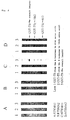
- the monoclonal antibodies RTSMA1 (Reference example) and RTSMA2 (Reference example) recognized the TS protein over the entire length thereof, but did not recognize the reconstructed TS protein ranging from the N-terminus to the 186th amino acid.
- the antigen recognition sites (epitopes) of both of the antibodies were therefore found to exist in the region of from the 187th to 313th amino acids.
- the monoclonal antibodies NTSMA1 and NTSMA2 recognized all of the region ranging from the N-terminus to the 61st amino acid, the region ranging from the N-terminus to the 186th amino acid, and the reconstructed TS protein over the entire length thereof.
- the epitopes of these antibodies were hence found to exist in the region of from the 1st to 61st amino acids.
- a cell homogenate of human leukemia derived cell CCRF-CEM (protein concentration: 10 mg/mL) was mixed with an equiamount of an electrophoresis sample preparation solution (4% SFS, 10% ⁇ -mercaptoethanol, 20% glycerol, 125 mM Tris, pH 6.8). The mixture was heated for 2 minutes in boiling water, and a 10- ⁇ L aliquot was then used for electrophoresis. After the sample was allowed to migrate using 12.5% polyacrylamide gel, the sample so migrated was electrically transferred onto a PVDF filter. The PVDF filter was then immersed in BLOCK ACETM (blocking agent, product of Dainippon Pharmaceutical Co., Ltd.) to conduct blocking.
- BLOCK ACETM blocking agent, product of Dainippon Pharmaceutical Co., Ltd.
- the monoclonal antibodies according to the present invention were all confirmed to specifically recognize only TS.
- the blocking solution was then discarded, and as primary antibodies, the respective monoclonal antibodies (0.1 mL) which had been adjusted to 0.00244 to 5 ⁇ g/mL by diluting 5 ⁇ g/mL, as an initial concentration of dilution, twofold in 20 mM PBS (pH 7.0) were added and then reacted for 1 hour.
- the resulting mixture was washed twice with a wash, and the biotinylated goat anti-mouse IgG antibody (100 ⁇ L) (product of VECTASTAIN) was added, followed by reactions for 1 hour as in the case of the primary antibodies. After completion of the reactions, the reaction mixture was washed twice with a wash.
- the ABC reagent (100 ⁇ L) (product of VECTASTAIN) was added, and subsequent to completion of reactions for 1 hour, the reaction mixture was washed four times with a wash.
- a diethanolamine buffer (0.1 mL) (product of Kirkegaard and Perry Laboratories) which contained 1 mg/mL paranitrophenylphosphate was added, followed by enzyme reactions for 10 minutes.
- 0.1 mL aliquots of 0.1 M sodium hydroxide were added to terminate the reactions, and measurements were conducted with the measuring absorbance of an ELISA plate reader set at 405 nm.
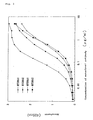
- the monoclonal antibodies RTSMA1 (Reference example), RTSMA2 (Reference example), NTSMA1 and NTSMA2 gave absorbances of 0.3 or higher (background: 0.08) when used at concentrations of 0.08, 0.08, 0.02 and 0.16 ⁇ g/mL, respectively, and were able to achieve detection of rhTS at these concentrations.
- the monoclonal antibodies RTSMA1 (Reference example) and RTSMA2 (Reference example) were adjusted to 2 ⁇ g/mL with 50 mM carbonate buffer (pH 9.5) and then dispensed in 0.1 mL aliquots onto a 96-well ELISA plate. The plate was sealed and was then subjected to coating for 2 hours in an incubator controlled at 37°C, whereby an antibody-immobilized carrier was obtained.
- rhTS which had been adjusted to 10 ⁇ g/mL with 20 mM PBS (diluting solution) containing 0.05% Tween 20 was dispensed in 0.1 mL aliquots onto the antibody-immobilized plate and was then statically reacted at 37°C for 1 hour.
- the anti-human TS monoclonal antibodies according to the present invention are useful for the immunological measurement of human TS.
- Quantitation of human TS in a sample permits not only determination of the presence or absence of a tumor or confirmation of therapeutic effect, but also provision of an indication as to which treatment method should be chosen and whether or not administration of an antitumor drug is permissible.
Landscapes
- Chemical & Material Sciences (AREA)
- Organic Chemistry (AREA)
- Health & Medical Sciences (AREA)
- Medicinal Chemistry (AREA)
- Biochemistry (AREA)
- Biophysics (AREA)
- General Health & Medical Sciences (AREA)
- Genetics & Genomics (AREA)
- Life Sciences & Earth Sciences (AREA)
- Molecular Biology (AREA)
- Proteomics, Peptides & Aminoacids (AREA)
- Immunology (AREA)
- Preparation Of Compounds By Using Micro-Organisms (AREA)
- Micro-Organisms Or Cultivation Processes Thereof (AREA)
- Peptides Or Proteins (AREA)
- Medicines Containing Antibodies Or Antigens For Use As Internal Diagnostic Agents (AREA)
Claims (6)
- Anti-humaner Thymidylat-Synthase-monoklonaler Antikörper, der zur Erkennung eines Epitops fähig ist, das in einem Bereich von einem N-Ende in humaner Thymidylat-Synthase bis zu einer 61. Aminosäure vorliegt.
- Anti-humaner Thymidylat-Synthase-monoklonaler Antikörper nach Anspruch 1, der hergestellt wird von einem Maus-Hybridom NTSMA1, das unter FERM BP-6401 hinterlegt wurde oder von NTSMA2, das unter FERM PP-6403 hinterlegt wurde.
- Hybridom, das geeignet ist zur Herstellung eines monoklonalen Antikörpers, wie er in Anspruch 1 oder 2 definiert wird.
- Zusammensetzung, umfassend einen anti-humanen Thymidylat-Synthase-monoklonalen Antikörper nach Anspruch 1 oder 2 sowie einen anti-humanen Thymidylat-Synthase-monoklonalen Antikörper, der zur Erkennung eines Epitops fähig ist, das in einem Bereich von der 187. bis 313. Aminosäure, ausgehend vom N-Terminus in menschlicher Thymidylat-Synthase, vorliegt.
- Zusammensetzung nach Anspruch 4, wobei der Antikörper zur Erkennung eines Epitops fähig ist, das in einem Bereich von der 187. bis 313. Aminosäure vom N-Terminus in menschlicher Thymidylat-Synthase, vorliegt, und hergestellt wurde von einem Maus-Hybridom RTSMA1, das unter FERM BP-6404 hinterlegt wurde, oder von RTSMA2, das unter FERM PP-6402 hinterlegt wurde.
- In vitro Verwendung eines antihumanen Thymidylat-Synthase-monoklonalen Antikörpers, wie er in einem der Ansprüche 1 oder 2 definiert wird, zur Bestimmung des Vorliegens oder der Abwesenheit eines Tumors.
Applications Claiming Priority (2)
| Application Number | Priority Date | Filing Date | Title |
|---|---|---|---|
| JP24732098A JP4072253B2 (ja) | 1998-09-01 | 1998-09-01 | 抗ヒトチミジル酸シンターゼモノクローナル抗体及びこれを産生するハイブリドーマ |
| EP99940583A EP1026173B1 (de) | 1998-09-01 | 1999-08-31 | Anti-humane thymidylat-synthase monoklonale antikörper und hybridomazellen zu deren herstellung |
Related Parent Applications (1)
| Application Number | Title | Priority Date | Filing Date |
|---|---|---|---|
| EP99940583A Division EP1026173B1 (de) | 1998-09-01 | 1999-08-31 | Anti-humane thymidylat-synthase monoklonale antikörper und hybridomazellen zu deren herstellung |
Publications (3)
| Publication Number | Publication Date |
|---|---|
| EP1734054A2 EP1734054A2 (de) | 2006-12-20 |
| EP1734054A3 EP1734054A3 (de) | 2006-12-27 |
| EP1734054B1 true EP1734054B1 (de) | 2010-01-20 |
Family
ID=17161652
Family Applications (2)
| Application Number | Title | Priority Date | Filing Date |
|---|---|---|---|
| EP06000961A Expired - Lifetime EP1734054B1 (de) | 1998-09-01 | 1999-08-31 | Monoklonale Antikörper gegen humane Thymidylat-Synthase und Hybridomen zu derer Herstellung |
| EP99940583A Expired - Lifetime EP1026173B1 (de) | 1998-09-01 | 1999-08-31 | Anti-humane thymidylat-synthase monoklonale antikörper und hybridomazellen zu deren herstellung |
Family Applications After (1)
| Application Number | Title | Priority Date | Filing Date |
|---|---|---|---|
| EP99940583A Expired - Lifetime EP1026173B1 (de) | 1998-09-01 | 1999-08-31 | Anti-humane thymidylat-synthase monoklonale antikörper und hybridomazellen zu deren herstellung |
Country Status (6)
| Country | Link |
|---|---|
| US (1) | US6500932B1 (de) |
| EP (2) | EP1734054B1 (de) |
| JP (1) | JP4072253B2 (de) |
| AT (2) | ATE382639T1 (de) |
| DE (2) | DE69941961D1 (de) |
| WO (1) | WO2000012561A1 (de) |
Family Cites Families (1)
| Publication number | Priority date | Publication date | Assignee | Title |
|---|---|---|---|---|
| US6221620B1 (en) * | 1991-04-24 | 2001-04-24 | The United States Of America As Represented By The Department Of Health And Human Services | Monoclonal antibodies specific for human thymidylate synthase |
-
1998
- 1998-09-01 JP JP24732098A patent/JP4072253B2/ja not_active Expired - Lifetime
-
1999
- 1999-08-31 EP EP06000961A patent/EP1734054B1/de not_active Expired - Lifetime
- 1999-08-31 EP EP99940583A patent/EP1026173B1/de not_active Expired - Lifetime
- 1999-08-31 DE DE69941961T patent/DE69941961D1/de not_active Expired - Lifetime
- 1999-08-31 AT AT99940583T patent/ATE382639T1/de not_active IP Right Cessation
- 1999-08-31 DE DE69937872T patent/DE69937872T2/de not_active Expired - Lifetime
- 1999-08-31 WO PCT/JP1999/004710 patent/WO2000012561A1/ja not_active Ceased
- 1999-08-31 US US09/530,422 patent/US6500932B1/en not_active Expired - Fee Related
- 1999-08-31 AT AT06000961T patent/ATE455794T1/de not_active IP Right Cessation
Also Published As
| Publication number | Publication date |
|---|---|
| EP1026173B1 (de) | 2008-01-02 |
| EP1026173A1 (de) | 2000-08-09 |
| ATE455794T1 (de) | 2010-02-15 |
| DE69937872T2 (de) | 2009-01-02 |
| DE69941961D1 (de) | 2010-03-11 |
| DE69937872D1 (de) | 2008-02-14 |
| JP2000069962A (ja) | 2000-03-07 |
| WO2000012561A1 (fr) | 2000-03-09 |
| EP1026173A4 (de) | 2001-02-28 |
| EP1734054A2 (de) | 2006-12-20 |
| ATE382639T1 (de) | 2008-01-15 |
| JP4072253B2 (ja) | 2008-04-09 |
| US6500932B1 (en) | 2002-12-31 |
| EP1734054A3 (de) | 2006-12-27 |
Similar Documents
| Publication | Publication Date | Title |
|---|---|---|
| EP0444181B2 (de) | Äusserliche domäne von c-erbb-2:gp75 | |
| US4762706A (en) | Peptide antibodies and their use in detecting oncogene products | |
| JPH0242985A (ja) | オンコスタチン‐a又はその部分をコードするdna | |
| EP2105447A1 (de) | Von vögeln stammender antikörper, der zur spezifischen bindung an humanes hmgb1 fähig ist, immunologisches bestimmungsverfahren für humanes hmgb1, und immunologisches bestimmungsreagens für humanes hmbg1 | |
| EP0735370A1 (de) | MAP-Kinase-Testverfahren | |
| EP0175360A2 (de) | Antikörper gegen Petide und ihre Verwendung zum Nachweis von Onkogene-Produkten | |
| US20080248507A1 (en) | C-erbB-2 external domain: GP75 | |
| EP0240341B1 (de) | Antigene, Antikörper und Verfahren zur Identifizierung humaner metastatischer Tumoren und Zellinien zur Herstellung dieser Antikörper | |
| US5501988A (en) | Anti hCG-β core monoclonal antibody, its production and use | |
| KR101282811B1 (ko) | 가스트린 방출 펩티드 전구체에 대한 항체 및 그 용도 | |
| CN101942017A (zh) | 一种新的肿瘤标志物 | |
| EP1026173B1 (de) | Anti-humane thymidylat-synthase monoklonale antikörper und hybridomazellen zu deren herstellung | |
| Rief et al. | Production and characterization of a rabbit monoclonal antibody against human CDC25C phosphatase | |
| EP0253646B1 (de) | Monoklonale anti-menschliche Magenkrebs-Antikörper | |
| EP0767381B1 (de) | Nachweis, Quantifizierung und Klassifizierung von RAS-Proteinen in Körperflüssigkeiten und Geweben | |
| KR0145406B1 (ko) | 감마 아트리알 나트륨 이뇨성 폴리펩티드를 인식하는 단일 클론 항체 | |
| EP0994187A1 (de) | Reninaktive Substanz enthaltend humanes Prorerin und Antikörper gegen das Prorerin Profragment | |
| EP1030179B1 (de) | Verfahren zum bestimmen humaner thymidylatsynthase und versuchskit | |
| US20240409616A1 (en) | IgG EPITOPE AND APPLICATIONS THEREOF AS A DRUG TARGET | |
| JPH0614768A (ja) | trk癌原遺伝子タンパク質に結合するモノクローナル抗体 | |
| JPWO2006004207A1 (ja) | 抗シノビオリン抗体 | |
| US20250092121A1 (en) | Novel antigen peptide for preparation of formyl-methionine-specific antibody | |
| KR101225846B1 (ko) | 인간 오로트산 포스포리보실 트랜스퍼라아제 단백질의측정법 | |
| JP2004151112A (ja) | 抗ヒトチミジル酸シンターゼモノクローナル抗体及びこれを産生するハイブリドーマ | |
| CN111187755A (zh) | 抗tpd52单克隆抗体杂交瘤细胞株及其单克隆抗体与应用 |
Legal Events
| Date | Code | Title | Description |
|---|---|---|---|
| PUAI | Public reference made under article 153(3) epc to a published international application that has entered the european phase |
Free format text: ORIGINAL CODE: 0009012 |
|
| PUAL | Search report despatched |
Free format text: ORIGINAL CODE: 0009013 |
|
| 17P | Request for examination filed |
Effective date: 20060117 |
|
| AC | Divisional application: reference to earlier application |
Ref document number: 1026173 Country of ref document: EP Kind code of ref document: P |
|
| AK | Designated contracting states |
Kind code of ref document: A2 Designated state(s): AT BE CH CY DE DK ES FI FR GB GR IE IT LI LU MC NL PT SE |
|
| AK | Designated contracting states |
Kind code of ref document: A3 Designated state(s): AT BE CH CY DE DK ES FI FR GB GR IE IT LI LU MC NL PT SE |
|
| 17Q | First examination report despatched |
Effective date: 20070803 |
|
| AKX | Designation fees paid |
Designated state(s): AT BE CH CY DE DK ES FI FR GB GR IE IT LI LU MC NL PT SE |
|
| GRAP | Despatch of communication of intention to grant a patent |
Free format text: ORIGINAL CODE: EPIDOSNIGR1 |
|
| GRAS | Grant fee paid |
Free format text: ORIGINAL CODE: EPIDOSNIGR3 |
|
| GRAA | (expected) grant |
Free format text: ORIGINAL CODE: 0009210 |
|
| AC | Divisional application: reference to earlier application |
Ref document number: 1026173 Country of ref document: EP Kind code of ref document: P |
|
| AK | Designated contracting states |
Kind code of ref document: B1 Designated state(s): AT BE CH CY DE DK ES FI FR GB GR IE IT LI LU MC NL PT SE |
|
| REG | Reference to a national code |
Ref country code: GB Ref legal event code: FG4D |
|
| REG | Reference to a national code |
Ref country code: CH Ref legal event code: EP Ref country code: CH Ref legal event code: NV Representative=s name: BOVARD AG PATENTANWAELTE |
|
| REG | Reference to a national code |
Ref country code: IE Ref legal event code: FG4D |
|
| REF | Corresponds to: |
Ref document number: 69941961 Country of ref document: DE Date of ref document: 20100311 Kind code of ref document: P |
|
| REG | Reference to a national code |
Ref country code: NL Ref legal event code: T3 |
|
| PG25 | Lapsed in a contracting state [announced via postgrant information from national office to epo] |
Ref country code: AT Free format text: LAPSE BECAUSE OF FAILURE TO SUBMIT A TRANSLATION OF THE DESCRIPTION OR TO PAY THE FEE WITHIN THE PRESCRIBED TIME-LIMIT Effective date: 20100120 |
|
| PG25 | Lapsed in a contracting state [announced via postgrant information from national office to epo] |
Ref country code: ES Free format text: LAPSE BECAUSE OF FAILURE TO SUBMIT A TRANSLATION OF THE DESCRIPTION OR TO PAY THE FEE WITHIN THE PRESCRIBED TIME-LIMIT Effective date: 20100501 Ref country code: PT Free format text: LAPSE BECAUSE OF FAILURE TO SUBMIT A TRANSLATION OF THE DESCRIPTION OR TO PAY THE FEE WITHIN THE PRESCRIBED TIME-LIMIT Effective date: 20100520 |
|
| PG25 | Lapsed in a contracting state [announced via postgrant information from national office to epo] |
Ref country code: FI Free format text: LAPSE BECAUSE OF FAILURE TO SUBMIT A TRANSLATION OF THE DESCRIPTION OR TO PAY THE FEE WITHIN THE PRESCRIBED TIME-LIMIT Effective date: 20100120 |
|
| PG25 | Lapsed in a contracting state [announced via postgrant information from national office to epo] |
Ref country code: GR Free format text: LAPSE BECAUSE OF FAILURE TO SUBMIT A TRANSLATION OF THE DESCRIPTION OR TO PAY THE FEE WITHIN THE PRESCRIBED TIME-LIMIT Effective date: 20100421 Ref country code: BE Free format text: LAPSE BECAUSE OF FAILURE TO SUBMIT A TRANSLATION OF THE DESCRIPTION OR TO PAY THE FEE WITHIN THE PRESCRIBED TIME-LIMIT Effective date: 20100120 Ref country code: CY Free format text: LAPSE BECAUSE OF FAILURE TO SUBMIT A TRANSLATION OF THE DESCRIPTION OR TO PAY THE FEE WITHIN THE PRESCRIBED TIME-LIMIT Effective date: 20100120 Ref country code: SE Free format text: LAPSE BECAUSE OF FAILURE TO SUBMIT A TRANSLATION OF THE DESCRIPTION OR TO PAY THE FEE WITHIN THE PRESCRIBED TIME-LIMIT Effective date: 20100120 |
|
| PLBE | No opposition filed within time limit |
Free format text: ORIGINAL CODE: 0009261 |
|
| STAA | Information on the status of an ep patent application or granted ep patent |
Free format text: STATUS: NO OPPOSITION FILED WITHIN TIME LIMIT |
|
| 26N | No opposition filed |
Effective date: 20101021 |
|
| PG25 | Lapsed in a contracting state [announced via postgrant information from national office to epo] |
Ref country code: DK Free format text: LAPSE BECAUSE OF FAILURE TO SUBMIT A TRANSLATION OF THE DESCRIPTION OR TO PAY THE FEE WITHIN THE PRESCRIBED TIME-LIMIT Effective date: 20100120 |
|
| PG25 | Lapsed in a contracting state [announced via postgrant information from national office to epo] |
Ref country code: MC Free format text: LAPSE BECAUSE OF NON-PAYMENT OF DUE FEES Effective date: 20100831 |
|
| REG | Reference to a national code |
Ref country code: CH Ref legal event code: PFA Owner name: TAIHO PHARMACEUTICAL COMPANY LIMITED Free format text: TAIHO PHARMACEUTICAL COMPANY LIMITED#27 KANDA NISHIKI-CHO 1-CHOME#CHIYODA-KU, TOKYO 101-8444 (JP) -TRANSFER TO- TAIHO PHARMACEUTICAL COMPANY LIMITED#27 KANDA NISHIKI-CHO 1-CHOME#CHIYODA-KU, TOKYO 101-8444 (JP) |
|
| PG25 | Lapsed in a contracting state [announced via postgrant information from national office to epo] |
Ref country code: IE Free format text: LAPSE BECAUSE OF NON-PAYMENT OF DUE FEES Effective date: 20100831 |
|
| PG25 | Lapsed in a contracting state [announced via postgrant information from national office to epo] |
Ref country code: LU Free format text: LAPSE BECAUSE OF NON-PAYMENT OF DUE FEES Effective date: 20100831 |
|
| PGFP | Annual fee paid to national office [announced via postgrant information from national office to epo] |
Ref country code: NL Payment date: 20130822 Year of fee payment: 15 Ref country code: DE Payment date: 20130814 Year of fee payment: 15 Ref country code: CH Payment date: 20130826 Year of fee payment: 15 |
|
| PGFP | Annual fee paid to national office [announced via postgrant information from national office to epo] |
Ref country code: FR Payment date: 20130820 Year of fee payment: 15 Ref country code: GB Payment date: 20130823 Year of fee payment: 15 |
|
| PGFP | Annual fee paid to national office [announced via postgrant information from national office to epo] |
Ref country code: IT Payment date: 20130823 Year of fee payment: 15 |
|
| REG | Reference to a national code |
Ref country code: DE Ref legal event code: R119 Ref document number: 69941961 Country of ref document: DE |
|
| REG | Reference to a national code |
Ref country code: NL Ref legal event code: V1 Effective date: 20150301 |
|
| REG | Reference to a national code |
Ref country code: CH Ref legal event code: PL |
|
| GBPC | Gb: european patent ceased through non-payment of renewal fee |
Effective date: 20140831 |
|
| PG25 | Lapsed in a contracting state [announced via postgrant information from national office to epo] |
Ref country code: LI Free format text: LAPSE BECAUSE OF NON-PAYMENT OF DUE FEES Effective date: 20140831 Ref country code: IT Free format text: LAPSE BECAUSE OF NON-PAYMENT OF DUE FEES Effective date: 20140831 Ref country code: CH Free format text: LAPSE BECAUSE OF NON-PAYMENT OF DUE FEES Effective date: 20140831 Ref country code: NL Free format text: LAPSE BECAUSE OF NON-PAYMENT OF DUE FEES Effective date: 20150301 |
|
| REG | Reference to a national code |
Ref country code: DE Ref legal event code: R119 Ref document number: 69941961 Country of ref document: DE Effective date: 20150303 |
|
| REG | Reference to a national code |
Ref country code: FR Ref legal event code: ST Effective date: 20150430 |
|
| PG25 | Lapsed in a contracting state [announced via postgrant information from national office to epo] |
Ref country code: DE Free format text: LAPSE BECAUSE OF NON-PAYMENT OF DUE FEES Effective date: 20150303 Ref country code: GB Free format text: LAPSE BECAUSE OF NON-PAYMENT OF DUE FEES Effective date: 20140831 |
|
| PG25 | Lapsed in a contracting state [announced via postgrant information from national office to epo] |
Ref country code: FR Free format text: LAPSE BECAUSE OF NON-PAYMENT OF DUE FEES Effective date: 20140901 |