EP1737190A2 - Verfahren zur Ver- und Entschlüsselung von E-mail und Speichermedium und Module - Google Patents
Verfahren zur Ver- und Entschlüsselung von E-mail und Speichermedium und Module Download PDFInfo
- Publication number
- EP1737190A2 EP1737190A2 EP06253261A EP06253261A EP1737190A2 EP 1737190 A2 EP1737190 A2 EP 1737190A2 EP 06253261 A EP06253261 A EP 06253261A EP 06253261 A EP06253261 A EP 06253261A EP 1737190 A2 EP1737190 A2 EP 1737190A2
- Authority
- EP
- European Patent Office
- Prior art keywords
- encryption
- segments
- encrypted
- decryption
- Prior art date
- Legal status (The legal status is an assumption and is not a legal conclusion. Google has not performed a legal analysis and makes no representation as to the accuracy of the status listed.)
- Withdrawn
Links
Images




Classifications
-
- H—ELECTRICITY
- H04—ELECTRIC COMMUNICATION TECHNIQUE
- H04L—TRANSMISSION OF DIGITAL INFORMATION, e.g. TELEGRAPHIC COMMUNICATION
- H04L63/00—Network architectures or network communication protocols for network security
- H04L63/06—Network architectures or network communication protocols for network security for supporting key management in a packet data network
- H04L63/062—Network architectures or network communication protocols for network security for supporting key management in a packet data network for key distribution, e.g. centrally by trusted party
-
- G—PHYSICS
- G06—COMPUTING OR CALCULATING; COUNTING
- G06Q—INFORMATION AND COMMUNICATION TECHNOLOGY [ICT] SPECIALLY ADAPTED FOR ADMINISTRATIVE, COMMERCIAL, FINANCIAL, MANAGERIAL OR SUPERVISORY PURPOSES; SYSTEMS OR METHODS SPECIALLY ADAPTED FOR ADMINISTRATIVE, COMMERCIAL, FINANCIAL, MANAGERIAL OR SUPERVISORY PURPOSES, NOT OTHERWISE PROVIDED FOR
- G06Q10/00—Administration; Management
- G06Q10/10—Office automation; Time management
- G06Q10/107—Computer-aided management of electronic mailing [e-mailing]
-
- H—ELECTRICITY
- H04—ELECTRIC COMMUNICATION TECHNIQUE
- H04L—TRANSMISSION OF DIGITAL INFORMATION, e.g. TELEGRAPHIC COMMUNICATION
- H04L51/00—User-to-user messaging in packet-switching networks, transmitted according to store-and-forward or real-time protocols, e.g. e-mail
-
- H—ELECTRICITY
- H04—ELECTRIC COMMUNICATION TECHNIQUE
- H04L—TRANSMISSION OF DIGITAL INFORMATION, e.g. TELEGRAPHIC COMMUNICATION
- H04L63/00—Network architectures or network communication protocols for network security
- H04L63/04—Network architectures or network communication protocols for network security for providing a confidential data exchange among entities communicating through data packet networks
- H04L63/0428—Network architectures or network communication protocols for network security for providing a confidential data exchange among entities communicating through data packet networks wherein the data content is protected, e.g. by encrypting or encapsulating the payload
Definitions
- the invention relates to a method for encrypting and decrypting e-mail, and a module therefor, more particularly to a method for encrypting and decrypting e-mail, which can encrypt segments of text of an e-mail message that require different passwords for decryption, and to a storage medium and a module for implementing the method.
- e-mail can be encrypted and decrypted using asymmetric encryption/decryption techniques.
- the e-mail is encrypted using a public key of the recipient, and the recipient can use a private key she/he keeps to decrypt the e-mail.
- the recipient who has the private key can decrypt that particular e-mail.
- a third party cannot read the content of the e-mail (i.e., the text of the e-mail).
- asymmetric encryption/ decryption techniques are not popular.
- one existing encryption technique is to encrypt the full text of an e-mail message using a password, such as a public key, even though some of the text of the e-mail message, e.g., the salutation at the beginning of the text, the complimentary closing, and the signature of the sender, etc., do not require encryption.
- a password such as a public key
- an object of the present invention is to provide a method for encrypting/decrypting e-mail, which is more convenient to use, and a storage medium and a module for implementing the method.
- Another obj ect of the present invention is to provide a method for encrypting/decrypting e-mail, which permits encryption of text by segments requiring different passwords for decryption, and a storage medium and a module for implementing the method.
- Still another object of the present invention is to provide a method for encrypting/decrypting e-mail, which provides enhanced security, and a storage medium and a module for implementing the method.
- a method for encrypting/decrypting e-mail of the present invention includes the following steps:
- the method for encrypting/decrypting e-mail is implemented by a sending end 1 and a receiving end 2.
- Both the sending end 1 and the receiving end 2 are provided with an electronic device having a network-accessing function, such as a computer.
- both the sending end 1 and the receiving end 2 are provided with software programs for sending and receiving e-mail, such as Outlook®, or a browser for accessing an on-line mailbox to send and receive e-mail.
- the sending end 1 sends an encrypted e-mail message 11 via the Internet to a mail server 12 of the sending end 1.
- the mail server 12 of the sending end 1 then sends the e-mail message 11 to a mail server 21 of the receiving end 2.
- the receiving end 2 can download the e-mail message 11 from the mail server 21 for decryption into plain text.
- both the sending end 1 and the receiving end 2 are provided with an encryption/decryption module 3 as shown in Figure 2 to execute an e-mail encryption/decryption process.
- the encryption/decryption module 3 in this preferred embodiment can be firmware or a computer program, and the computer program can be recorded on a storage medium for loading into the electronic device at the sending end 1 and the receiving end 2 if needed.
- An e-mail message 31 to be encrypted has a header 311, text 312, and a password set 313 that is set by the sender and that is to be used during encryption.
- the header 311 includes information related to the receiving end 2 and subject of the e-mail message 31.
- the text 312 is content of the e-mail message written by the sender to advise the receiving end 2 of relevant information.
- the password set 313 in this embodiment includes only one password, and the password is required to be inputted when the user decides to encrypt a selected portion of the text 312 (to be described hereinafter).
- the encryption/decryption module 3 of the preferred embodiment employs a symmetric encryption/decryption technique.
- Symmetric encryption/decryption algorithms and corresponding encryption key lengths of current symmetric encryption/decryption techniques are set forth as follows: Algorithm Encryption Key Length DES 64-bits 3DES 128-bits 3DES 192-bits AES 128-bits AES 192-bits AES 256-bits
- the encryption/decryption module 3 of this embodiment uses the AES encryption/decryption algorithm, and provides a low encryption strength with an encryption key length of 128 bits, a medium encryption strength of 192 bits, and a high encryption strength of 256 bits for the user' s selection and setting, so as to eliminate the inconvenience associated with the conventional asymmetric encryption/decryption techniques that require applying for certification and that involve relatively complicated operating interfaces.
- the text 312 of the e-mail message 31 in this embodiment allows the user to select to encrypt a portion of the text 312 and not to encrypt other portions of the text 312.
- the encryption/decryption module 3 will randomly generate an encryption key 32 and use the encryption key 32 to encrypt the selected portion of the text 312 so as to form an encrypted text region 332, and will use the password 313 to encrypt the encryption key 32 into an encrypted key data block 334. Therefore, an encrypted e-mail message 33 generally has a header 331, an encrypted text region 332, a non-selected text portion 333, and an encryption key data block 334.
- the header 311 and the non-selected portion of the text 312 of the e-mail message 31 to be encrypted are respectively identical to the header 331 and the non-selected text portion 333 of the encrypted e-mail message 33.
- the encryption/decryption module 3 extracts a message authentication code of the encryption key 32 according to a specified rule. The message authentication code is subsequently appended to the encryption key data block 334.
- an e-mail message 31 is edited. As shown in Figure 5, a header and content of text of the e-mail message 31 are edited via an e-mail interface 91.
- the e-mail message may be a previously stored draft message. If the user feels that a portion of the text of the e-mail message needs to be encrypted during the process of editing the text, the user can use the cursor to select a portion 911 to be encrypted and then click an encryption option 912 to enter an encryption request.
- the portion to be selected may be divided into several segments. Therefore, in step 41, one of the segments for a certain receiving end is selected for encryption. After encrypting and setting said one of the segments, another segment to be encrypted is selected for encryption.
- the portion to be selected is set to merely include a single segment for one recipient.
- step 42 the encryption/decryption module 3 determines whether at least one portion of the text was selected and an encryption request was received. If it is determined to be yes in step 42 , step 43 is performed. On the contrary, if it is determined to be no in step 42, the flow skips to step 45.
- the encryption/decryption module 3 will first request the user to input a password.
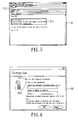
- a mail text encryption dialog window 92 such as that shown in Figure 6 will be displayed to request the user to input the password 313.
- the user can select an option 921 to use a default password or select an option 922 to input the password 313.
- the encryption/decryption module 3 will determine whether the password 313 matches a password checking rule. If a match is found, the flow proceeds to step 44. If there is a mismatch, a password error message will be displayed to request input of the password once more until the inputted password 313 matches the password checking rule.
- step 44 the encryption/decryption module 3 will first insert an encryption notation 913, such as an asterisk, before and after the selected portion so as to set the selected portion apart from the non-selected portion.
- an encryption notation 913 such as an asterisk
- step 45 it is determined whether the user has requested to send out the e-mail message. If it is determined to be yes in step 45, step 46 is executed. On the contrary, if it is determined to be no in step 45, the flow returns to step 41 to continue with the editing of the e-mail message.
- the user can also perform encryption processing (steps 42-44) with respect to other segments in the text 312. Therefore, if the selected portion of the text 312 is to be divided into segments exclusively intended for a plurality of recipients, respectively, steps 41-45 need to be repeated several times to add encryption notations 913 before and after each of the segments for subsequent encryption with respect to the different segments in step 46.
- step 46 upon receipt of a command to send out the e-mail message, the encryption/decryption module 3 will randomly generate an encryption key 32 to encrypt the selected portion into an encrypted text region 332, and use the password 313 to encrypt the encryption key 32 into an encrypted key data block 334.
- each of the segments will be assigned a serial number in step 46 so as to facilitate selection at the receiving end 2.
- the encryption/decryption module 3 of this embodiment will further add a decryption scheme message (to be described hereinafter) to the text 312 so as to notify the receiving end 2 of the scheme used for decryption.
- step 46 can be skipped, and the flow goes to step 47.
- the encryption/decryption module 3 will randomly generate an encryption key 32 to correspond to each of the segments so as to encrypt the segments, extract a message authentication code of the encryption key 32, and encrypt the encryption key 32 with the corresponding password 313 so as to form an encrypted key data block 334 appended with the message authentication code of the encryption key 32. Therefore, the encrypted e-mail message 33 may contain a plurality of encrypted key data blocks 334, and the encrypted text region 332 may contain a plurality of encrypted segments.
- step 47 the mail software will send the encrypted e-mail message 33 to the receiving end 2 through the mail servers 12, 21 (see Figure 1).
- the sender can select a portion of the content of the text 312 for encryption when editing the e-mail message 31, and unimportant portions, such as the salutation at the beginning of the text, the complimentary close, and the signature of the sender, etc., can also be shown.
- the selected portion can be divided into segments for encryption such that the encrypted segments require different passwords for decryption so as to ensure security of important data.
- the same e-mail message may be edited into a plurality of encrypted segments for browsing by different recipients so as to achieve the effect of convenient use.
- the encrypted e-mail message 33 is opened using e-mail related software. As shown in Figure 8, the header 331, the encrypted text region 332, the non-selected text portion 333, and the encryption notations 913 of the e-mail message 33 will be displayed.
- a decrypt ion option 914 can be clicked to input a decryption request. If the recipient at the receiving end 2 is not familiar with the decryption scheme, a decryption scheme message 915 is available to advise the user to click the decryption option 914 or to download a relevant program for decryption from a relevant website in case the encryption/decryption module 3 is not installed.
- the text in the preferred embodiment can be divided into the encrypted text region 332, and the non-selected text portion 333 which is displayed in a normal form, and the encrypted text region 332 may contain at least one encrypted segment, thereby achieving the effect of convenient use.
- step 52 it is determined whether a decryption request was received. If it is determined to be yes in step 52, the flow goes to step 53. On the contrary, if it is determined to be no in step 52, the flow skips to step 57.
- the encryption/decryption module 3 will display a mail text decryption dialog window 93 such as that shown in Figure 9 so as to request the recipient to select the segment to be decrypted and to input a password. Since the encrypted text region 332 in this example only has a single segment, there is no need to make a selection, and the available segment is directly used. If the encrypted text region 332 contains a plurality of segments, it is necessary to select one of the segments, which is selected using the serial number thereof.
- step 54 it is determined whether the inputted password has a match, i.e., whether the inputted password matches the password inputted at the sending end 1 during encryption.
- the encryption/decryption module 3 will first decrypt the encryption key data block 334 using the inputted password, and then extract a message authentication code of the encrypted key data block 334 thus decrypted according to the same specified rule used at the sending end 1.
- the extracted message authentication code is compared with the message authentication code appended to the encrypted key data block 334 to determine whether the inputted password has a match. Specifically, if the inputted password has a match, the extracted message authentication code will be identical to the message authentication code appended to the encrypted key data block 334.
- step 56 is executed to display the content of the selected segment as decrypted.
- step 55 is executed to display a password error message, and the decryption operation is ended. After step 55 is ended, the flow skips to step 57 to determine whether the e-mail message 33 is to be closed.
- step 56 when it is confirmed that the password has a match, the selected segment of the encrypted text region 332 is decrypted, and the content of the selected segment is displayed.
- the encryption/ decryption module 3 will use the encryption key 32 obtained in step 54 to decrypt the selected segment (i.e., the encrypted text region 332 in this example) into plain text.
- a text segment content displaying window 94 is opened, and the content of the selected segment thus decrypted is displayed in the text segment content displaying window 94.
- step 56 After the recipient has finished reading the content of the selected segment, he/she can click a confirmation (OK) key 941 in the text segment content displaying window 94 to close the text segment content displaying window 94.
- the encrypted text region 332 of the e-mail message 33 will not be replaced by the plain text content, and the plain text content is displayed temporarily in the text segment content displaying window 94. Therefore, when a third person re-opens the e-mail message 33 at the receiving end 2, what he/she sees is merely the encrypted text region 332. Viewing of the plain text content thereof requires inputting of the corresponding password once again, thereby preventing a third party from looking at such confidential data when the intended recipient temporarily leaves the computer at the receiving end 2.
- step 56 After step 56 is ended, the flow goes on to step 57.
- step 57 it is determined whether closing of the e-mail message 33 was requested. If it is determined to be yes in step 57, the e-mail message 33 is closed, and the flow is ended. On the contrary, if it is determined to be no in step 57, the flow returns to step 52 to continue the determination of whether the recipient has submitted a decryption request so as to view other segments in the encrypted text region 332 or to review the previously decrypted segment.
- steps 52-57 can be repeated to decrypt the contents of the respective segments. If the segments are intended for different recipients, each recipient only needs to select to decrypt and view the respective segment.
- the encryption of important portions and the technical concept of encrypting different segments that require different passwords for decryption are also applicable to the editing of ordinary file contents, in which each file has a file name and a file content.
- portions of the content of a file written using word processing software, such as Word® can be selected for encryption, and segments can also be selected for encryption such that the encrypted segments require different passwords for decryption so as to effectively secure the data contents of important files.
- Word® word processing software
- the method and module for encrypting and decrypting e-mail employ a symmetric encryption/decryption technique to facilitate use.
- the user is able to select a portion of the text 312 for encryption, and is also able to select several segments of the text 312 for encryption such that the encrypted segments require different passwords for decryption so as to achieve better encryption flexibility and more convenient use.
- the decrypted content is displayed temporarily in the text segment content displaying window 94, and the encrypted e-mail message 33 still has the encrypted text region 332 so that, if the e-mail 33 is accidentally opened by a third party, the content of the encrypted text region 332 will remain incomprehensible without the password, thereby achieving the effect of enhanced security.
Landscapes
- Engineering & Computer Science (AREA)
- Computer Networks & Wireless Communication (AREA)
- Signal Processing (AREA)
- Computer Hardware Design (AREA)
- Computer Security & Cryptography (AREA)
- Business, Economics & Management (AREA)
- Computing Systems (AREA)
- General Engineering & Computer Science (AREA)
- Human Resources & Organizations (AREA)
- Entrepreneurship & Innovation (AREA)
- Strategic Management (AREA)
- Tourism & Hospitality (AREA)
- Economics (AREA)
- Marketing (AREA)
- Operations Research (AREA)
- Quality & Reliability (AREA)
- Data Mining & Analysis (AREA)
- Physics & Mathematics (AREA)
- General Business, Economics & Management (AREA)
- General Physics & Mathematics (AREA)
- Theoretical Computer Science (AREA)
- Information Transfer Between Computers (AREA)
- Data Exchanges In Wide-Area Networks (AREA)
Applications Claiming Priority (1)
| Application Number | Priority Date | Filing Date | Title |
|---|---|---|---|
| CNA2005100796939A CN1885762A (zh) | 2005-06-24 | 2005-06-24 | 电子邮件加解密方法及其储存媒体与模块 |
Publications (1)
| Publication Number | Publication Date |
|---|---|
| EP1737190A2 true EP1737190A2 (de) | 2006-12-27 |
Family
ID=37052619
Family Applications (1)
| Application Number | Title | Priority Date | Filing Date |
|---|---|---|---|
| EP06253261A Withdrawn EP1737190A2 (de) | 2005-06-24 | 2006-06-23 | Verfahren zur Ver- und Entschlüsselung von E-mail und Speichermedium und Module |
Country Status (2)
| Country | Link |
|---|---|
| EP (1) | EP1737190A2 (de) |
| CN (1) | CN1885762A (de) |
Families Citing this family (3)
| Publication number | Priority date | Publication date | Assignee | Title |
|---|---|---|---|---|
| CN102055722B (zh) * | 2009-10-28 | 2014-01-15 | 中标软件有限公司 | 一种保证电子邮件安全存储的实现方法 |
| CN102012993B (zh) * | 2010-11-29 | 2012-07-11 | 北京卓微天成科技咨询有限公司 | 一种数据选择加密解密方法及装置 |
| CN104270517B (zh) * | 2014-09-23 | 2019-06-14 | 中兴通讯股份有限公司 | 信息加密方法和移动终端 |
-
2005
- 2005-06-24 CN CNA2005100796939A patent/CN1885762A/zh active Pending
-
2006
- 2006-06-23 EP EP06253261A patent/EP1737190A2/de not_active Withdrawn
Also Published As
| Publication number | Publication date |
|---|---|
| CN1885762A (zh) | 2006-12-27 |
Similar Documents
| Publication | Publication Date | Title |
|---|---|---|
| US10171461B2 (en) | System and method of secure encryption for electronic data transfer | |
| US8542823B1 (en) | Partial file encryption | |
| US8140857B2 (en) | Method for selective encryption within documents | |
| EP2442601B1 (de) | Verfahren und system zum automatischen einloggen eines kunden | |
| US7418737B2 (en) | Encrypted data file transmission | |
| US20060294377A1 (en) | Method for encrypting/decrypting e-mail, and storage medium and module | |
| US20060294391A1 (en) | Data encryption and decryption method | |
| US20050123142A1 (en) | Method and apparatus for secure key replacement | |
| US20090158035A1 (en) | Public Key Encryption For Web Browsers | |
| US7870386B2 (en) | Method for permanent decryption of selected sections of an encrypted document | |
| US20070072564A1 (en) | Rendering Subject Identification on Protected Messages Lacking Such Identification | |
| US9047478B2 (en) | Electronic file access control system and method | |
| US20040059945A1 (en) | Method and system for internet data encryption and decryption | |
| JP2007280180A (ja) | 電子文書 | |
| JP2007280181A (ja) | 電子文書の処理プログラム及び電子文書の処理装置 | |
| US20100228990A1 (en) | Using Hidden Secrets and Token Devices to Create Secure Volumes | |
| WO2012053886A1 (en) | A method and system for file encryption and decryption in a server | |
| EP1737156A2 (de) | Verfahren zur passwortverschlüsselten Datenspeicherung und -abruf | |
| US8266445B2 (en) | Encrypted communication system, encrypted communication method, encrypting device, and decrypting device | |
| CN103516722B (zh) | 一种用户级文件自动加解密方法及装置 | |
| EP1737190A2 (de) | Verfahren zur Ver- und Entschlüsselung von E-mail und Speichermedium und Module | |
| JP2000099385A (ja) | ファイルを複数ユーザで共有するためのセキュリティ方法ならびにシステム及び同方法がプログラムされ記録される記録媒体 | |
| CN120238533A (zh) | 一种附件文件发送方法、接收方法及设备 | |
| JP2002132715A (ja) | 会員用端末、サーバ装置およびサービス提供方法 | |
| THOMPSON et al. | Towards Preserving the Confidentiality of Information in a Local Area Network (LAN) Messaging System. |
Legal Events
| Date | Code | Title | Description |
|---|---|---|---|
| PUAI | Public reference made under article 153(3) epc to a published international application that has entered the european phase |
Free format text: ORIGINAL CODE: 0009012 |
|
| AK | Designated contracting states |
Kind code of ref document: A2 Designated state(s): AT BE BG CH CY CZ DE DK EE ES FI FR GB GR HU IE IS IT LI LT LU LV MC NL PL PT RO SE SI SK TR |
|
| AX | Request for extension of the european patent |
Extension state: AL BA HR MK YU |
|
| RAP1 | Party data changed (applicant data changed or rights of an application transferred) |
Owner name: EGIS INC. |
|
| STAA | Information on the status of an ep patent application or granted ep patent |
Free format text: STATUS: THE APPLICATION HAS BEEN WITHDRAWN |
|
| 18W | Application withdrawn |
Effective date: 20090714 |