EP1737242A2 - Digitales Fernsehsignal, Verfahren zur Bearbeitung ein digitales Fernsehsignal in einem Sender und Empfänger, und Empfänger - Google Patents
Digitales Fernsehsignal, Verfahren zur Bearbeitung ein digitales Fernsehsignal in einem Sender und Empfänger, und Empfänger Download PDFInfo
- Publication number
- EP1737242A2 EP1737242A2 EP06290986A EP06290986A EP1737242A2 EP 1737242 A2 EP1737242 A2 EP 1737242A2 EP 06290986 A EP06290986 A EP 06290986A EP 06290986 A EP06290986 A EP 06290986A EP 1737242 A2 EP1737242 A2 EP 1737242A2
- Authority
- EP
- European Patent Office
- Prior art keywords
- program
- contents
- information
- digital television
- broadcast
- Prior art date
- Legal status (The legal status is an assumption and is not a legal conclusion. Google has not performed a legal analysis and makes no representation as to the accuracy of the status listed.)
- Withdrawn
Links
Images





Classifications
-
- H—ELECTRICITY
- H04—ELECTRIC COMMUNICATION TECHNIQUE
- H04N—PICTORIAL COMMUNICATION, e.g. TELEVISION
- H04N21/00—Selective content distribution, e.g. interactive television or video on demand [VOD]
- H04N21/40—Client devices specifically adapted for the reception of or interaction with content, e.g. set-top-box [STB]; Operations thereof
- H04N21/43—Processing of content or additional data, e.g. demultiplexing additional data from a digital video stream; Elementary client operations, e.g. monitoring of home network or synchronising decoder's clock; Client middleware
- H04N21/435—Processing of additional data, e.g. decrypting of additional data, reconstructing software from modules extracted from the transport stream
-
- H—ELECTRICITY
- H04—ELECTRIC COMMUNICATION TECHNIQUE
- H04N—PICTORIAL COMMUNICATION, e.g. TELEVISION
- H04N7/00—Television systems
- H04N7/08—Systems for the simultaneous or sequential transmission of more than one television signal, e.g. additional information signals, the signals occupying wholly or partially the same frequency band, e.g. by time division
-
- H—ELECTRICITY
- H04—ELECTRIC COMMUNICATION TECHNIQUE
- H04H—BROADCAST COMMUNICATION
- H04H20/00—Arrangements for broadcast or for distribution combined with broadcast
- H04H20/10—Arrangements for replacing or switching information during the broadcast or the distribution
- H04H20/106—Receiver-side switching
-
- H—ELECTRICITY
- H04—ELECTRIC COMMUNICATION TECHNIQUE
- H04H—BROADCAST COMMUNICATION
- H04H60/00—Arrangements for broadcast applications with a direct linking to broadcast information or broadcast space-time; Broadcast-related systems
- H04H60/35—Arrangements for identifying or recognising characteristics with a direct linkage to broadcast information or to broadcast space-time, e.g. for identifying broadcast stations or for identifying users
- H04H60/37—Arrangements for identifying or recognising characteristics with a direct linkage to broadcast information or to broadcast space-time, e.g. for identifying broadcast stations or for identifying users for identifying segments of broadcast information, e.g. scenes or extracting programme ID
- H04H60/375—Commercial
-
- H—ELECTRICITY
- H04—ELECTRIC COMMUNICATION TECHNIQUE
- H04N—PICTORIAL COMMUNICATION, e.g. TELEVISION
- H04N21/00—Selective content distribution, e.g. interactive television or video on demand [VOD]
- H04N21/20—Servers specifically adapted for the distribution of content, e.g. VOD servers; Operations thereof
- H04N21/23—Processing of content or additional data; Elementary server operations; Server middleware
- H04N21/235—Processing of additional data, e.g. scrambling of additional data or processing content descriptors
-
- H—ELECTRICITY
- H04—ELECTRIC COMMUNICATION TECHNIQUE
- H04N—PICTORIAL COMMUNICATION, e.g. TELEVISION
- H04N21/00—Selective content distribution, e.g. interactive television or video on demand [VOD]
- H04N21/40—Client devices specifically adapted for the reception of or interaction with content, e.g. set-top-box [STB]; Operations thereof
- H04N21/43—Processing of content or additional data, e.g. demultiplexing additional data from a digital video stream; Elementary client operations, e.g. monitoring of home network or synchronising decoder's clock; Client middleware
- H04N21/434—Disassembling of a multiplex stream, e.g. demultiplexing audio and video streams, extraction of additional data from a video stream; Remultiplexing of multiplex streams; Extraction or processing of SI; Disassembling of packetised elementary stream
-
- H—ELECTRICITY
- H04—ELECTRIC COMMUNICATION TECHNIQUE
- H04N—PICTORIAL COMMUNICATION, e.g. TELEVISION
- H04N21/00—Selective content distribution, e.g. interactive television or video on demand [VOD]
- H04N21/40—Client devices specifically adapted for the reception of or interaction with content, e.g. set-top-box [STB]; Operations thereof
- H04N21/43—Processing of content or additional data, e.g. demultiplexing additional data from a digital video stream; Elementary client operations, e.g. monitoring of home network or synchronising decoder's clock; Client middleware
- H04N21/434—Disassembling of a multiplex stream, e.g. demultiplexing audio and video streams, extraction of additional data from a video stream; Remultiplexing of multiplex streams; Extraction or processing of SI; Disassembling of packetised elementary stream
- H04N21/4345—Extraction or processing of SI, e.g. extracting service information from an MPEG stream
-
- H—ELECTRICITY
- H04—ELECTRIC COMMUNICATION TECHNIQUE
- H04N—PICTORIAL COMMUNICATION, e.g. TELEVISION
- H04N21/00—Selective content distribution, e.g. interactive television or video on demand [VOD]
- H04N21/40—Client devices specifically adapted for the reception of or interaction with content, e.g. set-top-box [STB]; Operations thereof
- H04N21/43—Processing of content or additional data, e.g. demultiplexing additional data from a digital video stream; Elementary client operations, e.g. monitoring of home network or synchronising decoder's clock; Client middleware
- H04N21/442—Monitoring of processes or resources, e.g. detecting the failure of a recording device, monitoring the downstream bandwidth, the number of times a movie has been viewed, the storage space available from the internal hard disk
- H04N21/44213—Monitoring of end-user related data
- H04N21/44222—Analytics of user selections, e.g. selection of programmes or purchase activity
-
- H—ELECTRICITY
- H04—ELECTRIC COMMUNICATION TECHNIQUE
- H04N—PICTORIAL COMMUNICATION, e.g. TELEVISION
- H04N21/00—Selective content distribution, e.g. interactive television or video on demand [VOD]
- H04N21/40—Client devices specifically adapted for the reception of or interaction with content, e.g. set-top-box [STB]; Operations thereof
- H04N21/45—Management operations performed by the client for facilitating the reception of or the interaction with the content or administrating data related to the end-user or to the client device itself, e.g. learning user preferences for recommending movies, resolving scheduling conflicts
- H04N21/4508—Management of client data or end-user data
- H04N21/4532—Management of client data or end-user data involving end-user characteristics, e.g. viewer profile, preferences
-
- H—ELECTRICITY
- H04—ELECTRIC COMMUNICATION TECHNIQUE
- H04N—PICTORIAL COMMUNICATION, e.g. TELEVISION
- H04N21/00—Selective content distribution, e.g. interactive television or video on demand [VOD]
- H04N21/80—Generation or processing of content or additional data by content creator independently of the distribution process; Content per se
- H04N21/81—Monomedia components thereof
- H04N21/812—Monomedia components thereof involving advertisement data
-
- H—ELECTRICITY
- H04—ELECTRIC COMMUNICATION TECHNIQUE
- H04N—PICTORIAL COMMUNICATION, e.g. TELEVISION
- H04N7/00—Television systems
- H04N7/12—Systems in which the television signal is transmitted via one channel or a plurality of parallel channels, the bandwidth of each channel being less than the bandwidth of the television signal
Definitions
- the present invention relates to an apparatus and method for transmitting/receiving digital television signal, and more particularly to a method and apparatus for transmitting/receiving a digital broadcast signal having a contents-type field capable of defining the type of content data, and a method and apparatus for transmitting/receiving a digital broadcast signal equipped with a contents-type field capable of discriminating between actual program content data and advertisement content data, resulting in the elimination of advertisement process problems.
- a plurality of streams are multiplexed, and the multiplexed streams are transmitted to users via a variety of transmission mediums and networks, such that digital broadcast is implemented.
- a plurality of element streams form a single service.
- a single transport stream is formed by a plurality of services.
- the resultant stream is transmitted to a destination via a variety of networks and physical mediums.
- a receiver searches for a desired stream desired by a viewer (i.e., a user) from among a plurality of streams, and receives the stream.
- the viewer i.e., the user
- can select a desired service or event i.e., each program from among bit streams using service information associated with the bit streams.
- the receiver can automatically select/receive the selected service.
- ISO/IEX 13818-1 program specific information (PSI) may be used as service information for the automatic-tuning of individual programs.
- the program information may include not only information of a corresponding transmission network but also information of other transmission networks.
- a digital broadcast receiver When a digital broadcast receiver receives broadcast content signals and displays the received broadcast content signals, the user must unconditionally view advertisement broadcast data transmitted from a broadcast station until a real broadcast program begins.
- advertising enterprises or general broadcast stations may desire to provide the user with many more advertisement programs, however, the user may unconditionally view undesired advertisement broadcast programs, resulting in the occurrence of unnecessary time consumption.
- the present invention is directed to a digital television signal, a method of processing a digital television signal in a transmitter and a receiver, and a receiver that substantially obviate one or more problems due to limitations and disadvantages of the related art.
- An object of the present invention is to provide a method and apparatus for transmitting/receiving a digital broadcast signal equipped with a contents-type field capable of discriminating between actual program contents data and advertisement contents data, thereby solving advertisement process problems.
- Another object of the present invention is to provide a digital television signal for transmitting/receiving a digital broadcast signal, which includes the advertisement-associated standard in the information table such that it can provide a television signal available to process advertisement data recorded in a video display device.
- a digital television signal for use in a digital television receiver for receiving program information from a broadcast transmitter comprising an information table including a contents-type field indicating whether a type of contents of a program is advertisement.
- a method of processing a digital television signal in a transmitter comprising: a) inserting a contents-type field indicating whether a type of contents of a program is advertisement into an information table; and b) transmitting the information table.
- a method of processing a digital television signal in a digital television receiver comprising: a) an information table including contents type information; b) parsing the information table, and extracting a contents-type field indicating whether a type of contents of a program is advertisement; and c) controlling a output according to the extracted contents-type field.
- a digital broadcast receiver comprising: a tuner for receiving a broadcast signal equipped with a contents-type field indicating whether a type of contents of a program is advertisement, a decoder for parsing the received broadcast signal, and extracting the contents-type field and a control unit for controlling its output according to a value prescribed in the extracted contents-type field.
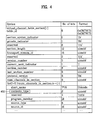
- FIG. 1 shows a syntax of a program map table according to the present invention
- FIG. 2 shows a syntax of a program map table including a contents-type field according to the present invention
- FIG. 3 shows a syntax of a virtual channel table according to the present invention
- FIG. 4 shows a syntax of a virtual channel table including a contents-type field according to the present invention
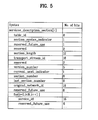
- FIG. 5 shows a syntax of a service description table according to the present invention
- FIG. 6 shows a syntax of a service description table including a contents-type field according to the present invention
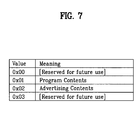
- FIG. 7 exemplarily shows a contents-type field according to the present invention.
- FIG. 8 is a block diagram illustrating a broadcast receiver according to the present invention.
- FIG. 9 is a block diagram illustrating a broadcast receiver according to the present invention.
- the present invention has an information table which includes a program information and an additional information. And the information table include an information about a video signal and an audio signal.
- PMT Program Specific Information
- VCT virtual channel table
- SDT Service Information
- FIG. 1 shows a syntax of a program map table according to the present invention.
- FIG. 2 shows a syntax of a program map table including a contents-type field according to the present invention.
- FIGS. 1 and 2 A data structure and a method for transmitting/receiving digital content data according to the present invention will hereinafter be described with reference to FIGS. 1 and 2.
- PSI Program Specific Information prescribes service information of the MPEG-3 system layer.
- the program specific information includes specific information capable of demultiplexing/decoding a specific stream from among multiplexed streams.
- the program specific information (PSI) includes a Program Association Table (PAT), a Conditional Access Table (CAT), a Program Map Table (PMT), and a Network Information Table (NIT), etc.
- PAT Program Association Table
- CAT Conditional Access Table
- PMT Program Map Table
- NIT Network Information Table
- the program association table transmits not only Packet Identifier (PID) information of a corresponding PMT related to a variety of services of a transmission end, but also PID information of the NIT.
- PID Packet Identifier
- the conditional access table transmits information of a pay-for-use broadcast system used in the transmission end.
- the pay-for-use broadcast system information transmitted from the CAT may be defined / used differently from content data transferred via a general pay-for-use broadcast system.
- the program map table transmits not only PID information of a transmission transport packet capable of transmitting individual services and their categories, but also other PID information capable of transmitting PCR information.
- the network information table (NIT) is defined in DVB standards so that it can be compatible with the MPEG-2 standard. Indeed, the network information table (NIT) transmits transmission network information.
- the program map table (PMT) for providing the user with additional functions of digital broadcast signals is indicative of a single virtual channel of a digital TV.
- the program map table (PMT) acts as a table for loading program information capable of existing in each physical channel.
- the program map table (PMT) must receive a new program map table (PMT) within a predetermined time of 400ms according to the digital TV standards.
- the program map table (PMT) for loading the program information indicates that currently-broadcast digital content data is indicative of advertisement broadcast data, a method for processing the advertisement broadcast data can be effectively used.
- the present invention adds a contents-type field for indicating whether digital content data is indicative of advertisement broadcast data to the above-mentioned program map table (PMT).
- the contents-type field indicates whether a type of contents of a program is advertisement. And it indicates a type of a advertisement.
- the program map table maps a program recognized by the PAT mapping to PIDs of a real video ES, PIDs of an audio ES, and PIDs of a PCR stream, such that it allows a demultiplexer to receive video ES-, audio ES-, and PCR- information via a DSS packet.
- the program map table (PMT) performs double-authentication of a program number and PMI_PID information, such that it analyzes effectiveness of PMT information.
- the method of Receiving the program map table (PMT) of Program Specific Information (PSI) further comprises the steps of receiving a table providing a pointer of at least one PMT transmitted within a transport stream, parsing the table, and extracting a packet identifier(ID) of the PMT and receiving each pointed PMT using the PMT packet ID.
- PMT program map table
- PSI Program Specific Information
- the program_map_PID is a 13 bit field specifying the PID of the Transport Stream packets which shall contain the program_map_section applicable for the program as specified by the program_number. No program_number shall have more than one program_map_PID assignment.
- the value of the program_map_PID is defined by the user, but shall not take values reserved for other purposes.
- the program map table may be composed of a plurality of sections, and is transmitted to a plurality of transport packets.
- a corresponding packet transmits data equipped with a start part of the section.
- the corresponding packet sets the unit_start_indicator of 1 bit to "1", such that it indicates that the start part of the section is contained in a payload of the corresponding packet.
- a 1-byte pointer field following a 4-byte transport header is used to indicate a start location of the above-mentioned section, such that it indicates where the section begin in the payload.
- a maximum length of each section other than an EIT having a limited variable length of 4096 bytes is limited to 1024 bytes.
- Each section includes the following fields.
- the program map table includes a table identifier (table_id), a program number, PCR_PID information, category information of each ES, a PID, and contents_type information, etc.
- Table_id information is composed of an 8-bit field, and indicates a table including a corresponding section.
- a value of the table_id information is prescribed by an ISO and an ETSI.
- “Section_syntax_indicator” information is composed of a 1-bit field, is compatible with a PSI of the MPEG2 system standard, and is fixed to "1".
- “Section_length” information is composed of a 12-bit field, and is used to indicate the length of a corresponding section.
- the length of the section is limited to 1024 bytes, such that upper 2-bits are fixed to "00".
- the section length indicates the size of data contained in a section following the "section_length” field.
- Program_number information is composed of a 16-bit field, and is used to distinguish a corresponding service from other services in a transport stream.
- the program_number is the numeric label associated with a program.
- Program_number is a 16 bit field. It specifies the program to which the program_map_PID is applicable. If this is set to 0x0000 then the following PID reference shall be the network PID. For all other cases the value of this field is user defined. This field shall not take any single value more than once within one version of the program association table.
- the program_number may be used as a designation for a broadcast channel, for example
- "Version number” information is composed of a 5-bit field. Content data of program- or service- information varies with time due to its attributes. In other words, if a specific program is broadcast to a viewer and a predetermined period of time elapses, there is a need to inform the viewer of content data of other programs other than the specific program, such that new-version service information must be transmitted to the viewer. In order to inform the viewer that current service- or program- information is different from previous service- or program- information, the above-mentioned "version_number” information is employed. The above-mentioned “version_number” information is transmitted to the viewer, and at the same time sequentially increases section “version_number” information of the aforementioned "table_id” information.
- “Current_next_indicator” information is composed of a 1-bit field, and indicates whether transmission content data is indicative of first content data to be immediately applied to a current time or second content data to be applied to the next time.
- the "current_next_indicator” information provides a method for controlling a receiver to prepare for information to be changed to other information after the lapse of a predetermined period of time. If the value of the "current_next_indicator” information is set to "1”, this means that a current PMT is valid and a program map table (PMT) having a valid version number value is indicative of a version value. If the value of the "current_next_indicator” information is set to "0”, this means that the next PMT is valid and a program map table (PMT) having a valid version number value is indicative of a version value.
- “Section_number” information is composed of an 8-bit field, and indicates a section number.
- the receiver can rearrange a plurality of received tables using the section number. If the "section_number" information does not have an objective for repeatedly transmitting a specific section, the section number of each section must be sequentially increased/transmitted.
- “Last_section_number” information is composed of an 8-bit field, and indicates a section number of the last section of a current table.
- PCR_PID information indicates a PID value of a DSS packet having an effective PCR used for a program designated by the program number. If a specific stream is not related to the PCR, all of the "PCR_PID” information must be set to a bit value of 1.
- Program_info_length information indicates the number of bytes corresponding to the length of a descriptor following the "program_info_length” information.
- Contents_type information is composed of a 2-bit field, and determines whether digital content data is real program content data or advertisement content data. In other words, it indicates a type of contents of a program is advertisement.
- a PMT syntax includes a plurality of reserved fields.
- a contents-type field for indicating whether digital content data is equal to real broadcast data or advertisement broadcast data is added to the reserved fields.
- the contents-type field may be added to the reserved fields. For example, if the "contents_type” field is added to a reserved field following the "PCR_PID" field, a user can determine whether digital content data is advertisement content data or not.
- the contents-type data indicates that the contents type of a program is advertisement
- the contents can be skipped.
- accoding to a type of a advertisement the user select whether or not the program is skipped. For example, if a type of an advertisement is foods, then the advertisement is skipped. And if a type of an advertisement is clothes, then it is not skipped.
- the user may classify advertisement content data into first advertisement content data to be viewed by the user or second advertisement content data not to be viewed by the user according to user's interests.
- a method for indicating information of a current broadcast program may be represented in the form of the above-mentioned program map table (PMT) contained in the program specific information (PSI) shown in FIGS. 1 ⁇ 2, and may also be represented in the form of a virtual channel table (VCT) based on a PSIP (Program and System Information Protocol) standard acting as the North American digital broadcast standard.
- PMT program map table
- PSI program specific information
- VCT virtual channel table
- FIG. 3 shows a syntax of a virtual channel table of a PSIP according to the present invention.
- FIG. 4 shows a syntax of a virtual channel table including a contents-type field according to the present invention.
- a second preferred embodiment of the present invention disclosing a data structure and a method for transmitting/receiving digital content data will hereinafter be described with reference to FIGS. 3 and 4.
- PSIP includes six tables (i.e., STT, RRT, MGT, VCT, EIT, and ETT).
- the VCT Virtual Channel Table
- the YVCT is indicative of program information of North American terrestrial digital broadcast data.
- the CVCT is indicative of program information of North American cable digital broadcast data.
- the VCT includes information of several channels transmitted from physical terrestrial broadcast channels.
- the VCT transmits "source_id" information corresponding to a variety of information (i.e., a channel name, a category of a broadcast program of the channel, a channel-transmission modulation method, a frequency, and an individual broadcast program).
- the receiver acquires program information by referring to a program information table "EIT-x" using the "source_id” information, such that it can inform the viewer of program information.
- program_number is a 16-bit unsigned integer number that associates the virtual channel being defined here with the MPEG-2 PROGRAM ASSOCIATION and TS PROGRAM MAP tables. For virtual channels representing analog services, a value of 0xFFFF shall be specified for program_number. For inactive channels (those not currently present in the Transport Stream), program_number shall be set to zero. This number shall not be interpreted as pointing to a Program Map Table entry.
- service_type is a 6-bit enumerated type field that shall identify the type of service carried in this virtual channel.
- source_id is a 16-bit unsigned integer number that identifies the programming source associated with the virtual channel.
- a source is one specific source of video, text, data, or audio programming.
- Source ID value zero is reserved.
- Source ID values in the range 0x0001 to 0x0FFF shall be unique within the Transport Stream that carries the VCT, while values 0x1000 to 0xFFFF shall be unique at the regional level. Values for source_ids 0x1000 and above shall be issued and administered by a Registration Authority designated by the ATSC.
- the "contents_type” field capable of determining whether digital content data is indicative of advertisement content data is added to the TVCT/CVCT based on the PSIP standard, such that it can determine whether the digital content data is the advertisement content data.
- the "contents_type” field is inserted into the "reserved” field.
- a method for indicating information of a current broadcast program may be represented in the form of the program map table (PMT) contained in the program specific information (PSI) shown in FIGS. 1-2 or the VCT information contained in the PSIP shown in FIGS. 3 ⁇ 4, and may also be represented in the form of a service description table (SDT) based on service information (SI) of a DVB acting as the European digital broadcast standard.
- PMT program map table
- PSI program specific information
- VCT information contained in the PSIP shown in FIGS. 3 ⁇ 4 may also be represented in the form of a service description table (SDT) based on service information (SI) of a DVB acting as the European digital broadcast standard.
- FIG. 5 shows a syntax of a service description table (SDT) contained in the SI (Service Information) of the DVB according to the present invention.
- FIG. 6 shows a syntax of a service description table (SDT) including a contents-type field according to the present invention.
- a third preferred embodiment of the present invention disclosing a data structure and a method for transmitting/receiving digital content data will hereinafter be described with reference to FIGS. 5 and 6.
- the service information table (SDT) from among tables of the service information (SI) of the DVB includes information of several channels transmitted from physical terrestrial broadcast channels.
- the "contents_type" field capable of determining whether digital content data is indicative of advertisement content data is added to an SDDT of SI (service information) of the DVB, such that it can determine whether the digital content data is the advertisement content data.
- the above-mentioned "contents_type" field of FIGS. 2, 4, and 6 may be composed of 1-bit in order to determine whether digital content data is equal to advertisement content data.
- the number of bits of the "reserved” field may be set to a limited value.
- the number of bits of the "contents_type” field may be set to "2", so that 2 bits may designate the range of a value containable in the "contents_type” field.
- FIG. 7 exemplarily shows a contents-type field according to the present invention.
- the "contents_type” field is composed of 2 bits, and contents types are classified according to the value of the "contents_type” field. In other words, if the “contents_type” field is set to the value of "0”, current data is determined to be reserved content data. If the “contents_type” field is set to the value of "1”, current data is determined to be program content data. If the “contents_type” field is set to the value of "2”, current data is determined to be advertisement content data. If the “contents_type” field is set to the value of "3”, current data is determined to be reserved content data. In this case, bits of the reserved content data may be adapted to classify the types of the advertisement content data.
- the user may classify advertisement content data into first advertisement content data to be viewed by the user or second advertisement content data not to be viewed by the user according to user's interests.
- the digital broadcast receiver inspects the "contents_type" field of broadcast content data transmitted from a broadcast station, such that it can determine whether the broadcast content data is equal to the advertisement content data or the program content data.
- FIG. 8 is a block diagram illustrating a broadcast receiver capable of discriminating content types of digital broadcast signals according to the present invention.
- the broadcast receiver capable of discriminating content types of digital broadcast signals includes a tuner, a decoder, and a control unit. More particularly, the broadcast receiver includes a tuner 800, a demodulator 810, a demultiplexer (Demux) 820, an audio/video decoder 830, a display unit 840, a control unit 850, a storage unit 870, and a key input unit 860.
- a tuner 800 includes a tuner 800, a demodulator 810, a demultiplexer (Demux) 820, an audio/video decoder 830, a display unit 840, a control unit 850, a storage unit 870, and a key input unit 860.
- Demux demultiplexer
- the tuner 800 performs tuning of a broadcast signal.
- the demodulator 810 demodulates the signal tuned by the tuner 800, performs error correction of the tuned signal, and converts the error-corrected signal into a transport stream.
- the demultiplexer (Demux) 820 performs demultiplexing of the time-multiplexed transport stream, such that it separates a video-signal stream, an audio-signal stream, and additional-information stream from the time-multiplexed transport stream.
- the audio/video decoder 830 extends/recovers the video-signal stream and the audio-signal stream received from the demultiplexer 820.
- the display unit 840 converts the audio signal generated from the audio/video decoder 830 into an analog audio signal, such that the analog audio signal can be outputted via a speaker.
- the display unit 840 converts the video signal generated from the audio/video decoder 830 into luminance and chrominance signals, such that it can display the video signal using the luminance and chrominance signals on the screen.
- the storage unit 870 stores information program-associated information, detailed information, and recorded program information, etc.
- the key input unit 860 receives a user command, and transmits the user command to the control unit 850.
- the key input unit 860 may indicate a remote-controller, etc.
- the control unit 850 controls operations of individual parts of a video display device. In other words, upon receiving a playback command of the recorded program from the key input unit 860, the control unit 850 determines whether corresponding content data includes advertisement content data.
- the control unit 850 inspects the "contents_type" field inserted into the information table including program information (e.g., the program map table (PMT) of the corresponding content data), such that it determines whether content data is based on the advertisement standard. If the "contents_type" field is based on the advertisement standard, the control unit 850 determines that corresponding content data is equal to the advertisement content data, and skips over the advertisement content data, such that it controls only the program content data to be reproduced.
- program information e.g., the program map table (PMT) of the corresponding content data
- control unit 850 If the control unit 850 receives advertisement broadcast data when the user views the recorded program, it can select an FF command using the key input unit 570. Therefore, the control unit 850 skips over the advertisement content data using the "contents_type" field of the program map table (PMT), and then controls only the corresponding program to be reproduced.
- PMT program map table
- the user select whether or not the program is skipped. For example, if a type of an advertisement is foods, then the advertisement is skipped. And if a type of an advertisement is clothes, then it is not skipped.
- the user may classify advertisement content data into first advertisement content data to be viewed by the user or second advertisement content data not to be viewed by the user according to user's interests.
- FIG. 9 is a block diagram illustrating a broadcast receiver according to the present invention. detailed descriptions of the decoder and the control unit of the broadcast receiver of FIG. 8 will hereinafter be described with reference to FIG. 9.
- the decoder includes the demultiplexer (Demux) 904 and the PSI/PSIP decoder 908.
- the decoder firstly receives the PAT, performs parsing of the PAT using the PSI decoder 908, such that it transmits the PMT PID to the demultiplexer (Demux) 904.
- the decoder controls the demultiplexer 904 to decode the PMT, such that the "contents_type" field is extracted.
- the control unit 911 includes a channel manager 909 and a channel map 910, and controls an application and a User Interface (UI).
- UI User Interface
- the channel manager 909 inspects the "contents_type" field, determines whether current content data is based on the advertisement standard, and controls the application.
- the channel map 910 stores basic information associated channels.
- the control unit 911 controls the UI according to a user command entered via the key input unit 913.
- the present invention applies a contents-type field capable of discriminating between actual program content data and advertisement content data to standard information indicating content program information, such that it can solve advertisement process problems associated with digital broadcast content data.
- the present invention can be more effectively applied to the aforementioned case.
- the present invention includes the advertisement-associated standard in the SI standard, such that it can provide a data structure available to process advertisement data recorded in a video display device.
Landscapes
- Engineering & Computer Science (AREA)
- Signal Processing (AREA)
- Multimedia (AREA)
- Databases & Information Systems (AREA)
- Health & Medical Sciences (AREA)
- General Health & Medical Sciences (AREA)
- Social Psychology (AREA)
- Computer Networks & Wireless Communication (AREA)
- Business, Economics & Management (AREA)
- Marketing (AREA)
- Two-Way Televisions, Distribution Of Moving Picture Or The Like (AREA)
- Television Systems (AREA)
Applications Claiming Priority (1)
| Application Number | Priority Date | Filing Date | Title |
|---|---|---|---|
| KR1020050053223A KR100745268B1 (ko) | 2005-06-20 | 2005-06-20 | 디지털 방송 신호의 부가 기능 제공 방법 |
Publications (2)
| Publication Number | Publication Date |
|---|---|
| EP1737242A2 true EP1737242A2 (de) | 2006-12-27 |
| EP1737242A3 EP1737242A3 (de) | 2009-12-02 |
Family
ID=37084593
Family Applications (1)
| Application Number | Title | Priority Date | Filing Date |
|---|---|---|---|
| EP06290986A Withdrawn EP1737242A3 (de) | 2005-06-20 | 2006-06-16 | Digitales Fernsehsignal, Verfahren zur Bearbeitung ein digitales Fernsehsignal in einem Sender und Empfänger, und Empfänger |
Country Status (4)
| Country | Link |
|---|---|
| US (1) | US20060285011A1 (de) |
| EP (1) | EP1737242A3 (de) |
| KR (1) | KR100745268B1 (de) |
| CN (1) | CN1885940A (de) |
Cited By (2)
| Publication number | Priority date | Publication date | Assignee | Title |
|---|---|---|---|---|
| EP2434755A4 (de) * | 2009-05-21 | 2013-02-27 | Folch Joan Montane | Adressierungssystem für dvb-t- oder dvb-c-multiplex-digitalfernsehdienste zum anschluss in hotels, krankenhäusern oder ähnlichem sowie antieindringungssystem für dieses adressierungssystem |
| EP2642763A1 (de) * | 2012-03-23 | 2013-09-25 | Fujitsu Limited | Datenausgabeverfahren, Datenausgabeprogramm und Endgerätevorrichtung |
Families Citing this family (9)
| Publication number | Priority date | Publication date | Assignee | Title |
|---|---|---|---|---|
| KR100348249B1 (ko) | 1999-10-08 | 2002-08-09 | 엘지전자 주식회사 | 가상 채널 테이블 데이터 구조 및 부가 정보 송수신 방법 |
| TW200805016A (en) * | 2006-07-11 | 2008-01-16 | Teco Elec & Machinery Co Ltd | A method and system for adjusting audio/video effect and mode in DTV |
| US8869219B2 (en) * | 2007-12-05 | 2014-10-21 | Lg Electronics Inc. | Method for controlling a channel and an IPTV receiver |
| US20090199258A1 (en) * | 2008-02-05 | 2009-08-06 | Yu-Hsiung Deng | Method of setting mapping between channel number and program number |
| US20090231437A1 (en) * | 2008-03-11 | 2009-09-17 | Yao-Chang Huang | Tv data processing method and tv data receiver utilizing which |
| EP2538684A1 (de) | 2008-12-18 | 2012-12-26 | LG Electronics Inc. | Digitales Rundfunkempfangsverfahren zur Anzeige Stereoskopischer Bilder sowie Digitale Rundfunkempfangsvorrichtung damit |
| KR101648455B1 (ko) | 2009-04-07 | 2016-08-16 | 엘지전자 주식회사 | 방송 송신기, 방송 수신기 및 3d 비디오 데이터 처리 방법 |
| US9049430B2 (en) * | 2009-10-13 | 2015-06-02 | Lg Electronics Inc. | Broadcast receiver and 3D video data processing method thereof |
| CN108063954B (zh) * | 2017-12-25 | 2020-09-25 | 青岛海信电器股份有限公司 | 一种电子节目中广告时间的处理方法、装置及智能电视 |
Family Cites Families (12)
| Publication number | Priority date | Publication date | Assignee | Title |
|---|---|---|---|---|
| US5652615A (en) * | 1995-06-30 | 1997-07-29 | Digital Equipment Corporation | Precision broadcast of composite programs including secondary program content such as advertisements |
| EP0854650A3 (de) * | 1997-01-17 | 2001-05-02 | NOKIA TECHNOLOGY GmbH | Verfahren zur Adressierung eines Dienstes in einem digitalen Videorundfunksystem |
| KR100230282B1 (ko) * | 1997-04-14 | 1999-11-15 | 윤종용 | 단일 프로그램 전송 스트림 전송장치 및 그 방법 |
| US8572646B2 (en) * | 2000-04-07 | 2013-10-29 | Visible World Inc. | System and method for simultaneous broadcast for personalized messages |
| US7877769B2 (en) * | 2000-04-17 | 2011-01-25 | Lg Electronics Inc. | Information descriptor and extended information descriptor data structures for digital television signals |
| US7895616B2 (en) * | 2001-06-06 | 2011-02-22 | Sony Corporation | Reconstitution of program streams split across multiple packet identifiers |
| US20030023972A1 (en) * | 2001-07-26 | 2003-01-30 | Koninklijke Philips Electronics N.V. | Method for charging advertisers based on adaptive commercial switching between TV channels |
| US8155498B2 (en) * | 2002-04-26 | 2012-04-10 | The Directv Group, Inc. | System and method for indexing commercials in a video presentation |
| KR100906678B1 (ko) * | 2002-12-30 | 2009-07-08 | 엘지전자 주식회사 | 디지털 텔레비전의 대화식 방송 구현 방법 |
| GB0303176D0 (en) * | 2003-02-12 | 2003-03-19 | Video Networks Ltd | A system for capture and selective playback of broadcast programmes |
| KR100568230B1 (ko) * | 2003-07-30 | 2006-04-07 | 삼성전자주식회사 | 디지털 tv에서의 광고 제공 장치 및 방법 |
| AU2005215010A1 (en) * | 2004-02-18 | 2005-09-01 | Nielsen Media Research, Inc. Et Al. | Methods and apparatus to determine audience viewing of video-on-demand programs |
-
2005
- 2005-06-20 KR KR1020050053223A patent/KR100745268B1/ko not_active Expired - Fee Related
-
2006
- 2006-06-14 US US11/452,366 patent/US20060285011A1/en not_active Abandoned
- 2006-06-16 EP EP06290986A patent/EP1737242A3/de not_active Withdrawn
- 2006-06-20 CN CNA2006100938169A patent/CN1885940A/zh active Pending
Cited By (3)
| Publication number | Priority date | Publication date | Assignee | Title |
|---|---|---|---|---|
| EP2434755A4 (de) * | 2009-05-21 | 2013-02-27 | Folch Joan Montane | Adressierungssystem für dvb-t- oder dvb-c-multiplex-digitalfernsehdienste zum anschluss in hotels, krankenhäusern oder ähnlichem sowie antieindringungssystem für dieses adressierungssystem |
| EP2642763A1 (de) * | 2012-03-23 | 2013-09-25 | Fujitsu Limited | Datenausgabeverfahren, Datenausgabeprogramm und Endgerätevorrichtung |
| US9301104B2 (en) | 2012-03-23 | 2016-03-29 | Fujitsu Limited | Data output method, data output program, and terminal device |
Also Published As
| Publication number | Publication date |
|---|---|
| KR100745268B1 (ko) | 2007-08-01 |
| EP1737242A3 (de) | 2009-12-02 |
| CN1885940A (zh) | 2006-12-27 |
| US20060285011A1 (en) | 2006-12-21 |
| KR20060133400A (ko) | 2006-12-26 |
Similar Documents
| Publication | Publication Date | Title |
|---|---|---|
| US7603694B2 (en) | Virtual channel table data structure, transport stream discrimination method, and digital broadcast receiver | |
| CA2837643C (en) | Virtual channel table for a broadcast protocol and method of broadcasting and receiving broadcast signals using the same | |
| US9602866B2 (en) | Digital television signal, digital television receiver, and method of processing digital television signal | |
| US20070261074A1 (en) | Broadcast receiver and method for processing broadcast data | |
| US20040163110A1 (en) | Method of controlling ETT information display on electronic program guide screen of digital television | |
| CN101513055A (zh) | 控制用于处理定义多频道广播的广播信号的接收器的方法以及使用该方法的广播接收器 | |
| EP1737242A2 (de) | Digitales Fernsehsignal, Verfahren zur Bearbeitung ein digitales Fernsehsignal in einem Sender und Empfänger, und Empfänger | |
| US7720103B2 (en) | Digital television receiver and method for processing a digital television signal | |
| US20070266407A1 (en) | Digital television receiver and method for processing broadcast signal | |
| US20070283383A1 (en) | Digital television receiver and method for processing broadcast signal | |
| US20070258589A1 (en) | Digital television receiver and method for processing a digital television signal | |
| KR20070052169A (ko) | 디지털 텔레비전 수신기에 있어서 방송 신호 및 psip테이블 디코딩 방법 및 장치 | |
| US20070204289A1 (en) | Digital television signal, method of processing digital television signal, and digital television receiver | |
| KR20110022017A (ko) | 디지털 방송 송수신기에서 방송 신호를 처리하는 방법 | |
| KR20000040201A (ko) | 제공되는프로그램가이드방식에대응하는디스플레이모드자동설정방법 | |
| WO2010067992A2 (en) | Method for receiving and displaying service guide in broadcast receiver | |
| US20070256099A1 (en) | Digital television receiver and method for processing a digital television signal |
Legal Events
| Date | Code | Title | Description |
|---|---|---|---|
| PUAI | Public reference made under article 153(3) epc to a published international application that has entered the european phase |
Free format text: ORIGINAL CODE: 0009012 |
|
| AK | Designated contracting states |
Kind code of ref document: A2 Designated state(s): AT BE BG CH CY CZ DE DK EE ES FI FR GB GR HU IE IS IT LI LT LU LV MC NL PL PT RO SE SI SK TR |
|
| AX | Request for extension of the european patent |
Extension state: AL BA HR MK YU |
|
| PUAL | Search report despatched |
Free format text: ORIGINAL CODE: 0009013 |
|
| AK | Designated contracting states |
Kind code of ref document: A3 Designated state(s): AT BE BG CH CY CZ DE DK EE ES FI FR GB GR HU IE IS IT LI LT LU LV MC NL PL PT RO SE SI SK TR |
|
| AX | Request for extension of the european patent |
Extension state: AL BA HR MK RS |
|
| AKY | No designation fees paid | ||
| REG | Reference to a national code |
Ref country code: DE Ref legal event code: 8566 |
|
| STAA | Information on the status of an ep patent application or granted ep patent |
Free format text: STATUS: THE APPLICATION IS DEEMED TO BE WITHDRAWN |
|
| 18D | Application deemed to be withdrawn |
Effective date: 20100603 |