EP1738520B1 - Vergabe von zugangsschlitzen an mobilstationen, um die anzahl der an einem mbms (multimedia-broadcast/multicast-dienst) interessierten stationen zu zählen - Google Patents
Vergabe von zugangsschlitzen an mobilstationen, um die anzahl der an einem mbms (multimedia-broadcast/multicast-dienst) interessierten stationen zu zählen Download PDFInfo
- Publication number
- EP1738520B1 EP1738520B1 EP05718720A EP05718720A EP1738520B1 EP 1738520 B1 EP1738520 B1 EP 1738520B1 EP 05718720 A EP05718720 A EP 05718720A EP 05718720 A EP05718720 A EP 05718720A EP 1738520 B1 EP1738520 B1 EP 1738520B1
- Authority
- EP
- European Patent Office
- Prior art keywords
- interest
- service
- access
- access slots
- level
- Prior art date
- Legal status (The legal status is an assumption and is not a legal conclusion. Google has not performed a legal analysis and makes no representation as to the accuracy of the status listed.)
- Expired - Lifetime
Links
Images
Classifications
-
- H—ELECTRICITY
- H04—ELECTRIC COMMUNICATION TECHNIQUE
- H04H—BROADCAST COMMUNICATION
- H04H20/00—Arrangements for broadcast or for distribution combined with broadcast
- H04H20/65—Arrangements characterised by transmission systems for broadcast
- H04H20/71—Wireless systems
- H04H20/72—Wireless systems of terrestrial networks
-
- H—ELECTRICITY
- H04—ELECTRIC COMMUNICATION TECHNIQUE
- H04H—BROADCAST COMMUNICATION
- H04H20/00—Arrangements for broadcast or for distribution combined with broadcast
- H04H20/53—Arrangements specially adapted for specific applications, e.g. for traffic information or for mobile receivers
- H04H20/57—Arrangements specially adapted for specific applications, e.g. for traffic information or for mobile receivers for mobile receivers
-
- H—ELECTRICITY
- H04—ELECTRIC COMMUNICATION TECHNIQUE
- H04H—BROADCAST COMMUNICATION
- H04H60/00—Arrangements for broadcast applications with a direct linking to broadcast information or broadcast space-time; Broadcast-related systems
- H04H60/29—Arrangements for monitoring broadcast services or broadcast-related services
- H04H60/31—Arrangements for monitoring the use made of the broadcast services
-
- H—ELECTRICITY
- H04—ELECTRIC COMMUNICATION TECHNIQUE
- H04H—BROADCAST COMMUNICATION
- H04H60/00—Arrangements for broadcast applications with a direct linking to broadcast information or broadcast space-time; Broadcast-related systems
- H04H60/61—Arrangements for services using the result of monitoring, identification or recognition covered by groups H04H60/29-H04H60/54
-
- H—ELECTRICITY
- H04—ELECTRIC COMMUNICATION TECHNIQUE
- H04L—TRANSMISSION OF DIGITAL INFORMATION, e.g. TELEGRAPHIC COMMUNICATION
- H04L12/00—Data switching networks
- H04L12/02—Details
- H04L12/16—Arrangements for providing special services to substations
- H04L12/18—Arrangements for providing special services to substations for broadcast or conference, e.g. multicast
- H04L12/189—Arrangements for providing special services to substations for broadcast or conference, e.g. multicast in combination with wireless systems
-
- H—ELECTRICITY
- H04—ELECTRIC COMMUNICATION TECHNIQUE
- H04W—WIRELESS COMMUNICATION NETWORKS
- H04W36/00—Hand-off or reselection arrangements
- H04W36/0005—Control or signalling for completing the hand-off
- H04W36/0007—Control or signalling for completing the hand-off for multicast or broadcast services, e.g. MBMS
-
- H—ELECTRICITY
- H04—ELECTRIC COMMUNICATION TECHNIQUE
- H04W—WIRELESS COMMUNICATION NETWORKS
- H04W4/00—Services specially adapted for wireless communication networks; Facilities therefor
- H04W4/06—Selective distribution of broadcast services, e.g. multimedia broadcast multicast service [MBMS]; Services to user groups; One-way selective calling services
-
- H—ELECTRICITY
- H04—ELECTRIC COMMUNICATION TECHNIQUE
- H04W—WIRELESS COMMUNICATION NETWORKS
- H04W72/00—Local resource management
- H04W72/30—Resource management for broadcast services
-
- H—ELECTRICITY
- H04—ELECTRIC COMMUNICATION TECHNIQUE
- H04H—BROADCAST COMMUNICATION
- H04H2201/00—Aspects of broadcast communication
- H04H2201/70—Aspects of broadcast communication characterised in that receivers can be addressed
-
- H—ELECTRICITY
- H04—ELECTRIC COMMUNICATION TECHNIQUE
- H04L—TRANSMISSION OF DIGITAL INFORMATION, e.g. TELEGRAPHIC COMMUNICATION
- H04L12/00—Data switching networks
- H04L12/02—Details
- H04L12/16—Arrangements for providing special services to substations
- H04L12/18—Arrangements for providing special services to substations for broadcast or conference, e.g. multicast
- H04L12/185—Arrangements for providing special services to substations for broadcast or conference, e.g. multicast with management of multicast group membership
-
- H—ELECTRICITY
- H04—ELECTRIC COMMUNICATION TECHNIQUE
- H04W—WIRELESS COMMUNICATION NETWORKS
- H04W36/00—Hand-off or reselection arrangements
- H04W36/16—Performing reselection for specific purposes
-
- H—ELECTRICITY
- H04—ELECTRIC COMMUNICATION TECHNIQUE
- H04W—WIRELESS COMMUNICATION NETWORKS
- H04W72/00—Local resource management
- H04W72/04—Wireless resource allocation
- H04W72/044—Wireless resource allocation based on the type of the allocated resource
- H04W72/0446—Resources in time domain, e.g. slots or frames
Definitions
- the present invention relates to a radio network, to a method of operating the radio network, and to radio stations for use in a radio network.
- the present invention has particular, but not exclusive application to the provision of multimedia broadcast and multicast services in mobile radio networks such as third generation mobile radio systems of which UMTS (Universal Mobile Telephone System) and cdma2000 (code division multiple access 2000) are two examples.
- UMTS Universal Mobile Telephone System
- cdma2000 code division multiple access 2000
- MBMS Multimedia Broadcast and Multicast Services
- a mobile radio network operator would be interested in ascertaining the number of users who are, or are likely to be, interested in receiving a particular service. Such information may be used to determine the best mechanism for service delivery across the air interface between the base or primary station(s) and the subscriber or secondary stations. For example, if only a few users are interested in a given service, it may be more efficient to set-up separate dedicated channels to deliver the service to each user, where the dedicated channels, that is point-to-point channels, can then be individually power controlled according to the prevailing radio channel conditions for those users. Conversely, a common channel, that is a point-to-multipoint channel, would usually be more efficient if the service is to be delivered to a large number of users. A high transmit power would usually be used such that users situated anywhere in the cell could satisfactorily receive the service.
- PMM Packet Mobility Mode
- the request to transit to the PMM Connected State may be explicit, or alternatively the secondary stations may autonomously enter this state periodically.
- this method requires a significant amount of signalling to be transmitted between the secondary stations and the network controller as well as significant signalling traffic within the network itself, for example transmission of subscriber profiles from the HLR (Home Location Register).
- HLR Home Location Register
- WO 03/036872 discloses a packet radio data network with a. gateway node a serving node coupled to the gateway node, radio access nodes coupled to the serving node, the packet radio network transporting packet data from an Internet Service Provider to mobile stations wirelessly attached to radio access nodes.
- An object of the present invention is to be able to estimate efficiently the number of users who are interested in receiving a service.
- a primary station for use in a radio network according to the features of independant claim 21.
- a secondary station for use in a radio network according to the features of independent claim 22.
- access slot means a specific combination of a signature and a time slot.
- the present invention is based on the recognition that when the number of secondary stations being counted is large, it will often not be necessary to obtain an accurate count of the number of secondary stations, but rather to ascertain that the number of terminals is significantly greater than an arbitrary threshold, for example the threshold for using point-to-multipoint service delivery.
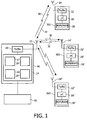
- the radio network shown in Figure 1 comprises at least one primary station PS which includes a spread spectrum transceiver 10 having a radio frequency inlet/outlet coupled to signal propagation means 12.
- a controller 14 is coupled to the transceiver 10 for controlling the primary station to operate as described below.
- the controller is a suitably programmed digital computer but for the convenience of understanding the present invention the controller 14 is shown to include an estimating means 17, a selection means 18, an access slot store 19 and a signature store 20.
- a service supplier of multimedia and multicast services 16 is coupled by say a landline to the controller 14.
- the network further comprises a plurality of secondary stations of which three stations SS1, SS2 and SS3 are shown.
- the secondary stations are able to roam in the radio coverage area of the primary station's transceiver 10.
- the secondary stations SS1, SS2 and SS3 have substantially the same architecture and for convenience of description the secondary station SS1 will be described and the corresponding features in the secondary terminals SS2 and SS3 will be identified by primed and double primed reference numerals, respectively.
- the secondary station SS1 comprises a spread spectrum transceiver 22 having a RF input/output coupled to an antenna 24.
- a programmed microprocessor 26 is coupled to the transceiver 22.
- a store 28 is coupled to the microprocessor 26. Communication between the primary station PS and the secondary stations SS1, SS2 and SS3 is by duplex downlinks 30/uplinks 32.
- the microprocessor 26 controls the secondary station SS1 to operate as described below.
- Initiation of communication in the network area is by spread spectrum using a TDMA protocol comprising access slots, one of which access slots is selected at random by a secondary station when initiating communication with the primary station.
- the primary station PS makes available a known number of signatures and a known number of time slots and a secondary station when initiating communication selects one of these signatures and one of the time slots.
- the combination of a randomly selected time slot and a selected one of several signatures reduces the risk of collisions between secondary stations when communicating with the primary station.
- the infrastructure architecture comprises a network controller coupled to geographically distributed primary stations each having its own service area contiguous with or partially overlapping adjacent areas.
- the primary station of each area has its own set of signatures which are different from those allotted to adjacent service areas.
- the primary station PS transmits periodically a programme guide which includes a list of services and maps a respective plurality of access slots to different services.
- a programme guide which includes a list of services and maps a respective plurality of access slots to different services.
- each combination of one time slot and one signature is contained in not more than one of the pluralities of access slots.
- each access slot in a respective plurality to use the same signature and for each access slot in the plurality to use a different time slot.
- each access slot in a respective plurality to use the same time slot and for each access slot in the plurality to use a different signature
- the secondary station(s) interested in receiving a particular service can transmit(s) indications, for example a signature or a signature and another indicator.
- indications for example a signature or a signature and another indicator.
- a number of uplink RACH (Random Access Channel) access slots are allocated specifically for transmissions relating to the purpose of counting users.
- the slots may be allocated permanently or temporarily, and may for example be selected in a time-division manner from a set of access slots allocated specifically for MBMS signalling in general.
- the number of such access slots allocated for counting may be chosen as a function of the threshold used by the network to decide between dedicated and common channels for delivery. For example, if a threshold value N is set, then typically the number of such access slots would be between N and 2N.
- Each secondary station which wishes to be counted then operates a random function to select one of the allocated access slots and transmits a predetermined signal in the selected slot.
- the probability of multiple secondary stations selecting the same access slot will be low, and the network will obtain a reasonably accurate count of the number of interested secondary stations.
- the network could then for example send an additional request for the necessary signalling information to enable point-to-point links to be set up to those secondary stations.
- the network could assume that a large number of secondary stations were interested and establish a point-to-multipoint link.
- the primary station (or network controller) would not be able to count the number of terminals transmitting the predetermined signal in the same access slot.
- the network it would be possible for the network to estimate this number from the number of correlation peaks received in a given access slot, the arrival of the peaks being varied due to the different propagation times of the respective signal, or from the level of received energy in the access slot, assuming that a power versus distance from primary station algorithm is used to control the transmission power by a respective secondary station. This information may be used to refine the estimated count.
- the initiation of the counting process could be requested explicitly by the primary station (or network controller) on each occasion, or could be periodic according to a period set by the primary station (or network controller), or could be autonomous on the part of each secondary station. Some combination of these initiation methods could also be used.
- the allocated access slots would be specific to a given MBMS service or group of services. Different sets of access slots (for example on different sub-channels or at different times) could be used for counting secondary stations interested in different MBMS services. A secondary station simply maps between the access slots made available and a particular service.
- the method in accordance with the present invention provides an efficient method for counting interested secondary stations, as the predetermined signal could be just a single signature or other code word and a large number of secondary stations may transmit at the same time, thus completing the process quickly. Further, the method in accordance with the present invention reduces the probability that large numbers of RACH access attempts arising from the known state transition method of counting would - cause collisions with other uplink traffic, thus disrupting other uplink services.
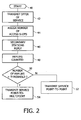
- FIG. 2 is a flow chart illustrating an implementation of the method in accordance with the present invention.
- the flow chart commences with a start block 40.
- the next block 42 represents the primary station PS transmitting an offer of service.
- Block 44 relates to the primary station (or network controller) assigning a plurality N of access slots, that is for example (a) a number of time slots and a number of signatures, (b) a single signature in a plurality of time slots or (c) a plurality of signatures in one time slot, for the purpose of estimating the numbers of secondary stations interested in receiving the service offered.
- the plurality N of access slots is related to the threshold value set for the type of service being offered.
- Block 46 relates to secondary stations interested in receiving the service being offered transmitting replies in the access slots provided.
- a reply may comprise a predetermined signal transmitted in either a preselected one of, or a randomly selected one of, the plurality of access slots.
- Block 48 relates to the primary station (or network controller) estimating the number of replies, for example the number of occurrences of the same signature in different time slots of a given plurality, the number of randomly selected signatures in the same time slot or the number of randomly selected signatures in different randomly selected time slots of a given plurality, received.
- Block 50 relates to the primary station (or network controller) determining if the estimated number exceeds the threshold value set. If the answer is negative N, the service is transmitted on a point-to-point basis as indicated by block 52. If, however, the answer is positive Y, the service is transmitted on a point-to-multipoint basis as indicated by block 54.
- the efficiency of the counting method could be increased by dividing the population of the secondary stations into two or more sub-groups.
- a first group of secondary stations could be allocated to a first set of access slots for transmission of the predetermined counting signal, while a second group of secondary stations could be allocated to a second, later, set of access slots.
- the primary station or network controller
- the primary station(s) could transmit a signal forbidding secondary stations in the second group from transmitti ng their counting signals in the later set of access slots.
- the total uplink interference could be significantly reduced in cases where there were a large number of interested secondary stations exceeding the threshold value.
- Another variation includes explicity requested counting being performed using the conventional state-transition method and the method in accordance with the present invention being used for periodic autonomous updates or vice versa.
- additional information can be included in the counting signals.
- the secondary stations could signal some measure of their ability to receive a particular service, where the suitable measures could include (i) a SIR (Signal to Interference Ratio)-based metric, which could give the network an indication of the down link power level which would be required in order for the terminal to receive the service satisfactorily, and/or (ii) an indication of functional capability, for example whether the secondary station currently has the ability to receive the service in a point-to-point mode or point-to-multipoint mode or both.
- SIR Signal to Interference Ratio
- the secondary stations could signal a preference for certain parameters of the service in question. For example, some services may be provided with different degrees of quality, such as high- or low-resolution video.
- some networks separate data steams may be transmitted, with a basic data stream providing the low-quality data, and a supplementary stream (which can be decoded in conjunction with the basic stream) to provide a higher quality service for those users who wish to receive it.
- Secondary stations could use a specific code word in the randomly selected time slot (or randomly select a time slot from a different allocated set of time slots) to indicate the quality level at which they wished to receive the service in question. This might enable the network to use point-to-point channels for a supplementary data stream but point-to-multipoint channels for the basic data stream. Similarly, this quality information could be used by the network to decide not to transmit supplementary information if only a small number of secondary stations (or none) were interested in receiving the higher quality service.
- the transmission by a secondary station of its indication of interest may occur with a probability less than one.
- the value of the probability may be predetermined or signalled by the primary station.
- the primary station then divides the counted number of indications by the value of the probability in order to arrive at an estimate of the level of interest. This option can result in a lower level of interference and can result in a more accurate estimate of level of interest.
Landscapes
- Engineering & Computer Science (AREA)
- Signal Processing (AREA)
- Computer Networks & Wireless Communication (AREA)
- Multimedia (AREA)
- Mobile Radio Communication Systems (AREA)
- Data Exchanges In Wide-Area Networks (AREA)
- Input Circuits Of Receivers And Coupling Of Receivers And Audio Equipment (AREA)
- Developing Agents For Electrophotography (AREA)
Claims (22)
- Verfahren zum Betrieb eines Funknetzes mit einer primären Station (PS) und einer Vielzahl von sekundären Stationen (SS1, SS2, SS3), wobei die primäre Station den Interessegrad von Benutzern sekundärer Stationen an einem Dienst bestimmt, indem sie zumindest eine Vielzahl von Zugangsschlitzen zuweist, in denen eine sekundäre Station einen Hinweis auf ihr Interesse übermitteln kann, dadurch gekennzeichnet, dass jeder Zugangsschlitz durch eine Kombination aus einem Zeitschlitz und einer Signatur, die ein Codewort ist, gekennzeichnet ist, und dass die primäre Station jede Vielzahl von Zugangsschlitzen auf einen anderen Dienst abbildet, so dass alle an einem Dienst interessierten sekundären Stationen einen Hinweis auf ihr Interesse über einen aus der Vielzahl von Zugangsschlitzen übermitteln, und dass jede Kombination aus einem Zeitschlitz und einer Signatur in nicht mehr als einem aus der Vielzahl von Zugangsschlitzen enthalten ist.
- Verfahren nach Anspruch 1, wobei die primäre Station anhand der Anzahl übermittelter Hinweise den Interessegrad schätzt und eine Übertragungsart für den Dienst in Abhängigkeit davon auswählt, ob der Interessegrad relativ hoch oder relativ niedrig ist.
- Verfahren nach Anspruch 2, wobei die Übertragungsart bei einem relativ hohen Interessegrad "Punkt-zu-Mehrpunkt" ist.
- Verfahren nach Anspruch 2, wobei die Übertragungsart bei einem relativ niedrigen Interessegrad "Punkt-zu-Punkt" ist.
- Verfahren nach Anspruch 2, wobei die primäre Station einen Schwellenwertpegel zum Bestimmen der Übertragungsart für den Dienst festlegt und, falls die Anzahl der Hinweise den Schwellenwertpegel überschreitet, die Übertragungsart für den relativ hohen Interessegrad ausführt.
- Verfahren nach Anspruch 1, wobei jede Vielzahl von Zugangsschlitzen dadurch gekennzeichnet ist, dass jeder Zugangsschlitz in der Vielzahl dieselbe Signatur verwendet, und dass jeder Zugangsschlitz in der Vielzahl einen anderen Zeitschlitz verwendet.
- Verfahren nach Anspruch 1, wobei jede Vielzahl von Zugangsschlitzen dadurch gekennzeichnet ist, dass jeder Zugangsschlitz in der Vielzahl denselben Zeitschlitz verwendet, und dass jeder Zugangsschlitz in der Vielzahl eine andere Signatur verwendet.
- Verfahren nach einem der Ansprüche 1 bis 7, wobei eine sekundäre Station ihr Interesse angibt, indem sie in einem zuvor aus der Vielzahl von Zugangsschlitzen ausgewählten Zugangsschlitz ein vorgegebenes Signal sendet.
- Verfahren nach einem der Ansprüche 1 bis 7, wobei eine sekundäre Station ihr Interesse angibt, indem sie in einem aus der Vielzahl von Zugangsschlitzen zufällig ausgewählten Zugangsschlitz ein vorgegebenes Signal sendet.
- Verfahren nach einem der Ansprüche 1 bis 9, wobei die Hinweise auf Interesse als Spreizspektrumsignale gesendet werden und die Anzahl der Hinweise geschätzt wird, indem die Anzahl von Korrelationspeaks in einem bestimmten Zugangsschlitz geschätzt wird.
- Verfahren nach einem der Ansprüche 1 bis 9, wobei die Hinweise auf Interesse als Spreizspektrumsignale gesendet werden und die Anzahl der Hinweise geschätzt wird, indem die in einem bestimmten Zugangsschlitz empfangene Energie geschätzt wird.
- Verfahren nach Anspruch 1, wobei die sekundären Stationen jeweils einer von zwei oder mehr entsprechenden Vielzahlen von Zugangsschlitzen zugewiesen werden und eine sekundäre Station, die einen Hinweis auf ihr Interesse senden will, in der ihr zugewiesenen Vielzahl von Zugangsschlitzen sendet.
- Verfahren nach Anspruch 12, wobei, wenn der geschätzte Interessegrad einen vorgegebenen Pegel überschreitet, sekundäre Stationen, die darauf warten, in dem ihnen zugewiesenen Zugangsschlitz zu senden, von der primären Station angewiesen werden, nicht zu senden.
- Verfahren nach einem der Ansprüche 1 bis 13, wobei eine sekundäre Station, die ihr Interesse an einem Dienst angibt, auch eine Qualitätsstufe für den Empfang des Dienstes angibt.
- Verfahren nach Anspruch 14, wobei die primäre Station einen Dienst einer höheren Qualitätsstufe in einer anderen Übertragungsart sendet als einen Dienst einer niedrigeren Qualitätsstufe.
- Verfahren nach einem der Ansprüche 1 bis 15, dadurch gekennzeichnet, dass die primäre Station einen Basisdatenstrom mit Daten niedriger Qualität als Punkt-zu-Mehrpunkt-Übertragung und einen Zusatzdatenstrom zur Verbesserung des Basisdatenstroms als Punkt-zu-Punkt-Übertragung sendet.
- Funknetz mit einer primären Station (PS) und einer Vielzahl sekundärer Stationen (SS1, SS2, SS3), wobei die primäre Station (PS) Mittel (14) umfasst, um den Interessegrad von Benutzern sekundärer Stationen in einem Dienst zu bestimmen, wobei die genannten Mittel dafür eingerichtet sind, eine Vielzahl von Zugangsschlitzen zuzuweisen, in denen eine sekundäre Station einen Hinweis auf ihr Interesse übermitteln kann, dadurch gekennzeichnet, dass jeder Zugangsschlitz durch eine Kombination aus einem Zeitschlitz und einer Signatur, die ein Codewort ist, gekennzeichnet ist, und dass die primäre Station Mittel umfasst, um jede Vielzahl von Zugangsschlitzen auf einen anderen Dienst abzubilden, so dass alle an einem Dienst interessierten sekundären Stationen einen Hinweis auf ihr Interesse über einen aus der Vielzahl von Zugangsschlitzen übermitteln, und dass jede Kombination aus einem Zeitschlitz und einer Signatur in nicht mehr als einem aus der Vielzahl von Zugangsschlitzen enthalten ist.
- Funknetz nach Anspruch 17, weiterhin mit Schätzmitteln (17), um anhand der Anzahl gesendeter Hinweise den Interessegrad zu schätzen, und mit Betriebsartauswahlmittel (18), um eine Übertragungsart für den Dienst in Abhängigkeit davon auszuwählen, ob der Interessegrad relativ hoch oder relativ niedrig ist.
- Funknetz nach Anspruch 17 mit Spreizspektrum-Sende/Empfangsmitteln (10, 22), und wobei die Schätzmittel (17) dafür eingerichtet sind, durch Schätzen der Anzahl von Korrelationspeaks in einem entsprechenden Zugangsschlitz den Interessegrad zu schätzen.
- Funknetz nach Anspruch 17 mit Spreizspektrum-Sende/Empfangsmitteln (10, 22), und wobei die Schätzmittel (17) dafür eingerichtet sind, den Interessegrad zu schätzen, indem die in einem bestimmten Zugangsschlitz empfangene Energie geschätzt wird.
- Primäre Station für die Verwendung in einem Funknetz mit mindestens einer primären Station (PS) und einer Vielzahl sekundärer Stationen (SS1, SS2, SS3), wobei die primäre Station (PS) Mittel (14) umfasst, um den Interessegrad von Benutzern sekundärer Stationen an einem Dienst zu schätzen, wobei die genannten Mittel dafür eingerichtet sind, eine Vielzahl von Zeitschlitzen zuzuweisen, in denen eine sekundäre Station einen Hinweis auf ihr Interesse übermitteln kann, dadurch gekennzeichnet, dass jeder Zugangsschlitz durch eine Kombination aus einem Zeitschlitz und einer Signatur, die ein Codewort ist, gekennzeichnet ist, und dass die primäre Station Mittel hat, um jede Vielzahl von Zugangsschlitzen auf einen anderen Dienst abzubilden, so dass alle an einem Dienst interessierten sekundären Stationen einen Hinweis auf ihr Interesse über einen aus einer Vielzahl von Zugangsschlitzen übermitteln, und dass jede Kombination aus einem Zeitschlitz und einer Signatur in nicht mehr als einem aus der Vielzahl von Zugangsschlitzen enthalten ist.
- Sekundäre Station für die Verwendung in einem Funknetz mit einer primären Station (PS) und einer Vielzahl sekundärer Stationen (SS1, SS2, SS3), wobei die primäre Station (PS) Mittel (14) umfasst, um den Interessegrad von Benutzern sekundärer Stationen an einem Dienst zu schätzen, wobei die genannten Mittel dafür eingerichtet sind, eine Vielzahl von Zugangsschlitzen zuzuweisen, in denen eine sekundäre Station einen Hinweis auf ihr Interesse übermitteln kann, wobei die sekundäre Station (SS1, SS2, SS3) Mittel (26, 22) hat, um ihr Interesse an dem Dienst anzugeben, indem sie in einem bestimmten aus der Vielzahl von Zugangschlitzen ein vorgegebenes Signal sendet, dadurch gekennzeichnet, dass jeder Zugangsschlitz durch eine Kombination aus einem Zeitschlitz und einer Signatur, die ein Codewort ist, gekennzeichnet ist, und dass die primäre Station Mittel hat, um jede Vielzahl von Zugangsschlitzen auf einen anderen Dienst abzubilden, so dass die an einem Dienst interessierte sekundäre Stationen einen Hinweis auf ihr Interesse über einen aus einer Vielzahl von Zugangsschlitzen übermittelt, und dass jede Kombination aus einem Zeitschlitz und einer Signatur in nicht mehr als einem aus der Vielzahl von Zugangsschlitzen enthalten ist.
Applications Claiming Priority (2)
| Application Number | Priority Date | Filing Date | Title |
|---|---|---|---|
| GBGB0408383.8A GB0408383D0 (en) | 2004-04-15 | 2004-04-15 | A radio network and a method of operating a radio network |
| PCT/IB2005/051218 WO2005101738A1 (en) | 2004-04-15 | 2005-04-13 | Allocation of access slots to mobile stations in order to count the number of stations interested in a mbms (multimedia broadcast / multicast service) |
Publications (2)
| Publication Number | Publication Date |
|---|---|
| EP1738520A1 EP1738520A1 (de) | 2007-01-03 |
| EP1738520B1 true EP1738520B1 (de) | 2009-10-14 |
Family
ID=32320854
Family Applications (1)
| Application Number | Title | Priority Date | Filing Date |
|---|---|---|---|
| EP05718720A Expired - Lifetime EP1738520B1 (de) | 2004-04-15 | 2005-04-13 | Vergabe von zugangsschlitzen an mobilstationen, um die anzahl der an einem mbms (multimedia-broadcast/multicast-dienst) interessierten stationen zu zählen |
Country Status (9)
| Country | Link |
|---|---|
| US (1) | US8149793B2 (de) |
| EP (1) | EP1738520B1 (de) |
| JP (1) | JP4804455B2 (de) |
| KR (1) | KR101142921B1 (de) |
| CN (1) | CN1943164A (de) |
| AT (1) | ATE445944T1 (de) |
| DE (1) | DE602005017134D1 (de) |
| GB (1) | GB0408383D0 (de) |
| WO (1) | WO2005101738A1 (de) |
Cited By (1)
| Publication number | Priority date | Publication date | Assignee | Title |
|---|---|---|---|---|
| US9642117B2 (en) | 2012-01-05 | 2017-05-02 | Telefonaktiebolaget Lm Ericsson (Publ) | Method of selecting a transmission mode of a cell in an E—UTRAN system |
Families Citing this family (37)
| Publication number | Priority date | Publication date | Assignee | Title |
|---|---|---|---|---|
| EP1761091B1 (de) * | 2005-08-30 | 2012-11-07 | LG Electronics, Inc. | Verfahren zur Durchführung der Zugangssteuerung in einem zellularen Netzwerk |
| US7957745B2 (en) * | 2005-11-23 | 2011-06-07 | Motorola Mobility, Inc. | Adaptive bearer configuration for broadcast/multicast service |
| US8145121B2 (en) | 2005-12-08 | 2012-03-27 | Electronics And Telecommunications Research Institute | Wireless communication system counting mobile terminals using MBMS |
| US7881724B2 (en) | 2006-01-05 | 2011-02-01 | Lg Electronics Inc. | Allocating radio resources in mobile communications system |
| CN105515736A (zh) | 2006-01-05 | 2016-04-20 | Lg电子株式会社 | 在移动通信系统中发送数据 |
| KR100912784B1 (ko) | 2006-01-05 | 2009-08-18 | 엘지전자 주식회사 | 데이터 송신 방법 및 데이터 재전송 방법 |
| KR101211807B1 (ko) | 2006-01-05 | 2012-12-12 | 엘지전자 주식회사 | 이동통신 시스템에서 무선단말의 동기상태 관리방법 |
| EP1980062A4 (de) | 2006-01-05 | 2011-03-30 | Lg Electronics Inc | Übertragung von daten in einem mobilkommunikationssystem |
| KR101187076B1 (ko) | 2006-01-05 | 2012-09-27 | 엘지전자 주식회사 | 이동 통신 시스템에 있어서 신호 전송 방법 |
| KR101265628B1 (ko) | 2006-01-05 | 2013-05-22 | 엘지전자 주식회사 | 이동 통신 시스템에서의 무선 자원 스케줄링 방법 |
| US9456455B2 (en) | 2006-01-05 | 2016-09-27 | Lg Electronics Inc. | Method of transmitting feedback information in a wireless communication system |
| KR101216751B1 (ko) | 2006-02-07 | 2012-12-28 | 엘지전자 주식회사 | 이동 통신 시스템에서 식별자를 이용한 충돌 회피 방법 |
| KR101358469B1 (ko) * | 2006-02-07 | 2014-02-06 | 엘지전자 주식회사 | 무선 네트워크(network) 안에서 상향(uplink)및 하향(downlink) 대역폭(bandwidth)의선택 및 신호 방법 |
| KR101387475B1 (ko) | 2006-03-22 | 2014-04-22 | 엘지전자 주식회사 | 복수의 네트워크 엔터티를 포함하는 이동 통신시스템에서의 데이터 처리 방법 |
| KR20070121505A (ko) * | 2006-06-21 | 2007-12-27 | 엘지전자 주식회사 | 무선링크 재설정 방법 |
| KR101369135B1 (ko) | 2006-06-21 | 2014-03-05 | 엘지전자 주식회사 | 이동통신 시스템에서의 멀티미디어 및 방송서비스의 품질보장 방법 및 그 단말 |
| US8570956B2 (en) | 2006-06-21 | 2013-10-29 | Lg Electronics Inc. | Method of communicating data in a wireless mobile communications system using message separation and mobile terminal for use with the same |
| KR20070121513A (ko) * | 2006-06-21 | 2007-12-27 | 엘지전자 주식회사 | 이동통신 시스템의 상향 접속 방법 |
| EP2618517B1 (de) | 2006-06-21 | 2023-08-02 | LG Electronics Inc. | Verfahren zur Unterstützung der Datenneuübertragung in einem mobilen Kommunikationssystem |
| GB2439369A (en) * | 2006-06-26 | 2007-12-27 | Samsung Electronics Co Ltd | Grouping and transmitting mobile television services available to a mobile device user |
| GB2441165B (en) | 2006-08-21 | 2011-02-09 | Ipwireless Inc | Cellular communication system, network controller and method for obtaining feedback from subscriber communication units |
| TWI526107B (zh) | 2006-10-10 | 2016-03-11 | 內數位科技公司 | 爲傳送至多數無線傳送/接收單元下鏈分享服務發送反饋之方法及裝置 |
| US7853198B2 (en) * | 2006-10-18 | 2010-12-14 | Microsoft Corporation | Delivering individualized content over a broadcast network |
| CN101262631B (zh) * | 2007-03-06 | 2013-01-16 | 中兴通讯股份有限公司 | 多媒体广播组播业务的资源分配方法 |
| US8780777B2 (en) * | 2007-04-20 | 2014-07-15 | Blackberry Limited | Method and apparatus for user equipment for long term evolution multimedia broadcast multicast services |
| US7852795B2 (en) | 2007-04-20 | 2010-12-14 | Research In Motion Limited | Polling method and apparatus for long term evolution multimedia broadcast multicast services |
| CN102138361A (zh) * | 2008-08-29 | 2011-07-27 | 交互数字专利控股公司 | 发送下行链路共享服务反馈和估计无线发射/接收单元数量的方法和设备 |
| US8913563B2 (en) * | 2009-02-06 | 2014-12-16 | Empire Technology Development Llc | Velocity based random access scheme |
| WO2011025825A1 (en) | 2009-08-25 | 2011-03-03 | Interdigital Patent Holdings, Inc. | Method and apparatus for managing group communications |
| EP2600539B1 (de) | 2010-07-26 | 2019-01-16 | Electronics And Telecommunications Research Institute | Verfahren zur übertragung von steuersignalen über eine uplink-verbindung |
| US8750179B2 (en) | 2011-08-15 | 2014-06-10 | Blackberry Limited | Efficient multimedia broadcast multicast service continuity methods |
| WO2013051832A2 (ko) * | 2011-10-03 | 2013-04-11 | 엘지전자 주식회사 | 무선 통신 시스템에서 서비스 관심 지시 메시지를 전송하는 방법 및 장치 |
| CN105518628A (zh) | 2013-08-22 | 2016-04-20 | 富士通株式会社 | 机器对机器无线接入系统中的系统信息广播 |
| WO2016111498A1 (ko) * | 2015-01-08 | 2016-07-14 | 주식회사 케이티 | 단일 셀 멀티전송 데이터를 송수신하는 방법 및 그 장치 |
| KR101866619B1 (ko) | 2015-01-08 | 2018-06-14 | 주식회사 케이티 | 단일 셀 멀티전송 데이터를 송수신하는 방법 및 그 장치 |
| FR3056867B1 (fr) * | 2016-09-29 | 2020-01-24 | Airbus Defence And Space Sas | Procede d’emission, par un terminal d’un systeme de communication a acces par slot, d’un message avec sauts de frequence intra-message |
| US20240098759A1 (en) * | 2022-09-19 | 2024-03-21 | Qualcomm Incorporated | Common time resources for multicasting |
Family Cites Families (21)
| Publication number | Priority date | Publication date | Assignee | Title |
|---|---|---|---|---|
| JPS5647933A (en) | 1979-09-25 | 1981-04-30 | Sony Corp | Optical signal head |
| US4440839A (en) | 1981-03-18 | 1984-04-03 | United Technologies Corporation | Method of forming laser diffraction grating for beam sampling device |
| JPS5880139A (ja) | 1981-11-04 | 1983-05-14 | Sony Corp | 光学ヘツド |
| US4595810A (en) | 1984-01-18 | 1986-06-17 | Ncr Corporation | Device for focusing a laser on a recording medium by wavelength modulation |
| DE3404673A1 (de) | 1984-02-10 | 1985-08-14 | Ibm Deutschland Gmbh, 7000 Stuttgart | Photolithographische einrichtung und damit hergestellte magnetische oberflaechenspeicher |
| US4907847A (en) | 1987-09-28 | 1990-03-13 | Nec Home Electronics Ltd. | Optical pickup and hologram therefor |
| NZ276272A (en) | 1993-11-01 | 1998-04-27 | Ericsson Telefon Ab L M | Cellular radio: frame division into header and data sections |
| WO1999049687A2 (en) * | 1998-03-26 | 1999-09-30 | Koninklijke Philips Electronics N.V. | Communication network with improved access protocol |
| US6643275B1 (en) | 1998-05-15 | 2003-11-04 | Telefonaktiebolaget Lm Ericsson (Publ) | Random access in a mobile telecommunications system |
| GB9900389D0 (en) * | 1999-01-09 | 1999-02-24 | Philips Electronics Nv | Radio communication system |
| EP1188344B1 (de) * | 1999-05-26 | 2004-01-07 | Nokia Corporation | System und verfahren zur steuerung von zufälligen zugriffen |
| US6728300B1 (en) | 2000-02-11 | 2004-04-27 | Qualcomm Incorporated | Method and apparatus for maximizing standby time in remote stations configured to receive broadcast databurst messages |
| GB0007337D0 (en) * | 2000-03-28 | 2000-05-17 | Koninkl Philips Electronics Nv | Radio communication system |
| CA2313290A1 (en) * | 2000-06-30 | 2001-12-30 | Frank Van Heeswyk | Adaptive rate power control cdma system |
| WO2002028103A1 (en) * | 2000-09-29 | 2002-04-04 | Koninklijke Philips Electronics N.V. | Catv system |
| US6611795B2 (en) * | 2000-12-06 | 2003-08-26 | Motorola, Inc. | Apparatus and method for providing adaptive forward error correction utilizing the error vector magnitude metric |
| EP1436719A1 (de) * | 2001-10-15 | 2004-07-14 | Semandex Networks Inc. | Dynamisches inhaltsgestütztes multicast-routing in mobilnetzwerken |
| US7107066B2 (en) * | 2001-10-23 | 2006-09-12 | Telefonaktiebolaget Lm Ericsson (Publ) | Multicast support in packet switched wireless networks |
| US6876636B2 (en) * | 2002-07-09 | 2005-04-05 | Qualcomm Inc. | Method and system for a multicast service initiation in a communication system |
| CN100551138C (zh) | 2002-08-16 | 2009-10-14 | 北京三星通信技术研究有限公司 | 由drnc发起为mbms建立与核心网的数据连接的方法 |
| KR100559979B1 (ko) | 2003-04-03 | 2006-03-13 | 엘지전자 주식회사 | 이동통신 시스템에서의 메시지 전송방법 |
-
2004
- 2004-04-15 GB GBGB0408383.8A patent/GB0408383D0/en not_active Ceased
-
2005
- 2005-04-13 AT AT05718720T patent/ATE445944T1/de not_active IP Right Cessation
- 2005-04-13 DE DE602005017134T patent/DE602005017134D1/de not_active Expired - Lifetime
- 2005-04-13 KR KR1020067021175A patent/KR101142921B1/ko not_active Expired - Lifetime
- 2005-04-13 CN CNA2005800111234A patent/CN1943164A/zh active Pending
- 2005-04-13 JP JP2007507916A patent/JP4804455B2/ja not_active Expired - Lifetime
- 2005-04-13 EP EP05718720A patent/EP1738520B1/de not_active Expired - Lifetime
- 2005-04-13 WO PCT/IB2005/051218 patent/WO2005101738A1/en not_active Ceased
- 2005-04-13 US US10/599,858 patent/US8149793B2/en active Active
Cited By (1)
| Publication number | Priority date | Publication date | Assignee | Title |
|---|---|---|---|---|
| US9642117B2 (en) | 2012-01-05 | 2017-05-02 | Telefonaktiebolaget Lm Ericsson (Publ) | Method of selecting a transmission mode of a cell in an E—UTRAN system |
Also Published As
| Publication number | Publication date |
|---|---|
| JP2007534236A (ja) | 2007-11-22 |
| CN1943164A (zh) | 2007-04-04 |
| WO2005101738A1 (en) | 2005-10-27 |
| US8149793B2 (en) | 2012-04-03 |
| US20080267136A1 (en) | 2008-10-30 |
| KR101142921B1 (ko) | 2012-05-10 |
| KR20060133009A (ko) | 2006-12-22 |
| EP1738520A1 (de) | 2007-01-03 |
| JP4804455B2 (ja) | 2011-11-02 |
| ATE445944T1 (de) | 2009-10-15 |
| DE602005017134D1 (de) | 2009-11-26 |
| GB0408383D0 (en) | 2004-05-19 |
Similar Documents
| Publication | Publication Date | Title |
|---|---|---|
| US8149793B2 (en) | Allocation of access slots to mobile stations in order to count the number of stations interested in a MBMS (multimedia broadcast/multicast service) | |
| RU2404541C2 (ru) | Взвешенное справедливое совместное использование беспроводного канала с помощью масок использования ресурсов | |
| EP2479929B1 (de) | Planung eines Kommunikationsdienstes | |
| KR101233259B1 (ko) | 트래픽 요건들에 기초하여 다수의 접속 식별자들을 사용하기 위한 방법들 및 장치 | |
| US8085785B2 (en) | Mobile station, a base station, a mobile communication system and a communication control method | |
| US8406726B2 (en) | Method of emergency communication in mobile communication system and mobile station supporting the same | |
| KR101323518B1 (ko) | 브로드캐스트/멀티캐스트 서비스를 위한 적응적 베어러구성 | |
| EP1650989A1 (de) | Verfahren zum Bereitstellen eines MBMS-Dienstes in einem drahtlosen Kommunikationssystem | |
| KR101060363B1 (ko) | 멀티캐스트 신호의 전송을 인터럽트하기 위한 방법 및 장치 | |
| KR100808425B1 (ko) | 컨텐츠 분배 시스템, 네트워크, 및 채널 스위칭 제어 방법 | |
| US20070165551A1 (en) | Method of operating a mbms (multimedia broadcast multicast service) for a mobile station according to the position or signal quality | |
| EP0568658A1 (de) | Verfahren zum einsatz eines steuerungskanals als zeitlicher sprach/-daten-kanal in einem funkkommunikationssystem | |
| JP4853732B2 (ja) | 移動体通信システム及びその通信制御方法 | |
| Rolich et al. | Impact of Persistence on the Age of Information in 5G NR-V2X Sidelink Communications. | |
| CN119968919A (zh) | 无线通信方法和用户设备 | |
| US7876837B2 (en) | Method for reducing access noise in a spread spectrum communication system | |
| US7555305B2 (en) | Method for direct link in wireless communication system | |
| US7974631B2 (en) | Method and system for resource allocation based on distributed scheduling in a wireless communication system including heterogeneous mobile stations | |
| JP2962509B1 (ja) | 移動体通信システム、基地局装置、移動局装置および送信電力制御方法 | |
| US20040203934A1 (en) | Multicast paging in a communications system | |
| Khanian et al. | A distributed opportunistic MAC protocol for multichannel wireless networks | |
| WO2007127099A1 (en) | Method and apparatus for transmitting a multicast message | |
| EP1648121B1 (de) | Vorrichtung in einem verteilten drahtlosen persönlichen Netzwerk und Verfahren zur Zeitschlitzzuteilung | |
| KR20050024558A (ko) | 이동통신 시스템의 역방향 트래픽 대 파일럿 전력비 제어방법 및 장치 |
Legal Events
| Date | Code | Title | Description |
|---|---|---|---|
| PUAI | Public reference made under article 153(3) epc to a published international application that has entered the european phase |
Free format text: ORIGINAL CODE: 0009012 |
|
| 17P | Request for examination filed |
Effective date: 20061115 |
|
| AK | Designated contracting states |
Kind code of ref document: A1 Designated state(s): AT BE BG CH CY CZ DE DK EE ES FI FR GB GR HU IE IS IT LI LT LU MC NL PL PT RO SE SI SK TR |
|
| DAX | Request for extension of the european patent (deleted) | ||
| 17Q | First examination report despatched |
Effective date: 20071105 |
|
| GRAP | Despatch of communication of intention to grant a patent |
Free format text: ORIGINAL CODE: EPIDOSNIGR1 |
|
| RIC1 | Information provided on ipc code assigned before grant |
Ipc: H04W 4/06 20090101ALI20090407BHEP Ipc: H04L 29/06 20060101ALI20090407BHEP Ipc: H04L 12/18 20060101AFI20090407BHEP |
|
| GRAS | Grant fee paid |
Free format text: ORIGINAL CODE: EPIDOSNIGR3 |
|
| GRAA | (expected) grant |
Free format text: ORIGINAL CODE: 0009210 |
|
| AK | Designated contracting states |
Kind code of ref document: B1 Designated state(s): AT BE BG CH CY CZ DE DK EE ES FI FR GB GR HU IE IS IT LI LT LU MC NL PL PT RO SE SI SK TR |
|
| REG | Reference to a national code |
Ref country code: GB Ref legal event code: FG4D |
|
| REG | Reference to a national code |
Ref country code: CH Ref legal event code: EP |
|
| REG | Reference to a national code |
Ref country code: IE Ref legal event code: FG4D |
|
| REF | Corresponds to: |
Ref document number: 602005017134 Country of ref document: DE Date of ref document: 20091126 Kind code of ref document: P |
|
| LTIE | Lt: invalidation of european patent or patent extension |
Effective date: 20091014 |
|
| NLV1 | Nl: lapsed or annulled due to failure to fulfill the requirements of art. 29p and 29m of the patents act | ||
| PG25 | Lapsed in a contracting state [announced via postgrant information from national office to epo] |
Ref country code: IS Free format text: LAPSE BECAUSE OF FAILURE TO SUBMIT A TRANSLATION OF THE DESCRIPTION OR TO PAY THE FEE WITHIN THE PRESCRIBED TIME-LIMIT Effective date: 20100214 Ref country code: SE Free format text: LAPSE BECAUSE OF FAILURE TO SUBMIT A TRANSLATION OF THE DESCRIPTION OR TO PAY THE FEE WITHIN THE PRESCRIBED TIME-LIMIT Effective date: 20091014 Ref country code: LT Free format text: LAPSE BECAUSE OF FAILURE TO SUBMIT A TRANSLATION OF THE DESCRIPTION OR TO PAY THE FEE WITHIN THE PRESCRIBED TIME-LIMIT Effective date: 20091014 Ref country code: FI Free format text: LAPSE BECAUSE OF FAILURE TO SUBMIT A TRANSLATION OF THE DESCRIPTION OR TO PAY THE FEE WITHIN THE PRESCRIBED TIME-LIMIT Effective date: 20091014 Ref country code: PT Free format text: LAPSE BECAUSE OF FAILURE TO SUBMIT A TRANSLATION OF THE DESCRIPTION OR TO PAY THE FEE WITHIN THE PRESCRIBED TIME-LIMIT Effective date: 20100215 Ref country code: ES Free format text: LAPSE BECAUSE OF FAILURE TO SUBMIT A TRANSLATION OF THE DESCRIPTION OR TO PAY THE FEE WITHIN THE PRESCRIBED TIME-LIMIT Effective date: 20100125 |
|
| PG25 | Lapsed in a contracting state [announced via postgrant information from national office to epo] |
Ref country code: SI Free format text: LAPSE BECAUSE OF FAILURE TO SUBMIT A TRANSLATION OF THE DESCRIPTION OR TO PAY THE FEE WITHIN THE PRESCRIBED TIME-LIMIT Effective date: 20091014 Ref country code: PL Free format text: LAPSE BECAUSE OF FAILURE TO SUBMIT A TRANSLATION OF THE DESCRIPTION OR TO PAY THE FEE WITHIN THE PRESCRIBED TIME-LIMIT Effective date: 20091014 |
|
| PG25 | Lapsed in a contracting state [announced via postgrant information from national office to epo] |
Ref country code: BE Free format text: LAPSE BECAUSE OF FAILURE TO SUBMIT A TRANSLATION OF THE DESCRIPTION OR TO PAY THE FEE WITHIN THE PRESCRIBED TIME-LIMIT Effective date: 20091014 Ref country code: AT Free format text: LAPSE BECAUSE OF FAILURE TO SUBMIT A TRANSLATION OF THE DESCRIPTION OR TO PAY THE FEE WITHIN THE PRESCRIBED TIME-LIMIT Effective date: 20091014 |
|
| PG25 | Lapsed in a contracting state [announced via postgrant information from national office to epo] |
Ref country code: BG Free format text: LAPSE BECAUSE OF FAILURE TO SUBMIT A TRANSLATION OF THE DESCRIPTION OR TO PAY THE FEE WITHIN THE PRESCRIBED TIME-LIMIT Effective date: 20100114 Ref country code: EE Free format text: LAPSE BECAUSE OF FAILURE TO SUBMIT A TRANSLATION OF THE DESCRIPTION OR TO PAY THE FEE WITHIN THE PRESCRIBED TIME-LIMIT Effective date: 20091014 Ref country code: DK Free format text: LAPSE BECAUSE OF FAILURE TO SUBMIT A TRANSLATION OF THE DESCRIPTION OR TO PAY THE FEE WITHIN THE PRESCRIBED TIME-LIMIT Effective date: 20091014 Ref country code: RO Free format text: LAPSE BECAUSE OF FAILURE TO SUBMIT A TRANSLATION OF THE DESCRIPTION OR TO PAY THE FEE WITHIN THE PRESCRIBED TIME-LIMIT Effective date: 20091014 |
|
| PLBE | No opposition filed within time limit |
Free format text: ORIGINAL CODE: 0009261 |
|
| STAA | Information on the status of an ep patent application or granted ep patent |
Free format text: STATUS: NO OPPOSITION FILED WITHIN TIME LIMIT |
|
| PG25 | Lapsed in a contracting state [announced via postgrant information from national office to epo] |
Ref country code: SK Free format text: LAPSE BECAUSE OF FAILURE TO SUBMIT A TRANSLATION OF THE DESCRIPTION OR TO PAY THE FEE WITHIN THE PRESCRIBED TIME-LIMIT Effective date: 20091014 Ref country code: CZ Free format text: LAPSE BECAUSE OF FAILURE TO SUBMIT A TRANSLATION OF THE DESCRIPTION OR TO PAY THE FEE WITHIN THE PRESCRIBED TIME-LIMIT Effective date: 20091014 |
|
| 26N | No opposition filed |
Effective date: 20100715 |
|
| PG25 | Lapsed in a contracting state [announced via postgrant information from national office to epo] |
Ref country code: GR Free format text: LAPSE BECAUSE OF FAILURE TO SUBMIT A TRANSLATION OF THE DESCRIPTION OR TO PAY THE FEE WITHIN THE PRESCRIBED TIME-LIMIT Effective date: 20100115 |
|
| PG25 | Lapsed in a contracting state [announced via postgrant information from national office to epo] |
Ref country code: MC Free format text: LAPSE BECAUSE OF NON-PAYMENT OF DUE FEES Effective date: 20100430 |
|
| REG | Reference to a national code |
Ref country code: CH Ref legal event code: PL |
|
| PG25 | Lapsed in a contracting state [announced via postgrant information from national office to epo] |
Ref country code: IE Free format text: LAPSE BECAUSE OF NON-PAYMENT OF DUE FEES Effective date: 20100413 |
|
| PG25 | Lapsed in a contracting state [announced via postgrant information from national office to epo] |
Ref country code: LI Free format text: LAPSE BECAUSE OF NON-PAYMENT OF DUE FEES Effective date: 20100430 Ref country code: CH Free format text: LAPSE BECAUSE OF NON-PAYMENT OF DUE FEES Effective date: 20100430 |
|
| PG25 | Lapsed in a contracting state [announced via postgrant information from national office to epo] |
Ref country code: IT Free format text: LAPSE BECAUSE OF FAILURE TO SUBMIT A TRANSLATION OF THE DESCRIPTION OR TO PAY THE FEE WITHIN THE PRESCRIBED TIME-LIMIT Effective date: 20091014 |
|
| PG25 | Lapsed in a contracting state [announced via postgrant information from national office to epo] |
Ref country code: CY Free format text: LAPSE BECAUSE OF FAILURE TO SUBMIT A TRANSLATION OF THE DESCRIPTION OR TO PAY THE FEE WITHIN THE PRESCRIBED TIME-LIMIT Effective date: 20091014 |
|
| PG25 | Lapsed in a contracting state [announced via postgrant information from national office to epo] |
Ref country code: HU Free format text: LAPSE BECAUSE OF FAILURE TO SUBMIT A TRANSLATION OF THE DESCRIPTION OR TO PAY THE FEE WITHIN THE PRESCRIBED TIME-LIMIT Effective date: 20100415 Ref country code: LU Free format text: LAPSE BECAUSE OF NON-PAYMENT OF DUE FEES Effective date: 20100413 Ref country code: NL Free format text: LAPSE BECAUSE OF FAILURE TO SUBMIT A TRANSLATION OF THE DESCRIPTION OR TO PAY THE FEE WITHIN THE PRESCRIBED TIME-LIMIT Effective date: 20091014 |
|
| PG25 | Lapsed in a contracting state [announced via postgrant information from national office to epo] |
Ref country code: TR Free format text: LAPSE BECAUSE OF FAILURE TO SUBMIT A TRANSLATION OF THE DESCRIPTION OR TO PAY THE FEE WITHIN THE PRESCRIBED TIME-LIMIT Effective date: 20091014 |
|
| REG | Reference to a national code |
Ref country code: DE Ref legal event code: R082 Ref document number: 602005017134 Country of ref document: DE Representative=s name: MEISSNER, BOLTE & PARTNER GBR, DE |
|
| REG | Reference to a national code |
Ref country code: DE Ref legal event code: R082 Ref document number: 602005017134 Country of ref document: DE Representative=s name: MEISSNER BOLTE PATENTANWAELTE RECHTSANWAELTE P, DE Effective date: 20140328 Ref country code: DE Ref legal event code: R081 Ref document number: 602005017134 Country of ref document: DE Owner name: KONINKLIJKE PHILIPS N.V., NL Free format text: FORMER OWNER: KONINKLIJKE PHILIPS ELECTRONICS N.V., EINDHOVEN, NL Effective date: 20140328 Ref country code: DE Ref legal event code: R082 Ref document number: 602005017134 Country of ref document: DE Representative=s name: MEISSNER, BOLTE & PARTNER GBR, DE Effective date: 20140328 |
|
| REG | Reference to a national code |
Ref country code: FR Ref legal event code: CA Effective date: 20141126 Ref country code: FR Ref legal event code: CD Owner name: KONINKLIJKE PHILIPS ELECTRONICS N.V., NL Effective date: 20141126 |
|
| REG | Reference to a national code |
Ref country code: FR Ref legal event code: PLFP Year of fee payment: 12 |
|
| REG | Reference to a national code |
Ref country code: FR Ref legal event code: PLFP Year of fee payment: 13 |
|
| REG | Reference to a national code |
Ref country code: FR Ref legal event code: PLFP Year of fee payment: 14 |
|
| PGFP | Annual fee paid to national office [announced via postgrant information from national office to epo] |
Ref country code: GB Payment date: 20240423 Year of fee payment: 20 |
|
| PGFP | Annual fee paid to national office [announced via postgrant information from national office to epo] |
Ref country code: DE Payment date: 20240429 Year of fee payment: 20 |
|
| PGFP | Annual fee paid to national office [announced via postgrant information from national office to epo] |
Ref country code: FR Payment date: 20240430 Year of fee payment: 20 |
|
| REG | Reference to a national code |
Ref country code: DE Ref legal event code: R071 Ref document number: 602005017134 Country of ref document: DE |
|
| REG | Reference to a national code |
Ref country code: GB Ref legal event code: PE20 Expiry date: 20250412 |
|
| PG25 | Lapsed in a contracting state [announced via postgrant information from national office to epo] |
Ref country code: GB Free format text: LAPSE BECAUSE OF EXPIRATION OF PROTECTION Effective date: 20250412 |