EP1742352A2 - Aktualisierungssystem für einen Audioverstärker - Google Patents
Aktualisierungssystem für einen Audioverstärker Download PDFInfo
- Publication number
- EP1742352A2 EP1742352A2 EP06013384A EP06013384A EP1742352A2 EP 1742352 A2 EP1742352 A2 EP 1742352A2 EP 06013384 A EP06013384 A EP 06013384A EP 06013384 A EP06013384 A EP 06013384A EP 1742352 A2 EP1742352 A2 EP 1742352A2
- Authority
- EP
- European Patent Office
- Prior art keywords
- audio
- digital
- amplifier
- signal
- recited
- Prior art date
- Legal status (The legal status is an assumption and is not a legal conclusion. Google has not performed a legal analysis and makes no representation as to the accuracy of the status listed.)
- Granted
Links
Images




Classifications
-
- H—ELECTRICITY
- H03—ELECTRONIC CIRCUITRY
- H03F—AMPLIFIERS
- H03F3/00—Amplifiers with only discharge tubes or only semiconductor devices as amplifying elements
- H03F3/181—Low-frequency amplifiers, e.g. audio preamplifiers
-
- G—PHYSICS
- G06—COMPUTING OR CALCULATING; COUNTING
- G06F—ELECTRIC DIGITAL DATA PROCESSING
- G06F8/00—Arrangements for software engineering
- G06F8/60—Software deployment
- G06F8/65—Updates
-
- H—ELECTRICITY
- H03—ELECTRONIC CIRCUITRY
- H03F—AMPLIFIERS
- H03F2200/00—Indexing scheme relating to amplifiers
- H03F2200/03—Indexing scheme relating to amplifiers the amplifier being designed for audio applications
-
- H—ELECTRICITY
- H03—ELECTRONIC CIRCUITRY
- H03F—AMPLIFIERS
- H03F2200/00—Indexing scheme relating to amplifiers
- H03F2200/321—Use of a microprocessor in an amplifier circuit or its control circuit
Definitions
- the present invention relates to vehicle audio systems. More particularly, the invention relates to a system and method for updating the software of a digital amplifier after installation in a vehicle.
- a typical vehicle audio system includes a head unit, an amplifier and speakers.
- the head unit may have several audio devices, such as a CD (compact device) player, a radio tuner, a tape player and an MP3 player.
- the head unit outputs an analog audio signal to the amplifier.
- the amplifier can control the volume, balance, tone and distortion limits, fade and equalization parameters of the audio signal.
- the amplifier drives the speakers with the audio signal.
- Digital amplifiers typically have a digital signal processor ("DSP") to provide digital processing of audio signals received from the head unit.
- DSP digital signal processor
- the DSP provides audio processing features, such as delay, surround decoding, non-causal filters and fast equalization updates.
- digital amplifiers contain software that may need to be updated.
- an amplifier may need a software update to enhance its operation or fix a flaw discovered after the start of production.
- a digital bus may be used to transmit the software updates to digital amplifiers.
- a controller area network (CAN) or optical bus, such as the MOST bus could be used to update the software in the amplifier.
- This invention provides a system for updating the software of a digital audio amplifier without the use of a digital bus.
- the digital data used to update the amplifier's software is transmitted over analog audio channel(s) to the amplifier as encoded digital data on an analog signal.
- the amplifier is adapted to switch between an audio mode and a reconfiguration mode.
- the amplifier processes the analog signal(s) received over the audio channels for listening by a user.
- the amplifier decodes the analog signal(s) into digital instructions. These digital instructions may be processed by the amplifier to reconfigure the amplifier's operation.
- the software update may be stored on audio media, such as a CD or tape.
- the audio media may contain several tracks, in which each track represents a different selectable configuration for the amplifier.
- the user may insert the audio media into an audio device and select the track with the desired configuration.
- encoded digital data on an analog signal may be transmitted to the amplifier. This analog signal may be reconstructed into digital instructions by the amplifier for reconfiguring the amplifier's operation.
- Figure 1 is a block diagram of an example audio system.
- Figure 2 is a graph illustrating an example analog audio signal representing digital instructions for changing the operation of an amplifier that may reside on an audio media.
- Figure 3 is a graph illustrating the example analog audio signal of Figure 2 after being passed through a digital to analog converter of a head unit, along with an example clock signal that may be used to decode digital instructions for changing the operation of an amplifier.
- Figure 4 is a block diagram of an example audio media that may be used to change the configuration of an amplifier.
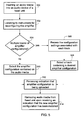
- Figure 5 is a flow chart of a method for changing the operation of an amplifier from a user's perspective.
- Figure 6 is a flow chart of a method for changing the operation of an amplifier from an amplifier's perspective.
- Figure 7 is a block diagram of an example packet structure for communication with an amplifier.
- Figure 8 is a block diagram of an amplifier connected on a bus with other devices.
- Figure 1 is an example vehicle audio system 100 with a head unit 102, an amplifier 104 and a plurality of speakers 106.
- the head unit 102 provides an audio signal to the amplifier 104.
- the amplifier 104 amplifies the signal to drive the set of speakers 106.
- the system may include additional audio components.
- the system may include multiple amplifiers that each drive different sets of speakers.
- the head unit 102 includes audio devices 108 for transmitting an audio signal to the amplifier 104.
- a single audio device or multiple audio devices may be provided with the head unit 102.
- the audio devices may be integrated into the head unit 102.
- the audio devices 108 may be separate from the head unit, but configured to communicate with the head unit 102.
- the head unit 102 includes a CD player, radio tuner, tape player and MP3 player.
- the CD player may be a single disc player or a multi-disc changer.
- the radio tuner may receive AM, FM and satellite radio signals.
- the MP3 player may be capable of playing compressed audio files, such as MP3, AAC or WMA files.
- the head unit 102 may have multiple output channels connected to input channels of the amplifier 104.
- the head unit may have six output channels connected to an amplifier.
- a first audio channel 110 and a second audio channel 112 provide audio communications between the head unit 102 and the amplifier 104. These channels 110 and 112 may represent the left channel and the right channel of the audio system.
- audio communications to reconfigure the operation of the amplifier 104 may use a single channel to transmit encoded digital data on an audio signal for reconfiguring the operation of the amplifier 104.
- three channels, four channels or more may each be used to transmit encoded digital data on an audio signal that may be used to reconfigure the operation of the amplifier 104.
- the amplifier 104 may include a main processor, such as a digital signal processor (“DSP") 114, a power amplifier 116, a memory 118 and optionally a host processor 120.
- the DSP 114 may contain an analog to digital converter (“ADC") 122 that converts analog audio signals received by the amplifier 104 into digital data. Alternatively, the ADC may be a separate device.
- the DSP 114 may process the digital data based upon the operational configuration of the amplifier or other instructions. For example, the DSP 114 may adjust delay, equalization or other audio properties of the digital data.
- the DSP 114 may also include a digital to analog converter (“DAC”) 124 to convert the digital data processed by the DSP 114 into an analog signal which is transmitted to the power amplifier 116.
- DAC digital to analog converter
- the DAC may be a separate device.
- the optional host processor 120 may be provided to control overall operation of the amplifier 104. If a host processor 120 is not included in the amplifier 104, the DSP 114 may provide processing capability for the operation of the amplifier 104.
- the memory 118 may be used for storing configuration settings and/or other data related to the operation of the amplifier 104.
- the amplifier 104 may be configured to switch between an audio mode and a reconfiguration mode. In the audio mode, the amplifier 104 may drive the speakers 106 with the audio signals received from the head unit 102 so that the user can listen to the audio played through the speakers 106.
- an analog audio signal may be received by the DSP 114 on the first audio channel 110 and the second audio channel 112 and converted to digital data by the ADC 122.
- the DSP 114 may process the digital data based upon certain configuration settings residing in the memory 118. For example, the DSP 114 may perform filtering of the data based on predetermined settings of the amplifier 104 to achieve certain audio characteristics.
- the DAC 124 on the DSP 114 may then convert the digital data to analog audio signals.
- the power amplifier 116 may receive the analog audio signals and drive the speakers 106.
- the speakers 106 will play the audio, such as music or an audio book, for the enjoyment of the user.
- digital instructions for reconfiguring the operation of the amplifier 104 are transmitted over the analog audio channel(s) using encoded digital data on analog signal(s).
- the digital instructions may be encoded or modulated into analog signal(s) using any modulation or encoding scheme.
- frequency-shift keying (“FSK”), quadature phase modulation (“QPM”) or phase shift keying (“PSK”) could be used to modulate the digital instructions into analog signal(s).
- QPM quadature phase modulation
- PSK phase shift keying
- the encoding scheme described with reference to Figure 2 may also be used.
- the amplifier 104 is adapted to reconstruct the digital instructions from the encoded digital data on analog signal(s). By playing the analog signal(s), the head unit 102 transmits the analog signal(s) to the amplifier 104.
- the amplifier 104 may be configured to demodulate or decode the digital instructions from the analog audio signal(s). Any demodulation or decoding could be used. For example, the amplifier may demodulate the analog signal(s) using FSK, QPM or PSK demodulation. By way of another example, the decoding scheme described with reference to Figure 3 could be used. However, it should be appreciated that any technique for transmitting digital data using analog signal(s) could be used to transmit the digital instructions.
- the amplifier 104 may be configured to demodulate the digital instructions from the analog audio signal using any demodulation method.
- the encoded digital data on analog signal(s) may be transmitted on a single channel or multiple channels.
- both the digital instructions and a clock signal may be encoded or modulated into a single analog signal and transmitted over a single channel.
- the clock signal may be encoded in the digital data and extracted from the digital data upon receipt by the amplifier 104.
- the digital instructions may also be modulated or encoded into multiple analog signals that are transmitted on multiple channels, either simultaneously or sequentially.
- the digital instructions may be transmitted on three, four or more channels.
- a clock signal may be embedded in the encoded digital data on the analog signal that is sent on one or more audio channels.
- both a clock signal and the digital instructions may be sent as a single analog signal on a single channel.
- the encoded digital data on an analog signal may be sent on multiple channels in which a clock signal is encoded into one of the channels.
- a clock signal may be transmitted over a separate channel.
- the encoded digital data on an analog signal may be sent on four channels and a clock signal may be sent on a fifth channel.
- the clock signal may have a frequency in the audible human range.
- the frequency may be up to 20.1 kHz.
- the frequency of the clock signal may be above 3 kHz to 20.1 kHz. If FSK, QPM or PSK modulation were used, for example, the carrier frequency may be between 3 kHz to 20.1 kHZ.
- the head unit 102 may be connected to the amplifier 104 in an AC coupled path.
- this type of connection is common in an audio system installed on a vehicle.
- the encoding or modulation scheme is preferably capable of traveling through an AC coupled path.
- the encoding/decoding scheme discussed below with respect to Figures 2 and 3 would be suitable when the head unit 102 is connected to the amplifier 104 in an AC coupled path.
- FSK, QPM or PSK could be used in an AC coupled environment.
- Other modulation or encoding schemes may be suitable for transmitting the analog audio signal through an AC coupled path.
- a first audio channel 110 and a second audio channel 112 connects the head unit 102 to the amplifier 104.
- the amplifier 104 may receive a clock signal on the first audio channel 110 and encoded digital data on an analog signal representing digital instructions on the second audio channel 112.
- the amplifier may receive a clock signal on the second audio channel 112 and encoded digital data on an analog signal representing digital instructions on the first audio channel 110.
- both the clock signal and digital instructions may be transmitted as a single analog signal on the first audio channel 110 or the second audio channel 112.
- the encoded digital data on an analog signal representing digital instructions may be transmitted on both the first audio channel 110 and the second audio channel 112 while the clock signal could be embedded in the encoded digital data on an analog signal either on the first audio channel 110 or the second audio channel 112.
- the encoded digital data on an analog signal may be decoded with the clock signal to reconstruct digital instructions contained within the analog signal.
- Figure 2 shows an example analog audio signal 200 encoded with the bit string "010."
- the signal 200 is a square wave that may oscillate between 1 and -1 volts. The periods above zero volts may represent a "1" bit while the periods below zero volts may represent a "0" bit. If the signal 200 were written to a CD, for example, multiple samples of each bit may be taken. In the example shown, eight samples were taken for each bit, as indicated by the dots 202 on Figure 2. Accordingly, in this example, the frequency of the clock signal to decode with this signal (See Figure 3) would be the sampling frequency divided by 8.
- sampling frequency were 44.1 kHz as would be typical of a CD, for example, the clock frequency would be 5.5125 kHz (i.e., 44.1 kHz divided by 8). It should be appreciated that various sampling rates could be used, such as 32 kHz, 46 kHz, 96 kHz and 192 kHz or other frequencies.
- Figure 3 shows an example of the encoded digital data on an analog signal 200 of Figure 2 as an encoded digital data on an analog signal 300 received by the amplifier 104.
- the rippling 302 may be caused by the digital to analog converter that may be located in the head unit 102.
- a clock signal 304 that may be used to decode the encoded digital data on the analog signal 300 is also shown.
- the encoded digital data on the analog signal 300 may be decoded by comparing the location of the analog signal 300 at each rising edge or falling edge of the clock signal 304. In the example shown in Figure 3, however, the analog signal 300 is compared with the falling edge of the clock signal 304. With this decoding method, the decoded bit string is "010", the same bit string shown in the example signal 200 of Figure 2.
- the DSP 114 may be used to reconstruct the digital data from the analog signal.
- the digital data may be collected into packets of digital instructions that may be processed by the amplifier 104 to change the operating configuration.
- the amplifier 104 may be configured to receive encoded digital data on an analog signal and/or a clock signal on any audio channel.
- the amplifier 104 may be configured to compensate for unexpected signals. For example, if the amplifier 104 expects to receive a clock signal on the first audio channel 110, but a clock signal was actually received on the second audio channel 112, the amplifier 104 may be configured to be decoded with the second audio channel 112. By way of further example, if a clock signal and encoded digital data signal are redundantly sent on multiple channels, the amplifier 104 may be adapted to determine which channel provides the optimum signals.
- the encoded digital data on an analog signal representing digital instructions for changing the operation of the amplifier 104 may be stored on an audio media, such as a CD or tape.
- the audio media may contain instructions for a single configuration or multiple configurations. If the audio media contains multiple configurations for the amplifier 104, each amplifier configuration may be stored on separate audio tracks.
- the audio media may also optionally contain verbal instructions to explain how to reconfigure the amplifier using the audio media.
- Track 1 402 may include verbal instructions to explain how to use the audio media 400 to reconfigure the amplifier 104.
- Tracks 2, 3 and N 404, 406 and 408 may include analog audio signals representing digital instructions for changing the configuration of the amplifier 104.
- each of these tracks 404, 406 and 408 have a first channel with a clock signal and a second channel with encoded digital data on an analog signal representing instructions for changing the operation of the amplifier.
- the encoded digital data on an analog signal and the clock signal may be encoded or modulated on a single analog signal and transmitted on a single channel.
- the user may select a particular amplifier configuration by selecting a track 404, 406 and 408 on the audio media 400. For example, if the user selects Track 2 404, the configuration settings provided in Track 2 404 will be loaded into the amplifier 104.
- FIG. 5 is a flow chart showing the actions that the user may take to change the amplifier configuration.
- the user loads the audio media 400 containing the configuration instructions for the amplifier 104 into an audio device 108 of the head unit 102.
- the audio media 400 were a CD the user may insert a CD into the CD player of the head unit 102.
- the audio media 400 may not necessarily be physically inserted into the audio device 108.
- the head unit 102 included a MP3 player, for example, the user may transfer the MP3 files containing the instructions for changing the amplifier configuration onto the MP3 player.
- the user may listen to the instructions to understand how to use the audio media 400 to change the amplifier configurations, as indicated by step 502.
- the instructions may ask the user to change the volume setting on the head unit.
- the volume setting may be raised to increase the magnitude of the signal(s) sent to the amplifier.
- the user may determine whether the audio media contains multiple tracks of amplifier configurations. If the audio media contains multiple tracks, the user may review the configuration settings associated with each of the tracks as indicated by step 506. For example, the user may be able to listen to a track on the audio media explaining the settings associated with each track. By way of another example, printed material may be associated with the audio media that explains the functions of each track. By way of a further example, an audio device or the head unit may display information regarding the configurations associated with each track. As the user scrolls through each of the tracks, for example, a message may appear on the audio device of the head unit indicating the settings associated with the track, such as "Jazz,” "Rock,” “R&B,” etc.
- the user may select the desired amplifier configuration by selecting a track on the audio media 400 as indicated by step 508.
- the audio media 400 may be a CD containing three tracks of digital instructions 404, 406 and 408, as shown in Figure 4.
- the tracks 404, 406 and 408 each contain instructions for changing the equalizer of the amplifier 104.
- Each of these tracks 404, 406 and 408 may contain equalizer settings for a particular type of music.
- track 1 404 may contain an equalizer setting configured for jazz
- track 2 406 may be configured for classical music and track N 408 for rock.
- the user may select track 1 404 to change the equalizer settings of the amplifier for jazz music.
- Track 2 406 may be selected to change the equalizer settings for classical music and track 3 408 may be selected for rock.
- the audio media contains a single amplifier configuration, the user may select the configuration as indicated by step 510.
- the amplifier 104 may be configured to provide a signal to the user indicating that changes are being loaded onto the amplifier 104 as indicated by step 512. For example, the amplifier 104 may play a tone during the loading of the configuration setting. Instead, the amplifier 104 may mute the volume to prevent the analog audio signal from being played through the speakers 106.
- the audio media may be removed from the head unit 102, as indicated by step 514.
- the amplifier 104 may provide a signal to the user that the audio media may be removed from the audio device 108. For example, the amplifier 104 may play a predetermined tone upon changing the amplifier's configurations.
- Figure 6 is a flow chart showing the steps that may be taken by the amplifier 104 to change the configuration settings.
- the amplifier 104 may switch between an audio mode and a reconfiguration mode.
- the amplifier may determine whether a wakeup signal has been received. If a wakeup signal has not been received, the amplifier 104 may remain in the audio mode as indicated by step 602.
- the amplifier 104 may switch to the reconfiguration mode, as indicated by step 604.
- the wake up signal may be any signal that the amplifier 104 is capable of recognizing.
- the wake up signal may be an audio signal outside the audible range, such as 20.1 kHz. This type of a wake up signal may be transmitted from an audio device on the head unit; however, the wake up signal would not likely be confused with any audio signal normally transmitted to the amplifier because of the high frequency.
- the amplifier may then detect whether the clock signal is received on the first audio channel as indicated by step 606.
- the amplifier may be configured to attempt to detect a clock signal on other audio channels.
- the amplifier may attempt to detect a clock signal on a fifth audio channel.
- the clock signal may be embedded in the digital data. If the clock signal is not detected on the first audio channel, the amplifier may attempt to detect a clock signal on the second audio channel (step 608). If the clock signal is detected on the first audio channel, the amplifier may use the analog signal received on the second audio channel for instructions to reconfigure the amplifier (step 610). If the clock signal is received on the second audio channel, the amplifier may use the analog signal received on the first audio channel for instructions to reconfigure the amplifier (step 612). In examples where the amplifier has more than two channels, other channels may be used for instructions to reconfigure the amplifier.
- the audio signal received from the head unit may be converted to digital data by the ADC of the DSP (step 614).
- the digital bits encoded in the analog audio signal may be reconstructed into digital instructions. These digital instructions may be reconstructed using any decoding or demodulation technique.
- the analog signal received on the second audio channel 112 may be decoded with the clock signal received on the first audio channel 110.
- the bits may be decoded by determining the position of the signal on the second audio channel with respect to the clock signal. These bits may be processed by the amplifier as digital instructions, as indicated by step 618.
- the bits may be formed into packets based upon a predetermined packet structure.
- the components of the packet 700 may include length 702, version 704, amplifier ID 706, modulation scheme 708 and command 710.
- the length component 702 of the packet 700 may represent the size of the packet 700, such as the total number of bits included in the packet 700.
- the version 704 may be used represent the date on which the version of the packet 700 may be used. For example, if the date of the version is expired, for example, the amplifier 104 may return an error message to the user and not load the configuration changes.
- the amplifier ID 706 may represent the amplifier or class of amplifiers for which the packet 700 is intended.
- the modulation scheme 708 may be used to support different types of modulation, such as slow, medium and fast speeds.
- the command 710 may be used to instruct the amplifier 104 of an operation.
- the command 710 may instruct the amplifier 104 to erase the memory 118.
- the command or data 710 may instruct the amplifier 104 to write data to the memory 118.
- the command 710 may instruct the amplifier 104 to switch back to audio mode.
- the packet 700 may also contain error correction information (not shown).
- the user may place an audio media 400 into an audio device 108 of the head unit 102.
- the user may insert a CD into the CD player.
- the user may optionally select a track containing verbal instructions for using the audio media 400.
- the instructions may ask the user to increase the volume.
- the user may be asked to adjust the balance or fade settings. The user may then select a track on the audio media 400 containing the amplifier configuration that the user would like to load onto the amplifier 104.
- the amplifier 104 may receive a wake up signal to switch to the reconfiguration mode.
- the analog signal received from the head unit 102 may be converted to digital data by the ADC 122 of the amplifier 104.
- the analog signal may be multiple signals received on multiple audio channels or a single signal received on a single channel.
- any encoding or modulation scheme may be used to transmit the digital instructions for changing the operation of the amplifier on an analog audio channel.
- both the clock signal 304 and encoded digital data on the analog signal 300 may be transmitted to the amplifier 104.
- the clock signal 302 may be used to decode the encoded digital data on the analog signal 300 into the digital data.
- the digital data may be collected into packets of digital instructions that may be processed by the amplifier 104.
- the instructions may include erasing the memory 118 of the amplifier 104 or writing new data or instructions to the memory 118, for example.
- the amplifier 104 may provide the user with an indication that the loading is still processing. After all instructions have been processed, the amplifier 104 may provide the user with an indication that the configuration has been loaded.
- the amplifier 104 may be configured to pass the digital instructions on to another device on a bus.
- the amplifier 104 is connected on a vehicle bus 800 to the head unit 102, device 1 802, device 2 804 and device 3 806.
- the bus 800 may be a controller area network (CAN) bus.
- the amplifier 104 may switch to a reconfiguration mode in which digital instructions may be reconstructed from encoded digital data on an analog signal. Instead of processing the digital instructions to reconfigure the amplifier 104, as discussed above, the amplifier 104 may forward the instructions to another device 802, 804 or 806 on the bus.
- the packet 700 may contain a destination address for the packet 700.
- the amplifier 104 may transmit the packet 700 to the destination address on the bus 800.
Landscapes
- Engineering & Computer Science (AREA)
- Software Systems (AREA)
- General Engineering & Computer Science (AREA)
- Theoretical Computer Science (AREA)
- Multimedia (AREA)
- Power Engineering (AREA)
- Computer Security & Cryptography (AREA)
- Physics & Mathematics (AREA)
- General Physics & Mathematics (AREA)
- Amplifiers (AREA)
Applications Claiming Priority (1)
| Application Number | Priority Date | Filing Date | Title |
|---|---|---|---|
| US11/176,607 US8050418B2 (en) | 2005-07-07 | 2005-07-07 | Update system for an audio amplifier |
Publications (3)
| Publication Number | Publication Date |
|---|---|
| EP1742352A2 true EP1742352A2 (de) | 2007-01-10 |
| EP1742352A3 EP1742352A3 (de) | 2007-08-01 |
| EP1742352B1 EP1742352B1 (de) | 2016-02-24 |
Family
ID=37057262
Family Applications (1)
| Application Number | Title | Priority Date | Filing Date |
|---|---|---|---|
| EP06013384.0A Active EP1742352B1 (de) | 2005-07-07 | 2006-06-28 | Aktualisierungssystem für einen Audioverstärker |
Country Status (2)
| Country | Link |
|---|---|
| US (1) | US8050418B2 (de) |
| EP (1) | EP1742352B1 (de) |
Cited By (5)
| Publication number | Priority date | Publication date | Assignee | Title |
|---|---|---|---|---|
| EP2488945A2 (de) * | 2009-10-14 | 2012-08-22 | Harman International Industries, Incorporated | Softwareaktualisierungen über digitale audiomedien |
| WO2011085096A3 (en) * | 2010-01-06 | 2013-06-27 | Skullcandy, Inc. | Dj mixing headphones |
| US8914137B2 (en) | 2009-06-19 | 2014-12-16 | Dolby Laboratories Licensing Corporation | Upgradeable engine framework for audio and video |
| US9467780B2 (en) | 2010-01-06 | 2016-10-11 | Skullcandy, Inc. | DJ mixing headphones |
| WO2022208283A3 (en) * | 2021-03-30 | 2022-11-17 | Cilag Gmbh International | User interface mitigation techniques for modular energy systems |
Families Citing this family (10)
| Publication number | Priority date | Publication date | Assignee | Title |
|---|---|---|---|---|
| US8085962B2 (en) * | 2004-09-01 | 2011-12-27 | Bose Corporation | Audio system for portable device |
| US8010638B2 (en) * | 2007-04-05 | 2011-08-30 | Alpine Electronics, Inc. | Method and apparatus for updating firmware for interface unit connecting portable audio/video player with another audio/video player |
| US7913020B2 (en) * | 2008-04-29 | 2011-03-22 | Bose Corporation | Automated exchangeable docking configuration |
| RU2480818C1 (ru) * | 2009-06-08 | 2013-04-27 | Шарп Кабусики Кайся | Система обновления программного обеспечения, блок отображения и способ обновления программного обеспечения |
| US9543913B2 (en) * | 2013-01-09 | 2017-01-10 | Osc, Llc | Programmably configured switchmode audio amplifier |
| US9471516B2 (en) * | 2013-08-14 | 2016-10-18 | Facebook, Inc. | Techniques for transmitting a command to control a peripheral device through an audio port |
| KR101762637B1 (ko) * | 2016-04-08 | 2017-07-28 | 현대자동차주식회사 | 디스크 장치, 그를 가지는 차량 및 그 제어방법 |
| US10686715B2 (en) | 2018-05-09 | 2020-06-16 | Biosig Technologies, Inc. | Apparatus and methods for removing a large-signal voltage offset from a biomedical signal |
| CN113076144A (zh) * | 2021-04-23 | 2021-07-06 | 深圳创维-Rgb电子有限公司 | 功放适配方法、终端设备、存储介质及计算机程序产品 |
| US20250063301A1 (en) * | 2021-12-21 | 2025-02-20 | Lg Electronics Inc. | Wireless audio reception apparatus, wireless audio transmission apparatus, and wireless audio output system comprising same |
Family Cites Families (23)
| Publication number | Priority date | Publication date | Assignee | Title |
|---|---|---|---|---|
| US4176323A (en) | 1978-06-21 | 1979-11-27 | Harman International Industries, Inc. | Transistorized power amplifier |
| US4613974A (en) * | 1984-03-16 | 1986-09-23 | Vokac Peter R | Method and system for modulating a carrier signal |
| CA1340400C (en) | 1989-01-31 | 1999-02-16 | Philip Miller | Vehicle data system |
| US5160896A (en) | 1992-02-18 | 1992-11-03 | Harman International Industries, Incorporated | Class D amplifier |
| US5590161A (en) * | 1994-08-23 | 1996-12-31 | Tektron Micro Electronics, Inc. | Apparatus for synchronizing digital data without using overhead frame bits by using deliberately introduced errors for indicating superframe synchronization of audio signals |
| JP3198883B2 (ja) | 1995-08-24 | 2001-08-13 | トヨタ自動車株式会社 | 移動スケジュール処理装置 |
| GB2305809B (en) | 1995-09-28 | 1997-11-05 | Harman Int Ind | Power amplifier and loudspeaker frame integration |
| US6279153B1 (en) | 1995-10-16 | 2001-08-21 | Nec Corporation | Multi-user flash ROM update |
| US5794164A (en) | 1995-11-29 | 1998-08-11 | Microsoft Corporation | Vehicle computer system |
| US5732074A (en) | 1996-01-16 | 1998-03-24 | Cellport Labs, Inc. | Mobile portable wireless communication system |
| US5940346A (en) * | 1996-12-13 | 1999-08-17 | Arizona Board Of Regents | Modular robotic platform with acoustic navigation system |
| US5936667A (en) | 1997-05-13 | 1999-08-10 | Sony Corporation | System and method for testing and updating stored content of a remote transmitter for an entertainment system |
| US6032089A (en) | 1997-12-01 | 2000-02-29 | Chrysler Corporation | Vehicle instrument panel computer interface node |
| US6316992B1 (en) | 1999-07-29 | 2001-11-13 | Tripath Technology, Inc. | DC offset calibration for a digital switching amplifier |
| GB2366709A (en) * | 2000-06-30 | 2002-03-13 | Graeme Roy Smith | Modular software definable pre-amplifier |
| US20030084107A1 (en) * | 2001-10-31 | 2003-05-01 | Covey Larry G. | Remotely programmable verifiable intelligent message display system and method of operation |
| JP2003280573A (ja) * | 2002-03-20 | 2003-10-02 | Nec Corp | ディジタル回路の誤信号供給抑止方法及びその回路並びにプラズマディスプレイの誤表示防止方法及びその回路 |
| US6804504B1 (en) * | 2002-08-23 | 2004-10-12 | Innovative Electronic Designs, Inc. | Audio processing system |
| TWI220962B (en) * | 2003-01-20 | 2004-09-11 | Mediatek Inc | Firmware updating method and related apparatus for checking content of replacing firmware before firmware updating |
| EP1471524A1 (de) | 2003-04-22 | 2004-10-27 | Thomson Licensing S.A. | Verfahren zur Dekodierung von Daten aus einer Datenquelle mittels hardware-konfigurationsdaten aus derselben Datenquelle |
| WO2004112425A1 (en) * | 2003-06-10 | 2004-12-23 | Harman International Industries, Incorporated | Audio amplifier with local interface system |
| WO2005024622A2 (en) | 2003-09-11 | 2005-03-17 | Koninklijke Philips Electronics N.V. | Retrieving data from an information carrier |
| US6941801B2 (en) * | 2003-12-19 | 2005-09-13 | Lear Corporation | Tire pressure monitoring system |
-
2005
- 2005-07-07 US US11/176,607 patent/US8050418B2/en active Active
-
2006
- 2006-06-28 EP EP06013384.0A patent/EP1742352B1/de active Active
Cited By (6)
| Publication number | Priority date | Publication date | Assignee | Title |
|---|---|---|---|---|
| US8914137B2 (en) | 2009-06-19 | 2014-12-16 | Dolby Laboratories Licensing Corporation | Upgradeable engine framework for audio and video |
| US8984501B2 (en) | 2009-06-19 | 2015-03-17 | Dolby Laboratories Licensing Corporation | Hierarchy and processing order control of downloadable and upgradeable media processing applications |
| EP2488945A2 (de) * | 2009-10-14 | 2012-08-22 | Harman International Industries, Incorporated | Softwareaktualisierungen über digitale audiomedien |
| WO2011085096A3 (en) * | 2010-01-06 | 2013-06-27 | Skullcandy, Inc. | Dj mixing headphones |
| US9467780B2 (en) | 2010-01-06 | 2016-10-11 | Skullcandy, Inc. | DJ mixing headphones |
| WO2022208283A3 (en) * | 2021-03-30 | 2022-11-17 | Cilag Gmbh International | User interface mitigation techniques for modular energy systems |
Also Published As
| Publication number | Publication date |
|---|---|
| US8050418B2 (en) | 2011-11-01 |
| EP1742352B1 (de) | 2016-02-24 |
| US20070009108A1 (en) | 2007-01-11 |
| EP1742352A3 (de) | 2007-08-01 |
Similar Documents
| Publication | Publication Date | Title |
|---|---|---|
| EP1742352B1 (de) | Aktualisierungssystem für einen Audioverstärker | |
| CN1326113C (zh) | 用于调整要再现音频数据的输出等级的装置和方法 | |
| EP0851423B1 (de) | Audiowiedergabe- und -Aufzeichnungsgerät mit Halbleiterspeicher als Aufzeichnungsmedium | |
| US6714825B1 (en) | Multi-channel audio reproducing device | |
| KR19990046448A (ko) | 휴대용데이터저장및음향재생장치 | |
| TWI268485B (en) | Methods and apparatuses for reproducing and recording still picture and audio data and recording medium having data structure for managing reproduction of still picture and audio data | |
| CN1828756B (zh) | 高频插补装置及再生装置 | |
| US20010008996A1 (en) | MP3 CD output system for a vehicle | |
| US20020001267A1 (en) | Complex optical disc player system reproducing optical discs having various formats | |
| KR20090058078A (ko) | 차량용 에이브이 시스템 및 제어 방법 | |
| JP2001306197A (ja) | 情報処理システム、無線送信装置および電子機器 | |
| JP4411725B2 (ja) | 送受信装置、受信装置及び送信装置 | |
| JP3491496B2 (ja) | デジタルオーディオシステム | |
| KR100476750B1 (ko) | 외부음향신호처리 기능을 갖는 차량용 오디오 시스템 | |
| JP2007150406A (ja) | マルチチャンネル音声信号再生装置 | |
| JP2006079742A (ja) | 情報処理装置および方法、並びにプログラム | |
| JP4433954B2 (ja) | 情報処理装置および方法、並びにプログラム | |
| JP4736712B2 (ja) | オーディオシステム、音響再生装置および音響再生制御方法 | |
| CN202373310U (zh) | 一种汽车收放机 | |
| KR20000001465U (ko) | 멀티 기능형 카 오디오 장치 | |
| KR20030093880A (ko) | 잡음제거 기능을 갖는 오디오 재생장치 | |
| JP3829944B2 (ja) | 再生装置 | |
| KR20100029315A (ko) | 외장 메모리 재생방법 및 이를 이용한 오디오 장치 | |
| JP2006191507A (ja) | アナログ信号生成装置 | |
| JPH09223354A (ja) | オーディオ装置 |
Legal Events
| Date | Code | Title | Description |
|---|---|---|---|
| PUAI | Public reference made under article 153(3) epc to a published international application that has entered the european phase |
Free format text: ORIGINAL CODE: 0009012 |
|
| 17P | Request for examination filed |
Effective date: 20060628 |
|
| AK | Designated contracting states |
Kind code of ref document: A2 Designated state(s): AT BE BG CH CY CZ DE DK EE ES FI FR GB GR HU IE IS IT LI LT LU LV MC NL PL PT RO SE SI SK TR |
|
| AX | Request for extension of the european patent |
Extension state: AL BA HR MK YU |
|
| PUAL | Search report despatched |
Free format text: ORIGINAL CODE: 0009013 |
|
| AK | Designated contracting states |
Kind code of ref document: A3 Designated state(s): AT BE BG CH CY CZ DE DK EE ES FI FR GB GR HU IE IS IT LI LT LU LV MC NL PL PT RO SE SI SK TR |
|
| AX | Request for extension of the european patent |
Extension state: AL BA HR MK YU |
|
| AKX | Designation fees paid |
Designated state(s): AT BE BG CH CY CZ DE DK EE ES FI FR GB GR HU IE IS IT LI LT LU LV MC NL PL PT RO SE SI SK TR |
|
| 17Q | First examination report despatched |
Effective date: 20110705 |
|
| RIC1 | Information provided on ipc code assigned before grant |
Ipc: G06F 9/445 20060101ALI20150730BHEP Ipc: H03F 3/181 20060101AFI20150730BHEP |
|
| GRAP | Despatch of communication of intention to grant a patent |
Free format text: ORIGINAL CODE: EPIDOSNIGR1 |
|
| INTG | Intention to grant announced |
Effective date: 20150904 |
|
| GRAS | Grant fee paid |
Free format text: ORIGINAL CODE: EPIDOSNIGR3 |
|
| GRAA | (expected) grant |
Free format text: ORIGINAL CODE: 0009210 |
|
| AK | Designated contracting states |
Kind code of ref document: B1 Designated state(s): AT BE BG CH CY CZ DE DK EE ES FI FR GB GR HU IE IS IT LI LT LU LV MC NL PL PT RO SE SI SK TR |
|
| REG | Reference to a national code |
Ref country code: GB Ref legal event code: FG4D |
|
| REG | Reference to a national code |
Ref country code: CH Ref legal event code: EP |
|
| REG | Reference to a national code |
Ref country code: AT Ref legal event code: REF Ref document number: 777191 Country of ref document: AT Kind code of ref document: T Effective date: 20160315 |
|
| REG | Reference to a national code |
Ref country code: IE Ref legal event code: FG4D |
|
| REG | Reference to a national code |
Ref country code: DE Ref legal event code: R096 Ref document number: 602006048009 Country of ref document: DE |
|
| REG | Reference to a national code |
Ref country code: LT Ref legal event code: MG4D |
|
| REG | Reference to a national code |
Ref country code: NL Ref legal event code: MP Effective date: 20160224 |
|
| REG | Reference to a national code |
Ref country code: AT Ref legal event code: MK05 Ref document number: 777191 Country of ref document: AT Kind code of ref document: T Effective date: 20160224 |
|
| PG25 | Lapsed in a contracting state [announced via postgrant information from national office to epo] |
Ref country code: IT Free format text: LAPSE BECAUSE OF FAILURE TO SUBMIT A TRANSLATION OF THE DESCRIPTION OR TO PAY THE FEE WITHIN THE PRESCRIBED TIME-LIMIT Effective date: 20160224 Ref country code: ES Free format text: LAPSE BECAUSE OF FAILURE TO SUBMIT A TRANSLATION OF THE DESCRIPTION OR TO PAY THE FEE WITHIN THE PRESCRIBED TIME-LIMIT Effective date: 20160224 Ref country code: GR Free format text: LAPSE BECAUSE OF FAILURE TO SUBMIT A TRANSLATION OF THE DESCRIPTION OR TO PAY THE FEE WITHIN THE PRESCRIBED TIME-LIMIT Effective date: 20160525 Ref country code: FI Free format text: LAPSE BECAUSE OF FAILURE TO SUBMIT A TRANSLATION OF THE DESCRIPTION OR TO PAY THE FEE WITHIN THE PRESCRIBED TIME-LIMIT Effective date: 20160224 |
|
| PG25 | Lapsed in a contracting state [announced via postgrant information from national office to epo] |
Ref country code: LV Free format text: LAPSE BECAUSE OF FAILURE TO SUBMIT A TRANSLATION OF THE DESCRIPTION OR TO PAY THE FEE WITHIN THE PRESCRIBED TIME-LIMIT Effective date: 20160224 Ref country code: PL Free format text: LAPSE BECAUSE OF FAILURE TO SUBMIT A TRANSLATION OF THE DESCRIPTION OR TO PAY THE FEE WITHIN THE PRESCRIBED TIME-LIMIT Effective date: 20160224 Ref country code: AT Free format text: LAPSE BECAUSE OF FAILURE TO SUBMIT A TRANSLATION OF THE DESCRIPTION OR TO PAY THE FEE WITHIN THE PRESCRIBED TIME-LIMIT Effective date: 20160224 Ref country code: PT Free format text: LAPSE BECAUSE OF FAILURE TO SUBMIT A TRANSLATION OF THE DESCRIPTION OR TO PAY THE FEE WITHIN THE PRESCRIBED TIME-LIMIT Effective date: 20160624 Ref country code: LT Free format text: LAPSE BECAUSE OF FAILURE TO SUBMIT A TRANSLATION OF THE DESCRIPTION OR TO PAY THE FEE WITHIN THE PRESCRIBED TIME-LIMIT Effective date: 20160224 Ref country code: NL Free format text: LAPSE BECAUSE OF FAILURE TO SUBMIT A TRANSLATION OF THE DESCRIPTION OR TO PAY THE FEE WITHIN THE PRESCRIBED TIME-LIMIT Effective date: 20160224 Ref country code: SE Free format text: LAPSE BECAUSE OF FAILURE TO SUBMIT A TRANSLATION OF THE DESCRIPTION OR TO PAY THE FEE WITHIN THE PRESCRIBED TIME-LIMIT Effective date: 20160224 |
|
| PG25 | Lapsed in a contracting state [announced via postgrant information from national office to epo] |
Ref country code: EE Free format text: LAPSE BECAUSE OF FAILURE TO SUBMIT A TRANSLATION OF THE DESCRIPTION OR TO PAY THE FEE WITHIN THE PRESCRIBED TIME-LIMIT Effective date: 20160224 Ref country code: DK Free format text: LAPSE BECAUSE OF FAILURE TO SUBMIT A TRANSLATION OF THE DESCRIPTION OR TO PAY THE FEE WITHIN THE PRESCRIBED TIME-LIMIT Effective date: 20160224 |
|
| REG | Reference to a national code |
Ref country code: DE Ref legal event code: R097 Ref document number: 602006048009 Country of ref document: DE |
|
| PG25 | Lapsed in a contracting state [announced via postgrant information from national office to epo] |
Ref country code: SK Free format text: LAPSE BECAUSE OF FAILURE TO SUBMIT A TRANSLATION OF THE DESCRIPTION OR TO PAY THE FEE WITHIN THE PRESCRIBED TIME-LIMIT Effective date: 20160224 Ref country code: CZ Free format text: LAPSE BECAUSE OF FAILURE TO SUBMIT A TRANSLATION OF THE DESCRIPTION OR TO PAY THE FEE WITHIN THE PRESCRIBED TIME-LIMIT Effective date: 20160224 Ref country code: RO Free format text: LAPSE BECAUSE OF FAILURE TO SUBMIT A TRANSLATION OF THE DESCRIPTION OR TO PAY THE FEE WITHIN THE PRESCRIBED TIME-LIMIT Effective date: 20160224 |
|
| PG25 | Lapsed in a contracting state [announced via postgrant information from national office to epo] |
Ref country code: BE Free format text: LAPSE BECAUSE OF FAILURE TO SUBMIT A TRANSLATION OF THE DESCRIPTION OR TO PAY THE FEE WITHIN THE PRESCRIBED TIME-LIMIT Effective date: 20160224 |
|
| PLBE | No opposition filed within time limit |
Free format text: ORIGINAL CODE: 0009261 |
|
| STAA | Information on the status of an ep patent application or granted ep patent |
Free format text: STATUS: NO OPPOSITION FILED WITHIN TIME LIMIT |
|
| PG25 | Lapsed in a contracting state [announced via postgrant information from national office to epo] |
Ref country code: MC Free format text: LAPSE BECAUSE OF FAILURE TO SUBMIT A TRANSLATION OF THE DESCRIPTION OR TO PAY THE FEE WITHIN THE PRESCRIBED TIME-LIMIT Effective date: 20160224 |
|
| REG | Reference to a national code |
Ref country code: CH Ref legal event code: PL |
|
| 26N | No opposition filed |
Effective date: 20161125 |
|
| PG25 | Lapsed in a contracting state [announced via postgrant information from national office to epo] |
Ref country code: SI Free format text: LAPSE BECAUSE OF FAILURE TO SUBMIT A TRANSLATION OF THE DESCRIPTION OR TO PAY THE FEE WITHIN THE PRESCRIBED TIME-LIMIT Effective date: 20160224 Ref country code: BG Free format text: LAPSE BECAUSE OF FAILURE TO SUBMIT A TRANSLATION OF THE DESCRIPTION OR TO PAY THE FEE WITHIN THE PRESCRIBED TIME-LIMIT Effective date: 20160524 |
|
| REG | Reference to a national code |
Ref country code: IE Ref legal event code: MM4A |
|
| REG | Reference to a national code |
Ref country code: FR Ref legal event code: ST Effective date: 20170228 |
|
| PG25 | Lapsed in a contracting state [announced via postgrant information from national office to epo] |
Ref country code: LI Free format text: LAPSE BECAUSE OF NON-PAYMENT OF DUE FEES Effective date: 20160630 Ref country code: CH Free format text: LAPSE BECAUSE OF NON-PAYMENT OF DUE FEES Effective date: 20160630 Ref country code: FR Free format text: LAPSE BECAUSE OF NON-PAYMENT OF DUE FEES Effective date: 20160630 |
|
| PG25 | Lapsed in a contracting state [announced via postgrant information from national office to epo] |
Ref country code: IE Free format text: LAPSE BECAUSE OF NON-PAYMENT OF DUE FEES Effective date: 20160628 |
|
| PG25 | Lapsed in a contracting state [announced via postgrant information from national office to epo] |
Ref country code: HU Free format text: LAPSE BECAUSE OF FAILURE TO SUBMIT A TRANSLATION OF THE DESCRIPTION OR TO PAY THE FEE WITHIN THE PRESCRIBED TIME-LIMIT; INVALID AB INITIO Effective date: 20060628 Ref country code: CY Free format text: LAPSE BECAUSE OF FAILURE TO SUBMIT A TRANSLATION OF THE DESCRIPTION OR TO PAY THE FEE WITHIN THE PRESCRIBED TIME-LIMIT Effective date: 20160224 |
|
| PG25 | Lapsed in a contracting state [announced via postgrant information from national office to epo] |
Ref country code: IS Free format text: LAPSE BECAUSE OF FAILURE TO SUBMIT A TRANSLATION OF THE DESCRIPTION OR TO PAY THE FEE WITHIN THE PRESCRIBED TIME-LIMIT Effective date: 20160224 Ref country code: LU Free format text: LAPSE BECAUSE OF NON-PAYMENT OF DUE FEES Effective date: 20160628 Ref country code: TR Free format text: LAPSE BECAUSE OF FAILURE TO SUBMIT A TRANSLATION OF THE DESCRIPTION OR TO PAY THE FEE WITHIN THE PRESCRIBED TIME-LIMIT Effective date: 20160224 |
|
| REG | Reference to a national code |
Ref country code: DE Ref legal event code: R082 Ref document number: 602006048009 Country of ref document: DE Representative=s name: MAUCHER JENKINS PATENTANWAELTE & RECHTSANWAELT, DE |
|
| P01 | Opt-out of the competence of the unified patent court (upc) registered |
Effective date: 20230527 |
|
| PGFP | Annual fee paid to national office [announced via postgrant information from national office to epo] |
Ref country code: DE Payment date: 20250520 Year of fee payment: 20 |
|
| PGFP | Annual fee paid to national office [announced via postgrant information from national office to epo] |
Ref country code: GB Payment date: 20250520 Year of fee payment: 20 |