EP1742431B1 - Distribution sélective push de messages électroniques - Google Patents
Distribution sélective push de messages électroniques Download PDFInfo
- Publication number
- EP1742431B1 EP1742431B1 EP06011913A EP06011913A EP1742431B1 EP 1742431 B1 EP1742431 B1 EP 1742431B1 EP 06011913 A EP06011913 A EP 06011913A EP 06011913 A EP06011913 A EP 06011913A EP 1742431 B1 EP1742431 B1 EP 1742431B1
- Authority
- EP
- European Patent Office
- Prior art keywords
- user
- identifier
- terminal
- Prior art date
- Legal status (The legal status is an assumption and is not a legal conclusion. Google has not performed a legal analysis and makes no representation as to the accuracy of the status listed.)
- Not-in-force
Links
- 238000000034 method Methods 0.000 claims description 20
- 238000006243 chemical reaction Methods 0.000 description 6
- 238000005316 response function Methods 0.000 description 2
- 206010003830 Automatism Diseases 0.000 description 1
- 230000004913 activation Effects 0.000 description 1
- 230000005540 biological transmission Effects 0.000 description 1
- 238000001914 filtration Methods 0.000 description 1
- 238000012423 maintenance Methods 0.000 description 1
- 230000035755 proliferation Effects 0.000 description 1
- 238000000682 scanning probe acoustic microscopy Methods 0.000 description 1
Images

Classifications
-
- H—ELECTRICITY
- H04—ELECTRIC COMMUNICATION TECHNIQUE
- H04L—TRANSMISSION OF DIGITAL INFORMATION, e.g. TELEGRAPHIC COMMUNICATION
- H04L51/00—User-to-user messaging in packet-switching networks, transmitted according to store-and-forward or real-time protocols, e.g. e-mail
- H04L51/21—Monitoring or handling of messages
- H04L51/212—Monitoring or handling of messages using filtering or selective blocking
-
- H—ELECTRICITY
- H04—ELECTRIC COMMUNICATION TECHNIQUE
- H04L—TRANSMISSION OF DIGITAL INFORMATION, e.g. TELEGRAPHIC COMMUNICATION
- H04L51/00—User-to-user messaging in packet-switching networks, transmitted according to store-and-forward or real-time protocols, e.g. e-mail
- H04L51/58—Message adaptation for wireless communication
Definitions
- the invention relates to a method for immediate delivery ("push") of an electronic message (e-mail) to a terminal of a first user, the e-mail via a telecommunications network, in particular via the Internet, from a second user to an e-mail server accessible to the first user is transmitted, the email is pushed by the email server for immediate delivery to the terminal of the first user.
- the invention also relates to a system for implementing the method.
- e-mails provided with the recipient address are usually first sent by the user's computer to the special e-mail server to which the recipient's computer accesses with cyclical queries in order to pick up existing e-mails according to the "pull" principle. From the US 5,930,479 Such a service is known, which uses to avoid unwanted messages between the mail server and Enêt switched "personal channel agents" that allow encrypted communication.
- the above-mentioned “push” services for example from the WO 2004/017583 A1 known to send the unsolicited emails for immediate display to a corresponding terminal of the recipient and there spend at least with a short message on the display.
- Such "push” services may, for example, send the e-mail to the recipient's mobile terminal via short message service (SMS), multimedia messaging service (MMS) or wireless application protocol (WAP).
- SMS short message service
- MMS multimedia messaging service
- WAP wireless application protocol
- these services thus use a second Karlünikationsnetzes.
- the object of the present invention is now to provide a method and an apparatus for immediate email delivery, in particular a "push" service, which method and apparatus can be implemented inexpensively with simple means, ensure a high level of comfort and a selective transmission of emails.
- the essential basic idea of the invention is that a user who sends an e-mail (“Hinmail”) can mark it with an electronically identifiable character (“identifier") as being preferred for him. In doing so, the identifier effectively opens up the possibility of "pushing" a return mail sent by the recipient of the Hinmail message to the first user.
- This idea according to the invention is implemented by firstly sending the first user a Hinmail to the second user, whereby this Hinmail is assigned to one of the identifiers.
- a subsequent e-mail sent back to the first user by the second user is associated with the identifier and, upon identification of the identifier, ie when e-mail and identifier correspond, is pushed to the terminal of the first user.
- the identifier is transferred to a return mail or reply mail so that it can be recognized as desired and selectively pushed.
- this embodiment only the reply emails written directly to the hinmail by means of the reply function are pushed. These are thus directly related to the Hinmail.
- the use of the response function is unnecessary.
- the recipient of the Hinmail is effectively unlocked for sending emails to be pushed.
- the reply mail does not have to be directly related to the hinmail.
- the identifier is copied into the reply mail in an identical or in a form comprehensible to the first user, whereby the identifier of the reply mail is checked on the side of the first user, that is to say in particular on the email server thereof.
- the reply mail is immediately pushed to the terminal of the first user.
- This embodiment can be implemented such that information about the identifier is stored on the mail server with the sending of Hinmail, after which the mail server can use the information to ascertain the correctness of the identifier of the reply mail.
- the email address of the second user is coded in the identifier and deposited after sending Hinmail on the email server. If the return mail then arrives on the email server, it can be identified as being push-push based on the stored address. This will connect the return mail on the email server with the address in the identifier. Via the identifier, a push rule can be activated on the email server, which to a certain extent implements a filter function for the emails sent to the first user. Now each incoming email for the first user on the email server is examined by matching to match the email address encoded in the identifier. Only if the incoming email can be identified as a desired back mail of the second or other "spiky" switched user will it be pushed to the first user's terminal.
- the deposited rule is automatically deleted after the one-time push by the email server, so that the first user receives only the one desired return mail as a reaction of the second user by push.
- the rule stored on the server can thus be: "Push the next email from the Hinmail recipient to the mobile phone, then delete the push rule".
- a delay mechanism in the form of a rule can be stored on the server. This could be "wait 3 seconds, then arm only push mode”.
- a time window of e.g. 48 hours are set in which the response is to be pushed, so it can be ensured that emails that arrive only considerably later, no longer be pushed.
- the user thus decides when sending an email himself, to what extent the addressee and / or the answer to his Hinmail is important enough to the return or reply mail fee by "push" mail, in particular by MMS, SMS or WAP, GPRS, UMTS on his terminal, in particular to get his cell phone sent.
- the "push” is thus only after the identification of the correct identifier. It is the Invention is not limited to push services for mobile phones or the like.
- the identifier can also be used in the normal email traffic advantageous for filtering.
- Identified return or reply mail can also be handled differently on other devices, such as desktop computers, especially by being opened directly and displayed on the screen, or sent to an extra "spam-free" directory.
- a second communication network is needed as a medium, in particular a GSM network, which provides the connection from the mail server to the mobile terminal.
- An important feature of the identifier according to the invention is that it can not be changed in an uncontrolled manner after being sent by the second user or a third party and can not be copied out of the original Hinmail for later purposes. It is irrelevant whether the second user, as the sender of the reply mail, recognizes the identifier on the back mail or even knows about its existence. However, it can be advantageous to provide the Hinmail and thus also the return or reply mail in a manner that is not recognizable to the recipient with the identifier.
- the advantage of the identifier according to the invention is obvious: Thus, in the simplest way, namely in particular by simply clicking a button provided in the Email Client (Icons), marks the outgoing emails and thus the corresponding return or reply emails for the push in a sense "sharp" be switched. By selecting the icon, the identifier can automatically be attached to the Hinmail forgery-proof and copy-protected.
- Icons Email Client
- Feedback or reply mails identified in this way can then be sent directly to the "push" service on the one hand and displayed in particular on the first user's mobile phone.
- a copy of the return or reply mail can be sent to the desktop of the first user. In this way, the reception of spam via the costly push service can be effectively avoided, making these services more attractive to the user in that they are exempt from unnecessary and annoying costs.
- the module for attaching the identifier runs decentrally on the computer accessible to the user and is not installed on a mail server which can not be controlled by the user.
- This program can be used to attach the identifier of individual parameters of the computer, which it modifies with random numbers.
- the user can be sure that he is the "master" of the identifier and that this can not be forged.
- the information about the identifier is advantageously deposited on the mail server, so that the "push" of the return mail can be initiated from this point.
- the "push" of the return mail alternatively or in addition to the issue of the return mail via the mail client of the first user take place, which gets the received emails via a "pull" service from the mailbox.
- the method is implemented within the user program, for example in MS-Outlook, which runs as a mail client on the user's computer.
- the user can be provided with an icon on the toolbar, which he, as it is already known today from the marking of an email with a certain degree of importance, and thus automatically provides his email with the identifier according to the invention.
- the corresponding software if it is not already part of the user program (mail client) is installed once on the computer 1 of the first user.
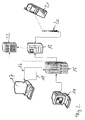
- About the text editor of the Mail Client 2 is then in known Written the email and selected before sending the email the icon 3 to attach the identifier.
- the mail client 2 then sends the email via the Internet (way 4) to the mail server 5.
- Hinmail activates a conversion module 9 on the mail server 5.
- the marking is to some extent accompanied by the activation of the module 9, the coordinates x (recipient's IP address), y (inbox) and z (eg SMS Gateway).
- the mail server 5 routes the email corresponding to the address x via the path 6 on to a second mail server 7 assigned to the recipient.
- the email Via the second mail server 7, the email reaches the second user, who sends his answer mail on the way 8 back to the first mail server 5.
- the email In the conversion module 9, the email is identified and placed on the one hand the mail client in the mailbox, where he can retrieve it via the path 10.
- an SMS gateway is addressed, which pushes the email on the mobile phone 12 of the first user.
- the parameters of the conversion module 9 are deleted by a function 13.
- the conversion module recognizes the identifier and pushes the corresponding message to the first user's cell phone 12.
- FIG. 2 shows the overall architecture of the system. It is shown with 14 acting as an email client computer of the first user who sends the email with the identifier and the desire to get the answer as an SMS pushed to the mobile phone to the first email server 15.
- the e-mail server 15 forwards the e-mail on the route 16 to the IP address of the second user 17, who answers the e-mail and does not place in the mailbox via the same server on the route 18.
- the email is sent to an SMS gateway 19, which sends it via a corresponding radio data network 20 to the mobile telephone 21, where it is output.
- the Billing is done via a separate "billing" system 22, which receives its information from the email server 15 and the gateway 19, respectively.
- the system suitable for carrying out the method initially has a telecommunications network and a mail server accessible to a plurality of terminals via the telecommunications network, the mail server distributing the emails.
- email clients are realized, which allow the writing and the receipt of emails.
- a module is implemented, which examines an incoming email on the match with an individual identifier and pushes the email in the case of a present match for immediate receipt to a terminal of the user specified in the email as the recipient.
- a second telecommunications network in particular a mobile network available, which is accessible via the gateway server.
Landscapes
- Engineering & Computer Science (AREA)
- Computer Networks & Wireless Communication (AREA)
- Signal Processing (AREA)
- Information Transfer Between Computers (AREA)
- Data Exchanges In Wide-Area Networks (AREA)
Claims (13)
- Procédé de distribution instantanée d'un message électronique sur un terminal d'un premier utilisateur, le courriel étant transmis par un deuxième utilisateur, par l'intermédiaire d'un réseau de télécommunication, notamment par l'intermédiaire de l'internet, à un serveur de messagerie électronique (5, 15) accessible au premier utilisateur, le courriel étant envoyé automatiquement (push) par le serveur de messagerie électronique (5, 15) pour une réception instantanée sur le terminal du premier utilisateur, le premier utilisateur envoyant, dans un premier temps, un courriel au deuxième utilisateur, le premier utilisateur écrivant ce courriel et sélectionnant, avant d'envoyer ledit courriel, l'icône permettant d'ajouter le signe identifiable électroniquement, et un clic sur l'icône entraînant l'ajout automatique du signe identifiable électroniquement audit courriel,
un courriel retourné ensuite par le deuxième utilisateur au premier utilisateur est rattaché à l'identifiant et
en ce qu'en cas d'identification de l'identifiant, le courriel de retour est envoyé automatiquement (distribution « push ») au terminal (12, 21) du premier utilisateur. - Procédé selon la revendication 1,
caractérisé en ce que
le courriel de retour est envoyé comme réponse instantanée au courriel d'origine, le courriel de réponse reprenant l'identifiant sous une forme identique ou compréhensible pour le premier utilisateur, l'identifiant du courriel de réponse étant vérifié du côté du premier utilisateur, et en ce qu'en cas d'identification du bon identifiant, le courriel de réponse est envoyé automatiquement au terminal (12,21) du premier utilisateur. - Procédé selon l'une des revendications 1 ou 2,
caractérisé en ce que le courriel d'origine et, par conséquent, le courriel de réponse sont munis d'un identifiant, notamment d'un filigrane numérique, invisible pour le destinataire. - Procédé selon l'une des revendications précédentes,
caractérisé en ce que simultanément à l'envoi du courriel d'origine, une information concernant l'identifiant est stockée sur le serveur de messagerie électronique (5, 15), le serveur de messagerie électronique (5, 15) vérifiant l'exactitude de l'identifiant du courriel de réponse à l'aide de l'information. - Procédé selon la revendication 1,
caractérisé en ce que l'adresse de courriel du deuxième utilisateur est codé dans l'identifiant, l'identifiant étant stocké dans le serveur de messagerie électronique (5, 15) associé au premier utilisateur, chaque courriel entrant sur le serveur de messagerie électronique (5, 15) étant vérifié par rapport à sa conformité avec l'adresse de courriel codée dans l'identifiant, en cas de conformité, le courriel entrant étant envoyé automatiquement comme courriel de réponse au terminal (12, 21) du premier utilisateur. - Procédé selon l'une des revendications précédentes,
caractérisé en ce que le premier utilisateur sélectionne l'identifiant en sélectionnant une icône (3) qui lui est proposée par son client de courriel (2) mis en oeuvre sur son terminal (1), l'identifiant étant ajouté, notamment de manière infalsifiable et protégée contre la copie, au courriel d'origine après la sélection de l'icône (3). - Procédé selon l'une des revendications précédentes,
caractérisé en ce que le courriel d'origine est écrit sur un premier terminal (1, 14), notamment un ordinateur de bureau, par le premier utilisateur, et en ce que le courriel de retour ou le courriel de réponse est envoyé automatiquement à un deuxième terminal, notamment un téléphone mobile ou un PDA (12, 21) du premier utilisateur. - Procédé selon la revendication 7,
caractérisé en ce que, en plus d'être envoyé automatiquement (distribution « push »), le courriel de réponse ou de retour est stocké dans une boîte postale du serveur de messagerie électronique (5, 15) associé au premier utilisateur où il peut être récupéré par l'intermédiaire d'un service « pull », notamment par le premier terminal (1, 14) du premier utilisateur. - Procédé selon l'une des revendications précédentes,
caractérisé en ce que le courriel de réponse est distribué au terminal (12, 21) du premier utilisateur par l'intermédiaire de systèmes MMS ou WAP-Push. - Procédé selon l'une des revendications précédentes,
caractérisé en ce que l'identifiant est supprimé après la distribution « push ». - Système doté de moyens de réalisation du procédé selon l'une des revendications précédentes, comprenant un réseau de télécommunication et un serveur de messagerie électronique (5, 7, 15) accessible à une pluralité de terminaux (1, 12, 14, 17, 21) par l'intermédiaire du réseau de télécommunication pour la distribution de messages électroniques (courriels), des clients de courriel (2) étant mis en oeuvre sur les terminaux (1, 12, 14, 17, 21) permettant l'écriture et la réception de courriels, le client de courriel (2) mis en oeuvre sur le terminal de l'utilisateur proposant à ce dernier de sélectionner la fonction d'ajout d'un identifiant moyennant commande avant l'envoi du courriel, un module mis en oeuvre sur le serveur de messagerie électronique (5, 7, 15) étant exécuté, ledit module étant conçu de manière à vérifier le. courriel par rapport à sa conformité avec un identifiant individuel et à envoyer automatiquement, en cas de conformité, le courriel à un terminal (12, 21) de l'utilisateur indiqué comme destinataire dans le courriel pour réception instantanée.
- Système selon la revendication 11,
caractérisé en ce qu'un deuxième réseau de télécommunication, notamment un réseau de radiocommunication mobile, est disponible pour la distribution « push » et accessible par l'intermédiaire d'un serveur de passerelle (19). - Système selon l'une des revendications 11 ou 12,
caractérisé en ce que le terminal accessible par l'intermédiaire du deuxième réseau de télécommunication est un terminal mobile, notamment un téléphone mobile, un smartphone ou un PDA.
Applications Claiming Priority (1)
| Application Number | Priority Date | Filing Date | Title |
|---|---|---|---|
| DE102005031741A DE102005031741A1 (de) | 2005-07-07 | 2005-07-07 | Selektives Versenden von elektronischen Nachrichten |
Publications (2)
| Publication Number | Publication Date |
|---|---|
| EP1742431A1 EP1742431A1 (fr) | 2007-01-10 |
| EP1742431B1 true EP1742431B1 (fr) | 2012-08-15 |
Family
ID=37057304
Family Applications (1)
| Application Number | Title | Priority Date | Filing Date |
|---|---|---|---|
| EP06011913A Not-in-force EP1742431B1 (fr) | 2005-07-07 | 2006-06-09 | Distribution sélective push de messages électroniques |
Country Status (2)
| Country | Link |
|---|---|
| EP (1) | EP1742431B1 (fr) |
| DE (1) | DE102005031741A1 (fr) |
Family Cites Families (3)
| Publication number | Priority date | Publication date | Assignee | Title |
|---|---|---|---|---|
| US5930479A (en) * | 1996-10-21 | 1999-07-27 | At&T Corp | Communications addressing system |
| CA2496283C (fr) * | 2002-08-14 | 2012-01-03 | Research In Motion Limited | Procede et appareil pour diffuser selectivement de courriels vers des dispositifs de communication sans fil |
| US20050125667A1 (en) * | 2003-12-09 | 2005-06-09 | Tim Sullivan | Systems and methods for authorizing delivery of incoming messages |
-
2005
- 2005-07-07 DE DE102005031741A patent/DE102005031741A1/de not_active Withdrawn
-
2006
- 2006-06-09 EP EP06011913A patent/EP1742431B1/fr not_active Not-in-force
Also Published As
| Publication number | Publication date |
|---|---|
| DE102005031741A1 (de) | 2007-02-08 |
| EP1742431A1 (fr) | 2007-01-10 |
Similar Documents
| Publication | Publication Date | Title |
|---|---|---|
| DE10104713A1 (de) | Verfahren und Vorrichtungen zum Zugreifen auf Nachrichten | |
| DE69933760T2 (de) | System und verfahren zur implementierung eines beantwortungsdienstes | |
| EP1358742A2 (fr) | Procede pour envoyer des messages a partir d'un systeme mms et dispositif correspondant | |
| EP1609277B1 (fr) | Procede de transmission immediate de messages electroniques a des terminaux de telecommunication | |
| WO2003015429A1 (fr) | Procede de transmission de donnees | |
| EP1079641A1 (fr) | Procédé de notification de l'état "en-ligne"-"hors ligne" pour groupes d'abonnés mobiles par le service de messages courts (SMS) | |
| EP2245804B1 (fr) | Procédé de messagerie basée sur internet | |
| EP1525724B1 (fr) | Procede et systeme de blocage d'informations non souhaitees | |
| DE102009030219A1 (de) | Verfahren zur Übertragung einer elektronischen Kurznachricht an mehrere Empfänger | |
| WO2005096572A1 (fr) | Procede pour surveiller la transmission de messages electroniques | |
| EP1574031B1 (fr) | Centre de messages multimedia et appareil de telecommunication destines a l'acces a des messages multimedia enregistres | |
| EP1493295B1 (fr) | Procede pour transmettre des donnees, notamment des contenus multimedia, dans un reseau radiotelephonique | |
| EP1742431B1 (fr) | Distribution sélective push de messages électroniques | |
| WO2004021663A1 (fr) | Procede et dispositif pour identifier des donnees utiles push de façon specifique aux sources de donnees | |
| DE10146878B4 (de) | Verfahren zum Abspeichern von Kurznachrichten | |
| EP1360806B1 (fr) | Procede pour transmettre des donnees par l'intermediaire de reseaux de communication | |
| EP1520438A1 (fr) | Procede et systeme de transmission de messages mms | |
| EP1450526B1 (fr) | Transfer des messages multimédia entre centres de messagerie multimédia SMM | |
| DE102008046713B4 (de) | Verfahren zur Gruppen-Kommunikation zwischen Teilnehmern verschiedener Nachrichtendienste, Kommunikations-Endgerät und Computerprogrammprodukt | |
| EP2016742B1 (fr) | Procede et dispositif permettant d'etablir une liaison de communication liee a un theme | |
| DE60315503T2 (de) | Vorrichtung und verfahren für telekommunikationsdienste | |
| WO2003096652A2 (fr) | Procede d'adressage | |
| EP2234350B1 (fr) | Acheminement d'informations dans un réseau de télécommunication | |
| DE60210180T2 (de) | Verfahren zur Nachrichtenübermittlung an eine elektronische Kommunikationseinrichtung | |
| DE102007045909A1 (de) | Verfahren zum Schutz vor Viren/Spam in Mobilfunknetzen |
Legal Events
| Date | Code | Title | Description |
|---|---|---|---|
| PUAI | Public reference made under article 153(3) epc to a published international application that has entered the european phase |
Free format text: ORIGINAL CODE: 0009012 |
|
| AK | Designated contracting states |
Kind code of ref document: A1 Designated state(s): AT BE BG CH CY CZ DE DK EE ES FI FR GB GR HU IE IS IT LI LT LU LV MC NL PL PT RO SE SI SK TR |
|
| AX | Request for extension of the european patent |
Extension state: AL BA HR MK YU |
|
| 17P | Request for examination filed |
Effective date: 20070710 |
|
| 17Q | First examination report despatched |
Effective date: 20070809 |
|
| AKX | Designation fees paid |
Designated state(s): AT BE BG CH CY CZ DE DK EE ES FI FR GB GR HU IE IS IT LI LT LU LV MC NL PL PT RO SE SI SK TR |
|
| GRAP | Despatch of communication of intention to grant a patent |
Free format text: ORIGINAL CODE: EPIDOSNIGR1 |
|
| GRAS | Grant fee paid |
Free format text: ORIGINAL CODE: EPIDOSNIGR3 |
|
| GRAA | (expected) grant |
Free format text: ORIGINAL CODE: 0009210 |
|
| AK | Designated contracting states |
Kind code of ref document: B1 Designated state(s): AT BE BG CH CY CZ DE DK EE ES FI FR GB GR HU IE IS IT LI LT LU LV MC NL PL PT RO SE SI SK TR |
|
| REG | Reference to a national code |
Ref country code: CH Ref legal event code: EP Ref country code: GB Ref legal event code: FG4D Free format text: NOT ENGLISH Ref country code: AT Ref legal event code: REF Ref document number: 571308 Country of ref document: AT Kind code of ref document: T Effective date: 20120815 |
|
| REG | Reference to a national code |
Ref country code: IE Ref legal event code: FG4D Free format text: LANGUAGE OF EP DOCUMENT: GERMAN |
|
| REG | Reference to a national code |
Ref country code: DE Ref legal event code: R096 Ref document number: 502006011846 Country of ref document: DE Effective date: 20121011 |
|
| REG | Reference to a national code |
Ref country code: NL Ref legal event code: VDEP Effective date: 20120815 |
|
| PG25 | Lapsed in a contracting state [announced via postgrant information from national office to epo] |
Ref country code: FI Free format text: LAPSE BECAUSE OF FAILURE TO SUBMIT A TRANSLATION OF THE DESCRIPTION OR TO PAY THE FEE WITHIN THE PRESCRIBED TIME-LIMIT Effective date: 20120815 Ref country code: LT Free format text: LAPSE BECAUSE OF FAILURE TO SUBMIT A TRANSLATION OF THE DESCRIPTION OR TO PAY THE FEE WITHIN THE PRESCRIBED TIME-LIMIT Effective date: 20120815 Ref country code: IS Free format text: LAPSE BECAUSE OF FAILURE TO SUBMIT A TRANSLATION OF THE DESCRIPTION OR TO PAY THE FEE WITHIN THE PRESCRIBED TIME-LIMIT Effective date: 20121215 |
|
| PG25 | Lapsed in a contracting state [announced via postgrant information from national office to epo] |
Ref country code: SE Free format text: LAPSE BECAUSE OF FAILURE TO SUBMIT A TRANSLATION OF THE DESCRIPTION OR TO PAY THE FEE WITHIN THE PRESCRIBED TIME-LIMIT Effective date: 20120815 Ref country code: SI Free format text: LAPSE BECAUSE OF FAILURE TO SUBMIT A TRANSLATION OF THE DESCRIPTION OR TO PAY THE FEE WITHIN THE PRESCRIBED TIME-LIMIT Effective date: 20120815 Ref country code: PL Free format text: LAPSE BECAUSE OF FAILURE TO SUBMIT A TRANSLATION OF THE DESCRIPTION OR TO PAY THE FEE WITHIN THE PRESCRIBED TIME-LIMIT Effective date: 20120815 Ref country code: LV Free format text: LAPSE BECAUSE OF FAILURE TO SUBMIT A TRANSLATION OF THE DESCRIPTION OR TO PAY THE FEE WITHIN THE PRESCRIBED TIME-LIMIT Effective date: 20120815 Ref country code: PT Free format text: LAPSE BECAUSE OF FAILURE TO SUBMIT A TRANSLATION OF THE DESCRIPTION OR TO PAY THE FEE WITHIN THE PRESCRIBED TIME-LIMIT Effective date: 20121217 Ref country code: GR Free format text: LAPSE BECAUSE OF FAILURE TO SUBMIT A TRANSLATION OF THE DESCRIPTION OR TO PAY THE FEE WITHIN THE PRESCRIBED TIME-LIMIT Effective date: 20121116 |
|
| PG25 | Lapsed in a contracting state [announced via postgrant information from national office to epo] |
Ref country code: NL Free format text: LAPSE BECAUSE OF FAILURE TO SUBMIT A TRANSLATION OF THE DESCRIPTION OR TO PAY THE FEE WITHIN THE PRESCRIBED TIME-LIMIT Effective date: 20120815 |
|
| PG25 | Lapsed in a contracting state [announced via postgrant information from national office to epo] |
Ref country code: DK Free format text: LAPSE BECAUSE OF FAILURE TO SUBMIT A TRANSLATION OF THE DESCRIPTION OR TO PAY THE FEE WITHIN THE PRESCRIBED TIME-LIMIT Effective date: 20120815 Ref country code: RO Free format text: LAPSE BECAUSE OF FAILURE TO SUBMIT A TRANSLATION OF THE DESCRIPTION OR TO PAY THE FEE WITHIN THE PRESCRIBED TIME-LIMIT Effective date: 20120815 Ref country code: EE Free format text: LAPSE BECAUSE OF FAILURE TO SUBMIT A TRANSLATION OF THE DESCRIPTION OR TO PAY THE FEE WITHIN THE PRESCRIBED TIME-LIMIT Effective date: 20120815 Ref country code: ES Free format text: LAPSE BECAUSE OF FAILURE TO SUBMIT A TRANSLATION OF THE DESCRIPTION OR TO PAY THE FEE WITHIN THE PRESCRIBED TIME-LIMIT Effective date: 20121126 Ref country code: CZ Free format text: LAPSE BECAUSE OF FAILURE TO SUBMIT A TRANSLATION OF THE DESCRIPTION OR TO PAY THE FEE WITHIN THE PRESCRIBED TIME-LIMIT Effective date: 20120815 |
|
| PG25 | Lapsed in a contracting state [announced via postgrant information from national office to epo] |
Ref country code: SK Free format text: LAPSE BECAUSE OF FAILURE TO SUBMIT A TRANSLATION OF THE DESCRIPTION OR TO PAY THE FEE WITHIN THE PRESCRIBED TIME-LIMIT Effective date: 20120815 Ref country code: IT Free format text: LAPSE BECAUSE OF FAILURE TO SUBMIT A TRANSLATION OF THE DESCRIPTION OR TO PAY THE FEE WITHIN THE PRESCRIBED TIME-LIMIT Effective date: 20120815 Ref country code: CY Free format text: LAPSE BECAUSE OF FAILURE TO SUBMIT A TRANSLATION OF THE DESCRIPTION OR TO PAY THE FEE WITHIN THE PRESCRIBED TIME-LIMIT Effective date: 20120815 |
|
| PLBE | No opposition filed within time limit |
Free format text: ORIGINAL CODE: 0009261 |
|
| STAA | Information on the status of an ep patent application or granted ep patent |
Free format text: STATUS: NO OPPOSITION FILED WITHIN TIME LIMIT |
|
| 26N | No opposition filed |
Effective date: 20130516 |
|
| PG25 | Lapsed in a contracting state [announced via postgrant information from national office to epo] |
Ref country code: BG Free format text: LAPSE BECAUSE OF FAILURE TO SUBMIT A TRANSLATION OF THE DESCRIPTION OR TO PAY THE FEE WITHIN THE PRESCRIBED TIME-LIMIT Effective date: 20121115 |
|
| REG | Reference to a national code |
Ref country code: DE Ref legal event code: R097 Ref document number: 502006011846 Country of ref document: DE Effective date: 20130516 |
|
| BERE | Be: lapsed |
Owner name: DEUTSCHE TELEKOM A.G. Effective date: 20130630 |
|
| PG25 | Lapsed in a contracting state [announced via postgrant information from national office to epo] |
Ref country code: MC Free format text: LAPSE BECAUSE OF FAILURE TO SUBMIT A TRANSLATION OF THE DESCRIPTION OR TO PAY THE FEE WITHIN THE PRESCRIBED TIME-LIMIT Effective date: 20120815 |
|
| REG | Reference to a national code |
Ref country code: CH Ref legal event code: PL |
|
| REG | Reference to a national code |
Ref country code: IE Ref legal event code: MM4A |
|
| PG25 | Lapsed in a contracting state [announced via postgrant information from national office to epo] |
Ref country code: BE Free format text: LAPSE BECAUSE OF NON-PAYMENT OF DUE FEES Effective date: 20130630 |
|
| PG25 | Lapsed in a contracting state [announced via postgrant information from national office to epo] |
Ref country code: CH Free format text: LAPSE BECAUSE OF NON-PAYMENT OF DUE FEES Effective date: 20130630 Ref country code: IE Free format text: LAPSE BECAUSE OF NON-PAYMENT OF DUE FEES Effective date: 20130609 Ref country code: LI Free format text: LAPSE BECAUSE OF NON-PAYMENT OF DUE FEES Effective date: 20130630 |
|
| REG | Reference to a national code |
Ref country code: AT Ref legal event code: MM01 Ref document number: 571308 Country of ref document: AT Kind code of ref document: T Effective date: 20130609 |
|
| PG25 | Lapsed in a contracting state [announced via postgrant information from national office to epo] |
Ref country code: AT Free format text: LAPSE BECAUSE OF NON-PAYMENT OF DUE FEES Effective date: 20130609 |
|
| PG25 | Lapsed in a contracting state [announced via postgrant information from national office to epo] |
Ref country code: TR Free format text: LAPSE BECAUSE OF FAILURE TO SUBMIT A TRANSLATION OF THE DESCRIPTION OR TO PAY THE FEE WITHIN THE PRESCRIBED TIME-LIMIT Effective date: 20120815 |
|
| PG25 | Lapsed in a contracting state [announced via postgrant information from national office to epo] |
Ref country code: HU Free format text: LAPSE BECAUSE OF FAILURE TO SUBMIT A TRANSLATION OF THE DESCRIPTION OR TO PAY THE FEE WITHIN THE PRESCRIBED TIME-LIMIT; INVALID AB INITIO Effective date: 20060609 Ref country code: LU Free format text: LAPSE BECAUSE OF NON-PAYMENT OF DUE FEES Effective date: 20130609 |
|
| REG | Reference to a national code |
Ref country code: FR Ref legal event code: PLFP Year of fee payment: 11 |
|
| REG | Reference to a national code |
Ref country code: FR Ref legal event code: PLFP Year of fee payment: 12 |
|
| REG | Reference to a national code |
Ref country code: FR Ref legal event code: PLFP Year of fee payment: 13 |
|
| PGFP | Annual fee paid to national office [announced via postgrant information from national office to epo] |
Ref country code: DE Payment date: 20210621 Year of fee payment: 16 Ref country code: FR Payment date: 20210621 Year of fee payment: 16 |
|
| PGFP | Annual fee paid to national office [announced via postgrant information from national office to epo] |
Ref country code: GB Payment date: 20210623 Year of fee payment: 16 |
|
| REG | Reference to a national code |
Ref country code: DE Ref legal event code: R079 Ref document number: 502006011846 Country of ref document: DE Free format text: PREVIOUS MAIN CLASS: H04L0012580000 Ipc: H04L0051000000 |
|
| REG | Reference to a national code |
Ref country code: DE Ref legal event code: R119 Ref document number: 502006011846 Country of ref document: DE |
|
| GBPC | Gb: european patent ceased through non-payment of renewal fee |
Effective date: 20220609 |
|
| PG25 | Lapsed in a contracting state [announced via postgrant information from national office to epo] |
Ref country code: FR Free format text: LAPSE BECAUSE OF NON-PAYMENT OF DUE FEES Effective date: 20220630 |
|
| PG25 | Lapsed in a contracting state [announced via postgrant information from national office to epo] |
Ref country code: GB Free format text: LAPSE BECAUSE OF NON-PAYMENT OF DUE FEES Effective date: 20220609 Ref country code: DE Free format text: LAPSE BECAUSE OF NON-PAYMENT OF DUE FEES Effective date: 20230103 |