EP1743471B1 - Verfahren und vorrichtung zum senden und empfangen schmalbandiger signale in einem breitband-kommunikationssystem - Google Patents
Verfahren und vorrichtung zum senden und empfangen schmalbandiger signale in einem breitband-kommunikationssystem Download PDFInfo
- Publication number
- EP1743471B1 EP1743471B1 EP05729152.8A EP05729152A EP1743471B1 EP 1743471 B1 EP1743471 B1 EP 1743471B1 EP 05729152 A EP05729152 A EP 05729152A EP 1743471 B1 EP1743471 B1 EP 1743471B1
- Authority
- EP
- European Patent Office
- Prior art keywords
- channel
- wideband
- sub
- narrowband
- channels
- Prior art date
- Legal status (The legal status is an assumption and is not a legal conclusion. Google has not performed a legal analysis and makes no representation as to the accuracy of the status listed.)
- Expired - Lifetime
Links
- 230000005540 biological transmission Effects 0.000 title claims description 53
- 238000000034 method Methods 0.000 title claims description 35
- 238000004891 communication Methods 0.000 title claims description 30
- 238000001228 spectrum Methods 0.000 claims description 10
- 238000010586 diagram Methods 0.000 description 4
- 238000005259 measurement Methods 0.000 description 4
- 230000008569 process Effects 0.000 description 3
- 230000011664 signaling Effects 0.000 description 3
- 230000007480 spreading Effects 0.000 description 3
- 108010003272 Hyaluronate lyase Proteins 0.000 description 2
- 230000003044 adaptive effect Effects 0.000 description 2
- 239000000969 carrier Substances 0.000 description 2
- 230000008859 change Effects 0.000 description 2
- 238000005516 engineering process Methods 0.000 description 2
- 230000010267 cellular communication Effects 0.000 description 1
- 230000001427 coherent effect Effects 0.000 description 1
- 125000004122 cyclic group Chemical group 0.000 description 1
- 230000007423 decrease Effects 0.000 description 1
- 230000003247 decreasing effect Effects 0.000 description 1
- 238000001514 detection method Methods 0.000 description 1
- 238000010295 mobile communication Methods 0.000 description 1
- 238000013442 quality metrics Methods 0.000 description 1
- 230000004044 response Effects 0.000 description 1
- 230000000153 supplemental effect Effects 0.000 description 1
Images




Classifications
-
- H—ELECTRICITY
- H04—ELECTRIC COMMUNICATION TECHNIQUE
- H04W—WIRELESS COMMUNICATION NETWORKS
- H04W72/00—Local resource management
- H04W72/50—Allocation or scheduling criteria for wireless resources
- H04W72/54—Allocation or scheduling criteria for wireless resources based on quality criteria
-
- H—ELECTRICITY
- H04—ELECTRIC COMMUNICATION TECHNIQUE
- H04L—TRANSMISSION OF DIGITAL INFORMATION, e.g. TELEGRAPHIC COMMUNICATION
- H04L5/00—Arrangements affording multiple use of the transmission path
- H04L5/003—Arrangements for allocating sub-channels of the transmission path
- H04L5/0037—Inter-user or inter-terminal allocation
-
- H—ELECTRICITY
- H04—ELECTRIC COMMUNICATION TECHNIQUE
- H04L—TRANSMISSION OF DIGITAL INFORMATION, e.g. TELEGRAPHIC COMMUNICATION
- H04L1/00—Arrangements for detecting or preventing errors in the information received
- H04L1/0001—Systems modifying transmission characteristics according to link quality, e.g. power backoff
- H04L1/0002—Systems modifying transmission characteristics according to link quality, e.g. power backoff by adapting the transmission rate
- H04L1/0003—Systems modifying transmission characteristics according to link quality, e.g. power backoff by adapting the transmission rate by switching between different modulation schemes
-
- H—ELECTRICITY
- H04—ELECTRIC COMMUNICATION TECHNIQUE
- H04L—TRANSMISSION OF DIGITAL INFORMATION, e.g. TELEGRAPHIC COMMUNICATION
- H04L1/00—Arrangements for detecting or preventing errors in the information received
- H04L1/0001—Systems modifying transmission characteristics according to link quality, e.g. power backoff
- H04L1/0023—Systems modifying transmission characteristics according to link quality, e.g. power backoff characterised by the signalling
- H04L1/0026—Transmission of channel quality indication
-
- H—ELECTRICITY
- H04—ELECTRIC COMMUNICATION TECHNIQUE
- H04L—TRANSMISSION OF DIGITAL INFORMATION, e.g. TELEGRAPHIC COMMUNICATION
- H04L5/00—Arrangements affording multiple use of the transmission path
- H04L5/0001—Arrangements for dividing the transmission path
- H04L5/0003—Two-dimensional division
- H04L5/0005—Time-frequency
- H04L5/0007—Time-frequency the frequencies being orthogonal, e.g. OFDM(A) or DMT
-
- H—ELECTRICITY
- H04—ELECTRIC COMMUNICATION TECHNIQUE
- H04L—TRANSMISSION OF DIGITAL INFORMATION, e.g. TELEGRAPHIC COMMUNICATION
- H04L5/00—Arrangements affording multiple use of the transmission path
- H04L5/14—Two-way operation using the same type of signal, i.e. duplex
- H04L5/1438—Negotiation of transmission parameters prior to communication
-
- H—ELECTRICITY
- H04—ELECTRIC COMMUNICATION TECHNIQUE
- H04B—TRANSMISSION
- H04B17/00—Monitoring; Testing
- H04B17/30—Monitoring; Testing of propagation channels
- H04B17/309—Measuring or estimating channel quality parameters
- H04B17/318—Received signal strength
-
- H—ELECTRICITY
- H04—ELECTRIC COMMUNICATION TECHNIQUE
- H04B—TRANSMISSION
- H04B17/00—Monitoring; Testing
- H04B17/30—Monitoring; Testing of propagation channels
- H04B17/309—Measuring or estimating channel quality parameters
- H04B17/336—Signal-to-interference ratio [SIR] or carrier-to-interference ratio [CIR]
-
- H—ELECTRICITY
- H04—ELECTRIC COMMUNICATION TECHNIQUE
- H04L—TRANSMISSION OF DIGITAL INFORMATION, e.g. TELEGRAPHIC COMMUNICATION
- H04L5/00—Arrangements affording multiple use of the transmission path
- H04L5/003—Arrangements for allocating sub-channels of the transmission path
- H04L5/0058—Allocation criteria
- H04L5/006—Quality of the received signal, e.g. BER, SNR, water filling
-
- H—ELECTRICITY
- H04—ELECTRIC COMMUNICATION TECHNIQUE
- H04L—TRANSMISSION OF DIGITAL INFORMATION, e.g. TELEGRAPHIC COMMUNICATION
- H04L5/00—Arrangements affording multiple use of the transmission path
- H04L5/0091—Signalling for the administration of the divided path, e.g. signalling of configuration information
- H04L5/0094—Indication of how sub-channels of the path are allocated
-
- H—ELECTRICITY
- H04—ELECTRIC COMMUNICATION TECHNIQUE
- H04W—WIRELESS COMMUNICATION NETWORKS
- H04W24/00—Supervisory, monitoring or testing arrangements
-
- H—ELECTRICITY
- H04—ELECTRIC COMMUNICATION TECHNIQUE
- H04W—WIRELESS COMMUNICATION NETWORKS
- H04W72/00—Local resource management
- H04W72/20—Control channels or signalling for resource management
- H04W72/21—Control channels or signalling for resource management in the uplink direction of a wireless link, i.e. towards the network
-
- H—ELECTRICITY
- H04—ELECTRIC COMMUNICATION TECHNIQUE
- H04W—WIRELESS COMMUNICATION NETWORKS
- H04W72/00—Local resource management
- H04W72/20—Control channels or signalling for resource management
- H04W72/23—Control channels or signalling for resource management in the downlink direction of a wireless link, i.e. towards a terminal
Definitions
- the present invention relates generally to communication systems, and in particular, to a method and apparatus for transmission and reception of narrowband signals within a wideband communication system.
- Future communication systems are generally wideband in nature. Such communication systems will transmit and receive utilizing large bandwidths (e.g., 20 - 100 MHz).
- large bandwidths e.g. 20 - 100 MHz.
- One of the key advantages of having large bandwidth systems is the possibility to transmit at high data rates.
- there are many challenges in building broadband remote, or mobile units due to issues such as power consumption, signal processing complexity, size limitations, etc. Many of these issues are more easily addressed in a base station.
- different regions or markets may have different amounts of spectrum available for deploying next-generation systems. For example, an operator may have 100 MHz in one market (used to deploy a 100 MHz system), and only 20 MHz in another market, and may want to support both a 100 MHz remote unit and a 20 MHz remote unit simultaneously in the 100 MHz system.
- an operator may want to enable both narrowband and wideband remote units to operate within a wideband system so that both low-cost (narrowband) and high capability (wideband) remote units can be offered to customers with the same infrastructure. Because of these issues, a need exists for a method and apparatus for transmission and reception of narrowband signals within a wideband communication system so that both narrowband and wideband units can share the same wideband spectrum.
- DE 198 00 953 C1 disclose a method that involves transmitting data symbols in time slots over the radio interface between a base station and several mobile stations handled by the base station.
- An OFDMA multi-carrier method is used for the transmission of the data symbols, which assigns respectively several sub-carriers and a segment of a frequency spectrum to the mobile stations, to form a connection between base station and mobile station.
- the quality of different segments of the frequency spectrum is measured through each mobile station. At least one preferred segment, suitable for its own connection, is determined through each mobile station, and a corresponding information is transmitted to the base station.
- JIANYU FU ET AL "Fundamental analysis on throughput characteristics of orthogonal frequency division multiple access (OFDMA) in multipath propagation environments" VTC 2002-FALL. 2002 IEEE 56TH. VEHICULAR TECHNOLOGY CONFERENCE PROCEEDINGS. VANCOUVER, CANADA, SEPT. 24 - 28,2002; [IEEE VEHICULAR TECHNOLOGY CONFERENCE], NEW YORK, NY : IEEE, US, vol. 2, 24 September 2002 (2002-09-24), pages 1235-1239, XP010609014 ISBN: 978-0-7803-7467-6 , describes a radio access method and analyzes its transmission characteristics. The whole frequency band is shared with all users and a given number of subcarriers) with higher order in CNR are selected by each user.
- OFDMA orthogonal frequency division multiple access
- Narrowband remote units will scan over frequencies within a wideband channel spectrum, evaluating frequency-selective channel characteristics. The best sub-channel(s) for communication will be determined and reported back to a base station via a channel-quality report message. The base station will then utilize only a narrowband portion (e.g., one sub-channel comprised of a plurality of OFDM subcarriers) of the wideband channel for transmitting data to the narrowband unit.
- a narrowband portion e.g., one sub-channel comprised of a plurality of OFDM subcarriers
- the present invention encompasses a method for a narrowband mobile unit to receive data in a wideband communication system.
- the method comprises the steps of evaluating frequency-selective channel characteristics for the wideband channel and sending a channel-quality report to a base station, wherein the channel-quality report is based on the frequency-selective channel characteristics for the wideband channel.
- a channel assignment is received from the base station and data is received over a portion of the wideband channel based on the frequency-selective channel characteristics, wherein a data rate for the data is based predominantly on the frequency-selective channel characteristics for the wideband channel.
- the present invention additionally encompasses a method comprising the steps of receiving a channel-quality report from a narrowband remote unit, determining a portion of a wideband channel to utilize for narrowband transmissions based on the channel-quality report, determining a modulation and coding for the narrowband transmissions based on the channel-quality report, and transmitting a channel assignment to the narrowband remote unit assigning the narrowband remote unit the portion of the wideband channel.
- Data is transmitted to the narrowband remote unit over a narrowband channel comprising the portion of the wideband channel.
- the present invention additionally encompasses an apparatus comprising channel scanning circuitry for scanning a wideband channel, logic circuitry for evaluating frequency-selective channel characteristics for the wideband channel, a transmitter for sending a channel-quality report to a base station, and a receiver receiving a channel assignment from the base station and receiving data over a portion of the wideband channel based on the channel-quality report, wherein the data rate for the data is based predominantly on the frequency-selective channel characteristics for the wideband channel.
- the present invention additionally encompasses an apparatus comprising receiving circuitry receiving a channel-quality report from a narrowband remote unit, logic circuitry for determining a portion of a wideband channel to utilize for narrowband transmissions based on the channel-quality report, the logic circuitry additionally determining a modulation and coding for the narrowband transmissions based on the channel-quality report, modulation and coding circuitry for modulating and coding the data to be transmitted to the narrowband remote unit, and transmitting circuitry for transmitting data to the narrowband remote unit over the portion of the wideband channel, the data having a modulation and coding based on the channel-quality report.
- FIG. 1 is a block diagram of communication system 100.
- Communication system 100 comprises a plurality of cells 105 (only one shown) each having a base transceiver station (BTS, or base station) 104 in communication with a plurality of remote, or mobile units 101-103.
- BTS base transceiver station
- communication system 100 utilizes a next generation Orthogonal Frequency Division Multiplexed (OFDM) or multicarrier based architecture including Adaptive Modulation and Coding (AMC).
- OFDM Orthogonal Frequency Division Multiplexed
- AMC Adaptive Modulation and Coding
- the architecture may also include the use of spreading techniques such as multi-carrier CDMA (MC-CDMA), multi-carrier direct sequence CDMA (MC-DS-CDMA), Orthogonal Frequency and Code Division Multiplexing (OFCDM) with one or two dimensional spreading, or may be based on simpler time and/or frequency division multiplexing/multiple access techniques, or a combination of these various techniques.
- MC-CDMA multi-carrier CDMA
- MC-DS-CDMA multi-carrier direct sequence CDMA
- OFDM Orthogonal Frequency and Code Division Multiplexing
- communication system 100 may utilize other wideband cellular communication system protocols such as, but not limited to, TDMA or direct sequence CDMA.
- AMC Adaptive Modulation and Coding
- the modulation and coding scheme may change on a frame-by-frame basis in order to track the channel quality variations that occur in mobile communication systems.
- streams with high quality are typically assigned higher order modulations rates and/or higher channel coding rates with the modulation order and/or the code rate decreasing as quality decreases.
- modulation schemes such as 16 QAM, 64 QAM or 256 QAM are utilized, while for those experiencing low quality, modulation schemes such as BPSK or QPSK are utilized.
- the selected modulation and coding may only predominantly match the current received signal quality for reasons such as channel quality measurement delay or errors, channel quality reporting delay or errors, efforts to measure or predict current and future interference, and efforts to measure or predict the future channel.
- AMC can be performed in the time dimension (e.g., updating the modulation/coding every N t OFDM symbol periods) or in the frequency dimension (e.g., updating the modulation/coding every N sc subcarriers) or a combination of both.
- the downlink and uplink bandwidths are different in order to match the expected downlink and uplink traffic characteristics, and typically have a frequency gap existing between them.
- the downlink frame comprises all of the available subcarriers 201 which form the wideband channel. As discussed above, there exist situations where certain remote units are incapable of utilizing the total available spectrum of the wideband channel.
- remote unit 101 may be able to simultaneously receive all available subcarriers 201, but remote unit 102 may be able to receive only a portion of the wideband channel spectrum (e.g., a sub-channel comprising, for example 16 adjacent OFDM subcarriers 201) at any given time.
- a portion of the wideband channel spectrum e.g., a sub-channel comprising, for example 16 adjacent OFDM subcarriers 201
- the downlink capability for remote unit 101 far exceeds that of remote unit 102.
- an operator may want to enable both narrowband and wideband remote units to operate within a wideband system so that both low-cost (narrowband) and high capability (wideband) remote units can be offered to customers with the same infrastructure.
- narrowband remote units will scan over frequencies within the wideband channel spectrum, evaluating frequency-selective channel characteristics. The best sub-channel(s) for communication will be determined and reported back to base station 104 via a channel-quality report message. Base station 104 will then utilize only a narrowband portion (e.g., one sub-channel comprised of a plurality of OFDM subcarriers) of the wideband channel for transmitting data to the narrowband unit.
- the narrowband remote unit will send to base station 104 a list of preferred sub-channels based on the channel characteristics of the scanned sub-channels.
- the length of the list may vary.
- the list may contain only the single best sub-channel index, or a quality-ordered list of the best N sub-channels.
- the narrowband unit may send back a list of the sub-channels that should be avoided, due to poor quality.
- Base station 104 then chooses an appropriate sub-channel for transmitting data to the narrowband remote unit.
- the data rate could be a function (such as twice) of the data rate the poor channel could support.
- the data rate could be a function (e.g., 75% of the data rate supported by the preferred channel).
- base station 104 is simply provided with the channel characteristics evaluated by the narrowband remote unit. Base station 104 will then determine the best sub-channel to utilize for narrowband transmission. Regardless of which technique is utilized to determine the sub-channel for narrowband transmission, base station 104 will provide the narrowband remote unit a message indicating the sub-channel to be utilized, and narrowband data transmission takes place utilizing that sub-channel.
- the message is typically contained in an explicit control/signaling/assignment (C/S/A) message field, but all or part of the message may be implicitly communicated in conjunction with the narrowband transmission.
- the message could comprise a remote unit specific cyclic redundancy check (CRC) code that protects a data transmission.
- CRC remote unit specific cyclic redundancy check
- FIG. 5 illustrates one embodiment of a scanning procedure.
- pilot signals are provided at various times in order to perform the channel measurement operations.
- the pilot signals are offset in time so that a narrowband remote unit can sequentially scan all the sub-channel pilots.
- the scanning procedure comprises receiving a plurality of pilot channels on various sub-channels, and analyzing the quality of the pilot channels.
- a remote unit will scan and receive a first pilot channel on a first subcarrier, while at a second time period, the remote unit will scan and receive a second pilot channel on a second subcarrier. This procedure continues until all pilot channels on all subcarriers are received and scanned for quality information. Note that the scanning can be performed over the entire wideband channel as describe above, or only a portion of the wideband channel, in order to reduce the scanning burden on the remote unit.
- the pilot signals for scanning are embedded within data transmitted to the remote units.
- the data transmission scheme is illustrated in FIG. 6 and FIG. 7 .
- the pilots for scanning may be included within the data for remote unit 102 or the data for remote unit 101 or in the multiplexed data for both remote units 101 and 102.
- the pilots for scanning may also be pilots normally used for data reception which are used for scanning when the unit is not actively receiving data.
- the pilots can either occupy the whole frequency range or be specific for a given sub-channel. They can be signals solely used for the purpose of selecting a sub-channel or can serve other purpose as well, such as, e.g., assisting in the wideband channel estimation process.
- the narrowband remote units determine channel quality information in a sub-channel.
- the channel quality information comprises a measurement of the frequency response of the channel on a sub-channel. More particularly, the quality information can be the received signal strength indicator (RSSI) averaged over the sub-channel, the received signal strength indicator (RSSI) of the pilot averaged over the sub-channel, the received carrier over noise (C/N) ratio averaged over the sub-channel, the received carrier over interference (C/I) averaged over the sub-channel or the received carrier over noise plus interference (C/(I+N)) averaged over the sub-channel.
- the quality metrics consist of at least a single value for the sub-channel.
- the measurement/estimation may be performed for some and preferably all sub-channels.
- the channel metrics consists of a set of several values.
- the scanning may be one additional sub-channel per frame other than the sub-channel the remote unit is actively receiving data on.
- FIG. 8 illustrates how the quality of the signal can change based on frequency. More particularly, FIG. 8 shows how quality 801 of a signal may vary over frequency, or the channel bandwidth. As is evident, quality 801 is relatively high for the first four subcarriers, and relatively low for 7 th through 9 th subcarriers. With this type of information available to a narrowband remote unit based on scanning within the wideband channel, the remote unit can either determine the best sub-channel for narrowband transmission, or may simply provide sub-channel quality information for one or more sub-channels to base station 104, letting base station 104 determine the best sub-channel for narrowband transmission.
- AMC can be performed on a frame-by-frame basis as well, with the particular modulation/coding utilized being based on the channel quality of the particular sub-channel. More particularly, base station 104 will determine the modulation/coding scheme utilized for a particular sub-channel based on its particular channel quality.
- the channel quality information is valid only for a time on the order of the channel coherence time so that the determination of the modulation/coding scheme needs to be performed with a fine time granularity.
- the coherence time of the channel is related to the remote unit speed; channel quality information gets more outdated the faster the remote unit is moving, or the faster the environment surrounding the remote unit changes.
- This time granularity is typically every frame or once every few (two or three) frames if a single time granularity is selected for all remote units based on a largest speed of a reasonable range of speed. The time granularity may be longer for a remote unit that is moving slower than other remote units. If quality information is available for multiple subcarriers within the sub-channel, then AMC can optionally be applied in the frequency dimension as well (e.g., over the subcarriers within the sub-channel).
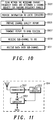
- FIG. 10 is a flow chart showing the operation of narrowband remote unit 900.
- the logic flow begins at step 1001 where channel scanning circuitry 903 scans within the wideband channel frequency range and determines a channel quality for various frequency ranges (e.g., sub-channels) within the wideband frequency range. As discussed above, this scanning procedure preferably takes place on a frame-by-frame basis. In other words, the wideband channel is preferably scanned during each frame.
- this information is provided to logic circuitry 902, and is utilized to prepare a channel-quality report message (step 1005), which is transmitted to base station 104 (step 1007).
- a channel-assignment message is received from base station 104 indicating the sub-channel to be utilized for data transmission, and at step 1011, data is received over the sub-channel.
- the sub-channel comprises a narrowband channel that occupies a portion of the wideband channel.
- the channel-assignment message can be received over the same portion of the wideband channel utilized for narrowband transmissions. Alternatively, the channel-assignment message can be received over a different portion of the wideband channel.
- the modulation and coding rate (and hence the data rate) is based on the channel-quality report, and in the preferred embodiment of the present invention changes on a frame-by-frame basis.
- FIG. 11 is a block diagram of base station 104.
- base station 104 comprises transceiver 1101, logic circuitry 1102, and AMC circuitry 1103.
- transceiver 1101 (acting as a receiver) receives a channel-quality report from a narrowband remote unit and passes the report to logic circuitry 1102.
- Logic circuitry 1102 serves as means for determining a sub-channel to utilize from those available to the wideband system. As discussed above, this may be accomplished by simply choosing a sub-channel already provided within the channel-quality report, or alternatively, this may be accomplished by analyzing the channel-quality report to determine a sub-channel having a best quality.
- AMC circuitry 1103 serves as means for modulating data transmitted to the narrowband remote unit.
- this sub-channel assignment process is performed with a fine time granularity (e.g., every frame or every other frame), however, in alternate embodiments of the present invention the sub-channel assignment process can be performed over varying time periods.
- Transceiver 1101 acting as a transmitter, transmits data to the narrowband remote unit over a portion of the wideband channel, the data having a modulation and coding based on the channel-quality report.
- FIG. 12 is a flow chart showing operation of base station 104.
- the logic flow begins at step 1201 where a channel-quality report is received by transceiver 1101 and passed to logic circuitry 1102.
- logic circuitry 1102 determines a sub-channel to utilize for narrowband transmission, along with a modulation/coding scheme for the sub-channel.
- the base station 104 may decide to not transmit to the remote unit, or to transmit to the remote unit in a future frame.
- logic circuitry 1102 prepares a channel-assignment message to transmit to remote unit 900, and at step 1207 the message is transmitted to remote unit 900.
- logic circuitry 1102 instructs AMC circuitry to utilize a particular data rate (i.e., modulation/coding scheme) for the sub-channel utilized for narrowband transmission, and at step 1211 the data is properly coded and transmitted over the narrowband sub-channel.
- a particular data rate i.e., modulation/coding scheme
- a subset of the frequency band is utilized, and is modulated/coded based on the perceived quality of the channel reported to base station 104 as part of the channel-quality report. Because the modulation/coding is directly related to the data transmission rate, the particular data rate is predominantly based on the frequency-selective channel characteristics reported by the remote unit in its channel-quality report.
- the above-described procedure for transmitting to both wideband and narrowband units also allows the ability to transmit to both a narrowband remote unit and a wideband remote unit within the same time interval, within the same downlink frame.
- FIG. 6 shows transmissions to wideband remote unit 101 and narrowband remote unit 102 within the same frame.
- the data transmission to remote unit 102 is on a particular sub-channel (frequency range) within the wideband channel, and data transmission to remote unit 101 occurs in the remainder of the wideband channel.
- the data transmission to remote unit 102 ends before the end of the frame, allowing time for remote unit 102 to perform scanning.
- the assignment message for remote unit 102 is contained in a control/signaling/assignment message (C/S/A) field for remote unit 102, which in this example is transmitted on the same sub-channel as the data for remote unit 102.
- C/S/A control/signaling/assignment message
- FIG. 7 also shows transmissions to wideband remote unit 101 and narrowband remote unit 102 within the same frame.
- the data transmission to remote unit 102 is on a particular sub-channel within the wideband channel, and data transmission to remote unit 101 occurs over the entire wideband channel, including the sub-channel used for data transmission to remote unit 102.
- the sub-channel for remote unit 102 is shared with the transmissions to remote unit 101 by a predetermined multiplexing scheme.
- Data transmissions to two or more narrowband remote units may also occur on the same sub-channel by sharing the sub-channel according to a predetermined multiplexing scheme.
- the C/S/A field for remote unit 102 could also be shared with the C/S/A field for remote unit 101 (or other remote units in the system) by a predetermined multiplexing scheme.
- FIG. 13 and FIG. 14 show multiplexing schemes for an example sub-channel structure shown in FIG. 15 .
- each row represents a single subcarrier of an OFDM signal
- each column represents an OFDM symbol period
- the sub-channel comprises a block of eight adjacent subcarriers within the wideband channel.
- a sub-channel may include both data symbols and pilot symbols to support channel estimation and coherent detection.
- FIG. 13 illustrates time multiplexing, frequency multiplexing, and time-frequency multiplexing data for remote unit 101, remote unit 102, and remote unit 103 within a single sub-channel.
- FIG. 14 illustrates code multiplexing within a sub-channel for a system based on OFDM with spreading and code multiplexing (OFCDM).
- the spreading factor in the frequency (subcarrier) dimension is SF_freq
- the spreading factor in the time dimension (OFDM symbol periods) is SF_time, where SF_freq is preferably less than or equal to the number of subcarriers in the sub-channel.
- Code 1 is used as a pilot and the remaining codes may be divided among one or more remote units.
- FIG. 16 shows various flow charts illustrating sub-channel contention resolution for the downlink (DL).
- multiple remote unit's directly e.g., based on a preferred sub-channel index from the remote units
- indirectly e.g., based on analysis by the base station of frequency-selective channel characteristics of the remote units
- the base station multiplexes data transmissions to a plurality of remote unit's within the same sub-channel #j1 in the same frame.
- the BS performs data transmission to one remote unit on sub-channel #j1, and to a second remote unit on sub-channel #j2 in the same frame.
- the BS performs data transmission to one remote unit on sub-channel #j1 in frame #k1, and to a second remote unit on sub-channel #j1 in frame #k2.
- transmissions to the narrowband remote units take place on differing frames of the narrowband channel.
- a sub-channel assignment message for a remote unit may be transmitted in a C/S/A field.
- the C/S/A field for a remote unit is transmitted on a fixed or well known sub-channel. This enables a narrowband remote unit to know which sub-channel to tune its receiver to within the wideband channel to detect its C/S/A.
- the C/S/A may then direct the remote unit to a different sub-channel for its data assignment.
- the C/S/A information for a remote unit may be transmitted on multiple well-known sub-channels so that a remote unit can tune to the C/S/A sub-channel that has the highest quality (e.g., based on scanning in a previous frame).
- a C/S/A for a future frame may be embedded in the data transmission to a remote unit in the current frame.
- the C/S/A may be divided into two segments, as shown in FIG. 17 .
- the first segment referred to as a basic C/S/A
- the first segment may contain basic broadcast information, a number of assignment messages for remote units, and pointers to the locations of second segment C/S/As for some remote units.
- the second segment C/S/A for a remote unit referred to as a supplemental C/S/A, contains a specific assignment message for the remote unit.
- the C/S/A for a particular remote unit is transmitted on the same sub-channel as the sub-channel assignment contained within the assignment message. This enables a remote unit to tune to its preferred sub-channel and it will then be able to receive the C/S/A and data on the same sub-channel. If the base station chooses not to assign the preferred sub-channel, then the remote unit will not detect an assignment in the current frame.
- FIG. 18 shows that a plurality of sub-channel bandwidths can be used in a system in order to support different types of narrowband remote units with different bandwidth capabilities. For instance, a system with a total bandwidth of 20 MHz could simultaneously serve wideband 20 MHz remote units, a first type of narrowband units having a bandwidth of 10 MHz, a second type of narrowband units having a bandwidth of 5 MHz, and a third type of narrowband units having a bandwidth of 1.25 MHz.
Landscapes
- Engineering & Computer Science (AREA)
- Signal Processing (AREA)
- Computer Networks & Wireless Communication (AREA)
- Quality & Reliability (AREA)
- Mobile Radio Communication Systems (AREA)
Claims (10)
- Verfahren zum Empfangen von Daten durch eine Schmalband-Mobileinheit in einem Weitband-Kommunikationssystem, wobei das Verfahren in einem Kommunikationssystem durchgeführt wird, wobei ein Weitbandkanal eine Vielzahl von Unterkanälen umfasst und die Weitband-Remote-Einheiten in der Lage sind, auf dem Weitbandkanal zu empfangen, und wobei die Schmalband-Remote-Einheiten in der Lage sind, jederzeit auf nur einem Teil des Weitbandkanals zu empfangen, das Verfahren folgende Schritte umfassend:Scannen einer Vielzahl von Unterkanälen in dem Weitbandkanal, wobei der Weitbandkanal für die Kommunikation mit Weitband-Remote-Einheiten verwendet wird;Beurteilen der Kanalqualität für verschiedene Unterkanäle im Weitbandkanal;Senden eines Kanalqualitätsberichts an eine Basisstation, wobei der Kanalqualitätsbericht auf der Kanalqualität für die verschiedenen Unterkanäle im Weitbandkanal basiert;Empfangen einer Kanalzuweisung über einen Schmalbandkanal von der Basisstation für Schmalband-Datenempfang in dem Weitbandkanal, wobei die Kanalzuweisung einen für die Datenübertragung zu verwendenden Unterkanal angibt; undEmpfangen von Daten über den angegebenen Unterkanal in dem Weitbandkanal basierend auf der Kanalzuweisung, wobei ein Modulations- und Codierschema für die Daten auf dem Kanalqualitätsbericht basiert.
- Verfahren nach Anspruch 1, wobei der Schritt der Beurteilung der Kanalqualität für verschiedene Unterkanäle in dem Weitbandkanal den Schritt der Beurteilung der Kanalqualität umfasst, die aus der Gruppe genommen wird, die aus einem empfangenen Signalstärkeindikator (RSSI), einem empfangenen Träger-Rausch-Verhältnis und einem empfangenen Träger-Interferenz-Verhältnis, einem empfangenen Träger-Rausch-Verhältnis plus Interferenz, besteht.
- Verfahren nach Anspruch 1, wobei der Schritt des Sendens des Kanalqualitätsberichts den Schritt des Sendens einer Liste bevorzugter Unterkanäle oder einer Liste zu vermeidender Unterkanäle umfasst.
- Verfahren nach Anspruch 1, wobei der Schritt des Empfangens der Kanalzuweisung von der Basisstation mindestens das Empfangen einer Schmalband-Kanalzuweisung von der Basisstation, wobei der Schmalbandkanal einen Teil des Weitband-Kanalspektrums belegt, und/oder das Empfangen der Kanalzuweisung, die über den Teil des Weitbandkanals übertragen wird, und/oder das Empfangen der Kanalzuweisung, die über einen zweiten Teil des Weitbandkanals übertragen wird, umfasst.
- Verfahren, durchgeführt in einem Kommunikationssystem, wobei ein Weitbandkanal eine Vielzahl von Unterkanälen umfasst und die Weitband-Remote-Einheiten in der Lage sind, auf dem Weitbandkanal zu empfangen, und wobei die Schmalband-Remote-Einheiten in der Lage sind, jederzeit auf nur einem Teil des Weitbandkanals zu empfangen, das Verfahren folgende Schritte umfassend:Empfangen eines Kanalqualitätsberichts von einer Schmalband-Remote-Einheit, wobei der Kanalqualitätsbericht auf der Kanalqualität für verschiedene Unterkanäle im Weitbandkanal basiert, wobei der Weitbandkanal für die Kommunikation mit Weitband-Remote-Einheiten verwendet wird;Ermitteln eines Unterkanals eines Weitbandkanals für die Verwendung für Schmalbandübertragungen basierend auf dem Kanalqualitätsbericht;Ermitteln eines Modulations- und Codierschemas für die Schmalbandübertragungen basierend auf dem Kanalqualitätsbericht;Übertragen einer Kanalzuweisung an die Schmalband-Remote-Einheit, die der Schmalband-Remote-Einheit den bestimmten Unterkanal des Weitbandkanals zuweist; undÜbertragen der Daten mithilfe des Modulations- und Codierschemas an die Schmalband-Remote-Einheit über den bestimmten Unterkanal des Weitbandkanals.
- Verfahren nach Anspruch 5, ferner folgenden Schritt umfassend:Multiplexen von Daten zu einer Vielzahl von Schmalband-Remote-Einheiten über den bestimmten Unterkanal.
- Verfahren nach Anspruch 5, ferner folgenden Schritt umfassend:gleichzeitiges Übertragen an eine Vielzahl von Schmalband-Remote-Einheiten über einen der unterschiedlichen Frames des bestimmten Unterkanals und unterschiedlicher Unterkanäle.
- Verfahren nach Anspruch 5, ferner folgende Schritte umfassend:Multiplexen von Daten zur Schmalband-Remote-Einheit und einer Weitband-Remote-Einheit in einem selben Frame; undÜbertragen an die Schmalband-Remote-Einheit und die Weitband-Remote-Einheit im selben Frame.
- Vorrichtung für die Verwendung in einem Kommunikationssystem, wobei ein Weitbandkanal eine Vielzahl von Unterkanälen umfasst und die Weitband-Remote-Einheiten in der Lage sind, auf Weitbandkanälen zu empfangen, und wobei die Schmalband-Remote-Einheiten in der Lage sind, jederzeit auf nur einem Teil des Weitbandkanals zu empfangen, die Vorrichtung umfassend:Kanalscanschaltung für das Scannen einer Vielzahl von Unterkanälen im Weitbandkanal;Logikschaltung für das Beurteilen der Kanalqualität für verschiedene Unterkanäle im Weitbandkanal;einen Sender für das Senden eines Kanalqualitätsberichts an eine Basisstation, wobei der Kanalqualitätsbericht auf der Kanalqualität für verschiedene Unterkanäle im Weitbandkanal basiert; undeinen Empfänger, der eine Kanalzuweisung über einen Schmalbandkanal von der Basisstation empfängt, wobei die Kanalzuweisung einen für Datenübertragung zu verwendenden Unterkanal angibt, und Empfangen von Daten über den angegebenen Unterkanal des Weitbandkanals basierend auf dem Kanalqualitätsbericht, wobei ein Modulations- und Codierschema für die Daten auf der Kanalqualität für verschiedene Unterkanäle im Weitbandkanal basiert.
- Vorrichtung für die Verwendung in einem Kommunikationssystem, wobei ein Weitbandkanal eine Vielzahl von Unterkanälen umfasst und die Weitband-Remote-Einheiten in der Lage sind, auf Weitbandkanälen zu empfangen, und wobei die Schmalband-Remote-Einheiten in der Lage sind, jederzeit auf nur einem Teil des Weitbandkanals zu empfangen, die Vorrichtung umfassend:Empfangsschaltung, die einen Kanalqualitätsbericht von einer Schmalband-Remote-Einheit empfängt, wobei der Kanalqualitätsbericht auf der Kanalqualität für verschiedene Unterkanäle in dem Weitbandkanal basiert, wobei der Weitbandkanal für die Kommunikation mit Weitband-Remote-Einheiten verwendet wird;Logikschaltung für das Ermitteln eines durch den Weitbandkanal für Schmalbandübertragungen zu verwendenden Unterkanals basierend auf dem Kanalqualitätsbericht, wobei die Logikschaltung zusätzlich ein Modulations- und Codierschema für die Schmalbandübertragung basierend auf dem Kanalqualitätsberichts ermittelt;Modulations- und Codierschaltung für das Modulieren und Codieren der an die Schmalband-Remote-Einheit zu übertragenden Daten; undÜbertragungsschaltung für das Übertragen von Daten an die Schmalband-Remote-Einheit über den bestimmten Unterkanal des Weitbandkanals, wobei die Daten ein Modulations- und Codierschema haben, das auf dem Kanalqualitätsbericht basiert.
Applications Claiming Priority (2)
| Application Number | Priority Date | Filing Date | Title |
|---|---|---|---|
| US10/833,410 US7047006B2 (en) | 2004-04-28 | 2004-04-28 | Method and apparatus for transmission and reception of narrowband signals within a wideband communication system |
| PCT/US2005/009129 WO2005109837A1 (en) | 2004-04-28 | 2005-03-18 | Method and apparatus for transmission and reception of narrowband signals within a wideband communication system |
Publications (3)
| Publication Number | Publication Date |
|---|---|
| EP1743471A1 EP1743471A1 (de) | 2007-01-17 |
| EP1743471A4 EP1743471A4 (de) | 2010-06-09 |
| EP1743471B1 true EP1743471B1 (de) | 2017-09-20 |
Family
ID=35187774
Family Applications (1)
| Application Number | Title | Priority Date | Filing Date |
|---|---|---|---|
| EP05729152.8A Expired - Lifetime EP1743471B1 (de) | 2004-04-28 | 2005-03-18 | Verfahren und vorrichtung zum senden und empfangen schmalbandiger signale in einem breitband-kommunikationssystem |
Country Status (8)
| Country | Link |
|---|---|
| US (1) | US7047006B2 (de) |
| EP (1) | EP1743471B1 (de) |
| JP (1) | JP4855385B2 (de) |
| KR (1) | KR100839011B1 (de) |
| CN (1) | CN1926842B (de) |
| CA (1) | CA2579568C (de) |
| TW (1) | TWI354503B (de) |
| WO (1) | WO2005109837A1 (de) |
Families Citing this family (140)
| Publication number | Priority date | Publication date | Assignee | Title |
|---|---|---|---|---|
| US9130810B2 (en) | 2000-09-13 | 2015-09-08 | Qualcomm Incorporated | OFDM communications methods and apparatus |
| US7295509B2 (en) | 2000-09-13 | 2007-11-13 | Qualcomm, Incorporated | Signaling method in an OFDM multiple access system |
| DE10207004A1 (de) * | 2002-02-19 | 2003-08-28 | Bosch Gmbh Robert | Antriebsvorrichtung |
| US20050079840A1 (en) * | 2003-10-11 | 2005-04-14 | Visteon Global Technologies, Inc. | Method for controlling the selectivity of a tuner in a variable bandwidth system |
| US20060014506A1 (en) * | 2004-07-19 | 2006-01-19 | Haartsen Jacobus C | Dynamic carrier selection and link adaptation in fading environments |
| US9148256B2 (en) | 2004-07-21 | 2015-09-29 | Qualcomm Incorporated | Performance based rank prediction for MIMO design |
| US9137822B2 (en) | 2004-07-21 | 2015-09-15 | Qualcomm Incorporated | Efficient signaling over access channel |
| KR20060016053A (ko) * | 2004-08-16 | 2006-02-21 | 삼성전자주식회사 | 무선 통신 시스템에서 프리앰블 송수신 장치 및 방법 |
| WO2006046696A1 (ja) | 2004-10-29 | 2006-05-04 | Sharp Kabushiki Kaisha | 通信方法および無線送信機 |
| KR100606083B1 (ko) | 2004-11-04 | 2006-07-31 | 삼성전자주식회사 | 광대역 무선 접속 통신 시스템에서 부채널 할당 시스템 및 방법 |
| US7606596B2 (en) * | 2004-12-01 | 2009-10-20 | Adaptix, Inc. | Exploiting multiuser diversity through phase modulation multiplexing |
| US8537760B2 (en) * | 2004-12-17 | 2013-09-17 | Samsung Electronics Co., Ltd | Method and system for dynamic hybrid multiple access in an OFDM-based wireless network |
| US8571132B2 (en) * | 2004-12-22 | 2013-10-29 | Qualcomm Incorporated | Constrained hopping in wireless communication systems |
| JPWO2006077696A1 (ja) | 2005-01-18 | 2008-06-19 | シャープ株式会社 | 無線通信装置、携帯端末および無線通信方法 |
| US9246560B2 (en) | 2005-03-10 | 2016-01-26 | Qualcomm Incorporated | Systems and methods for beamforming and rate control in a multi-input multi-output communication systems |
| US9154211B2 (en) | 2005-03-11 | 2015-10-06 | Qualcomm Incorporated | Systems and methods for beamforming feedback in multi antenna communication systems |
| CA2600830A1 (en) | 2005-03-15 | 2006-09-21 | Trapeze Networks, Inc. | System and method for distributing keys in a wireless network |
| US8446892B2 (en) | 2005-03-16 | 2013-05-21 | Qualcomm Incorporated | Channel structures for a quasi-orthogonal multiple-access communication system |
| US9520972B2 (en) | 2005-03-17 | 2016-12-13 | Qualcomm Incorporated | Pilot signal transmission for an orthogonal frequency division wireless communication system |
| US9461859B2 (en) | 2005-03-17 | 2016-10-04 | Qualcomm Incorporated | Pilot signal transmission for an orthogonal frequency division wireless communication system |
| US9143305B2 (en) | 2005-03-17 | 2015-09-22 | Qualcomm Incorporated | Pilot signal transmission for an orthogonal frequency division wireless communication system |
| US9184870B2 (en) | 2005-04-01 | 2015-11-10 | Qualcomm Incorporated | Systems and methods for control channel signaling |
| US9036538B2 (en) | 2005-04-19 | 2015-05-19 | Qualcomm Incorporated | Frequency hopping design for single carrier FDMA systems |
| US9408220B2 (en) | 2005-04-19 | 2016-08-02 | Qualcomm Incorporated | Channel quality reporting for adaptive sectorization |
| US7564822B2 (en) * | 2005-05-19 | 2009-07-21 | Alcatel-Lucent Usa Inc. | Method of reverse link transmission in a wireless network using code and frequency multiplexing |
| US8565194B2 (en) | 2005-10-27 | 2013-10-22 | Qualcomm Incorporated | Puncturing signaling channel for a wireless communication system |
| US8879511B2 (en) | 2005-10-27 | 2014-11-04 | Qualcomm Incorporated | Assignment acknowledgement for a wireless communication system |
| US8611284B2 (en) | 2005-05-31 | 2013-12-17 | Qualcomm Incorporated | Use of supplemental assignments to decrement resources |
| US8462859B2 (en) | 2005-06-01 | 2013-06-11 | Qualcomm Incorporated | Sphere decoding apparatus |
| US7894818B2 (en) * | 2005-06-15 | 2011-02-22 | Samsung Electronics Co., Ltd. | Apparatus and method for multiplexing broadcast and unicast traffic in a multi-carrier wireless network |
| US9179319B2 (en) | 2005-06-16 | 2015-11-03 | Qualcomm Incorporated | Adaptive sectorization in cellular systems |
| US8599945B2 (en) | 2005-06-16 | 2013-12-03 | Qualcomm Incorporated | Robust rank prediction for a MIMO system |
| US7457588B2 (en) * | 2005-08-01 | 2008-11-25 | Motorola, Inc. | Channel quality indicator for time, frequency and spatial channel in terrestrial radio access network |
| US8885628B2 (en) | 2005-08-08 | 2014-11-11 | Qualcomm Incorporated | Code division multiplexing in a single-carrier frequency division multiple access system |
| US9209956B2 (en) | 2005-08-22 | 2015-12-08 | Qualcomm Incorporated | Segment sensitive scheduling |
| US20070041457A1 (en) | 2005-08-22 | 2007-02-22 | Tamer Kadous | Method and apparatus for providing antenna diversity in a wireless communication system |
| US8644292B2 (en) | 2005-08-24 | 2014-02-04 | Qualcomm Incorporated | Varied transmission time intervals for wireless communication system |
| KR101119281B1 (ko) * | 2005-08-29 | 2012-03-15 | 삼성전자주식회사 | 무선 통신 시스템에서 채널 품질 정보 피드백 장치 및방법과 이를 이용한 스케줄링 장치 및 방법 |
| US9136974B2 (en) * | 2005-08-30 | 2015-09-15 | Qualcomm Incorporated | Precoding and SDMA support |
| US7724703B2 (en) | 2005-10-13 | 2010-05-25 | Belden, Inc. | System and method for wireless network monitoring |
| WO2007044986A2 (en) | 2005-10-13 | 2007-04-19 | Trapeze Networks, Inc. | System and method for remote monitoring in a wireless network |
| US7573859B2 (en) | 2005-10-13 | 2009-08-11 | Trapeze Networks, Inc. | System and method for remote monitoring in a wireless network |
| US8638762B2 (en) | 2005-10-13 | 2014-01-28 | Trapeze Networks, Inc. | System and method for network integrity |
| US8477684B2 (en) | 2005-10-27 | 2013-07-02 | Qualcomm Incorporated | Acknowledgement of control messages in a wireless communication system |
| US8693405B2 (en) | 2005-10-27 | 2014-04-08 | Qualcomm Incorporated | SDMA resource management |
| US9225416B2 (en) | 2005-10-27 | 2015-12-29 | Qualcomm Incorporated | Varied signaling channels for a reverse link in a wireless communication system |
| US9088384B2 (en) | 2005-10-27 | 2015-07-21 | Qualcomm Incorporated | Pilot symbol transmission in wireless communication systems |
| US8582509B2 (en) | 2005-10-27 | 2013-11-12 | Qualcomm Incorporated | Scalable frequency band operation in wireless communication systems |
| US9225488B2 (en) | 2005-10-27 | 2015-12-29 | Qualcomm Incorporated | Shared signaling channel |
| US9172453B2 (en) | 2005-10-27 | 2015-10-27 | Qualcomm Incorporated | Method and apparatus for pre-coding frequency division duplexing system |
| US9210651B2 (en) | 2005-10-27 | 2015-12-08 | Qualcomm Incorporated | Method and apparatus for bootstraping information in a communication system |
| US8045512B2 (en) | 2005-10-27 | 2011-10-25 | Qualcomm Incorporated | Scalable frequency band operation in wireless communication systems |
| US9144060B2 (en) | 2005-10-27 | 2015-09-22 | Qualcomm Incorporated | Resource allocation for shared signaling channels |
| EP1786133B1 (de) * | 2005-11-15 | 2008-10-22 | Alcatel Lucent | Verfahren zur Übertragung von Kanalqualitätsinformationen in einem Multiträger-Funkkommunikationssystem und entsprechende Mobilstation und Basisstation |
| US8582548B2 (en) | 2005-11-18 | 2013-11-12 | Qualcomm Incorporated | Frequency division multiple access schemes for wireless communication |
| BRPI0706841A8 (pt) | 2006-01-05 | 2018-04-17 | Lg Electronics Inc | transmissão de dados em um sistema e comunicação móvel |
| AU2007203861B2 (en) | 2006-01-05 | 2009-11-26 | Interdigital Patent Holdings, Inc. | Transmitting information in mobile communications system |
| KR101319870B1 (ko) | 2006-01-05 | 2013-10-18 | 엘지전자 주식회사 | 이동 통신 시스템에서의 핸드오버 방법 |
| CN101682557A (zh) | 2006-01-05 | 2010-03-24 | Lg电子株式会社 | 在移动通信系统中发送数据 |
| KR20070080552A (ko) | 2006-02-07 | 2007-08-10 | 엘지전자 주식회사 | 이동 통신 시스템에서의 응답 정보 전송 방법 |
| KR101211807B1 (ko) | 2006-01-05 | 2012-12-12 | 엘지전자 주식회사 | 이동통신 시스템에서 무선단말의 동기상태 관리방법 |
| KR100912784B1 (ko) | 2006-01-05 | 2009-08-18 | 엘지전자 주식회사 | 데이터 송신 방법 및 데이터 재전송 방법 |
| KR101333918B1 (ko) | 2006-01-05 | 2013-11-27 | 엘지전자 주식회사 | 이동 통신 시스템의 점-대-다 서비스 통신 |
| KR101203841B1 (ko) | 2006-01-05 | 2012-11-21 | 엘지전자 주식회사 | 무선 통신 시스템에서의 페이징 메시지 전송 및 수신 방법 |
| WO2007078171A2 (en) | 2006-01-05 | 2007-07-12 | Lg Electronics Inc. | Method of transmitting feedback information in a wireless communication system |
| KR101265628B1 (ko) | 2006-01-05 | 2013-05-22 | 엘지전자 주식회사 | 이동 통신 시스템에서의 무선 자원 스케줄링 방법 |
| KR101268200B1 (ko) | 2006-01-05 | 2013-05-27 | 엘지전자 주식회사 | 이동통신 시스템에서의 무선자원 할당방법 |
| KR101571232B1 (ko) * | 2006-02-03 | 2015-11-23 | 인터디지탈 테크날러지 코포레이션 | 고속 패킷 액세스 진화 시스템 및 롱텀 진화 시스템에서의 서비스 품질 기반 자원 결정 및 할당 장치 및 프로시저 |
| US8493854B2 (en) | 2006-02-07 | 2013-07-23 | Lg Electronics Inc. | Method for avoiding collision using identifier in mobile network |
| KR101216751B1 (ko) | 2006-02-07 | 2012-12-28 | 엘지전자 주식회사 | 이동 통신 시스템에서 식별자를 이용한 충돌 회피 방법 |
| KR101358469B1 (ko) | 2006-02-07 | 2014-02-06 | 엘지전자 주식회사 | 무선 네트워크(network) 안에서 상향(uplink)및 하향(downlink) 대역폭(bandwidth)의선택 및 신호 방법 |
| KR101387475B1 (ko) | 2006-03-22 | 2014-04-22 | 엘지전자 주식회사 | 복수의 네트워크 엔터티를 포함하는 이동 통신시스템에서의 데이터 처리 방법 |
| US7782900B2 (en) * | 2006-05-01 | 2010-08-24 | Alcatel-Lucent Usa Inc. | Method for increasing spectrum efficiency in an OFDM based multi-bandwidth wireless system |
| US7558266B2 (en) | 2006-05-03 | 2009-07-07 | Trapeze Networks, Inc. | System and method for restricting network access using forwarding databases |
| WO2007132365A2 (en) | 2006-05-11 | 2007-11-22 | Koninklijke Philips Electronics N.V. | Multi-carrier allocation using reciprocal nature of uplink and downlink in time division duplex to use just uplink pilots |
| US8966018B2 (en) | 2006-05-19 | 2015-02-24 | Trapeze Networks, Inc. | Automated network device configuration and network deployment |
| US9191799B2 (en) | 2006-06-09 | 2015-11-17 | Juniper Networks, Inc. | Sharing data between wireless switches system and method |
| US9258702B2 (en) | 2006-06-09 | 2016-02-09 | Trapeze Networks, Inc. | AP-local dynamic switching |
| US8818322B2 (en) | 2006-06-09 | 2014-08-26 | Trapeze Networks, Inc. | Untethered access point mesh system and method |
| WO2007148881A2 (en) | 2006-06-21 | 2007-12-27 | Lg Electronics Inc. | Method of supporting data retransmission in a mobile communication system |
| KR101369135B1 (ko) | 2006-06-21 | 2014-03-05 | 엘지전자 주식회사 | 이동통신 시스템에서의 멀티미디어 및 방송서비스의 품질보장 방법 및 그 단말 |
| US8570956B2 (en) | 2006-06-21 | 2013-10-29 | Lg Electronics Inc. | Method of communicating data in a wireless mobile communications system using message separation and mobile terminal for use with the same |
| KR20070121505A (ko) | 2006-06-21 | 2007-12-27 | 엘지전자 주식회사 | 무선링크 재설정 방법 |
| EP1876730A1 (de) * | 2006-07-05 | 2008-01-09 | Koninklijke Philips Electronics N.V. | Kommunikationssystem mit asymetrischer Bandbreite. |
| EP1876729A1 (de) * | 2006-07-05 | 2008-01-09 | Koninklijke Philips Electronics N.V. | Kommunikationssystem mit asymetrische Bandbreite |
| JP5268237B2 (ja) * | 2006-07-28 | 2013-08-21 | シャープ株式会社 | スケジューリング方法、通信制御装置及び端末装置 |
| KR100837696B1 (ko) * | 2006-08-08 | 2008-06-13 | 한국전자통신연구원 | 단말기 수신성능을 이용한 채널 운영 방법 및 그에 따른 무선통신 시스템 |
| US8340110B2 (en) | 2006-09-15 | 2012-12-25 | Trapeze Networks, Inc. | Quality of service provisioning for wireless networks |
| WO2008041291A1 (fr) * | 2006-09-29 | 2008-04-10 | Fujitsu Limited | Dispositif de station de base |
| WO2008041168A2 (en) * | 2006-10-02 | 2008-04-10 | Nokia Corporation | Cqi feedback scheme |
| US8144793B2 (en) * | 2006-12-12 | 2012-03-27 | Microsoft Corporation | Cognitive multi-user OFDMA |
| US7873061B2 (en) | 2006-12-28 | 2011-01-18 | Trapeze Networks, Inc. | System and method for aggregation and queuing in a wireless network |
| CN101287260B (zh) * | 2007-04-11 | 2012-07-04 | 华为技术有限公司 | 一种下行信道质量上报方法和设备 |
| US8902904B2 (en) | 2007-09-07 | 2014-12-02 | Trapeze Networks, Inc. | Network assignment based on priority |
| US8055291B2 (en) * | 2007-09-12 | 2011-11-08 | Telefonaktiebolaget Lm Ericsson (Publ) | Power-aware link adaptation in a wideband CDMA system |
| WO2009066622A1 (ja) * | 2007-11-19 | 2009-05-28 | Nec Corporation | 無線通信システム及び方法 |
| US8238942B2 (en) | 2007-11-21 | 2012-08-07 | Trapeze Networks, Inc. | Wireless station location detection |
| CN101527591A (zh) * | 2008-03-07 | 2009-09-09 | 富士通株式会社 | 子信道模式选择方法和应用该方法的mimo通信系统 |
| US8150357B2 (en) | 2008-03-28 | 2012-04-03 | Trapeze Networks, Inc. | Smoothing filter for irregular update intervals |
| DE102008018385A1 (de) * | 2008-04-11 | 2009-10-15 | Rohde & Schwarz Gmbh & Co. Kg | Testgerät zum Testen der Übertragungsqualität eines Funkgeräts |
| US8503283B2 (en) * | 2008-06-12 | 2013-08-06 | Nokia Corporation | Channel access protocol for wireless communication |
| US8978105B2 (en) | 2008-07-25 | 2015-03-10 | Trapeze Networks, Inc. | Affirming network relationships and resource access via related networks |
| US8825100B2 (en) * | 2008-08-11 | 2014-09-02 | Blackberry Limited | Method and system for providing a power boost for a wireless communication link using a subset of subcarrier frequencies of the wireless communication link channel as a reduced bandwidth channel |
| US8238298B2 (en) * | 2008-08-29 | 2012-08-07 | Trapeze Networks, Inc. | Picking an optimal channel for an access point in a wireless network |
| CN101478815B (zh) * | 2008-12-15 | 2010-10-13 | 华为技术有限公司 | 微波系统中的发射装置、发信功率控制方法及其控制装置 |
| US9078267B2 (en) | 2009-02-18 | 2015-07-07 | Thomson Licensing | Channel selection method for wireless networks |
| WO2010096031A1 (en) * | 2009-02-18 | 2010-08-26 | Thomson Licensing | Centralized channel selection method and apparatus for wireless networks in a dense deployment environment |
| US8107887B2 (en) * | 2009-02-27 | 2012-01-31 | Motorola Solutions, Inc. | Narrowband system and method for defining narrowband wideband channels in unused wideband channels |
| CN101998497B (zh) * | 2009-08-19 | 2013-03-27 | 中兴通讯股份有限公司 | 一种非周期上报信道状态信息的方法及装置 |
| WO2011056670A2 (en) * | 2009-10-27 | 2011-05-12 | Quantenna Communications, Inc. | Channel scanning and channel selection in a wireless communication network |
| US8326294B2 (en) * | 2009-11-19 | 2012-12-04 | Qualcomm Incorporated | Devices and methods for wireless system acquisition |
| JP4969637B2 (ja) * | 2009-11-27 | 2012-07-04 | 京セラ株式会社 | 移動体通信システム、無線通信方法、基地局装置及び移動局装置 |
| US8238929B2 (en) * | 2009-12-03 | 2012-08-07 | Marvell World Trade Ltd. | RSSI estimation in multi-technology communication terminals |
| CN102256339B (zh) * | 2010-05-17 | 2014-03-19 | 中兴通讯股份有限公司 | 业务数据传输方法、接收机、移动终端、发射机以及基站 |
| KR101840336B1 (ko) * | 2010-06-22 | 2018-03-20 | 톰슨 라이센싱 | Tv 유휴 대역에서의 디바이스들에 의한 액세스, 인에이블먼트, 및 제어를 위한 방법들 및 장치 |
| GB2493702B (en) * | 2011-08-11 | 2016-05-04 | Sca Ipla Holdings Inc | OFDM subcarrier allocations in wireless telecommunications systems |
| GB2493703C (en) | 2011-08-11 | 2020-03-04 | Sca Ipla Holdings Inc | OFDM subcarrier allocations in wireless telecommunications systems |
| JP2012124921A (ja) * | 2012-01-23 | 2012-06-28 | Kyocera Corp | 移動体通信システム、無線通信方法、基地局装置及び移動局装置 |
| US9295033B2 (en) | 2012-01-31 | 2016-03-22 | Qualcomm Incorporated | Systems and methods for narrowband channel selection |
| US20130194997A1 (en) * | 2012-02-01 | 2013-08-01 | Fujitsu Limited | Low Power Narrowband Operation By An Endpoint |
| US9491738B2 (en) * | 2012-02-03 | 2016-11-08 | Qualcomm Incorporated | Managing downlink and uplink resources for low cost user equipments |
| US9143984B2 (en) * | 2012-04-13 | 2015-09-22 | Intel Corporation | Mapping of enhanced physical downlink control channels in a wireless communication network |
| US9571237B2 (en) * | 2012-07-12 | 2017-02-14 | Nec Corporation | Wireless transfer device and method for control of wireless transfer band |
| GB2509913B (en) * | 2013-01-16 | 2018-07-11 | Sony Corp | Telecommunications Apparatus and Methods |
| GB2509912B (en) * | 2013-01-16 | 2018-08-15 | Sony Corp | Telecommunications Apparatus and Methods |
| GB2510137A (en) | 2013-01-24 | 2014-07-30 | Sony Corp | Mobile communications network including reduced capability devices |
| GB2510138A (en) * | 2013-01-24 | 2014-07-30 | Sony Corp | Allocating communications resources within different frequency ranges according to the relative capability of a communications device |
| JP2013240094A (ja) * | 2013-07-08 | 2013-11-28 | Kyocera Corp | 移動体通信システム、無線通信方法、基地局装置及び移動局装置 |
| WO2015168628A1 (en) * | 2014-05-02 | 2015-11-05 | Huawei Technologies Co., Ltd. | System and method for grassmannian signaling in a broadband network |
| CN107258065A (zh) * | 2015-03-18 | 2017-10-17 | 华为技术有限公司 | WiFi OFDMA中的时间粒度 |
| CN106507367B (zh) | 2015-09-06 | 2019-04-16 | 中兴通讯股份有限公司 | 一种窄带正交频分复用信号的传输方法及装置 |
| KR101710807B1 (ko) * | 2015-11-11 | 2017-03-08 | 연세대학교 산학협력단 | 시변 채널에서 동적으로 부대역을 할당하는 통신 시스템 |
| EP3446453B1 (de) * | 2016-04-18 | 2020-11-25 | Telefonaktiebolaget LM Ericsson (PUBL) | Dualträger-modulation mit einträger-empfang |
| US10973026B2 (en) | 2016-09-09 | 2021-04-06 | Blackberry Limited | Transitioning between wideband and narrowband communications |
| US10856310B2 (en) * | 2017-02-03 | 2020-12-01 | Qualcomm Incorporated | Retuning in machine type communications |
| US10278227B2 (en) | 2017-09-01 | 2019-04-30 | Google Llc | Downlink-only fifth generation new radio |
| US20190132831A1 (en) * | 2017-10-30 | 2019-05-02 | Google Llc | Resource Element-Level Allocation For Wireless Communication |
| JP6724955B2 (ja) * | 2018-08-22 | 2020-07-15 | ヤマハ株式会社 | 無線通信装置、通信方法、およびプログラム |
| KR102731105B1 (ko) * | 2020-05-14 | 2024-11-18 | 삼성전자주식회사 | 전자 장치 및 전자 장치의 안테나 제어 방법 |
| US11658700B2 (en) * | 2020-09-22 | 2023-05-23 | Dish Network L.L.C. | Systems and methods to predict frequency interference |
Family Cites Families (17)
| Publication number | Priority date | Publication date | Assignee | Title |
|---|---|---|---|---|
| US5711001A (en) * | 1992-05-08 | 1998-01-20 | Motorola, Inc. | Method and circuit for acquisition by a radio receiver |
| SE518014C2 (sv) * | 1993-06-25 | 2002-08-13 | Motorola Inc | Mobilsystem och metod för användning och överlämning mellan smalbandig och bredbandig kommunikation |
| US5590156A (en) * | 1994-04-22 | 1996-12-31 | Carney; Ronald | Multichannel wideband digital receiver making use of multiple wideband tuners having individually selectable gains to extend overall system dynamic range |
| US5600707A (en) * | 1994-08-31 | 1997-02-04 | Lucent Technologies Inc. | Wireless channel setup using low bandwidth network for selecting high bandwidth data bearer channel of another network system for data transmission |
| DE19800953C1 (de) * | 1998-01-13 | 1999-07-29 | Siemens Ag | Verfahren und Funk-Kommunikationssystem zur Zuteilung von Funkressourcen einer Funkschnittstelle |
| JP3058270B2 (ja) * | 1998-04-22 | 2000-07-04 | 日本電気株式会社 | Cdma通信方法、スペクトラム拡散通信システム、基地局、および端末装置 |
| US6205334B1 (en) * | 1998-11-24 | 2001-03-20 | Ericsson Inc. | Accelerated scanning of cellular channels by cellular radiotelephones |
| US6807163B1 (en) * | 1999-04-01 | 2004-10-19 | Ericsson Inc. | Adaptive rate channel scanning method for TDMA wireless communications |
| EP1059828A1 (de) * | 1999-06-11 | 2000-12-13 | BRITISH TELECOMMUNICATIONS public limited company | Zeitabhängige Bandbreitenzuordnung in einem Kommunikationsnetzwerk |
| US6628626B1 (en) * | 1999-07-02 | 2003-09-30 | Lucent Technologies Inc. | Wireless data communications using asymmetric channel allocation |
| US6778827B1 (en) * | 2000-09-07 | 2004-08-17 | Ericsson Inc. | Methods and systems for scanning and locking onto a control channel via a multi-level search in a wireless communications system |
| EP2259480A3 (de) * | 2000-11-20 | 2012-05-02 | Sony Deutschland Gmbh | Adaptive Unterträgerbelastung |
| US6947748B2 (en) * | 2000-12-15 | 2005-09-20 | Adaptix, Inc. | OFDMA with adaptive subcarrier-cluster configuration and selective loading |
| US6836664B2 (en) * | 2001-03-30 | 2004-12-28 | Motorola, Inc. | System and method of achieving dynamic channel bandwidth |
| US6980838B2 (en) * | 2001-05-10 | 2005-12-27 | Motorola, Inc. | Control channel to enable a low power mode in a wideband wireless communication system |
| US8937928B2 (en) * | 2002-08-23 | 2015-01-20 | Koninklijke Philips N.V. | Frequency hopping in 5GHz WLAN via dynamic frequency selection |
| US6765532B2 (en) * | 2002-12-17 | 2004-07-20 | Bae Systems Information And Electronic Systems Integration Inc. | Wideband signal detection and tracking system |
-
2004
- 2004-04-28 US US10/833,410 patent/US7047006B2/en not_active Expired - Lifetime
-
2005
- 2005-03-18 CA CA002579568A patent/CA2579568C/en not_active Expired - Lifetime
- 2005-03-18 EP EP05729152.8A patent/EP1743471B1/de not_active Expired - Lifetime
- 2005-03-18 WO PCT/US2005/009129 patent/WO2005109837A1/en not_active Ceased
- 2005-03-18 CN CN2005800068906A patent/CN1926842B/zh not_active Expired - Lifetime
- 2005-03-18 JP JP2007502120A patent/JP4855385B2/ja not_active Expired - Lifetime
- 2005-03-18 KR KR1020067018067A patent/KR100839011B1/ko not_active Expired - Lifetime
- 2005-04-04 TW TW094110740A patent/TWI354503B/zh not_active IP Right Cessation
Non-Patent Citations (1)
| Title |
|---|
| None * |
Also Published As
| Publication number | Publication date |
|---|---|
| EP1743471A1 (de) | 2007-01-17 |
| EP1743471A4 (de) | 2010-06-09 |
| TWI354503B (en) | 2011-12-11 |
| KR100839011B1 (ko) | 2008-06-19 |
| CA2579568A1 (en) | 2005-11-17 |
| WO2005109837A1 (en) | 2005-11-17 |
| CA2579568C (en) | 2009-11-24 |
| KR20070003909A (ko) | 2007-01-05 |
| US7047006B2 (en) | 2006-05-16 |
| CN1926842B (zh) | 2010-05-05 |
| TW200616474A (en) | 2006-05-16 |
| JP4855385B2 (ja) | 2012-01-18 |
| US20050245258A1 (en) | 2005-11-03 |
| JP2007525930A (ja) | 2007-09-06 |
| CN1926842A (zh) | 2007-03-07 |
Similar Documents
| Publication | Publication Date | Title |
|---|---|---|
| EP1743471B1 (de) | Verfahren und vorrichtung zum senden und empfangen schmalbandiger signale in einem breitband-kommunikationssystem | |
| CN1951046B (zh) | 用于为正交频分多址通信中的自适应天线系统产生报头序列的方法和设备 | |
| EP1821479B1 (de) | Vorrichtung und Verfahren zur Zuordnung von Unterkanälen in einem drahtlosen Kommunikationssystem | |
| JP4358270B2 (ja) | 直交周波数分割多重方式を使用する通信システムにおけるチャンネル品質情報の送受信方法及び装置 | |
| KR100640516B1 (ko) | 직교주파수분할다중화 통신 시스템에서 채널품질 정보의전송방법 및 장치 | |
| US7724721B2 (en) | Frame communication apparatus and method in broadband wireless communication system | |
| EP1526674B1 (de) | Verfahren zur Zuordnung der Unterträger und zur Auswahl des Modulationsschemas in einem drahtlosen Mehrträgerübertragungssystem | |
| KR100860663B1 (ko) | 직교 주파수 분할 다중 접속 방식의 이동 통신 시스템에서자원 할당 장치 및 방법 | |
| EP1677478B1 (de) | Verfahren zur adaptive Zuweisung von Unterkanälen und Bits in einem orthogonalem Frequenzmultiplexübertragungssystem mit Mehrfachzugriff anhand partieller Rückkoppelung von Kanalinformation | |
| RU2289210C2 (ru) | Устройство и способ передачи/приема данных в системе связи, использующей схему множественного доступа | |
| CN100571082C (zh) | 一个无线系统中的信标信令 | |
| AU2007246533B2 (en) | Transmission apparatus and reception apparatus | |
| US20090122777A1 (en) | Antenna Selection for Mobile Stations in OFDMA Networks | |
| EP1806867A2 (de) | Zeitmultiplex-Verfahren und -Vorrichtung für Aufwärtskanaldaten und Aufwärtskanalsignalinformationen in einem SC-FDMA-System | |
| CN101808411B (zh) | 通信系统中控制信道的资源映射方法和装置 | |
| KR20070076299A (ko) | 통신 시스템에서 신호 송수신 장치 및 방법 | |
| KR20050091578A (ko) | 직교 주파수 분할 다중 접속-시분할 듀플렉싱 방식을사용하는 통신 시스템에서 공통 제어 정보 송수신 장치 및방법 | |
| KR100964215B1 (ko) | 직교 주파수 분할 다중 방식을 사용하는 통신 시스템에서 채널 품질 정보의 송수신 방법 및 장치 | |
| KR20050122664A (ko) | 직교 주파수 분할 다중 접속 통신 시스템에서 적응적안테나 시스템을 위한 프리앰블 시퀀스 생성 장치 및 방법 |
Legal Events
| Date | Code | Title | Description |
|---|---|---|---|
| PUAI | Public reference made under article 153(3) epc to a published international application that has entered the european phase |
Free format text: ORIGINAL CODE: 0009012 |
|
| 17P | Request for examination filed |
Effective date: 20061128 |
|
| AK | Designated contracting states |
Kind code of ref document: A1 Designated state(s): AT BE BG CH CY CZ DE DK EE ES FI FR GB GR HU IE IS IT LI LT LU MC NL PL PT RO SE SI SK TR |
|
| DAX | Request for extension of the european patent (deleted) | ||
| A4 | Supplementary search report drawn up and despatched |
Effective date: 20100510 |
|
| RIC1 | Information provided on ipc code assigned before grant |
Ipc: H04L 5/00 20060101ALI20100503BHEP Ipc: H04M 1/00 20060101AFI20051122BHEP |
|
| 17Q | First examination report despatched |
Effective date: 20110131 |
|
| RAP1 | Party data changed (applicant data changed or rights of an application transferred) |
Owner name: MOTOROLA MOBILITY, INC. |
|
| RAP1 | Party data changed (applicant data changed or rights of an application transferred) |
Owner name: MOTOROLA MOBILITY LLC |
|
| RAP1 | Party data changed (applicant data changed or rights of an application transferred) |
Owner name: GOOGLE TECHNOLOGY HOLDINGS LLC |
|
| GRAP | Despatch of communication of intention to grant a patent |
Free format text: ORIGINAL CODE: EPIDOSNIGR1 |
|
| INTG | Intention to grant announced |
Effective date: 20170322 |
|
| GRAS | Grant fee paid |
Free format text: ORIGINAL CODE: EPIDOSNIGR3 |
|
| GRAA | (expected) grant |
Free format text: ORIGINAL CODE: 0009210 |
|
| AK | Designated contracting states |
Kind code of ref document: B1 Designated state(s): AT BE BG CH CY CZ DE DK EE ES FI FR GB GR HU IE IS IT LI LT LU MC NL PL PT RO SE SI SK TR |
|
| REG | Reference to a national code |
Ref country code: GB Ref legal event code: FG4D |
|
| REG | Reference to a national code |
Ref country code: CH Ref legal event code: EP |
|
| REG | Reference to a national code |
Ref country code: AT Ref legal event code: REF Ref document number: 930956 Country of ref document: AT Kind code of ref document: T Effective date: 20171015 |
|
| REG | Reference to a national code |
Ref country code: IE Ref legal event code: FG4D |
|
| REG | Reference to a national code |
Ref country code: DE Ref legal event code: R096 Ref document number: 602005052756 Country of ref document: DE |
|
| REG | Reference to a national code |
Ref country code: SE Ref legal event code: TRGR |
|
| REG | Reference to a national code |
Ref country code: NL Ref legal event code: MP Effective date: 20170920 |
|
| PG25 | Lapsed in a contracting state [announced via postgrant information from national office to epo] |
Ref country code: FI Free format text: LAPSE BECAUSE OF FAILURE TO SUBMIT A TRANSLATION OF THE DESCRIPTION OR TO PAY THE FEE WITHIN THE PRESCRIBED TIME-LIMIT Effective date: 20170920 Ref country code: LT Free format text: LAPSE BECAUSE OF FAILURE TO SUBMIT A TRANSLATION OF THE DESCRIPTION OR TO PAY THE FEE WITHIN THE PRESCRIBED TIME-LIMIT Effective date: 20170920 |
|
| REG | Reference to a national code |
Ref country code: LT Ref legal event code: MG4D |
|
| REG | Reference to a national code |
Ref country code: AT Ref legal event code: MK05 Ref document number: 930956 Country of ref document: AT Kind code of ref document: T Effective date: 20170920 |
|
| PG25 | Lapsed in a contracting state [announced via postgrant information from national office to epo] |
Ref country code: BG Free format text: LAPSE BECAUSE OF FAILURE TO SUBMIT A TRANSLATION OF THE DESCRIPTION OR TO PAY THE FEE WITHIN THE PRESCRIBED TIME-LIMIT Effective date: 20171220 Ref country code: GR Free format text: LAPSE BECAUSE OF FAILURE TO SUBMIT A TRANSLATION OF THE DESCRIPTION OR TO PAY THE FEE WITHIN THE PRESCRIBED TIME-LIMIT Effective date: 20171221 |
|
| REG | Reference to a national code |
Ref country code: FR Ref legal event code: PLFP Year of fee payment: 14 |
|
| PG25 | Lapsed in a contracting state [announced via postgrant information from national office to epo] |
Ref country code: NL Free format text: LAPSE BECAUSE OF FAILURE TO SUBMIT A TRANSLATION OF THE DESCRIPTION OR TO PAY THE FEE WITHIN THE PRESCRIBED TIME-LIMIT Effective date: 20170920 |
|
| PG25 | Lapsed in a contracting state [announced via postgrant information from national office to epo] |
Ref country code: ES Free format text: LAPSE BECAUSE OF FAILURE TO SUBMIT A TRANSLATION OF THE DESCRIPTION OR TO PAY THE FEE WITHIN THE PRESCRIBED TIME-LIMIT Effective date: 20170920 Ref country code: PL Free format text: LAPSE BECAUSE OF FAILURE TO SUBMIT A TRANSLATION OF THE DESCRIPTION OR TO PAY THE FEE WITHIN THE PRESCRIBED TIME-LIMIT Effective date: 20170920 Ref country code: CZ Free format text: LAPSE BECAUSE OF FAILURE TO SUBMIT A TRANSLATION OF THE DESCRIPTION OR TO PAY THE FEE WITHIN THE PRESCRIBED TIME-LIMIT Effective date: 20170920 Ref country code: RO Free format text: LAPSE BECAUSE OF FAILURE TO SUBMIT A TRANSLATION OF THE DESCRIPTION OR TO PAY THE FEE WITHIN THE PRESCRIBED TIME-LIMIT Effective date: 20170920 |
|
| PG25 | Lapsed in a contracting state [announced via postgrant information from national office to epo] |
Ref country code: SK Free format text: LAPSE BECAUSE OF FAILURE TO SUBMIT A TRANSLATION OF THE DESCRIPTION OR TO PAY THE FEE WITHIN THE PRESCRIBED TIME-LIMIT Effective date: 20170920 Ref country code: IT Free format text: LAPSE BECAUSE OF FAILURE TO SUBMIT A TRANSLATION OF THE DESCRIPTION OR TO PAY THE FEE WITHIN THE PRESCRIBED TIME-LIMIT Effective date: 20170920 Ref country code: IS Free format text: LAPSE BECAUSE OF FAILURE TO SUBMIT A TRANSLATION OF THE DESCRIPTION OR TO PAY THE FEE WITHIN THE PRESCRIBED TIME-LIMIT Effective date: 20180120 Ref country code: AT Free format text: LAPSE BECAUSE OF FAILURE TO SUBMIT A TRANSLATION OF THE DESCRIPTION OR TO PAY THE FEE WITHIN THE PRESCRIBED TIME-LIMIT Effective date: 20170920 Ref country code: EE Free format text: LAPSE BECAUSE OF FAILURE TO SUBMIT A TRANSLATION OF THE DESCRIPTION OR TO PAY THE FEE WITHIN THE PRESCRIBED TIME-LIMIT Effective date: 20170920 |
|
| REG | Reference to a national code |
Ref country code: DE Ref legal event code: R097 Ref document number: 602005052756 Country of ref document: DE |
|
| PLBE | No opposition filed within time limit |
Free format text: ORIGINAL CODE: 0009261 |
|
| STAA | Information on the status of an ep patent application or granted ep patent |
Free format text: STATUS: NO OPPOSITION FILED WITHIN TIME LIMIT |
|
| PG25 | Lapsed in a contracting state [announced via postgrant information from national office to epo] |
Ref country code: DK Free format text: LAPSE BECAUSE OF FAILURE TO SUBMIT A TRANSLATION OF THE DESCRIPTION OR TO PAY THE FEE WITHIN THE PRESCRIBED TIME-LIMIT Effective date: 20170920 |
|
| 26N | No opposition filed |
Effective date: 20180621 |
|
| REG | Reference to a national code |
Ref country code: CH Ref legal event code: PL |
|
| PG25 | Lapsed in a contracting state [announced via postgrant information from national office to epo] |
Ref country code: MC Free format text: LAPSE BECAUSE OF FAILURE TO SUBMIT A TRANSLATION OF THE DESCRIPTION OR TO PAY THE FEE WITHIN THE PRESCRIBED TIME-LIMIT Effective date: 20170920 Ref country code: SI Free format text: LAPSE BECAUSE OF FAILURE TO SUBMIT A TRANSLATION OF THE DESCRIPTION OR TO PAY THE FEE WITHIN THE PRESCRIBED TIME-LIMIT Effective date: 20170920 |
|
| REG | Reference to a national code |
Ref country code: BE Ref legal event code: MM Effective date: 20180331 |
|
| REG | Reference to a national code |
Ref country code: IE Ref legal event code: MM4A |
|
| PG25 | Lapsed in a contracting state [announced via postgrant information from national office to epo] |
Ref country code: LU Free format text: LAPSE BECAUSE OF NON-PAYMENT OF DUE FEES Effective date: 20180318 |
|
| PG25 | Lapsed in a contracting state [announced via postgrant information from national office to epo] |
Ref country code: IE Free format text: LAPSE BECAUSE OF NON-PAYMENT OF DUE FEES Effective date: 20180318 |
|
| PG25 | Lapsed in a contracting state [announced via postgrant information from national office to epo] |
Ref country code: BE Free format text: LAPSE BECAUSE OF NON-PAYMENT OF DUE FEES Effective date: 20180331 Ref country code: CH Free format text: LAPSE BECAUSE OF NON-PAYMENT OF DUE FEES Effective date: 20180331 Ref country code: LI Free format text: LAPSE BECAUSE OF NON-PAYMENT OF DUE FEES Effective date: 20180331 |
|
| PG25 | Lapsed in a contracting state [announced via postgrant information from national office to epo] |
Ref country code: TR Free format text: LAPSE BECAUSE OF FAILURE TO SUBMIT A TRANSLATION OF THE DESCRIPTION OR TO PAY THE FEE WITHIN THE PRESCRIBED TIME-LIMIT Effective date: 20170920 |
|
| PG25 | Lapsed in a contracting state [announced via postgrant information from national office to epo] |
Ref country code: HU Free format text: LAPSE BECAUSE OF FAILURE TO SUBMIT A TRANSLATION OF THE DESCRIPTION OR TO PAY THE FEE WITHIN THE PRESCRIBED TIME-LIMIT; INVALID AB INITIO Effective date: 20050318 Ref country code: PT Free format text: LAPSE BECAUSE OF FAILURE TO SUBMIT A TRANSLATION OF THE DESCRIPTION OR TO PAY THE FEE WITHIN THE PRESCRIBED TIME-LIMIT Effective date: 20170920 |
|
| PG25 | Lapsed in a contracting state [announced via postgrant information from national office to epo] |
Ref country code: CY Free format text: LAPSE BECAUSE OF FAILURE TO SUBMIT A TRANSLATION OF THE DESCRIPTION OR TO PAY THE FEE WITHIN THE PRESCRIBED TIME-LIMIT Effective date: 20170920 |
|
| PGFP | Annual fee paid to national office [announced via postgrant information from national office to epo] |
Ref country code: DE Payment date: 20240327 Year of fee payment: 20 Ref country code: GB Payment date: 20240327 Year of fee payment: 20 |
|
| PGFP | Annual fee paid to national office [announced via postgrant information from national office to epo] |
Ref country code: SE Payment date: 20240327 Year of fee payment: 20 Ref country code: FR Payment date: 20240325 Year of fee payment: 20 |
|
| P01 | Opt-out of the competence of the unified patent court (upc) registered |
Free format text: CASE NUMBER: UPC_APP_119645/2023 Effective date: 20230510 |
|
| REG | Reference to a national code |
Ref country code: DE Ref legal event code: R071 Ref document number: 602005052756 Country of ref document: DE |
|
| REG | Reference to a national code |
Ref country code: GB Ref legal event code: PE20 Expiry date: 20250317 |
|
| PG25 | Lapsed in a contracting state [announced via postgrant information from national office to epo] |
Ref country code: GB Free format text: LAPSE BECAUSE OF EXPIRATION OF PROTECTION Effective date: 20250317 |
|
| REG | Reference to a national code |
Ref country code: SE Ref legal event code: EUG |