EP1743592A1 - Système destine a fournir des informations a un chirurgien - Google Patents
Système destine a fournir des informations a un chirurgien Download PDFInfo
- Publication number
- EP1743592A1 EP1743592A1 EP06253685A EP06253685A EP1743592A1 EP 1743592 A1 EP1743592 A1 EP 1743592A1 EP 06253685 A EP06253685 A EP 06253685A EP 06253685 A EP06253685 A EP 06253685A EP 1743592 A1 EP1743592 A1 EP 1743592A1
- Authority
- EP
- European Patent Office
- Prior art keywords
- data
- user
- computer
- patient condition
- surgeon
- Prior art date
- Legal status (The legal status is an assumption and is not a legal conclusion. Google has not performed a legal analysis and makes no representation as to the accuracy of the status listed.)
- Withdrawn
Links
Images



Classifications
-
- G—PHYSICS
- G02—OPTICS
- G02B—OPTICAL ELEMENTS, SYSTEMS OR APPARATUS
- G02B27/00—Optical systems or apparatus not provided for by any of the groups G02B1/00 - G02B26/00, G02B30/00
- G02B27/01—Head-up displays
- G02B27/017—Head mounted
-
- A—HUMAN NECESSITIES
- A61—MEDICAL OR VETERINARY SCIENCE; HYGIENE
- A61B—DIAGNOSIS; SURGERY; IDENTIFICATION
- A61B34/00—Computer-aided surgery; Manipulators or robots specially adapted for use in surgery
- A61B34/20—Surgical navigation systems; Devices for tracking or guiding surgical instruments, e.g. for frameless stereotaxis
-
- A—HUMAN NECESSITIES
- A61—MEDICAL OR VETERINARY SCIENCE; HYGIENE
- A61B—DIAGNOSIS; SURGERY; IDENTIFICATION
- A61B90/00—Instruments, implements or accessories specially adapted for surgery or diagnosis and not covered by any of the groups A61B1/00 - A61B50/00, e.g. for luxation treatment or for protecting wound edges
- A61B90/36—Image-producing devices or illumination devices not otherwise provided for
-
- A—HUMAN NECESSITIES
- A61—MEDICAL OR VETERINARY SCIENCE; HYGIENE
- A61B—DIAGNOSIS; SURGERY; IDENTIFICATION
- A61B34/00—Computer-aided surgery; Manipulators or robots specially adapted for use in surgery
- A61B34/20—Surgical navigation systems; Devices for tracking or guiding surgical instruments, e.g. for frameless stereotaxis
- A61B2034/2046—Tracking techniques
- A61B2034/2051—Electromagnetic tracking systems
-
- A—HUMAN NECESSITIES
- A61—MEDICAL OR VETERINARY SCIENCE; HYGIENE
- A61B—DIAGNOSIS; SURGERY; IDENTIFICATION
- A61B34/00—Computer-aided surgery; Manipulators or robots specially adapted for use in surgery
- A61B34/25—User interfaces for surgical systems
- A61B2034/256—User interfaces for surgical systems having a database of accessory information, e.g. including context sensitive help or scientific articles
-
- A—HUMAN NECESSITIES
- A61—MEDICAL OR VETERINARY SCIENCE; HYGIENE
- A61B—DIAGNOSIS; SURGERY; IDENTIFICATION
- A61B90/00—Instruments, implements or accessories specially adapted for surgery or diagnosis and not covered by any of the groups A61B1/00 - A61B50/00, e.g. for luxation treatment or for protecting wound edges
- A61B90/50—Supports for surgical instruments, e.g. articulated arms
- A61B2090/502—Headgear, e.g. helmet, spectacles
-
- A—HUMAN NECESSITIES
- A61—MEDICAL OR VETERINARY SCIENCE; HYGIENE
- A61B—DIAGNOSIS; SURGERY; IDENTIFICATION
- A61B34/00—Computer-aided surgery; Manipulators or robots specially adapted for use in surgery
- A61B34/10—Computer-aided planning, simulation or modelling of surgical operations
-
- A—HUMAN NECESSITIES
- A61—MEDICAL OR VETERINARY SCIENCE; HYGIENE
- A61B—DIAGNOSIS; SURGERY; IDENTIFICATION
- A61B90/00—Instruments, implements or accessories specially adapted for surgery or diagnosis and not covered by any of the groups A61B1/00 - A61B50/00, e.g. for luxation treatment or for protecting wound edges
- A61B90/36—Image-producing devices or illumination devices not otherwise provided for
- A61B90/37—Surgical systems with images on a monitor during operation
-
- G—PHYSICS
- G02—OPTICS
- G02B—OPTICAL ELEMENTS, SYSTEMS OR APPARATUS
- G02B27/00—Optical systems or apparatus not provided for by any of the groups G02B1/00 - G02B26/00, G02B30/00
- G02B27/01—Head-up displays
- G02B27/0101—Head-up displays characterised by optical features
- G02B2027/014—Head-up displays characterised by optical features comprising information/image processing systems
Definitions
- the present disclosure relates generally to computer assisted surgery systems for use in the performance of orthopaedic procedures.
- orthopaedic surgeons rely on a broad range of orthopaedic surgical information.
- Such orthopaedic surgical information may include pre-operative notes and diagrams, patient X-rays and historical data, navigational data, surgical procedure images, data obtained from various sensors, and other data related to the orthopaedic surgical procedure and/or patient.
- the orthopaedic surgical information is typically provided to the surgeon via a number of different information systems, which may not be communicatively linked to one another. Accordingly, the surgeon is often required to interact independently with each information system to obtain the desired information. For example, the surgeon may be required to view different monitors to view the individual data.
- orthopaedic surgeons often spend a considerable amount of time and effort preparing the pre-operative notes, diagrams, and surgical plans on a computer system remote from the healthcare facility where the orthopaedic surgical procedure is to be performed (e.g., a computer system located in the surgeon's office). Because these remote computer systems are typically not in communication with (i.e., not communicatively coupled to) the healthcare facility's data network, the pre-operative information is typically not directly accessible and must be uploaded or otherwise incorporated into the existing information systems located at the healthcare facility.
- the invention provides a system for providing information related to an orthopaedic surgical procedure to a surgeon.
- the system may include a heads-up display and a user-worn computer.
- the heads-up display and the user-worn computer may be configured to be worn by the surgeon.
- the heads-up display and the user-worn computer may be communicatively coupled via a wired or wireless communication link and may cooperate to display information related to the orthopaedic surgical procedure to the surgeon.
- the system may also include a microphone coupled to the user-worn computer.
- the user-worn computer may be configured to display information related to the orthopaedic surgical procedure on the heads-up display in response to voice commands received from the surgeon via the microphone.
- the user-worn computer may also include a receiver, transmitter, or transceiver for receiving and transmitting data.
- the system may also include a first processing circuit.
- the first processing circuit may include a receiver and may be configured to receive a first data signal from a navigation sensor.
- the navigation sensor may be any type of sensor configured to produce a data signal indicative of the location of the sensor and/or a structure, such as a bone of a patient or a surgical tool, coupled with the navigation sensor.
- the first processing circuit may also be configured to determine navigational data, such as relative location or direction of motion of the sensor, based on the data signal.
- the first processing circuit may also include a transmitter and be configured to transmit the navigational data to the user-worn computer. The first processing circuit may transmit the navigational data via wired or wireless communication.
- the system may further include a second processing circuit.
- the second processing circuit may include a receiver and may be configured to receive a second data signal from a patient condition sensor.
- the patient condition sensor may be any type of sensor, other than a navigation sensor, configured to produce a data signal indicative of some type of information related to the orthopaedic surgical procedure or the patient
- the second processing circuit may also be configured to determine patient condition data, such as a pressure value, a bone fracture value, or physiological data related to the patient, based on the data signal.
- the second processing circuit may also include a transmitter and be configured to transmit the patient condition data to the user-worn computer.
- the second processing circuit may transmit the patient condition data via wired or wireless communication.
- the first processing circuit and the second processing circuit may be embodied as separate systems such as separate computer systems.
- the first and second processing circuits may be embodied as a single computer system.
- the first and/or the second processing circuit may form a portion of the user-worn computer.
- the user-worn computer, the first processing circuit, the second processing circuit, and/or the single computer system may include a peripheral port configured to receive a removable memory device such as a memory device including a flash memory device or a microdrive.
- the invention provides a system for providing information related to an orthopaedic surgical procedure to a surgeon, the system comprising:
- the invention provides a system for providing information related to an orthopaedic surgical procedure to a surgeon, the system comprising:
- the invention also provides a system for providing information related to an orthopaedic surgical procedure to a surgeon, the system comprising:
- the user-worn computer includes a peripheral port configured to receive a removable memory device.
- the navigation sensor is coupled to a bone of a patient and the navigational data is indicative of the location of the bone of the patient.
- the navigation sensor forms a portion of an orthopaedic surgical tool and the navigational data is indicative of a location of the orthopaedic surgical tool.
- the patient condition sensor includes a pressure sensor and the patient condition data includes data indicative of a pressure applied to the pressure sensor.
- the patient condition sensor includes a fracture monitoring sensor coupled to a bone of a patient and the patient condition data includes data indicative of a width of a fracture of the bone.
- the patient condition sensor includes a physiological sensor and the patient condition data includes physiological data of a patient.
- the system includes an input peripheral communicatively coupled to the user-worn computer, the user-worn computer being configured to transmit data to the heads-up display in response to commands received from the input peripheral, wherein the input peripheral includes an input peripheral selected from the group consisting of: a microphone, a foot pedal, or a user-worn keyboard.
- the system includes a remote computer having a peripheral port configured to receive a removable memory device.
- the remote computer is coupled with at least one of the first processing circuit and the second processing circuit via a network.
- the first and second processing circuits form a portion of a single computer system.
- the invention a method for providing information related to an orthopaedic surgical procedure to a surgeon.
- the method may include receiving a first signal from a navigation sensor.
- the method may also include receiving a second signal from a patient condition sensor.
- the method may further include determining navigational data based on the first signal and determining patient condition data based on the second signal.
- the method may also include transmitting the navigational data and/or the patient condition data to the user supported computer.
- the navigational and/or patient condition data may be transmitted using wired or wireless communication.
- the method may also include displaying the navigational data and/or patient condition data to the surgeon on a heads-up display coupled to the user-worn computer.
- the method may further include receiving pre-operative data related to the orthopaedic surgical procedure and/or patient from a removable memory device such as a memory device including a flash memory or a microdrive.
- the invention also provides a method for providing information related to an orthopaedic surgical procedure to a surgeon, the method comprising:
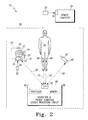
- FIG. 1 shows a system 10 for providing information related to an orthopaedic surgical procedure, such as a total knee arthroplasty procedure, to a surgeon 12, which includes a heads-up display 14 and a user-worn computer 16.
- the heads-up display 14 may be any type of heads-up display configured to be worn on the head or near the head of the surgeon 12. As such, the heads-up display may cover the full field of vision of the surgeon or a portion thereof.
- the user-worn computer 16 may be any type of computer configured to be worn by the surgeon 12.
- the user-worn computer 16 may include belts, straps, buttons, and/or other means to support the computer 16 about the waist or on the back of the surgeon 12.
- the user-worn computer 16 includes devices found in typical computer systems such as a central processing unit, memory, and a display driver configured to operate or communicate with the heads-up display 14 to display images to the surgeon 12.
- the heads-up display 14 and the user-worn computer 16 are communicatively coupled via a communication link 18.
- the heads-up display 14 includes a receiver 20 and the user-worn computer 16 includes a transmitter or transceiver 22.
- the communication link 18 may be a wired or a wireless communication link.
- the user-worn computer 16 may communicate with the head-up display 14 using any suitable wired or wireless communication protocol including, but not limited to, USB, Wireless USB, TCP/IP, Wi-Fi, Bluetooth, Zigbee, and the like.
- the heads-up display 14 and the user-worn computer 16 are embodied in a wearable computer such as that which is sold by Xybemaut Corporation of Fairfax, Virginia under the trade mark Mobile Assistant V.
- the heads-up display 14 and the user-worn computer 16 cooperate to display information related to the surgical procedure to the surgeon 12.
- the surgeon 12 may interact with the computer 16 to, for example, request additional images, respond to queries, or the Like, using one of a number of input peripherals such as a handheld, wrist, or user-worn keyboard, a foot pedal, or a microphone.
- the system 10 may include a microphone 24 communicatively coupled with the user-worn computer 16 via a communication link 26.
- the microphone 24 may be any type of microphone or other receiving device capable of receiving voice commands from the surgeon 12.
- the microphone 24 may be wired (i.e., the communication link 26 may be a wired communication link) or wireless (i.e., the communication link 26 is a wireless communication link).
- the microphone 24 may be attached to a support structure, such as a ceiling or wall of the operating room, so as to be positionable over the surgical area.
- the microphone 24 may be appropriately sized and configured to be worn, such as on the surgeons head or clothing, or held by the surgeon 12 or other surgical staff member.
- the microphone 24 is an ear or throat microphone.
- the microphone 24 may be incorporated into the heads-up display 14 or the user-worn computer 16.
- the term microphone is intended to include any transducer device capable of transducing an audible sound into an electrical signal.
- the user-worn computer 16 may also include a peripheral port 28 configured to receive a removable memory device 30.
- the peripheral port 28 is a Universal Serial Bus (USB) port.
- USB Universal Serial Bus
- the peripheral port 28 may be embodied as any type of serial port, parallel port, or other data port capable of communicating with and receiving data from the removable memory device 30.
- the removable memory device 30 may be embodied as any portable memory device configured for the purpose of transporting data from one computer system to another computer system.
- the removable memory device 30 is embodied as a removable solid-state memory device such as a removable flash memory device.
- the removable memory device 30 may be embodied as a "memory stick" flash memory device, a flash memory device (as sold under the trade mark SmartMedia), or a flash memory device (as sold under the trade mark CompactFlash).
- the removable memory device 30 may be embodied as a memory device having a microdrive for data storage. Regardless, the removable memory device 30 is capable of storing data such as patient condition data for later retrieval.
- the surgeon 12 may operate the user-worn computer 16 (e.g., via the microphone 24) to retrieve the data stored on the removable memory device 30. In this way, the surgeon 12 might "call up” or otherwise view pre-operative data that has been previously stored on the removable memory device 30.
- pre-operative data refers to any data related to the orthopaedic surgical procedure to be performed, any data related to a patient 32 on which the orthopaedic surgical procedure will be performed, or any other data useful to the surgeon 12 during the performance of the orthopaedic surgical procedure.
- the pre-operative data may include, but is not limited to, historic patient data such as X-rays and medical records, data prepared by the surgeon 12 such as pre-operative notes, diagrams, and surgical plans, and images such as three dimensional rendered images of the relevant anatomical portions of the patient 32 and surgical procedure images illustrating individual steps of the orthopaedic surgical procedure.
- the surgeon 12 may use a remote computer 34 to store the pre-operative data on the removable memory device 30.
- the remote computer 34 includes a peripheral port 36 configured to receive the removable memory device 30.
- the term "remote computer” is intended to refer to any computer or computer system which is not directly communicatively coupled to a network of the healthcare facility. That is, pre-operative data contained in a remote computer is not directly accessible via a network of the healthcare facility.
- the remote computer 34 may be located in the offices of the surgeon 12, which may not be located at the healthcare facility or hospital at which the orthopaedic surgical procedure is to be performed. As such, the remote computer 34 may not be communicatively linked with computers or data networks of the healthcare facility.
- the surgeon 12 may develop or collect pre-operative data such as pre-operative notes, diagrams, or surgical plans, X-rays, and the medical history of the patient 32. Because the remote computer 34 is not directly linked with a network of the healthcare facility, any pre-operative data stored on the remote computer 34 may not be accessible from the operating room 38. However, the surgeon 12 may store the pre-operative data on the removable memory device 30 using the remote computer 34. Subsequently, during or just prior to the performance of the orthopaedic surgical procedure, the surgeon 12 may couple the removable memory device 30 to the user-worn computer 16 via port 28 and operate the user-worn computer 16 to retrieve the pre-operative data stored on the removable memory device 30. In this way, the surgeon 12 has access to pre-operative data not typically directly accessible in the operating room 38.
- the system 10 also includes a navigation sensor processing circuit 40.
- the processing circuit 40 is located in the operating room 38.
- the processing circuit 40 includes a transmitter, receiver, or transceiver 42.
- the processing circuit 40 may include a processor 44 and a memory device 46.
- the memory device 46 includes programming code that is executable by the processor 44 to cause the processing circuit 40 to operate in the manner as described hereafter.
- the processing circuit 40 used in the system commercially available from DePuy Orthopaedics Inc of Warsaw, Indiana under the trade mark Ci.
- the navigation sensor processing circuit 40 is configured to receive a data signal from one or more navigation sensors 48 via the transceiver 42.
- the processing circuit 40 receives the data signal from the navigation sensors 48 via a communication link 50.
- the communication link 50 may be a wired or a wireless communication link and may use any communication protocol suitable to transmit the data signal from the navigation sensors 48 to the processing circuit 40.
- the term "navigation sensor” refers to any sensor configured to produce a data signal indicative of the location of the sensor or a structure to which the sensor is coupled.
- one or more navigation sensors 48 may be implanted into or otherwise coupled with a bone of the patient 32. In such embodiments, the navigation sensors 48 produce a data signal indicative of the relative position of the bone.
- a navigation sensor 48 may be coupled with an orthopaedic surgical tool 50 such as a ligament balancer tool. In such embodiments, the navigation sensor 48 produces a data signal indicative of the relative position the surgical tool 50. In yet other embodiments, a navigation sensor 48 may be coupled with or otherwise included in a medical implant such as an orthopaedic implant device. In such embodiments, the navigation sensor 48 produces a data signal indicative of the location of the medical implant.
- the navigation sensors 48 may be internally powered (e.g., include a power source such as a battery) or may be externally powered (e.g., receive power from an external source such as an interrogation signal or an electromagnet).
- the processing circuit 40 may be configured to generate an interrogation signal to cause one or more of the navigation sensors 48 to produce a data signal, which is subsequently received by the processing circuit 40 via the transceiver 42. Regardless, the processing circuit 40 is also configured to process the data signal received from the navigation sensors 48 to determine navigational data.
- the term “navigational data” refers to any data related to the location of the sensor or structure to which the sensor is coupled and/or to any data derived therefrom such as motion data related to the direction or speed of movement of the sensor 48 or structure.
- the processing circuit 40 is configured to transmit the navigational data to the user-worn computer 16 via the transceiver 42.
- the user-worn computer 16 receives the navigational data via the transceiver 22 and is configured to automatically or upon request display the navigational data to the surgeon 12 via the heads-up display 14. Accordingly, the navigation sensor processing circuit 40 and the user-worn computer 16 are coupled in communication via a communication link 54.
- the communication link 54 may be a wired or a wireless communication link and may use any communication protocol suitable to transmit the navigational data from the processing circuit 40 to the user-worn computer 16.
- the system 10 further includes a patient condition sensor processing circuit 60.
- the processing circuit 60 is located in the operating room 38 along with the processing circuit 40.
- the processing circuit 60 includes a transmitter, receiver, or transceiver 62.
- the processing circuit 60 may include a processor 64 and a memory device 66.
- the memory device 66 includes programming code that is executable by the processor 64 to cause the processing circuit 60 to operate in the manner described hereafter.
- the patient condition sensor processing circuit 60 is configured to receive a data signal from one or more patient condition sensors 68 via the transceiver 62.
- the processing circuit 60 receives the data signal from the patient condition sensors 68 via a communication link 70.
- the communication link 70 may be a wired or a wireless communication link and may use any communication protocol suitable to transmit the data signal from the patient condition sensors 68 to the processing circuit 60.
- patient condition sensor refers to any sensor, other than a navigation sensor, configured to produce a data signal indicative of a condition of the patient.
- the patient condition sensor 68 may be embodied as a pressure sensor positioned and configured to produce a data signal indicative of a joint pressure between two bones (e.g., the tibia and the femur) of the patient 32.
- the patient condition sensor 68 may be embodied as a fracture monitoring sensor coupled to a bone of the patient 32 and configured to produce a data signal indicative of a width of the bone facture. As the bone heals, the width of the bone fracture decreases thereby providing data indicative of the healing process of the bone.
- the patient condition sensor 68 may be embodied as a physiological sensor positioned and configured to produce a data signal indicative of some type of physiological data related to the patient such as, for example, a heart rate, a blood pressure value, etc.
- the patient condition sensors 68 may be internally powered (e.g., include a power source such as a battery) or may be externally powered (e.g., receive power from an external source such as an interrogation signal or an electromagnet).
- the processing circuit 60 may be configured to generate an interrogation signal to cause one or more of the navigation sensors 68 to produce a data signal, which is subsequently received by the processing circuit 60 via the transceiver 62.
- the processing circuit 60 is also configured to process the data signal received from the patient condition sensors 48 to determine patient condition data based on the received data signal.
- patient condition data refers to any data relating to a condition of the patient (i.e., data related to a patient 32 on which the orthopaedic surgical procedure will be performed) including, but not limited, to physiological conditions (e.g., heart rate, blood pressure, etc.) and anatomical conditions (e.g., joint pressure values, bone fracture width values, etc.).
- physiological conditions e.g., heart rate, blood pressure, etc.
- anatomical conditions e.g., joint pressure values, bone fracture width values, etc.
- the patient condition sensor processing circuit 60 and the user-worn computer 16 are coupled in communication via a communication link 72.
- the communication link 72 may be a wired or wireless communication link and may use any communication protocol suitable to transmit the patient condition data from the processing circuit 60 to the user-worn computer 16.
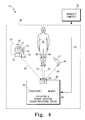
- the navigation sensor processing circuit 40 and the patient condition sensor processing circuit 60 are embodied as a single computer system 80.
- the system 80 includes a transmitter, receiver, or transceiver 82 capable of receiving data signals from the navigation sensors 48 and the patient condition sensors 68.
- the computer system 80 may include one or more processors 84 and memory devices 86 as required to process the data signals.
- the memory device 46 may include programming code that is executable by the processor 44 to cause the processing circuit 40 to operate in the manner as described hereafter.
- the computer system 80 is configured to receive the data signals from the navigation sensors 48 and the patient condition sensors 68.
- the system 80 is also configured to determine navigational data based on the data signals received from the sensors 48 and to determine patient condition data based the data signals received from the sensors 68.
- the computer system 80 transmits the navigational data and/or the patient condition data to the user-worn computer 16 via the transceiver 82 and over a communication link 88.
- the communication link 88 may be a wired or a wireless communication link and may use any communication protocol suitable to transmit the navigational data and/or the patient condition data from the computer system 80 to the user-worn computer 16.
- the user-worn computer 16 receives the transmitted data via the transceiver 22 and is configured to automatically or upon request display the navigational data and/or patient condition data to the surgeon 12 via the heads-up display 14.
- the computer system 80 is configured as a server and the user-worn computer 16 is configured as a client.
- the computer system 80 may have stored in the memory device 86 and may execute application software such as database programs, word processing programs, or the like. Functions of the application software are accessible by the user-worn computer 16.
- the surgeon 16 may search and retrieve data from a database stored on the computer system 80 using the user-worn computer 16 as a client. To do so, the surgeon provides a command to the user-worn computer 16 (e.g., via microphone 24). In response to the command, the user-worn computer 16 transmits a database request via transceiver 22 to the computer system 80 over the communication link 88.
- the computer system 80 accesses the database and retrieves the requested data.
- the computer system 80 then transmits the retrieved data to the user-worn computer 16 via the transceiver 82 and over the communication link 88.
- the user-worn computer 16 may then display the requested data to the surgeon 12 via the heads-up display 14.
- the computer system 80 may include a peripheral port 90 configured to receive the removable memory device 30.
- the user-worn computer 16 may or may not include the peripheral port 28.
- the surgeon 12 may access the patient condition data stored on the removable memory device 30 via the user-worn computer 16. To do so, the surgeon 12 provides a command to the user-worn computer 16 (e.g., via microphone 24). In response to the command, the user-worn computer 16 transmits a request command via transceiver 22 and the communication link 88 to the computer system 80. The request command is received by the transceiver 82 of the computer system 80. In response to the request command, the computer system 80 accesses the removable memory device 30 to retrieve the requested patient condition data. Once retrieved, the computer system 80 transmits the retrieved patient condition data to the user-worn computer 16 via the transceiver 82 and the communication link 88. The user-worn computer 16 may then display the requested patient condition data to the surgeon 12 via the heads-up display 14.
- the pre-operative data developed and/or collected by the surgeon 12 may be stored on a surgeon's computer 35 and accessed via the computer system 80.
- the surgeon's computer 35 is communicatively coupled with the computer system 80 via a network link 92.
- the network link 92 may form portion of a local area network (LAN), a wide area network (WAN), or a publicly-accessible global network.
- the network link 92 may be embodied as a direct connection between the surgeon's computer 35 and the computer system 80, may form a portion of the healthcare facility's data network, or may form a portion of the Internet.
- the surgeon's computer 35 and the computer system 80 may include one or more network communication devices, such as Ethernet communication cards, to facilitate communication between the computer 35 and system 80 over the network link 92.
- the surgeon 12 may access the pre-operative data stored on the surgeon's computer 35 via the user-worn computer 16 by providing a command to the user-worn computer 16 (e.g., via microphone 24).
- the user-worn computer 16 transmits a first request command via transceiver 22 and the communication link 88 to the computer system 80.
- the first request command is received by the transceiver 82 of the computer system 80.
- the computer system 80 transmits a second request command to the remote computer 34 via the network link 92.
- the computer 35 retrieves the requested pre-operative data and transmits the retrieved pre-operative data back to the computer system 80 via the network link 92.
- the computer system 80 subsequently transmits the retrieved patient condition data to the user-worn computer 16 via the transceiver 82 and the communication link 88.
- the user-worn computer 16 may then display the requested pre-operative data to the surgeon 12 via the heads-up display 14.
- the user-worn computer 16 is configured to receive the data signals from the navigational sensors 48 and/or the patient condition sensors 68.
- the user-worn computer 16 receives the data signals from the navigational sensors 48 via a communication link 94.
- the user-worn computer 16 receives the data signals from the patient condition sensors 68 via a communication link 96.
- the communication links 94, 96 may be wired or wireless communication links and may use any communication protocol suitable to transmit the data signals to the user-worn computer 16.
- the communication links 94 and 96 form the same communication link.
- the user-worn computer 16 is configured to receive the data signals and transmit the data signals to the computer system 80 via the communication link 88.
- the computer system 80 processes the data signals to determine navigational data based on data signals received from the navigation sensors 48 and/or patient condition data based on the data signals received form the patient condition sensors 68.
- the computer system 80 subsequently transmits the navigational data and/or the patient condition data to the user-worn computer 16 via the communication link 88.
- the user-worn computer 16 may then display the navigational data and/or the patient condition data to the surgeon 12 via the heads-up display 14.
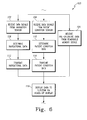
- the algorithm 100 includes a process step 102 in which data signals are received from the navigation sensors 48. Depending on the particular embodiment of the system 10, the data signals may be received by the navigation sensor processing circuit 40, the computer system 80, or the user-worn computer 16 (in those embodiments wherein the circuit 40 forms a portion of the computer 16).
- process step 104 data signals are received from the patient condition sensors 68. Again, depending on the particular embodiment of the system 10, the data signals may be received by the patient condition sensor processing circuit 60, the computer system 80, or the user-worn computer 16 (in those embodiments wherein the circuit 60 forms a portion of the computer 16).
- pre-operative data is retrieved from the removable memory device 30.
- the user-worn computer 16 may retrieve the pre-operative data from the removable memory device 30 as illustrated in and discussed in regard to FIG. 1.
- the computer system 80 may the retrieve the patient condition data from the removable memory device 30 as illustrated in and discussed in regard to FIG. 3.
- the process steps 102, 104, and 106 may be executed contemporaneously or sequentially.
- process step 108 navigational data is determined based on the data signals received from the navigation sensors 48. This process step may be performed by the processing circuit 40 or the computer system 80.
- process step 110 patient condition data is determined based on the data signals received from the patient condition sensors 68. This process step may be performed by the processing circuit 60 or the computer system 80.
- the navigational data is transmitted to the user-worn computer 16.
- the navigational data is transmitted to the user-worn computer 16 via the communication link 54 as illustrated in FIG. 1.
- the navigational data is transmitted to the user-worn computer 16 via the communication link 88 as illustrated in FIG. 3.
- the patient condition data is transmitted to the user-worn computer 16.
- the patient condition data is transmitted to the user-worn computer 16 via the communication link 72 as illustrated in FIG. 1.
- the patient condition data is transmitted to the user-worn computer 16 via the communication link 88 as illustrated in FIG. 3.
- Any navigational data and/or patient condition data transmitted in process steps 112, 114, respectively, and/or the pre-operative data received in process step 106 are displayed to the surgeon 12 in process step 116.
- the navigational data, patient condition data, and pre-operative data are displayed to the surgeon 12 via the heads-up display 14.
- the surgeon 12 may view the displayed data and interact with the user-worn computer 16 to request additional navigational and/or patient condition data.
- the algorithm 100 may loop back to process step 102, 104 and/or process step 106 to retrieve the additional navigational, patient condition data, and/or pre-operative data.
Landscapes
- Health & Medical Sciences (AREA)
- Surgery (AREA)
- Life Sciences & Earth Sciences (AREA)
- Engineering & Computer Science (AREA)
- Animal Behavior & Ethology (AREA)
- Veterinary Medicine (AREA)
- Biomedical Technology (AREA)
- Heart & Thoracic Surgery (AREA)
- Medical Informatics (AREA)
- Molecular Biology (AREA)
- Nuclear Medicine, Radiotherapy & Molecular Imaging (AREA)
- General Health & Medical Sciences (AREA)
- Public Health (AREA)
- Physics & Mathematics (AREA)
- Robotics (AREA)
- General Physics & Mathematics (AREA)
- Optics & Photonics (AREA)
- Oral & Maxillofacial Surgery (AREA)
- Pathology (AREA)
- Surgical Instruments (AREA)
- Medical Treatment And Welfare Office Work (AREA)
Applications Claiming Priority (1)
| Application Number | Priority Date | Filing Date | Title |
|---|---|---|---|
| US11/182,350 US20070015999A1 (en) | 2005-07-15 | 2005-07-15 | System and method for providing orthopaedic surgical information to a surgeon |
Publications (1)
| Publication Number | Publication Date |
|---|---|
| EP1743592A1 true EP1743592A1 (fr) | 2007-01-17 |
Family
ID=36954602
Family Applications (1)
| Application Number | Title | Priority Date | Filing Date |
|---|---|---|---|
| EP06253685A Withdrawn EP1743592A1 (fr) | 2005-07-15 | 2006-07-13 | Système destine a fournir des informations a un chirurgien |
Country Status (3)
| Country | Link |
|---|---|
| US (1) | US20070015999A1 (fr) |
| EP (1) | EP1743592A1 (fr) |
| JP (1) | JP2007061603A (fr) |
Cited By (29)
| Publication number | Priority date | Publication date | Assignee | Title |
|---|---|---|---|---|
| WO2012084739A1 (fr) * | 2010-12-20 | 2012-06-28 | Eco Coverage Technologies Limited | Système de navigation orthopédique |
| WO2012061727A3 (fr) * | 2010-11-05 | 2012-11-01 | Ethicon Enco-Surgery, Inc. | Lunettes de sécurité pour instrument chirurgical |
| US8998939B2 (en) | 2010-11-05 | 2015-04-07 | Ethicon Endo-Surgery, Inc. | Surgical instrument with modular end effector |
| US9000720B2 (en) | 2010-11-05 | 2015-04-07 | Ethicon Endo-Surgery, Inc. | Medical device packaging with charging interface |
| US9011471B2 (en) | 2010-11-05 | 2015-04-21 | Ethicon Endo-Surgery, Inc. | Surgical instrument with pivoting coupling to modular shaft and end effector |
| US9017849B2 (en) | 2010-11-05 | 2015-04-28 | Ethicon Endo-Surgery, Inc. | Power source management for medical device |
| US9017851B2 (en) | 2010-11-05 | 2015-04-28 | Ethicon Endo-Surgery, Inc. | Sterile housing for non-sterile medical device component |
| US9039720B2 (en) | 2010-11-05 | 2015-05-26 | Ethicon Endo-Surgery, Inc. | Surgical instrument with ratcheting rotatable shaft |
| US9089338B2 (en) | 2010-11-05 | 2015-07-28 | Ethicon Endo-Surgery, Inc. | Medical device packaging with window for insertion of reusable component |
| US9161803B2 (en) | 2010-11-05 | 2015-10-20 | Ethicon Endo-Surgery, Inc. | Motor driven electrosurgical device with mechanical and electrical feedback |
| US9247986B2 (en) | 2010-11-05 | 2016-02-02 | Ethicon Endo-Surgery, Llc | Surgical instrument with ultrasonic transducer having integral switches |
| US9375255B2 (en) | 2010-11-05 | 2016-06-28 | Ethicon Endo-Surgery, Llc | Surgical instrument handpiece with resiliently biased coupling to modular shaft and end effector |
| US9381058B2 (en) | 2010-11-05 | 2016-07-05 | Ethicon Endo-Surgery, Llc | Recharge system for medical devices |
| US9421062B2 (en) | 2010-11-05 | 2016-08-23 | Ethicon Endo-Surgery, Llc | Surgical instrument shaft with resiliently biased coupling to handpiece |
| US9526921B2 (en) | 2010-11-05 | 2016-12-27 | Ethicon Endo-Surgery, Llc | User feedback through end effector of surgical instrument |
| US9597143B2 (en) | 2010-11-05 | 2017-03-21 | Ethicon Endo-Surgery, Llc | Sterile medical instrument charging device |
| US9649150B2 (en) | 2010-11-05 | 2017-05-16 | Ethicon Endo-Surgery, Llc | Selective activation of electronic components in medical device |
| RU2621488C2 (ru) * | 2013-02-14 | 2017-06-06 | Сейко Эпсон Корпорейшн | Укрепляемый на голове дисплей и способ управления для укрепляемого на голове дисплея |
| US9782215B2 (en) | 2010-11-05 | 2017-10-10 | Ethicon Endo-Surgery, Llc | Surgical instrument with ultrasonic transducer having integral switches |
| US9782214B2 (en) | 2010-11-05 | 2017-10-10 | Ethicon Llc | Surgical instrument with sensor and powered control |
| US10085792B2 (en) | 2010-11-05 | 2018-10-02 | Ethicon Llc | Surgical instrument with motorized attachment feature |
| US10136938B2 (en) | 2014-10-29 | 2018-11-27 | Ethicon Llc | Electrosurgical instrument with sensor |
| US10537380B2 (en) | 2010-11-05 | 2020-01-21 | Ethicon Llc | Surgical instrument with charging station and wireless communication |
| US10660695B2 (en) | 2010-11-05 | 2020-05-26 | Ethicon Llc | Sterile medical instrument charging device |
| US10881448B2 (en) | 2010-11-05 | 2021-01-05 | Ethicon Llc | Cam driven coupling between ultrasonic transducer and waveguide in surgical instrument |
| US10959769B2 (en) | 2010-11-05 | 2021-03-30 | Ethicon Llc | Surgical instrument with slip ring assembly to power ultrasonic transducer |
| US10973563B2 (en) | 2010-11-05 | 2021-04-13 | Ethicon Llc | Surgical instrument with charging devices |
| US11439469B2 (en) | 2018-06-19 | 2022-09-13 | Howmedica Osteonics Corp. | Virtual guidance for orthopedic surgical procedures |
| US12465374B2 (en) | 2019-12-18 | 2025-11-11 | Howmedica Osteonics Corp. | Surgical guidance for surgical tools |
Families Citing this family (30)
| Publication number | Priority date | Publication date | Assignee | Title |
|---|---|---|---|---|
| US8635082B2 (en) | 2006-05-25 | 2014-01-21 | DePuy Synthes Products, LLC | Method and system for managing inventories of orthopaedic implants |
| EP1915962B1 (fr) * | 2006-10-26 | 2008-12-03 | BrainLAB AG | Système médical integré de localisation et de suivi |
| US20090005708A1 (en) * | 2007-06-29 | 2009-01-01 | Johanson Norman A | Orthopaedic Implant Load Sensor And Method Of Interpreting The Same |
| US8876830B2 (en) * | 2009-08-13 | 2014-11-04 | Zimmer, Inc. | Virtual implant placement in the OR |
| JP2013180177A (ja) * | 2012-03-05 | 2013-09-12 | Air Water Safety Service Inc | 生体情報監視システム |
| WO2013164770A2 (fr) * | 2012-05-02 | 2013-11-07 | Stryker Global Technology Center | Systèmes de traçage manuels et dispositifs d'alignement de systèmes d'implant durant une chirurgie |
| US20140081659A1 (en) | 2012-09-17 | 2014-03-20 | Depuy Orthopaedics, Inc. | Systems and methods for surgical and interventional planning, support, post-operative follow-up, and functional recovery tracking |
| CN103083117A (zh) * | 2013-01-18 | 2013-05-08 | 周一新 | 关节假体导航试模系统 |
| US9220572B2 (en) | 2013-03-14 | 2015-12-29 | Biomet Manufacturing, Llc | Method for implanting a hip prosthesis and related system |
| US10758198B2 (en) | 2014-02-25 | 2020-09-01 | DePuy Synthes Products, Inc. | Systems and methods for intra-operative image analysis |
| US12295772B2 (en) | 2014-02-25 | 2025-05-13 | DePuy Synthes Products, Inc. | Systems and methods for intra-operative image analysis |
| US10433914B2 (en) | 2014-02-25 | 2019-10-08 | JointPoint, Inc. | Systems and methods for intra-operative image analysis |
| US10154239B2 (en) | 2014-12-30 | 2018-12-11 | Onpoint Medical, Inc. | Image-guided surgery with surface reconstruction and augmented reality visualization |
| WO2017075657A1 (fr) * | 2015-11-05 | 2017-05-11 | 360 Knee Systems Pty Ltd | Gestion des patients de chirurgie du genou |
| CN111329552B (zh) | 2016-03-12 | 2021-06-22 | P·K·朗 | 包括机器人的用于引导骨切除的增强现实可视化 |
| US10182871B2 (en) | 2016-05-22 | 2019-01-22 | JointPoint, Inc. | Systems and methods for intra-operative image acquisition and calibration |
| CN107865702A (zh) * | 2016-09-28 | 2018-04-03 | 李健 | 一种医用智能手术显微系统 |
| EP3568070B1 (fr) | 2017-01-16 | 2024-01-03 | Philipp K. Lang | Guidage optique pour procédures chirurgicales, médicales et dentaires |
| JP2017099920A (ja) * | 2017-01-23 | 2017-06-08 | エア・ウォーター防災株式会社 | 生体情報監視システム |
| US11801114B2 (en) | 2017-09-11 | 2023-10-31 | Philipp K. Lang | Augmented reality display for vascular and other interventions, compensation for cardiac and respiratory motion |
| US11348257B2 (en) | 2018-01-29 | 2022-05-31 | Philipp K. Lang | Augmented reality guidance for orthopedic and other surgical procedures |
| US11553969B1 (en) | 2019-02-14 | 2023-01-17 | Onpoint Medical, Inc. | System for computation of object coordinates accounting for movement of a surgical site for spinal and other procedures |
| US11857378B1 (en) | 2019-02-14 | 2024-01-02 | Onpoint Medical, Inc. | Systems for adjusting and tracking head mounted displays during surgery including with surgical helmets |
| US12211151B1 (en) | 2019-07-30 | 2025-01-28 | Onpoint Medical, Inc. | Systems for optimizing augmented reality displays for surgical procedures |
| JP7608453B2 (ja) | 2019-10-31 | 2025-01-06 | テルモ カーディオバスキュラー システムズ コーポレイション | 拡張現実ディスプレイを有する人工心肺装置 |
| US11724098B2 (en) | 2020-01-30 | 2023-08-15 | Terumo Cardiovascular Systems Corporation | Stepper motor drive systems and tubing occluder system |
| US12053247B1 (en) | 2020-12-04 | 2024-08-06 | Onpoint Medical, Inc. | System for multi-directional tracking of head mounted displays for real-time augmented reality guidance of surgical procedures |
| WO2022192585A1 (fr) | 2021-03-10 | 2022-09-15 | Onpoint Medical, Inc. | Guidage de réalité augmentée pour systèmes d'imagerie et chirurgie robotique |
| US11887306B2 (en) | 2021-08-11 | 2024-01-30 | DePuy Synthes Products, Inc. | System and method for intraoperatively determining image alignment |
| US12433761B1 (en) | 2022-01-20 | 2025-10-07 | Onpoint Medical, Inc. | Systems and methods for determining the shape of spinal rods and spinal interbody devices for use with augmented reality displays, navigation systems and robots in minimally invasive spine procedures |
Citations (8)
| Publication number | Priority date | Publication date | Assignee | Title |
|---|---|---|---|---|
| US6034296A (en) * | 1997-03-11 | 2000-03-07 | Elvin; Niell | Implantable bone strain telemetry sensing system and method |
| WO2002067783A2 (fr) * | 2001-02-27 | 2002-09-06 | Smith & Nephew, Inc. | Systemes et procedes d'arthroplastie complete du genou |
| JP2002291706A (ja) * | 2001-03-30 | 2002-10-08 | Toshiba Corp | ウェアラブルコンピュータ、ウェアラブルコンピュータ用プログラム、及びウェアラブルコンピュータを利用した医療診断システム |
| WO2003042968A1 (fr) * | 2001-11-14 | 2003-05-22 | The Henry M. Jackson Foundation | Procede et systeme permettant de presenter des informations physiologiques en temps reel au moyen d'un visiocasque |
| EP1321097A2 (fr) * | 2001-12-21 | 2003-06-25 | Biosense, Inc. | Capteur de position sans fil |
| WO2003077101A2 (fr) * | 2002-03-06 | 2003-09-18 | Z-Kat, Inc. | Systeme et procede d'utilisation d'un dispositif haptique en combinaison avec un systeme de chirurgie assistee par ordinateur |
| WO2004069041A2 (fr) * | 2003-02-04 | 2004-08-19 | Z-Kat, Inc. | Procede et appareil permettant d'assister par ordinateur une operation de remplacement total de la hanche |
| US6847336B1 (en) * | 1996-10-02 | 2005-01-25 | Jerome H. Lemelson | Selectively controllable heads-up display system |
Family Cites Families (29)
| Publication number | Priority date | Publication date | Assignee | Title |
|---|---|---|---|---|
| JP3024162B2 (ja) * | 1990-03-30 | 2000-03-21 | 株式会社島津製作所 | 手術用ヘッドアップディスプレイ |
| US6405072B1 (en) * | 1991-01-28 | 2002-06-11 | Sherwood Services Ag | Apparatus and method for determining a location of an anatomical target with reference to a medical apparatus |
| US5197488A (en) * | 1991-04-05 | 1993-03-30 | N. K. Biotechnical Engineering Co. | Knee joint load measuring instrument and joint prosthesis |
| US5470354A (en) * | 1991-11-12 | 1995-11-28 | Biomet Inc. | Force sensing apparatus and method for orthopaedic joint reconstruction |
| US5305244B2 (en) * | 1992-04-06 | 1997-09-23 | Computer Products & Services I | Hands-free user-supported portable computer |
| US5526812A (en) * | 1993-06-21 | 1996-06-18 | General Electric Company | Display system for enhancing visualization of body structures during medical procedures |
| US6463361B1 (en) * | 1994-09-22 | 2002-10-08 | Computer Motion, Inc. | Speech interface for an automated endoscopic system |
| US6646541B1 (en) * | 1996-06-24 | 2003-11-11 | Computer Motion, Inc. | General purpose distributed operating room control system |
| US7053752B2 (en) * | 1996-08-06 | 2006-05-30 | Intuitive Surgical | General purpose distributed operating room control system |
| US5733292A (en) * | 1995-09-15 | 1998-03-31 | Midwest Orthopaedic Research Foundation | Arthroplasty trial prosthesis alignment devices and associated methods |
| US6351659B1 (en) * | 1995-09-28 | 2002-02-26 | Brainlab Med. Computersysteme Gmbh | Neuro-navigation system |
| JPH09114543A (ja) * | 1995-10-02 | 1997-05-02 | Xybernaut Corp | ハンドフリーコンピュータ装置 |
| US6496099B2 (en) * | 1996-06-24 | 2002-12-17 | Computer Motion, Inc. | General purpose distributed operating room control system |
| US6642836B1 (en) * | 1996-08-06 | 2003-11-04 | Computer Motion, Inc. | General purpose distributed operating room control system |
| US5719743A (en) * | 1996-08-15 | 1998-02-17 | Xybernaut Corporation | Torso worn computer which can stand alone |
| US5824085A (en) * | 1996-09-30 | 1998-10-20 | Integrated Surgical Systems, Inc. | System and method for cavity generation for surgical planning and initial placement of a bone prosthesis |
| US5844656A (en) * | 1996-11-07 | 1998-12-01 | Xybernaut Corporation | Head mounted display with adjustment components |
| US5757339A (en) * | 1997-01-06 | 1998-05-26 | Xybernaut Corporation | Head mounted display |
| US6119033A (en) * | 1997-03-04 | 2000-09-12 | Biotrack, Inc. | Method of monitoring a location of an area of interest within a patient during a medical procedure |
| JPH11197159A (ja) * | 1998-01-13 | 1999-07-27 | Hitachi Ltd | 手術支援システム |
| US6532482B1 (en) * | 1998-09-25 | 2003-03-11 | Xybernaut Corporation | Mobile computer with audio interrupt system |
| US6301593B1 (en) * | 1998-09-25 | 2001-10-09 | Xybernaut Corp. | Mobile computer with audio interrupt system |
| AU2400200A (en) * | 1998-12-31 | 2000-07-31 | Ball Semiconductor Inc. | Miniature implanted orthopedic sensors |
| DE10040498A1 (de) * | 1999-09-07 | 2001-03-15 | Zeiss Carl Fa | Vorrichtung zur bildgestützten Bearbeitung eines Arbeitsobjekts |
| US7156809B2 (en) * | 1999-12-17 | 2007-01-02 | Q-Tec Systems Llc | Method and apparatus for health and disease management combining patient data monitoring with wireless internet connectivity |
| US6421232B2 (en) * | 2000-08-02 | 2002-07-16 | Xybernaut Corporation | Dual FPD and thin client |
| US6798391B2 (en) * | 2001-01-02 | 2004-09-28 | Xybernaut Corporation | Wearable computer system |
| US6552899B2 (en) * | 2001-05-08 | 2003-04-22 | Xybernaut Corp. | Mobile computer |
| US6741883B2 (en) * | 2002-02-28 | 2004-05-25 | Houston Stereotactic Concepts, Inc. | Audible feedback from positional guidance systems |
-
2005
- 2005-07-15 US US11/182,350 patent/US20070015999A1/en not_active Abandoned
-
2006
- 2006-07-13 EP EP06253685A patent/EP1743592A1/fr not_active Withdrawn
- 2006-07-14 JP JP2006194558A patent/JP2007061603A/ja active Pending
Patent Citations (8)
| Publication number | Priority date | Publication date | Assignee | Title |
|---|---|---|---|---|
| US6847336B1 (en) * | 1996-10-02 | 2005-01-25 | Jerome H. Lemelson | Selectively controllable heads-up display system |
| US6034296A (en) * | 1997-03-11 | 2000-03-07 | Elvin; Niell | Implantable bone strain telemetry sensing system and method |
| WO2002067783A2 (fr) * | 2001-02-27 | 2002-09-06 | Smith & Nephew, Inc. | Systemes et procedes d'arthroplastie complete du genou |
| JP2002291706A (ja) * | 2001-03-30 | 2002-10-08 | Toshiba Corp | ウェアラブルコンピュータ、ウェアラブルコンピュータ用プログラム、及びウェアラブルコンピュータを利用した医療診断システム |
| WO2003042968A1 (fr) * | 2001-11-14 | 2003-05-22 | The Henry M. Jackson Foundation | Procede et systeme permettant de presenter des informations physiologiques en temps reel au moyen d'un visiocasque |
| EP1321097A2 (fr) * | 2001-12-21 | 2003-06-25 | Biosense, Inc. | Capteur de position sans fil |
| WO2003077101A2 (fr) * | 2002-03-06 | 2003-09-18 | Z-Kat, Inc. | Systeme et procede d'utilisation d'un dispositif haptique en combinaison avec un systeme de chirurgie assistee par ordinateur |
| WO2004069041A2 (fr) * | 2003-02-04 | 2004-08-19 | Z-Kat, Inc. | Procede et appareil permettant d'assister par ordinateur une operation de remplacement total de la hanche |
Non-Patent Citations (2)
| Title |
|---|
| ANONYMOUS, 6 May 2004 (2004-05-06), XP002399700, Retrieved from the Internet <URL:http://web.archive.org/web/20040506090145/http://www.wearable.ethz.ch/vision.0.html> [retrieved on 20050914] * |
| PATENT ABSTRACTS OF JAPAN vol. 2003, no. 02 5 February 2003 (2003-02-05) * |
Cited By (60)
| Publication number | Priority date | Publication date | Assignee | Title |
|---|---|---|---|---|
| US10660695B2 (en) | 2010-11-05 | 2020-05-26 | Ethicon Llc | Sterile medical instrument charging device |
| US9011427B2 (en) | 2010-11-05 | 2015-04-21 | Ethicon Endo-Surgery, Inc. | Surgical instrument safety glasses |
| US9000720B2 (en) | 2010-11-05 | 2015-04-07 | Ethicon Endo-Surgery, Inc. | Medical device packaging with charging interface |
| US9011471B2 (en) | 2010-11-05 | 2015-04-21 | Ethicon Endo-Surgery, Inc. | Surgical instrument with pivoting coupling to modular shaft and end effector |
| WO2012061727A3 (fr) * | 2010-11-05 | 2012-11-01 | Ethicon Enco-Surgery, Inc. | Lunettes de sécurité pour instrument chirurgical |
| US9017849B2 (en) | 2010-11-05 | 2015-04-28 | Ethicon Endo-Surgery, Inc. | Power source management for medical device |
| US9017851B2 (en) | 2010-11-05 | 2015-04-28 | Ethicon Endo-Surgery, Inc. | Sterile housing for non-sterile medical device component |
| US9039720B2 (en) | 2010-11-05 | 2015-05-26 | Ethicon Endo-Surgery, Inc. | Surgical instrument with ratcheting rotatable shaft |
| US9072523B2 (en) | 2010-11-05 | 2015-07-07 | Ethicon Endo-Surgery, Inc. | Medical device with feature for sterile acceptance of non-sterile reusable component |
| US9089338B2 (en) | 2010-11-05 | 2015-07-28 | Ethicon Endo-Surgery, Inc. | Medical device packaging with window for insertion of reusable component |
| US9095346B2 (en) | 2010-11-05 | 2015-08-04 | Ethicon Endo-Surgery, Inc. | Medical device usage data processing |
| US9161803B2 (en) | 2010-11-05 | 2015-10-20 | Ethicon Endo-Surgery, Inc. | Motor driven electrosurgical device with mechanical and electrical feedback |
| US9192428B2 (en) | 2010-11-05 | 2015-11-24 | Ethicon Endo-Surgery, Inc. | Surgical instrument with modular clamp pad |
| US9247986B2 (en) | 2010-11-05 | 2016-02-02 | Ethicon Endo-Surgery, Llc | Surgical instrument with ultrasonic transducer having integral switches |
| US9308009B2 (en) | 2010-11-05 | 2016-04-12 | Ethicon Endo-Surgery, Llc | Surgical instrument with modular shaft and transducer |
| US9364279B2 (en) | 2010-11-05 | 2016-06-14 | Ethicon Endo-Surgery, Llc | User feedback through handpiece of surgical instrument |
| US9375255B2 (en) | 2010-11-05 | 2016-06-28 | Ethicon Endo-Surgery, Llc | Surgical instrument handpiece with resiliently biased coupling to modular shaft and end effector |
| US9381058B2 (en) | 2010-11-05 | 2016-07-05 | Ethicon Endo-Surgery, Llc | Recharge system for medical devices |
| US9421062B2 (en) | 2010-11-05 | 2016-08-23 | Ethicon Endo-Surgery, Llc | Surgical instrument shaft with resiliently biased coupling to handpiece |
| US9510895B2 (en) | 2010-11-05 | 2016-12-06 | Ethicon Endo-Surgery, Llc | Surgical instrument with modular shaft and end effector |
| US9526921B2 (en) | 2010-11-05 | 2016-12-27 | Ethicon Endo-Surgery, Llc | User feedback through end effector of surgical instrument |
| US9597143B2 (en) | 2010-11-05 | 2017-03-21 | Ethicon Endo-Surgery, Llc | Sterile medical instrument charging device |
| US9649150B2 (en) | 2010-11-05 | 2017-05-16 | Ethicon Endo-Surgery, Llc | Selective activation of electronic components in medical device |
| US9782215B2 (en) | 2010-11-05 | 2017-10-10 | Ethicon Endo-Surgery, Llc | Surgical instrument with ultrasonic transducer having integral switches |
| US9782214B2 (en) | 2010-11-05 | 2017-10-10 | Ethicon Llc | Surgical instrument with sensor and powered control |
| US10085792B2 (en) | 2010-11-05 | 2018-10-02 | Ethicon Llc | Surgical instrument with motorized attachment feature |
| US10143513B2 (en) | 2010-11-05 | 2018-12-04 | Ethicon Llc | Gear driven coupling between ultrasonic transducer and waveguide in surgical instrument |
| US10376304B2 (en) | 2010-11-05 | 2019-08-13 | Ethicon Llc | Surgical instrument with modular shaft and end effector |
| US8998939B2 (en) | 2010-11-05 | 2015-04-07 | Ethicon Endo-Surgery, Inc. | Surgical instrument with modular end effector |
| US11925335B2 (en) | 2010-11-05 | 2024-03-12 | Cilag Gmbh International | Surgical instrument with slip ring assembly to power ultrasonic transducer |
| US11744635B2 (en) | 2010-11-05 | 2023-09-05 | Cilag Gmbh International | Sterile medical instrument charging device |
| US10881448B2 (en) | 2010-11-05 | 2021-01-05 | Ethicon Llc | Cam driven coupling between ultrasonic transducer and waveguide in surgical instrument |
| US10945783B2 (en) | 2010-11-05 | 2021-03-16 | Ethicon Llc | Surgical instrument with modular shaft and end effector |
| US10959769B2 (en) | 2010-11-05 | 2021-03-30 | Ethicon Llc | Surgical instrument with slip ring assembly to power ultrasonic transducer |
| US10973563B2 (en) | 2010-11-05 | 2021-04-13 | Ethicon Llc | Surgical instrument with charging devices |
| US11389228B2 (en) | 2010-11-05 | 2022-07-19 | Cilag Gmbh International | Surgical instrument with sensor and powered control |
| US11690605B2 (en) | 2010-11-05 | 2023-07-04 | Cilag Gmbh International | Surgical instrument with charging station and wireless communication |
| US10537380B2 (en) | 2010-11-05 | 2020-01-21 | Ethicon Llc | Surgical instrument with charging station and wireless communication |
| WO2012084739A1 (fr) * | 2010-12-20 | 2012-06-28 | Eco Coverage Technologies Limited | Système de navigation orthopédique |
| RU2621488C2 (ru) * | 2013-02-14 | 2017-06-06 | Сейко Эпсон Корпорейшн | Укрепляемый на голове дисплей и способ управления для укрепляемого на голове дисплея |
| US10136938B2 (en) | 2014-10-29 | 2018-11-27 | Ethicon Llc | Electrosurgical instrument with sensor |
| US11478310B2 (en) | 2018-06-19 | 2022-10-25 | Howmedica Osteonics Corp. | Virtual guidance for ankle surgery procedures |
| US12112269B2 (en) | 2018-06-19 | 2024-10-08 | Howmedica Osteonics Corp. | Mixed reality-aided surgical assistance in orthopedic surgical procedures |
| US11645531B2 (en) | 2018-06-19 | 2023-05-09 | Howmedica Osteonics Corp. | Mixed-reality surgical system with physical markers for registration of virtual models |
| US12112843B2 (en) | 2018-06-19 | 2024-10-08 | Howmedica Osteonics Corp. | Mixed reality-aided education related to orthopedic surgical procedures |
| US12050999B2 (en) | 2018-06-19 | 2024-07-30 | Howmedica Osteonics Corp. | Virtual guidance for orthopedic surgical procedures |
| US12020801B2 (en) | 2018-06-19 | 2024-06-25 | Howmedica Osteonics Corp. | Virtual guidance for orthopedic surgical procedures |
| US11439469B2 (en) | 2018-06-19 | 2022-09-13 | Howmedica Osteonics Corp. | Virtual guidance for orthopedic surgical procedures |
| US12046349B2 (en) | 2018-06-19 | 2024-07-23 | Howmedica Osteonics Corp. | Visualization of intraoperatively modified surgical plans |
| US11571263B2 (en) | 2018-06-19 | 2023-02-07 | Howmedica Osteonics Corp. | Mixed-reality surgical system with physical markers for registration of virtual models |
| US11657287B2 (en) | 2018-06-19 | 2023-05-23 | Howmedica Osteonics Corp. | Virtual guidance for ankle surgery procedures |
| US12125577B2 (en) | 2018-06-19 | 2024-10-22 | Howmedica Osteonics Corp. | Mixed reality-aided education using virtual models or virtual representations for orthopedic surgical procedures |
| US12148518B2 (en) | 2018-06-19 | 2024-11-19 | Howmedica Osteonics Corp. | Neural network for recommendation of shoulder surgery type |
| US12170139B2 (en) | 2018-06-19 | 2024-12-17 | Howmedica Osteonics Corp. | Virtual checklists for orthopedic surgery |
| US12237066B2 (en) | 2018-06-19 | 2025-02-25 | Howmedica Osteonics Corp. | Multi-user collaboration and workflow techniques for orthopedic surgical procedures using mixed reality |
| US12266440B2 (en) | 2018-06-19 | 2025-04-01 | Howmedica Osteonics Corp. | Automated instrument or component assistance using mixed reality in orthopedic surgical procedures |
| US12347545B2 (en) | 2018-06-19 | 2025-07-01 | Howmedica Osteonics Corp. | Automated instrument or component assistance using externally controlled light sources in orthopedic surgical procedures |
| US12362057B2 (en) | 2018-06-19 | 2025-07-15 | Howmedica Osteonics Corp. | Virtual guidance for orthopedic surgical procedures |
| US12380986B2 (en) | 2018-06-19 | 2025-08-05 | Howmedica Osteonics Corp. | Virtual guidance for orthopedic surgical procedures |
| US12465374B2 (en) | 2019-12-18 | 2025-11-11 | Howmedica Osteonics Corp. | Surgical guidance for surgical tools |
Also Published As
| Publication number | Publication date |
|---|---|
| JP2007061603A (ja) | 2007-03-15 |
| US20070015999A1 (en) | 2007-01-18 |
Similar Documents
| Publication | Publication Date | Title |
|---|---|---|
| EP1743592A1 (fr) | Système destine a fournir des informations a un chirurgien | |
| CN114466625B (zh) | 全膝关节置换翻修术期间的髓内管的配准 | |
| CN112867460B (zh) | 用于手术导航的双位置跟踪硬件安装件 | |
| US12605167B2 (en) | Surgical system for cutting an anatomical structure according to at least one target plane | |
| US11974818B2 (en) | Surgical tracking methods and fiber optic shape sensing devices thereof | |
| JP6779959B2 (ja) | 医療用画像データからの患者固有の整形外科手術計画の生成 | |
| US12062435B2 (en) | Data transmission systems and methods for operative setting | |
| US8357111B2 (en) | Method and system for designing patient-specific orthopaedic surgical instruments | |
| US11055648B2 (en) | Method and system for managing inventories of orthopaedic implants | |
| US8565853B2 (en) | Simulated bone or tissue manipulation | |
| CN112930149B (zh) | 髌骨跟踪方法和系统 | |
| CN116234489A (zh) | 无标记导航系统 | |
| JP2022533586A (ja) | 整形外科インプラント埋植のための骨壁追跡及びガイダンス | |
| US20220395340A1 (en) | Methods for detecting robotic arm end effector attachment and devices thereof | |
| JP2023545257A (ja) | 膝蓋骨に対する置換術を計画するコンピュータ実装方法 | |
| WO2020185930A1 (fr) | Systèmes et procédés associés à des bras robotisés passifs | |
| JP2023505956A (ja) | 拡張現実を使用した解剖学的特徴抽出およびプレゼンテーション | |
| JP2015516228A (ja) | 携帯型追跡システム、携帯型追跡システムを用いる方法 | |
| WO2023250333A1 (fr) | Dispositifs, systèmes, et procédés pour prédire une durée chirurgicale, et optimiser des procédures et des résultats médicaux | |
| JP2023514042A (ja) | 関節伸張システム | |
| US20230087709A1 (en) | Fiducial tracking knee brace device and methods thereof | |
| CN115697212A (zh) | 具有数字力和位移感测的膝关节张紧器 | |
| WO2021076560A1 (fr) | Suivi chirurgical utilisant un marqueur de broche passif 3d | |
| EP4093300A1 (fr) | Procédés et systèmes de préparation d'os assistée robotisée à plusieurs étages pour implants sans ciment | |
| EP4087467B1 (fr) | Outil de tendeur et chaussette avec grille de capteur de pression destinée à être utilisée avec celui-ci |
Legal Events
| Date | Code | Title | Description |
|---|---|---|---|
| PUAI | Public reference made under article 153(3) epc to a published international application that has entered the european phase |
Free format text: ORIGINAL CODE: 0009012 |
|
| AK | Designated contracting states |
Kind code of ref document: A1 Designated state(s): AT BE BG CH CY CZ DE DK EE ES FI FR GB GR HU IE IS IT LI LT LU LV MC NL PL PT RO SE SI SK TR |
|
| AX | Request for extension of the european patent |
Extension state: AL BA HR MK YU |
|
| 17P | Request for examination filed |
Effective date: 20070709 |
|
| 17Q | First examination report despatched |
Effective date: 20070814 |
|
| AKX | Designation fees paid |
Designated state(s): AT BE BG CH CY CZ DE DK EE ES FI FR GB GR HU IE IS IT LI LT LU LV MC NL PL PT RO SE SI SK TR |
|
| STAA | Information on the status of an ep patent application or granted ep patent |
Free format text: STATUS: THE APPLICATION IS DEEMED TO BE WITHDRAWN |
|
| 18D | Application deemed to be withdrawn |
Effective date: 20090630 |