EP1743941B1 - Nouveau allergene aux acariens - Google Patents
Nouveau allergene aux acariens Download PDFInfo
- Publication number
- EP1743941B1 EP1743941B1 EP05730025.3A EP05730025A EP1743941B1 EP 1743941 B1 EP1743941 B1 EP 1743941B1 EP 05730025 A EP05730025 A EP 05730025A EP 1743941 B1 EP1743941 B1 EP 1743941B1
- Authority
- EP
- European Patent Office
- Prior art keywords
- mite allergen
- mite
- recombinant
- amino acid
- allergen
- Prior art date
- Legal status (The legal status is an assumption and is not a legal conclusion. Google has not performed a legal analysis and makes no representation as to the accuracy of the status listed.)
- Expired - Lifetime
Links
Images







Classifications
-
- C—CHEMISTRY; METALLURGY
- C07—ORGANIC CHEMISTRY
- C07K—PEPTIDES
- C07K16/00—Immunoglobulins [IG], e.g. monoclonal or polyclonal antibodies
- C07K16/18—Immunoglobulins [IG], e.g. monoclonal or polyclonal antibodies against material from animals or humans
-
- C—CHEMISTRY; METALLURGY
- C07—ORGANIC CHEMISTRY
- C07K—PEPTIDES
- C07K14/00—Peptides having more than 20 amino acids; Gastrins; Somatostatins; Melanotropins; Derivatives thereof
- C07K14/435—Peptides having more than 20 amino acids; Gastrins; Somatostatins; Melanotropins; Derivatives thereof from animals; from humans
- C07K14/43504—Peptides having more than 20 amino acids; Gastrins; Somatostatins; Melanotropins; Derivatives thereof from animals; from humans from invertebrates
- C07K14/43513—Peptides having more than 20 amino acids; Gastrins; Somatostatins; Melanotropins; Derivatives thereof from animals; from humans from invertebrates from arachnidae
- C07K14/43531—Peptides having more than 20 amino acids; Gastrins; Somatostatins; Melanotropins; Derivatives thereof from animals; from humans from invertebrates from arachnidae from mites
-
- A—HUMAN NECESSITIES
- A61—MEDICAL OR VETERINARY SCIENCE; HYGIENE
- A61K—PREPARATIONS FOR MEDICAL, DENTAL OR TOILETRY PURPOSES
- A61K39/00—Medicinal preparations containing antigens or antibodies
- A61K39/35—Allergens
-
- A—HUMAN NECESSITIES
- A61—MEDICAL OR VETERINARY SCIENCE; HYGIENE
- A61K—PREPARATIONS FOR MEDICAL, DENTAL OR TOILETRY PURPOSES
- A61K49/00—Preparations for testing in vivo
-
- A—HUMAN NECESSITIES
- A61—MEDICAL OR VETERINARY SCIENCE; HYGIENE
- A61P—SPECIFIC THERAPEUTIC ACTIVITY OF CHEMICAL COMPOUNDS OR MEDICINAL PREPARATIONS
- A61P11/00—Drugs for disorders of the respiratory system
- A61P11/02—Nasal agents, e.g. decongestants
-
- A—HUMAN NECESSITIES
- A61—MEDICAL OR VETERINARY SCIENCE; HYGIENE
- A61P—SPECIFIC THERAPEUTIC ACTIVITY OF CHEMICAL COMPOUNDS OR MEDICINAL PREPARATIONS
- A61P11/00—Drugs for disorders of the respiratory system
- A61P11/06—Antiasthmatics
-
- A—HUMAN NECESSITIES
- A61—MEDICAL OR VETERINARY SCIENCE; HYGIENE
- A61P—SPECIFIC THERAPEUTIC ACTIVITY OF CHEMICAL COMPOUNDS OR MEDICINAL PREPARATIONS
- A61P17/00—Drugs for dermatological disorders
- A61P17/04—Antipruritics
-
- A—HUMAN NECESSITIES
- A61—MEDICAL OR VETERINARY SCIENCE; HYGIENE
- A61P—SPECIFIC THERAPEUTIC ACTIVITY OF CHEMICAL COMPOUNDS OR MEDICINAL PREPARATIONS
- A61P27/00—Drugs for disorders of the senses
- A61P27/02—Ophthalmic agents
- A61P27/14—Decongestants or antiallergics
-
- A—HUMAN NECESSITIES
- A61—MEDICAL OR VETERINARY SCIENCE; HYGIENE
- A61P—SPECIFIC THERAPEUTIC ACTIVITY OF CHEMICAL COMPOUNDS OR MEDICINAL PREPARATIONS
- A61P33/00—Antiparasitic agents
- A61P33/14—Ectoparasiticides, e.g. scabicides
-
- A—HUMAN NECESSITIES
- A61—MEDICAL OR VETERINARY SCIENCE; HYGIENE
- A61P—SPECIFIC THERAPEUTIC ACTIVITY OF CHEMICAL COMPOUNDS OR MEDICINAL PREPARATIONS
- A61P37/00—Drugs for immunological or allergic disorders
- A61P37/08—Antiallergic agents
-
- C—CHEMISTRY; METALLURGY
- C12—BIOCHEMISTRY; BEER; SPIRITS; WINE; VINEGAR; MICROBIOLOGY; ENZYMOLOGY; MUTATION OR GENETIC ENGINEERING
- C12N—MICROORGANISMS OR ENZYMES; COMPOSITIONS THEREOF; PROPAGATING, PRESERVING, OR MAINTAINING MICROORGANISMS; MUTATION OR GENETIC ENGINEERING; CULTURE MEDIA
- C12N1/00—Microorganisms; Compositions thereof; Processes of propagating, maintaining or preserving microorganisms or compositions thereof; Processes of preparing or isolating a composition containing a microorganism; Culture media therefor
- C12N1/14—Fungi; Culture media therefor
- C12N1/16—Yeasts; Culture media therefor
- C12N1/18—Baker's yeast; Brewer's yeast
-
- C—CHEMISTRY; METALLURGY
- C12—BIOCHEMISTRY; BEER; SPIRITS; WINE; VINEGAR; MICROBIOLOGY; ENZYMOLOGY; MUTATION OR GENETIC ENGINEERING
- C12P—FERMENTATION OR ENZYME-USING PROCESSES TO SYNTHESISE A DESIRED CHEMICAL COMPOUND OR COMPOSITION OR TO SEPARATE OPTICAL ISOMERS FROM A RACEMIC MIXTURE
- C12P21/00—Preparation of peptides or proteins
-
- G—PHYSICS
- G01—MEASURING; TESTING
- G01N—INVESTIGATING OR ANALYSING MATERIALS BY DETERMINING THEIR CHEMICAL OR PHYSICAL PROPERTIES
- G01N33/00—Investigating or analysing materials by specific methods not covered by groups G01N1/00 - G01N31/00
- G01N33/48—Biological material, e.g. blood, urine; Haemocytometers
- G01N33/50—Chemical analysis of biological material, e.g. blood, urine; Testing involving biospecific ligand binding methods; Immunological testing
- G01N33/53—Immunoassay; Biospecific binding assay; Materials therefor
- G01N33/569—Immunoassay; Biospecific binding assay; Materials therefor for microorganisms, e.g. protozoa, bacteria, viruses
- G01N33/56905—Protozoa
-
- G—PHYSICS
- G01—MEASURING; TESTING
- G01N—INVESTIGATING OR ANALYSING MATERIALS BY DETERMINING THEIR CHEMICAL OR PHYSICAL PROPERTIES
- G01N33/00—Investigating or analysing materials by specific methods not covered by groups G01N1/00 - G01N31/00
- G01N33/48—Biological material, e.g. blood, urine; Haemocytometers
- G01N33/50—Chemical analysis of biological material, e.g. blood, urine; Testing involving biospecific ligand binding methods; Immunological testing
- G01N33/68—Chemical analysis of biological material, e.g. blood, urine; Testing involving biospecific ligand binding methods; Immunological testing involving proteins, peptides or amino acids
- G01N33/6854—Immunoglobulins
-
- A—HUMAN NECESSITIES
- A61—MEDICAL OR VETERINARY SCIENCE; HYGIENE
- A61K—PREPARATIONS FOR MEDICAL, DENTAL OR TOILETRY PURPOSES
- A61K39/00—Medicinal preparations containing antigens or antibodies
Definitions
- the present invention relates to recombinant mite allergens having allergen activity and in particular relates to mite allergens that cause atopy in dogs.
- the present invention further relates to genes encoding the allergens, expression vectors that enable expression of the genes, transformants obtained by transformation using expression vectors, a method for producing the recombinant mite allergens, therapeutic agents for mite allergic diseases, and diagnostic agents for mite allergic diseases.
- House dust mites are known as major causes of allergic diseases such as atopic dermatitis and bronchial asthma.
- desensitization therapy that uses causative substances of allergies as therapeutic agents for allergic diseases is regarded as the most important basic remedy.
- the desensitization therapy is broadly conducted for diseases such as pollinosis, house dust allergies, and fungal allergies, which are induced by antigens such as inhalant allergens that are difficult to avoid.
- the desensitization therapy involves the risk of anaphylaxis due to the action of sensitizing antigens, so that administration of safe therapeutic antigens is required.
- safe sensitizing antigens are under research.
- mite allergic diseases 2 types of mites, Dermatophagoides pteronyssinus and Dermatophagoides farinae, have been reported as allergen sources in house dust (see Non-patent documents 1 and 2).
- Major mite allergens have been fractionated from these mites. These mite allergens are known to be a glycoprotein (pI 4.6 to 7.2) with a molecular weight between 24 kD and 28 kD and/or a protein (pI 5 to 7.2) with a molecular weight between 14.5 kD and 20 kD contained in mite excretion and/or mite bodies (see Non-patent documents 3 to 7).
- Der p 1 molecular weight: 25,371
- Der p 2 molecular weight: 14,131
- Der f 1 molecular weight: 25,191
- Der f 2 molecular weight: 14,021
- Recombinant allergens based on these allergens have also been prepared, and research concerning the same has proceeded.
- an intradermal reaction test has conventionally been used as a mainstream method, which is based on a patient's history and uses house dust extracts and/or mite body extracts.
- This method (test) has been used in combination with a RAST (radio allergosorbent test) method that involves serum IgE antibody titer (relative value) measurement, an inhalation induction test, a nasal mucous membrane provocation test, and the like.
- RAST radio allergosorbent test
- a desensitization therapeutic method for bronchial asthma has been conventionally performed, which uses a house dust extract and a house dust mite as a specific allergen.
- the composition of house dust has not been analyzed sufficiently.
- house dust contains many types of impurities that can induce anaphylaxis.
- the doses of house dust in such cases are extremely limited.
- conventional desensitization treatment can have effects at extremely low levels. Therefore, more effective and safer antigens for desensitization treatment have been desired.
- allergens effective for desensitization treatment are present in fractions of high-molecular-weight crude mite excretions.
- mite allergens From such fractions, it has been impossible to obtain mite allergens in amounts sufficient for desensitization treatment. Therefore, with methods that involve extraction and purification of mite allergens from products obtained by raising mites, achieving a stable supply of antigens for treatment is difficult. Furthermore, as described above, various recombinant mite allergens have been conventionally reported with the use of gene recombination techniques. However, it cannot be said that these allergens are always effective for actual treatment. Provision of a recombinant mite allergen with more effective, new, and greater mite allergen activity has been desired.
- An object of the present invention is to provide safe and effective recombinant mite allergens containing no anaphylaxis-inducing impurities as therapeutic agents or diagnostic agents for mite allergic diseases. More specifically, objects of the present invention are to provide genes derived from mite bodies and to provide expression vectors that enable expression of the genes. Still another object of the present invention is to provide novel mite allergens having allergen activity, which are obtained by expression of genes derived from mite bodies. Further objects of the present invention are to provide novel therapeutic agents for mite allergic diseases containing recombinant mite allergens as active ingredients and to provide novel diagnostic agents for mite allergic diseases containing recombinant mite allergens.
- the present inventors have discovered novel mite allergens and also discovered that the allergens exert excellent effects in desensitization treatment. Hence, the present inventors have completed the present invention.
- the present invention is as described below.
- a mite allergy is specified using mite-allergen-specific IgE obtained from an animal clinically diagnosed as having a mite allergy.
- a mite allergen is identified by Western blotting using serum that contains mite-allergen-specific IgE, a mite extract, and an IgE receptor that recognizes allergen-specific IgE, for example.
- An allergen can be identified by a known method.
- the thus identified novel mite allergen of the present invention which is a Zen1 protein, has a molecular weight between 150 kDa and 200 kDa.
- the identified mite allergen can be isolated by performing electrophoresis and then extracting the mite allergen from a mite allergen spot. At such time, it is desired to perform 2-D (two-dimensional) electrophoresis for complete separation from other proteins.
- Partial sequences can be determined by a known method using the thus extracted mite allergen. Examples of known methods for determining partial sequences include de novo sequencing based on MS/MS and peptide mapping.
- a DNA encoding the mite allergen of the present invention can be obtained by extracting mRNA from a mite, synthesizing a mite allergen cDNA using the mRNA as a template, constructing a cDNA library, and then screening for the target.
- a supply source of such mRNA is a mite body, and the mite is preferably Dermatophagoides farinae, Dermatophagoides pteronyssinus, or the like, which are house dust mites.
- the examples are not limited thereto.
- Such mRNA can be prepared by generally employed techniques. The thus obtained mRNA is used as a template, primers are designed based on the sequence information obtained in (1) above, and then a cDNA fragment encoding a mite allergen is synthesized. The thus obtained fragment is subcloned to an appropriate vector such as pGEM (produced by Promega). The nucleotide sequence is then determined by a standard method such as a cycle sequencing method.
- Partial amino acid sequences of the mite allergen of the present invention are shown in SEQ ID NOS: 3 to 19. Of these, the sequences shown in SEQ ID NOS: 3 to 7 were determined by de novo sequencing. An N-terminal amino acid sequence is shown in SEQ ID NO: 19. The sequences shown in SEQ ID NOS: 8 to 18 were determined by peptide mapping.
- a mite allergen that comprises an amino acid sequence comprising at least one of the amino acid sequences shown in SEQ ID NOS: 3 to 19 that represent fragments of the Zen1 protein, which is a mite allergen.
- a partial nucleotide sequence of the DNA of the Zen1 gene encoding the Zen1 protein is shown in SEQ ID NO: 1, and the full-length nucleotide sequence thereof is shown in SEQ ID NO: 34.
- a partial amino acid sequence of the Zen1 protein is shown in SEQ ID NO: 2, and the full-length amino acid sequence thereof is shown in SEQ ID NO: 35.
- amino acid sequence As long as a protein comprising such amino acid sequence has mite allergen activity, mutations such as deletion, substitution, or addition of at least one, and preferably one or several, amino acid(s) may take place in the amino acid sequence.
- amino acid(s) of the amino acid sequence represented by SEQ ID NO: 2 or SEQ ID NO: 35 may be deleted. At least one, and preferably one or several (e.g., 1 to 10 and further preferably 1 to 5), amino acid(s) may be added to the amino acid sequence represented by SEQ ID NO: 2. Alternatively, at least one, and preferably one or several (e.g., 1 to 10 and further preferably 1 to 5), amino acid(s) of the amino acid sequence represented by SEQ ID NO: 2 may be substituted with (an)other amino acid(s).
- amino acid sequence derived from the amino acid sequence of SEQ ID NO: 2 or SEQ ID NO: 35 by deletion, substitution, or addition of one or several amino acids include amino acid sequences having at least 85% or more, preferably 90% or more, further preferably 95% or more, and particularly preferably 97% or more homology with the amino acid sequence of SEQ ID NO: 2 or SEQ ID NO: 35 as calculated using BLAST (Basic Local Alignment Search Tool at the National Center for Biological Information) using default parameters for initial setting, for example.
- BLAST Basic Local Alignment Search Tool at the National Center for Biological Information
- a protein having such amino acid sequence derived from the amino acid sequence of SEQ ID NO: 2 or SEQ ID NO: 35 by deletion, substitution, or addition of one or several amino acids is substantially the same as the protein having the amino acid sequence of SEQ ID NO: 2 or SEQ ID NO: 35.
- examples of the gene of the present invention also include a DNA that is capable of hybridizing under the following conditions to a DNA comprising a sequence complementary to that of a gene having the DNA sequence shown in the above SEQ ID NO: 34 and that encodes a protein having mite allergen activity.
- such conditions enable identification by hybridization in the presence of 0.7 M to 1.0 M NaCl at 68°C using a filter on which a DNA is immobilized and washing with the use of a 0.1 to 2 ⁇ SSC solution (1 ⁇ SSC comprises 150 mM NaCl and 15 mM sodium citrate) at 68°C.
- the gene of the present invention is a DNA that can form a hybrid when it is transferred to and immobilized on a nitrocellulose membrane by the Southern blotting method and then allowed to react overnight at 42°C in a hybridization buffer (50% formamide, 4 ⁇ SSC, 50 mM HEPES (pH 7.0), 10 ⁇ Denhardt's solution, and 100 ⁇ g/ml salmon sperm DNA).
- a hybridization buffer 50% formamide, 4 ⁇ SSC, 50 mM HEPES (pH 7.0), 10 ⁇ Denhardt's solution, and 100 ⁇ g/ml salmon sperm DNA.
- RNA corresponding to the above DNA or an RNA capable of hybridizing under stringent conditions to the RNA and encoding a protein having mite allergen activity is also disclosed.
- the recombinant vector of the present invention is as set out in the claims and can be obtained by ligating (inserting) the gene of the present invention into an appropriate vector.
- Vectors for use in insertion of the gene of the present invention are not particularly limited as long as they are replicable in hosts such as bacteria, yeast, or animal cells. Examples of such vectors include a plasmid DNA and a phage DNA.
- a vector DNA that is used for construction of an expression vector is widely disseminated and easily obtained.
- vector DNA examples include pUC19 and pTV118 N (produced by Takara Shuzo), pUEX2 (produced by Amersham), pGEX-4T and pKK233-2 (produced by Pharmacia), and pMAM-neo (produced by Clontech).
- a method for constructing such expression vector of the present invention is not particularly limited and can be performed according to a standard method.
- a mite allergen cDNA fragment digested with Eco R I can be inserted into the Eco R I site in the plasmid pUC19 multicloning site.
- the fragment can be ligated to the Eco R I site of a plasmid vector pGEX-4T, so that an expression vector can be obtained.
- Bacteria, yeast, or animal cells transformed with such expression vector of the present invention are not particularly limited, as long as they can express the gene of the present invention.
- bacteria include Escherichia coli and Bacillus subtilis.
- yeast include Saccharomyces cerevisae and the like.
- animal cells include Chinese hamster ovary (CHO) cells, Sf21 and Sf9 cells which are Mamestra brassicae ovarian cells, monkey COS cells, and mouse fibroblasts.
- Examples of the recombinant mite allergen of the present invention include, in addition to mite allergens that are directly expressed, those expressed as fusion proteins with other proteins as set out in the claims.
- fusion proteins are referred to as fusion recombinant mite allergens.
- Other proteins that form such fusion proteins include, but are not particularly limited to, ⁇ -galactosidase, glutathione S-transferase, protein A, and a maltose-binding protein.
- a peptide fragment consisting of only a region essential for allergen activity or a peptide fragment comprising a region essential for allergen activity.
- a product obtained by expression of a mite allergen protein alone such recombinant mite allergen may be obtained from a product expressed as a fusion protein by eliminating the other protein(s).
- the recombinant mite allergen of the present invention is obtained by expression of a gene derived from a mite body and is a protein having mite allergen activity.
- mite allergen activity means to be capable of inducing an allergy reaction in a mammal.
- the mite allergen of the present invention can be produced by the following methods. After completion of culture of the above transformant strain, microbial bodies are harvested, suspended in a buffer containing various protease inhibitors, and then disrupted by ultrasonication. A membrane-localized protein in cell debris is extracted using a buffer containing a protease inhibitor such as phenylmethanesulfonyl fluoride, monoiodoacetic acid, pepstatin A, or ethylenediaminetetraacetic acid and a surfactant such as sodium lauryl sulfate (SDS), triton X-100, or Nonidet P40.
- a protease inhibitor such as phenylmethanesulfonyl fluoride, monoiodoacetic acid, pepstatin A, or ethylenediaminetetraacetic acid
- a surfactant such as sodium lauryl sulfate (SDS), triton X-100, or Non
- a fusion protein composed of the mite allergen and glutathione S-transferase obtained from the extract or the culture concentrate is purified by affinity chromatography using immobilized glutathione, affinity chromatography using immobilized anti-mite body antibody, or the like.
- a carrier on which glutathione is immobilized is a carrier produced by Pharmacia.
- a carrier on which an anti-mite body antibody is immobilized is a carrier prepared by covalently binding a rabbit anti-mite body antibody to an activated Tresyl carrier (e.g., Tresyl GM gel (produced by Kurita Water Industries), Tresyl Toyopearl (produced by Tosoh), and Tresyl sepharose (produced by Pharmacia)).
- a fusion protein composed of a mite allergen and a His tag e.g., 6 ⁇ His
- the purified fusion recombinant mite allergen is digested with protease and then fractionated by a single or a combination of known purification method(s) including gel filtration chromatography, ultrafiltration, ion exchange chromatography, affinity chromatography, hydrophobic chromatography, chromatofocusing, an isoelectric focusing method, and a gel electrophoresis method while monitoring takes place with ELISA and a leukocyte histamine release test for mite allergic disease patients ( Allergy 37, 725 (1988 )).
- known purification method(s) including gel filtration chromatography, ultrafiltration, ion exchange chromatography, affinity chromatography, hydrophobic chromatography, chromatofocusing, an isoelectric focusing method, and a gel electrophoresis method while monitoring takes place with ELISA and a leukocyte histamine release test for mite allergic disease patients ( Allergy 37, 725 (1988 )).
- the present invention also encompasses a therapeutic agent for mite allergic diseases containing a mite allergen as an active ingredient as set out in the claims.
- a therapeutic agent for mite allergic diseases containing a mite allergen as an active ingredient as set out in the claims.
- Such therapeutic agent is used as a therapeutic agent for various types of mite allergic diseases.
- mite allergic diseases means all allergic diseases that are caused by mite-specific antigens, such as atopic bronchial asthma, allergic rhinitis, allergic conjunctivitis, and atopic dermatitis.
- the therapeutic agent for mite allergic diseases of the present invention can be prepared by drying a recombinant mite allergen or a fragment peptide thereof purified by the above method, harvesting such allergen or fragment peptide in a powdery form, and then preparing a therapeutic desensitizing agent for mite allergic diseases, for example.
- the method is not particularly limited thereto.
- the agent can be directly used or, if necessary, used as a combination drug supplemented by a standard method with a generally used adjuvant and various additive agents such as a stabilizing agent, an excipient, a solubilizing agent, an emulsifying agent, a buffer agent, a soothing agent, a preservative, and a coloring agent.
- a stabilizing agent such as sodium bicarbonate, sodium bicarbonate, sodium bicarbonate, sodium bicarbonate, sodium bicarbonate, sodium bicarbonate, sodium bicarbonate, sodium bicarbonate, sodium bicarbonate, sodium bicarbonate, sodium bicarbonate, sodium bicarbonate, sodium bicarbonate, sodium bicarbonate, sodium bicarbonate, sodium bicarbonate, sodium bicarbonate, sodium bicarbonate, sodium bicarbonate, sodium bicarbonate, sodium bicarbonate, sodium bicarbonate, sodium bicarbonate, sodium bicarbonate, sodium bicarbonate, sodium bicarbonate, sodium bicarbonate, sodium bicarbonate, sodium bicarbonate, sodium bicarbonate, sodium bicarbonate, sodium
- the therapeutic agent for mite allergic diseases of the present invention can be administered via general routes of administration such as percutaneous, oral, intracutaneous, subcutaneous, intramuscular, and intraperitoneal administration methods.
- the therapeutic agent of the present invention can also be used in a percutaneous or transmucosal drug such as a troche, a sublingual tablet, an eye drop, an intranasal spray agent, a poultice, a cream, and a lotion.
- the dose and the number of instances of administration of the therapeutic agent for mite allergic diseases of the present invention are appropriately selected depending on the route of administration, symptoms, and the like, so that the dose is within a range of approximately 20 ⁇ g or less per instance of administration for an adult. Administration is performed once or several times a week.
- the therapeutic agent for mite allergic diseases of the present invention is useful not only as a therapeutic agent against mite allergic diseases, but also as a prophylactic agent against the same. Moreover, the therapeutic agent for mite allergic diseases of the present invention can be safely used for human bodies without the exertion of anaphylaxis-inducing action.
- the diagnostic agent for mite allergic diseases of the present invention is as set out in the claims and is used as a reagent for diagnosing intracutaneous reactions against mite allergic diseases or a titration reagent for diagnosing mite allergies.
- the diagnostic agent is used as a reagent for diagnosing intracutaneous reactions
- the reagent is obtained by preparing a recombinant mite allergen or a fragment peptide thereof purified by the above method according to a standard method.
- a recombinant mite allergen is dried and powdered, the powder is dissolved and diluted in physiological saline containing phenol, and then it is used.
- a method using the diagnostic agent as a reagent for diagnosing intracutaneous reactions is employed according to a standard method.
- the reagent is prepared similarly by a standard method.
- a recombinant mite allergen or a fragment peptide thereof is appropriately dissolved and diluted in a Hank's buffer, so that the resultant is used as a reagent for histamine release titration.
- This method is generally performed by the following procedures Specifically, blood of a mite allergic disease patient or a blood cell fraction obtained by centrifugation from the blood of the patient is suspended in a buffer. A fixed amount of the blood cell suspension is subjected to titration using a recombinant mite allergen as a titration reagent. The amount of histamine that is released from basophils by allergen stimulation is measured using HPLC [ Allergy 37, 725 (1988 )].
- the amount of histamine to be released is determined based on 50% (inflexion point of the titration curve) of the maximum release amount.
- this titration is characterized in that: (1) a patient's allergen sensitivity is directly measured based on a titer of a blood cell suspension; and (2) after pre-reaction of blood plasma with a recombinant mite allergen, the value (blood titration curve value) obtained by titrating the blood cell suspension with the reaction solution is usually higher than the value (blood cell suspension titration curve value) obtained by titrating the blood cell suspension with the recombinant mite allergen.
- the blocking antibody titer can be obtained from the degree to which the blood titration curve has shifted from the blood cell suspension titration curve.
- the allergen sensitivity and this blocking antibody titer enable accurate mite allergy diagnosis feasible.
- This histamine release titration test is also useful for monitoring the effect of desensitization treatment.
- the present invention also encompasses an antibody against the mite allergen of the present invention or a fragment peptide thereof as set out in the claims.
- Such antibody can be obtained as a polyclonal antibody or a monoclonal antibody by a known method.
- Such antibody can be used for measuring the presence, the absence, or the like of a mite allergen in house dust, for example.
- Such measurement can be performed by a known immunological method such as ELISA. Upon such measurement, a protein is extracted from house dust and then measured.
- the recombinant mite allergen protein of the present invention is expressed.
- a test such as a specific IgE reaction test or an intracutaneous reaction test with a mite allergy patient dog using the thus expressed recombinant protein, the allergen protein functions of the mite allergen protein of the present invention can be confirmed.
- reagents used in each example were commercial reagents purchased from Nacalai Tesque, Wako Pure Chemical Industries, Sigma, Difco, or the like, unless otherwise specified.
- reagents for genetic engineering, such as restriction enzymes were purchased from Takara Shuzo, Toyobo, Invitrogen, or the like and then used according to the manufacturers' instructions.
- Recombinant dog IgE produced by BETHYL
- purified dog IgG were immobilized on an immunoplate (produced by Nalge Nunc International) with 2-fold serial dilution from 1.0 ⁇ g, 0.1 ⁇ g, 0.05 ⁇ g, 0.025 ⁇ g, 0.0125 ⁇ g, and then 0.00625 ⁇ g, so as to confirm the reactivity of the purified GST-Fc ⁇ RI ⁇ . It was confirmed that the purified GST-Fc ⁇ RI ⁇ reacted with IgE but did not react with IgG ( Fig. 2 ).
- Example 2 Analysis of a major mite allergen by Western blotting
- the resultant was applied to polyacrylamide gel (PAGEL; produced by ATTO) with a gel concentration between 5% and 20%, and then electrophoresis was performed. After completion of electrophoresis, the resultant was transferred to a PVDF membrane (Hybond-P; produced by Amersham Biosciences). The membrane was allowed to stand at 4°C overnight in a blocking solution (PBST (prepared by adding Tween20 to PBS to a final concentration of 0.1%) supplemented with 5% skim milk). After the membrane had been washed in PBST for 10 minutes, each dog serum or blood plasma sample was diluted 10-fold in a blocking solution. Each diluted solution sample was added to the membrane, followed by 3 hours of reaction at room temperature.
- PBST blocking solution
- Example 3 Analysis of a mite allergen protein by 2-D (two-dimensional) electrophoresis
- 2-D (two-dimensional) electrophoresis was performed using a Protean IEF cell (produced by BIO-RAD). 1.0 mg of an antigen extracted from Dermatophagoides farinae (produced by GREER) was dissolved in 1.0 mL of a swelling buffer (2-D starter kit; produced by BIO-RAD).
- step 1 a procedure to remove excessive salts was performed in step 1 (250 V, 20 minutes, and 20°C).
- step 2 voltage was elevated from 250 V to 10,000 V for 6 hours.
- step 3 focusing was performed with a voltage of 10,000 V and with voltage hours totaling 60,000 VH.
- the IPG ready strip gel was gently shaken for 10 minutes using SDS-PAGE equilibrated buffer I (6 M urea, 0.375 M Tris pH 8.8, 2% SDS, 20% glycerol, and 2% (w/v)DTT; produced by BIO-RAD). Subsequently, the gel was further gently shaken for 10 minutes using SDS-PAGE equilibrated buffer II (6 M urea, 0.375 M Tris pH 8.8, 2% SDS, 20% glycerol, and 2.5% (w/v) iodoacetamide; produced by BIO-RAD), thereby performing equilibration.
- SDS-PAGE equilibrated buffer I 6 M urea, 0.375 M Tris pH 8.8, 2% SDS, 20% glycerol, and 2% (w/v)DTT; produced by BIO-RAD).
- the equilibrated IPG ready strip gel was caused to closely adhere to PII ready gel (8-16%; produced by BIO-RAD) using 1% (v/w) low melt agarose (produced by BIO-RAD). Electrophoresis was performed with a 40-mA constant current (with initial voltage of 135 V and final voltage of 400 V) for approximately 3 hours. After electrophoresis, the gel was stained using Bio-Safe (produced by BIO-RAD), so that pattern analysis could be conducted for the protein spot ( Fig. 5 ).
- the protein spot was transferred to a PVDF membrane (Hybond-P; produced by Amersham Biosciences).
- the membrane was allowed to stand at 4°C overnight in a blocking solution (PBST (prepared by adding Tween20 to PBS to a final concentration of 0.1%) supplemented with 5% skim milk).
- PBST blocking solution
- a dog serum or blood plasma sample was diluted 10-fold using a blocking solution. The thus diluted solution was added to the membrane, followed by 3 hours of reaction at room temperature. After 3 instances of washing (10 minutes each) with PBST, biotin-labeled dog Fc ⁇ RI ⁇ was diluted with a blocking solution.
- the diluted biotin-labeled dog Fc ⁇ RI ⁇ was added to the membrane, followed by 2 hours of reaction at room temperature. After 3 instances of washing (10 minutes each) with PBST, a streptavidin-HRP conjugate (produced by Amersham Biosciences) diluted 10,000 fold with PBST was added to the membrane. One hour of reaction was performed at room temperature. After 5 instances of washing (10 minutes each) with PBST, a reaction solution for an ECL plus Western blotting detection system (produced by Amersham Biosciences) was added onto the membrane, followed by 5 minutes of reaction at room temperature. Signals were detected using X-ray film (Hyperfilm ECL; produced by Amersham Biosciences).
- Fig. 6 shows the spot corresponding to the allergen protein (Zen1) of the present invention.
- Fig. 6 upper left Fig. 6-1 shows the 2-D (two-dimensional) electrophoresis pattern (pH 4 to 7) of Dermatophagoides farinae ; upper right Fig.
- FIG. 6-2 shows the result of Western blot analysis (pH 4 to 7) using the Dermatophagoides-farinae -positive serum of a dog patient developing atopic dermatitis; lower left Fig. 6-3 shows the 2-D (two-dimensional) electrophoresis pattern (pH 3.9 to 5.1) of Dermatophagoides farinae ; and lower right Fig.
- reaction spot (where the spot appears as a black circular spot on the upper portion in the figure and is indicated with an arrow) obtained by Western blot analysis (pH 3.9 to 5.1) using the Dermatophagoides farinae -positive serum of a dog patient developing atopic dermatitis, as compared with the 2-D (two-dimensional) electrophoresis pattern. A strong reaction was observed for the spot indicated with the arrow.
- the Zen protein spot isolated by 2-D (two-dimensional) electrophoresis was excised from the gel and then MS/MS analysis was conducted. A great deal of MS/MS data could be obtained, but no hits were confirmed.
- Five peptides thought to be novel proteins were subjected to the de novo sequencing method, so that amino acid sequences (SEQ ID NOS: 3 to 7) were determined (Table 1). BLAST search was performed for these amino acid sequences, but no clear hits were obtained.
- Partial sequence 415 MKSLLNEANELLK Partial sequence 445 : SAQDVLEK Partial sequence 847 : FMQSLLNEADELLR Partial sequence 448 : LPDSDLKDELAK Partial sequence 491 : LPDSDLKNELAEK Partial amino acid sequences of Zen1 as determined by the de novo sequencing method.
- the Zen1 protein spot isolated by 2-D (two-dimensional) electrophoresis was excised from the gel.
- a peptide map was prepared and then amino acid sequencing was performed for 8 peaks.
- sequences (SEQ ID NOS: 8 to 18) of 11 amino acid fragments were determined (Table 2).
- BLAST search was performed, but no clear hits were obtained.
- Partial sequence 21 MYNFHLEAY Partial sequence 28 : IAHFLELE Partial sequence32 : IAHFELE Partial sequence23-1 : KFQSLLNEAN Partial sequence23-2 : IAHLESE(T) Partial sequence24 : KFQSLLN(E)A Partial sequence22 : DAQLEXE Partial sequence9-1 : SAQDVSL Partial sequence9-2 : RNEMNE Partial sequence20-1 : MFQSLLNKADFD Partial sequence20-2 : DLARDVXL Amino acid sequences corresponding to peaks obtained by peptide mapping of Zen 1
- the Zen1 protein spot isolated by the 2-D (two-dimensional) electrophoresis was excised from the gel.
- the N-terminal amino acid sequence (SEQ ID NO: 19) of the Zen1 protein was determined by a standard method using an HP G1005A protein sequencing system (Table 3). BLAST search was performed for the sequence, but no clear hits were obtained.
- Untreated mite bodies obtained by culturing and growing Dermatophagoides farinae according to a standard method were placed in approximately 2.0 L of a saturated saline solution. The solution was agitated well and then allowed to stand for 30 minutes. Mite bodies in the supernatant were skimmed using a strainer, washed using physiological saline, and then dried. 1.0 g of mite bodies was subjected to total RNA extraction and mite poly(A) mRNA separation using a FastTrack 2.0 kit (produced by Invitrogen) according to the manual of the kit.
- a FastTrack 2.0 kit produced by Invitrogen
- Reverse transcription reaction was performed using 100 ng of the mite poly(A) mRNA separated in Example 8 as a template and a cDNA synthesis kit (ReverTraAce- ⁇ -; produced by Toyobo) according to the manual of the kit.
- Example 9 With the use of 10 ⁇ g of the mite cDNA synthesized in Example 9 as a template, Ex taq polymerase (produced by TaKaRa Bio), and each sample prepared according to the manual, thermal denaturation treatment was performed at 94°C for 2 minutes and 35 cycles of reaction, each of which consisted of 94°C for 1 minute, 65°C for 2 minutes, and 72°C for 3 minutes were performed. After further reaction was performed at 72 °C for 9 minutes, the sample was stored at 4 °C.
- Ex taq polymerase produced by TaKaRa Bio
- N A or C or G or T
- R A or G
- Y C or T
- the DNA fragment amplified using the primers N-1 and 415-4 in Example 10 was collected from the agarose gel (SUPREC-O1 produced by TaKaRa).
- the DNA fragment was ligated to the cloning site of pGEM-T Easy Vector (produced by Promega) using T4 DNA ligase, thereby transforming host Escherichia coli TOP10 (produced by Invitrogen).
- Escherichia coli competent cells and a plasmid were mixed and then the mixture was subjected to temperature treatment on ice for 30 minutes, at 42°C for 30 seconds, and on ice for 2 minutes.
- the resultant was then suspended in an SOC medium (2 % Trypton, 0.5 % yeast extract, 0.05 % NaCl, 10 mM MgCl 2 , 10 mM MgSO 4 , and 20 mM glucose), followed by 1 hour of incubation at 37°C. Subsequently, the transformed Escherichia coli was cultured at 37°C overnight on an LB agar medium (1 % yeast extract, 0.5 % trypton, and 1 % NaCl) supplemented with 50 ⁇ g/ml ampicillin, thereby obtaining Escherichia coli colonies. White clones thought to contain the inserted fragment were selected.
- the clones were cultured overnight on an LB medium supplemented with 50 ⁇ g/ml ampicillin.
- the plasmid DNA was purified using a GFX (Trademark) Micro Plasmid Prep Kit (produced by Amersham Bioscience). Sequencing reaction was performed using a dye primer cycle sequencing kit (produced by Amersham) and then nucleotide sequence analysis was performed using a fluorescence DNA sequencer (produced by Shimadzu Corporation). In addition, final determination was made when the nucleotide sequences of 3 clones were found to match completely upon the nucleotide sequence analysis thereof ( Fig. 7-1 and Fig. 7-2 ).
- the Zen1 gene cloned in Example 11 was analyzed using Genetyx-win ver.6 software (produced by Software Development). The number of bases was 1020 bp and the number of amino acid residues was 340 ( Fig. 7-1 , Fig. 7-2 , and SEQ ID NOS: 1 and 2). BLAST search was performed for the nucleotide sequence and the amino acid sequence of the gene, but no clear hits were obtained.
- the Zen1 gene was thought to be a novel gene
- a template for RACE was prepared using a GeneRacer (Trademark) kit (produced by Invitrogen) according to the manual of the kit.
- primers for 1 st PCR and nested PCR were synthesized for amplification of the 5' and the 3' termini (Table 5). Amplification reaction for the 5' and the 3' termini was performed as follows.
- the prepared sample solution was subjected to thermal denaturation at 94°C for 1 minute, 5 cycles of reaction, each of which consisted of 94°C for 30 seconds and 72°C for 4 minutes, 5 cycles of reaction, each of which consisted of 94°C for 30 seconds and 70°C for 4 minutes, 25 cycles of final reaction, each of which consisted of 94°C for 30 seconds and 68°C for 4 minutes, and then storage at 4°C.
- 1.0 ⁇ L each of 5' primer and 3' primer for Nested PCR included in a GeneRacer (Trademark) kit, 1.0 ⁇ L of a dNTP mix solution (10 mM each), 5.0 ⁇ l of 10 ⁇ cDNA PCR reaction buffer included in Advantage cDNA Polymerase Mix (produced by CLONTECH), 1.0 ⁇ L of Advantage cDNA Polymerase Mix, and 1.0 ⁇ L each of the gene-specific primers for the 1st PCR synthesized above and adjusted at 10 ⁇ M were added.
- Escherichia coli competent cells and a plasmid were mixed and then the mixture was subjected to temperature treatment on ice for 30 minutes, at 42°C for 30 seconds, and on ice for 2 minutes.
- the resultant was then suspended in an SOC medium (2 % Trypton, 0.5 % yeast extract, 0.05 % NaCl, 10 mM MgCl 2 , 10 mM MgSO 4 , and 20 mM Glucose), followed by 1 hour of incubation at 37°C.
- the transformed Escherichia coli was cultured at 37°C overnight on an LB agar medium (1 % yeast extract, 0.5 % trypton, and 1 % NaCl) supplemented with 50 ⁇ g/nl ampicillin, thereby obtaining Escherichia coli colonies.
- White clones thought to contain the inserted fragments were selected.
- the clones were cultured overnight on an LB medium supplemented with 50 ⁇ g/ml ampicillin.
- the plasmid DNA was purified using a GFX (Trademark) Micro Plasmid Prep kit (produced by Amersham Bioscience).
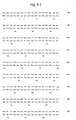
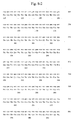
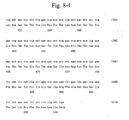
- Sequencing reaction was performed using a dye primer cycle sequencing kit (produced by Amersham) and then nucleotide sequence analysis was performed using a fluorescence DNA sequencer (produced by Shimadzu Corporation). In addition, final determination was made when the nucleotide sequences of 3 clones were found to match completely upon analysis thereof. As a result, the nucleotide sequence of the 5' terminus and that of the 3' terminus of Zen1 could be determined ( Fig. 8-1 to Fig. 8-4 and SEQ ID NOS: 34 and 35).
- Zen1 cDNA obtained in Example 13 to which restriction enzyme BamHI and XhoI sites had been added was amplified by PCR.
- the amplification product was ligated to the BamHI and XhoI sites of the Escherichia coli expression plasmid vector pGEX4T-1 (produced by Amersham Biosciences) using T4-DNA ligase.
- the E . coli TOP10 strain (produced by Invitrogen) was transformed with the thus obtained recombinant plasmid.
- the transformed strain was cultured at 37°C overnight on an LB medium containing 100 ⁇ g/mL ampicillin. A small amount of the strain was subcultured on a new LB medium until OD at 600 nm reached 1.0.
- IPTG isopropyl-1-thio- ⁇ -D-galactoside
- Thrombin produced by Amersham Biosciences
- a purified fusion product that is, Zen1 fused to GST
- GST was separated from Zen1.
- thrombin was removed using Benzamidin Sepharose (produced by Amersham Biosciences) and then a recombinant Zen1 was purified.
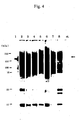
- the thus obtained purified Zen1 showed a single band corresponding to a molecular weight of approximately 60 kDa as confirmed by SDS-PAGE ( Fig. 9 ).
- mice Female, 4-week-old were immunized 5 times with the recombinant Zen1 purified in Example 14 at 1-week intervals. Subsequently, blood was collected from the mice, the sera were separated, and then the reaction of the IgG antibody was analyzed by ELISA.
- ELISA was performed as follows. 1.0 ⁇ g of the recombinant Zen1 and 4.0 ⁇ g of an antigen extracted from Dermatophagoides farinae (produced by GREER) were separately immobilized on immunoplates (produced by Nalge Nunc International), followed by 1 hour of blocking at 37°C using a blocking solution (prepared by adding Tween20 to PBS supplemented with 10% FBS to a final concentration of 0.05%).
- Each mouse serum sample was diluted 1000-fold with a blocking solution and then allowed to react at room temperature for 1 hour. After washing each immunoplate, an HRP-labeled goat anti-mouse IgG monoclonal antibody (produced by ZYMED) diluted 2000-fold with a blocking solution was caused to react therewith. After washing each immunoplate, 100 ⁇ L of an enzyme substrate solution (ABTS solution) was added to each well, followed by 10 minutes of reaction at 37°C. The enzyme reaction was stopped by addition of 100 ⁇ L of a 0.32% sodium fluoride solution to each well. The absorbance of each well at 414 nm was measured using an immunoreader (BioRad). After the reaction of IgG to the relevant subject was confirmed by ELISA, the subject was determined to be a polyclonal antibody against Zen1.
- mice IgG The reactivity of mouse IgG to the polyclonal antibody (the recombinant Zen1) and the same with regard to mite bodies were analyzed by Western blotting.
- 200 ⁇ L of a Laemmli sample buffer (produced by BIO-RAD) was prepared by adding ⁇ -mercaptoethanol to a final concentration of 50.0 ⁇ L/mL to 100.0 ⁇ L of the recombinant Zen1 protein solution adjusted at 50 ⁇ g/mL and 100.0 ⁇ L of the solution of an antigen extracted from Dermatophagoides farinae. After heat treatment at 100°C for 5 minutes, the resultant was applied to polyacrylamide gel (PAGEL; produced by ATTO) with a gel concentration between 5% and 20%. Thus, electrophoresis was performed.
- PAGEL polyacrylamide gel
- PVDF membrane Hybond-P; produced by Amersham Biosciences.
- the membrane was allowed to stand at 4°C overnight in a blocking solution (PBST (prepared by adding Tween20 to PBS to a final concentration of 0.1%) supplemented with 5% skim milk).
- PBST blocking solution
- An HRP-labeled goat anti-mouse IgG monoclonal antibody produced by ZYMED was diluted 20,000-fold with PBST, and then the diluted solution was added onto the membrane, followed by 2 hours of reaction at room temperature.
- Example 13 After 5 instances (10 minutes each) of washing with PBST, the reaction solution of an ECL Plus Western blotting detection system (produced by Amersham Biosciences) was added onto the membrane, followed by 5 minutes of reaction at room temperature. Signals were detected using X-ray film (Hyperfilm ECL; produced by Amersham Biosciences). As a result, a signal indicating the reaction to the recombinant Zen1 with a molecular weight of approximately 60 kDa and a signal indicating the reaction to the natural-type Zen1 with a molecular weight between 150 kDa and 250 kDa were detected ( Fig. 10 ). Accordingly, it was confirmed that the full-length Zen1 cDNA isolated in Example 13 encodes such allergen protein of mite bodies with a molecular weight between 150 kDa and 250 kDa.
- the allergenicity of the recombinant Zen1 purified in Example 14 was evaluated by ELISA.
- 1.0 ⁇ g of the recombinant Zen1 was immobilized on an immunoplate (produced by Nalge Nunc International K.K.), followed by blocking at 37°C for 1 hour with a blocking solution (prepared by adding Tween20 to PBS supplemented with 10% FBS to a final concentration of 0.05%).
- the sera of nine dogs that tested positive for Dermatophagoides farinae dogs that tested positive for Dermatophagoides farinae (dog sera that tested positive for Denmatophagoides farinae as confirmed by an intracutaneous reaction using a Dermatophagoides farinae antigen solution (produced by GREER) diluted 50 fold using physiological saline)) were caused to react with a negative control dog serum.
- Biotin-labeled GST-Fc ⁇ RI ⁇ was added and then a color development reaction was caused to take place by the addition of peroxidase conjugate streptavidin (produced by Jackson Immuno Research) and an enzyme substrate solution (ABTS solution). The enzyme reaction was stopped by the addition of 100 ⁇ L of a 0.32% sodium fluoride solution per well. The absorbance of each well at 414 nm was measured using an immunoreader (BioRad). Specifically, the reaction of serum IgE (of nine dogs that had tested positive for mites as confirmed by the intracutaneous reaction of this procedure and of the negative dog (control)) to the recombinant Zen1 was analyzed by an ELISA system using recombinant dog Fc ⁇ RI ⁇ . As a result, values above the value for the negative dog (indicated with a dotted line) were confirmed. Therefore, it was confirmed that the recombinant Zen1 is an allergen protein that reacts with IgE ( Fig. 11 ).
- the present invention makes it possible to provide safe and efficient recombinant mite allergens as therapeutic agents or diagnostic agents for mite allergic diseases, which contain no anaphylaxis-inducing impurities.
Landscapes
- Health & Medical Sciences (AREA)
- Life Sciences & Earth Sciences (AREA)
- Chemical & Material Sciences (AREA)
- Engineering & Computer Science (AREA)
- General Health & Medical Sciences (AREA)
- Organic Chemistry (AREA)
- Medicinal Chemistry (AREA)
- Immunology (AREA)
- Molecular Biology (AREA)
- Veterinary Medicine (AREA)
- Biochemistry (AREA)
- Biomedical Technology (AREA)
- Public Health (AREA)
- Animal Behavior & Ethology (AREA)
- Microbiology (AREA)
- Pharmacology & Pharmacy (AREA)
- Urology & Nephrology (AREA)
- Bioinformatics & Cheminformatics (AREA)
- Hematology (AREA)
- General Chemical & Material Sciences (AREA)
- Biotechnology (AREA)
- Chemical Kinetics & Catalysis (AREA)
- Zoology (AREA)
- Genetics & Genomics (AREA)
- Tropical Medicine & Parasitology (AREA)
- Nuclear Medicine, Radiotherapy & Molecular Imaging (AREA)
- Proteomics, Peptides & Aminoacids (AREA)
- Mycology (AREA)
- Insects & Arthropods (AREA)
- Pathology (AREA)
- Pulmonology (AREA)
- General Physics & Mathematics (AREA)
- Physics & Mathematics (AREA)
- Food Science & Technology (AREA)
- Analytical Chemistry (AREA)
- Cell Biology (AREA)
- Wood Science & Technology (AREA)
- Biophysics (AREA)
- Epidemiology (AREA)
- Virology (AREA)
Claims (17)
- Allergène aux acariens recombinant suivant (a) à (c) ayant une activité d'allergène aux acariens :(a) un allergène aux acariens recombinant comprenant la séquence d'acides aminés représentée par SEQ ID NO :35 ;(b) un allergène aux acariens recombinant comprenant la séquence d'acides aminés de SEQ ID NO :35, excepté que 1 à 10 acides aminés est/sont effacés de la séquence d'acides aminés représentée par SEQ ID NO :35 ; ou(c) un allergène aux acariens recombinant comprenant une séquence d'acides aminés qui a une homologie de séquence d'au moins 85% avec la séquence d'acides aminés de SEQ ID NO :35 telle que calculée en utilisant BLAST en utilisant un paramètre par défaut.
- Gène qui soit (1) code pour l'allergène aux acariens suivant (a) à (c) ayant une activité d'allergène aux acariens :(a) un allergène aux acariens comprenant la séquence d'acides aminés représentée par SEQ ID NO :35 ;(b) un allergène aux acariens comprenant la séquence d'acides aminés de la SEQ ID NO :35, excepté que 1 à 10 acides aminés est/sont effacés de la séquence d'acides aminés représentée par SEQ ID NO :35 ; ou(c) un allergène aux acariens recombinant comprenant une séquence d'acides aminés qui a une homologie de séquence d'au moins 85% avec la séquence d'acides aminés de la SEQ ID NO :35 comme calculée en utilisant BLAST utilisant un paramètre par défaut ; ou(2) comprend l'ADN suivant (d) ou (e) :(d) un ADN comprenant la séquence de nucléotides représentée par la SEQ ID NO :34 ; ou(e) un ADN codant pour une protéine ayant une activité d'allergène aux acariens et s'hybridant sous des conditions stringentes à un ADN comprenant une séquence complémentaire à celle du ADN comprenant la séquence de nucléotides de la SEQ ID NO :34, où l'ADN soit (1) s'hybride en présence de 0,7M à 1,0M NaCl à 68°C en utilisant un filtre sur lequel l'ADN est immobilisé, et le lavage en utilisant 0,1 à 2 x de solution SSC à 68 °C, ou (2) peut former un hybride lorsqu'il est transféré à et immobilisé sur une membrane de nitrocellulose par la méthode de Southern et ensuite permis de réagir durant la nuit à 42°C dans un tampon d'hybridation de 50% de formamide, 4 x SSC, 50mM HEPES (pH 7,0), 10 x solution de Denhardt et 100 µg/ml d'ADN de sperme de saumon.
- Allergène aux acariens selon la revendication 1, partie (c) ou le gène selon la revendication 2 partie (c), où le niveau d'homogénéité est au moins de 90%.
- Allergène aux acariens ou gène selon la revendication 3, où le niveau d'homogénéité est au moins de 95%.
- Allergène aux acariens ou gène selon la revendication 3, où le niveau d'homologie est au moins de 97%.
- Vecteur recombinant, qui contient le gène selon l'une quelconque des revendications 2 à 5.
- Protéine de fusion, qui est constituée de l'allergène aux acariens selon l'une quelconque des revendications 1 et 3 à 5 et d'une autre protéine.
- Cellule bactérienne, de levure, d'insecte ou d'animal, qui est transformée en utilisant le vecteur recombinant selon la revendication 6.
- Méthode de production d'un allergène aux acariens recombinant, qui comprend la culture de la cellule bactérienne, de levure, d'insecte ou d'animal selon la revendication 8 sous des conditions dans lesquelles le gène peut être exprimé, en amenant la cellule à produire un allergène aux acariens recombinant, et en recueillant ensuite l'allergène aux acariens recombinant.
- Méthode de production d'un allergène aux acariens recombinant, qui comprend la culture d'une cellule bactérienne, de levure, d'insecte ou d'animal qui est transformée avec un vecteur recombinant contenant un gène codant pour une protéine de fusion entre l'allergène aux acariens selon l'une quelconque des revendications 2 à 5 et une autre protéine sous des conditions dans lesquelles le gène peut être exprimé, en amenant la cellule à produire un allergène aux acariens recombinant de fusion, en recueillant l'allergène aux acariens recombinant de fusion et en éliminant ensuite l'autre protéine fusionnée à l'allergène.
- Agent thérapeutique pour des maladies d'allergie aux acariens, qui contient comme ingrédient actif l'allergène aux acariens recombinant selon l'une quelconque des revendications 1 et 3 à 5, ou bien la protéine de fusion selon la revendication 7.
- Agent de diagnostic pour des maladies d'allergie aux acariens, qui contient comme ingrédient actif l'allergène aux acariens recombinant selon l'une quelconque des revendications 1 et 3 à 5, ou bien la protéine de fusion selon la revendication 7.
- Anticorps contre l'allergène aux acariens selon l'une quelconque des revendications 1 et 3 à 5.
- Anticorps contre l'allergène aux acariens selon la revendication 13, qui est un anticorps monoclonal.
- Hybridome, qui produit l'anticorps monoclonal selon la revendication 14.
- Méthode d'immuno-essai pour un allergène aux acariens dans la poussière de la maison, qui utilise l'anticorps selon l'une quelconque des revendications 13 à 15.
- Méthode d'immuno-essai pour un allergène aux acariens dans la poussière de la maison selon la revendication 16, qui est la méthode ELISA.
Applications Claiming Priority (2)
| Application Number | Priority Date | Filing Date | Title |
|---|---|---|---|
| JP2004116089 | 2004-04-09 | ||
| PCT/JP2005/007191 WO2005097996A1 (fr) | 2004-04-09 | 2005-04-07 | Nouveau allergene aux acariens |
Publications (3)
| Publication Number | Publication Date |
|---|---|
| EP1743941A1 EP1743941A1 (fr) | 2007-01-17 |
| EP1743941A4 EP1743941A4 (fr) | 2008-02-13 |
| EP1743941B1 true EP1743941B1 (fr) | 2014-06-04 |
Family
ID=35125076
Family Applications (1)
| Application Number | Title | Priority Date | Filing Date |
|---|---|---|---|
| EP05730025.3A Expired - Lifetime EP1743941B1 (fr) | 2004-04-09 | 2005-04-07 | Nouveau allergene aux acariens |
Country Status (9)
| Country | Link |
|---|---|
| US (3) | US8075898B2 (fr) |
| EP (1) | EP1743941B1 (fr) |
| JP (1) | JP4733022B2 (fr) |
| KR (1) | KR101222496B1 (fr) |
| CN (2) | CN102516383A (fr) |
| AU (1) | AU2005231004B2 (fr) |
| CA (1) | CA2563887C (fr) |
| ES (1) | ES2494817T3 (fr) |
| WO (1) | WO2005097996A1 (fr) |
Families Citing this family (5)
| Publication number | Priority date | Publication date | Assignee | Title |
|---|---|---|---|---|
| CN102516383A (zh) * | 2004-04-09 | 2012-06-27 | 日本全药工业株式会社 | 新的螨变应原 |
| WO2016088765A1 (fr) * | 2014-12-02 | 2016-06-09 | 大鵬薬品工業株式会社 | Nouvelle protéine de dermatophagoides farinae |
| CN106146640B (zh) * | 2016-05-31 | 2019-10-22 | 深圳大学 | 尘螨变应原及其应用 |
| EP3661603A1 (fr) * | 2017-07-31 | 2020-06-10 | Laboratorios LETI, S.L. Unipersonal | Produit vétérinaire |
| WO2019242662A1 (fr) * | 2018-06-22 | 2019-12-26 | 江苏众红生物工程创药研究院有限公司 | Mélange médicamenteux à base de protéines allergènes recombinées d'acariens et son utilisation |
Family Cites Families (7)
| Publication number | Priority date | Publication date | Assignee | Title |
|---|---|---|---|---|
| JP2596466B2 (ja) * | 1990-03-03 | 1997-04-02 | アサヒビール株式会社 | ダニの主要アレルゲンの還伝情報を有するdnaおよび該アレルゲンの製造方法 |
| JP3139777B2 (ja) | 1990-08-27 | 2001-03-05 | フマキラー株式会社 | 組換えダニアレルゲン |
| EP0548200B1 (fr) * | 1990-09-11 | 1999-04-14 | Institute For Child Health Research | Clonage et mise en sequence d'allergenes de dermatophagoides (acariens de la poussiere domestique) |
| US20010014457A1 (en) * | 1994-07-22 | 2001-08-16 | Eliot R. Spindel | Nucleic acids encoding receptors for bombesin-like peptides |
| WO2001046220A2 (fr) * | 1999-12-22 | 2001-06-28 | Polymun Scientific Immunbiologische Forschung Gmbh | Oligopeptides bioactifs |
| CN102516383A (zh) * | 2004-04-09 | 2012-06-27 | 日本全药工业株式会社 | 新的螨变应原 |
| JP5292303B2 (ja) | 2007-11-02 | 2013-09-18 | 日本全薬工業株式会社 | 新規アジュバント |
-
2005
- 2005-04-07 CN CN2011104584107A patent/CN102516383A/zh active Pending
- 2005-04-07 CA CA2563887A patent/CA2563887C/fr not_active Expired - Lifetime
- 2005-04-07 AU AU2005231004A patent/AU2005231004B2/en not_active Ceased
- 2005-04-07 EP EP05730025.3A patent/EP1743941B1/fr not_active Expired - Lifetime
- 2005-04-07 WO PCT/JP2005/007191 patent/WO2005097996A1/fr not_active Ceased
- 2005-04-07 US US11/547,850 patent/US8075898B2/en active Active
- 2005-04-07 KR KR1020067023135A patent/KR101222496B1/ko not_active Expired - Fee Related
- 2005-04-07 CN CN2005800188467A patent/CN1997741B/zh not_active Expired - Fee Related
- 2005-04-07 JP JP2006512155A patent/JP4733022B2/ja not_active Expired - Fee Related
- 2005-04-07 ES ES05730025.3T patent/ES2494817T3/es not_active Expired - Lifetime
-
2011
- 2011-09-12 US US13/230,448 patent/US8647630B2/en not_active Expired - Fee Related
-
2013
- 2013-10-14 US US14/052,879 patent/US20140080997A1/en not_active Abandoned
Also Published As
| Publication number | Publication date |
|---|---|
| JP4733022B2 (ja) | 2011-07-27 |
| CN1997741A (zh) | 2007-07-11 |
| EP1743941A1 (fr) | 2007-01-17 |
| KR101222496B1 (ko) | 2013-01-15 |
| US20080260759A1 (en) | 2008-10-23 |
| CA2563887A1 (fr) | 2005-10-20 |
| CN102516383A (zh) | 2012-06-27 |
| EP1743941A4 (fr) | 2008-02-13 |
| AU2005231004B2 (en) | 2011-06-02 |
| CA2563887C (fr) | 2013-09-17 |
| US20120289679A1 (en) | 2012-11-15 |
| JPWO2005097996A1 (ja) | 2008-02-28 |
| US8647630B2 (en) | 2014-02-11 |
| ES2494817T3 (es) | 2014-09-16 |
| KR20070002082A (ko) | 2007-01-04 |
| WO2005097996A1 (fr) | 2005-10-20 |
| CN1997741B (zh) | 2012-08-22 |
| AU2005231004A1 (en) | 2005-10-20 |
| US20140080997A1 (en) | 2014-03-20 |
| US8075898B2 (en) | 2011-12-13 |
Similar Documents
| Publication | Publication Date | Title |
|---|---|---|
| US20140080997A1 (en) | Novel mite allergen | |
| Shaw et al. | Identification and characterisation of an aspartyl protease inhibitor homologue as a major allergen of Trichostrongylus colubriformis | |
| Lee et al. | Cloning of the gene for phosphoglycerate kinase from Schistosoma mansoni and characterization of its gene product | |
| CA2678170A1 (fr) | Proteines hypoallergeniques | |
| US20150210742A1 (en) | Novel allergen from ragweed pollen and uses thereof | |
| EP1317543B1 (fr) | Variants de l'antigene ns-ltps parietaria judaica, leurs utilisations et compositions les comprenant | |
| US20030180225A1 (en) | Walnut and ryegrass allergens | |
| JP5172100B2 (ja) | 新規ダニアレルゲン | |
| Tiwari et al. | Mapping of IgE-binding regions on recombinant Cyn d 1, a major allergen from Bermuda Grass Pollen (BGP) | |
| JP3588615B2 (ja) | 組換えダニアレルゲン | |
| EP2281836B9 (fr) | Protéines hybrides d'allergènes de Parietaria major et leurs utilisations | |
| JP3533240B2 (ja) | 組換えダニアレルゲン | |
| KR20120080561A (ko) | 신규한 진드기 알러젠 | |
| JPH06256393A (ja) | 組換えダニアレルゲン | |
| JP2007014311A (ja) | スギ花粉由来の新規アレルゲン |
Legal Events
| Date | Code | Title | Description |
|---|---|---|---|
| PUAI | Public reference made under article 153(3) epc to a published international application that has entered the european phase |
Free format text: ORIGINAL CODE: 0009012 |
|
| 17P | Request for examination filed |
Effective date: 20061031 |
|
| AK | Designated contracting states |
Kind code of ref document: A1 Designated state(s): AT BE BG CH CY CZ DE DK EE ES FI FR GB GR HU IE IS IT LI LT LU MC NL PL PT RO SE SI SK TR |
|
| DAX | Request for extension of the european patent (deleted) | ||
| RIC1 | Information provided on ipc code assigned before grant |
Ipc: C12P 21/08 20060101ALI20080102BHEP Ipc: A61K 49/00 20060101ALI20080102BHEP Ipc: A61P 11/06 20060101ALI20080102BHEP Ipc: A61K 39/35 20060101ALI20080102BHEP Ipc: C12N 15/12 20060101AFI20051026BHEP Ipc: A61P 27/14 20060101ALI20080102BHEP Ipc: C07K 16/18 20060101ALI20080102BHEP Ipc: A61P 17/04 20060101ALI20080102BHEP Ipc: C12N 1/19 20060101ALI20080102BHEP Ipc: A61P 11/02 20060101ALI20080102BHEP Ipc: A61P 37/08 20060101ALI20080102BHEP Ipc: C07K 14/435 20060101ALI20080102BHEP |
|
| A4 | Supplementary search report drawn up and despatched |
Effective date: 20080114 |
|
| 17Q | First examination report despatched |
Effective date: 20111223 |
|
| GRAP | Despatch of communication of intention to grant a patent |
Free format text: ORIGINAL CODE: EPIDOSNIGR1 |
|
| INTG | Intention to grant announced |
Effective date: 20131220 |
|
| GRAS | Grant fee paid |
Free format text: ORIGINAL CODE: EPIDOSNIGR3 |
|
| GRAA | (expected) grant |
Free format text: ORIGINAL CODE: 0009210 |
|
| RIN1 | Information on inventor provided before grant (corrected) |
Inventor name: TSUKUI,TOSHIHIRO,C/O NIPPON ZENYAKU KOGYO CO.,LTD. Inventor name: TSUJIMOTO, HAJIME Inventor name: IWABUCHI,SHIGEHIRO,C/ONIPPON ZENYAKU KOGYO CO.LTD. |
|
| AK | Designated contracting states |
Kind code of ref document: B1 Designated state(s): AT BE BG CH CY CZ DE DK EE ES FI FR GB GR HU IE IS IT LI LT LU MC NL PL PT RO SE SI SK TR |
|
| REG | Reference to a national code |
Ref country code: GB Ref legal event code: FG4D |
|
| REG | Reference to a national code |
Ref country code: CH Ref legal event code: EP |
|
| REG | Reference to a national code |
Ref country code: AT Ref legal event code: REF Ref document number: 671142 Country of ref document: AT Kind code of ref document: T Effective date: 20140615 |
|
| RIN2 | Information on inventor provided after grant (corrected) |
Inventor name: IWABUCHI, SHIGEHIRO Inventor name: TSUJIMOTO, HAJIME Inventor name: TSUKUI, TOSHIHIRO |
|
| REG | Reference to a national code |
Ref country code: IE Ref legal event code: FG4D |
|
| REG | Reference to a national code |
Ref country code: DE Ref legal event code: R096 Ref document number: 602005043796 Country of ref document: DE Effective date: 20140717 |
|
| REG | Reference to a national code |
Ref country code: NL Ref legal event code: T3 |
|
| REG | Reference to a national code |
Ref country code: SE Ref legal event code: TRGR |
|
| REG | Reference to a national code |
Ref country code: ES Ref legal event code: FG2A Ref document number: 2494817 Country of ref document: ES Kind code of ref document: T3 Effective date: 20140916 |
|
| REG | Reference to a national code |
Ref country code: AT Ref legal event code: MK05 Ref document number: 671142 Country of ref document: AT Kind code of ref document: T Effective date: 20140604 |
|
| PG25 | Lapsed in a contracting state [announced via postgrant information from national office to epo] |
Ref country code: GR Free format text: LAPSE BECAUSE OF FAILURE TO SUBMIT A TRANSLATION OF THE DESCRIPTION OR TO PAY THE FEE WITHIN THE PRESCRIBED TIME-LIMIT Effective date: 20140905 Ref country code: CY Free format text: LAPSE BECAUSE OF FAILURE TO SUBMIT A TRANSLATION OF THE DESCRIPTION OR TO PAY THE FEE WITHIN THE PRESCRIBED TIME-LIMIT Effective date: 20140604 Ref country code: LT Free format text: LAPSE BECAUSE OF FAILURE TO SUBMIT A TRANSLATION OF THE DESCRIPTION OR TO PAY THE FEE WITHIN THE PRESCRIBED TIME-LIMIT Effective date: 20140604 |
|
| REG | Reference to a national code |
Ref country code: LT Ref legal event code: MG4D |
|
| PG25 | Lapsed in a contracting state [announced via postgrant information from national office to epo] |
Ref country code: AT Free format text: LAPSE BECAUSE OF FAILURE TO SUBMIT A TRANSLATION OF THE DESCRIPTION OR TO PAY THE FEE WITHIN THE PRESCRIBED TIME-LIMIT Effective date: 20140604 |
|
| PG25 | Lapsed in a contracting state [announced via postgrant information from national office to epo] |
Ref country code: SK Free format text: LAPSE BECAUSE OF FAILURE TO SUBMIT A TRANSLATION OF THE DESCRIPTION OR TO PAY THE FEE WITHIN THE PRESCRIBED TIME-LIMIT Effective date: 20140604 Ref country code: PT Free format text: LAPSE BECAUSE OF FAILURE TO SUBMIT A TRANSLATION OF THE DESCRIPTION OR TO PAY THE FEE WITHIN THE PRESCRIBED TIME-LIMIT Effective date: 20141006 Ref country code: EE Free format text: LAPSE BECAUSE OF FAILURE TO SUBMIT A TRANSLATION OF THE DESCRIPTION OR TO PAY THE FEE WITHIN THE PRESCRIBED TIME-LIMIT Effective date: 20140604 Ref country code: RO Free format text: LAPSE BECAUSE OF FAILURE TO SUBMIT A TRANSLATION OF THE DESCRIPTION OR TO PAY THE FEE WITHIN THE PRESCRIBED TIME-LIMIT Effective date: 20140604 Ref country code: CZ Free format text: LAPSE BECAUSE OF FAILURE TO SUBMIT A TRANSLATION OF THE DESCRIPTION OR TO PAY THE FEE WITHIN THE PRESCRIBED TIME-LIMIT Effective date: 20140604 |
|
| PG25 | Lapsed in a contracting state [announced via postgrant information from national office to epo] |
Ref country code: PL Free format text: LAPSE BECAUSE OF FAILURE TO SUBMIT A TRANSLATION OF THE DESCRIPTION OR TO PAY THE FEE WITHIN THE PRESCRIBED TIME-LIMIT Effective date: 20140604 Ref country code: IS Free format text: LAPSE BECAUSE OF FAILURE TO SUBMIT A TRANSLATION OF THE DESCRIPTION OR TO PAY THE FEE WITHIN THE PRESCRIBED TIME-LIMIT Effective date: 20141004 |
|
| REG | Reference to a national code |
Ref country code: DE Ref legal event code: R097 Ref document number: 602005043796 Country of ref document: DE |
|
| PLBE | No opposition filed within time limit |
Free format text: ORIGINAL CODE: 0009261 |
|
| STAA | Information on the status of an ep patent application or granted ep patent |
Free format text: STATUS: NO OPPOSITION FILED WITHIN TIME LIMIT |
|
| PG25 | Lapsed in a contracting state [announced via postgrant information from national office to epo] |
Ref country code: DK Free format text: LAPSE BECAUSE OF FAILURE TO SUBMIT A TRANSLATION OF THE DESCRIPTION OR TO PAY THE FEE WITHIN THE PRESCRIBED TIME-LIMIT Effective date: 20140604 |
|
| 26N | No opposition filed |
Effective date: 20150305 |
|
| REG | Reference to a national code |
Ref country code: DE Ref legal event code: R097 Ref document number: 602005043796 Country of ref document: DE Effective date: 20150305 |
|
| PG25 | Lapsed in a contracting state [announced via postgrant information from national office to epo] |
Ref country code: SI Free format text: LAPSE BECAUSE OF FAILURE TO SUBMIT A TRANSLATION OF THE DESCRIPTION OR TO PAY THE FEE WITHIN THE PRESCRIBED TIME-LIMIT Effective date: 20140604 |
|
| PG25 | Lapsed in a contracting state [announced via postgrant information from national office to epo] |
Ref country code: LU Free format text: LAPSE BECAUSE OF FAILURE TO SUBMIT A TRANSLATION OF THE DESCRIPTION OR TO PAY THE FEE WITHIN THE PRESCRIBED TIME-LIMIT Effective date: 20150407 Ref country code: MC Free format text: LAPSE BECAUSE OF FAILURE TO SUBMIT A TRANSLATION OF THE DESCRIPTION OR TO PAY THE FEE WITHIN THE PRESCRIBED TIME-LIMIT Effective date: 20140604 |
|
| REG | Reference to a national code |
Ref country code: IE Ref legal event code: MM4A |
|
| REG | Reference to a national code |
Ref country code: FR Ref legal event code: PLFP Year of fee payment: 12 |
|
| PG25 | Lapsed in a contracting state [announced via postgrant information from national office to epo] |
Ref country code: IE Free format text: LAPSE BECAUSE OF NON-PAYMENT OF DUE FEES Effective date: 20150407 |
|
| REG | Reference to a national code |
Ref country code: FR Ref legal event code: PLFP Year of fee payment: 13 |
|
| PG25 | Lapsed in a contracting state [announced via postgrant information from national office to epo] |
Ref country code: HU Free format text: LAPSE BECAUSE OF FAILURE TO SUBMIT A TRANSLATION OF THE DESCRIPTION OR TO PAY THE FEE WITHIN THE PRESCRIBED TIME-LIMIT; INVALID AB INITIO Effective date: 20050407 Ref country code: BG Free format text: LAPSE BECAUSE OF FAILURE TO SUBMIT A TRANSLATION OF THE DESCRIPTION OR TO PAY THE FEE WITHIN THE PRESCRIBED TIME-LIMIT Effective date: 20140604 |
|
| PG25 | Lapsed in a contracting state [announced via postgrant information from national office to epo] |
Ref country code: TR Free format text: LAPSE BECAUSE OF FAILURE TO SUBMIT A TRANSLATION OF THE DESCRIPTION OR TO PAY THE FEE WITHIN THE PRESCRIBED TIME-LIMIT Effective date: 20140604 |
|
| REG | Reference to a national code |
Ref country code: FR Ref legal event code: PLFP Year of fee payment: 14 |
|
| PGFP | Annual fee paid to national office [announced via postgrant information from national office to epo] |
Ref country code: NL Payment date: 20230419 Year of fee payment: 19 |
|
| PGFP | Annual fee paid to national office [announced via postgrant information from national office to epo] |
Ref country code: IT Payment date: 20230426 Year of fee payment: 19 Ref country code: FR Payment date: 20230420 Year of fee payment: 19 Ref country code: ES Payment date: 20230627 Year of fee payment: 19 Ref country code: DE Payment date: 20230420 Year of fee payment: 19 Ref country code: CH Payment date: 20230502 Year of fee payment: 19 |
|
| PGFP | Annual fee paid to national office [announced via postgrant information from national office to epo] |
Ref country code: SE Payment date: 20230420 Year of fee payment: 19 Ref country code: FI Payment date: 20230419 Year of fee payment: 19 |
|
| PGFP | Annual fee paid to national office [announced via postgrant information from national office to epo] |
Ref country code: BE Payment date: 20230419 Year of fee payment: 19 |
|
| PGFP | Annual fee paid to national office [announced via postgrant information from national office to epo] |
Ref country code: GB Payment date: 20230419 Year of fee payment: 19 |
|
| REG | Reference to a national code |
Ref country code: DE Ref legal event code: R119 Ref document number: 602005043796 Country of ref document: DE |
|
| REG | Reference to a national code |
Ref country code: CH Ref legal event code: PL |
|
| REG | Reference to a national code |
Ref country code: SE Ref legal event code: EUG |
|
| REG | Reference to a national code |
Ref country code: NL Ref legal event code: MM Effective date: 20240501 |
|
| GBPC | Gb: european patent ceased through non-payment of renewal fee |
Effective date: 20240407 |
|
| REG | Reference to a national code |
Ref country code: BE Ref legal event code: MM Effective date: 20240430 |
|
| PG25 | Lapsed in a contracting state [announced via postgrant information from national office to epo] |
Ref country code: DE Free format text: LAPSE BECAUSE OF NON-PAYMENT OF DUE FEES Effective date: 20241105 |
|
| PG25 | Lapsed in a contracting state [announced via postgrant information from national office to epo] |
Ref country code: NL Free format text: LAPSE BECAUSE OF NON-PAYMENT OF DUE FEES Effective date: 20240501 Ref country code: BE Free format text: LAPSE BECAUSE OF NON-PAYMENT OF DUE FEES Effective date: 20240430 Ref country code: FI Free format text: LAPSE BECAUSE OF NON-PAYMENT OF DUE FEES Effective date: 20240407 |
|
| PG25 | Lapsed in a contracting state [announced via postgrant information from national office to epo] |
Ref country code: GB Free format text: LAPSE BECAUSE OF NON-PAYMENT OF DUE FEES Effective date: 20240407 |
|
| PG25 | Lapsed in a contracting state [announced via postgrant information from national office to epo] |
Ref country code: FR Free format text: LAPSE BECAUSE OF NON-PAYMENT OF DUE FEES Effective date: 20240430 |
|
| PG25 | Lapsed in a contracting state [announced via postgrant information from national office to epo] |
Ref country code: NL Free format text: LAPSE BECAUSE OF NON-PAYMENT OF DUE FEES Effective date: 20240501 Ref country code: GB Free format text: LAPSE BECAUSE OF NON-PAYMENT OF DUE FEES Effective date: 20240407 Ref country code: FR Free format text: LAPSE BECAUSE OF NON-PAYMENT OF DUE FEES Effective date: 20240430 Ref country code: FI Free format text: LAPSE BECAUSE OF NON-PAYMENT OF DUE FEES Effective date: 20240407 Ref country code: DE Free format text: LAPSE BECAUSE OF NON-PAYMENT OF DUE FEES Effective date: 20241105 Ref country code: BE Free format text: LAPSE BECAUSE OF NON-PAYMENT OF DUE FEES Effective date: 20240430 Ref country code: CH Free format text: LAPSE BECAUSE OF NON-PAYMENT OF DUE FEES Effective date: 20240430 |
|
| PG25 | Lapsed in a contracting state [announced via postgrant information from national office to epo] |
Ref country code: IT Free format text: LAPSE BECAUSE OF NON-PAYMENT OF DUE FEES Effective date: 20240407 |
|
| REG | Reference to a national code |
Ref country code: ES Ref legal event code: FD2A Effective date: 20250528 |
|
| PG25 | Lapsed in a contracting state [announced via postgrant information from national office to epo] |
Ref country code: ES Free format text: LAPSE BECAUSE OF NON-PAYMENT OF DUE FEES Effective date: 20240408 |
|
| PG25 | Lapsed in a contracting state [announced via postgrant information from national office to epo] |
Ref country code: SE Free format text: LAPSE BECAUSE OF NON-PAYMENT OF DUE FEES Effective date: 20240408 |