EP1744267A2 - Lecteur, étiquettes, système d'identification de la fréquence radio (RFID) et son procédé - Google Patents
Lecteur, étiquettes, système d'identification de la fréquence radio (RFID) et son procédé Download PDFInfo
- Publication number
- EP1744267A2 EP1744267A2 EP06010086A EP06010086A EP1744267A2 EP 1744267 A2 EP1744267 A2 EP 1744267A2 EP 06010086 A EP06010086 A EP 06010086A EP 06010086 A EP06010086 A EP 06010086A EP 1744267 A2 EP1744267 A2 EP 1744267A2
- Authority
- EP
- European Patent Office
- Prior art keywords
- tags
- code
- codes
- reader
- tag
- Prior art date
- Legal status (The legal status is an assumption and is not a legal conclusion. Google has not performed a legal analysis and makes no representation as to the accuracy of the status listed.)
- Withdrawn
Links
Images


Classifications
-
- G—PHYSICS
- G06—COMPUTING OR CALCULATING; COUNTING
- G06K—GRAPHICAL DATA READING; PRESENTATION OF DATA; RECORD CARRIERS; HANDLING RECORD CARRIERS
- G06K17/00—Methods or arrangements for effecting co-operative working between equipments covered by two or more of main groups G06K1/00 - G06K15/00, e.g. automatic card files incorporating conveying and reading operations
-
- G—PHYSICS
- G06—COMPUTING OR CALCULATING; COUNTING
- G06K—GRAPHICAL DATA READING; PRESENTATION OF DATA; RECORD CARRIERS; HANDLING RECORD CARRIERS
- G06K19/00—Record carriers for use with machines and with at least a part designed to carry digital markings
- G06K19/06—Record carriers for use with machines and with at least a part designed to carry digital markings characterised by the kind of the digital marking, e.g. shape, nature, code
- G06K19/067—Record carriers with conductive marks, printed circuits or semiconductor circuit elements, e.g. credit or identity cards also with resonating or responding marks without active components
- G06K19/07—Record carriers with conductive marks, printed circuits or semiconductor circuit elements, e.g. credit or identity cards also with resonating or responding marks without active components with integrated circuit chips
- G06K19/0723—Record carriers with conductive marks, printed circuits or semiconductor circuit elements, e.g. credit or identity cards also with resonating or responding marks without active components with integrated circuit chips the record carrier comprising an arrangement for non-contact communication, e.g. wireless communication circuits on transponder cards, non-contact smart cards or RFIDs
-
- G—PHYSICS
- G06—COMPUTING OR CALCULATING; COUNTING
- G06K—GRAPHICAL DATA READING; PRESENTATION OF DATA; RECORD CARRIERS; HANDLING RECORD CARRIERS
- G06K7/00—Methods or arrangements for sensing record carriers, e.g. for reading patterns
- G06K7/0008—General problems related to the reading of electronic memory record carriers, independent of its reading method, e.g. power transfer
-
- G—PHYSICS
- G06—COMPUTING OR CALCULATING; COUNTING
- G06K—GRAPHICAL DATA READING; PRESENTATION OF DATA; RECORD CARRIERS; HANDLING RECORD CARRIERS
- G06K7/00—Methods or arrangements for sensing record carriers, e.g. for reading patterns
- G06K7/10—Methods or arrangements for sensing record carriers, e.g. for reading patterns by electromagnetic radiation, e.g. optical sensing; by corpuscular radiation
- G06K7/10009—Methods or arrangements for sensing record carriers, e.g. for reading patterns by electromagnetic radiation, e.g. optical sensing; by corpuscular radiation sensing by radiation using wavelengths larger than 0.1 mm, e.g. radio-waves or microwaves
- G06K7/10019—Methods or arrangements for sensing record carriers, e.g. for reading patterns by electromagnetic radiation, e.g. optical sensing; by corpuscular radiation sensing by radiation using wavelengths larger than 0.1 mm, e.g. radio-waves or microwaves resolving collision on the communication channels between simultaneously or concurrently interrogated record carriers.
-
- H—ELECTRICITY
- H04—ELECTRIC COMMUNICATION TECHNIQUE
- H04J—MULTIPLEX COMMUNICATION
- H04J13/00—Code division multiplex systems
- H04J13/0007—Code type
- H04J13/004—Orthogonal
-
- H—ELECTRICITY
- H04—ELECTRIC COMMUNICATION TECHNIQUE
- H04B—TRANSMISSION
- H04B2201/00—Indexing scheme relating to details of transmission systems not covered by a single group of H04B3/00 - H04B13/00
- H04B2201/69—Orthogonal indexing scheme relating to spread spectrum techniques in general
- H04B2201/707—Orthogonal indexing scheme relating to spread spectrum techniques in general relating to direct sequence modulation
- H04B2201/70715—Orthogonal indexing scheme relating to spread spectrum techniques in general relating to direct sequence modulation with application-specific features
Definitions
- Methods and apparatuses consistent with the present invention relate to readers, tags, radio frequency identification (RFID) systems. More particularly, the present invention relates to a reader, tags, a RFID system, and method of simultaneously identifying a plurality of colliding tags in reply signals, while reducing the reading time.
- RFID radio frequency identification
- FIG. 1 illustrates the operation of a radio frequency identification (RFID) system which includes a reader and tags.
- RFID is a technology for identifying objects having tags by use of information contained in the tags without physical contact with the objects.
- Various applications of the RFID technology include product distribution management, traffic systems, security and safety systems, and so on.
- the RFID system includes a reader 11 and more than two tags 12 which are assigned unique IDs, respectively.
- the tags 12 When the reader 11 transmits a command to request a reply from the tags 12 within its read range, the tags 12 receiving the command send replies. After identifying the responding tags 12, the reader 11 can retrieve or update information stored in a host 10 using the IDs of the responding tags 12.
- a plurality of tags 12 may respond at the same time. In this situation, the signals of the plurality of tags 12 intercept and collide with each other. To prevent such collisions, the RFID system adapts an anti-collision algorithm.
- the reader specifies an integer Q and issues a command to request a reply from the tags 12.
- Tags receiving the command generate random numbers in a range from 0 to 2 Q -1 using the integer Q and assign time slots for responding based on the random numbers. The tags do not respond to the command until their respective time slots. However, such an anti-collision algorithm may still suffer from collisions.
- the reader and the tags iteratively send and receive commands and replies until the reader discriminates the replies of the tags 12. As a result, the reading time is extended and power is wasted.
- the present invention has been provided to address the above-mentioned and other problems and disadvantages occurring in the conventional arrangement, and an aspect of the present invention provides a reader, tags, a radio frequency identification (RFID) system, and a method of simultaneously identifying a plurality of tags having colliding reply signals, thus reducing the reading time.
- RFID radio frequency identification
- a reader in a radio frequency identification (RFID) system which includes the reader and more than two tags assigned unique IDs includes a storage which stores a comparison code for identifying each ID code generated based on each unique ID; a transmitter which generates and transmits a query signal to the tags to inquire into the presence of the tags; and a comparator which receives the ID codes from the tags, compares the ID codes with the comparison code stored in the storage, and identifies replying tags.
- RFID radio frequency identification
- the tag in the RFID system includes a receiver which receives from the reader a query signal which is transmitted to inquire into the presence of the tag; a ID code generator which generates an ID code for identifying the tag based on the unique ID; and a transmitter which sends the ID code to the reader in response to the query signal.
- the RFID system includes a reader; and more than two tags which are assigned unique IDs, respectively.
- Each of the tags includes a receiver which receives from the reader a query signal which is transmitted to inquire into the presence of the tag; a ID code generator which generates an ID code for identifying the tags based on the unique IDs; and a transmitter which sends the ID code to the reader in response to the query signal.
- the reader includes a storage which stores a comparison code for identifying the ID codes; a transmitter which generates and transmits a query signal to the tags; and a comparator which receives the ID codes from the tags, compares the ID codes with the comparison code stored in the storage, and identifies replying tags.
- a method of identifying tags in a radio frequency identification (RFID) system which includes a reader and more than two tags assigned unique IDs, includes storing, by the reader, a comparison code for identifying ID codes which are generated based on the unique IDs by the tags; generating, by the reader, a query signal to inquire into the presence of the tags and transmitting the query signal to the tags; receiving, by the tags, the query signal from the reader, generating ID codes based on the IDs in response to the query signal, and transmitting the ID codes to the reader; and receiving, by the reader, the ID codes and identifying replying tags by comparing the stored comparison code with the ID codes.
- RFID radio frequency identification
- the ID codes may mutually orthogonal, and the comparison code may be a set of orthogonal codes including the ID codes.
- the comparison may identify the replying tags by correlating the ID codes with the comparison code.
- the ID code generator may include a random number generator which generates random numbers based on the unique ID; and a linear feedback shift register (LFSR) which receives the generated random numbers as an initial state value and generates the ID code.
- LFSR linear feedback shift register
- the transmitter may modulate the ID code according to a binary phase shift keying (BPSK) scheme and send the modulated ID code.
- BPSK binary phase shift keying
- FIG. 1 is a diagram illustrating an operation of a radio frequency identification (RFID) system including a reader and tags;
- RFID radio frequency identification
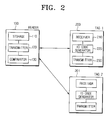
- FIG. 2 is a block diagram of a reader and tags according to an embodiment of the present invention.
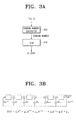
- FIG. 3A is a block diagram of an ID code generator of the tag according to an embodiment of the present invention.
- FIG. 3B is a diagram of a conventional LFSR
- FIG. 4 is a diagram illustrating correlations of an M sequence according to an embodiment of the present invention.
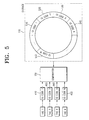
- FIG. 5 is a diagram illustrating a reader for identifying tags according to an embodiment of the present invention.
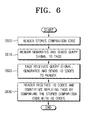
- FIG. 6 is a flowchart outlining a tag identification method according to an embodiment of the present invention.
- FIG. 2 is a block diagram of a reader 100 and tags 200 and 201 according to an embodiment of the present invention.
- the tags 200 and 201 each include a receiver 210, an identification (ID) code generator 220, and a transmitter 230.
- ID identification
- the receiver 210 receives a query signal issued by the reader 100.
- the query signal is issued by the reader 100 to request the tags 200 and 201 to inform the reader 100 of the presence of the tags 200 and 201.
- the ID code generator 220 upon receiving the query signal from the reader 100, generates an ID code to distinguish the tag 200 from the tag 201, based on a unique ID of the tag 200.
- the unique ID is assigned to the tags 200 and 201 to identify them in a radio frequency identification (RFID) system.
- RFID radio frequency identification
- the ID code generator 220 generates a tag ID code so as to be orthogonal to other codes, thus to permit identification of the tags even when the tags simultaneously send replies to the reader 100.
- Orthogonality represents that two codes have no correlation.
- two orthogonal codes denote that the two codes are independent from each other.
- the result is 1, and when two different codes are integrated, the result is zero.
- orthogonal coding include Walsh code, pseudo-noise (PN) code, and the like.
- PN code pseudo-noise
- the Walsh code has been utilized to identify mobile terminal devices in a code division multiple access (CDMA) system where the mobile terminal devices share and divide a frequency band of a signal base station.
- the PN code is one of the periodic codes.
- the mobile terminal devices spread a transmission frequency band to a band over ten times as wide as the audio data frequency band and transmit a signal using the PN code.
- the receiving side demodulates the original signal using the same code as the PN code of the mobile terminal devices.
- the PN code can be a maximal length sequence (M sequence) or a Gold sequence.
- the M sequence is a binary sequence generated using a linear feedback shift register (LFSR). If the LFSR is n-bits, the length of the M sequence is 2n-1. Further details on the M sequence are described in " Pseudo-Random Sequences and Arrays" by MacWilliams & Sloane, Proc IEEE, Vol. 64. No. 12, December 1976, pp 1715-1729 .
- LFSR linear feedback shift register
- the Gold sequence is generated by multiplying two M sequences which have three different cross-correlation values. Further details on the Gold sequence are described in " Crosscorrelation Properties of Pseudorandom and Related Sequences" by Sarwate & Pursley, Proc IEEE, Vol. 68, No. 5, May 1980, pp 593-619 .
- FIG. 4 depicts correlations of the M sequence according to an embodiment of the present invention.
- the top point in the middle is much greater than other values as shown in the auto-correlation graph.
- the M sequence can be identified even when other signals are strengthened due to the occurrence of noise.
- the results of the cross-correlation are clearly distinguished from the results in the auto-correlation graph. Accordingly, when the PN code including the M sequence is employed as the tag ID code, it is easy to discriminate between the auto-correlation and the cross-correlation. Therefore, the reader can easily identify the tag ID codes.
- the transmitter 230 sends the ID code, generated by the ID code generator 220, to the reader 100 in response to the query signal of the reader 100.
- the transmitter 230 modulates and sends the ID code according to a binary phase shift keying (BPSK) scheme.
- BPSK binary phase shift keying
- the BPSK scheme varies the carrier at 0 and 1 by a phase difference of 180 degrees.
- BPSK modulation is suitable for the PN code generation.
- the tags 200 and 201 can send their ID codes to the reader 100 according to a back scattering scheme which responds using the power transmitted from the reader 100.
- FIG. 3A is a block diagram of the ID code generator 220 of the tag 200 according to an embodiment of the present invention.
- the ID code generator 220 includes a random number generator 300 and a LFSR 310.
- the random number generator 300 generates random numbers based on the ID of the tag 200. Since the unique ID of the tag 200 has a quite long bit-length, certain bits are extracted and used to generate the random numbers at the random number generator 300.
- the LFSR 310 receives the random numbers from the random number generator 300 as an initial state value and then creates the ID code. Note that the length of the LFSR 310 can be as large as necessary.
- the ID code created using the LFSR 310 is a part of the PN code (hereafter, referred to as a PN code segment).
- FIG. 3B depicts a construction of a conventional LFSR
- the LFSR is a circuit which generates a sequence of binary bits using linear feedback. Contents in shift registers are shifted by one position according to a clock period At the same time, the output value and the exclusive OR value are input to the shift registers. LFSRs are often applied to circuitry for the generation of pseudo random sequences or cryptography.
- the reader 100 includes a storage 110, a transmitter 120, and a comparator 130.
- the storage 110 stores a comparison code to identify the ID codes generated by the tags based on their unique IDs.
- FIG. 5 depicts a reader for identifying tags according to an embodiment of the present invention.
- the storage 110 generates and stores a set of first through N-th ID codes 510 through 550 which are mutually orthogonal and includes the ID codes of the tags.
- the storage 110 can generate and store a PN code including the PN code segments which are produced by the tags 200 and 201 using the random number generator 300 and the LFSR 310.
- the transmitter 120 generates and issues a query signal to the tags 200 and 201 to request them to inform the reader 100 of their presence.
- the comparator 130 receives the ID codes from the tags 200 and 201 in response to the query signal issued from the transmitter 120, and compares the received ID codes with the comparison code stored in the storage 110, to thus identify the responding tags 200 and 201.
- a first tag, a third tag, a fourth tag and a N-th tag upon receiving the query signal from the transmitter 120 of the reader 100, generate a first ID code 410, a third ID code 430, a fourth ID code 440, and a N-th ID code 450 at their respective ID code generators, and send replies to the reader 100.
- the replies may be received at the reader 100 at the same time or at intervals.
- the comparator 130 receives the first ID code 410, the third ID code 430, the fourth ID code 440, and the N-th ID code 450 within a certain time.
- the comparator 130 correlates the first ID code 410, the third ID code 430, the fourth ID code 440, and the N-th ID code 450 with the comparison codes stored in the storage 110.
- the comparator 130 obtains how many tags send replies, and which tags send replies, using the ID codes.
- the comparator 130 be a correlator which discovers the correlation between the signals. For instance, when the third ID code 430 of the third tag is correlated with the comparison codes stored in the storage 110, the auto-correlation is yielded with the third ID code 530 of the comparison code which matches the third ID code 430.
- the cross-correlation is yielded in relation with the comparison code.
- the storage 110 of the reader 100 generates and stores the PN code as the comparison code.
- the PN code has the property that the auto-correlation and the cross-correlation are clearly distinguishable. For instance, when the comparator 130 correlates the third ID code 430 corresponding to the third PN code segment of the third tag, with the first PN code segment of the PN code stored in the storage 110, the cross-correlation is produced as shown in FIG. 4.
- the third ID code 430 being the third PN code segment is correlated with the second ID code 520 being the second PN code segment, the cross-correlation is yielded as well.
- the comparator 130 correlates the third ID code 430 being the third PN code segment of the third tag, with the third ID code 530 being the third PN code segment of the PN code stored in the storage 110, the auto-correlation as shown in FIG. 4 is yielded and thus the third ID code can be identified.
- the comparator 130 may utilize a plurality of correlators.
- the first ID code 410, the fourth ID code 440, and the N-th ID code 450 are identified by the comparator in the same manner as described above.
- PN code segments generated at each tag are different, although the PN code segments are received at the same time, it is possible to identify the PN codes simultaneously by use of the property of the PN code that the auto-correlation and the cross-correlation can be clearly distinguished.
- the simultaneously received reply signals interrupt each other. The reading time for the tag identification is lengthened because of the increased number of iterations to send and receive commands and replies between the reader and tags.
- Whether the PN code segments generated at the tags overlap with each other is determined depending on the randomicity of the random numbers which are used as the initial state value of the LFSR 310.
- the random numbers are generated using certain bits of the tag unique IDs as a seed, and the number of random numbers M generated at the random number generator 300 is much greater than the number of tags N.
- the PN code segments generated at the tags are not likely to overlap each other.
- the number of overlapping tags is not considerable.
- the number of iterations to send and receive commands and replies between the reader and tags for the tag identification is reduced even when the tags are overlapping. That is, the tag reading time can be reduced in comparison with the case when the conventional anti-collision algorithm alone is adopted.
- the reader 100 when the reader 100 intends to send a command to one of the first tag, the third tag, the fourth tag, and the N-th tag being identified, the reader 100 reversely calculates the random numbers from the ID codes corresponding to the PN code segments, and issues a command to request a reply only from a tag which has transmitted the random numbers. Alternatively, without the reverse calculation of the random numbers, the reader 100 may issue a command to request a reply only from a tag that has transmitted the corresponding PN code segment.
- FIG. 6 is a flowchart outlining the tag identification method according to an embodiment of the present invention.
- the reader stores a comparison code to identify the ID codes which are generated by the tags based on their unique IDs (S600).
- the storage 110 of the reader 100 generates and stores a set of orthogonal codes including the ID codes of the tags.
- the storage 110 generates and stores the PN code which includes the PN code segments which are generated by the random number generator 300 and the LFSR 310 at the tags.
- the reader generates and sends a query signal to the tags to inquire into the presence of the tags (S610).
- each tag Upon receiving the query signal from the reader at operation S610, each tag generates an ID code based on its unique ID and sends the ID code to the reader (S620).
- the generation of the ID code by the tag at operation S620 is explained in detail with reference to FIG. 3.
- the tag generates random numbers based on its unique ID at the random number generator 300. Because of the long bit-length of the tag ID, certain bits are extracted to generate the random numbers at the random number generator 300.
- the generated random numbers are input as the initial state value to the LFSR 310 to generate the ID code.
- the generated ID code is a part of the PN code, that is, the PN code segment.
- the reader 100 Upon receiving the ID codes at operation S620, the reader 100 identifies the responding tags by comparing the received ID codes with the comparison code stored at operation S600 (S630). Specifically, referring back to FIG. 5, the first tag, the third tag, the fourth tag, and the N-th tag, receiving the query signal from the transmitter 120 of the reader 100 at operation S610, respectively generate the first ID code 410, the third ID code 430, the fourth ID code 440, and the N-th ID code 450 at the ID code generator 200, and send the ID codes to the reader 100 in response (S620). These replies may be received at the reader 100 simultaneously or at intervals. The comparator 130 receives the first ID code 410, the third ID code 430, the fourth ID code 440, and the N-th ID code 450 within a certain time duration.
- the comparator 130 correlates the first ID code 410, the third ID code 430, the fourth ID code 440, and the N-th ID code 450, with the comparison code stored in the storage 110, and thus acquires how many tags send replies, and which ones send replies with the ID codes tags.
- a correlator can be employed to find the correlations between the ID codes and the comparison code.
- the cross-correlation is yielded
- the PN code segment generated based on the tag ID can be used as the ID code.
- the PN code is generated and stored as the comparison code. As shown in FIG. 4, as the auto-correlation and the cross-correlation of the PN code are clearly distinguishable, the PN code can be used as the tag ID code in the RFID system.
- the comparator 130 may employ a plurality of correlators to more promptly identify a plurality of ID codes received within a certain time duration.
- Conventional method Present invention using 10-bit LFSR) Number of resolved tags 1 >10 Read rate Rrate >2 ⁇ Rrate Read range Rrange >2 ⁇ Rrange Interference protection - > 6dB
- Table 1 shows the difference in effects between the conventional method and the present invention in case of tag collision in the RFID system.
- the comparison is made between a case when the PN code segment generated using the 10-bit LFSR is used as the ID code according to an embodiment of the present invention, and a case when only the conventional anti-collision algorithm is adapted.
- the conventional method can identify only one tag, whereas the present invention can simultaneously identify more than 10 tags based on the correlations of the PN code.
- the PN code having good orthogonal properties is used, its auto-correlation and cross-correlation are clearly distinguishable as shown in FIG. 4. Hence, it is easy to identify the tags even when more noise occurs due to longer distances.
- the read range is extended and the read rate is increased.
- the identification is feasible even at an interference level of more than 6 dB.
- the read rate can be further increased.
- the tags, the RFID system, and the RFID method according to an embodiment of the present invention it is possible to identify a plurality of tags having colliding reply signals and the reading time can be reduced.
Landscapes
- Engineering & Computer Science (AREA)
- Physics & Mathematics (AREA)
- Theoretical Computer Science (AREA)
- General Physics & Mathematics (AREA)
- Computer Networks & Wireless Communication (AREA)
- Computer Vision & Pattern Recognition (AREA)
- Artificial Intelligence (AREA)
- Toxicology (AREA)
- Health & Medical Sciences (AREA)
- General Health & Medical Sciences (AREA)
- Electromagnetism (AREA)
- Signal Processing (AREA)
- Computer Hardware Design (AREA)
- Microelectronics & Electronic Packaging (AREA)
- Near-Field Transmission Systems (AREA)
- Radar Systems Or Details Thereof (AREA)
Applications Claiming Priority (1)
| Application Number | Priority Date | Filing Date | Title |
|---|---|---|---|
| KR1020050054483A KR100682062B1 (ko) | 2005-06-23 | 2005-06-23 | 리더기, 태그, 전파식별(rfid) 시스템 및 전파 식별방법 |
Publications (2)
| Publication Number | Publication Date |
|---|---|
| EP1744267A2 true EP1744267A2 (fr) | 2007-01-17 |
| EP1744267A3 EP1744267A3 (fr) | 2008-10-15 |
Family
ID=37024626
Family Applications (1)
| Application Number | Title | Priority Date | Filing Date |
|---|---|---|---|
| EP06010086A Withdrawn EP1744267A3 (fr) | 2005-06-23 | 2006-05-16 | Lecteur, étiquettes, système d'identification de la fréquence radio (RFID) et son procédé |
Country Status (5)
| Country | Link |
|---|---|
| US (1) | US20060290508A1 (fr) |
| EP (1) | EP1744267A3 (fr) |
| JP (1) | JP2007004806A (fr) |
| KR (1) | KR100682062B1 (fr) |
| CN (1) | CN1885304A (fr) |
Cited By (9)
| Publication number | Priority date | Publication date | Assignee | Title |
|---|---|---|---|---|
| WO2009074911A3 (fr) * | 2007-12-11 | 2009-08-20 | Nxp Bv | Procédé d'attribution de données numériques provenant de transpondeurs et lecteur s'y rattachant |
| WO2009117604A1 (fr) * | 2008-03-19 | 2009-09-24 | Checkpoint Systems, Inc. | Extension de plage et accès multiple dans des systèmes de rétrodiffusion modulée |
| GB2463277A (en) * | 2008-09-05 | 2010-03-10 | Sony Comp Entertainment Europe | Wireless communication system to reduce interference between data originating device transmissions. |
| WO2012148363A1 (fr) * | 2011-04-29 | 2012-11-01 | National Science And Technology Development Agency | Processus de singulation irf |
| EP3151146A1 (fr) * | 2015-09-29 | 2017-04-05 | Nxp B.V. | Dispositif de communication de champ proche |
| EP3633565A1 (fr) * | 2018-10-01 | 2020-04-08 | Nxp B.V. | Système et procédé permettant de vérifier si des objets appartiennent à un ensemble prédéfini |
| EP3794497A4 (fr) * | 2018-05-14 | 2022-02-09 | Cornell University | Lecteur rfid collaboratif utilisant un accès multiple par répartition en code (cdma), et procédés associés |
| CN111523337B (zh) * | 2020-04-21 | 2023-06-09 | 中煤科工集团重庆研究院有限公司 | 基于标签序列号滑动窗口迭代分组的防冲突方法 |
| US11744470B2 (en) | 2017-06-16 | 2023-09-05 | Cornell University | Methods and systems for electromagnetic near-field coherent sensing |
Families Citing this family (50)
| Publication number | Priority date | Publication date | Assignee | Title |
|---|---|---|---|---|
| US7510117B2 (en) * | 2004-06-04 | 2009-03-31 | Impinj Inc | Decoding with memory in RFID system |
| KR101059872B1 (ko) * | 2005-01-03 | 2011-08-29 | 삼성전자주식회사 | 고유 식별자를 이용한 통신충돌방지 프로토콜 |
| US20070050075A1 (en) * | 2005-08-26 | 2007-03-01 | Electro Scientific Industries, Inc. | Automatic wafer tracking process and apparatus for carrying out the process |
| US8188841B2 (en) * | 2006-09-05 | 2012-05-29 | Lawrence Livermore National Security, Llc | Method of remote powering and detecting multiple UWB passive tags in an RFID system |
| US8360315B2 (en) * | 2007-03-02 | 2013-01-29 | Harold Szu | Smart hybrid card system providing authenticity, privacy, and security (APS) |
| KR100921862B1 (ko) * | 2007-09-18 | 2009-10-13 | 광주과학기술원 | 충돌 회피를 위한 rfid 태그 아이디 생성 방법 및 충돌회피를 위한 아이디를 가지는 rfid 태그 |
| US8848913B2 (en) * | 2007-10-04 | 2014-09-30 | Qualcomm Incorporated | Scrambling sequence generation in a communication system |
| CN101470791B (zh) * | 2007-12-29 | 2015-05-27 | 华为技术有限公司 | 射频信号的识别、应答方法及系统,标签和阅读器 |
| KR100936893B1 (ko) * | 2008-01-04 | 2010-01-14 | 중앙대학교 산학협력단 | 태그 인식 방법, 충돌 방지 방법 및 이를 이용한 rfid태그 |
| US8787181B2 (en) * | 2008-01-14 | 2014-07-22 | Qualcomm Incorporated | Resource allocation randomization |
| KR20090097784A (ko) | 2008-03-12 | 2009-09-16 | 한국전자통신연구원 | 충돌 타입의 식별 기능을 갖는 rfid 리더 및 그 제어방법 |
| US8923249B2 (en) * | 2008-03-26 | 2014-12-30 | Qualcomm Incorporated | Method and apparatus for scrambling sequence generation in a communication system |
| US8217785B2 (en) * | 2008-10-28 | 2012-07-10 | Research In Motion Limited | Mobile tag tracking system |
| US20110063078A1 (en) * | 2009-09-14 | 2011-03-17 | Toshiba Tec Kabushiki Kaisha | Communication system, operation confirmation processing method and operation confirmation processing program for communication system |
| KR101624879B1 (ko) | 2009-12-23 | 2016-05-30 | 삼성전자주식회사 | 멀티 셀 환경에서의 기준신호 할당 방법, 관리 방법 및 상기 방법이 적용되는 네트워크 장치 및 단말 |
| US11175375B2 (en) | 2010-11-12 | 2021-11-16 | Position Imaging, Inc. | Position tracking system and method using radio signals and inertial sensing |
| US10416276B2 (en) | 2010-11-12 | 2019-09-17 | Position Imaging, Inc. | Position tracking system and method using radio signals and inertial sensing |
| CN103562751A (zh) * | 2011-03-25 | 2014-02-05 | 梁中明 | 一种同时检测多个射频标签的方法及装置 |
| CN102361512B (zh) * | 2011-06-30 | 2013-08-07 | 华为终端有限公司 | 一种绑定终端的装置、方法及系统 |
| US9945940B2 (en) | 2011-11-10 | 2018-04-17 | Position Imaging, Inc. | Systems and methods of wireless position tracking |
| US10269182B2 (en) | 2012-06-14 | 2019-04-23 | Position Imaging, Inc. | RF tracking with active sensory feedback |
| US10180490B1 (en) | 2012-08-24 | 2019-01-15 | Position Imaging, Inc. | Radio frequency communication system |
| US9702961B2 (en) * | 2012-11-26 | 2017-07-11 | Intel Corporation | Emergency, security, and accessibility apparatus and methods |
| CN103034825B (zh) * | 2012-12-05 | 2015-11-04 | 无锡赛睿科技有限公司 | 基于沃尔什码的射频标签识别方法 |
| WO2014093961A1 (fr) | 2012-12-15 | 2014-06-19 | Position Imaging, Inc | Système à récepteur multiplexeur de référence effectuant des cycles |
| US10856108B2 (en) | 2013-01-18 | 2020-12-01 | Position Imaging, Inc. | System and method of locating a radio frequency (RF) tracking device using a calibration routine |
| US9482741B1 (en) | 2013-01-18 | 2016-11-01 | Position Imaging, Inc. | System and method of locating a radio frequency (RF) tracking device using a calibration routine |
| US10634761B2 (en) | 2013-12-13 | 2020-04-28 | Position Imaging, Inc. | Tracking system with mobile reader |
| US12000947B2 (en) | 2013-12-13 | 2024-06-04 | Position Imaging, Inc. | Tracking system with mobile reader |
| US9497728B2 (en) | 2014-01-17 | 2016-11-15 | Position Imaging, Inc. | Wireless relay station for radio frequency-based tracking system |
| US10200819B2 (en) | 2014-02-06 | 2019-02-05 | Position Imaging, Inc. | Virtual reality and augmented reality functionality for mobile devices |
| US10324474B2 (en) | 2015-02-13 | 2019-06-18 | Position Imaging, Inc. | Spatial diversity for relative position tracking |
| US10642560B2 (en) * | 2015-02-13 | 2020-05-05 | Position Imaging, Inc. | Accurate geographic tracking of mobile devices |
| US11132004B2 (en) | 2015-02-13 | 2021-09-28 | Position Imaging, Inc. | Spatial diveristy for relative position tracking |
| US12079006B2 (en) | 2015-02-13 | 2024-09-03 | Position Imaging, Inc. | Spatial diversity for relative position tracking |
| US10853757B1 (en) | 2015-04-06 | 2020-12-01 | Position Imaging, Inc. | Video for real-time confirmation in package tracking systems |
| US11501244B1 (en) | 2015-04-06 | 2022-11-15 | Position Imaging, Inc. | Package tracking systems and methods |
| US10148918B1 (en) | 2015-04-06 | 2018-12-04 | Position Imaging, Inc. | Modular shelving systems for package tracking |
| US11416805B1 (en) | 2015-04-06 | 2022-08-16 | Position Imaging, Inc. | Light-based guidance for package tracking systems |
| CN104966113B (zh) * | 2015-07-27 | 2018-12-25 | 威海北洋电气集团股份有限公司 | Rfid读写系统及其标签返回信号的解码和冲突处理方法 |
| US10444323B2 (en) | 2016-03-08 | 2019-10-15 | Position Imaging, Inc. | Expandable, decentralized position tracking systems and methods |
| US11436553B2 (en) | 2016-09-08 | 2022-09-06 | Position Imaging, Inc. | System and method of object tracking using weight confirmation |
| US10455364B2 (en) | 2016-12-12 | 2019-10-22 | Position Imaging, Inc. | System and method of personalized navigation inside a business enterprise |
| US10634503B2 (en) | 2016-12-12 | 2020-04-28 | Position Imaging, Inc. | System and method of personalized navigation inside a business enterprise |
| US10634506B2 (en) | 2016-12-12 | 2020-04-28 | Position Imaging, Inc. | System and method of personalized navigation inside a business enterprise |
| US11120392B2 (en) | 2017-01-06 | 2021-09-14 | Position Imaging, Inc. | System and method of calibrating a directional light source relative to a camera's field of view |
| US12190542B2 (en) | 2017-01-06 | 2025-01-07 | Position Imaging, Inc. | System and method of calibrating a directional light source relative to a camera's field of view |
| TWI637614B (zh) * | 2017-03-28 | 2018-10-01 | 國立中央大學 | 無線射頻辨識標籤的快速辨識方法 |
| CN113424197A (zh) | 2018-09-21 | 2021-09-21 | 定位成像有限公司 | 机器学习辅助自改进对象识别系统和方法 |
| WO2020146861A1 (fr) | 2019-01-11 | 2020-07-16 | Position Imaging, Inc. | Module de guidage et de suivi d'objet basé sur la vision artificielle |
Family Cites Families (18)
| Publication number | Priority date | Publication date | Assignee | Title |
|---|---|---|---|---|
| JPH01295540A (ja) * | 1988-05-24 | 1989-11-29 | Canon Inc | 符号分割多元接続システム |
| GB2259227B (en) * | 1991-08-30 | 1995-10-18 | Marconi Gec Ltd | Improvements in or relating to transponders |
| JPH10135883A (ja) * | 1996-10-28 | 1998-05-22 | Tokimec Inc | データ記憶体およびデータアクセス装置 |
| US5995898A (en) * | 1996-12-06 | 1999-11-30 | Micron Communication, Inc. | RFID system in communication with vehicle on-board computer |
| US5952922A (en) * | 1996-12-31 | 1999-09-14 | Lucent Technologies Inc. | In-building modulated backscatter system |
| ES2207833T3 (es) * | 1997-05-14 | 2004-06-01 | Btg International Limited | Sistema de identificacion mejorado. |
| CA2248507A1 (fr) * | 1997-11-07 | 1999-05-07 | Lucent Technologies Inc. | Liaison ascendante modulee par etalement du spectre en sequence directe pour les systemes de transmission a retrodiffusion modulee |
| BR0017090A (pt) * | 2000-02-04 | 2003-02-25 | 3M Innovative Properties Co | Processo de proporcionar uma etiqueta de rfid de um bloco de segurança, processo de sua autenticação e respectiva etiqueta de rfid |
| JP2002077105A (ja) * | 2000-08-31 | 2002-03-15 | Matsushita Electric Ind Co Ltd | 送信装置と受信装置及び送信方法と受信方法 |
| US6519464B1 (en) * | 2000-12-14 | 2003-02-11 | Pulse-Link, Inc. | Use of third party ultra wideband devices to establish geo-positional data |
| US6952157B1 (en) * | 2001-05-31 | 2005-10-04 | Alien Technology Corporation | System and method for concurrently addressing multiple radio frequency identification tags from a single reader |
| US6754190B2 (en) * | 2001-10-17 | 2004-06-22 | Motorola, Inc. | Channel selection method used in a communication system |
| US6863220B2 (en) * | 2002-12-31 | 2005-03-08 | Massachusetts Institute Of Technology | Manually operated switch for enabling and disabling an RFID card |
| US7023817B2 (en) * | 2003-03-11 | 2006-04-04 | Motorola, Inc. | Method and apparatus for source device synchronization in a communication system |
| US6980100B1 (en) * | 2004-08-11 | 2005-12-27 | Hammond Dorothy L | Security device and alarm system |
| JP4257277B2 (ja) * | 2004-08-25 | 2009-04-22 | 株式会社東芝 | 無線タグ装置、タグ識別装置および無線通信システム |
| KR100615706B1 (ko) | 2005-06-01 | 2006-08-25 | 삼성전자주식회사 | 직교 코드를 이용한 아이디 관리 방법 및 rfid 시스템 |
| US20070216232A1 (en) * | 2006-03-14 | 2007-09-20 | Li Feng | Multi-functional safety power supply switch of touch screen type |
-
2005
- 2005-06-23 KR KR1020050054483A patent/KR100682062B1/ko not_active Expired - Fee Related
-
2006
- 2006-05-16 EP EP06010086A patent/EP1744267A3/fr not_active Withdrawn
- 2006-06-09 CN CNA200610087971XA patent/CN1885304A/zh active Pending
- 2006-06-23 JP JP2006174590A patent/JP2007004806A/ja not_active Ceased
- 2006-06-23 US US11/473,031 patent/US20060290508A1/en not_active Abandoned
Cited By (18)
| Publication number | Priority date | Publication date | Assignee | Title |
|---|---|---|---|---|
| WO2009074911A3 (fr) * | 2007-12-11 | 2009-08-20 | Nxp Bv | Procédé d'attribution de données numériques provenant de transpondeurs et lecteur s'y rattachant |
| CN101896919A (zh) * | 2007-12-11 | 2010-11-24 | Nxp股份有限公司 | 分配来自于应答器的数字数据的方法及其读取器 |
| CN101896919B (zh) * | 2007-12-11 | 2013-05-22 | Nxp股份有限公司 | 分配来自于应答器的数字数据的方法及其读取器 |
| US9013277B2 (en) | 2007-12-11 | 2015-04-21 | Nxp B.V. | Method of allocating digital data coming from transponders and a reader thereto |
| WO2009117604A1 (fr) * | 2008-03-19 | 2009-09-24 | Checkpoint Systems, Inc. | Extension de plage et accès multiple dans des systèmes de rétrodiffusion modulée |
| GB2463277A (en) * | 2008-09-05 | 2010-03-10 | Sony Comp Entertainment Europe | Wireless communication system to reduce interference between data originating device transmissions. |
| GB2463277B (en) * | 2008-09-05 | 2010-09-08 | Sony Comp Entertainment Europe | Wireless communication system |
| WO2012148363A1 (fr) * | 2011-04-29 | 2012-11-01 | National Science And Technology Development Agency | Processus de singulation irf |
| EP3151146A1 (fr) * | 2015-09-29 | 2017-04-05 | Nxp B.V. | Dispositif de communication de champ proche |
| US10089504B2 (en) | 2015-09-29 | 2018-10-02 | Nxp B.V. | Near field communication device |
| US11744470B2 (en) | 2017-06-16 | 2023-09-05 | Cornell University | Methods and systems for electromagnetic near-field coherent sensing |
| US12290338B2 (en) | 2017-06-16 | 2025-05-06 | Cornell University | Methods and systems for electromagnetic near-field coherent sensing |
| EP3794497A4 (fr) * | 2018-05-14 | 2022-02-09 | Cornell University | Lecteur rfid collaboratif utilisant un accès multiple par répartition en code (cdma), et procédés associés |
| US11392782B2 (en) | 2018-05-14 | 2022-07-19 | Cornell University | Collaborative RFID reader using code divisional multiple access (CDMA) and methods for same |
| US11922250B2 (en) | 2018-05-14 | 2024-03-05 | Cornell University | Collaborative RFID reader using code divisional multiple access (CDMA) and methods for same |
| EP3633565A1 (fr) * | 2018-10-01 | 2020-04-08 | Nxp B.V. | Système et procédé permettant de vérifier si des objets appartiennent à un ensemble prédéfini |
| US10878204B2 (en) | 2018-10-01 | 2020-12-29 | Nxp B.V. | System and method for verifying whether objects belong to a predefined set |
| CN111523337B (zh) * | 2020-04-21 | 2023-06-09 | 中煤科工集团重庆研究院有限公司 | 基于标签序列号滑动窗口迭代分组的防冲突方法 |
Also Published As
| Publication number | Publication date |
|---|---|
| JP2007004806A (ja) | 2007-01-11 |
| US20060290508A1 (en) | 2006-12-28 |
| KR100682062B1 (ko) | 2007-02-15 |
| CN1885304A (zh) | 2006-12-27 |
| EP1744267A3 (fr) | 2008-10-15 |
| KR20060134635A (ko) | 2006-12-28 |
Similar Documents
| Publication | Publication Date | Title |
|---|---|---|
| EP1744267A2 (fr) | Lecteur, étiquettes, système d'identification de la fréquence radio (RFID) et son procédé | |
| CN100354874C (zh) | 通过安全通信优化二叉树遍历 | |
| US6754190B2 (en) | Channel selection method used in a communication system | |
| US6377203B1 (en) | Collision arbitration method and apparatus for reading multiple radio frequency identification tags | |
| CN100480710C (zh) | 通信系统中用于源设备同步的方法与装置 | |
| US20070046459A1 (en) | Methods and apparatus for asset tracking | |
| US8314688B2 (en) | Method and apparatus for low power modulation and massive medium access control | |
| JP4180641B2 (ja) | マルチユーザ・システムでデータ通信を行うための方法とデバイス | |
| US5485154A (en) | Communication device and method(s) | |
| US20030072288A1 (en) | Collision mitigation methods used in a communication system | |
| WO2001067128A9 (fr) | Systeme de localisation geographique a etiquettes controlables mis en oeuvre au moyen de signaux de communication sans fil envoyes aux etiquettes | |
| US20030072322A1 (en) | Method and device for enabling and disabling group transmissions | |
| US20030072358A1 (en) | Correlation method in a communication system and apparatus | |
| Seol et al. | Collision-resilient multi-state query tree protocol for fast RFID tag identification | |
| US7843988B1 (en) | System and method for pre-processing transmission sequences in a jammed environment | |
| CN101957907B (zh) | 移位m序列族扩展频谱并行应答RFID空中接口 | |
| CN101253782A (zh) | 用于资产跟踪的方法和设备 | |
| Zhang et al. | Design and optimization of a CDMA-based multi-reader passive UHF RFID system for dense scenarios | |
| Dabas et al. | CDMA based anti-collision deterministic algorithm for RFID tags | |
| Yue et al. | DCSK multi-access scheme for UHF RFID system | |
| Liu et al. | Wonder: Efficient Tag Identification for Large-Scale RFID Systems | |
| Cao et al. | Conception and Performance Analysis of Efficient CDMA‐Based Full‐Duplex Anti‐collision Scheme |
Legal Events
| Date | Code | Title | Description |
|---|---|---|---|
| PUAI | Public reference made under article 153(3) epc to a published international application that has entered the european phase |
Free format text: ORIGINAL CODE: 0009012 |
|
| AK | Designated contracting states |
Kind code of ref document: A2 Designated state(s): AT BE BG CH CY CZ DE DK EE ES FI FR GB GR HU IE IS IT LI LT LU LV MC NL PL PT RO SE SI SK TR |
|
| AX | Request for extension of the european patent |
Extension state: AL BA HR MK YU |
|
| PUAL | Search report despatched |
Free format text: ORIGINAL CODE: 0009013 |
|
| AK | Designated contracting states |
Kind code of ref document: A3 Designated state(s): AT BE BG CH CY CZ DE DK EE ES FI FR GB GR HU IE IS IT LI LT LU LV MC NL PL PT RO SE SI SK TR |
|
| AX | Request for extension of the european patent |
Extension state: AL BA HR MK YU |
|
| 17P | Request for examination filed |
Effective date: 20081104 |
|
| AKX | Designation fees paid |
Designated state(s): DE FR GB |
|
| 17Q | First examination report despatched |
Effective date: 20100112 |
|
| STAA | Information on the status of an ep patent application or granted ep patent |
Free format text: STATUS: THE APPLICATION IS DEEMED TO BE WITHDRAWN |
|
| 18D | Application deemed to be withdrawn |
Effective date: 20100526 |