EP1745201B1 - Systeme et procede permettant l'alimentation d'un moteur a combustion interne avec de l'hydrogene melange a des carburants fossiles conventionnels - Google Patents
Systeme et procede permettant l'alimentation d'un moteur a combustion interne avec de l'hydrogene melange a des carburants fossiles conventionnels Download PDFInfo
- Publication number
- EP1745201B1 EP1745201B1 EP05734020A EP05734020A EP1745201B1 EP 1745201 B1 EP1745201 B1 EP 1745201B1 EP 05734020 A EP05734020 A EP 05734020A EP 05734020 A EP05734020 A EP 05734020A EP 1745201 B1 EP1745201 B1 EP 1745201B1
- Authority
- EP
- European Patent Office
- Prior art keywords
- hydrogen
- engine
- injector
- fuel
- hydrogen gas
- Prior art date
- Legal status (The legal status is an assumption and is not a legal conclusion. Google has not performed a legal analysis and makes no representation as to the accuracy of the status listed.)
- Expired - Lifetime
Links
Images


Classifications
-
- C—CHEMISTRY; METALLURGY
- C01—INORGANIC CHEMISTRY
- C01B—NON-METALLIC ELEMENTS; COMPOUNDS THEREOF; METALLOIDS OR COMPOUNDS THEREOF NOT COVERED BY SUBCLASS C01C
- C01B3/00—Hydrogen; Gaseous mixtures containing hydrogen; Separation of hydrogen from mixtures containing it; Purification of hydrogen; Reversible storage of hydrogen
- C01B3/02—Production of hydrogen; Production of gaseous mixtures containing hydrogen
- C01B3/32—Production of hydrogen; Production of gaseous mixtures containing hydrogen by reaction of gaseous or liquid organic compounds with gasifying agents, e.g. water, carbon dioxide or air
- C01B3/323—Catalytic reaction of gaseous or liquid organic compounds other than hydrocarbons with gasifying agents
-
- C—CHEMISTRY; METALLURGY
- C01—INORGANIC CHEMISTRY
- C01B—NON-METALLIC ELEMENTS; COMPOUNDS THEREOF; METALLOIDS OR COMPOUNDS THEREOF NOT COVERED BY SUBCLASS C01C
- C01B3/00—Hydrogen; Gaseous mixtures containing hydrogen; Separation of hydrogen from mixtures containing it; Purification of hydrogen; Reversible storage of hydrogen
- C01B3/02—Production of hydrogen; Production of gaseous mixtures containing hydrogen
- C01B3/32—Production of hydrogen; Production of gaseous mixtures containing hydrogen by reaction of gaseous or liquid organic compounds with gasifying agents, e.g. water, carbon dioxide or air
- C01B3/34—Production of hydrogen; Production of gaseous mixtures containing hydrogen by reaction of gaseous or liquid organic compounds with gasifying agents, e.g. water, carbon dioxide or air by reaction of hydrocarbons with gasifying agents
- C01B3/38—Production of hydrogen; Production of gaseous mixtures containing hydrogen by reaction of gaseous or liquid organic compounds with gasifying agents, e.g. water, carbon dioxide or air by reaction of hydrocarbons with gasifying agents using catalysts
-
- F—MECHANICAL ENGINEERING; LIGHTING; HEATING; WEAPONS; BLASTING
- F02—COMBUSTION ENGINES; HOT-GAS OR COMBUSTION-PRODUCT ENGINE PLANTS
- F02B—INTERNAL-COMBUSTION PISTON ENGINES; COMBUSTION ENGINES IN GENERAL
- F02B43/00—Engines characterised by operating on gaseous fuels; Plants including such engines
- F02B43/08—Plants characterised by the engines using gaseous fuel generated in the plant from solid fuel, e.g. wood
-
- F—MECHANICAL ENGINEERING; LIGHTING; HEATING; WEAPONS; BLASTING
- F02—COMBUSTION ENGINES; HOT-GAS OR COMBUSTION-PRODUCT ENGINE PLANTS
- F02B—INTERNAL-COMBUSTION PISTON ENGINES; COMBUSTION ENGINES IN GENERAL
- F02B43/00—Engines characterised by operating on gaseous fuels; Plants including such engines
- F02B43/10—Engines or plants characterised by use of other specific gases, e.g. acetylene, oxyhydrogen
- F02B43/12—Methods of operating
-
- F—MECHANICAL ENGINEERING; LIGHTING; HEATING; WEAPONS; BLASTING
- F02—COMBUSTION ENGINES; HOT-GAS OR COMBUSTION-PRODUCT ENGINE PLANTS
- F02B—INTERNAL-COMBUSTION PISTON ENGINES; COMBUSTION ENGINES IN GENERAL
- F02B45/00—Engines characterised by operating on non-liquid fuels other than gas; Plants including such engines
- F02B45/10—Engines characterised by operating on non-liquid fuels other than gas; Plants including such engines operating on mixtures of liquid and non-liquid fuels, e.g. in pasty or foamed state
-
- F—MECHANICAL ENGINEERING; LIGHTING; HEATING; WEAPONS; BLASTING
- F02—COMBUSTION ENGINES; HOT-GAS OR COMBUSTION-PRODUCT ENGINE PLANTS
- F02D—CONTROLLING COMBUSTION ENGINES
- F02D19/00—Controlling engines characterised by their use of non-liquid fuels, pluralities of fuels, or non-fuel substances added to the combustible mixtures
- F02D19/06—Controlling engines characterised by their use of non-liquid fuels, pluralities of fuels, or non-fuel substances added to the combustible mixtures peculiar to engines working with pluralities of fuels, e.g. alternatively with light and heavy fuel oil, other than engines indifferent to the fuel consumed
- F02D19/0639—Controlling engines characterised by their use of non-liquid fuels, pluralities of fuels, or non-fuel substances added to the combustible mixtures peculiar to engines working with pluralities of fuels, e.g. alternatively with light and heavy fuel oil, other than engines indifferent to the fuel consumed characterised by the type of fuels
- F02D19/0642—Controlling engines characterised by their use of non-liquid fuels, pluralities of fuels, or non-fuel substances added to the combustible mixtures peculiar to engines working with pluralities of fuels, e.g. alternatively with light and heavy fuel oil, other than engines indifferent to the fuel consumed characterised by the type of fuels at least one fuel being gaseous, the other fuels being gaseous or liquid at standard conditions
- F02D19/0644—Controlling engines characterised by their use of non-liquid fuels, pluralities of fuels, or non-fuel substances added to the combustible mixtures peculiar to engines working with pluralities of fuels, e.g. alternatively with light and heavy fuel oil, other than engines indifferent to the fuel consumed characterised by the type of fuels at least one fuel being gaseous, the other fuels being gaseous or liquid at standard conditions the gaseous fuel being hydrogen, ammonia or carbon monoxide
-
- F—MECHANICAL ENGINEERING; LIGHTING; HEATING; WEAPONS; BLASTING
- F02—COMBUSTION ENGINES; HOT-GAS OR COMBUSTION-PRODUCT ENGINE PLANTS
- F02D—CONTROLLING COMBUSTION ENGINES
- F02D19/00—Controlling engines characterised by their use of non-liquid fuels, pluralities of fuels, or non-fuel substances added to the combustible mixtures
- F02D19/06—Controlling engines characterised by their use of non-liquid fuels, pluralities of fuels, or non-fuel substances added to the combustible mixtures peculiar to engines working with pluralities of fuels, e.g. alternatively with light and heavy fuel oil, other than engines indifferent to the fuel consumed
- F02D19/066—Retrofit of secondary fuel supply systems; Conversion of engines to operate on multiple fuels
-
- F—MECHANICAL ENGINEERING; LIGHTING; HEATING; WEAPONS; BLASTING
- F02—COMBUSTION ENGINES; HOT-GAS OR COMBUSTION-PRODUCT ENGINE PLANTS
- F02D—CONTROLLING COMBUSTION ENGINES
- F02D19/00—Controlling engines characterised by their use of non-liquid fuels, pluralities of fuels, or non-fuel substances added to the combustible mixtures
- F02D19/06—Controlling engines characterised by their use of non-liquid fuels, pluralities of fuels, or non-fuel substances added to the combustible mixtures peculiar to engines working with pluralities of fuels, e.g. alternatively with light and heavy fuel oil, other than engines indifferent to the fuel consumed
- F02D19/0663—Details on the fuel supply system, e.g. tanks, valves, pipes, pumps, rails, injectors or mixers
- F02D19/0668—Treating or cleaning means; Fuel filters
- F02D19/0671—Means to generate or modify a fuel, e.g. reformers, electrolytic cells or membranes
-
- F—MECHANICAL ENGINEERING; LIGHTING; HEATING; WEAPONS; BLASTING
- F02—COMBUSTION ENGINES; HOT-GAS OR COMBUSTION-PRODUCT ENGINE PLANTS
- F02D—CONTROLLING COMBUSTION ENGINES
- F02D19/00—Controlling engines characterised by their use of non-liquid fuels, pluralities of fuels, or non-fuel substances added to the combustible mixtures
- F02D19/06—Controlling engines characterised by their use of non-liquid fuels, pluralities of fuels, or non-fuel substances added to the combustible mixtures peculiar to engines working with pluralities of fuels, e.g. alternatively with light and heavy fuel oil, other than engines indifferent to the fuel consumed
- F02D19/0663—Details on the fuel supply system, e.g. tanks, valves, pipes, pumps, rails, injectors or mixers
- F02D19/0686—Injectors
- F02D19/0692—Arrangement of multiple injectors per combustion chamber
-
- F—MECHANICAL ENGINEERING; LIGHTING; HEATING; WEAPONS; BLASTING
- F02—COMBUSTION ENGINES; HOT-GAS OR COMBUSTION-PRODUCT ENGINE PLANTS
- F02D—CONTROLLING COMBUSTION ENGINES
- F02D19/00—Controlling engines characterised by their use of non-liquid fuels, pluralities of fuels, or non-fuel substances added to the combustible mixtures
- F02D19/06—Controlling engines characterised by their use of non-liquid fuels, pluralities of fuels, or non-fuel substances added to the combustible mixtures peculiar to engines working with pluralities of fuels, e.g. alternatively with light and heavy fuel oil, other than engines indifferent to the fuel consumed
- F02D19/0663—Details on the fuel supply system, e.g. tanks, valves, pipes, pumps, rails, injectors or mixers
- F02D19/0697—Arrangement of fuel supply systems on engines or vehicle bodies; Components of the fuel supply system being combined with another device
-
- F—MECHANICAL ENGINEERING; LIGHTING; HEATING; WEAPONS; BLASTING
- F02—COMBUSTION ENGINES; HOT-GAS OR COMBUSTION-PRODUCT ENGINE PLANTS
- F02D—CONTROLLING COMBUSTION ENGINES
- F02D19/00—Controlling engines characterised by their use of non-liquid fuels, pluralities of fuels, or non-fuel substances added to the combustible mixtures
- F02D19/06—Controlling engines characterised by their use of non-liquid fuels, pluralities of fuels, or non-fuel substances added to the combustible mixtures peculiar to engines working with pluralities of fuels, e.g. alternatively with light and heavy fuel oil, other than engines indifferent to the fuel consumed
- F02D19/08—Controlling engines characterised by their use of non-liquid fuels, pluralities of fuels, or non-fuel substances added to the combustible mixtures peculiar to engines working with pluralities of fuels, e.g. alternatively with light and heavy fuel oil, other than engines indifferent to the fuel consumed simultaneously using pluralities of fuels
- F02D19/081—Adjusting the fuel composition or mixing ratio; Transitioning from one fuel to the other
-
- F—MECHANICAL ENGINEERING; LIGHTING; HEATING; WEAPONS; BLASTING
- F02—COMBUSTION ENGINES; HOT-GAS OR COMBUSTION-PRODUCT ENGINE PLANTS
- F02D—CONTROLLING COMBUSTION ENGINES
- F02D41/00—Electrical control of supply of combustible mixture or its constituents
- F02D41/0025—Controlling engines characterised by use of non-liquid fuels, pluralities of fuels, or non-fuel substances added to the combustible mixtures
-
- C—CHEMISTRY; METALLURGY
- C01—INORGANIC CHEMISTRY
- C01B—NON-METALLIC ELEMENTS; COMPOUNDS THEREOF; METALLOIDS OR COMPOUNDS THEREOF NOT COVERED BY SUBCLASS C01C
- C01B2203/00—Integrated processes for the production of hydrogen or synthesis gas
- C01B2203/02—Processes for making hydrogen or synthesis gas
- C01B2203/0205—Processes for making hydrogen or synthesis gas containing a reforming step
- C01B2203/0227—Processes for making hydrogen or synthesis gas containing a reforming step containing a catalytic reforming step
- C01B2203/0233—Processes for making hydrogen or synthesis gas containing a reforming step containing a catalytic reforming step the reforming step being a steam reforming step
-
- C—CHEMISTRY; METALLURGY
- C01—INORGANIC CHEMISTRY
- C01B—NON-METALLIC ELEMENTS; COMPOUNDS THEREOF; METALLOIDS OR COMPOUNDS THEREOF NOT COVERED BY SUBCLASS C01C
- C01B2203/00—Integrated processes for the production of hydrogen or synthesis gas
- C01B2203/06—Integration with other chemical processes
-
- C—CHEMISTRY; METALLURGY
- C01—INORGANIC CHEMISTRY
- C01B—NON-METALLIC ELEMENTS; COMPOUNDS THEREOF; METALLOIDS OR COMPOUNDS THEREOF NOT COVERED BY SUBCLASS C01C
- C01B2203/00—Integrated processes for the production of hydrogen or synthesis gas
- C01B2203/12—Feeding the process for making hydrogen or synthesis gas
- C01B2203/1205—Composition of the feed
- C01B2203/1211—Organic compounds or organic mixtures used in the process for making hydrogen or synthesis gas
- C01B2203/1217—Alcohols
- C01B2203/1223—Methanol
-
- C—CHEMISTRY; METALLURGY
- C01—INORGANIC CHEMISTRY
- C01B—NON-METALLIC ELEMENTS; COMPOUNDS THEREOF; METALLOIDS OR COMPOUNDS THEREOF NOT COVERED BY SUBCLASS C01C
- C01B2203/00—Integrated processes for the production of hydrogen or synthesis gas
- C01B2203/12—Feeding the process for making hydrogen or synthesis gas
- C01B2203/1205—Composition of the feed
- C01B2203/1211—Organic compounds or organic mixtures used in the process for making hydrogen or synthesis gas
- C01B2203/1235—Hydrocarbons
- C01B2203/1241—Natural gas or methane
-
- F—MECHANICAL ENGINEERING; LIGHTING; HEATING; WEAPONS; BLASTING
- F02—COMBUSTION ENGINES; HOT-GAS OR COMBUSTION-PRODUCT ENGINE PLANTS
- F02D—CONTROLLING COMBUSTION ENGINES
- F02D2400/00—Control systems adapted for specific engine types; Special features of engine control systems not otherwise provided for; Power supply, connectors or cabling for engine control systems
- F02D2400/11—After-sales modification devices designed to be used to modify an engine afterwards
-
- F—MECHANICAL ENGINEERING; LIGHTING; HEATING; WEAPONS; BLASTING
- F02—COMBUSTION ENGINES; HOT-GAS OR COMBUSTION-PRODUCT ENGINE PLANTS
- F02D—CONTROLLING COMBUSTION ENGINES
- F02D41/00—Electrical control of supply of combustible mixture or its constituents
- F02D41/0025—Controlling engines characterised by use of non-liquid fuels, pluralities of fuels, or non-fuel substances added to the combustible mixtures
- F02D41/0027—Controlling engines characterised by use of non-liquid fuels, pluralities of fuels, or non-fuel substances added to the combustible mixtures the fuel being gaseous
-
- F—MECHANICAL ENGINEERING; LIGHTING; HEATING; WEAPONS; BLASTING
- F02—COMBUSTION ENGINES; HOT-GAS OR COMBUSTION-PRODUCT ENGINE PLANTS
- F02M—SUPPLYING COMBUSTION ENGINES IN GENERAL WITH COMBUSTIBLE MIXTURES OR CONSTITUENTS THEREOF
- F02M25/00—Engine-pertinent apparatus for adding non-fuel substances or small quantities of secondary fuel to combustion-air, main fuel or fuel-air mixture
- F02M25/10—Engine-pertinent apparatus for adding non-fuel substances or small quantities of secondary fuel to combustion-air, main fuel or fuel-air mixture adding acetylene, non-waterborne hydrogen, non-airborne oxygen, or ozone
-
- Y—GENERAL TAGGING OF NEW TECHNOLOGICAL DEVELOPMENTS; GENERAL TAGGING OF CROSS-SECTIONAL TECHNOLOGIES SPANNING OVER SEVERAL SECTIONS OF THE IPC; TECHNICAL SUBJECTS COVERED BY FORMER USPC CROSS-REFERENCE ART COLLECTIONS [XRACs] AND DIGESTS
- Y02—TECHNOLOGIES OR APPLICATIONS FOR MITIGATION OR ADAPTATION AGAINST CLIMATE CHANGE
- Y02T—CLIMATE CHANGE MITIGATION TECHNOLOGIES RELATED TO TRANSPORTATION
- Y02T10/00—Road transport of goods or passengers
- Y02T10/10—Internal combustion engine [ICE] based vehicles
- Y02T10/30—Use of alternative fuels, e.g. biofuels
-
- Y—GENERAL TAGGING OF NEW TECHNOLOGICAL DEVELOPMENTS; GENERAL TAGGING OF CROSS-SECTIONAL TECHNOLOGIES SPANNING OVER SEVERAL SECTIONS OF THE IPC; TECHNICAL SUBJECTS COVERED BY FORMER USPC CROSS-REFERENCE ART COLLECTIONS [XRACs] AND DIGESTS
- Y02—TECHNOLOGIES OR APPLICATIONS FOR MITIGATION OR ADAPTATION AGAINST CLIMATE CHANGE
- Y02T—CLIMATE CHANGE MITIGATION TECHNOLOGIES RELATED TO TRANSPORTATION
- Y02T90/00—Enabling technologies or technologies with a potential or indirect contribution to GHG emissions mitigation
- Y02T90/40—Application of hydrogen technology to transportation, e.g. using fuel cells
-
- Y—GENERAL TAGGING OF NEW TECHNOLOGICAL DEVELOPMENTS; GENERAL TAGGING OF CROSS-SECTIONAL TECHNOLOGIES SPANNING OVER SEVERAL SECTIONS OF THE IPC; TECHNICAL SUBJECTS COVERED BY FORMER USPC CROSS-REFERENCE ART COLLECTIONS [XRACs] AND DIGESTS
- Y10—TECHNICAL SUBJECTS COVERED BY FORMER USPC
- Y10S—TECHNICAL SUBJECTS COVERED BY FORMER USPC CROSS-REFERENCE ART COLLECTIONS [XRACs] AND DIGESTS
- Y10S123/00—Internal-combustion engines
- Y10S123/12—Hydrogen
Definitions
- This invention relates generally to the use of hydrogen in an internal combustion engine, and particularly relates to promoting the use of hydrogen in existing internal combustion engines while minimizing engine retrofitting and invasion.
- the catalytic converter helps to reduce the harmful emissions, but such reductions can still be improved substantially.
- One of the biggest shortcomings of the catalytic converter is that it only works at a fairly high temperature. When an engine is cold, the catalytic converter does almost nothing to reduce the emissions at the exhaust.
- US 5408957 teaches feeding hydrogen to an internal combustion engine.
- the gaseous fuel is supplied only when the engine has achieved a minimum temperature.
- DE10211122 teaches reducing the amount of hydrogen that is used by the engine to extend the range of the motor vehicle.
- the temperature of the catalytic converter is used to specify the amount of hydrogen to be added.
- US5832905 teaches the mechanical delivery of fuel, either gasoline or gaseous to the engine and is not concerned with adjusting the operating parameters of the engine to enable selective introduction of hydrogen during the operating cycle of the engine.
- one object of the present invention is to inexpensively replace a large proportion of fossil fuels with hydrogen to reduce emissions in existing IC engines without affecting performance and longevity, or consumer convenience.
- Another object of the present invention is to enable the use of an appropriate, low cost, retrofitting technology for IC engines in existing vehicles to create and promote the marketplace transition from present day fossil fuel consumption and its associated pollution, to a future clean hydrogen economy without the costs normally associated with the introduction of new automotive technologies, in particular, without the consumer having to purchase a new vehicle in order to reduce engine emissions.
- the present invention achieves this by introducing a system and method for enabling the use of hydrogen in an existing internal combustion engine with a minimum level of retrofitting.
- the invention permits the profitable move from today's fossil-fuel-based economy towards a future hydrogen economy by encouraging the production of hydrogen as an affordable transport fuel which can amortize the invention and its hydrogen production, distribution and fueling infrastructure while at once building consumer demand for new hydrogen vehicles as well as ever-cleaner sources of hydrogen fuel production.
- the invention is accomplished by selectively substituting a percentage of conventional fossil fuels with hydrogen in certain segments of the engine's operating cycle.
- Introduction of hydrogen is done by minimally-invasive management of engine electronics, fuel delivery, engine timing and after treatment of net emissions.
- the invention takes advantage of any internal combustion engine's inherent proclivity to burn hydrogen when excess air (i. e., oxygen) and cylinder capacity are available (i.e., when the engine is not needed for optimal power and/or safety).
- a system for controlling an internal combustion engine to use a proportion of hydrogen gas and fossil fuel comprising: means for providing a source of hydrogen gas to said engine; means for delivering hydrogen gas from said source to at least one combustion chamber of said engine; and means for adjusting operating parameters of the internal combustion engine and controlling an amount of timing of hydrogen delivered to the at least one combustion chamber according to a predetermined map of engine performance to provide selective introduction of hydrogen gas throughout the engine's operating cycle.
- the means for providing a hydrogen source includes an onboard hydrogen reformer and the means for delivering hydrogen gas to the engine cylinders includes a single or multi-point injector placed at the intake manifold in close proximity to the engine intake valve.
- a method of operating an internal combustion engine using a proportion of hydrogen gas and fossil fuel comprising the steps of: providing a source of hydrogen gas to said engine; delivering hydrogen gas from said source to at least one combustion chamber of said engine; adjusting operating parameters of said engine according to a predetermined map of fuel volumes and engine efficiencies across said engine's operating spectrum; and controlling said delivery of hydrogen gas according to said predetermined map to provide selective introduction of hydrogen gas throughout the engine's operating cycle.
- the engine operating parameters are adjusted by recording the engine's original equipment manufacturer's (OEM) operating parameters and mapping these parameters upon introduction of hydrogen in the cylinders. A proportional substitution of fossil fuel with hydrogen gas is then made in certain segments of the engine operating cycle. Detonation timing and delivery of hydrogen gas and fossil fuel is then managed to maintain original engine performance according to the recorded parameters.
- OEM original equipment manufacturer's
- Fig. 1 we have shown a graph illustrating the level of emissions of an IC engine according to its power range.
- the graph of Fig. 1 indicates the area of engine operation for optimal hydrogen performance and leveraged benefits. It can be seen that an IC engine operating on standard fossil fuels will emit, on a relative proportion, the most amount of polluting emissions during startup, warm-up and low power ranges. It can therefore be derived that the optimal emissions reduction on a relative basis can be obtained by the substitution of hydrogen at these ranges, i.e. at startup, warm-up and low power ranges.
- a successful transition can be made if we can, in certain segments of the engine's operating cycle, retain the power of conventional fossil fuels, such as gasoline and diesel, but with resulting emission levels of a hydrogen-only vehicle.
- conventional fossil fuels such as gasoline and diesel
- One disadvantage of hydrogen is its lower power/volume ratio as compared with gasoline or diesel fuel. That is, adding hydrogen doesn't drop engine efficiency, but it does reduce power.
- hydrogen is needed most for emissions reduction (i.e., startup, warm-up and slow speed)
- engine capacity and hydrogen stoichiometry together have the most latitude to improve combustion without sacrificing power.
- a proper hydrogen dual fuel application should have the power provided by conventional fossil fuels but the emission benefits of a hydrogen-only vehicle.
- a system for introducing a variable gas mixture in an IC engine according the prior art.
- a mixture of hydrogen gas and hydrocarbon fuel is introduced directly in the combustion chamber of an IC engine.
- hydrogen is injected directly in the combustion chamber via an expensive retrofit of the engine (i.e., providing direct access to the combustion chambers or cylinders) and without taking into consideration variations of the engine operating parameters some of which may be affected by the use of hydrogen to displace the hydrocarbon fuel.
- a source of hydrogen 10 is installed on-board the vehicle being retrofitted.
- the source of hydrogen 10 can be from a tank suitable to store hydrogen in liquid or gaseous form.
- hydrogen could be stored in liquid form in a moderately pressurized cylinder, this is not at present practical or economical.
- a future alternative is the use of metal hydride storage manifolds to store hydrogen in a way similar to a sponge storing water. This increases the amount of onboard hydrogen gas storage.
- Such a solution is being developed by Ovonic of Rochester Hills, Michigan.
- Another source of hydrogen can be derived from the use of an onboard fuel processor or hydrogen reformer. Used either on its own or with onboard storage, the fuel processor can be used to generate a suitable amount of hydrogen gas.
- a liquid hydrogen rich fuel is preferable to a hydrogen gas.
- the system of the present invention can make use of fuel processors for liquid fuels like ethanol and methanol, which are hydrogen carriers that are easily handled at ambient temperatures. Methanol is the most promising fuel in the short term; it can be stored and distributed in much the same way as gasoline is now. Both ethanol and methanol (as well as natural gas) can be converted to hydrogen in a reformer.
- the goal of the reformer is, with optimal efficiency, to disassociate as much of the hydrogen (H) and carbon monoxide (CO) as possible from the methanol (CH3OH) molecule, while minimizing the total cycle added production of carbon dioxide (CO2), i.e., without a net increase in green house gases.
- Heat produced from methanol in the reforming process is used for the vaporization of liquid methanol and water. This mixture of methanol and water vapor is passed through a heated chamber that contains a catalyst.
- Natural gas which is composed mostly of methane (CH4), is processed using a similar reaction.
- the methane in the natural gas reacts with water vapor to form carbon monoxide and hydrogen gases.
- CH4 + H2O > CO + 3H2
- Some methanol or natural gas and carbon monoxide can make it through without reacting. These are burned in the presence of a catalyst; with a little air to supply oxygen. This converts most of the remaining CO to CO2, and the remaining methanol to CO2 and water.
- various other devices may be used to clean up any other pollutants, such as sulfur, that may be in the exhaust stream.
- Arvin Meritor's Plasmatron is a prototype reformer capable of providing such a source of hydrogen.
- reformer technology can be more efficient if water is not used.
- the higher efficiency also releases more CO and less CO2.
- CO is produced as part of the normal stoichiometry within an IC engine burning fossil fuel. Unlike the case for fuel cells where even the slightest CO will contaminate, CO is welcome in an IC engine as a source of engine power, and in the case of a gasoline engine, any CO that remains unburned is after treated in the exhaust system by a catalytic converter.
- An IC engine because of its high in-cylinder temperature, is itself a reformer.
- hydrogen gas from source 10 is fed into the engine manifold 12 via a supply line 11 and injector 13.
- the hydrogen gas is mixed with the hydrocarbon fuel/air mixture at a predetermined level and timing according to the operating characteristics of the IC engine.
- the predetermined mixture and timing is derived according to a pre-set schedule or "mapping" for the type and model of engine and vehicle being retrofitted.
- mapping of the engine is achieved using calibration equipment 14 and existing OEM engine sensors 15 to record vehicle and engine performance using its normal prescribed fuel, i.e. gasoline or diesel or natural gas. The recorded performance is then matched or exceeded by proportionally and selectively substituting gasoline or diesel with hydrogen for the benefit of getting reduced emissions.
- This mapping procedure requires for example, a combustion pressure piezometric sensor 16 to be inserted into a test cylinder for data collection and monitoring of hydrogen substitution.
- Adjustments are made to determine the quantities of respective fuels, the timing of the introduction of conventional fuel into the cylinder, the introduction of hydrogen into the cylinder 17, and adjusting the timing of the spark 18 in a gasoline engine, or adjusting the timing of fuel injection in a diesel engine (not shown). Timing is optimized to preclude engine knock, uneven operation or backfire. Timing is also used to reduce emissions by varying the peak combustion temperature in the cylinder.
- the calibration equipment 14 used for mapping of the engine is shown in Fig. 3 in a dashed box to indicate that it is used only for the purpose of mapping the engine performance. Once this is completed for this particular engine, the calibration equipment 14 and sensor 16 are no longer required in order to operate the dual fuel engine.
- EGR exhaust gas recirculation
- An Exhaust Gas Recirculation (EGR) system is designed to reduce the amount of oxides of nitrogen (NOx) created by the engine during operating periods that normally result in high combustion temperatures. NOx is formed in high concentrations whenever combustion temperatures exceed 2500 degrees Farenheight.
- the EGR system reduces NOx by recirculating small amounts of exhaust gases into the intake manifold where it mixes with incoming mixture of air/fuel charge. By diluting the incoming mixture, peak combustion temperatures and pressures are reduced, resulting in an overall reduction in NOx output.
- mapping data can later easily be downloaded to the OEM on board diagnostic system and OEM sensors 15 on engines of similar type and model or to a duplicate diagnostic system.
- the "map" developed above is downloaded to be used as a reference for engine performance and emissions reduction to be achieved as the retrofit system is applied commercially to that particular engine.
- the original engine software (or that in a duplicate diagnostic system) is adjusted for substitution with hydrogen of all or part of the original fossil fuel depending upon where the engine is required to be in the driver's operating cycle.
- FIG 4 we have shown a hydrogen injector block 40 which can easily be retrofitted in a vehicle using a gasoline IC engine.
- This hydrogen injection system is capable of injecting varying quantities of hydrogen near the intake valve.
- an injector adapter 50 which is used to enable introduction of hydrogen from the hydrogen injector block 40 of Figure 4 into the combustion chamber of the engine.
- the advantage of the injector adapter 50 is that no expensive retrofit or access to the engine cylinders is required. Hydrogen is then supplied to one or more injectors 40 connected to a fuel injector adapter 50 located below the gasoline injectors 51 near the intake valve.
- the fuel injector adapters 50 house the gasoline injectors 51 while providing a port to pass hydrogen into the intake via a hydrogen supply hose 52. These injectors can be installed by raising the gasoline injectors and fuel rail slightly.
- the hydrogen injectors 40 are controlled to provide a delay in the hydrogen injection with respect to the start of gasoline injection.
- the primary change in combustion properties with hydrogen substitution is the pressure variation in the compression and power stroke caused by the increased rate of heat release.
- the heat release rates indicate quicker combustion.
- the higher heat-release rates indicate earlier completion of combustion.
- the benefit of more rapid combustion is typically reduced heat transfer to the cylinder walls; hence, improved efficiency is possible.
- An alternative and more effective method of reducing NOx is to lower the cylinder temperature and limit the amount of oxygen in the cylinder when peak combustion temperatures are raised for certain extended periods of engine operation (i.e., reduced oxygen results in lower cylinder temperatures and, therefore, reduced Nox production without tampering with the optimal setting of advanced ignition timing).
- an enigma is created by substituting hydrogen for fossil fuels in order to reduce emissions and increase engine efficiency, engine performance, durability, reliability and fuel economy, because the necessary peak combustion temperature, when prolonged above a certain level, also creates additional NO and NO2 (i.e., NOx).
- NOx additional NO and NO2
- the stoichiometry of hydrogen allows for a broad range of excess oxygen, and a correspondingly broad range of detonation temperatures.
- This enigma can therefore be resolved by the judicious substitution of only a proportion of hydrogen (relative to the amount of oxygen present at any instant of time) to achieve both lower emissions and improved efficiency and performance, while also limiting the level of oxygen in order to reduce NOx.
- This can be done by monitoring engine and exhaust conditions with existing engine sensors and applying the information to "trade off" a variable on board source of hydrogen at the cylinder to achieve cleaner, more efficient combustion, with a variable on board source of hydrogen applied in exhaust after treatment systems.
- This trade-off can be accomplished while also reducing cylinder temperature and oxygen supply by using, for example, exhaust gas recirculation (EGR).
- EGR exhaust gas recirculation
- the onboard source of hydrogen fuel can be variably directed to either, or to both, the cylinder and after treatment systems at any particular time, but not all of the time.
- the vehicle can be equipped with a hydrogen injection system capable of injecting varying quantities of hydrogen at a central point downstream of the aftercooler and upstream of the intake valves.
- hydrogen is then supplied to one or more gaseous injectors mounted above the intake manifold (not shown).
- gaseous injectors mounted above the intake manifold (not shown).
- Hydrogen fuel delivery to the cylinder 17 can also be done using sequential injection. Sequential port injection will provide much better results. While sequential injection is more expensive and requires much more computer processing power it may be economically justifiable on diesel engines that have been built to achieve extraordinary longevity. In this event, a minute hydrogen injection shaft can be strategically bored through the diesel engine head directly into the cylinder 17, to sequentially deliver hydrogen from an injector mounted outside the head on a very small boss (Normally, fuel injectors require a big boss i.e., more real estate.) This much more expensive retrofit can still be achieved with virtually no invasion of the engine except for the injection shaft and the threaded receptacle for the boss which receives either the injector itself, or the tube from a remotely mounted injector.
- Another alternative is to use continuous port injection. This would be comprised of flow tubes drilled into the manifold with single point injection (one injector at the throttle plate).
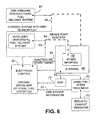
- FIG. 6 we have shown a flow diagram illustrating the process for adapting and operating an IC engine with a blend of hydrogen and standard gasoline or diesel fuel.
- the engine is "mapped" to record fuel volumes vs. engine efficiency across the vehicle's total operating spectrum of load, conditions and performance demands.
- the resultant engine map is downloaded for reference to become part of the electronic onboard diagnostics 62.
- hydrogen fuel 63 is proportionally substituted for the original fossil fuel 67 in certain segments of the engine's operating cycle wherein a proclivity to accept hydrogen reduces emissions without affecting engine performance.
- Dual fuel delivery 63 and 66, and detonation timing 69 are managed such that engine performance is maintained while emissions are reduced.
- the total combined energy of hydrogen fuel 63 plus fossil fuel 66 is adjusted to be equal the original reference energy 67 at any instant and condition as recorded by the engine map stored in the onboard diagnostics system 62 (less any energy saved because of improved efficiency resulting from the addition of hydrogen).
- Hydrogen fuel 63 is delivered through a single injector 64 into the intake manifold at a single injection point 65 optimized for closest proximity to intake valves in the engine 68.
- engine timing 69 is adjusted to optimize engine performance and emissions reduction 73.
- Exhaust emissions 70 are monitored and the exhaust gas is directed either to the exhaust gas recirculation system 71 or to the catalytic after treatment 72 to achieve optimal reduction in emissions 73 for the hydrogen fuel substituted.
Landscapes
- Engineering & Computer Science (AREA)
- Chemical & Material Sciences (AREA)
- Combustion & Propulsion (AREA)
- Mechanical Engineering (AREA)
- General Engineering & Computer Science (AREA)
- Oil, Petroleum & Natural Gas (AREA)
- Chemical Kinetics & Catalysis (AREA)
- Organic Chemistry (AREA)
- Health & Medical Sciences (AREA)
- General Health & Medical Sciences (AREA)
- Inorganic Chemistry (AREA)
- Output Control And Ontrol Of Special Type Engine (AREA)
Abstract
Claims (23)
- Un système de commande d'un moteur à combustion interne de façon à utiliser une proportion d'hydrogène gazeux et de combustible fossile, comprenant :un moyen de fourniture d'une source (10) d'hydrogène gazeux audit moteur,un moyen d'acheminement (11, 13) d'hydrogène gazeux de ladite source à au moins une chambre de combustion (17) dudit moteur, etun moyen de réglage (15, 16) de paramètres de fonctionnement du moteur à combustion interne et de commande d'une quantité de minutage de l'hydrogène acheminé à la au moins une chambre de combustion (17) selon une carte prédéterminée de performances du moteur, de façon à fournir une introduction sélective d'hydrogène gazeux sur l'ensemble du cycle de fonctionnement du moteur.
- Un système selon la Revendication 1, où ledit moyen de fourniture d'une source (10) d'hydrogène gazeux comprend un reformeur d'hydrogène embarqué.
- Un système selon la Revendication 1, où ledit moyen de fourniture d'une source (10) d'hydrogène gazeux comprend de l'alcool "vert" conduit directement dans la chambre de combustion (17), où la chambre de combustion est adaptée de façon à fonctionner en tant que reformeur.
- Un système selon la Revendication 1, où ledit moyen de fourniture d'une source (10) d'hydrogène gazeux comprend un système quelconque parmi un système de stockage embarqué d'hydrogène gazeux, cryogénique ou anhydride.
- Un système selon l'une quelconque des Revendications précédentes, où ledit moyen de réglage (15, 16) desdits paramètres de fonctionnement de moteur comprend un capteur de moteur (16) configuré de façon à surveiller les volumes de combustible et l'efficacité du moteur sur la plage et la charge de fonctionnement dudit moteur.
- Un système selon l'une quelconque des Revendications précédentes, où ledit moyen d'acheminement (11, 13) d'hydrogène gazeux comprend un injecteur d'hydrogène (13), et où l'injecteur d'hydrogène est commandé de façon à injecter de l'hydrogène selon un échéancier prédéterminé de remplacement d'hydrogène.
- Un système selon la Revendication 6, où ledit injecteur d'hydrogène (13) comprend un injecteur à port continu.
- Un système selon la Revendication 6, où ledit injecteur d'hydrogène (13) comprend un injecteur à port série possédant une tige d'injection d'hydrogène percée au travers d'une culasse de moteur.
- Un système selon la Revendication 6, où ledit injecteur d'hydrogène (13) comprend en outre un adaptateur pour injecteur de combustible placé sur un collecteur d'admission adjacent à un injecteur de combustible fossile de façon à permettre l'acheminement d'un mélange hydrogène et combustible fossile à proximité étroite d'une soupape d'admission de moteur.
- Un système selon la Revendication 9, où ledit injecteur d'hydrogène (13) est placé sur un papillon.
- Un système selon la Revendication 6, où ledit injecteur d'hydrogène (13) comprend un tube d'écoulement percé dans un collecteur d'admission (65).
- Un système selon la Revendication 6, où ledit injecteur d'hydrogène (13) comprend en outre un adaptateur pour injecteur de combustible placé sur un collecteur d'admission (65), ledit adaptateur pour injecteur de combustible possédant un premier injecteur destiné à fournir de l'hydrogène et un deuxième injecteur destiné à fournir du combustible fossile.
- Un système selon la Revendication 12, où lesdits premier et deuxième injecteurs sont adaptés de façon à fournir en continu de l'hydrogène et des combustibles fossiles au collecteur d'admission (65).
- Un système selon la Revendication 12, où lesdits premier et deuxième injecteurs sont adaptés de façon à injecter de manière variable lesdits hydrogène et combustibles fossiles dans ledit collecteur d'admission (65).
- Un système selon la Revendication 12, où lesdits premier et deuxième injecteurs sont adaptés de façon à fonctionner indépendamment à l'intérieur d'un corps d'injecteur commun.
- Un système selon la Revendication 12, comprenant en outre un système de recirculation de gaz d'échappement (20, 71) destiné à recirculer des quantités variables de gaz d'échappement vers le collecteur d'admission (65).
- Un procédé d'exploitation d'un moteur à combustion interne au moyen d'une proportion d'hydrogène gazeux et de combustible fossile, comprenant les opérations suivantes :la fourniture d'une source (10) d'hydrogène gazeux audit moteur,l'acheminement d'hydrogène gazeux de ladite source à au moins une chambre de combustion (17) dudit moteur,le réglage de paramètres de fonctionnement dudit moteur selon une carte prédéterminée de volumes de combustible et d'efficacités de moteur sur la plage de fonctionnement dudit moteur, etla commande dudit acheminement d'hydrogène gazeux selon ladite carte prédéterminée de façon à fournir une introduction sélective d'hydrogène gazeux sur l'ensemble du cycle de fonctionnement du moteur.
- Un procédé selon la Revendication 17, où l'hydrogène gazeux est injecté dans des quantités prédéterminées et à un instant ou des instants prédéterminés du cycle de fonctionnement du moteur avec du combustible fossile près d'une soupape d'admission, avant allumage.
- Un procédé selon la Revendication 17, où lesdits paramètres de fonctionnement du moteur sont réglés par:l'enregistrement des paramètres de fonctionnement OEM (fabricant d'équipements d'origine) dudit moteurla mise en correspondance desdits paramètres OEM lors de l'introduction d'hydrogène dans ladite chambre de combustion (17),le remplacement proportionnel dudit combustible fossile par de l'hydrogène gazeux dans certains segments dudit cycle de fonctionnement de moteur, etla gestion du minutage de la détonation et de l'acheminement d'hydrogène gazeux et de combustible fossile de façon à maintenir la performance du moteur selon lesdits paramètres enregistrés.
- Un procédé selon la Revendication 19, où des émissions d'échappement sont surveillées et des gaz d'échappement sont réorientés vers un recirculateur de gaz d'échappement (20) de façon à abaisser la température de combustion avec un oxygène réduit et ainsi atteindre une réduction optimale des émissions de gaz dans le cylindre du moteur (17).
- Un procédé selon la Revendication 20, où lesdits gaz d'échappement sont réorientés vers un réacteur catalytique sélectif à hydrogène (72) après traitement de façon à atteindre une réduction optimale des émissions de gaz.
- Un procédé selon l'une quelconque des Revendications 17 à 21, où ladite source (10) d'hydrogène est fournie par une reformation embarquée d'un gaz parmi éthanol, méthanol et gaz naturel en amont du moteur ou directement à l'intérieur d'un cylindre (17).
- Un procédé selon la Revendication 19, où la mise en correspondance desdits paramètres OEM est obtenue par le recueil et la surveillance de données de pression de combustion et de cylindre de moteur au cours du remplacement d'hydrogène.
Applications Claiming Priority (2)
| Application Number | Priority Date | Filing Date | Title |
|---|---|---|---|
| US56361604P | 2004-04-20 | 2004-04-20 | |
| PCT/CA2005/000569 WO2005103467A1 (fr) | 2004-04-20 | 2005-04-15 | Systeme et procede permettant l'alimentation d'un moteur a combustion interne avec de l'hydrogene melange a des carburants fossiles conventionnels |
Publications (3)
| Publication Number | Publication Date |
|---|---|
| EP1745201A1 EP1745201A1 (fr) | 2007-01-24 |
| EP1745201A4 EP1745201A4 (fr) | 2008-06-04 |
| EP1745201B1 true EP1745201B1 (fr) | 2010-06-30 |
Family
ID=35197039
Family Applications (1)
| Application Number | Title | Priority Date | Filing Date |
|---|---|---|---|
| EP05734020A Expired - Lifetime EP1745201B1 (fr) | 2004-04-20 | 2005-04-15 | Systeme et procede permettant l'alimentation d'un moteur a combustion interne avec de l'hydrogene melange a des carburants fossiles conventionnels |
Country Status (5)
| Country | Link |
|---|---|
| US (1) | US7290504B2 (fr) |
| EP (1) | EP1745201B1 (fr) |
| CA (1) | CA2562363C (fr) |
| DE (1) | DE602005022061D1 (fr) |
| WO (1) | WO2005103467A1 (fr) |
Cited By (5)
| Publication number | Priority date | Publication date | Assignee | Title |
|---|---|---|---|---|
| WO2014151816A1 (fr) * | 2013-03-15 | 2014-09-25 | Mcalister Technologies, Llc | Injecteur-allumeur avec caractérisation de carburant |
| US9140161B2 (en) | 2010-06-07 | 2015-09-22 | Alset Ip S A R.L. | Bi-fuel engine with variable air fuel ratio |
| DE102020132903A1 (de) | 2020-12-10 | 2022-06-15 | Iav Gmbh Ingenieurgesellschaft Auto Und Verkehr | Mehrzylinderbrennkraftmaschine mit Vorkammerzündkerze und Abgasrückführung |
| DE102020132917A1 (de) | 2020-12-10 | 2022-06-15 | Iav Gmbh Ingenieurgesellschaft Auto Und Verkehr | Mehrzylinderbrennkraftmaschine mit Vorkammerzündkerze und Abgasrückführung |
| WO2025255639A1 (fr) * | 2024-06-13 | 2025-12-18 | Ocyan S.A. | Procédé de commande dynamique d'injection d'hydrogène comme micro-additif de carburant dans un moteur diesel mis en œuvre par un algorithme d'apprentissage automatique |
Families Citing this family (86)
| Publication number | Priority date | Publication date | Assignee | Title |
|---|---|---|---|---|
| JP4321306B2 (ja) * | 2004-02-26 | 2009-08-26 | マツダ株式会社 | 水素エンジンの制御装置 |
| JP4103867B2 (ja) * | 2004-08-04 | 2008-06-18 | トヨタ自動車株式会社 | 水素添加内燃機関の制御装置 |
| US20060180101A1 (en) * | 2005-02-16 | 2006-08-17 | Monette Gregory R | Hydrogen-oxygen production device |
| BRPI0607973B1 (pt) * | 2005-03-01 | 2018-07-10 | Saudi Arabian Oil Company | Método para redução das emissões de co2 em veículos automotores movidos por motores de combustão interna, e aparelho para redução das emissões de co2 de um motor de combustão interna |
| WO2006124805A2 (fr) * | 2005-05-16 | 2006-11-23 | Keith Rutledge | Systeme de conversion d'energie destine a la generation d'hydrogene et son utilisation |
| US7803338B2 (en) * | 2005-06-21 | 2010-09-28 | Exonmobil Research And Engineering Company | Method and apparatus for combination catalyst for reduction of NOx in combustion products |
| US7743602B2 (en) * | 2005-06-21 | 2010-06-29 | Exxonmobil Research And Engineering Co. | Reformer assisted lean NOx catalyst aftertreatment system and method |
| US7487750B2 (en) * | 2005-11-29 | 2009-02-10 | Ford Global Technologies, Llc | Variable intake valve and exhaust valve timing strategy for improving performance in a hydrogen fueled engine |
| DE102006008902B4 (de) * | 2006-02-27 | 2008-05-15 | GM Global Technology Operations, Inc., Detroit | Anordnung und Verfahren zum Betrieb einer Brennkraftmaschine mit zwei unterschiedlichen Kraftstoffarten |
| US20080035123A1 (en) * | 2006-08-12 | 2008-02-14 | Rosskob William F | Hydro-energy carboration and combustion system yielding power and no hydrocarbon emissions |
| US7493884B2 (en) * | 2006-10-12 | 2009-02-24 | Caterpillar Inc. | Method and system for reducing pollutant emissions of an engine |
| US7467621B2 (en) * | 2006-10-31 | 2008-12-23 | Caterpillar Inc. | Engine and method for operating an engine |
| GB2447046B (en) * | 2007-02-28 | 2009-09-02 | Inspecs Ltd | Engine fuel supply system |
| US20090071452A1 (en) * | 2007-09-14 | 2009-03-19 | Patrick Joseph Phlips | Bi-fuel Engine Using Hydrogen |
| US20090071453A1 (en) * | 2007-09-14 | 2009-03-19 | William Francis Stockhausen | Bi-fuel Engine Using Hydrogen |
| US8635853B2 (en) * | 2008-01-25 | 2014-01-28 | Caterpillar Inc. | Exhaust reduction system having oxygen and temperature control |
| US8607553B2 (en) * | 2008-02-15 | 2013-12-17 | Caterpillar Inc. | Exhaust system implementing selective catalyst flow control |
| US7823562B2 (en) * | 2008-05-16 | 2010-11-02 | Woodward Governor Company | Engine fuel control system |
| US8291891B2 (en) * | 2008-06-17 | 2012-10-23 | Southwest Research Institute | EGR system with dedicated EGR cylinders |
| US8336508B2 (en) * | 2008-09-17 | 2012-12-25 | Timothy Huttner | System and method for use with a combustion engine |
| US20100122902A1 (en) * | 2008-11-14 | 2010-05-20 | Yehuda Shmueli | System for the electrolytic production of hydrogen as a fuel for an internal combustion engine |
| US8151916B2 (en) * | 2009-01-26 | 2012-04-10 | Ford Global Technologies, Llc | Energy management system and method for hybrid electric vehicles |
| GB2468539B (en) * | 2009-03-13 | 2014-01-08 | T Baden Hardstaff Ltd | An injector emulation device |
| JP4848024B2 (ja) * | 2009-04-21 | 2011-12-28 | 本田技研工業株式会社 | 内燃機関の制御装置 |
| US8413643B2 (en) * | 2009-06-12 | 2013-04-09 | Ford Global Tehnologies, LLC | Multi-fuel engine control system and method |
| US8499722B2 (en) * | 2010-05-28 | 2013-08-06 | Hno Greenfuels, Inc. | Hydrogen supplemental system for on-demand hydrogen generation for internal combustion engines |
| US8454808B2 (en) | 2010-03-15 | 2013-06-04 | Hno Greenfuels, Inc. | Hydrogen supplemental system for on-demand hydrogen generation for internal combustion engines |
| US9453457B2 (en) | 2010-03-15 | 2016-09-27 | HNO Green Fuels, Inc. | Hydrogen supplemental system for on-demand hydrogen generation for internal combustion engines |
| US9574492B2 (en) | 2010-03-15 | 2017-02-21 | HNO Green Fuels, Inc. | Portable hydrogen supplemental system and method for lowering particulate matter and other emissions in diesel engines at idle |
| US9399946B2 (en) | 2010-05-28 | 2016-07-26 | Donald W. Owens | Hydrogen supplemental system for on-demand hydrogen generation for internal combustion engines |
| US9476357B2 (en) | 2010-03-15 | 2016-10-25 | HNO Green Fuels, Inc. | Method and apparatus for increasing combustion efficiency and reducing particulate matter emissions in jet engines |
| US8714115B2 (en) * | 2010-04-09 | 2014-05-06 | Hydrogen Injection Technology, Inc. | Cylindrical hydrogen fuel generator having passive tubular cells |
| US8757107B2 (en) | 2010-05-28 | 2014-06-24 | Hno Greenfuels, Inc. | Hydrogen supplemental system for on-demand hydrogen generation for internal combustion engines |
| CA2801234A1 (fr) * | 2010-05-31 | 2011-12-08 | 663447 N.B. Inc. | Procede et systeme pour ameliorer l'economie de carburant et maitriser les emissions d'un moteur |
| US8931463B2 (en) | 2010-06-07 | 2015-01-13 | Alset Ip S A R.L. | Bi-fuel engine with increased power |
| US8887697B2 (en) | 2010-08-11 | 2014-11-18 | Albert Chin-Tang Wey | Efficient combustion of hydrocarbon fuels in engines |
| CN103403142B (zh) | 2011-01-20 | 2016-02-03 | 沙特阿拉伯石油公司 | 在车辆上回收和储存来自机动车辆废气的co2 |
| EP2673071B1 (fr) | 2011-01-20 | 2017-08-02 | Saudi Arabian Oil Company | Procédés de séparation par membrane et système utilisant de la chaleur résiduelle pour une récupération et un stockage à bord de co2 provenant de gaz d'échappement d'un moteur à combustion interne d'un véhicule à moteur |
| KR101451541B1 (ko) | 2011-01-20 | 2014-10-15 | 사우디 아라비안 오일 컴퍼니 | 자동차 내연기관 배기 가스로부터의 co₂의 온-보드 회수 및 저장을 위해 폐열을 사용하는 가역 고체 흡착 방법 및 시스템 |
| WO2012100157A1 (fr) | 2011-01-20 | 2012-07-26 | Saudi Arabian Oil Company | Procédé direct de densification et système utilisant la chaleur résiduelle pour récupération à bord et stockage de co2 à partir des gaz d'échappement de moteur à combustion interne de véhicule motorisé |
| US8944034B2 (en) | 2011-02-11 | 2015-02-03 | Southwest Research Institute | Dedicated EGR control strategy for improved EGR distribution and engine performance |
| US8561599B2 (en) | 2011-02-11 | 2013-10-22 | Southwest Research Institute | EGR distributor apparatus for dedicated EGR configuration |
| EP2685076B1 (fr) * | 2011-03-08 | 2016-05-11 | Toyota Jidosha Kabushiki Kaisha | Véhicule doté d'un système de production de gaz mixte, et véhicule doté d'un système de production de combustible |
| GB2488814A (en) * | 2011-03-09 | 2012-09-12 | Mobilizer Ltd | Engine Performance Modification or Tuning Kit |
| CA2742011C (fr) | 2011-06-02 | 2012-07-17 | Saskatchewan Research Council | Procede et systeme pour alimenter un moteur a cycle otto fonctionnant a l'essence et au gaz naturel |
| CN103717859A (zh) * | 2011-08-09 | 2014-04-09 | 净化空气动力公司 | 用于控制多模式发动机中的预混燃烧的方法和设备 |
| US9353678B2 (en) * | 2011-10-12 | 2016-05-31 | Massachusetts Institute Of Technology | Reformer enhanced alcohol engine |
| CN103874847B (zh) * | 2011-10-16 | 2016-12-28 | 西港能源有限公司 | 具有多功能搁板的内燃发动机及向其供给燃料的方法 |
| KR20190132563A (ko) | 2012-02-27 | 2019-11-27 | 디이이씨 아이엔씨 | 내연 기관을 추진하기 위한 산소-풍부 플라즈마 발생기 |
| US9234482B2 (en) * | 2012-08-02 | 2016-01-12 | Massachusetts Institute Of Technology | Ultra-high efficiency alcohol engines using optimized exhaust heat recovery |
| US20140102415A1 (en) * | 2012-10-11 | 2014-04-17 | Intellectual Property Holdings, Llc | Fuel system and methods |
| EP3409915B1 (fr) * | 2013-01-09 | 2020-12-23 | Mac Donald, John, Joseph | Système et procédé permettant d'améliorer le rendement des moteurs à combustion qui utilisent des carburants primaire et secondaire |
| US9279393B2 (en) | 2013-01-17 | 2016-03-08 | Ford Global Technologies, Llc | Devices and methods for exhaust gas recirculation operation of an engine |
| US9534567B2 (en) | 2013-06-11 | 2017-01-03 | Ford Global Technologies, Llc | Dedicated EGR cylinder post combustion injection |
| US20140366840A1 (en) * | 2013-06-17 | 2014-12-18 | Caterpillar Motoren GmbH & Co. KG. | Fuel Apportionment for Multi Fuel Engine System |
| US9470162B2 (en) | 2014-01-06 | 2016-10-18 | Ford Global Technologies, Llc | Method and system for EGR control |
| KR101820622B1 (ko) * | 2014-04-23 | 2018-02-28 | 핀리앙 판 | 에탄올-물-수소 혼합 연료를 기반으로 가솔린 엔진을 작동시키기 위한 연료 제어 시스템 |
| US10302026B2 (en) | 2014-05-06 | 2019-05-28 | Ford Global Technologies, Llc | Systems and methods for improving operation of a highly dilute engine |
| US9599046B2 (en) | 2014-06-05 | 2017-03-21 | Ford Global Technologies, Llc | Systems and methods for dedicated EGR cylinder valve control |
| US9988994B2 (en) | 2014-06-06 | 2018-06-05 | Ford Global Technologies, Llc | Systems and methods for EGR control |
| US10041448B2 (en) | 2014-06-17 | 2018-08-07 | Ford Global Technologies, Llc | Systems and methods for boost control |
| US9581114B2 (en) | 2014-07-17 | 2017-02-28 | Ford Global Technologies, Llc | Systems and methods for dedicated EGR cylinder exhaust gas temperature control |
| US9297320B2 (en) | 2014-07-25 | 2016-03-29 | Ford Global Technologies, Llc | Systems and methods for exhaust catalyst temperature control |
| US10233809B2 (en) | 2014-09-16 | 2019-03-19 | Southwest Research Institute | Apparatus and methods for exhaust gas recirculation for an internal combustion engine powered by a hydrocarbon fuel |
| US10125726B2 (en) * | 2015-02-25 | 2018-11-13 | Southwest Research Institute | Apparatus and methods for exhaust gas recirculation for an internal combustion engine utilizing at least two hydrocarbon fuels |
| US9797349B2 (en) | 2015-05-21 | 2017-10-24 | Southwest Research Institute | Combined steam reformation reactions and water gas shift reactions for on-board hydrogen production in an internal combustion engine |
| US9773355B2 (en) | 2015-05-27 | 2017-09-26 | Bms-Tek, Llc | System for monitoring and inspecting vehicle emissions levels for compliance |
| US9657692B2 (en) | 2015-09-11 | 2017-05-23 | Southwest Research Institute | Internal combustion engine utilizing two independent flow paths to a dedicated exhaust gas recirculation cylinder |
| RU2018134937A (ru) | 2016-03-07 | 2020-04-08 | Хайтек Пауэр, Инк. | Способ формирования и распределения второго топлива для двигателя внутреннего сгорания |
| US9874193B2 (en) | 2016-06-16 | 2018-01-23 | Southwest Research Institute | Dedicated exhaust gas recirculation engine fueling control |
| US20190257254A1 (en) * | 2016-11-01 | 2019-08-22 | Yaw Obeng | System And Method For Operating An Engine With Reduced NOx Emissions |
| US20180195469A1 (en) * | 2017-01-10 | 2018-07-12 | Saudi Arabian Oil Company | Onboard fuel reforming using solar or electrical energy |
| US10495035B2 (en) | 2017-02-07 | 2019-12-03 | Southwest Research Institute | Dedicated exhaust gas recirculation configuration for reduced EGR and fresh air backflow |
| US20190234348A1 (en) * | 2018-01-29 | 2019-08-01 | Hytech Power, Llc | Ultra Low HHO Injection |
| KR20230025695A (ko) * | 2020-06-16 | 2023-02-22 | 바스프 코포레이션 | 이중 연료 엔진용 배기 처리 시스템 |
| NL2026439B1 (en) * | 2020-09-10 | 2022-05-09 | Pieterse Rob | A method of providing a combustion engine assembly capable of running on hydrogen gas |
| WO2022067021A1 (fr) * | 2020-09-25 | 2022-03-31 | Bloom Energy Corporation | Utilisation de carburant hybride à base d'hydrogène et de gaz naturel liquide dans des applications marines pour réduire l'empreinte carbone |
| CN112664358A (zh) * | 2020-12-31 | 2021-04-16 | 山东普利达新能源科技有限公司 | 一种用于防止氢气内燃机爆震的燃料混合系统 |
| GB2611101B (en) * | 2021-09-28 | 2026-03-25 | Jcb Res | An internal combustion engine |
| US11614040B1 (en) * | 2021-12-16 | 2023-03-28 | Caterpillar Inc. | Cost based substitution ratio control in hydrogen-capable internal combustion engine system |
| US12129807B2 (en) * | 2022-05-05 | 2024-10-29 | Caterpillar Inc. | Dual fuel engine operating strategy for optimized hydrogen and hydrocarbon fueling |
| CN114961942B (zh) * | 2022-06-14 | 2024-04-16 | 潍柴动力股份有限公司 | 一种减少甲烷排放的方法及装置 |
| US12104546B2 (en) | 2022-08-25 | 2024-10-01 | Caterpillar Inc. | Gaseous fuel engine operating strategy for improved derating performance using varied ratio fuel blend |
| US11891962B1 (en) | 2022-08-25 | 2024-02-06 | Caterpillar Inc. | Gaseous fuel engine system operating strategy including hydrogen fueling amount based on performance target |
| US20260103069A1 (en) * | 2022-09-30 | 2026-04-16 | Cummins Inc. | Hydrogen fueling systems and methods |
| US11946644B1 (en) | 2023-03-31 | 2024-04-02 | Solar Turbines Incorporated | Multi-pot swirl injector |
Family Cites Families (15)
| Publication number | Priority date | Publication date | Assignee | Title |
|---|---|---|---|---|
| DE2420820A1 (de) * | 1974-04-30 | 1975-11-13 | Daimler Benz Ag | Antrieb fuer ein kraftfahrzeug |
| JPS5419533B2 (fr) * | 1974-12-18 | 1979-07-16 | ||
| JPS53120020A (en) * | 1977-03-29 | 1978-10-20 | Nippon Soken Inc | Internal combustion engine operation method |
| DE69326337T2 (de) * | 1992-05-15 | 2000-04-13 | Orbital Engine Co. (Australia) Pty. Ltd., Balcatta | Brennstoff-gas-zuführungssystem für brennkraftmaschinen |
| US5408957A (en) | 1993-04-28 | 1995-04-25 | Crowley; Timothy J. | Continuous combustible gas injection into conventionally fueled internal combustion engines |
| US5566653A (en) * | 1994-07-13 | 1996-10-22 | Feuling; James J. | Method and apparatus for clean cold starting of internal combustion engines |
| US5713336A (en) | 1995-01-24 | 1998-02-03 | Woodward Governor Company | Method and apparatus for providing multipoint gaseous fuel injection to an internal combustion engine |
| US5787864A (en) * | 1995-04-25 | 1998-08-04 | University Of Central Florida | Hydrogen enriched natural gas as a motor fuel with variable air fuel ratio and fuel mixture ratio control |
| DE19813053C2 (de) * | 1998-03-25 | 2001-10-18 | Xcellsis Gmbh | Reaktoreinheit für eine katalytische chemische Reaktion, insbesondere zur katalytischen Methanolreformierung |
| US6506360B1 (en) * | 1999-07-28 | 2003-01-14 | Erling Reidar Andersen | Method for producing hydrogen |
| US6311648B1 (en) * | 2000-02-22 | 2001-11-06 | Jean-Louis Larocque | Hydrogen-oxygen/hydrocarbon fuel system for internal combustion engine |
| US6638493B2 (en) * | 2000-07-20 | 2003-10-28 | Erling Reidar Andersen | Method for producing hydrogen |
| US6612269B2 (en) * | 2000-08-11 | 2003-09-02 | The Regents Of The University Of California | Apparatus and method for operating internal combustion engines from variable mixtures of gaseous fuels |
| US6655324B2 (en) * | 2001-11-14 | 2003-12-02 | Massachusetts Institute Of Technology | High compression ratio, hydrogen enhanced gasoline engine system |
| DE10211122A1 (de) * | 2002-03-14 | 2003-09-25 | Bosch Gmbh Robert | Verfahren und Vorrichtung zum Betreiben einer Brennkraftmaschine mit mehreren Kraftstoffen |
-
2005
- 2005-04-15 US US11/107,184 patent/US7290504B2/en not_active Expired - Lifetime
- 2005-04-15 EP EP05734020A patent/EP1745201B1/fr not_active Expired - Lifetime
- 2005-04-15 WO PCT/CA2005/000569 patent/WO2005103467A1/fr not_active Ceased
- 2005-04-15 CA CA002562363A patent/CA2562363C/fr not_active Expired - Fee Related
- 2005-04-15 DE DE602005022061T patent/DE602005022061D1/de not_active Expired - Lifetime
Cited By (7)
| Publication number | Priority date | Publication date | Assignee | Title |
|---|---|---|---|---|
| US9140161B2 (en) | 2010-06-07 | 2015-09-22 | Alset Ip S A R.L. | Bi-fuel engine with variable air fuel ratio |
| WO2014151816A1 (fr) * | 2013-03-15 | 2014-09-25 | Mcalister Technologies, Llc | Injecteur-allumeur avec caractérisation de carburant |
| US9279398B2 (en) | 2013-03-15 | 2016-03-08 | Mcalister Technologies, Llc | Injector-igniter with fuel characterization |
| US9562500B2 (en) | 2013-03-15 | 2017-02-07 | Mcalister Technologies, Llc | Injector-igniter with fuel characterization |
| DE102020132903A1 (de) | 2020-12-10 | 2022-06-15 | Iav Gmbh Ingenieurgesellschaft Auto Und Verkehr | Mehrzylinderbrennkraftmaschine mit Vorkammerzündkerze und Abgasrückführung |
| DE102020132917A1 (de) | 2020-12-10 | 2022-06-15 | Iav Gmbh Ingenieurgesellschaft Auto Und Verkehr | Mehrzylinderbrennkraftmaschine mit Vorkammerzündkerze und Abgasrückführung |
| WO2025255639A1 (fr) * | 2024-06-13 | 2025-12-18 | Ocyan S.A. | Procédé de commande dynamique d'injection d'hydrogène comme micro-additif de carburant dans un moteur diesel mis en œuvre par un algorithme d'apprentissage automatique |
Also Published As
| Publication number | Publication date |
|---|---|
| CA2562363C (fr) | 2008-12-30 |
| EP1745201A1 (fr) | 2007-01-24 |
| US20050229872A1 (en) | 2005-10-20 |
| DE602005022061D1 (de) | 2010-08-12 |
| US7290504B2 (en) | 2007-11-06 |
| WO2005103467A1 (fr) | 2005-11-03 |
| EP1745201A4 (fr) | 2008-06-04 |
| CA2562363A1 (fr) | 2005-11-03 |
Similar Documents
| Publication | Publication Date | Title |
|---|---|---|
| EP1745201B1 (fr) | Systeme et procede permettant l'alimentation d'un moteur a combustion interne avec de l'hydrogene melange a des carburants fossiles conventionnels | |
| US7587998B2 (en) | Power plant and fuel supply method therefor | |
| US8677949B2 (en) | Fuel management system for very high efficiency flex fuel engines powered by methanol and gasoline | |
| US9453465B2 (en) | Direct injection of diluents or secondary fuels in gaseous fuel engines | |
| CN112105811B (zh) | 汽车内燃发动机的车载燃料重整注水以提高制氢量 | |
| CN101532437B (zh) | 使用氢的双燃料发动机 | |
| Ahmad et al. | Enhanced production of methane enriched biogas through intensified co-digestion process and its effective utilization in a biodiesel/biohydrogen fueled engine with duel injection strategies: ML-RSM based an efficient optimization approach | |
| US7487766B2 (en) | Flexible fuel engines with exhaust gas recirculation for improved engine efficiency | |
| US20130220270A1 (en) | Retrofit gas fuel supply kit retrofittable to internal combustion engine using liquid fuel | |
| CN104141547A (zh) | 气体燃料发动机中稀释剂或二次燃料的直接喷射 | |
| CN102121418A (zh) | 一种重整气-汽油混合燃料内燃机及控制方法 | |
| US5398663A (en) | Combustion of liquid fuels | |
| Zhu et al. | Multi-objective optimization of a compression ignition engine using on-board methanol reforming | |
| US9353678B2 (en) | Reformer enhanced alcohol engine | |
| Amaral et al. | Combustion and specific fuel consumption evaluation of a single-cylinder engine fueled with ethanol, gasoline, and a hydrogen-rich mixture | |
| Ji et al. | The cold start performance of a spark-ignited dimethyl ether engine | |
| US7047909B1 (en) | Methods of operating a compression ignition engine and a vehicle system | |
| WO2019059014A1 (fr) | Moteur à combustion interne | |
| US20250376937A1 (en) | Enhanced operation of hydrogen and ammonia engines | |
| CN108590842B (zh) | 一种乙醇在线重整辅助燃烧的天然气发动机 | |
| Bassi | Natural Gas Vehicles for a Clean Environment An Overview and the Trends for the Future | |
| Syed et al. | Experimental Study of hCNG on Single Cylinder 395cc Spark Ignition Engine for Performance and Exhaust Emission | |
| CN112983656A (zh) | 一种柴油与氢气双燃料动力系统 | |
| CN213063762U (zh) | 乙醇与氢气混合燃料动力系统 | |
| JP2007024009A (ja) | 内燃機関 |
Legal Events
| Date | Code | Title | Description |
|---|---|---|---|
| PUAI | Public reference made under article 153(3) epc to a published international application that has entered the european phase |
Free format text: ORIGINAL CODE: 0009012 |
|
| 17P | Request for examination filed |
Effective date: 20061116 |
|
| AK | Designated contracting states |
Kind code of ref document: A1 Designated state(s): DE FR GB IT SE |
|
| DAX | Request for extension of the european patent (deleted) | ||
| RBV | Designated contracting states (corrected) |
Designated state(s): DE FR GB IT SE |
|
| A4 | Supplementary search report drawn up and despatched |
Effective date: 20080508 |
|
| 17Q | First examination report despatched |
Effective date: 20080711 |
|
| GRAP | Despatch of communication of intention to grant a patent |
Free format text: ORIGINAL CODE: EPIDOSNIGR1 |
|
| GRAS | Grant fee paid |
Free format text: ORIGINAL CODE: EPIDOSNIGR3 |
|
| GRAA | (expected) grant |
Free format text: ORIGINAL CODE: 0009210 |
|
| AK | Designated contracting states |
Kind code of ref document: B1 Designated state(s): DE FR GB IT SE |
|
| REG | Reference to a national code |
Ref country code: GB Ref legal event code: FG4D |
|
| REF | Corresponds to: |
Ref document number: 602005022061 Country of ref document: DE Date of ref document: 20100812 Kind code of ref document: P |
|
| PG25 | Lapsed in a contracting state [announced via postgrant information from national office to epo] |
Ref country code: SE Free format text: LAPSE BECAUSE OF FAILURE TO SUBMIT A TRANSLATION OF THE DESCRIPTION OR TO PAY THE FEE WITHIN THE PRESCRIBED TIME-LIMIT Effective date: 20100630 |
|
| PG25 | Lapsed in a contracting state [announced via postgrant information from national office to epo] |
Ref country code: IT Free format text: LAPSE BECAUSE OF FAILURE TO SUBMIT A TRANSLATION OF THE DESCRIPTION OR TO PAY THE FEE WITHIN THE PRESCRIBED TIME-LIMIT Effective date: 20100630 |
|
| PLBE | No opposition filed within time limit |
Free format text: ORIGINAL CODE: 0009261 |
|
| STAA | Information on the status of an ep patent application or granted ep patent |
Free format text: STATUS: NO OPPOSITION FILED WITHIN TIME LIMIT |
|
| 26N | No opposition filed |
Effective date: 20110331 |
|
| REG | Reference to a national code |
Ref country code: DE Ref legal event code: R097 Ref document number: 602005022061 Country of ref document: DE Effective date: 20110330 |
|
| PGFP | Annual fee paid to national office [announced via postgrant information from national office to epo] |
Ref country code: GB Payment date: 20130429 Year of fee payment: 9 Ref country code: DE Payment date: 20130429 Year of fee payment: 9 |
|
| PGFP | Annual fee paid to national office [announced via postgrant information from national office to epo] |
Ref country code: FR Payment date: 20130506 Year of fee payment: 9 |
|
| REG | Reference to a national code |
Ref country code: DE Ref legal event code: R119 Ref document number: 602005022061 Country of ref document: DE |
|
| GBPC | Gb: european patent ceased through non-payment of renewal fee |
Effective date: 20140415 |
|
| REG | Reference to a national code |
Ref country code: DE Ref legal event code: R119 Ref document number: 602005022061 Country of ref document: DE Effective date: 20141101 |
|
| REG | Reference to a national code |
Ref country code: FR Ref legal event code: ST Effective date: 20141231 |
|
| PG25 | Lapsed in a contracting state [announced via postgrant information from national office to epo] |
Ref country code: DE Free format text: LAPSE BECAUSE OF NON-PAYMENT OF DUE FEES Effective date: 20141101 Ref country code: GB Free format text: LAPSE BECAUSE OF NON-PAYMENT OF DUE FEES Effective date: 20140415 |
|
| PG25 | Lapsed in a contracting state [announced via postgrant information from national office to epo] |
Ref country code: FR Free format text: LAPSE BECAUSE OF NON-PAYMENT OF DUE FEES Effective date: 20140430 |