EP1746469A1 - Holographisches aufzeichnungsmedium, holographisches aufzeichnungsverfahren und holographisches informationsmedium - Google Patents
Holographisches aufzeichnungsmedium, holographisches aufzeichnungsverfahren und holographisches informationsmedium Download PDFInfo
- Publication number
- EP1746469A1 EP1746469A1 EP05737353A EP05737353A EP1746469A1 EP 1746469 A1 EP1746469 A1 EP 1746469A1 EP 05737353 A EP05737353 A EP 05737353A EP 05737353 A EP05737353 A EP 05737353A EP 1746469 A1 EP1746469 A1 EP 1746469A1
- Authority
- EP
- European Patent Office
- Prior art keywords
- recording medium
- holographic recording
- substrate
- holographic
- compound
- Prior art date
- Legal status (The legal status is an assumption and is not a legal conclusion. Google has not performed a legal analysis and makes no representation as to the accuracy of the status listed.)
- Withdrawn
Links
Images
Classifications
-
- G—PHYSICS
- G03—PHOTOGRAPHY; CINEMATOGRAPHY; ANALOGOUS TECHNIQUES USING WAVES OTHER THAN OPTICAL WAVES; ELECTROGRAPHY; HOLOGRAPHY
- G03H—HOLOGRAPHIC PROCESSES OR APPARATUS
- G03H1/00—Holographic processes or apparatus using light, infrared or ultraviolet waves for obtaining holograms or for obtaining an image from them; Details peculiar thereto
- G03H1/02—Details of features involved during the holographic process; Replication of holograms without interference recording
- G03H1/0252—Laminate comprising a hologram layer
-
- G—PHYSICS
- G03—PHOTOGRAPHY; CINEMATOGRAPHY; ANALOGOUS TECHNIQUES USING WAVES OTHER THAN OPTICAL WAVES; ELECTROGRAPHY; HOLOGRAPHY
- G03F—PHOTOMECHANICAL PRODUCTION OF TEXTURED OR PATTERNED SURFACES, e.g. FOR PRINTING, FOR PROCESSING OF SEMICONDUCTOR DEVICES; MATERIALS THEREFOR; ORIGINALS THEREFOR; APPARATUS SPECIALLY ADAPTED THEREFOR
- G03F7/00—Photomechanical, e.g. photolithographic, production of textured or patterned surfaces, e.g. printing surfaces; Materials therefor, e.g. comprising photoresists; Apparatus specially adapted therefor
- G03F7/0005—Production of optical devices or components in so far as characterised by the lithographic processes or materials used therefor
- G03F7/001—Phase modulating patterns, e.g. refractive index patterns
-
- G—PHYSICS
- G03—PHOTOGRAPHY; CINEMATOGRAPHY; ANALOGOUS TECHNIQUES USING WAVES OTHER THAN OPTICAL WAVES; ELECTROGRAPHY; HOLOGRAPHY
- G03F—PHOTOMECHANICAL PRODUCTION OF TEXTURED OR PATTERNED SURFACES, e.g. FOR PRINTING, FOR PROCESSING OF SEMICONDUCTOR DEVICES; MATERIALS THEREFOR; ORIGINALS THEREFOR; APPARATUS SPECIALLY ADAPTED THEREFOR
- G03F7/00—Photomechanical, e.g. photolithographic, production of textured or patterned surfaces, e.g. printing surfaces; Materials therefor, e.g. comprising photoresists; Apparatus specially adapted therefor
- G03F7/004—Photosensitive materials
- G03F7/09—Photosensitive materials characterised by structural details, e.g. supports, auxiliary layers
- G03F7/091—Photosensitive materials characterised by structural details, e.g. supports, auxiliary layers characterised by antireflection means or light filtering or absorbing means, e.g. anti-halation, contrast enhancement
-
- G—PHYSICS
- G11—INFORMATION STORAGE
- G11B—INFORMATION STORAGE BASED ON RELATIVE MOVEMENT BETWEEN RECORD CARRIER AND TRANSDUCER
- G11B7/00—Recording or reproducing by optical means, e.g. recording using a thermal beam of optical radiation by modifying optical properties or the physical structure, reproducing using an optical beam at lower power by sensing optical properties; Record carriers therefor
- G11B7/004—Recording, reproducing or erasing methods; Read, write or erase circuits therefor
- G11B7/0065—Recording, reproducing or erasing by using optical interference patterns, e.g. holograms
-
- G—PHYSICS
- G11—INFORMATION STORAGE
- G11B—INFORMATION STORAGE BASED ON RELATIVE MOVEMENT BETWEEN RECORD CARRIER AND TRANSDUCER
- G11B7/00—Recording or reproducing by optical means, e.g. recording using a thermal beam of optical radiation by modifying optical properties or the physical structure, reproducing using an optical beam at lower power by sensing optical properties; Record carriers therefor
- G11B7/24—Record carriers characterised by shape, structure or physical properties, or by the selection of the material
- G11B7/2403—Layers; Shape, structure or physical properties thereof
- G11B7/24035—Recording layers
- G11B7/24044—Recording layers for storing optical interference patterns, e.g. holograms; for storing data in three dimensions [3D], e.g. volume storage
-
- G—PHYSICS
- G11—INFORMATION STORAGE
- G11B—INFORMATION STORAGE BASED ON RELATIVE MOVEMENT BETWEEN RECORD CARRIER AND TRANSDUCER
- G11B7/00—Recording or reproducing by optical means, e.g. recording using a thermal beam of optical radiation by modifying optical properties or the physical structure, reproducing using an optical beam at lower power by sensing optical properties; Record carriers therefor
- G11B7/24—Record carriers characterised by shape, structure or physical properties, or by the selection of the material
- G11B7/2403—Layers; Shape, structure or physical properties thereof
- G11B7/24047—Substrates
-
- G—PHYSICS
- G11—INFORMATION STORAGE
- G11B—INFORMATION STORAGE BASED ON RELATIVE MOVEMENT BETWEEN RECORD CARRIER AND TRANSDUCER
- G11B7/00—Recording or reproducing by optical means, e.g. recording using a thermal beam of optical radiation by modifying optical properties or the physical structure, reproducing using an optical beam at lower power by sensing optical properties; Record carriers therefor
- G11B7/24—Record carriers characterised by shape, structure or physical properties, or by the selection of the material
- G11B7/241—Record carriers characterised by shape, structure or physical properties, or by the selection of the material characterised by the selection of the material
- G11B7/252—Record carriers characterised by shape, structure or physical properties, or by the selection of the material characterised by the selection of the material of layers other than recording layers
- G11B7/253—Record carriers characterised by shape, structure or physical properties, or by the selection of the material characterised by the selection of the material of layers other than recording layers of substrates
- G11B7/2533—Record carriers characterised by shape, structure or physical properties, or by the selection of the material characterised by the selection of the material of layers other than recording layers of substrates comprising resins
- G11B7/2538—Record carriers characterised by shape, structure or physical properties, or by the selection of the material characterised by the selection of the material of layers other than recording layers of substrates comprising resins polycycloolefins [PCO]
-
- G—PHYSICS
- G03—PHOTOGRAPHY; CINEMATOGRAPHY; ANALOGOUS TECHNIQUES USING WAVES OTHER THAN OPTICAL WAVES; ELECTROGRAPHY; HOLOGRAPHY
- G03H—HOLOGRAPHIC PROCESSES OR APPARATUS
- G03H2250/00—Laminate comprising a hologram layer
- G03H2250/32—Antireflective layer
-
- G—PHYSICS
- G03—PHOTOGRAPHY; CINEMATOGRAPHY; ANALOGOUS TECHNIQUES USING WAVES OTHER THAN OPTICAL WAVES; ELECTROGRAPHY; HOLOGRAPHY
- G03H—HOLOGRAPHIC PROCESSES OR APPARATUS
- G03H2250/00—Laminate comprising a hologram layer
- G03H2250/42—Reflective layer
-
- G—PHYSICS
- G03—PHOTOGRAPHY; CINEMATOGRAPHY; ANALOGOUS TECHNIQUES USING WAVES OTHER THAN OPTICAL WAVES; ELECTROGRAPHY; HOLOGRAPHY
- G03H—HOLOGRAPHIC PROCESSES OR APPARATUS
- G03H2260/00—Recording materials or recording processes
- G03H2260/12—Photopolymer
-
- G—PHYSICS
- G03—PHOTOGRAPHY; CINEMATOGRAPHY; ANALOGOUS TECHNIQUES USING WAVES OTHER THAN OPTICAL WAVES; ELECTROGRAPHY; HOLOGRAPHY
- G03H—HOLOGRAPHIC PROCESSES OR APPARATUS
- G03H2270/00—Substrate bearing the hologram
- G03H2270/10—Composition
- G03H2270/14—Plastic
-
- G—PHYSICS
- G11—INFORMATION STORAGE
- G11B—INFORMATION STORAGE BASED ON RELATIVE MOVEMENT BETWEEN RECORD CARRIER AND TRANSDUCER
- G11B7/00—Recording or reproducing by optical means, e.g. recording using a thermal beam of optical radiation by modifying optical properties or the physical structure, reproducing using an optical beam at lower power by sensing optical properties; Record carriers therefor
- G11B7/24—Record carriers characterised by shape, structure or physical properties, or by the selection of the material
- G11B7/241—Record carriers characterised by shape, structure or physical properties, or by the selection of the material characterised by the selection of the material
- G11B7/252—Record carriers characterised by shape, structure or physical properties, or by the selection of the material characterised by the selection of the material of layers other than recording layers
-
- G—PHYSICS
- G11—INFORMATION STORAGE
- G11B—INFORMATION STORAGE BASED ON RELATIVE MOVEMENT BETWEEN RECORD CARRIER AND TRANSDUCER
- G11B7/00—Recording or reproducing by optical means, e.g. recording using a thermal beam of optical radiation by modifying optical properties or the physical structure, reproducing using an optical beam at lower power by sensing optical properties; Record carriers therefor
- G11B7/24—Record carriers characterised by shape, structure or physical properties, or by the selection of the material
- G11B7/241—Record carriers characterised by shape, structure or physical properties, or by the selection of the material characterised by the selection of the material
- G11B7/252—Record carriers characterised by shape, structure or physical properties, or by the selection of the material characterised by the selection of the material of layers other than recording layers
- G11B7/253—Record carriers characterised by shape, structure or physical properties, or by the selection of the material characterised by the selection of the material of layers other than recording layers of substrates
- G11B7/2531—Record carriers characterised by shape, structure or physical properties, or by the selection of the material characterised by the selection of the material of layers other than recording layers of substrates comprising glass
-
- G—PHYSICS
- G11—INFORMATION STORAGE
- G11B—INFORMATION STORAGE BASED ON RELATIVE MOVEMENT BETWEEN RECORD CARRIER AND TRANSDUCER
- G11B7/00—Recording or reproducing by optical means, e.g. recording using a thermal beam of optical radiation by modifying optical properties or the physical structure, reproducing using an optical beam at lower power by sensing optical properties; Record carriers therefor
- G11B7/24—Record carriers characterised by shape, structure or physical properties, or by the selection of the material
- G11B7/241—Record carriers characterised by shape, structure or physical properties, or by the selection of the material characterised by the selection of the material
- G11B7/252—Record carriers characterised by shape, structure or physical properties, or by the selection of the material characterised by the selection of the material of layers other than recording layers
- G11B7/253—Record carriers characterised by shape, structure or physical properties, or by the selection of the material characterised by the selection of the material of layers other than recording layers of substrates
- G11B7/2533—Record carriers characterised by shape, structure or physical properties, or by the selection of the material characterised by the selection of the material of layers other than recording layers of substrates comprising resins
-
- G—PHYSICS
- G11—INFORMATION STORAGE
- G11B—INFORMATION STORAGE BASED ON RELATIVE MOVEMENT BETWEEN RECORD CARRIER AND TRANSDUCER
- G11B7/00—Recording or reproducing by optical means, e.g. recording using a thermal beam of optical radiation by modifying optical properties or the physical structure, reproducing using an optical beam at lower power by sensing optical properties; Record carriers therefor
- G11B7/24—Record carriers characterised by shape, structure or physical properties, or by the selection of the material
- G11B7/241—Record carriers characterised by shape, structure or physical properties, or by the selection of the material characterised by the selection of the material
- G11B7/252—Record carriers characterised by shape, structure or physical properties, or by the selection of the material characterised by the selection of the material of layers other than recording layers
- G11B7/253—Record carriers characterised by shape, structure or physical properties, or by the selection of the material characterised by the selection of the material of layers other than recording layers of substrates
- G11B7/2533—Record carriers characterised by shape, structure or physical properties, or by the selection of the material characterised by the selection of the material of layers other than recording layers of substrates comprising resins
- G11B7/2534—Record carriers characterised by shape, structure or physical properties, or by the selection of the material characterised by the selection of the material of layers other than recording layers of substrates comprising resins polycarbonates [PC]
-
- G—PHYSICS
- G11—INFORMATION STORAGE
- G11B—INFORMATION STORAGE BASED ON RELATIVE MOVEMENT BETWEEN RECORD CARRIER AND TRANSDUCER
- G11B7/00—Recording or reproducing by optical means, e.g. recording using a thermal beam of optical radiation by modifying optical properties or the physical structure, reproducing using an optical beam at lower power by sensing optical properties; Record carriers therefor
- G11B7/24—Record carriers characterised by shape, structure or physical properties, or by the selection of the material
- G11B7/241—Record carriers characterised by shape, structure or physical properties, or by the selection of the material characterised by the selection of the material
- G11B7/252—Record carriers characterised by shape, structure or physical properties, or by the selection of the material characterised by the selection of the material of layers other than recording layers
- G11B7/258—Record carriers characterised by shape, structure or physical properties, or by the selection of the material characterised by the selection of the material of layers other than recording layers of reflective layers
-
- G—PHYSICS
- G11—INFORMATION STORAGE
- G11B—INFORMATION STORAGE BASED ON RELATIVE MOVEMENT BETWEEN RECORD CARRIER AND TRANSDUCER
- G11B7/00—Recording or reproducing by optical means, e.g. recording using a thermal beam of optical radiation by modifying optical properties or the physical structure, reproducing using an optical beam at lower power by sensing optical properties; Record carriers therefor
- G11B7/24—Record carriers characterised by shape, structure or physical properties, or by the selection of the material
- G11B7/241—Record carriers characterised by shape, structure or physical properties, or by the selection of the material characterised by the selection of the material
- G11B7/252—Record carriers characterised by shape, structure or physical properties, or by the selection of the material characterised by the selection of the material of layers other than recording layers
- G11B7/258—Record carriers characterised by shape, structure or physical properties, or by the selection of the material characterised by the selection of the material of layers other than recording layers of reflective layers
- G11B7/2585—Record carriers characterised by shape, structure or physical properties, or by the selection of the material characterised by the selection of the material of layers other than recording layers of reflective layers based on aluminium
Definitions
- the present invention relates to a holographic recording medium that can be of a large capacity and can make high speed transfer possible, and further to a holographic recording method and to a holographic information medium on which information is recorded holographically.
- a recording method using a holographic recording medium wherein transparent materials are arranged respectively on both sides of a holographic recording layer for example, Patent Document 1
- a recording method using a holographic recording medium equipped with a reflection surface arranged on one side of a holographic recording layer for example, Patent Document 2
- the refractive index in a holographic recording layer in the medium is changed to record information by giving holographic exposure, and the change of the refractive index recorded in the medium is read to regenerate information
- various materials as a material for the holographic recording layer, including the material using an inorganic material (for example, Patent Document 3), the material using a compound that shows structural isomer with light (for example, Patent Document 4), or the material using diffusion polymerization of photopolymer (for example, Patent Document 5).
- composition for forming a holographic recording layer utilizing cation polymerization wherein no solvent is used and organization shrinkage is relatively less for example, Patent Document 6
- the composition for forming a holographic recording layer has drawbacks wherein there is a fear that island-shaped portions formed, under the holographic exposure, by photopolymerization of monomer in the recording layer are moved undesirably, and a volume of liquid substance is expanded by changes of ambient temperatures in the apparatus, because those other than monomer that causes photo-cation polymerization are liquid substances.
- radical polymerization is used for recording in holographic exposure, and there is proposed a composition (for example, Patent Document 7) that forms a binder after forming a medium, for holding monomer that makes this radical polymerization before exposure to be possible, thus, it is possible to thicken a layer thickness of the holographic recording layer and to lessen the volume shrinkage by using the composition of this kind.
- a composition for example, Patent Document 7 that forms a binder after forming a medium, for holding monomer that makes this radical polymerization before exposure to be possible, thus, it is possible to thicken a layer thickness of the holographic recording layer and to lessen the volume shrinkage by using the composition of this kind.
- An objective of this invention is to provide a holographic recording medium and a holographically recorded holographic information medium on which information is recorded holographically, which have low mechanical loads, high-sensitivity and high-storage stability, and a holographic recording method for preparing the holographic recording medium and the holographic information medium.
- a holographic recording medium including:
- a holographic recording method for recording information on the above holographic recording medium comprising :
- a holographic information medium comprising:
- a holographic recording medium and a holographically recorded holographic information medium on which information is recorded holographically which have low mechanical loads, high-sensitivity and high-storage stability, and a holographic recording method for preparing the holographic recording medium and the holographic information medium.
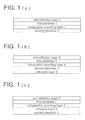
- Fig. 1(a), Fig. 1(b) and Fig 1(c) are the sectional views showing the construction of layers included in the holographic recording medium and the holographic information medium.
- the holographic recording medium and the holographic information medium of this invention have the basically construction having a holographic recording layer (or a holographic information recording layer) 4 is sandwiched between the first substrate 1 and the second substrate 2, wherein the anti-reflection layer 3 is provided on the first substrate 1.
- a reflection layer 5 on the second substrate 2 as shown in Fig. 1(b).
- the reflection layer can be also provided between the holographic recording layer (or a holographic information recording layer) 4 and the second substrate 2 as shown in the Fig. 1(c).
- a holographic recording medium includes: an anti-reflection layer; an first substrate; a holographic recording layer containing a binder forming compound, a photopolymerizable compound which has a functional group being capable of photopolymerization and a photopolymerization initiator which can initiate a polymerization reaction of the photopolymerizable compound; and a second substrate, in that order, wherein at least one of the first substrate and the second substrate is a plastic substrate having a light transmittance of more than 90% measured according to ASTM D1003 at a thickness of 3 mm.
- the character described above is able to make the holographic recording medium and the holographic information medium be lighter and to prevent from not only reducing the sensitivity caused by reflection but also permeation of water or oxygen acting as an inhibitory agent for diffusing polymerization of the photopolymerizable compound which has a functional group being capable of photopolymerization in the a holographic recording layer.
- plastics substrate used for at least one of the first substrate and the second substrate is described.
- Resin used for the plastics substrate according to the present invention can be used without a special restriction, when the light transmittance is more than 90 % measured according to ASTM D1003 at a thickness of 3 mm.
- Polymethylmethacrylate and bisphenol A type polycarbonate can be cited as such resin.
- At least one of the following sort is particularly preferable for preventing from a deformation of the mechanical strength mentioned later, a deformation of the media at the case of production, a deterioration of recording sensitivity, or error rate reduction: resin which has a cyclic olefin as a monomeric unit, resin which has 1,1 - bis (four hydroxyphenyls) cyclohexane as a monomeric unit, resin which has 1,1 bis (4- hydroxyphenyl) -3,3,5- trimethyl cyclohexane as a monomeric unit, and resin represented with the below general formula (1). Besides, although this light transmittance does not become 100%, it is desirable for this total light transmittance to be high as much as possible.
- general formula (1) (In the general formula (1), Z represents a divalent linkage group.)
- resin which has a cyclic olefin as a monomeric unit resin described by each following official gazette etc., for example can be chosen suitably, and can be used.
- resin marketed by the product name of ZEONOR products made by Nippon Zeon Co., Ltd.
- Aton product made from JSR
- Appel product made from Mitsui Chemicals
- Such a resin provided with 1,1- bis (4-hydroxyphenyl) cyclohexane as a monomeric unit include such as an ester polymer obtained by the direct polymerization of 1,1-bis (4- hydroxyphenyl) cyclohexane and a polycarbonate multivalent carboxylic acid compound and a polycarbonate including 1,1- bis (4- hydroxyphenyl) cyclohexane as a monomeric unit as a bisphenol component.
- examples of such a resin provided with 1,1 bis (4-hydroxyphenyl) -3,3,5- trimethyl cyclohexane as a monomeric unit include such as an ester polymer obtained by the direct polymerization of 1,1 - bis (4- hydroxyphenyl)-3, 3, 5-trimethyl cyclohexane and a multivalent carboxylic acid compound, and the polycarbonate including 1,1- bis (4-hydroxyphenyl) -3,3,5- trimethyl cyclohexane as a monomeric unit as a bisphenol component.
- copoly carbonate described by JP-A No. 2-88638 etc. can also be chosen timely, and can be used.
- resin which has the structural unit of the above-mentioned general formula (1) can be obtained by carrying out the condensation reaction of the compound which have two hydroxyl groups and epichlorohydrin, and if it is the compound which has two hydroxyl groups being possible to react of a condensation reaction with the epichlorohydrin which become the structural unit of the scope of the present invention, it can be particularly used without a restriction.
- Diol such as 1, 4-dihydroxy cyclohexane, 1 , 4-dihydroxy naphthalene, 1, 5-dihydroxy naphthalene, 4, and 4'-dihydroxy biphenyl and 2,2'-bis (4-hydroxy cyclohexyl) propane, can be cited.
- Z in the structural unit of the above general formula (1) represents a divalent connecting group.
- the structure represented in a following general formula (2) can suppress the deformation at the time of using as a base material, since the glass transition temperature at the time of using it as binder resin is high.
- Z represented in a general formula (2) can cite the following structure, for example. However, when it is the structure of the scope of the present invention, it will not be limited in particular to these.
- G represents -O-, -S-, -SO-, -SO 2 -, -CO- and linkage group of carbon chain
- R 2 a represents substituent including hydrogen, alkyl group, alkoxy group, halogen and n represents 0, 1, 2, 3, or 4.
- the resin represented by Formula (1) can cite the following structure, for example.
- glass transition temperature As resin used for the base material according to the present invention from a viewpoint of the bridge construction requirements for forming a binder from the binder formation compound explained below and of the mechanical strength or the after-mentioned, it is preferable to make glass transition temperature into 100 degrees Celsius or more and 250 degrees Celsius or less. Furthermore, when glass transition temperature is lower than 100 degrees Celsius, it is not preferable, since it may be transformed depending on the bridge construction requirements for forming a binder.
- glass transition temperature is larger than 250 degrees Celsius, it is not preferable since the fluxing and kneading requirements of resin in the case of molding a base material by a method such as injection become severe, or mold temperature and cylinder temperature become high temperature and molding conditions become severe.
- the functional group of the compound including at least one functional group which is contained in a holographic recording layer, and which can be photopolymerized is a radical polymerizable group (for example, in case of a functional group like the acyloyl group or the methacryloyl group which have an unsaturation double bond)
- the oxygen permeability specified by ASTM D3985 of resin which forms the plastics substrate mentioned above is below 1000cm3 ⁇ mm/(m2 ⁇ 24hr ⁇ MPa) in order to suppress sensitivity lowering more.
- Resin which has a cyclic olefin as a monomeric unit as such resin is more preferable particularly.
- this oxygen permeability it is 10cm 3 ⁇ mm/(m 2 ⁇ 24hr ⁇ MPa).
- the binder forming compound contained in a holographic recording layer is formed by cationic polymerization
- the water absorption specified by ASTM D570 of resin which forms the plastics substrate mentioned above is below 0.5% (23 degrees Celsius, one week), furthermore, it is more preferable that the water vapor transmission rate specified by ASTM F1249 is 0.20g/(m 2 ⁇ 24hr) or below, in order not to make the polymerization reaction by moisture prevent or to prevent that prescribed binder physical properties being not acquired.
- the functional group of the compound which having at least one functional group which can be photopolymerized is a cation polymerizable group (for example, in case of a functional group which has the epoxy group which carries out ring opening polymerization by a cation, and an oxetane group)
- ASTM D570 of resin which forms the plastics substrate mentioned above is below 0.5% (23 degrees Celsius, one week)
- ASTM F1249 is 0.20g/ (m 2 ⁇ 24hr) or below , in order to reduce changing the refractive index of a base substrate with the moisture contained in the base substrate or suppressing sensitivity lowering more, in other words, to reduce the rate which becomes an error according to the ambient left by medium at the time of reproduction.
- the inorganic metal fluoride including AlF3, MgF2, AlF3, MgF2 and CaF2, the homopolymer containing fluorine atoms which includes vinylidene fluoride and a teflon (registered trademark), the copolymer, the graft polymer, the block polymer, organic fluorides such as a denaturation polymer embellished by the functional group that contains a fluorine atom, and SiO2 since the refractive index becomes lower.
- a method to provide a layer comprising a fluorine type compound on a substrate cannot be ununequivocally defined depending on types of a substrate or a fluorine type compound, however, commonly known methods such as a sol-gel method, a vacuum evaporation method, a sputtering method, a DVD method or a coating method, or methods described in JP-A Nos. 7-27902 , 2001-123264 and 2001-264509 by suitable selection.
- the multilayered antireflection film which laminated two or more low-refractive-index layers used for acid resisting, such as a plastic lens and a light element, and high refractive index layers can also be conveniently used by the present invention.
- a multilayered antireflection film lamination or method described in each official gazette of JP-A No. 5-142401 , No. 5-249303 , No. 6-3504 , No. 6-331803 , No. 7-35902 , No. 7-253501 , and No. 11-311702 etc. can be suitably chosen and used.
- the thickness of such an anti-reflection layer is not ununequivocally defined depending on a surface treatment or materials of a substrate, however, it is generally in a range of 0.001 - 20 ⁇ m and preferably in a range of 0.005 - 10 ⁇ m.
- the single layer antireflection film or the multilayer antireflection layer may further be arranged on the surface of second substrate provided on the holographic recording layer, in other words, to side with the detective section for detecting a light.
- reflective layer which has reflectance of 80% or more is provided on at least one of the surface of the second substrate facing to the holographic recording layer or another surface of second substrate.
- the layer can be generally accumulated by providing a thin layer comprising such as a metal on the substrate surface.
- a metal single crystal or polycrystal can be accumulated as a metal thin layer by a commonly known method such as a vacuum evaporation method, an ion plating method or a sputtering method, and as metals utilized to accumulate a metal thin layer, utilized can be alone or in combination of two or more types of metals such as aluminum, zinc, antimony, indium, selenium, tin, tantalum, chromium, lead, gold, silver, platinum, nickel, niobium, germanium, silicon, molybdenum, manganese, tungsten and palladium.
- the thickness of the metal thin layer is not limited provided that a desired reflectance can be obtained, however, is generally in a range of 1 - 3000 nm and preferably in a range of 5 - 2000 nm.
- physical patterns may be formed on one side surface of either substrate to track the position of information to be recorded or recorded information in the medium, similarly to commonly known optical disks such as a CD and a DVD, and as such patterns and methods to form the same, utilized by suitable selection can be those described, for example, in JP-A Nos. 2003-178456 , 2003-228875 , 2003-331464 , 2004-126038 , 2004-126040 , 2004-126041 and 2004-127379 , USP No. 6,625,100 , US Patent Publication Open to Public Inspection Nos. 2004/0042375 and 2004/0067419 .
- a mass can be reduced to the holographic recording media which constructed glasses in both sides.
- a glass substrate which can be used as substrate other than a plastics substrate, it combines with a plastics substrate, and glasses, such as quarts glass, soda glass, potash glass, lead crystal glass, boro silicate glass, almino silicate glass, titanium crystal glass, or glass ceramics, etc. can be chosen suitably, and can be used, for example.
- both of the first substrate and second substrate is plastic substrate.
- a holographic recording medium it is possible to prepare a recording medium having a high memory capacity by making a holographic recording layer as thick as possible, however, it is preferable to satisfy the relationship of 0.15 ⁇ Dh/ (D1 + D2) ⁇ 2.0, when the thickness of the first substrate is D1, the thickness of the second substrate is D2 and the thickness of a holographic recording layer is Dh, in view of the using environment of said recording medium and reading error of recorded information.
- a layer thickness of a holographic recording layer cannot be made thicker when 0.15 > Dh/(D1 + D2), or the whole recording medium may become thick because the thickness of a substrate become thick even when the thickness of a recording layer is made thicker. This case is not preferred because an excess load may be generated due to the heavy weight of the recording medium itself.
- the thickness of a recording medium can be made thin while keeping the thickness of a recording layer when Dh/(D1 + D2) > 2.0, however, it is not preferred because the thickness of a recording layer becomes thick compared to the thickness of a substrate resulting in deteriorated plane precision of a recording medium, layer thickness unevenness of a recording layer at using environmental temperature, and layer thickness variation of a recording layer or a possible shift of the first substrate and the second substrate with an unexpected stress.
- the relationship between thickness D1 of the first substrate and thickness D2 of the second substrate is preferably D1 ⁇ D2, with respect to energy losses at the time of holographic exposure, and the thickness ratio of D1 to D2 is preferably in a range of 0.20 ⁇ D1/D2 ⁇ 1.00 to secure the flatness of a recording medium.
- thickness Dh of a holographic recording layer is not unequivocal defined depending on a diffraction efficiency, a dynamic range and a special resolution of a recording layer, however is generally preferably not less than 200 ⁇ m and not more than 2.0 mm, and it is not preferable that a recording medium with a high memory capacity cannot be obtained when the thickness is less than 200 ⁇ m, while deteriorated plane precision of a recording medium and layer thickness unevenness of a recording layer at using environmental temperature may possibly result when the thickness is over 2.0 mm.
- the shape of a recording medium is not specifically limited provided being suitable to a holographic recording ⁇ reproducing device utilized for said recording medium, however, a disk-form is preferred when it is utilized in a device described in such as USP No. 5,719,691 and JP-A No. 2002-123949 , and a card form is preferred when it is utilized in a device described in such as World Patent Publication No. 99/57719 .
- the holographic recording layer included in the holographic recording media of the invention includes a binder forming compound, a photopolymerizable compound which has a functional group being capable of photopolymerization and a photopolymerization initiator which can initiate a polymerization reaction of the photopolymerizable compound.
- a binder forming compound of this invention is characterized in that binder forming compounds each other do not polymerize or cross-link at the time of preparing a holographic recording composition but the binder forming compound is converted into a binder by polymerization or cross-linking at the time of preparing a holographic recording medium described below or after holographic exposure.
- a binder forming compound utilized can be at least one combination by appropriately selecting from (1) a compound provided with an isocyanate group and a compound provided with a hydroxyl group, (2) a compound provided with an isocyanate group and a compound provided with an amino group, (3) a compound provided with a carbodiimido group and a compound provided with a carboxyl group, (4) a compound provided with an unsaturated ester group and a compound provided with an amino group, (5) a compound provided with an unsaturated ester group and a compound provided with a mercaptan group, (6) a compound provided with a vinyl group and a compound provided with a silicon hydride group, (7) a compound provided with an oxirane group and a compound provided with a mercaptan group; (8) a compound provided with a group selected from oxirane, oxetane, tetrahydrofuran, oxepane, monocyclic actal, bicyclic acetal
- a binder forming compound, utilized can be at least one combination by appropriately selecting from among above selection is at least one type selected from (1) a compound provided with an isocyanate group and (2) a compound provided with a hydroxyl group, or (3) a compound provided with an oxirane group and a compound provided with a mercaptan group, which can be polymerized or cross-linked to be a binder at a mild condition.
- a compound (1) provided with an isocyanate group which is employed at the time of cross-linking a compound provided with an isocyanate group and a compound provided with a hydroxyl group, is not specifically limited, however, more preferable is a compound provided with two or more isocyanate groups in the molecule with respect to sufficiently hold a compound provided with an ethylenic unsaturated bond as a photopolymerization composition detailed above after preparation of a holographic recording medium.
- Such a compound provided with an isocyanate group include such as 1,8-diisocyanate-4-isocyanatemethyl octane, 2-isocyanateethyl-2,6-diisocyanate caproate, benzene-1,3,5-triisocyanate, 1-methylbenzene-2,4,6-triisocyanate, 1,3,5-trimethylbenzene-2,4,6-triisocyanate, diphenylmethane-2,4,4'-triisocyanate, triphenylmethane-4,4',4"-triisocyanate, bis(isocyanatetolyl)phenylmethane, dimethylene disiocyanate, tetramethylene diisocyanate, hexamethylene diisocyanate, 2,2-dimethylpentane diisocyanate, 2,2,4-trimethylpentane diisocyanate, decane isocyanate, ⁇ , ⁇ '-disiocyanate-1,
- a holographic information medium which is utilized in a state of finishing recording of whole information on a holographic recording medium, in which a recording layer comprising a holographic recording composition, detailed later is accumulated, is possibly exposed to variety of environmental temperatures at which the holographic information medium is placed under a fluorescent lamp or by the window or is allowed to stand similar to such as a CD and a DV. Therefore, preferable are those to depress coloration of a recording layer under variety of conditions, and aliphatic isocyanate compounds among the above compounds are more preferable to depress such coloration.
- the compound which has the isocyanate group used when making it a binder by carrying out the crosslinking with the combination of the compound which has the isocyanate group of (1), and the compound which has a hydroxyl group can be used without a restriction.
- the compound which has an isocyanate group in order to make it a high-molecular weight binder by a crosslinking reaction with the compound which has two or more hydroxyl groups in above-mentioned molecular, the compound which has two or more hydroxyl groups in molecular is more preferable, and furthermore, the compound which has two or more alcoholic groups of an aliphatic sries in molecular is more preferable in order to make easy to control the rigidity measured with durometer.
- Such compounds provided with at least two alcoholic hydroxyl groups in the molecule include such as diethylene glycol, triethylene glycol, polyethylene glycol, dipropylene glycol, tripropylene glycol, polypropylene glycol, 2,2-dimethyl-1,3-propanediol, 2,2-diethyl-1,3-propanediol, 2-butyl-2-ethyl-1,3-propanediol, 1,2-butanediol, 1,4-butanediol, polytetramethylene glycol, 1,5-pentanediol, 2-methyl-2,4-pentanediol, 3-methyl-1,5-pentanediol, 1,6-hexanediol, 2-ethyl-1,3-hexanediol, 2,5-dimethyl-2,5-hexanediol, 1,10-decanediol, 1,4-cyclohexaned
- the molecular weight of a compound provided with at least two aliphatic type alcoholic hydroxyl groups in the molecule is preferably 100 - 2000 taking into consideration volatility of the compound itself and compatibility or solubility with a compound provided with an ethylenic unsatulated bond, a compound provided with a functional group which can perform cationic polymerization or a photopolymerization initiator, and the addition amount of a compound provided with at least two aliphatic type alcoholic hydroxyl groups in the molecule cannot be defined ununequivocally with respect to the types and addition amount of an isocyanate compound as an essential component described above, however, is generally in a range of 0.5 ⁇ N/M ⁇ 2.0 and more preferably 0.7 ⁇ N/M ⁇ 1.5, when a mol number of isocyanate groups being present in a holographic recording composition of a compound provided with an isocyanate group is N [mol] and a mol number of hydroxyl groups being present in a holographic recording composition of the a
- a compound provided with an oxirane group in the molecule and a compound provided with a mercaptan group when a binder is formed by polymerizing a compound provided with an oxirane group and a compound provided with a mercaptan group commonly known compounds capable of cross-linking can be utilized without limitation, however, a compound which is a liquid at ordinary temperature or has a melting point of not higher than 100°C is preferred and a compound provided with at least two oxirane groups or mercaptan groups are more preferred, because at the time of preparation of a holographic recording medium of this invention, which will be detailed later, it is prepared by sandwiching a recording composition which is a liquid at ordinary temperature or has a melting point of not higher than 100 °C between two substrates at a predetermined thickness.
- a Br ⁇ ensted base or a Lewis base when a binder is formed by polymerizing a compound provided with an oxirane group and a compound provided with a mercaptan group, with respect to polymerization at milder conditions, and such bases include amine compounds such as pyridine, pyperidine, dimethylaniline, 2,4,6-tris(dimethylaminomethyl)benzene and 2,4,6-tris(dimethylamnomethyl) phenol.
- any compound having the above-mentioned functional group can be used without a paticluar restriction.
- the composite for recording liquefied in normal temperature or liquefied at the temperature of 100 degrees Celsius or less is sandwiched between the first substrate and second substrate with prescribed thickness. For this reason, as the composite for recording, the compound which is liquefied in normal temperature, or has a melting point of 100degree-Celsiusdegree Celsius is preferable.
- thermal polymerization initiator which can construct a bridge in the compound which has above-mentioned oxirane or an above-mentioned oxetane group in a molecule
- onium, silanol aluminium complexes, etc. such as a conventionally well-known sulfonium salt, ammonium salt, and a phosphonium salt, can be particularly used without a restriction.
- thermal polymerization initiator can be used independently, or two or more sorts of thermal polymerization initiators also can be used in combination as required.
- thermal polymerization initiator described in detail above can also be used in order to start polymerization of the compound which has, in a molecule, oxirane group or oxetane group using the carbonium cation generated by which the start itsself is generated by cleaving thermally.
- the above-mentioned thermal polymerization initiator can also be used in order to start polymerization of the compound which has, in a molecule, proton and oxirane, or oxetane group using the carbonium cation generated by which the start itsself is generated by cleaving thermally.
- the amount of adding a thermal polymerization initiator mentioned above is usually 0.01 weight parts or more and 10 weight parts to the 100 weight parts of compounds which have in a molecule the oxirane or an oxetane group which can carry out cationic polymerization, and it is preferably 0.05 weight parts or more and 5 weight parts or less.
- a reflective index of the binder formed by reacting a binder forming compound and a reflective index of the photopolymerized compound formed by photopolymerizing a compound which has a functional group being capable of photopolymerization without a practical problem including reduction of transmission and increasing haze.
- a compound provided with an ethylenic unsaturated bond as a compound has a functional group being capable of photopolymerization is easy to obtain a high-reflective index Compound having the reflective index of more than 1.55.
- a binder compound so that the refractive index of a binder formed by the binder forming compound is less than a refractive index of a polymerized compound formed by polymerization of the photopolymerizable compound having the functional group being capable to photopolymerize.
- Such compounds provided with a (meth)acryloyl group having a refractive index of not lower than 1.55 include generally compounds provided with at least two hetero atoms such as nitrogen, oxygen, sulfur and phosphor, halogen atoms such as chlorine, bromine and iodine or aromatic rings, and specific examples of these compounds include paracumylphenoxyethylene glycol acrylate, paracumylphenoxyethylene glycol methacrylate, hydroxyethylated o-phenylphenol acrylate, hydroxyethylated ⁇ -naphthol acrylate, tribromophenyl acrylate, tribromophenyl methacrylate, triiodophenyl methacrylate, polyethyleneoxide modified tetrabromobisphenol A diacrylate, polyethyleneoxide modified tetrabromobisphenol A dimethacrylate, bis (4-methacryloylthiophenyl)sulfide, and compounds provided with a fluorene ske
- a compound provided with a (meth)acryloyl group having a refractive index of less than 1.55 may also be added in a range of not disturbing the purpose of providing a refractive index difference between a binder formed from a binder forming compound and a diffusion polymerization product of a compound provided with an ethylenic unsaturated bond.
- the aforesaid compound provided with an ethylenic unsaturated bond may be utilized alone or in combination of two or more types, the content is generally 1.0 - 50 weight% and preferably 4.0 - 40 weight%, based on a holographic recording composition.
- photopolymerization initiator to photopolymerize a compound provided with an ethylenic unsaturated bond
- conventional photopolymrization initiators such as benzoine and derivatives thereof, carbornyl compounds such as benzophenone, azo compounds such as azobisbutyronitrile, sulfer compounds such as dibenzothiazolylsulfide, peroxides such as benzoyl peroxide, halogen compounds such as 2-tribromomethane sulfonylpyridine, quartenary ammonium salts or substituted or unsubstituted diphenyliodonium salts, onium compounds such as a triphenylsulfonium salt, bisimidazol compounds such as 2,2-bis(o-chlorophenyl)-4,4',5,5'-tetraphenylbiimidazol.
- the well-known photopolymerization initiator represented by the metal ⁇ complex containing iron arene complexes such as ( ⁇ 6-cumene) ( ⁇ 5-cyclopentadienyl) iron (1+) hexafluorophosphate, and titanocene complexes, such as di- ⁇ (5)-cyclopentadienyl bis [2, 6-difluoro-3-(pyrrole-1-yl) phenyl] titanium (IV), and the complex with borate anion of cationic dye can be suitably chosen and used.
- At least one sort of compounds particularly chosen from a bis imidazole compound, a metal n complex, and a complex with borate anion of cationic dye are more preferable from the field of sensitiveness or stability. Furthermore, particularly in a metal n complex, an iron arene complex is more preferable.
- the exposure light source wavelength used for holographic exposure described below does not have absorption to the wavelength of the laser light source used for holographic exposure of that photopolymerization initiator, or has very small absorption though it has the absorption, it is more preferable that it is used together with the sensitizing dye for carrying out wavelength sensitization of the spectrum wavelength of a photopolymerization initiator.
- sensitizing dyes to spectrally sensitize the photopolymerization initiators utilized here include variety of dyes well known in the art, and for example, variety of dyes such as cumalin derivatives, methine derivatives, polymethine derivatives, triarylmethane derivatives, indoline derivatives, azine derivatives, thiazine derivatives, xanthene derivatives, thioxanthene derivatives, oxazine derivatives, acrydine derivatives, cyanine derivatives, carbocyanine derivatives, merocyanine derivatives, hemicyanine derivatives, rhodacyanine derivatives, azamethine derivatives, styryl derivatives, pyrylium derivatives, thiopyrylium derivatives, porphyradine derivatives, porphyrin derivatives, phthalocyanine derivatives and pyrromethene derivatives can be utilized alone or appropriately in combination of two or more types.
- dyes such as
- photopolymerization initiator or a sensitizing dye utilized by suitable selection can be those described, for example, in USP Nos. 5,027,436 , 5, 096, 790 , 5, 147, 758 , 5,204,467 , 5,256,520 and 6, 011, 180 ; European Patent Nos. 255, 486 , 256, 981 , 277, 915 , 318,893 , 401,165 and 565, 488 ; JP-A Nos.
- the above-described photopolymerization initiator to photopolymerize a compound provided with an ethylenic unsaturated bond cannot be ununequivocally defined depending on the molecular weight of a photopolymerization initiator or the occupying ratio of ethylenic unsaturated bonds in a compound provided with an ethylenic unsaturated bond, however, in general, is preferably utilized in a range of 0.01 - 25 weight parts based on a compound provided with an ethylenic unsaturated bond.
- a sensitizing dye which can spectrally sensitize a photopolymerization initiator cannot be ununequivocally defined depending on the molecular weight or mol absorbance of a dye itself, however, in general, is preferably utilized in a range of 0.01 - 25 weight parts based on a photopolymerization initiator.
- a holographic recording layer forming composition is prepared by mixing a holographic recording layer composition under a safelight at ordinary temperature or while being appropriately heated, and a holographic recording layer forming composition is applied on the first substrate at ordinary temperature or while being appropriately heated after the composition has been degassed to depress polymerization inhibition at the time of holographic exposure, then the second substrate is laminated thereon to make a predetermined thickness of a recording layer without introducing bubbles, finally the edge portions are sealed resulting in preparation of a recording medium.
- first substrate and the second substrate are fixed under a safelight in a form so as to have a predetermined space, and a holographic recording layer composition is filled between the first substrate and the second substrate by means of injection molding not to introduce bubbles or by means of reduced pressure suction not to introduce bubbles, finally the edge portions are sealed resulting in preparation of a recording medium.
- a safelight means an operation in a state of wavelengths of light which activates a photopolymerizatuin initiator being cut.
- a holographic recording layer forming composition may be applied not on the first substrate but on the second substrate, or may be applied on the both of the first and second substrates. Further, to seal the edge portions of the first substrate, a holographic recording layer and the second substrate, sealing may be performed by cross-linking a liquid end-sealing material represented by a moisture curable type adhesive or by use of a ring-form end-sealing material which can keep a predetermined thickness of a holographic recording layer in advance.
- a holographic recording method of the invention is characterized of including the steps of: reacting the binder forming compound for forming a binder; holographic exposing a surface of the anti-reflection layer of the holographic recording medium based on the information for generating activated species by activating the photopolymerization initiator; and diffusion polymerizing the photopolymerizable compound by the activated species in the holographic recording layer.
- a recording layer forming composition is prepared without a solvent to apply a thick layer, it is difficult to obtain a uniform thickness or to eliminate bubbles incorporated at the time of preparation of the composition in a solid or highly viscous composition. Therefore, fluidity is required in a state of ordinary temperature or being heated when a recording layer forming composition is prepared.
- this recording layer forming composition is a liquid and has a low viscosity at ordinary temperature, because flatness as a recording medium is hard to be secured or there is a possibility of position shifting of a polymer, which has been formed from a compound which has a functional group being capable of photo polymerization, in a recording layer.
- a holographic recording medium containing the aforesaid essential component it is possible to secure the flatness and to prevent the shift of a polymer, which has been formed by diffusion polymerization of a compound which has a functional group being capable of photo polymerization, in a holographic recording layer, by cross-linking a binder forming compound before holographic exposure.
- a holographic recording medium containing the aforesaid essential component it is possible to secure the flatness and to prevent the shift of a polymer, which has been formed by diffusion polymerization of a compound which has a functional group being capable of photo polymerization, in a holographic recording layer, by cross-linking a binder forming compound before holographic exposure.
- the crosslinking reaction for making the above-mentioned binder in the holographic recording method of the present invention form may carry out the crosslinking of all the combination of the functional group in which a reaction is possible, and only a portion may carry out a crosslinking in the scope which does not make trouble in practical experience. Furthermore, after recording information on a holographic recording media, photopolymerization of the compound which has at least one or more functional groups which remain in a recording layer, and which can be photopolymerized with the heat applied a light and if necessary in order to fix the recorded holographic information is carried out with a photopolymerization initiator.
- each leaflet of followings can be cited, for example: each official gazette of each specification of United States Patent No. 5,719,691 , No. 5,838,467 , No. 6,163,391 , No. 6,414,296 , the United States Patent application disclosure 2.002/136143 , JP-A No. 9-305978 , No. 10-124872 , No. 11-219540 , JP-A No. 2000-98862 , No. 2000-298837 , No. 2001-23169 , No. 2002-83431 , No. 2002-123949 , No. 2002-123948 , and No. 2003-43904 , international publications Nos. 99/57719 , 02/05270 , 02/75727 .
- the laser light source which can activate the photopolymerization initiator in a recording media and can read a holographic recording possibility and the recorded hologram as a laser light source used for recording described above and the apparatus to reproduce.
- the semiconductor laser of a violet blue color region an Ar laser, He-Cd laser, a frequency duplex YAG laser, He-Ne laser, Kr laser, the semiconductor laser of a near infrared region, etc. can be cited.
- a postscript may be added to the holographic recording media before recording, and a holographic recording media with little recorded information.
- wavelength of the light source usually used for holographic recording is set to ⁇ nm
- a holographic recording media is kept and placed in a case or a cassette which can shade light with a wavelength of ( ⁇ +100) nm or below, preferably ( ⁇ +200) nm or below.
- information is recorded by irradiating a laser light under unloading and shielding from a case or a cassette.
- the holographic recording medium on which information was recorded by holographic data processing of the present invention is taken out from a case, a cassette, etc. which were mentioned above and which can be shaded, and can be used like CD, DVD, etc. as holographic information media which can be dealt with by a non--darkened room.
- the holographic information medium which reproduce information by the light which a read-out light is entered from the first substrate side, and is transmitted from the second substrate side are characterized in containing: an anti-reflection layer; an first substrate; a holographic information recording layer containing a binder area containing the binder as major component formed by reacting a binder forming compound and a photopolymerized area containing a photopolymerized compound a major component formed by photopolymerizing a compound which has a functional group being capable of photopolymerization, and a refractive index of the binder area is lower than a refractive index of the photopolymerized area; a second substrate, in that order, wherein at least one of the first substrate and the second substrate is a plastic substrate having a light transmittance of more than 90% measured according to ASTM D1003 at a thickness of 3 mm.
- the holographic information media which reproduce information by the light which a read-out light is entered from the first substrate side, and is reflected from the first substrate side are characterized that:
- a base material of 0.5 ⁇ 0.05 mm thick is prepared as described below.
- the surface accuracy of the base material is 3 ⁇ or less. Its total light transmittance is measured in conformance to ASTM D1003 (3 mm thick).
- the surface accuracy ⁇ is a reflection wave-front accuracy measured at a wavelength of 632 nm.
- An anti-reflection layer or reflection layer is formed on one side of each of the above base materials by the surface treatments below.
- Table 1 lists prepared base materials 1-1 to 1-4 (or S-1 to S-4), anti-reflection layer laminated base materials (having an anti-reflection layer on the surface of the base material) 1-5 to 1-22, and reflection layer laminated base materials (having a reflection layer on the surface of the base material) 2-1 to 2-5.
- the mass ratios per unit area mean the ratio of mass of respective base materials 1-1 to 1-4 to mass (100) of base material 1-1, the ratio of mass of respective anti-reflection layer laminated base material 1-5 to 1-22 to mass (100) of laminated base material 1-5, and the ratio of mass of respective reflection layer laminated base material 2-1 to 2-5 to mass (100) of laminated base material 2-1.
- An anti-reflection layer of MgF 2 was formed on the surface of the base material by the vapor deposition method.
- the layer has a reflectivity of Table 1 .
- SiO 2 /ZrO 2 /Al 2 O 3 related anti-reflection layers are deposited on a base material in the order of SiO 2 , ZrO 2 , SiO 2 , Al 2 O 3 , and SiO 2 + Al 2 O 3 (outward from the base material) by a vapor deposition method.
- Their thicknesses are respectively ⁇ 0/12, ⁇ 0/2, ⁇ 0/12, ⁇ 0/4, and ⁇ 0/1 in that order (where ⁇ 0 is a light wavelength of 532 nm).
- composition 1 forming holographic recording layers
- solution 1 was prepared by adding 11.0 mg of sensitizing dye (see Structural formula 1 below) and 34.0 mg of urethane hardening catalyst (NEOSTAN U-600 fabricated by NITTOH KASEI Co., Ltd.) to 65.555 g of polypropylene glycol (UNIOL D-1000 fabricated by NOF Corp.) and mixing thereof under a safety light.
- sensitizing dye see Structural formula 1 below
- 34.0 mg of urethane hardening catalyst NEOSTAN U-600 fabricated by NITTOH KASEI Co., Ltd.
- polypropylene glycol UNIOL D-1000 fabricated by NOF Corp.
- solution A was prepared by mixing 5.983 g of 2-isocyanateethyl-2,6-diisocyanate caproate, 17.948 g of polyisocyanate material of hexamethylene di-isocyanate (Duranate D-101 fabricated by Asahi Kasei Corp.), 8.000 g of bisphenoxyethanol fluorine diacrylate (BPEFA fabricated by Osaka Gas Co., Ltd.), 2.000 g of phenoxyethyl acrylate and 36.0 mg of 2,6-di-(t-butyl)-4-methylphenol under a safe light.
- BPEFA bisphenoxyethanol fluorine diacrylate
- composition 2 forming holographic recording layers
- solution 2 was prepared by adding 50.000 g of 3-etluyl-3- (phenoxymethyl) oxetane, 39. 320 g of bis[1-ethyl (3-oxetanyl)]methylether, 9.00 g of EO denatured tri-bromo phenyl acrylate (New Frontier BR-31 fabricated by DAI-ICHI KOGYO SEIYAKU Co., Ltd.), 1.00 g of phenoxyethyl acrylate, 0.923 g of ( ⁇ 6-cumene) ( ⁇ 5-cyclopenta-di-enyl) iron (1+) hexafluoro antimonate, and 9.6 mg of sensitizing dye (see Structural formula 2 below).
- a holographic recording medium is prepared by attaching the primary anti-reflection layer laminated base material (first anti-reflection layer laminated substrate) of 0.5 mm thick (D1) to the primary base material (first substrate) and the secondary anti-reflection layer laminated base material (second anti-reflection layer laminated substrate) of 0.5 mm thick (D2) to the secondary base material (second substrate), attaching a composition for forming a holographic recording layer to the opposite side of the primary base material (the side without the primary anti-reflection layer) with a resin sheet spacer between the primary base material and the composition layer to make the thickness (Dh) of the recording layer equal to that described in Table 2, attaching the opposite side of the secondary base material (the side without the secondary anti-reflection layer laminated base material) to the composition layer of the primary base material with a spacer therebetween without letting any air be there, sealing the outer edges of the assembly with a moisture-hardening adhesive,
- the mass ratios per unit area in the table are values relative to those (100) of holographic recording medium 1.
- Table 2 Holographic recording medium No. first substrate and first anti-reflection layer laminated substrate No. composition for forming holographic recording layers No. second substrate and second anti-reflection layer laminated substrate No. condition of heat-treatment Thickness of the recording layer Dh(mm) Dh/(D1+D2) mass ratios per unit area Temperature (°C) Time (hr) Comp. *1 1 1-1 composition 1 1-1 25 72 0.50 0.50 100 Comp. *1 2 1-2 composition 1 1-2 25 72 0.50 0.50 56 Comp. *1 3 1-3 composition 1 1-3 25 72 0.50 0.50 56 Comp. *1 4 1-4 composition 1 1-4 25 72 0.50 0.50 51 Comp.
- a holographic recording medium is prepared by attaching a composition for forming a holographic recording layer (as a reflection laminated base material of 0.5 mm thick (D2)) to the primary base material (on the side without the primary anti-reflection layer) and the primary anti-reflection layer laminated base material of 0.5 mm thick (D1) with a resin sheet spacer between the primary base material and the composition layer to make the thickness (Dh) of the recording layer equal to that described in Table 3, attaching the aluminum deposited surface of the reflection layer laminated base material to the composition layer with a spacer therebetween without letting any air be there, sealing the outer edges of the assembly with a moisture-hardening adhesive, and bridging the binder-forming compound under the bridging condition of Table 3.
- the mass ratios per unit area in the table are values relative to those (100) of holographic recording medium 27.
- Table 3 Holographic recording medium No. first substrate and first anti-reflection layer laminated substrate No. composition for forming holographic recording layers No. reflection layer laminated substrate No. condition of heat-treatment Thickness of the recording layer Dh (mm) Dh/(D1+D2) mass ratios per unit area Temperature (°C) Time (hr) Comp. *1 27 1-1 composition 2 2-1 25 48 0.50 0.50 100 Comp. *1 28 1-2 composition 2 2-2 25 48 0.50 0.50 56 Comp. *1 29 1-3 composition 2 2-3 25 48 0.50 0.50 56 Comp. *1 30 1-4 composition 2 2-4 25 48 0.50 0.50 51 Comp.
- One set of the above prepared holographic recording media was stored at a temperature of 23 °C and a relative humidity of 40% in a dark room for one week.
- Another set of the above prepared holographic recording media was stored at a temperature of 40 °C and a relative humidity of 90% in a dark room for one week.
- Weight storage After the storage, a series of multiple holograms were written on the above sets of the holographic recording media according to the procedure disclosed in Specification of US Patent 5,719,691 . Their sensitivities (recording energies) were measured and evaluated by the methods below. The result of measurement and evaluation are listed in Table 4.
- the method of sensitivity measurement and evaluation comprises the steps of producing digital patterns for hologram by a holograph, creator equipped with a Nd: YAG laser (532 nm), holographically recording the digital patterns on a holographic recording medium which was stored under the normal condition at an energy of 0.1 to 30 mJ/cm 2 , placing the recorded holographic recording medium 20 cm under a 20-watt white fluorescent lamp for one hour, applying a reference laser light of Nd: YAG laser (532 nm) to the recording medium, reading the generated reproduction light by a CCD, measuring the minimum exposure that reproduces preferable digital patterns as the sensitivity (S11), and similarly measuring the minimum exposure, as the sensitivity (S12), that reproduces preferable digital patterns on a holographic recording medium which was stored under the high humidity condition.
- test recording media Two kinds of test recording media were provided: One set of the holographic recording media that were stored at a temperature of 23 °C and a relative humidity of 40% in a dark room for one week (Normal storage) and another set of the holographic recording media that were stored at a temperature of 23 °C and a relative humidity of 0% in a dark room filled with oxygen gas for one week. (Oxygen-rich storage) These sets of recording media were recorded and evaluated in the method similar to the above method 1. The results of measurement and evaluation are listed in Table 5. In Table 5, S21 is the minimum exposure of the holographic recording media that were stored under the normal storage condition and S22 is the minimum exposure of the holographic recording media that were stored under the oxygen-rich storage condition. Table 5 Holographic recording medium No.
- One set of the above prepared holographic recording media was stored at a temperature of 23 °C and a relative humidity of 40% in a dark room for one week.
- Another set of the above prepared holographic recording media was stored at a temperature of 40 °C and a relative humidity of 90% in a dark room for one week.
- Weight storage After the storage, a series of multiple holograms were written on the above sets of the holographic recording media according to the procedure disclosed in Specification of Japanese Non-Examined Patent Publication 2002-123949 . Their sensitivities (recording energies) were measured and evaluated by the methods below. The result of measurement and evaluation are listed in Table 6.
- the method of sensitivity measurement and evaluation comprises the steps of producing digital patterns for hologram by a holograph creator equipped with a Nd: YAG laser (532 nm), holographically recording the digital patterns on a holographic recording medium which was stored under the normal condition at an energy of 0.1 to 30 mJ/cm 2 , placing the recorded holographic recording medium 20 cm under a 20-watt white fluorescent lamp for one hour, applying a reference laser light of Nd: YAG laser (532 nm) to the recording medium, reading the generated reproduction light by a CCD, measuring the minimum exposure that reproduces preferable digital patterns as the sensitivity (S31), and similarly measuring the minimum exposure, as the sensitivity (S32), that reproduces preferable digital patterns on a holographic recording medium which was stored under the high humidity condition.
- Nd: YAG laser 532 nm
- recording medium 41 50 1.7 1.9 Inv. recording medium 42 50 1.7 1.9 Inv. recording medium 43 50 1.7 1.9 Inv. recording medium 44 50 2.9 3.1 Inv. recording medium 45 50 2.7 2.9 Inv. recording medium 46 50 2.8 2.9 Inv. recording medium 47 50 2.8 2.9
- test recording media Two kinds of test recording media were provided: One set of the holographic recording media that were stored at a temperature of 23 °C and a relative humidity of 40% in a dark room for one week (Normal storage) and another set of the holographic recording media that were stored at a temperature of 23 °C and a relative humidity of 0% in a dark room filled with oxygen gas for one week. (Oxygen-rich storage) These sets of recording media were recorded and evaluated in the method similar to the above method 3. The results of measurement and evaluation are listed in Table 7. In Table 7, S41 is the minimum exposure of the holographic recording media that were stored under the normal storage condition and S42 is the minimum exposure of the holographic recording media that were stored under the oxygen-rich storage condition. Table 7 Holographic recording medium No.
- test recording media Two kinds of test recording media were provided: One set of the holographic recording media that were stored at a temperature of 23 °C and a relative humidity of 40% in a dark room for two weeks (Normal storage) and another set of the holographic recording media that were stored at a temperature of a temperature of 40°C and a relative humidity of 90% for one week and then at 23°C and a relative humidity of 0% in a dark room filled with oxygen gas for one week. (Wet and oxygen-rich storage) These sets of recording media were recorded and evaluated in the method similar to the above method 3. The results of measurement and evaluation are listed in Table 8.
- S51 is the minimum exposure of the holographic recording media that were stored under the normal storage condition and S52 is the minimum exposure of the holographic recording media that were stored under the wet oxygen-rich storage condition.
- Table 8 Holographic recording medium No. mass ratios per unit area S51 [mJ/cm 2 ] S52 [mJ/cm 2 ] Comp. recording medium 27 100 4.7 5.3 Comp. recording medium 29 56 6.5 12.0 Comp. recording medium 30 51 6.0 8.0 Comp. recording medium 31 100 2.2 2.7 Inv. recording medium 33 56 2.7 3.2 Inv. recording medium 34 51 2.3 2.9 Inv. recording medium 35 50 2.3 2.8 Inv. recording medium 38 51 1.7 1.9 Inv. recording medium 41 50 1.7 1.9 Inv. recording medium 42 50 1.7 1.9 Inv. recording medium 43 50 1.7 1.9 Inv. recording medium 44 50 2.9 3.1 Inv. recording medium 45 50 2.7 2.9 Inv. recording medium 47 50 2.8 2.9
- the holographic information media were evaluated in the method comprising the steps of storing the holographic information media of Table 4 to Table 8 which store fixed information under the normal storage condition, evaluating reproduction of digital patterns by their optimum methods before and after the normal storage, and evaluating the ratios of reproductions of digital patterns in the methods below.
- the results of evaluation are listed in Table 9.
- the holographic information media were kept in water for one week storage, dried at a temperature of 23 °C and a relative humidity of 50% for 12 hours and measured in terms of the ratios of reproductions of digital patterns.
- Reproduction ratio Es Count of digital patterns after storage ) / ( Count of digital patterns before storage ⁇ 100
- the holographic information media were kept at a temperature of 40 °C and a relative humidity of 90% for two weeks, dried at a temperature of 23 °C and a relative humidity of 50% for 30 minutes, and measured in terms of the ratios of reproductions of digital patterns.
- Reproduction ratio Eh Count of digital patterns after storage ) / ( Count of digital patterns before storage ⁇ 100 Table 9
- information medium 23 recording medium 47 50 100 100 Inv. information medium 24 recording medium 38 51 100 100 Inv. information medium 25 recording medium 41 50 100 100 Inv. information medium 26 recording medium 42 50 100 100 Inv. information medium 27 recording medium 43 50 100 100 Inv. information medium 28 recording medium 45 50 100 100 Inv. information medium 29 recording medium 47 50 100 100
Landscapes
- Physics & Mathematics (AREA)
- General Physics & Mathematics (AREA)
- Engineering & Computer Science (AREA)
- Architecture (AREA)
- Structural Engineering (AREA)
- Holo Graphy (AREA)
- Optical Record Carriers And Manufacture Thereof (AREA)
- Surface Treatment Of Optical Elements (AREA)
- Optical Recording Or Reproduction (AREA)
Applications Claiming Priority (2)
| Application Number | Priority Date | Filing Date | Title |
|---|---|---|---|
| JP2004139489 | 2004-05-10 | ||
| PCT/JP2005/008052 WO2005109114A1 (ja) | 2004-05-10 | 2005-04-27 | ホログラフィック記録メディア、ホログラフィック記録方法及びホログラフィック情報メディア |
Publications (1)
| Publication Number | Publication Date |
|---|---|
| EP1746469A1 true EP1746469A1 (de) | 2007-01-24 |
Family
ID=35239805
Family Applications (1)
| Application Number | Title | Priority Date | Filing Date |
|---|---|---|---|
| EP05737353A Withdrawn EP1746469A1 (de) | 2004-05-10 | 2005-04-27 | Holographisches aufzeichnungsmedium, holographisches aufzeichnungsverfahren und holographisches informationsmedium |
Country Status (4)
| Country | Link |
|---|---|
| US (1) | US20050250016A1 (de) |
| EP (1) | EP1746469A1 (de) |
| JP (1) | JPWO2005109114A1 (de) |
| WO (1) | WO2005109114A1 (de) |
Families Citing this family (16)
| Publication number | Priority date | Publication date | Assignee | Title |
|---|---|---|---|---|
| US6611365B2 (en) * | 2001-03-20 | 2003-08-26 | Imation Corp. | Thermoplastic substrates for holographic data storage media |
| JP4325276B2 (ja) * | 2003-05-28 | 2009-09-02 | コニカミノルタエムジー株式会社 | ホログラフィック記録メディア及びその製造方法 |
| FR2859485B1 (fr) * | 2003-09-04 | 2006-09-15 | Essilor Int | Procede de realisation d'un traitement anti-reflets sur un substrat optique, substrat optique obtenu par ce procede et dispositif de mise en oeuvre du procede |
| US20050058911A1 (en) * | 2003-09-17 | 2005-03-17 | Konica Minolta Medical & Graphic, Inc. | Holographic recording medium, holographic recording method and holographic information medium |
| WO2006018986A1 (ja) * | 2004-08-18 | 2006-02-23 | Konica Minolta Medical & Graphic, Inc. | ホログラフィック記録メディア、ホログラフィック記録方法およびホログラフィック情報メディア |
| JP2008065119A (ja) * | 2006-09-08 | 2008-03-21 | Hitachi Maxell Ltd | ホログラム記録媒体及びそれを収容したホログラムカートリッジメディア |
| JP2008139768A (ja) * | 2006-12-05 | 2008-06-19 | Mitsubishi Chemicals Corp | ホログラム光記録媒体 |
| JP5402266B2 (ja) * | 2008-06-10 | 2014-01-29 | 三菱化学株式会社 | 光反応性組成物、光学材料、ホログラム記録層形成用組成物、ホログラム記録材料およびホログラム記録媒体 |
| JP2012504777A (ja) * | 2008-10-01 | 2012-02-23 | バイエル・マテリアルサイエンス・アクチェンゲゼルシャフト | 自己現像性ポリマーをベースとする体積ホログラフィックのための媒体 |
| US8630041B2 (en) * | 2009-07-17 | 2014-01-14 | International Business Machines Corporation | Data storage assembly with diamond like carbon antireflective layer |
| CN102667935B (zh) * | 2009-11-03 | 2016-01-20 | 拜尔材料科学股份公司 | 具有不同书写共聚单体的光聚合物制剂 |
| US20120164568A1 (en) * | 2010-12-27 | 2012-06-28 | Xerox Corporation | Charge Transport Layer Containing Symmetric Charge Transport Molecules and High Tg Resins for Imaging Device |
| JP5177237B2 (ja) * | 2011-01-07 | 2013-04-03 | ソニー株式会社 | 光情報記録媒体 |
| JP2017504827A (ja) * | 2013-12-20 | 2017-02-09 | コベストロ、ドイチュラント、アクチエンゲゼルシャフトCovestro Deutschland Ag | 改善された光感受性を備えるホログラフィック媒体 |
| CN103964058B (zh) * | 2014-05-27 | 2016-03-16 | 山东泰宝防伪技术产品有限公司 | 数码全息防伪胶帽 |
| US20230204841A1 (en) * | 2021-12-29 | 2023-06-29 | Digilens Inc. | Method and System Utilizing Inverted Master for Holographic Recording |
Family Cites Families (16)
| Publication number | Priority date | Publication date | Assignee | Title |
|---|---|---|---|---|
| US5633060A (en) * | 1994-07-08 | 1997-05-27 | Teijin Chemicals, Ltd. | Optical disk substrate, optical disk and aromatic polycarbonate resin |
| JPH0991757A (ja) * | 1995-09-25 | 1997-04-04 | Sanyo Electric Co Ltd | 光学式情報記録媒体及びその識別方法 |
| JP2000310936A (ja) * | 1999-04-26 | 2000-11-07 | Toppan Printing Co Ltd | ホログラム表示素子 |
| JP2001006215A (ja) * | 1999-06-22 | 2001-01-12 | Mitsubishi Chemicals Corp | 三次元光記録媒体 |
| JP2002318319A (ja) * | 2001-04-24 | 2002-10-31 | Mitsubishi Gas Chem Co Inc | 屈折率分布を有するフィルムの製造法 |
| US6864019B2 (en) * | 2002-06-27 | 2005-03-08 | Imation Corp. | Recording material formulations for holographic media |
| JP2004126041A (ja) * | 2002-09-30 | 2004-04-22 | Memory Tec Kk | 光情報記録媒体 |
| JP2004126040A (ja) * | 2002-09-30 | 2004-04-22 | Memory Tec Kk | 光情報記録媒体およびその製造方法 |
| US7244532B2 (en) * | 2002-10-07 | 2007-07-17 | Tdk Corporation | Holographic recording medium |
| JP2004287138A (ja) * | 2003-03-24 | 2004-10-14 | Konica Minolta Holdings Inc | ホログラフィック記録用組成物、ホログラフィック記録メディア及びその記録方法 |
| WO2004090646A1 (ja) * | 2003-04-09 | 2004-10-21 | Konica Minolta Medical & Graphic, Inc. | ホログラフィック記録メディア及びその記録方法 |
| JP4325276B2 (ja) * | 2003-05-28 | 2009-09-02 | コニカミノルタエムジー株式会社 | ホログラフィック記録メディア及びその製造方法 |
| WO2004107328A1 (ja) * | 2003-05-30 | 2004-12-09 | Memory-Tech Corporation | 光ディスク記録媒体およびその製造方法 |
| US20050058911A1 (en) * | 2003-09-17 | 2005-03-17 | Konica Minolta Medical & Graphic, Inc. | Holographic recording medium, holographic recording method and holographic information medium |
| KR20070008521A (ko) * | 2003-11-14 | 2007-01-17 | 디시이 아프릴리스, 인코포레이티드 | 구조화면을 갖는 홀로그래픽 데이터 저장미디어 |
| WO2006018986A1 (ja) * | 2004-08-18 | 2006-02-23 | Konica Minolta Medical & Graphic, Inc. | ホログラフィック記録メディア、ホログラフィック記録方法およびホログラフィック情報メディア |
-
2005
- 2005-04-27 EP EP05737353A patent/EP1746469A1/de not_active Withdrawn
- 2005-04-27 WO PCT/JP2005/008052 patent/WO2005109114A1/ja not_active Ceased
- 2005-04-27 JP JP2006512968A patent/JPWO2005109114A1/ja active Pending
- 2005-05-04 US US11/121,488 patent/US20050250016A1/en not_active Abandoned
Non-Patent Citations (1)
| Title |
|---|
| See references of WO2005109114A1 * |
Also Published As
| Publication number | Publication date |
|---|---|
| US20050250016A1 (en) | 2005-11-10 |
| JPWO2005109114A1 (ja) | 2008-03-21 |
| WO2005109114A1 (ja) | 2005-11-17 |
Similar Documents
| Publication | Publication Date | Title |
|---|---|---|
| EP1666988A1 (de) | Holographisches aufzeichnungsmedium, holographisches aufzeichnungsverfahren und holographisches informationsmedium | |
| US20050250016A1 (en) | Holographic recording medium, holographic recording method and holographic information medium | |
| JP2004287138A (ja) | ホログラフィック記録用組成物、ホログラフィック記録メディア及びその記録方法 | |
| EP2063425A1 (de) | Optisches Aufzeichnungsmedium und Aufzeichnungs-/Wiedergabeverfahren dafür | |
| JP4466140B2 (ja) | ホログラフィック記録メディア、ホログラフィック記録方法およびホログラフィック情報メディア | |
| EP1780610A1 (de) | Holographisches aufzeichnungsmedium, holographisches aufzeichnungsverfahren und holographisches informationsmedium | |
| JP2008076674A (ja) | ホログラム記録媒体用組成物、並びにホログラム記録媒体及びその製造方法 | |
| EP2209119A2 (de) | Optisches Informationsaufzeichnungsmedium | |
| JP4466141B2 (ja) | ホログラフィック記録用組成物、ホログラフィック記録メディア、ホログラフィック記録方法及びホログラフィック情報メディア | |
| US20070072124A1 (en) | Optical recording composition, production method thereof and optical recording medium | |
| US20070214467A1 (en) | Optical Information Recording Carrier | |
| US20040202942A1 (en) | Holographic recording medium and recording method thereof | |
| JP2005181954A (ja) | ホログラフィック記録メディア、ホログラフィック記録方法およびホログラフィック情報メディア | |
| EP1635340A2 (de) | Optisches Aufzeichnungsmedium | |
| JP4525042B2 (ja) | ホログラフィック記録用組成物、ホログラフィック記録メディア、およびホログラフィック記録方法 | |
| JP4136713B2 (ja) | 多層記録媒体及び多層記録システム | |
| JP2005181953A (ja) | ホログラフィック記録メディア、ホログラフィック記録方法およびホログラフィック情報メディア | |
| JP4238170B2 (ja) | 光記録媒体 | |
| AU2001278676B2 (en) | Photopolymerizable resin composition for optical recording media and optical recording media | |
| JP2003331473A (ja) | 光記録媒体 | |
| CN100380484C (zh) | 光信息记录介质 | |
| JP2007272044A (ja) | 光記録用組成物及びこれを用いた光記録媒体 | |
| JP2006085763A (ja) | 光記録媒体 | |
| CN100541627C (zh) | 光记录介质及其记录/读取方法 | |
| JP2004319067A (ja) | 光記録媒体 |
Legal Events
| Date | Code | Title | Description |
|---|---|---|---|
| PUAI | Public reference made under article 153(3) epc to a published international application that has entered the european phase |
Free format text: ORIGINAL CODE: 0009012 |
|
| 17P | Request for examination filed |
Effective date: 20061031 |
|
| AK | Designated contracting states |
Kind code of ref document: A1 Designated state(s): DE DK FR GB HU SE |
|
| DAX | Request for extension of the european patent (deleted) | ||
| RBV | Designated contracting states (corrected) |
Designated state(s): DE DK FR GB HU SE |
|
| RAP1 | Party data changed (applicant data changed or rights of an application transferred) |
Owner name: KONICA MINOLTA MEDICAL & GRAPHIC, INC. |
|
| STAA | Information on the status of an ep patent application or granted ep patent |
Free format text: STATUS: THE APPLICATION HAS BEEN WITHDRAWN |
|
| 18W | Application withdrawn |
Effective date: 20080318 |