EP1746493A2 - Gestion de pixels défectueux pour écrans plats - Google Patents
Gestion de pixels défectueux pour écrans plats Download PDFInfo
- Publication number
- EP1746493A2 EP1746493A2 EP06015309A EP06015309A EP1746493A2 EP 1746493 A2 EP1746493 A2 EP 1746493A2 EP 06015309 A EP06015309 A EP 06015309A EP 06015309 A EP06015309 A EP 06015309A EP 1746493 A2 EP1746493 A2 EP 1746493A2
- Authority
- EP
- European Patent Office
- Prior art keywords
- defective pixel
- defective
- pixel
- stored
- flat panel
- Prior art date
- Legal status (The legal status is an assumption and is not a legal conclusion. Google has not performed a legal analysis and makes no representation as to the accuracy of the status listed.)
- Withdrawn
Links
Images


Classifications
-
- G—PHYSICS
- G09—EDUCATION; CRYPTOGRAPHY; DISPLAY; ADVERTISING; SEALS
- G09G—ARRANGEMENTS OR CIRCUITS FOR CONTROL OF INDICATING DEVICES USING STATIC MEANS TO PRESENT VARIABLE INFORMATION
- G09G3/00—Control arrangements or circuits, of interest only in connection with visual indicators other than cathode-ray tubes
- G09G3/20—Control arrangements or circuits, of interest only in connection with visual indicators other than cathode-ray tubes for presentation of an assembly of a number of characters, e.g. a page, by composing the assembly by combination of individual elements arranged in a matrix no fixed position being assigned to or needed to be assigned to the individual characters or partial characters
-
- G—PHYSICS
- G09—EDUCATION; CRYPTOGRAPHY; DISPLAY; ADVERTISING; SEALS
- G09G—ARRANGEMENTS OR CIRCUITS FOR CONTROL OF INDICATING DEVICES USING STATIC MEANS TO PRESENT VARIABLE INFORMATION
- G09G3/00—Control arrangements or circuits, of interest only in connection with visual indicators other than cathode-ray tubes
- G09G3/02—Control arrangements or circuits, of interest only in connection with visual indicators other than cathode-ray tubes by tracing or scanning a light beam on a screen
-
- H—ELECTRICITY
- H04—ELECTRIC COMMUNICATION TECHNIQUE
- H04N—PICTORIAL COMMUNICATION, e.g. TELEVISION
- H04N5/00—Details of television systems
- H04N5/14—Picture signal circuitry for video frequency region
- H04N5/20—Circuitry for controlling amplitude response
-
- G—PHYSICS
- G09—EDUCATION; CRYPTOGRAPHY; DISPLAY; ADVERTISING; SEALS
- G09G—ARRANGEMENTS OR CIRCUITS FOR CONTROL OF INDICATING DEVICES USING STATIC MEANS TO PRESENT VARIABLE INFORMATION
- G09G2330/00—Aspects of power supply; Aspects of display protection and defect management
- G09G2330/10—Dealing with defective pixels
-
- G—PHYSICS
- G09—EDUCATION; CRYPTOGRAPHY; DISPLAY; ADVERTISING; SEALS
- G09G—ARRANGEMENTS OR CIRCUITS FOR CONTROL OF INDICATING DEVICES USING STATIC MEANS TO PRESENT VARIABLE INFORMATION
- G09G3/00—Control arrangements or circuits, of interest only in connection with visual indicators other than cathode-ray tubes
- G09G3/20—Control arrangements or circuits, of interest only in connection with visual indicators other than cathode-ray tubes for presentation of an assembly of a number of characters, e.g. a page, by composing the assembly by combination of individual elements arranged in a matrix no fixed position being assigned to or needed to be assigned to the individual characters or partial characters
- G09G3/2003—Display of colours
-
- G—PHYSICS
- G09—EDUCATION; CRYPTOGRAPHY; DISPLAY; ADVERTISING; SEALS
- G09G—ARRANGEMENTS OR CIRCUITS FOR CONTROL OF INDICATING DEVICES USING STATIC MEANS TO PRESENT VARIABLE INFORMATION
- G09G5/00—Control arrangements or circuits for visual indicators common to cathode-ray tube indicators and other visual indicators
- G09G5/02—Control arrangements or circuits for visual indicators common to cathode-ray tube indicators and other visual indicators characterised by the way in which colour is displayed
Definitions
- Embodiments of the present invention generally relate to identifying defective pixels in a flat panel display and adjusting the inputs for those pixels.
- the current invention involves new systems and methods for identifying defective pixels and adjusting an input to control display of the defective pixels. Adjusting the input for a defective pixel may improve the quality of the image viewed on a flat panel display including the defective pixel. For example, when transistors controlling each color component of a defective pixel are stuck in an on state, so that the defective pixel appears white on the flat panel display, the quality of an image may be improved if the defective pixel is not lit, i.e., is set to black.
- the screen position of each defective pixel is identified and stored. Adjustment information is also stored for each defective pixel. The adjustment information may be used to modify a stored color value for each defective pixel prior to displaying an image.
- the defective pixel may be disabled or one or more of the color components may be stored modified or disabled.
- Various embodiments of a method of the invention for characterizing defective pixels for a flat panel display device include obtaining a screen position of the flat panel display device corresponding to a defective pixel, determining adjustment information for use in controlling display of the defective pixel, and storing the screen position and the adjustment information for the defective pixel.
- Various embodiments of a method of the invention for adjusting an input to control display of defective pixels for a flat panel display device include receiving a screen position of the flat panel display device corresponding to a defective pixel, receiving adjustment information for the defective pixel, adjusting the input to control display of the defective pixel based on the adjustment information, and outputting the defective pixel for display at the screen position on the flat panel display device.
- a computer-readable medium comprise a program which, when executed by a programmable graphics processor, performs a process for adjusting an input to control display of defective pixels for a flat panel display device.
- the process includes receiving a screen position of the flat panel display device corresponding to a defective pixel, receiving adjustment information for the defective pixel, adjusting the input to control display of the defective pixel based on the adjustment information, and outputting the defective pixel for display at the screen position on the flat panel display device.
- Figure 1A illustrates a display including defective pixels, in accordance with one or more aspects of the present invention.
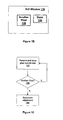
- Figure 1B illustrates an exemplary embodiment of a GUI window, in accordance with one or more aspects of the present invention.
- Figure 1C illustrates an exemplary embodiment of a method for characterizing defective pixels, in accordance with one or more aspects of the present invention.
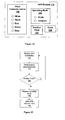
- Figure 1D illustrates another exemplary embodiment of a GUI window, in accordance with one or more aspects of the present invention.
- Figure IE illustrates another exemplary embodiment of a method for characterizing defective pixels, in accordance with one or more aspects of the present invention.
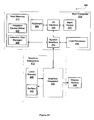
- FIGS. 2A and 2B are block diagrams of exemplary embodiments of respective computing systems, including a host computer and a display device, in accordance with one or more aspects of the present invention.
- Figure 3 illustrates an exemplary embodiment of a method for adjusting inputs to control display of defective pixels, in accordance with one or more aspects of the present invention.
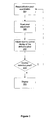
- Figure 4 illustrates another exemplary embodiment of a method for adjusting inputs to control display of defective pixels, in accordance with one or more aspects of the present invention.
- the current invention involves new methods for identifying defective pixels and disabling defective pixels or adjusting stored color components for each defective pixel to control display of the defective pixels.
- the stored color components may be adjusted based on a static operating mode. For example, each color component of a defective pixel may be disabled to display black or may be scaled to reduce the saturation level of the stored color components.
- the stored color components may also be adjusted based on an adaptive operating mode. For example, the stored color components may be modified based on the stored color components and the specific color components that may be properly displayed by the defective pixel. Adjusting the stored color components for defective pixels or disabling defective pixels may improve the quality of an image viewed on a flat panel display that includes one or more defective pixels.
- Figure 1A illustrates a flat panel display, display 100, including defective pixels 106 and 107, in accordance with one or more aspects of the present invention.
- a position locator 105 is controlled by a user to identify the coordinates of a defective pixel, such as defective pixel 106. In some embodiments of the present invention, the user places position locator 105 over a defective pixel and activates a mouse button to store the position for that particular defective pixel.
- a GUI (graphics user interface) window 110 includes selectable buttons to assist in capture of the defective pixel position and other characteristics, as described in conjunction with Figures 1B and 1D.
- GUI window 110 may be positioned by the user or by a defective pixel manager application that controls display of GUI window 110 or 115 so that it does not obstruct a defective pixel.
- GUI window 110 is displayed on display 100.
- FIG. 1B illustrates an exemplary embodiment of GUI window 110, in accordance with one or more aspects of the present invention.
- GUI window 110 includes two selectable buttons, another pixel 125 and done 135. Each time another pixel 125 is selected a user may identify the screen coordinates of a defective pixel in display 100. When a user has completed identification of the defective pixels, the user may select done 135 and GUI window 110 will close.
- the defective pixel manager application will typically set the display to a completely white image and then to a completely black image for each selection of another pixel 125. This permits the user to see defective pixels that have one or more color components (red, green, blue) stuck on or stuck off.
- a separate transistor controls each color component and each transistor may fail and be stuck on or off due to a fabrication defect in the flat panel display.
- Figure 1C illustrates an exemplary embodiment of a method for characterizing defective pixels to produce adjustment information, in accordance with one or more aspects of the present invention.
- the defective pixel manager application receives screen coordinates corresponding to a defective pixel and stores the position.
- the defective pixel manager application determines if another defective pixel is identified, i.e., if another pixel 125 is selected, and, if so, returns to step 150. Otherwise, in step 160 the defective pixel manager application determines adjustments for the identified defective pixel(s) and stores adjustment information for each defective pixel.
- the adjustment information may indicate that a defective pixel should be disabled so that it will be displayed as black (stuck off) rather than white (stuck on).
- the transistors controlling the particular defective pixel would be disabled to force stuck on transistors to become effectively stuck off.
- An additional benefit of disabling defective pixels is that current does not flow through the disabled transistors, and therefore power consumption is reduced for those disabled transistors.
- FIG. 1D illustrates another exemplary embodiment of a GUI window, GUI window 115, in accordance with one or more aspects of the present invention.
- GUI window 115 includes the two selectable buttons, another pixel 125 and done 135 and also includes a pixel characterization 120 selection menu and an operating mode 130 selection menu.
- Another pixel 125 and done 135 function as previously described in conjunction with Figure 1B.
- Pixel characterization 120 enables a user to identify which color components can be displayed by a particular defective pixel.
- the defective pixel manager application will set the display to a sequence of images, including a completely white image, a completely black image, a completely red image, a completely green image, and a completely blue image. This permits the user to see which color component(s), if any, a defective pixel can display. The user can then identify which color components(s) can be displayed by selecting one or more buttons in pixel characterization 120.
- This pixel characterization information entered via pixel characterization 120 is stored by the defective pixel manager application as part of the adjustment information for each defective pixel.
- the white and black buttons in pixel characterization 120 may be omitted.
- the red, green, and blue buttons in pixel characterization 120 may be omitted.
- a user may select a specific operating mode in order to adjust inputs to control the display of defective pixels using operating mode 130.
- a static operating mode may be selected to indicate that a predetermined adjustment should be applied to each defective pixel.
- the static operating mode may be used to disable all defective pixels.
- the static operating mode may be used to scale each color component that is stored for each of the defective pixels.
- the operating mode, pixel characterization information, and adjustment information for the defective pixels for a particular display device is provided by a source other than a user of the display device.
- a display configuration file may be provided by the manufacturer of the particular display device.
- a frame buffer stores the color components for each pixel of an image for display on a display device.
- the static operating mode may be used to modify each color component corresponding to a defective pixel that is stored in the frame buffer, in order to reduce the saturation of color components that are not stuck on or off. Rather than displaying a black pixel, as is the result when a defective pixel is disabled, scaling the functional color components reduces the intensity of the defective pixel. For example, if the blue and green color components for a defective pixel are stuck on, the red component may be scaled to reduce the intensity of the defective pixel.
- the static operating mode is used to determine an adjustment that is applied independent of the color stored in a frame buffer corresponding to the defective pixel. In other embodiments of the present invention, the color components for defective pixels may be scaled to increase the intensity of the defective pixels.
- the adaptive operating mode may be selected to specify that the stored color components for each defective pixel should be modified or disabled based on the pixel characterization information provided via pixel characterization 120. For example, when a stored color for a defective pixel is blue (read and green have values of zero) and the blue component functions properly, but the red component is stuck on, the red component may be disabled, permitting the pixel to be displayed properly as blue. Adaptively disabling a color component that does not properly function for a defective pixel on a flat panel display may permit an image to be displayed without a visual artifact caused by the defective pixel.
- Figure 1E illustrates another exemplary embodiment of a method for characterizing defective pixels to produce pixel characterization information for each defective pixel, in accordance with one or more aspects of the present invention.
- the defective pixel manager application receives screen coordinates corresponding to a defective pixel and stores the position.
- the defective pixel manager application receives pixel characterization information for the defective pixel and stores the pixel characterization information.
- the defective pixel manager application determines if another defective pixel is identified, i.e., if another pixel 125 in GUI window 115 is selected, and, if so, returns to step 170. Otherwise, in step 185, the defective pixel manager application the defective pixel manager application receives an operating mode selection for the defective pixel and stores the operating mode.
- the defective pixel manager application determines adjustments for the identified defective pixel(s) and stores adjustment information for each defective pixel.
- the defective pixel manager application may simply disable the defective pixel(s).
- the defective pixel manager application may also determine a scaling factor that is used to scale each properly functioning color component of a defective pixel and disable nonfunctioning color components of the defective pixel(s).
- the operating mode is adaptive the defective pixel manager application may simply store the operating mode and determine specific adjustments for each component of the defective pixel(s) based on the colors stored in the frame buffer corresponding to each of the defective pixel(s), as described in conjunction with Figure 4.
- FIG. 2A is a block diagram of an exemplary embodiment of a respective computing system 200, including a host computer 210, a graphics subsystem 270, and a display device 260, in accordance with one or more aspects of the present invention.
- Computing system 200 may be a desktop computer, server, laptop computer, palm-sized computer, tablet computer, game console, portable wireless terminal such as a PDA (personal digital assistant) or cellular telephone, computer based simulator, or the like.
- Host computer 210 includes host processor 214 that may include a system memory controller to interface directly to host memory 212 or may communicate with host memory 212 through a system interface 215 (as shown).
- System interface 215 may be an I/O (input/output) interface or a bridge device including the system memory controller to interface directly to host memory 212.
- An example of system interface 215 known in the art includes Intel® Northbridge.
- System interface 215 is coupled to an I/O (input/output) interface 220 to receive input signals from a keyboard 206 and an input device 225, where input device 225 may be a mouse or the like.
- Keyboard 206 and input device 225 are used to provide adjustment information, operating mode, and pixel characterization information to a defective pixel manager (application) 230 when GUI window 115 is displayed on display device 260.
- Graphics subsystem 270 includes a local memory 240 and programmable graphics processor 205.
- Host computer 210 communicates with graphics subsystem 270 via system interface 215.
- Data, program instructions, and commands received by graphics processor 205 can be processed directly by graphics processor 205 or written to a local memory 240.
- Programmable graphics processor 205 uses memory to store graphics surface data, including texture maps, and program instructions, where graphics surface data is any data that is input to or output from computation units within programmable graphics processor 205.
- the graphics surface data is stored in a surface 242 and surface 242 may be a frame buffer. Additional surfaces may be stored in local memory 240 or host memory 212.
- Programmable graphics processor 205 performs a variety of computational functions including table lookup, scalar and vector addition, multiplication, division, coordinate-system mapping, calculation of vector normals, tessellation, calculation of derivatives, rasterization, interpolation, texture mapping, shading, lighting, filtering, and the like.
- Programmable graphics processor 205 executes vertex programs and shader programs to process graphics primitives and produce image data for display on device 260.
- the (vertex or shader) program instructions and data are stored in graphics memory, e.g., portions of host memory 212, local memory 240, or storage resources within programmable graphics processor 205.
- Image data stored in local memory 240 or host memory 212 in a frame buffer, such as surface 242 includes a color for each pixel represented by the frame buffer.
- Programmable graphics processor 205 writes the image data to surface 242 and may read the image data to modify the image data prior to display.
- Programmable graphics processor 205 reads surface 242 and outputs the image data to display device 260 for display.
- surface 242 is stored in host memory 212.
- Programmable graphics processor 205 may also be configured to deliver data to a display device, network, electronic control system, other computing system 200, other graphics subsystem 270, or the like.
- a graphics device driver 235 interfaces between processes executed by host processor 214, such as defective pixel manager 230, and a programmable graphics processor 205, translating program instructions as needed for execution by programmable graphics processor 205.
- Programmable graphics processor 205 may also be programmed by defective pixel manager 230 to control the display of specific pixels within surface 242. Specifically, programmable graphics processor 205 may be configured to disable defective pixels or to modify one or more color components of defective pixels. When an adaptive operating mode is specified, programmable graphics processor 205 may read a stored color for a defective pixel and modify the color or disable one or more color components under control of defective pixel manager 230.
- FIG. 2B is a block diagram of another exemplary embodiment of a respective computing system 280, including a host computer 210 and a display device 260, in accordance with one or more aspects of the present invention.
- Computing system 270 includes host memory 212, graphics device driver 235, defective pixel manager 230, keyboard 206, I/O interface 220, input device 225, system interface 215, and display device 260, described in conjunction with Figure 2A.
- a graphics core 255 is integrated into host processor 250. Graphics core 255 performs at least a portion of the functions performed by programmable graphics processor 205, including processing graphics primitives to produce image data for display.
- the image data may be stored in a frame buffer, such as surface 245 in host memory 212.
- Graphics core 255 writes the image data to surface 245 and reads the image data from surface 245 for output to display device 260.
- Graphics core 255 may also be programmed by defective pixel manager 230 to control the display of specific pixels within surface 245. Specifically, graphics core 255 may be configured to disable defective pixels or to modify one or more color components of defective pixels. When an adaptive operating mode is specified, graphics core 255 may read a stored color for a defective pixel and modify the color or disable one or more color components under control of defective pixel manager 230.
- Figure 3 illustrates an exemplary embodiment of a method for adjusting inputs to control the display of defective pixels when GUI window 110 is used to capture the defective pixel position and adjustment information, in accordance with one or more aspects of the present invention.
- defective pixel manager 230 may adjust inputs to display device 260 to control the display of the defective pixels.
- step 300 defective pixel manager 230 reads the stored pixel coordinates for a defective pixel.
- step 305 defective pixel manager 230 reads the stored pixel adjustment information.
- the stored pixel adjustment information may indicate that defective pixels should be disabled or that the color components of defective pixels should be scaled by a predetermined value.
- step 310 defective pixel manager 230 applies the pixel adjustment information by adjusting an input to control the display of a defective pixel.
- defective pixel manager 230 adjusts an input to display device 260 via graphics subsystem 270 or graphics core 255 to disable the defective pixel corresponding to the coordinates read in step 305.
- defective pixel manager 230 programs programmable graphics processor 205 or graphics core 255 to scale the color components of the defective pixel corresponding to the coordinates read in step 305.
- step 315 defective pixel manager 230 determines if another defective pixel is specified by the stored defective pixel coordinates, and, if so, steps 300, 305, and 310 are repeated. If, in step 315 defective pixel manager 230 determines that another defective pixel is not specified by the stored defective pixel coordinates, then in step 320 the frame buffer, e.g., surface 242 or 245, is output to the display device corresponding to the defective pixel coordinates, such as display device 260.
- the frame buffer e.g., surface 242 or 245
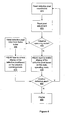
- Figure 4 illustrates another exemplary embodiment of a method for adjusting inputs to control the display of defective pixels when GUI window 115 is used to capture the defective pixel position, operating mode, and adjustment information, in accordance with one or more aspects of the present invention.
- defective pixel manager 230 reads the stored pixel coordinates for the defective pixels.
- defective pixel manager 230 reads the stored pixel adjustment information.
- the stored pixel adjustment information may indicate that defective pixels should be disabled or that the color components of defective pixels should be scaled by a predetermined value. Alternatively, the stored pixel adjustment information may indicate that the defective pixels should be adjusted based on the pixel characterization information and the stored color components for each defective pixel.
- step 460 defective pixel manager 230 determines if the operating mode is adaptive, and, if so, in step 465 defective pixel manager 230 instructs programmable graphics processor 205 or graphics core 255 to read the stored color components corresponding to the defective pixel coordinates read in step 450 from surface 242 or 245, respectively.
- step 470 defective pixel manager 230 applies the adaptive adjustment information to the defective pixels by adjusting inputs to control the display of each defective pixel.
- defective pixel manager 230 programs programmable graphics processor 205 or graphics core 255 to modify the color components for each defective pixel based on the stored pixel characterization information.
- defective pixel manager 230 receives the stored colors for the defective pixels, modifies the stored colors based on the stored pixel characterization information, and writes the modified colors to surface 242 or 245.
- one or more color components of each defective pixel may be disabled by defective pixel manager 230 based on the stored colors and the stored pixel characterization information.
- the adaptive operating mode may improve the quality of an image displayed on a flat panel display with one or more defective pixel when compared with the static mode because the color of each pixel may be adjusted based on the stored image data and the specific color components that can be properly displayed by each defective pixel. For example, when a stored color for a defective pixel is a combination of red and blue and the defective pixel is able to display green and blue, but not red (according to the pixel characterization information), the stored color may be modified to approximate the desired color (combination of read and blue). The modified color may produce a more pleasing image compared with using black or only the functioning blue component. Alternatively, one or more color components may be disabled for the defective pixel to prevent a color component that is stuck on from contributing to the displayed color for the defective pixel.
- defective pixel manager 230 determines if the operating mode is not adaptive, then in step 475 defective pixel manager 230 applies the static adjustment information to the defective pixels.
- the pixel adjustment information specifies that the defective pixels should be disabled, defective pixel manager 230 adjusts an input to display device 260 via graphics subsystem 270 or graphics core 255 to disable the defective pixels corresponding to the coordinates read in step 455.
- defective pixel manager 230 programs programmable graphics processor 205 or graphics core 255 to scale the color components of the defective pixels corresponding to the coordinates read in step 450.
- step 480 defective pixel manager 230 determines if another defective pixel is specified by the stored defective pixel coordinates, and, if so, steps 450, 455, 460, and steps 465 and 470 or steps 475 and 480 are repeated. If, in step 480 defective pixel manager 230 determines that another defective pixel is not specified by the stored defective pixel coordinates, then in step 485 the frame buffer, e.g., surface 242 or 245, is output to the display device corresponding to the defective pixel coordinates, such as display device 260.
- the frame buffer e.g., surface 242 or 245
- a user may specify the screen coordinates of defective pixels for a particular display device.
- the user may also provide pixel characterization information for use when an adaptive operating mode is used to adjust the color of each defective pixel input to the display device.
- the defective pixel positions and pixel characterization information may be provided by another source. Adjusting the stored color for defective pixels or disabling color components of defective pixels may improve the quality of an image viewed on a flat panel display that includes one or more defective pixels.
Landscapes
- Engineering & Computer Science (AREA)
- Physics & Mathematics (AREA)
- Computer Hardware Design (AREA)
- General Physics & Mathematics (AREA)
- Theoretical Computer Science (AREA)
- Multimedia (AREA)
- Signal Processing (AREA)
- Control Of Indicators Other Than Cathode Ray Tubes (AREA)
- Liquid Crystal Display Device Control (AREA)
Applications Claiming Priority (1)
| Application Number | Priority Date | Filing Date | Title |
|---|---|---|---|
| US11/187,774 US8044944B2 (en) | 2005-07-22 | 2005-07-22 | Defective pixel management for flat panel displays |
Publications (2)
| Publication Number | Publication Date |
|---|---|
| EP1746493A2 true EP1746493A2 (fr) | 2007-01-24 |
| EP1746493A3 EP1746493A3 (fr) | 2008-09-24 |
Family
ID=37216056
Family Applications (1)
| Application Number | Title | Priority Date | Filing Date |
|---|---|---|---|
| EP06015309A Withdrawn EP1746493A3 (fr) | 2005-07-22 | 2006-07-21 | Gestion de pixels défectueux pour écrans plats |
Country Status (6)
| Country | Link |
|---|---|
| US (1) | US8044944B2 (fr) |
| EP (1) | EP1746493A3 (fr) |
| JP (1) | JP5852299B2 (fr) |
| KR (1) | KR101136195B1 (fr) |
| CN (1) | CN1901025B (fr) |
| TW (1) | TWI413046B (fr) |
Cited By (1)
| Publication number | Priority date | Publication date | Assignee | Title |
|---|---|---|---|---|
| EP2023314A3 (fr) * | 2007-08-03 | 2010-03-17 | Samsung Electronics Co., Ltd. | Procédé pour le contrôle de réglage initial d'affichage et dispositif d'affichage l'utilisant |
Families Citing this family (9)
| Publication number | Priority date | Publication date | Assignee | Title |
|---|---|---|---|---|
| KR100842460B1 (ko) | 2006-09-22 | 2008-07-01 | 씨에스아이시스템주식회사 | 평판 디스플레이 패널의 도트 결함 검출 방법 |
| JP4780159B2 (ja) | 2008-08-27 | 2011-09-28 | ソニー株式会社 | 表示装置とその駆動方法 |
| EP2180461A1 (fr) * | 2008-10-23 | 2010-04-28 | TPO Displays Corp. | Procédé de mise en correspondance de gamme de couleurs de valeurs d'entrée de couleurs de pixels d'images d'entrée d'une image d'entrée RGBW vers des valeurs de sortie RGBW pour un affichage RGBW, module d'affichage, contrôleur d'affichage et appareil utilisant ledit procédé |
| JP5310013B2 (ja) * | 2009-01-15 | 2013-10-09 | コニカミノルタ株式会社 | 表示装置および表示装置の故障検出方法 |
| KR101696672B1 (ko) | 2010-05-10 | 2017-01-17 | 삼성전자주식회사 | 영상 신호 처리 방법 및 이를 이용하는 영상 촬영 방법 |
| CN103165094B (zh) * | 2013-03-07 | 2015-01-21 | 京东方科技集团股份有限公司 | 一种液晶显示的方法及装置 |
| KR102163034B1 (ko) * | 2013-12-03 | 2020-10-07 | 삼성전자주식회사 | 디스플레이의 불량 화소를 보상하기 위한 방법, 전자 장치 및 저장 매체 |
| KR102508148B1 (ko) * | 2016-01-07 | 2023-03-09 | 엘지전자 주식회사 | 디지털 디바이스 및 그를 이용한 컬러 제어 시스템 및 방법 |
| CN106683605A (zh) * | 2017-03-31 | 2017-05-17 | 京东方科技集团股份有限公司 | 失效像素检测电路、方法和显示装置 |
Citations (1)
| Publication number | Priority date | Publication date | Assignee | Title |
|---|---|---|---|---|
| WO2003100756A2 (fr) | 2002-05-27 | 2003-12-04 | Koninklijke Philips Electronics N.V. | Masquage de pixels defaillants |
Family Cites Families (14)
| Publication number | Priority date | Publication date | Assignee | Title |
|---|---|---|---|---|
| GB9008032D0 (en) | 1990-04-09 | 1990-06-06 | Rank Brimar Ltd | Video display systems |
| EP0465111B1 (fr) * | 1990-07-05 | 1996-05-15 | Matsushita Electric Industrial Co., Ltd. | Dispositif d'affichage à cristal liquide |
| US5504504A (en) | 1994-07-13 | 1996-04-02 | Texas Instruments Incorporated | Method of reducing the visual impact of defects present in a spatial light modulator display |
| JPH1062734A (ja) * | 1996-08-22 | 1998-03-06 | Sony Corp | 液晶表示装置の欠陥画素補正方法および欠陥画素補正装置 |
| JP4443675B2 (ja) * | 1999-07-08 | 2010-03-31 | 株式会社半導体エネルギー研究所 | 装置の作製方法 |
| JP3565328B2 (ja) * | 2000-06-13 | 2004-09-15 | シャープ株式会社 | 表示装置およびその不良ドット補償方法 |
| JP3712637B2 (ja) * | 2000-08-11 | 2005-11-02 | シャープ株式会社 | 液晶表示装置およびその欠陥修正方法 |
| US6812992B2 (en) * | 2001-01-26 | 2004-11-02 | Rockwell Collins | Photo ablation to resolve “bright on” pixel defects in a normally white LCD |
| JP4485087B2 (ja) * | 2001-03-01 | 2010-06-16 | 株式会社半導体エネルギー研究所 | 半導体装置の動作方法 |
| CN1224250C (zh) * | 2002-09-09 | 2005-10-19 | 奇美电子股份有限公司 | 液晶面板的缺陷像素补救装置及其方法 |
| TWI349243B (en) * | 2002-11-29 | 2011-09-21 | Barco Nv | Method and device for avoiding image misinterpretation due to defective pixels in a matrix display |
| US8537144B2 (en) * | 2002-11-29 | 2013-09-17 | Barco N.V. | Method and device for avoiding image misinterpretation due to defective pixels in a matrix display |
| JP2004198875A (ja) * | 2002-12-20 | 2004-07-15 | Casio Comput Co Ltd | 電子機器 |
| EP1536399A1 (fr) | 2003-11-26 | 2005-06-01 | Barco N.V. | Méthode et dispositif pour masquage visuel des erreurs dans affichages matriciels par emploi des caractéristiques du système de vision humaine |
-
2005
- 2005-07-22 US US11/187,774 patent/US8044944B2/en active Active
-
2006
- 2006-07-21 EP EP06015309A patent/EP1746493A3/fr not_active Withdrawn
- 2006-07-21 TW TW095126738A patent/TWI413046B/zh not_active IP Right Cessation
- 2006-07-21 KR KR1020060068635A patent/KR101136195B1/ko active Active
- 2006-07-24 JP JP2006201135A patent/JP5852299B2/ja active Active
- 2006-07-24 CN CN2006101032791A patent/CN1901025B/zh not_active Expired - Fee Related
Patent Citations (1)
| Publication number | Priority date | Publication date | Assignee | Title |
|---|---|---|---|---|
| WO2003100756A2 (fr) | 2002-05-27 | 2003-12-04 | Koninklijke Philips Electronics N.V. | Masquage de pixels defaillants |
Cited By (3)
| Publication number | Priority date | Publication date | Assignee | Title |
|---|---|---|---|---|
| EP2023314A3 (fr) * | 2007-08-03 | 2010-03-17 | Samsung Electronics Co., Ltd. | Procédé pour le contrôle de réglage initial d'affichage et dispositif d'affichage l'utilisant |
| US8482615B2 (en) | 2007-08-03 | 2013-07-09 | Samsung Electronics Co., Ltd. | Method for controlling display for initial setting and display device using the same |
| KR101425582B1 (ko) * | 2007-08-03 | 2014-08-04 | 삼성전자주식회사 | 초기 설정을 위한 디스플레이 제어방법 및 이를 이용한기기 |
Also Published As
| Publication number | Publication date |
|---|---|
| EP1746493A3 (fr) | 2008-09-24 |
| KR20070012270A (ko) | 2007-01-25 |
| JP2007047777A (ja) | 2007-02-22 |
| TW200721090A (en) | 2007-06-01 |
| KR101136195B1 (ko) | 2012-04-17 |
| US8044944B2 (en) | 2011-10-25 |
| JP5852299B2 (ja) | 2016-02-03 |
| CN1901025A (zh) | 2007-01-24 |
| TWI413046B (zh) | 2013-10-21 |
| US20070030229A1 (en) | 2007-02-08 |
| CN1901025B (zh) | 2011-08-10 |
Similar Documents
| Publication | Publication Date | Title |
|---|---|---|
| US10978027B2 (en) | Electronic display partial image frame update systems and methods | |
| US8054316B2 (en) | Picture processing using a hybrid system configuration | |
| KR101783497B1 (ko) | 액정 디스플레이에 표시하기 위한 이미지의 향상 | |
| JP5302961B2 (ja) | 液晶表示装置の制御装置、液晶表示装置、液晶表示装置の制御方法、プログラムおよびその記録媒体 | |
| US8325198B2 (en) | Color gamut mapping and brightness enhancement for mobile displays | |
| US20050270302A1 (en) | Method and apparatus for modifying graphics content prior to display for color blind use | |
| US9311696B2 (en) | Color enhancement for graphic images | |
| JP2003271125A (ja) | 画像表示装置、画像表示方法、及び画像表示プログラム | |
| CN109817170B (zh) | 像素补偿方法、装置和终端设备 | |
| KR20150120293A (ko) | 디스플레이용 데이터를 처리하는 방법 및 장치 | |
| US8044944B2 (en) | Defective pixel management for flat panel displays | |
| CN111857912A (zh) | 界面处理方法、装置、电子设备和计算机可读存储介质 | |
| JP2000134486A (ja) | 画像処理装置及び画像処理方法及び記憶媒体 | |
| US7417647B2 (en) | Making an overlay image edge artifact less conspicuous | |
| US8203563B2 (en) | System, method, and computer program product for adjusting a programmable graphics/audio processor based on input and output parameters | |
| CN112368763A (zh) | 控制装置、显示装置以及控制方法 | |
| US20070115270A1 (en) | Image manipulation apparatus | |
| CN114219737A (zh) | 一种基于Unity的色调映射方法 | |
| WO2019239903A1 (fr) | Dispositif de commande, dispositif d'affichage et procédé de commande | |
| US20250315926A1 (en) | System and method for improved edge emphasis on display for visually impaired user | |
| EP4465172A1 (fr) | Procédé de réalisation d'une commande d'activation automatique concernant un ombrage à débit variable, et appareil associé | |
| WO2019239928A1 (fr) | Dispositif de commande, dispositif d'affichage et procédé de commande | |
| US8212929B2 (en) | Image processing method and computer readable medium | |
| CN120066647A (zh) | 一种车载应用的ui切换方法、设备和存储介质 |
Legal Events
| Date | Code | Title | Description |
|---|---|---|---|
| PUAI | Public reference made under article 153(3) epc to a published international application that has entered the european phase |
Free format text: ORIGINAL CODE: 0009012 |
|
| AK | Designated contracting states |
Kind code of ref document: A2 Designated state(s): AT BE BG CH CY CZ DE DK EE ES FI FR GB GR HU IE IS IT LI LT LU LV MC NL PL PT RO SE SI SK TR |
|
| AX | Request for extension of the european patent |
Extension state: AL BA HR MK YU |
|
| PUAL | Search report despatched |
Free format text: ORIGINAL CODE: 0009013 |
|
| AK | Designated contracting states |
Kind code of ref document: A3 Designated state(s): AT BE BG CH CY CZ DE DK EE ES FI FR GB GR HU IE IS IT LI LT LU LV MC NL PL PT RO SE SI SK TR |
|
| AX | Request for extension of the european patent |
Extension state: AL BA HR MK RS |
|
| 17P | Request for examination filed |
Effective date: 20090306 |
|
| 17Q | First examination report despatched |
Effective date: 20090428 |
|
| AKX | Designation fees paid |
Designated state(s): DE GB |
|
| STAA | Information on the status of an ep patent application or granted ep patent |
Free format text: STATUS: THE APPLICATION IS DEEMED TO BE WITHDRAWN |
|
| 18D | Application deemed to be withdrawn |
Effective date: 20160202 |