EP1746581B1 - Schallpaket-sendeverfahren, schallpaket-sendevorrichtung, schallpaket-sendeprogramm und aufzeichnungsmedium, in dem dieses programm aufgezeichnet wurde - Google Patents
Schallpaket-sendeverfahren, schallpaket-sendevorrichtung, schallpaket-sendeprogramm und aufzeichnungsmedium, in dem dieses programm aufgezeichnet wurde Download PDFInfo
- Publication number
- EP1746581B1 EP1746581B1 EP05739165A EP05739165A EP1746581B1 EP 1746581 B1 EP1746581 B1 EP 1746581B1 EP 05739165 A EP05739165 A EP 05739165A EP 05739165 A EP05739165 A EP 05739165A EP 1746581 B1 EP1746581 B1 EP 1746581B1
- Authority
- EP
- European Patent Office
- Prior art keywords
- speech
- speech signal
- speech quality
- compensatory
- frame
- Prior art date
- Legal status (The legal status is an assumption and is not a legal conclusion. Google has not performed a legal analysis and makes no representation as to the accuracy of the status listed.)
- Expired - Lifetime
Links
Images








Classifications
-
- G—PHYSICS
- G10—MUSICAL INSTRUMENTS; ACOUSTICS
- G10L—SPEECH ANALYSIS TECHNIQUES OR SPEECH SYNTHESIS; SPEECH RECOGNITION; SPEECH OR VOICE PROCESSING TECHNIQUES; SPEECH OR AUDIO CODING OR DECODING
- G10L19/00—Speech or audio signals analysis-synthesis techniques for redundancy reduction, e.g. in vocoders; Coding or decoding of speech or audio signals, using source filter models or psychoacoustic analysis
- G10L19/005—Correction of errors induced by the transmission channel, if related to the coding algorithm
-
- G—PHYSICS
- G10—MUSICAL INSTRUMENTS; ACOUSTICS
- G10L—SPEECH ANALYSIS TECHNIQUES OR SPEECH SYNTHESIS; SPEECH RECOGNITION; SPEECH OR VOICE PROCESSING TECHNIQUES; SPEECH OR AUDIO CODING OR DECODING
- G10L19/00—Speech or audio signals analysis-synthesis techniques for redundancy reduction, e.g. in vocoders; Coding or decoding of speech or audio signals, using source filter models or psychoacoustic analysis
- G10L19/04—Speech or audio signals analysis-synthesis techniques for redundancy reduction, e.g. in vocoders; Coding or decoding of speech or audio signals, using source filter models or psychoacoustic analysis using predictive techniques
- G10L19/16—Vocoder architecture
- G10L19/167—Audio streaming, i.e. formatting and decoding of an encoded audio signal representation into a data stream for transmission or storage purposes
-
- G—PHYSICS
- G10—MUSICAL INSTRUMENTS; ACOUSTICS
- G10L—SPEECH ANALYSIS TECHNIQUES OR SPEECH SYNTHESIS; SPEECH RECOGNITION; SPEECH OR VOICE PROCESSING TECHNIQUES; SPEECH OR AUDIO CODING OR DECODING
- G10L25/00—Speech or voice analysis techniques not restricted to a single one of groups G10L15/00 - G10L21/00
- G10L25/48—Speech or voice analysis techniques not restricted to a single one of groups G10L15/00 - G10L21/00 specially adapted for particular use
- G10L25/69—Speech or voice analysis techniques not restricted to a single one of groups G10L15/00 - G10L21/00 specially adapted for particular use for evaluating synthetic or decoded voice signals
Definitions
- the present invention relates to a speech packet transmitting method, apparatus, and program for performing the method in an IP (Internet Protocol) network, and a recording medium on which the program is recorded.
- IP Internet Protocol
- IP Internet Protocol
- Non-patent literature 1 IP (Internet Protocol)
- TCP Transmission Control Protocol
- the current frame is synthesized from the waveform of one pitch length in the preceding frame, or if a sub-frame code is contained, the code is decoded and used. In either case, a speech waveform with a lower quality than that of the original speech signal will be generated.
- This method has the following problem: the method adds the sub-codec information to the preceding and succeeding packets in addition to the current frame on condition that the quality of the compensatory waveform is lower than a specified value, therefore if three or more consecutive packets are lost, both of the coded information of the current frame and the sub-codec coded information which is sent using the preceding and succeeding packets cannot be available and thus the quality of the decoded speech is degraded.
- a speech packet transmitting method and apparatus is known from US 2001/0012993 A1 .
- This document discloses a method of coding speech signals transmitted to a user terminal during a VOIP telephone call set up via a packet transmission network.
- the speech signals are conventionally divided into a succession of segments of the same duration by coders of the terminals before they are coded and transmitted in the form of packets and are reproduced from the packets received. Any packet received twice is eliminated and a dissimulation algorithm is used for segments corresponding to missing packets.
- the method carries out an analysis during coding to identify any segment that is likely not to be able to be replaced by the dissimulation algorithm if the corresponding packet is missing. Any packet corresponding to a segment analyzed as likely not to be able to be replaced is transmitted twice by the sending terminal.
- a speech packet transmitting method for transmitting an input speech signal on a frame-by-frame basis by using packets, comprising the steps of: (a) generating a compensatory speech signal for a speech signal of the current frame from a speech signal of at least one frame adjacent to the current frame; (b) calculating a speech quality evaluation value for the compensatory speech signal; (c) generating packets for the speech signal; and (d) transmitting the generated packets to a network.
- WAH B W ET AL "A survey of error-concealment schemes for real-time audio and video transmissions over the Internet"
- PROCEEDINGS INTERNATIONAL SYMPOSIUM ON MULTIMEDIA SOFTWARE ENGINEERING, 11 December 2000 (2000-12-11), pages 17-24 , XP000992346 introduces various error-concealment schemes for real-time audio and video transmission including, retransmission of lost packets; a scheme in which a priority is given to each packet and the network discards those packets with low priorities when congestion occurrs; and a scheme in which copies of past plural frames are loaded in the packet of current frame to thereby increase the redundance.
- the present invention has been made in light of the problems stated above and an object of the present invention is to provide a speech packet transmitting method, an apparatus therefor, and a recording medium on which a program therefor is recorded, capable of minimizing loss of frame data that is important for speech reproduction, and alleviating degradation of quality of reproduced speech in two-way speech communication in which real-time nature is essential while avoiding delay and preventing a network from being overloaded.
- a frame speech signal for which an adequate speech reproduction quality cannot be ensured by a compensatory speech signal is redundantly transmitted. Accordingly, at whichever timing in a speech signal packet loss occurs, a reproduction speech signal with good speech quality can be obtained at the receiving end without increasing packet delay and without overloading the network.
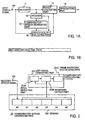
- Fig. 1 shows an exemplary functional configuration of a speech packet transmitting apparatus according to a first example.
- Packets are sent and received by using the UDP/IP protocol.
- each packet contains a destination address DEST ADD, a source address ORG ADD, and data in RTP format as shown in Fig. 1B .
- the frame number FR# of the speech signal and speech data DATA is included as the RTP-format data.
- the speech data may be an encoded speech signal produced by encoding an input PCM speech signal or may be an uncoded input PCM speech signal.
- speech data contained in a packet is a coded speech signal. While it is assumed in the following description that one frame of speech data is contained in one packet and transmitted, multiple frames of speech data may be contained in one packet.
- An input PCM speech signal is inputted through the input terminal 100 into an encoder 11, where the signal is encoded.
- the encoding algorithm used in the encoder 11 may be any encoding algorithm that can handle the speech band f input signals.
- An encoding algorithm for the speech band signals (up to 4 kHz), such as ITU-T G.711, or an encoding algorithm for broadband signals over 4 kHz, such as ITU-T G.722 may be used. While it depends on encoding algorithms, encoding of a speech signal in one frame typically generates codes of multiple parameters that are dealt with by the encoding algorithm. These parameters will be collectively and simply called a coded speech signal.
- the code sequence of the coded speech signal outputted from the encoder 11 is fed into a packet generating part 15 and at the same time to a decoder 12, where it is decoded into a PCM speech signal by using a decoding algorithm corresponding to the encoding algorithm used in the encoder 11.
- the speech signal decoded in the decoder 12 is provided to a compensatory speech generating part 20, where a compensatory speech signal is generated through a process similar to a compensation process that is performed when packet loss occurred at a destination receiving apparatus.
- the compensatory speech signal may be generated by using extrapolation from the waveform of the frame preceding the current frame or may be generated by using interpolation from the waveforms of the frames preceding and succeeding the current frame.
- Fig. 2 shows a specific exemplary functional configuration of the compensatory speech generating part 20.
- extrapolation is used to generate a compensatory speech signal.
- the decoded speech signal from the input terminal 201 is stored in an area A0 of a memory 202.
- Each of the areas A0, ..., A5 of the memory 202 has a size accommodating a PCM speech signal with the analysis frame length used in the encoding. For example, if a decoded speech signal sampled at 8 kHz is encoded with an analysis frame length of 10 ms, 80 decoded speech signal samples will be stored in one area.
- the speech signal stored in the memory 202 is used by a lost signal generating part 203 to generate a compensatory speech signal for the current frame.
- Inputted in the lost signal generating part 203 is a speech signal stored in areas A1 - A5, excluding area A0, in the memory 202. While a case is described here in which 5 consecutive frames of speech signal in areas A1 - A5 in the memory 202 are sent to the lost signal generating part 203, enough memory must be provided in the memory 202 that can store past PCM speech signal samples required by an algorithm for generating a compensatory speech signal for one frame (packet).
- the lost signal generating part 203 in this example generates and outputs a speech signal for the current frame from a decoded speech signal (in five frames in this example), excluding the input speech signal (the speech signal of the current frame) by using compensation method.
- the lost signal generating part 203 includes a pitch detecting part 203A, a waveform cutout part 203B, and frame waveform synthesizing part 203C.
- the pitch detecting part 203A calculates the autocorrelation values of a sequence of speech waveforms in memory areas A1 - A5 while sequentially shifting the sample point, and detects the distance between the peaks of the autocorrelation value as the pitch length.
- 3A schematically shows an exemplary waveform in a period from the current frame m to a midpoint in a past frame, m - 3, of speech waveform data written in memory areas A0 - A5.
- the waveform cutout part 203B copies a waveform 3A of the detected pitch length from the frame preceding the current frame and pastes it repeatedly as waveforms 3B, 3C, and 3D in the forward direction as shown in Fig. 3A until the one frame length is filled, thereby synthesizing a compensatory speech signal for the current frame.
- the last copy of the waveform is truncated so as to fit into the remaining segment of the frame. As shown in Fig.
- a waveform 3A of one frame length starting at earlier end of one pitch length of the waveform directly preceding the current frame is copied, and the copied waveform 3B is used as a compensatory speech signal for the current frame.
- Fig. 4 shows another example of a method for synthesizing a compensatory speech signal.
- a waveform 4A which is ⁇ L longer than a detected pitch length is repeatedly copied to provide waveforms 4B, 4C, and 4D.
- the waveforms are arranged in such a manner that adjacent waveforms overlap at their ends by ⁇ L.
- the overlapping periods AL at the front and rear ends are multiplied by weighting functions W1 and W2 shown in Figs. 5A and 5B , respectively, and the products are added together to concatenate the cutout waveforms in series.
- W1 and W2 shown in Figs. 5A and 5B
- the rear end portion ⁇ L of waveform 4B from time t1 to t2 is multiplied by the weighting function W1 which linearly decreases from 1 to 0 as shown in Fig. 5A
- the front end portion ⁇ L of waveform 4C in the same period is multiplied by the weighting function W2 which linearly increases from 0 to 1 as shown in Fig. 5B .
- the lost signal generating part 203 generates a compensatory speech signal for one frame on the basis of the speech signal in at least one directly preceding frame and provides it to a speech quality evaluating part 40.
- the compensatory speech signal generating algorithm used in the lost signal generating part 203 may be the one described in Non-patent literature 4 for example or other algorithm.
- the speech signal (original speech signal) from the input terminal 100, the output signal from the decoder 12, and the output signal from the compensatory speech generating part 20 are provided to the speech quality evaluating part 40, where a duplication level Ld for the packet is determined.
- Fig. 6 shows a specific example of the speech quality evaluating part 40.
- an evaluation value representing the quality of the compensatory speech signal is calculated in an evaluation value calculating part 41.
- a first calculating part 412 calculates an objective evaluation value Fw1 of the decoded speech signal of the current frame with respect to the original speech signal of the current frame from the input speech signal (original speech signal) provided through the input terminal 100 and the output signal (decoded speech signal) of the decoder 12.
- a second calculating part 413 calculates an objective evaluation value Fw2 of the compensatory speech signal with respect to the original speech signal from the input speech signal (original speech signal) of the current frame and the signal (compensatory speech signal) for the current frame outputted from the compensatory speech generating part 20 which was generated from the decoded speech signal of the past frame.
- the objective evaluation values Fw1 and Fw2 calculated by the first calculating part 412 and the second calculating part 413 may be SNR (Signal to Noise Ratio), for example.
- N denote the number of the samples in each frame
- x n and y n denote the n-th sampled values of the original speech signal and the decoded speech signal, respectively, of the frame
- Porg ⁇ x n 2
- Pdif1 ⁇ (x n -y n ) 2 .
- ⁇ represents the sum for samples 0 to N - 1 in the flame.
- the n-th sampled value of the compensatory speech signal of the frame be Z n
- Pdif2 ⁇ (x n - z n ) 2 .
- SNR signal to noise ratio
- WSNR Wooded Signal to Noise Ratio; see for example Non-patent document 5, J. Nurminen, A. Heikkinen & J. Saarinen, "Objective evaluation of methods for quantization of variable-dimension spectral vectors in WI speech coding", in Proc. Eurospeech 2001, Aalborg, Denmark, Sep. 2001, pp.
- SNRseg Segmental SNR, which can be obtained by dividing each frame into segments and averaging SNR values over the segments
- WSNRseg CD (cepstrum distance: here the cepstrum distance between the original speech signal Org and the decoded speech signal Dec obtained at the first calculating part 412, hereinafter denoted as CD(Org, Dec), corresponding to distortion), or PESQ (the comprehensive evaluation measure specified in ITU-T standard P.862).
- the objective evaluation value is not limited to one type; two or more objective evaluation values may be used in combination.
- a third calculating part 411 uses one or more objective evaluation values calculated by the first calculating part 412 and the second calculating part 413 to compute an evaluation value representing the speech quality of the compensatory speech signal and sends it to a duplicated transmission determining part 42. Based on the evaluation values, the duplicated transmission determining part 42 determines a duplication value Ld, which is an integer value. The lower the speech quality of the compensatory speech signal, the larger the integer value. That is, one of duplication levels Ld, which are discrete values, is chosen based on a value representing speech quality obtained as the evaluation value.
- WF(x n - y n ) represents perceptional weighting filtering applied to the difference signal (x n - y n ).
- the coefficient of the perceptional weighting filter can be determined from the linear predictive coefficient of the original speech signal. The same applies to Equation (2).
- the table in Fig. 7 is prepared beforehand based on experiments and stored in a table storage 42T in the duplicated transmission determining part 42.
- the cepstrum distance CD(Dec, Com) of the compensatory speech signal Com with respect to the decoded speech signal Dec may be calculated in the evaluation value calculating part 41 and the resulting value Fd2 may also be used to determine the duplication level Ld.
- Fig. 9 shows an example of the table used for this purpose.
- the evaluation value calculating part 41 uses as an objective evaluation value two evaluation values, namely the evaluation value Fw1 obtained from the power Porg of the original speech signal and the power of the difference Pdif1 between the original speech signal and the decoded speech signal by using Equation (1) and the evaluation value Fw2 obtained from the power Porg of the original speech signal and the power of the difference Pdif2 between the original speech signal and the compensatory speech signal by using Equation (2), to determine the duplication level Ld.
- the objective evaluation value may be determined from only the decoded speech signal and the compensatory speech signal as shown in another example of the speech quality evaluating part 40 in Fig. 10 .
- duplication levels Ld based on the evaluation value Fw' are specified as shown in Fig.
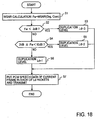
- Fig. 12 shows a process performed by the speech quality evaluating part 40 and the packet generating part 15 in Fig. 1 in the transmitting apparatus for determining the duplication level Ld through the use of the table shown in Fig. 7 .
- weighted signal to noise ratio WSNR is used as the objective evaluation value.
- steps S1 to S3 are performed by the evaluation value calculating part 41
- steps S4 to S10 are performed by the duplicated transmission determining part 42
- step S 11 is performed by the packet generating part 15.
- Step S11 The packet generating part 15 puts the same speech data of the current frame in each of the Ld number of packets and sends them sequentially.
- Fig. 13 shows a functional configuration of a speech packet receiving apparatus associated with the speech packet transmitting apparatus shown in Fig. 1 .
- the receiving apparatus includes a receiving part 50, a code sequence constructing part 61, a decoder 62, a compensatory speech generating part 70, and an output signal selector 63.
- the receiving part 50 includes a packet receiver 51, a buffer 52, and controller 53.
- the controller 53 checks the buffer 52 to see if it stores a packet containing speech data with the same frame number as that of the speech data contained in a packet received at the packet receiver 51. If it is already stored, the controller 53 discards the received packet; otherwise, the controller 53 stores the received packet in the buffer 52.
- the controller 53 searches through the buffer 52 for a packet containing the speech data with each frame number, in the order of frame number. If the packet is found, the controller 53 extracts the packet and provides it to the code sequence constructing part 61.
- the code sequence constructing part 61 extracts one frame length of coded speech signal from the packet provided, sorts the parameter codes constituting the coded speech signal in a predetermined order, and then provides the coded speech signal to the decoder 62.
- the decoder 62 decodes the provided coded speech signal to generate one frame length of speech signal and provides it to the output selector 63 and the compensatory speech generating part 70. If the buffer 52 does not contain a packet containing the coded speech signal of the current frame, the controller 53 generates a control signal CLST indicating packet loss and provides it to the compensatory speech generating part 70 and the output signal selector 63.
- the compensatory speech generating part 70 which has substantially the same configuration as that of the compensatory speech generating part 20 in the transmitting apparatus, includes a memory 702 and a lost signal generating part 703.
- the lost signal generating part 703 also has a configuration similar to that of the lost signal generating part 203 at the transmitting end shown in Fig. 2 .
- the compensatory speech generating part 70 shifts the speech signal in areas A0 - A4 to areas A1 - A5 in the memory 702 and writes the provided decoded speech signal into area A0 unless control signal CLST is provided. Then, the coded speech signal selected by the output signal selector 63 is outputted as a reproduction speech signal.
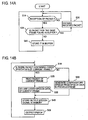
- Figs. 14A and 14B show a packet receiving process and a speech signal reproducing process performed in the receiving apparatus shown in Fig. 13 . In the packet receiving process, determination is made at step S 1 A in Fig. 14A as to whether a packet has been received or not.
- step S2A determination is made at step S2A as to whether or not a packet containing the speech data having the same frame number as that of the speech data contained in the packet is already stored in the buffer 52. If a packet containing the speech data with the same frame number is found, the received packet is discarded at step S3A and the process waits for the next packet at step S1A. If a packet containing the speech data with the same frame number is not found in the buffer 52, then the received packet is stored in the buffer 52 at step S4A and the process returns to step S1A, where the process waits for the next packet.
- step S1B in Fig. 14B determination is made at step S1B in Fig. 14B as to whether a packet containing the speech data of the current frame is stored in the buffer 52. If it is stored, then the packet is extracted and provided to the code sequence constructing part 61 at step S2B.
- the code sequence constructing part 61 extracts a coded speech signal, which is the speech data of the current frame, from the provided packet, sorts the parameter codes constituting the coded speech signal in a predetermined order, and then provides the signal to the decoder 62.
- the decoder 62 decodes the coded speech signal to generate a speech signal at step S3B.
- the speech signal is stored in the memory 702 at step S4B and outputted at step S6B.
- a compensatory speech signal is generated from the speech signal of the previous frame at step S5B, the generated compensatory speech signal is stored in the memory 702 at step S4B, and is outputted at step S4B.
- Fig. 15 shows a functional configuration of a speech packet transmitting apparatus according to a second example.
- the encoder 11 and decoder 12 given in the first example are not provided.
- An input PCM speech signal is directly packetized and sent.
- a compensatory speech generating part 20 generates a compensatory speech signal from an input PCM speech signal provided through an input terminal 100.
- the process performed by the compensatory speech signal generating part 20 is the same as the one shown in Fig. 2 .
- the compensatory speech signal generated here is sent to the speech quality evaluating part 40.
- the speech quality evaluating part 40 determines a duplication level Ld for the packet and outputs it to a packet generating part 15.
- Fig. 16 shows a specific example of the speech quality evaluating part 40.
- an evaluation value calculating part 41 calculates an objective evaluation value of a compensatory speech signal outputted from the compensatory speech generating part 20 with respect to the input PCM original speech signal of the current frame provided through the input terminal 100.
- the objective evaluation value may be an evaluation value such as SNR, WSNR, SNRseg, WSNRseg, CD, or PESQ, etc.
- the objective evaluation value is not limited to one type; two or more evaluation values may be used in combination.
- the objective evaluation value calculated in the evaluation value calculating part 41 is sent to a duplicated transmission determining part 42, where a duplication level Ld for the packet is determined.
- a duplication level Ld it is effective, in the case of using WSNR as the objective evaluation value for example, to determine the duplication level Ld of a packet by using WSNR output from the evaluation value calculating part 41 as Fw as shown in Fig. 17 .
- the larger the evaluation value Fw becomes, the smaller the duplication level Ld will be chosen.
- a table as shown in Fig. 17 is provided in the duplicated transmission determining part 42.
- the evaluation value calculating part 41 calculates WSNR by using the power of the original speech signal as signal S and the power of a weighted difference signal between an original speech signal and a compensatory speech signal as noise N. If WSNR is large, speech quality is not significantly degraded by using a compensatory speech signal for a lost packet. Therefore, the larger the WSNR, the smaller duplication level Ld will be chosen.
- the packet generating part 15 generates as many duplications of an input PCM speech signal of a frame size to be processed as the number equal to the packet duplication level Ld received from the speech quality evaluating part 40 and sends the Ld number of generated packets to a transmitting part 16, which then transmits the packets to the network.
- Fig. 18 shows a process for determining a duplication level Ld by the speech quality evaluating part 40 shown in Fig. 16 by using the table in Fig. 17 and a procedure of packet generation process performed by the packet generating part 15 in the transmitting apparatus shown in Fig. 15 .
- the example uses a weighted signal to noise ratio WSNR as the evaluation value Fw.
- the packet generating part 15 puts the speech signal of the current frame into each of the Ld number of packets according to the determined duplication level Ld and provides the packets to the transmitting part 16, which then sequentially transmits the packets.
- Fig. 19 shows a packet receiving apparatus associated with the transmitting apparatus shown in Fig. 15 .
- a receiving part 50 and a compensatory speech generating part 70 have configurations similar to those of the receiving part 50 and the compensatory speech generating part 70 shown in Fig. 13 .
- a PCM speech signal constructing part 64 extracts a PCM output speech signal sequence from packet data received at the receiving part 50. Packets are redundantly sent from the sending end. If duplicated packets are received at the receiving part 50, the second and subsequent duplicated packets are discarded.
- the PCM speech signal constructing part 64 extracts a PCM speech signal from the packet and sends it to an output signal selector 63 and, at the same time, stores it in a memory in the compensatory speech generating part 70 (see Fig. 13 ) for generating a compensatory speech signal for subsequent frames. If occurrence of packet loss is indicated from the receiving part 50 with a control signal CLST, the compensatory speech generating part 70 generates a compensatory speech signal in a manner similar to the process described with reference to Fig. 2 and sends it to the output signal selector 63.
- the output signal selector 63 selects a compensatory speech signal output from the compensatory speech generating part 70 as an output speech signal and outputs it. If there is not packet loss, the selector 63 selects an output from the PCM speech signal constructing part 64 as an output speech signal and outputs it.
- Fig. 20 shows a functional configuration of a speech packet transmitting apparatus according to the third example.
- the configuration and operation of an encoder 11, decoder 12, speech quality evaluating part 40, a packet generating part 15, and transmitting part 16 are the same as their equivalents in the example shown in Fig. 1 .
- the third example is configured so that a compensatory speech signal for the speech signal of the current frame is generated from the speech signal of the past frame and the speech signal of the frame that follows the current frame by using interpolation.
- a coded speech coded in the encoder 11 is sent to a data delaying part 19 which provides 1-frame-period delay and also sent to the decoder 12 at the same time.
- the speech signal decoded in the decoder 12 is provided to the speech quality evaluating part 40 through a data delaying part 18 which provides 1-frame-period delay and also sent to a compensatory speech generating part 20, where a compensatory speech is generated on the assumption that packet loss would have occurred in the frame preceding the current frame.
- a duplication level Ld is determined in a manner similar to the example in Fig. 1 .
- Fig. 21 shows a specific example of the compensatory speech generating part 20 which uses interpolation.
- a decoded speech signal is copied to area A - 1 in a memory 202.
- a compensatory speech signal for a speech signal of a frame whose packet has been lost is generated for the frame by using an advance-readout future decoded speech signal and a past decoded speech signal.
- the lost signal generating part 203 generates, for the speech signal of the current frame to be sent, a compensatory speech signal from a past decoded speech signal (5 frames in this example) and an advance-readout future decoded speech signal (one frame in this example) for the current frame, and outputs it.
- the speech signal in areas A1 - A5 is used to detect a pitch length as in the example shown in Fig. 3A , and a waveform of the pitch length is cut out in the backward direction from the end point of area A1 (the border with the current frame), and duplications of this waveform are connected to generate an extrapolated waveform from the past.
- a waveform of the pitch length is cut out in the forward direction from the starting point of area A0, duplications of this wavefonn are connected to generate an extrapolated waveform from the future.
- the samples corresponding to the two extrapolated wavefonns are added together and the sum is divided by 2 to obtain an interpolated speech signal as the compensatory speech signal.
- the speech signal inputted through the input terminal 100 is fed into the data delaying part 17, where the speech signal is delayed by one frame period, and then is provided to the speech quality evaluating part 40.
- the decoded speech signal from the decoder 12 is delayed by one frame period by the data delaying part 18 and then provided to the speech quality evaluating part 40.
- the original speech signal from data delaying part 17, the decoded speech signal from the data delaying part 18, and the compensatory speech signal from the compensatory speech generating part 20 are provided to the speech quality determining part 40, which then determines a packet duplication level Ld.
- the operation of the speech quality evaluating part 40 is the same as the operation described with reference to Fig. 6 .
- Data delaying part 19 delays the coded speech signal provided from the encoder 11 by one frame period and then provides it to the packet generating part 15.
- Fig. 22 shows a functional configuration of a speech packet receiving apparatus associated with the speech packet transmitting apparatus shown in Fig. 20 .
- the configuration and operation of the components such as the receiving part 50, code sequence constructing part 61, decoder 62, and output signal selector 63 are the same as their equivalents shown in Fig. 13 .
- the receiving apparatus differs from the one shown in Fig. 13 in that a data delaying part 67 which delays a decoded speech signal by one frame period is provided on the output side of the decoder 62, a data delaying part 68 is provided which delays a control signal CLST, which is outputted by a controller (see Fig.
- the compensatory speech signal generating part 70 generates, as a compensatory speech signal, an interpolated speech signal from a past decoded speech signal as in Fig. 21 and a future decoded speech signal advance-readout for the current frame.
- the speech signal decoded by the decoder 62 is sent to the data delaying part 67 and also is stored in a memory (not shown) in the compensatory speech generating part 70, which is similar to the memory shown in Fig. 21 , for generating a compensatory speech signal for the subsequent frames.
- the data delaying part 67 delays the decoded speech signal by one frame and provides it to the output signal selector 63. If occurrence of packet loss is detected and a control signal CLST is outputted from the receiving part 50 to the data delaying part 68, the control signal CLST is delayed by one frame period and provided to the complementary speech generating part 70 and the output signal selector 63.
- the compensatory speech generating part 70 generates and outputs a compensatory speech signal in a manner similar to the operation described with reference to Fig. 21 . If packet loss is indicated from the receiving part 50, the output signal selector 63 selects the output from the compensatory speech generating part 70 as the output speech signal. If packet loss does not occur, the output signal selector 63 selects the output from the data delaying part 67 as the output speech signal and outputs the decoded speech signal.
- the speech quality of a compensatory speech signal generated for the speech signal of the current frame from at least one frame adjacent to the current frame at the transmitting end is lower than a specified value, the speech quality of a compensatory speech signal generated from the adjacent frame at the receiving end on the occurrence of loss of the packet corresponding to that frame will be low. Therefore, in order to minimize the occurrence of packet loss, a packet containing the speech signal of the same frame is transmitted the number of times equal to the value of a duplication level Ld, which is determined according to an objective evaluation value of an expected compensatory speech signal.
- the compensatory speech signal is generated by repeatedly copying a speech waveform of a pitch length from at least one adjacent frame to the current frame until the frame length is filled.
- the coded speech signal of the current frame is transmitted in a packet and the pitch parameter (and power parameter) of the same current frame is also sent in another packet for the same frame as side information, instead of duplications of the coded speech signal. If the packet containing the coded speech signal of the frame cannot be received and the packet of the side information is received at the receiving end, the side information can be used to generate a compensatory speech signal of a higher quality while reducing the volume of data to be transmitted.
- Fig. 23 shows an exemplary configuration of a transmitting apparatus that allows the use of such side information.
- a side information generating part 30 which obtains the pitch parameter (and power parameter) of the speech signal of the current frame is added to the transmitting apparatus shown in Fig. 1 .
- a compensatory speech generating part 20 has: (1) a first function of detecting the pitch from at least one adjacent frame, cutting out a waveform of the pitch length, and generating a first compensatory speech signal based on the waveform, as described with respect to Fig.
- a speech quality evaluating part 40 determines evaluation values Fd1, Fd2, and Fd3 based on the first, second, and third compensatory speech wavefonns, respectively, and then determines a duplication level Ld and speech quality degradation level QL_1 which correspond to the evaluation value Fd1, a speech quality degradation level QL_2 corresponding to the evaluation value Fd2, and a speech quality degradation level QL_3 corresponding to the evaluation value Fd3, with reference to a table in which these values are predefined.
- a packet generating part 15 determines, based on the value of duplication level Ld and by comparison among the speech quality degradation levels QL_1, QL_2, and QL_3, whether to put the speech data of the current frame into Ld number of packets to send out or to put the speech data of the current frame in one packet and identical side information (the pitch parameter, or the pitch and power parameters) into the remaining Ld - 1 packets to send out.
- the packet generating part 15 generates and sends packets according to the determination. This process will be described later with reference to a flowchart.
- Fig. 24 shows an exemplary configuration of the side information generating part 30.
- the speech signal is also provided to a linear prediction part 303, where linear prediction coefficients for the speech signal of the frame are obtained.
- the obtained linear prediction coefficients are provided to a flattening part 302 to form an inverse filter having the inverse characteristic of a spectral envelope based on linear prediction analysis. With this inverse filter, the speech signal is inverse-filtered and the its spectral envelope is flattened.
- R(k) the pitch parameter
- Fig. 25 shows an exemplary functional configuration of the compensatory speech generating part 20.
- the decoded speech signal of the current frame is written in area A0 in a memory 202 and the speech signal of the past frames held in areas A0 - A4 is shifted to areas A1 - A5.
- a lost signal generating part 203 has first, second, and third compensatory signal generating parts 21, 22, and 23.
- the first compensatory signal generating part 21 synthesizes a first compensatory speech signal by the first function stated above by repeatedly connecting a waveform cut out by using a pitch length detected from the waveform in areas A1 - A5, as in the example in Fig. 2 .
- the second compensatory signal generating part 22 synthesizes a second compensatory speech signal by the second function stated above by using the pitch parameter of the current frame, which is side information provided from the side information generating part 30, to cut out a waveform of the pitch length from the speech signal waveform in area A1 and repeatedly connecting the waveform.
- the third compensatory signal generating part 23 generates a third compensatory speech signal by the third function by adjusting the power of the second compensatory speech signal generated by the second compensatory signal generating part 22 by using the power parameter of the current frame provided by the side information generating part 30 as side information, so that the power of the second compensatory speech signal becomes equal to the current frame.
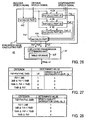
- Fig. 26 shows an exemplary configuration of a speech quality evaluating part 40.
- this speech quality evaluating part 40 includes an evaluation value calculating part 41 and a duplicated transmission determining part 42.
- a table shown in Fig. 27 which defines a duplication level Ld and a speech quality degradation level QL_1 for the first evaluation value Fd1
- a table shown in Fig. 28 which defines a speech quality degradation level QL_2 for the second evaluation value Fd2
- a table, not shown, similar to the one shown in Fig. 28 which defines a speech quality degradation level QL_3 for the third evaluation value.
- the speech quality degradation level increases incrementally with increasing evaluation value. While the value of the duplication level Ld for the evaluation value Fd1 is the same as the value of the speech quality degradation levelQ1_1 in the exemplary table in Fig. 27 , the values do not need to be the same. These values are determined beforehand by experiment.
- Fig. 29 shows a first example of operation of the transmitting apparatus in Fig. 23 .
- a selection is made, according to the speech quality degradation level, whether to generate a compensatory speech signal Ext1 using a waveform and pitch length of a past frame as shown in Fig. 1 or a compensatory speech signal Ext2 using the pitch of the current frame and a waveform of a past frame.
- Provided to the compensatory speech generating part 20 are a pitch parameter and a power parameter obtained for the input speech signal of the current frame by the side information generating part 30 and decoded speech signal which has been generated by the decoder 12 decoding the speech signal of the current frame encoded by the encoder 11.
- Step S 17 Determination is made as to whether or not the speech quality degradation level QL_1 is lower than QL_2, that is, whether or not the speech quality degradation level of the compensatory speech signal Com2 generated by using the pitch of the current frame is lower than that of the compensatory speech signal Com1 generated by the pitch of the past frame(s). If the speech quality degradation level of Com2 is not lower than that of Com1, that is, the speech quality will not be improved by using the pitch of the current frame, then the coded speech data of the current fame is put in all of Ld number of packets and the packets are sequentially transmitted at step S18.
- Step S 19 If the speech quality degradation level QL_2 is lower than QL_1, then the speech quality will be more improved by using the compensatory speech signal Ext2 generated by using the pitch-length of waveform cut out from the speech waveform in the past frame(s) using the pitch of the speech signal of the current frame than using the compensatory speech signal Ex1 generated by using only the speech signal of the past frame(s). Therefore, coded speech data of the current frame is put in one packet and the pitch parameter of the current frame is put in all of Ld - 1 packets as side information and the packets are transmitted.
- the speech signal of the current frame can be regenerated, and if a packet containing the speech data of the current frame cannot be received at the receiving end but a packet containing the side information (the pitch parameter) of the current frame can be received, then the pitch of the current frame can be used to generate a compensatory speech signal from a speech waveform in the past frames, thereby degradation of the speech quality can be reduced to a certain extent.
- the pitch parameter the number of duplications of side information
- the pitch parameter the pitch parameter
- the number of duplicated packets transmitting the same side information is changed according to the effect in reducing speech quality degradation, thereby the number of duplicated packets transmitting the coded speech data of the same current frame can also be changed reciprocally.
- Figs. 31 and 32 show a third example of operation.
- the pitch and power parameters of the current frame are used as side information, in addition to the first and second compensatory speech signals Com1 and Com2 used in the first and second exemplary operations, and a third compensatory speech signal Com3 is generated from a waveform in the past frame(s).
- steps S 110 to S 116 are added for determining a speech quality degradation level QL_3 for Fd3 in a manner similar to the determination of the speech quality degradation level QL_2 for Fd2 in steps S10 to S16 in Fig. 30 .
- step S 17 determination is made as to whether either QL_2 or QL_3, whichever smaller, is smaller than QL_1 or not. If not, the coded speech data of the current frame is put in each of the Ld number of packets and transmitted at step S18. If the smaller one of them is smaller than QL_1, then determination is made at step S 19 as to whether QL_3 is smaller than QL_2 or not. If not, then one packet containing the coded speech data of the current frame and Ld - 1 number of packets containing the pitch parameter of the current frame are generated and transmitted at step S20, in a manner similar to step S 19 of Fig. 29 . If QL_3 is smaller than QL_2, then one packet containing the coded speech data of the current frame and Ld - 1 packets containing the pitch and power of the current frame are generated and transmitted at step S21.
- a fourth exemplary operation is a variation of the third exemplary operation.
- the steps in the first half of the process are the same as those steps S 1 to S 16 of the third exemplary operation shown in Fig. 31 , which therefore is used in also this example.
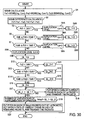
- the steps subsequent to step S16 are shown as steps S 110 to S23 in Fig. 33 .
- steps S 110 to S 116 for determining a speech quality degradation level QL_3 for Fd3 are the same as those steps S110 to S116 in the third exemplary operation shown in Fig. 32 .
- steps S17 and S18 are the same as those in Fig. 32 .
- Fig. 34 shows an exemplary configuration of a receiving apparatus associated with the transmitting apparatus in Fig. 23 .
- a side information extracting part 81 is added to the receiving apparatus shown in Fig. 13 .
- a compensatory speech generating part 70 includes a memory 702, a lost signal generating part 703, and a signal selector 704, as shown in Fig. 35 .
- the lost signal generating part 703 includes a pitch detecting part 703A, a waveform cutout part 703B, a frame waveform synthesizing part 703C, and a pitch selector switch 703D.
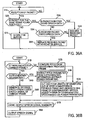
- a controller 53 checks a buffer 52 to see whether a packet for the same frame contained in a received packet is already stored in the buffer 52. If not, the controller 53 stores the received packet in the buffer 52. This process will be detailed later with reference to a flowchart in Fig. 36A .
- the controller 53 checks the buffer 52 to see whether a packet of a frame currently required is stored in the buffer 52, as will be described later with reference to a flowchart in Fig. 36B . If it is not stored, the controller 53 determines that the packet has been lost and generates a control signal CLST. When the controller 53 generates the control signal CLST, the signal selector 704 selects the output of the lost signal generating part 703 and the pitch selector switch 703D selects a pitch detected by the pitch detecting part 703A and provides it to the waveform cutout part 703B, which then cuts out a waveform of the pitch length from area A 1 of the memory 702.
- the frame waveform synthesizing part 703C synthesizes a waveform of one frame length from the cut out waveform and provides the synthesized waveform to the output selector 63 as a compensatory speech signal and also writes it into area A0 in the memory 702 through the signal selector 704.
- the controller 53 finds a packet containing the coded speech data of the current frame in the buffer 52, the controller 53 provides the packet to a code sequence constructing part 61, where the coded speech data is extracted from the packet.
- the coded speech data is decoded in the decoder 62, and the decoded speech signal is outputted through the output signal selector 63 and also written in area A0 in the memory 702 of the compensatory speech generating part 70 through the signal selector 704.
- the controller 53 finds a packet containing side information on the current frame, the controller 53 provides the packet to the side information extracting part 81.
- the side information extracting part 81 extracts the side information (the pitch parameter or the combination of the pitch parameter and power parameter) on the current frame from the packet and provides it to the lost signal generating part 703 in the compensatory speech generating part 70.
- the pitch parameter of the current frame in the side information is provided to the waveform cutout part 703B through the pitch selector switch 703D.
- the waveform cutout part 703B cuts out a waveform of the provided pitch length of the current frame from the speech waveform in area A1.
- the frame waveform synthesizing part 703C synthesizes and outputs one frame of waveform as a compensatory speech signal.
- the frame waveform synthesizing part 703C uses the power parameter to adjust the power of the synthesized frame waveform and outputs the waveform as a compensatory speech signal. In either case, when the compensatory speech signal is generated, it is written in area A0 of the memory 702 through the signal selector 704.
- Fig. 36A shows an example of a process for storing a packet received at a packet receiver 51 in the buffer 52 under the control of the controller 53. Determination is made at step S1A as to whether a packet has been received. If received, the buffer 52 is checked at step S2A to see whether a packet containing data with the same frame number as that of the data contained in the received packet is already in the buffer 52. If so, the data contained in the packet in the buffer is checked at step S3A to determine whether it is coded speech data. If it is coded speech data, the received packet is unnecessary and therefore discarded at step S4A, then the process returns to step S1A, where the process waits for the next packet.
- step S5A determination is made at step S5A as to whether the data in the received packet is coded speech data. If it is not coded speech data (that is, if it is side information), the received packet is discarded at step S4A and then the process returns to step S1A. If at step S5A the data in the received packet is coded speech data, the packet of the same frame contained in the buffer is replaced with the received packet at step S6A and then the process returns to step S1A. That is, if the received packet of the same frame is coded speech data, then compensatory speech does not need to be generated and therefore the side information is not required. If the buffer does not contain a packet of the same frame, the received packet is stored in the buffer 52 at step S7A and then the process returns to step S1A to wait for the next packet.
- Fig. 36B shows an example of a process for extracting speech data from a packet read out from the buffer 52 and outputting a reproduction speech signal under the control of the controller 53.
- the buffer 52 is checked to see if there is a packet for the current frame required. If not, it is determined that packet loss has occurred and a pitch is detected from the past frame by the pitch detecting part 703A of the lost signal generating part 703.
- the detected pitch length is used to cut out one pitch length of waveform from the speech waveform in the past frame and one frame length of waveform is synthesized at step S3B, the synthesized waveform is stored in area A0 in the memory 702 as a compensatory speech signal at step S7B, the compensatory speech signal is outputted at step S8B, and then the process returns to step S1B, where the process for the next frame is started.
- step S4B determines whether the data in the packet is side information. If it is side information, the pitch parameter is extracted from the side information at step S5B and the pitch parameter is used to generate a compensatory speech signal at step S3B. If it is determined at step S4B that the data in the packet for the current frame is not side information, the data in the packet is coded speech data. Therefore, the coded speech data is decoded to obtain speech waveform data at step S6B, and the speech waveform data is written in area A0 in the memory 402A at step S7B, and the speech waveform is outputted as a speech signal at step S8B, then the process returns to step S1B.
- the process in Fig. 36B corresponds to the exemplary operation in Fig. 30 in the transmitting end.
- the power parameter is also extracted from the side information at step S5B as shown in the parentheses, and the power of the synthesized waveform is adjusted according to the power parameter at step S3B as shown in the parentheses.
Landscapes
- Engineering & Computer Science (AREA)
- Computational Linguistics (AREA)
- Signal Processing (AREA)
- Health & Medical Sciences (AREA)
- Audiology, Speech & Language Pathology (AREA)
- Human Computer Interaction (AREA)
- Physics & Mathematics (AREA)
- Acoustics & Sound (AREA)
- Multimedia (AREA)
- Data Exchanges In Wide-Area Networks (AREA)
- Telephonic Communication Services (AREA)
- Detection And Prevention Of Errors In Transmission (AREA)
Claims (7)
- Sprachpaketübertragungsverfahren zum Übertragen eines Eingangssprachsignals auf einer Block-für-Block-Basis unter Verwendung von Paketen, enthaltend die Schritte:a) Erzeugen eines kompensatorischen Sprachsignals für ein Sprachsignal des gegenwärtigen Datenübertragungsblocks aus einem Sprachsignal mindestens eines dem gegenwärtigen Datenübertragungsblock benachbarten Datenübertragungsblocks;b) Berechnen eines Sprachqualität-Bewertungswertes des kompensatorischen Sprachsignals;c) Bestimmen eines Duplizierungsniveaus (Ld) basierend auf mindestens dem Sprachqualität-Bewertungswert;d) Erzeugen eines oder mehrerer Pakete gemäß dem Duplizierungsniveau für jeden Datenübertragungsblock des Eingangssprachsignals; unde) Übertragen der erzeugten Pakete zu einem Netz;dadurch gekennzeichnet, dass
Schritt a) die Schritte enthält:a-1) Erzeugen von Nebeninformationen, die mindestens einen Teilungs-Parameter enthalten, welcher ein Merkmals-Parameter des Sprachsignals des gegenwärtigen Datenübertragungsblocks ist;a-2) Erzeugen eines ersten kompensatorischen Sprachsignals, welches eine Teilung des Sprachsignals des mindestens einen Datenübertragungsblocks hat, aus dem Sprachsignal des mindestens einen Datenübertragungsblocks; unda-3) Erzeugen eines zweiten kompensatorischen Sprachsignals aus dem Sprachsignal des mindestens einen Datenübertragungsblocks durch Verwendung mindestens des Teilungs-Parameters in den Nebeninformationen für den gegenwärtigen Datenübertragungsblock;Schritt b) die Schritte enthält:b-1) Berechnen eines ersten Sprachqualität-Bewertungswertes (Fd1) des ersten kompensatorischen Sprachsignals, undb-2) Berechnen eines zweiten Sprachqualität-Bewertungswertes (Fd2) des zweiten kompensatorischen Sprachsignals;Schritt c) die Schritte enthält:c-1) Bestimmen des Duplizierungsniveaus (Ld), welches eine ganze Zahl von 1 oder mehr ist und mit abnehmender Sprachqualität inkremental zunimmt, auf der Basis des ersten Sprachqualität-Bewertungswertes (Fd1);c-2) Bestimmen eines ersten Sprachqualität-Abnahmeniveaus (QL_1), welches mit abnehmender Sprachqualität inkremental ansteigt, auf der Basis des ersten Sprachqualität-Bewertungswertes (Fd1);c-3) Bestimmen eines zweiten Sprachqualität-Abnahmeniveaus (QL_2), welches mit abnehmender Sprachqualität inkremental ansteigt, auf der Basis des zweiten Sprachqualität-Bewertungswertes (Fd2);Schritt d) die Schritte enthält:d-1) wenn das zweite Sprachqualität-Abnahmeniveau (QL_2) nicht kleiner ist als das erste Sprachqualität-Abnahmeniveau (QL_1), Erzeugen so vieler Pakete des Sprachsignals des gegenwärtigen Datenübertragungsblocks wie die Zahl, die gleich dem Wert des Duplizierungsniveaus (Ld) ist; undd-2) wenn das zweite Sprachqualität-Abnahmeniveau (QL_2) kleiner ist als das erste Sprachqualität-Abnahmeniveau (QL_1), Erzeugen eines oder mehrerer Pakete des Sprachsignals des gegenwärtigen Datenübertragungsblocks und eines oder mehrerer Pakete der Nebeninformationen, wobei die Gesamtzahl der erzeugten Pakete des Sprachsignals und der Nebeninformationen für den gegenwärtigen Datenübertragungsblock gleich dem Wert des Duplizierungsniveaus ist; undSchritt e) für den gegenwärtigen Datenübertragungsblock insgesamt so viele Pakete überträgt wie die Zahl, die gleich dem Wert des Duplizierungsniveaus für den gegenwärtigen Datenübertragungsblock ist. - Verfahren nach Anspruch 1, bei welchem
Schritt c) ferner einen Schritt des Berechnens der Differenz zwischen dem ersten Sprachqualität-Abnahmeniveau (QL_1) und dem zweiten Sprachqualität-Abnahmeniveau (QL_2) als die Zahl der Duplizierungen der Nebeninformationen enthält; und
Schritt d) so viele Pakete der Nebeninformationen wie die Zahl der Duplizierungen der Nebeninformationen erzeugt, wenn das zweite Sprachqualität-Abnahmeniveau (QL_2) kleiner ist als das erste Sprachqualität-Abnahmeniveau (QL_1). - Sprachpaket-Übertragungsverfahren zum Übertragen eines Eingangssprachsignals auf einer Block-für-Block-Basis unter Verwendung von Paketen, enthaltend die Schritte:a) Erzeugen eines kompensatorischen Sprachsignals für ein Sprachsignal des gegenwärtigen Datenübertragungsblocks aus einem Sprachsignal mindestens eines dem gegenwärtigen Datenübertragungsblock benachbarten Datenübertragungsblocks;b) Berechnen eines Sprachqualität-Bewertungswertes des kompensatorischen Sprachsignals;c) Bestimmen eines Duplizierungsniveaus (Ld) basierend auf mindestens dem Sprachqualität-Bewertungswert;d) Erzeugen eines oder mehrerer Pakete gemäß dem Duplizierungsniveau für jeden Datenübertragungsblock des Eingangssprachsignals; unde) Übertragen der erzeugten Pakete zu einem Netz;dadurch gekennzeichnet, dass
Schritt a) die Schritte enthält:a-1) Erzeugen von Nebeninformationen, die mindestens einen Teilungs-Parameter und einen Leistungs-Parameter enthalten, welche Merkmals-Parameter des Sprachsignals des gegenwärtigen Datenübertragungsblocks sind;a-2) Erzeugen eines ersten kompensatorischen Sprachsignals, welches eine Teilung des Sprachsignals des mindestens einen Datenübertragungsblocks hat, aus dem Sprachsignal des mindestens einen Datenübertragungsblocks; unda-3) Erzeugen eines zweiten kompensatorischen Sprachsignals aus dem Sprachsignal des mindestens einen Datenübertragungsblocks durch Verwendung des Teilungs-Parameters in den Nebeninformationen für den gegenwärtigen Datenübertragungsblock; unda-4) Erzeugen eines dritten kompensatorischen Sprachsignals aus dem Sprachsignal des mindestens einen Datenübertragungsblocks durch Verwendung des Teilungs-Parameters und des Leistungs-Parameters in den Nebeninformationen für den gegenwärtigen Datenübertragungsblock;Schritt b) die Schritte enthält:b-1) Berechnen eines ersten Sprachqualität-Bewertungswertes (Fd1) des ersten kompensatorischen Sprachsignals, undb-2) Berechnen eines zweiten Sprachqualität-Bewertungswertes (Fd2) des zweiten kompensatorischen Sprachsignals; undb-3) Berechnen eines dritten Sprachqualität-Bewertungswertes (Fd3) des dritten kompensatorischen Sprachsignals;Schritt c) die Schritte enthält:c-1) Bestimmen des Duplizierungsniveaus (Ld), welches eine ganze Zahl von 1 oder mehr ist und mit abnehmender Sprachqualität inkremental ansteigt, und eines ersten Sprachqualität-Abnahmeniveaus (QL_1), welches mit abnehmender Sprachqualität inkremental ansteigt, auf der Basis des ersten Sprachqualität-Bewertungswertes (Fd1);c-2) Bestimmen eines zweiten Sprachqualität-Abnahmeniveaus (QL_2), welches mit abnehmender Sprachqualität inkremental ansteigt, auf der Basis des zweiten Sprachqualität-Bewertungswertes (Fd2); undc-3) Bestimmen eines dritten Sprachqualität-Abnahmeniveaus (QL_3), welches mit abnehmender Sprachqualität inkremental ansteigt, auf der Basis des dritten Sprachqualität-Bewertungswertes (Fd3);Schritt d) die Schritte enthält:d-1) wenn das jeweils kleinere des zweiten Sprachqualität-Abnahmeniveaus und des dritten Sprachqualität-Abnahmeniveaus (QL_2, QL_3) nicht kleiner ist als das erste Sprachqualität-Abnahmeniveau (QL_1), Erzeugen so vieler Pakete des Sprachsignals des gegenwärtigen Datenübertragungsblocks wie die Zahl, die gleich dem Wert des Duplizierungsniveaus ist;d-2) wenn das jeweils kleinere des zweiten Sprachqualität-Abnahmeniveaus und des dritten Sprachqualität-Abnahmeniveaus (QL_2, QL_3) kleiner ist als das erste Sprachqualität-Abnahmeniveau (QL_1) und das dritten Sprachqualität-Abnahmeniveau (QL_3) nicht kleiner ist als das zweite Sprachqualität-Abnahmeniveau (QL_2), Erzeugen eines oder mehrerer Pakete des Sprachsignals des gegenwärtigen Datenübertragungsblocks und eines oder mehrerer Pakete der den Teilungs-Parameter enthaltenden Nebeninformationen, wobei die Gesamtzahl der erzeugten Pakete des Sprachsignals und der Nebeninformationen für den gegenwärtigen Datenübertragungsblock gleich dem Wert des Duplizierungsniveaus ist; undd-3) wenn das dritten Sprachqualität-Abnahmeniveau (QL_3) kleiner ist als das zweite Sprachqualität-Abnahmeniveau (QL_2), Erzeugen eines oder mehrerer Pakete des Sprachsignals des gegenwärtigen Datenübertragungsblocks und eines oder mehrerer Pakete der den Teilungs-Parameter und den Leistungs-Parameter enthaltenden Nebeninformationen, wobei die Gesamtzahl der erzeugten Pakete des Sprachsignals und der Nebeninformationen für den gegenwärtigen Datenübertragungsblock gleich dem Wert des Duplizierungsniveaus ist; undSchritt e) für den gegenwärtigen Datenübertragungsblock insgesamt so viele Pakete überträgt wie die Zahl, die gleich dem Wert des Duplizierungsniveaus für den gegenwärtigen Datenübertragungsblock ist. - Verfahren nach Anspruch 3, bei welchem
Schritt c) ferner die Schritte des Berechnens einer Differenz zwischen dem ersten Sprachqualität-Abnahmeniveau (QL_1) und dem zweiten Sprachqualität-Abnahmeniveau (QL_2) als eine erste Zahl der Duplizierungen von Nebeninformationen und des Berechnens der Differenz zwischen dem ersten Sprachqualität-Abnahmeniveau (QL_1) und dem dritten Sprachqualität-Abnahmeniveau (QL_3) als eine zweite Zahl der Duplizierungen von Nebeninformationen enthält; und
Schritt d) so viele Pakete des Teilungs-Parameters wie die erste Zahl der Duplizierungen von Nebeninformationen erzeugt, wenn das dritte Sprachqualität-Abnahmeniveau (QL_3) nicht kleiner ist als das zweite Sprachqualität-Abnahmeniveau (QL_2), und so viele Pakete von den Teilungs-Parameter und den Leistungs-Parameter enthaltenden Nebeninformationen wie die zweite Zahl von Duplizierungen von Nebeninformationen erzeugt, wenn das dritte Sprachqualität-Abnahmeniveau (QL_3) kleiner ist als das zweite Sprachqualität-Abnahmeniveau (QL_2). - Sprachpaketübertragungsvorrichtung zum Übertragen eines Eingangssprachsignals auf einer Block-für-Block-Basis unter Verwendung von Paketen, enthaltend:einen Teil (20) zur Erzeugung eines kompensatorischen Sprachsignals, der dafür ausgelegt ist, aus einem Sprachsignal mindestens eines Datenübertragungsblocks, der dem gegenwärtigen Datenübertragungsblock benachbart ist, ein kompensatorisches Sprachsignal für ein Sprachsignal des gegenwärtigen Datenübertragungsblocks zu erzeugen;einen Bewertungswert-Berechnungsteil (41), der dafür ausgelegt ist, einen Sprachqualität-Bewertungswert des kompensatorischen Sprachsignals zu berechnen;einen Teil (42) zur Bestimmung einer duplizierten Übertragung, der dafür ausgelegt ist, ein Duplizierungsniveau (Ld) auf der Basis mindestens des Sprachqualität-Bewertungswertes bestimmen;einen Paketerzeugungsteil (15), der dafür ausgelegt ist, eines oder mehrerer Pakete gemäß dem Duplizierungsniveau (Ld) für jeden Datenübertragungsblock des Eingangssprachsignals zu erzeugen; undeinen Übertragungsteil (16), der dafür ausgelegt ist, die erzeugten Pakete zu einem Netz zu übertragen;dadurch gekennzeichnet, dass sie ferner enthält:einen Nebeninformations-Erzeugungsteil (30), der dafür ausgelegt ist, einen Teilungs-Parameter des Sprachsignals des gegenwärtigen Datenübertragungsblocks als Nebeninformation zu erzeugen, wobeider Teil (20) zur Erzeugung des kompensatorischen Sprachsignals dafür ausgelegt ist, aus dem Sprachsignal des mindestens einen Datenübertragungsblocks eines ersten kompensatorischen Sprachsignals zu erzeugen, welche eine Teilung des Sprachsignals des mindestens einen Datenübertragungsblocks hat, und ein zweites kompensatorisches Sprachsignal aus dem Sprachsignal des mindestens einen Datenübertragungsblocks durch Verwendung des Teilungs-Parameters in den Nebeninformationen des gegenwärtigen Datenübertragungsblocks zu erzeugen;der Bewertungswert-Berechnungsteil (41) dafür ausgelegt ist, einen ersten Sprachqualität-Bewertungswert (Fd1) des ersten kompensatorischen Sprachsignals und einen zweiten Sprachqualität-Bewertungswert (Fd2) des zweiten kompensatorischen Sprachsignals zu berechnen;der Teil (42) zur Bestimmung der duplizierten Übertragung dafür ausgelegt ist, auf der Basis des ersten Sprachqualität-Bewertungswertes (Fd1) das Duplizierungsniveau (Ld) zu berechnen, welches ein ganzzahliger Wert von 1 oder mehr ist und mit abnehmender Sprachqualität inkremental zunimmt, auf der Basis des ersten Sprachqualität-Bewertungswertes (Fd1) ein erstes Sprachqualität-Abnahmeniveau (QL_1) zu berechnen, das mit abnehmender Sprachqualität inkremental zunimmt, und auf der Basis des zweiten Sprachqualität-Bewertungswertes (Fd2) ein zweites Sprachqualität-Abnahmeniveau (QL_2) zu berechnen, welches mit abnehmender Sprachqualität inkremental zunimmt;der Paketerzeugungsteil (15) dafür ausgelegt ist, so viele Pakete des Sprachsignals des gegenwärtigen Datenübertragungsblocks wie die Zahl, die gleich dem Wert des Duplizierungsniveaus (Ld) ist, zu erzeugen, wenn das zweite Sprachqualität-Abnahmeniveau (QL_2) nicht kleiner ist als das erste Sprachqualität-Abnahmeniveau (QL_1), und eines oder mehrere Pakete des Sprachsignals des gegenwärtigen Datenübertragungsblocks und eines oder mehrere Pakete der Nebeninformationen zu erzeugen, wobei die Gesamtzahl der erzeugten Pakete des Sprachsignals und der Nebeninformationen für den gegenwärtigen Datenübertragungsblock die Zahl ist, die gleich dem Wert des Duplizierungsniveaus (Ld) ist, wenn das zweite Sprachqualität-Abnahmeniveau (QL_2) kleiner ist als das erste Sprachqualität-Abnahmeniveau (QL_1); undder Übertragungsteil (16) dafür ausgelegt ist, für den gegenwärtigen Datenübertragungsblock insgesamt so viele erzeugte Pakete wie die Zahl, die gleich dem Wert des Duplizierungsniveaus für den gegenwärtigen Datenübertragungsblock ist, zu übertragen.
- Sprachpaketübertragungsvorrichtung zum Übertragen eines Eingangssprachsignals auf einer Block-für-Block-Basis unter Verwendung von Paketen, enthaltend:einen Teil (20) zur Erzeugung eines kompensatorischen Sprachsignals, der dafür ausgelegt ist, aus einem Sprachsignal mindestens eines Datenübertragungsblocks, der dem gegenwärtigen Datenübertragungsblock benachbart ist, ein kompensatorisches Sprachsignal für ein Sprachsignal des gegenwärtigen Datenübertragungsblocks zu erzeugen;einen Bewertungswert-Berechnungsteil (41), der dafür ausgelegt ist, einen Sprachqualität-Bewertungswert des kompensatorischen Sprachsignals zu berechnen;einen Teil (42) zur Bestimmung einer duplizierten Übertragung, der dafür ausgelegt ist, ein Duplizierungsniveau (Ld) auf der Basis mindestens des Sprachqualität-Bewertungswertes bestimmen;einen Paketerzeugungsteil (15), der dafür ausgelegt ist, eines oder mehrere Pakete gemäß dem Duplizierungsniveau (Ld) für jeden Datenübertragungsblock des Eingangssprachsignals zu erzeugen; undeinen Übertragungsteil (16), der dafür ausgelegt ist, die erzeugten Pakete zu einem Netz zu übertragen;dadurch gekennzeichnet, dass sie ferner enthält:einen Nebeninformations-Erzeugungsteil (30), der dafür ausgelegt ist, einen Teilungs-Parameter und einen Leistungs-Parameter des Sprachsignals des gegenwärtigen Datenübertragungsblocks als Nebeninformationen zu erzeugen, wobeider Teil (20) zur Erzeugung des kompensatorischen Sprachsignals dafür ausgelegt ist, aus dem Sprachsignal mindestens eines Datenübertragungsblocks eines ersten kompensatorischen Sprachsignals zu erzeugen, welche eine Teilung des Sprachsignals des mindestens einen Datenübertragungsblocks hat, ein zweites kompensatorisches Sprachsignal aus dem Sprachsignal des mindestens einen Datenübertragungsblocks durch Verwendung des Teilungs-Parameters in den Nebeninformationen des gegenwärtigen Datenübertragungsblocks zu erzeugen, und ein drittes kompensatorisches Sprachsignal aus dem Sprachsignal des mindestens einen Datenübertragungsblocks durch Verwendung des Teilungs-Parameters und des Leistungs-Parameters in den Nebeninformationen des gegenwärtigen Sprachübertragungsblocks zu erzeugen;der Bewertungswert-Berechnungsteil (41) dafür ausgelegt ist, einen ersten Sprachqualität-Bewertungswert (Fd1) des ersten kompensatorischen Sprachsignals, einen zweiten Sprachqualität-Bewertungswert (Fd2) des zweiten kompensatorischen Sprachsignals und einen dritten Sprachqualität-Bewertungswert (Fd3) des dritten kompensatorischen Sprachsignals zu berechnen;der Teil (42) zur Bestimmung der duplizierten Übertragung dafür ausgelegt ist, auf der Basis des ersten Sprachqualität-Bewertungswerts (Fd1) das Duplizierungsniveau (Ld) zu berechnen, welches ein ganzzahliger Wert von 1 oder mehr ist und mit abnehmender Sprachqualität inkremental zunimmt, auf der Basis des ersten Sprachqualität-Bewertungswertes (Fd1) ein erstes Sprachqualität-Abnahmeniveau (QL_1) zu berechnen, das mit abnehmender Sprachqualität inkremental zunimmt, auf der Basis des zweiten Sprachqualität-Bewertungswertes (Fd2) ein zweites Sprachqualität-Abnahmeniveau (QL_2) zu berechnen, welches mit abnehmender Sprachqualität inkremental zunimmt, und auf der Basis des dritten Sprachqualität-Bewertungswertes (Fd3) ein drittes Sprachqualität-Abnahmeniveau (QL_3) zu berechnen, welches mit abnehmender Sprachqualität inkremental zunimmt;der Paketerzeugungsteil (15) dafür ausgelegt ist, so viele Pakete des Sprachsignals des gegenwärtigen Datenübertragungsblocks wie die Zahl, die gleich dem Wert des Duplizierungsniveaus (Ld) ist, zu erzeugen, wenn das jeweils kleinere des zweiten Sprachqualität-Abnahmeniveaus und des dritten Sprachqualität-Abnahmeniveaus (QL_2, QL_3) nicht kleiner ist als das erste Sprachqualität-Abnahmeniveau (QL_1); eines oder mehrere Pakete des Sprachsignals des gegenwärtigen Datenübertragungsblocks und eines oder mehrere Pakete der den Teilungs-Parameter enthaltenden Nebeninformationen zu erzeugen, wobei die Gesamtzahl der erzeugten Pakete des Sprachsignals und der Nebeninformationen gleich der Zahl des Wertes des Duplizierungsniveaus (Ld) ist, wenn das jeweils kleinere des zweiten Sprachqualität-Abnahmeniveaus und des dritten Sprachqualität-Abnahmeniveaus (QL_2, QL_3) kleiner ist als das erste Sprachqualität-Abnahmeniveau (QL_1) und das dritte Sprachqualität-Abnahmeniveau (QL_3) nicht kleiner ist als das zweite Sprachqualität-Abnahmeniveau (QL_2); und eines oder mehrere Pakete des Sprachsignals des gegenwärtigen Datenübertragungsblocks und eines oder mehrere Pakete der den Teilungs-Parameter und den Leistungs-Parameter enthaltenden Nebeninformationen zu erzeugen, wobei die Gesamtzahl der erzeugten Pakete des Sprachsignals und der Nebeninformationen für den gegenwärtigen Datenübertragungsblock gleich dem Wert des Duplizierungsniveaus ist, wenn das dritte Sprachqualität-Abnahmeniveau (QL_3) kleiner ist als das zweite Sprachqualität-Abnahmeniveau (QL_2); undder Übertragungsteil (16) dafür ausgelegt ist, für den gegenwärtigen Datenübertragungsblock insgesamt so viele erzeugte Pakete wie die Zahl, die gleich dem Wert des Duplizierungsniveaus für den gegenwärtigen Datenübertragungsblock ist, zu übertragen.
- Computerlesbares Aufzeichnungsmedium, auf welchem ein Programm aufgezeichnet ist, welches einen Computer veranlasst, das Sprachpaketübertragungsverfahren nach einem der Ansprüche 1-4 auszuführen.
Applications Claiming Priority (2)
| Application Number | Priority Date | Filing Date | Title |
|---|---|---|---|
| JP2004141375 | 2004-05-11 | ||
| PCT/JP2005/008519 WO2005109402A1 (ja) | 2004-05-11 | 2005-05-10 | 音声パケット送信方法、音声パケット送信装置、および音声パケット送信プログラムとそれを記録した記録媒体 |
Publications (3)
| Publication Number | Publication Date |
|---|---|
| EP1746581A1 EP1746581A1 (de) | 2007-01-24 |
| EP1746581A4 EP1746581A4 (de) | 2008-05-28 |
| EP1746581B1 true EP1746581B1 (de) | 2010-02-24 |
Family
ID=35320431
Family Applications (1)
| Application Number | Title | Priority Date | Filing Date |
|---|---|---|---|
| EP05739165A Expired - Lifetime EP1746581B1 (de) | 2004-05-11 | 2005-05-10 | Schallpaket-sendeverfahren, schallpaket-sendevorrichtung, schallpaket-sendeprogramm und aufzeichnungsmedium, in dem dieses programm aufgezeichnet wurde |
Country Status (6)
| Country | Link |
|---|---|
| US (1) | US7711554B2 (de) |
| EP (1) | EP1746581B1 (de) |
| JP (1) | JP4320033B2 (de) |
| CN (1) | CN100580773C (de) |
| DE (1) | DE602005019559D1 (de) |
| WO (1) | WO2005109402A1 (de) |
Families Citing this family (17)
| Publication number | Priority date | Publication date | Assignee | Title |
|---|---|---|---|---|
| TW200638335A (en) * | 2005-04-13 | 2006-11-01 | Dolby Lab Licensing Corp | Audio metadata verification |
| JP2007114417A (ja) * | 2005-10-19 | 2007-05-10 | Fujitsu Ltd | 音声データ処理方法及び装置 |
| JP4969454B2 (ja) * | 2005-11-30 | 2012-07-04 | パナソニック株式会社 | スケーラブル符号化装置およびスケーラブル符号化方法 |
| US8255213B2 (en) | 2006-07-12 | 2012-08-28 | Panasonic Corporation | Speech decoding apparatus, speech encoding apparatus, and lost frame concealment method |
| US8024192B2 (en) * | 2006-08-15 | 2011-09-20 | Broadcom Corporation | Time-warping of decoded audio signal after packet loss |
| JP5074749B2 (ja) * | 2006-12-04 | 2012-11-14 | 日本電信電話株式会社 | 音声信号受信装置、それに使用される音声パケット消失補償方法、その方法を実施するプログラム、及びそのプログラムを記録した記録媒体 |
| US7873064B1 (en) * | 2007-02-12 | 2011-01-18 | Marvell International Ltd. | Adaptive jitter buffer-packet loss concealment |
| US8380525B2 (en) * | 2007-06-25 | 2013-02-19 | Telefonaktiebolaget Lm Ericsson (Publ) | Continued telecommunication with weak links |
| CN101588341B (zh) * | 2008-05-22 | 2012-07-04 | 华为技术有限公司 | 一种丢帧隐藏的方法及装置 |
| US8537844B2 (en) * | 2009-10-06 | 2013-09-17 | Electronics And Telecommunications Research Institute | Ethernet to serial gateway apparatus and method thereof |
| US20110196673A1 (en) * | 2010-02-11 | 2011-08-11 | Qualcomm Incorporated | Concealing lost packets in a sub-band coding decoder |
| US20110257964A1 (en) * | 2010-04-16 | 2011-10-20 | Rathonyi Bela | Minimizing Speech Delay in Communication Devices |
| US8612242B2 (en) * | 2010-04-16 | 2013-12-17 | St-Ericsson Sa | Minimizing speech delay in communication devices |
| US8976675B2 (en) * | 2011-02-28 | 2015-03-10 | Avaya Inc. | Automatic modification of VOIP packet retransmission level based on the psycho-acoustic value of the packet |
| CN102833037B (zh) * | 2012-07-18 | 2015-04-29 | 华为技术有限公司 | 一种语音数据丢包的补偿方法及装置 |
| US8875202B2 (en) * | 2013-03-14 | 2014-10-28 | General Instrument Corporation | Processing path signatures for processing elements in encoded video |
| JP7059852B2 (ja) * | 2018-07-27 | 2022-04-26 | 株式会社Jvcケンウッド | 無線通信装置、音声信号制御方法、およびプログラム |
Family Cites Families (17)
| Publication number | Priority date | Publication date | Assignee | Title |
|---|---|---|---|---|
| JPH1097295A (ja) | 1996-09-24 | 1998-04-14 | Nippon Telegr & Teleph Corp <Ntt> | 音響信号符号化方法及び復号化方法 |
| US6167060A (en) * | 1997-08-08 | 2000-12-26 | Clarent Corporation | Dynamic forward error correction algorithm for internet telephone |
| JP3734946B2 (ja) | 1997-12-15 | 2006-01-11 | 松下電器産業株式会社 | データ送出装置、データ受信装置及びデータ伝送装置 |
| JP3644477B2 (ja) * | 1998-10-09 | 2005-04-27 | 富士ゼロックス株式会社 | 音声受信装置および音声送受信装置 |
| JP4485690B2 (ja) * | 1999-01-06 | 2010-06-23 | アイピージー エレクトロニクス 503 リミテッド | マルチメディア信号を伝送する伝送システム |
| US7047190B1 (en) * | 1999-04-19 | 2006-05-16 | At&Tcorp. | Method and apparatus for performing packet loss or frame erasure concealment |
| FR2804813B1 (fr) | 2000-02-03 | 2002-09-06 | Cit Alcatel | Procede de codage facilitant la restitution sonore des signaux de parole numerises transmis a un terminal d'abonne lors d'une communication telephonique par transmission de paquets et equipement mettant en oeuvre ce procede |
| KR100438167B1 (ko) * | 2000-11-10 | 2004-07-01 | 엘지전자 주식회사 | 인터넷 전화통신을 위한 음성신호 송수신장치 |
| JP2002162998A (ja) * | 2000-11-28 | 2002-06-07 | Fujitsu Ltd | パケット修復処理を伴なう音声符号化方法 |
| JP3628268B2 (ja) * | 2001-03-13 | 2005-03-09 | 日本電信電話株式会社 | 音響信号符号化方法、復号化方法及び装置並びにプログラム及び記録媒体 |
| US6910175B2 (en) * | 2001-09-14 | 2005-06-21 | Koninklijke Philips Electronics N.V. | Encoder redundancy selection system and method |
| JP3722366B2 (ja) * | 2002-02-22 | 2005-11-30 | 日本電信電話株式会社 | パケット構成方法及び装置、パケット構成プログラム、並びにパケット分解方法及び装置、パケット分解プログラム |
| JP4022427B2 (ja) | 2002-04-19 | 2007-12-19 | 独立行政法人科学技術振興機構 | エラー隠蔽方法、エラー隠蔽プログラム、送信装置、受信装置及びエラー隠蔽装置 |
| JP4050961B2 (ja) | 2002-08-21 | 2008-02-20 | 松下電器産業株式会社 | パケット型音声通信端末 |
| US7251241B1 (en) * | 2002-08-21 | 2007-07-31 | Cisco Technology, Inc. | Devices, softwares and methods for predicting reconstruction of encoded frames and for adjusting playout delay of jitter buffer |
| JP2004120619A (ja) | 2002-09-27 | 2004-04-15 | Kddi Corp | オーディオ情報復号装置 |
| US7359979B2 (en) * | 2002-09-30 | 2008-04-15 | Avaya Technology Corp. | Packet prioritization and associated bandwidth and buffer management techniques for audio over IP |
-
2005
- 2005-05-10 JP JP2006516897A patent/JP4320033B2/ja not_active Expired - Lifetime
- 2005-05-10 EP EP05739165A patent/EP1746581B1/de not_active Expired - Lifetime
- 2005-05-10 WO PCT/JP2005/008519 patent/WO2005109402A1/ja not_active Ceased
- 2005-05-10 CN CN200580001518A patent/CN100580773C/zh not_active Expired - Fee Related
- 2005-05-10 DE DE602005019559T patent/DE602005019559D1/de not_active Expired - Lifetime
- 2005-05-10 US US10/580,195 patent/US7711554B2/en not_active Expired - Fee Related
Also Published As
| Publication number | Publication date |
|---|---|
| DE602005019559D1 (de) | 2010-04-08 |
| US7711554B2 (en) | 2010-05-04 |
| JP4320033B2 (ja) | 2009-08-26 |
| JPWO2005109402A1 (ja) | 2008-03-21 |
| US20070150262A1 (en) | 2007-06-28 |
| EP1746581A1 (de) | 2007-01-24 |
| WO2005109402A1 (ja) | 2005-11-17 |
| EP1746581A4 (de) | 2008-05-28 |
| CN100580773C (zh) | 2010-01-13 |
| CN1906662A (zh) | 2007-01-31 |
Similar Documents
| Publication | Publication Date | Title |
|---|---|---|
| EP1746581B1 (de) | Schallpaket-sendeverfahren, schallpaket-sendevorrichtung, schallpaket-sendeprogramm und aufzeichnungsmedium, in dem dieses programm aufgezeichnet wurde | |
| US6389006B1 (en) | Systems and methods for encoding and decoding speech for lossy transmission networks | |
| US8352252B2 (en) | Systems and methods for preventing the loss of information within a speech frame | |
| US7650280B2 (en) | Voice packet loss concealment device, voice packet loss concealment method, receiving terminal, and voice communication system | |
| TWI420513B (zh) | 藉由變換內插之音訊封包損失隱蔽 | |
| US8631295B2 (en) | Error concealment | |
| EP2109950B1 (de) | Verfahren zur datenübertragung in einem kommunikationssystem | |
| US6871175B2 (en) | Voice encoding apparatus and method therefor | |
| US6754203B2 (en) | Method and program product for organizing data into packets | |
| CN1929355B (zh) | 语音包丢失恢复系统以及方法 | |
| US7962334B2 (en) | Receiving device and method | |
| KR100591544B1 (ko) | VoIP 시스템을 위한 프레임 손실 은닉 방법 및 장치 | |
| JP4093174B2 (ja) | 受信装置および方法 | |
| US20040138878A1 (en) | Method for estimating a codec parameter | |
| KR20070059860A (ko) | 디지털 오디오 패킷 손실을 복구하기 위한 방법 및 장치 | |
| Lindblom et al. | Error protection and packet loss concealment based on a signal matched sinusoidal vocoder | |
| JP2002196795A (ja) | 音声復号装置及び音声符号化・復号装置 | |
| ULLBERG | Variable Frame Offset Coding | |
| HK1112097A (en) | Frame erasure concealment in voice communications |
Legal Events
| Date | Code | Title | Description |
|---|---|---|---|
| PUAI | Public reference made under article 153(3) epc to a published international application that has entered the european phase |
Free format text: ORIGINAL CODE: 0009012 |
|
| 17P | Request for examination filed |
Effective date: 20060505 |
|
| AK | Designated contracting states |
Kind code of ref document: A1 Designated state(s): DE FR GB |
|
| DAX | Request for extension of the european patent (deleted) | ||
| RBV | Designated contracting states (corrected) |
Designated state(s): DE FR GB |
|
| A4 | Supplementary search report drawn up and despatched |
Effective date: 20080424 |
|
| 17Q | First examination report despatched |
Effective date: 20080728 |
|
| GRAP | Despatch of communication of intention to grant a patent |
Free format text: ORIGINAL CODE: EPIDOSNIGR1 |
|
| GRAS | Grant fee paid |
Free format text: ORIGINAL CODE: EPIDOSNIGR3 |
|
| GRAA | (expected) grant |
Free format text: ORIGINAL CODE: 0009210 |
|
| AK | Designated contracting states |
Kind code of ref document: B1 Designated state(s): DE FR GB |
|
| REG | Reference to a national code |
Ref country code: GB Ref legal event code: FG4D |
|
| REF | Corresponds to: |
Ref document number: 602005019559 Country of ref document: DE Date of ref document: 20100408 Kind code of ref document: P |
|
| PLBE | No opposition filed within time limit |
Free format text: ORIGINAL CODE: 0009261 |
|
| STAA | Information on the status of an ep patent application or granted ep patent |
Free format text: STATUS: NO OPPOSITION FILED WITHIN TIME LIMIT |
|
| 26N | No opposition filed |
Effective date: 20101125 |
|
| REG | Reference to a national code |
Ref country code: FR Ref legal event code: PLFP Year of fee payment: 11 |
|
| PGFP | Annual fee paid to national office [announced via postgrant information from national office to epo] |
Ref country code: GB Payment date: 20150506 Year of fee payment: 11 Ref country code: DE Payment date: 20150531 Year of fee payment: 11 |
|
| PGFP | Annual fee paid to national office [announced via postgrant information from national office to epo] |
Ref country code: FR Payment date: 20150403 Year of fee payment: 11 |
|
| REG | Reference to a national code |
Ref country code: DE Ref legal event code: R119 Ref document number: 602005019559 Country of ref document: DE |
|
| GBPC | Gb: european patent ceased through non-payment of renewal fee |
Effective date: 20160510 |
|
| REG | Reference to a national code |
Ref country code: FR Ref legal event code: ST Effective date: 20170131 |
|
| PG25 | Lapsed in a contracting state [announced via postgrant information from national office to epo] |
Ref country code: DE Free format text: LAPSE BECAUSE OF NON-PAYMENT OF DUE FEES Effective date: 20161201 Ref country code: FR Free format text: LAPSE BECAUSE OF NON-PAYMENT OF DUE FEES Effective date: 20160531 |
|
| PG25 | Lapsed in a contracting state [announced via postgrant information from national office to epo] |
Ref country code: GB Free format text: LAPSE BECAUSE OF NON-PAYMENT OF DUE FEES Effective date: 20160510 |