EP1746802A2 - Benutzerauthentifizierung in Verbindung mit einem Sicherheitsprotokoll - Google Patents
Benutzerauthentifizierung in Verbindung mit einem Sicherheitsprotokoll Download PDFInfo
- Publication number
- EP1746802A2 EP1746802A2 EP06253644A EP06253644A EP1746802A2 EP 1746802 A2 EP1746802 A2 EP 1746802A2 EP 06253644 A EP06253644 A EP 06253644A EP 06253644 A EP06253644 A EP 06253644A EP 1746802 A2 EP1746802 A2 EP 1746802A2
- Authority
- EP
- European Patent Office
- Prior art keywords
- authentication
- state information
- user
- authentication procedure
- protocol
- Prior art date
- Legal status (The legal status is an assumption and is not a legal conclusion. Google has not performed a legal analysis and makes no representation as to the accuracy of the status listed.)
- Withdrawn
Links
- 238000000034 method Methods 0.000 claims abstract description 368
- 238000004590 computer program Methods 0.000 claims abstract description 8
- 230000001186 cumulative effect Effects 0.000 claims abstract description 5
- 230000007246 mechanism Effects 0.000 claims description 23
- 230000000977 initiatory effect Effects 0.000 claims description 14
- 230000004044 response Effects 0.000 claims description 12
- 238000004891 communication Methods 0.000 claims description 9
- 238000012546 transfer Methods 0.000 description 19
- 230000001960 triggered effect Effects 0.000 description 4
- 230000005540 biological transmission Effects 0.000 description 3
- 230000000694 effects Effects 0.000 description 3
- 230000004048 modification Effects 0.000 description 3
- 238000012986 modification Methods 0.000 description 3
- 230000009471 action Effects 0.000 description 2
- 238000012790 confirmation Methods 0.000 description 2
- 238000010586 diagram Methods 0.000 description 2
- 238000012545 processing Methods 0.000 description 2
- 238000012559 user support system Methods 0.000 description 2
- 241000700605 Viruses Species 0.000 description 1
- 230000008859 change Effects 0.000 description 1
- 238000007906 compression Methods 0.000 description 1
- 230000006835 compression Effects 0.000 description 1
- 238000013144 data compression Methods 0.000 description 1
- 230000001419 dependent effect Effects 0.000 description 1
- 239000003999 initiator Substances 0.000 description 1
- 230000008707 rearrangement Effects 0.000 description 1
- 238000006467 substitution reaction Methods 0.000 description 1
- 230000005641 tunneling Effects 0.000 description 1
Images




Classifications
-
- H—ELECTRICITY
- H04—ELECTRIC COMMUNICATION TECHNIQUE
- H04L—TRANSMISSION OF DIGITAL INFORMATION, e.g. TELEGRAPHIC COMMUNICATION
- H04L63/00—Network architectures or network communication protocols for network security
- H04L63/20—Network architectures or network communication protocols for network security for managing network security; network security policies in general
-
- H—ELECTRICITY
- H04—ELECTRIC COMMUNICATION TECHNIQUE
- H04L—TRANSMISSION OF DIGITAL INFORMATION, e.g. TELEGRAPHIC COMMUNICATION
- H04L63/00—Network architectures or network communication protocols for network security
- H04L63/08—Network architectures or network communication protocols for network security for authentication of entities
-
- H—ELECTRICITY
- H04—ELECTRIC COMMUNICATION TECHNIQUE
- H04L—TRANSMISSION OF DIGITAL INFORMATION, e.g. TELEGRAPHIC COMMUNICATION
- H04L63/00—Network architectures or network communication protocols for network security
- H04L63/20—Network architectures or network communication protocols for network security for managing network security; network security policies in general
- H04L63/205—Network architectures or network communication protocols for network security for managing network security; network security policies in general involving negotiation or determination of the one or more network security mechanisms to be used, e.g. by negotiation between the client and the server or between peers or by selection according to the capabilities of the entities involved
-
- H—ELECTRICITY
- H04—ELECTRIC COMMUNICATION TECHNIQUE
- H04L—TRANSMISSION OF DIGITAL INFORMATION, e.g. TELEGRAPHIC COMMUNICATION
- H04L2463/00—Additional details relating to network architectures or network communication protocols for network security covered by H04L63/00
- H04L2463/082—Additional details relating to network architectures or network communication protocols for network security covered by H04L63/00 applying multi-factor authentication
Definitions
- the present invention relates to user authentication in connection with a security protocol.
- the invention relates to user authentication for a security protocol for transmitting packet data over a network.
- IP-based networks Data transmission over packet data networks, in particularly over Internet Protocol (IP) based networks, is very common nowadays. There are, however, risks in using the Internet or other public data networks for communications. IP-based networks face threats such as viruses, malicious crackers and eavesdroppers.
- IP-based networks face threats such as viruses, malicious crackers and eavesdroppers.
- Virus-scanning software and firewalls are widely used to prevent unauthorized access to internal networks from public networks.
- the data When confidential data is transmitted over a public packet data network, the data should be encrypted and the sender and receiver of the data should be authenticated.
- the security concerns relating to data transmission over public networks can be addressed in a variety of ways.
- One example is the use of the Internet Security protocol (IPSec) on the IP level.
- IPSec Internet Security protocol
- Another example is the use of a security protocol above the IP level.
- the Secure Shell protocol is a security protocol that is typically used over the Transfer Control Protocol (TCP) and the Internet Protocol.
- TCP Transfer Control Protocol
- the Secure Shell can be used above any protocol providing reliable data streams.
- a protocol proving reliable data streams refers here to a protocol ensuring that in normal situations a receiver receives data packets in the sending order and all sent data packets are received.
- the Secure Shell protocol provides encryption and integrity of data and authentication of the sender and receiver of data.
- the Secure Shell protocol is in the following used as an example of a security protocol.
- the Secure Shell is being standardized in the SecSh Working Group of the Internet Engineering Task Force.
- the Secure Shell protocol is a packet protocol, and the protocol packets contain information about the length of the protocol packet and about padding length.
- the Secure Shell protocol packet then contains the actual payload and the padding data.
- a Secure Shell protocol session between two endpoints is typically established in the following manner. First, a TCP connection is established between the endpoints for an initial key exchange. Thereafter the endpoints authenticate each other and agree on various security parameters by transmitting protocol messages over the TCP connection. After a successful authentication and security parameter negotiation, the negotiated security parameters define encryption and data integrity algorithms that are used for Secure Shell protocol packets transmitted over the TCP connection. Some further transmission parameters, for example data compression algorithms, may be defined for the data to be transmitted over the TCP connection.
- the channels may relate, for example, to various applications using the Secure Shell session for data transfer.
- User authentication is performed in the Secure Shell protocol directly after the initial key exchange.
- the authentication is valid for the duration of the Secure Shell session.
- a successful authentication using any of these authentication methods is considered to be a valid authentication.
- successful authentication using all available authentication methods may be required for a valid authentication.
- the outcome of the authentication procedure is a confirmation that the user possesses the relevant authentication information (for example, a user identifier and a corresponding password).
- Access control to various services is done separately after authentication based on user rights, which are determined based on access credentials associated with user identifiers.
- the authentication procedure of the Secure Shell protocol thus provides information about the user identifier and a confirmation of the user possessing the authentication information associated with the user identifier.
- Successful authentication is the Secure Shell protocol is a requirement for establishing the Secure Shell session.
- the authentication of the Secure Shell protocol thus supports Mandatory Access Control, where authentication is required before access to an information system. In some situations the quite rigid authentication procedure of the Secure Shell protocol may cause some problems. For example, the present authentication is unable to support Content Based Information Security or Role Based Access Control.
- Content Based Information Security access to information and/or services in controlled based on various parameters defined in a security policy.
- Role Bases Access Control a user is typically given a role or a set of roles, and access to information/services is controlled based on the roles.
- Embodiments of the present invention aim to provide method for authenticating a user in connection with a security protocol in a flexible manner.
- An embodiment relates to a method for authenticating a user in connection with a security protocol, the method comprises establishing a packet data connection to a remote node, initiating an authentication procedure of the security protocol comprising a plurality of authentication methods with the remote node via the packet data connection, and providing state information for the authentication procedure. At least one authentication method is selected in the method based on cumulative state information.
- Another embodiment relates to a device comprising means for establishing a packet data connection to a remote node, means for carrying out an authentication procedure between the device and the remote node using a security protocol comprising a plurality of authentication methods and means for providing state information for the authentication procedure.
- the means for carrying out the authentication procedure are configured to select at least one authentication method based on cumulative state information from the means for providing state information.
- a yet another embodiment relates to a system comprising the device of the second embodiment.
- a computer program product comprising program instructions executable by a computing device and configured to cause a computing device or a set of computing devices to perform the steps of the authentication procedure.
- the means for carrying out an authentication procedure may be responsive also to the means for storing security policy information.
- the authentication procedure may furthermore be dependent on security policy information.
- a computer program product comprising program instructions executable by a computing device, configured to cause a computing device or a set of computing devices to perform the steps of any method in accordance with the invention.
- a set of authentication method combinations for the authentication procedure may be determined based on the state information, each authentication method combination corresponding to a valid authentication. At least one authentication method leading to a valid authentication may be proposed to the remote node during the authentication procedure.
- An authentication method of the authentication procedure may be adjusted based on the state information.
- the authentication procedure may be adjusted based on the state information.
- the pace with which the authentication procedure is executed may be adjusted based on the state information.
- At least one authentication method to be proposed to the client during the authentication procedure may be selected based on the state information.
- the authentication procedure may be adjusted to send to the client information indicating a failed authentication method in response to an executed authentication method, irrespectively of the outcome of the executed authentication method.
- the state information may comprise information relating to the packet data connection, for example, a location of the remote node, a time of day of initiating the packet data connection, and/or a weekday of initiating the packet data connection.
- State information associated with at least one authentication method may be stored during the authentication procedure.
- the state information associated with at least on authentication method may be, for example, information indicating whether an authentication method was executed successfully, information indicating strength of a successfully executed authentication method, and/or information received in certificates relating to an executed authentication method.
- a request for state information associated with a user may be received from an application via an application programming interface.
- a request for authenticating a user may be received from an application via an application programming interface, and the authentication procedure may be triggered for the user in response to the request.
- State information associated with a user may be reported to an application via an application programming interface.
- An authentication procedure for the user may be triggered if the state information associated with the user is not in accordance with the service request.
- the service may be provided in accordance with state information associated with the user.
- a security protocol session with the remote node may be established in response to successfully carrying out the authentication procedure.
- the authentication procedure may be a reauthentication procedure during a security protocol session.
- the security protocol may be a Secure Shell protocol and the authentication procedure may be carried out using a protocol extension mechanism.
- the security protocol may be a Secure Shell protocol.
- Security policy information may be taken into account in carrying out the authentication procedure.
- Figure 1 shows schematically a communication network and two nodes 10, 12 communicating via the communication network, for example via the Internet.
- the communication network may include various subnetworks, as shown in Figure 1.
- a security protocol is used to provide secure data transfer between the nodes 10 and 12 over the communication network.
- One of the nodes is typically a server and the other node is a client. The client contacts the server for forming a secure connection between the nodes.
- FIG. 1 shows schematically, as an example, a security protocol session 30 between two nodes 10, 20 in accordance with an embodiment of the present invention.
- Each of the two nodes 10, 20 has a security protocol entity 12, 22 providing the functionality of the security protocol.
- the security protocol entity is a computer program or part of a computer program.
- a security protocol session is a logical connection between security protocol entities 12, 22.
- the data transfer for the security protocol entities 12, 22 is provided by transfer protocol entities 14, 24.
- the security protocol is a Secure Shell protocol and the transfer protocol is the Transfer Control Protocol (TCP).
- TCP Transfer Control Protocol
- the invention is applicable to any security protocol used on top of any reliable data transfer protocol. If the security protocol does not rely on support of a reliable transfer protocol, any transfer protocol may be applicable.
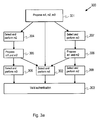
- FIG. 2a shows, as an example, a flowchart of a method 200 for authenticating a user in connection with a security protocol session in accordance with an embodiment of the invention.
- a packet data connection is established between a local node and a remote node.
- the local node typically refers to a security protocol server.
- the establishment of the packet data connection in step 201 is initiated by a client (the remote node).
- an authentication procedure is initiated for authenticating the remote node/user.
- the authentication procedure may provide mutual authentication for the remote and local nodes.
- initial state information is provided for the authentication procedure.
- this initial state information includes a user identifier received from the local node.
- parameters relating to the packet data connection may be provided as initial state information. Some examples of such connection parameters are mentioned below.
- step 204 at least one authentication method combination corresponding to a valid authentication is determined based on the state information.
- the term valid authentication refers to a combination of authentication methods that need to be performed successfully for authenticating a user. It is possible that there is a set of authentication method combinations, each authentication method combination corresponding to a valid authentication when the authentication methods of the combination have been successfully carried out.
- the authentication method combinations may provide different strengths of authentication. Thus, different access levels may be associated with the different authentication method combinations.
- step 205 it is checked that given the state information, there is at least one authentication method combination that can lead to a valid authentication. If valid authentication is not possible, the outcome of the authentication procedure is unsuccessful authentication in step 206. In this case, when the authentication procedure is carried out in connection with establishing a security protocol session, the security protocol session is not established.
- step 207 at least one of the authentication methods leading to a valid authentication is proposed to the user.
- the user may then select with which authentication method to proceed, and in step 208 the user is authenticated using at least one of the proposed authentication methods. It is appreciated that step 207 and/or 208 may be repeated for a number of times at this point.
- step 209 further state information for the authentication is collected during the authentication procedure.
- the user may send to the server in connection with an authentication method information that can be used later on in determining authentication method combinations corresponding to valid authentication.
- step 210 it is checked whether the authentication methods performed so far form an authentication method combination corresponding to a valid authentication. It is appreciated that state information collected in the optional step 209 may cause the authentication method combinations in step 210 to be different from the authentication method combinations in step 204. If further authentications methods are needed to be carried out, the method 200 continues from step 204. Otherwise, the outcome of the authentication procedure is successful authentication with associated state information (step 211). Thereafter the security protocol session may be established in step 212.
- the packet data connection is typically terminated.
- the server may continue the authentication procedure as discussed in connection with Figure 2b below.
- the security protocol may be used for encrypting and/or checking integrity of data transmitted between the remote and local node.
- the flowchart in Figure 2a does not show details of how to handle a situation where the user fails to authenticate itself in step 208.
- the server has two options if the user authentication fails in step 208. The authentication procedure may terminated, and the outcome is unsuccessful authentication. Alternatively, the server may continue the authentication procedure if there is available an authentication method combination which may lead to a valid authentication and to which the unsuccessfully carried out authentication method does not belong. A further option is to allow the client to try and authenticate itself using an authentication method which was executed unsuccessfully earlier on.
- an authentication method refers to a sequence of messages between the nodes, during which sequence the remote node (user) indicates its identity and provides proof that it possesses a piece of information considered not to be known by other users.
- an authentication method may be based on a user identifier and a corresponding password.
- an authentication method may be a challenge-response scheme employing public key cryptography.
- An authentication procedure may contain any number of authentication methods.
- Some examples of the initial state information in step 203 are, a location of the remote node, a time of day of initiating the packet data connection, and/or a weekday of initiating the packet data connection.
- the location of the remote node may be determined based on the nodes network address. For example, nodes located in the local network may be authenticated using different authentication methods and nodes contacting the security protocol server over a public data network. Different user identifiers may require different authentication methods. For example, an administrator (root) may require stronger authentication than other users.
- FIG. 2a shows steps 201 and 211 relating to establishment of a security protocol session
- steps 202-211 are applicable to re-authenticating a user during a security protocol session.
- the policy information defining which authentication methods the authentication procedure should contain under which conditions.
- the authentication policy information may define which authentication method combinations lead to valid authentication in which circumstances.
- authentication policy may define conditions for re-authenticating the user during the security protocol session.
- An authentication policy may be defined using rules, which define that upon a certain condition a certain authentication method is to be used.
- the conditions may relate to the user identifiers, to information relating to the packet data connection associated with the security protocol session, or to information accumulated during the security protocol session.
- the conditions in the authentication policy may relate to information accumulated during previous authentication methods and collected during the authentication procedure.
- Figure 2b shows, as an example, a flowchart of a further method 220 for authenticating a user in connection with a security protocol session in accordance with an embodiment of the invention.
- Figure 2b shows further details on how to deal with a client who fails to authenticate itself more than an allowed number of times.
- the method 220 provides a way to handle brute-force authentication attacks and to collect information on these attacks.
- a packet data connection has been established between a server and a client before step 221.
- the server offers at least one authentication method (typically the plurality of authentication methods that the server supports) to the client.
- the client selects and executes one authentication method from the offered authentication methods. If the authentication attempt in step 222 is successful (step 223), the server checks whether the authentication methods executed so far during this authentication procedure form an authentication method combination corresponding to a valid authentication in step 224. If the authentication is not yet valid, the method 220 continues from step 221. If the authentication is already valid, the server established a security protocol session in step 225.
- step 226 the server checks in step 226 whether the user/client is eligible for a further attempt. Typically the number of authentication attempts is limited, especially the number of authentication attempts using a given authentication method. After step 226, the method 240 continues from step 221 when a further authentication attempt is acceptable. If a further authentication attempt is not acceptable, the server checks in step 227 whether the security policy defines that the packet data connection is to be disconnected in this case. In step 228 the server disconnects the packet data connection, if needed. Alternatively, the server may continue the authentication procedure in step 229 by offering at least one authentication method for the client. The authentication methods offered in step 229 may be the same authentication methods as in step 221. Step 230 is similar to step 222. In step 231 it is checked whether the authentication attempt is step 230 was successful.
- step 229 - either indefinitely or at most for a defined maximum number of times.
- the client is informed in connection with step 229 that the authentication failed (in step 223 or 230).
- steps 229-231 no information about the success of the authentication methods is sent to the client, because such information could be used in further attacks.
- steps 224 and 221 the client is informed that the authentication method executed in step 222 was successful.
- information about a partial success is typically provided to the client in steps 204-210 in Figure 2a).
- steps 229-231 are executed by the server at a deliberately lower pace than steps 221-223. This is because steps 229-231 are carried out to cope with a brute-force attacker, not to authenticate a user. By slowing down the pace of steps 229-231 the server can save its resources for authenticating other users/clients.
- FIG. 2c shows, as an example, a flowchart of a method 240 for authenticating a user in connection with a security protocol session in accordance with an embodiment of the invention.
- the authentication procedure of a security protocol is provided with state information (step 241) and the state information is taken into account when the authentication procedure is carried out in step 242.
- one example of taking the state information into account is to determine a set of authentication method combinations corresponding to a valid authentication in step 204 in Figure 2a.
- a further example is to adjust an individual authentication method based on state information relating to earlier authentication methods carried out during the authentication procedure. For example, as discussed below, the outcome of a password authentication method may be successful for a weak password only within the local network.
- a further example of taking authentication state information into account is to adjust the authentication procedure.
- the relevant state information may be the number of failed authentication attempts.
- the authentication procedure can be adjusted based on the state information by selecting which authentication methods are offered/proposed to a client later on in the authentication procedure ⁇ even in situations where the authentication procedure can no longer lead to a valid authentication (that is, for example, in steps 229-231).
- state information and security policy information can be used to together for providing a flexible authentication procedure supporting a wide range of applications from basic authentication schemes to very detailed authentication schemes which are needed, for example, in finance and banking applications.
- security protocol software provides and stores always the same pieces of state information as initial state information and as state information associated with authentication methods.
- Security policy information which is typically stored in a file, is then used to define how the available state information affects the course of the authentication procedure. This way the security protocol software can support various different applications when the security policy information is modified in an appropriate way.
- the first combination consists of authentication method m1 alone.
- the second combination consists of authentication methods m2 and m3.
- a user may thus authenticate itself validly using either the authentication method m1 or the authentication methods m2 and m3.
- the set of authentication method combinations consists of ⁇ m1 ⁇ and ⁇ m2, m3 ⁇ in this example.
- FIG. 3a shows, as an example, a flowchart of method 300 of proposing authentication methods to the user in the specific example discussed above.
- the server proposes all authentication methods which lead to a valid authentication and which have not yet been carried out.
- the server proposes authentication methods m1, m2 and m3 to the user. If the user selects and performs the authentication method m1 in step 302, this leads to valid authentication (step 303) and there is no need to propose further authentication methods.
- the server proposes authentication methods m1 and m2 in step 305.
- the user may select and perform m1 (step 302) or m3 (step 306).
- the user may originally select and perform the authentication method m3 (step 307), in which case the server proposes authentication methods m2 and m3 in step 308.
- the user may then select m1 (step 302) or m2 (step 309).
- FIG. 3b shows, as a further example, a flowchart of method 310 of proposing authentication methods to the user in the specific example discussed above.
- the authentication method combinations leading to valid authentication are organized as chains, and the server proposes originally only one authentication method from each separate authentication chain.
- the server proposes methods m1 and m2 (or, alternatively, m1 and m3) in step 311.
- the client effectively selects one of the chains by selecting a first authentication method from the list the server provides in step 311. Thereafter the server follows the selected authentication method chain. If the client selected m2 (step 314), the server proposes next m3 in step 315.
- the server may also here propose more than one authentication method to the user. If, for example, the authentication method combinations leading to valid authentication were ⁇ m1 ⁇ , ⁇ m2, m3 ⁇ and ⁇ m2, m4 ⁇ , then the server would propose authentication methods m3 and m4 in step 315.
- the server may, for example, terminate the authentication procedure or, if available, propose an authentication method relating to a further authentication method chain leading to valid authentication.
- the server may also propose to the client again an authentication method using which the client earlier on failed to authenticate itself.
- the server proposes the authentication methods in an order corresponding to the strength of the authentication provided by a certain authentication chain.
- the authentication method proposed first in step 311 may provide the strongest authentication and thus typically also the strongest access credentials. This way, if the user supports more than one proposed authentication method, the user may select the strongest possible authentication method.
- the user may of course be aware of the strength of the authentication methods even without the order information.
- a security protocol server may support authentication methods m1, m2, m3 and m4 and valid combinations may be ⁇ m1 ⁇ , ⁇ m2, m3 ⁇ and ⁇ m2, m4 ⁇ .
- a X.509 smartcard authentication (m1) may be sufficient alone, but authentication for example with a password (m2) is valid only with authentication with a security token.
- the security token may be, for example, a Securld device (m3) or another security token (m4).
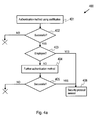
- FIG. 4a shows, as an example, a sequence of authentication methods in an authentication procedure 400 in accordance with an embodiment of the invention.
- the authentication procedure 400 may be used for authenticating users contacting a security protocol server of a company.
- the authentication method combinations leading to valid authentication depend on authentication state information collected during the authentication procedure.
- a certificate indicates whether the user is an employee, and for an employee authentication using certificates is sufficient. For a non-employee, authentication using certificates and a further authentication is needed for valid authentication.
- the user is authenticated using public key cryptography and certificates.
- Certificates contain information about the user, typically at least the user's identifier and his public key (or an identifier of the public key for retrieving the public key from a repository). Certificates are typically digitally signed by a trusted party (typically called a certification authority), in order to safeguard the certificate from modification. Typically, the certificates may be in accordance with the X.509 standard.
- the security protocol server is able to verify information in the certificate and also that the user possesses the private key associated with the public key identifier in his certificate.
- step 403 it is checked in step 403 whether the user is an employee of the company. This information may be present in the certificate used in step 401. If the user is an employee, the authentication policy may allow a security protocol session to be established in step 306 without further authentications. If the user is not an employee, a further authentication method may be carried out in step 404. This further authentication method may be, for example, based on passwords. If the further authentication method is successful (step 405), a security protocol session is established in step 406.
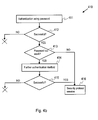
- Figure 4b shows, as an example, a sequence of authentication methods in a further authentication procedure 410 in accordance with an embodiment of the invention.
- the authentication method combinations leading to valid authentication depend on authentication state information collected during the authentication procedure.
- the relevant state information here is the quality of the password.
- the quality of the password may be estimated, for example, by calculating a quality index, which takes into account the length of the password and the password having also other characters than lower-case letters.
- step 411 the user is first authenticated using a password in step 411. If the authentication is successful (step 412), the authentication procedure proceeds to step 413, where the quality of the password is checked. If the password is too weak, for example too short or a word that is easy to guess, a further authentication method is carried out in step 414. In response to the further authentication method being successful (step 415), the security protocol session is established in step 416.
- a further example of state information associated with authentication and collected during the authentication procedure is the following.
- a further authentication server for example, a RADIUS server
- the further authentication server may send information that can be used as state information in determining authentication method combinations that may lead to valid authentication.
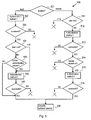
- FIG. 5 shows, as a further example, a sequence of authentication methods in an authentication procedure 500 in accordance with an embodiment of the invention.
- initial state information about the user identifier and about the packet data connection is used together with information accumulated during previous authentication methods in determining authentication method combinations which may lead to valid authentication.
- step 501 the location of the remote node (client contacting the security protocol server) is checked. If the remote node is in the local network, a first authentication method is carried out in step 502. This first authentication method may be, for example, an authentication method based on certificates and public key cryptography.
- a successful authentication it is checked in step 503 whether the user is an administrator (root). An administrator needs to authenticate himself with a second authentication method in step 506, before a security protocol session is established in step 508 in response to a successful authentication (step 507).
- the second authentication method in step 506 may be, for example, based on passwords.
- the authentication procedure is different in the authentication procedure 500.
- step 511 it is checked whether the user is an administrator.
- the authentication procedure is terminated. This means that a user with administrator access rights cannot establish a security protocol session from a remote location, only from the local network.
- the first authentication method is carried out in step 512. If the authentication is successful (step 513), it is checked whether the user is allowed to have remote access in step 514. Information about this may be available based on certificates used in the first authentication method in step 512. If remote access is allowed for the user, the second authentication method is carried out in step 515. In response to a successful authentication (step 516), a security protocol session is established in step 508.
- state information can be taken into account within authentication methods.
- Authentication methods may access the current state information, and the current state information may affect the how an authentication method is performed. For example, the outcome of a password authentication method may be successful for a weak password only within the local network.
- state information may be used to adjust the authentication procedure in more generally than by determining authentication method combinations leading to a valid authentication.
- a database may provide information that a user has tried to authenticate itself unsuccessfully for many times. Normally, the user's account may be closed in this situation.
- the information about unsuccessful authentications may be used as state information in the following ways. First, the authentication procedure in a security protocol session may be adjusted to slow down and thus most probably prevent the user from starting further security protocol session. This way the server can overcome a possible brute-force denial-of service attack. Second, the authentication procedure may be caused to continue indefinitely, either by repeating the same authentication method or a number of authentication methods. This way further information may be collected about the possible attacker.
- TCP remote forward causes TCP requests sent to the TCP port 567 to be sent further to the client.
- port numbers 1-1023 are typically usable only by an administrator (root).
- the sender of the TCP remote forward request should possess, for example, an AllowPrivilegedTcpListen extension in an X.509 certificate for the TCP remote forward request to be executed.
- a further example of a service request is a file transfer. Reading files at the server may be allowed for all authenticated users, but writing files at the server may be allowed only for users authenticated with a SecurID-device.
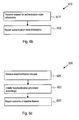
- FIG. 6a shows, as an example, a flowchart of a method 600 for authenticating a user in connection with a service request in accordance with an embodiment of the invention.
- the security protocol server receives a service request.
- the server has information about which piece of authentication state information is needed for processing the requested service. This information can be defined, for example, in a security policy.
- the server checks authentication state information associated with the user sending the service request.
- the reading/writing files above is an example of adjusting a service based on authentication state information.
- step 605 information about the required authentication method(s) may be provided for the reauthentication procedure. It is appreciated that step 605 and 606 may be a single step, where the reauthentication triggering message provides also information about the required authentication method(s).
- step 607 the reauthentication procedure is carried out in accordance with the required authentication method(s). If the reauthentication procedure is successful in step 608), the method 600 proceeds to step 604. Otherwise the service request is typically ignored in step 609.
- the reauthentication procedure based the current state information as defined in steps 204-210, including the state information collection step 209. In this case, at the end of the reauthentication procedure in step 607 it is checked whether the updated authentication state information includes the relevant piece of authentication information for providing the service in step 604.
- a security protocol server may provide an application programming interface towards applications for accessing authentication state information and/or requesting reauthentication of a user.
- Figure 6b shows, as an example, a flowchart of a method 610 for reporting authentication state information to an application in accordance with an embodiment of the invention.
- the security protocol server receives via the application programming interface a request for authentication state information of a user.
- the security protocol server reports authentication state information via the application programming interface to the application requesting the information. It is appreciated that the security protocol server may select, which pieces of authentication state information is reports back to which applications.
- Figure 6c shows, as an example, a flowchart of a method 620 for reauthenticating a user in connection with a security protocol in accordance with an embodiment of the invention.
- the user is reauthentication is triggered by a request received in step 621 via the application programming interface from an application.
- the request typically indicates which authentication method(s) should be carried out.
- the current authentication state information may affect the reauthentication procedure.
- reauthentication procedure is carried out in accordance with the reauthentication request and/or current authentication state information.
- the outcome of the reauthentication procedure and/or (selected pieces of) the updated authentication state information is reported back to the application.
- CBIS Content Based Information Security
- RBAC Role Based Access Control
- CBIS and/or RBAC can be supported, as the authentication state information collected during an authentication procedure or a reauthentication procedure may be used in making decisions in CBIS or RBAC.
- CBIS and/or RBAC can be supported by handling the service request in accordance with authentication state information and, if necessary, reauthenticating a sender of a service request.
- CBIS and/or RBAC can be supported by responding to authentication state information requests sent by applications and/or by triggering reauthentication of a user in response to a request received from an application for updating authentication state information.
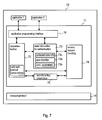
- FIG. 7 shows a block diagram of a security protocol server 70 in accordance with an embodiment of the invention.
- the security protocol server 70 includes a transfer protocol entity 14, which may be similar to the known transfer protocol entities.
- the security protocol entity 71 in accordance with an embodiment of the invention maintains authentication state information 73 for users.
- the authentication state information 73 typically includes user identifiers 73a. For each user identifier, the authentication state information may contain connection parameters 73b. Furthermore, further authentication state information 73c may be collected during the (re)authentication procedure.
- the (re)authentication procedure 72 in accordance with an embodiment of the invention is configured to take into account authentication state information. One way of taking the authentication state information account is to determine authentication method combinations corresponding to valid authentication based on authentication state information.
- a security protocol entity 71 may include also a service request handling functionality 74, which may access the authentication state information and, if needed, trigger reauthentication. Furthermore, the security protocol entity may provide an application programming interface 76 for various applications. Applications may access the authentication state information 73 and/or trigger reauthentication 72 via the application programming interface 76.
- the security protocol entity 71 also typically has authentication policy information 75.
- the authentication policy information 75 typically defines at least which authentication method combinations correspond to valid authentication in various situations.
- the authentication policy information 75 may be a set of rules.
- an authentication method based on a password might store a quality indication of the password.
- a certificate may be stored in its entirety, or specific fields of the certificate (such as subject-name, issuer-name and extensions) may be stored.
- Information 73b relating to the packet data connection serving the security protocol session may also be stored and accessed.
- the network address of the client node and the transfer protocol access point (for example, TCP port number) may typically be stored for use by the authentication procedure.
- the Secure Shell is a security protocol that can be used to securely transmit data.
- Some specific examples of the use of Secure Shell are secure file transfers and tunneling arbitrary TCP connections over a single encrypted Secure Shell session. It is possible to transmit information relating to many data channels over one Secure Shell protocol session.
- the data channels may relate to connections between various applications run in the endpoints of the Secure Shell protocol session. New data channels may be opened and existing data channels may be closed during the course of the Secure Shell protocol session.
- a TCP connection is first set up between the endpoints for initial key exchange. The endpoints authenticate each other after the initial key exchange, and thereafter any data packet transfer between the endpoints may be encrypted using a session key.
- the Secure Shell protocol has no explicit mechanism for protocol extensions.
- an extension mechanism should be backward compatible. For example, if one of the nodes tries to use an extension mechanism, there should be no error situation if the other node does not support the protocol extension mechanism.
- the protocol connection should continue even if one node proposes a protocol extension the other node does not support.
- a protocol extension mechanism should provide a possibility to change basic functionalities of the protocol, for example, packet format. It should also be possible to request various protocol extensions one by one and then start using those protocol extensions supported by both nodes at a same time.
- the protocol extension mechanism for the Secure Shell protocol is to use the key exchange mechanism, which can be initiated at any time during the Secure Shell session ⁇ except when there is already a key exchange going on.
- the protocol extension mechanism is implemented as a new key exchange algorithm.
- This new key exchange algorithm does not in fact generate new entropy for shared secrets, but transforms old secrets into new form.
- the new key exchange algorithm generates new session keys based on information exchanged earlier (for example, based on previous session keys), typically using part of the nonce information provided in the key exchange. After the new key exchange has been carried out, the new session keys will be taken into use together with those protocol extensions that were agreed upon.
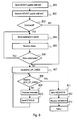
- protocol extension mechanism for the Secure Shell protocol is discussed in more detail in connection with Figure 8.
- the new key exchange algorithm (protocol extension mechanism) is indicated in the following by ext1 by way of an example.
- step 801 the client initiates the protocol extension mechanism by initiating a key exchange message sequence.
- the key exchange message sequence is initiated by sending a KEXINIT packet with ext1 as the first proposed key exchange method.
- step 802 the server responds with a KEXINIT packet that has ext1 in its supported key exchange algorithms. As the client proposed ext1 and the server acknowledged support for ext1, ext1 is selected as the key exchange algorithm.
- step 807 the client sends a COMMAND packet that performs some action in the server side.
- the specific structure of the command packet is defined, for example, in the IEFT documentation relating to the Secure Shell protocol. The command actually does not take effect before entire key exchange is over and NEWKEYS packets are exchanged.
- step 805 the server replies with a STATUS packet that contains information whether the command was successful or not.
- the STATUS packet contains also a possible reason for failure (for example, command not supported by the server) and can also include some command specific data.
- step 806 it is checked whether the client still has one or more commands to send. If yes, the method returns to step 804. Otherwise, the client sends an END_OF_CMDS packet in step 807.
- the client receives an END_OF_CMDS packet in step 808 and the method proceeds to step 811.
- the server may send a COMMAND packet that performs some action in the client side.
- the command is shown to be executed in step 809. It is, however appreciated that the command actually does not take effect before entire key exchange is over and NEWKEYS packets are exchanged.
- the client replies to a COMMAND packet with a STATUS packet in step 810.
- the STATUS packet contains information whether the command was successful or not. Furthermore, the STATUS packet contains a possible reason for failure and can also include some command specific data.
- step 808 the method returns to step 808.
- the server sends the END_OF_CMDS packet the method continues in step 811.
- steps 811 and 812 both the server and the client send NEWKEYS packets.
- steps 811 and 812 both the server and the client send NEWKEYS packets.
- steps 811 and 812 all changes made by (successful) commands during the key exchange take effect in step 813.
- New shared secret and key exchange hash is derived from the old secret and key exchange nonce (information contained in the key exchange initialization KEXINIT packets).
- New algorithms and compression settings are taken into use according to algorithm lists in KEXINIT packets.
- the key exchange negotiation is identical in the case where the server initiates the exchange. Roles are unchanged; the client always sends its commands first.
- the shortest possible ext1 exchange is as follows. Both sides send KEXINIT packets. The client sends END_OF_CMDS packet. The server sends END_OF_CMDS packet. Both sides send NEWKEYS packet.
- clients and servers supporting ext1 may implement the following logic. If the client is initiating a normal key exchange (initial or rekey), it adds ext1 as the last of its supported key exchange mechanisms. On the other hand, if the client is initiating an ext1 key exchange, it adds ext1 as the first of its supported key exchange mechanisms. Similarly, if the server is initiating a normal key exchange (initial or rekey), it adds ext1 as the last of its supported key exchange mechanisms. If the server is initiating an ext1 key exchange, it adds ext1 as the first of its supported key exchange mechanisms.
- the client receives a KEXINIT message with ext1 as the first supported key exchange message it should reply with a KEXINIT message with ext1 as the first supported key exchange mechanism. If the client receives a KEXINIT message with ext1 as the first supported key exchange mechanism but has already sent its own KEXINIT where ext1 is not the first on the supported algorithms list, the key exchange is selected according to the normal algorithm selection logic and when the selected key exchange algorithm is completed, the server can try to initiate ext1 exchange again.
- the server When reauthenticating a user in the Secure Shell protocol, the server typically initiates the reauthentication protocol and the SSH Authentication Protocol is run in steps 804 - 806. In step 804, the server sends a COMMAND("userauthstart") packet. If the client does not support the SSH Authentication Protocol, it responds in step 805 with a STATUS(unsupported) packet. Thereafter the protocol extension procedure is properly terminated via steps 807 to 813. As the reauthentication was not successful, the Secure Shell session may or may not continue depending on the circumstances. If the reauthentication was done for handling a service request, for example, the service request is typically ignored but the Secure Shell session continues.
- the user If the user supports the SSH Authentication Protocol, it sends a STATUS(OK) packet including a SSH_MSG_USERAUTH_REQUEST packet.
- the first SSH_MSG_USERAUTH_REQUEST packet indicates "none" as supported authentication methods, thus triggering the server to send a list of authentication methods the server expects the client to use. Thereafter the server and client continue in accordance with the SSH Authentication protocol, by sending the packets in the COMMAND and STATUS packets in step 804 and 805.
- the server decides whether the reauthentication was successful.
- the server may store authentication state information.
- the client If the client wished to initiate reauthentication, the client starts the protocol extension procedure. When it is the clients turn to send commands, it will send a COMMAND("userauth-trigger") packet. The server will respond with a STATUS(OK) if it accepts the reauthentication request. Otherwise the server will respond with a STATUS(FAILURE) packet. When it is the server's turn to send commands, it will send a COMMAND("userauth_start”) whereafter the reauthentication within the protocol extension procedure proceeds as discussed above.
- node refers to any device capable of setting up data transfer connections and transmitting data using the transfer connection.
- client and server refer to the client/server roles of nodes.
- embodiments of the invention may be implemented using software running on a general purpose computing device, using dedicated hardware, or using a suitable combination of software and dedicated hardware. It is appreciated that a computer program in accordance with an embodiment of the invention may be embodied on a record medium, stored in a computer memory or carried on an electrical carrier signal. A computer program product in accordance with an embodiment of the invention may be embodied on a computer readable record medium.
- a system in accordance with an embodiment of the invention is typically a data processing system, which may include a number of computing devices.
- the system may be, for example, a server cluster supporting communications using a security protocol.
- a device in accordance with an embodiment of the invention is typically a computer or other computing device, for example, a server supporting communications using a security protocol.
- a security protocol entity in accordance with the present invention may be provided also with a transport distribution capacity. This means that there may be a plurality of packet data subconnections (for example, TCP sessions) associated with a single security protocol session (for example, a Secure Shell session) between the local and remote nodes.
- packet data subconnections for example, TCP sessions
- security protocol session for example, a Secure Shell session
Landscapes
- Engineering & Computer Science (AREA)
- Computer Security & Cryptography (AREA)
- Computer Hardware Design (AREA)
- Computing Systems (AREA)
- General Engineering & Computer Science (AREA)
- Computer Networks & Wireless Communication (AREA)
- Signal Processing (AREA)
- Data Exchanges In Wide-Area Networks (AREA)
- Computer And Data Communications (AREA)
Applications Claiming Priority (1)
| Application Number | Priority Date | Filing Date | Title |
|---|---|---|---|
| FI20050770A FI20050770A7 (fi) | 2005-07-19 | 2005-07-19 | Todentaminen turvakäytännön yhteydessä |
Publications (2)
| Publication Number | Publication Date |
|---|---|
| EP1746802A2 true EP1746802A2 (de) | 2007-01-24 |
| EP1746802A3 EP1746802A3 (de) | 2007-07-11 |
Family
ID=34803225
Family Applications (1)
| Application Number | Title | Priority Date | Filing Date |
|---|---|---|---|
| EP06253644A Withdrawn EP1746802A3 (de) | 2005-07-19 | 2006-07-12 | Benutzerauthentifizierung in Verbindung mit einem Sicherheitsprotokoll |
Country Status (3)
| Country | Link |
|---|---|
| US (1) | US20070033643A1 (de) |
| EP (1) | EP1746802A3 (de) |
| FI (1) | FI20050770A7 (de) |
Cited By (3)
| Publication number | Priority date | Publication date | Assignee | Title |
|---|---|---|---|---|
| EP2200358A3 (de) * | 2008-12-04 | 2010-11-03 | Huawei Device Co., Ltd. | Verfahren, Vorrichtung und System zur Aushandlung des Authentifizierungsmodus |
| EP2667337A3 (de) * | 2012-05-22 | 2014-03-12 | Hasso-Plattner-Institut für Softwaresystemtechnik GmbH | Transparente Zugriffssteuerung mit Aufruf von Echtzeitanalyse der Abfragehistorie |
| US20210409403A1 (en) * | 2020-06-25 | 2021-12-30 | Microsoft Technology Licensing, Llc | Service to service ssh with authentication and ssh session reauthentication |
Families Citing this family (21)
| Publication number | Priority date | Publication date | Assignee | Title |
|---|---|---|---|---|
| US7716721B2 (en) * | 2005-10-18 | 2010-05-11 | Cisco Technology, Inc. | Method and apparatus for re-authentication of a computing device using cached state |
| GB0621189D0 (en) * | 2006-10-25 | 2006-12-06 | Payfont Ltd | Secure authentication and payment system |
| US20080115192A1 (en) * | 2006-11-07 | 2008-05-15 | Rajandra Laxman Kulkarni | Customizable authentication for service provisioning |
| US7702787B1 (en) * | 2006-12-12 | 2010-04-20 | Emc Corporation | Configurable user management |
| US8533789B1 (en) | 2006-12-12 | 2013-09-10 | Emc Corporation | User management for repository manager |
| US8726347B2 (en) * | 2007-04-27 | 2014-05-13 | International Business Machines Corporation | Authentication based on previous authentications |
| KR101158007B1 (ko) * | 2007-08-17 | 2012-06-25 | 삼성전자주식회사 | 사용자 인증 방법 및 장치 |
| US8391495B2 (en) * | 2008-05-08 | 2013-03-05 | International Business Machines Corporation | Secure shell used to open a user's encrypted file system keystore |
| US9379895B2 (en) * | 2008-07-24 | 2016-06-28 | Zscaler, Inc. | HTTP authentication and authorization management |
| US8316436B2 (en) * | 2009-03-27 | 2012-11-20 | Sony Corporation | User-defined multiple input mode authentication |
| KR101642756B1 (ko) * | 2009-12-24 | 2016-07-26 | 삼성전자주식회사 | 화상형성장치 및 보안정책 설정 방법 |
| US8918856B2 (en) | 2010-06-24 | 2014-12-23 | Microsoft Corporation | Trusted intermediary for network layer claims-enabled access control |
| US8528069B2 (en) | 2010-09-30 | 2013-09-03 | Microsoft Corporation | Trustworthy device claims for enterprise applications |
| US9600679B2 (en) * | 2011-04-29 | 2017-03-21 | Micro Focus Software Inc. | Techniques for resource operation based on usage, sharing, and recommendations with modular authentication |
| US10469533B2 (en) | 2012-01-24 | 2019-11-05 | Ssh Communications Security Oyj | Controlling and auditing SFTP file transfers |
| US10114939B1 (en) * | 2014-09-22 | 2018-10-30 | Symantec Corporation | Systems and methods for secure communications between devices |
| US9538376B2 (en) * | 2014-12-23 | 2017-01-03 | Ssh Communications Security Oyj | Authenticating data communications |
| US9887975B1 (en) | 2016-08-03 | 2018-02-06 | KryptCo, Inc. | Systems and methods for delegated cryptography |
| US10979430B1 (en) * | 2017-05-17 | 2021-04-13 | Adnazon Technologies, Inc. | Service-initiated user authentication via delegated methods |
| US10728240B2 (en) | 2017-10-19 | 2020-07-28 | Global Tel*Link Corporation | Variable-step authentication for communications in controlled environment |
| US11822637B2 (en) * | 2018-10-18 | 2023-11-21 | Oracle International Corporation | Adaptive authentication in spreadsheet interface integrated with web service |
Citations (2)
| Publication number | Priority date | Publication date | Assignee | Title |
|---|---|---|---|---|
| US20020005178A1 (en) * | 2000-07-10 | 2002-01-17 | Toyota Jidosha Kabushiki Kaisha | Internal combustion engine with heat accumulating device |
| EP1414212A1 (de) | 2002-10-22 | 2004-04-28 | Telefonaktiebolaget L M Ericsson (Publ) | Verfahren und System zur Authentifizierung von Benutzern in einem Telekommunikationssystem |
Family Cites Families (6)
| Publication number | Priority date | Publication date | Assignee | Title |
|---|---|---|---|---|
| US6928547B2 (en) * | 1998-07-06 | 2005-08-09 | Saflink Corporation | System and method for authenticating users in a computer network |
| US6851113B2 (en) * | 2001-06-29 | 2005-02-01 | International Business Machines Corporation | Secure shell protocol access control |
| US7389412B2 (en) * | 2001-08-10 | 2008-06-17 | Interactive Technology Limited Of Hk | System and method for secure network roaming |
| US20030115142A1 (en) * | 2001-12-12 | 2003-06-19 | Intel Corporation | Identity authentication portfolio system |
| US8171298B2 (en) * | 2002-10-30 | 2012-05-01 | International Business Machines Corporation | Methods and apparatus for dynamic user authentication using customizable context-dependent interaction across multiple verification objects |
| US8533473B2 (en) * | 2005-03-04 | 2013-09-10 | Oracle America, Inc. | Method and apparatus for reducing bandwidth usage in secure transactions |
-
2005
- 2005-07-19 FI FI20050770A patent/FI20050770A7/fi not_active Application Discontinuation
-
2006
- 2006-07-12 EP EP06253644A patent/EP1746802A3/de not_active Withdrawn
- 2006-07-18 US US11/488,195 patent/US20070033643A1/en not_active Abandoned
Patent Citations (2)
| Publication number | Priority date | Publication date | Assignee | Title |
|---|---|---|---|---|
| US20020005178A1 (en) * | 2000-07-10 | 2002-01-17 | Toyota Jidosha Kabushiki Kaisha | Internal combustion engine with heat accumulating device |
| EP1414212A1 (de) | 2002-10-22 | 2004-04-28 | Telefonaktiebolaget L M Ericsson (Publ) | Verfahren und System zur Authentifizierung von Benutzern in einem Telekommunikationssystem |
Non-Patent Citations (2)
| Title |
|---|
| T. Y: "SSH Authentication Protocol", INTERNET DRAFT, 14 March 2005 (2005-03-14) |
| T. Y: "SSH Protocol Architecture", INTERNET DRAFT, 14 March 2005 (2005-03-14) |
Cited By (4)
| Publication number | Priority date | Publication date | Assignee | Title |
|---|---|---|---|---|
| EP2200358A3 (de) * | 2008-12-04 | 2010-11-03 | Huawei Device Co., Ltd. | Verfahren, Vorrichtung und System zur Aushandlung des Authentifizierungsmodus |
| EP2667337A3 (de) * | 2012-05-22 | 2014-03-12 | Hasso-Plattner-Institut für Softwaresystemtechnik GmbH | Transparente Zugriffssteuerung mit Aufruf von Echtzeitanalyse der Abfragehistorie |
| US20210409403A1 (en) * | 2020-06-25 | 2021-12-30 | Microsoft Technology Licensing, Llc | Service to service ssh with authentication and ssh session reauthentication |
| WO2021262284A1 (en) * | 2020-06-25 | 2021-12-30 | Microsoft Technology Licensing, Llc | Service to service ssh with authentication and ssh session reauthentication |
Also Published As
| Publication number | Publication date |
|---|---|
| EP1746802A3 (de) | 2007-07-11 |
| FI20050770L (fi) | 2007-01-20 |
| FI20050770A0 (fi) | 2005-07-19 |
| FI20050770A7 (fi) | 2007-01-20 |
| US20070033643A1 (en) | 2007-02-08 |
Similar Documents
| Publication | Publication Date | Title |
|---|---|---|
| EP1746802A2 (de) | Benutzerauthentifizierung in Verbindung mit einem Sicherheitsprotokoll | |
| Bhargavan et al. | Triple handshakes and cookie cutters: Breaking and fixing authentication over TLS | |
| CN100591003C (zh) | 实现基于无状态服务器的预共享私密 | |
| JP4847322B2 (ja) | 二重要素認証されたキー交換方法及びこれを利用した認証方法とその方法を含むプログラムが貯蔵された記録媒体 | |
| Li et al. | Group-based authentication and key agreement with dynamic policy updating for MTC in LTE-A networks | |
| JP5651313B2 (ja) | 連続する再認証を必要としないsipシグナリング | |
| CN103155512B (zh) | 用于对服务提供安全访问的系统和方法 | |
| EP1698141B1 (de) | System und Verfahren zur Provisionierung und Authentifizierung über ein Netzwerk | |
| EP1692808B1 (de) | Geschützte dynamische bereitstellung von berechtigungsnachweisen | |
| US20140298037A1 (en) | Method, apparatus, and system for securely transmitting data | |
| EP2056546A1 (de) | Proxy-Authentifizierungsserver | |
| Cam-Winget et al. | The flexible authentication via secure tunneling extensible authentication protocol method (EAP-FAST) | |
| US10158608B2 (en) | Key establishment for constrained resource devices | |
| US8498617B2 (en) | Method for enrolling a user terminal in a wireless local area network | |
| CN116848822A (zh) | 用于提供针对通信的安全水平的方法和设备 | |
| CN120675819B (zh) | 一种基于quic协议的分布式节点统一身份认证方法及系统 | |
| KR20090042867A (ko) | 듀얼 스택 동작의 인가를 인터워킹하기 위한 방법 및 장치 | |
| CN103986716B (zh) | Ssl连接的建立方法以及基于ssl连接的通信方法及装置 | |
| KR101451163B1 (ko) | 무선 네트워크 접속 인증 방법 및 그 시스템 | |
| EP3340530B1 (de) | Verfahren auf basis von transportschichtsicherheit (tls) zur erzeugung und verwendung einer eindeutigen persistenten knotenidentität und zugehöriger client und server | |
| CN115314278B (zh) | 可信网络连接身份认证方法、电子设备及存储介质 | |
| US12621300B2 (en) | Digest access authentication for a client device | |
| Singh et al. | Survey and analysis of Modern Authentication system | |
| KR102345093B1 (ko) | 무선 인터넷의 보안 세션 제어 시스템 및 보안 세션 제어 방법 | |
| KR20080056055A (ko) | 통신 사업자간 로밍 인증방법 및 키 설정 방법과 그 방법을포함하는 프로그램이 저장된 기록매체 |
Legal Events
| Date | Code | Title | Description |
|---|---|---|---|
| PUAI | Public reference made under article 153(3) epc to a published international application that has entered the european phase |
Free format text: ORIGINAL CODE: 0009012 |
|
| AK | Designated contracting states |
Kind code of ref document: A2 Designated state(s): AT BE BG CH CY CZ DE DK EE ES FI FR GB GR HU IE IS IT LI LT LU LV MC NL PL PT RO SE SI SK TR |
|
| AX | Request for extension of the european patent |
Extension state: AL BA HR MK YU |
|
| PUAL | Search report despatched |
Free format text: ORIGINAL CODE: 0009013 |
|
| AK | Designated contracting states |
Kind code of ref document: A3 Designated state(s): AT BE BG CH CY CZ DE DK EE ES FI FR GB GR HU IE IS IT LI LT LU LV MC NL PL PT RO SE SI SK TR |
|
| AX | Request for extension of the european patent |
Extension state: AL BA HR MK YU |
|
| 17P | Request for examination filed |
Effective date: 20070905 |
|
| 17Q | First examination report despatched |
Effective date: 20071016 |
|
| AKX | Designation fees paid |
Designated state(s): AT BE BG CH CY CZ DE DK EE ES FI FR GB GR HU IE IS IT LI LT LU LV MC NL PL PT RO SE SI SK TR |
|
| STAA | Information on the status of an ep patent application or granted ep patent |
Free format text: STATUS: THE APPLICATION IS DEEMED TO BE WITHDRAWN |
|
| 18D | Application deemed to be withdrawn |
Effective date: 20100420 |