EP1748302A2 - Système et méthode de reconnaissance de position par utilisation de signaux stéréophoniques, emetteur et recepteur associés - Google Patents
Système et méthode de reconnaissance de position par utilisation de signaux stéréophoniques, emetteur et recepteur associés Download PDFInfo
- Publication number
- EP1748302A2 EP1748302A2 EP06012535A EP06012535A EP1748302A2 EP 1748302 A2 EP1748302 A2 EP 1748302A2 EP 06012535 A EP06012535 A EP 06012535A EP 06012535 A EP06012535 A EP 06012535A EP 1748302 A2 EP1748302 A2 EP 1748302A2
- Authority
- EP
- European Patent Office
- Prior art keywords
- location
- receiver
- sound
- transmitter
- tracking information
- Prior art date
- Legal status (The legal status is an assumption and is not a legal conclusion. Google has not performed a legal analysis and makes no representation as to the accuracy of the status listed.)
- Withdrawn
Links
Images


Classifications
-
- G—PHYSICS
- G01—MEASURING; TESTING
- G01S—RADIO DIRECTION-FINDING; RADIO NAVIGATION; DETERMINING DISTANCE OR VELOCITY BY USE OF RADIO WAVES; LOCATING OR PRESENCE-DETECTING BY USE OF THE REFLECTION OR RERADIATION OF RADIO WAVES; ANALOGOUS ARRANGEMENTS USING OTHER WAVES
- G01S5/00—Position-fixing by co-ordinating two or more direction or position line determinations; Position-fixing by co-ordinating two or more distance determinations
- G01S5/0009—Transmission of position information to remote stations
- G01S5/0072—Transmission between mobile stations, e.g. anti-collision systems
-
- G—PHYSICS
- G01—MEASURING; TESTING
- G01S—RADIO DIRECTION-FINDING; RADIO NAVIGATION; DETERMINING DISTANCE OR VELOCITY BY USE OF RADIO WAVES; LOCATING OR PRESENCE-DETECTING BY USE OF THE REFLECTION OR RERADIATION OF RADIO WAVES; ANALOGOUS ARRANGEMENTS USING OTHER WAVES
- G01S5/00—Position-fixing by co-ordinating two or more direction or position line determinations; Position-fixing by co-ordinating two or more distance determinations
- G01S5/18—Position-fixing by co-ordinating two or more direction or position line determinations; Position-fixing by co-ordinating two or more distance determinations using ultrasonic, sonic or infrasonic waves
Definitions
- Methods, apparatuses and systems consistent with the present invention relate to location recognition using a stereophonic sound, transmission and reception. More particularly, the present invention relates to a location recognition system using stereophonic sound and including a transmitter which transmits location tracking information of an object and a receiver which receives the location tracking information, and a method thereof.
- General location recognition methods include a method which uses a current location or a movement direction of a user provided from a satellite via a radio wave, or a method which detects the user's location by measuring and computing the movement distance or direction.
- Such methods determine specific geographical information around the current location using a compact disk read only memory (CD-ROM) which stores whole geographical information, marks the current location and displays a map image on a display screen so that a location corresponding to the detected current location is indicated on the map.
- CD-ROM compact disk read only memory
- the user determines his or her path based on the actual circumstances in reference to the display screen and marks the path to a destination so that the user can be guided to the destination.
- Recent navigation systems can not only display crossroads and the like on the display screen but also make a sound so that the user can perceive the circumstances. Thus, the user can determine his or her path without having to looking at the display screen all the time. Such a scheme can be applied to help sight-impaired people to walk around.
- the object tracking scheme is applicable to various situations as well as to guide sight-impaired people.
- the object tracking scheme is useful when a user wants to know the accurate location of a person for mutual communication or a target object in a crowded area.
- the scheme to display the location of the object on the screen may cause inconvenience to the user because the user has to look at the screen carefully.
- the scheme which makes a sound to inform the location information of the object can mitigate the burden from the user, but cannot induce the user to immediately select the next path because it takes time for the user to hear the sound relating to the location information and to estimate the perceived location information.
- An aspect of the present invention provides a location recognition system using stereophonic sound for smooth communication between a transmitter which transmits location tracking information of an object and a receiver which receives the location tracking information so that a user can immediately recognize a location of the transmitter. Also provided are the transmitter and the receiver in the location recognition system, and a location recognition method.
- a transmitter in a location recognition system which uses a stereophonic sound and includes the transmitter transmitting location tracking information of an object and a receiver receiving the location tracking information, includes a sound detector which detects a sound of the object and converts the detected sound to an electrical signal; a data converter which converts the electrical signal converted by the sound detector, to acoustic data; and a first communication interface which transmits the acoustic data converted by the data converter and the location tracking information to the receiver.
- the transmitter may be attached to the object or placed in the vicinity of the object.
- the transmitter may further include a first location tracker which detects a location of the transmitter and generates the location tracking information of the transmitter.
- the sound detector may detect a sound generated by the object and convert the detected sound to an electrical signal.
- the sound detector may create a sound indicating the object and convert the created sound to an electrical signal.
- the sound detector may be a microphone.
- a receiver in a location recognition system which uses stereophonic sound and includes a transmitter transmitting location tracking information of an object and the receiver receiving the location tracking information, includes a location and state tracker which generates location information of the receiver by detecting a location of the receiver; a relative location calculator which computes a relative location and state value of the receiver with respect to the transmitter based on the location information generated by the location and state tracker; a stereophonic sound converter which converts acoustic data to stereophonic sound digital data to inform the location of the transmitter based on the relative location and state value computed by the relative location calculator; an analog converter which converts the stereophonic sound digital data converted by the stereophonic sound converter, to an analog signal; and a sound output section which outputs the analog signal converted by the analog converter as a sound.
- the receiver may be attached to a user or placed in the vicinity of the user.
- the location and state tracker may include a second location tracker which generates location information of the receiver by detecting a location of the receiver; and a state tracker which generates angle information of the receiver with respect to the transmitter.
- the relative location calculator may include a first calculator which computes a relative location value of the receiver with respect to the transmitter based on the location tracking information relating to the transmitter generated by a first location tracker and the location information relating to the receiver generated by the second location tracker; and a second calculator which corrects the relative location value computed by the first calculator based on the relative location value computed by the first calculator and the angle information generated by the state tracker.
- the first calculator may compute coordinates (x, y, z) which is the relative location value of the receiver, in a three-dimensional coordinate system having an origin (0, 0, 0) as the transmitter.
- the second calculator may correct the relative location value when the transmitter and the receiver face each other and an angle between the transmitter and the receiver changes.
- the stereophonic sound converter may convert the acoustic data received from a first communication interface by applying the relative location and state value.
- the stereophonic sound digital data converted by the stereophonic sound converter may be surround stereophonic sound digital data.
- the receiver may further include a second communication interface which receives the acoustic data and the location tracking information from the first communication interface.
- the receiver may further include a selector which selects whether to convert the received acoustic data to the stereophonic sound digital data.
- a location recognition system using stereophonic sound includes a transmitter which transmits location tracking information of an object; and a receiver which receives the location tracking information.
- the transmitter includes a sound detector which detects a sound of the object and converts the detected sound to an electrical signal; a data converter which converts the electrical signal converted by the sound detector, to acoustic data; and a first communication interface which transmits the acoustic data converted by the data converter and the location tracking information to the receiver.
- the receiver may include a location and state tracker which generates location information of the receiver by detecting a location of the receiver; a relative location calculator which computes a relative location and state value of the receiver with respect to the transmitter based on the location information generated by the location and state tracker; a stereophonic sound converter which converts the acoustic data to stereophonic sound digital data to inform the location of the transmitter based on the relative location and state value computed by the relative location calculator; an analog converter which converts the stereophonic sound digital data converted by the stereophonic sound converter, to an analog signal; and a sound output section which outputs the analog signal converted by the analog converter as a sound.
- a location recognition method using stereophonic sound includes transmitting location tracking information of an object; and receiving the location tracking information.
- the transmitting of the location tracking information includes detecting a sound of the object and converting the detected sound to an electrical signal; converting the converted electrical signal to acoustic data; and transmitting the converted acoustic data and the location tracking information.
- the transmitting of the location tracking information may further include generating the location tracking information by detecting a location of the object.
- the receiving of the location tracking information may include receiving the acoustic data and the location tracking information of the object; separating into data relating to the sound and data relating to the location information; computing a relative location value of a receiver with respect to the object based on the location tracking information of the object and information of the receiver which receives the location tracking information; correcting the relative location value based on the relative location value and angle information of the receiver; converting the acoustic data to stereophonic sound digital data based on the corrected relative location value; converting the converted stereophonic sound digital data to an analog signal; and outputting the converted analog signal as a sound.
- the receiving of the location tracking information may further include selecting a function which converts the received acoustic data to the stereophonic sound digital data.
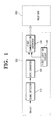
- FIG. 1 is a block diagram of a transmitter of a location recognition system using stereophonic sound according to a non-limiting embodiment of the present invention
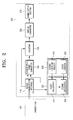
- FIG. 2 is a block diagram of a receiver of the location recognition system using the stereophonic sound according to a non-limiting embodiment of the present invention
- FIG. 3 is a flowchart outlining a transmission operation of a location recognition method using the stereophonic sound according to a non-limiting embodiment of the present invention.
- FIG. 4 is a flowchart outlining a reception operation of a location recognition method using the stereophonic sound according to a non-limiting embodiment of the present invention.
- FIG. 1 is a block diagram of a transmitter of a location recognition system using stereophonic sound according to a non-limiting embodiment of the present invention.
- the location recognition system includes a transmitter 100 and a receiver 200.
- the transmitter 100 includes a sound detector 110, a data converter 120, a first communication interface 130, and a first location tracker 140.
- the transmitter 100 is attached to an object which is the target of the location tracking, or is placed in the vicinity of the object.
- the transmitter 100 is responsible to transmit a sound reproduced by the object toward the receiver 200.
- Examples of the transmitter 100 include portable terminal devices having a microphone therein.
- the sound detector 110 detects the sound of the object and converts the detected sound into an electrical signal.
- a microphone may be applied to the sound detector 110.
- the microphone converts a sound wave or an ultrasonic wave into an electrical signal according to its vibrations.
- the microphone has an element therein which vibrates by the sound wave and converts the mechanical vibration to the electrical signal within a casing formed suitable to receive the sound wave.
- the microphone may have an integrated circuit (IC) amplifier which is miniaturized, and a battery for supplying power to the IC amplifier.
- IC integrated circuit
- the sound detector 110 detects the sound reproduced by the object and converts the detected sound to the electrical signal.
- the sound reproduced by the object denotes a unique sound when the object is a living being who can reproduce a sound.
- users can perform smooth communication with one another in a crowded or congested area.
- the stereophonic sound can be effectively utilized in military applications to acquire the location of the friendly force on the battlefield.
- the sound detector 110 may create a certain sound indicating the object and convert the created sound to the electrical signal.
- the sound indicating the object may be a certain acoustic sound representing the object.
- a sound can be a voice stating, 'Exit is this way,' when it is hard to find an exit in the congested area.
- the sound is generated and output as a stereophonic sound, it is possible to help the user to easily find its path in a crowded area such as airports.
- the data converter 120 converts the electrical signal which is output from the sound detector 110, to acoustic data.
- the electrical signal is converted to the acoustic data by use of various data stored in a memory (not shown).
- the first communication interface 130 is responsible to interface with the receiver 200.
- the first communication interface 130 transmits the acoustic data converted by the data converter 120, and location tracking information generated by the first location tracker 140, to the receiver 200 (to be explained later).
- the first location tracker 140 detects a location of the transmitter 100 and generates the location tracking information of the object. To detect the location of the transmitter 100, the first location tracker 140 requires certain means to detect the location of the object. For example, the location of the transmitter 100 can be detected using a location sensor which receives, from global positioning system (GPS) satellites, the location tracking information of the transmitter 100.
- GPS global positioning system
- the GPS is a location identification system using satellite communications.
- the GPS consists of four or five satellites in each of six orbital planes which are inclined at about 55 degrees with respect to the equatorial plane.
- the GPS allows communications with more than four satellites anywhere on the earth.
- the GPS receives signals containing specific codes from the GPS satellites and computes its current position (longitude, latitude and altitude) and time at a certain time point. Moreover, when moving around, the GPS can measure its speed.
- the GPS which was originally developed for military purposes, is applied to diverse applications such as simple location information service, auto navigation and traffic control of airplanes, ships and automobiles, collision prevent of oil tankers, and so on. Additionally, the GPS is actively utilized in fields such as emergency services, traffic information, distribution, delivery and so on.
- the transmitter 100 may be a mobile device of wide range which can be equipped with location tracking means such as GPS, including digital cameras, video cameras, cellular phones, personal communication services (PCSs), personal digital assistants (PDAs) and the like.
- location tracking means such as GPS, including digital cameras, video cameras, cellular phones, personal communication services (PCSs), personal digital assistants (PDAs) and the like.
- the first communication interface 130 converts the location tracking information of the transmitter 110, which is generated by the first location tracker 140, to data in the form of a file and transmits the data to the receiver 200.
- FIG. 2 is a block diagram of a receiver of the location recognition system using the stereophonic sound according to a non-limiting embodiment of the present invention.
- the location recognition system includes the transmitter 100 and the receiver 200.
- the receiver 200 includes a second communication interface 210, a location and state tracker 220, a relative location calculator 230, a stereophonic sound converter 240, a selector 250, an analog converter 260, and a sound output section 270.
- the receiver 200 is attached to the user or placed in the vicinity of the user to receive the location tracking information and the acoustic data relating to the object from the transmitter 100.
- the receiver 200 may be a headset which can output a surround stereophonic sound.
- the second communication interface 210 is responsible to interface with the transmitter 100.
- the second communication interface 210 receives the acoustic data and the location tracking information from the first communication interface 130.
- the location and state tracker 220 detects a location of the receiver 200 and generates location information of the receiver 200.
- the location and state tracker 220 includes a second location tracker 223 and a state tracker 225.
- the second location tracker 223 detects the location of the receiver 200 and generates the location information of the receiver 200.
- the state tracker 225 generates angle information of the receiver 200 based on the object.
- the state tracker 225 is provided in the location recognition system according to a non-limiting embodiment of the present invention for the sake of the accurate recognition of the object location by taking account of particular situations where the sound varies according to the angle.
- the location and state tracker 220 similar to the first location tracker 140 of the transmitter 100, requires location tracking means.
- a location sensor may be equipped to receive the location information of the user from the GPS satellites to thus detect the location of the transmitter 100.
- the receiver 200 of the location recognition system may be mobile devices of wide range which can be equipped with location tracking means such as GPS, including digital cameras, video cameras, cellular phones, PCSs, PDAs and the like.
- location tracking means such as GPS, including digital cameras, video cameras, cellular phones, PCSs, PDAs and the like.
- the relative location calculator 230 computes a relative location and state value of the receiver 200 with respect to the object based on the location information generated by the location and state tracker 220.
- the relative location calculator 230 includes a first calculator 233 and a second calculator 235.
- the first calculator 233 computes a relative location value of the receiver 200 with respect to the transmitter 100 based on the location tracking information relating to the object generated by the first location tracker 140 and the location information relating to the receiver generated by the second location tracker 223.
- the relative location value computed by the first calculator 233 is coordinates (x, y, z) of the receiver 200 in a three-dimensional coordinate system.
- the origin (0, 0, 0) locates the transmitter 100 which is attached to or placed in the vicinity of the object. Accordingly, when the relative location value is obtained by the first calculator 233, the relative location of the receiver 200 can be acquired based on the transmitter 100.
- the second calculator 235 corrects the relative location value based on the relative location computed by the first calculator 233 and the information relating to the angle generated by the state tracker 225.
- the corrected relative location value is referred to as a relative location and state value. Based on the situation where the transmitter 100 and the receiver 200 face each other, the relative location value is corrected when the angle changes. It should be appreciated that the relative location value can be corrected based on situations where the transmitter 100 and the receiver 200 have other location relationships.
- the stereophonic sound converter 240 converts the acoustic data to stereophonic sound digital data so that the location of the object can be recognized based on the relative location and state value computed by the relative location calculator 230.
- the stereophonic sound digital data converted by the stereophonic sound converter 240 should be closest to the original acoustic data for true sound quality so that the user can immediately recognize the location of the object.
- a surround system using surround channels can be adapted.
- the movement of the sound is two-dimensional since the sound is output only from the left and right speakers.
- the surround system is three-dimensional since music or acoustic effects are delivered to the user through speakers placed on the left and right sides and surrounding the user.
- Surround systems most frequently used are Dolby Surround and Dolby Pro-Logic.
- the sound output section 270 which will be explained below, is a speaker having the surround function.
- the headset should support the surround function.
- the selector 250 selects whether to convert the acoustic data received from the first communication interface 130 of the transmitter 100 to the stereophonic sound digital data at the stereophonic sound converter 240. When the user does not want to use the stereophonic sound function, the conversion is not performed. When the user wants to use the stereophonic sound function, the selector 250 selects the stereophonic sound function. Accordingly, the acoustic data received from the first communication interface 130 is converted to the stereophonic sound digital data at the stereophonic sound converter 240.
- the analog converter 260 converts the stereophonic sound digital data which has been converted at the stereophonic sound converter 240, to an analog electrical signal.
- the sound output section 270 outputs the converted analog electrical signal as the stereophonic sound.
- the sound output section 270 may be a speaker or a headset which can output the stereophonic sound.
- the sound output section 270 may be a surround speaker or a surround headset.
- the transmitter 100 to be communicated or the user having the receiver 200 can immediately recognize the their locations in the congested area by hearing the surround sound. Even if the object is a living being, its location can be immediately recognized by hearing the surround sound generated to indicate the object.
- the location recognition system as explained earlier can be efficiently utilized for mutual communications between the transmitter 100 and the receiver 200 in a congested area by outputting the stereophonic sound so that the user can acquire the relative location of the receiver 200 with respect to the transmitter 100 and immediately perceive the location of the transmitter 100.
- FIG. 3 is a flowchart outlining a transmission operation of a location recognition method using the stereophonic sound according to a non-limiting embodiment of the present invention.
- the sound detector 110 detects the sound of the object (S310).
- the detected sound is generated directly by the object, or the sound indicating the object is created by the sound detector 110.
- the sound detection by the sound detector 110 may be, for example, sound capture using a microphone.
- the detected sound is converted to the electrical signal by the sound detector 110 (S320).
- the data converter 120 converts the electrical signal to the acoustic data (S330).
- the electrical signal is converted to the acoustic data using various data being stored.
- the first location tracker 140 detects the location of the object (S340). Certain means is required in order to detect the location of the object. For this, by way of example, a location sensor may be employed to receive location information from GPS satellites.
- the first communication interface 130 transmits the acoustic data and the location tracking information of the object (S350).
- the transmitted acoustic has been converted by the data converter 120, and the transmitted location tracking information of the object has been generated by the first location tracker 140.
- FIG. 4 is a flowchart outlining a reception operation of the location recognition method using the stereophonic sound according to a non-limiting embodiment of the present invention.
- the second communication interface 210 receives the acoustic data and the location tracking information of the object which are transmitted as explained in FIG. 3 (S410).
- the acoustic data and the location tracking information of the object are separated into data indicating sound and data indicating location (S420).
- the relative location calculator 230 computes the relative location value based on the location tracking information of the object and the location information of the receiver 200 (S430).
- the location information of the receiver 200 is detected by the second location tracker 223.
- the relative location value computed based on the location information of the receiver 200 is the three-dimensional coordinates (x, y, z) indicating the location of the receiver 200 based on the origin (0, 0, 0) being the location of the transmitter 100.
- the second calculator 235 corrects the computed relative location value based on the relative location value and the angle information of the receiver 235 (S440).
- the corrected relative location value is referred to as the relative location and state value.
- the angle information of the receiver 200 denotes the angle of the receiver 200 with respect to the transmitter 100.
- the angle is detected by the state tracker 225. Even if the transmitter 100 is away from the receiver 200 at a certain distance, when the angle of the receiver 200 with respect to the transmitter 100 varies, the sound of the transmitter 100 is differently heard by the receiver 200. By taking account of such cases, the accurate location of the object can be recognized.
- the selector 250 selects whether to use the stereophonic sound conversion function (S450). The selector 250 makes such a selection because the user may want to or not to use the stereophonic sound conversion function as discussed earlier.
- the selector 250 selects the stereophonic sound conversion function (S450-Y)
- the acoustic data is converted to the stereophonic sound digital data by the stereophonic sound converter 240 (S460).
- the stereophonic sound digital data is converted by applying the relative location and state value computed by the relative location calculator 230 to the acoustic data received at the second communication interface 210. As a result, the stereophonic sound is produced to allow the user to immediately perceive the location of the object upon hearing the stereophonic sound.
- the analog converter 260 converts the stereophonic sound digital data to the analog signal (S470).
- the sound output section 270 outputs the stereophonic sound (S480).
- the output stereophonic sound is a surround stereophonic sound so that the user can promptly perceive the location of the object.
- the sound output section 270 may be, by way of example, a speaker which can output the surround stereophonic sound or a headset supporting the surround function.
- the location recognition method acquires the relative location of the user with respect to the object and outputs the stereophonic sound through which the user can immediately recognize the location of the object.
- the location recognition method can be efficiently adapted for mutual communications in a congested area.
- the location recognition system using the stereophonic sound allows the user to immediately recognize the location of the transmitter which transmits the location tracking information, and outputs stereophonic sound taking account of the relative location and angle of the receiver which receives the location information of the transmitter. Therefore, mutual communications between the transmitter and the receiver can be smoothly carried out.
Landscapes
- Physics & Mathematics (AREA)
- Engineering & Computer Science (AREA)
- General Physics & Mathematics (AREA)
- Radar, Positioning & Navigation (AREA)
- Remote Sensing (AREA)
- Stereophonic System (AREA)
- Measurement Of Velocity Or Position Using Acoustic Or Ultrasonic Waves (AREA)
- Alarm Systems (AREA)
- Mobile Radio Communication Systems (AREA)
Applications Claiming Priority (1)
| Application Number | Priority Date | Filing Date | Title |
|---|---|---|---|
| KR1020050068105A KR100653091B1 (ko) | 2005-07-26 | 2005-07-26 | 입체 음향을 이용한 위치 인지 시스템, 시스템에 구비되는송신부, 수신부 및 위치 인지 방법 |
Publications (2)
| Publication Number | Publication Date |
|---|---|
| EP1748302A2 true EP1748302A2 (fr) | 2007-01-31 |
| EP1748302A3 EP1748302A3 (fr) | 2008-04-02 |
Family
ID=37307286
Family Applications (1)
| Application Number | Title | Priority Date | Filing Date |
|---|---|---|---|
| EP06012535A Withdrawn EP1748302A3 (fr) | 2005-07-26 | 2006-06-19 | Système et méthode de reconnaissance de position par utilisation de signaux stéréophoniques, emetteur et recepteur associés |
Country Status (5)
| Country | Link |
|---|---|
| US (1) | US7492667B2 (fr) |
| EP (1) | EP1748302A3 (fr) |
| JP (1) | JP2007035043A (fr) |
| KR (1) | KR100653091B1 (fr) |
| CN (1) | CN1904560A (fr) |
Cited By (2)
| Publication number | Priority date | Publication date | Assignee | Title |
|---|---|---|---|---|
| US7492667B2 (en) * | 2005-07-26 | 2009-02-17 | Samsung Electronics Co., Ltd. | Location recognition system using stereophonic sound, transmitter and receiver therein, and method thereof |
| CN111815844A (zh) * | 2020-07-22 | 2020-10-23 | 中国人民解放军海军航空大学 | 智能机器导游及其控制方法、控制装置、存储介质 |
Families Citing this family (12)
| Publication number | Priority date | Publication date | Assignee | Title |
|---|---|---|---|---|
| US8606293B2 (en) | 2010-10-05 | 2013-12-10 | Qualcomm Incorporated | Mobile device location estimation using environmental information |
| US8483725B2 (en) | 2010-12-03 | 2013-07-09 | Qualcomm Incorporated | Method and apparatus for determining location of mobile device |
| US9143571B2 (en) | 2011-03-04 | 2015-09-22 | Qualcomm Incorporated | Method and apparatus for identifying mobile devices in similar sound environment |
| KR101337449B1 (ko) * | 2012-04-12 | 2013-12-05 | (주)아이스플럽 | 음향 시스템을 이용하여 모바일 단말기의 위치를 추정하는 위치 추정 방법 및 위치 추정 시스템과 이에 사용되는 음향 시스템 |
| WO2014011870A1 (fr) | 2012-07-11 | 2014-01-16 | Trane International Inc. | Procédés et appareils d'isolation de vibration |
| WO2014028938A1 (fr) | 2012-08-17 | 2014-02-20 | Trane International Inc. | Boîtier d'insonorisation pour un compresseur |
| GB2518024A (en) * | 2014-01-31 | 2015-03-11 | Racal Acoustics Ltd | Audio communications system |
| US9612722B2 (en) * | 2014-10-31 | 2017-04-04 | Microsoft Technology Licensing, Llc | Facilitating interaction between users and their environments using sounds |
| US10731648B2 (en) | 2014-11-07 | 2020-08-04 | Trane International Inc. | Sound control for a heating, ventilation, and air conditioning unit |
| CN107411847B (zh) * | 2016-11-11 | 2020-04-14 | 清华大学 | 一种人工喉及其声音转换方法 |
| US10030660B1 (en) | 2017-05-31 | 2018-07-24 | Trane International Inc. | Pulsation and vibration control device |
| CN110049196A (zh) * | 2019-05-28 | 2019-07-23 | 维沃移动通信有限公司 | 信息处理方法、移动终端及网络侧设备 |
Citations (4)
| Publication number | Priority date | Publication date | Assignee | Title |
|---|---|---|---|---|
| GB2238412A (en) * | 1989-11-21 | 1991-05-29 | Richard Bone | Exit signalling device |
| WO2002067007A1 (fr) | 2001-02-23 | 2002-08-29 | Lake Technology Limited | Communicateur audio et acoustique d"aide a la navigation |
| EP1296155A1 (fr) | 2001-09-25 | 2003-03-26 | Symbol Technologies, Inc. | Système de localisation d'un objet en trois dimensions avec une balise acoustique, et méthode correspondante |
| US20030223602A1 (en) | 2002-06-04 | 2003-12-04 | Elbit Systems Ltd. | Method and system for audio imaging |
Family Cites Families (5)
| Publication number | Priority date | Publication date | Assignee | Title |
|---|---|---|---|---|
| FR2605094B1 (fr) * | 1986-10-14 | 1990-08-24 | Thomson Csf | Dispositif d'aide a l'acquisition de cible par un operateur dans un systeme d'armes |
| US5241518A (en) * | 1992-02-18 | 1993-08-31 | Aai Corporation | Methods and apparatus for determining the trajectory of a supersonic projectile |
| KR970004765A (ko) * | 1995-06-30 | 1997-01-29 | 배순훈 | 입체음향 발생장치 |
| KR19980014722A (ko) * | 1996-08-16 | 1998-05-25 | 이명관 | Gps를 이용한 위치검출장치 및 그 제어방법 |
| KR100653091B1 (ko) * | 2005-07-26 | 2006-12-01 | 삼성전자주식회사 | 입체 음향을 이용한 위치 인지 시스템, 시스템에 구비되는송신부, 수신부 및 위치 인지 방법 |
-
2005
- 2005-07-26 KR KR1020050068105A patent/KR100653091B1/ko not_active Expired - Fee Related
-
2006
- 2006-05-30 US US11/442,533 patent/US7492667B2/en active Active
- 2006-06-19 EP EP06012535A patent/EP1748302A3/fr not_active Withdrawn
- 2006-06-27 CN CNA2006100942465A patent/CN1904560A/zh active Pending
- 2006-07-26 JP JP2006202953A patent/JP2007035043A/ja active Pending
Patent Citations (4)
| Publication number | Priority date | Publication date | Assignee | Title |
|---|---|---|---|---|
| GB2238412A (en) * | 1989-11-21 | 1991-05-29 | Richard Bone | Exit signalling device |
| WO2002067007A1 (fr) | 2001-02-23 | 2002-08-29 | Lake Technology Limited | Communicateur audio et acoustique d"aide a la navigation |
| EP1296155A1 (fr) | 2001-09-25 | 2003-03-26 | Symbol Technologies, Inc. | Système de localisation d'un objet en trois dimensions avec une balise acoustique, et méthode correspondante |
| US20030223602A1 (en) | 2002-06-04 | 2003-12-04 | Elbit Systems Ltd. | Method and system for audio imaging |
Cited By (2)
| Publication number | Priority date | Publication date | Assignee | Title |
|---|---|---|---|---|
| US7492667B2 (en) * | 2005-07-26 | 2009-02-17 | Samsung Electronics Co., Ltd. | Location recognition system using stereophonic sound, transmitter and receiver therein, and method thereof |
| CN111815844A (zh) * | 2020-07-22 | 2020-10-23 | 中国人民解放军海军航空大学 | 智能机器导游及其控制方法、控制装置、存储介质 |
Also Published As
| Publication number | Publication date |
|---|---|
| KR100653091B1 (ko) | 2006-12-01 |
| EP1748302A3 (fr) | 2008-04-02 |
| US7492667B2 (en) | 2009-02-17 |
| CN1904560A (zh) | 2007-01-31 |
| JP2007035043A (ja) | 2007-02-08 |
| US20070037583A1 (en) | 2007-02-15 |
Similar Documents
| Publication | Publication Date | Title |
|---|---|---|
| US12123736B2 (en) | Audio processing apparatus | |
| US7492667B2 (en) | Location recognition system using stereophonic sound, transmitter and receiver therein, and method thereof | |
| US10657982B2 (en) | Control parameter dependent audio signal processing | |
| EP1434970B1 (fr) | Procede et systeme de transmission d'images avec codes de localisation par un reseau sans fil | |
| KR101373007B1 (ko) | 주변 기기 식별 방법 및 장치 | |
| US20120077437A1 (en) | Navigation Using a Headset Having an Integrated Sensor | |
| EP2725818A1 (fr) | Appareil auditif pourvu d'une unité de mesure de distance | |
| JPWO2004068826A1 (ja) | 携帯情報端末および通信システム | |
| EP4113961B1 (fr) | Procédé et appareil d'appel vocal, système et support de stockage lisible par ordinateur | |
| JP5239701B2 (ja) | 送信機、ガイド端末、及びナビゲーションシステム | |
| GB2422988A (en) | Communication terminal map display including location and environmental information | |
| KR100693185B1 (ko) | 개인별 적응형 네비게이션 서비스를 제공하는 방법 및시스템 | |
| JPH06291872A (ja) | 携帯用無線電話装置 | |
| CN113196729B (zh) | 便携终端 | |
| JP2008096110A (ja) | 測位装置、カーナビゲーション装置及び測位方法 | |
| US7791535B2 (en) | Positioning device and method for measuring the distance between multiple positioning devices | |
| KR100511401B1 (ko) | 위치 정보가 포함된 디지털 미디어 파일 생성 장치 및 그방법 | |
| JP2001004396A (ja) | 音声道路案内ナビゲーションシステム | |
| KR100674809B1 (ko) | Av 시스템과 이동통신 단말기를 이용한 이동체용네비게이션 시스템 | |
| US20250237509A1 (en) | System for guiding a user via an audio signal, and corresponding guiding method | |
| KR101408858B1 (ko) | 이동통신 단말기를 이용한 네비게이션 서비스 장치 및 방법 | |
| JP2006209214A (ja) | スタンプラリーシステム | |
| JP4434091B2 (ja) | 位置通報装置 | |
| JP2007060175A (ja) | 位置情報通信システム、該位置情報通信システムに用いられる位置情報通信方法、送信装置、及び受信装置 | |
| CN104902359A (zh) | 导航耳机 |
Legal Events
| Date | Code | Title | Description |
|---|---|---|---|
| PUAI | Public reference made under article 153(3) epc to a published international application that has entered the european phase |
Free format text: ORIGINAL CODE: 0009012 |
|
| AK | Designated contracting states |
Kind code of ref document: A2 Designated state(s): AT BE BG CH CY CZ DE DK EE ES FI FR GB GR HU IE IS IT LI LT LU LV MC NL PL PT RO SE SI SK TR |
|
| AX | Request for extension of the european patent |
Extension state: AL BA HR MK YU |
|
| PUAL | Search report despatched |
Free format text: ORIGINAL CODE: 0009013 |
|
| AK | Designated contracting states |
Kind code of ref document: A3 Designated state(s): AT BE BG CH CY CZ DE DK EE ES FI FR GB GR HU IE IS IT LI LT LU LV MC NL PL PT RO SE SI SK TR |
|
| AX | Request for extension of the european patent |
Extension state: AL BA HR MK YU |
|
| 17P | Request for examination filed |
Effective date: 20080827 |
|
| 17Q | First examination report despatched |
Effective date: 20081002 |
|
| AKX | Designation fees paid |
Designated state(s): DE FR GB |
|
| STAA | Information on the status of an ep patent application or granted ep patent |
Free format text: STATUS: THE APPLICATION IS DEEMED TO BE WITHDRAWN |
|
| 18D | Application deemed to be withdrawn |
Effective date: 20100920 |