EP1757016B1 - System, verfahren und computerprogrammprodukt zum gruppieren von clients und zum transferieren von inhalt abhängig davon - Google Patents
System, verfahren und computerprogrammprodukt zum gruppieren von clients und zum transferieren von inhalt abhängig davon Download PDFInfo
- Publication number
- EP1757016B1 EP1757016B1 EP05737821A EP05737821A EP1757016B1 EP 1757016 B1 EP1757016 B1 EP 1757016B1 EP 05737821 A EP05737821 A EP 05737821A EP 05737821 A EP05737821 A EP 05737821A EP 1757016 B1 EP1757016 B1 EP 1757016B1
- Authority
- EP
- European Patent Office
- Prior art keywords
- clients
- content
- transfer
- server
- client
- Prior art date
- Legal status (The legal status is an assumption and is not a legal conclusion. Google has not performed a legal analysis and makes no representation as to the accuracy of the status listed.)
- Expired - Lifetime
Links
- 238000000034 method Methods 0.000 title claims description 72
- 238000004590 computer program Methods 0.000 title claims description 19
- 238000012546 transfer Methods 0.000 claims abstract description 208
- 230000004044 response Effects 0.000 claims description 4
- 230000015654 memory Effects 0.000 description 35
- 230000006870 function Effects 0.000 description 18
- 238000010586 diagram Methods 0.000 description 12
- 238000004891 communication Methods 0.000 description 11
- 230000005540 biological transmission Effects 0.000 description 10
- 238000005516 engineering process Methods 0.000 description 10
- 230000001413 cellular effect Effects 0.000 description 7
- 230000008901 benefit Effects 0.000 description 6
- 230000006855 networking Effects 0.000 description 6
- 238000010295 mobile communication Methods 0.000 description 4
- 238000012545 processing Methods 0.000 description 4
- 230000008859 change Effects 0.000 description 3
- 230000008878 coupling Effects 0.000 description 2
- 238000010168 coupling process Methods 0.000 description 2
- 238000005859 coupling reaction Methods 0.000 description 2
- 230000007423 decrease Effects 0.000 description 2
- 230000000694 effects Effects 0.000 description 2
- 238000004519 manufacturing process Methods 0.000 description 2
- 238000012986 modification Methods 0.000 description 2
- 230000004048 modification Effects 0.000 description 2
- 230000011664 signaling Effects 0.000 description 2
- IRLPACMLTUPBCL-KQYNXXCUSA-N 5'-adenylyl sulfate Chemical compound C1=NC=2C(N)=NC=NC=2N1[C@@H]1O[C@H](COP(O)(=O)OS(O)(=O)=O)[C@@H](O)[C@H]1O IRLPACMLTUPBCL-KQYNXXCUSA-N 0.000 description 1
- 230000003321 amplification Effects 0.000 description 1
- 238000013459 approach Methods 0.000 description 1
- 238000012937 correction Methods 0.000 description 1
- 230000003247 decreasing effect Effects 0.000 description 1
- 238000013461 design Methods 0.000 description 1
- 230000009977 dual effect Effects 0.000 description 1
- 238000005538 encapsulation Methods 0.000 description 1
- 238000009432 framing Methods 0.000 description 1
- 238000003199 nucleic acid amplification method Methods 0.000 description 1
- 230000008569 process Effects 0.000 description 1
- 230000035755 proliferation Effects 0.000 description 1
- 239000007787 solid Substances 0.000 description 1
Images



Classifications
-
- H—ELECTRICITY
- H04—ELECTRIC COMMUNICATION TECHNIQUE
- H04L—TRANSMISSION OF DIGITAL INFORMATION, e.g. TELEGRAPHIC COMMUNICATION
- H04L12/00—Data switching networks
- H04L12/02—Details
- H04L12/16—Arrangements for providing special services to substations
- H04L12/18—Arrangements for providing special services to substations for broadcast or conference, e.g. multicast
-
- H—ELECTRICITY
- H04—ELECTRIC COMMUNICATION TECHNIQUE
- H04L—TRANSMISSION OF DIGITAL INFORMATION, e.g. TELEGRAPHIC COMMUNICATION
- H04L67/00—Network arrangements or protocols for supporting network services or applications
- H04L67/2866—Architectures; Arrangements
- H04L67/30—Profiles
- H04L67/303—Terminal profiles
-
- H—ELECTRICITY
- H04—ELECTRIC COMMUNICATION TECHNIQUE
- H04L—TRANSMISSION OF DIGITAL INFORMATION, e.g. TELEGRAPHIC COMMUNICATION
- H04L12/00—Data switching networks
- H04L12/28—Data switching networks characterised by path configuration, e.g. LAN [Local Area Networks] or WAN [Wide Area Networks]
-
- H—ELECTRICITY
- H04—ELECTRIC COMMUNICATION TECHNIQUE
- H04L—TRANSMISSION OF DIGITAL INFORMATION, e.g. TELEGRAPHIC COMMUNICATION
- H04L67/00—Network arrangements or protocols for supporting network services or applications
- H04L67/50—Network services
- H04L67/60—Scheduling or organising the servicing of application requests, e.g. requests for application data transmissions using the analysis and optimisation of the required network resources
-
- H—ELECTRICITY
- H04—ELECTRIC COMMUNICATION TECHNIQUE
- H04L—TRANSMISSION OF DIGITAL INFORMATION, e.g. TELEGRAPHIC COMMUNICATION
- H04L67/00—Network arrangements or protocols for supporting network services or applications
- H04L67/50—Network services
- H04L67/60—Scheduling or organising the servicing of application requests, e.g. requests for application data transmissions using the analysis and optimisation of the required network resources
- H04L67/62—Establishing a time schedule for servicing the requests
Definitions
- the present invention generally relates to systems and methods for transferring content and, more particularly, to systems, methods and computer program products for transferring content in accordance with a client grouping to balance the load on the transferring network.
- the modem communications era has brought about a tremendous expansion of wireline and wireless networks.
- Computer networks, television networks, and telephony networks are experiencing an unprecedented technological expansion, fueled by consumer demand.
- Wireless and mobile networking technologies have addressed related consumer demands, while providing more flexibility and immediacy of information transfer.
- WAP Wireless Application Protocol
- WAP is a set of protocols that accounts for characteristics and functionality of both Internet standards and standards for wireless services. It is independent of wireless network standards, and is designed as an open standard. WAP bridges the gap between the wireline Internet paradigm and the wireless domain, to allow wireless device users to enjoy the benefits of the Internet across both platforms.
- Second generation wireless service is a current wireless service based on circuit-switched technology.
- 2G systems such as Global System for Mobile communications (GSM) and Personal Communications Services (PCS), use digital radio technology for improved quality and a broader range of services over first generation mobile technologies.
- Third generation wireless service often referred to as 3G wireless service, refers to a set of digital technologies that promises improvements in capacity, speed and efficiency by deploying new packet-based transmission methodologies between terminals and the network. Users of 3G devices and networks will have access to multimedia services such as video-on-demand, video conferencing, fast web access and file transfer. Existing and future services are, and will continue to be, provided by network servers who make services and applications available to mobile device users via the network.
- embodiments of the present invention provide a system, method and computer program product for grouping clients and transferring content in accordance with the same.
- clients for downloading content from, or uploading content to, a server can be assigned to one or more groups.
- the clients can be grouped in any of a number of different manners including, for example, the size of the content to be transferred, the speed of transferring the content, and a probability of transferring the content without experiencing an interruption in the transfer.
- the number of clients downloading or uploading content over at least one transfer network can be at least partially balanced over a period of time.
- a system includes a plurality of clients and a server capable of assigning the plurality of clients to at least one group for the transfer of content to the server and/or from the server.
- the server is capable of assigning at least one of the clients based upon a size of the content, a transfer speed, and a probability of transferring the content without experiencing an interruption in the transfer.
- the server can also be capable of collecting statistical data relating to a transfer speed and a probability of transferring the content without experiencing an interruption in the transfer to thereby determine the transfer speed and the probability of transferring the content without experiencing an interruption in the transfer.
- the server can be capable of assigning at least one of the clients to group(s) associated with at least one transfer window within which the respective client(s) are capable of transferring content to and/or from the server.
- the server can be capable of assigning at least one of the clients to group(s) based upon a size of the group(s).
- the server can be capable of assigning at least one of the clients to group(s) such that a number of clients transferring content does not exceed a predefined number of simultaneous transfers.
- the server can be capable of assigning at least one of the clients to group(s) such that, during the transfer period, a number of different types of content transferred by the plurality of clients does not exceed a predefined number of different types.
- the server can be capable of assigning at least one of the clients to group(s) such that, during the transfer period, a number of different types of content transferred by each of the respective clients does not exceed a predefined number of different types.
- the server can be capable of assigning at least one of the clients to group(s) such that, for clients assigned to a plurality of groups, the respective clients are assigned to groups associated with non-overlapping transfer windows.
- the server can be capable of assigning at least one of the clients by first dividing a transfer period into at least one transfer window. In such an instance, the server can then determine a length of the transfer window(s) based upon the size of the content, the transfer speed, and the probability of transferring the content without experiencing an interruption in the transfer. Thereafter, the server can assign at least one of the clients to group(s), the group(s) being associated with the at least one transfer window.
- the server can be capable of determining if a current time is within at least one transfer window associated with group (s) including at least one client. And if the current time is within at least one transfer window, the server can be capable of instructing the respective client(s) to transfer content to and/or from the server. Further, the server can be capable of repeatedly determining if a current time is within at least one such transfer window at a predetermined interval. In such instances, if the respective client(s) experience an interruption in transferring the content, the server can be capable of instructing the respective client(s) to thereby permit the respective client(s) to resume transferring the content.
- a server, client, method and computer program product are provided. Therefore, embodiments of the present invention provide a system, method and computer program product for grouping clients and transferring content in accordance with the same.
- the system, method and computer program product of embodiments of the present invention provide greater balance of server and network resources utilized in clients uploading and/or downloading content from the server across the network.
- embodiments of the present invention allow the server to group the clients based upon a number of different factors, some of which can be based upon statistical data collected by the server. Therefore, the system, method and computer program product of embodiments of the present invention solve the problems identified by prior techniques and provide additional advantages.
- FIG. 1 an illustration of one type of terminal and system that would benefit from the present invention is provided.
- the system, method and computer program product of embodiments of the present invention will be primarily described in conjunction with mobile communications applications. It should be understood, however, that the system, method and computer program product of embodiments of the present invention can be utilized in conjunction with a variety of other applications, both in the mobile communications industries and outside of the mobile communications industries. For example, the system, method and computer program product of embodiments of the present invention can be utilized in conjunction with wireline and/or wireless network (e.g., Internet) applications.
- wireline and/or wireless network e.g., Internet
- a terminal 10 may include an antenna 12 for transmitting signals to and for receiving signals from a base site or base station (BS) 14.
- the base station is a part of a cellular network that includes elements required to operate the network, such as a mobile switching center (MSC) 16.
- MSC mobile switching center
- the cellular network may also be referred to as a Base Station/MSC/Interworking function (BMI).
- BMI Base Station/MSC/Interworking function
- the MSC is capable of routing calls and messages to and from the terminal when the terminal is making and receiving calls.
- the MSC also provides a connection to landline trunks when the terminal is involved in a call. Further, the MSC can be coupled to a server gateway (GTW) 18.
- GTW server gateway
- the MSC 16 can be coupled to a data network, such as a local area network (LAN), a metropolitan area network (MAN), and/or a wide area network (WAN).
- the MSC can be directly coupled to the data network.
- the MSC is coupled to a GTW 18, and the GTW is coupled to a WAN, such as the Internet 20.
- devices such as processing elements (e.g., personal computers, server computers or the like) can be coupled to the terminal 10 via the Internet.
- the processing elements can include one or more processing elements associated with an service provider 22, one of which being illustrated in FIG. 1 .
- the BS 14 can be coupled to a signaling GPRS (General Packet Radio Service) support node (SGSN) 24.
- GPRS General Packet Radio Service
- the SGSN is typically capable of performing functions similar to the MSC 16 for packet switched services.
- the SGSN like the MSC, can be coupled to a data network, such as the Internet 20.
- the SGSN can be directly coupled to the data network.
- the SGSN is coupled to a packet-switched core network, such as a GPRS core network 26.
- the packet-switched core network is then coupled to another GTW, such as a GTW GPRS support node (GGSN) 28, and the GGSN is coupled to the Internet.
- GTW GTW GPRS support node
- devices such as service providers 22 can be coupled to the terminal 10 via the Internet 20, SGSN and GGSN.
- devices such as service providers can communicate with the terminal across the SGSN, GPRS and GGSN.
- service providers can provide content to the terminal, such as in accordance with the Multimedia Broadcast Multicast Service (MBMS).
- MBMS Multimedia Broadcast Multicast Service
- 3GPP Third Generation Partnership Project
- 3GPP TS 22.146 entitled: Multimedia Broadcast Multicast Service (MBMS).
- the terminal 10 can be wirelessly coupled to one or more wireless access points (APs) 30.
- the APs can comprise access points configured to communicate in accordance with techniques such as, for example, radio frequency (RF), Bluetooth (BT), infrared (IrDA) or any of a number of different wireless networking techniques, including WLAN techniques.
- RF radio frequency
- BT Bluetooth
- IrDA infrared
- the terminal can be coupled to one or more user processors 31.
- Each user processor can comprise a computing system such as personal computers, laptop computers or the like.
- the user processors can be configured to communicate with the terminal in accordance with techniques such as, for example, RF, BT, IrDA or any of a number of different wireline or wireless communication techniques, including Universal Serial Bus (USB), LAN and/or WLAN techniques.
- One or more of the user processors can additionally, or alternatively, include a removable memory capable of storing content, which can thereafter be transferred to the terminal.
- the terminal 10 can further be coupled to one or more portable electronic devices 33, such as digital cameras and/or other multimedia capturing, producing and/or storing devices.
- the terminal can be configured to communicate with the portable electronic devices in accordance with techniques such as, for example, RF, BT, IrDA or any of a number of different wireline or wireless communication techniques, including USB, LAN and/or WLAN techniques.
- the APs 30 and user processors 31 may be coupled to the Internet 20. Like with the MSC 16, the APs and user processors can be directly coupled to the Internet. In one embodiment, however, the APs are indirectly coupled to the Internet via a GTW 18. As will be appreciated, by directly or indirectly connecting the terminals and the service provider 22, as well as any of a number of other devices, to the Internet, the terminals, as well as portable electronic devices coupled to such terminals, can communicate with one another, the service provider, etc., to thereby carry out various functions of the terminal (and portable electronic devices), such as to transmit data, content or the like to, and/or receive content, data or the like from, the service provider.
- data As used herein, the terms “data,” “content,” “information” and similar terms may be used to interchangeably to refer to data capable of being transmitted, received and/or stored in accordance with embodiments of the present invention. Thus, use of any such terms should not be taken to limit the spirit and scope of the present invention.
- the terminal 10 can additionally, or alternatively, be coupled to a digital broadcaster 32 via a digital broadcast network, such as a terrestrial digital video broadcasting (e.g., DVB-T, DVB-H, ISDB-T, ATSC, etc.) network.
- a digital broadcast network such as a terrestrial digital video broadcasting (e.g., DVB-T, DVB-H, ISDB-T, ATSC, etc.) network.
- the terminals can receive content, such as content for one or more television, radio and/or data channels, from the digital broadcaster.
- the digital broadcaster can include, or be coupled to, a transmitter (TX) 34, such as a DVB-T TX.
- the terminal can include a receiver, such as a DVB-T receiver (not shown).
- the terminal can be capable of receiving content from any of a number of different entities in any one or more of a different number of manners.
- the terminal can comprise a terminal 10' capable of transmitting and/or receiving data, content or the like in accordance with a DVB (e.g., DVB-T, DVB-H, etc.) technique as well as a cellular (e.g., 1G, 2G, 2.5G, 3G, etc.) communication technique.
- the terminal 10' may include an antenna 12A for receiving content from the DVB-T TX, and another antenna 12B for transmitting signals to and for receiving signals from a BS 14.
- a BS For more information on such a terminal, see U.S. 2002/0021809 .
- the terminal can be coupled to a digital broadcast (DB) receiver 36 which, in turn, can be coupled to the digital broadcaster 32, such as directly and/or via the TX.
- the digital broadcast receiver can comprise a DVB-T receiver, such as a DVB-T receiver in the form of a set top box.
- the terminal can be locally coupled to the digital broadcast receiver, such as via a personal area network. In one embodiment, however, the terminal can additionally or alternatively be indirectly coupled to the digital broadcast receiver via the Internet 20.
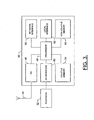
- FIG. 2 a block diagram of an entity capable of operating as a terminal 10, service provider 22, user processor 31, digital broadcast receiver 36, and/or a digital broadcaster 32 is shown in accordance with one embodiment of the present invention.
- one or more entities may support one or more of a terminal, service provider, digital broadcast receiver, and/or a digital broadcaster, logically separated but co-located within the entit(ies).
- a single entity may support a logically separate, but co-located, terminal and digital broadcast receiver.
- a single entity may support a logically separate, but co-located digital broadcast receiver and digital broadcaster.
- the entity capable of operating as a terminal 10, service provider 22, digital broadcast receiver 36, and/or a digital broadcaster 32 can generally include a processor 38 connected to a memory 40.
- the processor can also be connected to at least one interface 42 or other means for transmitting and/or receiving data, content or the like.
- the memory can comprise volatile and/or non-volatile memory, and typically stores content, data or the like.
- the memory typically stores content transmitted from, and/or received by, the entity.
- the memory typically stores software applications, instructions or the like for the processor to perform steps associated with operation of the entity in accordance with embodiments of the present invention.
- the memory 40 can store a server agent capable of grouping one or more clients into one or more groups such that the clients can thereafter upload or download content to or from one or more servers in accordance with the groups.
- the memory can additionally or alternatively store a client agent capable of uploading or downloading content to or from one or more servers in accordance with the groups.
- the digital broadcast receiver includes an antenna 44 for receiving signals from a digital broadcaster 32 and feeding the signals into a receiver (RX) 46.
- the receiver is capable of decrypting, demodulating and/or demultiplexing the signals, such as to extract content data.
- the receiver can feed the content data to a processor 48, which can thereafter decode the content data.
- the processor can then feed the decoded signal into an audio/video (A/V) interface 50, which can convert signals to a form suitable for display by a monitor, such as a television set 52.
- A/V audio/video
- the digital broadcast receiver 36 can include volatile memory 54, such as volatile Random Access Memory (RAM) including a cache area for the temporary storage of data.
- volatile memory 54 such as volatile Random Access Memory (RAM) including a cache area for the temporary storage of data.
- the digital broadcast receiver can also include non-volatile memory 56, which can be embedded and/or may be removable.
- the non-volatile memory can additionally or alternatively comprise an EEPROM, flash memory, hard disk or the like.
- the memories can store any of a number of pieces of information, content and data, used by the digital broadcast receiver to implement the functions of the digital broadcast receiver.
- the memories can store content, such as that received from a digital broadcaster 32.
- the memories can store a server agent and/or client agent capable of grouping client(s), and/or uploading or downloading content in accordance with the groups, respectively.
- the digital broadcast receiver 36 can also include one or more interface means for sharing and/or obtaining data from electronic devices, such as terminals 10 and/or digital broadcasters 32. More particularly, the digital broadcast receiver can include a network interface means 60, for sharing and/or obtaining data from a network, such as the Internet 20.
- the digital broadcast receiver can include an Ethernet Personal Computer Memory Card International Association (PCMCIA) card configured to transmit and/or receive data to and from a network, such as the Internet.
- PCMCIA Personal Computer Memory Card International Association
- the digital broadcast receiver 36 can also include one or more local interface means 62 for locally sharing and/or obtaining data from electronic devices, such as a terminal.
- the digital broadcast receiver can include a radio frequency transceiver and/or an infrared (IR) transceiver so that data can be shared with and/or obtained in accordance with radio frequency and/or infrared transfer techniques.
- the digital broadcast receiver can include a Bluetooth (BT) transceiver operating using Bluetooth brand wireless technology developed by the Bluetooth Special Interest Group such that the digital broadcast receiver can share and/or obtain data in accordance with Bluetooth transfer techniques.
- the digital broadcast receiver can additionally or alternatively be capable of sharing and/or obtaining data in accordance with any of a number of different wireline and/or wireless networking techniques, including LAN and/or WLAN techniques.
- the digital broadcaster can include a processor 64 capable of carrying out the functions of the digital broadcaster.
- the digital broadcaster can also include volatile memory 66, such as volatile Random Access Memory (RAM) including a cache area for the temporary storage of data.
- volatile memory 66 such as volatile Random Access Memory (RAM) including a cache area for the temporary storage of data.
- non-volatile memory 68 which can be embedded and/or may be removable.
- the non-volatile memory can additionally or alternatively comprise an EEPROM, flash memory, hard disk or the like.
- the memories can store any of a number of pieces of information, content and data, used by the digital broadcaster to implement the functions of the digital broadcaster.
- the memories can store content, such as content for a television channel and other content for a number of other television, radio and/or data channels.
- the memories can store a server agent and/or client agent, as explained below.
- the digital broadcaster 32 can also include a multiplexer 70, which can be capable of multiplexing content for a number of television, radio and/or data channels.
- the multiplexer can then feed the resulting signal into a TX 34, which can be separate from the digital broadcaster, as shown in FIG. 1 , or incorporated within the digital broadcaster, as shown in FIG. 4 .
- the TX can receive the signal from the multiplexer for encryption, modulation, amplification and/or transmission, such as via an antenna 72.
- the digital broadcaster can be capable of directly or indirectly transmitting content to a digital broadcast receiver 36 and/or a terminal 10, such as in accordance with a digital broadcasting technique, such as DVB-T.
- a digital broadcasting technique such as DVB-T.
- ETSI European Telecommunications Standards Institute
- EN 300 744 entitled: Digital Video Broadcasting (DVB): Framing structure, channel coding and modulation for digital terrestrial television, v.1.1.2 (1997 ) and related specifications, the contents of which are hereby incorporated by reference in their entirety.
- IP Datacast can be utilized to provide audio, video and/or other content to terminals 10.
- the digital broadcaster 32 can be capable of providing IP datacasting content to the terminal utilizing a digital broadcasting technique.
- digital broadcasting techniques such as DVB-T are essentially cellular in nature with a transmission site associated with each of a number of different cells.
- DVB-T for example, uses MPEG-2 transport streams, and as such, IP data can be encapsulated into DVB transmission signals sent from the digital broadcaster, or more particularly the TX 34.
- Data streams including IP datagrams can be supplied from several sources, and can be encapsulated by an IP encapsulator (not shown).
- the IP encapsulator in turn, can feed the encapsulated IP data streams into the data broadcasting (e.g., DVB-T) network.
- DVB-T data broadcasting
- the encapsulated IP data streams can then be transported to one or more transmission sites, where the transmission sites form cells of the data broadcasting network.
- the encapsulated IP data streams can be transported to one or more transmission sites on an MPEG-2 transport stream for subsequent transmission over the air directly to the terminals, or to a receiver station serving one or more terminals.
- the MPEG-2 transport stream from production by the IP encapsulator, to reception by the terminals or the receiver station, is typically uni-directional in nature.
- IP packets containing the data can be embedded in multi-protocol encapsulation (MPE) sections that are transported within transport stream packets.
- MPE multi-protocol encapsulation
- the MPE sections can also include forward error correction (FEC) information and time slicing information.
- FEC forward error correction
- time slicing information data can be conveyed discontinuously with the receiver (e.g., terminal 10 ), being capable of saving battery power by switching off when no data is being transmitted to the receiver.
- FEC forward error correction
- time slicing information data can be conveyed discontinuously with the receiver (e.g., terminal 10 ), being capable of saving battery power by switching off when no data is being transmitted to the receiver.
- a time division multiplex-type of allocation technique can be employed (see, e.g., DVB-H standard). With such an approach, then, services can be provided in bursts, allowing a receiver to power down when the receiver is not receiving data, and allowing the receiver to power up to receive data packets, as necessary.
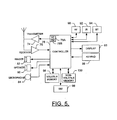
- FIG. 5 illustrates a functional diagram of a mobile station that may operate as a terminal 10, according to embodiments of the invention.
- the mobile station illustrated and hereinafter described is merely illustrative of one type of terminal that would benefit from the present invention and, therefore, should not be taken to limit the scope of the present invention. While several embodiments of the mobile station are illustrated and will be hereinafter described for purposes of example, other types of mobile stations, such as portable digital assistants (PDAs), pagers, laptop computers, digital cameras and other types of voice, text and multimedia communications systems, can readily employ the present invention.
- PDAs portable digital assistants
- pagers pagers
- laptop computers digital cameras
- voice, text and multimedia communications systems can readily employ the present invention.
- the mobile station includes a transmitter 74, a receiver 76, and a processor such as a controller 78 that provides signals to and receives signals from the transmitter and receiver, respectively. These signals include signaling information in accordance with the air interface standard of the applicable cellular system, and also user speech and/or user generated data.
- the mobile station can be capable of operating with one or more air interface standards, communication protocols, modulation types, and access types. More particularly, the mobile station can be capable of operating in accordance with any of a number of first-generation (1G), second-generation (2G), 2.5G and/or third-generation (3G) communication protocols or the like.
- the mobile station may be capable of operating in accordance with 2G wireless communication protocols IS-136 (TDMA), GSM, and IS-95 (CDMA).
- the mobile station can additionally or alternatively be capable of operating in accordance with any of a number of different digital broadcasting techniques, such as the DVB technique (e.g., DVB-T, ETSI Standard EN 300 744).
- the mobile station can also be capable of operating in accordance with any of a number of different broadcast and/or multicast techniques, such as the MBMS technique (e.g., 3GPP TS 22.146).
- the mobile station can be capable of operating in accordance with ISDB-T, DAB, ATSC techniques or the like.
- NAMPS narrow-band AMPS
- TACS Some narrow-band AMPS (NAMPS), as well as TACS, mobile stations may also benefit from embodiments of the present invention, as should dual or higher mode mobile stations (e.g., digital/analog or TDMA/CDMA/analog phones).
- the controller 78 includes the circuitry required for implementing the audio and logic functions of the mobile station.
- the controller may be comprised of a digital signal processor device, a microprocessor device, and various analog to digital converters, digital to analog converters, and/or other support circuits.
- the control and signal processing functions of the mobile station are allocated between these devices according to their respective capabilities.
- the controller thus also includes the functionality to convolutionally encode and interleave message and data prior to modulation and transmission.
- the controller can additionally include an internal voice coder (VC) 78A, and may include an internal data modem (DM) 78B. Further, the controller may include the functionally to operate one or more software applications, which may be stored in memory.
- VC voice coder
- DM internal data modem
- the mobile station also comprises a user interface including a conventional earphone or speaker 80, a ringer 82, a microphone 84, a display 86, and a user input interface, all of which are coupled to the controller 78.
- the user input interface which allows the mobile station to receive data, can comprise any of a number of devices allowing the mobile station to receive data, such as a keypad 88, a touch display (not shown) or other input device.
- the keypad includes the conventional numeric (0-9) and related keys (#, *), and other keys used for operating the mobile station.
- the mobile station can also include one or more means for sharing and/or obtaining data from electronic devices, such as another terminal 10, a service provider 22, an AP 30, a digital broadcast receiver 36, a digital broadcaster 32 or the like, in accordance with any of a number of different wireline and/or wireless techniques.
- the mobile station can include a radio frequency (RF) transceiver 90 and/or an infrared (IR) transceiver 92 such that the mobile station can share and/or obtain data in accordance with radio frequency and/or infrared techniques.
- RF radio frequency
- IR infrared
- the mobile station can include a Bluetooth (BT) transceiver 94 such that the mobile station can share and/or obtain data in accordance with Bluetooth transfer techniques.
- BT Bluetooth
- the mobile station can include one or more ports, such as a USB port, such that the mobile station can share and/or obtain data in accordance with a number of wireline techniques, such as in accordance with a USB technique.
- the mobile station may additionally or alternatively be capable of transmitting and/or receiving data from electronic devices according to a number of different wireline and/or wireless networking techniques, including LAN and/or WLAN techniques.
- the mobile station may include an additional antenna or the like to transmit and/or receive data from such electronic devices (e.g., digital broadcaster).
- the mobile station can further include memory, such as a subscriber identity module (SIM) 96, a removable user identity module (R-UIM) or the like, which typically stores information elements related to a mobile subscriber.
- SIM subscriber identity module
- R-UIM removable user identity module
- the mobile station can include other memory.
- the mobile station can include volatile memory 98.
- the mobile station can include other non-volatile memory 100, which can be embedded and/or may be removable.
- the memories can store any of a number of pieces of information, and data, used by the mobile station to implement the functions of the mobile station.
- the memories can store content, such as that received from a service provider 22 and/or a digital broadcast receiver.
- the memories can also store client applications such as a conventional Web browser for communicating in accordance with the hypertext transfer protocol (HTTP), a file transfer (e.g., FTP) application, a Telnet application, a peer-to-peer access application, or the like.
- client applications such as a conventional Web browser for communicating in accordance with the hypertext transfer protocol (HTTP), a file transfer (e.g., FTP) application, a Telnet application, a peer-to-peer access application, or the like.
- the memories can store applications such as a server agent and/or client agent capable of grouping client(s), and/or uploading or downloading content in accordance with the groups, respectively.
- a plurality of clients can be grouped into one or more groups such that the number of clients downloading or uploading content from or to a server (e.g., terminal, service provider, user processor, digital broadcast receiver, digital broadcaster) over at least one transfer network is at least partially balanced over a period of time.
- a server e.g., terminal, service provider, user processor, digital broadcast receiver, digital broadcaster
- FIG. 6 illustrates a functional block diagram of a client 102 uploading or downloading content to or from a server 104, in accordance with one embodiment of the present invention.
- the client is capable of operating an application, such as a client agent 106, which is capable of uploading or downloading one or more piece(s) of content, and thereafter storing the content in a content storage 108 in memory (e.g., non-volatile memory 100 ) of the client.
- the server is capable of operating a server agent 110, which is capable of grouping the client with one or more other clients such that the client downloads the content in accordance with the grouping.
- the server agent can also be capable of communicating with the client agent to direct the client agent to download content from a content storage 112 associated with the server.
- the client agent 106 comprises software operated by the client 102
- the server agent 110 comprises software operated by the server 104.
- the client agent and/or server agent can alternatively comprise firmware or hardware, without departing from the spirit and scope of the present invention.
- the client agent is shown and described as being local to the client, the client agent can alternatively be distributed from, and in communication with, the client, such as across the Internet 20.
- the server agent can be located local to or distributed from the server.
- clients 102 downloading content from a server 104 comprise terminals 10 downloading content for one or more television, radio and/or data channels from a server comprising a digital broadcaster 32. It should be understood, however, that the clients are equally applicable to uploading content to the server, without departing from the scope of the present invention. Also, it should be understood that the content can comprise any of a number of different types of pieces of content capable of being downloaded or uploaded to or from a server, each content for each channel being representative of a type of one or more pieces of content.
- a client 102 can comprise any entity (e.g., terminal 10, service provider 22, user processor 31, digital broadcast receiver 36, digital broadcaster, etc.), functioning to upload or download content to or from a server.
- a server 104 can comprise any entity (e.g., terminal, service provider, digital broadcast receiver, digital broadcaster, etc.) functioning to send content to a client downloading content from the entity, or functioning to receive content from a client uploading content to the entity.
- entity can, at different times, function as a client, server, or both a client and a server.
- the server agent 110 is capable of grouping clients 102 such that the number of clients downloading content from the server 104 is at least partially balanced over a period of time.
- the transfer period can be defined as the period of time between 00:00 and 05:00, where the clients and server, and/or the transfer network, experience reduced activity.
- the server agent 110 can divide the transfer period into a number, n , of periods of time, as shown in FIG. 7 , where each period of time can be referred to as a transfer window.
- the transfer windows can be configured in any of a number of different manners, but in one embodiment, the transfer windows are configured such that at least one client can be capable of completely downloading one or more piece(s) of content entirely within a transfer window.
- the length of transfer windows can differ for different pieces of content, the transfer windows for a given piece of content can have the same length.
- the number and length of the transfer windows can be determined in any of a number of different manners.
- the number of the transfer windows is set such that all of the transfer windows fit entirely within the transfer period, or in other words, such that the transfer period is at least as long as the total length of all of the transfer windows.
- the length of the transfer windows on the other hand can be determined, for example, based upon the size of the content to be downloaded.
- the length of the transfer windows can be determined based upon the download speed supported by the clients 102, server 104 and/or transfer network(s) over which the content is downloaded.
- the server agent 110 can receive or otherwise collect statistical data sufficient to determine a mean download speed of the content from the server to the clients over the transfer network(s), such as based upon previous downloads of the same or similar content utilizing the same or similar clients, the server and transfer network(s).
- the server agent can be capable of differentiating between download speeds in different portions of the transfer network(s) by collecting respective statistical data, even though the server agent may not be aware of the topology or capabilities of the network(s).
- the length of the transfer windows can be further determined based upon a probability of the clients 102, and thus the server 104, experiencing an error or interruption in downloading the content.
- a probability can be determined, for example, based upon the number of bytes of content the clients are typically capable of downloading without experiencing an error or interruption in the download.
- the respective number of bytes of content can be determined in any of a number of different manners, such as from statistical data received or otherwise collected by the server agent 110, where the statistical data can be based upon previous downloads of the same or similar content utilizing the same or similar clients, the server and transfer network(s). Irrespective of how the length of the transfer windows is determined, it should be appreciated by those skilled in the art that the length, and thus the number, of transfer windows can differ for different pieces of content, particularly for those pieces of content having different sizes.
- the time, SDT solid download time
- SDT fileSizeltimeDL.
- the client can typically download a mean number of bytes, byteSucc , of content without experiencing an error or interruption.
- the server agent 110 can instruct the client agent 106, or client agent can repeatedly request an instruction from the server agent (i.e., poll the server agent), to download the content at a predetermined interval.
- the server agent 110 can be capable of grouping the clients 102. More particularly, in one embodiment, the server agent can be capable of grouping the clients based upon the content to be downloaded and a transfer window within which to download that content. For purposes of illustration, presume that clients can request to download different content from one or more of three data channels, namely Channels A, B and C, where each data channel includes a transfer period divided into a number of transfer windows. In such an instance, the server agent can group clients into groups, each having an associated data channel and transfer window within the data channel. As will be appreciated, each client can be included within more than one group, each having a different associated channel.
- any given client is typically not included within more than one group associated with different transfer windows of the same channel.
- clients can be capable of downloading different types of content such as from more than one channel at any given time, clients are typically not included within multiple groups associated with overlapping transfer windows.
- the group management table illustrates three channels such as three television, radio and/or data channels, each channel representative of different content.
- window A 01:15
- window B 01:00
- window C 01:40.
- the transfer window length and the transfer period it can be shown that the transfer period includes four windows for Channel A, five windows for Channel B, and three windows for Channel C, as shown in the group management table.
- the server agent 110 can group clients 102 requesting to download content from the respective channels into a group associated with the respective channels and, typically, one of the transfer windows of the respective channel. For example, as shown, the server agent can group 150 clients into Group A1 associated with the first transfer window of Channel A, 156 clients into Group A2 associated with the second transfer window of Channel A, 141 clients into Group A3 associated with the third transfer window of Channel A, and 155 clients into Group A4 associated with the fourth transfer window of Channel A. Similarly, the server agent can group clients requesting to download content from Channels B and C into groups associated with one of the transfer windows of Channels B and C, respectively.
- a client will typically not be a member of more than one group associated with a given channel such as, for example, Groups A1 and A2. However, a client may be a member of more than one group associated with more than one channel. Also, a client is typically not included within multiple groups associated with overlapping transfer windows.
- the server agent 110 can maintain, for one or more clients, a client information record, an example of which is shown below. As shown, the client information record can include a client identification, such as the International Mobile Subscriber Identity (IMSI) of a terminal client.
- IMSI International Mobile Subscriber Identity
- the client information record can also include one or more other pieces of client information such as, for example, statistical data relating to the download speeds previously achieved by the client, and numbers of bytes previously downloaded by the client without experiencing an error or interruption.
- the client information record can include the groups to which the respective client belongs for downloading content requested by the client. As shown, for example, the client can belong to Group 1 of Channel A (i.e., Group A1), Group 4 of Channel B (i.e., Group B4), and Group 1 of Channel C (i.e., Group C1).
- Client Information Record Client Identification: XXX ⁇ other client information> Requested Content Channel A: Group 1 Channel B: Group 4 Channel C: Group 1
- the server agent 110 can group the clients 102 into groups associated with one of the transfer windows in any of a number of different manners. For example, the server agent can assign each client based upon the number of clients already within each group, such as by assigning each client to the group including the fewest number of clients. Additionally or alternatively, for example, the server agent can assign one or more clients such that, at any given time, the number of clients downloading content from the server 104 does not exceed a predefined number of simultaneous downloads. Also, for example, the server agent can assign one or more clients such that, during the transfer period, the number of channels downloaded by the clients does not exceed a predefined number of channels, and/or that the number of channels downloaded by any one client does not exceed a predefined number of channels.
- the server agent can group clients based upon other, existing groups including the respective client.
- the server agent can group clients such that the client is not associated with a transfer window that overlaps the transfer windows associated with other, existing groups including the respective client.
- the server agent can assign one or more clients based upon a priority ranking of the transfer windows of a respective channel. More particularly, the server agent can assign higher priority transfer windows, such as those providing more expeditious download of the respective content, to more preferred clients, as defined by the server or server agent.
- the client can be capable of downloading content from the server 104 in accordance with the groupings.
- the client or more particularly the client agent 106, can download the content by periodically polling the server agent at a predetermined interval (e.g., interval as explained above) for instances in which the current time is within a transfer window associated with one or more groups including the client.
- the server agent can periodically instruct the client agent as to whether the current time is within a transfer window associated with group(s) including the client.
- the client agent can poll the server agent, or the server agent can instruct the client agent, in any of a number of different manners over any of a number of different network(s), including the same or different network(s) than the transfer network(s) over which the content is subsequently downloaded from the server.
- the server agent 110 responds to a polling of the client agent 106, or instructs the client agent, if the server agent indicates to the client agent that the current time is within a transfer window associated with group(s) including the client 102, the client agent can proceed to download the content (e.g., content from the respective channel) associated with the respective group(s) from the server 104. And as will be appreciated, since the client can be a member of more than one group, the client agent can continue to poll the server agent, or receive instructions from the server agent, as to whether the current time is within a transfer window associated with group(s) including the client, with the client downloading such content accordingly.
- the server agent indicates to the client agent that the current time is within a transfer window associated with group(s) including the client 102
- the client agent can proceed to download the content (e.g., content from the respective channel) associated with the respective group(s) from the server 104.
- the client agent can continue to poll the server agent, or receive instructions from the server agent, as to whether the
- the client 102 may experience an error or other interruption in the transfer of content from the server to the client.
- the length of the transfer window can be determined to account for the probability of the client, and thus the server, experiencing an error or interruption in downloading the content.
- the interval over which the client agent 106 polls the server agent 110, or receives instructions from the server agent can be set such that, after the interruption, the client agent can receive (in response to a poll or an instruction from the server) another indication that the current time is within the respective transfer window to thereby permit the client agent to resume downloading the content.
- the client 102 is unable to complete the download of content within the respective transfer window.
- the client may be unable to complete the download of content within the respective transfer window in instances where the predetermined interval, over which the client agent 106 is capable of receiving an indication that the current time is within the respective transfer window, is set such that the client agent does not poll the server agent, or the server agent does not instruct the client agent, during the transfer period or the respective transfer window(s), such as when either the client or the server is inoperative during the respective polling or instructing instances.
- the client may be unable to complete the download of content within the respective transfer window in instances where the size of the content or the download speed of the client decrease or are at a state below that necessary to download the content within the respective transfer window.
- the client may be unable to complete the download of content within the respective transfer window in instances when the client experiences an interruption in downloading the content and cannot resume the download with sufficient time to complete the download before the end of the transfer window.
- the client agent 106 and server agent 110 can respond in any of a number of different manners.
- the server agent can interrupt the client in downloading the content.
- the server agent can proceed to permit the client agent to download the content, where the client agent receives indications that the current time is either within or after the respective transfer window for content not yet downloaded, thereby permitting the client agent to download the content even after the respective transfer window has expired.
- the server agent can designate an overflow transfer window, during which the server agent can instruct the client agent to download, or continue downloading, the respective content.
- the server agent 110 can be capable of maintaining the lengths of the transfer windows and updating the lengths over time. For example, at one or more instances of time, the server agent can re-determine the size of requested content. Additionally or alternatively, the server agent can re-determine the download speed from statistical data determined based upon the most recent previous downloads of the same or similar content utilizing the same or similar clients, the server and transfer network(s).
- the server agent can re-determine the probability of the clients, and thus the server, experiencing an error or interruption in downloading the content, which can be determined based upon the most recent previous downloads. From the re-determined size of the requested content, download speed and/or probability of experiencing an error, the server agent can again determine the length of the transfer windows, and adjust the length as necessary.
- the server agent 110 can group the clients in any of a number of different manners, such as based upon the size (or channel) of the content to be downloaded, the download speed supported by the clients, server 104 and/or transfer network(s), and/or the probability of the clients, and thus the server, experiencing an error or interruption in downloading the content, each of which being described above with respect to determining the length of transfer windows.
- the server agent can group clients requesting to download the same or similar content, supporting the same or similar download speed (and/or are requesting content from a sever over transfer network(s) supporting the same or similar download speeds), and/or the same or similar probabilities of experiencing an error or interruption in downloading the content.
- the server agent 110 can group the clients based upon the number of clients already within each of a number of groups, the number of clients downloading content from the server 104 (such as to maintain a predefined maximum number of simultaneous downloads), the number of different piece(s) of content or channels downloaded by the clients (such as to maintain a predefined maximum number of different piece(s) or channels, and/or to maintain a predefined maximum number of piece(s) of content or channels downloaded by any one client).
- the server agent can further group clients based upon other, existing groups including the respective client.
- the server agent can group the clients based upon a priority ranking of the transfer windows of a respective channel. For example, the server agent can assign higher priority groups, such as those being permitted to download content at preferred times or over preferred transfer network(s), to more preferred clients, as defined by the server or server agent.
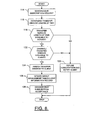
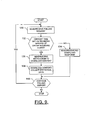
- FIGS. 8 and 9 illustrate various steps in the operation of clients 102 and a server 104 performing a method of grouping clients and transferring (i.e., downloading or uploading) content, in accordance with one embodiment of the present invention.
- the steps in performing the method will be described in the context of clients subscribing to download content for one or more television, radio and/or data channels from a server.
- the server has designated a transfer window between 00:00 and 05:00 for downloading content for the channels, where the server agent 110 of the server maintains a group management table and client information record for those clients subscribing to download content from the server, such as in a manner described above.
- a method of grouping clients includes a client 102, or more particularly the client agent 106 of a client, sending a subscription request to download content for one or more channels, and a server 104, or more particularly the server agent 110 of a server, receiving the subscription request.
- the server agent can determine a transfer window length of time for the client to download the content from the server, such as in the manner described above.
- the server agent can determine if the length of time of the transfer window is available in the system (i.e., across the clients downloading content from the server) based upon information contained within the group management table.
- the server agent can determine if the length of time of the transfer window is available to thereby insure that, at any given time during the transfer period, the number of clients downloading content from the server does not exceed a predefined number of simultaneous downloads, as shown in block 118.
- the server agent 110 can respond in any of a number of different manners. As shown in block 120, for example, the server agent can refuse the subscription request. Additionally, the server agent can notify the client 102 of the subscription refusal, and can also indicate the reason for such refusal (i.e., insufficient server resources within transfer period). If the length of time of the transfer window is available in the system, the server agent can then determine if the channel and/or the length of time of the transfer window to download the channel are available to the client based upon information contained within a client information record associated with the respective client (presuming the client has previously subscribed to content from one or more channels), as shown in block 122.
- the server agent can determine if the channel and/or length of time of the transfer window are available to thereby insure that the number of channels downloaded by the client over the transfer period does not exceed a predefined number of channels, and/or to insure that, at any given time during the transfer period, the client is not a member of a group associated with a transfer window that overlaps the transfer windows associated with another, existing group including the respective client.
- the server agent 110 can respond in any of a number of different manners. For example, again as shown in block 120, the server agent can refuse the subscription request, and notify the client 102 of the subscription refusal, and can also indicate the reason for such refusal (i.e., insufficient client resources within transfer period). If the channel and/or the length of time of the transfer window to download the channel are available to the client, however, as shown in block 124, the server agent can assign the client to a group downloading content from the respective channel within a transfer window for downloading such content, such as in the manner described above.
- the server agent can update the group management table and client information record (presuming the client has a client information record, otherwise, the server agent can create a client information record) accordingly. Additionally, the server agent can send, and the client agent 106 can receive, a subscription acceptance, as shown in block 128.
- the client agent 106 can send, and the server agent 110 can receive, a polling request relating to downloading content for the channel, as shown in block 130 of FIG. 9 .
- the server agent can determine if the current time is within a transfer window associated with a group including the client, as such information can be determined based upon information contained within the group management table and the client information record of the respective client. If the current time is not within a respective transfer window, the server agent can respond by sending, and the client agent receiving, a response indicating that the current time is not within a transfer window for the client to download the content, as shown in block 134.
- the server agent 110 can respond by sending, and the client agent 106 receiving, an instruction to download content from the channel associated with the group also associated with the respective transfer window, as shown in block 136.
- the client agent can then proceed to download the respective content from the server 104, or more particularly from the content storage 112 of the server.
- the client agent can store the content in the content storage 108 of the client 102.
- the server agent can collect statistical data relating to the download, such as statistical data relating to the download speed achieved by the client, and numbers of bytes downloaded by the client without experiencing an error or interruption.
- the client agent can again send, and the server agent 110 can again receive, a polling request, as shown in block 140.
- the technique can then repeat with the client agent repeatedly polling the server agent, such as at a predetermined interval.
- the client agent can be capable of downloading content for a number of different channels.
- the client agent can again poll the server agent within the transfer window to continue the download.
- the length of the transfer windows, and thus the groupings of the clients 102 may change over time, such as when an increased number of clients subscribe to download content.
- the length of the transfer windows and groupings of the clients may change when clients unsubscribe to download content, thereby decreasing the number of clients downloading content from the server 104.
- the server agent can update the information contained within the group management table and client information records, such as by re-determining the size of the content of the channels, the download speeds of the clients, and/or the probability of the clients, and thus the server, experiencing an error or interruption in downloading the content.
- all or a portion of the system of the present invention such all or portions of the clients 102 (e.g., terminal 10 ) and/or servers 104 (e.g., digital broadcaster 32 ), generally operates under control of a computer program product (e.g., client agent 106, server agent 110, etc.).
- the computer program product for performing the methods of embodiments of the present invention includes a computer-readable storage medium, such as the non-volatile storage medium, and computer-readable program code portions, such as a series of computer instructions, embodied in the computer-readable storage medium.
- FIGS. 8 and 9 are flowcharts of methods, systems and program products according to the invention. It will be understood that each block or step of the flowcharts, and combinations of blocks in the flowcharts, can be implemented by computer program instructions. These computer program instructions may be loaded onto a computer or other programmable apparatus to produce a machine, such that the instructions which execute on the computer or other programmable apparatus create means for implementing the functions specified in the block(s) or step(s) of the flowcharts.
- These computer program instructions may also be stored in a computer-readable memory that can direct a computer or other programmable apparatus to function in a particular manner, such that the instructions stored in the computer-readable memory produce an article of manufacture including instruction means which implement the function specified in the block(s) or step(s) of the flowcharts.
- the computer program instructions may also be loaded onto a computer or other programmable apparatus to cause a series of operational steps to be performed on the computer or other programmable apparatus to produce a computer implemented process such that the instructions which execute on the computer or other programmable apparatus provide steps for implementing the functions specified in the block(s) or step(s) of the flowcharts.
- blocks or steps of the flowcharts support combinations of means for performing the specified functions, combinations of steps for performing the specified functions and program instruction means for performing the specified functions. It will also be understood that each block or step of the flowcharts, and combinations of blocks or steps in the flowcharts, can be implemented by special purpose hardware-based computer systems which perform the specified functions or steps, or combinations of special purpose hardware and computer instructions.
Landscapes
- Engineering & Computer Science (AREA)
- Computer Networks & Wireless Communication (AREA)
- Signal Processing (AREA)
- Information Transfer Between Computers (AREA)
- Mobile Radio Communication Systems (AREA)
Claims (26)
- Serveragent (110), der für Folgendes eingerichtet ist:Zuordnen von mehreren Clients zu mehreren Gruppen zur Übertragung von Inhalten, was einen Upload oder Download von Inhalten zum Server oder vom Server beinhaltet, wobei der Serveragent dafür eingerichtet ist, wenigstens einen der Clients basierend auf einer Größe der Inhalte, einer Übertragungsgeschwindigkeit und einer Wahrscheinlichkeit für die Übertragung der Inhalte ohne das Eintreten einer Unterbrechung in der Übertragung zuzuordnen; undEinteilen der Clients für einen Upload oder Download der Inhalte in Übereinstimmung mit den jeweiligen Gruppen, denen die Clients zugeordnet wurden.
- Serveragent nach Anspruch 1, der dafür eingerichtet ist, statistische Daten zu sammeln, die eine Übertragungsgeschwindigkeit und eine Wahrscheinlichkeit für die Übertragung der Inhalte ohne das Eintreten einer Unterbrechung in der Übertragung betreffen, um hierdurch die Übertragungsgeschwindigkeit und die Wahrscheinlichkeit für die Übertragung der Inhalte ohne das Eintreten einer Unterbrechung in der Übertragung zu bestimmen.
- Serveragent nach Anspruch 1 oder 2, der dafür eingerichtet ist, die Clients Gruppen zuzuordnen, die zu jeweiligen Übertragungsfenstern gehören, wobei jedes Übertragungsfenster ein Zeitabschnitt ist, innerhalb dessen es einem Client, der der dazugehörigen Gruppe zugeordnet ist, gestattet ist, einen Upload oder Download von Inhalten zum Server oder vom Server durchzuführen.
- Serveragent nach Anspruch 3, der dafür eingerichtet ist, wenigstens einen der Clients wenigstens einer Gruppe zuzuordnen, und dies basierend auf einer Zahl von Clients, die der entsprechenden wenigstens einen Gruppe bereits zugeordnet sind.
- Serveragent nach Anspruch 3 oder 4, der dafür eingerichtet ist, wenigstens einen der Clients wenigstens einer Gruppe zuzuordnen, und dies basierend auf einer Zahl von Clients, die Inhalte vom Server herunterladen, derart, dass zu jeder Zeit die Zahl der Clients, die für den Upload oder Download von Inhalten eingeteilt sind, eine vorgegebene Anzahl von gleichzeitigen Uploads oder Downloads nicht übersteigt.
- Serveragent nach Anspruch 3, 4 oder 5, wobei ein Übertragungsabschnitt wenigstens ein Übertragungsfenster umfasst und wobei der Serveragent dafür eingerichtet ist, wenigstens einen der Clients wenigstens einer Gruppe derart zuzuordnen, dass während des Übertragungsabschnitts eine Zahl von verschiedenen Arten von Inhalten, für die Clients für den Upload oder Download eingeteilt sind, eine vorgegebene Zahl verschiedener Arten nicht übersteigt.
- Serveragent nach einem der Ansprüche 3 bis 6, wobei der Übertragungsabschnitt wenigstens ein Übertragungsfenster umfasst und wobei der Serveragent dafür eingerichtet ist, wenigstens einen der Clients wenigstens einer Gruppe derart zuzuordnen, dass während des Übertragungsabschnitts für jeden der Clients eine Zahl von verschiedenen Arten von Inhalten, die für den Upload oder Download eingeteilt sind, eine vorgegebene Zahl verschiedener Arten nicht übersteigt.
- Serveragent nach einem der Ansprüche 3 bis 7, wobei jeder von wenigstens einem der Clients mehreren Gruppen zugeordnet ist und wobei der Serveragent dafür eingerichtet ist, wenigstens einen der Clients wenigstens einer Gruppe derart zuzuordnen, dass für jeden Client, der mehreren Gruppen zugeordnet ist, der entsprechende Client Gruppen zugeordnet ist, die Übertragungsfenster mit nicht überlappenden Zeitabschnitten haben.
- Serveragent nach einem der Ansprüche 3 bis 8, wobei der Serveragent dafür eingerichtet ist, wenigstens einen der Clients zuzuordnen, wobei dies umfasst, dass der Serveragent für Folgendes eingerichtet ist:Aufteilen eines Übertragungsabschnitts in mehrere Übertragungsfenster,Festlegen einer Länge für jedes der Übertragungsfenster in Abhängigkeit von der Größe der Inhalte, der Übertragungsgeschwindigkeit und der Wahrscheinlichkeit für die Übertragung der Inhalte ohne das Eintreten einer Unterbrechung in der Übertragung; undZuordnen von Clients zu den Gruppen entsprechend den Übertragungsfenstern, die zu den jeweiligen Gruppen gehören.
- Serveragent nach einem der Ansprüche 3 bis 9, der für das Empfangen oder Senden von Inhalten von oder zu wenigstens einem der Clients eingerichtet ist, und dies in Verbindung damit, dass der wenigstens eine der Clients die Inhalte hoch- oder herunterlädt, wobei das Empfangen oder Senden der Inhalte in Übereinstimmung mit wenigstens einer Gruppe geschieht, der der wenigstens eine der Clients zugeordnet ist.
- Serveragent nach Anspruch 10, der dafür eingerichtet ist festzustellen, ob ein momentaner Zeitpunkt innerhalb wenigstens eines Übertragungsfensters liegt, das zu wenigstens einer Gruppe gehört, die wenigstens einen Client umfasst; und
in Reaktion auf die Feststellung, dass der momentane Zeitpunkt innerhalb wenigstens eines Übertragungsfensters liegt, Einteilen des entsprechenden wenigstens einen Clients für einen Upload oder Download von Inhalten zum Server oder vom Server. - Serveragent nach Anspruch 11, der dafür eingerichtet ist, wiederholt festzustellen, ob ein momentaner Zeitpunkt innerhalb wenigstens eines Übertragungsfensters liegt, das zu wenigstens einer Gruppe gehört, die wenigstens einen Client umfasst, und dies in einem vorgegebenen Zeitintervall und derart, dass, falls für den entsprechenden wenigstens einen Client eine Unterbrechung im Upload oder Download der Inhalte eintritt, der Serveragent dafür eingerichtet ist, den entsprechenden wenigstens einen Client zu informieren und es dadurch dem entsprechenden wenigstens einen Client zu gestatten, den Upload oder Download der Inhalte wiederaufzunehmen.
- System, Folgendes umfassend:mehrere Clients; undeinen Server, der einen Serveragenten gemäß einem der vorhergehenden Ansprüche umfasst.
- Verfahren, Folgendes umfassend:Zuordnen von mehreren Clients zu mehreren Gruppen zur Übertragung von Inhalten, was einen Upload oder Download von Inhalten zu einem Server oder vom Server beinhaltet, wobei das Zuordnen von mehreren Clients es umfasst, wenigstens einen der Clients basierend auf einer Größe der Inhalte, einer Übertragungsgeschwindigkeit und einer Wahrscheinlichkeit für die Übertragung der Inhalte ohne das Eintreten einer Unterbrechung in der Übertragung zuzuordnen; undEinteilen der Clients für einen Upload oder Download der Inhalte in Übereinstimmung mit den jeweiligen Gruppen, denen die Clients zugeordnet wurden.
- Verfahren nach Anspruch 14, außerdem Folgendes umfassend:Sammeln statistischer Daten, die eine Übertragungsgeschwindigkeit und eine Wahrscheinlichkeit für die Übertragung der Inhalte ohne das Eintreten einer Unterbrechung in der Übertragung betreffen, um hierdurch die Übertragungsgeschwindigkeit und die Wahrscheinlichkeit für die Übertragung der Inhalte ohne das Eintreten einer Unterbrechung in der Übertragung zu bestimmen.
- Verfahren nach Anspruch 14 oder 15, wobei zu den Gruppen, denen die Clients zugeordnet sind, jeweilige Übertragungsfenstern gehören, wobei jedes Übertragungsfenster ein Zeitabschnitt ist, innerhalb dessen es einem Client, der der dazugehörigen Gruppe zugeordnet ist, gestattet ist, einen Upload oder Download von Inhalten zum Server oder vom Server durchzuführen.
- Verfahren nach Anspruch 16, wobei das Zuordnen von wenigstens einem der Clients es umfasst, wenigstens einen der Clients wenigstens einer Gruppe zuzuordnen, und dies basierend auf einer Zahl von Clients, die der entsprechenden wenigstens einen Gruppe bereits zugeordnet sind.
- Verfahren nach Anspruch 16 oder 17, wobei das Zuordnen von wenigstens einem der Clients es umfasst, wenigstens einen der Clients wenigstens einer Gruppe zuzuordnen, und dies basierend auf einer Zahl von Clients, die Inhalte vom Server herunterladen, derart, dass zu jeder Zeit die Zahl der Clients, die für den Upload oder Download der Inhalte eingeteilt sind, eine vorgegebene Anzahl von gleichzeitigen Uploads oder Downloads nicht übersteigt.
- Verfahren nach Anspruch 16, 17 oder 18, wobei ein Übertragungsabschnitt wenigstens ein Übertragungsfenster umfasst und wobei das Zuordnen von wenigstens einem der Clients es umfasst, wenigstens einen der Clients wenigstens einer Gruppe derart zuzuordnen, dass während des Übertragungsabschnitts eine Zahl von verschiedenen Arten von Inhalten, für die Clients für den Upload oder Download eingeteilt sind, eine vorgegebene Zahl verschiedener Arten nicht übersteigt.
- Verfahren nach einem der Ansprüche 16 bis 19, wobei ein Übertragungsabschnitt wenigstens ein Übertragungsfenster umfasst und wobei das Zuordnen von wenigstens einem der Clients es umfasst, wenigstens einen der Clients wenigstens einer Gruppe derart zuzuordnen, dass während des Übertragungsabschnitts für jeden der Clients eine Zahl von verschiedenen Arten von Inhalten, die für den Upload oder Download eingeteilt sind, eine vorgegebene Zahl verschiedener Arten nicht übersteigt.
- Verfahren nach einem der Ansprüche 16 bis 20, wobei jeder von wenigstens einem der Clients mehreren Gruppen zugeordnet ist und wobei das Zuordnen von wenigstens einem der Clients es umfasst, wenigstens einen der Clients wenigstens einer Gruppe derart zuzuordnen, dass für jeden Client, der mehreren Gruppen zugeordnet ist, der entsprechende Client Gruppen zugeordnet ist, die Übertragungsfenster mit nicht überlappenden Zeitabschnitten haben.
- Verfahren nach einem der Ansprüche 16 bis 21, wobei das Zuordnen der Clients Folgendes umfasst:Aufteilen eines Übertragungsabschnitts in mehrere Übertragungsfenster,Festlegen einer Länge für jedes der Übertragungsfenster in Abhängigkeit von der Größe der Inhalte, der Übertragungsgeschwindigkeit und der Wahrscheinlichkeit für die Übertragung der Inhalte ohne das Eintreten einer Unterbrechung in der Übertragung; undZuordnen von Clients zu den Gruppen entsprechend den Übertragungsfenstern, die zu den jeweiligen Gruppen gehören.
- Verfahren nach einem der Ansprüche 16 bis 22, außerdem Folgendes umfassend:Empfangen oder Senden von Inhalten von oder zu wenigstens einem der Clients, und dies in Verbindung damit, dass der wenigstens eine der Clients die Inhalte hoch- oder herunterlädt, wobei das Empfangen oder Senden der Inhalte in Übereinstimmung mit wenigstens einer Gruppe geschieht, der der wenigstens eine der Clients zugeordnet ist.
- Verfahren nach Anspruch 23, außerdem Folgendes umfassend:Feststellen, ob ein momentaner Zeitpunkt innerhalb wenigstens eines Übertragungsfensters liegt, das zu wenigstens einer Gruppe gehört, die wenigstens einen Client umfasst,wobei das Einteilen der Clients für einen Upload oder Download von Inhalten es umfasst, wenigstens einen Client für einen Upload oder Download von Inhalten in Reaktion auf die Feststellung einzuteilen, dass der momentane Zeitpunkt innerhalb wenigstens eines Übertragungsfensters liegt, das zu wenigstens einer Gruppe gehört, die den entsprechenden wenigstens einen Client umfasst.
- Verfahren nach Anspruch 24, bei dem das Feststellen, ob ein momentaner Zeitpunkt innerhalb wenigstens eines Übertragungsfensters liegt, mit einem vorgegebenen Zeitintervall wiederholt ausgeführt wird, und dies derart, dass falls für den entsprechenden wenigstens einen Client eine Unterbrechung bei der Übertragung der Inhalte eintritt, das Einteilen der Clients es umfasst, den entsprechenden wenigstens einen Client zu informieren und es dadurch dem entsprechenden wenigstens einen Client zu gestatten, die Übertragung der Inhalte wiederaufzunehmen.
- Computerprogramm, das, wenn es ausgeführt wird, veranlasst, dass das Verfahren nach einem der Ansprüche 14 bis 25 ausgeführt wird.
Applications Claiming Priority (2)
| Application Number | Priority Date | Filing Date | Title |
|---|---|---|---|
| US10/847,073 US8122145B2 (en) | 2004-05-17 | 2004-05-17 | System, method and computer program product for grouping clients and transferring content in accordance with the same |
| PCT/IB2005/001335 WO2005112343A1 (en) | 2004-05-17 | 2005-05-09 | System, method and computer program product for grouping clients and transferring content in accordance with the same |
Publications (2)
| Publication Number | Publication Date |
|---|---|
| EP1757016A1 EP1757016A1 (de) | 2007-02-28 |
| EP1757016B1 true EP1757016B1 (de) | 2011-10-26 |
Family
ID=35310632
Family Applications (1)
| Application Number | Title | Priority Date | Filing Date |
|---|---|---|---|
| EP05737821A Expired - Lifetime EP1757016B1 (de) | 2004-05-17 | 2005-05-09 | System, verfahren und computerprogrammprodukt zum gruppieren von clients und zum transferieren von inhalt abhängig davon |
Country Status (6)
| Country | Link |
|---|---|
| US (1) | US8122145B2 (de) |
| EP (1) | EP1757016B1 (de) |
| KR (1) | KR100841707B1 (de) |
| CN (1) | CN1969502A (de) |
| AT (1) | ATE531157T1 (de) |
| WO (1) | WO2005112343A1 (de) |
Families Citing this family (39)
| Publication number | Priority date | Publication date | Assignee | Title |
|---|---|---|---|---|
| KR100414794B1 (ko) * | 2001-11-22 | 2004-01-13 | 에스케이 텔레콤주식회사 | 무선 인터넷 서비스 접속 방법 |
| US10417298B2 (en) * | 2004-12-02 | 2019-09-17 | Insignio Technologies, Inc. | Personalized content processing and delivery system and media |
| US7920577B2 (en) * | 2004-07-08 | 2011-04-05 | Avaya Communication Israel Ltd. | Power saving in wireless packet based networks |
| US7937485B2 (en) * | 2004-08-31 | 2011-05-03 | At&T Intellectual Property I, L.P. | Streaming gateway |
| KR100654491B1 (ko) * | 2005-04-01 | 2006-12-05 | (주)인트로모바일 | 이동통신 단말기의 대기화면 템플릿 유형을 변경하는 방법,이를 실행하기 위한 프로그램을 기록한 컴퓨터로 읽을 수있는 기록매체 및 그 기능을 갖는 이동통신 단말기. |
| KR100560099B1 (ko) * | 2005-02-17 | 2006-03-13 | (주)인트로모바일 | 독립적인 채널로 구성된 콘텐츠 정보를 멀티 디스플레이할수 있는 이동 통신 단말기, 그 방법 및 이를 실행하기 위한프로그램을 기록한 컴퓨터로 읽을 수 있는 기록매체. |
| US8589508B2 (en) | 2005-04-07 | 2013-11-19 | Opanga Networks, Inc. | System and method for flow control in an adaptive file delivery system |
| US7500010B2 (en) | 2005-04-07 | 2009-03-03 | Jeffrey Paul Harrang | Adaptive file delivery system and method |
| US9065595B2 (en) | 2005-04-07 | 2015-06-23 | Opanga Networks, Inc. | System and method for peak flow detection in a communication network |
| US8719399B2 (en) | 2005-04-07 | 2014-05-06 | Opanga Networks, Inc. | Adaptive file delivery with link profiling system and method |
| US8909807B2 (en) | 2005-04-07 | 2014-12-09 | Opanga Networks, Inc. | System and method for progressive download using surplus network capacity |
| US11258531B2 (en) | 2005-04-07 | 2022-02-22 | Opanga Networks, Inc. | System and method for peak flow detection in a communication network |
| US20080022325A1 (en) * | 2006-06-30 | 2008-01-24 | Advanced Micro Devices, Inc. | Portable computing platform including wireless communication functionality and extended multimedia broadcast multicast service functionality |
| JP2008203930A (ja) * | 2007-02-16 | 2008-09-04 | Canon Inc | サーバ装置、ドライバ処理方法、記憶媒体、プログラム |
| EP1967949A1 (de) * | 2007-03-07 | 2008-09-10 | Gemplus | Verfahren zum Ausführen eines Programms bezüglich mehrerer Dienste, entsprechendes elektronisches System und entsprechende elektronische Vorrichtung |
| JP2008250569A (ja) * | 2007-03-29 | 2008-10-16 | Brother Ind Ltd | コンテンツ配信システム及びその情報処理方法並びにコンテンツ管理装置及びそのプログラム |
| US8321557B2 (en) * | 2007-10-10 | 2012-11-27 | Sony Mobile Communications Ab | Web feeds over SIP |
| US8331284B2 (en) * | 2008-03-03 | 2012-12-11 | Qualcomm Incorporated | Method of assigning traffic resources to one or more access terminals |
| WO2010017205A2 (en) * | 2008-08-04 | 2010-02-11 | Jeffrey Harrang | Systems and methods for video bookmarking |
| US20100050204A1 (en) * | 2008-08-22 | 2010-02-25 | King-Hang Wang | User group assignment method for key management |
| KR20110082192A (ko) | 2008-11-07 | 2011-07-18 | 오팡가 네트웍스, 인크. | 호스트 디바이스들을 이용하여 데이터 전송들을 개시하는 휴대용 데이터 스토리지 디바이스들 |
| EP2468067A4 (de) | 2009-08-19 | 2015-09-09 | Opanga Networks Inc | Optimierung von medieninhalten auf basis von durch eine benutzervorrichtung bestimmten ressourcenmetriken |
| US8886790B2 (en) | 2009-08-19 | 2014-11-11 | Opanga Networks, Inc. | Systems and methods for optimizing channel resources by coordinating data transfers based on data type and traffic |
| EP2468019A4 (de) | 2009-08-20 | 2013-10-23 | Opanga Networks Inc | Rundsendung von inhalten über überschüssige netzwerkkapazitäten |
| JP5032543B2 (ja) * | 2009-09-16 | 2012-09-26 | 株式会社東芝 | スケジューリング装置、方法及びプログラム |
| US20110107367A1 (en) * | 2009-10-30 | 2011-05-05 | Sony Corporation | System and method for broadcasting personal content to client devices in an electronic network |
| US8495196B2 (en) | 2010-03-22 | 2013-07-23 | Opanga Networks, Inc. | Systems and methods for aligning media content delivery sessions with historical network usage |
| JP5238829B2 (ja) | 2011-01-13 | 2013-07-17 | 株式会社東芝 | データ収集装置、データ収集プログラム、およびデータ収集システム |
| CN102325246B (zh) * | 2011-10-18 | 2014-05-07 | Tcl集团股份有限公司 | 一种视频会议系统、视频会议服务器及移动通信终端 |
| JP5945006B2 (ja) | 2012-02-10 | 2016-07-05 | エンパイア テクノロジー ディベロップメント エルエルシー | クラウドベースのシステムにおけるデータ伝送 |
| WO2014008200A1 (en) | 2012-07-05 | 2014-01-09 | Motorola Mobility Llc | Methods and devices for bandwidth allocation in adaptive bitrate streaming |
| US9361646B2 (en) | 2012-09-25 | 2016-06-07 | Mx Technologies, Inc. | Aggregation source routing |
| CN103347062A (zh) * | 2013-06-24 | 2013-10-09 | 北京汉柏科技有限公司 | 虚拟计算资源的分配方法 |
| JP2015088051A (ja) * | 2013-10-31 | 2015-05-07 | 富士通株式会社 | 情報処理装置、方法、及びプログラム |
| US11159402B1 (en) * | 2014-06-26 | 2021-10-26 | Amazon Technologies, Inc. | Virtual machine import/export risk assessment |
| US9692815B2 (en) | 2015-11-12 | 2017-06-27 | Mx Technologies, Inc. | Distributed, decentralized data aggregation |
| US11288359B1 (en) | 2015-11-30 | 2022-03-29 | Mx Technologies, Inc. | Automatic account protection |
| US11233789B1 (en) | 2015-11-30 | 2022-01-25 | Mx Technologies, Inc. | Automatic event migration |
| CN107464444A (zh) * | 2017-06-21 | 2017-12-12 | 深圳市盛路物联通讯技术有限公司 | 一种基于移动网络的车位预订方法及系统 |
Family Cites Families (12)
| Publication number | Priority date | Publication date | Assignee | Title |
|---|---|---|---|---|
| EP0582754A1 (de) | 1992-08-11 | 1994-02-16 | Alcatel Bell-Sdt S.A. | Bewegliche Übertragungsanordnung mit linearer digitaler Modulationsvorrichtung |
| US5553083B1 (en) * | 1995-01-19 | 2000-05-16 | Starburst Comm Corp | Method for quickly and reliably transmitting frames of data over communications links |
| WO1997008862A1 (en) | 1995-08-31 | 1997-03-06 | Nokia Telecommunications Oy | A data transmission method, and a cellular radio system |
| US6119143A (en) * | 1997-05-22 | 2000-09-12 | International Business Machines Corporation | Computer system and method for load balancing with selective control |
| US6636887B1 (en) | 1998-06-02 | 2003-10-21 | Mark A. Augeri | Tele-jam system and method for real-time musical interaction |
| US7296089B2 (en) | 1999-08-27 | 2007-11-13 | At&T Corp. | Method for improving web performance by adapting servers based on client cluster characterization |
| US6704576B1 (en) * | 2000-09-27 | 2004-03-09 | At&T Corp. | Method and system for communicating multimedia content in a unicast, multicast, simulcast or broadcast environment |
| US7095754B2 (en) * | 2000-11-03 | 2006-08-22 | At&T Corp. | Tiered contention multiple access (TCMA): a method for priority-based shared channel access |
| KR100372525B1 (ko) * | 2000-11-13 | 2003-02-19 | (주)아이디스 | 네트워크상에서 음성 및 영상 데이터 전송 장치 및 그 방법 |
| AU2003239840A1 (en) * | 2002-05-06 | 2003-11-17 | Telefonaktiebolaget Lm Ericsson (Publ) | Multi-user multimedia messaging services |
| KR20030025808A (ko) | 2002-09-10 | 2003-03-29 | 주식회사 주은텍 | 통합 메시징 시스템 |
| US7779086B1 (en) * | 2004-05-04 | 2010-08-17 | Oracle America, Inc. | Methods and apparatus for performing a remote procedure call |
-
2004
- 2004-05-17 US US10/847,073 patent/US8122145B2/en not_active Expired - Fee Related
-
2005
- 2005-05-09 KR KR1020067026557A patent/KR100841707B1/ko not_active Expired - Fee Related
- 2005-05-09 EP EP05737821A patent/EP1757016B1/de not_active Expired - Lifetime
- 2005-05-09 WO PCT/IB2005/001335 patent/WO2005112343A1/en not_active Ceased
- 2005-05-09 AT AT05737821T patent/ATE531157T1/de not_active IP Right Cessation
- 2005-05-09 CN CNA2005800202464A patent/CN1969502A/zh active Pending
Also Published As
| Publication number | Publication date |
|---|---|
| ATE531157T1 (de) | 2011-11-15 |
| EP1757016A1 (de) | 2007-02-28 |
| KR100841707B1 (ko) | 2008-06-26 |
| WO2005112343A1 (en) | 2005-11-24 |
| US20050256926A1 (en) | 2005-11-17 |
| KR20070011610A (ko) | 2007-01-24 |
| CN1969502A (zh) | 2007-05-23 |
| US8122145B2 (en) | 2012-02-21 |
Similar Documents
| Publication | Publication Date | Title |
|---|---|---|
| US8122145B2 (en) | System, method and computer program product for grouping clients and transferring content in accordance with the same | |
| US20190334974A1 (en) | System and associated terminal, method and computer program product for uploading content | |
| EP1584202B1 (de) | Sendeübergabe in einem drahtlosen netzwerk | |
| US20050129042A1 (en) | System and associated terminal, method and computer program product for controlling memory for storage of content | |
| US7606559B2 (en) | System, and associated terminal, method and computer program product for forwarding content and providing digital rights management of the same | |
| EP1676423B1 (de) | System und methode zum kontrollieren von bereithaltung von inhalt | |
| EP1676422B1 (de) | System und assoziiertes endgerät, verfahren und computerprogrammprodukt zur steuerung des inhaltsflusses | |
| US20050097624A1 (en) | System and associated terminal, method and computer program product for providing broadcast content | |
| EP1574061A1 (de) | Verfahren zum sammeln von informationen bez glich des verbrauchsvon ausgestrahltem inhalt durch empfangsstationen | |
| EP1543701B1 (de) | Multicast datenübertragung | |
| US20060293077A1 (en) | System, terminal, method, and computer program product for allocating memory for storage of content | |
| US7827580B2 (en) | Dynamically adjustable electronic service guide |
Legal Events
| Date | Code | Title | Description |
|---|---|---|---|
| PUAI | Public reference made under article 153(3) epc to a published international application that has entered the european phase |
Free format text: ORIGINAL CODE: 0009012 |
|
| 17P | Request for examination filed |
Effective date: 20061114 |
|
| AK | Designated contracting states |
Kind code of ref document: A1 Designated state(s): AT BE BG CH CY CZ DE DK EE ES FI FR GB GR HU IE IS IT LI LT LU MC NL PL PT RO SE SI SK TR |
|
| DAX | Request for extension of the european patent (deleted) | ||
| 17Q | First examination report despatched |
Effective date: 20101028 |
|
| GRAP | Despatch of communication of intention to grant a patent |
Free format text: ORIGINAL CODE: EPIDOSNIGR1 |
|
| GRAS | Grant fee paid |
Free format text: ORIGINAL CODE: EPIDOSNIGR3 |
|
| GRAA | (expected) grant |
Free format text: ORIGINAL CODE: 0009210 |
|
| AK | Designated contracting states |
Kind code of ref document: B1 Designated state(s): AT BE BG CH CY CZ DE DK EE ES FI FR GB GR HU IE IS IT LI LT LU MC NL PL PT RO SE SI SK TR |
|
| REG | Reference to a national code |
Ref country code: GB Ref legal event code: FG4D |
|
| REG | Reference to a national code |
Ref country code: CH Ref legal event code: EP |
|
| REG | Reference to a national code |
Ref country code: IE Ref legal event code: FG4D |
|
| REG | Reference to a national code |
Ref country code: DE Ref legal event code: R096 Ref document number: 602005030829 Country of ref document: DE Effective date: 20120119 |
|
| REG | Reference to a national code |
Ref country code: NL Ref legal event code: VDEP Effective date: 20111026 |
|
| LTIE | Lt: invalidation of european patent or patent extension |
Effective date: 20111026 |
|
| REG | Reference to a national code |
Ref country code: AT Ref legal event code: MK05 Ref document number: 531157 Country of ref document: AT Kind code of ref document: T Effective date: 20111026 |
|
| PG25 | Lapsed in a contracting state [announced via postgrant information from national office to epo] |
Ref country code: BE Free format text: LAPSE BECAUSE OF FAILURE TO SUBMIT A TRANSLATION OF THE DESCRIPTION OR TO PAY THE FEE WITHIN THE PRESCRIBED TIME-LIMIT Effective date: 20111026 Ref country code: LT Free format text: LAPSE BECAUSE OF FAILURE TO SUBMIT A TRANSLATION OF THE DESCRIPTION OR TO PAY THE FEE WITHIN THE PRESCRIBED TIME-LIMIT Effective date: 20111026 Ref country code: IS Free format text: LAPSE BECAUSE OF FAILURE TO SUBMIT A TRANSLATION OF THE DESCRIPTION OR TO PAY THE FEE WITHIN THE PRESCRIBED TIME-LIMIT Effective date: 20120226 |
|
| PG25 | Lapsed in a contracting state [announced via postgrant information from national office to epo] |
Ref country code: SE Free format text: LAPSE BECAUSE OF FAILURE TO SUBMIT A TRANSLATION OF THE DESCRIPTION OR TO PAY THE FEE WITHIN THE PRESCRIBED TIME-LIMIT Effective date: 20111026 Ref country code: GR Free format text: LAPSE BECAUSE OF FAILURE TO SUBMIT A TRANSLATION OF THE DESCRIPTION OR TO PAY THE FEE WITHIN THE PRESCRIBED TIME-LIMIT Effective date: 20120127 Ref country code: PL Free format text: LAPSE BECAUSE OF FAILURE TO SUBMIT A TRANSLATION OF THE DESCRIPTION OR TO PAY THE FEE WITHIN THE PRESCRIBED TIME-LIMIT Effective date: 20111026 Ref country code: PT Free format text: LAPSE BECAUSE OF FAILURE TO SUBMIT A TRANSLATION OF THE DESCRIPTION OR TO PAY THE FEE WITHIN THE PRESCRIBED TIME-LIMIT Effective date: 20120227 Ref country code: NL Free format text: LAPSE BECAUSE OF FAILURE TO SUBMIT A TRANSLATION OF THE DESCRIPTION OR TO PAY THE FEE WITHIN THE PRESCRIBED TIME-LIMIT Effective date: 20111026 Ref country code: SI Free format text: LAPSE BECAUSE OF FAILURE TO SUBMIT A TRANSLATION OF THE DESCRIPTION OR TO PAY THE FEE WITHIN THE PRESCRIBED TIME-LIMIT Effective date: 20111026 |
|
| PG25 | Lapsed in a contracting state [announced via postgrant information from national office to epo] |
Ref country code: CY Free format text: LAPSE BECAUSE OF FAILURE TO SUBMIT A TRANSLATION OF THE DESCRIPTION OR TO PAY THE FEE WITHIN THE PRESCRIBED TIME-LIMIT Effective date: 20111026 |
|
| PG25 | Lapsed in a contracting state [announced via postgrant information from national office to epo] |
Ref country code: BG Free format text: LAPSE BECAUSE OF FAILURE TO SUBMIT A TRANSLATION OF THE DESCRIPTION OR TO PAY THE FEE WITHIN THE PRESCRIBED TIME-LIMIT Effective date: 20120126 Ref country code: CZ Free format text: LAPSE BECAUSE OF FAILURE TO SUBMIT A TRANSLATION OF THE DESCRIPTION OR TO PAY THE FEE WITHIN THE PRESCRIBED TIME-LIMIT Effective date: 20111026 Ref country code: SK Free format text: LAPSE BECAUSE OF FAILURE TO SUBMIT A TRANSLATION OF THE DESCRIPTION OR TO PAY THE FEE WITHIN THE PRESCRIBED TIME-LIMIT Effective date: 20111026 Ref country code: EE Free format text: LAPSE BECAUSE OF FAILURE TO SUBMIT A TRANSLATION OF THE DESCRIPTION OR TO PAY THE FEE WITHIN THE PRESCRIBED TIME-LIMIT Effective date: 20111026 Ref country code: DK Free format text: LAPSE BECAUSE OF FAILURE TO SUBMIT A TRANSLATION OF THE DESCRIPTION OR TO PAY THE FEE WITHIN THE PRESCRIBED TIME-LIMIT Effective date: 20111026 |
|
| PG25 | Lapsed in a contracting state [announced via postgrant information from national office to epo] |
Ref country code: IT Free format text: LAPSE BECAUSE OF FAILURE TO SUBMIT A TRANSLATION OF THE DESCRIPTION OR TO PAY THE FEE WITHIN THE PRESCRIBED TIME-LIMIT Effective date: 20111026 Ref country code: RO Free format text: LAPSE BECAUSE OF FAILURE TO SUBMIT A TRANSLATION OF THE DESCRIPTION OR TO PAY THE FEE WITHIN THE PRESCRIBED TIME-LIMIT Effective date: 20111026 |
|
| PLBE | No opposition filed within time limit |
Free format text: ORIGINAL CODE: 0009261 |
|
| STAA | Information on the status of an ep patent application or granted ep patent |
Free format text: STATUS: NO OPPOSITION FILED WITHIN TIME LIMIT |
|
| 26N | No opposition filed |
Effective date: 20120727 |
|
| REG | Reference to a national code |
Ref country code: DE Ref legal event code: R097 Ref document number: 602005030829 Country of ref document: DE Effective date: 20120727 |
|
| PG25 | Lapsed in a contracting state [announced via postgrant information from national office to epo] |
Ref country code: MC Free format text: LAPSE BECAUSE OF NON-PAYMENT OF DUE FEES Effective date: 20120531 |
|
| REG | Reference to a national code |
Ref country code: CH Ref legal event code: PL |
|
| GBPC | Gb: european patent ceased through non-payment of renewal fee |
Effective date: 20120509 |
|
| PG25 | Lapsed in a contracting state [announced via postgrant information from national office to epo] |
Ref country code: CH Free format text: LAPSE BECAUSE OF NON-PAYMENT OF DUE FEES Effective date: 20120531 Ref country code: LI Free format text: LAPSE BECAUSE OF NON-PAYMENT OF DUE FEES Effective date: 20120531 Ref country code: AT Free format text: LAPSE BECAUSE OF FAILURE TO SUBMIT A TRANSLATION OF THE DESCRIPTION OR TO PAY THE FEE WITHIN THE PRESCRIBED TIME-LIMIT Effective date: 20111026 |
|
| REG | Reference to a national code |
Ref country code: IE Ref legal event code: MM4A |
|
| REG | Reference to a national code |
Ref country code: FR Ref legal event code: ST Effective date: 20130131 |
|
| REG | Reference to a national code |
Ref country code: DE Ref legal event code: R119 Ref document number: 602005030829 Country of ref document: DE Effective date: 20121201 |
|
| PG25 | Lapsed in a contracting state [announced via postgrant information from national office to epo] |
Ref country code: ES Free format text: LAPSE BECAUSE OF FAILURE TO SUBMIT A TRANSLATION OF THE DESCRIPTION OR TO PAY THE FEE WITHIN THE PRESCRIBED TIME-LIMIT Effective date: 20120206 Ref country code: GB Free format text: LAPSE BECAUSE OF NON-PAYMENT OF DUE FEES Effective date: 20120509 Ref country code: IE Free format text: LAPSE BECAUSE OF NON-PAYMENT OF DUE FEES Effective date: 20120509 Ref country code: FR Free format text: LAPSE BECAUSE OF NON-PAYMENT OF DUE FEES Effective date: 20120531 |
|
| PG25 | Lapsed in a contracting state [announced via postgrant information from national office to epo] |
Ref country code: FI Free format text: LAPSE BECAUSE OF FAILURE TO SUBMIT A TRANSLATION OF THE DESCRIPTION OR TO PAY THE FEE WITHIN THE PRESCRIBED TIME-LIMIT Effective date: 20111026 Ref country code: DE Free format text: LAPSE BECAUSE OF NON-PAYMENT OF DUE FEES Effective date: 20121201 |
|
| PG25 | Lapsed in a contracting state [announced via postgrant information from national office to epo] |
Ref country code: TR Free format text: LAPSE BECAUSE OF FAILURE TO SUBMIT A TRANSLATION OF THE DESCRIPTION OR TO PAY THE FEE WITHIN THE PRESCRIBED TIME-LIMIT Effective date: 20111026 |
|
| PG25 | Lapsed in a contracting state [announced via postgrant information from national office to epo] |
Ref country code: LU Free format text: LAPSE BECAUSE OF NON-PAYMENT OF DUE FEES Effective date: 20120509 |
|
| PG25 | Lapsed in a contracting state [announced via postgrant information from national office to epo] |
Ref country code: HU Free format text: LAPSE BECAUSE OF FAILURE TO SUBMIT A TRANSLATION OF THE DESCRIPTION OR TO PAY THE FEE WITHIN THE PRESCRIBED TIME-LIMIT Effective date: 20050509 |