EP1758825B1 - Amelioration de la qualite d'une boue - Google Patents
Amelioration de la qualite d'une boue Download PDFInfo
- Publication number
- EP1758825B1 EP1758825B1 EP20050753189 EP05753189A EP1758825B1 EP 1758825 B1 EP1758825 B1 EP 1758825B1 EP 20050753189 EP20050753189 EP 20050753189 EP 05753189 A EP05753189 A EP 05753189A EP 1758825 B1 EP1758825 B1 EP 1758825B1
- Authority
- EP
- European Patent Office
- Prior art keywords
- use according
- water
- alkyl
- sludge
- substituted
- Prior art date
- Legal status (The legal status is an assumption and is not a legal conclusion. Google has not performed a legal analysis and makes no representation as to the accuracy of the status listed.)
- Expired - Lifetime
Links
Images


Classifications
-
- C—CHEMISTRY; METALLURGY
- C02—TREATMENT OF WATER, WASTE WATER, SEWAGE, OR SLUDGE
- C02F—TREATMENT OF WATER, WASTE WATER, SEWAGE, OR SLUDGE
- C02F1/00—Treatment of water, waste water, or sewage
- C02F1/50—Treatment of water, waste water, or sewage by addition or application of a germicide or by oligodynamic treatment
-
- A—HUMAN NECESSITIES
- A01—AGRICULTURE; FORESTRY; ANIMAL HUSBANDRY; HUNTING; TRAPPING; FISHING
- A01N—PRESERVATION OF BODIES OF HUMANS OR ANIMALS OR PLANTS OR PARTS THEREOF; BIOCIDES, e.g. AS DISINFECTANTS, AS PESTICIDES OR AS HERBICIDES; PEST REPELLANTS OR ATTRACTANTS; PLANT GROWTH REGULATORS
- A01N33/00—Biocides, pest repellants or attractants, or plant growth regulators containing organic nitrogen compounds
- A01N33/02—Amines; Quaternary ammonium compounds
- A01N33/12—Quaternary ammonium compounds
-
- A—HUMAN NECESSITIES
- A01—AGRICULTURE; FORESTRY; ANIMAL HUSBANDRY; HUNTING; TRAPPING; FISHING
- A01N—PRESERVATION OF BODIES OF HUMANS OR ANIMALS OR PLANTS OR PARTS THEREOF; BIOCIDES, e.g. AS DISINFECTANTS, AS PESTICIDES OR AS HERBICIDES; PEST REPELLANTS OR ATTRACTANTS; PLANT GROWTH REGULATORS
- A01N57/00—Biocides, pest repellants or attractants, or plant growth regulators containing organic phosphorus compounds
- A01N57/34—Biocides, pest repellants or attractants, or plant growth regulators containing organic phosphorus compounds having phosphorus-to-halogen bonds; Phosphonium salts
-
- C—CHEMISTRY; METALLURGY
- C02—TREATMENT OF WATER, WASTE WATER, SEWAGE, OR SLUDGE
- C02F—TREATMENT OF WATER, WASTE WATER, SEWAGE, OR SLUDGE
- C02F3/00—Biological treatment of water, waste water, or sewage
- C02F3/02—Aerobic processes
- C02F3/12—Activated sludge processes
- C02F3/1205—Particular type of activated sludge processes
- C02F3/1221—Particular type of activated sludge processes comprising treatment of the recirculated sludge
-
- C—CHEMISTRY; METALLURGY
- C02—TREATMENT OF WATER, WASTE WATER, SEWAGE, OR SLUDGE
- C02F—TREATMENT OF WATER, WASTE WATER, SEWAGE, OR SLUDGE
- C02F2209/00—Controlling or monitoring parameters in water treatment
- C02F2209/10—Solids, e.g. total solids [TS], total suspended solids [TSS] or volatile solids [VS]
-
- C—CHEMISTRY; METALLURGY
- C02—TREATMENT OF WATER, WASTE WATER, SEWAGE, OR SLUDGE
- C02F—TREATMENT OF WATER, WASTE WATER, SEWAGE, OR SLUDGE
- C02F2209/00—Controlling or monitoring parameters in water treatment
- C02F2209/40—Liquid flow rate
-
- C—CHEMISTRY; METALLURGY
- C02—TREATMENT OF WATER, WASTE WATER, SEWAGE, OR SLUDGE
- C02F—TREATMENT OF WATER, WASTE WATER, SEWAGE, OR SLUDGE
- C02F2303/00—Specific treatment goals
- C02F2303/06—Sludge reduction, e.g. by lysis
-
- C—CHEMISTRY; METALLURGY
- C02—TREATMENT OF WATER, WASTE WATER, SEWAGE, OR SLUDGE
- C02F—TREATMENT OF WATER, WASTE WATER, SEWAGE, OR SLUDGE
- C02F2303/00—Specific treatment goals
- C02F2303/08—Corrosion inhibition
-
- C—CHEMISTRY; METALLURGY
- C02—TREATMENT OF WATER, WASTE WATER, SEWAGE, OR SLUDGE
- C02F—TREATMENT OF WATER, WASTE WATER, SEWAGE, OR SLUDGE
- C02F2303/00—Specific treatment goals
- C02F2303/12—Prevention of foaming
-
- C—CHEMISTRY; METALLURGY
- C02—TREATMENT OF WATER, WASTE WATER, SEWAGE, OR SLUDGE
- C02F—TREATMENT OF WATER, WASTE WATER, SEWAGE, OR SLUDGE
- C02F2303/00—Specific treatment goals
- C02F2303/18—Removal of treatment agents after treatment
-
- C—CHEMISTRY; METALLURGY
- C02—TREATMENT OF WATER, WASTE WATER, SEWAGE, OR SLUDGE
- C02F—TREATMENT OF WATER, WASTE WATER, SEWAGE, OR SLUDGE
- C02F5/00—Softening water; Preventing scale; Adding scale preventatives or scale removers to water, e.g. adding sequestering agents
-
- Y—GENERAL TAGGING OF NEW TECHNOLOGICAL DEVELOPMENTS; GENERAL TAGGING OF CROSS-SECTIONAL TECHNOLOGIES SPANNING OVER SEVERAL SECTIONS OF THE IPC; TECHNICAL SUBJECTS COVERED BY FORMER USPC CROSS-REFERENCE ART COLLECTIONS [XRACs] AND DIGESTS
- Y02—TECHNOLOGIES OR APPLICATIONS FOR MITIGATION OR ADAPTATION AGAINST CLIMATE CHANGE
- Y02W—CLIMATE CHANGE MITIGATION TECHNOLOGIES RELATED TO WASTEWATER TREATMENT OR WASTE MANAGEMENT
- Y02W10/00—Technologies for wastewater treatment
- Y02W10/10—Biological treatment of water, waste water, or sewage
Definitions
- the present invention relates to the use of water-soluble biocides in the improvement of sludge quality and in particular to the use of non-oxidising water-soluble biocides in the improvement of sludge quality by reducing the sludge tendency towards bulking.
- the quality of the sludge can vary. It is preferred to have good quality sludge that does not have a tendency towards bulking and that has a relatively high settling speed, which can therefore easily be separated out from clear water. Otherwise, the discharged water is likely to be turbid and will therefore contaminate the water into which it is discharged (e.g. river water).
- filamentous bacteria present in the sludge and/or relatively short filamentous bacteria, as the presence of filamentous bacteria, and in particular those of longer lengths, can provoke sludge bulking.
- protozoa and/or other higher organisms including worms
- protozoa and/or other higher organisms including worms
- worms present in the sludge as these improve the quality of the sludge. This is because many protozoa and rotifers in suspended-growth systems are predators, which feed on bacteria; it is therefore believed that they enhance both flocculation and clarification because of their feeding on dispersed organisms and organics.
- the present invention provides, in a first aspect, the use of an effective amount of water-soluble biocide in the improvement of sludge quality.
- the invention provides the use of an effective amount of a non-oxidising water-soluble biocide in the improvement of sludge quality by reducing the sludge tendency towards bulking, wherein the biocide comprises an alkyl-substituted phosphonium compound, an alkyl-substituted phosphine, an alkyl-substituted phosphine condensate, or a polymeric quaternary ammonium compound.
- the water-soluble biocide is used in the improvement of sludge quality by reducing the sludge volume index (SVI) as measured by the Mohlman index to 200cm 3 /g or less, preferably to 180cm 3 /g or less, more preferably to 170cm 3 /g or less, most preferably to 150cm 3 /g or less, for example 140 cm 3 /g or less.
- SVI sludge volume index
- the water-soluble biocide is used in the improvement of sludge quality by reducing the levels of filamentous bacteria.
- the reduction of filamentous bacteria can be detected through a significant decrease of SVI, to preferred levels as mentioned above.
- the levels of filamentous bacteria may be reduced permanently, by killing the bacteria, or temporarily, e.g. by inactivating the bacteria.
- the water-soluble biocide is added in an amount effective to reduce the levels of filamentous bacteria temporarily, rather than an amount effective to actually kill the bacteria. This permits a lower dose of biocide to be used, which is more economic. Further, the use of a biocide at a level to kill bacteria may unduly affect the activity of the sludge, which at a number of stages in the wastewater treatment process is undesirable.
- the reduction of filamentous bacteria may preferably be such that the SVI is reduced to 80% or less of the pre-treatment SVI value, preferably 70% or less, more preferably 60% or less, such as 55% or less, for example 50% or less.
- the water-soluble biocide is used in the improvement of sludge quality by reducing the levels of one or more filamentous bacteria selected from the following genii: Thiothrix sp., Type 021N, H. hydrossis , Type 0092, N.limicola , Type 0041, and Type 0803.
- the water-soluble biocide may preferably be used in the improvement of sludge quality by reducing the levels of long chained filamentous bacteria.
- the levels of long chained filamentous bacteria may be reduced permanently, by killing long chained filamentous bacteria, or temporarily, e.g. by inactivating long chained filamentous bacteria or by breaking long chained filamentous bacteria into shorter filaments.
- the water-soluble biocide is added in an amount effective to reduce the levels of long chained filamentous bacteria temporarily, rather than an amount effective to actually kill the bacteria. This permits a lower dose of biocide to be used, which is more economic. Further, the use of a biocide at a level to kill bacteria may unduly affect the activity of the sludge, which at a number of stages in the wastewater treatment process is undesirable.
- the levels of long chained filamentous bacteria having a length of > 500 ⁇ m are reduced, for example the levels of long chained filamentous bacteria having a length of > 600 ⁇ m may preferably be reduced.
- the levels of long chained filamentous bacteria having a length of > 500 ⁇ m are reduced by a factor of 2 or more, more preferably a factor of 3 or more, most preferably a factor of 4 or more, for example a factor of about 5.
- the water-soluble biocide is used in the improvement of sludge quality by reducing the levels of filamentous bacteria such that the total length of filaments per microscopic field is reduced.
- the total length of filaments per microscopic field is reduced by a factor of 2 or more, more preferably a factor of 3 or more, most preferably a factor of 5 or more, such as a factor of 7 or more, for example a factor of about 10.
- the effective amount of water-soluble biocide used in the improvement of sludge quality does not decrease the levels of protozoa and/or other higher organisms, and may even increase the levels of protozoa and/or other higher organisms.
- the effective amount of water-soluble biocide used in the improvement of sludge quality does not decrease the activity of the sludge, and may increase the activity of the sludge.
- the effective amount of water-soluble biocide used is suitably from 0.01 to 5000ppm, for example from 0.05 to 3000ppm, such as from 0.1 to 1000ppm.
- the amount used is from 0.05 to 500ppm, for example from 0.1 to 300ppm, such as from 0.5 to 200ppm.
- the amount used is from 0.1 to 100ppm, for example from 0.5 to 80ppm, such as from 0.75 to 50ppm, e.g. from 1 to 40ppm.
- the amount used is from 0.1 to 30ppm, preferably from 0.5 to 25ppm, for example from 0.75 to 20ppm, such as from 1 to 15ppm.
- the amount used is from 0.5 to 20ppm, preferably from 1 to 10ppm, for example from 2 to 7ppm, such as from 3 to 5ppm.
- the appropriate amount will of course depend upon the initial quality of the sludge to be treated and the desired improvement in quality.
- the water-soluble biocide used in the present invention is non-oxidising.
- a non-oxidizing biocide is believed to react less with inert organic matter and therefore act more specifically on bacteria.
- the biocide should be one that is suitable for application to any aqueous system, and therefore should preferably have low environmental toxicity.
- a biocide that has a short persistence in the environment and/or good biodegradability may be preferred.
- biocides known to not be suitable for use in aqueous environments such as biocides having a relatively high environmental toxicity, (for example phenolic compounds, e.g. 2,4-dinitrophenol and para-nitrophenol; cyanide containing compounds such as potassium cyanide; tin compounds such as triphenyl tin acetate; and toluene) are not used in the present invention.
- phenolic compounds e.g. 2,4-dinitrophenol and para-nitrophenol
- cyanide containing compounds such as potassium cyanide
- tin compounds such as triphenyl tin acetate
- toluene toluene
- the non-oxidising water-soluble biocide used in the present invention comprises an alkyl-substituted phosphonium compound, or an alkyl-substituted phosphine, or an alkyl-substituted phosphine condensate, or a polymeric quaternary ammonium compound.
- the non-oxidising water-soluble biocide may, if desired, comprise mixtures of two or more such compounds. Alternatively, the non-oxidising water-soluble biocide may comprise only one such compound.
- the non-oxidising water-soluble biocide used in the present invention comprises an alkyl-substituted phosphonium compound, or an alkyl-substituted phosphine, or an alkyl-substituted phosphine condensate.
- non-oxidising water-soluble biocide comprises an alkyl-substituted phosphonium compound of formula (I), or an alkyl-substituted phosphine of formula (II) or a condensate of formula (III): wherein:
- X is preferably selected from the group consisting of chloride, sulphate, phosphate, acetate and bromide.
- the alkyl-substituted phosphonium compound is tetrakis (hydroxymethyl) phosphonium sulphate (THPS).
- THPS tetrakis (hydroxymethyl) phosphonium sulphate
- the alkyl-substituted phosphonium compound may also preferably be selected from the group consisting of tetrakis (hydroxymethyl) phosphonium chloride, tetrakis (hydroxymethyl) phosphonium bromide, tetrakis (hydroxymethyl) phosphonium acetate, and tetrakis (hydroxymethyl) phosphonium phosphate.
- the alkyl-substituted phosphine is preferably tris (hydroxymethyl) phosphine (THP).
- the condensate is preferably a condensate of tris (hydroxyorgano) phosphine, more preferably a condensate of tris (hydroxyorgano) phosphine with a nitrogen-containing compound.
- the nitrogen-containing compound is preferably urea.
- the nitrogen-containing compound may be selected from a C 1-20 alkylamine, dicyandiamide, thiourea and guanidine.
- the non-oxidising water-soluble biocide may comprise a polymeric quaternary ammonium compound, for example polyoxyethylene (dimethylimino) ethylene dichloride.
- a polymeric quaternary ammonium compound for example polyoxyethylene (dimethylimino) ethylene dichloride.
- GLOKILL PQ available from Rhodia
- the biocide may if desired additionally comprise other water-soluble biocidal compounds.
- it may further comprise a non-oxidising compound selected from:
- the water-soluble biocide may additionally be formulated with one or more of the following chemicals conventionally used in wastewater treatment:
- the sludge may be from industrial or municipal effluent.
- the sludge may be from industrial processes, including paper production, food processing, and chemical industry processes, or from domestic and institutional habitations and the like.
- the water-soluble biocide may suitably be used during a water treatment process and may be used at any suitable point during such a process.
- the water-soluble biocide may suitably be used during a water treatment process carried out in a wastewater treatment plant.
- the water-soluble biocide is preferably used during a water treatment process after the aerobic digestion stage, for example, in a settling tank or lagoon.
- the water-soluble biocide could be used during a water treatment process before or during the aerobic digestion stage.
- the water-soluble biocide may be used by continuous or discontinuous addition to the sludge.
- the water-soluble biocide is added discontinuously, for example by the use of one or more discrete additions of the biocide as required.
- one discrete addition of an effective amount of biocide to the sludge is effected, and then one or more further discrete additions of an effective amount of biocide to the sludge are effected as required.
- the quality of the sludge may be monitored (e.g. by monitoring the SVI), and each time the quality fails to meet a desired criterion (e.g. one of the preferred criteria to be achieved as discussed above, such as SVI as measured by the Mohlman index of 200cm 3 /g or less) a further discrete addition of an effective amount of biocide to the sludge is effected.
- this length of time may, in one embodiment, be 12 hours or more, such as 24 hours or more, for example 48 hours or more.
- the water-soluble biocide is added by the use of one or more discrete additions as required at a settling tank or lagoon, for example by addition at the entry to a settling tank or lagoon.
- the invention also provides a method for the improvement of sludge quality by reducing the sludge tendency towards bulking, wherein the method comprises adding a non-oxidising water-soluble biocide to sludge, wherein the biocide comprises an alkyl-substituted phosphonium compound, an alkyl-substituted phosphine, an alkyl-substituted phosphine condensate, or a polymeric quaternary ammonium compound.
- a typical bioreactor B is shown with a recirculating line R into which the water-soluble biocide may be injected.
- the bioreactor contains sludge, which is essentially a mass of typical wastewater treatment microorganisms such as bacteria, protozoa, worms and fungi.
- the bioreactor B has an inlet I for wastewater and an outlet O for treated water.
- the sludge is extracted from the bioreactor into the recirculation line R by means of a pump P.
- a peristaltic pump is used.
- the candidate water-soluble biocide is introduced to the sludge in the recirculating line via a needle connected to a syringe pump N.
- the water-soluble biocide will be introduced via a tee-junction or an injection quill and a progressive cavity pump may replace the peristaltic pump. This enables direct contact of the sludge with the water-soluble biocide.
- the water-soluble biocide may be introduced into the recirculation line R at a location behind or ahead of the pump P.
- a series of semi-continuous chemostat reactors was constructed to simulate wastewater treatment processes.
- the arrangement of a semi-continuous chemostat reactor is shown in Figure 2 .
- the central part of the equipment is the biological chemostat reactor 1.
- the reactor vessel 2 is made of glass, with an internal volume of 10 litres and is fitted with pH 3 and dissolved oxygen 4 sensors and an air sparge 5. This contains the sludge, which is, essentially, a mass of typical wastewater treatment microorganisms.
- the reactor operates at an ambient temperature (approximately 20°C).
- Simulated wastewater 13 is contained in a separate vessel 6 and maintained at 4°C to prevent microbial spoilage. It is transferred into the reactor via a supply line 7 and a peristaltic pump 8.
- a recirculating line 9 is provided on the reactor comprising a length of flexible silicone tubing and a peristaltic pump 10.
- the peristaltic pump extracts the sludge from the reactor into the recirculation line.
- the candidate water-soluble biocide is introduced into this line 9 through a needle 11, which is fed by a syringe pump 12.
- a needle 11 which is fed by a syringe pump 12.
- flash mixing which ensures rapid contact of the water-soluble biocide with the sludge microorganisms.
- the internal diameter of the recirculating line was 8 mm and the flow velocity was 0.5 metres per second, which gave a contact time, between candidate water-soluble biocide and sludge of 3 seconds before it re-entered the reactor.
- Treated effluent 17 is removed from the reactor into a collecting vessel 16 via an outlet line 15.
- the reactor was charged with sludge obtained from the Municipal wastewater treatment works at Courly - Lyon, in France. This sludge provided the "seed" to start the process off.
- the reactor was then filled, to the 5 litre mark, with simulated wastewater, adjusted to approximately pH 7.5, and aeration was commenced.
- the reactor was continuously fed, at a rate of 800 ml per day, with simulated wastewater made to the recipe shown in Table B.
- candidate water-soluble biocide (as a dilute solution) was injected into the system via the flash mixing recirculating line.
- the dilute solution was prepared by dissolving 10 grams of sodium hydrogen carbonate in approximately 900 ml of deionised water then adding 5 grams of candidate water-soluble biocide and mixing well. The mixture was then made up to 1 litre with deionised water. The appropriate volume of this dilute solution was injected to achieve the required dose level.
- Compound X was evaluated in the test. This compound is a 75% aqueous solution of tetrakis(hydroxymethyl)phosphonium sulphate (THPS). Two concentrations were evaluated: 2 and 4 milligrams per litre per day, as well as a control with no treatment by Compound X.
- THPS tetrakis(hydroxymethyl)phosphonium sulphate
- Table B Component Concentration (mg/l) Acetic Acid 3400 Sucrose 600 Yeast Extract 1200 Casein Peptone 600 Potassium Sulphate 180 Magnesium Sulphate, heptahydrate 180 Ferrous Sulphate, heptahydrate 30 Calcium Chloride, anhydrous 20 Disodium Hydrogen 280 Sodium Hydrogen Carbonate quantity to adjust to pH 4.3
- Samples were taken from the semi-continuous reactors described in Example 1, 48 days after the start up of the trial, and placed into tubes.
- Example 1 A sample of each of the Compound X concentrations tested in the reactors of Example 1 was evaluated in this test. Accordingly, samples with 2 and 4 milligrams per litre per day treatment of Compound X were tested, as well as a control with no treatment by Compound X.
- the tubes were left for a settling period of one hour to allow the sludge to settle out of the water.
- Example 1 A sample of each of the Compound X concentrations tested in the reactors of Example 1 was evaluated in this test. Accordingly, samples with 2 and 4 milligrams per litre per day treatment of Compound X were tested, as well as a control with no treatment by Compound X.
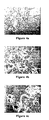
- the samples were observed through phase contrast microscope magnification x 220.
- Photomicrographs of the sludge samples are shown in Figures 4A-C .
Landscapes
- Life Sciences & Earth Sciences (AREA)
- Engineering & Computer Science (AREA)
- Health & Medical Sciences (AREA)
- Dentistry (AREA)
- Water Supply & Treatment (AREA)
- Chemical & Material Sciences (AREA)
- Organic Chemistry (AREA)
- Agronomy & Crop Science (AREA)
- Pest Control & Pesticides (AREA)
- Plant Pathology (AREA)
- Hydrology & Water Resources (AREA)
- Environmental & Geological Engineering (AREA)
- General Health & Medical Sciences (AREA)
- Wood Science & Technology (AREA)
- Zoology (AREA)
- Environmental Sciences (AREA)
- Biodiversity & Conservation Biology (AREA)
- Microbiology (AREA)
- Activated Sludge Processes (AREA)
- Agricultural Chemicals And Associated Chemicals (AREA)
- Treatment Of Sludge (AREA)
Claims (36)
- Utilisation d'une quantité efficace de biocide hydrosoluble non oxydant pour l'amélioration de la qualité des boues en réduisant la tendance au gonflement des boues, selon laquelle le biocide comprend un composé phosphonium substitué par un alkyle, une phosphine substituée par un alkyle, un condensat de phosphine substituée par un alkyle ou un composé ammonium quaternaire polymère.
- Utilisation selon la revendication 1, selon laquelle le biocide hydrosoluble est utilisé pour l'amélioration de la qualité des boues en réduisant l'indice de volume des boues (SVI), tel que mesuré par l'indice de Mohlman, à une valeur inférieure ou égale à 200 cm3/g.
- Utilisation selon la revendication 2, selon laquelle le SVI est réduit à une valeur inférieure ou égale à 180 cm3/g.
- Utilisation selon la revendication 3, selon laquelle le SVI est réduit à une valeur inférieure ou égale à 150 cm3/g.
- Utilisation selon l'une quelconque des revendications précédentes, selon laquelle le SVI est réduit à une valeur inférieure ou égale à 80 % de la valeur du SVI avant le traitement.
- Utilisation selon la revendication 5, selon laquelle le SVI est réduit à une valeur inférieure ou égale à 60 % de la valeur du SVI avant le traitement.
- Utilisation selon l'une quelconque des revendications précédentes, selon laquelle le biocide hydrosoluble est utilisé pour l'amélioration de la qualité des boues en réduisant le taux de bactéries filamenteuses.
- Utilisation selon la revendication 7, selon laquelle le biocide hydrosoluble est utilisé pour l'amélioration de la qualité des boues en réduisant les taux d'une ou de plusieurs bactéries filamenteuses choisies parmi les genres suivants : Thiothrix sp., type 021N, H. hydrossis, type 0092, N. limicola, type 0041 et type 0803.
- Utilisation selon l'une quelconque des revendications précédentes, selon laquelle le biocide hydrosoluble est utilisé pour l'amélioration de la qualité des boues en réduisant le taux de bactéries filamenteuses à longue chaîne.
- Utilisation selon la revendication 9, selon laquelle les taux de bactéries filamenteuses à longue chaîne présentant une longueur supérieure à 500 µm sont réduits.
- Utilisation selon la revendication 10, selon laquelle les taux de bactéries filamenteuses à longue chaîne présentant une longueur supérieure à 500 µm sont réduits d'un facteur 2 ou plus.
- Utilisation selon la revendication 11, selon laquelle les taux de bactéries filamenteuses à longue chaîne présentant une longueur supérieure à 500 µm sont réduits d'un facteur 4 ou plus.
- Utilisation selon l'une quelconque des revendications 7 à 12, selon laquelle le biocide hydrosoluble est utilisé pour l'amélioration dé la qualité des boues en réduisant les taux de bactéries filamenteuses de sorte que la longueur totale de filaments par champ microscopique soit réduite.
- Utilisation selon la revendication 13, selon laquelle la longueur totale de filaments par champ microscopique est réduite d'un facteur 2 ou plus.
- Utilisation selon la revendication 14, selon laquelle la longueur totale de filaments par champ microscopique est réduite d'un facteur 5 ou plus.
- Utilisation selon l'une quelconque des revendications précédentes, selon laquelle la quantité efficace de biocide hydrosoluble utilisé est comprise entre 0,01 et 5000 ppm.
- Utilisation selon la revendication 16, selon laquelle la quantité efficace de biocide hydrosoluble utilisé est comprise entre 0,05 et 500 ppm.
- Utilisation selon la revendication 17, selon laquelle la quantité efficace de biocide hydrosoluble utilisé est comprise entre 0,1 et 100 ppm.
- Utilisation selon la revendication 18, selon laquelle la quantité efficace de biocide hydrosoluble utilisé est comprise entre 0,1 et 30 ppm.
- Utilisation selon l'une quelconque des revendications précédentes, selon laquelle le biocide hydrosoluble non oxydant comprend un composé phosphonium substitué par un alkyle, une phosphine substituée par un alkyle ou un condensat de phosphine substituée par un alkyle.
- Utilisation selon la revendication 20, selon laquelle le biocide hydrosoluble non oxydant comprend un composé phosphonium de formule (I) substitué par un alkyle, une phosphine de formule (II) substituée par un alkyle ou un condensat de formule (III) :

 X est un anion ;n est la valence de X représentée par m ;chaque A peut être identique ou différent et est choisi parmi OH, OR, SO3R, PO3R2, COOH, COOR, SO3H, PO3H3, CH2COOH, des groupes alkyle substitués, aryle et amino substitués ;chaque R, et chaque R (lorsqu'il est présent) dans chaque groupe A, est indépendamment choisi parmi un hydrogène, un alkyle en C1 à C20, un aryle, un alkyle ou aryle substitué, un carboxy ou carboxy ester ; chaque groupe CR2 pouvant être identique ou différent ;R'' est un radical hydrocarboné divalent comprenant de 2 à 20 atomes de carbone et est éventuellement substitué par un ou plusieurs substituants choisis dans le groupe constitué d'un halogène, d'un hydroxy, d'un carboxy, d'un amino, d' un alkylamino ou de groupes PR1 mCH2OH et/ou éventuellement interrompu par une ou plusieurs liaisons éther ou carbonyle ;chaque R1 est indépendamment un radical hydrocarboné monovalent comprenant de 1 à 25 atomes de carbone et éventuellement substitué par un ou plusieurs substituants choisis dans le groupe constitué d'un halogène, d'un hydroxy, d'un carboxy, d'un amino, d'un alkylamino ou de groupes PR1 vCH2OH et/ou éventuellement interrompu par une ou plusieurs liaisons éther ou carbonyle ; etdans la formule (III) chaque v vaut 1 ou 2, k est compris entre 0 et 10 (par exemple entre 1 et 10), x est le nombre de groupes dans la molécule ayant v = 2 et X est un anion compatible de valence y de sorte que le composé est hydrosoluble.
 - Utilisation selon la revendication 21, selon laquelle le composé phosphonium substitué par un alkyle est le sulfate de tétrakis(hydroxyméthyl)phosphonium (THPS).
- Utilisation selon la revendication 21, selon laquelle le composé phosphonium substitué par un alkyle est choisi dans le groupe constitué du chlorure de tétrakis(hydroxyméthyl)phosphonium, du bromure de tétrakis(hydroxyméthyl)phosphonium, de l'acétate de tétrakis(hydroxyméthyl)phosphonium et du phosphate de tétrakis(hydroxyméthyl)phosphonium.
- Utilisation selon la revendication 21, selon laquelle la phosphine substituée par un alkyle est la tris(hydroxyméthyl)phosphine (THP).
- Utilisation selon la revendication 21, selon laquelle le condensat est un condensat de tris(hydroxyorgano)phosphine.
- Utilisation selon la revendication 25, selon laquelle le condensat est un condensat de tris(hydroxyorgano)phosphine avec un composé azoté.
- Utilisation selon la revendication 26, selon laquelle le condensat est un condensat de tris(hydroxyorgano)phosphine avec de l'urée.
- Utilisation selon l'une quelconque des revendications précédentes, selon laquelle le biocide hydrosoluble non oxydant comprend un composé ammonium quaternaire polymère.
- Utilisation selon la revendication 28, selon laquelle le composé ammonium quaternaire polymère est le dichlorure de polyoxyéthylène(diméthylimino)éthylène.
- Utilisation selon l'une quelconque des revendications précédentes, selon laquelle le biocide hydrosoluble est en outre formulé avec un ou plusieurs des produits chimiques suivants utilisés classiquement pour le traitement des eaux usées : un tensioactif; un anti-mousse; un inhibiteur d'entartrage; un inhibiteur de corrosion ; un biocide ; un floculant; un agent de déshydratation ; et un dispersant.
- Utilisation selon l'une quelconque des revendications précédentes, selon laquelle les boues proviennent d'effluents industriels ou municipaux.
- Utilisation selon la revendication 31, selon laquelle les boues proviennent de procédés industriels, y compris la production de papier, la transformation des aliments et les procédés de l'industrie chimique, ou proviennent d'habitations domestiques ou de bâtiments institutionnels et similaires.
- Utilisation selon l'une quelconque des revendications précédentes, selon laquelle le biocide hydrosoluble est utilisé au cours d'un procédé de traitement des eaux réalisé dans une usine de traitement des eaux usées.
- Utilisation selon la revendication 33, selon laquelle le biocide hydrosoluble est utilisé au cours d'un procédé de traitement des eaux après l'étape de digestion aérobie.
- Utilisation selon la revendication 34, selon laquelle le biocide soluble est utilisé au cours d'un procédé de traitement des eaux dans un bassin ou une lagune de décantation.
- Utilisation selon l'une quelconque des revendications précédentes, selon laquelle le biocide hydrosoluble est ajouté de manière discontinue.
Applications Claiming Priority (3)
| Application Number | Priority Date | Filing Date | Title |
|---|---|---|---|
| PCT/GB2004/002656 WO2004113236A2 (fr) | 2003-06-20 | 2004-06-21 | Agents decouplants |
| GB0427692A GB0427692D0 (en) | 2004-12-17 | 2004-12-17 | Improvement of sludge quality |
| PCT/GB2005/002439 WO2005123607A1 (fr) | 2004-06-21 | 2005-06-21 | Amelioration de la qualite d'une boue |
Publications (2)
| Publication Number | Publication Date |
|---|---|
| EP1758825A1 EP1758825A1 (fr) | 2007-03-07 |
| EP1758825B1 true EP1758825B1 (fr) | 2008-10-29 |
Family
ID=34971744
Family Applications (1)
| Application Number | Title | Priority Date | Filing Date |
|---|---|---|---|
| EP20050753189 Expired - Lifetime EP1758825B1 (fr) | 2004-06-21 | 2005-06-21 | Amelioration de la qualite d'une boue |
Country Status (9)
| Country | Link |
|---|---|
| US (1) | US7638055B2 (fr) |
| EP (1) | EP1758825B1 (fr) |
| AT (1) | ATE412615T1 (fr) |
| AU (1) | AU2005254315B2 (fr) |
| CA (1) | CA2570219A1 (fr) |
| DE (1) | DE602005010701D1 (fr) |
| ES (1) | ES2313360T3 (fr) |
| RU (1) | RU2353587C2 (fr) |
| WO (1) | WO2005123607A1 (fr) |
Families Citing this family (15)
| Publication number | Priority date | Publication date | Assignee | Title |
|---|---|---|---|---|
| US7918281B2 (en) * | 2007-03-06 | 2011-04-05 | Baker Hughes Incorporated | Method of treating flow conduits and vessels with foamed composition |
| US10480125B2 (en) * | 2009-03-06 | 2019-11-19 | Bwa Water Additives Uk Limited | Biocidal compositions |
| EP2374763A1 (fr) | 2010-04-06 | 2011-10-12 | Kemira Oyj | Composition de traitement de l'eau, son utilisation et procédé d'amélioration du procédé de traitement de l'eau |
| US8276663B2 (en) * | 2010-09-28 | 2012-10-02 | Halliburton Energy Services Inc. | Methods for reducing biological load in subterranean formations |
| WO2012148417A1 (fr) * | 2011-04-29 | 2012-11-01 | Diversey, Inc. | Amélioration de la performance des lagons d'eaux usées |
| RU2474535C1 (ru) * | 2011-08-17 | 2013-02-10 | Общество с ограниченной ответственностью "Технострой" (ООО Технострой) | Способ получения аморфного диоксида кремния |
| RU2462267C1 (ru) * | 2011-10-12 | 2012-09-27 | Владимир Николаевич Каргаев | Дезинфицирующее средство с моющим эффектом |
| US10827758B2 (en) | 2014-10-14 | 2020-11-10 | Italmatch Chemicals Gb Limited | Relating to water treatment |
| US10905125B2 (en) | 2014-10-14 | 2021-02-02 | Italmatch Chemicals Gb Ltd. | Biocidal compositions and method of treating water using thereof |
| CN104803507B (zh) * | 2015-04-09 | 2016-08-17 | 山东华阳农药化工集团有限公司 | 一种高效氯氰菊酯废水综合处理方法 |
| US10538442B2 (en) | 2015-08-31 | 2020-01-21 | Bwa Water Additives Uk Limited | Water treatment |
| US10214684B2 (en) | 2015-09-30 | 2019-02-26 | Bwa Water Additives Uk Limited | Friction reducers and well treatment fluids |
| US10004233B2 (en) | 2015-10-01 | 2018-06-26 | Bwa Water Additives Uk Limited | Relating to treatment of water |
| US9957173B2 (en) | 2015-10-08 | 2018-05-01 | Bwa Water Additives Uk Limited | Treatment of water |
| US10570033B2 (en) | 2016-05-12 | 2020-02-25 | Italmatch Chemicals Gb Limited | Water treatment |
Family Cites Families (18)
| Publication number | Priority date | Publication date | Assignee | Title |
|---|---|---|---|---|
| DE1280764B (de) * | 1967-07-21 | 1968-10-17 | Hoechst Ag | Verfahren zum Vermindern der UEberschussschlammproduktion in Belebtschlammanlagen fuer Abwasserreinigung |
| FR2284108A1 (fr) * | 1974-09-09 | 1976-04-02 | Ponsar Yves | Procede et dispositif pour mesurer le poids apparent d'une boue chargeant un liquide et leurs applications |
| DE3469162D1 (en) * | 1983-08-26 | 1988-03-10 | Albright & Wilson | Biocidal water treatment |
| DE3674308D1 (de) * | 1985-08-06 | 1990-10-25 | Albright & Wilson | Biozide zusammensetzungund verfahren zur behandlung von wasser. |
| GB8527793D0 (en) * | 1985-11-11 | 1985-12-18 | Albright & Wilson | Control of bryophytes lichens algae & fern |
| US4966716A (en) * | 1988-06-24 | 1990-10-30 | Great Lakes Chemical Corporation | Method for the control of biofouling in recirculating water systems |
| GB8904844D0 (en) * | 1989-03-03 | 1989-04-12 | Albright & Wilson | Biocidal compositions and treatments |
| US5352444A (en) | 1992-05-19 | 1994-10-04 | Cox James P | Stabilization of biowastes |
| NL9301475A (nl) * | 1993-08-25 | 1995-03-16 | Csm Suiker | Werkwijze voor het reduceren van de geuremissie van bij de voedingsmiddelenindustrie optredende waterstromen. |
| EP0650931B1 (fr) * | 1993-10-22 | 2003-07-02 | Kurita Water Industries Ltd. | Méthode pour éviter à une boue activée de pendre sa capacité de sedimentation |
| FI961247A0 (fi) * | 1996-03-18 | 1996-03-18 | Finnish Peroxides Ab Oy | Foerfarande foer loesning av uppsvaellningsproblem i en avfalls vattenreningsanordning foer kontroll av traodartiga bakterier |
| US5670055A (en) * | 1996-08-08 | 1997-09-23 | Nalco Chemical Company | Use of the linear alkylbenzene sulfonate as a biofouling control agent |
| KR100542669B1 (ko) * | 1997-12-23 | 2006-01-12 | 로우디아 컨수머 스페셜티즈 리미티드 | 살생 작용을 상승시키는 조성물 및 이를 이용한 수계 처리방법 |
| US6001158A (en) * | 1999-02-18 | 1999-12-14 | Baker Hughes Incorporated | Dry biocide |
| GB0001417D0 (en) * | 2000-01-22 | 2000-03-08 | Albright & Wilson Uk Ltd | Bleaching pulp |
| US20030052059A1 (en) * | 2001-06-19 | 2003-03-20 | Boyette Scott M. | Method for inhibiting filamentous bacteria bulking |
| US6723245B1 (en) * | 2002-01-04 | 2004-04-20 | Nalco Company | Method of using water soluble cationic polymers in membrane biological reactors |
| NZ540823A (en) * | 2002-12-20 | 2008-03-28 | Lonza Ag | Method for removal of biofilm |
-
2005
- 2005-06-21 ES ES05753189T patent/ES2313360T3/es not_active Expired - Lifetime
- 2005-06-21 AT AT05753189T patent/ATE412615T1/de not_active IP Right Cessation
- 2005-06-21 WO PCT/GB2005/002439 patent/WO2005123607A1/fr not_active Ceased
- 2005-06-21 DE DE200560010701 patent/DE602005010701D1/de not_active Expired - Lifetime
- 2005-06-21 AU AU2005254315A patent/AU2005254315B2/en not_active Ceased
- 2005-06-21 CA CA 2570219 patent/CA2570219A1/fr not_active Abandoned
- 2005-06-21 RU RU2007102067/15A patent/RU2353587C2/ru not_active IP Right Cessation
- 2005-06-21 US US11/630,604 patent/US7638055B2/en not_active Expired - Fee Related
- 2005-06-21 EP EP20050753189 patent/EP1758825B1/fr not_active Expired - Lifetime
Also Published As
| Publication number | Publication date |
|---|---|
| CA2570219A1 (fr) | 2005-12-29 |
| US20080135476A1 (en) | 2008-06-12 |
| RU2007102067A (ru) | 2008-07-27 |
| DE602005010701D1 (de) | 2008-12-11 |
| RU2353587C2 (ru) | 2009-04-27 |
| WO2005123607A1 (fr) | 2005-12-29 |
| ES2313360T3 (es) | 2009-03-01 |
| ATE412615T1 (de) | 2008-11-15 |
| US7638055B2 (en) | 2009-12-29 |
| AU2005254315B2 (en) | 2009-04-09 |
| AU2005254315A1 (en) | 2005-12-29 |
| EP1758825A1 (fr) | 2007-03-07 |
Similar Documents
| Publication | Publication Date | Title |
|---|---|---|
| AU2005254315B2 (en) | Improvement of sludge quality | |
| EP0139404B1 (fr) | Traitement de l'eau par un agent biocide | |
| US7780859B2 (en) | Uncoupling agents | |
| EP0593250B1 (fr) | Combinaison synergique et antimicrobe de polyéther phosphanates et biocides non-oxydantes | |
| EP2408308B1 (fr) | Composition biocide stabilisée | |
| EP0364789A1 (fr) | Composition antimicrobienne et méthode d'utilisation | |
| JP4764424B2 (ja) | 汚泥特性の改善 | |
| CN111034732A (zh) | 一种工业循环水体改良用杀菌灭藻剂 | |
| EP0706759A2 (fr) | Procédé pour combattre l'encrassement biologique dans la production du pétrole | |
| WO1996032523A1 (fr) | Procede et composition permettant d'empecher l'encrassement biologique dans un systeme d'irrigation | |
| JPS60204704A (ja) | ヒドロキシプロピルメタンチオスルフオネートを含有する相乗的組成物およびその使用法 | |
| CN114431227A (zh) | 一种生物膜杀菌增效剂、杀菌组合物及生物膜去除方法 | |
| JPH0550481B2 (fr) | ||
| US20240188567A1 (en) | Green tide control agent containing hydrogen peroxide | |
| KR100975373B1 (ko) | 이소티아졸론 조성물 및 이소티아졸론의 안정화 방법 | |
| KR20130141624A (ko) | 살조·살균제 및 살조·살균방법 | |
| JPS6126521B2 (fr) | ||
| GB1574450A (en) | Antimicrobial agents |
Legal Events
| Date | Code | Title | Description |
|---|---|---|---|
| PUAI | Public reference made under article 153(3) epc to a published international application that has entered the european phase |
Free format text: ORIGINAL CODE: 0009012 |
|
| 17P | Request for examination filed |
Effective date: 20061208 |
|
| AK | Designated contracting states |
Kind code of ref document: A1 Designated state(s): AT BE BG CH CY CZ DE DK EE ES FI FR GB GR HU IE IS IT LI LT LU MC NL PL PT RO SE SI SK TR |
|
| DAX | Request for extension of the european patent (deleted) | ||
| GRAP | Despatch of communication of intention to grant a patent |
Free format text: ORIGINAL CODE: EPIDOSNIGR1 |
|
| GRAS | Grant fee paid |
Free format text: ORIGINAL CODE: EPIDOSNIGR3 |
|
| GRAA | (expected) grant |
Free format text: ORIGINAL CODE: 0009210 |
|
| AK | Designated contracting states |
Kind code of ref document: B1 Designated state(s): AT BE BG CH CY CZ DE DK EE ES FI FR GB GR HU IE IS IT LI LT LU MC NL PL PT RO SE SI SK TR |
|
| REG | Reference to a national code |
Ref country code: GB Ref legal event code: FG4D |
|
| REG | Reference to a national code |
Ref country code: CH Ref legal event code: EP |
|
| REG | Reference to a national code |
Ref country code: IE Ref legal event code: FG4D |
|
| REF | Corresponds to: |
Ref document number: 602005010701 Country of ref document: DE Date of ref document: 20081211 Kind code of ref document: P |
|
| REG | Reference to a national code |
Ref country code: ES Ref legal event code: FG2A Ref document number: 2313360 Country of ref document: ES Kind code of ref document: T3 |
|
| NLV1 | Nl: lapsed or annulled due to failure to fulfill the requirements of art. 29p and 29m of the patents act | ||
| LTIE | Lt: invalidation of european patent or patent extension |
Effective date: 20081029 |
|
| PG25 | Lapsed in a contracting state [announced via postgrant information from national office to epo] |
Ref country code: AT Free format text: LAPSE BECAUSE OF FAILURE TO SUBMIT A TRANSLATION OF THE DESCRIPTION OR TO PAY THE FEE WITHIN THE PRESCRIBED TIME-LIMIT Effective date: 20081029 Ref country code: BG Free format text: LAPSE BECAUSE OF FAILURE TO SUBMIT A TRANSLATION OF THE DESCRIPTION OR TO PAY THE FEE WITHIN THE PRESCRIBED TIME-LIMIT Effective date: 20090129 Ref country code: LT Free format text: LAPSE BECAUSE OF FAILURE TO SUBMIT A TRANSLATION OF THE DESCRIPTION OR TO PAY THE FEE WITHIN THE PRESCRIBED TIME-LIMIT Effective date: 20081029 |
|
| PG25 | Lapsed in a contracting state [announced via postgrant information from national office to epo] |
Ref country code: NL Free format text: LAPSE BECAUSE OF FAILURE TO SUBMIT A TRANSLATION OF THE DESCRIPTION OR TO PAY THE FEE WITHIN THE PRESCRIBED TIME-LIMIT Effective date: 20081029 Ref country code: SI Free format text: LAPSE BECAUSE OF FAILURE TO SUBMIT A TRANSLATION OF THE DESCRIPTION OR TO PAY THE FEE WITHIN THE PRESCRIBED TIME-LIMIT Effective date: 20081029 Ref country code: IS Free format text: LAPSE BECAUSE OF FAILURE TO SUBMIT A TRANSLATION OF THE DESCRIPTION OR TO PAY THE FEE WITHIN THE PRESCRIBED TIME-LIMIT Effective date: 20090228 Ref country code: PT Free format text: LAPSE BECAUSE OF FAILURE TO SUBMIT A TRANSLATION OF THE DESCRIPTION OR TO PAY THE FEE WITHIN THE PRESCRIBED TIME-LIMIT Effective date: 20090330 Ref country code: PL Free format text: LAPSE BECAUSE OF FAILURE TO SUBMIT A TRANSLATION OF THE DESCRIPTION OR TO PAY THE FEE WITHIN THE PRESCRIBED TIME-LIMIT Effective date: 20081029 Ref country code: FI Free format text: LAPSE BECAUSE OF FAILURE TO SUBMIT A TRANSLATION OF THE DESCRIPTION OR TO PAY THE FEE WITHIN THE PRESCRIBED TIME-LIMIT Effective date: 20081029 |
|
| PG25 | Lapsed in a contracting state [announced via postgrant information from national office to epo] |
Ref country code: EE Free format text: LAPSE BECAUSE OF FAILURE TO SUBMIT A TRANSLATION OF THE DESCRIPTION OR TO PAY THE FEE WITHIN THE PRESCRIBED TIME-LIMIT Effective date: 20081029 Ref country code: RO Free format text: LAPSE BECAUSE OF FAILURE TO SUBMIT A TRANSLATION OF THE DESCRIPTION OR TO PAY THE FEE WITHIN THE PRESCRIBED TIME-LIMIT Effective date: 20081029 Ref country code: BE Free format text: LAPSE BECAUSE OF FAILURE TO SUBMIT A TRANSLATION OF THE DESCRIPTION OR TO PAY THE FEE WITHIN THE PRESCRIBED TIME-LIMIT Effective date: 20081029 Ref country code: DK Free format text: LAPSE BECAUSE OF FAILURE TO SUBMIT A TRANSLATION OF THE DESCRIPTION OR TO PAY THE FEE WITHIN THE PRESCRIBED TIME-LIMIT Effective date: 20081029 |
|
| PG25 | Lapsed in a contracting state [announced via postgrant information from national office to epo] |
Ref country code: CZ Free format text: LAPSE BECAUSE OF FAILURE TO SUBMIT A TRANSLATION OF THE DESCRIPTION OR TO PAY THE FEE WITHIN THE PRESCRIBED TIME-LIMIT Effective date: 20081029 Ref country code: SE Free format text: LAPSE BECAUSE OF FAILURE TO SUBMIT A TRANSLATION OF THE DESCRIPTION OR TO PAY THE FEE WITHIN THE PRESCRIBED TIME-LIMIT Effective date: 20090129 |
|
| PLBE | No opposition filed within time limit |
Free format text: ORIGINAL CODE: 0009261 |
|
| STAA | Information on the status of an ep patent application or granted ep patent |
Free format text: STATUS: NO OPPOSITION FILED WITHIN TIME LIMIT |
|
| PG25 | Lapsed in a contracting state [announced via postgrant information from national office to epo] |
Ref country code: SK Free format text: LAPSE BECAUSE OF FAILURE TO SUBMIT A TRANSLATION OF THE DESCRIPTION OR TO PAY THE FEE WITHIN THE PRESCRIBED TIME-LIMIT Effective date: 20081029 |
|
| 26N | No opposition filed |
Effective date: 20090730 |
|
| PG25 | Lapsed in a contracting state [announced via postgrant information from national office to epo] |
Ref country code: MC Free format text: LAPSE BECAUSE OF NON-PAYMENT OF DUE FEES Effective date: 20090630 |
|
| REG | Reference to a national code |
Ref country code: CH Ref legal event code: PL |
|
| REG | Reference to a national code |
Ref country code: IE Ref legal event code: MM4A |
|
| PG25 | Lapsed in a contracting state [announced via postgrant information from national office to epo] |
Ref country code: IE Free format text: LAPSE BECAUSE OF NON-PAYMENT OF DUE FEES Effective date: 20090621 Ref country code: LI Free format text: LAPSE BECAUSE OF NON-PAYMENT OF DUE FEES Effective date: 20090630 Ref country code: CH Free format text: LAPSE BECAUSE OF NON-PAYMENT OF DUE FEES Effective date: 20090630 |
|
| PG25 | Lapsed in a contracting state [announced via postgrant information from national office to epo] |
Ref country code: GR Free format text: LAPSE BECAUSE OF FAILURE TO SUBMIT A TRANSLATION OF THE DESCRIPTION OR TO PAY THE FEE WITHIN THE PRESCRIBED TIME-LIMIT Effective date: 20090130 |
|
| PG25 | Lapsed in a contracting state [announced via postgrant information from national office to epo] |
Ref country code: LU Free format text: LAPSE BECAUSE OF NON-PAYMENT OF DUE FEES Effective date: 20090621 |
|
| PG25 | Lapsed in a contracting state [announced via postgrant information from national office to epo] |
Ref country code: HU Free format text: LAPSE BECAUSE OF FAILURE TO SUBMIT A TRANSLATION OF THE DESCRIPTION OR TO PAY THE FEE WITHIN THE PRESCRIBED TIME-LIMIT Effective date: 20090430 |
|
| PG25 | Lapsed in a contracting state [announced via postgrant information from national office to epo] |
Ref country code: TR Free format text: LAPSE BECAUSE OF FAILURE TO SUBMIT A TRANSLATION OF THE DESCRIPTION OR TO PAY THE FEE WITHIN THE PRESCRIBED TIME-LIMIT Effective date: 20081029 |
|
| PG25 | Lapsed in a contracting state [announced via postgrant information from national office to epo] |
Ref country code: CY Free format text: LAPSE BECAUSE OF FAILURE TO SUBMIT A TRANSLATION OF THE DESCRIPTION OR TO PAY THE FEE WITHIN THE PRESCRIBED TIME-LIMIT Effective date: 20081029 |
|
| REG | Reference to a national code |
Ref country code: FR Ref legal event code: PLFP Year of fee payment: 12 |
|
| PGFP | Annual fee paid to national office [announced via postgrant information from national office to epo] |
Ref country code: DE Payment date: 20160614 Year of fee payment: 12 Ref country code: GB Payment date: 20160615 Year of fee payment: 12 Ref country code: ES Payment date: 20160512 Year of fee payment: 12 |
|
| PGFP | Annual fee paid to national office [announced via postgrant information from national office to epo] |
Ref country code: FR Payment date: 20160516 Year of fee payment: 12 |
|
| PGFP | Annual fee paid to national office [announced via postgrant information from national office to epo] |
Ref country code: IT Payment date: 20160621 Year of fee payment: 12 |
|
| REG | Reference to a national code |
Ref country code: DE Ref legal event code: R119 Ref document number: 602005010701 Country of ref document: DE |
|
| GBPC | Gb: european patent ceased through non-payment of renewal fee |
Effective date: 20170621 |
|
| REG | Reference to a national code |
Ref country code: FR Ref legal event code: ST Effective date: 20180228 |
|
| PG25 | Lapsed in a contracting state [announced via postgrant information from national office to epo] |
Ref country code: DE Free format text: LAPSE BECAUSE OF NON-PAYMENT OF DUE FEES Effective date: 20180103 Ref country code: GB Free format text: LAPSE BECAUSE OF NON-PAYMENT OF DUE FEES Effective date: 20170621 |
|
| PG25 | Lapsed in a contracting state [announced via postgrant information from national office to epo] |
Ref country code: IT Free format text: LAPSE BECAUSE OF NON-PAYMENT OF DUE FEES Effective date: 20170621 Ref country code: FR Free format text: LAPSE BECAUSE OF NON-PAYMENT OF DUE FEES Effective date: 20170630 |
|
| REG | Reference to a national code |
Ref country code: ES Ref legal event code: FD2A Effective date: 20181112 |
|
| PG25 | Lapsed in a contracting state [announced via postgrant information from national office to epo] |
Ref country code: ES Free format text: LAPSE BECAUSE OF NON-PAYMENT OF DUE FEES Effective date: 20170622 |