EP1760916A2 - Verfahren zum Senden einer Nachricht um das Anschauen einer digitalen multimedialen Rundfunksendung zu empfehlen und mobiles Endngerät dass das Verfahren benutzt - Google Patents
Verfahren zum Senden einer Nachricht um das Anschauen einer digitalen multimedialen Rundfunksendung zu empfehlen und mobiles Endngerät dass das Verfahren benutzt Download PDFInfo
- Publication number
- EP1760916A2 EP1760916A2 EP06014576A EP06014576A EP1760916A2 EP 1760916 A2 EP1760916 A2 EP 1760916A2 EP 06014576 A EP06014576 A EP 06014576A EP 06014576 A EP06014576 A EP 06014576A EP 1760916 A2 EP1760916 A2 EP 1760916A2
- Authority
- EP
- European Patent Office
- Prior art keywords
- broadcast
- message
- channel number
- mobile terminal
- digital multimedia
- Prior art date
- Legal status (The legal status is an assumption and is not a legal conclusion. Google has not performed a legal analysis and makes no representation as to the accuracy of the status listed.)
- Withdrawn
Links
Images




Classifications
-
- H—ELECTRICITY
- H04—ELECTRIC COMMUNICATION TECHNIQUE
- H04H—BROADCAST COMMUNICATION
- H04H60/00—Arrangements for broadcast applications with a direct linking to broadcast information or broadcast space-time; Broadcast-related systems
- H04H60/76—Arrangements characterised by transmission systems other than for broadcast, e.g. the Internet
- H04H60/78—Arrangements characterised by transmission systems other than for broadcast, e.g. the Internet characterised by source locations or destination locations
- H04H60/80—Arrangements characterised by transmission systems other than for broadcast, e.g. the Internet characterised by source locations or destination locations characterised by transmission among terminal devices
-
- H—ELECTRICITY
- H04—ELECTRIC COMMUNICATION TECHNIQUE
- H04H—BROADCAST COMMUNICATION
- H04H60/00—Arrangements for broadcast applications with a direct linking to broadcast information or broadcast space-time; Broadcast-related systems
- H04H60/35—Arrangements for identifying or recognising characteristics with a direct linkage to broadcast information or to broadcast space-time, e.g. for identifying broadcast stations or for identifying users
- H04H60/38—Arrangements for identifying or recognising characteristics with a direct linkage to broadcast information or to broadcast space-time, e.g. for identifying broadcast stations or for identifying users for identifying broadcast time or space
- H04H60/41—Arrangements for identifying or recognising characteristics with a direct linkage to broadcast information or to broadcast space-time, e.g. for identifying broadcast stations or for identifying users for identifying broadcast time or space for identifying broadcast space, i.e. broadcast channels, broadcast stations or broadcast areas
- H04H60/43—Arrangements for identifying or recognising characteristics with a direct linkage to broadcast information or to broadcast space-time, e.g. for identifying broadcast stations or for identifying users for identifying broadcast time or space for identifying broadcast space, i.e. broadcast channels, broadcast stations or broadcast areas for identifying broadcast channels
-
- H—ELECTRICITY
- H04—ELECTRIC COMMUNICATION TECHNIQUE
- H04N—PICTORIAL COMMUNICATION, e.g. TELEVISION
- H04N21/00—Selective content distribution, e.g. interactive television or video on demand [VOD]
- H04N21/40—Client devices specifically adapted for the reception of or interaction with content, e.g. set-top-box [STB]; Operations thereof
- H04N21/41—Structure of client; Structure of client peripherals
- H04N21/414—Specialised client platforms, e.g. receiver in car or embedded in a mobile appliance
- H04N21/41407—Specialised client platforms, e.g. receiver in car or embedded in a mobile appliance embedded in a portable device, e.g. video client on a mobile phone, PDA, laptop
-
- H—ELECTRICITY
- H04—ELECTRIC COMMUNICATION TECHNIQUE
- H04N—PICTORIAL COMMUNICATION, e.g. TELEVISION
- H04N21/00—Selective content distribution, e.g. interactive television or video on demand [VOD]
- H04N21/40—Client devices specifically adapted for the reception of or interaction with content, e.g. set-top-box [STB]; Operations thereof
- H04N21/43—Processing of content or additional data, e.g. demultiplexing additional data from a digital video stream; Elementary client operations, e.g. monitoring of home network or synchronising decoder's clock; Client middleware
- H04N21/438—Interfacing the downstream path of the transmission network originating from a server, e.g. retrieving encoded video stream packets from an IP network
- H04N21/4383—Accessing a communication channel
-
- H—ELECTRICITY
- H04—ELECTRIC COMMUNICATION TECHNIQUE
- H04N—PICTORIAL COMMUNICATION, e.g. TELEVISION
- H04N21/00—Selective content distribution, e.g. interactive television or video on demand [VOD]
- H04N21/40—Client devices specifically adapted for the reception of or interaction with content, e.g. set-top-box [STB]; Operations thereof
- H04N21/47—End-user applications
- H04N21/478—Supplemental services, e.g. displaying phone caller identification, shopping application
- H04N21/4788—Supplemental services, e.g. displaying phone caller identification, shopping application communicating with other users, e.g. chatting
-
- H—ELECTRICITY
- H04—ELECTRIC COMMUNICATION TECHNIQUE
- H04N—PICTORIAL COMMUNICATION, e.g. TELEVISION
- H04N21/00—Selective content distribution, e.g. interactive television or video on demand [VOD]
- H04N21/40—Client devices specifically adapted for the reception of or interaction with content, e.g. set-top-box [STB]; Operations thereof
- H04N21/47—End-user applications
- H04N21/488—Data services, e.g. news ticker
- H04N21/4882—Data services, e.g. news ticker for displaying messages, e.g. warnings, reminders
-
- H—ELECTRICITY
- H04—ELECTRIC COMMUNICATION TECHNIQUE
- H04N—PICTORIAL COMMUNICATION, e.g. TELEVISION
- H04N7/00—Television systems
- H04N7/16—Analogue secrecy systems; Analogue subscription systems
- H04N7/173—Analogue secrecy systems; Analogue subscription systems with two-way working, e.g. subscriber sending a programme selection signal
- H04N7/17309—Transmission or handling of upstream communications
- H04N7/17327—Transmission or handling of upstream communications with deferred transmission or handling of upstream communications
-
- H—ELECTRICITY
- H04—ELECTRIC COMMUNICATION TECHNIQUE
- H04H—BROADCAST COMMUNICATION
- H04H60/00—Arrangements for broadcast applications with a direct linking to broadcast information or broadcast space-time; Broadcast-related systems
- H04H60/76—Arrangements characterised by transmission systems other than for broadcast, e.g. the Internet
- H04H60/81—Arrangements characterised by transmission systems other than for broadcast, e.g. the Internet characterised by the transmission system itself
- H04H60/90—Wireless transmission systems
- H04H60/91—Mobile communication networks
Definitions
- the present invention relates generally to digital multimedia broadcasting, and in particular, to a method for sending a message that recommends viewing a digital multimedia broadcast and a mobile terminal using the method.
- SMS Short Message Service
- SMS is used to send a short text message with a sender's mobile phone number to an intended recipient or to provide subscribed mobile users with useful information such as weather forecasts, news or stock quotes. Users can search various information offered via SMS and retrieve only necessary information. SMS is becoming available for a wider range of applications including e-payment and e-commerce. For example, most credit card companies have introduced an SMS service system to inform customers of their credit card transactions to help prevent any credit card theft or fraud.
- the present invention has been made to solve the above-mentioned problems occurring in the prior art.
- a method for sending a message that recommends viewing a digital multimedia broadcast to a mobile terminal capable of receiving digital multimedia broadcasting services includes: in a sender mobile terminal, checking whether the digital multimedia broadcasting is currently being provided when a request for sending a broadcast recommendation message is inputted; generating the broadcast recommendation message, including at least a currently selected channel number and a broadcast identifier indicating that the message is a recommendation to view a digital multimedia broadcast while the digital multimedia broadcasting is currently being provided, and sending the generated message to a recipient mobile terminal; in the recipient mobile terminal, reading the channel number within the received message when the broadcast identifier is included in the message, and displaying a message content that recommends viewing the broadcast of a corresponding channel; and selecting the corresponding channel when a key for accepting the recommendation is inputted, and providing the digital multimedia broadcast of the selected channel.
- a mobile terminal capable of receiving digital multimedia broadcasting services, which includes a mobile communication unit for sending or receiving a message; a user interface unit for inputting a request to send the message that recommends viewing a digital multimedia broadcast and for displaying content of the message; and a control unit for checking whether digital multimedia broadcasting is being provided when the request is inputted through the user interface unit, for generating a broadcast recommendation message including at least a currently selected channel number and a broadcast identifier indicating that the message is a recommendation to view a digital multimedia broadcast, while digital multimedia broadcasting is currently being provided, and for sending the generated message to a recipient mobile terminal.
- FIG. 1 is a block diagram illustrating a mobile terminal capable of receiving digital multimedia broadcasting services according to the present invention.
- a Digital Multimedia Broadcasting (DMB) receiver 100 of the mobile terminal receives digital multimedia broadcasting data of a selected channel. Under the control of a control unit 200, the DMB receiver 100 demodulates and decodes the received broadcasting data to convert the data into a recognizable form of audio and video data.
- a mobile communication unit 300 sends or receives Short Message Services (SMS) or Multimedia Message Service (MMS) messages under the control of the control unit 200. The mobile communication unit 300 also sends or receives typical calls and data related signals.
- SMS Short Message Services
- MMS Multimedia Message Service
- a user interface unit consists of a key input unit 400, a display unit 410 and an audio output unit 420.
- the key input unit 400 When a user presses a key to request the sending of a message that recommends viewing a digital multimedia broadcast, or a key to generate or confirm the broadcast recommendation message, the key input unit 400 generates a signal corresponding to the pressed key and outputs the generated signal to the control unit 200.
- the display unit 410 displays the received recommendation message. Under the control of the control unit 200, the display unit 410 displays pictures necessary to generate the recommendation message which will be sent to a recipient terminal.
- the display unit 410 receives video data converted from digital multimedia broadcasting data by the DMB receiver 100 and displays the received video data.
- the audio output unit 410 receives audio data converted from digital multimedia broadcasting data by the DMB receiver 100 and outputs the received audio data under the control of the control unit 200.
- the control unit 200 checks whether digital multimedia broadcasting is currently being provided on the mobile terminal. If digital multimedia broadcasting is currently being provided, the control unit 200 generates a message including at least the currently selected channel number and a broadcast identifier indicating that the message is a recommendation to view the broadcast. Otherwise, the control unit 200 controls the display unit 410 to display a picture for inputting the channel number. When the user inputs the channel number through the key input unit 400, the control unit 200 then generates a message including the inputted channel number and the broadcast identifier.
- a process for generating an SMS message that recommends viewing a digital multimedia broadcast according to the present invention will be explained with reference to FIGs. 2 through 5.
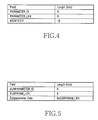
- FIGs. 2 through 5 are tables showing the fields necessary to create an SMS message according to general standards.
- parameter ID among the fields in FIG. 2 should be a teleservice identifier.
- the parameter ID field may have values as shown in FIG. 3.
- the parameter ID field is a teleservice identifier, it is constructed as shown in FIG. 4.
- the value of the teleservice identifier is important to create the broadcast recommendation message in an SMS format.
- the value of the teleservice identifier is used to classify a message into an SMS, MMS or Cell Broadcasting Message (CBS).
- Each teleservice identifier value corresponding to SMS, MMS or CBS is coded with mobile service provider networks.
- a newly defined value of the teleservice identifier is used to indicate the broadcast recommendation message.
- An SMS message classified into a broadcast recommendation message contains additional fields as shown in FIG. 5 to allocate a space for storing a broadcast channel number.
- the control unit 200 sets the parameter ID to the newly defined value of the teleservice identifier.
- subparameter ID is set to an identifier indicating a broadcast channel number in order to notify the recipient that the broadcast channel number is included in the broadcast recommendation message.
- the control unit 200 sets subparameter data to the currently selected channel number or the user inputs the channel number directly through the key input unit 400 so that the channel number can be included in the broadcast recommendation message.
- the broadcast recommendation message including at least the currently selected channel number or the channel number inputted by the user and the broadcast identifier can be created in an SMS format.
- the control unit 200 allocates a space in a message content field of the broadcast recommendation message and stores the broadcast identifier and the currently selected channel number or a channel number inputted by the user through the key input unit 400 in the allocated space.
- the control unit 200 then generates the broadcast recommendation message in SMS format including at least the broadcast identifier and the currently selected or directly inputted channel number.
- the control unit 200 When digital multimedia broadcasting is currently being provided on the mobile terminal, the control unit 200 displays a picture for changing the channel to a channel number other than the currently selected one on the display unit 410, without including the currently selected channels number in the broadcast recommendation message. To this end, the control unit 200 activates a cursor to allow the user to change channels while displaying the currently selected channel number on the display unit 410. Thus, the user can directly select a desired channel number other than the currently selected one through the key input unit 400. When the user changes the channel as desired by moving the cursor through the key input unit 400, the control unit 200 would then have the channel number selected through the key input unit 400 in the broadcast recommendation message.
- control unit 200 When a channel number is set in the picture displaying the currently selected channel number or in the picture for changing the channel as desired, the control unit 200 then displays a picture for inputting text content on the display unit 410.
- the control unit 200 incorporates the inputted content in the broadcast recommendation message.
- control unit 200 provides a menu for capturing a still image or a motion picture from the broadcast of the currency selected channel and including the captured still images or motion picture in the broadcast recommendation message.
- control unit 200 displays a menu for storing content together with the picture for inputting text content on the display unit 410 so that the user can include any selected still image or motion picture of the currently selected channel in the broadcast recommendation message.
- the control unit 200 displays a picture for selecting either the still image storage or the motion picture storage on the display unit 410.
- the control unit 200 When the user selects the still image storage through the key input unit 400, the control unit 200 then displays a picture for inputting a number of the captured still images on the display unit 410. At this time, a maximum number of the captured still images that can be included in the broadcast recommendation message is indicated in the picture for inputting the number of the captured still images so that a number which is not greater than the maximum number should be inputted.
- the control unit 200 captures the inputted number of still images from the broadcast of the currently selected channel and then includes the captured still images in the broadcast recommendation message.
- the control unit 200 displays a picture for capturing a motion picture from the broadcast of the currently selected channel. Also, the control unit 200 displays a graph showing the maximum amount of time allowed for storage of a motion picture in the broadcast recommendation message within the storage capacity. The user can capture the motion picture up to the maximum capacity for the allowed maximum amount of time or stop capturing the motion picture earlier. When the motion picture is captured within the storage capacity, the control unit 200 then includes the captured motion picture in the broadcast recommendation message.
- the control unit 200 After including the broadcast identifier, broadcast channel number, text content and still images or motion picture in the broadcast recommendation message, the control unit 200 displays a picture for inputting the recipient's mobile phone number which will receive the broadcast recommendation message.
- the control unit 200 controls the mobile communication unit 300 to send the broadcast recommendation message, which includes the broadcast identifier, channel number, text content and still images or motion picture, to the inputted mobile phone number of the recipient.
- the control unit 200 determines whether the received message includes a broadcast identifier. If the broadcast identifier is included in the message, the control unit 200 will recognize that the message is a recommendation to view a broadcast. The control unit 200 will also confirm whether digital multimedia broadcasting is currently being provided on the mobile terminal (in other words, whether the DMB receiver 100 is currently operating). If the operation of the DMB receiver 100 is confirmed, the control unit 100 will read a broadcast channel number included in the message and determine whether the currently selected channel number is identical to the channel number included in the message.
- control unit 200 will display a new message alert which is typically used when a new message is received. At this time, the control unit 200 still outputs the digital multimedia broadcast of the currently selected channel through the display unit 410 and the audio output unit 420.
- control unit 200 will also read the text content and still image or motion picture included in the received message. Then the control unit 200 will display on the display unit 410 the message that recommends viewing the broadcast of the pertinent channel number, together with the still images or moving picture included in the message.
- the control unit 200 Upon the user pressing a key for accepting the recommendation to view the broadcast through the key input unit 400, the control unit 200 then selects a channel corresponding to the channel number included in the message and receives digital multimedia broadcasting data of the selected channel through the DMB receiver 100.
- the DMB receiver 100 demodulates and decodes the received digital multimedia broadcasting data to convert it into a recognizable form of video and audio data.
- the control unit 200 outputs the video and audio data to the display unit 410 and the audio output unit 420, respectively.
- the control unit 100 will read the broadcast channel number included in the received message. If any text content, still image or motion picture is included in the received message, the control unit 200 will also read the included text content, still image or motion picture. Thereafter, the control unit 200 will display the message that recommends viewing the broadcast of the channel number included in the message, together with the still image or moving picture included in the message.
- the control unit 200 Upon the user pressing a key for accepting the recommendation to view the broadcast through the key input unit 400, the control unit 200 changes the current mode of the mobile terminal to the digital multimedia broadcasting mode and receives digital multimedia broadcasting data of the pertinent channel through the DMB receiver 100.
- the DMB receiver 100 demodulates and decodes the received digital multimedia broadcasting data to convert it into a recognizable form of video and audio data.
- the control unit 200 outputs the video and audio data to the display unit 410 and the audio output unit 420, respectively.
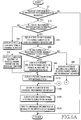
- FIG. 6 is a flow chart showing a process for sending a message that recommends viewing a digital multimedia broadcast to a recipient mobile terminal according to the present invention.
- the control unit 200 determines whether a key of the key input unit 400 is pressed to request the sending of a broadcast recommendation message (S1). When the key is pressed, the control unit 200 confirms whether digital multimedia broadcasting is currently being provided (S10) on the mobile terminal. When digital multimedia broadcasting is currently being provided, the control unit 200 displays a picture for changing channel to a channel number other than the currently selected one (S20) on the display unit 410. To this end, the control unit 200 activates a cursor to allow the user to change channel while displaying the currently selected channel number on the display unit 410.
- the control unit 200 determines whether the user changes the channel from the currently selected channel to another (S30) through the key input unit 400. When a channel change is detected, the control unit 200 generates a message including the newly selected channel number and a broadcast identifier (S40). On the other hand, when there is no channel change, the control unit 200 then generates a message including the currently selected channel number and the broadcast identifier (S50).
- control unit 200 will then display a picture for inputting a broadcast channel number on the display unit 410.
- the control unit 200 When the user inputs a desired channel number through the key input unit 400, the control unit 200 generates a message including the inputted channel number and the broadcast identifier (S70).
- the broadcast recommendation message which includes the channel number and the broadcast identifier is generated at step S40, S50 or S70.
- step S50 for including text content, still images or a motion picture in the broadcast recommendation message will be explained in more detail with reference to the flow chart (S80 through S160) of FIG. 6B.
- the control unit 200 displays a picture for inputting text message content (S80) on the display unit 410.
- the control unit 200 includes the inputted text content to the broadcast recommendation message (S90).
- a menu for storing content is displayed on the display unit 410, together with the picture for inputting text content.
- the control unit 200 determines whether the user presses a key of key input unit 400 to select that menu (S100).
- the control unit 200 displays a picture for selecting either a still image storage or a motion picture storage (S110) on the display unit 410.
- the control unit 200 checks whether the still image storage or the motion picture storage is selected (S120) through the key input unit 410.
- the control unit 200 displays a picture for inputting the number of the captured still images on the display unit 400.
- a maximum number of the captured still images that can be included in the broadcast recommendation message is also indicated in the picture for inputting the number of the captured still image so that a number which is not greater than the maximum number should be input.
- the control unit 200 captures the input number of still images from the broadcast of the currently selected channel and then includes the captured still images in the broadcast recommendation message (S140).
- the control unit 200 displays a picture for capturing a motion picture from the broadcast of the currently selected channel (S150).
- the control unit 200 also displays a graph showing the maximum amount of time allowed for storage of a motion picture in the broadcast recommendation message within a storage capacity. The user can either capture a motion picture up to the maximum storage capacity for the allowed maximum amount of time or stop capturing the motion picture earlier.
- the control unit 200 then includes the captured motion picture in the broadcast recommendation message (S160).
- the broadcast channel number, text content and still images or motion picture are included in the broadcast recommendation message.
- the control unit 200 includes text message content in the generated message through steps S170 and S180.
- the control unit 200 displays a picture for inputting text message content (S170) on the display unit 410.
- the control unit 200 includes the input text content to the broadcast recommendation message (S180).
- the control unit 200 After incorporating the broadcast identifier, broadcast channel number, text content and still images or motion picture in the broadcast recommendation message, the control unit 200 displays a picture for inputting the mobile phone number of the recipient which will receive the broadcast recommendation message (S190).
- the control unit 200 controls the mobile communication unit 300 to send the broadcast recommendation message to the input mobile phone number (S200).
- a process for receiving a broadcast recommendation message from another mobile terminal and processing the received message will be explained in detail with reference to FIGs. 7A and 7B.
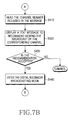
- FIGs. 7A and 7B are flow charts showing a process for receiving and processing a message that recommends viewing a digital multimedia broadcast according to the present invention.
- the control unit 200 determines whether the received message includes a broadcast identifier (S300). If a broadcast identifier is included in the message, the control unit 200 will recognize that the message is a recommendation to view a broadcast and will also confirm whether digital multimedia broadcasting is currently being provided on the mobile terminal (in other words, whether the DMB receiver 100 is currently operating) (S310).
- the control unit 100 Upon confirmation that the DMB receiver is operating, the control unit 100 will read a broadcast channel number included in the message (S320) and will then determine whether the currently selected channel number is identical to the channel number included in the message (S330). If the currently selected channel number is identical to the channel number included in the message, the control unit 200 will display a new message alert which is typically used when a new message is received (S340). After displaying the new message alert, the control unit 200 continues to output the digital multimedia broadcast of the currently selected channel (S350) through the display unit 410 and the audio output unit 420.
- control unit 200 will also read the text content and still image or motion picture included in the received message. Thereafter, the control unit 200 will display, on the display unit 410, the message that recommends viewing the broadcast of the pertinent channel number, together with the still images or moving picture included in the message (S360). The user may press a key of the key input unit 400 for accepting the recommendation to view the broadcast. In this connection, the control unit 200 determines whether there is a key input to accept the recommendation (S370).
- the control unit 200 will select a channel corresponding to the channel number included in the message (S380) and will then receive digital multimedia broadcasting data of the selected channel through the DMB receiver 100 (S390).
- the DMB receiver 100 modulates and decodes the received digital multimedia broadcasting data to convert it into a recognizable form of video and audio data.
- the control unit 200 outputs the video and audio data to the display unit 410 and the audio output unit 420, respectively (S400).
- the control unit 200 will proceed to step S350 to continue to output the digital multimedia broadcasting data of the currently selected channel through the display unit 410 and the audio output unit 420.
- the control unit 100 will read the broadcast channel number included in the received message (S410). If any text content, still image or motion picture is also included in the received message, the control unit 200 will also read the included text content, still image or motion picture. Then the control unit 200 will display the message that recommends viewing the broadcast of the pertinent channel number, together with the still image or moving picture included in the message (S420). The user may press a key through the key input unit 400 to accept the recommendation to view the broadcast. In this connection, the control unit 200 determines whether a key is pressed to accept the recommendation (S430).
- the control unit 200 When the input of a key for accepting the recommendation is detected, the control unit 200 then changes the current mode of the mobile terminal to a digital multimedia broadcasting mode (S440). In the digital multimedia broadcasting mode, the control unit 200 selects the channel corresponding to the channel number included in the broadcast recommendation message (S450). Subsequently, the control unit 200 proceeds to steps S390 through S400 to provide the user with digital multimedia broadcasting data of the selected channel.
- a user who is currently viewing a digital multimedia broadcast over a mobile terminal can send a message that recommends viewing the same digital multimedia broadcast to another mobile terminal.
- the recipient's mobile terminal automatically outputs the digital multimedia broadcast data of the channel corresponding to the channel number included in the message.
- the user can send the broadcast recommendation message even when the digital multimedia data is not being viewed.
- the broadcast recommendation message includes channel information, text message content and any still image or motion picture extracted from the broadcast of the pertinent channel, the recipient can see images of the information on the recommended broadcast before accepting the recommendation.
Landscapes
- Engineering & Computer Science (AREA)
- Signal Processing (AREA)
- Multimedia (AREA)
- General Engineering & Computer Science (AREA)
- Mobile Radio Communication Systems (AREA)
- Two-Way Televisions, Distribution Of Moving Picture Or The Like (AREA)
- Telephonic Communication Services (AREA)
Applications Claiming Priority (1)
| Application Number | Priority Date | Filing Date | Title |
|---|---|---|---|
| KR1020050080976A KR100660246B1 (ko) | 2005-08-31 | 2005-08-31 | 디지털 멀티미디어 방송의 시청을 권유하는 메시지를전송하는 방법과 그에 따른 이동통신 단말기 |
Publications (2)
| Publication Number | Publication Date |
|---|---|
| EP1760916A2 true EP1760916A2 (de) | 2007-03-07 |
| EP1760916A3 EP1760916A3 (de) | 2010-04-07 |
Family
ID=37025165
Family Applications (1)
| Application Number | Title | Priority Date | Filing Date |
|---|---|---|---|
| EP06014576A Withdrawn EP1760916A3 (de) | 2005-08-31 | 2006-07-13 | Verfahren zum Senden einer Nachricht um das Anschauen einer digitalen multimedialen Rundfunksendung zu empfehlen und mobiles Endngerät dass das Verfahren benutzt |
Country Status (6)
| Country | Link |
|---|---|
| US (1) | US7583957B2 (de) |
| EP (1) | EP1760916A3 (de) |
| JP (1) | JP4503561B2 (de) |
| KR (1) | KR100660246B1 (de) |
| CN (1) | CN1925598B (de) |
| TW (1) | TWI311442B (de) |
Cited By (1)
| Publication number | Priority date | Publication date | Assignee | Title |
|---|---|---|---|---|
| EP2175577A3 (de) * | 2008-10-09 | 2012-03-28 | MMI Broadcasting Ltd. | Vorrichtung und Verfahren für Rundfunkübertragung |
Families Citing this family (12)
| Publication number | Priority date | Publication date | Assignee | Title |
|---|---|---|---|---|
| KR100677480B1 (ko) * | 2005-07-29 | 2007-02-02 | 엘지전자 주식회사 | 발신 메시지를 이용하여 dmb 정보를 전송하기 위한시스템 및 그 방법 |
| KR100814438B1 (ko) * | 2006-02-23 | 2008-03-19 | 주식회사 엘지텔레콤 | 멀티미디어 방송 데이터를 추천하는 방법 및 상기 방법을채용한 통신 단말기 |
| KR100783103B1 (ko) * | 2006-06-19 | 2007-12-07 | 삼성전자주식회사 | 디지털 방송을 이용한 단문 메시지 서비스 제공 장치 및방법 |
| US8554265B1 (en) * | 2007-01-17 | 2013-10-08 | At&T Mobility Ii Llc | Distribution of user-generated multimedia broadcasts to mobile wireless telecommunication network users |
| TW200912795A (en) | 2007-09-04 | 2009-03-16 | Ind Tech Res Inst | Context inference system and method thereof |
| US20090133130A1 (en) * | 2007-11-20 | 2009-05-21 | Albert Kovalick | Media editing system using digital rights management metadata to limit import, editing and export operations performed on temporal media |
| KR101517769B1 (ko) * | 2008-04-24 | 2015-05-06 | 삼성전자주식회사 | 미디어 컨텐츠 재생장치에서 방송 컨텐츠의 추천 방법과 그장치 |
| US20090326970A1 (en) * | 2008-06-30 | 2009-12-31 | Microsoft Corporation | Awarding users for discoveries of content based on future popularity in a social network |
| KR101092769B1 (ko) | 2008-09-30 | 2011-12-09 | 에스케이플래닛 주식회사 | 방송 화면 캡쳐 및 캡쳐 화면 전송 시스템 및 방법 |
| KR101505688B1 (ko) * | 2008-10-23 | 2015-03-24 | 엘지전자 주식회사 | 이동 단말기 및 그 정보 처리 방법 |
| KR101598226B1 (ko) | 2009-06-08 | 2016-03-07 | 엘지전자 주식회사 | 방송 콘텐츠 관련 데이터 전송 방법, 방송 콘텐츠 표시 방법 및 이를 적용한 이동 통신 단말기 |
| CN107424610B (zh) * | 2017-03-02 | 2021-02-19 | 广州小鹏汽车科技有限公司 | 一种车载电台资讯获取方法及装置 |
Family Cites Families (19)
| Publication number | Priority date | Publication date | Assignee | Title |
|---|---|---|---|---|
| US6865191B1 (en) * | 1999-08-12 | 2005-03-08 | Telefonaktiebolaget Lm Ericsson (Publ) | System and method for sending multimedia attachments to text messages in radiocommunication systems |
| US6968364B1 (en) * | 2000-03-30 | 2005-11-22 | Microsoft Corporation | System and method to facilitate selection and programming of an associated audio/visual system |
| US6959207B2 (en) * | 2000-12-22 | 2005-10-25 | Nokia Corporation | Mobile emotional notification application |
| WO2002093875A2 (en) * | 2001-05-11 | 2002-11-21 | Wildseed, Ltd. | Method and apparatus for associating a received command with a control for performing actions with a mobile telecommunication device |
| JP2003087865A (ja) * | 2001-09-13 | 2003-03-20 | Nec Corp | 移動通信システム、その情報共有方法及びそのプログラム |
| JP3851129B2 (ja) * | 2001-09-26 | 2006-11-29 | 三洋電機株式会社 | 携帯型視聴装置 |
| JP2003338990A (ja) * | 2002-05-20 | 2003-11-28 | Matsushita Electric Ind Co Ltd | 放送受信装置 |
| KR20030097559A (ko) * | 2002-06-22 | 2003-12-31 | 엘지전자 주식회사 | 무선이동통신 시스템의 멀티미디어 서비스 방법 |
| US7050836B2 (en) * | 2002-12-18 | 2006-05-23 | Nokia Corporation | System and method for providing multimedia messaging service (MMS) ringing images on mobile calls |
| FR2849571B1 (fr) * | 2002-12-31 | 2005-02-11 | Cegetel Groupe | Procede et dispositif de diffusion de contenus multimedia a des terminaux mobiles |
| US7130623B2 (en) * | 2003-04-17 | 2006-10-31 | Nokia Corporation | Remote broadcast recording |
| KR100526554B1 (ko) * | 2003-07-21 | 2005-11-03 | 삼성전자주식회사 | 디지털 멀티미디어 방송 수신용 이동단말에서 음성통화시오디오신호를 처리하는 장치 및 방법 |
| WO2005027460A1 (en) * | 2003-09-12 | 2005-03-24 | Telefonaktiebolaget Lm Ericsson (Publ) | Combinational multimedia services |
| KR100975745B1 (ko) * | 2003-10-02 | 2010-08-12 | 삼성전자주식회사 | 멀티캐스트/방송 서비스를 지원하는 이동통신 시스템에식별자 할당 장치 및 방법 |
| KR100937419B1 (ko) * | 2003-10-02 | 2010-01-18 | 엘지전자 주식회사 | 이동 통신 시스템에서 망 요소간 방송 또는 멀티캐스트서비스 연결 방법 |
| KR100557131B1 (ko) * | 2003-10-07 | 2006-03-03 | 삼성전자주식회사 | 디지털 멀티미디어 방송 수신용 이동통신 단말기의 오디오송출 장치 및 방법 |
| US7643564B2 (en) * | 2003-10-28 | 2010-01-05 | Motorola, Inc. | Method and apparatus for recording and editing digital broadcast content |
| JP2005184182A (ja) * | 2003-12-17 | 2005-07-07 | Matsushita Electric Ind Co Ltd | 携帯端末装置 |
| US7529813B2 (en) * | 2005-04-14 | 2009-05-05 | Hewlett-Packard Development Company, L.P. | Multimedia transfer for wireless network |
-
2005
- 2005-08-31 KR KR1020050080976A patent/KR100660246B1/ko not_active Expired - Fee Related
-
2006
- 2006-03-31 TW TW095111438A patent/TWI311442B/zh not_active IP Right Cessation
- 2006-04-10 US US11/400,938 patent/US7583957B2/en not_active Expired - Fee Related
- 2006-07-04 JP JP2006184902A patent/JP4503561B2/ja not_active Expired - Fee Related
- 2006-07-13 EP EP06014576A patent/EP1760916A3/de not_active Withdrawn
- 2006-08-02 CN CN2006101083666A patent/CN1925598B/zh not_active Expired - Fee Related
Cited By (1)
| Publication number | Priority date | Publication date | Assignee | Title |
|---|---|---|---|---|
| EP2175577A3 (de) * | 2008-10-09 | 2012-03-28 | MMI Broadcasting Ltd. | Vorrichtung und Verfahren für Rundfunkübertragung |
Also Published As
| Publication number | Publication date |
|---|---|
| EP1760916A3 (de) | 2010-04-07 |
| JP2007068150A (ja) | 2007-03-15 |
| TWI311442B (en) | 2009-06-21 |
| KR100660246B1 (ko) | 2006-12-20 |
| CN1925598A (zh) | 2007-03-07 |
| US7583957B2 (en) | 2009-09-01 |
| US20070047509A1 (en) | 2007-03-01 |
| JP4503561B2 (ja) | 2010-07-14 |
| CN1925598B (zh) | 2012-01-25 |
| TW200709693A (en) | 2007-03-01 |
Similar Documents
| Publication | Publication Date | Title |
|---|---|---|
| US7885931B2 (en) | Apparatus and method for processing a data backup service for use in a mobile terminal | |
| KR101583088B1 (ko) | 화상 회의 시스템에서 데이터를 공유하는 방법 및 장치 | |
| US7583957B2 (en) | Method for sending message that recommends viewing digital multimedia broadcast and mobile terminal using the method | |
| KR101922467B1 (ko) | 휴대용 단말기에서 메시지의 첨부 파일을 관리하기 위한 장치 및 방법 | |
| US7898567B2 (en) | Transmitting image using mobile terminal | |
| US20080134081A1 (en) | Information list display method for mobile terminal | |
| US20090005089A1 (en) | Mobile Terminal for Chatting by Using Sms and Method Thereof | |
| US20170034335A1 (en) | Method of displaying and transmitting thumbnail image data in a wireless terminal | |
| US7773978B2 (en) | Device and method for processing message-related events in a portable terminal | |
| EP1675390A1 (de) | Gerät und Verfahren zur Anzeige digitaler Übertragungskanalinformationen | |
| EP1742179A1 (de) | Verfahren und System zur Bildsteuerung bei einem drahtlosen Endgerät | |
| US7392065B2 (en) | Mobile communication terminal and method for one-touch message transmission | |
| KR100758889B1 (ko) | 상호작용하는 문자메시지 서비스 시스템 및 그 방법 | |
| US7555308B2 (en) | Device and method for processing call-related events in mobile terminal | |
| KR101729142B1 (ko) | 이동통신 시스템의 메시지 전송 장치 및 방법 | |
| EP1755326A1 (de) | Verfahren zur Übertragung eines erfassten Bildes in einem Endgerät zum Empfang digitalen Rundfunks | |
| US20080045252A1 (en) | Method for displaying background picture of sms message in terminal including sms function and terminal thereof | |
| KR100803050B1 (ko) | 휴대단말기의 메시지 관련 이벤트처리 장치 및 방법 | |
| KR101467364B1 (ko) | 휴대용 단말기의 메시지 처리 장치 및 방법 | |
| KR100761422B1 (ko) | 휴대단말의 대응 메시지 선별 표시방법 및 장치 | |
| US20070207779A1 (en) | Method for confirming message in mobile terminal | |
| KR20040025447A (ko) | 이동통신 단말기의 번호를 이용하여 팩시밀리 데이터를전송하는 방법 및 시스템 | |
| KR101196071B1 (ko) | 이동통신 단말기에서 수신 메시지 처리 방법 및 장치 | |
| KR100663427B1 (ko) | 휴대용 단말기에서 메시지 전송 및 수신방법 | |
| KR20090087001A (ko) | 휴대 단말장치, 보완 시청 서비스 시스템, 및 보완 시청 서비스 방법 |
Legal Events
| Date | Code | Title | Description |
|---|---|---|---|
| PUAI | Public reference made under article 153(3) epc to a published international application that has entered the european phase |
Free format text: ORIGINAL CODE: 0009012 |
|
| 17P | Request for examination filed |
Effective date: 20060713 |
|
| AK | Designated contracting states |
Kind code of ref document: A2 Designated state(s): AT BE BG CH CY CZ DE DK EE ES FI FR GB GR HU IE IS IT LI LT LU LV MC NL PL PT RO SE SI SK TR |
|
| AX | Request for extension of the european patent |
Extension state: AL BA HR MK YU |
|
| PUAL | Search report despatched |
Free format text: ORIGINAL CODE: 0009013 |
|
| AK | Designated contracting states |
Kind code of ref document: A3 Designated state(s): AT BE BG CH CY CZ DE DK EE ES FI FR GB GR HU IE IS IT LI LT LU LV MC NL PL PT RO SE SI SK TR |
|
| AX | Request for extension of the european patent |
Extension state: AL BA HR MK RS |
|
| 17Q | First examination report despatched |
Effective date: 20100601 |
|
| AKX | Designation fees paid |
Designated state(s): DE FR GB |
|
| RAP1 | Party data changed (applicant data changed or rights of an application transferred) |
Owner name: SAMSUNG ELECTRONICS CO., LTD. |
|
| STAA | Information on the status of an ep patent application or granted ep patent |
Free format text: STATUS: THE APPLICATION IS DEEMED TO BE WITHDRAWN |
|
| 18D | Application deemed to be withdrawn |
Effective date: 20130523 |