EP1760951B1 - Système et méthode de communication dépendant du contexte - Google Patents
Système et méthode de communication dépendant du contexte Download PDFInfo
- Publication number
- EP1760951B1 EP1760951B1 EP06090150A EP06090150A EP1760951B1 EP 1760951 B1 EP1760951 B1 EP 1760951B1 EP 06090150 A EP06090150 A EP 06090150A EP 06090150 A EP06090150 A EP 06090150A EP 1760951 B1 EP1760951 B1 EP 1760951B1
- Authority
- EP
- European Patent Office
- Prior art keywords
- information
- filter
- state
- communication system
- logic
- Prior art date
- Legal status (The legal status is an assumption and is not a legal conclusion. Google has not performed a legal analysis and makes no representation as to the accuracy of the status listed.)
- Active
Links
Images



Classifications
-
- H—ELECTRICITY
- H04—ELECTRIC COMMUNICATION TECHNIQUE
- H04L—TRANSMISSION OF DIGITAL INFORMATION, e.g. TELEGRAPHIC COMMUNICATION
- H04L12/00—Data switching networks
- H04L12/28—Data switching networks characterised by path configuration, e.g. LAN [Local Area Networks] or WAN [Wide Area Networks]
- H04L12/40—Bus networks
- H04L12/40006—Architecture of a communication node
- H04L12/40032—Details regarding a bus interface enhancer
-
- H—ELECTRICITY
- H04—ELECTRIC COMMUNICATION TECHNIQUE
- H04L—TRANSMISSION OF DIGITAL INFORMATION, e.g. TELEGRAPHIC COMMUNICATION
- H04L12/00—Data switching networks
- H04L12/28—Data switching networks characterised by path configuration, e.g. LAN [Local Area Networks] or WAN [Wide Area Networks]
- H04L12/2803—Home automation networks
-
- H—ELECTRICITY
- H04—ELECTRIC COMMUNICATION TECHNIQUE
- H04L—TRANSMISSION OF DIGITAL INFORMATION, e.g. TELEGRAPHIC COMMUNICATION
- H04L12/00—Data switching networks
- H04L12/28—Data switching networks characterised by path configuration, e.g. LAN [Local Area Networks] or WAN [Wide Area Networks]
- H04L12/40—Bus networks
- H04L2012/40267—Bus for use in transportation systems
- H04L2012/40273—Bus for use in transportation systems the transportation system being a vehicle
Definitions
- the invention relates to a context-dependent communication system having a plurality of components that can exchange information with each other, wherein the exchange of information between the components is limited by a logic, and a communication method for exchanging information between the interconnected components, wherein the exchange of information by means of the Logic is limited, comprising the steps of: Checking the information to be exchanged against the logic to determine whether the replacement is permitted in accordance with the limitation by the logic; Replace the information, if the exchange is permitted. Furthermore, the invention relates to a component of a said communication system.
- Communication systems and communication methods of the type mentioned are used in many areas of technology, especially in motor vehicles.
- Modern motor vehicles have several components that exchange information with each other.
- the components which may be, for example, control devices, which integrates a vehicle manufacturer in the vehicle, nowadays in the operation of the motor vehicle often components are integrated into the communication system, which does not come from the vehicle manufacturer and belong to the delivered motor vehicle.
- Such subsequently incorporated components include i.a. Mobile phones, mp3 players or other infotainment devices.
- a logic of the communication system monitors the exchange of information between the components of the communication system.
- the information between the individual components is usually exchanged in the form of messages.
- a message usually includes an indication of the component to which the Message, an indication indicating the origin of the message, ie the sending component, and payload information.
- the logic is usually decentralized distributed formed on the individual components.
- the logic is determined, i. determine with which components a communication in the form of an exchange of information may take place. Since nowadays it is not foreseeable at the time of construction of the components of a vehicle which additional components are to be integrated into the communication system during operation of the vehicle and what functionality these components will have, it is desirable to make the logic customizable.
- the logic of the components can not subsequently or only very difficult to change, for example by the entire control software is replaced by a software update (flashing). Because of the large amount of data that needs to be transferred to flash all of the ECUs in a vehicle, vehicle maintenance often already takes several hours, during which only digital data is transferred to the components of a vehicle.
- the invention is based on the technical problem, an improved communication system, a component of such a communication system and to provide a communication method that allows easy integration of new components and improved information exchange behavior in the operation of the communication system.
- the invention is based on the idea that the logic is made changeable as a function of a state of the communication system.
- the logic can be changed as a function of a state of the communication system.
- a communication method of the type mentioned is created in which the logic is changed depending on a state of the communication system.
- a component of a communication system for exchanging information with other components of the communication system comprises a transmitting / receiving unit for transmitting and / or receiving information, a local logic unit for checking the information to be transmitted and / or received against a logic, wherein the local logic unit limits the exchange of information with the other components according to the logic check, wherein the logic is changeable depending on a state of the communication system.
- the logic may be adapted during the runtime of the communication system to a context dictated by the state of the communication system.
- a state of the communication system according to the invention is determined by the states of the individual components of the communication system and optionally states of a transmission system between the components.
- the burden of information to be transmitted in the communication system can be significantly reduced.
- Exchanging this information between the CD player and the amplifier can be prevented in the inventive communication system by changing the logic.
- the logic In another state of the communication system in which the amplifier is in the active state, the logic must allow this information to be exchanged between the CD player and the amplifier for playback of the CD in the vehicle.
- a change of state of a component may also be indicated by any signal, such as an electrical, optical or electromagnetic signal.
- the logic is in the form of a filter with one or more filter entries, the filter entries defining the restriction of the exchange of the information.
- a filter entry may prohibit exchanging audio information with the amplifier.
- the communication system may allow an exchange of control information between the CD player and the amplifier, so that exchanging the information that a driver has operated a play button of the CD player is communicated to the amplifier so that it from the standby state to an active state. If this change in the internal state of the amplifier is perceptible from the outside, the state of the communication system is changed. With this change, the logic of the communication system can be changed, for example, by removing the filter entry which prohibits the exchange of audio information with the amplifier.
- the filter of the logic comprises decentralized component filters arranged in the individual components.
- Component filters themselves may be implemented in software or in programmable logic circuits.
- the logic comprises a set of rules on the basis of which the filter entries of the filter can be changed as a function of the state of the communication system.
- the rules include a rule of content that sets a filter entry that prohibits the exchange of audio data with the amplifier when the amplifier is in standby.
- any change in the filter entries in particular in addition of a filter entry, deletion or deletion of a filter entry, modification of a filter entry, etc., is understood.
- the state of the communication system can be influenced by means of the exchanged information.
- a particularly preferred embodiment of this invention provides that the state of the communication system can be mapped by means of a state analyzer, wherein the exchanged information can be analyzed by means of the state analyzer and state variables can be changed based on the content of the exchanged information, the entirety of the state variables characterizing the state of the communication system ,
- a change in the state of the communication system can thus also be determined by means of the exchange of control commands with the amplifier, which cause the amplifier to go into the standby state or the active state. This allows a very flexible logic. If, for example, a new component is integrated into the communication system, it can be determined from information that this component exchanges via the communication system that this new component has been integrated into the communication system. This changes the state of the communication system and this change can be responded by adjusting the logic.
- a preferred embodiment of the communication system provides that the filter comprises at least one active filter entry, with the aid of which the exchanged information can be changed.
- the acoustic signals are generally reproduced via an audio system of the vehicle via the loudspeakers installed in the vehicle.
- the driver uses a headset to dictate thoughts to a voice recorder, for example, while driving, it is advantageous if the ringing of the mobile phone during an incoming call is not via the loudspeaker of the vehicle but via the vehicle Headset are played.
- An active filter entry now allows audio data sent to the audio system to be played back through the speakers for playback, so that they are directed to the headset.
- a further embodiment of the invention provides that the logic is changeable depending on a specific situation.
- a situation analyzer which is linked to a sensor system for detecting a vehicle state of a vehicle and / or a driver state and / or a driving situation of the vehicle and comprises a priority unit, wherein by means of the priority unit the information and / or the filter entries priority information in Depending on the vehicle condition and / or the driver state and / or the driving situation and / or an action that is to be triggered by means of the information, can be assigned.
- the vehicle when sensors mounted on the wheels of the vehicle detect that the vehicle is moving at a high speed, and radar sensors detect a number of other objects moving at high speed in the vicinity of the vehicle, such as by means of the steering wheel integrated sensors detected that the driver has a high pulse rate, and for example, a direction indicator of the vehicle is actuated to initiate a lane change, it may be advantageous in such a situation when a generally informative announcement of a man-machine interface does not have the Audio system is spent as it disturbs the concentration of the driver.
- the information of the man-machine interface is thus assigned a priority information that has a low priority.
- a voice message from the navigation system announcing that the currently traveled road is to be left at a short distance relative to the current vehicle location can be assigned a higher priority in the form of priority information, so that it can be used by the driver despite the high tension a lane change in dense traffic and high speed, yet is issued.
- the filter entries in the respective components can be set so that only the information with a higher priority is exchanged between the components, so that only the announcement of the navigation system is reproduced.
- An action within the meaning of the invention in this case is, for example, the reproduction of the audio information.
- actions can be any operations, such as For example, displaying a text or graphic on a display, changing the internal state of a component (such as turning on or off), etc.
- priority information can also be assigned to the filter entries. As a result, a prioritization of the logic is changed context-dependent.
- the filter may comprise a central filter.
- the set of rules comprises rules which comprise a premise and a measure, the premise each comprising a logical condition, and by means of an inference unit only the rules of the set of rules are evaluated in the premise of which one of the state variables is evaluated, which changes with the state of the state Communication system are linked. This allows a simple and fast adaptation of the logic filter entries. If the state of the communication system changes, one or more state variables of the communication system are changed. Changing the state variables is done by assigning a value to them. The logic is then adapted by means of an inferential unit to the new state of the communication system by evaluating the rules of the set of rules.
- a measure is taken as the result (conclusion). This measure may include, for example, changing a filter entry. Therefore, a particularly preferred embodiment of the communication system provides that as a measure of a rule, if the premise is met, changing the filter entries is executable. The changing of the filter entries takes place in a particularly advantageous embodiment of the invention by means of an exchange of information. This means that information is sent to the component whose component filter is to be changed, causing the component to change the component filter.
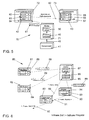
- Fig. 1 shows a communication system 1 as a finite state machine (fsm).
- the communication system 1 comprises a component 2 (fsm A) and a further component 3 (fsm B).
- the component 2 and the further component 3 can each assume different states, which are represented by means of rectangles with rounded corners 4-6 for the component 2 and 7-10 for the further component 3.
- the respective current states 6 for the component 2 and 10 for the further component 3 are highlighted in bold.
- a state of the communication system 1 is determined in each case by the current states 6, 10 of the component 2 and the further component 3.
- states 11, 12, 13 correspond to a logic 14, which can also be described as a state machine.
- the logic 14 or the states 11 to 13 of the logic 14 are in the form of a filter 15.
- the filter 15 comprises in each case for the component 2 and the further component 3 a component filter 16 or 17.
- the filter 15 or the component filters 16 and 17 each comprise filter entries which define which information is exchanged between the component 2 and the further component 3 can be.
- the logic 14 or the filter 15 or the component filters 16 and 17 or their filter entries defines the limit for the exchange of information between the component 2 and the further component 3.
- the logic 14 or the filter entries of the component filters 16 and / or 17 is changed. If, for example, component 2 transitions from its state 5 to state 6, it sends out information in the form of a message, which is shown by means of an arrow 18.
- a state analyzer maps the message to a state variable.
- the state analyzer may also evaluate other information and signals not intended to be exchanged in the communication system 1 to detect the state of the communication system 1.
- the change takes place by changing filter entries of the component filter 16 of the component 2, as indicated by the arrow 19.
- the component filters 16 and 17 now check information 20 to be transmitted from the component 2 to the further component 3, whether this replacement is permitted in accordance with the logic formed in the component filters 16 and 17. If the exchange of information with respect to both sender and receiver and their content is permitted, the exchange of information 20 may take place. If the replacement is not permitted, the component filters 16 and 17 prevent the exchange of the information 20.
- a communication system 30 is shown schematically in a matrix representation.
- the communication system 30 includes components 31 and 32, each comprising component filters 33 and 34.
- An exchange of information takes place by means of messages, which are indicated in the form of arrows 35.
- the different messages 35 emanating from the components 31, 32 differ in either their recipient or their content.
- a logic of the communication system 30 determines which messages, ie which information, may be exchanged. Cross points of the arrows that are circled indicate that the message is allowed to be transmitted. Intersections that are not circled identify a non-logical exchange of information.
- the rules of a set of rules are used to check whether the logic and, if appropriate, how the logic should be changed and the subsequent setting of a filter entry is indicated by means of a block 37 and an arrow 38.
- FIG. 2 schematically illustrates a communication system 40 that includes components 41, an originating component 42, and a destination component 43.
- the communication system 40 further includes a central component 44.
- the central component 44 receives messages 45 from the components 41.
- a state analyzer 46 analyzes the messages 45 and maps them to state variables, as appropriate, from assignments 47 included in a policy 48.
- the entirety of all state variables defines the state of the communication system 40.
- Each change of a state variable triggers an evaluation (inference) of rules 49 of the rule set 48 in an inference unit 50.
- the rules 49 of the rules 48 are inferred, in the premise of which a state variable associated with the change of the state of the communication system 40 is read out.
- the result (conclusion) is a measure that usually involves changing a filter entry in a filter 51.
- a message 52 from the source component 42 to the destination component 43 is checked against the filter 51, which represents the currently valid logic. This check is carried out both in terms of the origin, the destination of the information to be exchanged and the content of the information. If the filter 51 permits the exchange of the information 52, these are exchanged between the source component 42 and the destination component 43. If the filter 51 does not permit the exchange of the information 52, the exchange is prevented. Optionally, the source component 42 is informed of this by means of a message 53.
- FIG. 12 schematically illustrates another embodiment of a communication system 60 following communication system 40 Fig. 3 similar. Same technical features are provided with the same reference numerals.
- the central component 44 is designed as a central coordinator. Not shown is the rules with the rules and the assignments.
- the messages 45 of the components 41 have led to a change in the state of the communication system, as a result of which an additional filter entry 61 is inserted into the filter 51.
- the filter 51 includes filter entries 62-67.
- the filter entries 62-67 are grouped after active filter entries 62-64 that permit or prevent the sending of information for the individual components 41-43 and passive filter entries 65-67 that receive information from certain other components 41 to 43.
- the filter entries are used to check whether certain content may be transmitted.
- the filter entries 63 and 67 are preferably arranged hierarchically in order to achieve a simple structure of the logic. As a result, the number of required evaluations or filter entries can be significantly reduced.
- FIG. 5 a similar communication system 70 is shown in which the same technical features are again provided with the same reference numerals.
- a central component 71 comprising the state analyzer 46 and the inference unit 50 is not formed as a central coordinator.
- the filter forming the logic is implemented in the form of component filters 72, 73 which are arranged in a decentralized manner in the components 42 and 43.
- the filter entry 61 which is added to the filter due to a change in state of the communication system 70, is transmitted as a message to the source component 42 by the central component 71, where the new filter entry 61 is added to the component filter 72.
- the exchange of the information or message 52 between the components 42, 43 occurs directly between the components 42, 43.
- FIG. 12 illustrates one embodiment of a communication system 80 in which a simple change in logic is implemented using priority filter entries.
- the communication system 80 comprises as components a man-machine interface 81, a DVD system 82, an emergency system 83, vehicle core components 84 and a central component 85.
- the central component 85 comprises a system analyzer 86 and an inference unit 87 as well as a set of rules and Assignments (all not shown).
- the emergency system 83 detects an emergency situation and issues an emergency message 88.
- the state analyzer 86 maps the emergency message 88 to a state variable. Subsequently, the Inferenztechnik 87 evaluates the rules of the rule.
- a filter entry 89 is transmitted to all components except the emergency system 83, which has a priority 3 and prohibits all exchange of information or messages.
- the communication in the communication system 80 is greatly minimized so that safety-relevant information, for example the position of the vehicle, can be transmitted undisturbed by the vehicle core components 84.
- This transfer is permitted since a filter entry 90 of the Vehicle core components 84 for position messages has a higher priority 5 than the filter entry 89.
- the position of the vehicle is thus transmitted from the vehicle core components 84 by means of a message 91 to the emergency system 83.
- the emergency system 83 can issue an emergency call 92 via a mobile telephone (not shown) since the emergency system 83 can send a priority 5 for all messages sent by it.
- FIG. 7 For example, another communication system 100 is shown schematically.
- the communication system 100 has applications 101 and resources 102 as well as vehicle buses 103 as well as sensors connected thereto for environment perception 104 and sensors for the perception of in-vehicle events 105 as well as further components 106.
- the components 101 to 106 can communicate with each other via a communication middleware 107 via messages.
- a situation analyzer evaluates the measurement results of the sensors for environment perception 104 and the sensors for the perception of in-vehicle events 105 in order to determine a vehicle state and / or a driver state and / or a driving situation.
- the environmental perception sensor may include any sensors for sensing the environment of the vehicle, such as ultrasound, radar sensors, etc.
- the sensors for the perception of vehicle-internal events can refer to measurement results of vehicle components, for example a determined speed, a determined vehicle interior temperature or results of an evaluation of a camera for monitoring a driver's eye blinking frequency, in order to estimate, for example, its fatigue.
- the situation analyzer 108 additionally evaluates the information transmitted in the messages regarding their contents. For this purpose, it is determined which action is to be triggered by means of the transmitted information. This is particularly easy if both the applications 101 and the resources 102 log in to the situation analyzer.
- the situation analyzer 108 includes a situation matrix, which is preferably four-dimensional. The individual entries are dependent on the vehicle state of the driving situation, the driver state and the action to be triggered, and each indicate a priority. This priority is assigned to the information.
- the priority information associated with the information may also be used to change the state of the communication system and instead of the priority information that directly informs the information are assigned to prioritize the filter entries that represent the logic, as described in the description of the Fig. 6 is explained.
- the communication of the communication system 100 is monitored by a communication coordinator 109, which is similar to, for example, the one associated with Fig. 4 is formed described communication coordinator.
- the priority values specified in the priority matrix can be changed for a limited or unrestricted time as a result of a detected input by the driver. For example, detecting a push of a button may cause the priority to change over time, and detecting a double push of a button may cause the priority value in the priority matrix to change permanently.
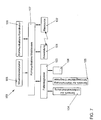
- a component first sends a message 112.
- a state analyzer analyzes this message 114. In this case, it forms the message, if appropriate, on a state variable from 116.
- Each assignment triggers an inference of those rules in whose premise the state variable whose assignment has been changed 118 is read out. If the logic condition of a premise of a rule is true, then a new filter entry is added to the filter or a filter entry is deleted or modified 120.
- the message against the filter that maps the logic is checked 122. Is the exchange of information permitted , the information is exchanged 124. If the exchange is not permitted, the exchange is prohibited 126. The same information is exchanged with other information to be exchanged.
Landscapes
- Engineering & Computer Science (AREA)
- Computer Networks & Wireless Communication (AREA)
- Signal Processing (AREA)
- Communication Control (AREA)
- Small-Scale Networks (AREA)
- Computer And Data Communications (AREA)
- Mobile Radio Communication Systems (AREA)
- Electroluminescent Light Sources (AREA)
- Measurement And Recording Of Electrical Phenomena And Electrical Characteristics Of The Living Body (AREA)
Claims (32)
- Système de communication contextuel (1 ; 30 ; 40 ; 60 ; 70 ; 80 ; 100) comprenant plusieurs composants (2, 3 ; 31, 32 ; 41-44 ; 81-85 ; 101-106) qui sont conçus pour échanger des informations (20 ; 35 ; 52 ; 88, 91, 92) entre eux, l'échange d'informations (20 ; 35 ; 52 ; 88, 91, 92) entre les composants (2, 3 ; 31, 32 ; 41-44 ; 81-85 ; 101-106) étant restreint par un circuit logique (14), le circuit logique (14) pouvant être modifié en fonction d'un état du système de communication (1 ; 30 ; 40 ; 60 ; 70 ; 80 ; 100), le circuit logique (14) étant réalisé sous la forme d'un filtre (15 ; 51) doté d'un ou plusieurs éléments de filtrage (61-67 ; 89, 90), les éléments de filtrage (61-67 ; 89, 90) déterminant la restriction d'échange des informations (20 ; 35 ; 52 ; 88, 91, 92), caractérisé en ce que le filtre (15) du circuit logique (14) comprend des filtres de composant (16, 17 ; 72, 73) disposés de manière décentralisée dans les composants individuels (2, 3 ; 31, 32 ; 41-44 ; 81-85 ; 101-106).
- Système de communication (1 ; 30 ; 40 ; 60 ; 70 ; 80 ; 100) selon la revendication 1, caractérisé en ce qu'au moins un filtre (15, 51) comprend un élément de filtrage (61-67 ; 89, 90) qui est conçu pour autoriser ou pour interdire l'échange d'informations en fonction d'un contenu de l'information, le cas échéant en plus en fonction de l'indication d'origine et/ou de l'indication de la destination de l'information.
- Système de communication (1 ; 30 ; 40 ; 60 ; 70 ; 80 ; 100) selon la revendication 1 ou 2, caractérisé en ce que les informations sont échangées sous la forme de messages et les messages comprennent à chaque fois une indication d'origine, une indication de destination et un contenu des informations et la restriction de l'échange comprend un contrôle des messages pour déterminer s'il existe une autorisation ou une interdiction d'échange des messages.
- Système de communication (1 ; 30 ; 40 ; 60 ; 70 ; 80 ; 100) selon l'une des revendications précédentes, caractérisé en ce que le circuit logique (14) comprend un élément de réglage (48) au moyen duquel peuvent être modifiés les éléments de filtrage (61-67 ; 89, 90) du filtre (15 ; 51) en fonction de l'état du système de communication (1 ; 30 ; 40 ; 60 ; 70 ; 80 ; 100).
- Système de communication (1 ; 30 ; 40 ; 60 ; 70 ; 80 ; 100) selon l'une des revendications précédentes, caractérisé en ce que l'état du système de communication (1 ; 30 ; 40 ; 60 ; 70 ; 80 ; 100) peut être influencé au moyen des informations (20 ; 35 ; 52 ; 88, 91, 92) échangées.
- Système de communication (1 ; 30 ; 40 ; 60 ; 70 ; 80 ; 100) selon l'une des revendications précédentes, caractérisé en ce que l'état du système de communication (1 ; 30 ; 40 ; 60 ; 70 ; 80 ; 100) peut être représenté au moyen d'un analyseur d'état (46 ; 86), les informations (20 ; 35 ; 52 ; 88, 91, 92) échangées pouvant être analysées au moyen de l'analyseur d'état (46 ; 86) et des variables d'état pouvant être modifiées au moyen du contenu des informations (20 ; 35 ; 52 ; 88, 91, 92) échangées, l'ensemble des variables d'état caractérisant l'état du système de communication (1 ; 30 ; 40 ; 60 ; 70 ; 80 ; 100).
- Système de communication (1 ; 30 ; 40 ; 60 ; 70 ; 80 ; 100) selon l'une des revendications précédentes, caractérisé en ce que le filtre (15 ; 51) comprend au mois un élément de filtrage actif (61-67 ; 89, 90) à l'aide duquel les informations (20 ; 35 ; 52 ; 88, 91, 92) échangées peuvent être modifiées.
- Système de communication (1 ; 30 ; 40 ; 60 ; 70 ; 80 ; 100) selon l'une des revendications précédentes, caractérisé par un analyseur de situation qui est lié à un dispositif de détection (104, 105) pour détecter un état d'un véhicule et/ou un état d'un conducteur et/ou une situation de conduite du véhicule ainsi qu'une unité de priorité des informations de priorité pouvant être associées aux informations (20 ; 35 ; 52 ; 88, 91, 92) et/ou aux éléments de filtrage (61-67 ; 89, 90) au moyen de l'unité de priorité en fonction de l'état du véhicule et/ou de l'état du conducteur et/ou de la situation de conduite du véhicule et/ou d'une action qui doit être déclenchée au moyen des informations (20 ; 35 ; 52 ; 88, 91, 92).
- Système de communication (1 ; 30 ; 40 ; 60 ; 70 ; 80 ; 100) selon l'une des revendications précédentes, caractérisé en ce que le filtre (15 ; 51) comprend en plus un filtre central.
- Système de communication (1 ; 30 ; 40 ; 60 ; 70 ; 80 ; 100) selon l'une des revendications précédentes, caractérisé en ce que l'élément de réglage (48) comprend des règles qui englobent une prémisse et une mesure, la prémisse comprenant à chaque fois une condition logique et une unité d'inférence (50, 87) ne permettant d'interpréter que les règles de l'élément de réglage (48) dans la prémisse desquelles est interprétée l'une des variables d'état qui sont liées à la modification de l'état du système de communication (1 ; 30 ; 40 ; 60 ; 70 ; 80 ; 100).
- Système de communication (1 ; 30 ; 40 ; 60 ; 70 ; 80 ; 100) selon l'une des revendications précédentes, caractérisé en ce que la mesure d'une règle, lorsque la prémisse est réalisée, est la possibilité d'effectuer une modification des éléments de filtrage (61-67 ; 89, 90).
- Système de communication (1 ; 30 ; 40 ; 60 ; 70 ; 80 ; 100) selon l'une des revendications précédentes, caractérisé en ce que la modification des éléments de filtrage (61-67 ; 89, 90) comprend un échange d'informations (20 ; 35 ; 52 ; 88, 91, 92).
- Procédé de communication contextuel (110) conçu pour échanger des informations (20 ; 35 ; 52 ; 88, 91, 92) entre plusieurs composants (2, 3 ; 31, 32 ; 41-44 ; 81-85 ; 101-106) liés, l'échange d'informations (20 ; 35 ; 52 ; 88, 91, 92) étant restreint par un circuit logique (14), comprenant les étapes suivantes :vérification des informations (20 ; 35 ; 52 ; 88, 91, 92) à échanger par rapport au circuit logique (14) afin de restreindre l'échange des informations (20 ; 35 ; 52 ; 88, 91, 92) conformément au circuit logique (14), le circuit logique (14) étant modifié en fonction d'un état du système de communication (1 ; 30 ; 40 ; 60 ; 70 ; 80 ; 100),et échange des informations sous réserve que l'échange soit autorisé et sinon l'échange est empêché,le circuit logique (14) étant réalisé sous la forme d'un filtre (15 ; 51) doté d'un ou plusieurs éléments de filtrage (61-67 ; 89, 90), les éléments de filtrage (61-67 ; 89, 90) déterminant la restriction d'échange des informations (20 ; 35 ; 52 ; 88, 91, 92),caractérisé en ce quela vérification des informations (20 ; 35 ; 52 ; 88, 91, 92) à échanger par rapport au circuit logique (14) étant réalisée dans des filtres de composant (16, 17 ; 72, 73) disposés de manière décentralisée dans les composants individuels (2, 3 ; 31, 32 ; 41-44 ; 81-85 ; 101-106) et qui sont inclus dans le filtre (15 ; 51) du circuit logique (14).
- Procédé de communication (1 ; 30 ; 40 ; 60 ; 70 ; 80 ; 100) selon la revendication 13, caractérisé en ce qu'au moins un filtre (15, 51) comprend un élément de filtrage (61-67 ; 89, 90) qui autorise ou interdit l'échange d'informations en fonction d'un contenu de l'information, le cas échéant en plus en fonction de l'indication d'origine et/ou de l'indication de la destination de l'information.
- Procédé de communication (110) selon la revendication 13 ou 14, caractérisé en ce que les informations sont échangées sous la forme de messages et les messages comprennent à chaque fois une indication d'origine, une indication de destination et un contenu des informations et que lors de la vérification des informations (20 ; 35 ; 52 ; 88, 91, 92) à échanger par rapport au circuit logique (14), il est déterminé si un échange des informations doit être autorisé ou interdit conformément au circuit logique et les informations sont échangées sous réserve que l'échange soit autorisé, sinon l'échange est empêché.
- Procédé de communication (110) selon l'une des revendications 13 à 15, caractérisé en ce que le circuit logique (14) comprend un élément de réglage (48) au moyen duquel les éléments de filtrage (61-67 ; 89, 90) du filtre (15 ; 51) sont modifiés en fonction de l'état du système de communication (1 ; 30 ; 40 ; 60 ; 70 ; 80 ; 100).
- Procédé de communication (110) selon l'une des revendications 13 à 16, caractérisé en ce que les informations (20 ; 35 ; 52 ; 88, 91, 92) échangées influencent l'état du système de communication (1 ; 30 ; 40 ; 60 ; 70 ; 80 ; 100).
- Procédé de communication (110) selon l'une des revendications 13 à 17, caractérisé en ce que les informations (20 ; 35 ; 52 ; 88, 91, 92) sont échangées sous la forme de messages entre les composants (2, 3 ; 31, 32 ; 41-44 ; 81-85 ; 101-106).
- Procédé de communication (110) selon l'une des revendications 13 à 18, caractérisé en ce que le filtre (15 ; 51) comprend au moins un élément de filtrage actif (61-67 ; 89, 90) à l'aide duquel les informations (20 ; 35 ; 52 ; 88, 91, 92) échangées sont modifiées.
- Procédé de communication (110) selon l'une des revendications 13 à 19, caractérisé en ce qu'un état d'un véhicule et/ou un état d'un conducteur et/ou une situation de conduite du véhicule est détecté au moyen d'un dispositif de détection (104, 105) et des informations de priorité sont à chaque fois associées aux informations (20 ; 35 ; 52 ; 88, 91, 92) échangées et/ou aux éléments de filtrage (61-67 ; 89, 90) au moyen d'une unité de priorité d'un analyseur de situation en fonction de l'état du véhicule et/ou de l'état du conducteur et/ou de la situation de conduite du véhicule et/ou d'une action qui doit être déclenchée au moyen des informations (20 ; 35 ; 52 ; 88, 91, 92) échangées.
- Procédé de communication (110) selon la revendication 20, caractérisé en ce que les informations de priorité sont déterminées au moyen d'une matrice de priorité à quatre dimensions dont les éléments dépendent de l'état du véhicule, de l'état du conducteur, de la situation de conduite et de l'action à exécuter.
- Procédé de communication (110) selon la revendication 20 ou 21, caractérisé en ce que les valeurs de priorité dans la matrice de priorité sont modifiées avec restriction ou sans restriction dans le temps en conséquence d'une entrée détectée du conducteur.
- Procédé de communication (110) selon l'une des revendications 13 à 22, caractérisé en ce que la vérification des informations (20 ; 35 ; 52 ; 88, 91, 92) à échanger par rapport au circuit logique (14) est effectuée au moins partiellement en plus dans un filtre central.
- Procédé de communication (110) selon l'une des revendications 13 à 23, caractérisé en ce qu'un analyseur d'état (46 ; 86) représente l'état du système de communication (1 ; 30 ; 40 ; 60 ; 70 ; 80 ; 100), les informations (20 ; 35 ; 52 ; 88, 91, 92) échangées pouvant être analysées au moyen de l'analyseur d'état (46 ; 86) et des variables d'état pouvant être définies ou modifiées au moyen du contenu des informations (20 ; 35 ; 52 ; 88, 91, 92) échangées, l'ensemble des variables d'état caractérisant l'état du système de communication (1 ; 30 ; 40 ; 60 ; 70 ; 80 ; 100).
- Procédé de communication (110) selon l'une des revendications 13 à 24, caractérisé en ce qu'en cas de modification de l'état du système, les éléments de filtrage (61-67 ; 89, 90) sont modifiés au moyen d'une unité d'inférence (50, 87) à l'aide de l'élément de réglage (48).
- Procédé de communication (110) selon l'une des revendications 13 à 25, caractérisé en ce que l'élément de réglage (48) comprend des règles qui englobent une prémisse et une mesure, la prémisse comprenant à chaque fois une condition logique et une unité d'inférence (50, 87) ne permettant d'interpréter que les règles de l'élément de réglage (48) dans la prémisse desquelles est interprétée l'une des variables d'état qui sont liées à la modification de l'état du système de communication (1 ; 30 ; 40 ; 60 ; 70 ; 80 ; 100), et la mesure qui provoque une modification des éléments de filtrage (61-67 ; 89, 90) est exécutée lorsque la prémisse est réalisée.
- Procédé de communication (110) selon l'une des revendications 13 à 26, caractérisé en ce que pour modifier les éléments de filtrage (61-67 ; 89, 90), des informations (20 ; 35 ; 52 ; 88, 91, 92) sont communiquées aux filtres de composant (16, 17 ; 72, 73) disposés de manière décentralisée dans les composants (2, 3 ; 31, 32 ; 41-44 ; 81-85 ; 101-106).
- Composants (2, 3 ; 31, 32 ; 41-44 ; 81-85 ; 101-106) pour un système de communication contextuel (1 ; 30 ; 40 ; 60 ; 70 ; 80 ; 100) selon la revendication 1 pour échanger des informations (20 ; 35 ; 52 ; 88, 91, 92) avec d'autres composants (2, 3 ; 31, 32 ; 41-44 ; 81-85 ; 101-106) du système de communication (1 ; 30 ; 40 ; 60 ; 70 ; 80 ; 100) comprenant une unité d'émission/réception pour émettre et/ou recevoir des informations (20 ; 35 ; 52 ; 88, 91, 92),
une unité logique locale pour vérifier les informations (20 ; 35 ; 52 ; 88, 91, 92) à émettre et/ou à recevoir par rapport à un circuit logique (14), l'unité logique étant conçue pour restreindre l'échange des informations (20 ; 35 ; 52 ; 88, 91, 92) avec les autres composants (2, 3 ; 31, 32 ; 41-44 ; 81-85 ; 101-106) conformément à la vérification par rapport au circuit logique (14),
le circuit logique (14) pouvant être modifié en fonction d'un état du système de communication (1 ; 30 ; 40 ; 60 ; 70 ; 80 ; 100), le circuit logique (14) dans l'unité logique étant réalisé sous la forme d'un filtre (15 ; 51) doté d'un ou plusieurs éléments de filtrage (61-67 ; 89, 90) et les éléments de filtrage (61-67 ; 89, 90) déterminant la restriction d'échange des informations (20 ; 35 ; 52 ; 88, 91, 92). - Composants (2, 3 ; 31, 32 ; 41-44 ; 81-85 ; 101-106) selon la revendication 28, caractérisés en ce qu'au moins l'un des éléments de filtrage (61-67 ; 89, 90) est conçu pour autoriser ou pour interdire l'échange d'informations en fonction d'un contenu de l'information, le cas échéant en plus en fonction de l'indication d'origine et/ou de l'indication de la destination de l'information.
- Composants (2, 3 ; 31, 32 ; 41-44 ; 81-85 ; 101-106) selon la revendication 28 ou 29, caractérisés en ce que les informations sont échangées sous la forme de messages et les messages comprennent à chaque fois une indication d'origine, une indication de destination et un contenu des informations et la restriction de l'échange comprend un contrôle des messages pour déterminer s'il existe une autorisation ou une interdiction d'échange des messages.
- Composants (2, 3 ; 31, 32 ; 41-44 ; 81-85 ; 101-106) selon l'une des revendications 28 à 30, caractérisés en ce que le circuit logique (14) peut être modifié en modifiant les éléments de filtrage (61-67 ; 89, 90).
- Composants (2, 3 ; 31, 32 ; 41-44 ; 81-85 ; 101-106) selon l'une des revendications 28 à 31, caractérisés en ce que les informations (20 ; 35 ; 52 ; 88, 91, 92) nécessaires pour la modification des éléments de filtrage (61-67 ; 89, 90) peuvent être reçues sous la forme d'informations (20 ; 35 ; 52 ; 88, 91, 92) échangées.
Applications Claiming Priority (1)
| Application Number | Priority Date | Filing Date | Title |
|---|---|---|---|
| DE102005042386A DE102005042386A1 (de) | 2005-09-06 | 2005-09-06 | Kontextabhängiges Kommunikationssystem und Kommunikationsverfahren |
Publications (2)
| Publication Number | Publication Date |
|---|---|
| EP1760951A1 EP1760951A1 (fr) | 2007-03-07 |
| EP1760951B1 true EP1760951B1 (fr) | 2009-08-05 |
Family
ID=37307106
Family Applications (1)
| Application Number | Title | Priority Date | Filing Date |
|---|---|---|---|
| EP06090150A Active EP1760951B1 (fr) | 2005-09-06 | 2006-08-29 | Système et méthode de communication dépendant du contexte |
Country Status (3)
| Country | Link |
|---|---|
| EP (1) | EP1760951B1 (fr) |
| AT (1) | ATE438980T1 (fr) |
| DE (2) | DE102005042386A1 (fr) |
Family Cites Families (2)
| Publication number | Priority date | Publication date | Assignee | Title |
|---|---|---|---|---|
| DE19609076C1 (de) | 1996-03-08 | 1997-08-14 | Siemens Ag | Verfahren zum Auslösen eines Rückhaltemittels in einem Fahrzeug |
| US6396164B1 (en) | 1999-10-20 | 2002-05-28 | Motorola, Inc. | Method and apparatus for integrating controls |
-
2005
- 2005-09-06 DE DE102005042386A patent/DE102005042386A1/de not_active Withdrawn
-
2006
- 2006-08-29 DE DE502006004427T patent/DE502006004427D1/de active Active
- 2006-08-29 EP EP06090150A patent/EP1760951B1/fr active Active
- 2006-08-29 AT AT06090150T patent/ATE438980T1/de not_active IP Right Cessation
Also Published As
| Publication number | Publication date |
|---|---|
| DE502006004427D1 (de) | 2009-09-17 |
| DE102005042386A1 (de) | 2007-04-05 |
| ATE438980T1 (de) | 2009-08-15 |
| EP1760951A1 (fr) | 2007-03-07 |
Similar Documents
| Publication | Publication Date | Title |
|---|---|---|
| DE102007059475B4 (de) | Mechanismus eines konfigurierbaren Fahrzeugbus-Speicher-Cache | |
| DE10052654B4 (de) | Verfahren und Vorrichtung zur Steuerung von optischen und/oder akustischen Informationen in einem Kraftfahrzeug | |
| DE102014115943A1 (de) | System und Verfahren zum Vorbereiten eines Fahrzeugs für ein Fern-Reflash-Ereignis | |
| DE102007012304A1 (de) | Schnittstelle in einem Fahrzeug und Verfahren zum Datenaustausch | |
| DE102015200587A1 (de) | Vorrichtung und Verfahren zum Anfordern eines Notrufes bei einer Fahrzeugstörung unter Verwendung von Reiseinformationen über das Fahrzeug | |
| EP3546887A1 (fr) | Procédé d'aadaptation du fonctionnement d'un système de commande de véhicule, dispositif destiné à l'utilisation dans ledit procédé ainsi que véhicule automobile et programme informatique | |
| DE10210973A1 (de) | Verfahren und Vorrichtung zur Aufzeichnung von Betriebsdaten | |
| DE102018120911A1 (de) | Navigationssystem mit automatischer Unterdrückung von Navigationsanweisungen für bekannte geographische Gebiete | |
| WO2014206548A2 (fr) | Dispositif de commande et procédé pour faire fonctionner un dispositif de commande d'un véhicule automobile | |
| EP2362617A1 (fr) | Unité de commande externe pour un téléphone mobile | |
| WO2021099186A2 (fr) | Procédé de surveillance de la communication sur un bus de communication, dispositif électronique pour connexion à un bus de communication ainsi que dispositif de surveillance central pour connexion à un bus de communication | |
| DE102020204353A1 (de) | Verfahren und Vorrichtung zum Betreiben eines Kraftfahrzeuges in einem automatisierten Fahrmodus | |
| DE102017214661A1 (de) | Verfahren zum Erkennen einer Manipulation zumindest eines Steuergeräts eines Kraftfahrzeugs sowie Prozessorvorrichtung für ein Kraftfahrzeug und Kraftfahrzeug | |
| EP1760951B1 (fr) | Système et méthode de communication dépendant du contexte | |
| DE102020112899A1 (de) | Verfahren und System zur vollständig automatischen Führung eines Kraftfahrzeugs und Kraftfahrzeug | |
| DE102009017643A1 (de) | Fahrer-Fahrzeug-Schnittstelle und Verfahren zur Steuerung einer Fahrer-Fahrzeug-Schnittstelle | |
| DE102021207870A1 (de) | Verfahren und Recheneinheit zum Verwalten von Diagnoseanfragen in einem Netzwerk | |
| DE102014226223A1 (de) | Regelbasiertes Interaktionsverfahren für ein Kraftfahrzeug mit dessen Umgebung | |
| DE102016201940A1 (de) | Verfahren, Vorrichtung und Computerprogramm zur Auswahl einer Applikation | |
| DE19915097A1 (de) | Vorrichtung und Verfahren zur insbesondere mobilen Datenerfassung | |
| DE102019212343B4 (de) | Verfahren zum Betreiben eines mobilen Endgeräts, Kommunikationseinrichtung, Kraftfahrzeug | |
| DE102014007030A1 (de) | Verfahren und Vorrichtung zur Warnung vor einer kritischen Verkehrssituation | |
| DE10130414B4 (de) | Verfahren und Vorrichtung zur Ausgabe von Daten zu einem Attribut einer digitalen Straßenkarte | |
| DE10012788A1 (de) | Fahrerassistenzvorrichtung für ein Kraftfahrzeug, insbesondere Einparkhilfe | |
| DE102006056021B4 (de) | Entscheidersystem und Entscheidungsverfahren mit Analysefähigkeiten zum Steuern der Wechselwirkung von Komponenten mittels einer Vorrichtungslogik sowie Entwicklungssystem und Entwicklungsverfahren dafür |
Legal Events
| Date | Code | Title | Description |
|---|---|---|---|
| PUAI | Public reference made under article 153(3) epc to a published international application that has entered the european phase |
Free format text: ORIGINAL CODE: 0009012 |
|
| AK | Designated contracting states |
Kind code of ref document: A1 Designated state(s): AT BE BG CH CY CZ DE DK EE ES FI FR GB GR HU IE IS IT LI LT LU LV MC NL PL PT RO SE SI SK TR |
|
| AX | Request for extension of the european patent |
Extension state: AL BA HR MK YU |
|
| 17P | Request for examination filed |
Effective date: 20070907 |
|
| 17Q | First examination report despatched |
Effective date: 20071011 |
|
| AKX | Designation fees paid |
Designated state(s): AT BE BG CH CY CZ DE DK EE ES FI FR GB GR HU IE IS IT LI LT LU LV MC NL PL PT RO SE SI SK TR |
|
| GRAP | Despatch of communication of intention to grant a patent |
Free format text: ORIGINAL CODE: EPIDOSNIGR1 |
|
| GRAS | Grant fee paid |
Free format text: ORIGINAL CODE: EPIDOSNIGR3 |
|
| GRAA | (expected) grant |
Free format text: ORIGINAL CODE: 0009210 |
|
| AK | Designated contracting states |
Kind code of ref document: B1 Designated state(s): AT BE BG CH CY CZ DE DK EE ES FI FR GB GR HU IE IS IT LI LT LU LV MC NL PL PT RO SE SI SK TR |
|
| REG | Reference to a national code |
Ref country code: GB Ref legal event code: FG4D Free format text: NOT ENGLISH |
|
| REG | Reference to a national code |
Ref country code: CH Ref legal event code: EP |
|
| REG | Reference to a national code |
Ref country code: IE Ref legal event code: FG4D |
|
| REF | Corresponds to: |
Ref document number: 502006004427 Country of ref document: DE Date of ref document: 20090917 Kind code of ref document: P |
|
| LTIE | Lt: invalidation of european patent or patent extension |
Effective date: 20090805 |
|
| PG25 | Lapsed in a contracting state [announced via postgrant information from national office to epo] |
Ref country code: IS Free format text: LAPSE BECAUSE OF FAILURE TO SUBMIT A TRANSLATION OF THE DESCRIPTION OR TO PAY THE FEE WITHIN THE PRESCRIBED TIME-LIMIT Effective date: 20091205 Ref country code: LT Free format text: LAPSE BECAUSE OF FAILURE TO SUBMIT A TRANSLATION OF THE DESCRIPTION OR TO PAY THE FEE WITHIN THE PRESCRIBED TIME-LIMIT Effective date: 20090805 Ref country code: ES Free format text: LAPSE BECAUSE OF FAILURE TO SUBMIT A TRANSLATION OF THE DESCRIPTION OR TO PAY THE FEE WITHIN THE PRESCRIBED TIME-LIMIT Effective date: 20091116 Ref country code: SE Free format text: LAPSE BECAUSE OF FAILURE TO SUBMIT A TRANSLATION OF THE DESCRIPTION OR TO PAY THE FEE WITHIN THE PRESCRIBED TIME-LIMIT Effective date: 20090805 Ref country code: FI Free format text: LAPSE BECAUSE OF FAILURE TO SUBMIT A TRANSLATION OF THE DESCRIPTION OR TO PAY THE FEE WITHIN THE PRESCRIBED TIME-LIMIT Effective date: 20090805 |
|
| NLV1 | Nl: lapsed or annulled due to failure to fulfill the requirements of art. 29p and 29m of the patents act | ||
| PG25 | Lapsed in a contracting state [announced via postgrant information from national office to epo] |
Ref country code: LV Free format text: LAPSE BECAUSE OF FAILURE TO SUBMIT A TRANSLATION OF THE DESCRIPTION OR TO PAY THE FEE WITHIN THE PRESCRIBED TIME-LIMIT Effective date: 20090805 Ref country code: NL Free format text: LAPSE BECAUSE OF FAILURE TO SUBMIT A TRANSLATION OF THE DESCRIPTION OR TO PAY THE FEE WITHIN THE PRESCRIBED TIME-LIMIT Effective date: 20090805 Ref country code: PL Free format text: LAPSE BECAUSE OF FAILURE TO SUBMIT A TRANSLATION OF THE DESCRIPTION OR TO PAY THE FEE WITHIN THE PRESCRIBED TIME-LIMIT Effective date: 20090805 Ref country code: SI Free format text: LAPSE BECAUSE OF FAILURE TO SUBMIT A TRANSLATION OF THE DESCRIPTION OR TO PAY THE FEE WITHIN THE PRESCRIBED TIME-LIMIT Effective date: 20090805 |
|
| BERE | Be: lapsed |
Owner name: VOLKSWAGEN AG Effective date: 20090831 |
|
| REG | Reference to a national code |
Ref country code: IE Ref legal event code: FD4D |
|
| PG25 | Lapsed in a contracting state [announced via postgrant information from national office to epo] |
Ref country code: PT Free format text: LAPSE BECAUSE OF FAILURE TO SUBMIT A TRANSLATION OF THE DESCRIPTION OR TO PAY THE FEE WITHIN THE PRESCRIBED TIME-LIMIT Effective date: 20091205 Ref country code: BG Free format text: LAPSE BECAUSE OF FAILURE TO SUBMIT A TRANSLATION OF THE DESCRIPTION OR TO PAY THE FEE WITHIN THE PRESCRIBED TIME-LIMIT Effective date: 20091105 Ref country code: MC Free format text: LAPSE BECAUSE OF NON-PAYMENT OF DUE FEES Effective date: 20090831 |
|
| PG25 | Lapsed in a contracting state [announced via postgrant information from national office to epo] |
Ref country code: CZ Free format text: LAPSE BECAUSE OF FAILURE TO SUBMIT A TRANSLATION OF THE DESCRIPTION OR TO PAY THE FEE WITHIN THE PRESCRIBED TIME-LIMIT Effective date: 20090805 Ref country code: EE Free format text: LAPSE BECAUSE OF FAILURE TO SUBMIT A TRANSLATION OF THE DESCRIPTION OR TO PAY THE FEE WITHIN THE PRESCRIBED TIME-LIMIT Effective date: 20090805 Ref country code: IE Free format text: LAPSE BECAUSE OF FAILURE TO SUBMIT A TRANSLATION OF THE DESCRIPTION OR TO PAY THE FEE WITHIN THE PRESCRIBED TIME-LIMIT Effective date: 20090805 Ref country code: RO Free format text: LAPSE BECAUSE OF FAILURE TO SUBMIT A TRANSLATION OF THE DESCRIPTION OR TO PAY THE FEE WITHIN THE PRESCRIBED TIME-LIMIT Effective date: 20090805 Ref country code: DK Free format text: LAPSE BECAUSE OF FAILURE TO SUBMIT A TRANSLATION OF THE DESCRIPTION OR TO PAY THE FEE WITHIN THE PRESCRIBED TIME-LIMIT Effective date: 20090805 |
|
| PG25 | Lapsed in a contracting state [announced via postgrant information from national office to epo] |
Ref country code: SK Free format text: LAPSE BECAUSE OF FAILURE TO SUBMIT A TRANSLATION OF THE DESCRIPTION OR TO PAY THE FEE WITHIN THE PRESCRIBED TIME-LIMIT Effective date: 20090805 |
|
| PLBE | No opposition filed within time limit |
Free format text: ORIGINAL CODE: 0009261 |
|
| STAA | Information on the status of an ep patent application or granted ep patent |
Free format text: STATUS: NO OPPOSITION FILED WITHIN TIME LIMIT |
|
| PG25 | Lapsed in a contracting state [announced via postgrant information from national office to epo] |
Ref country code: BE Free format text: LAPSE BECAUSE OF NON-PAYMENT OF DUE FEES Effective date: 20090831 |
|
| 26N | No opposition filed |
Effective date: 20100507 |
|
| PG25 | Lapsed in a contracting state [announced via postgrant information from national office to epo] |
Ref country code: GR Free format text: LAPSE BECAUSE OF FAILURE TO SUBMIT A TRANSLATION OF THE DESCRIPTION OR TO PAY THE FEE WITHIN THE PRESCRIBED TIME-LIMIT Effective date: 20091106 |
|
| PG25 | Lapsed in a contracting state [announced via postgrant information from national office to epo] |
Ref country code: AT Free format text: LAPSE BECAUSE OF NON-PAYMENT OF DUE FEES Effective date: 20090829 |
|
| PG25 | Lapsed in a contracting state [announced via postgrant information from national office to epo] |
Ref country code: IT Free format text: LAPSE BECAUSE OF FAILURE TO SUBMIT A TRANSLATION OF THE DESCRIPTION OR TO PAY THE FEE WITHIN THE PRESCRIBED TIME-LIMIT Effective date: 20090805 |
|
| REG | Reference to a national code |
Ref country code: CH Ref legal event code: PL |
|
| GBPC | Gb: european patent ceased through non-payment of renewal fee |
Effective date: 20100829 |
|
| PG25 | Lapsed in a contracting state [announced via postgrant information from national office to epo] |
Ref country code: CH Free format text: LAPSE BECAUSE OF NON-PAYMENT OF DUE FEES Effective date: 20100831 Ref country code: LI Free format text: LAPSE BECAUSE OF NON-PAYMENT OF DUE FEES Effective date: 20100831 Ref country code: LU Free format text: LAPSE BECAUSE OF NON-PAYMENT OF DUE FEES Effective date: 20090829 |
|
| PG25 | Lapsed in a contracting state [announced via postgrant information from national office to epo] |
Ref country code: HU Free format text: LAPSE BECAUSE OF FAILURE TO SUBMIT A TRANSLATION OF THE DESCRIPTION OR TO PAY THE FEE WITHIN THE PRESCRIBED TIME-LIMIT Effective date: 20100206 |
|
| PG25 | Lapsed in a contracting state [announced via postgrant information from national office to epo] |
Ref country code: GB Free format text: LAPSE BECAUSE OF NON-PAYMENT OF DUE FEES Effective date: 20100829 Ref country code: TR Free format text: LAPSE BECAUSE OF FAILURE TO SUBMIT A TRANSLATION OF THE DESCRIPTION OR TO PAY THE FEE WITHIN THE PRESCRIBED TIME-LIMIT Effective date: 20090805 |
|
| PG25 | Lapsed in a contracting state [announced via postgrant information from national office to epo] |
Ref country code: CY Free format text: LAPSE BECAUSE OF FAILURE TO SUBMIT A TRANSLATION OF THE DESCRIPTION OR TO PAY THE FEE WITHIN THE PRESCRIBED TIME-LIMIT Effective date: 20090805 |
|
| REG | Reference to a national code |
Ref country code: FR Ref legal event code: ST Effective date: 20110902 |
|
| PG25 | Lapsed in a contracting state [announced via postgrant information from national office to epo] |
Ref country code: FR Free format text: LAPSE BECAUSE OF NON-PAYMENT OF DUE FEES Effective date: 20091005 |
|
| P01 | Opt-out of the competence of the unified patent court (upc) registered |
Effective date: 20230523 |
|
| PGFP | Annual fee paid to national office [announced via postgrant information from national office to epo] |
Ref country code: DE Payment date: 20250831 Year of fee payment: 20 |