EP1761006A2 - Verfahren zur Behandlung von Sofortkommunikation in einem drahtlosen Endgerät und drahtloses Endgerät zum Durchführen dieses Verfahrens - Google Patents
Verfahren zur Behandlung von Sofortkommunikation in einem drahtlosen Endgerät und drahtloses Endgerät zum Durchführen dieses Verfahrens Download PDFInfo
- Publication number
- EP1761006A2 EP1761006A2 EP06013629A EP06013629A EP1761006A2 EP 1761006 A2 EP1761006 A2 EP 1761006A2 EP 06013629 A EP06013629 A EP 06013629A EP 06013629 A EP06013629 A EP 06013629A EP 1761006 A2 EP1761006 A2 EP 1761006A2
- Authority
- EP
- European Patent Office
- Prior art keywords
- instant message
- information
- subscriber information
- subscriber
- input
- Prior art date
- Legal status (The legal status is an assumption and is not a legal conclusion. Google has not performed a legal analysis and makes no representation as to the accuracy of the status listed.)
- Withdrawn
Links
Images



Classifications
-
- H—ELECTRICITY
- H04—ELECTRIC COMMUNICATION TECHNIQUE
- H04M—TELEPHONIC COMMUNICATION
- H04M1/00—Substation equipment, e.g. for use by subscribers
- H04M1/72—Mobile telephones; Cordless telephones, i.e. devices for establishing wireless links to base stations without route selection
- H04M1/724—User interfaces specially adapted for cordless or mobile telephones
- H04M1/72403—User interfaces specially adapted for cordless or mobile telephones with means for local support of applications that increase the functionality
- H04M1/7243—User interfaces specially adapted for cordless or mobile telephones with means for local support of applications that increase the functionality with interactive means for internal management of messages
-
- H—ELECTRICITY
- H04—ELECTRIC COMMUNICATION TECHNIQUE
- H04B—TRANSMISSION
- H04B1/00—Details of transmission systems, not covered by a single one of groups H04B3/00 - H04B13/00; Details of transmission systems not characterised by the medium used for transmission
- H04B1/38—Transceivers, i.e. devices in which transmitter and receiver form a structural unit and in which at least one part is used for functions of transmitting and receiving
- H04B1/40—Circuits
Definitions
- the present invention relates to a method for processing an instant message in a wireless terminal having a messenger service function, and a wireless terminal implementing the same. More particularly, the present invention relates to a method and apparatus for storing instant messages, which are generated through an instant messenger service, according to each user, and outputting the stored instant messages according to each user in a wireless terminal.
- a messenger service is an on-line service, which enables users to directly give and receive messages on-line by using a technology called "instant messaging". Also, the messenger enables a user to communicate with either another user or plural other users, which is/are connected to the Internet, by using a messenger program.
- a specific application need to be installed in terminals for using the messenger service. Then, when the terminal of a second messenger user, which has been registered for the messenger service in the terminal of a first messenger user, logs on, the first messenger user needs to be informed that the second messenger user has logged on. That is, the messenger service refers to a client software. In addition, when an instant message is received from a second messenger user by a first messenger user through the messenger service, the first messenger user is informed.
- a list established in advance by a messenger user is called a "buddy list", which represents a list of coworkers, working group members, and/or friends, with which the messenger user wants to communicate on-line.
- the messenger program is often used to check whether persons registered in the list accesses the network. Since such messenger service enables a user to confirm that another user accesses the Internet, a response for a call can be immediately made. Now, the messenger service is applied to not only a wired communication system but also a wireless communication system, and also operates in cooperation with wired and wireless communication systems.
- the messenger service since there is a messenger service subscriber recognizing function, such as log in, a plurality of messenger service subscribers may use the messenger service through one wireless terminal by using each subscriber identifier, and also one messenger service subscriber may use a plurality of identifiers in order to use the messenger service.
- the messenger service provides a function of giving and taking instant messages among a plurality of messenger service users, and also provides an instant message storing function for storing instant messages generated during a messenger service execution, and an instant message output function for outputting the stored instant messages.
- instant messages generated during a messenger service execution are stored only in a time sequence without distinction of subscribers, and the instant messages stored in a time sequence are output in the same order as they are input. Therefore, when one user stores the instant messages by using a plurality of identifiers, or when a plurality of subscribers stores the instant messages by using their own identifiers, it is difficult for the user to find the instant messages stored by the user himself during the messenger service execution, which causes considerable inconvenience to the user.
- an object of the present invention is to provide a method for recognizing and storing instant messages according to subscriber information when the instant messages are generated during a messenger service in a wireless terminal having the messenger service function.
- Another object of the present invention is to provide a method for outputting instant messages stored in a wireless terminal, which has a messenger service function, according to subscriber information.
- a method and a wireless terminal which has a messenger service function, for storing an instant message, where the messenger service function is executed when subscriber information for executing the messenger service function is input.
- the instant message is generated according to execution of the messenger service function.
- the generated instant message is stored while applying identifier information corresponding to the subscriber information to the generated instant message, when an instant message storage key is operated.
- a method and a wireless terminal which has a messenger service function, for outputting an instant message, where identifier information of the stored instant message is checked, when an instant message output key for outputting the stored instant message is operated, Identifier information of subscriber information corresponding to an instant message to be output is compared with the identifier information of the stored instant message, when the subscriber information is input. An instant message of identifier information corresponding to the input subscriber information is read, and the read instant message is output.
- FIG. 1 is a block diagram illustrating a construction of a wireless terminal according to an embodiment of the present invention.
- An RF unit 21 performs transmission and reception function of the wireless terminal.
- the RF unit 21 includes an RF transmitter and an RF receiver.
- the RF transmitter up-converts a frequency of a signal to be transmitted and amplifies the signal.
- the RF transmitter low-noise amplifies a received signal and down-converts a frequency of the received signal.
- a modem 23 includes a transmitter for encoding and modulating the signal to be transmitted, and a receiver for demodulating and decoding the received signal.
- An audio processing unit 25 may include a codec, which has a data codex for processing packet data or the like, and an audio codec for processing audio signals such as a voice.
- the audio processing unit 25 converts the digital audio signals received in the modem 23 into analog signals through the audio codec for reproduction of the digital audio signals, and converts transmission analog audio signals generated from a microphone into digital audio signals through the audio codec and transmits the converted digital audio signals to the modem 23.
- the codec may be separately provided or may be included in a controller 10.
- a key pad unit 27 includes keys for inputting numeral and character information and function keys for setting various functions. Also, the key pad unit 27 may include a messenger service execution key, an instant message storage key, and a stored-instant-message output key according to an embodiment of the present invention.
- a memory 29 may include a program memory and a data memory.
- the program memory stores programs for controlling the general operation of the wireless terminal. Also, according to an embodiment of the present invention, the program memory stores a program for executing the messenger service function.
- the data memory temporarily stores data generated in the course of executing the programs. Also, the data memory stores instant messages according to the instant message storing function.
- the control unit 10 controls the operation of the wireless terminal.
- the control unit 10 may include the modem 23 and/or the codec.
- the control unit 10 transmits the receive subscriber information to a server. Then, when it is determined through the analysis of the server that the received subscriber information represents a registered subscriber, the control unit 10 controls the messenger service function to be executed. Also, sensing the input signal of the instant message storage key, the control unit 10 controls that an instant message generated during the execution of the messenger service function is stored with corresponding subscriber information. Also, upon sensing the input signal of the instant message output key for outputting a stored instant message, the control unit 10 checks the identifier information of the stored instant messages. Then, upon inputting of subscriber information corresponding to an instant message to be output, the control unit 10 controls in such a way that an instant message corresponding to the identifier information of the input subscriber information is output from among the stored instant messages.
- a camera module 50 obtains image data by photographing an image and includes a camera sensor for converting an optical signal obtained by photographing into an electric signal.
- the camera sensor may be a charge-coupled device (CCD) sensor.
- a signal processing unit 60 receives an image signal output from the camera module 50, and converts the received image signal into a digital image signal.
- the signal processing unit 60 may include a digital signal processor (DSP).
- DSP digital signal processor
- An image processing unit 70 functions to generate screen data for displaying an image signal output from the signal processing unit 60.
- the image processing unit 70 transmits an image signal, which has been received under the control of the control unit 10, according to the size of a display unit 80, and also compresses or decompresses the image data.
- the camera module 50, the signal processing unit 60, and the image processing unit 70 may be unified as one camera section.
- the display unit 80 displays image data output from the image processing unit 70, and displays user interface which represents execution of a corresponding photographing function.
- the display unit 80 may utilize a liquid crystal display (LCD).
- the display unit 80 may include an LCD controller, a memory for storing image data, an LCD display element, etc.
- the key pad unit 27 and the LCD may be an input section.
- the display unit 80 includes an image data display unit to output an image data.
- the control unit 10 recognizes the operation, processes the received dial information through the modem 23, converts the dial information into an RF signal through the RF unit 21, and then outputs the converted RF signal. Thereafter, when a response signal is generated from a called subscriber, the control unit 10 recognizes the response signal through the RF unit 21 and the modem 23. Then, a voice communication channel is formed by the audio processing unit 25, so that it becomes possible for the user to communicate with the called subscriber.
- the control unit 10 recognizes that the wireless terminal is in the incoming mode by the modem 23, and generates a ring signal by the audio processing unit 25. Thereafter, when the user selects a response to the ring signal, the control unit 10 recognizes it, and forms a voice communication channel using the audio processing unit 25, so that it becomes possible for the user to communicate with a calling subscriber. While voice communication has been described as an example in the outgoing mode and incoming mode, it will be understood that the operation may be applied to data communication for the communication of packet data and image data instead of, or in addition to, the voice communication. Also, during a waiting mode or a character communication mode, the control unit 10 displays character data processed by the modem 23 on the display unit 80.
- the control unit 10 determines if the input subscriber information is correct information by exchanging related information with the server, and executes the messenger service function, and generates an instant message according to an execution operation.
- the control unit 10 stores the instant message in the memory 29 by applying the subscriber information to the instant message.
- the control unit 10 checks identifier information of stored instant messages. Then, when the subscriber inputs subscriber information, the control unit 10 controls the memory 29 and the display unit 80, such that instant messages applied to the same identifier information as that corresponding to the input subscriber information, from among the stored instant messages, are read and output.
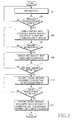
- FIG. 2 is a flowchart illustrating the procedure of storing an instant message generated during the execution of the messenger service function according to an exemplary embodiment of the present invention
- FIGs. 4A to 4C are views for explaining the operation of inputting subscriber information for a messenger service according to an exemplary embodiment of the present invention.
- step 201 When the messenger service subscriber operates a messenger service execution key by using the keypad 27 in step 201 which is in a waiting state, the control unit 10 recognizes the operation in step 203 and proceeds to step 205.
- step 205 the control unit 10 enters a messenger service function execution mode, in which, when the subscriber selects a messenger service provider (for example, Yahoo, AOL, MSN or ICQ), the control unit 10 controls the RF unit 21 to form a channel with the selected messenger service provider.
- a messenger service provider for example, Yahoo, AOL, MSN or ICQ
- a messenger service provider may be set as a default, so that the control unit 10 may automatically form a channel with the set messenger service provider when the user operates the messenger service execution key.
- the control unit 10 controls the memory 29 and the display unit 80 such that a subscriber information input screen for executing the messenger service function is displayed as shown in FIG. 4A.
- the subscriber information includes the subscriber's ID information and password information. Therefore, the subscriber information input screen includes input boxes for the subscriber's ID and password in order to authenticate the messenger service subscriber, and also includes an auto-sign-on selection box which enables the subscriber ID information to be automatically input.
- the control unit 10 senses the input information in step 207, and then proceeds to step 209.
- the control unit 10 controls the memory 29 and the display unit 80 such that the input subscriber information is displayed as shown in FIG. 4B and the input subscriber information is analyzed.
- the control unit 10 determines if the input subscriber information is registered subscriber information. When it is determined that the input subscriber information is registered subscriber information, the control unit 10 proceeds to step 213 of executing the messenger service function.
- the control unit 10 controls the memory 29 and display unit 80 such that instant messages generated according to the execution operations of the subscriber and a counterpart (who executes the messenger service function with the subscriber) are displayed as shown in FIG. 4C.
- step 215 the control unit 10 senses it in step 215, and proceeds to step 217.
- step 217 the control unit 10 controls the memory 29 in such a manner that the instant messages can be stored in the memory 29 by applying or appending identifier information (such as an index) corresponding the subscriber information to the instant messages.
- identifier information such as an index
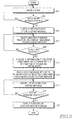
- FIG. 3 is a flowchart illustrating the procedure of outputting a stored instant message according to an embodiment of the present invention
- FIGs. 5A to 5C are views for explaining the operation of outputting a stored instant message according to an embodiment of the present invention.
- step 301 When the messenger service subscriber operates a stored-instant-message output key by using the keypad 27 in step 301 which is in a waiting state, the control unit 10 senses it in step 303, and proceeds to step 305. In step 305, the control unit 10 controls the memory 29 such that the control unit 10 enters an instant message output mode and analyzes the stored instant messages to check identifier information of the stored instant messages.
- the identifier information represents index information corresponding to the subscriber information, which is input in order to execute the messenger service, and the messenger service provider information.
- the subscriber information input for executing the messenger service and corresponding identifier information may be set as shown in Table 1.
- Table 1 Messenger Service Provider Information Subscriber Information (ID) Identifier Information
- Yahoo damier 1000 0001 Yahoo damierex 1000 0010
- Yahoo damier3 1000 0011 MSN samsung22 0100 0001 MSN samsung50 0100 0010
- the control unit 10 controls the memory 29 and the display unit 80 so as to display the messenger service providers (for example, Yahoo, AOL, MSN, and ICQ). Also, when the subscriber selects a messenger service provider, the control unit 10 controls the memory 29 and display unit 80 such that a list of messenger service subscribers registered to the selected messenger service provider is displayed as shown in FIG. 5A.
- a messenger service provider for example, an avatar service provider which has been previously used
- the control unit 10 senses the selection in step 309, and then proceeds to step 311.
- the control unit 10 controls the memory 29, so as to analyze the subscriber information about the selected subscriber and to check identifier information corresponding to the subscriber information. Then, the checked identifier information is compared with the identifier information of the stored instant messages.
- step 315 the control unit 10 controls the memory 29 and the display unit 80 such that the control unit 10 creates and displays an instant message list including the read instant messages, as shown in FIG. 5B.
- reference numeral 510 represents subscriber information
- reference numeral 520 represents instant messages stored in connection with the subscriber information.
- the subscriber information displayed as reference numeral 510 may be changed to different subscriber information by a key operation (for example, a wheel operation using a direction key). In this case, steps 311 to 315 are repeated to re-construct an instant message list based on the changed subscriber information.
- step 317 the control unit 10 senses it in step 317, and proceeds to step 319.
- step 319 the control unit 10 controls the memory 29 and the display unit 80 such that the contents of the selected instant message is displayed as shown in FIG. 5C.
- the wireless terminal having the messenger service function recognizes and stores instant messages, which are generated during the execution of the messenger service function, based on subscriber information, and outputs the stored instant messages according to each piece of subscriber information. Therefore, if a messenger service subscriber uses a plurality of identifiers in order to store the instant messages, or if a plurality of messenger service subscribers use different identifiers to store the instant messages, each messenger service subscriber may rapidly and precisely check instant messages stored by himself during the execution of the messenger service, thereby improving subscriber convenience.
- the messenger service function, the instant message storing function, and the stored-instant-message output function may be executed by means of the operation of separate function keys and/or the selection of a separate menu.
- the subscriber may select subscriber information from a relevant list, or may directly input the subscriber information.
- the subscriber information may be input as defaults in numerical order or in alphabetical order. Accordingly, the scope of the invention is not limited by the above-described exemplary embodiments, but is defined by the accompanying claims and the equivalents thereof.
Landscapes
- Engineering & Computer Science (AREA)
- Computer Networks & Wireless Communication (AREA)
- Signal Processing (AREA)
- Business, Economics & Management (AREA)
- General Business, Economics & Management (AREA)
- Human Computer Interaction (AREA)
- Mobile Radio Communication Systems (AREA)
- Information Transfer Between Computers (AREA)
Applications Claiming Priority (1)
| Application Number | Priority Date | Filing Date | Title |
|---|---|---|---|
| KR1020050081704A KR100617677B1 (ko) | 2005-09-02 | 2005-09-02 | 휴대용 단말기에서 인스턴트 메시지를 처리하는 방법 |
Publications (1)
| Publication Number | Publication Date |
|---|---|
| EP1761006A2 true EP1761006A2 (de) | 2007-03-07 |
Family
ID=37421154
Family Applications (1)
| Application Number | Title | Priority Date | Filing Date |
|---|---|---|---|
| EP06013629A Withdrawn EP1761006A2 (de) | 2005-09-02 | 2006-06-30 | Verfahren zur Behandlung von Sofortkommunikation in einem drahtlosen Endgerät und drahtloses Endgerät zum Durchführen dieses Verfahrens |
Country Status (4)
| Country | Link |
|---|---|
| US (1) | US20070055726A1 (de) |
| EP (1) | EP1761006A2 (de) |
| KR (1) | KR100617677B1 (de) |
| CN (1) | CN1925520A (de) |
Families Citing this family (7)
| Publication number | Priority date | Publication date | Assignee | Title |
|---|---|---|---|---|
| US20090006568A1 (en) * | 2007-06-28 | 2009-01-01 | Microsoft Corporation | Network-based collaboration record |
| US20090144385A1 (en) * | 2008-03-03 | 2009-06-04 | Harry Gold | Sequential Message Transmission System |
| US9514442B2 (en) * | 2008-05-09 | 2016-12-06 | International Business Machines Corporation | Interlacing responses within an instant messaging system |
| US20110066940A1 (en) * | 2008-05-23 | 2011-03-17 | Nader Asghari Kamrani | Music/video messaging system and method |
| US20170149600A9 (en) | 2008-05-23 | 2017-05-25 | Nader Asghari Kamrani | Music/video messaging |
| CN105225103B (zh) * | 2014-07-02 | 2020-05-22 | 中国银联股份有限公司 | 继续支付系统和方法 |
| KR20160069797A (ko) * | 2014-12-09 | 2016-06-17 | 주식회사 네이블커뮤니케이션즈 | 메시지 북마크 시스템 및 방법 |
Family Cites Families (7)
| Publication number | Priority date | Publication date | Assignee | Title |
|---|---|---|---|---|
| US5673256A (en) * | 1995-07-25 | 1997-09-30 | Motorola, Inc. | Apparatus and method for sending data messages at an optimum time |
| US20010027420A1 (en) * | 1999-12-21 | 2001-10-04 | Miroslav Boublik | Method and apparatus for capturing transaction data |
| US6760580B2 (en) * | 2000-03-06 | 2004-07-06 | America Online, Incorporated | Facilitating instant messaging outside of user-defined buddy group in a wireless and non-wireless environment |
| US7206813B2 (en) * | 2002-10-17 | 2007-04-17 | International Business Machines Corporation | Method, computer program product and apparatus for implementing professional use of instant messaging |
| JP2004326318A (ja) * | 2003-04-23 | 2004-11-18 | Murata Mach Ltd | 通信装置 |
| US7680888B1 (en) * | 2004-03-31 | 2010-03-16 | Google Inc. | Methods and systems for processing instant messenger messages |
| US7120455B1 (en) * | 2004-05-20 | 2006-10-10 | Cellco Partnership | Method and system for mobile instant messaging using multiple interfaces |
-
2005
- 2005-09-02 KR KR1020050081704A patent/KR100617677B1/ko not_active Expired - Fee Related
-
2006
- 2006-03-16 US US11/376,306 patent/US20070055726A1/en not_active Abandoned
- 2006-06-30 EP EP06013629A patent/EP1761006A2/de not_active Withdrawn
- 2006-07-03 CN CNA2006101005258A patent/CN1925520A/zh active Pending
Also Published As
| Publication number | Publication date |
|---|---|
| KR100617677B1 (ko) | 2006-08-28 |
| CN1925520A (zh) | 2007-03-07 |
| US20070055726A1 (en) | 2007-03-08 |
Similar Documents
| Publication | Publication Date | Title |
|---|---|---|
| KR100800663B1 (ko) | 이동 통신 단말기의 메시지 송수신 방법 | |
| JP2005196780A (ja) | 携帯端末機でアバターを用いたメッセージ処理装置及び方法 | |
| EP1786186A2 (de) | Ausführen einer Anwendung abhängig der Anwendereingabe | |
| KR101203516B1 (ko) | 휴대용 단말기 및 그의 영상이미지 파일 관리방법 | |
| EP1761006A2 (de) | Verfahren zur Behandlung von Sofortkommunikation in einem drahtlosen Endgerät und drahtloses Endgerät zum Durchführen dieses Verfahrens | |
| KR100793299B1 (ko) | 이동 단말기에서 전화번호 저장/발신 장치 및 방법 | |
| EP1941709B1 (de) | Verbessertes mobilkommunikationsverfahren und endgerät | |
| KR100762642B1 (ko) | 단말기에서 sms 메시지 배경화면을 디스플레이하는 방법및 그 단말기 | |
| CN110035170A (zh) | 通信终端中的数字输入方法以及通信终端 | |
| KR100850991B1 (ko) | 휴대 단말기의 단축 다이얼을 이용하는 방법 | |
| KR100839838B1 (ko) | 단문 메시지 전송 방법 | |
| US20020078156A1 (en) | Display data transmitting method for mobile terminal | |
| KR100834134B1 (ko) | 휴대용 단말기에서 윙크서비스를 이용한 통화연결 방법 및그 시스템 | |
| KR100810246B1 (ko) | 휴대용 단말기에서 멀티미디어 메시지 수신 방법 | |
| KR101570240B1 (ko) | 전자 메일 중계 서버 및 그 제어방법 | |
| KR100547769B1 (ko) | 휴대 단말기에서 통화 중 전화번호 전송방법 | |
| KR101091227B1 (ko) | 웹 브라우저를 이용한 휴대폰의 착신호 전환 방법 | |
| KR100706348B1 (ko) | 이동통신 단말기를 이용한 위치기반 주변정보 제공 시스템및 방법 | |
| KR100630184B1 (ko) | 휴대단말기에서 메시지를 통한 통화수행방법 | |
| KR100663427B1 (ko) | 휴대용 단말기에서 메시지 전송 및 수신방법 | |
| KR100605956B1 (ko) | 휴대 단말기의 메시지 전송방법 | |
| KR100639252B1 (ko) | 이동통신단말기에서 가상 화상 통화를 수행하기 위한 방법 | |
| KR100801651B1 (ko) | 통신 단말기의 대기 화면 처리 방법 | |
| KR101394262B1 (ko) | 통신 단말기의 통화 발신 방법 | |
| KR100640348B1 (ko) | 휴대단말기의 통화목록 표시방법 |
Legal Events
| Date | Code | Title | Description |
|---|---|---|---|
| PUAI | Public reference made under article 153(3) epc to a published international application that has entered the european phase |
Free format text: ORIGINAL CODE: 0009012 |
|
| 17P | Request for examination filed |
Effective date: 20060630 |
|
| AK | Designated contracting states |
Kind code of ref document: A2 Designated state(s): AT BE BG CH CY CZ DE DK EE ES FI FR GB GR HU IE IS IT LI LT LU LV MC NL PL PT RO SE SI SK TR |
|
| AX | Request for extension of the european patent |
Extension state: AL BA HR MK YU |
|
| STAA | Information on the status of an ep patent application or granted ep patent |
Free format text: STATUS: THE APPLICATION HAS BEEN WITHDRAWN |
|
| 18W | Application withdrawn |
Effective date: 20100628 |