EP1762396A2 - Procédé d'impression à encre réactive - Google Patents
Procédé d'impression à encre réactive Download PDFInfo
- Publication number
- EP1762396A2 EP1762396A2 EP06026993A EP06026993A EP1762396A2 EP 1762396 A2 EP1762396 A2 EP 1762396A2 EP 06026993 A EP06026993 A EP 06026993A EP 06026993 A EP06026993 A EP 06026993A EP 1762396 A2 EP1762396 A2 EP 1762396A2
- Authority
- EP
- European Patent Office
- Prior art keywords
- substrate
- image
- compound
- ink
- functional group
- Prior art date
- Legal status (The legal status is an assumption and is not a legal conclusion. Google has not performed a legal analysis and makes no representation as to the accuracy of the status listed.)
- Granted
Links
Images

Classifications
-
- D—TEXTILES; PAPER
- D06—TREATMENT OF TEXTILES OR THE LIKE; LAUNDERING; FLEXIBLE MATERIALS NOT OTHERWISE PROVIDED FOR
- D06Q—DECORATING TEXTILES
- D06Q1/00—Decorating textiles
- D06Q1/12—Decorating textiles by transferring a chemical agent or a metallic or non-metallic material in particulate or other form, from a solid temporary carrier to the textile
-
- B—PERFORMING OPERATIONS; TRANSPORTING
- B41—PRINTING; LINING MACHINES; TYPEWRITERS; STAMPS
- B41M—PRINTING, DUPLICATING, MARKING, OR COPYING PROCESSES; COLOUR PRINTING
- B41M5/00—Duplicating or marking methods; Sheet materials for use therein
- B41M5/0023—Digital printing methods characterised by the inks used
-
- B—PERFORMING OPERATIONS; TRANSPORTING
- B41—PRINTING; LINING MACHINES; TYPEWRITERS; STAMPS
- B41M—PRINTING, DUPLICATING, MARKING, OR COPYING PROCESSES; COLOUR PRINTING
- B41M5/00—Duplicating or marking methods; Sheet materials for use therein
- B41M5/025—Duplicating or marking methods; Sheet materials for use therein by transferring ink from the master sheet
- B41M5/0256—Duplicating or marking methods; Sheet materials for use therein by transferring ink from the master sheet the transferable ink pattern being obtained by means of a computer driven printer, e.g. an ink jet or laser printer, or by electrographic means
-
- B—PERFORMING OPERATIONS; TRANSPORTING
- B41—PRINTING; LINING MACHINES; TYPEWRITERS; STAMPS
- B41M—PRINTING, DUPLICATING, MARKING, OR COPYING PROCESSES; COLOUR PRINTING
- B41M5/00—Duplicating or marking methods; Sheet materials for use therein
- B41M5/26—Thermography ; Marking by high energetic means, e.g. laser otherwise than by burning, and characterised by the material used
- B41M5/382—Contact thermal transfer or sublimation processes
- B41M5/392—Additives, other than colour forming substances, dyes or pigments, e.g. sensitisers, transfer promoting agents
-
- B—PERFORMING OPERATIONS; TRANSPORTING
- B41—PRINTING; LINING MACHINES; TYPEWRITERS; STAMPS
- B41M—PRINTING, DUPLICATING, MARKING, OR COPYING PROCESSES; COLOUR PRINTING
- B41M7/00—After-treatment of prints, e.g. heating, irradiating, setting of the ink, protection of the printed stock
- B41M7/009—After-treatment of prints, e.g. heating, irradiating, setting of the ink, protection of the printed stock using thermal means, e.g. infrared radiation, heat
-
- B—PERFORMING OPERATIONS; TRANSPORTING
- B44—DECORATIVE ARTS
- B44C—PRODUCING DECORATIVE EFFECTS; MOSAICS; TARSIA WORK; PAPERHANGING
- B44C1/00—Processes, not specifically provided for elsewhere, for producing decorative surface effects
- B44C1/16—Processes, not specifically provided for elsewhere, for producing decorative surface effects for applying transfer pictures or the like
- B44C1/165—Processes, not specifically provided for elsewhere, for producing decorative surface effects for applying transfer pictures or the like for decalcomanias; sheet material therefor
- B44C1/17—Dry transfer
- B44C1/1712—Decalcomanias applied under heat and pressure, e.g. provided with a heat activable adhesive
- B44C1/1716—Decalcomanias provided with a particular decorative layer, e.g. specially adapted to allow the formation of a metallic or dyestuff layer on a substrate unsuitable for direct deposition
-
- C—CHEMISTRY; METALLURGY
- C09—DYES; PAINTS; POLISHES; NATURAL RESINS; ADHESIVES; COMPOSITIONS NOT OTHERWISE PROVIDED FOR; APPLICATIONS OF MATERIALS NOT OTHERWISE PROVIDED FOR
- C09D—COATING COMPOSITIONS, e.g. PAINTS, VARNISHES OR LACQUERS; FILLING PASTES; CHEMICAL PAINT OR INK REMOVERS; INKS; CORRECTING FLUIDS; WOODSTAINS; PASTES OR SOLIDS FOR COLOURING OR PRINTING; USE OF MATERIALS THEREFOR
- C09D11/00—Inks
- C09D11/02—Printing inks
- C09D11/03—Printing inks characterised by features other than the chemical nature of the binder
-
- D—TEXTILES; PAPER
- D06—TREATMENT OF TEXTILES OR THE LIKE; LAUNDERING; FLEXIBLE MATERIALS NOT OTHERWISE PROVIDED FOR
- D06P—DYEING OR PRINTING TEXTILES; DYEING LEATHER, FURS OR SOLID MACROMOLECULAR SUBSTANCES IN ANY FORM
- D06P1/00—General processes of dyeing or printing textiles, or general processes of dyeing leather, furs, or solid macromolecular substances in any form, classified according to the dyes, pigments, or auxiliary substances employed
- D06P1/44—General processes of dyeing or printing textiles, or general processes of dyeing leather, furs, or solid macromolecular substances in any form, classified according to the dyes, pigments, or auxiliary substances employed using insoluble pigments or auxiliary substances, e.g. binders
- D06P1/52—General processes of dyeing or printing textiles, or general processes of dyeing leather, furs, or solid macromolecular substances in any form, classified according to the dyes, pigments, or auxiliary substances employed using insoluble pigments or auxiliary substances, e.g. binders using compositions containing synthetic macromolecular substances
- D06P1/5264—Macromolecular compounds obtained otherwise than by reactions involving only unsaturated carbon-to-carbon bonds
- D06P1/5285—Polyurethanes; Polyurea; Polyguanides
-
- D—TEXTILES; PAPER
- D06—TREATMENT OF TEXTILES OR THE LIKE; LAUNDERING; FLEXIBLE MATERIALS NOT OTHERWISE PROVIDED FOR
- D06P—DYEING OR PRINTING TEXTILES; DYEING LEATHER, FURS OR SOLID MACROMOLECULAR SUBSTANCES IN ANY FORM
- D06P5/00—Other features in dyeing or printing textiles, or dyeing leather, furs, or solid macromolecular substances in any form
- D06P5/001—Special chemical aspects of printing textile materials
-
- D—TEXTILES; PAPER
- D06—TREATMENT OF TEXTILES OR THE LIKE; LAUNDERING; FLEXIBLE MATERIALS NOT OTHERWISE PROVIDED FOR
- D06P—DYEING OR PRINTING TEXTILES; DYEING LEATHER, FURS OR SOLID MACROMOLECULAR SUBSTANCES IN ANY FORM
- D06P5/00—Other features in dyeing or printing textiles, or dyeing leather, furs, or solid macromolecular substances in any form
- D06P5/003—Transfer printing
- D06P5/007—Transfer printing using non-subliming dyes
-
- D—TEXTILES; PAPER
- D06—TREATMENT OF TEXTILES OR THE LIKE; LAUNDERING; FLEXIBLE MATERIALS NOT OTHERWISE PROVIDED FOR
- D06P—DYEING OR PRINTING TEXTILES; DYEING LEATHER, FURS OR SOLID MACROMOLECULAR SUBSTANCES IN ANY FORM
- D06P5/00—Other features in dyeing or printing textiles, or dyeing leather, furs, or solid macromolecular substances in any form
- D06P5/20—Physical treatments affecting dyeing, e.g. ultrasonic or electric
- D06P5/2066—Thermic treatments of textile materials
- D06P5/2077—Thermic treatments of textile materials after dyeing
-
- D—TEXTILES; PAPER
- D06—TREATMENT OF TEXTILES OR THE LIKE; LAUNDERING; FLEXIBLE MATERIALS NOT OTHERWISE PROVIDED FOR
- D06Q—DECORATING TEXTILES
- D06Q1/00—Decorating textiles
- D06Q1/10—Decorating textiles by treatment with, or fixation of, a particulate material, e.g. mica, glass beads
-
- D—TEXTILES; PAPER
- D06—TREATMENT OF TEXTILES OR THE LIKE; LAUNDERING; FLEXIBLE MATERIALS NOT OTHERWISE PROVIDED FOR
- D06P—DYEING OR PRINTING TEXTILES; DYEING LEATHER, FURS OR SOLID MACROMOLECULAR SUBSTANCES IN ANY FORM
- D06P1/00—General processes of dyeing or printing textiles, or general processes of dyeing leather, furs, or solid macromolecular substances in any form, classified according to the dyes, pigments, or auxiliary substances employed
- D06P1/38—General processes of dyeing or printing textiles, or general processes of dyeing leather, furs, or solid macromolecular substances in any form, classified according to the dyes, pigments, or auxiliary substances employed using reactive dyes
Definitions
- This invention relates to digital printing methods generally, and is more specifically directed to a method of digital printing of ink onto a substrate, and subsequently activating the ink to permanently fix the printed image.
- Words and designs are frequently printed onto clothing and other textile materials, as well as other objects.
- Common means of applying such designs to objects include the use of silk screens, and mechanically bonded thermal transfers.
- Silk screen process is well known in the art, and an example of a mechanical thermal process for textile materials is described in Hare, U. S. Patent Number 4,244,358 .
- a process of thermal transfers wherein the ink mechanically bonds to the substrate is described in Hare, U. S. Patent Number 4,773,953 .
- the resulting mechanical image, as transferred, is a surface bonded image with a raised, plastic like feel to the touch.
- the resulting printed image is stiff to the feet, has poor dimensional stability when stretched and poor colour range.
- Conventional heat-melt thermal printing uses primarily non-active wax materials such as hydrocarbon wax, carnauba wax, ester wax, paraffin wax, etc. as heat-melt material. Though these wax or wax-like materials serve the purpose of heat-melt very well, they present problems when the product is used in a further transfer process, especially when the image is transferred to a fibrous material, such as a textile.
- the conventional wax materials are not chemically bonded or otherwise permanently bonded to the substrate, but are temporarily and loosely bound to the final substrate by the melting of wax during the transfer process.
- the resulting image is not durable, with the wax materials being washed away during laundering of textile substrates on which the image is transferred, particularly if hot water is used, along with the dyes or colorants which form the image in the thermal ink layer.
- the ink layer composition has a major percentage of wax or wax-like material, and the colorants used in such composition are either wax soluble and/or completely dispersed in wax material, the associated problems of poor wash fastness, colour fastness, and poor thermal stability, of the final product result in rapid and severe image quality deterioration during the usage of the product.
- Heat activated, or sublimation, transfer dye solids change to a gas at about 400°F, and have a high affinity for polyester at the activation temperature. Once the gasification bonding takes place, the ink is permanently printed and highly resistant to change or fading caused by laundry products. While sublimation dyes yield excellent results when a polyester substrate is used, these dyes have a limited affinity for other materials, such as natural fabrics like cotton and wool.
- images produced by heat activated inks comprising sublimation dyes which are transferred onto textile materials having a cotton component do not yield the high quality image experienced when images formed by such inks are printed onto a polyester substrate. Images which are printed using sublimation dyes applied by heat and pressure onto substrates of cotton or cotton and polyester blends yield relatively poor results.
- substrates are surface coated with materials, such as the coatings described in DeVries et.al., U. S. Patent Number 4,021,591 .
- materials such as the coatings described in DeVries et.al., U. S. Patent Number 4,021,591 .
- Application of polymer surface coating materials to the substrate allows the surface coating material to bond the ink layer to the substrate, reducing the absorbency of the ink by the cotton and improving the image quality.
- the surface coating material is applied to the substrate over the general area to which the image layer formed by the inks is to be applied, such as by spraying the material, or applying the material with heat and pressure from manufactured transfer sheets, which are usually rectangular in shape.
- the area coated with the surface coating material is larger than the area covered by the ink layer.
- the surface coating extends from the margins of the image after the image is applied to the substrate, which can be seen with the naked eye. The excess surface coating reduces the aesthetic quality of the printed image on the substrate. Further, the surface coating tends to turn yellow with age, which is undesirable on white and other light coloured substrates.
- Thermal transfer paper can transfer a heat-melt image to a final substrate such as cotton.
- this method has several limitations. First, the entire sheet is transferred, not just the image. Second, such papers are heavily coated with material to bind the heat-melt material on the textile. This material makes the transfer area very stiff. Finally, the laundering durability is not improved to acceptable levels.
- the thermal transfer paper technology (cited Foto-Wear patent) only creates a temporary bond (heat-melt) between the transfer materials and the final substrate. This bond is not durable to washing.
- This invention is a formulation and method of printing an ink or meltable ink layer which comprises dyes or pigments, such as sublimation, dye diffusion, heat sensitive dyes, or other dyes, any of which may be referred to herein as colorants.
- the ink or ink melt layer also comprises compounds with functional groups capable of reacting with active hydrogens, such as isocyanates, and compounds with functional groups containing active hydrogens or functional groups capable of conversion to active hydrogen containing groups. Permanently bonded and/or cross linked colour images are provided by the reaction between the groups, but not until heat activation of the printed ink image.
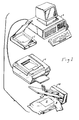
- a printer 6 prints the image onto a substrate, which may be paper, at a relatively low temperature, so that the ink is not activated during the process of printing on to the medium.
- the image formed by the printed ink is transferred from the substrate 9 to a final substrate 8 on which the image is to permanently appear, such as by the application of heat and pressure which activates the ink.
- a heat press 10 may be used to perform the transfer.
- the image may be permanently fixed on the substrate by the application of heat and pressure, without transferring the image.
- the process produces an image on the final substrate which is water fast and colour fast.
- the reactive compounds are blocked with blocking agents.
- the blocking properties of these blocking agents are removed by the application of energy or heat at a temperature which is at or above the activation temperature, and above the temperature at which printing onto the medium occurs. This higher temperature is presented during the transfer step, or the activation step, of the process, activating the ink which has been printed in an image onto the substrate. The colorant is thereby permanently bonded to the substrate in the form of the desired printed image.
- a heat-melt ink ribbon 20 is formed composed of a repeating sequence of coloured ink panels.
- a typical pattern of panels is yellow, magenta, cyan, although white, black, or other panels could beinterposed.
- Colorants used for such ink panels typically do not have an affinity for the final transfer substrate, which may be for example, natural fibres. The colorant(s) bond permanently to the final substrate by means of other components in the ink panel.
- a computer designed image is first digitally melt-transfer printed from at least one ink layer onto a medium, which may be paper.
- a thermal printer having a printer head 24 applies heat to the ribbon 20 to release the ink layer in the desired pattern.
- Figure 3 The thermal printing process operates at a temperature sufficient to thermally print the multiple colour ink layers, but the temperature is not sufficient to activate bonding and/or cross-linking of the ink layers, either within the ink layer itself, or between the ink layer and the printing medium.
- a higher temperature is applied, preferably under pressure, during the fixing or activation step to the intermediate substrate, and if used, to the final substrate, to activate and permanently fix the ink layer.
- the heat simultaneously activates the image, bonding and/or cross-linking the ink layer during this fixing step.
- the image becomes permanently embedded in the substrate and excellent durability can be achieved for the final designed image.
- Appropriate pressure is applied during the transfer process to ensure the proper surface contact of the medium and the final substrate.
- an optional additional panel of clear prime material is inserted on the ribbon ahead of the colour panel sequence.
- the printer first prints the prime layer in the shape of the desired image or slightly beyond the image boundary onto the paper medium.
- the printer then prints the image in the desired colours onto the medium, so that the entire image is printed onto prime material.
- the image is then transferred from the medium and fixed to the substrate, by the application of heat and pressure. This layer primes the surface the printing. medium, preventing permanent bonding between the ink layer and the medium, and minimizing the requirements of the printing medium. A better release of the image from the medium is thereby achieved.
- an additional optional panel of binding material may also be inserted in the colour panel sequence, either ahead or behind the ink panels.
- the binding material may be a layer of uncoloured heat activated ink.
- the binding material may also be a polymeric material.
- the printer prints the binding material in the shape of the image, or slightly beyond the image boundary, either directly onto the paper medium, or onto the printed ink image.
- the ink-binder image is then transferred from the medium to the substrate by the application of heat and pressure, providing enhanced binding of colorant to substrate.
- Bonding and/or cross linking of the colour images of the present invention is provided by the reaction between compounds selected from each of two groups of chemicals.
- the first group comprises compounds with functional groups capable of reacting with active hydrogens, such as isocyanate or epoxy groups, or compounds with functional groups capable of making the isocyanate or epoxy groups available for reaction through certain initiation processes, such as blocked polyisocyanates or encapsulated polyisocyanates, which may be initiated by the application of heat.
- Blocking as referred to herein means chemical blocking by means of a blocking agent.
- a compound which is chemically blocked or physically encapsulated is referred to herein as "protected”.
- Other initiation processes may include, but are not limited to, radiation, chemical, pressure, and/or the combinations there of.
- the second group comprises compounds with functional groups containing active hydrogens, such as hydroxyl, amino, thiol, carboxylic acid groups, or functional groups capable of conversion to active hydrogen containing groups, such ascarboxylic anhydrides.
- a preferred set of compounds comprisinghydroxyl groups is referred to herein as polyols.
- Aliphatic and/or cycloaliphatic and/or aromatic polyisocyanates may be used.
- the compounds are blocked with agents including phenols, thiols, alcohols, amines and oximes. Removal of the blocking properties must occur at a temperature which is above the operating temperature of the printer. Generally, the application of heat at a temperature which is at or above 120°Cshould be required to remove such blocking groups and activate the isocyanate.
- polyols in the present invention meets two primary goals of the invention.
- a wax-like material it supplies the heat-melt component so that thermal digital printing of the ink layer can be achieved.
- the polyols also supply functional groups having active hydrogens which will cross-link with active isocyanate, and permanently bond to the final substrate.
- Polyols with a polyether backbone are preferred.
- polyols or mixtures thereof may have an average molecular weight from 500 to 50,000, and preferably, an average molecular weight in the range of 1,000 to 3,000.
- the resulting composition, with the rest of the components in the ink layer, is suitable for the digital printing process.
- the average molecular weight of the whole of all polyol compounds is defined as the sum of the product of the molecular weight and the mole fraction of each polyol compound in the mixture.
- a preferred embodiment of an ink layer comprises a mixture of high molecular weight polyol compounds having molecular weights of 3000 to 10,000, and low molecular weight polyol compound having molecular weights of not greater than 600.
- the polyisocyanate and the polyol compounds are preferred to have an average functionality greater than or equal to two, and not greater than four.
- the ratio of the equivalents of isocyanate group to the equivalents of hydroxyl group may range from 1/2 to 10/1, preferably 1/1 to 2/1.
- Catalysts may be included to speed up the cross-linking reaction.
- Organometallic compounds are suitable catalysts.
- Dibutyltin, 0.5% to 4% by weight, based on the isocyanate, may be used.
- the colorant may be pigments or dyes. Such colorants comprise from 1%20%, and typically 3%-10%, of the ink, by weight. Suitable dyestuffs include, but are not limited pigments to, Acid Dyes, Basic Dyes, Solvent Dyes and Disperse Dyes. at ink layer may also contain binder material. Generally binders are resins described as non-crystalline solid materials, or liquids of relatively high molecular weight which adhere the colorant to the panel of the ribbon during coating.
- Rosin and modified rosins such as calcium, magnesium, and zinc metallic resinates, ester gum of rosin, maleic resins and esters, dimerized and polymerized rosins and rosin modified fumaric resins; shellac, asphalts, phenolic resins and rosin-modified phenolic resins; alkyd resins; polystyrene resins and copolymers thereof; terpene resins; alkylated urea formaldehyde resins; alkylated melamine formaldehyde resins; polyamide resins; vinyl resins and copolymers thereof, such as polyvinyl acetate, polyvinyl ICE, ethylene-vinyl acetate, and polyvinyl butyral; ketone resins;acrylic resins, such as polyacrylic acid and polymethacrylic acid; epoxide resins; polyurethaneresins; polyester
- the final transfer substrates which are preferred are textile substrate materials containing hydroxyl groups and/or primary or secondary amino groups which react with the free isocyanate. Chemical grafting is achieved through copolymerization between the ink layer components and final substrate material, resulting in superior stability and durability.
- Such materials include cotton, 2-cellulose acetate, rayon, wool, silk, and polyamides such as nylon 6, nylon 66 or nylon 12.
- the preferred cross-linking agents are polyisocyanates.
- the polyisocyanate should have a functionality greater than or equal to two, and most preferably between two and four. Particularly preferred are polyisocyanates in which all the isocyanate groups are attached to aliphatic carbon atoms.
- Aliphatic polyisocyanates suitable for the present invention include those having the structure OCN- (CH2) n-NCO where n is an integer from 2 to 16, and preferably 4 or 6, i. e., tetramethylene diisocyanate and hexamethylene diisocyanate(HDI).
- Suitable aliphatic isocyanates are: 1-isocyanato-3-isocyanatomethyl-3,5,5-trimethyl-cyclohexane (known commercially as isophorone diisocyanate (IPDI)), trimethylhexamethylene diisocyanate, the isomeric bis(isocyanatomethyl)-benzenes and toluenes, 1,4-bis (isocyanatomethyl)-cyclohexane, cyclohexane-1,4-diisocyanate, 4,4'-methylene bis (cyclohexylisocyanate), and the like.
- IPDI isophorone diisocyanate
- Such aliphaticpolyisocyanates may be used either alone, or in a mixture with one or more of the other aliphatic polyisocyanates listed above.
- aromatic isocyanates suitable for the present invention are 2,4-toluene diisocyanate, 2,6-toluene diisocyanate, commercial mixtures of 2,4- and 2,6-toluene diisocyanate, 4,4'-diphenylmethane diisocyanate, dianisidiene diisocyanate, the isomeric benzene, xylene and naphthalene diisocyanates.
- aromatic polyisocyanates may be used alone or in a mixture with other aromatic polyisocyanates, such as those listed above, or with the aliphatic polyisocyanates listed above.
- polyisothiocyanates or compounds containing both isocyanate and isothiocyanate groups may be used, for example, hexamethylene diisothiocyanate, tetramethylene diisothiocyanate, 2,4- and 2,6-toluene diisothiocyanate.
- blocked polyisocyanates may be used.
- a blocked isocyanate as used herein, is derived from the reaction of a blocking agent and an isocyanate. Such blocked isocyanates reform the original isocyanate upon removal of the blocking agents such as by heating, or by heating with nucleophilic reagents, they may produce the same products as the reaction of the samenucleophilic reagents with the parent isocyanates.
- the unblocking reaction occurs upon the application of heat at or above 120°C.
- blocking agents include phenols and substitutedphenols, alcohols and substituted alcohols, thiols, lactams such as alpha-pyrrolidone, epsilon-caprolactam, mercaptams, primary and secondary acid amides, imides, aromatic and aliphatic amines, activemethylene compounds, oximes of aldehydes and ketones and salts of sulfurous acid.
- Polyols suitable for use in the present invention may have a backbone structure of the polyether, polyester, polythioether, mixed polyester polyether or mixed polyether polythioether classes. However due to their superior stability to hydrolysis, those containing ether linkages alone are most preferred.
- the polyether polyols or mixtures of polyether polyols, have an average molecular weight from 500 to 50,000, preferably from 1,500 to 2,700.
- the average molecular weight of the whole of all polyol compounds is defined as the sum of the product of the molecular weight and the mole fraction of each polyol compound in the mixture.
- a preferred embodiment comprises a mixture of high molecular weight polyol compounds, having molecular weights of 3000 to 50,000, and low molecular weight polyol compounds having molecular weights of not greater than 600.
- catalysts for the isocyanate/polyol reaction include tertiary amines, such as triethylamine, triethylenediamine, hexahydro-N, N'-dimethyl aniline, tribenzylamine, N-methyl-piperidine,N, N'-dimethyipiperazine; alkali or alkaline earth metal hydroxides; heavy metal ions, such as iron(III), manganese(III), vanadium (V) or metal salts such as leadoleate, lead-2-ethylhexanoate, zinc(II) octanoate, lead and cobalt napththenate, zinc(II)-ethylhexanoate, dibutyltin dil
- dibutyl tin catalyst Any amount of dibutyl tin catalyst may be used which will effect the intended purpose.
- Dibutyltindilaurate or dibutyltin diacetate may be used in a range of 0.5 to 4% by weight, based on the weight of the isocyanate.
- Ink Layer Composition (% Dry Weight) Polyisocyanate 15-40 Polyol 50-85 Catalyst 0.1-2 Colorant 0-10 Binder 0-20
- a thermal expandable ink layer may be produced which comprises a foaming agent such as azodicarbonamide.
- foaming agents include those which decompose upon heating to release gaseous products which cause the ink layer to expand.
- a thermally expandable ink layer may be produced which comprises volatile hydrocarbons encapsulated in a microsphere which bursts upon the application of heat.
- the gaseous products produced upon bursting expand the ink layer.
- Simultaneous expanding and cross linking gives a three dimensional image which is permanently bound to the substrate.
- the height of the image is dependent on the force of the pressure which is applied during heat transfer printing.
- additives may be used in the prime layer to assist in the release of the image from the paper.
- any, or all, of the colour panels could include foaming agents.
- the foaming agent is preferred to have a concentration of between 0.1-2.0%.
- Foaming agents that evolve gas as the result of thermal decomposition are preferably used as the foaming agent.
- organic expanding agents such as azo compounds, including azobisisobutyronitrile, azodicarbonamide, and diazoaminobenzene, nitroso compounds such as N, N dinitrosopentamethylenetetramine, N, N'-dinitroso-N, N'-dimethylterephthalamide, sulfonyl hydrazides such asbenzenesulfonyl hydrazide, p-toluenesulfonyl hydrazide, p-toluenesulfonyl azide, hydrazolcarbonamide, acetone-p-sulfonyl hydrazone; and inorganic expanding agents, such as sodium bicarbonate, ammonium carbonate and ammonium bicarbonate.
- Thermally expandable microcapsules are composed of a hydrocarbon, which is volatile at low temperatures, positioned within a wall of thermoplastic resin.
- hydrocarbons suitable for practicing the present invention are methyl chloride, methyl bromide, trichloroethane, dichioroethane, n-butane, n-heptane, n-propane, n-hexane, n-pentane, isobutane, isophetane, neopentane, petroleum ether, and aliphatic hydrocarbon containing fluorine such as Freon, or a mixture thereof.
- Examples of the materials which are suitable for forming the wall of the thermally expandable microcapsule include polymers of vinylidene chloride, acrylonitrile, styrene, polycarbonate, methyl methacrylate, ethyl acrylate and vinyl acetate, copolymers of these monomers, and mixtures of the polymers of the copolymers.
- a cross linking agent may be used as appropriate.
- the diameter of the thermally expanded microcapsule is in the range of 0.1300 microns, and preferably within a range of 0.3-50 microns, with a greater preference of a range of 0.5-20 microns.
Landscapes
- Engineering & Computer Science (AREA)
- Textile Engineering (AREA)
- Chemical & Material Sciences (AREA)
- Chemical Kinetics & Catalysis (AREA)
- Physics & Mathematics (AREA)
- General Chemical & Material Sciences (AREA)
- Materials Engineering (AREA)
- General Engineering & Computer Science (AREA)
- General Health & Medical Sciences (AREA)
- Thermal Sciences (AREA)
- Toxicology (AREA)
- Life Sciences & Earth Sciences (AREA)
- Optics & Photonics (AREA)
- Wood Science & Technology (AREA)
- Organic Chemistry (AREA)
- Health & Medical Sciences (AREA)
- Thermal Transfer Or Thermal Recording In General (AREA)
- Inks, Pencil-Leads, Or Crayons (AREA)
- Coloring (AREA)
- Developing Agents For Electrophotography (AREA)
- Transition And Organic Metals Composition Catalysts For Addition Polymerization (AREA)
- Printing Methods (AREA)
- Ink Jet (AREA)
- Laminated Bodies (AREA)
- Degasification And Air Bubble Elimination (AREA)
Applications Claiming Priority (2)
| Application Number | Priority Date | Filing Date | Title |
|---|---|---|---|
| US7396398A | 1998-05-06 | 1998-05-06 | |
| EP99920175A EP1102676B1 (fr) | 1998-05-06 | 1999-04-30 | Procede d'impression a encre reactive |
Related Parent Applications (1)
| Application Number | Title | Priority Date | Filing Date |
|---|---|---|---|
| EP99920175A Division EP1102676B1 (fr) | 1998-05-06 | 1999-04-30 | Procede d'impression a encre reactive |
Publications (3)
| Publication Number | Publication Date |
|---|---|
| EP1762396A2 true EP1762396A2 (fr) | 2007-03-14 |
| EP1762396A3 EP1762396A3 (fr) | 2007-03-21 |
| EP1762396B1 EP1762396B1 (fr) | 2008-09-17 |
Family
ID=22116877
Family Applications (2)
| Application Number | Title | Priority Date | Filing Date |
|---|---|---|---|
| EP06026993A Expired - Lifetime EP1762396B1 (fr) | 1998-05-06 | 1999-04-30 | Procédé d'impression à encre réactive |
| EP99920175A Expired - Lifetime EP1102676B1 (fr) | 1998-05-06 | 1999-04-30 | Procede d'impression a encre reactive |
Family Applications After (1)
| Application Number | Title | Priority Date | Filing Date |
|---|---|---|---|
| EP99920175A Expired - Lifetime EP1102676B1 (fr) | 1998-05-06 | 1999-04-30 | Procede d'impression a encre reactive |
Country Status (12)
| Country | Link |
|---|---|
| US (3) | US6402313B1 (fr) |
| EP (2) | EP1762396B1 (fr) |
| JP (1) | JP2002513697A (fr) |
| AT (1) | ATE408518T1 (fr) |
| AU (1) | AU768460B2 (fr) |
| CA (1) | CA2331770C (fr) |
| CY (1) | CY1106389T1 (fr) |
| DE (2) | DE69939608D1 (fr) |
| DK (2) | DK1762396T3 (fr) |
| ES (2) | ES2280121T3 (fr) |
| PT (2) | PT1102676E (fr) |
| WO (1) | WO1999056948A1 (fr) |
Families Citing this family (63)
| Publication number | Priority date | Publication date | Assignee | Title |
|---|---|---|---|---|
| USRE38952E1 (en) | 1994-03-08 | 2006-01-31 | Hale Nathan S | Heat activated ink jet ink |
| US6887640B2 (en) | 2002-02-28 | 2005-05-03 | Sukun Zhang | Energy activated electrographic printing process |
| US6673503B2 (en) | 1994-11-07 | 2004-01-06 | Barbara Wagner | Energy activated electrographic printing process |
| US7654660B2 (en) * | 1994-11-07 | 2010-02-02 | Sawgrass Technologies, Inc. | Energy activated printing process |
| US7524048B2 (en) * | 1994-11-07 | 2009-04-28 | Sawgrass Technologies, Inc. | Meltable reactive ink and process of using same |
| US6348939B1 (en) * | 1999-05-28 | 2002-02-19 | Sawgrass Systems, Inc. | Digital printable reactive dye and process |
| US6649317B2 (en) | 1994-11-07 | 2003-11-18 | Barbara Wagner | Energy activated electrographic printing process |
| US7041424B2 (en) | 1994-11-07 | 2006-05-09 | Ming Xu | Energy activated electrographic printing process |
| US8337006B2 (en) * | 1998-05-06 | 2012-12-25 | Sawgrass Technologies, Inc. | Energy activated printing process |
| US6447629B1 (en) * | 1998-05-06 | 2002-09-10 | Sawgrass Systems, Inc. | Digital thermal printing process using reactive ink |
| US6749996B2 (en) | 1998-10-06 | 2004-06-15 | Impulse Wear, Inc. | Puff heat transfer |
| US6544370B1 (en) * | 1998-10-06 | 2003-04-08 | Impulse Wear, Inc. | Puff heat transfer |
| PT1089879E (pt) * | 1999-04-23 | 2006-11-30 | Sawgrass Systems Inc | Processo de impressão a jacto de tinta utilizando tintas reactivas |
| WO2001098091A2 (fr) * | 2000-06-19 | 2001-12-27 | Sawgrass Systems, Inc. | Support d'enregistrement pour transfert intermediaire |
| US6486903B1 (en) | 2000-09-27 | 2002-11-26 | Sawgrass Systems, Inc. | Transfer printing process |
| US7001649B2 (en) | 2001-06-19 | 2006-02-21 | Barbara Wagner | Intermediate transfer recording medium |
| US6849370B2 (en) | 2001-10-16 | 2005-02-01 | Barbara Wagner | Energy activated electrographic printing process |
| AU2002365481A1 (en) * | 2001-11-23 | 2003-06-10 | Milliken Industrials Limited | Printed cloth |
| AU2003251790A1 (en) * | 2002-07-03 | 2004-01-23 | High Voltage Graphics, Inc. | Process for printing and molding a flocked article |
| US7134749B2 (en) | 2003-06-16 | 2006-11-14 | Kornit Digital Ltd. | Method for image printing on a dark textile piece |
| IL162231A (en) | 2004-05-30 | 2007-05-15 | Kornit Digital Ltd | Direct digital printing process of jet propulsion inkjet on a wet fabric section |
| JP4138598B2 (ja) * | 2003-07-30 | 2008-08-27 | ソニーケミカル&インフォメーションデバイス株式会社 | 剥離性組成物、熱転写記録媒体及び転写性保護フィルム |
| US7465485B2 (en) | 2003-12-23 | 2008-12-16 | High Voltage Graphics, Inc. | Process for dimensionalizing flocked articles or wear, wash and abrasion resistant flocked articles |
| US7393576B2 (en) | 2004-01-16 | 2008-07-01 | High Voltage Graphics, Inc. | Process for printing and molding a flocked article |
| US7607745B2 (en) | 2004-02-12 | 2009-10-27 | Kornit Digital Ltd. | Digital printing machine |
| US11447648B2 (en) | 2004-05-30 | 2022-09-20 | Kornit Digital Ltd. | Process and system for printing images on absorptive surfaces |
| EP1851059A2 (fr) * | 2005-02-24 | 2007-11-07 | E.I. Dupont De Nemours And Company | Support textile selectionne utilise a des fins d'impression par transfert |
| MX2007010786A (es) * | 2005-03-04 | 2008-03-18 | Sawgrass Technologies Inc | Procedimientos de impresion activado por energia. |
| US7776108B2 (en) | 2005-06-07 | 2010-08-17 | S.C. Johnson & Son, Inc. | Composition for application to a surface |
| US20070277849A1 (en) | 2006-06-06 | 2007-12-06 | Shah Ketan N | Method of neutralizing a stain on a surface |
| JP2008545565A (ja) | 2005-06-07 | 2008-12-18 | エス.シー. ジョンソン アンド サン、インコーポレイテッド | 表面にデザインを付与するためのデザイン用具 |
| WO2007016341A2 (fr) | 2005-07-28 | 2007-02-08 | High Voltage Graphics, Inc. | Articles floques comprenant un film poreux |
| US20070084546A1 (en) * | 2005-10-19 | 2007-04-19 | Contompasis Charles E | Method and apparatus for colorant transfer |
| US20070181253A1 (en) * | 2006-02-03 | 2007-08-09 | Ming Xu | Image receiver media and printing process |
| EP2015939B1 (fr) * | 2006-04-03 | 2011-09-07 | Arkwright Advanced Coating, Inc. | Papiers transferts imprimables par jet d'encre comportant une couche cationique sous la couche d'image |
| WO2008055244A2 (fr) | 2006-10-31 | 2008-05-08 | Sensient Colors Inc. | Pigments modifiés et leurs procédés de fabrication et d'utilisation |
| WO2008101115A1 (fr) | 2007-02-14 | 2008-08-21 | High Voltage Graphics, Inc. | Textile imprime par colorant de sublimation |
| US9550374B1 (en) | 2007-06-27 | 2017-01-24 | Cafepress Inc. | System and method for improved digital printing on textiles |
| US8353245B2 (en) * | 2007-08-20 | 2013-01-15 | Darryl Zinman | Line art transfer freehand colouring |
| EP3483222A3 (fr) | 2007-08-23 | 2019-08-07 | Sensient Colors LLC | Pigments auto-dispersés et procédés de préparation et d'utilisation de ceux-ci |
| US8048498B2 (en) * | 2007-12-06 | 2011-11-01 | E.I. Du Pont De Nemours And Company | Compositions and processes for preparing color filter elements using vanadium catalysts |
| EP2417202A2 (fr) | 2009-04-07 | 2012-02-15 | Sensient Colors LLC | Particules auto-dispersées et procédés de fabrication et d'utilisation de celles-ci |
| CN104031476B (zh) | 2009-08-10 | 2017-05-03 | 柯尼特数码有限公司 | 用于可拉伸基材的喷墨组合物及方法 |
| AU2010339037B2 (en) * | 2009-12-29 | 2014-12-18 | Jk Group S.P.A. | Rheology modified ink and printing process |
| US8926080B2 (en) | 2010-08-10 | 2015-01-06 | Kornit Digital Ltd. | Formaldehyde-free inkjet compositions and processes |
| US8942071B2 (en) | 2011-02-04 | 2015-01-27 | Lucinda Price | Color storage and transmission systems and methods |
| JP5729293B2 (ja) | 2011-12-26 | 2015-06-03 | カシオ計算機株式会社 | 立体画像形成方法及び立体画像形成装置 |
| JP5622183B2 (ja) | 2011-12-28 | 2014-11-12 | カシオ計算機株式会社 | 立体画像形成方法及び立体画像形成装置 |
| JP2016502470A (ja) | 2012-10-12 | 2016-01-28 | ハイ ボルテイジ グラフィックス インコーポレイテッドHigh Voltage Graphics,Inc. | 熱融着可能な可撓性の装飾品およびそれを製造する方法 |
| US9333788B2 (en) | 2013-07-25 | 2016-05-10 | The Hillman Group, Inc. | Integrated sublimation transfer printing apparatus |
| US9403394B2 (en) | 2013-07-25 | 2016-08-02 | The Hillman Group, Inc. | Modular sublimation transfer printing apparatus |
| US10011120B2 (en) | 2013-07-25 | 2018-07-03 | The Hillman Group, Inc. | Single heating platen double-sided sublimation printing process and apparatus |
| US9731534B2 (en) | 2013-07-25 | 2017-08-15 | The Hillman Group, Inc. | Automated simultaneous multiple article sublimation printing process and apparatus |
| US9120326B2 (en) | 2013-07-25 | 2015-09-01 | The Hillman Group, Inc. | Automatic sublimated product customization system and process |
| US20160168379A1 (en) * | 2014-12-12 | 2016-06-16 | Kwan Byung Lee | Binder Composition for Sublimation Printing Natural Fibers |
| US9399362B1 (en) | 2015-03-31 | 2016-07-26 | Vivid Transfers, LLC | Method of selectively transferring an image and heat-transfer assembly |
| CN104802540B (zh) * | 2015-05-12 | 2018-04-10 | 卢成林 | 浅色自然纤维纺织品数码打印色带及其制备方法与应用 |
| CA2937931A1 (fr) | 2015-08-05 | 2017-02-05 | The Hillman Group, Inc. | Appareil d'impression par sublimation semi-automatisee |
| CN105544247B (zh) * | 2016-01-25 | 2018-10-12 | 吴雨潞 | 一种用于数码印花的印花粘合剂及其制备方法 |
| WO2018078634A1 (fr) | 2016-10-31 | 2018-05-03 | Kornit Digital Ltd. | Impression par jet d'encre par sublimation de colorant pour textile |
| CN111511982A (zh) | 2017-10-22 | 2020-08-07 | 康丽数码有限公司 | 通过喷墨打印的低摩擦图像 |
| CN111875805B (zh) * | 2020-07-23 | 2021-12-03 | 江南大学 | 一种反应型自分散彩色乳胶的制备方法 |
| CN120076929A (zh) * | 2022-10-18 | 2025-05-30 | 尼纳公司 | 用于将图像转印至物品的系统和装置及其制备方法 |
Family Cites Families (21)
| Publication number | Priority date | Publication date | Assignee | Title |
|---|---|---|---|---|
| US4078886A (en) | 1971-04-26 | 1978-03-14 | Ciba-Geigy Ag | Sublimation transfer and diisocyanate fixation of amino- or hydroxy-containing anthraquinone dyestuffs and transfer sheets thereof |
| US4058644A (en) | 1974-12-04 | 1977-11-15 | Devries Roy F | Sublimation transfer and method |
| NL7810502A (nl) * | 1978-10-20 | 1980-04-22 | Oce Van Der Grinten Nv | Tonerpoeder voor het ontwikkelen van elektrostatische beelden. |
| US4605418A (en) | 1983-03-09 | 1986-08-12 | Diamond Shamrock Chemicals Company | Aftertreatment of dyed cellulosic materials |
| JPS60212389A (ja) * | 1984-04-06 | 1985-10-24 | Canon Inc | 感熱転写材 |
| US4694302A (en) * | 1986-06-06 | 1987-09-15 | Hewlett-Packard Company | Reactive ink-jet printing |
| JPS63268692A (ja) * | 1987-04-28 | 1988-11-07 | Canon Inc | 感熱転写材 |
| US5302223A (en) * | 1990-07-09 | 1994-04-12 | Sawgrass Systems, Inc. | Permanent heat sensitive transfer printing process |
| US5328754A (en) * | 1992-02-13 | 1994-07-12 | Ricoh Company, Ltd. | Thermosensitive image transfer ink sheet |
| DE4217716A1 (de) | 1992-05-29 | 1993-12-02 | Bayer Ag | Vernetzer für Textildruck-Bindemittel |
| US5380769A (en) | 1993-01-19 | 1995-01-10 | Tektronix Inc. | Reactive ink compositions and systems |
| JP3367530B2 (ja) | 1993-06-08 | 2003-01-14 | ソニー株式会社 | 印画紙 |
| JP3277626B2 (ja) | 1993-08-03 | 2002-04-22 | ソニー株式会社 | 印画紙 |
| US5640180A (en) * | 1994-03-08 | 1997-06-17 | Sawgrass Systems, Inc. | Low energy heat activated transfer printing process |
| US5411931A (en) | 1994-06-24 | 1995-05-02 | Eastman Kodak Company | Thermal dye transfer receiving element with polycarbonate polyol crosslinked polymer |
| DE4433437A1 (de) | 1994-09-20 | 1996-03-21 | Bayer Ag | Vernetzer für Textildruck-Bindemittel |
| US5646090A (en) | 1995-04-06 | 1997-07-08 | Dai Nippon Printing Co., Ltd. | Thermal transfer image-receiving sheet |
| US5748204A (en) * | 1995-09-20 | 1998-05-05 | Eastman Kodak Company | Hybrid imaging system capable of using ink jet and thermal dye transfer imaging technologies on a single image receiver |
| US5738013A (en) * | 1996-05-14 | 1998-04-14 | New England Science & Specialty Products, Inc. | Method of making a lithographic printing plate with an ink jet fluid material |
| JP3936423B2 (ja) * | 1997-01-31 | 2007-06-27 | ゼネラル株式会社 | 感熱転写媒体 |
| PT1089879E (pt) * | 1999-04-23 | 2006-11-30 | Sawgrass Systems Inc | Processo de impressão a jacto de tinta utilizando tintas reactivas |
-
1998
- 1998-09-18 US US09/156,871 patent/US6402313B1/en not_active Expired - Lifetime
-
1999
- 1999-04-30 EP EP06026993A patent/EP1762396B1/fr not_active Expired - Lifetime
- 1999-04-30 DE DE69939608T patent/DE69939608D1/de not_active Expired - Lifetime
- 1999-04-30 EP EP99920175A patent/EP1102676B1/fr not_active Expired - Lifetime
- 1999-04-30 WO PCT/US1999/009387 patent/WO1999056948A1/fr not_active Ceased
- 1999-04-30 DK DK06026993T patent/DK1762396T3/da active
- 1999-04-30 JP JP2000546945A patent/JP2002513697A/ja active Pending
- 1999-04-30 AT AT06026993T patent/ATE408518T1/de not_active IP Right Cessation
- 1999-04-30 PT PT99920175T patent/PT1102676E/pt unknown
- 1999-04-30 AU AU37735/99A patent/AU768460B2/en not_active Ceased
- 1999-04-30 ES ES99920175T patent/ES2280121T3/es not_active Expired - Lifetime
- 1999-04-30 DK DK99920175T patent/DK1102676T3/da active
- 1999-04-30 PT PT06026993T patent/PT1762396E/pt unknown
- 1999-04-30 ES ES06026993T patent/ES2313538T3/es not_active Expired - Lifetime
- 1999-04-30 CA CA2331770A patent/CA2331770C/fr not_active Expired - Lifetime
- 1999-04-30 DE DE69934801T patent/DE69934801T2/de not_active Expired - Lifetime
- 1999-08-12 US US09/374,144 patent/US6103041A/en not_active Expired - Lifetime
-
2001
- 2001-09-24 US US09/887,681 patent/US6631984B2/en not_active Expired - Lifetime
-
2007
- 2007-03-16 CY CY20071100369T patent/CY1106389T1/el unknown
Also Published As
| Publication number | Publication date |
|---|---|
| US6631984B2 (en) | 2003-10-14 |
| ES2280121T3 (es) | 2007-09-01 |
| CA2331770A1 (fr) | 1999-11-11 |
| DK1102676T3 (da) | 2007-05-14 |
| CY1106389T1 (el) | 2011-10-12 |
| ATE408518T1 (de) | 2008-10-15 |
| PT1762396E (pt) | 2008-11-03 |
| AU768460B2 (en) | 2003-12-11 |
| US6103041A (en) | 2000-08-15 |
| EP1102676B1 (fr) | 2007-01-10 |
| WO1999056948A1 (fr) | 1999-11-11 |
| DE69934801T2 (de) | 2007-10-31 |
| US20020135648A1 (en) | 2002-09-26 |
| JP2002513697A (ja) | 2002-05-14 |
| AU3773599A (en) | 1999-11-23 |
| DK1762396T3 (da) | 2009-01-12 |
| US6402313B1 (en) | 2002-06-11 |
| CA2331770C (fr) | 2010-08-10 |
| EP1762396A3 (fr) | 2007-03-21 |
| DE69934801D1 (de) | 2007-02-22 |
| EP1762396B1 (fr) | 2008-09-17 |
| PT1102676E (pt) | 2007-03-30 |
| ES2313538T3 (es) | 2009-03-01 |
| DE69939608D1 (de) | 2008-10-30 |
| EP1102676A4 (fr) | 2004-07-07 |
| EP1102676A1 (fr) | 2001-05-30 |
Similar Documents
| Publication | Publication Date | Title |
|---|---|---|
| EP1762396B1 (fr) | Procédé d'impression à encre réactive | |
| US6447629B1 (en) | Digital thermal printing process using reactive ink | |
| US6105502A (en) | Reactive ink printing process | |
| EP1853431B1 (fr) | Procédés d'impression utilisant des encres réactives | |
| US8398224B2 (en) | Heat activated printing process | |
| US7001649B2 (en) | Intermediate transfer recording medium | |
| EP1756238A1 (fr) | Encre d'impression à jet d'encre | |
| JP5084519B2 (ja) | デジタル印刷方法 | |
| EP1409264A2 (fr) | Support d'enregistrement pour transfert intermediaire | |
| HK1118765B (en) | Energy activated printing process |
Legal Events
| Date | Code | Title | Description |
|---|---|---|---|
| PUAI | Public reference made under article 153(3) epc to a published international application that has entered the european phase |
Free format text: ORIGINAL CODE: 0009012 |
|
| PUAL | Search report despatched |
Free format text: ORIGINAL CODE: 0009013 |
|
| 17P | Request for examination filed |
Effective date: 20070103 |
|
| AC | Divisional application: reference to earlier application |
Ref document number: 1102676 Country of ref document: EP Kind code of ref document: P |
|
| AK | Designated contracting states |
Kind code of ref document: A2 Designated state(s): AT BE CH CY DE DK ES FI FR GB GR IE IT LI LU MC NL PT SE |
|
| AX | Request for extension of the european patent |
Extension state: AL LT LV MK RO SI |
|
| AK | Designated contracting states |
Kind code of ref document: A3 Designated state(s): AT BE CH CY DE DK ES FI FR GB GR IE IT LI LU MC NL PT SE |
|
| AX | Request for extension of the european patent |
Extension state: AL LT LV MK RO SI |
|
| GRAP | Despatch of communication of intention to grant a patent |
Free format text: ORIGINAL CODE: EPIDOSNIGR1 |
|
| AKX | Designation fees paid |
Designated state(s): AT BE CH CY DE DK ES FI FR GB GR IE IT LI LU MC NL PT SE |
|
| GRAS | Grant fee paid |
Free format text: ORIGINAL CODE: EPIDOSNIGR3 |
|
| GRAA | (expected) grant |
Free format text: ORIGINAL CODE: 0009210 |
|
| AC | Divisional application: reference to earlier application |
Ref document number: 1102676 Country of ref document: EP Kind code of ref document: P |
|
| AK | Designated contracting states |
Kind code of ref document: B1 Designated state(s): AT BE CH CY DE DK ES FI FR GB GR IE IT LI LU MC NL PT SE |
|
| REG | Reference to a national code |
Ref country code: GB Ref legal event code: FG4D |
|
| REG | Reference to a national code |
Ref country code: CH Ref legal event code: NV Representative=s name: E. BLUM & CO. AG PATENT- UND MARKENANWAELTE VSP Ref country code: CH Ref legal event code: EP |
|
| REG | Reference to a national code |
Ref country code: IE Ref legal event code: FG4D |
|
| REF | Corresponds to: |
Ref document number: 69939608 Country of ref document: DE Date of ref document: 20081030 Kind code of ref document: P |
|
| REG | Reference to a national code |
Ref country code: PT Ref legal event code: SC4A Free format text: AVAILABILITY OF NATIONAL TRANSLATION Effective date: 20081023 |
|
| REG | Reference to a national code |
Ref country code: GR Ref legal event code: EP Ref document number: 20080402673 Country of ref document: GR |
|
| REG | Reference to a national code |
Ref country code: DK Ref legal event code: T3 |
|
| REG | Reference to a national code |
Ref country code: SE Ref legal event code: TRGR |
|
| REG | Reference to a national code |
Ref country code: ES Ref legal event code: FG2A Ref document number: 2313538 Country of ref document: ES Kind code of ref document: T3 |
|
| PLBE | No opposition filed within time limit |
Free format text: ORIGINAL CODE: 0009261 |
|
| STAA | Information on the status of an ep patent application or granted ep patent |
Free format text: STATUS: NO OPPOSITION FILED WITHIN TIME LIMIT |
|
| PGFP | Annual fee paid to national office [announced via postgrant information from national office to epo] |
Ref country code: MC Payment date: 20090421 Year of fee payment: 11 Ref country code: IE Payment date: 20090416 Year of fee payment: 11 Ref country code: DK Payment date: 20090423 Year of fee payment: 11 |
|
| 26N | No opposition filed |
Effective date: 20090618 |
|
| PGFP | Annual fee paid to national office [announced via postgrant information from national office to epo] |
Ref country code: AT Payment date: 20090429 Year of fee payment: 11 Ref country code: SE Payment date: 20090424 Year of fee payment: 11 Ref country code: PT Payment date: 20090415 Year of fee payment: 11 Ref country code: FI Payment date: 20090420 Year of fee payment: 11 Ref country code: LU Payment date: 20090423 Year of fee payment: 11 Ref country code: NL Payment date: 20090430 Year of fee payment: 11 |
|
| PGFP | Annual fee paid to national office [announced via postgrant information from national office to epo] |
Ref country code: BE Payment date: 20090506 Year of fee payment: 11 |
|
| PGFP | Annual fee paid to national office [announced via postgrant information from national office to epo] |
Ref country code: CY Payment date: 20090428 Year of fee payment: 11 |
|
| PGFP | Annual fee paid to national office [announced via postgrant information from national office to epo] |
Ref country code: GR Payment date: 20090415 Year of fee payment: 11 |
|
| BERE | Be: lapsed |
Owner name: SAWGRASS SYSTEMS, INC. Effective date: 20100430 |
|
| REG | Reference to a national code |
Ref country code: PT Ref legal event code: MM4A Free format text: LAPSE DUE TO NON-PAYMENT OF FEES Effective date: 20101102 Ref country code: NL Ref legal event code: V1 Effective date: 20101101 |
|
| PG25 | Lapsed in a contracting state [announced via postgrant information from national office to epo] |
Ref country code: MC Free format text: LAPSE BECAUSE OF NON-PAYMENT OF DUE FEES Effective date: 20100430 |
|
| REG | Reference to a national code |
Ref country code: DK Ref legal event code: EBP |
|
| PG25 | Lapsed in a contracting state [announced via postgrant information from national office to epo] |
Ref country code: FI Free format text: LAPSE BECAUSE OF NON-PAYMENT OF DUE FEES Effective date: 20100430 Ref country code: AT Free format text: LAPSE BECAUSE OF NON-PAYMENT OF DUE FEES Effective date: 20100430 Ref country code: NL Free format text: LAPSE BECAUSE OF NON-PAYMENT OF DUE FEES Effective date: 20101101 |
|
| REG | Reference to a national code |
Ref country code: IE Ref legal event code: MM4A |
|
| EUG | Se: european patent has lapsed | ||
| PG25 | Lapsed in a contracting state [announced via postgrant information from national office to epo] |
Ref country code: PT Free format text: LAPSE BECAUSE OF NON-PAYMENT OF DUE FEES Effective date: 20101102 Ref country code: CY Free format text: LAPSE BECAUSE OF NON-PAYMENT OF DUE FEES Effective date: 20100430 |
|
| PG25 | Lapsed in a contracting state [announced via postgrant information from national office to epo] |
Ref country code: SE Free format text: LAPSE BECAUSE OF NON-PAYMENT OF DUE FEES Effective date: 20100501 Ref country code: GR Free format text: LAPSE BECAUSE OF NON-PAYMENT OF DUE FEES Effective date: 20101103 Ref country code: BE Free format text: LAPSE BECAUSE OF NON-PAYMENT OF DUE FEES Effective date: 20100430 |
|
| PG25 | Lapsed in a contracting state [announced via postgrant information from national office to epo] |
Ref country code: DK Free format text: LAPSE BECAUSE OF NON-PAYMENT OF DUE FEES Effective date: 20100503 Ref country code: IE Free format text: LAPSE BECAUSE OF NON-PAYMENT OF DUE FEES Effective date: 20100430 |
|
| PG25 | Lapsed in a contracting state [announced via postgrant information from national office to epo] |
Ref country code: LU Free format text: LAPSE BECAUSE OF NON-PAYMENT OF DUE FEES Effective date: 20100430 |
|
| PGFP | Annual fee paid to national office [announced via postgrant information from national office to epo] |
Ref country code: IT Payment date: 20120430 Year of fee payment: 14 |
|
| PG25 | Lapsed in a contracting state [announced via postgrant information from national office to epo] |
Ref country code: IT Free format text: LAPSE BECAUSE OF NON-PAYMENT OF DUE FEES Effective date: 20130430 |
|
| REG | Reference to a national code |
Ref country code: DE Ref legal event code: R082 Ref document number: 69939608 Country of ref document: DE Representative=s name: SCHAUMBURG & PARTNER PATENTANWAELTE GBR, DE Ref country code: DE Ref legal event code: R082 Ref document number: 69939608 Country of ref document: DE Representative=s name: SCHAUMBURG UND PARTNER PATENTANWAELTE MBB, DE |
|
| REG | Reference to a national code |
Ref country code: FR Ref legal event code: PLFP Year of fee payment: 18 |
|
| REG | Reference to a national code |
Ref country code: FR Ref legal event code: PLFP Year of fee payment: 19 |
|
| REG | Reference to a national code |
Ref country code: FR Ref legal event code: PLFP Year of fee payment: 20 |
|
| PGFP | Annual fee paid to national office [announced via postgrant information from national office to epo] |
Ref country code: CH Payment date: 20180430 Year of fee payment: 20 Ref country code: DE Payment date: 20180529 Year of fee payment: 20 Ref country code: ES Payment date: 20180502 Year of fee payment: 20 |
|
| PGFP | Annual fee paid to national office [announced via postgrant information from national office to epo] |
Ref country code: FR Payment date: 20180427 Year of fee payment: 20 |
|
| PGFP | Annual fee paid to national office [announced via postgrant information from national office to epo] |
Ref country code: GB Payment date: 20180427 Year of fee payment: 20 |
|
| REG | Reference to a national code |
Ref country code: DE Ref legal event code: R071 Ref document number: 69939608 Country of ref document: DE |
|
| REG | Reference to a national code |
Ref country code: CH Ref legal event code: PL Ref country code: GB Ref legal event code: PE20 Expiry date: 20190429 |
|
| PG25 | Lapsed in a contracting state [announced via postgrant information from national office to epo] |
Ref country code: GB Free format text: LAPSE BECAUSE OF EXPIRATION OF PROTECTION Effective date: 20190429 |
|
| REG | Reference to a national code |
Ref country code: ES Ref legal event code: FD2A Effective date: 20200723 |
|
| PG25 | Lapsed in a contracting state [announced via postgrant information from national office to epo] |
Ref country code: ES Free format text: LAPSE BECAUSE OF EXPIRATION OF PROTECTION Effective date: 20190501 |