EP1762445A1 - Electronic seat belt tensioning system - Google Patents
Electronic seat belt tensioning system Download PDFInfo
- Publication number
- EP1762445A1 EP1762445A1 EP06021837A EP06021837A EP1762445A1 EP 1762445 A1 EP1762445 A1 EP 1762445A1 EP 06021837 A EP06021837 A EP 06021837A EP 06021837 A EP06021837 A EP 06021837A EP 1762445 A1 EP1762445 A1 EP 1762445A1
- Authority
- EP
- European Patent Office
- Prior art keywords
- seat belt
- vehicle
- tension
- belt
- occupant
- Prior art date
- Legal status (The legal status is an assumption and is not a legal conclusion. Google has not performed a legal analysis and makes no representation as to the accuracy of the status listed.)
- Ceased
Links
Images


Classifications
-
- B—PERFORMING OPERATIONS; TRANSPORTING
- B60—VEHICLES IN GENERAL
- B60R—VEHICLES, VEHICLE FITTINGS, OR VEHICLE PARTS, NOT OTHERWISE PROVIDED FOR
- B60R21/00—Arrangements or fittings on vehicles for protecting or preventing injuries to occupants or pedestrians in case of accidents or other traffic risks
- B60R21/01—Electrical circuits for triggering passive safety arrangements, e.g. airbags, safety belt tighteners, in case of vehicle accidents or impending vehicle accidents
- B60R21/013—Electrical circuits for triggering passive safety arrangements, e.g. airbags, safety belt tighteners, in case of vehicle accidents or impending vehicle accidents including means for detecting collisions, impending collisions or roll-over
- B60R21/0132—Electrical circuits for triggering passive safety arrangements, e.g. airbags, safety belt tighteners, in case of vehicle accidents or impending vehicle accidents including means for detecting collisions, impending collisions or roll-over responsive to vehicle motion parameters, e.g. to vehicle longitudinal or transversal deceleration or speed value
-
- B—PERFORMING OPERATIONS; TRANSPORTING
- B60—VEHICLES IN GENERAL
- B60R—VEHICLES, VEHICLE FITTINGS, OR VEHICLE PARTS, NOT OTHERWISE PROVIDED FOR
- B60R22/00—Safety belts or body harnesses in vehicles
- B60R22/34—Belt retractors, e.g. reels
-
- B—PERFORMING OPERATIONS; TRANSPORTING
- B60—VEHICLES IN GENERAL
- B60R—VEHICLES, VEHICLE FITTINGS, OR VEHICLE PARTS, NOT OTHERWISE PROVIDED FOR
- B60R21/00—Arrangements or fittings on vehicles for protecting or preventing injuries to occupants or pedestrians in case of accidents or other traffic risks
- B60R21/01—Electrical circuits for triggering passive safety arrangements, e.g. airbags, safety belt tighteners, in case of vehicle accidents or impending vehicle accidents
- B60R21/015—Electrical circuits for triggering passive safety arrangements, e.g. airbags, safety belt tighteners, in case of vehicle accidents or impending vehicle accidents including means for detecting the presence or position of passengers, passenger seats or child seats, and the related safety parameters therefor, e.g. speed or timing of airbag inflation in relation to occupant position or seat belt use
-
- B—PERFORMING OPERATIONS; TRANSPORTING
- B60—VEHICLES IN GENERAL
- B60R—VEHICLES, VEHICLE FITTINGS, OR VEHICLE PARTS, NOT OTHERWISE PROVIDED FOR
- B60R22/00—Safety belts or body harnesses in vehicles
- B60R22/34—Belt retractors, e.g. reels
- B60R22/44—Belt retractors, e.g. reels with means for reducing belt tension during use under normal conditions
-
- B—PERFORMING OPERATIONS; TRANSPORTING
- B60—VEHICLES IN GENERAL
- B60R—VEHICLES, VEHICLE FITTINGS, OR VEHICLE PARTS, NOT OTHERWISE PROVIDED FOR
- B60R22/00—Safety belts or body harnesses in vehicles
- B60R22/34—Belt retractors, e.g. reels
- B60R22/46—Reels with means to tension the belt in an emergency by forced winding up
-
- B—PERFORMING OPERATIONS; TRANSPORTING
- B60—VEHICLES IN GENERAL
- B60R—VEHICLES, VEHICLE FITTINGS, OR VEHICLE PARTS, NOT OTHERWISE PROVIDED FOR
- B60R21/00—Arrangements or fittings on vehicles for protecting or preventing injuries to occupants or pedestrians in case of accidents or other traffic risks
- B60R21/01—Electrical circuits for triggering passive safety arrangements, e.g. airbags, safety belt tighteners, in case of vehicle accidents or impending vehicle accidents
- B60R2021/01204—Actuation parameters of safety arrangents
- B60R2021/01252—Devices other than bags
- B60R2021/01265—Seat belts
- B60R2021/01272—Belt tensioners
-
- B—PERFORMING OPERATIONS; TRANSPORTING
- B60—VEHICLES IN GENERAL
- B60R—VEHICLES, VEHICLE FITTINGS, OR VEHICLE PARTS, NOT OTHERWISE PROVIDED FOR
- B60R22/00—Safety belts or body harnesses in vehicles
- B60R22/34—Belt retractors, e.g. reels
- B60R22/44—Belt retractors, e.g. reels with means for reducing belt tension during use under normal conditions
- B60R2022/4473—Belt retractors, e.g. reels with means for reducing belt tension during use under normal conditions using an electric retraction device
-
- B—PERFORMING OPERATIONS; TRANSPORTING
- B60—VEHICLES IN GENERAL
- B60R—VEHICLES, VEHICLE FITTINGS, OR VEHICLE PARTS, NOT OTHERWISE PROVIDED FOR
- B60R22/00—Safety belts or body harnesses in vehicles
- B60R22/34—Belt retractors, e.g. reels
- B60R22/46—Reels with means to tension the belt in an emergency by forced winding up
- B60R2022/4685—Reels with means to tension the belt in an emergency by forced winding up with means to adjust or regulate the tensioning force in relation to external parameters
-
- B—PERFORMING OPERATIONS; TRANSPORTING
- B60—VEHICLES IN GENERAL
- B60R—VEHICLES, VEHICLE FITTINGS, OR VEHICLE PARTS, NOT OTHERWISE PROVIDED FOR
- B60R22/00—Safety belts or body harnesses in vehicles
- B60R22/34—Belt retractors, e.g. reels
- B60R22/46—Reels with means to tension the belt in an emergency by forced winding up
- B60R2022/469—Reels with means to tension the belt in an emergency by forced winding up reusable
-
- B—PERFORMING OPERATIONS; TRANSPORTING
- B60—VEHICLES IN GENERAL
- B60R—VEHICLES, VEHICLE FITTINGS, OR VEHICLE PARTS, NOT OTHERWISE PROVIDED FOR
- B60R21/00—Arrangements or fittings on vehicles for protecting or preventing injuries to occupants or pedestrians in case of accidents or other traffic risks
- B60R21/01—Electrical circuits for triggering passive safety arrangements, e.g. airbags, safety belt tighteners, in case of vehicle accidents or impending vehicle accidents
- B60R21/013—Electrical circuits for triggering passive safety arrangements, e.g. airbags, safety belt tighteners, in case of vehicle accidents or impending vehicle accidents including means for detecting collisions, impending collisions or roll-over
- B60R21/0134—Electrical circuits for triggering passive safety arrangements, e.g. airbags, safety belt tighteners, in case of vehicle accidents or impending vehicle accidents including means for detecting collisions, impending collisions or roll-over responsive to imminent contact with an obstacle, e.g. using radar systems
-
- B—PERFORMING OPERATIONS; TRANSPORTING
- B60—VEHICLES IN GENERAL
- B60R—VEHICLES, VEHICLE FITTINGS, OR VEHICLE PARTS, NOT OTHERWISE PROVIDED FOR
- B60R21/00—Arrangements or fittings on vehicles for protecting or preventing injuries to occupants or pedestrians in case of accidents or other traffic risks
- B60R21/01—Electrical circuits for triggering passive safety arrangements, e.g. airbags, safety belt tighteners, in case of vehicle accidents or impending vehicle accidents
- B60R21/015—Electrical circuits for triggering passive safety arrangements, e.g. airbags, safety belt tighteners, in case of vehicle accidents or impending vehicle accidents including means for detecting the presence or position of passengers, passenger seats or child seats, and the related safety parameters therefor, e.g. speed or timing of airbag inflation in relation to occupant position or seat belt use
- B60R21/01512—Passenger detection systems
- B60R21/01544—Passenger detection systems detecting seat belt parameters, e.g. length, tension or height-adjustment
- B60R21/01548—Passenger detection systems detecting seat belt parameters, e.g. length, tension or height-adjustment sensing the amount of belt winded on retractor
Definitions
- the present invention generally relates to a vehicle passenger seat belt system, and more particularly a seat belt system which provides enhanced passenger comfort through electronic belt tension control.
- known seat belt systems typically combine a tensioner and a pretensioner to control seat belt tension.
- Typical belt tensioners operate by exerting a constant belt tension through spring loading.
- the spring biasing is designed to partially remove slack to keep the belt snug against the occupant's chest, while not tensioning the belt hard enough to overcome the slack caused by heavy clothing.
- the belt tension exhibited by typical tensioners tends to be an irritant which may cause some occupants not to wear belts, or to otherwise arrange a manner of tension relief which defeats the function of the chest-restraint belt because of the creation of excessive slack.
- Known pretensioner arrangements have also proven to be unsatisfactory. More specifically, typical seat belt pretensioners are usually in the form of a pyrotechnic device which utilizes an explosive gas generator to activate and power a mechanism which winds up the slack in the lap and chest belts.
- typical seat belt pretensioners have limited ability to reel in belt length, because winding depends on the force and stroke of a piston activated by the pyrotechnic device. Therefore, if as noted above the belt has been extended to relieve irritation, the problems of known belt tensioning systems is compounded by the fact that the pretensioner may be unable to take up sufficient length to afford optimum occupant protection.
- known occupant restraint systems are unable to remind occupants that they are out of optimal position to receive protection from the vehicle occupant restraint system.
- a method and system for controlling the tension of a seat belt used in a vehicle comprises the steps of detecting deployment of the seat or shoulder belt from a wound condition, determining the amount of belt which is unwound, and activating a winding means to incrementally rewind the belt after a belt buckle is coupled until a first predetermined tensive force is exhibited by the seat belt on the occupant.
- the amount of belt which is incrementally rewound is tracked after which the winding means is deactivated to substantially release the tensive force exhibited by the seat belt on the occupant, thereby placing the seat belt in a tensionless state.
- the present invention provides for continuously monitoring the amount of belt unwound responsive to occupant movement, compares the monitored amount of belt unwound to a predetermined pay out value, generates an occupant out-of-position alarm and reapplies tension if the monitored amount exceeds the predetermined value.
- the present invention also continuously monitors vehicle acceleration, determines whether the vehicle acceleration has exceeded a first threshold value, and activates the winding means to rewind the seat belt until a second predetermined tensive force greater than the first predetermined tensive force is exhibited on the occupant if the first threshold value has been exceeded.
- the winding means is deactivated after a short delay to release the tensive force exhibited by the seat belt.
- the present invention further determines whether the vehicle acceleration has exceeded a second threshold value greater than the first threshold value, and triggers a pretensioner means if the second threshold has been exceeded.
- the pretensioner rewinds the seat belt with a third predetermined tensive force greater than the second predetermined force generated by the winding means.
- the pretensioner means for rewinding the vehicle seat belt with the third predetermined tensive force can be advantageously implemented comprising a replaceable pyrotechnic cartridge, a means for igniting the replaceable pyrotechnic cartridge in response to detection of the predetermined vehicle acceleration condition, and an actuator means coupled to the winding means for actuating the winding means when the pyrotechnic cartridge is ignited. After ignition, only the pyrotechnic cartridge requires replacement if the crash energy was low enough that the belt system would not be damaged.
- a method of controlling the tension of a vehicle seat belt comprising the steps of:
- the step of continuously monitoring the amount of seat belt unwound while in the tensionless state may further comprise the step of periodically activating said winding means to incrementally rewind the seat belt until the first predetermined tensive force is exhibited by the seat belt on the occupant.
- the step of generating an out-of-position alarm may further comprise the step of activating said winding means to incrementally rewind the seat belt until the amount of unwound seat belt is less than the predetermined pay out value.
- the method may further comprise the steps of receiving a signal indicative of a potential impact between the vehicle and an object, and activating said winding means to incrementally rewind the seat belt until the second predetermined tensive-force is exhibited by the seat belt on the occupant.
- the signal indicative of a potential impact may be generated by a radar system.
- the step of triggering a pretensioner means may further comprise the steps of recording data representative of vehicle crash severity, and generating a service warning if the vehicle crash data is representative of a predetermined severity of crash.
- the service warning may indicate a need to replace the seat belt because of potential stretching.
- the pretensioner means may comprise a replaceable pyrotechnic cartridge, and said triggering step comprises the step of igniting said replaceable pyrotechnic cartridge.
- a vehicle seat belt tension control system comprising:
- an electronic seat belt tensioning system 10 in accordance with the present invention having a motor 12, such as a step motor, coupled to seat belt reel mechanism 14 via a motor shaft 16.
- the seat belt can be a lap belt and/or a shoulder belt.
- a shaft-encoder 18 is coupled to the shaft 16 to provide a quantified output of the amount and direction of shaft rotation for a control processor 20.
- the motor 12 and shaft-encoder 18 obviate the need for a conventional spring-biased tensioner such as used in typical seat belt tensioners.
- shaft encoders are generally known, and that the shaft-encoder 18 can be arranged with two channels or an absolute position read out to provide the necessary directional information and the position counts, and the belt reel mechanism 14 can be designed for easy replacement separate from the motor 12 and shaft-encoder 18 assembly, so that either may be replaced or serviced without affecting the other.
- the control processor 20 receives inputs from the shaft-encoder 18, an external vehicle crash discrimination system 22, a seat belt-coupled switch 24, and an optional external radar system 26.
- the control processor 20 analyzes the input data to control actuation of the motor 12 via a control line 28, thereby controlling the operation of the seat belt reel mechanism 14 to regulate the seat belt tension.
- the overall operation of the controller 20 and the system 10 is more fully described hereinbelow with reference to Fig. 2.
- a locking mechanism 30 In addition to control processor 20, operation of the seat belt reel mechanism 14 is further controlled by a locking mechanism 30 and a reusable pyrotechnic actuator/ pretensioner 32.
- the locking mechanism functions as an "anti-pay out" brake which is responsive to a g force activated and/or belt tension activated lock actuator 34 to lock movement of the reel mechanism 14, thereby maintaining the seat belt in its most tensioned position for the duration of an emergency or above threshold g force event.
- the reusable pyrotechnic actuator 32 is configured to augment the tensioning motor 12 during critical emergency/crash situations.
- a more detailed description of a suitable reusable pyrotechnic actuator can be found in commonly owned U.S. Patent No. 5,397,075 to Behr , and incorporated by reference herein.
- the actuator 32 is shown in Fig. 1 as consisting of a mechanical drive mechanism 36 and a replaceable pyrotechnic cartridge 38.
- the system 10 derives power from either a vehicle interior lamp circuit (or other line not controlled by the ignition switch), and/or an ignition line.
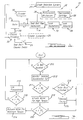
- the control processor 20 monitors the shaft-encoder input and the belt-coupled switch 24 input to determine whether the seat belt is unwound and/or unused. If' the belt is unwound and/or unused, the processor 20 activates the motor 12 to wind the seat belt back onto the belt reel mechanism 14 at step 112.
- Any existing vehicle circuit which is activated by a vehicle door being opened can be used to initiate a "housekeeping" operation if the vehicle is entered, belts are unwound but unused, and the vehicle is exited without being started.
- the motor 12 provides a nominal winding tension which retracts the belt to the stored position. This tension can be overcome as the occupant unwinds and buckles the belt.
- the shaft-encoder allows the electronic control processor 20 to detect deployment of the belt (step 114) and to count off the amount of belt paid out during the deployment process at step 116.
- the retracting force remains and the control process 20 counts off the amount of belt retracted.
- the amount of belt paid out can be used by the processor to determine whether an occupant is actually present, which information can be used to supplement a separate external occupant position sensing system.
- the motor 12 is activated or pulsed at a higher power level (step 122) to snug the belt tension. This "snugging" tension would be felt by the occupant as a series of gentle tugs. During these tugs, the winder would continue to wind in the belt while the processor 20 tracks the counts (step 124) .
- the winding tension applied by the motor would be substantially reduced to zero (step 128).
- the belt would be in a tensionless state during normal use so that the occupant would not be irritated by continuous belt tension such as exhibited with typical spring-loaded belt retractors.
- the amount of belt paid out is continuously tracked, with several counts of belt pay out being tolerated without restoring belt tension. If minor occupant motions cause additional belt to be unwound over what the system tolerates, the system will wind back the belt to the previously stored position.
- the controller will cause the motor 12 to apply a low level of tensioning (step 130) to re-initialize tensioning, thereby preventing the system from erroneously determining the occurrence of an excess pay out due to improper initial tensioning, such as caused by the occupant leaning back during the tension initialization procedure.
- the processor 20 continues to monitor the belt pay out (step 132), and if more than a few pay out counts are detected (step 134), this information can be advantageously output for use by a separate occupant position sensing system. After a predetermined pay out is exceeded, the retracting tension would be activated at step 136, thereby effectively pretensioning the belt and providing a reminder to the occupant to return to a "normal" seating position.
- the tensioning system 10 will illuminate a warning lamp at step 140, and cause the retracting tension to increase to a higher level than the above described snugging process to attract the attention of the occupant (step 142). Such a higher tensioning would create a "tugging" process on the occupant.
- the system 10 After the system 10 initially determines that the belt has been deployed and buckled at step 210, the system continuously monitors data representative of the vehicle's acceleration at step 212, such as generated by an algorithm based vehicle crash discrimination system.
- the monitored data can be representative of vehicle acceleration, velocity and/or a jerk value (i.e., slope of the acceleration data), and can be generated by an algorithm-based crash discrimination system which utilizes silicon machined accelerometers and/or occupant position sensing apparatus, such as taught in commonly owned U.S. Patent Nos.
- the acceleration (a) data is compared to a first threshold value TH 1 (step 214) and if TH 1 is exceeded, the motor 12 is actuated to apply a high level retracting force to the seat belt (step 216).
- the threshold value TH 1 is approximately equal to a .3g force event, or to otherwise be commensurate with a nonpanic braking situation. If the acceleration data falls below TH 1 , then the processor determines whether the motor 12 has been actuated at step 218. If the motor was actuated, the motor is deactivated to release the high tension on the belt at step 220.
- the tensioning operation is provided with an ability to retract the belt with a higher, maximum level of tension in more critical situations. More specifically, the acceleration data is compared to a second threshold value TH 2 at step 222, wherein TH 2 could be a value substantially approximating a .6g force event or other suitable algorithmic measure. If TH 2 is exceeded, the motor 12 is actuated to apply the motor's maximum possible torque to retract the belt at step 224. Since the processor 20 is continuously monitoring the acceleration data, the level of belt tension being applied is always released any time the acceleration data falls below the appropriate threshold level.
- TH 2 could be a value substantially approximating a .6g force event or other suitable algorithmic measure.
- a major deceleration such as the acceleration data exceeding a third threshold valve TH 3 (step 226) set approximately equal to a level required to close a safing sensor in a crash discrimination system, or at a higher level determined by the crash discrimination algorithm
- the pyrotechnic actuator/pretensioner 32 would be triggered at step 228. This would provide a final tensioning of the belt system prior to a vehicle impact. In accordance with one of the features and advantages of the present invention, this could occur for crash events of less velocity than normally used as a threshold for deploying an air bag, because the pretensioner 32 is reusable with only minor maintenance, i.e., replacement of cartridge 38.
- Triggering at a lower level is particularly advantageous because of the protection provided for lower-level crash events, thereby allowing the seat belt to operate over a longer time period in the case of high speed crash events.
- Lower threshold triggering may also allow the pyrotechnic pretensioner to use a slower gas generation rate than known units, thereby reducing chest slap caused by the belt quickly tensioning.
- the cartridge 28 for the pretensioner 32 is replaced and the belt webbing is visually inspected for stretching.
- the belt webbing is replaced if stretching is noted or if the service warning lamp and diagnostic message indicates sufficient crash severity. Replacement typically will not be necessary as a result of low-speed deployments.
- Fig. 4 shows a further embodiment of the present invention incorporating an input from the optional object detecting radar system 26 to the system operation as described above in context with Fig. 3.
- the independent, on-board radar system 26 scans the physical surroundings of the vehicle to detect the presence of objects/obstructions, and to otherwise predict impending collisions in response.thereto.
- the radar system 26 can be of conventional design and implemented in a manner known to one having ordinary skill in the art since the particulars of the radar system are not critical to the present invention.
- the processor can provide early actuation of the motor 12 to begin retracting the seat belt with a high tension (step 216) a second or two prior to the anticipated crash. If the crash never occurs, such as evidenced by the vehicle acceleration never exceeding any of the threshold values, the belt tension will be released.
- the tugging process provided in response to the radar system not only provides enhanced occupant safety due to early belt tensioning, but also functions as a tactile warning signal to the occupant (i.e., the driver) to thereby potentially assist the driver in implementing defensive driving measures or to otherwise avoid the impending collision.
Landscapes
- Engineering & Computer Science (AREA)
- Mechanical Engineering (AREA)
- Automotive Seat Belt Assembly (AREA)
Applications Claiming Priority (3)
| Application Number | Priority Date | Filing Date | Title |
|---|---|---|---|
| US08/413,601 US5558370A (en) | 1995-03-30 | 1995-03-30 | Electronic seat belt tensioning system |
| EP96912448A EP0760758A4 (en) | 1995-03-30 | 1996-03-25 | ELECTRONIC BELT TENSIONER SYSTEM |
| EP03010244A EP1350697B1 (en) | 1995-03-30 | 1996-03-25 | Electronic seat belt tensioning system |
Related Parent Applications (1)
| Application Number | Title | Priority Date | Filing Date |
|---|---|---|---|
| EP03010244A Division EP1350697B1 (en) | 1995-03-30 | 1996-03-25 | Electronic seat belt tensioning system |
Publications (1)
| Publication Number | Publication Date |
|---|---|
| EP1762445A1 true EP1762445A1 (en) | 2007-03-14 |
Family
ID=23637883
Family Applications (6)
| Application Number | Title | Priority Date | Filing Date |
|---|---|---|---|
| EP06021837A Ceased EP1762445A1 (en) | 1995-03-30 | 1996-03-25 | Electronic seat belt tensioning system |
| EP96912448A Withdrawn EP0760758A4 (en) | 1995-03-30 | 1996-03-25 | ELECTRONIC BELT TENSIONER SYSTEM |
| EP03010244A Expired - Lifetime EP1350697B1 (en) | 1995-03-30 | 1996-03-25 | Electronic seat belt tensioning system |
| EP06021835A Ceased EP1759940A1 (en) | 1995-03-30 | 1996-03-25 | Electronic seat belt tensioning system |
| EP06021834A Ceased EP1759939A1 (en) | 1995-03-30 | 1996-03-25 | Electronic seat belt tensioning system |
| EP06021836A Ceased EP1759941A1 (en) | 1995-03-30 | 1996-03-25 | Electronic seat belt tensioning system |
Family Applications After (5)
| Application Number | Title | Priority Date | Filing Date |
|---|---|---|---|
| EP96912448A Withdrawn EP0760758A4 (en) | 1995-03-30 | 1996-03-25 | ELECTRONIC BELT TENSIONER SYSTEM |
| EP03010244A Expired - Lifetime EP1350697B1 (en) | 1995-03-30 | 1996-03-25 | Electronic seat belt tensioning system |
| EP06021835A Ceased EP1759940A1 (en) | 1995-03-30 | 1996-03-25 | Electronic seat belt tensioning system |
| EP06021834A Ceased EP1759939A1 (en) | 1995-03-30 | 1996-03-25 | Electronic seat belt tensioning system |
| EP06021836A Ceased EP1759941A1 (en) | 1995-03-30 | 1996-03-25 | Electronic seat belt tensioning system |
Country Status (7)
| Country | Link |
|---|---|
| US (1) | US5558370A (2) |
| EP (6) | EP1762445A1 (2) |
| JP (2) | JPH10501500A (2) |
| KR (1) | KR970703250A (2) |
| CA (1) | CA2189640A1 (2) |
| DE (1) | DE69637309T2 (2) |
| WO (1) | WO1996030235A1 (2) |
Families Citing this family (126)
| Publication number | Priority date | Publication date | Assignee | Title |
|---|---|---|---|---|
| US5718451A (en) * | 1996-02-26 | 1998-02-17 | Automotive Systems Laboratory, Inc. | Integrated vehicle occupant energy management system and method |
| US5765774A (en) * | 1996-04-05 | 1998-06-16 | Takata Corporation | Seat belt retractor employing ultrasonic motor |
| DE19648268A1 (de) * | 1996-11-21 | 1998-05-28 | Siemens Ag | Fahrzeugsitz mit einer Steuervorrichtung |
| US6336371B1 (en) * | 1997-01-09 | 2002-01-08 | Automotive Systems Laboratory, Inc. | Villari effect seatbelt tension sensor |
| US5957781A (en) * | 1997-01-24 | 1999-09-28 | Kelly; Patrick J. | Tethered-ball training device |
| US5835007A (en) * | 1997-02-10 | 1998-11-10 | Delco Electronics Corporation | Method and apparatus for crash sensing using anticipatory sensor inputs |
| US5831172A (en) * | 1997-06-25 | 1998-11-03 | Kidd; James | Vehicle safety belt test apparatus and method |
| GB2372822B (en) * | 1997-12-16 | 2002-11-06 | Nsk Ltd | Automotive passenger restraint and protection apparatus |
| US6363793B2 (en) * | 1998-01-02 | 2002-04-02 | Automotive Systems Laboratory, Inc. | Compressive Villari effect seatbelt tension sensor |
| SE9801261D0 (sv) * | 1998-04-07 | 1998-04-07 | Stridsberg Innovation Ab | Safety belt tensioner |
| WO1999055560A1 (en) * | 1998-04-27 | 1999-11-04 | Tabe Joseph A | Smart seatbelt control system |
| JPH11321598A (ja) * | 1998-05-07 | 1999-11-24 | Honda Motor Co Ltd | 車両走行安全装置 |
| SE514382C2 (sv) * | 1998-05-20 | 2001-02-19 | Saab Automobile | Sätt och anordning vid ett säkerhetsbälte |
| SE514381C2 (sv) * | 1998-05-20 | 2001-02-19 | Saab Automobile | Förfarande och anordning vid ett säkerhetsbälte |
| US6626463B1 (en) * | 1998-09-22 | 2003-09-30 | Nsk Autoliv Co., Ltd. | Seatbelt device |
| US6332629B1 (en) | 1998-10-23 | 2001-12-25 | Nsk, Ltd. | Seatbelt device with locking retractor |
| US6213512B1 (en) * | 1998-12-14 | 2001-04-10 | Trw Inc. | Seat belt tightening apparatus |
| JP3865182B2 (ja) * | 1998-12-25 | 2007-01-10 | タカタ株式会社 | シートベルトシステム |
| JP4467688B2 (ja) * | 1999-01-19 | 2010-05-26 | タカタ株式会社 | シートベルト巻取装置 |
| DE19922720A1 (de) * | 1999-05-18 | 2000-11-30 | Trw Repa Gmbh | Gurtaufroller und Verfahren zum Steuern der Funktion eines Insassen-Rückhaltesystems |
| DE19936627A1 (de) * | 1999-08-04 | 2001-02-08 | Hs Tech & Design | Rückhaltevorrichtung für ein Kraftfahrzeug |
| JP2001058552A (ja) * | 1999-08-04 | 2001-03-06 | Takata Corp | 車両衝突被害軽減システム |
| DE10066401B4 (de) * | 1999-09-10 | 2008-03-20 | Nsk Autoliv Co, Ltd. | Sicherheitsgurtvorrichtung |
| JP4667549B2 (ja) | 1999-09-10 | 2011-04-13 | オートリブ株式会社 | シートベルト装置 |
| JP2001199309A (ja) * | 1999-10-12 | 2001-07-24 | Takata Corp | シートベルト巻取装置 |
| DE19957802A1 (de) * | 1999-12-01 | 2001-06-07 | Trw Repa Gmbh | Gurtaufrollersystem |
| JP2001163184A (ja) * | 1999-12-13 | 2001-06-19 | Takata Corp | シートベルト巻取り装置 |
| US6581960B1 (en) | 1999-12-14 | 2003-06-24 | Ford Global Technologies, Llc | Seat belt occupant sensor |
| DE19961799B4 (de) * | 1999-12-21 | 2004-03-25 | Breed Automotive Technology, Inc., Lakeland | Passives Sicherheitssystem eines Kraftfahrzeugs |
| EP1160134B1 (de) * | 2000-05-16 | 2004-03-17 | DaimlerChrysler AG | Insassenrückhaltesystem |
| US6726249B2 (en) * | 2000-05-26 | 2004-04-27 | Takata Corporation | Motorized seat belt retractor |
| DE10029061C2 (de) * | 2000-06-13 | 2003-12-11 | Breed Automotive Tech | Rückhaltevorrichtung |
| DE10052111B4 (de) * | 2000-10-20 | 2011-07-21 | Volkswagen AG, 38440 | Gurtstraffer mit einem pyrotechnischen Antrieb sowie Insassenrückhaltevorrichtung für ein Fahrzeug, insbesondere für ein Kraftfahrzeug |
| DE10052112B4 (de) * | 2000-10-20 | 2013-02-21 | Volkswagen Ag | Insassenrückhaltevorrichtung für ein Fahrzeug, insbesondere für ein Kraftfahrzeug |
| DE10111323A1 (de) * | 2001-03-08 | 2002-09-12 | Trw Automotive Electron & Comp | Reversibler Gurtstraffer |
| JP4669143B2 (ja) | 2001-03-19 | 2011-04-13 | タカタ株式会社 | モータリトラクタシステム |
| EP1291251B1 (de) | 2001-09-06 | 2007-07-11 | TRW Automotive Electronics & Components GmbH & Co. KG | Gurtaufroller |
| US6685124B2 (en) | 2001-11-30 | 2004-02-03 | Trw Vehicle Safety Systems Inc. | Seat belt pretensioner with brake |
| DE10160071B4 (de) * | 2001-12-06 | 2007-01-18 | Daimlerchrysler Ag | Verfahren zur Ansteuerung eines reversiblen Gurtstraffers |
| JP3601511B2 (ja) * | 2001-12-18 | 2004-12-15 | トヨタ自動車株式会社 | シートベルト装置 |
| US6489889B1 (en) * | 2002-01-24 | 2002-12-03 | Ford Global Technologies, Inc. | Occupant sensing system |
| US6722698B2 (en) | 2002-03-22 | 2004-04-20 | General Motors Corporation | Seat belt retractor system |
| DE20208808U1 (de) * | 2002-06-06 | 2002-10-17 | TRW Occupant Restraint Systems GmbH & Co. KG, 73553 Alfdorf | Vorrichtung zum Straffen eines Sicherheitsgurts |
| JP3912260B2 (ja) * | 2002-10-31 | 2007-05-09 | 日産自動車株式会社 | 車両用シートベルト装置 |
| JP3815428B2 (ja) * | 2002-12-05 | 2006-08-30 | トヨタ自動車株式会社 | 車両用シートベルト装置 |
| US7140571B2 (en) * | 2003-06-11 | 2006-11-28 | Autoliv, Asp, Inc. | Electric seat belt retractor system |
| DE10346625A1 (de) * | 2003-10-08 | 2005-05-04 | Bosch Gmbh Robert | Vorrichtung zur Ermittlung einer Insassenposition in einem Fahrzeug |
| EP1527960B1 (en) * | 2003-10-29 | 2008-09-10 | Nissan Motor Company, Limited | Passenger protection device |
| CN100480108C (zh) * | 2003-11-27 | 2009-04-22 | 奥托立夫开发公司 | 安全带用卷取装置 |
| DE102004017066A1 (de) * | 2004-04-07 | 2005-10-27 | Daimlerchrysler Ag | Kraftfahrzeug mit Positionierungsmitteln für Fahrzeuginsassen |
| DE102004035486A1 (de) * | 2004-07-15 | 2006-02-02 | Thomas Dramlitsch | Verfahren zum Festlegen des Gurtauszuges in einem Insassenrückhaltesystem für Fahrzeuge und Insassenrückhaltesystem für Fahrzeuge |
| JP4704354B2 (ja) * | 2004-10-19 | 2011-06-15 | オートリブ ディベロップメント エービー | シートベルト用リトラクタとその制御方法およびシートベルト装置 |
| DE102004054078B4 (de) * | 2004-11-09 | 2013-03-07 | Key Safety Systems, Inc. | Verfahren zum Blockieren einer Wickelwelle eines Sicherheitsgurtaufrollers |
| JP4674714B2 (ja) * | 2004-12-01 | 2011-04-20 | タカタ株式会社 | シートベルトリトラクタ、シートベルト装置、シートベルト装置付車両 |
| JP4671673B2 (ja) * | 2004-12-01 | 2011-04-20 | タカタ株式会社 | シートベルトリトラクタ、シートベルト装置、シートベルト装置付車両 |
| US7370721B2 (en) * | 2004-12-03 | 2008-05-13 | Autoliv Asp, Inc. | Seatbelt tensioning device and method |
| DE112004003030B4 (de) * | 2004-12-23 | 2014-04-30 | Daimler Ag | Rückhaltevorrichtung für einen Insassen eines Fahrzeugs |
| US7771302B2 (en) * | 2005-04-21 | 2010-08-10 | Dayco Products, Llc | Apparatus for indicating power transmission belt dynamics |
| JP4714513B2 (ja) * | 2005-06-28 | 2011-06-29 | タカタ株式会社 | シートベルトリトラクタ、シートベルト装置、シートベルト装置付車両 |
| JP4773766B2 (ja) * | 2005-08-05 | 2011-09-14 | タカタ株式会社 | シートベルトリトラクタ、シートベルト装置、シートベルト装置付車両 |
| JP2009504467A (ja) * | 2005-08-10 | 2009-02-05 | ダイムラー・アクチェンゲゼルシャフト | 車両における拘束システムの調整又は制御の方法及び装置 |
| JP2007112267A (ja) * | 2005-10-19 | 2007-05-10 | Takata Corp | シートベルトリトラクタ、シートベルト装置、シートベルト装置付車両 |
| JP5086669B2 (ja) * | 2006-06-09 | 2012-11-28 | 本田技研工業株式会社 | 車両のシートベルト装置およびその制御方法 |
| JP4719626B2 (ja) * | 2006-06-09 | 2011-07-06 | 本田技研工業株式会社 | 車両のシートベルト装置 |
| US7678002B2 (en) * | 2006-08-31 | 2010-03-16 | Dayco Products, Llc | One-way clutched damper for automatic belt tensioner |
| US8038555B2 (en) * | 2006-08-31 | 2011-10-18 | Dayco Products, Llc | One-way clutched damper for automatic belt tensioner |
| US8162787B2 (en) * | 2006-08-31 | 2012-04-24 | Dayco Products, Llc | One-way clutched damper for automatic belt tensioner |
| US7641237B2 (en) * | 2007-02-07 | 2010-01-05 | Honda Motor Co., Ltd. | Seatbelt device |
| JP4889579B2 (ja) * | 2007-06-26 | 2012-03-07 | 本田技研工業株式会社 | 車両のシートベルト装置 |
| DE102007032714A1 (de) * | 2007-07-13 | 2009-01-15 | GM Global Technology Operations, Inc., Detroit | Sicherheitsanordnung mit einer Airbageinrichtung und Verfahren zur Steuerung der Sicherheitsanordnung |
| EP2229297A4 (en) * | 2008-01-16 | 2012-12-19 | Autoliv Dev | SEAT BELT TENSIONER FOR A MOTOR VEHICLE |
| US7931552B2 (en) * | 2008-04-30 | 2011-04-26 | Dayco Products, Llc | Pulley with torque-sensitive clutching |
| US8529387B2 (en) * | 2008-04-30 | 2013-09-10 | Dayco Ip Holdings, Llc | Pulley with asymmetric torque-sensitive clutching |
| US8784244B2 (en) * | 2008-04-30 | 2014-07-22 | Dayco Ip Holdings, Llc | Pulley with asymmetric torque-sensitive clutching |
| US20090309346A1 (en) * | 2008-06-13 | 2009-12-17 | Millenworks | Intelligent Vehicle Safety Restraint System |
| US7806007B2 (en) * | 2008-10-16 | 2010-10-05 | Delphi Technologies, Inc. | Determining seat belt tension in a motorized seat belt apparatus |
| US8403785B2 (en) | 2008-11-05 | 2013-03-26 | Dayco Ip Holdings, Llc | Clutched damper for a belt tensioner |
| JP4990949B2 (ja) * | 2009-10-09 | 2012-08-01 | 本田技研工業株式会社 | シートベルト故障診断装置 |
| US8888627B2 (en) | 2010-05-25 | 2014-11-18 | Dayco Ip Holdings, Llc | One-way damped over-arm tensioner |
| US8439781B2 (en) | 2010-06-22 | 2013-05-14 | Dayco Ip Holdings, Llc | Radial damping mechanism and use for belt tensioning |
| ES2386582B1 (es) * | 2011-01-25 | 2013-07-26 | Universitat Politècnica De Catalunya | Dispositivo para medir el desplazamiento del cinturón de seguridad de un vehículo. |
| GB201105277D0 (en) | 2011-03-29 | 2011-05-11 | Jaguar Cars | Speed and category trigger for an active device of a vehicle |
| DE102011077486B3 (de) * | 2011-06-14 | 2012-10-18 | Robert Bosch Gmbh | Vorrichtung und Verfahren zur Auslösung eines Insassenschutzmittels, Auslösesystem und Fahrzeug |
| JP5352651B2 (ja) * | 2011-09-06 | 2013-11-27 | 本田技研工業株式会社 | シートベルト装置 |
| US10359327B2 (en) * | 2014-12-01 | 2019-07-23 | Ebay Inc. | Waist measuring belt |
| US9802661B1 (en) | 2015-11-04 | 2017-10-31 | Zoox, Inc. | Quadrant configuration of robotic vehicles |
| US10334050B2 (en) | 2015-11-04 | 2019-06-25 | Zoox, Inc. | Software application and logic to modify configuration of an autonomous vehicle |
| US10401852B2 (en) | 2015-11-04 | 2019-09-03 | Zoox, Inc. | Teleoperation system and method for trajectory modification of autonomous vehicles |
| US9916703B2 (en) | 2015-11-04 | 2018-03-13 | Zoox, Inc. | Calibration for autonomous vehicle operation |
| US9494940B1 (en) | 2015-11-04 | 2016-11-15 | Zoox, Inc. | Quadrant configuration of robotic vehicles |
| US9958864B2 (en) | 2015-11-04 | 2018-05-01 | Zoox, Inc. | Coordination of dispatching and maintaining fleet of autonomous vehicles |
| US9878664B2 (en) | 2015-11-04 | 2018-01-30 | Zoox, Inc. | Method for robotic vehicle communication with an external environment via acoustic beam forming |
| US10745003B2 (en) | 2015-11-04 | 2020-08-18 | Zoox, Inc. | Resilient safety system for a robotic vehicle |
| US9910441B2 (en) | 2015-11-04 | 2018-03-06 | Zoox, Inc. | Adaptive autonomous vehicle planner logic |
| US9734455B2 (en) | 2015-11-04 | 2017-08-15 | Zoox, Inc. | Automated extraction of semantic information to enhance incremental mapping modifications for robotic vehicles |
| WO2017079341A2 (en) | 2015-11-04 | 2017-05-11 | Zoox, Inc. | Automated extraction of semantic information to enhance incremental mapping modifications for robotic vehicles |
| US9612123B1 (en) | 2015-11-04 | 2017-04-04 | Zoox, Inc. | Adaptive mapping to navigate autonomous vehicles responsive to physical environment changes |
| US10000124B2 (en) | 2015-11-04 | 2018-06-19 | Zoox, Inc. | Independent steering, power, torque control and transfer in vehicles |
| US9632502B1 (en) | 2015-11-04 | 2017-04-25 | Zoox, Inc. | Machine-learning systems and techniques to optimize teleoperation and/or planner decisions |
| US9507346B1 (en) | 2015-11-04 | 2016-11-29 | Zoox, Inc. | Teleoperation system and method for trajectory modification of autonomous vehicles |
| US9804599B2 (en) | 2015-11-04 | 2017-10-31 | Zoox, Inc. | Active lighting control for communicating a state of an autonomous vehicle to entities in a surrounding environment |
| US9754490B2 (en) | 2015-11-04 | 2017-09-05 | Zoox, Inc. | Software application to request and control an autonomous vehicle service |
| US11283877B2 (en) | 2015-11-04 | 2022-03-22 | Zoox, Inc. | Software application and logic to modify configuration of an autonomous vehicle |
| US9720415B2 (en) | 2015-11-04 | 2017-08-01 | Zoox, Inc. | Sensor-based object-detection optimization for autonomous vehicles |
| US9701239B2 (en) | 2015-11-04 | 2017-07-11 | Zoox, Inc. | System of configuring active lighting to indicate directionality of an autonomous vehicle |
| US9517767B1 (en) * | 2015-11-04 | 2016-12-13 | Zoox, Inc. | Internal safety systems for robotic vehicles |
| US12265386B2 (en) | 2015-11-04 | 2025-04-01 | Zoox, Inc. | Autonomous vehicle fleet service and system |
| US10496766B2 (en) | 2015-11-05 | 2019-12-03 | Zoox, Inc. | Simulation system and methods for autonomous vehicles |
| US9606539B1 (en) | 2015-11-04 | 2017-03-28 | Zoox, Inc. | Autonomous vehicle fleet service and system |
| US10029682B2 (en) * | 2016-01-22 | 2018-07-24 | Toyota Motor Engineering & Manufacturing North America, Inc. | Surrounding vehicle classification and path prediction |
| JP6364436B2 (ja) * | 2016-03-22 | 2018-07-25 | 株式会社Subaru | 車両の乗員保護装置 |
| US10589713B2 (en) * | 2016-12-15 | 2020-03-17 | Ford Global Technologies, Llc | Determining an occupancy status of a vehicle seat |
| US10338594B2 (en) * | 2017-03-13 | 2019-07-02 | Nio Usa, Inc. | Navigation of autonomous vehicles to enhance safety under one or more fault conditions |
| US10423162B2 (en) | 2017-05-08 | 2019-09-24 | Nio Usa, Inc. | Autonomous vehicle logic to identify permissioned parking relative to multiple classes of restricted parking |
| US10369974B2 (en) | 2017-07-14 | 2019-08-06 | Nio Usa, Inc. | Control and coordination of driverless fuel replenishment for autonomous vehicles |
| US10710633B2 (en) | 2017-07-14 | 2020-07-14 | Nio Usa, Inc. | Control of complex parking maneuvers and autonomous fuel replenishment of driverless vehicles |
| DE102017122688A1 (de) * | 2017-09-29 | 2019-04-04 | Trw Automotive Gmbh | Verfahren zum Betrieb eines Sicherheitsgurtsystems |
| CN108032856B (zh) * | 2017-12-28 | 2023-05-23 | 南京航空航天大学 | 一种主被动集成的多级预紧式安全带控制系统及其方法 |
| US11022971B2 (en) | 2018-01-16 | 2021-06-01 | Nio Usa, Inc. | Event data recordation to identify and resolve anomalies associated with control of driverless vehicles |
| KR102621247B1 (ko) | 2018-12-07 | 2024-01-08 | 현대자동차주식회사 | 차량, 차량 제어 방법 및 안전 벨트 장치 |
| JP7096147B2 (ja) * | 2018-12-25 | 2022-07-05 | トヨタ自動車株式会社 | 注意喚起装置 |
| DE102019135912A1 (de) * | 2019-12-31 | 2021-07-01 | Zf Automotive Germany Gmbh | Verfahren für ein Sicherheitsgurtsystem, Sicherheitsgurtsystem für ein Fahrzeug und Fahrzeug mit einem Sicherheitsgurtsystem |
| DE102019135913A1 (de) * | 2019-12-31 | 2021-07-01 | Zf Automotive Germany Gmbh | Verfahren für ein Sicherheitsgurtsystem, Sicherheitsgurtsystem für ein Fahrzeug und Fahrzeug mit einem Sicherheitsgurtsystem |
| JP7396967B2 (ja) * | 2020-07-30 | 2023-12-12 | 株式会社Subaru | 車両用乗員報知装置 |
| DE102023119887B3 (de) * | 2023-07-27 | 2024-10-17 | Dr. Ing. H.C. F. Porsche Aktiengesellschaft | Computerimplementiertes Verfahren zur automatisierten Auswertung von Crashtestdaten |
| CN118810674B (zh) * | 2024-09-18 | 2024-12-06 | 宏思汽车零部件(常州)有限公司 | 一种用于安全带假系监测的智能安全警报系统及方法 |
Citations (2)
| Publication number | Priority date | Publication date | Assignee | Title |
|---|---|---|---|---|
| US4655312A (en) * | 1985-10-15 | 1987-04-07 | Allied Corporation | Electrically adjusted safety restraint system |
| US5398185A (en) * | 1990-04-18 | 1995-03-14 | Nissan Motor Co., Ltd. | Shock absorbing interior system for vehicle passengers |
Family Cites Families (29)
| Publication number | Priority date | Publication date | Assignee | Title |
|---|---|---|---|---|
| US3375495A (en) * | 1965-02-12 | 1968-03-26 | Joel A. Burns | Seatbelt alarm system |
| GB1360978A (en) * | 1970-10-23 | 1974-07-24 | Triumph Motor Co Ltd | Compulsory seat belts |
| JPS5420733B2 (2) * | 1973-06-21 | 1979-07-25 | ||
| FR2357264A1 (fr) * | 1976-07-07 | 1978-02-03 | Bouju Michel | Dispositif de surete pour ceinture de securite |
| FR2422413A1 (fr) * | 1978-04-12 | 1979-11-09 | Securaiglon Sa | Dispositif d'enrouleur-derouleur d'une sangle de ceinture de securite comportant un moteur electrique |
| DE3019298A1 (de) * | 1980-05-21 | 1981-11-26 | Autoflug Gmbh, 2084 Rellingen | Automatischer gurtaufroller fuer sicherheitsgurte, insbesondere in kraftfahrzeugen |
| DE3149573A1 (de) * | 1981-12-15 | 1983-06-30 | Volkswagenwerk Ag, 3180 Wolfsburg | Sicherheitsgurt-aufwickelvorrichtung |
| JPH08523B2 (ja) * | 1985-05-23 | 1996-01-10 | 日産自動車株式会社 | シ−トベルトリトラクタ |
| US4659108A (en) * | 1985-09-11 | 1987-04-21 | American Safety Equipment Corp. | Automatic seat belt adjusting system |
| DE3600650A1 (de) * | 1986-01-11 | 1987-07-16 | Ernst Hans Hellmut | Rotatorischer gurtstraffer fuer sicherheitsgurte |
| DE8621257U1 (de) * | 1986-08-08 | 1986-09-25 | TRW Repa GmbH, 7077 Alfdorf | Gasgenerator für Rückstrammer an Sicherheitsgurtaufrollern |
| JPS6358050U (2) * | 1986-10-06 | 1988-04-18 | ||
| US4840324A (en) * | 1987-12-28 | 1989-06-20 | Trw Vehicle Safety Systems Inc. | Seat belt retractor having a comfort mechanism with full memory and slack set |
| US5071160A (en) * | 1989-10-02 | 1991-12-10 | Automotive Systems Laboratory, Inc. | Passenger out-of-position sensor |
| JPH03157243A (ja) * | 1989-11-13 | 1991-07-05 | Takata Kk | シートベルトシステム |
| US5076609A (en) * | 1990-07-06 | 1991-12-31 | Goldstar Instrument & Electric Co., Ltd. | Electronic control method of a car safety belt |
| US5131594A (en) * | 1990-07-24 | 1992-07-21 | Trw Vehicle Safety Systems Inc. | Seat belt comfort mechanism |
| JPH04103453A (ja) * | 1990-08-24 | 1992-04-06 | Takata Kk | バネ式プリテンショナーのトリガー |
| US5181739A (en) * | 1990-11-27 | 1993-01-26 | Trw Vehicle Safety Systems Inc. | Seat belt system with comfort control |
| US5288105A (en) * | 1991-02-27 | 1994-02-22 | Fuji Kiko Co., Ltd. | Safety belt system with emergency retraction capability |
| US5149133A (en) * | 1991-04-09 | 1992-09-22 | Alfredo Alvarado | Seat belt system for motor vehicle |
| US5363302A (en) | 1991-06-04 | 1994-11-08 | Automotive Systems Laboratory, Inc. | Power rate system and method for actuating vehicle safety device |
| US5337238A (en) | 1991-10-08 | 1994-08-09 | Automotive Systems Laboratory, Inc. | System and method for actuating vehicle safety device using damped measures |
| JP2757697B2 (ja) * | 1992-08-04 | 1998-05-25 | 日産自動車株式会社 | シートベルト装置 |
| US5330226A (en) * | 1992-12-04 | 1994-07-19 | Trw Vehicle Safety Systems Inc. | Method and apparatus for detecting an out of position occupant |
| DE4492128T1 (de) * | 1993-03-31 | 1996-06-27 | Automotive Tech Int | Positions- und Geschwindigkeitssensor für Fahrzeuginsassen |
| JP2946995B2 (ja) * | 1993-03-31 | 1999-09-13 | 日産自動車株式会社 | 乗物用シートベルト装置 |
| US5446661A (en) | 1993-04-15 | 1995-08-29 | Automotive Systems Laboratory, Inc. | Adjustable crash discrimination system with occupant position detection |
| US5397075A (en) * | 1993-09-10 | 1995-03-14 | Automotive Systems Laboratory, Inc. | Seat belt pretensioner |
-
1995
- 1995-03-30 US US08/413,601 patent/US5558370A/en not_active Expired - Lifetime
-
1996
- 1996-03-25 EP EP06021837A patent/EP1762445A1/en not_active Ceased
- 1996-03-25 WO PCT/US1996/003992 patent/WO1996030235A1/en not_active Ceased
- 1996-03-25 KR KR1019960706791A patent/KR970703250A/ko not_active Withdrawn
- 1996-03-25 EP EP96912448A patent/EP0760758A4/en not_active Withdrawn
- 1996-03-25 DE DE69637309T patent/DE69637309T2/de not_active Expired - Lifetime
- 1996-03-25 EP EP03010244A patent/EP1350697B1/en not_active Expired - Lifetime
- 1996-03-25 CA CA002189640A patent/CA2189640A1/en not_active Abandoned
- 1996-03-25 EP EP06021835A patent/EP1759940A1/en not_active Ceased
- 1996-03-25 EP EP06021834A patent/EP1759939A1/en not_active Ceased
- 1996-03-25 JP JP8529550A patent/JPH10501500A/ja active Pending
- 1996-03-25 EP EP06021836A patent/EP1759941A1/en not_active Ceased
-
2006
- 2006-11-28 JP JP2006319524A patent/JP2007084069A/ja active Pending
Patent Citations (2)
| Publication number | Priority date | Publication date | Assignee | Title |
|---|---|---|---|---|
| US4655312A (en) * | 1985-10-15 | 1987-04-07 | Allied Corporation | Electrically adjusted safety restraint system |
| US5398185A (en) * | 1990-04-18 | 1995-03-14 | Nissan Motor Co., Ltd. | Shock absorbing interior system for vehicle passengers |
Also Published As
| Publication number | Publication date |
|---|---|
| EP1759941A1 (en) | 2007-03-07 |
| EP1350697B1 (en) | 2007-10-31 |
| EP0760758A4 (en) | 2001-03-28 |
| EP1350697A3 (en) | 2004-07-14 |
| DE69637309D1 (de) | 2007-12-13 |
| WO1996030235A1 (en) | 1996-10-03 |
| EP1759940A1 (en) | 2007-03-07 |
| DE69637309T2 (de) | 2008-08-07 |
| EP1759939A1 (en) | 2007-03-07 |
| JP2007084069A (ja) | 2007-04-05 |
| EP1350697A2 (en) | 2003-10-08 |
| JPH10501500A (ja) | 1998-02-10 |
| CA2189640A1 (en) | 1996-10-03 |
| US5558370A (en) | 1996-09-24 |
| KR970703250A (ko) | 1997-07-03 |
| EP0760758A1 (en) | 1997-03-12 |
Similar Documents
| Publication | Publication Date | Title |
|---|---|---|
| US5558370A (en) | Electronic seat belt tensioning system | |
| US6726249B2 (en) | Motorized seat belt retractor | |
| US5718451A (en) | Integrated vehicle occupant energy management system and method | |
| CN100515837C (zh) | 安全带收紧器 | |
| US6213512B1 (en) | Seat belt tightening apparatus | |
| US6786294B2 (en) | Device for determining the load on a vehicle occupant | |
| US5831342A (en) | System for modifying the output of a component of a safety restraint system | |
| JP2007084069A5 (2) | ||
| JP3944910B2 (ja) | リバーシブルベルトプリテンショナを作動させる方法 | |
| CN101410278A (zh) | 受控地放出安全带系统的安全带的方法以及相应的约束系统 | |
| US11148627B2 (en) | Child seat with, airbag, pretensioner suppression | |
| EP1777127B1 (en) | Seat belt retractor, seat belt apparatus, and vehicle with seat belt apparatus | |
| JP4088240B2 (ja) | 車両のシートベルト装置 | |
| JP4133749B2 (ja) | 車両のシートベルト装置 | |
| EP0940307A2 (en) | Seatbelt device, pre-tensioner, and vehicle | |
| JPH11170962A (ja) | 車両用エアバッグ制御装置 | |
| JP2011230690A (ja) | シートベルトリトラクタの制御装置およびこれを備えたシートベルト装置 | |
| JP2009298382A (ja) | 乗員保護装置 | |
| KR100527127B1 (ko) | 차량의 시트벨트 자동조정장치 | |
| KR100435338B1 (ko) | 시트벨트용 버클 프리텐셔너 | |
| GB2332397A (en) | Load limiting device for seat belt pretensioner | |
| KR19980045745A (ko) | 차량용 시트 벨트 록 장치 및 그 방법 |
Legal Events
| Date | Code | Title | Description |
|---|---|---|---|
| PUAI | Public reference made under article 153(3) epc to a published international application that has entered the european phase |
Free format text: ORIGINAL CODE: 0009012 |
|
| AC | Divisional application: reference to earlier application |
Ref document number: 1350697 Country of ref document: EP Kind code of ref document: P Ref document number: 0760758 Country of ref document: EP Kind code of ref document: P |
|
| AK | Designated contracting states |
Kind code of ref document: A1 Designated state(s): DE FR GB |
|
| RAP1 | Party data changed (applicant data changed or rights of an application transferred) |
Owner name: TK HOLDINGS INC. |
|
| 17P | Request for examination filed |
Effective date: 20070910 |
|
| 17Q | First examination report despatched |
Effective date: 20071023 |
|
| AKX | Designation fees paid |
Designated state(s): DE FR GB |
|
| STAA | Information on the status of an ep patent application or granted ep patent |
Free format text: STATUS: THE APPLICATION HAS BEEN REFUSED |
|
| 18R | Application refused |
Effective date: 20090428 |