EP1762928A1 - Dispositif graphique avec contrôleur de transfert pour visualisation à distance - Google Patents
Dispositif graphique avec contrôleur de transfert pour visualisation à distance Download PDFInfo
- Publication number
- EP1762928A1 EP1762928A1 EP05108275A EP05108275A EP1762928A1 EP 1762928 A1 EP1762928 A1 EP 1762928A1 EP 05108275 A EP05108275 A EP 05108275A EP 05108275 A EP05108275 A EP 05108275A EP 1762928 A1 EP1762928 A1 EP 1762928A1
- Authority
- EP
- European Patent Office
- Prior art keywords
- remote
- digital representation
- data
- buffer
- representation data
- Prior art date
- Legal status (The legal status is an assumption and is not a legal conclusion. Google has not performed a legal analysis and makes no representation as to the accuracy of the status listed.)
- Withdrawn
Links
Images


Classifications
-
- G—PHYSICS
- G06—COMPUTING OR CALCULATING; COUNTING
- G06F—ELECTRIC DIGITAL DATA PROCESSING
- G06F3/00—Input arrangements for transferring data to be processed into a form capable of being handled by the computer; Output arrangements for transferring data from processing unit to output unit, e.g. interface arrangements
- G06F3/14—Digital output to display device ; Cooperation and interconnection of the display device with other functional units
- G06F3/1454—Digital output to display device ; Cooperation and interconnection of the display device with other functional units involving copying of the display data of a local workstation or window to a remote workstation or window so that an actual copy of the data is displayed simultaneously on two or more displays, e.g. teledisplay
-
- G—PHYSICS
- G09—EDUCATION; CRYPTOGRAPHY; DISPLAY; ADVERTISING; SEALS
- G09G—ARRANGEMENTS OR CIRCUITS FOR CONTROL OF INDICATING DEVICES USING STATIC MEANS TO PRESENT VARIABLE INFORMATION
- G09G5/00—Control arrangements or circuits for visual indicators common to cathode-ray tube indicators and other visual indicators
- G09G5/36—Control arrangements or circuits for visual indicators common to cathode-ray tube indicators and other visual indicators characterised by the display of a graphic pattern, e.g. using an all-points-addressable [APA] memory
- G09G5/39—Control of the bit-mapped memory
- G09G5/399—Control of the bit-mapped memory using two or more bit-mapped memories, the operations of which are switched in time, e.g. ping-pong buffers
Definitions
- the present invention relates to a graphics device, which is adapted to be coupled to an internal bus of a local data processing unit for providing display of data on a monitor of the local data processing unit.
- the invention further relates to a remote visualization of digital representation data.
- Remote visualization of images to be displayed on local display devices such as monitors of data processing units such as servers, workstations or personal computers, etc. has recently become widespread available.
- Remote visualization means that an image to be displayed locally is copied or completely redirected to a remote data processing system that is different from the local data processing unit.
- Remote visualization allows, among others, remote system maintenance, e.g., by a hardware or software vendor, testing or performing helpdesk functions for end users.
- Visualization is realized by providing a graphics device, which transforms digital representation of an image provided by, e.g., a central processing unit (CPU) of a local data processing unit into signals which lead a monitor to display that image.
- the signals may be analog as generally in the case of CRT monitors or digital as it is often the case with respect to LCD-displays.
- a redirection of graphic information may be performed by adding a separate capture device to the system that captures the image contents and transfers it to a predetermined remote system.
- Both devices, the graphics device and the capture device may communicate with each other via an internal bus, e.g., a PCI bus as shown in EP 1168154 B1 by the same applicant.
- the graphics device uses a memory unit, which is also called video memory. This memory unit contains the data of the digital representation of the image to be displayed on a local monitor. In order to make these data remotely available, the data are first selected by a remote data processing unit provided with the capture device. The data are then stored into a specific capture memory, which is also provided with the capture device.
- This specific capture memory is particularly important as the bandwidth of the connection to the remote system, e.g., through a local area network (LAN) or even through an internet connection, may not be sufficient to guarantee data or image consistency.
- the capture memory of the capture device thus serves to provide a copy of the image data contained in the video memory and then to perform compression of these data, such that the data volume to be transferred to the remote location is reduced.
- the selection of the digital representation data of the images can be embodied in at least two different modes: one (active) mode is to address the graphics device and then simply copy the data from the video memory via the PCI bus, the other (more passive) mode is to "snarf" the information when being transferred from the video memory to the local monitor, i.e., to monitor the information, which is transferred from the video memory to the local monitor and record the content.
- a graphics device which is adapted to be coupled to an internal bus of a local data processing unit for providing display of data on a monitor of the local data processing unit, comprises a memory unit, which is adapted to store digital representation data of an image to be displayed on the monitor.
- the digital representation data are provided by, e.g., a CPU, to the memory unit via the internal bus.
- the graphics device further houses a display controller, which is connected to the memory unit for reading out digital representation data of the image and adapted to display the image on said monitor. Further, the graphics device is provided with a remote transfer controller for selecting at least a subset of the digital representation data.
- the graphics device is combined with a remote transfer controller, which - according to prior art - has been implemented separately on a capture device.
- the remote transfer controller is associated with a means to buffer said selected digital representation data, or the subset thereof, for compressing the data volume to be transferred to a remote location. This means buffering the selected data is incorporated into the memory unit, or video memory of the graphics device. Accordingly, a unified memory is used for performing the local image display as well as the remote visualization.
- a remote interface for transferring the selected digital representation data, or the subset thereof, to a remote data processing unit is also included into the graphics device.
- the means to buffer said digital representation data, or the subset thereof is included into the memory unit and renders a separate capture memory unnecessary.
- the remote transfer controller does not need to address the video memory via the internal bus in order to retrieve and copy data from that memory into its own capture memory.
- the digital representation data Once the digital representation data are selected from buffers within the memory unit, they can be forwarded to the remote interface for making the data available for remote display.
- the invention includes simultaneous compressing or encoding to reduce the amount of data to be transferred.
- the content of image data displayed on the local display device is generally contained in a so called frame buffer, which is located in the video memory.
- the frame buffer relates to a virtual area in video memory and denotes that area, which stores the image to be displayed.
- a frame buffer is realized by implementing a hardware register, which defines a start address in video memory.
- the single frame buffer concept has the digital representation data of an image located in one single frame buffer.
- This frame buffer is continuously read by a display controller, which converts the data into displayable signals, and transfers these to the local display device, or monitor. Between displaying two consecutive images on the display device, there is a pause (vertical blanking interval). This pause is used by, e.g., the CPU host system in order to access the frame buffer for modifying the digital representation data of the image, and thus to update or refresh the image content displayed on the monitor.
- the display controller switches between two frame buffers in order to read the data, convert it to signals and display it on a local monitor.
- This switching between frame buffers by means of the display controller is controlled by a software implemented graphics driver.
- the CPU of the local processing device for example drives the graphics device to repeatedly generate a copy of the data contained in the frame buffer currently being read out. The copy is transferred into the respective second frame buffer.
- the display controller continues to read data from the source frame buffer. Having finished the copy action, the CPU (or any other active device connected to the internal bus) is allowed to manipulate the copied digital representation data of the image. When the host system has finished manipulating the image data, the display controller is informed to switch over to read from the copied and meanwhile modified second frame buffer. Typically, this switching action is done in a pause between displaying two consecutive images on the monitor. The copy action is then reversed to the first frame buffer, which thereafter continues to be modified by, e.g., the CPU. The use of double frame buffering increases the time available to manipulate the digital representation of the image.
- an aspect relates to implementing one or more additional buffers in the memory unit, i.e., adding buffers to the single and double frame buffer concepts.
- a change buffer may be added to the frame buffer.
- Such a change buffer indicates changes, which have occurred in one or more of a plurality of subsections of the frame buffer.
- the remote transfer controller needs only to check for subsections in the frame buffer, which have actually changed within a recent time interval and reads out their data content.
- the necessary change detection is provided by the change buffer.
- the change buffer comprises a characteristic property, which is each related to a respective section of the frame buffer and reflects an occurrence of a write change within a recent time interval. For example, each one bit (as a characteristic property), or a sequence of bits (as a characteristic property) of the change buffer represents a write change applied to a specific subsection of the frame buffer.
- Each address in the frame buffer has a unique corresponding address in the change buffer.
- a method of operating the video memory unit then may comprise steps of setting a bit (i.e., a flag) within the change buffer in response to a write change to a corresponding subsection in the frame buffer.
- the remote transfer controller is arranged to read out only those data from the frame buffer, which have changed according to the bits or flags set in the change buffer. Consequently, the remote transfer controller first accesses the change buffer and then reads out data from the frame buffer in dependence of the results read from the change buffer. As a result only changed portions of the digital representation data are transferred to the remote interface, which considerably reduces the amount of data transfer and thus represents a compression of the data volume. Only once at the start of a remote display action has the complete image data to be read out by the remote transfer controller.
- a particularly advantageous aspect relates to adding so-called remote buffers to the frame buffer.
- the remote buffers differ from the frame buffer in that these are controlled by the remote transfer controller, while the frame buffer is controlled by the host system.
- the remote buffers store digital representation similarly to the frame buffer, and preferably - but not necessarily - are of the same size as the frame buffer. It is important to note that each of the buffers is configured within the same video memory.
- the remote buffers are filled with duplicate information from the frame buffer upon write changes to the frame buffer.
- One remote buffer is in write mode (duplication of the frame buffer write change operation), and the other remote buffer is in read mode.
- the remote buffer in read mode is used by the remote transfer controller to read out digital representation data of the image to be displayed remotely.
- the remote buffer in write mode is concurrently filled with duplicate data by the host system.
- the remote transfer controller is arranged to switch the mode of both remote buffers coincidently.
- each of the two remote buffers is preferably associated with its own change buffer, which is operated as explained above in the case of the frame buffer.
- digital representation data are read by the display controller while updates due to the host system (e.g. CPU) are performed on the other frame buffer.
- the host system e.g. CPU
- a copy of the content of the first frame buffer to the second is carried out.
- the remote transfer may also start, when the copy of the digital representation data has finished. Only one change buffer is needed, which co-switches with the remote transfer controller between the frame buffers in order to indicate the recent write changes.
- the read out of digital representation data by the remote transfer controller may continue even after the update operation by the host system has switched back to the respective other frame buffer.
- a further embodiment of the invention herein relates to adding a remote buffer to the two frame buffers.
- the difference between the meaning of the frame buffers and the remote buffer is the same as in the single frame buffer concept.
- the added remote buffer is arranged in order to improve the consistency of graphics redirection to a remote display device.
- the added remote buffer serves to prolong the time available for a read due to the remote transfer controller, while the respective other two frame buffers are available for the common display-and-write/change scheme.
- the remote transfer controller read operation has finished, which takes the longest duration, the function each of the read frame buffer, the copy and update frame buffer as well as the remote buffer may be redistributed.
- another aspect of the invention deals with connecting the remote transfer controller directly to the internal bus incoming at the graphics device. l.e., the remote transfer controller is not necessarily connected with the memory unit.
- the remote controller is thereby arranged to snarf the data and instructions sent to the memory unit, or if present to an acceleration logic of the graphics device. Without further storage in a capture memory, the data and instructions (if present) are directly forwarded to the remote interface and further to the remote data processing unit.
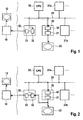
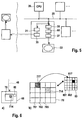
- Figs.1 and 2 show block diagrams of a remote system connected to a local system for the purpose of remote image display according to prior art
- Figs. 3 - 7 shows principles of embodiments according to the present invention.
- FIG. 1 shows an embodiment of a remote system connected to a local system for the purpose of remote image display according to prior art.
- the remote system comprises a remote data processing unit 10 and a remote display 12.
- a CPU 20 of a local system (right hand side of the sinuous line) is connected to an internal bus 25 such as a PCI-bus or PCI-Express bus.
- a graphics device 52 is also connected to the internal bus.
- the graphics device comprises a video memory 62 for storing a digital representation of the data to be displayed on a local monitor 22. This display of an image is managed by means of a display controller 37 arranged on the graphics device. Further components 21 a, 21 b of the local system may also be connected to the internal bus 25.
- a connection of the local system with the remote system for the purpose of remote image display is established by a capture device 30.
- the capture device 30 is connected to the internal bus 25 and comprises a capture memory 32 and a remote interface 33. Capturing of image data is accomplished by addressing - and accessing - the video memory 62 via the internal bus 25 with help of a capture device controller (not shown in Fig. 1) and retrieving full image data. The full image data are buffered in the capture memory 32, compressed and forwarded to the remote data processing unit via remote interface 32.
- the flow of redirected image data is indicated by the dashed line in the figures.
- An example flow of image data generated in the CPU 20 intended for local display is indicated by the dot-dashed line
- Fig. 2 shows an alternative embodiment according to prior art.
- the capture device is arranged to retrieve image data from a connection between the display controller 37 and the local monitor 22.
- the data transferred herein are not redirected but snarfed, i.e. duplicated for local and remote display.
- the format of transferred data considerably differs between the embodiments of Figs.1 and 2.
- Fig. 3 shows an embodiment of a graphics device according to the invention.
- the unified graphics device 50 comprises a video memory 60, which is connected with the display controller 37 as well as with the remote controller 31. Both controllers can directly access the memory in order to retrieve and process data.
- the CPU 20 has storage access to the video memory 60 via internal bus 25 (e.g. AGP or PCI Express), to which is coupled the graphics device 50 by means of an appropriate bus interface (not shown).
- Remote controller 31 is connected with remote interface 33 in order to transfer data read out from memory 60 towards the remote data processing unit 10 for remote display on monitor 12.
- Fig. 4 shows an alternative embodiment of a unified graphics device according to the invention.
- the concept of this embodiment is to snarf the digital representation data of the image when being written to the video memory 60 by the CPU 20. Accordingly, there is no memory access of the remote transfer controller 31 to the video memory 60.
- the graphics device is connected to the internal bus 25 via an appropriate interface since the connection of the remote controller to internal bus is maintained on the graphics device and not externally.
- the data are not only written to a frame buffer within the video memory, but also compressed and encoded by the remote transfer controller in order to forward the processed data to the remote system.
- the data can be sent even before the data in the graphics device are stored in the video memory 60, retrieved by the display controller 37 and displayed on the local monitor 22 yielding an improved response time.
- Fig. 5 shows a further embodiment of a graphics device according to the invention.
- the graphics device 50 comprises an acceleration logic 35, which is used to manipulate the contents of the frame buffer.
- An advantage generally achieved is improved performance and less load of CPU 20.
- the acceleration logic 35 obtains specific instructions from the CPU 20.
- the remote controller 31 according to this embodiment snarfs and then duplicates these instructions.
- the acceleration functionality on the remote system has to mimic that of the logic 35 as consistency has to be maintained between images displayed locally and remotely according to the same duplicate instructions.
- Fig. 6 shows an embodiment in accordance with Fig. 3, which relates to a single frame buffer concept managed with a graphics device 50 according to the invention.
- the memory unit 60 is herein configured with a single buffer frame 70 (Fig. 6a).
- the CPU 20 issues a write/change command 48 addressed to the memory unit 60 in order to modify the frame buffer 70.
- the corresponding modifications of the frame buffer 70 are allowed within pauses of the continuous transfer of digital representation data of the image to the display controller 37 and thereof further to the display device 22.
- the remote transfer controller 31 equivalently accesses the frame buffer 70. It reads out data from the frame buffer 70 and transfers it to the remote interface 33, which is represented by a LAN-interface according to this embodiment.
- the complete content of the frame buffer 70 has to be read out by the remote transfer controller 31.
- the remote transfer controller 31 only those data, which have undergone a write/change 48, have to be selected.
- the selection of the data by the remote transfer controller 31 is performed in parallel to the transferal of data to the display device 22 by the display controller 37 and may proceed, even while new write/changes 48 are applied to the frame buffer 70.
- the frame buffer 70 is divided into a plurality of sections 701, 702, 703, etc., each of the sections comprising a number of bits storing the digital representation data as schematically indicated by section 717 in Fig. 6b.
- a change buffer 80 indicating write changes is associated with the frame buffer 70.
- the change buffer 80 has bit sections 801, 802, etc., which individually correspond to sections 701, 702 of the frame buffer.
- the corresponding bits in the change buffer are coincidently set, e.g., from a level "0" to "1".
- the remote transfer controller 31 reads out data from the frame buffer 70
- the corresponding bits in the change buffer 80 are cleared again, i.e., are reset to "0". Therefore all bits, which are set in the change buffer 80, indicate that the corresponding sections 701, 702, etc. of the single frame buffer 70 are due to transferring them to the remote location.
- Fig. 7 illustrates a further embodiment of the invention, wherein remote buffers 90, 92 are added to the single frame buffer 70 within video memory 60.
- the CPU 20 applies write changes 48 to the frame buffer 70. Further, the write changes are duplicated to changes 49, which alter the digital representation of data contained within remote buffer 90.
- a change buffer 82 is associated with remote buffer 90 in order to record changes to this buffer applied in a recent time interval as explained with regard to Fig. 6.
- remote buffer 92 is read out by remote controller 31 and frame buffer 70 is read out by display controller 37 for local / remote display.
- remote transfer controller accesses the change buffer 84 associated with remote buffer 92.
- Fig. 7b shows the situation after remote transfer controller 31 has switched to the first remote buffer 90. This may occur, when all flags in change buffer 84 have been cleared. CPU 20 then starts to write changes 49 to the second remote buffer 92.
- multiple frame and/or remote buffers are implemented in the memory unit 60, i.e., the video memory.
- the utilization of these buffers or more precisely: the utilization of storage location within video memory, changes with time.
- three buffers of similar size may be arranged within video memory. Starting operation of a corresponding graphics device to display an image on a local monitor, a first of these buffers functions as a frame buffer, wherein the digital representation data stored in this buffer are read out by a display controller.
- a working copy is prepared in a second one of the buffers.
- the host system may then manipulate the content of this second buffer.
- the remote transfer controller reads out data from the second buffer, wherein only changes are monitored with the aid of a change buffer similar to those indicated in the previous embodiments.
- the data retrieval by the remote transfer controller from the same buffer may continue.
- a working copy of the second buffer is then prepared in the first buffer, which is followed by manipulation therein due to the host system.
- the second buffer changes its function from a frame buffer into a remote buffer, as digital representation data are still retrieved from this buffer by the remote transfer controller.
- the display controller switches to the third one of the buffers in the same manner as described above (prepare working copy and start display of data on local monitor), while the remote transfer controller still continues to read out data from the second (remote) buffer.
- Two change buffers are required according to this embodiment, one change buffer, which has monitored changes 48 of the current remote buffer and a second change buffer logging changes 48 of the frame buffer, which is currently manipulated by the host system.
- Three buffers are utilized because the reading out of data by the remote transfer controller takes more time than that of the display controller.
- the two frame buffers perform the known switching scheme, but further interchange their storage location with that of the remote buffers, once all change have been transmitted by the remote transfer controller to the remote location.
- this dynamic buffer management employing a remote buffer in addition to two frame buffers improves the timing performance.
Landscapes
- Engineering & Computer Science (AREA)
- Theoretical Computer Science (AREA)
- Human Computer Interaction (AREA)
- Physics & Mathematics (AREA)
- General Engineering & Computer Science (AREA)
- General Physics & Mathematics (AREA)
- Digital Computer Display Output (AREA)
Priority Applications (2)
| Application Number | Priority Date | Filing Date | Title |
|---|---|---|---|
| EP05108275A EP1762928A1 (fr) | 2005-09-09 | 2005-09-09 | Dispositif graphique avec contrôleur de transfert pour visualisation à distance |
| US11/506,530 US20070120820A1 (en) | 2005-09-09 | 2006-08-18 | Graphics device comprising remote transfer controller for remote visualization |
Applications Claiming Priority (1)
| Application Number | Priority Date | Filing Date | Title |
|---|---|---|---|
| EP05108275A EP1762928A1 (fr) | 2005-09-09 | 2005-09-09 | Dispositif graphique avec contrôleur de transfert pour visualisation à distance |
Publications (1)
| Publication Number | Publication Date |
|---|---|
| EP1762928A1 true EP1762928A1 (fr) | 2007-03-14 |
Family
ID=35954023
Family Applications (1)
| Application Number | Title | Priority Date | Filing Date |
|---|---|---|---|
| EP05108275A Withdrawn EP1762928A1 (fr) | 2005-09-09 | 2005-09-09 | Dispositif graphique avec contrôleur de transfert pour visualisation à distance |
Country Status (2)
| Country | Link |
|---|---|
| US (1) | US20070120820A1 (fr) |
| EP (1) | EP1762928A1 (fr) |
Cited By (1)
| Publication number | Priority date | Publication date | Assignee | Title |
|---|---|---|---|---|
| CN102117191A (zh) * | 2009-12-30 | 2011-07-06 | 英特尔公司 | 显示数据管理技术 |
Families Citing this family (2)
| Publication number | Priority date | Publication date | Assignee | Title |
|---|---|---|---|---|
| US8390636B1 (en) | 2007-11-12 | 2013-03-05 | Google Inc. | Graphics display coordination |
| KR101271266B1 (ko) | 2008-12-18 | 2013-06-07 | 엔이씨 래버러터리즈 아메리카 인코포레이티드 | Ofdma-mu-mimo 시스템에서 오버랩하는 함께 스케쥴링된 사용자들의 스케쥴링 정보를 전달하기 위한 방법 및 시스템 |
Citations (4)
| Publication number | Priority date | Publication date | Assignee | Title |
|---|---|---|---|---|
| EP1168154A2 (fr) * | 2001-04-12 | 2002-01-02 | Agilent Technologies, Inc. (a Delaware corporation) | Gestion de traitement de données à distance avec capacité de visualisation |
| US20030169264A1 (en) * | 2002-01-04 | 2003-09-11 | Emerson Theodore F. | Operating system independent method and apparatus for graphical remote access having improved latency |
| US20030206193A1 (en) * | 2002-04-17 | 2003-11-06 | Keizo Sato | Communication control system and storage medium for storing image transfer program |
| US20040083256A1 (en) * | 2002-10-24 | 2004-04-29 | Icp Electronics Inc. | System and method for real time image transmission monitoring |
Family Cites Families (4)
| Publication number | Priority date | Publication date | Assignee | Title |
|---|---|---|---|---|
| US6545683B1 (en) * | 1999-04-19 | 2003-04-08 | Microsoft Corporation | Apparatus and method for increasing the bandwidth to a graphics subsystem |
| US6670959B2 (en) * | 2001-05-18 | 2003-12-30 | Sun Microsystems, Inc. | Method and apparatus for reducing inefficiencies in shared memory devices |
| TW544882B (en) * | 2001-12-31 | 2003-08-01 | Megic Corp | Chip package structure and process thereof |
| US7064765B2 (en) * | 2002-06-24 | 2006-06-20 | Hewlett-Packard Development Company, L.P. | System and method for grabbing frames of graphical data |
-
2005
- 2005-09-09 EP EP05108275A patent/EP1762928A1/fr not_active Withdrawn
-
2006
- 2006-08-18 US US11/506,530 patent/US20070120820A1/en not_active Abandoned
Patent Citations (5)
| Publication number | Priority date | Publication date | Assignee | Title |
|---|---|---|---|---|
| EP1168154A2 (fr) * | 2001-04-12 | 2002-01-02 | Agilent Technologies, Inc. (a Delaware corporation) | Gestion de traitement de données à distance avec capacité de visualisation |
| EP1168154B1 (fr) | 2001-04-12 | 2004-10-06 | Agilent Technologies, Inc. (a Delaware corporation) | Gestion de traitement de données à distance avec capacité de visualisation |
| US20030169264A1 (en) * | 2002-01-04 | 2003-09-11 | Emerson Theodore F. | Operating system independent method and apparatus for graphical remote access having improved latency |
| US20030206193A1 (en) * | 2002-04-17 | 2003-11-06 | Keizo Sato | Communication control system and storage medium for storing image transfer program |
| US20040083256A1 (en) * | 2002-10-24 | 2004-04-29 | Icp Electronics Inc. | System and method for real time image transmission monitoring |
Cited By (4)
| Publication number | Priority date | Publication date | Assignee | Title |
|---|---|---|---|---|
| CN102117191A (zh) * | 2009-12-30 | 2011-07-06 | 英特尔公司 | 显示数据管理技术 |
| EP2360574A3 (fr) * | 2009-12-30 | 2012-01-25 | Intel Corporation | Techniques de gestion des données d'affichage |
| US8760459B2 (en) | 2009-12-30 | 2014-06-24 | Intel Corporation | Display data management techniques |
| CN102117191B (zh) * | 2009-12-30 | 2015-11-25 | 英特尔公司 | 显示数据管理技术 |
Also Published As
| Publication number | Publication date |
|---|---|
| US20070120820A1 (en) | 2007-05-31 |
Similar Documents
| Publication | Publication Date | Title |
|---|---|---|
| US7730157B2 (en) | Methods, media, and systems for displaying information on a thin-client in communication with a network | |
| JP4926947B2 (ja) | システムメモリへのgpuのレンダリング | |
| US7607106B2 (en) | Image display system | |
| EP0166046B1 (fr) | Dispositif d'affichage graphique comportant des processeurs-pipelines | |
| US8711164B2 (en) | Memory controller including a hardware compression and decompression engine for managing system memory and graphical operations | |
| US6170047B1 (en) | System and method for managing system memory and/or non-volatile memory using a memory controller with integrated compression and decompression capabilities | |
| CN1125491A (zh) | 计算机的视频外围设备 | |
| JPH0954723A (ja) | グラフィックス・エンジンのオフ・スクリーン・メモリを仮想化するための方法及び装置 | |
| CN115297094B (zh) | 视频传输控制方法、装置、设备及计算机可读存储介质 | |
| CN114428595B (zh) | 图像处理方法、装置、计算机设备和存储介质 | |
| CN102081528A (zh) | 一种大型软件边下载边运行的方法 | |
| CN121116560B (zh) | 一种基于扩展元数据的鸿蒙系统跨运行环境任务切换方法 | |
| JP5194703B2 (ja) | データ処理装置及び共有メモリのアクセス方法 | |
| EP1762928A1 (fr) | Dispositif graphique avec contrôleur de transfert pour visualisation à distance | |
| US7840908B2 (en) | High resolution display of large electronically stored or communicated images with real time roaming | |
| JP3109817B2 (ja) | 画像処理装置 | |
| US5713000A (en) | Circuits system and methods for transferring data between a host device and a slave device in a single cycle using alias memory | |
| WO2007057053A1 (fr) | Mise a jour conditionnelle de donnees d’image dans une memoire tampon | |
| CN115101025B (zh) | 一种支持虚拟帧缓冲的lcd控制电路及其控制方法 | |
| CN115587076A (zh) | 数据解压系统、图形处理系统、组件、设备及解压方法 | |
| JPH11149283A (ja) | マルチディスプレイの同期方式 | |
| JP3082930B2 (ja) | 画像処理装置 | |
| CN113126869B (zh) | 基于国产bmc芯片的kvm图像高速重定向的实现方法及系统 | |
| JP3278149B2 (ja) | 画像処理装置 | |
| CN121563747A (zh) | 图形处理器、指令处理方法、芯片及电子设备 |
Legal Events
| Date | Code | Title | Description |
|---|---|---|---|
| PUAI | Public reference made under article 153(3) epc to a published international application that has entered the european phase |
Free format text: ORIGINAL CODE: 0009012 |
|
| AK | Designated contracting states |
Kind code of ref document: A1 Designated state(s): AT BE BG CH CY CZ DE DK EE ES FI FR GB GR HU IE IS IT LI LT LU LV MC NL PL PT RO SE SI SK TR |
|
| AX | Request for extension of the european patent |
Extension state: AL BA HR MK YU |
|
| 17P | Request for examination filed |
Effective date: 20070914 |
|
| 17Q | First examination report despatched |
Effective date: 20071022 |
|
| AKX | Designation fees paid |
Designated state(s): DE FR GB |
|
| STAA | Information on the status of an ep patent application or granted ep patent |
Free format text: STATUS: THE APPLICATION IS DEEMED TO BE WITHDRAWN |
|
| 18D | Application deemed to be withdrawn |
Effective date: 20100401 |