EP1762995B1 - Detection of smoke with a video camera - Google Patents
Detection of smoke with a video camera Download PDFInfo
- Publication number
- EP1762995B1 EP1762995B1 EP05108310A EP05108310A EP1762995B1 EP 1762995 B1 EP1762995 B1 EP 1762995B1 EP 05108310 A EP05108310 A EP 05108310A EP 05108310 A EP05108310 A EP 05108310A EP 1762995 B1 EP1762995 B1 EP 1762995B1
- Authority
- EP
- European Patent Office
- Prior art keywords
- smoke
- video image
- moving area
- matrix
- weighted
- Prior art date
- Legal status (The legal status is an assumption and is not a legal conclusion. Google has not performed a legal analysis and makes no representation as to the accuracy of the status listed.)
- Revoked
Links
Images

Classifications
-
- G—PHYSICS
- G08—SIGNALLING
- G08B—SIGNALLING SYSTEMS, e.g. PERSONAL CALLING SYSTEMS; ORDER TELEGRAPHS; ALARM SYSTEMS
- G08B17/00—Fire alarms; Alarms responsive to explosion
- G08B17/10—Actuation by presence of smoke or gases, e.g. automatic alarm devices for analysing flowing fluid materials by the use of optical means
- G08B17/103—Actuation by presence of smoke or gases, e.g. automatic alarm devices for analysing flowing fluid materials by the use of optical means using a light emitting and receiving device
Definitions
- the invention relates to a method and apparatus for detecting smoke by analyzing at least one video image taken by a video camera monitoring an area.
- the US 5153722 A discloses a fire detection system including a color video camera, a frame grabber, and a computer processor for evaluating and storing images taken from the camera.
- Ultraviolet and infrared detectors signal a danger in the detection of a previously defined threshold.
- the processor evaluates the images received by the camera according to various criteria such. B. bright areas.
- One of the problems with this method is that smoke is not detected against a light background and even fire that produces little smoke is not detected.
- brightness changes such as those caused by persons moving through the field of view of the camera, can trigger a false alarm.
- This problem has been solved by the fact that in addition to the actual surveillance area still one outer area and, in case of changes in this outer area, interrupt the observation of the surveillance area.
- This method has the disadvantage that a fire may not be detected until after a certain delay and that sources of smoke are not detected in the outer area provided in addition to the monitoring area.
- the object of the present invention is to propose an efficient way of detecting smoke by means of at least one video image taken by a field-monitoring video camera.
- a gist of the invention is that smoke is detected by analyzing at least one video image captured by a video camera monitoring an area.
- An area can be a room, a tunnel (section), a parking lot, a street or a street section etc.
- a first step by determining the direction and the size in a moving region of the at least one video image, a probable presence of smoke in the moving region is checked. If a moving area has a positive test result, there is a certain probability of the presence of smoke. Thereafter, at least a part of the moving area is evaluated depending on at least one smoke characteristic information regarding the presence of smoke.
- the smoke-characteristic information is the speed of the smoke, the number of pixels in the video image that describe this movement, the luminance change (brightness change) of the at least one video image with respect to the background, the change in the color of the moving smoke and the movement of the smoke are considered.
- An advantage of the method according to the invention or the device according to the invention can be seen in the fact that smoke can be detected efficiently. In particular, this is achieved by the two-part evaluation and by the appropriate selection of information characteristic of smoke.
- FIG. 1 shows a block diagram according to the invention for the detection of smoke.
- At least one video image which was generated with a certain frequency, at least one intensity image [X ij (t)] is obtained.
- the video image can have, for example, a size of 352x288 pixels.
- the next step is preprocessing.
- the preprocessing has the goal that the areas of interest for the detection of smoke are filtered out of the video image.
- a background accumulation matrix [B ij (t)] is created first.
- the background accumulation matrix [B ij (t)] is obtained from the weighting factor weighted intensity images [X ij (t)], where the weighting factor ⁇ indicates how strongly the intensity images flow into the accumulation matrix [B ij (t)].
- a subtraction matrix D ij (t) / B ij ( t ) - X ij ( t ) / is calculated for at least one moving area.
- the color weighting of the subtraction matrix D ij ( t ) finally yields the color-weighted subtraction matrix [S ij (t)].
- the likely presence of smoke at the location (i, j) is finally determined, for example, by the projection of the color-weighted subtraction matrix [S ij (t)] on the x / y axis of a Cartesian coordinate system.
- the choice of the coordinate system is arbitrary. For example, spherical coordinates, cylindrical coordinates, etc. could also be used.
- a probable presence of smoke in a moving area of the video image can then be checked.
- a reduced video image area of interest ROI of Interest
- multiple ROI areas can also be defined in one video image or in multiple channels.
- the processor load for the actual analysis or evaluation is considerably reduced. Whether smoke is present in a moving area of the recorded video image is clarified on the basis of at least one information characteristic of smoke. In the present example, the following information is used to increase the detection security.
- the speed of the smoke (movement of the smoke), the number of pixels (active pixels) describing this movement, the luminance change (brightness change) of the at least one video image with respect to the background, the change of the color ( Color change) of the moving smoke and the movement of the smoke (y-position in the histogram) viewed.
- a dis-discriminator value ⁇ is determined.
- a threshold ⁇ (or even a probability function) may define the discriminator in the following manner:
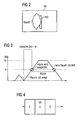
- FIG. 2 shows a simplified representation of a video image VB.
- the image contains a moving area that is supposed to be smoke. Furthermore, the video image VB shows an ROI range, which according to the description of FIG. 1 was determined.
- FIG. 3 shows a decision chart for the detection of smoke, as shown in FIG. 1 is described. If I (t) exceeds a certain threshold ⁇ , alarm is triggered and smoke was detected with high probability. So that I (t) does not rise to infinity and thus unnecessarily reduces the reaction time for smoke detection, a maximum value I T is defined.
- the critical time is the time until the alarm is triggered. This time should be as short as possible.
- FIG. 4 shows an inventive device VR with a receiving unit E and a transmitting unit S for communicating, for example, with other units, such as sensors, CPUs, etc. and a processing unit V for performing the method according to FIG. 1 ,
- the device can be integrated in a video camera, a central unit, etc., or can be a separate unit.
Landscapes
- Chemical & Material Sciences (AREA)
- Analytical Chemistry (AREA)
- Business, Economics & Management (AREA)
- Emergency Management (AREA)
- Physics & Mathematics (AREA)
- General Physics & Mathematics (AREA)
- Fire-Detection Mechanisms (AREA)
- Image Analysis (AREA)
- Investigating Or Analysing Materials By Optical Means (AREA)
- Closed-Circuit Television Systems (AREA)
Abstract
Description
Die Erfindung betrifft ein Verfahren und eine Vorrichtung zur Detektion von Rauch durch Analyse mindestens eines von einer ein Gebiet überwachenden Videokamera aufgenommenen Videobildes.The invention relates to a method and apparatus for detecting smoke by analyzing at least one video image taken by a video camera monitoring an area.
Die
In jüngster Zeit bestehen Bestrebungen, die für die Sicherheitsüberwachung in Gebäuden, Tunneln etc. ohnehin vorhandenen Videosysteme zur Detektion von Rauch zu verwenden. Da die Videobilder für einen Betrachter sehr oft uninteressant sind und ausserdem durch Rauch nur sehr kleine Veränderungen im Videobild verursacht werden, kommt eine Überwachung durch das Personal an den Bildschirmen nicht in Frage. Wenn überhaupt, kann die Überwachung nur durch eine automatische Auswertung der Videobilder erfolgen. Bei einem bekannten Verfahren zur automatischen Untersuchung von Videobildern auf das Auftreten von Rauch werden die Intensitätswerte der einzelnen Pixel aufeinander folgender Bilder miteinander verglichen. Wenn Intensitätswerte gemessen werden, die für ein helleres, durch die Anwesenheit von Rauch verursachtes Bild repräsentativ sind, wird auf das Vorhandensein von Rauch geschlossen und Alarm ausgelöst.Efforts have recently been made to use the video systems for the detection of smoke which are already present for security monitoring in buildings, tunnels, etc. Since the video images for a viewer are often uninteresting and also caused by smoke only very small changes in the video image, monitoring by the staff at the screens is out of the question. If anything, the monitoring can only be done by an automatic evaluation of the video images. In a known method for the automatic examination of video images for the occurrence of smoke, the intensity values of the individual pixels of successive images are compared with one another. When measuring intensity values representative of a lighter image caused by the presence of smoke are closed, the presence of smoke and alarm.
Bei diesem Verfahren besteht unter anderem das Problem, dass Rauch vor einem hellen Hintergrund nicht erkannt und selbst Feuer, welches nur wenig Rauch erzeugt, nicht detektiert wird. Ausserdem können Helligkeitsänderungen, wie sie beispielsweise durch sich durch das Blickfeld der Kamera bewegende Personen verursacht werden, einen Fehlalarm auslösen. Dieses Problem hat man dadurch zu lösen versucht, dass man zusätzlich zum eigentlichen Überwachungsbereich noch einen äusseren Bereich untersucht und bei Änderungen in diesem äusseren Bereich die Beobachtung des Überwachungsbereichs unterbricht. Dieses Verfahren hat den Nachteil, dass ein Feuer unter Umständen erst nach einer bestimmten Verzögerung detektiert wird, und dass Rauchquellen in dem zusätzlich zum Überwachungsbereich vorgesehenen äusseren Bereich nicht erkannt werden.One of the problems with this method is that smoke is not detected against a light background and even fire that produces little smoke is not detected. In addition, brightness changes, such as those caused by persons moving through the field of view of the camera, can trigger a false alarm. This problem has been solved by the fact that in addition to the actual surveillance area still one outer area and, in case of changes in this outer area, interrupt the observation of the surveillance area. This method has the disadvantage that a fire may not be detected until after a certain delay and that sources of smoke are not detected in the outer area provided in addition to the monitoring area.
Die Aufgabe der vorliegenden Erfindung ist darin zu sehen, eine effiziente Möglichkeit für die Detektion von Rauch mittels mindestens eines von einer ein Gebiet überwachenden Videokamera aufgenommenen Videobildes vorzuschlagen.The object of the present invention is to propose an efficient way of detecting smoke by means of at least one video image taken by a field-monitoring video camera.
Die Aufgabe wird erfindungsgemäß jeweils durch die Gegenstände der unabhängigen Patentansprüche gelöst. Weiterbildungen der Erfindung sind in den Unteransprüchen angegeben.The object is achieved in each case by the subject matters of the independent claims. Further developments of the invention are specified in the subclaims.
Ein Kern der Erfindung ist darin zu sehen, dass Rauch durch Analyse mindestens eines von einer ein Gebiet überwachenden Videokamera aufgenommenen Videobildes detektiert wird. Ein Gebiet kann dabei ein Raum, ein Tunnel(-teilstück), ein Parkplatz, eine Strasse bzw. ein Strassenabschnitt etc. sein. Grundsätzlich wird in einem ersten Schritt durch Bestimmung der Richtung und der Grösse bei einem sich bewegenden Bereich des mindestens einen Videobildes ein wahrscheinliches Vorliegen von Rauch in dem sich bewegenden Bereich überprüft. Weist ein sich bewegender Bereich ein positives Prüfergebnis auf, besteht also eine gewisse Wahrscheinlichkeit für das Vorliegen von Rauch. Danach wird zumindest ein Teil des sich bewegenden Bereichs abhängig mindestens einer für Rauch charakteristischen Information hinsichtlich des Vorliegens von Rauch ausgewertet. Als für Rauch charakteristische Informationen werden erfindungsgemäss die Geschwindigkeit des Rauches, die Anzahl der Pixel im Videobild, die diese Bewegung beschreiben, die Luminanz-Änderung (Helligkeitsänderung) des mindestens einen Videobildes bezüglich des Hintergrundes, die Änderung der Farbe des bewegten Rauches und die Bewegung des Rauches angesehen.A gist of the invention is that smoke is detected by analyzing at least one video image captured by a video camera monitoring an area. An area can be a room, a tunnel (section), a parking lot, a street or a street section etc. In principle, in a first step, by determining the direction and the size in a moving region of the at least one video image, a probable presence of smoke in the moving region is checked. If a moving area has a positive test result, there is a certain probability of the presence of smoke. Thereafter, at least a part of the moving area is evaluated depending on at least one smoke characteristic information regarding the presence of smoke. According to the invention, the smoke-characteristic information is the speed of the smoke, the number of pixels in the video image that describe this movement, the luminance change (brightness change) of the at least one video image with respect to the background, the change in the color of the moving smoke and the movement of the smoke are considered.
Ein Vorteil des erfindungsgemäßen Verfahrens bzw. der erfindungsgemässen Vorrichtung ist darin zu sehen, dass effizient Rauch detektiert werden kann. Insbesondere wird dies durch die zweigeteilte Auswertung und durch die geeignete Auswahl der für Rauch charakteristischen Informationen erreicht.An advantage of the method according to the invention or the device according to the invention can be seen in the fact that smoke can be detected efficiently. In particular, this is achieved by the two-part evaluation and by the appropriate selection of information characteristic of smoke.
Die Erfindung wird anhand eines in einer Figur dargestellten Ausführungsbeispiels näher erläutert. Dabei zeigen
Figur 1- ein erfindungsgemässes Blockschema zur Detektion von Rauch,
- Figur 2
- eine vereinfachte Darstellung eines Videobildes,
- Figur 3
- ein Entscheidungsdiagramm für die Detektion von Rauch,
- Figur 4
- eine erfindungsgemässe Vorrichtung.
- FIG. 1
- an inventive block diagram for the detection of smoke,
- FIG. 2
- a simplified representation of a video image,
- FIG. 3
- a decision chart for the detection of smoke,
- FIG. 4
- an inventive device.

Als nächstes wird eine Subtraktionsmatrix Dij(t) = /Bij (t) - Xij (t) / für mindestens einen sich bewegenden Bereich berechnet. Durch die Farbgewichtung der Substraktionsmatrix Dij (t) erhält man schliesslich die farbgewichtete Subtraktionsmatrix [Sij(t)].Next, a subtraction matrix D ij (t) = / B ij ( t ) - X ij ( t ) / is calculated for at least one moving area. The color weighting of the subtraction matrix D ij ( t ) finally yields the color-weighted subtraction matrix [S ij (t)].
Diese Subtraktionsmatrix [Sij(t)] wird berechnet aus 
, wobei Luma{Dij} der Helligkeitsteil von Dij, ChromaU(Dij) der U-Farbanteil von Dij and ChromaU(Dij) der V-Farbanteil von Dij ist.This subtraction matrix [S ij (t)] is calculated from
where Luma {Dij} is the luminance part of Dij, ChromaU (Dij) is the U color part of Dij and ChromaU (Dij) is the V color part of Dij.
Das wahrscheinliche Vorliegen von Rauch am Ort (i, j) wird schließlich zum Beispiel durch die Projektion der farbgewichteten Subtraktionsmatrix [Sij(t)] auf die x-/y-Achse eines kartesischen Koordinatensystems bestimmt.The likely presence of smoke at the location (i, j) is finally determined, for example, by the projection of the color-weighted subtraction matrix [S ij (t)] on the x / y axis of a Cartesian coordinate system.
Die Projektion auf ein kartesisches Koordinatensystem sieht dabei wie folgt aus: 
x-Projektion von Sij (t) : pxi (t) - Si0 (t)+ Si1 (t)+ Si2 (t) + ... + Siv (t)
y-Projektion of Sij (t) : pyj(t) = S0j (t) + S1j (t) + S2j (t) + ... + SHj(t)The projection on a Cartesian coordinate system looks like this:
x-projection of Sij (t): p xi (t) - S i0 (t) + S i1 (t) + S i2 (t) + ... + S iv (t)
y-projection of Sij (t): p yj (t) = S 0j (t) + S 1j (t) + S 2j (t) + ... + S Hj (t)
Sij hat in diesem Beispiel die Grösse HxV (H = Geschwindigkeit des Rauchs x der Bewegung des Rauchs = V). Selbstverständlich ist die Wahl des Koordinatensystems beliebig. So könnten etwa auch Kugelkoordinaten, Zylinderkoordinaten etc. verwendet werden.Sij in this example has the magnitude HxV (H = smoke velocity x smoke movement = V). Of course, the choice of the coordinate system is arbitrary. For example, spherical coordinates, cylindrical coordinates, etc. could also be used.
Mit Hilfe der farbgewichteten Subtraktionsmatrix [Sij(t)] kann dann ein wahrscheinliches Vorliegen von Rauch bei einem sich bewegenden Bereich des Videobildes überprüft werden. Bei einem wahrscheinlichen Vorliegen von Rauch wird ein gegenüber dem ursprünglichen Bild reduzierter, interessierender Videobildbereich (ROI = Region of Interest) definiert. Selbstverständlich können auch mehrere ROI-Bereiche in einem Videobild bzw. bei mehreren Kanälen definiert werden. Durch die Reduzierung der Daten auf etwa 1:100, die Grösse des ROI kann dabei zum Beispiel 8x128 Pixel sein, wird die Prozessorlast für die eigentliche Analyse bzw. Auswertung erheblich vermindert. Ob bei einem sich bewegenden Bereich des aufgenommenen Videobildes Rauch vorliegt wird anhand von mindestens einer für Rauch charakteristischen Information geklärt. Im vorliegenden Beispiel werden zur Erhöhung der Detektionssicherheit die fünf folgenden Informationen verwendet.With the aid of the color-weighted subtraction matrix [S ij (t)], a probable presence of smoke in a moving area of the video image can then be checked. In the case of a likely presence of smoke, a reduced video image area of interest (ROI = Region of Interest) compared to the original image is defined. Of course, multiple ROI areas can also be defined in one video image or in multiple channels. By reducing the data to about 1: 100, for example, the size of the ROI can be 8x128 pixels, the processor load for the actual analysis or evaluation is considerably reduced. Whether smoke is present in a moving area of the recorded video image is clarified on the basis of at least one information characteristic of smoke. In the present example, the following information is used to increase the detection security.
Als für Rauch charakteristische Information werden die Geschwindigkeit des Rauches (Bewegung des Rauchs), die Anzahl der Pixel (aktive Pixel), die diese Bewegung beschreiben, die Luminanz-Änderung (Helligkeitsänderung) des mindestens einen Videobildes bezüglich des Hintergrundes, die Änderung der Farbe (Farbwechsel) des bewegten Rauches und die Bewegung des Rauches (y-Position im Histogramm) angesehen.As information characteristic of smoke, the speed of the smoke (movement of the smoke), the number of pixels (active pixels) describing this movement, the luminance change (brightness change) of the at least one video image with respect to the background, the change of the color ( Color change) of the moving smoke and the movement of the smoke (y-position in the histogram) viewed.
Für jeden ROI-Bereich werden nun die folgenden für Rauch charakteristischen Informationen berechnet:
- die Rauchbewegung von SROI(t): v(t) = Zeitkorrelation der γ-Projektion von SROI(t), zum Beispiel pyj(t),
- die Varianz von BROI(t) und XROI(t), die zur Bestimmung der Helligkeitsveränderung relativ zum (normalen) Hintergrund: 1(t) = 1 - var{BROI(t)}/var{BROI(t)},
- aktive Pixel von SROI(t): a(t) = Anzahl der Pixel von SROI(t) mit einem Wert grösser als 0,
- Farbwechsel: c(t) = Anzahl der Pixel mit {1-|ChromaU(DROI(t)) - ChromaV(DROI(t)|} < Schwellwert,
- y-Position im Histogramm: h(t) = Werte der y-Projektion von SROI(t), zum Beispiel pyj(t) wird genutzt um ein Histogramm mit 64 Kanälen zu erstellen
- the smoke movement of SROI (t): v (t) = time correlation of the γ-projection of SROI (t), for example, pyj (t),
- the variance of BROI (t) and XROI (t) used to determine the change in brightness relative to the (normal) background: 1 (t) = 1 - var {B ROI (t)} / var {B ROI (t)}
- active pixels of S ROI (t): a (t) = number of pixels of S ROI (t) with a value greater than 0,
- Color change: c (t) = number of pixels with {1- | ChromaU (D ROI (t)) - ChromaV (D ROI (t) |} <threshold,
- y-position in the histogram: h (t) = values of the y-projection of S ROI (t), for example p yj (t) is used to create a histogram with 64 channels
Danach werden die für Rauch charakteristischen Informationen v(t), l(t), a(t), c(t) und h(t) über eine bestimmte Zeit und damit über mehrere Bilder integriert. Die Funktion sieht beispielsweise dabei wie folgt aus: 
Aus den über die Zeit integrierten Informationen wird der jeweilige Mittelwert bestimmt.
Danach wird für jeden dieser Mittelwerte die Wahrscheinlichkeit für das Vorliegen von Rauch berechnet. Dies geschieht über die Mustererkennung. Für jeden Mittelwert wird ein Dis-Diskriminatorwert Ψ bestimmt. Ein Schwellwert δ (oder auch eine Wahrscheinlichkeitsfunktion) kann beispielsweise den Diskriminator in der folgenden Art definieren:Thereafter, the probability of the presence of smoke is calculated for each of these averages. this happens about the pattern recognition. For each average, a dis-discriminator value Ψ is determined. For example, a threshold δ (or even a probability function) may define the discriminator in the following manner:
Für die Helligkeitsveränderung 
oder 0 ≤ Γ(F L ) ≤ 1, mit Γ(x) als WahrscheinlichkeitsfunktionFor the brightness change
or 0 ≤ Γ (F L ) ≤ 1, with Γ (x) as the probability function
Das Rauchmuster ist definiert durch das Produkt aller Diskriminatoren 
oder als Mittelwert aller Diskriminatoren 
, wobei NF = 5 die Anzahl der Informationen ist.The smoke pattern is defined by the product of all discriminators
or as the mean of all discriminators
where N F = 5 is the number of pieces of information.
Zum Schluss erfolgt die Entscheidung, ob es sich bei dem sich bewegenden Bereich des Videobildes um das Abbild von Rauch handelt. Hierzu wird ein Integrator I(t), der um einen Wert σ zu- oder abnimmt, bestimmt
I (t=0) = 0;

I (t = 0) = 0;
Rauch wird detektiert und es wird zum Beispiel Alarm ausgelöst, wenn I(t) einen kritischen Wert κ überschreitet:
- Falls I(t) > κ
- dann Rauch
sonst kein Rauch
- If I (t)> κ
- then smoke
otherwise no smoke
Claims (13)
- Method for detection of smoke by analysis at least of one video image recorded by a video camera monitoring an area, with at least one moving area of the at least one video image being checked for the probable presence of smoke by determining the direction and the size of the moving area, with, if the outcome of the check is positive, at least a part of the at least one moving area being evaluated depending on at least one item of information characteristic for smoke in respect of the presence of smoke,
characterised in that
at least one video image is created with a specific frequency and from this at least one intensity image [Xij(t)] is obtained and
that a background accumulation matrix [Bij(t)] is used, which is obtained from intensity images (Xij(t)] weighted with a weighting factor, with the weighting factor specifying how strongly the intensity images flow into the accumulation matrix [Bij(t)]. - Method according to claim 1,
characterised in that
the speed of the smoke, the number of pixels which describe this movement, the luminance change
of the at least one video image in relation to the background, the change of the colour of the moving smoke and the movement of the smoke are used as the at least one item of characteristic information. - Method according to claim 1,
characterised in that
at least one moving area is determining with the aid of a subtraction matrix Dij(t) = |Bij(t) -Xij(t)|. - Method according to claim 3,
characterised in that
a colour-weighted subtraction matrix (Sij(t)) is obtained from the subtraction matrix [Dij(t)]. - Method according to claim 4,
characterised in that
with the aid of the colour-weighted subtraction matrix [Sij(t)] a probable presence of smoke in a moving area of the video image is checked and if the outcome of the check is positive a region of interest (ROI) reduced by comparison with the original image is defined. - Method according to claim 5,
characterised in that
the region of interest (ROI) represents at least a part of the moving area of the video image. - Method according to claim 5,
characterised in that
the region of interest (ROI) represents a rectangle with the length/width ratio of 16:1. - Method according to claim 4,
characterised in that
the probable presence of smoke at the location (I, j) is determined by the projection of the colour-weighted subtraction matrix [Sij(t)] onto the x/y axis of a Cartesian coordinate system. - Method according to one of the previous claims,
characterised in that
at least one item of information characteristic for smoke is evaluated in the region of interest in the video image. - Method according to claim 9,
characterised in that
the at least one said item of information characteristic for smoke is integrated over a specific time and thus over a number of images and its average value is determined and the probable presence of smoke is computed for each of these average values. - Method according to claim 10,
characterised in that
the probability of whether smoke is present is determined by the comparison with a threshold value δ8 and/or by a probability function Γ(x). - Method according to claim 10 and 11,
characterised in that
an overall probability for the presence of smoke in the region of interest of the video image is computed from the probabilities of the average values, that this overall probability is integrated over a number of images.
and that, if a threshold value (K) is exceeded, an alarm is triggered by the integrated value. - A device (VR) for detection of smoke by analysis of at least one video image recorded by a video camera monitoring an area,- with a receiver unit (E) and a transmitter unit (S) to carry out communication with further units,- with a processing unit (V) to check for the probable presence of smoke by determining the direction and the size of a moving area of the at least one video image, with a positive test result, to evaluate at least a part of the at least one moving area depending on at least one item of information characteristic of the smoke in respect of the presence of smoke, to create at least one video image with a specific frequency and to obtain at least one intensity image [Xij(t)] from this and to obtain a background accumulation matrix (Bij(t)] from the colour-weighted intensity images [Xij(t)] weighted with a weighting factor, with the weighting factor specifying how strongly the intensity images flow into the accumulation matrix [Bij(t)].
Priority Applications (4)
| Application Number | Priority Date | Filing Date | Title |
|---|---|---|---|
| DE502005004026T DE502005004026D1 (en) | 2005-09-09 | 2005-09-09 | Detection of smoke with a video camera |
| ES05108310T ES2306020T3 (en) | 2005-09-09 | 2005-09-09 | SMOKE DETECTION WITH A VIDEO CAMERA. |
| AT05108310T ATE394763T1 (en) | 2005-09-09 | 2005-09-09 | DETECTING SMOKE WITH A VIDEO CAMERA |
| EP05108310A EP1762995B1 (en) | 2005-09-09 | 2005-09-09 | Detection of smoke with a video camera |
Applications Claiming Priority (1)
| Application Number | Priority Date | Filing Date | Title |
|---|---|---|---|
| EP05108310A EP1762995B1 (en) | 2005-09-09 | 2005-09-09 | Detection of smoke with a video camera |
Publications (2)
| Publication Number | Publication Date |
|---|---|
| EP1762995A1 EP1762995A1 (en) | 2007-03-14 |
| EP1762995B1 true EP1762995B1 (en) | 2008-05-07 |
Family
ID=35613866
Family Applications (1)
| Application Number | Title | Priority Date | Filing Date |
|---|---|---|---|
| EP05108310A Revoked EP1762995B1 (en) | 2005-09-09 | 2005-09-09 | Detection of smoke with a video camera |
Country Status (4)
| Country | Link |
|---|---|
| EP (1) | EP1762995B1 (en) |
| AT (1) | ATE394763T1 (en) |
| DE (1) | DE502005004026D1 (en) |
| ES (1) | ES2306020T3 (en) |
Cited By (1)
| Publication number | Priority date | Publication date | Assignee | Title |
|---|---|---|---|---|
| CN101458865B (en) * | 2008-05-09 | 2012-06-27 | 丁国锋 | Fire disaster probe system and method |
Families Citing this family (5)
| Publication number | Priority date | Publication date | Assignee | Title |
|---|---|---|---|---|
| TWI385602B (en) * | 2008-10-17 | 2013-02-11 | 財團法人工業技術研究院 | Smoke detection method and system |
| EP2688274A1 (en) | 2012-07-18 | 2014-01-22 | Siemens Aktiengesellschaft | Mobile communication end device with a fire alarm application and fire alarm application that can be downloaded from an online internet sales portal |
| DE102016101149A1 (en) * | 2016-01-22 | 2017-07-27 | Connaught Electronics Ltd. | A method for detecting smoke in an environmental area of a motor vehicle with the aid of a camera of the motor vehicle, driver assistance system and motor vehicle |
| CN106781210B (en) * | 2016-12-23 | 2019-05-10 | 安徽信息工程学院 | Recognition method of smoke in fire based on space enclosure |
| CN117576872B (en) * | 2023-11-20 | 2024-09-24 | 浙江猎人特卫安保集团有限公司 | False alarm discriminating method for alarm technology |
Family Cites Families (2)
| Publication number | Priority date | Publication date | Assignee | Title |
|---|---|---|---|---|
| US5153722A (en) * | 1991-01-14 | 1992-10-06 | Donmar Ltd. | Fire detection system |
| EP1346330B1 (en) * | 2000-12-28 | 2013-05-15 | Siemens Aktiengesellschaft | Video smoke detection system |
-
2005
- 2005-09-09 ES ES05108310T patent/ES2306020T3/en not_active Expired - Lifetime
- 2005-09-09 EP EP05108310A patent/EP1762995B1/en not_active Revoked
- 2005-09-09 AT AT05108310T patent/ATE394763T1/en active
- 2005-09-09 DE DE502005004026T patent/DE502005004026D1/en not_active Expired - Lifetime
Cited By (1)
| Publication number | Priority date | Publication date | Assignee | Title |
|---|---|---|---|---|
| CN101458865B (en) * | 2008-05-09 | 2012-06-27 | 丁国锋 | Fire disaster probe system and method |
Also Published As
| Publication number | Publication date |
|---|---|
| ATE394763T1 (en) | 2008-05-15 |
| ES2306020T3 (en) | 2008-11-01 |
| EP1762995A1 (en) | 2007-03-14 |
| DE502005004026D1 (en) | 2008-06-19 |
Similar Documents
| Publication | Publication Date | Title |
|---|---|---|
| WO2008037293A1 (en) | Detection of smoke with a video camera | |
| EP1628260B1 (en) | Method and system for automatic forest fire recognition | |
| EP2297701B1 (en) | Video analysis | |
| DE69903190T2 (en) | SMOKING MESSAGE | |
| EP3058556B1 (en) | Method and device for the automated early detection of forest fires by means of the optical detection of clouds of smoke | |
| EP0205794B1 (en) | Search system for space/air space surveillance | |
| EP0986912B1 (en) | Method for surveying a predetermined surveillance area | |
| EP3977430B1 (en) | Method and apparatus for detecting smoke | |
| EP2174260A2 (en) | Device for identifying and/or classifying movement patterns in an image sequence of a surveillance scene, method and computer program | |
| EP2758915B1 (en) | Method for automatic real-time monitoring of marine mammals | |
| DE102009044083A9 (en) | System and method for counting the number of persons | |
| DE69809533T2 (en) | ELIMINATION OF INTERFERENCE USING ADAPTIVE ESTIMATION OF THE INTERFERENCE CHARGE DENSITY FUNCTION | |
| DE60123214T2 (en) | SMOKE AND FLAME DETECTION | |
| JP2009506468A (en) | Improved event detection | |
| EP1496483B1 (en) | Method and apparatus for the detection of flames | |
| WO2020048666A1 (en) | Monitoring device and method for monitoring a man overboard situation | |
| DE102021204040A1 (en) | Method, device and computer program for creating training data in the vehicle | |
| EP1762995A1 (en) | Detection of smoke with a video camera | |
| DE10344299B4 (en) | Classification of the objects located in an environment of a motor vehicle | |
| WO2011039351A1 (en) | Method and apparatus for recognizing erroneous detection of an object in an image | |
| EP3021256A1 (en) | Method for image processing, presence detector and lighting system | |
| EP0777864B1 (en) | Image-evaluation system and process | |
| WO2016087202A1 (en) | Image processing by means of cross-correlation | |
| WO1997004428A1 (en) | Interactive surveillance system | |
| EP3493171A1 (en) | Detection of aggressive behaviour in public transportation |
Legal Events
| Date | Code | Title | Description |
|---|---|---|---|
| PUAI | Public reference made under article 153(3) epc to a published international application that has entered the european phase |
Free format text: ORIGINAL CODE: 0009012 |
|
| AK | Designated contracting states |
Kind code of ref document: A1 Designated state(s): AT BE BG CH CY CZ DE DK EE ES FI FR GB GR HU IE IS IT LI LT LU LV MC NL PL PT RO SE SI SK TR |
|
| AX | Request for extension of the european patent |
Extension state: AL BA HR MK YU |
|
| 17P | Request for examination filed |
Effective date: 20070410 |
|
| 17Q | First examination report despatched |
Effective date: 20070514 |
|
| AKX | Designation fees paid |
Designated state(s): AT BE BG CH CY CZ DE DK EE ES FI FR GB GR HU IE IS IT LI LT LU LV MC NL PL PT RO SE SI SK TR |
|
| GRAP | Despatch of communication of intention to grant a patent |
Free format text: ORIGINAL CODE: EPIDOSNIGR1 |
|
| RAP1 | Party data changed (applicant data changed or rights of an application transferred) |
Owner name: SIEMENS AKTIENGESELLSCHAFT |
|
| GRAS | Grant fee paid |
Free format text: ORIGINAL CODE: EPIDOSNIGR3 |
|
| GRAA | (expected) grant |
Free format text: ORIGINAL CODE: 0009210 |
|
| AK | Designated contracting states |
Kind code of ref document: B1 Designated state(s): AT BE BG CH CY CZ DE DK EE ES FI FR GB GR HU IE IS IT LI LT LU LV MC NL PL PT RO SE SI SK TR |
|
| REG | Reference to a national code |
Ref country code: GB Ref legal event code: FG4D Free format text: NOT ENGLISH |
|
| REG | Reference to a national code |
Ref country code: CH Ref legal event code: EP |
|
| REG | Reference to a national code |
Ref country code: IE Ref legal event code: FG4D Free format text: LANGUAGE OF EP DOCUMENT: GERMAN |
|
| REF | Corresponds to: |
Ref document number: 502005004026 Country of ref document: DE Date of ref document: 20080619 Kind code of ref document: P |
|
| REG | Reference to a national code |
Ref country code: CH Ref legal event code: NV Representative=s name: SIEMENS SCHWEIZ AG |
|
| REG | Reference to a national code |
Ref country code: SE Ref legal event code: TRGR |
|
| PG25 | Lapsed in a contracting state [announced via postgrant information from national office to epo] |
Ref country code: SI Free format text: LAPSE BECAUSE OF FAILURE TO SUBMIT A TRANSLATION OF THE DESCRIPTION OR TO PAY THE FEE WITHIN THE PRESCRIBED TIME-LIMIT Effective date: 20080507 |
|
| PG25 | Lapsed in a contracting state [announced via postgrant information from national office to epo] |
Ref country code: NL Free format text: LAPSE BECAUSE OF FAILURE TO SUBMIT A TRANSLATION OF THE DESCRIPTION OR TO PAY THE FEE WITHIN THE PRESCRIBED TIME-LIMIT Effective date: 20080507 Ref country code: FI Free format text: LAPSE BECAUSE OF FAILURE TO SUBMIT A TRANSLATION OF THE DESCRIPTION OR TO PAY THE FEE WITHIN THE PRESCRIBED TIME-LIMIT Effective date: 20080507 |
|
| REG | Reference to a national code |
Ref country code: ES Ref legal event code: FG2A Ref document number: 2306020 Country of ref document: ES Kind code of ref document: T3 |
|
| NLV1 | Nl: lapsed or annulled due to failure to fulfill the requirements of art. 29p and 29m of the patents act | ||
| PG25 | Lapsed in a contracting state [announced via postgrant information from national office to epo] |
Ref country code: PL Free format text: LAPSE BECAUSE OF FAILURE TO SUBMIT A TRANSLATION OF THE DESCRIPTION OR TO PAY THE FEE WITHIN THE PRESCRIBED TIME-LIMIT Effective date: 20080507 Ref country code: LV Free format text: LAPSE BECAUSE OF FAILURE TO SUBMIT A TRANSLATION OF THE DESCRIPTION OR TO PAY THE FEE WITHIN THE PRESCRIBED TIME-LIMIT Effective date: 20080507 |
|
| REG | Reference to a national code |
Ref country code: IE Ref legal event code: FD4D |
|
| PG25 | Lapsed in a contracting state [announced via postgrant information from national office to epo] |
Ref country code: IS Free format text: LAPSE BECAUSE OF FAILURE TO SUBMIT A TRANSLATION OF THE DESCRIPTION OR TO PAY THE FEE WITHIN THE PRESCRIBED TIME-LIMIT Effective date: 20080907 |
|
| PG25 | Lapsed in a contracting state [announced via postgrant information from national office to epo] |
Ref country code: CZ Free format text: LAPSE BECAUSE OF FAILURE TO SUBMIT A TRANSLATION OF THE DESCRIPTION OR TO PAY THE FEE WITHIN THE PRESCRIBED TIME-LIMIT Effective date: 20080507 Ref country code: LT Free format text: LAPSE BECAUSE OF FAILURE TO SUBMIT A TRANSLATION OF THE DESCRIPTION OR TO PAY THE FEE WITHIN THE PRESCRIBED TIME-LIMIT Effective date: 20080507 Ref country code: IE Free format text: LAPSE BECAUSE OF FAILURE TO SUBMIT A TRANSLATION OF THE DESCRIPTION OR TO PAY THE FEE WITHIN THE PRESCRIBED TIME-LIMIT Effective date: 20080507 Ref country code: DK Free format text: LAPSE BECAUSE OF FAILURE TO SUBMIT A TRANSLATION OF THE DESCRIPTION OR TO PAY THE FEE WITHIN THE PRESCRIBED TIME-LIMIT Effective date: 20080507 |
|
| PLBI | Opposition filed |
Free format text: ORIGINAL CODE: 0009260 |
|
| PG25 | Lapsed in a contracting state [announced via postgrant information from national office to epo] |
Ref country code: SK Free format text: LAPSE BECAUSE OF FAILURE TO SUBMIT A TRANSLATION OF THE DESCRIPTION OR TO PAY THE FEE WITHIN THE PRESCRIBED TIME-LIMIT Effective date: 20080507 Ref country code: RO Free format text: LAPSE BECAUSE OF FAILURE TO SUBMIT A TRANSLATION OF THE DESCRIPTION OR TO PAY THE FEE WITHIN THE PRESCRIBED TIME-LIMIT Effective date: 20080507 Ref country code: PT Free format text: LAPSE BECAUSE OF FAILURE TO SUBMIT A TRANSLATION OF THE DESCRIPTION OR TO PAY THE FEE WITHIN THE PRESCRIBED TIME-LIMIT Effective date: 20081007 |
|
| PLAX | Notice of opposition and request to file observation + time limit sent |
Free format text: ORIGINAL CODE: EPIDOSNOBS2 |
|
| 26 | Opposition filed |
Opponent name: HEKATRON VERTRIEBS GMBH F Effective date: 20090206 |
|
| BERE | Be: lapsed |
Owner name: SIEMENS A.G. Effective date: 20080930 |
|
| REG | Reference to a national code |
Ref country code: CH Ref legal event code: PCAR Free format text: SIEMENS SCHWEIZ AG;INTELLECTUAL PROPERTY FREILAGERSTRASSE 40;8047 ZUERICH (CH) |
|
| PG25 | Lapsed in a contracting state [announced via postgrant information from national office to epo] |
Ref country code: EE Free format text: LAPSE BECAUSE OF FAILURE TO SUBMIT A TRANSLATION OF THE DESCRIPTION OR TO PAY THE FEE WITHIN THE PRESCRIBED TIME-LIMIT Effective date: 20080507 Ref country code: BG Free format text: LAPSE BECAUSE OF FAILURE TO SUBMIT A TRANSLATION OF THE DESCRIPTION OR TO PAY THE FEE WITHIN THE PRESCRIBED TIME-LIMIT Effective date: 20080807 Ref country code: MC Free format text: LAPSE BECAUSE OF NON-PAYMENT OF DUE FEES Effective date: 20080930 |
|
| PLAF | Information modified related to communication of a notice of opposition and request to file observations + time limit |
Free format text: ORIGINAL CODE: EPIDOSCOBS2 |
|
| PG25 | Lapsed in a contracting state [announced via postgrant information from national office to epo] |
Ref country code: BE Free format text: LAPSE BECAUSE OF NON-PAYMENT OF DUE FEES Effective date: 20080930 |
|
| PLBB | Reply of patent proprietor to notice(s) of opposition received |
Free format text: ORIGINAL CODE: EPIDOSNOBS3 |
|
| PG25 | Lapsed in a contracting state [announced via postgrant information from national office to epo] |
Ref country code: CY Free format text: LAPSE BECAUSE OF FAILURE TO SUBMIT A TRANSLATION OF THE DESCRIPTION OR TO PAY THE FEE WITHIN THE PRESCRIBED TIME-LIMIT Effective date: 20080507 Ref country code: HU Free format text: LAPSE BECAUSE OF FAILURE TO SUBMIT A TRANSLATION OF THE DESCRIPTION OR TO PAY THE FEE WITHIN THE PRESCRIBED TIME-LIMIT Effective date: 20081108 Ref country code: LU Free format text: LAPSE BECAUSE OF NON-PAYMENT OF DUE FEES Effective date: 20080909 |
|
| PG25 | Lapsed in a contracting state [announced via postgrant information from national office to epo] |
Ref country code: TR Free format text: LAPSE BECAUSE OF FAILURE TO SUBMIT A TRANSLATION OF THE DESCRIPTION OR TO PAY THE FEE WITHIN THE PRESCRIBED TIME-LIMIT Effective date: 20080507 |
|
| PG25 | Lapsed in a contracting state [announced via postgrant information from national office to epo] |
Ref country code: GR Free format text: LAPSE BECAUSE OF FAILURE TO SUBMIT A TRANSLATION OF THE DESCRIPTION OR TO PAY THE FEE WITHIN THE PRESCRIBED TIME-LIMIT Effective date: 20080808 |
|
| PGFP | Annual fee paid to national office [announced via postgrant information from national office to epo] |
Ref country code: DE Payment date: 20101119 Year of fee payment: 6 |
|
| PGFP | Annual fee paid to national office [announced via postgrant information from national office to epo] |
Ref country code: IT Payment date: 20100928 Year of fee payment: 6 |
|
| PGFP | Annual fee paid to national office [announced via postgrant information from national office to epo] |
Ref country code: SE Payment date: 20110908 Year of fee payment: 7 Ref country code: FR Payment date: 20111005 Year of fee payment: 7 Ref country code: GB Payment date: 20110915 Year of fee payment: 7 Ref country code: AT Payment date: 20110810 Year of fee payment: 7 |
|
| PGFP | Annual fee paid to national office [announced via postgrant information from national office to epo] |
Ref country code: ES Payment date: 20111028 Year of fee payment: 7 Ref country code: CH Payment date: 20111213 Year of fee payment: 7 |
|
| RDAF | Communication despatched that patent is revoked |
Free format text: ORIGINAL CODE: EPIDOSNREV1 |
|
| REG | Reference to a national code |
Ref country code: DE Ref legal event code: R064 Ref document number: 502005004026 Country of ref document: DE Ref country code: DE Ref legal event code: R103 Ref document number: 502005004026 Country of ref document: DE |
|
| RDAG | Patent revoked |
Free format text: ORIGINAL CODE: 0009271 |
|
| STAA | Information on the status of an ep patent application or granted ep patent |
Free format text: STATUS: PATENT REVOKED |
|
| REG | Reference to a national code |
Ref country code: CH Ref legal event code: PL |
|
| 27W | Patent revoked |
Effective date: 20120708 |
|
| GBPR | Gb: patent revoked under art. 102 of the ep convention designating the uk as contracting state |
Effective date: 20120708 |
|
| REG | Reference to a national code |
Ref country code: DE Ref legal event code: R107 Ref document number: 502005004026 Country of ref document: DE Effective date: 20130110 |
|
| PG25 | Lapsed in a contracting state [announced via postgrant information from national office to epo] |
Ref country code: CH Free format text: LAPSE BECAUSE OF THE APPLICANT RENOUNCES Effective date: 20080507 Ref country code: LI Free format text: LAPSE BECAUSE OF THE APPLICANT RENOUNCES Effective date: 20080507 |
|
| REG | Reference to a national code |
Ref country code: AT Ref legal event code: MA03 Ref document number: 394763 Country of ref document: AT Kind code of ref document: T Effective date: 20120708 |
|
| REG | Reference to a national code |
Ref country code: SE Ref legal event code: ECNC |
|
| REG | Reference to a national code |
Ref country code: SE Ref legal event code: ECNC |