EP1764109A1 - Anticorps agonistes, dirigés contre le récepteur TWEAK Fn14, et par conséquent capables de moduler des phénotypes associés à l'adiposité, et leur utilisation en thérapie - Google Patents
Anticorps agonistes, dirigés contre le récepteur TWEAK Fn14, et par conséquent capables de moduler des phénotypes associés à l'adiposité, et leur utilisation en thérapie Download PDFInfo
- Publication number
- EP1764109A1 EP1764109A1 EP05011275A EP05011275A EP1764109A1 EP 1764109 A1 EP1764109 A1 EP 1764109A1 EP 05011275 A EP05011275 A EP 05011275A EP 05011275 A EP05011275 A EP 05011275A EP 1764109 A1 EP1764109 A1 EP 1764109A1
- Authority
- EP
- European Patent Office
- Prior art keywords
- activating
- agent
- peptide
- antibody
- cells
- Prior art date
- Legal status (The legal status is an assumption and is not a legal conclusion. Google has not performed a legal analysis and makes no representation as to the accuracy of the status listed.)
- Withdrawn
Links
Images





Classifications
-
- C—CHEMISTRY; METALLURGY
- C07—ORGANIC CHEMISTRY
- C07K—PEPTIDES
- C07K16/00—Immunoglobulins [IG], e.g. monoclonal or polyclonal antibodies
- C07K16/18—Immunoglobulins [IG], e.g. monoclonal or polyclonal antibodies against material from animals or humans
- C07K16/28—Immunoglobulins [IG], e.g. monoclonal or polyclonal antibodies against material from animals or humans against receptors, cell surface antigens or cell surface determinants
- C07K16/2878—Immunoglobulins [IG], e.g. monoclonal or polyclonal antibodies against material from animals or humans against receptors, cell surface antigens or cell surface determinants against the NGF-receptor/TNF-receptor superfamily, e.g. CD27, CD30, CD40, CD95
-
- A—HUMAN NECESSITIES
- A61—MEDICAL OR VETERINARY SCIENCE; HYGIENE
- A61P—SPECIFIC THERAPEUTIC ACTIVITY OF CHEMICAL COMPOUNDS OR MEDICINAL PREPARATIONS
- A61P3/00—Drugs for disorders of the metabolism
- A61P3/04—Anorexiants; Antiobesity agents
-
- A—HUMAN NECESSITIES
- A61—MEDICAL OR VETERINARY SCIENCE; HYGIENE
- A61K—PREPARATIONS FOR MEDICAL, DENTAL OR TOILETRY PURPOSES
- A61K39/00—Medicinal preparations containing antigens or antibodies
- A61K2039/505—Medicinal preparations containing antigens or antibodies comprising antibodies
-
- A—HUMAN NECESSITIES
- A61—MEDICAL OR VETERINARY SCIENCE; HYGIENE
- A61K—PREPARATIONS FOR MEDICAL, DENTAL OR TOILETRY PURPOSES
- A61K48/00—Medicinal preparations containing genetic material which is inserted into cells of the living body to treat genetic diseases; Gene therapy
Definitions
- the invention relates to pharmaceutical compositions and their use for activating the signaling pathway of the receptor Fn14 (synonyms are also TWEAK receptor, TWEAK-R or TNFRSF12A), for the interference and / or modulation of adipocyte differentiation and for use in obesity and / or metabolic syndrome.
- the invention relates to antibodies which inhibit the differentiation of pre-adipocytes into mature adipocytes by receptor-mediated signal transduction, and / or the incorporation of lipid molecules in differentiating or mature adipocytes.
- the invention also relates to defined epitopes on the receptor Fn14, by the specific antibody binding of the receptor is brought to signal transduction.
- the invention relates to antibodies which are directed against defined activating epitopes on the Fn14 receptor and which act as Fn14 activating agents. This activation may preferably take place alone or in combination with other Fn14-activating agents. Furthermore, the invention relates to pharmaceutical compositions and their use for the activation of the receptor Fn14 signaling pathway, for the interference and / or modulation of adipocyte differentiation, in particular for the prevention and / or treatment of obesity.
- Obesity (obesity) and type II diabetes are two of the currently most important metabolic diseases, which are increasingly a serious problem, especially in the Western world.
- tendencies to a pandemic are now also observed in type II diabetes.
- Obesity is a condition characterized by excessive accumulation of adipose tissue in the body.
- Essential for the formation of adipose tissue and thus for the development of an obese phenotype are the adipocytes, i. those cells that make up the adipose tissue of the body.
- adipocytes i. those cells that make up the adipose tissue of the body.
- obesity is a chronic health disorder, which is based both on a polygenetic predisposition and is caused by environmental factors and is associated with a high concomitant and subsequent morbidity.
- obesity is associated with the significant risk, especially the development of type II diabetes. Therefore, a long-term treatment and care concept is essential for obesity.
- BMI Body Mass Index
- the classification of BMI is determined by the WHO (World Health Organization) as a function of the mortality rate.
- the normal BMI (18.5-24.4 kg / m 2 ) is the area with the lowest relative mortality risk.
- the BMI values 25 and 30 kg / m 2 are the corresponding risk-related limit values for adults for ascertaining obesity or (clinical) obesity.
- Overweight and obesity are associated with secondary or concomitant diseases (comorbidity). They are a major risk factor for the development of type II diabetes. They also often cause social isolation and discrimination. They can support or trigger mental disorders and thus reduce life expectancy and quality of life.
- a BMI greater than 30 kg / m 2 mortality (mortality) is increased by 1/3, at 40 kg / m 2 by a factor of 3, at 40 kg / m 2 by a factor of 3 -20, depending on weight.
- Increased, for example, the risk of cancer gynecological carcinoma (endometrial carcinoma 4-fold, breast and cervical carcinoma 2-fold), prostate, gallbladder, colon carcinoma)).
- the BMI as a benchmark for obesity disregards the body tissue composition.
- BIOS Bioelectrical Impedance Analysis
- NIRI Infrared Spectrometry
- BMI can be used to assess obesity and obesity analogous to adulthood. Since the BMI in the child and adolescence according to the physiological Changes in percent body fat mass are influenced by distinct age- and gender-specific features should be considered in his assessment of age and gender.
- the BMI percentile can be used (obtained by extrapolation), which at age 18 results in a BMI of 25 kg / m 2 (overweight) or 30 kg / m 2 (obesity) opens.
- the 90th or 97th age and gender percentile may be used as a threshold to define overweight or obesity.
- the BMI values 25 and 30 kg / m 2 are the corresponding risk-related limit values for adults. For example, at a BMI of 25 kg / m 2 , in males, the relative risk of type II diabetes is as low as 5.5 in women.
- Overweight and obesity treatment is intended either to slow down further weight gain, but preferably to prevent or even more preferably to achieve body weight reduction.
- treatment of obesity or obesity is preferred for individuals with a BMI greater than or equal to 25. This applies in particular to the case where comorbidities are already manifest, in particular in the case of comorbidities present signs of development of insulin resistance or type II diabetes.
- individuals with a BMI greater than 30 are treated without or with comorbidities, which are referred to as clinically obese. Most preferably, this applies to individuals with a higher degree of obesity.
- the development of obesity can be prevented in individuals with normal BMI or a BMI who qualify them as overweight, preferably when there are reasons to believe that these individuals are more likely to be prone to later onset of obesity (increase in BMI above 30 kg / m2 ), especially associated with comorbidities.
- Such reasons may be, for example, genetic predisposition, sustained disruption of lipid or lipoprotein metabolism (dyslipidaemias), obesity-promoting and possibly difficult-to-change lifestyle, and / or obesity due to other disorders.
- a diagnosis may be helpful, which makes it possible, for example, to detect genetic predispositions directly or indirectly, or altered contents or activities of the receptor Fn14 or its natural ligands or parameters dependent thereon, for example in the blood or adipose tissue.
- diabetes One of the most common co-morbidities of obesity is diabetes, especially type II diabetes.
- Diabetes mellitus (commonly known as "diabetes") is a chronic metabolic disease characterized by elevated blood sugar levels. Different causes of the disease and also different disease states require the distinction of two types, type I and type II diabetes.
- Type II diabetes (formerly: adult or adult onset diabetes) usually develops in old age. It is characterized by the fact that the body cells on which the insulin is supposed to act are no longer sufficiently responsive to insulin. This can be attributed inter alia to a resistance of adipocytes and also skeletal muscle cells to insulin. Interestingly, the older, more mature adipocytes are usually resistant, while younger adipocytes usually have no insulin resistance.
- Such insulin resistance is seen as the result of persistently high blood sugar and insulin levels, e.g. in obese people are observed.
- the treatment of type II diabetes is gradual: First, with a diet is trying to lower blood sugar levels in general. If the dietary measures for treatment are not sufficient, subsequently blood sugar lowering drugs and in an advanced stage also insulin will be administered.
- the Applicant has the protein TNFSF12 (synonym: TWEAK) preferably in a trimeric arrangement and in its soluble form as a new modulator of human adipocyte differentiation.
- the modulation of adipocyte differentiation via activation of the TNFSF12 signal transduction system is a therapeutic strategy regardless of whether the TNFSF12 / Fn14 signal transduction system is involved in the disposition, etiology, or concomitant disease.
- Abandoned TNFSF12 expression or aberrant Fn14 receptor activity and / or signal transduction are not prerequisites or impediments to the performance of the therapeutic methods described herein.
- TNFSF12 can be used for the treatment of obesity. It was found that TNFSF12 is able to reversibly inhibit the differentiation or function of murine and also primary human adipocytes and to achieve a reduction of fat deposits in vivo . This allows for the first time a treatment of adiposity at the level of fatty cell differentiation.
- This protein TNFSF12 exerts therapeutic effect, preferably by direct action on certain adipose tissue within an individual or else indirectly, mediated by other adipose tissue compartments or also by interaction via other tissues involved in the regulation of energy homeostasis.
- TNFSF12 The explanation for the observed phenotype of the protein TNFSF12 results from the property of TNFSF12 as a receptor ligand, which can trigger signal transduction upon binding:
- TNFSF-12 is a 249 amino acid cell surface-associated type II membrane protein originally described as a member of the tumor necrosis factor (TNF) superfamily (reviewed in: Wiley et al., Cytokines & Growth Factor Reviews, 14, pp: 241-249, 2003 ).
- TNF tumor necrosis factor
- a biologically active part is cleaved into the extracellular milieu as a soluble protein of about 156 amino acids in length, and in turn can activate the corresponding receptor. This receptor activation itself can induce changes in the cell, such as promoting cell division, promoting cellular migration, and secretion of cytokines which are discussed in connection with inflammatory or cytotoxic processes.
- DR3 was described as a receptor for TNFSF12 ( Marsters et al., Curr Biol, 8, pg. 525-528, 1998 ). It was later demonstrated that DR3 is not the physiological receptor for TNFSF12 ( Schneider et al., Europ. J Immun, 29, p. 1785-1792, 1999 , and Kaptein et al., FEBS Lett, 485, pages: 135-141, 2000 ). Instead, according to the current state of the art, only one receptor for TNFSF-12 is known, which is bound by TNFSF12 with physiological activity ( Wiley et al., Immunity, 15 (5), 837-846, 2001 ).
- TWEAK-R fibroblast growth factor inducible 14
- Fn14 fibroblast growth factor inducible 14
- This receptor is the smallest member of the group of TNF receptors. At present no other ligands are known which bind to Fn14 ( Wiley et al., Cytokines & Growth Factor Reviews, 14, 241-249, 2003 ).
- TNFSF12 does not bind to other known TNF receptors ( Wiley et al., Cytokines & Growth Factor Reviews, 14, 241-249, 2003 ).
- the primary sequence of Fn14 comprises 129 amino acids, whereby the amino terminus of the receptor is processed, so that the mature protein only consists of 102 amino acids.
- TNFSF-12 various cellular activities have so far been described in the literature, e.g. the induction of proliferation and migration of endothelial cells, which play a central role in angiogenesis.
- inflammatory cytokines such as, for example, IL-6, IL-8 and RANTES.
- TWEAK-mediated activities as a possible cause of disease processes were also mentioned in the patent application WO03 / 086311 based on data from cell cultures and transgenic mice.
- the transgenic animals expressed either an initially cell-bound full-length TWEAK protein or a soluble TWEAK protein fragment.
- Transgenic expression of full-length tweak protein resulted in thrombosis in the ventricles and their dilatation, hyperplasia of cells of the bile duct and oval cells in the liver as well as increased vacuolization and cell death of liver cells.
- cyst formation occurred in the renal glomeruli.
- granulomatosis and lymphocyte penetration were detected as part of an inflammation.
- Soluble TWEAK even killed the animals at high doses several months after birth. For example, even low doses led to changes in the cellular structure of the heart (dilated cardiomyopathy) as well as tubular hyperplasia and glomerulopathy in the kidneys.
- human adipocyte differentiation can not readily be represented by murine cell culture systems.
- murine preadipocytes typically exhibit so-called clonal expansion. This is a cell number multiplication by short-term reentry into the cell cycle after induction to differentiate into previously postmitotic cells. This phenomenon does not show differentiating human adipocytes. Factors that inhibit clonal expansion may block differentiation in murine adipocytes. It is therefore not clear whether differentiation-inhibiting factors identified by murine adipocyte cell cultures are able to block differentiation even in primary human adipocytes.
- a dose-dependent and reversible inhibition of adipocyte differentiation or inhibition of lipid deposition in human adipocytes could be demonstrated as a result of TNFF12-induced Fn14 signal transduction.
- This inhibition of the differentiation of adipocytes was surprisingly demonstrated by the Applicant in fresh human fat cells (or fat progenitor cells).
- TNF-R and other TNF-like receptors activation of the Fn14 signaling pathway preferably occurs when numerous receptors are expressed in close proximity on the cell surface. This process is known as receptor clustering.
- the TNF ligands are multivalent complexes that can simultaneously bind to more than one receptor and aggregate in this way. Receptor clustering as a means of receptor activation in other systems has been described extensively, especially for tyrosine kinase ( Ullrich and Schlessinger, Cell, 61, pp. 203-212 (1990) ; Kolanus et al., Cell, 74, pages 171-183 (1993) ).
- Fn14 ligand and / or Fn14 activating agents including, for example, antibodies, antibody derivatives, binding proteins, or binding molecules capable of inducing clustering and / or downstream signaling on the surface of target cells, could be for direct stimulation of the Fn-14 signaling pathway in these cells.
- the signaling pathway through FN-14 is known to activate, inter alia, pathways that are potentially immunological or inflammatory or cytotoxic can modulate.
- These properties of Fn14 activation, as well as the ability to inhibit these effects by antagonistic antibodies also provides the basis for those in the Biogen patent application WO03 / 086311 described use of Fn14 blocking agents, including Fn14 specific antagonist antibodies, for the treatment of diseases associated with immunological or inflammatory or cytotoxic events.
- Fn14 blocking agents including Fn14 specific antagonist antibodies
- agonistic antibodies which induce induction of Fn-14 signal transduction. Whether such an activation, however, has a detrimental effect on normal tissue by induced immunological or inflammatory or cytotoxic processes remains unclear in the prior art.
- Ligands such as TNFSF12 which activate the Fn14 receptor, can inhibit fatty cell differentiation directly via ligand / receptor interactions and the resulting receptor activation and signal transduction. Since receptor activation can also be achieved by agonistic antibodies, for example by those which recognize the corresponding receptor Fn14 and induce signal transduction upon detection, it is also possible to use agonistic antibodies which specifically and specifically activate the above-described receptor Fn14 instead of the natural ligand.
- An object of the present application is therefore to provide substances for the treatment and / or prevention of obesity, and thus also for the prevention of obesity-associated diabetes (type II).
- These substances include in particular agonistic anti-Fn14 antibodies, antibody derivatives, binding proteins or binding molecules. Since it can be deduced from the prior art that activation of Fn14 signaling can cause inflammatory and toxic effects in organisms, a specific embodiment of the present application is substances (in particular agonistic anti-Fn14 antibodies, antibody derivatives, binding proteins or binding molecules ) for the treatment and / or prevention of obesity, and thus also for the prevention of obesity-associated diabetes (type II), which in effective doses are not associated with relevant therapy-opposing toxicities.
- substances in particular, agonistic anti-Fn14 antibodies, antibody derivatives, binding proteins or binding molecules, which are known for To bind an activation necessary binding sites or epitopes on the receptor and so activate the receptor signal transduction, and to provide them as an agent for the treatment and / or prevention of obesity, and
- the described problem of the treatment and / or prevention of obesity is solved by the generation of substances which permanently inhibit the differentiation or function of adipocytes.
- these substances are distinguished by their ability to induce Fn14-mediated signal transduction.
- agents that induce Fn14-mediated signal transduction are the natural ligands or homologous ligands (or species-foreign ligands) of Fn14, as well as antibodies that recognize Fn14 at defined positions (epitopes) and activate by binding to at least one of these epitopes.
- the use of antibodies which recognize and activate Fn14 has advantages in that they are both easier to produce and more controlled to use in the patient due to their good pharmacological behavior.
- the invention also includes the epitopes on the receptor Fn14, which upon binding, the molecular event which occurs upon binding of the natural ligand to the Receptor takes place, also trigger, and thus lead to receptor activation and subsequent modulation of adipocyte differentiation.
- the described problem of providing agents for the treatment and / or prevention of obesity is solved by the agonists according to the invention, such as antibodies or derivatives thereof, which recognize and activate the receptor Fn14.
- agonist antibodies and compositions are specifically produced by techniques and methods based on knowledge of the receptor activation necessary positions (epitopes) on Fn14.
- These agonistic antibodies and compositions containing them are used to treat obesity and other metabolic diseases associated with increased or aberrant levels of fat cells by stimulating the Fn14 signaling pathway.
- a preferred embodiment of the invention describes the use of at least one antibody which is directed against Fn14 (anti-Fn14 AK) for modulating fatty cell differentiation, it is preferred to use a monoclonal or recombinant antibody (anti-Fn14 mAb or anti-Fn14 rekAK ).
- Another embodiment of the invention describes antibodies or antibody derivatives directed against specific epitopes of the receptor which, upon binding by antibodies, cause the activation of the receptor.
- binding molecules for example, affilines, anticalins, aptamers directed against those specific epitopes of the receptor which, upon binding by antibodies, cause the activation of the receptor.
- Another embodiment of the invention describes specific epitopes of the receptor which, upon binding by antibodies, antibody derivatives, binding proteins or binding molecules, cause the activation of the receptor.
- the invention further provides a novel screening method for the selection of Fn14-activating agents, which agents include anti-Fn14 antibodies, Including derivatives, binding proteins, and binding molecules, and enabling Fn14 activation by binding to at least one activating epitope of Fn14.
- the approach used employs antibodies to epitopes of the receptor which, upon binding by antibodies, cause activation of the receptor and trigger the receptor signaling pathway. This can be either directly by measuring signal transduction events or indirectly, e.g. by analyzing the modulation of cellular phenotypes, for example by inhibition of fatty cell differentiation.
- This method may be modulated and adapted in various ways to the goal of identifying further novel Fn14-activating antibodies that recognize epitopes that cause activation of the receptor upon binding.
- the Fn14 activating effect of agents can be detected, for example, by detecting specific signal transduction events in the cell.
- An anti-Fn14 antibody (or a combination of antibodies) that inhibits or modulates the differentiation of adipocytes is an Fn14-activating agent in this assay. These agents are used to prepare a pharmaceutical composition for the treatment of obesity and other metabolic diseases associated with increased or aberrant levels of fat cells.
- the invention also relates to the use of functional variants of the above listed antibodies for the preparation of a pharmaceutical composition for the treatment of obesity and other metabolic diseases associated with increased or aberrant amount of fat cells.
- the invention also relates to the use of substances and preparations which are activating epitopes of Fn14 for the direct immunization of patients, for the prevention and / or treatment of obesity and / or other obesity-associated diseases associated with increased or aberrant amount of fat cells are.
- adipocyte differentiation refers to the ability of a correspondingly determined precursor cell (preadipocyte) to terminally differentiate to appropriate stimuli. In the process, a specific gene expression program is initiated which phenotypically leads inter alia to an intracellular accumulation of lipid. Such a differentiated adipocyte is also referred to as a mature adipocyte.
- metabolic syndrome refers to the variable combination of clinical parameters and symptoms associated, inter alia, with obesity. This includes, inter alia, obesity and / or high blood pressure and / or high cholesterol levels and / or insulin resistance.
- epitopope (or antibody binding site) is defined as the spatial structure of an antigen that is recognized and bound by an antibody.
- Polyclonal antibodies are mixtures of different antibodies synthesized by different B-cell clones, which can recognize different epitopes because they have different antigen-binding sites.
- Fc domain of an antibody refers to a portion of a molecule comprising the CH2, CH3, and hinge regions, but lacking the antigen binding sites.
- Fn14 activating agent refers to any agent capable of mimicking ligand binding to Fn14, enabling or enhancing or exerting influence on Fn14 on the cell surface or the Fn14 signaling pathway, as within the cell is interpreted the Fn14 signal.
- Fn14 activating agents are TNFSF12, soluble anti-Fn14 antibodies, cross-linked anti-Fn14 antibodies, and multivalent anti-Fn14 antibodies.
- Fn14 signaling pathway refers to all molecular reactions associated with ligand-, antibody- or binding partner-mediated activation of Fn14 and the resulting molecular responses.
- anti-Fn14 antibody refers to any antibody that recognizes and binds at least one epitope of Fn14.
- anti-Fn14 monoclonal antibody refers to any monoclonal antibody that recognizes and binds to a single epitope of Fn14.
- anti-Fn14 antibody, poly- or monoclonal, cross-linking agent refers to any agents that can either covalently or noncovalently bind anti-Fn14 antibodies in solution such that the antibodies bind to the surface of potential target cells and induce receptor signal transduction there. This also includes antibodies that can aggregate the receptors so that the antibodies can bind to the surface of potential target cells and multiply receptor chattering there.
- the term "functional variant of an antibody” refers to an antibody and / or fragment which essentially mediates the biological function or functions of the antibody. In the case of the present antibodies this may be the ability to inhibit lipid storage in suitable cells. Also included within this term are various derivatives of antibodies, particularly recombinant, chimeric, humanized, or otherwise modified antibodies which induce Fn14 signal transduction.
- the term “functional variant” also includes “non-antibody” proteins having similar binding properties, for example, anticalins, affilins, single domain antibodies, and other specific binding proteins.
- the term "functional variant" of a polypeptide or a nucleic acid preferably refers to polypeptides or nucleic acids having a sequence similarity, in particular a sequence identity of about at least 25%, preferably about 40%, especially about 60%, more preferably about 70%, most preferably about 80%, more preferably about 90% and most preferably 98% with the polypeptide.
- Such variants are, for example, homologous polypeptides derived from other organisms.
- Other examples of variants are polypeptides or fragments encoded by different alleles of a gene.
- Functional variants also preferably include naturally occurring mutations, in particular mutations which quantitatively alter the activity of the peptides encoded by these sequences. Furthermore, such variants may preferably result from a differential splicing of the coding genes.
- the term "functional variant” includes derivatives with single nucleotide polymorphisms (SNPs).
- sequence identity refers to the degree of identity (% identity) of two sequences, which in the case of polypeptides can be determined for example by BLASTP 2.2.10 and in the case of nucleic acids for example by BLASTN 2.2.10, the low complexity filter (low complexity filter) is switched off and in Case of BLASTP the BLOSUM 62 matrix is Altschul et al., 1997, Nucleic Acids Res., 25: 3389-3402 ).
- sequence similarity or “sequence homology” refers to the similarity (% positives) of two nucleotide or polypeptide sequences, as determined, for example, by BLASTN 2.2.10 and BLASTP 2.2.10, respectively, with the filter turned off and, in the case of BLASTP, the Matrix BLOSUM 62 is ( Altschul et al., 1997, Nucleic Acids Res., 25: 3389-3402 ).
- binding protein or "binding peptide” refers to a class of proteins, peptides or fragments that bind or inhibit the particular molecule, including, without limitation, polyclonal or monoclonal antibodies, antibody fragments and protein scaffolds that are resistant to these proteins, peptides or proteins Fragments are addressed.
- aptamer describes nucleic acids that bind to a polypeptide with high affinity.
- Aptamers can be obtained by selection methods such as SELEX (see eg Jayasena, Clin. Chem., 45, p. 1628-1650, (1999) ; Klug and Famulok, M. Mol. Biol. Rep., 20, pages 97-107, (1994) ; US 5,582,981 ) are isolated from a large pool of different single-stranded RNA molecules.
- Aptamers can also be synthesized and selected in their mirror form, for example as the L-ribonucleotide ( Nolte et al., Nat. Biotechnol., 14, p.
- the general method for producing an antibody or antibody fragment is carried out by methods known to those skilled in the art, for example by immunizing a mammal, for example a rabbit, with the corresponding antigen, where appropriate adjuvants, for example Freund's adjuvant and / or aluminum hydroxide gels, or other adjuvants can be used (see, for example Diamond, BA et al., The New England Journal of Medicine, pages 1344-1349, (1981 )).
- adjuvants for example Freund's adjuvant and / or aluminum hydroxide gels, or other adjuvants can be used (see, for example Diamond, BA et al., The New England Journal of Medicine, pages 1344-1349, (1981 )).
- the polyclonal antibodies formed in the animal as a result of an immunological reaction can subsequently be isolated from the blood using methods known in the art and then purified, for example, by column chromatography.
- Monoclonal antibodies may be prepared, for example, in accordance with the known method of Winter
- Specific polyclonal antibody sera directed against human Fn14 can be prepared using conventional methods by injecting animals, such as goats, rabbits or mice, subcutaneously with, for example, an Fn14-derived protein or peptide or derivative representing the activating epitope become.
- animals such as goats, rabbits or mice
- DNA vaccination can also be used.
- the activating natural epitope can also be represented by any chemical substances which have a surface structure and / or shape and / or charge comparable to the natural epitope. It is also possible to use immuno-reaction-enhancing intraperitoneal or subcutaneous injections of additional agents (adjuvants, eg Freund's adjuvant).
- Polyclonal antisera containing the desired antibodies directed against the activating epitope of Fn14 can be expanded by the intraperitoneal repetitive immunization of mice with Fn14-derived protein or peptide or derivative in the absence of the adjuvant. Immunization of the animals by Fn14, deduced proteins, peptides or derivatives, which represent the activating epitope can be given as injections both intraperitoneally and intravenously.
- hybridoma cells can be fused by conventional methods and, for example, by ELISA ( Ling et al., J. Interferon and Cytokine Res., 15, pp. 53-59 (1995) ) are screened.
- Hybridoma cells are further assayed for their ability to produce antibodies that recognize Fn14, derived protein, peptide, derivative or activating epitope, and to modulate fat cell differentiation.
- Pure monoclonal antibodies (IgG) were purified from hybridoma cell culture supernatants using Protein A Sepharose.
- anti-Fn14 antibodies can also be prepared using standard recombinant DNA production techniques ( Winter and Milstein, Nature, 349, pages 293-299 (1991) ).
- "chimeric" antibodies in which the antigen binding site is linked to a human constant domain animal antibody can be made (eg Cabilly et al., US 4,816,567 ; Morrison et al., Proc. Natl. Acad. Sci. USA, 81, pages 6851-6855 (1984) ). Chimeric antibodies reduce the observed immune response, as evidenced in human clinical trials using animal antibodies.
- the term antibody and antibody fragment is also understood to include antibodies and / or antigen-binding portions thereof which have been recombinantly produced and modified as necessary, for example, chimeric antibodies, humanized antibodies, multifunctional antibodies, bispecific or oligospecific antibodies, single stranded antibodies and F (ab) or F (ab) 2 fragments (see for example EP 368 684B1 . US 4,816,567 . US 4,816,397 . WO 88/01649 . WO 93/06213 or WO 98/24884 ).
- Humanized antibodies that recognize the activating epitope of Fn14 can be synthesized.
- Humanized antibodies are chimeras which for the most part have human IgG sequences into which the regions responsible for specific antigen binding have been inserted ( WO94 / 04679 ). Animals are immunized with the desired antigen, the corresponding antibodies and the portion of the variable sequence regions responsible for the specific antigen binding is removed. The antigen binding sites derived from the animals are then cloned into the appropriate position of the human antibody genes in which the human antigen binding sites have been deleted. Humanized antibodies reduce the use of heterologous (intraspecific) sequences in human antibodies and are less risky to induce an immune response in the subject being treated.
- anti-Fn14 antibodies that recognize the activating epitope can also be achieved by making chimeric or humanized antibodies with anti-Fn14 variable domains and human constant domains (CH1, CH2, CH3) consisting of different classes of immunoglobulins were isolated.
- anti-Fn14 antibodies that recognize the receptor-activating epitope can be recombinantly produced with increased affinity for antigen binding sites by cloning the antigen binding sites into vectors containing corresponding human constant regions ( Arulandam et al., J. Exp. Med., 177, pages 1439-1450 (1993) ; Lane et al., Eur. J. Immunol., 22, pages 2573-2578 (1993) ; Traunecker et al., Nature, 339, pages 68-70 (1989) ).
- protein scaffolds against the particular molecule for example anticalins based on lipocalin ( Best et al., Proc. Natl. Acad. Sci. USA, 96, page 1898-1903, (1999) ).
- the natural ligand binding sites of lipocalins such as retinol-binding protein or bilin-binding protein, can be altered, for example, using a "combinatorial protein design" approach, in such a way as to bind selected haptens, ( Skerra, Biochem. Biophys. Acta, 1482, pages 337-350, (2000) ).
- Other protein scaffolds are known to be alternatives to antibodies ( Skerra, J. Mol.
- binding protein is understood to mean that the binding proteins and binding molecules described herein, for example, include affilins, Also included are anticalins or aptamers which specifically recognize the receptor-activating epitope of the Fn14 receptor, proteins, peptides or derivatives derived therefrom which have been recombinantly produced and modified as necessary.
- Antibodies bind with defined specificity and affinity to the associated target molecules. So are antibodies that are directed against receptors on the cell surface. The binding of an antibody to such a surface receptor, here Fn14, can cause its activation. For this, the mere binding of the antibody is necessary, but not sufficient. Rather, the receptor activation is dependent on the type of binding of the antibody. This type of binding by the antibody must simulate the effect that binding of a natural ligand has on the receptor. In many cases, the natural ligand causes a change in the shape (conformation) or other property of the receptor, for example its dimerization or multimerization, or both. Activation occurs when these structural changes result, directly or indirectly, in an intrinsic activity of the receptor protein, for example an enzyme activity, or a protein-protein interaction activity.
- the induced changes in the receptor are dependent on the molecular position or positions on the receptor to which the ligand or antibody binds.
- Molecular positions that are recognized by antibodies are called epitopes. Accordingly, antibodies which lead to the activation of receptors bind to those epitopes which, when bound, simulate the receptor effects of ligand binding (see above).
- peptides, epitopes or artificial chemical structures that functionally correspond to the epitopes can be used to immunize animals to generate, for example, polyclonal or monoclonal antibodies, as well as to generate antibody derivatives and binding proteins by recombinant technology.
- activating epitopes as immunogens for the production of activating antibodies directly in humans use. This allows vaccination of patients by means of which obesity and its consequential damage can be prevented and / or treated.
- the knowledge of the epitopes that lead to binding for receptor activation can be used, among other things, to selectively generate agonistic antibodies by rational methods. This can be done inter alia by immunization with such epitopes.
- direct binding assays based on activating epitopes, direct binding assays based, for example, on the ELISA principle (see Example 5, FIG. 6) can also be established and used. Such assays can be used directly to identify and characterize activating antibodies. (see Example 5, Figure 6).
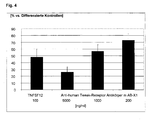
- Such an activating antibody is, for example, the agonistic antibody mABX1 which is described in Example 2 and FIG. 4 as an agonistic anti-Fn14 antibody.
- Such competition analyzes which can be carried out by a person skilled in the art using standard methods, and which are shown by way of example in FIG. 5, can accordingly likewise be used to analyze the potential binding of novel antibodies to activating epitopes of Fn14.
- the anti-Fn14 antibodies, antibody derivatives or binding proteins used according to the invention act by inhibiting the formation of terminally differentiated adipocytes.
- the formation and / or function of terminally differentiated adipocytes can thereby be inhibited on the one hand be inhibited, the differentiation to terminally differentiated adipocytes, in particular by inhibiting the transcription signal pathway for differentiation.
- the formation of terminally differentiated adipocytes can be inhibited by inhibiting lipogenesis or by promoting lipolysis.
- the inhibition of differentiation to terminally differentiated adipocytes can be done by measuring the lipid (eg by staining with Nile Red).
- reporter gene assays such as for PPAR- ⁇ or CEBP- ⁇ or - ⁇
- the inhibition of the transcription signal pathway can be measured.
- lipophilic dyes such as Nile Red
- the lipid content in adipocytes can be detected.
- the modulation of adipocyte differentiation by activation of Fn14 is described for both the natural receptor ligands TNFSF12 and activating anti-Fn14 antibodies in Example 2.
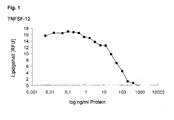
- the effect of ligand (TNFSF12) and antibody (anti-Fn14) -mediated signal transduction is clearly and in a dose-dependent manner (see Figures 1, 2 and 4).
- the invention relates to a method of treating a patient in which an effective amount of one and / or more of the above-defined agonistic agents, such as anti-Fn14 antibodies, is administered to the patient.
- an effective amount of one and / or more of the above-defined agonistic agents, such as anti-Fn14 antibodies, is administered to the patient.
- the patient Preferably, the patient suffers from obesity.
- all embodiments listed above for the use according to the invention apply.
- the factor TNFSF12 and the anti-Fn14 antibodies found according to the invention make it possible to inhibit the differentiation of preadipocytes into adipocytes and / or to inhibit the function of the mature or maturing adipocytes, for example by inhibiting lipogenesis or promoting lipolysis ,
- inhibiting or inhibiting is meant according to the invention the complete or partial suppression of a biological function.
- the function to be inhibited is the differentiation of adipocytes in obese patients or the prevention of obesity.
- the term "inhibitor” describes an agent, such as an anti-Fn14 antibody, which preferably inhibits the process of fat incorporation itself.
- the activating antibody may be referred to as inhibitor.
- the inhibition can be achieved, for example, by induction of Fn14-dependent signal transduction and subsequent modulation of the expression of regulated specific genes.
- the inhibitor used e.g. the anti-Fn14 antibody, by inhibiting the formation of terminally differentiated adipocytes. This can be done, for example and preferentially, by interference of the differentiation to terminally differentiated adipocytes, in particular by modulation of the Fn14 transcription signal pathway in the differentiation into preadipocytes.
- the invention further relates to a pharmaceutical composition containing one or more agents of the present invention.
- a pharmaceutical composition containing one or more agents of the present invention.
- the corresponding molecules are usually formulated with suitable additives or excipients, such as physiological buffer solution, for example sodium chloride solution, demineralized water, stabilizers, such as protease or nuclease inhibitors, preferably aprotinin, ⁇ -aminocaproic acid or pepstatin A or chelating agents such as EDTA, gel formulations such as white petrolatum, low viscosity paraffin or yellow wax, depending on the route of administration.
- physiological buffer solution for example sodium chloride solution
- demineralized water stabilizers, such as protease or nuclease inhibitors, preferably aprotinin, ⁇ -aminocaproic acid or pepstatin A or chelating agents such as EDTA
- suitable additives or excipients such as physiological buffer solution, for example sodium chloride solution, demineralized water, stabilizers, such as protease or nuclease inhibitors, preferably aprotinin, ⁇ -aminocapro
- Suitable additional additives include, for example, detergents such as Triton X-100 or sodium deoxycholate, but also polyols such as polyethylene glycol or glycerol, sugars such as sucrose or glucose, zwitterionic compounds such as amino acids such as glycine or especially taurine or betaine or Protein, such as bovine or human serum albumin. Detergents, polyols and / or zwitterionic compounds are preferred.
- the physiological buffer solution preferably has a pH of about 6.0-8.0, in particular a pH of about 6.8-7.8, in particular a pH of about 7.4, and / or an osmolarity of about 200-400 milliosmoles / Liter, preferably from about 290-310 milliosmol / liter.
- the pH of the drug is generally adjusted using a suitable organic or inorganic buffer, such as using phosphate buffers, tris buffers (Tris (hydroxymethyl) aminomethane), HEPES buffer ([4- (2-hydroxyethyl) piperazino] ethanesulfonic acid) or MOPS buffer (3-morpholino-1-propanesulfonic acid).
- phosphate buffers Tris (hydroxymethyl) aminomethane
- HEPES buffer [4- (2-hydroxyethyl) piperazino] ethanesulfonic acid
- MOPS buffer 3-morpholino-1-propanesulfonic acid
- Injection solutions are generally used when only a small amount of a solution or suspension, for example about 1 to about 20 ml, is to be administered.
- Infusion solutions are generally used when a larger amount of a solution or suspension, for example one or more liters, is to be administered. Since, in contrast to the infusion solution, only a few milliliters are administered in the case of injection solutions, small pH differences or the osmotic pressure of the blood or tissue fluid are not noticeable or play a major role compared to the injection solution itself. Dilution of the formulation prior to use is therefore generally unnecessary. However, if relatively large amounts are administered, the formulation of the invention should be diluted shortly before administration to yield about an isotonic solution.
- An example of an isotonic solution is a 0.9% saline solution.
- the effective dose will depend on the weight and condition of the particular subject to be treated. It is to be assumed that it is known to the person skilled in the art how a suitable dosage can be determined.
- the pharmaceutical composition may be administered in various ways, for example, intramuscularly, subcutaneously, intrathecally, in the fatty tissue, percutaneously (dissolved in DMSO), intravenously or intraperitoneally, or by fusion or gels containing the respective medicament. It is also possible to apply the drug topically and locally. Further, the drug may be administered by a transdermal therapeutic system (TTS), which allows for timed delivery of the drug.
- TTS transdermal therapeutic system
- TTS are off EP 944398 .
- EP 889723 or EP 852493 known.
- a slower release of the protein, peptide, or antibody is achieved by combining with polymers, achieved a longer half-life by adding PEG.
- Suitable polymers also permit peroral administration of the pharmaceutical composition, for example, through a protected passage through the intestine and the targeted penetration of the cell-cell contact sites in the region of the intestinal epithelium.
- a combination with chemical agents eg appetite suppressants, lipase inhibitors may increase the effect.
- the pharmaceutical composition with an activating agent according to the present invention is in a form which enables the contact of the active ingredient with a component of the cell surface (non-cellular) ( Cardiovasc Pharmacol Ther., 7 (3) pages 171-80, (July 2002 )).
- the invention further relates to a method for the prevention of obesity and / or treatment of a patient, wherein the patient is administered an effective amount of one or more of the inhibitors defined above.
- the patient Preferably, the patient suffers from obesity or diabetes type II or diabetes type II related diseases.
- the soluble polypeptides and antibodies used in the present invention are capable of inhibiting lipid deposition in murine 3T3-L1 cells and in human preadipocytes. Inhibition could be demonstrated in both primary human adipocytes of subcutaneous and omental origin. Evidence was provided by Nile Red assay.
- the receptor Fn14 whose activation causes the modulation of the fatty cell differentiation, is present on human and murine fat cell progenitor cells. This fact is an important prerequisite for explaining the observed phenotype through receptor-mediated signal transduction.
- antibodies which induce the adipocyte modulating phenotype by receptor activation bind defined epitopes of the receptor Fn14 and thereby trigger signal transduction.
- a defined activating epitope of Fn14 is represented by the peptide MDCASCRARPHSDFC (see SEQ ID NO 4). The knowledge of this epitope is an essential prerequisite for the rational generation of defined antibodies, which activate signal transduction by specific binding to these epitopes of the receptor.
- 3T3-L1 cells are mouse fibroblasts of embryonic origin which, under appropriate conditions, can terminally differentiate into mature fat cells (adipocytes). Therefore, the proliferative 3T3-L1s are also referred to as preadipocytes. They grow in mono layers and have about a doubling time of 24 h.
- the 3T3-L1 cells used here were from the ATCC (CL-173). Since the 3T3-L1 cells spontaneously differentiate at confluence, thereby altering the properties of the culture, the cells were not cultured to confluency (80% max). The passenger was carried out at 2-day intervals with no medium change in between. Cells were screened only at passage 5 and only until passage 18.
- the maintenance culture of the 3T3-L1 cells was in T-75 culture flasks. For passage every 2 days, these were inoculated with 4.5 x 10 5 cells / T-75 bottle. There was no medium change until the next passage.
- the seeding of the 3T3-L1 cells for the experiment was carried out in 96 well microtiter plates: The 3T3-L1 cells were seeded in a cell density of 1.5 ⁇ 10 4 cells / well in 200 ⁇ l of growth medium / well. The cells were then incubated without change of medium for 3 days and then for differentiation as described below and brought into contact with recombinant soluble or secreted protein fragment or antibody.
- the 3T3-L1 growth medium had the following composition: DMEM, 10% FCS, 1% penicillin-streptomycin, 2% glutamine, 1% Na pyruvate).
- the differentiation medium (DM) was always added as a 2-fold concentrate immediately after addition of recombinant protein or antibody. It consists in this form of a 3T3-L1 growth medium supplemented by induction factors (200 nM insulin, 1 mM IBMX and 2 ⁇ M dexamethasone).
- adipocytes For the isolation of adipocytes from adipose tissue and cultivation of primary human preadipocytes:
- the resulting pellet also contained erythrocytes and connective tissue residues in addition to the preadipocytes and was taken up in erythrocyte lysis buffer (155 mM NH 4 Cl, 5.7 mM K 2 HPO 4 , 0.1 mM EDTA, pH 7.3). After a maximum incubation time of 10 minutes at room temperature, it was filtered through a 150 ⁇ M filter and centrifuged as described above.
- 3T3-L1 cells Three days after sowing the 3T3-L1 cells, 140 ⁇ l of medium were removed from the 3T3-L1 cells and 50 ⁇ l of growth medium were added, in which suitable amounts of recombinant protein (0-3 ⁇ g / ml protein) or antibody (for example 0 -10 ⁇ g / ml) were dissolved. In addition, the addition of 100 ⁇ l of 2X differentiation medium was carried out on the 3T3-L1 cells followed by incubation of the 3T3-L1 cells in the incubator for 5 days. After this time, a determination of the intracellularly incorporated lipid was made.
- the cells were washed twice with PBS and then incubated in serum-free differentiation medium (preadipocyte medium with 66 nM insulin, 1 nM T 3 , 100 nM hydrocortisone, 10 ⁇ g / ml transferrin, 50 ⁇ g / ml gentamycin).
- serum-free differentiation medium preadipocyte medium with 66 nM insulin, 1 nM T 3 , 100 nM hydrocortisone, 10 ⁇ g / ml transferrin, 50 ⁇ g / ml gentamycin.
- serum-free differentiation medium preadipocyte medium with 66 nM insulin, 1 nM T 3 , 100 nM hydrocortisone, 10 ⁇ g / ml transferrin, 50 ⁇ g / ml gentamycin.
- 1 ⁇ g / ml troglitazone and 0.5 mM IBMX were also added. After this time and in the further course every three to four days, there was
- Nile Red reagent (Molecular Probes, Leiden, The Netherlands, CAS number 7385-67-3) was used (Nile Red staining solution: 4 ⁇ g / ml Nile Red in PBS / 40% DMSO). The fluorescence was measured at an excitation wavelength of 485 nm and an emission wavelength of 590 nm. The required amount of Nile Red was added to the calculated amount of DMSO and mixed. Then the calculated amount of PBS is added and the solution mixed.
- the activation of a cellular receptor can be accomplished by the natural ligand, as well as by an antibody, if its activation is effected, for example, by a successful clustering of receptor molecules as in the present case.
- the antibody is agonistic if, after binding to its target structure, it leads to a comparable activity as that produced by the natural ligand.
- the affinity may be different.
- the epitope of the antibody may or may not necessarily correspond to the binding site for the ligand. Decisive is the functional effect on the activation state of the receptor. Thus, not any binding antibody will result in activation of the receptor, but only those that bind to certain epitopes in the extracellular domains of the receptor that result in such activation.
- a receptor was activated by its natural ligand.
- the human ligand was also able to activate the corresponding homologous mouse receptor.
- the lipid storage can serve as a measure of the differentiation of adipocytes, or as a measure of the regulation of lipogenesis or lipolysis in these cells.
- a half-maximal effect concentration of about 30 ng / ml was found for the recombinant soluble protein fragment of TNFSF12.
- a similarly comparable inhibition of differentiation was also achieved on primary fat cells of omental origin and the human SGBS adipocyte cell line.
- the lipid storage can serve as a measure of the differentiation of adipocytes, or as a measure of the regulation of lipogenesis or lipolysis in these cells.
- TNFSF12 In order to detect the known receptor of TNFSF12 on the murine 3T3-L1 cell cultures as well as on primary human pre-adipocytes, they were detected with species-specific anti-Fn14 antibodies using the FACS method. This is shown in FIG. The receptor of TNFSF12 was detected with the antibody pair of TWEAK receptor-specific mouse (A) and human (B) antibodies. The cells were stained according to the following scheme: sowing 200,000 cells in a 6-well dish.
- the cells were trypsinized and pelleted and then in 200 ul buffer solution (PBS + 1% FCS) or buffer solution with receptor-specific antibody according to the manufacturer (5 ug / ml) for one hour incubated on ice. This was followed by the addition of 1 ml PBS + 1% FCS and pelleting the cells. Recovery was performed in 200 ⁇ l of PBS buffer with 1% FCS in which the secondary antibody (2 ⁇ g / ml) was dissolved. This was followed by another incubation on ice for another 45 minutes. The cells were then again mixed with 1 ml PBS buffer + 1% FCS and pelleted.
- PBS + 1% FCS buffer solution with receptor-specific antibody according to the manufacturer
- the cells were then fed to the measurement in the FACS device.
- the measurement of fluorescence intensities was performed only for living cells. The result shows that the receptor described for TNFSF12 is expressed on the cell surface of 3T3-L1 cells as well as on the surface of primary human preadipocytes.
- the way in which the proteins according to the invention accomplish the inhibition of lipid storage in adipocytes can be determined more closely by further analyzes in the cell cultures. Inhibition of differentiation or lipid storage in differentiating adipocytes can be brought about, for example, by protein-mediated activities such as cell death, prevention of cell cycle exit, blockade of differentiation-specific gene expression or blockade of lipogenesis in the strictest sense or by enhancement of lipolysis.
- FIG. 9 shows the determination of the cell count of subconfluent 3T3 cell cultures.
- the cells were seeded at a density of 3,000 cells per well of a 96-well cell culture dish. 24 hours later, the growth medium of the 3T3-L1 cells was changed to medium with reduced FCS content (0.5%). Forty-eight hours later, another medium change to 2% FCS and supplemental administration of soluble recombinant TNFSF12 was performed. A dose-response relationship was examined over a concentration range of 0.1 to 500 ng / ml protein.
- mice of strain C57 / B16 / J after determining the maximum tolerated dose (MTD), a) reducing weight gain in normal weight mice (without previous high calorie diet) and b ) the net reduction of the adipose tissue in normal-weight or obese mice (under onset or sustained high calorie diet) after addition of the protein used according to the invention by weighing or determination of the BMI ("body mass index").
- the maximum tolerated dose is determined using 3 mice (strain C57B16 / J wild-type) by administration of 0.002; 0.02; 0.2; 2.0 and 10 mg protein / kg as a single intravenous dose.
- a subsequent fine adjustment of the dose is carried out with 3 mice each (strain C57B16 / J wild type) by a single administration of the protein.
- the dose required for administration is determined by repeated administration of a selected dose over several applications on the basis of blood parameters and serum stability.
- the single intravenous administration into female C57B16 mice of up to 5.4 mg / kg body weight in the case of recombinant soluble protein fragment of TNFSF12 did not lead to any clinical symptoms caused by the test substance within 48 hours.
- Preferred animal models are those which correspond to the human situation of obesity or type II diabetes in a special way. Rodents such as mice or rats as well as dogs, pigs and primates are preferred for this purpose.
- a particularly preferred experimental embodiment is a diet-induced obesity, optionally associated with insulin resistance or type II diabetes, in mice or rats by the administration of high calorie diet.
- the high calorie diet which is, for example, a 20-45 kcal% fat diet be administered already before or at the same time as the administration of the proteins or fragments or the pharmaceutical composition according to the invention.
- the animals may therefore be normal or already overweight at the time of administration of the protein or protein fragment.
- the aim is to reduce or prevent weight gain and / or weight loss.
- an improvement of insulin sensitivity or glucose tolerance is also used.
- the change of diets takes place in each case at the time of the first administration of the protein or protein fragment or the pharmaceutical composition.
- mice of strain C57 / B16 / J after determining the maximum tolerated dose (MTD), a) reduction in weight gain in normal weight mice (without previous high calorie diet) and b) net reduction of adipose tissue in normal weight or obese mice at baseline (under onset or sustained high calorie diet) after addition of the protein used according to the invention by weighing or determination of the BMI ("body mass index").
- the maximum tolerated dose is determined using 3 mice (strain C57B16 / J wild-type) by administration of 0.002; 0.02; 0.2; 2.0 and 10 mg protein / kg as a single intravenous dose.
- a subsequent fine adjustment of the dose is carried out with 3 mice each (strain C57B16 / J wild type) by a single administration of the protein.
- the dose required for administration is determined by repeated administration of a selected dose over several applications on the basis of blood parameters and serum stability.
- the applied antibodies are in principle detectable in the blood serum by ELISA. In this case, a decrease in the amount of detectable protein fragment from the blood serum over time can be assumed, as is to be expected for a circulating in the organism protein.
- the inhibitory activity can be measured in mouse sera by addition to the 3T3-L1 cell culture assay with Nile Red lipid determination. It can be shown that the antibodies can be administered intravenously and do not cause clinical toxicity.
- the maximum dose found above is reduced to a lowest dose, which still has a therapeutic effect.
- the dose thus determined is administered parenterally (intravenously, intraperitoneally, subcutaneously or intramuscularly). Preference is given to intraperitoneal, intravenous or subcutaneous administration)
- mice normal-weight mice under normal diet (maximum 20 kcal% fat diet) or especially under high calorie diet (45% kcal%) each without (untreated) and with the addition of the protein of the invention (treated) 10-14 weeks held. During and after the end of the test series, the weight gain is determined by weighing and / or determining the BMI.
- obese mice previously maintained under high calorie diet (45 kcal% fat diet)) under normal diet (maximum 20 kcal% fat diet) and / or under continued high calorie diet without (untreated) and with supplementation of the protein according to the invention (treated) for 10-14 weeks.
- the weight gain is determined by weighing and / or determining the BMI.
- This fragment encoded a recombinant soluble secreted murine form of TNFSF12.
- the expression constructs were prepared by carrying out an RT-PCR using a suitable murine RNA source (TNFSF12: RNA from 3T3-L1 cells) with suitable primers (enclosing the sequences coding for: mouse TNFSF12: Arg105-His249).
- TNFSF12 RNA from 3T3-L1 cells
- suitable primers enclosing the sequences coding for: mouse TNFSF12: Arg105-His249
- 6 histidine residues were introduced at the 5'-end and 2xTGA-stop codons and sequences for the restriction sites Xhol and BgIII at the 3'-end.
- the reading frame was inserted into the target vector pBS-HCRHPI-A ( Miao et al, 2003, Human Gene Therapy 14: 1297-1305 ), cloned for in vivo gene expression in animals:
- the excision from pSECTag / FRT / V5-His-TOPO vectors was carried out with the aid of the restriction sites NheI and BglII and filling in of the protruding ends - insertion into pBS-HCRHPI-A via opening with the restriction enzyme EcoRV and joining to the blunt ends with the respective inserted fragments.
- the resulting plasmid was named pXAP01 (mTNFSF12).
- Transfection Procedure The transfection of the plasmids into C57BI6 / J mice encoding recombinant secreted and soluble murine protein fragment of TNFSF12 was carried out according to a method first described by Zhang et al. (Gene Therapy 2000; 7: 1344 ). In this case, by a hydrodynamic pressure generated by rapid injection of the plasmid-containing solution into the tail vein, the entry of the plasmid DNA is preferably achieved in liver tissue. There, a week to months long gene expression can then be realized.
- each of endotoxin-free prepared plasmid was administered in PBS solution in a solvent amount corresponding to 10% of the body weight of the mouse to be injected at a rate of 1 ml / 5 sec. Subsequently, the animals were weighed weekly until 8 weeks after injection. The content of each expressed secreted soluble murine protein fragment of TNFSF12 was determined by ELISA from collected blood sera.
- ELISA antibody pairs for murine TNFSF12 coating: anti-mTWEAK Antibody (R & D Systems, Wiesbaden Germany catalog # AF1237), anti-mTWEAK Antibody Biotin Conjugated (e-bioscience, clone MTW-1, catalog number # 13-9913) antibody.
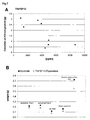
- the correlation of protein expression and body weight was investigated. The experiments described in Figure 7 have shown that the level of expression of murine recombinant secreted soluble protein fragment of TNFSF12 clearly correlates negatively with the observed weight gain during the study period.
- a correlation coefficient for the data from ( Figure 7A) for TNFSF12 of -0.72 results. The correlation coefficient indicates how strict a correlation is. Values between -1 and +1 are possible. A value of 0 indicates that there is no correlation. +1 or -1 indicate that there is an absolute strict correlation (minus sign: negative). These correlations were observed over the entire observation period of 8 weeks.
- Antibodies directed against receptors on the cell surface bind with defined specificity and affinity.
- the binding of an antibody to Fn14 can cause its activation.
- This type of binding by the antibody must simulate the effect that binding of a natural ligand has on the receptor.
- the natural ligand causes a change in the shape (conformation) or other property of the receptor, for example its dimerization or multimerization, or both. Activation occurs when these structural changes result, directly or indirectly, in an intrinsic activity of the receptor protein, for example an enzyme activity, or a protein-protein interaction activity.
- 'activating epitope' antibodies leading to the activation of receptors bind to such epitopes that bind simulate the receptor effects of ligand binding.
- the peptide of the sequence MDCASCRARPHSDFC represents such an activating epitope of the receptor Fn14. Antibodies which bind to this peptide are thus capable of Fn14 activation.
- Antibodies which show markedly enhanced binding to the activating epitope i.e., the peptide of the sequence MDCASCRARPHSDFC
- binding to the control peptide are thus defined as 'binders' to the activating epitope.
- Another control in these experiments is the analysis of specificity of binding to the activating epitope. To ensure this, the binding of another unrelevant antibody to both the activating epitope and the control peptide is also analyzed. Such antibodies must bind much weaker to the activating epitope as compared to antibodies recognizing the activating epitope.
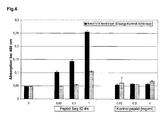
- Figure 6 shows an example of the identification of an antibody that specifically binds to the activating epitope of Fn14 represented by the peptide of the sequence MDCASCRARPHSDFC.
- 0.02, 0.2, 1 mg / ml of the peptide MDCASCRARPHSDFC (activating epitope) or of a control peptide were applied to microtiter plates (MaxiSorb plate) by incubation at 4 ° C. in carbonates buffer for 15 h (0.1 M carbonate buffer, 8.4 g Na HCO3 and 3.56 g Na2CO3 per liter, pH 9.5).
- the strength of the enzyme-dependent color reaction in the ELISA reader was determined by determining the absorption at 450 nm.
- the results of such ELISA analysis are shown in FIG. It can be clearly seen that the antibody mAb-X1 shows a markedly enhanced binding to the activating epitope (ie to the peptide of the sequence MDCASCRARPHSDFC) in comparison with the binding to the control peptide. Thus, mAb X1 is clearly recognizable as a binder of the activating epitope.
- analysis of the binding of a control antibody shows that this binding and the assay used is specific.
- control antibody shows low binding both to the control peptide and to the peptide which represents the activating epitope.
- Antibodies according to the invention are preferably identified via this ELISA method.
- additional competition experiments can be carried out. These experiments are based on the ability to reduce or prevent the specific binding to cell surfaces of activating anti-Fn14 antibodies by adding peptides that represent the activating epitope.
- control peptides or peptides which represent other epitopes can not affect this binding.
- FIG. 5 shows the results of such a competition experiment.
- the activating epitope is shown again in this experiment by the peptide of the sequence MDCASCRARPHSDFC.
- the cells were measured in a volume of 200 .mu.l in FACScalibur (Becton Dickinson) in the FL1-H channel without using a gate.
- FACScalibur Becton Dickinson
- FIG. 5A the antibody mAB-X1 is inhibited by the peptide of the sequence MDCASCRARPHSDFC, which is the activating epitope of Fn14, in its binding to the cells.
- Figure 5B is another indication of the specificity of antibody binding and its specific competition by the peptide of the sequence MDCASCRARPHSDFC, which represents the activating epitope.
- Control peptides with other sequences from Fn14 or from entirely different proteins were expected to show no significant shift of the FACS signal to the left in this experimental setup - towards decreasing labeling of HeLa cells by the antibody - while the addition of the complete extracellular domain of Fn14 in a fusion with Fc Protein (from R & D Systems, amount used 10 ⁇ g / ml) also led to a significant left shift of the signal (FIG.
Landscapes
- Health & Medical Sciences (AREA)
- Chemical & Material Sciences (AREA)
- Organic Chemistry (AREA)
- Medicinal Chemistry (AREA)
- Immunology (AREA)
- Life Sciences & Earth Sciences (AREA)
- General Health & Medical Sciences (AREA)
- Bioinformatics & Cheminformatics (AREA)
- Chemical Kinetics & Catalysis (AREA)
- Molecular Biology (AREA)
- Proteomics, Peptides & Aminoacids (AREA)
- Biophysics (AREA)
- Child & Adolescent Psychology (AREA)
- Engineering & Computer Science (AREA)
- Biochemistry (AREA)
- Diabetes (AREA)
- Hematology (AREA)
- Obesity (AREA)
- Genetics & Genomics (AREA)
- General Chemical & Material Sciences (AREA)
- Nuclear Medicine, Radiotherapy & Molecular Imaging (AREA)
- Pharmacology & Pharmacy (AREA)
- Animal Behavior & Ethology (AREA)
- Public Health (AREA)
- Veterinary Medicine (AREA)
- Medicines Containing Antibodies Or Antigens For Use As Internal Diagnostic Agents (AREA)
- Peptides Or Proteins (AREA)
- Medicines That Contain Protein Lipid Enzymes And Other Medicines (AREA)
Priority Applications (2)
| Application Number | Priority Date | Filing Date | Title |
|---|---|---|---|
| EP05011275A EP1764109A1 (fr) | 2005-05-24 | 2005-05-24 | Anticorps agonistes, dirigés contre le récepteur TWEAK Fn14, et par conséquent capables de moduler des phénotypes associés à l'adiposité, et leur utilisation en thérapie |
| PCT/EP2006/004974 WO2006125632A2 (fr) | 2005-05-24 | 2006-05-24 | Anticorps de type agonistes qui se lient au recepteur tweak fn14 et modulent par consequent les phenotypes associes a l'adiposite, et leur utilisation a des fins therapeutiques |
Applications Claiming Priority (1)
| Application Number | Priority Date | Filing Date | Title |
|---|---|---|---|
| EP05011275A EP1764109A1 (fr) | 2005-05-24 | 2005-05-24 | Anticorps agonistes, dirigés contre le récepteur TWEAK Fn14, et par conséquent capables de moduler des phénotypes associés à l'adiposité, et leur utilisation en thérapie |
Publications (1)
| Publication Number | Publication Date |
|---|---|
| EP1764109A1 true EP1764109A1 (fr) | 2007-03-21 |
Family
ID=35355120
Family Applications (1)
| Application Number | Title | Priority Date | Filing Date |
|---|---|---|---|
| EP05011275A Withdrawn EP1764109A1 (fr) | 2005-05-24 | 2005-05-24 | Anticorps agonistes, dirigés contre le récepteur TWEAK Fn14, et par conséquent capables de moduler des phénotypes associés à l'adiposité, et leur utilisation en thérapie |
Country Status (1)
| Country | Link |
|---|---|
| EP (1) | EP1764109A1 (fr) |
Cited By (2)
| Publication number | Priority date | Publication date | Assignee | Title |
|---|---|---|---|---|
| EP2391385A4 (fr) * | 2009-01-30 | 2013-05-01 | Biogen Idec Inc | Procédés de régénérescence de tissu pancréatique |
| US9775899B2 (en) | 2005-02-17 | 2017-10-03 | Biogen Ma Inc. | Treating neurological disorders |
Citations (3)
| Publication number | Priority date | Publication date | Assignee | Title |
|---|---|---|---|---|
| US20020041876A1 (en) * | 1999-12-20 | 2002-04-11 | Wiley Steven R. | TWEAK receptor |
| WO2003086311A2 (fr) * | 2002-04-09 | 2003-10-23 | Biogen, Inc. | Procede pour traiter les etats lies a tweak |
| WO2005053728A2 (fr) * | 2003-12-01 | 2005-06-16 | Xantos Biomedicine Ag | Protéines associées à l'adiposité et leur utilisation à des fins thérapeutiques et diagnostiques |
-
2005
- 2005-05-24 EP EP05011275A patent/EP1764109A1/fr not_active Withdrawn
Patent Citations (3)
| Publication number | Priority date | Publication date | Assignee | Title |
|---|---|---|---|---|
| US20020041876A1 (en) * | 1999-12-20 | 2002-04-11 | Wiley Steven R. | TWEAK receptor |
| WO2003086311A2 (fr) * | 2002-04-09 | 2003-10-23 | Biogen, Inc. | Procede pour traiter les etats lies a tweak |
| WO2005053728A2 (fr) * | 2003-12-01 | 2005-06-16 | Xantos Biomedicine Ag | Protéines associées à l'adiposité et leur utilisation à des fins thérapeutiques et diagnostiques |
Non-Patent Citations (5)
| Title |
|---|
| M. NAKAYAMA ET AL.: "Characterization of murine TWEAK and its receptor (Fn14) by monoclonal antibodies.", BIOCHEMICAL AND BIOPHYSICAL RESEARCH COMMUNICATIONS, vol. 306, 2003, Duluth, MN, VSA, pages 818 - 825, XP004432093 * |
| M. NAKAYAMA ET AL.: "Fibroblast growth factor-inducible 14 mediates multiple pathways of TWEAK-induced cell death.", THE JOURNAL OF IMMUNOLOGY, vol. 170, no. 1, 2003, Baltimore, MD, VSA, pages 341 - 348, XP002356992 * |
| S. WILEY ET AL.: "A novel TNF receptor family member binds TWEAK and is implicated in angiogenesis.", IMMUNITY, vol. 15, November 2001 (2001-11-01), pages 837 - 846, XP002356991 * |
| S. WILEY ET AL.: "TWEAK, a member of the TNF superfamily, is a multifunctional cytokine that binds the TweakR/Fn14 receptor.", CYTOKINE & GROWTH FACTOR REVIEWS, vol. 14, 2003, pages 241 - 249, XP002356994 * |
| T. POLEK ET AL.: "TWEAK mediates signal transduction and differentiation of RAW264.7 cells in the absence of Fn14/TweakR.", THE JOURNAL OF BIOLOGICAL CHEMISTRY, vol. 278, no. 34, 22 August 2003 (2003-08-22), Baltimore, MD, VSA, pages 32317 - 32323, XP002356993 * |
Cited By (2)
| Publication number | Priority date | Publication date | Assignee | Title |
|---|---|---|---|---|
| US9775899B2 (en) | 2005-02-17 | 2017-10-03 | Biogen Ma Inc. | Treating neurological disorders |
| EP2391385A4 (fr) * | 2009-01-30 | 2013-05-01 | Biogen Idec Inc | Procédés de régénérescence de tissu pancréatique |
Similar Documents
| Publication | Publication Date | Title |
|---|---|---|
| Krieger et al. | TSH/IGF1 receptor crosstalk: mechanism and clinical implications | |
| DE60025368T2 (de) | Verfahren zum identifizieren von prostaglandin d2 rezeptor modulatoren | |
| Allette et al. | Identification of a functional interaction of HMGB1 with Receptor for Advanced Glycation End-products in a model of neuropathic pain | |
| Rose et al. | Natriuretic peptide C receptor signalling in the heart and vasculature | |
| DE69631686T2 (de) | Entwurf hormonartiger antikörper mit agonistischen und antagonistischen eigenschaften | |
| Ma et al. | Localization and modulation of calcitonin gene-related peptide-receptor component protein-immunoreactive cells in the rat central and peripheral nervous systems | |
| DE69925909T2 (de) | T-zell inhibierende rezeptorzusammensetzungen sowie deren verwendung | |
| DE69938507T2 (de) | Fragment des "connective tissue growth factor" (ctgf) | |
| DE69519513T2 (de) | Verfahren zur modulation von "t-zell-anergy" | |
| DE69633336T2 (de) | Zusamenzetzung enthaltend einen inhibitor des myelin assoziierten glycoproteins (mag), welcher einer veränderten oder mutierten form von mag enthält | |
| JP2010207239A (ja) | Nogo受容体アンタゴニスト | |
| JP2013520171A (ja) | Wntシグナル伝達経路を阻害するモノクローナル抗体ならびにその製造方法およびその使用方法 | |
| JP2021509813A (ja) | 持効性かつ低毒性の組替え型の抗vegfヒト化単クローン抗体及びその調製方法 | |
| JP2007501612A (ja) | Nogo受容体アンタゴニスト | |
| DE69912743T2 (de) | Behandlung von follikulären lymphomen unter verwendung von inhibitoren des lymphotoxin (lt)-aktivierungsweges | |
| MXPA04004491A (es) | Modulacion de funcion de receptores similares a inmunoglobulina leucocitaria para tratar artritis reumatoide. | |
| Midavaine et al. | Discovery of a CCR2-targeting pepducin therapy for chronic pain | |
| DE212011100195U9 (de) | Antikörper, der das Tumorwachstum stoppt oder verzögert (Varianten) | |
| US20060241284A1 (en) | Transmembrane protein amigo and uses thereof | |
| WO2005053728A2 (fr) | Protéines associées à l'adiposité et leur utilisation à des fins thérapeutiques et diagnostiques | |
| WO2022152715A1 (fr) | Inhibiteurs de trpm3 et leurs utilisations | |
| KR20180135839A (ko) | hGH 융합단백질을 포함하는 성장호르몬 결핍을 치료하기 위한 약학 조성물 | |
| KR19990007893A (ko) | 중추신경계(cns) 축삭 성장 모듈레이터, 이를 구현 및 사용하는 조성물, 세포 및 방법 | |
| KR20220007320A (ko) | 펩타이드가 결합된 재조합 엑소좀을 포함하는 rage 과발현에 의한 염증 매개 질환의 예방 또는 치료용 약학적 조성물 | |
| US20090175848A1 (en) | Modulation of the Cooperativity Between the Ion Channels TRPM5 and TRPA1 |
Legal Events
| Date | Code | Title | Description |
|---|---|---|---|
| PUAI | Public reference made under article 153(3) epc to a published international application that has entered the european phase |
Free format text: ORIGINAL CODE: 0009012 |
|
| AK | Designated contracting states |
Kind code of ref document: A1 Designated state(s): AT BE BG CH CY CZ DE DK EE ES FI FR GB GR HU IE IS IT LI LT LU MC NL PL PT RO SE SI SK TR |
|
| AX | Request for extension of the european patent |
Extension state: AL BA HR LV MK YU |
|
| AKX | Designation fees paid | ||
| STAA | Information on the status of an ep patent application or granted ep patent |
Free format text: STATUS: THE APPLICATION IS DEEMED TO BE WITHDRAWN |
|
| 18D | Application deemed to be withdrawn |
Effective date: 20070922 |
|
| REG | Reference to a national code |
Ref country code: DE Ref legal event code: 8566 |