EP1765520B1 - Massgeschneiderte funktionalisierte silizium- und/oder germaniumflächen - Google Patents
Massgeschneiderte funktionalisierte silizium- und/oder germaniumflächen Download PDFInfo
- Publication number
- EP1765520B1 EP1765520B1 EP05755288.7A EP05755288A EP1765520B1 EP 1765520 B1 EP1765520 B1 EP 1765520B1 EP 05755288 A EP05755288 A EP 05755288A EP 1765520 B1 EP1765520 B1 EP 1765520B1
- Authority
- EP
- European Patent Office
- Prior art keywords
- group
- protected
- groups
- silicon
- carbon atoms
- Prior art date
- Legal status (The legal status is an assumption and is not a legal conclusion. Google has not performed a legal analysis and makes no representation as to the accuracy of the status listed.)
- Expired - Lifetime
Links
Images


Classifications
-
- C—CHEMISTRY; METALLURGY
- C01—INORGANIC CHEMISTRY
- C01B—NON-METALLIC ELEMENTS; COMPOUNDS THEREOF; METALLOIDS OR COMPOUNDS THEREOF NOT COVERED BY SUBCLASS C01C
- C01B33/00—Silicon; Compounds thereof
-
- B—PERFORMING OPERATIONS; TRANSPORTING
- B05—SPRAYING OR ATOMISING IN GENERAL; APPLYING FLUENT MATERIALS TO SURFACES, IN GENERAL
- B05D—PROCESSES FOR APPLYING FLUENT MATERIALS TO SURFACES, IN GENERAL
- B05D1/00—Processes for applying liquids or other fluent materials
- B05D1/18—Processes for applying liquids or other fluent materials performed by dipping
- B05D1/185—Processes for applying liquids or other fluent materials performed by dipping applying monomolecular layers
-
- B—PERFORMING OPERATIONS; TRANSPORTING
- B05—SPRAYING OR ATOMISING IN GENERAL; APPLYING FLUENT MATERIALS TO SURFACES, IN GENERAL
- B05D—PROCESSES FOR APPLYING FLUENT MATERIALS TO SURFACES, IN GENERAL
- B05D1/00—Processes for applying liquids or other fluent materials
- B05D1/18—Processes for applying liquids or other fluent materials performed by dipping
-
- B—PERFORMING OPERATIONS; TRANSPORTING
- B82—NANOTECHNOLOGY
- B82Y—SPECIFIC USES OR APPLICATIONS OF NANOSTRUCTURES; MEASUREMENT OR ANALYSIS OF NANOSTRUCTURES; MANUFACTURE OR TREATMENT OF NANOSTRUCTURES
- B82Y30/00—Nanotechnology for materials or surface science, e.g. nanocomposites
-
- B—PERFORMING OPERATIONS; TRANSPORTING
- B82—NANOTECHNOLOGY
- B82Y—SPECIFIC USES OR APPLICATIONS OF NANOSTRUCTURES; MEASUREMENT OR ANALYSIS OF NANOSTRUCTURES; MANUFACTURE OR TREATMENT OF NANOSTRUCTURES
- B82Y40/00—Manufacture or treatment of nanostructures
-
- C—CHEMISTRY; METALLURGY
- C01—INORGANIC CHEMISTRY
- C01G—COMPOUNDS CONTAINING METALS NOT COVERED BY SUBCLASSES C01D OR C01F
- C01G17/00—Compounds of germanium
-
- C—CHEMISTRY; METALLURGY
- C08—ORGANIC MACROMOLECULAR COMPOUNDS; THEIR PREPARATION OR CHEMICAL WORKING-UP; COMPOSITIONS BASED THEREON
- C08G—MACROMOLECULAR COMPOUNDS OBTAINED OTHERWISE THAN BY REACTIONS ONLY INVOLVING UNSATURATED CARBON-TO-CARBON BONDS
- C08G77/00—Macromolecular compounds obtained by reactions forming a linkage containing silicon with or without sulfur, nitrogen, oxygen or carbon in the main chain of the macromolecule
-
- Y—GENERAL TAGGING OF NEW TECHNOLOGICAL DEVELOPMENTS; GENERAL TAGGING OF CROSS-SECTIONAL TECHNOLOGIES SPANNING OVER SEVERAL SECTIONS OF THE IPC; TECHNICAL SUBJECTS COVERED BY FORMER USPC CROSS-REFERENCE ART COLLECTIONS [XRACs] AND DIGESTS
- Y10—TECHNICAL SUBJECTS COVERED BY FORMER USPC
- Y10T—TECHNICAL SUBJECTS COVERED BY FORMER US CLASSIFICATION
- Y10T428/00—Stock material or miscellaneous articles
- Y10T428/26—Web or sheet containing structurally defined element or component, the element or component having a specified physical dimension
- Y10T428/261—In terms of molecular thickness or light wave length
-
- Y—GENERAL TAGGING OF NEW TECHNOLOGICAL DEVELOPMENTS; GENERAL TAGGING OF CROSS-SECTIONAL TECHNOLOGIES SPANNING OVER SEVERAL SECTIONS OF THE IPC; TECHNICAL SUBJECTS COVERED BY FORMER USPC CROSS-REFERENCE ART COLLECTIONS [XRACs] AND DIGESTS
- Y10—TECHNICAL SUBJECTS COVERED BY FORMER USPC
- Y10T—TECHNICAL SUBJECTS COVERED BY FORMER US CLASSIFICATION
- Y10T428/00—Stock material or miscellaneous articles
- Y10T428/31504—Composite [nonstructural laminate]
- Y10T428/31652—Of asbestos
- Y10T428/31667—Next to addition polymer from unsaturated monomers, or aldehyde or ketone condensation product
-
- Y—GENERAL TAGGING OF NEW TECHNOLOGICAL DEVELOPMENTS; GENERAL TAGGING OF CROSS-SECTIONAL TECHNOLOGIES SPANNING OVER SEVERAL SECTIONS OF THE IPC; TECHNICAL SUBJECTS COVERED BY FORMER USPC CROSS-REFERENCE ART COLLECTIONS [XRACs] AND DIGESTS
- Y10—TECHNICAL SUBJECTS COVERED BY FORMER USPC
- Y10T—TECHNICAL SUBJECTS COVERED BY FORMER US CLASSIFICATION
- Y10T428/00—Stock material or miscellaneous articles
- Y10T428/31504—Composite [nonstructural laminate]
- Y10T428/31971—Of carbohydrate
Definitions
- the present invention relates to tailor-made functionalized silicon and/or germanium surfaces, methods for the preparation of such tailor-made functionalized silicon and/or germanium surfaces, the use of such tailor-made functionalized silicon and/or germanium surfaces for the preparation of surface-bonded organic materials and the use in industrial devices such as micro-reactors, membrane filtration units, micro-sieves, AFM tips, microstructures and devices for analytical purposes.
- Silicon nitrides are well-known for outstanding properties such as its mechanical hardness, chemical inertness, and high electrical resistivity. 1 These properties are used in a wide variety of applications. In contrast, the surface properties of silicon nitrides are still poorly defined and usually also changing over time. This situation significantly hampers the large-scale use of silicon nitrides in a variety of applications. The way out is to provide a well-controlled and stable surface modification to silicon nitrides. However, this has been problematic up to now. 2
- US 6.569.979 points in detail to the relevance of surfaces that are suitable for immobilization of biologically active materials such as RNA, DNA and fragments or derivatives thereof.
- US 6.569.979 further discloses a method for modifying a non-oxidized silicon (001) surface, wherein functionalized 1-alkenes are reacted with hydrogen-terminated silicon under UV initiation.
- the method provides modified surfaces having a poor hydrophobicity as appears from the relatively low water contact angles.
- modified silicon nitride surface has up to now largely been limited to the functionalization of the native SiO 2 that is present as a poorly defined, thin layer on silicon nitride surfaces.
- this procedure is used in the modification of silicon nitride AFM tips to obtain specific substrate interactions.
- Cattaruzza et al. J. Mater. Chem. 14, 1461 - 1468, 2004 , disclose that silicon nitride surfaces can be etched with HF to provide terminal -NH 2 and -NH groups which can be converted in a subsequent step with ⁇ -functionalized alkyl bromides.
- the ⁇ -functionalized alkyl groups are bonded to the silicon nitride surfaces via the reduced nitrogen atoms of the silicon nitride.
- the alkyl groups contain carboxyl, ester or amide functionalities (cf. entries 1, 2 and 13 of Table 1).
- the silicon and/or germanium surfaces are generally defined as silicon nitride, silicon carbide, germanium nitride, germanium carbide and silicon germanium surfaces.
- silicon and/or germanium surfaces are surfaces comprising silicon and germanium nitrides according to the general formula M 3 N x , wherein M is either Si or Ge and x is in the range of about 1 to about 4, silicon and germanium carbides according to the general formula M x C y , wherein M is either Si or Ge, x is in the range of about 0.3y to about 3y, as well as "strained silicon” which is known in the art as Si 1-x Ge x wherein x is in the range of about 0 to about 1, preferably about 0.05 to about 0.95. It is well known in the art that the stoichiometry of these surfaces can continuously be varied, depending on the properties desired.
- Si/Ge-surfaces is used to indicate silicon and/or germanium surfaces as defined herein.
- “Strained silicon” contains germanium atoms in the crystal lattice with the result that the atoms are spread further apart than in neat silicon. In strained silicon, electrons experience less resistance and flow up to 70 percent faster compared to neat silicon which can lead to much faster chips. Strained silicon and methods of preparing strained silicon is for example disclosed in US 6.464.780 and US 2004/0087119 .
- the present invention relates to a process for the preparation of a functionalized Si/Ge surface, the Si/Ge surface being selected from the group consisting of silicon nitride, silicon carbide, germanium nitride, germanium carbide and silicon germanium surfaces, the silicon and germanium carbides having the formula M x C y , wherein M is Si or Ge and x is in the range of 0.3y to 3y, wherein the Si/Ge surface is subjected to the following steps:
- the present invention provides a process for the preparation of a functionalized Si/Ge surface, wherein a Si/Ge surface is subjected to the following steps:
- R 5 is a monofunctional hydroxy or thiohydroxy protecting group.
- protecting groups are well known in the art as well as methods for adding such groups to -XH groups and methods for removing such protecting groups under conditions that do not affect the molecular structure of the functionalized Si/Ge surface obtained.
- Suitable examples of monofunctional hydroxy and thiohydroxy protecting groups include methoxymethyl, methylthiomethyl, 2-methoxyethoxymethyl, bis(2-chloroethoxy)methyl, tetrahydropyranyl, tetrahydrothiopyranyl, 4-methoxytetrahydropyranyl, 4-methoxytetrahydrothiopyranyl, tetrahydrofuranyl, tetrahydrothiofuranyl, 1-ethoxyethyl, 1-methoxyl-methoxyethyl, 2-(phenylselenyl)ethyl, t-butyl, allyl, benzyl, optionally substituted triphenylmethyl (trityl).
- the monofunctional hydroxyl or thiohydroxy protecting group is selected from the group of allyl, benzyl, optionally substituted trityl, and tetrahydropyranyl. It is even more preferred that the monofunctional hydroxyl or thiohydroxy protecting group is selected from benzyl and tetrahydropyranyl.
- Suitable examples of the -Si(R 1 ) 3 group are trimethylsilyl, triethylsilyl, triisopropylsilyl, isopropyldimethylsilyl, t-butyldimethylsilyl, t-butyldiphenylsilyl and tribenzylsilyl. Methods of the introduction and removal of such groups are well known in the art. 16
- C is in the ⁇ -position of the alkenyl and alkynyl groups. Consequently, it is therefore preferred that the functionalized alkene is a ⁇ -C-1-alkene and that the functionalized alkyne is a ⁇ -C-1-alkyne, the ⁇ -position being dependent on the number of carbon atoms of the alkene or alkyne, respectively.
- the etching agent is preferably selected from HF, NH 4 F/HF or H 3 PO 4 .
- NH 4 /HF the ratio of NH 4 F to HF is preferably 1:1 to 20:1, most preferably 5:1 to 15:1.
- the etching agent is HF.
- the etching step is performed for at least about 0.01 h. to about 100 h.
- the etching agent is usually used as a solution in water, said solution comprising about 0.1 to about 10.0 wt.%, preferably about 1.0 to 3.0 wt.% of the etching agent, based on the total weight of the solution.
- the etching step can be performed as is well known in the art.
- step (b) mixtures of ⁇ -functionalized alkenes or mixtures of ⁇ -functionalized alkynes may be used.
- Step (b) may furthermore be performed in an inert organic solvent and elevated temperature, e.g. at reflux, or using microwave irradiation.
- the inert organic solvent is preferably a hydrocarbon such as mesitylene.
- step (b) may be performed without solvent, i.e. that the etched Si/Ge surface is reacted with neat functionalized alkene according to the general formula (4) or neat functionalized alkyne according to the general formula (5).
- the functionalized Si/Ge surfaces are their versatility, i.e. that they can provided with hydrophobic or hydrophilic properties depending on the nature of the functional groups B, which in addition can be converted into other groups as will be apparent to those skilled in the art.
- the functional groups B may be made ionic, e.g. by converting amino groups into cationic ammonium groups or by converting carboxyl groups into anionic carboxylate groups.
- the present invention further relates to the use of the functionalized Si/Ge surfaces in the preparation of Si/Ge surfaces bearing pendant groups, wherein the pendant groups are derived from biologically active groups or host molecules.
- biologically active groups may be proteins, DNA or RNA molecules or fragments or derivatives thereof, e.g. single stranded oligonucleotides that have for example been used in gene sequencing, drug research, medical diagnostics and binding studies of ligands to oligonucleotides.
- the host molecules may be selected from calixarenes, dendrimers or fragments and derivatives thereof and mono-oligo- and polysaccharides.
- the present invention also relates to Si/Ge surfaces bearing pendant groups, wherein alkyl or alkenyl moieties as defined above are covalently bonded to the Si/Ge surface, wherein the alkyl or alkenyl moieties bear a pendant group, preferably in their ⁇ -position, that are derived from biologically active groups or host molecules.
- Si/Ge surfaces bearing pendant groups can be prepared from the functionalized Si/Ge surfaces as disclosed herein, wherein the functional groups B provide a linking means for bonding the biologically active groups or host molecules.
- B may be an -OH group that by way of an esterification can be bonded to a host molecule bearing a carboxylic group.
- B is a protected functional group such as a -OSiMe 3 group, B must first be deprotected prior to the addition of the host molecule bearing a carboxylic group.
- the present invention therefore also relates to a process for the preparation of Si/Ge surfaces bearing pendant groups, wherein a functionalized Si/Ge surface is attached to a pendant group, wherein the pendant groups are derived from biologically active groups or host molecules.
- the present invention also relates to a functionalized Si/Ge surface, wherein alkyl or alkenyl moieties are covalently bonded to the Si/Ge surface, the alkyl and alkenyl moieties being represented by the general formula (1):
- A is a linear, branched or cyclic alkylene or alkenylene group having 2 to 24 carbon atoms, wherein the alkenylene group is a 1-alkenylene or an internal alkenylene group.
- suitable alkylene groups are ethylene, propylene, butylene, pentylene, decylene, octadecylene and eicosenylene and the like.
- suitable alkenylene groups are propenylene, but-2-enylene, oct-4-enylene and the like.
- the alkyl and alkenyl moieties comprise at least one internal ethynylene moiety. That is, that A is in particular a linear group having 6 to 24 carbon atoms according to the formula: -CH 2 -CH 2 -(CH 2 ) p -(C ⁇ C) q -CH 2 - wherein p is in the range of 1 to 7 and q is in the range of 1 to 7, the groups -(CH 2 )- and -(C ⁇ C)- optionally occurring in a random sequence, and wherein the right terminus of A is bonded to B.
- Such ethynylene moieties can be polymerized to provide a cross-linked network that will reduce the permeability of the monolayer, and that will provide more stabilization to the monolayer.
- this linear group are: -(CH 2 ) 7 -C ⁇ C-CH 2 -C ⁇ C-(CH 2 ) 8 - and -(CH 2 ) 9 -C ⁇ C-C ⁇ C-(CH 2 ) 9 -
- the linear group has the formula -CH 2 -CH 2 -(CH 2 ) p -(C ⁇ C) q -(CH 2 ) r -, wherein p is 1 to 9, preferably 7, r is 1 to 9 and q is 1 or 2.
- B can be selected from the functional groups as defined above.
- Suitable examples of -C ⁇ CR 2 groups are ethynyl, 2-propynyl and the like.
- Suitable examples of the -XR 2 group are -OH, -SH, -OMe, -OEt and the like, wherein Me represents methyl and Et represents ethyl.
- Suitable examples of the -N(R 2 ) 2 group include primary, secondary and tertiary amino groups such as -NH 2 , -NHEt and -NMe 2 .
- a suitable example of the urea group -NR 2 -C(O)-N(R 2 ) 2 is -NH-C(O)-NH 2 .
- the group -O-[(C(R 4 ) 2 ) p O] q -R 2 represents oligomers and polymers of alkylene oxides.
- R 4 is selected from the group consisting of hydrogen and C 1 -C 4 alkyl, e.g. methyl, ethyl, n-propyl and i-propyl.
- R 4 is hydrogen or methyl and p is 2.
- the group -O-[(C(R 4 ) 2 ) p O] q -R 2 encompasses diblock, triblock, multiblock or comb-like oligomers and polymers, e.g.
- a suitable diblock polymer consists for example of a polyethylene oxide block and a polypropylene oxide block.
- these oligomers and polymers may be terminated with a hydroxyl group or an alkoxy group (e.g. a methoxy group), the latter being represented by -OR 2 as appears from the formula.
- Suitable examples of the -C(X)XR 1 group are ester groups and thioester groups, e.g. -C(O)OMe, -C(O)OEt, -C(S)SMe and the like.
- Suitable examples of the amide groups or thioamide groups -C(X)NR 2 R 3 are-C(O)NMe 2 and -C(S)NMe 2 .
- Suitable examples of the sulfino group -S(O)OR 1 are -S(O)OMe and -S(O)OEt.
- Suitable examples of the sulfonyl group -S(O) 2 OR 1 are -S(O) 2 OMe and-S(O) 2 OEt.
- a suitable example of the group -S(O)NR 2 R 3 includes -S(O)NMe 2 .
- a suitable example of the sulfamoyl group -S(O) 2 NR 2 R 3 is -S(O) 2 NMe 2 .
- a suitable example of the group -P(O)(R 1 )(OR 1 ) is -P(O)(Me)(OMe) and a suitable example of the group -P(O)(OR 1 ) 2 is -P(O)(OMe) 2 .
- a suitable example of the -NCX group is the isocyanate group.
- A is a linear alkylene or alkenylene group having 2 to 24 carbon atoms. More preferably, A is a linear alkylene or alkenylene group having 6 to 20 carbon atoms. Even more preferably, A is a linear alkylene or alkenylene group having 8 to 18 carbon atoms.
- Low-stress silicon-enriched silicon nitride surfaces (1 cm 2 , 200 nm thickness) were deposited on polished silicon wafers using low-pressure chemical vapor deposition.
- the higher than stoichiometric Si/N ratio may direct the chemistry of silicon nitrides towards the chemistry of silicon, e.g. H-termination by treatment with HF solutions and monolayer attachment.
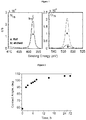
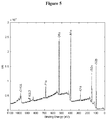
- XPS measurements show the presence of Si, C, N and O in solvent-cleaned but un-etched silicon nitrides (see Examples); the presence of C in the unmodified sample is attributed to environmental contamination.
- the static water contact angle ⁇ was found to increase from ⁇ 20° to ⁇ 60° after 2 min etching with 2.5% HF solution, indicating the formation of the less polar Si-H bonds.
- the presence of N (partially as NH and NH 2 sites at the surface) makes ⁇ for the H-terminated silicon nitride surface lower than that obtained for H-terminated Si surfaces. 8
- the residual amount of oxygen that is observed after etching is at least partially due to deeply embedded atoms that cannot be removed upon etching, but which are therefore not expected to be reactive at the surface (a small fraction of surface reoxidation can probably also not be fully excluded at this stage).
- IRRAS infrared reflection absorption spectroscopy
- Organic monolayers on this H-terminated Si 3 N x surface were prepared by placing the wafer in refluxing solutions of 1-alkene or 1-alkyne (0.4 M) in mesitylene, 8 or in neat 1-alkene at 165 °C. 15
- 1-Hexadecene (Aldrich, purity >99%) was purified by double vacuum distillation to achieve a purity of almost 100% (GC). All the solvents (Acros) were first distilled at atmospheric pressure before use.
- Silicon nitride coated silicon [10 x 10 x 0.5 mm 3 single side-polished] wafers were supplied by Aquamarijn, The Netherlands, or by Lionix, The Netherlands. Nitride thicknesses between 100 and 200 nm were used in this work.
- Silicon nitride samples were first cleaned by rinsing several times with chemically pure acetone and wiped with a tissue. Subsequently, the wafer is sonicated for 5 minutes in acetone. Surfaces were further cleaned in air plasma cleaner/sterilizer (Harrick PDC-32G) for 3 min followed by 2 x 3 minutes in oxygen plasma. Hydrogen termination is carried out by dipping the samples in 2.5% HF for 2 minutes, while the flask with the HF solution and sample is placed within an ultrasonic bath.
- Neat 1-Hexadecene or its solution in mesitylene (10 ml, 0.4 M) is placed in a small, three-necked flask fitted with a nitrogen inlet, a condenser with a CaCl 2 tube, and a stopper.
- the solution is then deoxygenated for at least 45 min, by refluxing it at 200°C, while slowly bubbling dry nitrogen through the solution.
- a freshly hydrogen-terminated silicon nitride wafer is dropped into the refluxing solution by removing and replacing the stopper quickly.
- the reaction time varied from 2-24 h.
- the solution was allowed to cool and the sample was removed and rinsed extensively with distilled PE 40/60, EtOH, and CH 2 Cl 2 .
- IRRAS spectra were measured on a Bruker Tensor 27 FT-IR spectrometer, using a commercial variable-angle reflection unit (Auto Seagull, Harrick Scientific).
- a Harrick grid polarizer was installed in front of the detector, and was used for measuring spectra with either p-polarized (parallel) or s-polarized (perpendicular) radiation with respect to the plane of incidence at the sample surface.
- Single channel transmittance spectra were collected using a spectral resolution of 1 or 4 cm -1 , using 4096 scans in each measurement.
- spectra shown in this paper are the result of spectral subtraction of a solvent-cleaned silicon nitride sample that was used as a background and the spectrum of the modified samples, without any further data manipulation (no line smoothening or so).
- Samples were first cleaned by rinsing and sonication in acetone (p.a.). The wafers were further cleaned for 2 x 3 min in an oxygen plasma using a plasma cleaner/sterilizer (Harrick PDC-32G), and used directly afterwards for the attachment of the monolayer. The wafer is placed in hot, nearly refluxing mesitylene ( ⁇ 9 ml), and should be fully covered by the solution.
- the solution is brought to reflux within ⁇ 30 s.
- the modified wafers are cleaned with petroleum ether (40-60), ethanol, and dichloromethane (10x times each). All solvents were distilled before use; all 1-alkenes and 1-alkynes were doubly distilled under vacuum before use.
- the resulting wafers are stable under ambient conditions, i.e. no change in static water contact angle was measured for a 1-hexadecene-derived monolayer over storage for 1 month.
- Silicon nitride samples with 1-hexadecyl monolayers prepared according to Example 1 were examined by X-ray reflectivity measurements. Fit of the X-ray reflectivity data of the modified surface indicates a monolayer thickness of 18 Angstrom.
- Example 4 Stability of organic monolayers in acid and alkaline solutions.
- the static water contact angle is not affected (for more than 1° , the experimental error) up to 4 hours in both cold and hot acid solutions. Slight decreases in the measured contact angles are observed thereafter: The decrease in the water contact angle after 20 hours was only 5° (103°, rather than 108°)
- Silicon nitride samples with 1-hexadecyl monolayers prepared according to Example 1 were immersed in 0.1 M aqueous sodium hydroxide solutions for different time intervals.
- the monolayer stability was monitored by measuring the static water contact angle and recording IRRAS spectra of the monolayer. No significant change in the water contact angle or the quality of the IRRAS spectra was observed up to three hours of treatment. Thereafter, contact angle decreased to 90° after treating the monolayer for four hours.
- Silicon carbide powder (1g; 400 mesh from Aldrich) was first cleaned by rinsing several times with chemically pure acetone. Subsequently, the powder is sonicated for 5 minutes in acetone. The dry powder is then cleaned in an oxygen plasma for 10 minutes to achieve complete removal of any organic impurities. Hydrogen termination is obtained by dipping the samples in 2.5% HF for 5 minutes. The powder is then filtered through a Millipore filter, and dried by flushing with N 2 . Subsequently, the powder is transferred to a deoxygenated refluxing (200°C) solution of 1-hexadecene in mesitylene in the previously described flask, while slowly bubbling dry nitrogen through the solution. The reaction time was set to 15 h. Afterwards, the solution was allowed to cool and the sample was removed by filtration on a filter paper and rinsed extensively with distilled PE 40/60, EtOH, and CH 2 Cl 2 .
- the antisymmetric and symmetric CH 2 -stretching bands of the subtracted spectra are shown in Figure 6 . They indicate the presence of a substantial amount of CH 2 moieties, corresponding to covalent monolayer formation.
- Monolayers of trifluoroethanol ester were prepared using 0.4 M ester solutions applying the same procedure described previously. Silicon nitride modified with trifluoroethanol ester is hydrolyzed by treatment with either 0.25 M potassium tert-butoxide in DMSO for 3 minutes at room temperature or aqueous 2.5 M HCl at 70°C for 2 h.
Landscapes
- Chemical & Material Sciences (AREA)
- Engineering & Computer Science (AREA)
- Nanotechnology (AREA)
- Organic Chemistry (AREA)
- Physics & Mathematics (AREA)
- Condensed Matter Physics & Semiconductors (AREA)
- General Physics & Mathematics (AREA)
- Crystallography & Structural Chemistry (AREA)
- Composite Materials (AREA)
- Materials Engineering (AREA)
- Manufacturing & Machinery (AREA)
- Inorganic Chemistry (AREA)
- Health & Medical Sciences (AREA)
- Chemical Kinetics & Catalysis (AREA)
- Medicinal Chemistry (AREA)
- Polymers & Plastics (AREA)
- Formation Of Insulating Films (AREA)
- Medicines That Contain Protein Lipid Enzymes And Other Medicines (AREA)
Claims (6)
- Verfahren zur Herstellung einer funktionalisierten Si/Ge-Oberfläche, wobei die Si/Ge-Oberfläche aus der aus Siliciumnitrid-, Siliciumcarbid-, Germaniumnitrid-, Germaniumcarbid- und Silicium-Germanium-Oberflächen bestehenden Gruppe ausgewählt ist, wobei die Silicium- und Germaniumcarbide die Formel MxCy haben, wobei M Si oder Ge ist und x im Bereich von 0,3y bis 3y liegt, wobei die Si/Ge-Oberfläche den folgenden Schritten unterworfen wird:(a) Ätzen der Si/Ge-Oberfläche mit einem Ätzmittel, um eine geätzte Si/Ge-Oberfläche zu bilden; und(b) Umsetzen der geätzten Si/Ge-Oberfläche mit einem ω-funktionalisierten Alken, das durch die allgemeine Formel (4) wiedergegeben ist, oder mit einem ω-funktionalisierten Alkin, das durch die allgemeine Formel (5) wiedergegeben ist, oder mit einer Mischung davon:

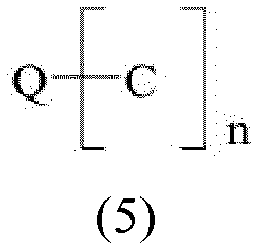 wobei P eine lineare, verzweigte oder cyclische Alkenylgruppe mit 2 bis 24 Kohlenstoffatomen ist, wobei es sich bei der Alkenylgruppe um eine 1-Alkenylgruppe oder eine innere Alkenylgruppe handelt;Q eine lineare, verzweigte oder cyclische Alkinylgruppe mit 2 bis 24 Kohlenstoffatomen ist, wobei es sich bei der Alkinylgruppe um eine 1-Alkinylgruppe oder eine innere Alkinylgruppe handelt;C eine funktionelle Gruppe ist, die ausgewählt ist aus:-CH=CR2R3,-C=CR2;-NR2-C(O)-N(R2)2;-O-[(C(R4)2)pO]q-R1;-C(X)XR1;-C(X)NR2R3;-S(O)OR1;-S(O)2OR1;-S(O)NR2R3;-S(O)2NR2R3;-P(O)(R1)(OR1);-P(O)(OR1)2;-CN;-Cl;-Br;-I;-NCX;-XCN; oderC eine geschützte funktionelle Gruppe ist, die ausgewählt ist aus:einer Gruppe der allgemeinen Formel (6) und Tautomeren davon:-XC(X)R1;-NR2C(X)R1;-XR5;-XSi(R1)3;-OS(O)(OR1);-OS(O)2OR1;-P(O)(R1)(OR1);-OP(O)(OR1)2; oder
 wobei X unabhängig O oder S ist; R1 eine lineare, verzweigte oder cyclische Alkylgruppe mit 1 bis 12 Kohlenstoffatomen; eine Phenylgruppe; eine Alkarylgruppe mit 7 bis 12 Kohlenstoffatomen; oder eine Arylalkylgruppe mit 7 bis 12 Kohlenstoffatomen ist; wobei die Alkyl-, Phenyl-, Alkaryl- und Arylalkylgruppen mit einem oder mehreren von F oder Cl substituiert sein können;R2 und R3 unabhängig Wasserstoff oder eine Gruppe wie für R1 definiert sind; R4 unabhängig ausgewählt ist aus Wasserstoff oder C1-C4 Alkyl; R5 eine monofunktionelle Hydroxy- oder Thiohydroxy-Schutzgruppe ist; R6 eine geschützte -OH oder -NH2 Gruppe bedeutet, wobei die geschützte -OH Gruppe aus den für -XR5 definierten Gruppen, wobei X O ist, ausgewählt ist, und wobei die geschützte -NH2 Gruppe aus den für -NR2C(X)R1 definierten Gruppen ausgewählt ist; und wobei p eine ganze Zahl im Bereich von 2 - 4 ist; q eine ganze Zahl im Bereich von 1 bis 500 ist; und n eine ganze Zahl im Bereich von 1 bis 3 ist.
 - Verfahren nach Anspruch 1, wobei C sich in der ω-Stellung der Alkenyl- und Alkinylgruppen befindet.
- Verfahren nach Anspruch 1 oder Anspruch 2, wobei C eine funktionelle Gruppe ist, die ausgewählt ist aus:-CH=CR2R3;-C=CR2;-NR2-C(O)-N(R2)2,-O-[(C(R4)2)pO]q-R1;-C(O)OR1;-C(O)NR2R3;-S(O)OR1;-S(O)2OR1;-S(O)NR2R3;-S(O)2NR2R3;-P(O)(R1)(OR1);-P(O)(OR1)2;-CN;-Cl;-NCO; und-OCN; oderC eine geschützte funktionelle Gruppe ist, die ausgewählt ist aus:-OC(O)R1;-NR2C(O)R1;-OR5;-OSi(R1)3;-OS(O)(OR1);-OS(O)2OR1;-P(O)(R1)(OR1);-OP(O)(OR1)2; undeiner Gruppe der allgemeinen Formel (6) und Tautomeren davon, wobei R6 eine geschützte -OH oder -NH2 Gruppe bedeutet, wobei die geschützte -OH Gruppe aus den für -XR5 definierten Gruppen, wobei X O ist, ausgewählt ist, und wobei die geschützte -NH2 Gruppe aus den für -NR2C(X)R1 definierten Gruppen ausgewählt ist; und wobei n 1 ist.
- Verfahren nach einem der Ansprüche 1 - 3, wobei C eine funktionelle Gruppe ist, die ausgewählt ist aus:-CH=CR2R3;-C=CR2;-O-[(C(R4)2)pO]q-R1, wobei R4 Wasserstoff oder Methyl ist, p 2 ist und q eine ganze Zahl im Bereich von 1 - 10 ist;-C(O)OR1;-C(O)NR2R3;-S(O)OR1;-S(O)2OR1;-S(O)NR2R3;-S(O)2NR2R3; oderC eine geschützte funktionelle Gruppe ist, die ausgewählt ist aus:-OC(O)R1;-NR2C(O)R1,-OR5;-OSi(R1)3; undeiner Gruppe der allgemeinen Formel (6) und Tautomeren davon, wobei R6 eine geschützte -OH oder -NH2 Gruppe bedeutet, wobei die geschützte -OH Gruppe aus den für -XR5 definierten Gruppen, wobei X O ist, ausgewählt ist, und wobei die geschützte -NH2 Gruppe aus den für -NR2C(X)R1 definierten Gruppen ausgewählt ist; und wobei n 1 ist.
- Verfahren nach einem der Ansprüche 1 - 4, wobei P und Q eine lineare Gruppe mit 6 bis 24 Kohlenstoffatomen gemäß der Formel sind:
-CH=CH-(CH2)p-(C≡C)q-CH2-
und
-C≡C-(CH2)p-(C≡C)q-CH2-
wobei p im Bereich von 1 bis 7 liegt und q im Bereich von 1 bis 7 liegt, die Gruppen -(CH2)- und -(C≡C)- gegebenenfalls in einer zufälligen Sequenz auftreten und wobei das rechte Ende von P und Q an C gebunden ist. - Funktionalisierte Si/Ge-Oberfläche, die durch das Verfahren nach einem der Ansprüche 1 - 5 erhältlich ist.
Priority Applications (1)
| Application Number | Priority Date | Filing Date | Title |
|---|---|---|---|
| EP05755288.7A EP1765520B1 (de) | 2004-06-21 | 2005-06-21 | Massgeschneiderte funktionalisierte silizium- und/oder germaniumflächen |
Applications Claiming Priority (3)
| Application Number | Priority Date | Filing Date | Title |
|---|---|---|---|
| EP04076809 | 2004-06-21 | ||
| EP05755288.7A EP1765520B1 (de) | 2004-06-21 | 2005-06-21 | Massgeschneiderte funktionalisierte silizium- und/oder germaniumflächen |
| PCT/NL2005/000449 WO2005123273A1 (en) | 2004-06-21 | 2005-06-21 | Tailor-made functionalized silicon and/or germanium surfaces |
Publications (2)
| Publication Number | Publication Date |
|---|---|
| EP1765520A1 EP1765520A1 (de) | 2007-03-28 |
| EP1765520B1 true EP1765520B1 (de) | 2016-05-04 |
Family
ID=34928304
Family Applications (1)
| Application Number | Title | Priority Date | Filing Date |
|---|---|---|---|
| EP05755288.7A Expired - Lifetime EP1765520B1 (de) | 2004-06-21 | 2005-06-21 | Massgeschneiderte funktionalisierte silizium- und/oder germaniumflächen |
Country Status (8)
| Country | Link |
|---|---|
| US (1) | US8221879B2 (de) |
| EP (1) | EP1765520B1 (de) |
| JP (1) | JP2008503893A (de) |
| KR (1) | KR20070046072A (de) |
| CN (1) | CN101010148A (de) |
| AU (1) | AU2005254426A1 (de) |
| CA (1) | CA2571483A1 (de) |
| WO (1) | WO2005123273A1 (de) |
Families Citing this family (9)
| Publication number | Priority date | Publication date | Assignee | Title |
|---|---|---|---|---|
| JP4614330B2 (ja) * | 2005-01-31 | 2011-01-19 | 独立行政法人科学技術振興機構 | 有機基で修飾されたシリコン基板の製造方法 |
| WO2009017411A1 (en) * | 2007-08-01 | 2009-02-05 | Wageningen University | Protein repelling silicon and germanium surfaces |
| CN102208491B (zh) * | 2011-05-20 | 2015-03-18 | 中国科学院电工研究所 | 一种氮化硅表面氢氟酸溶液处理方法 |
| WO2016163368A1 (ja) * | 2015-04-10 | 2016-10-13 | ダイキン工業株式会社 | 防汚処理組成物、処理装置、処理方法および処理物品 |
| EP3497068B1 (de) | 2016-08-08 | 2022-01-19 | Surfix B.V. | Verfahren zur modifizierung einer festen oberfläche |
| EP3524582A1 (de) | 2018-02-08 | 2019-08-14 | Surfix B.V. | Verfahren zur modifizierung einer festen oberfläche |
| EP3524635A1 (de) | 2018-02-08 | 2019-08-14 | Surfix B.V. | Verfahren zur modifizierung einer festen oberfläche |
| EP3844799A4 (de) * | 2018-08-27 | 2022-05-25 | Versum Materials US, LLC | Selektive abscheidung auf siliciumhaltigen oberflächen |
| WO2025017133A1 (en) | 2023-07-18 | 2025-01-23 | Surfix B.V. | Method for selective surface modification of an object |
Family Cites Families (7)
| Publication number | Priority date | Publication date | Assignee | Title |
|---|---|---|---|---|
| WO1999037409A1 (en) * | 1998-01-22 | 1999-07-29 | Purdue Research Foundation | Functionalized porous silicon surfaces |
| DE19802977A1 (de) | 1998-01-27 | 1999-07-29 | Forschungszentrum Juelich Gmbh | Verfahren zur Herstellung einer einkristallinen Schicht auf einem nicht gitterangepaßten Substrat, sowie eine oder mehrere solcher Schichten enthaltendes Bauelement |
| US6485986B1 (en) * | 1999-11-19 | 2002-11-26 | Purdue Research Foundation | Functionalized silicon surfaces |
| US6569979B1 (en) | 2000-09-08 | 2003-05-27 | Wisconsin Alumni Research Foundation | Modified carbon, silicon, & germanium surfaces |
| US6689858B2 (en) * | 2000-09-08 | 2004-02-10 | Wisconsin Alumni Research Foundation | Halogen-modified silicon, surfaces |
| US6746902B2 (en) | 2002-01-31 | 2004-06-08 | Sharp Laboratories Of America, Inc. | Method to form relaxed sige layer with high ge content |
| EP1537202A4 (de) * | 2002-08-16 | 2007-09-19 | Zyomyx Inc | VERFAHREN UND REAGENZIEN ZUR OBERFLûCHENFUNKTIONALISIERUNG |
-
2005
- 2005-06-21 CA CA 2571483 patent/CA2571483A1/en not_active Abandoned
- 2005-06-21 CN CNA2005800280637A patent/CN101010148A/zh active Pending
- 2005-06-21 AU AU2005254426A patent/AU2005254426A1/en not_active Abandoned
- 2005-06-21 EP EP05755288.7A patent/EP1765520B1/de not_active Expired - Lifetime
- 2005-06-21 KR KR1020077001320A patent/KR20070046072A/ko not_active Withdrawn
- 2005-06-21 US US11/571,040 patent/US8221879B2/en not_active Expired - Fee Related
- 2005-06-21 JP JP2007517983A patent/JP2008503893A/ja active Pending
- 2005-06-21 WO PCT/NL2005/000449 patent/WO2005123273A1/en not_active Ceased
Non-Patent Citations (1)
| Title |
|---|
| "Organic modification of hydrogen terminated silicon surfaces1", JOURNAL OF THE CHEMICAL SOCIETY, PERKIN TRANSACTIONS 2, no. 1, 17 December 2002 (2002-12-17), pages 23 - 34, XP055193135, ISSN: 1472-779X, DOI: 10.1039/b100704l * |
Also Published As
| Publication number | Publication date |
|---|---|
| EP1765520A1 (de) | 2007-03-28 |
| KR20070046072A (ko) | 2007-05-02 |
| US8221879B2 (en) | 2012-07-17 |
| WO2005123273A1 (en) | 2005-12-29 |
| CN101010148A (zh) | 2007-08-01 |
| AU2005254426A1 (en) | 2005-12-29 |
| CA2571483A1 (en) | 2005-12-29 |
| JP2008503893A (ja) | 2008-02-07 |
| US20090098392A1 (en) | 2009-04-16 |
Similar Documents
| Publication | Publication Date | Title |
|---|---|---|
| Bierbaum et al. | A near edge X-ray absorption fine structure spectroscopy and X-ray photoelectron spectroscopy study of the film properties of self-assembled monolayers of organosilanes on oxidized Si (100) | |
| Dong et al. | Self-assembly of octadecyltrichlorosilane monolayers on silicon-based substrates by chemical vapor deposition | |
| Fiorilli et al. | Vapor-phase self-assembled monolayers of aminosilane on plasma-activated silicon substrates | |
| Flinn et al. | Characterization of silica surfaces hydrophobized by octadecyltrichlorosilane | |
| Wang et al. | In vitro stability study of organosilane self-assemble monolayers and multilayers | |
| Hozumi et al. | Hydrophobic/superhydrophobic oxidized metal surfaces showing negligible contact angle hysteresis | |
| Pujari et al. | Ultralow adhesion and friction of fluoro-hydro alkyne-derived self-assembled monolayers on H-terminated Si (111) | |
| Mirji | Octadecyltrichlorosilane adsorption kinetics on Si (100)/SiO2 surface: contact angle, AFM, FTIR and XPS analysis | |
| Wang et al. | Preparation and characterization of poly (N-isopropylacrylamide) films on a modified glass surface via surface initiated redox polymerization | |
| Wu et al. | Self-assembled monolayers of perfluoroalkylsilane on plasma-hydroxylated silicon substrates | |
| Kaynak et al. | Anti-adhesive layers on stainless steel using thermally stable dipodal perfluoroalkyl silanes | |
| US8221879B2 (en) | Tailor-made functionalized silicon and/or germanium surfaces | |
| Manifar et al. | Formation of uniform self-assembly monolayers by choosing the right solvent: OTS on silicon wafer, a case study | |
| Branch et al. | Investigating phosphonate monolayer stability on ALD oxide surfaces | |
| Yu et al. | Preparation and characterisation of an aligned carbon nanotube array on the silicon (100) surface | |
| Jung et al. | Characterization of octadecyltrichlorosilane self-assembled monolayers on silicon (100) surface | |
| Meth et al. | Siloxane-anchored thin films on silicon dioxide-modified stainless steel | |
| KR20160122840A (ko) | 유기 박막 형성용 용액 및 그것을 사용한 유기 박막 형성 방법 | |
| Laurent et al. | ‘Pancake’vs. brush-like regime of quaternizable polymer grafts: an efficient tool for nano-templating polyelectrolyte self-assembly | |
| Vaish et al. | Dithiol-based modification of poly (dopamine): enabling protein resistance via short-chain ethylene oxide oligomers | |
| Vitale et al. | Ultrathin perfluoropolyether coatings for silicon wafers: a XPS study | |
| US8697234B2 (en) | Self-assembled monolayers and method of production | |
| Meillan et al. | Self-assembled monolayer for AFM measurements of Tobacco Mosaic Virus (TMV) at the atomic level | |
| Hsu et al. | Self-assembled monolayers of 2-(thienyl) hexylphosphonic acid on native oxide surface of silicon fabricated by air–liquid interface-assisted method | |
| Yasseri et al. | Formation and characterization of long-chained alkylsiloxane self-assembled monolayers on atomic-layer-deposited aluminum oxide surfaces |
Legal Events
| Date | Code | Title | Description |
|---|---|---|---|
| PUAI | Public reference made under article 153(3) epc to a published international application that has entered the european phase |
Free format text: ORIGINAL CODE: 0009012 |
|
| 17P | Request for examination filed |
Effective date: 20070122 |
|
| AK | Designated contracting states |
Kind code of ref document: A1 Designated state(s): AT BE BG CH CY CZ DE DK EE ES FI FR GB GR HU IE IS IT LI LT LU MC NL PL PT RO SE SI SK TR |
|
| 17Q | First examination report despatched |
Effective date: 20070424 |
|
| DAX | Request for extension of the european patent (deleted) | ||
| RAP1 | Party data changed (applicant data changed or rights of an application transferred) |
Owner name: WAGENINGEN UNIVERSITY |
|
| RAP1 | Party data changed (applicant data changed or rights of an application transferred) |
Owner name: SURFIX BV |
|
| REG | Reference to a national code |
Ref country code: DE Ref legal event code: R079 Ref document number: 602005049241 Country of ref document: DE Free format text: PREVIOUS MAIN CLASS: B05D0001180000 Ipc: B82Y0030000000 |
|
| GRAP | Despatch of communication of intention to grant a patent |
Free format text: ORIGINAL CODE: EPIDOSNIGR1 |
|
| RIC1 | Information provided on ipc code assigned before grant |
Ipc: B82Y 40/00 20110101ALI20151015BHEP Ipc: B82Y 30/00 20110101AFI20151015BHEP Ipc: C08G 77/00 20060101ALI20151015BHEP Ipc: B05D 1/18 20060101ALI20151015BHEP |
|
| INTG | Intention to grant announced |
Effective date: 20151119 |
|
| GRAS | Grant fee paid |
Free format text: ORIGINAL CODE: EPIDOSNIGR3 |
|
| GRAA | (expected) grant |
Free format text: ORIGINAL CODE: 0009210 |
|
| AK | Designated contracting states |
Kind code of ref document: B1 Designated state(s): AT BE BG CH CY CZ DE DK EE ES FI FR GB GR HU IE IS IT LI LT LU MC NL PL PT RO SE SI SK TR |
|
| REG | Reference to a national code |
Ref country code: GB Ref legal event code: FG4D |
|
| REG | Reference to a national code |
Ref country code: CH Ref legal event code: EP |
|
| REG | Reference to a national code |
Ref country code: AT Ref legal event code: REF Ref document number: 796742 Country of ref document: AT Kind code of ref document: T Effective date: 20160515 |
|
| REG | Reference to a national code |
Ref country code: IE Ref legal event code: FG4D |
|
| REG | Reference to a national code |
Ref country code: DE Ref legal event code: R096 Ref document number: 602005049241 Country of ref document: DE |
|
| REG | Reference to a national code |
Ref country code: NL Ref legal event code: FP |
|
| REG | Reference to a national code |
Ref country code: LT Ref legal event code: MG4D |
|
| PG25 | Lapsed in a contracting state [announced via postgrant information from national office to epo] |
Ref country code: LT Free format text: LAPSE BECAUSE OF FAILURE TO SUBMIT A TRANSLATION OF THE DESCRIPTION OR TO PAY THE FEE WITHIN THE PRESCRIBED TIME-LIMIT Effective date: 20160504 Ref country code: FI Free format text: LAPSE BECAUSE OF FAILURE TO SUBMIT A TRANSLATION OF THE DESCRIPTION OR TO PAY THE FEE WITHIN THE PRESCRIBED TIME-LIMIT Effective date: 20160504 |
|
| REG | Reference to a national code |
Ref country code: AT Ref legal event code: MK05 Ref document number: 796742 Country of ref document: AT Kind code of ref document: T Effective date: 20160504 |
|
| PG25 | Lapsed in a contracting state [announced via postgrant information from national office to epo] |
Ref country code: PT Free format text: LAPSE BECAUSE OF FAILURE TO SUBMIT A TRANSLATION OF THE DESCRIPTION OR TO PAY THE FEE WITHIN THE PRESCRIBED TIME-LIMIT Effective date: 20160905 Ref country code: ES Free format text: LAPSE BECAUSE OF FAILURE TO SUBMIT A TRANSLATION OF THE DESCRIPTION OR TO PAY THE FEE WITHIN THE PRESCRIBED TIME-LIMIT Effective date: 20160504 Ref country code: SE Free format text: LAPSE BECAUSE OF FAILURE TO SUBMIT A TRANSLATION OF THE DESCRIPTION OR TO PAY THE FEE WITHIN THE PRESCRIBED TIME-LIMIT Effective date: 20160504 Ref country code: GR Free format text: LAPSE BECAUSE OF FAILURE TO SUBMIT A TRANSLATION OF THE DESCRIPTION OR TO PAY THE FEE WITHIN THE PRESCRIBED TIME-LIMIT Effective date: 20160805 |
|
| PG25 | Lapsed in a contracting state [announced via postgrant information from national office to epo] |
Ref country code: BE Free format text: LAPSE BECAUSE OF NON-PAYMENT OF DUE FEES Effective date: 20160630 Ref country code: IT Free format text: LAPSE BECAUSE OF FAILURE TO SUBMIT A TRANSLATION OF THE DESCRIPTION OR TO PAY THE FEE WITHIN THE PRESCRIBED TIME-LIMIT Effective date: 20160504 |
|
| PG25 | Lapsed in a contracting state [announced via postgrant information from national office to epo] |
Ref country code: EE Free format text: LAPSE BECAUSE OF FAILURE TO SUBMIT A TRANSLATION OF THE DESCRIPTION OR TO PAY THE FEE WITHIN THE PRESCRIBED TIME-LIMIT Effective date: 20160504 Ref country code: CZ Free format text: LAPSE BECAUSE OF FAILURE TO SUBMIT A TRANSLATION OF THE DESCRIPTION OR TO PAY THE FEE WITHIN THE PRESCRIBED TIME-LIMIT Effective date: 20160504 Ref country code: SK Free format text: LAPSE BECAUSE OF FAILURE TO SUBMIT A TRANSLATION OF THE DESCRIPTION OR TO PAY THE FEE WITHIN THE PRESCRIBED TIME-LIMIT Effective date: 20160504 Ref country code: RO Free format text: LAPSE BECAUSE OF FAILURE TO SUBMIT A TRANSLATION OF THE DESCRIPTION OR TO PAY THE FEE WITHIN THE PRESCRIBED TIME-LIMIT Effective date: 20160504 Ref country code: DK Free format text: LAPSE BECAUSE OF FAILURE TO SUBMIT A TRANSLATION OF THE DESCRIPTION OR TO PAY THE FEE WITHIN THE PRESCRIBED TIME-LIMIT Effective date: 20160504 |
|
| REG | Reference to a national code |
Ref country code: CH Ref legal event code: PL |
|
| REG | Reference to a national code |
Ref country code: DE Ref legal event code: R097 Ref document number: 602005049241 Country of ref document: DE |
|
| PG25 | Lapsed in a contracting state [announced via postgrant information from national office to epo] |
Ref country code: PL Free format text: LAPSE BECAUSE OF FAILURE TO SUBMIT A TRANSLATION OF THE DESCRIPTION OR TO PAY THE FEE WITHIN THE PRESCRIBED TIME-LIMIT Effective date: 20160504 Ref country code: BE Free format text: LAPSE BECAUSE OF FAILURE TO SUBMIT A TRANSLATION OF THE DESCRIPTION OR TO PAY THE FEE WITHIN THE PRESCRIBED TIME-LIMIT Effective date: 20160504 Ref country code: AT Free format text: LAPSE BECAUSE OF FAILURE TO SUBMIT A TRANSLATION OF THE DESCRIPTION OR TO PAY THE FEE WITHIN THE PRESCRIBED TIME-LIMIT Effective date: 20160504 |
|
| PLBE | No opposition filed within time limit |
Free format text: ORIGINAL CODE: 0009261 |
|
| STAA | Information on the status of an ep patent application or granted ep patent |
Free format text: STATUS: NO OPPOSITION FILED WITHIN TIME LIMIT |
|
| REG | Reference to a national code |
Ref country code: IE Ref legal event code: MM4A |
|
| PG25 | Lapsed in a contracting state [announced via postgrant information from national office to epo] |
Ref country code: MC Free format text: LAPSE BECAUSE OF FAILURE TO SUBMIT A TRANSLATION OF THE DESCRIPTION OR TO PAY THE FEE WITHIN THE PRESCRIBED TIME-LIMIT Effective date: 20160504 |
|
| REG | Reference to a national code |
Ref country code: FR Ref legal event code: ST Effective date: 20170228 |
|
| 26N | No opposition filed |
Effective date: 20170207 |
|
| GBPC | Gb: european patent ceased through non-payment of renewal fee |
Effective date: 20160804 |
|
| PG25 | Lapsed in a contracting state [announced via postgrant information from national office to epo] |
Ref country code: FR Free format text: LAPSE BECAUSE OF NON-PAYMENT OF DUE FEES Effective date: 20160704 Ref country code: LI Free format text: LAPSE BECAUSE OF NON-PAYMENT OF DUE FEES Effective date: 20160630 Ref country code: CH Free format text: LAPSE BECAUSE OF NON-PAYMENT OF DUE FEES Effective date: 20160630 |
|
| PG25 | Lapsed in a contracting state [announced via postgrant information from national office to epo] |
Ref country code: IE Free format text: LAPSE BECAUSE OF NON-PAYMENT OF DUE FEES Effective date: 20160621 Ref country code: SI Free format text: LAPSE BECAUSE OF FAILURE TO SUBMIT A TRANSLATION OF THE DESCRIPTION OR TO PAY THE FEE WITHIN THE PRESCRIBED TIME-LIMIT Effective date: 20160504 |
|
| PG25 | Lapsed in a contracting state [announced via postgrant information from national office to epo] |
Ref country code: GB Free format text: LAPSE BECAUSE OF NON-PAYMENT OF DUE FEES Effective date: 20160804 |
|
| PG25 | Lapsed in a contracting state [announced via postgrant information from national office to epo] |
Ref country code: HU Free format text: LAPSE BECAUSE OF FAILURE TO SUBMIT A TRANSLATION OF THE DESCRIPTION OR TO PAY THE FEE WITHIN THE PRESCRIBED TIME-LIMIT; INVALID AB INITIO Effective date: 20050621 Ref country code: CY Free format text: LAPSE BECAUSE OF FAILURE TO SUBMIT A TRANSLATION OF THE DESCRIPTION OR TO PAY THE FEE WITHIN THE PRESCRIBED TIME-LIMIT Effective date: 20160504 |
|
| PG25 | Lapsed in a contracting state [announced via postgrant information from national office to epo] |
Ref country code: IS Free format text: LAPSE BECAUSE OF FAILURE TO SUBMIT A TRANSLATION OF THE DESCRIPTION OR TO PAY THE FEE WITHIN THE PRESCRIBED TIME-LIMIT Effective date: 20160504 Ref country code: LU Free format text: LAPSE BECAUSE OF NON-PAYMENT OF DUE FEES Effective date: 20160621 Ref country code: TR Free format text: LAPSE BECAUSE OF FAILURE TO SUBMIT A TRANSLATION OF THE DESCRIPTION OR TO PAY THE FEE WITHIN THE PRESCRIBED TIME-LIMIT Effective date: 20160504 |
|
| PG25 | Lapsed in a contracting state [announced via postgrant information from national office to epo] |
Ref country code: BG Free format text: LAPSE BECAUSE OF FAILURE TO SUBMIT A TRANSLATION OF THE DESCRIPTION OR TO PAY THE FEE WITHIN THE PRESCRIBED TIME-LIMIT Effective date: 20160504 |
|
| REG | Reference to a national code |
Ref country code: DE Ref legal event code: R082 Ref document number: 602005049241 Country of ref document: DE Representative=s name: KILBURN & STRODE LLP, NL |
|
| PGFP | Annual fee paid to national office [announced via postgrant information from national office to epo] |
Ref country code: NL Payment date: 20230627 Year of fee payment: 19 Ref country code: DE Payment date: 20230627 Year of fee payment: 19 |
|
| REG | Reference to a national code |
Ref country code: DE Ref legal event code: R119 Ref document number: 602005049241 Country of ref document: DE |
|
| REG | Reference to a national code |
Ref country code: NL Ref legal event code: MM Effective date: 20240701 |
|
| PG25 | Lapsed in a contracting state [announced via postgrant information from national office to epo] |
Ref country code: NL Free format text: LAPSE BECAUSE OF NON-PAYMENT OF DUE FEES Effective date: 20240701 |
|
| PG25 | Lapsed in a contracting state [announced via postgrant information from national office to epo] |
Ref country code: NL Free format text: LAPSE BECAUSE OF NON-PAYMENT OF DUE FEES Effective date: 20240701 |
|
| PG25 | Lapsed in a contracting state [announced via postgrant information from national office to epo] |
Ref country code: DE Free format text: LAPSE BECAUSE OF NON-PAYMENT OF DUE FEES Effective date: 20250101 |