EP1767571B1 - Bande de roulement comportant du polybutadiène à fonction amine couplè par l'étain - Google Patents
Bande de roulement comportant du polybutadiène à fonction amine couplè par l'étain Download PDFInfo
- Publication number
- EP1767571B1 EP1767571B1 EP06120734A EP06120734A EP1767571B1 EP 1767571 B1 EP1767571 B1 EP 1767571B1 EP 06120734 A EP06120734 A EP 06120734A EP 06120734 A EP06120734 A EP 06120734A EP 1767571 B1 EP1767571 B1 EP 1767571B1
- Authority
- EP
- European Patent Office
- Prior art keywords
- phr
- elastomer
- rubber
- carbon black
- tire
- Prior art date
- Legal status (The legal status is an assumption and is not a legal conclusion. Google has not performed a legal analysis and makes no representation as to the accuracy of the status listed.)
- Not-in-force
Links
- 239000006229 carbon black Substances 0.000 title claims description 46
- 229920002857 polybutadiene Polymers 0.000 title claims description 46
- ATJFFYVFTNAWJD-UHFFFAOYSA-N Tin Chemical compound [Sn] ATJFFYVFTNAWJD-UHFFFAOYSA-N 0.000 title claims description 33
- 150000001412 amines Chemical class 0.000 title claims description 29
- 239000005062 Polybutadiene Substances 0.000 title claims description 15
- 229920001971 elastomer Polymers 0.000 claims description 122
- 239000005060 rubber Substances 0.000 claims description 95
- VYPSYNLAJGMNEJ-UHFFFAOYSA-N Silicium dioxide Chemical compound O=[Si]=O VYPSYNLAJGMNEJ-UHFFFAOYSA-N 0.000 claims description 74
- 239000000203 mixture Substances 0.000 claims description 51
- 239000000377 silicon dioxide Substances 0.000 claims description 34
- 239000000806 elastomer Substances 0.000 claims description 28
- -1 alkyl radicals Chemical class 0.000 claims description 24
- RRHGJUQNOFWUDK-UHFFFAOYSA-N Isoprene Chemical compound CC(=C)C=C RRHGJUQNOFWUDK-UHFFFAOYSA-N 0.000 claims description 22
- 239000007822 coupling agent Substances 0.000 claims description 21
- 239000006235 reinforcing carbon black Substances 0.000 claims description 18
- KAKZBPTYRLMSJV-UHFFFAOYSA-N Butadiene Chemical compound C=CC=C KAKZBPTYRLMSJV-UHFFFAOYSA-N 0.000 claims description 16
- 239000002245 particle Substances 0.000 claims description 14
- 229920001577 copolymer Polymers 0.000 claims description 12
- 239000012763 reinforcing filler Substances 0.000 claims description 12
- 125000004432 carbon atom Chemical group C* 0.000 claims description 11
- 230000002787 reinforcement Effects 0.000 claims description 9
- 150000001993 dienes Chemical class 0.000 claims description 8
- 238000009826 distribution Methods 0.000 claims description 8
- 239000003795 chemical substances by application Substances 0.000 claims description 7
- 229920000642 polymer Polymers 0.000 claims description 7
- 229920003048 styrene butadiene rubber Polymers 0.000 claims description 7
- PPBRXRYQALVLMV-UHFFFAOYSA-N Styrene Chemical compound C=CC1=CC=CC=C1 PPBRXRYQALVLMV-UHFFFAOYSA-N 0.000 claims description 6
- 229910021627 Tin(IV) chloride Inorganic materials 0.000 claims description 6
- 229920003193 cis-1,4-polybutadiene polymer Polymers 0.000 claims description 6
- 125000002887 hydroxy group Chemical group [H]O* 0.000 claims description 6
- HPGGPRDJHPYFRM-UHFFFAOYSA-J tin(iv) chloride Chemical compound Cl[Sn](Cl)(Cl)Cl HPGGPRDJHPYFRM-UHFFFAOYSA-J 0.000 claims description 6
- ZCYVEMRRCGMTRW-UHFFFAOYSA-N 7553-56-2 Chemical compound [I] ZCYVEMRRCGMTRW-UHFFFAOYSA-N 0.000 claims description 5
- LZZYPRNAOMGNLH-UHFFFAOYSA-M Cetrimonium bromide Chemical compound [Br-].CCCCCCCCCCCCCCCC[N+](C)(C)C LZZYPRNAOMGNLH-UHFFFAOYSA-M 0.000 claims description 5
- ZAMOUSCENKQFHK-UHFFFAOYSA-N Chlorine atom Chemical compound [Cl] ZAMOUSCENKQFHK-UHFFFAOYSA-N 0.000 claims description 5
- 238000010528 free radical solution polymerization reaction Methods 0.000 claims description 5
- 229910052740 iodine Inorganic materials 0.000 claims description 5
- 239000011630 iodine Substances 0.000 claims description 5
- OKTJSMMVPCPJKN-UHFFFAOYSA-N Carbon Chemical compound [C] OKTJSMMVPCPJKN-UHFFFAOYSA-N 0.000 claims description 4
- 229910052801 chlorine Inorganic materials 0.000 claims description 4
- 239000000460 chlorine Substances 0.000 claims description 4
- 229920003211 cis-1,4-polyisoprene Polymers 0.000 claims description 4
- 238000010521 absorption reaction Methods 0.000 claims description 3
- 230000002452 interceptive effect Effects 0.000 claims description 3
- 238000001179 sorption measurement Methods 0.000 claims description 3
- 125000000391 vinyl group Chemical group [H]C([*])=C([H])[H] 0.000 claims description 3
- OVSKIKFHRZPJSS-UHFFFAOYSA-N 2,4-D Chemical compound OC(=O)COC1=CC=C(Cl)C=C1Cl OVSKIKFHRZPJSS-UHFFFAOYSA-N 0.000 claims description 2
- WHXSMMKQMYFTQS-UHFFFAOYSA-N Lithium Chemical group [Li] WHXSMMKQMYFTQS-UHFFFAOYSA-N 0.000 claims description 2
- 229910052736 halogen Inorganic materials 0.000 claims description 2
- 150000002367 halogens Chemical class 0.000 claims description 2
- 239000007788 liquid Substances 0.000 claims description 2
- JPPLPDOXWBVPCW-UHFFFAOYSA-N s-(3-triethoxysilylpropyl) octanethioate Chemical compound CCCCCCCC(=O)SCCC[Si](OCC)(OCC)OCC JPPLPDOXWBVPCW-UHFFFAOYSA-N 0.000 claims description 2
- 229910002029 synthetic silica gel Inorganic materials 0.000 claims description 2
- 229920001195 polyisoprene Polymers 0.000 claims 4
- 150000003254 radicals Chemical group 0.000 claims 4
- WKBOTKDWSSQWDR-UHFFFAOYSA-N Bromine atom Chemical compound [Br] WKBOTKDWSSQWDR-UHFFFAOYSA-N 0.000 claims 3
- GDTBXPJZTBHREO-UHFFFAOYSA-N bromine Substances BrBr GDTBXPJZTBHREO-UHFFFAOYSA-N 0.000 claims 3
- 229910052794 bromium Inorganic materials 0.000 claims 3
- QQONPFPTGQHPMA-UHFFFAOYSA-N propylene Natural products CC=C QQONPFPTGQHPMA-UHFFFAOYSA-N 0.000 claims 3
- 125000003396 thiol group Chemical group [H]S* 0.000 claims 3
- DVNPFNZTPMWRAX-UHFFFAOYSA-N 2-triethoxysilylethanethiol Chemical compound CCO[Si](CCS)(OCC)OCC DVNPFNZTPMWRAX-UHFFFAOYSA-N 0.000 claims 2
- ACITYMLXFWWKBQ-UHFFFAOYSA-N 3-[didodecoxy(ethoxy)silyl]propane-1-thiol Chemical compound CCCCCCCCCCCCO[Si](CCCS)(OCC)OCCCCCCCCCCCC ACITYMLXFWWKBQ-UHFFFAOYSA-N 0.000 claims 2
- MBNRBJNIYVXSQV-UHFFFAOYSA-N 3-[diethoxy(methyl)silyl]propane-1-thiol Chemical compound CCO[Si](C)(OCC)CCCS MBNRBJNIYVXSQV-UHFFFAOYSA-N 0.000 claims 2
- IKYAJDOSWUATPI-UHFFFAOYSA-N 3-[dimethoxy(methyl)silyl]propane-1-thiol Chemical compound CO[Si](C)(OC)CCCS IKYAJDOSWUATPI-UHFFFAOYSA-N 0.000 claims 2
- BHQHWBIOFNHXKK-UHFFFAOYSA-N 3-[ethoxy(dihexadecoxy)silyl]propane-1-thiol Chemical compound CCCCCCCCCCCCCCCCO[Si](CCCS)(OCC)OCCCCCCCCCCCCCCCC BHQHWBIOFNHXKK-UHFFFAOYSA-N 0.000 claims 2
- VLBPZHSDEGLHQY-UHFFFAOYSA-N 3-[ethoxy(dimethoxy)silyl]propane-1-thiol Chemical compound CCO[Si](OC)(OC)CCCS VLBPZHSDEGLHQY-UHFFFAOYSA-N 0.000 claims 2
- OAWIMBRGPRIKQK-UHFFFAOYSA-N 3-[ethoxy-di(propan-2-yloxy)silyl]propane-1-thiol Chemical compound CCO[Si](OC(C)C)(OC(C)C)CCCS OAWIMBRGPRIKQK-UHFFFAOYSA-N 0.000 claims 2
- DQMRXALBJIVORP-UHFFFAOYSA-N 3-[methoxy(dimethyl)silyl]propane-1-thiol Chemical compound CO[Si](C)(C)CCCS DQMRXALBJIVORP-UHFFFAOYSA-N 0.000 claims 2
- DCQBZYNUSLHVJC-UHFFFAOYSA-N 3-triethoxysilylpropane-1-thiol Chemical compound CCO[Si](OCC)(OCC)CCCS DCQBZYNUSLHVJC-UHFFFAOYSA-N 0.000 claims 2
- UUEWCQRISZBELL-UHFFFAOYSA-N 3-trimethoxysilylpropane-1-thiol Chemical compound CO[Si](OC)(OC)CCCS UUEWCQRISZBELL-UHFFFAOYSA-N 0.000 claims 2
- 239000005065 High vinyl polybutadiene Substances 0.000 claims 2
- RTACIUYXLGWTAE-UHFFFAOYSA-N buta-1,3-diene;2-methylbuta-1,3-diene;styrene Chemical compound C=CC=C.CC(=C)C=C.C=CC1=CC=CC=C1 RTACIUYXLGWTAE-UHFFFAOYSA-N 0.000 claims 2
- 125000002496 methyl group Chemical group [H]C([H])([H])* 0.000 claims 2
- DWUCCPNOMFYDOL-UHFFFAOYSA-N propyl(sulfanyl)silicon Chemical compound CCC[Si]S DWUCCPNOMFYDOL-UHFFFAOYSA-N 0.000 claims 2
- 229920001897 terpolymer Polymers 0.000 claims 2
- 229920002554 vinyl polymer Polymers 0.000 claims 2
- BPQQTUXANYXVAA-UHFFFAOYSA-N Orthosilicate Chemical compound [O-][Si]([O-])([O-])[O-] BPQQTUXANYXVAA-UHFFFAOYSA-N 0.000 claims 1
- 239000004115 Sodium Silicate Substances 0.000 claims 1
- XAGFODPZIPBFFR-UHFFFAOYSA-N aluminium Chemical compound [Al] XAGFODPZIPBFFR-UHFFFAOYSA-N 0.000 claims 1
- 229910052782 aluminium Inorganic materials 0.000 claims 1
- 125000000484 butyl group Chemical group [H]C([*])([H])C([H])([H])C([H])([H])C([H])([H])[H] 0.000 claims 1
- 239000003792 electrolyte Substances 0.000 claims 1
- 238000007720 emulsion polymerization reaction Methods 0.000 claims 1
- QUPDWYMUPZLYJZ-UHFFFAOYSA-N ethyl Chemical compound C[CH2] QUPDWYMUPZLYJZ-UHFFFAOYSA-N 0.000 claims 1
- 125000001495 ethyl group Chemical group [H]C([H])([H])C([H])([H])* 0.000 claims 1
- 238000010438 heat treatment Methods 0.000 claims 1
- 125000004108 n-butyl group Chemical group [H]C([H])([H])C([H])([H])C([H])([H])C([H])([H])* 0.000 claims 1
- 125000004123 n-propyl group Chemical group [H]C([H])([H])C([H])([H])C([H])([H])* 0.000 claims 1
- 239000003960 organic solvent Substances 0.000 claims 1
- 230000020477 pH reduction Effects 0.000 claims 1
- 125000001436 propyl group Chemical group [H]C([*])([H])C([H])([H])C([H])([H])[H] 0.000 claims 1
- NTHWMYGWWRZVTN-UHFFFAOYSA-N sodium silicate Chemical compound [Na+].[Na+].[O-][Si]([O-])=O NTHWMYGWWRZVTN-UHFFFAOYSA-N 0.000 claims 1
- 229910052911 sodium silicate Inorganic materials 0.000 claims 1
- 235000019241 carbon black Nutrition 0.000 description 39
- 229910052718 tin Inorganic materials 0.000 description 29
- 239000000523 sample Substances 0.000 description 18
- 239000003921 oil Substances 0.000 description 16
- NINIDFKCEFEMDL-UHFFFAOYSA-N Sulfur Chemical compound [S] NINIDFKCEFEMDL-UHFFFAOYSA-N 0.000 description 14
- 229910052717 sulfur Inorganic materials 0.000 description 13
- 239000011593 sulfur Substances 0.000 description 13
- 238000002156 mixing Methods 0.000 description 11
- 239000013068 control sample Substances 0.000 description 10
- XLOMVQKBTHCTTD-UHFFFAOYSA-N Zinc monoxide Chemical compound [Zn]=O XLOMVQKBTHCTTD-UHFFFAOYSA-N 0.000 description 6
- 239000002131 composite material Substances 0.000 description 5
- 238000010168 coupling process Methods 0.000 description 5
- 239000000463 material Substances 0.000 description 5
- 238000000034 method Methods 0.000 description 5
- 230000000704 physical effect Effects 0.000 description 5
- 238000004073 vulcanization Methods 0.000 description 5
- 150000001343 alkyl silanes Chemical class 0.000 description 4
- 230000008878 coupling Effects 0.000 description 4
- 238000005859 coupling reaction Methods 0.000 description 4
- 239000005077 polysulfide Substances 0.000 description 4
- 229920001021 polysulfide Polymers 0.000 description 4
- 150000008117 polysulfides Polymers 0.000 description 4
- 125000005372 silanol group Chemical group 0.000 description 4
- 239000006057 Non-nutritive feed additive Substances 0.000 description 3
- 239000000654 additive Substances 0.000 description 3
- 239000003963 antioxidant agent Substances 0.000 description 3
- 239000000945 filler Substances 0.000 description 3
- 230000009477 glass transition Effects 0.000 description 3
- QIQXTHQIDYTFRH-UHFFFAOYSA-N octadecanoic acid Chemical compound CCCCCCCCCCCCCCCCCC(O)=O QIQXTHQIDYTFRH-UHFFFAOYSA-N 0.000 description 3
- 229920005989 resin Polymers 0.000 description 3
- 239000011347 resin Substances 0.000 description 3
- 239000008117 stearic acid Substances 0.000 description 3
- 125000004434 sulfur atom Chemical group 0.000 description 3
- 239000011787 zinc oxide Substances 0.000 description 3
- 235000021355 Stearic acid Nutrition 0.000 description 2
- 125000003118 aryl group Chemical group 0.000 description 2
- 230000008859 change Effects 0.000 description 2
- DOIRQSBPFJWKBE-UHFFFAOYSA-N dibutyl phthalate Chemical compound CCCCOC(=O)C1=CC=CC=C1C(=O)OCCCC DOIRQSBPFJWKBE-UHFFFAOYSA-N 0.000 description 2
- 235000014113 dietary fatty acids Nutrition 0.000 description 2
- 239000012990 dithiocarbamate Substances 0.000 description 2
- 230000000694 effects Effects 0.000 description 2
- 125000001301 ethoxy group Chemical group [H]C([H])([H])C([H])([H])O* 0.000 description 2
- 239000000194 fatty acid Substances 0.000 description 2
- 229930195729 fatty acid Natural products 0.000 description 2
- 150000004665 fatty acids Chemical class 0.000 description 2
- ZRALSGWEFCBTJO-UHFFFAOYSA-N guanidine group Chemical group NC(=N)N ZRALSGWEFCBTJO-UHFFFAOYSA-N 0.000 description 2
- 238000011065 in-situ storage Methods 0.000 description 2
- 239000004615 ingredient Substances 0.000 description 2
- OQCDKBAXFALNLD-UHFFFAOYSA-N octadecanoic acid Natural products CCCCCCCC(C)CCCCCCCCC(O)=O OQCDKBAXFALNLD-UHFFFAOYSA-N 0.000 description 2
- 238000002360 preparation method Methods 0.000 description 2
- 230000001737 promoting effect Effects 0.000 description 2
- 230000009467 reduction Effects 0.000 description 2
- 238000005096 rolling process Methods 0.000 description 2
- 238000010058 rubber compounding Methods 0.000 description 2
- 238000003860 storage Methods 0.000 description 2
- QAZLUNIWYYOJPC-UHFFFAOYSA-M sulfenamide Chemical group [Cl-].COC1=C(C)C=[N+]2C3=NC4=CC=C(OC)C=C4N3SCC2=C1C QAZLUNIWYYOJPC-UHFFFAOYSA-M 0.000 description 2
- QPBYLOWPSRZOFX-UHFFFAOYSA-J tin(iv) iodide Chemical compound I[Sn](I)(I)I QPBYLOWPSRZOFX-UHFFFAOYSA-J 0.000 description 2
- 239000001993 wax Substances 0.000 description 2
- OWRCNXZUPFZXOS-UHFFFAOYSA-N 1,3-diphenylguanidine Chemical compound C=1C=CC=CC=1NC(=N)NC1=CC=CC=C1 OWRCNXZUPFZXOS-UHFFFAOYSA-N 0.000 description 1
- LFQSCWFLJHTTHZ-UHFFFAOYSA-N Ethanol Chemical compound CCO LFQSCWFLJHTTHZ-UHFFFAOYSA-N 0.000 description 1
- 241001441571 Hiodontidae Species 0.000 description 1
- UTGQNNCQYDRXCH-UHFFFAOYSA-N N,N'-diphenyl-1,4-phenylenediamine Chemical compound C=1C=C(NC=2C=CC=CC=2)C=CC=1NC1=CC=CC=C1 UTGQNNCQYDRXCH-UHFFFAOYSA-N 0.000 description 1
- CHJJGSNFBQVOTG-UHFFFAOYSA-N N-methyl-guanidine Natural products CNC(N)=N CHJJGSNFBQVOTG-UHFFFAOYSA-N 0.000 description 1
- BLRPTPMANUNPDV-UHFFFAOYSA-N Silane Chemical compound [SiH4] BLRPTPMANUNPDV-UHFFFAOYSA-N 0.000 description 1
- 229910021623 Tin(IV) bromide Inorganic materials 0.000 description 1
- 238000005299 abrasion Methods 0.000 description 1
- 239000002253 acid Substances 0.000 description 1
- 150000007513 acids Chemical class 0.000 description 1
- 239000012190 activator Substances 0.000 description 1
- 230000000996 additive effect Effects 0.000 description 1
- 125000003545 alkoxy group Chemical group 0.000 description 1
- 230000003078 antioxidant effect Effects 0.000 description 1
- 238000010923 batch production Methods 0.000 description 1
- 230000008901 benefit Effects 0.000 description 1
- MTAZNLWOLGHBHU-UHFFFAOYSA-N butadiene-styrene rubber Chemical compound C=CC=C.C=CC1=CC=CC=C1 MTAZNLWOLGHBHU-UHFFFAOYSA-N 0.000 description 1
- DKVNPHBNOWQYFE-UHFFFAOYSA-N carbamodithioic acid Chemical compound NC(S)=S DKVNPHBNOWQYFE-UHFFFAOYSA-N 0.000 description 1
- 239000003054 catalyst Substances 0.000 description 1
- 238000012512 characterization method Methods 0.000 description 1
- 238000006243 chemical reaction Methods 0.000 description 1
- 239000008119 colloidal silica Substances 0.000 description 1
- 230000000052 comparative effect Effects 0.000 description 1
- 150000001875 compounds Chemical class 0.000 description 1
- 239000000470 constituent Substances 0.000 description 1
- 238000010924 continuous production Methods 0.000 description 1
- 230000003247 decreasing effect Effects 0.000 description 1
- SWSQBOPZIKWTGO-UHFFFAOYSA-N dimethylaminoamidine Natural products CN(C)C(N)=N SWSQBOPZIKWTGO-UHFFFAOYSA-N 0.000 description 1
- 150000002019 disulfides Chemical class 0.000 description 1
- 150000004659 dithiocarbamates Chemical class 0.000 description 1
- 238000005516 engineering process Methods 0.000 description 1
- 239000000284 extract Substances 0.000 description 1
- 150000002357 guanidines Chemical class 0.000 description 1
- 239000003999 initiator Substances 0.000 description 1
- 230000003993 interaction Effects 0.000 description 1
- RLAWWYSOJDYHDC-BZSNNMDCSA-N lisinopril Chemical compound C([C@H](N[C@@H](CCCCN)C(=O)N1[C@@H](CCC1)C(O)=O)C(O)=O)CC1=CC=CC=C1 RLAWWYSOJDYHDC-BZSNNMDCSA-N 0.000 description 1
- 238000004519 manufacturing process Methods 0.000 description 1
- 238000005259 measurement Methods 0.000 description 1
- 125000000956 methoxy group Chemical group [H]C([H])([H])O* 0.000 description 1
- 239000004200 microcrystalline wax Substances 0.000 description 1
- 235000019808 microcrystalline wax Nutrition 0.000 description 1
- 230000004048 modification Effects 0.000 description 1
- 238000012986 modification Methods 0.000 description 1
- 239000000178 monomer Substances 0.000 description 1
- 239000002086 nanomaterial Substances 0.000 description 1
- JRZJOMJEPLMPRA-UHFFFAOYSA-N olefin Natural products CCCCCCCC=C JRZJOMJEPLMPRA-UHFFFAOYSA-N 0.000 description 1
- IPCSVZSSVZVIGE-UHFFFAOYSA-N palmitic acid group Chemical group C(CCCCCCCCCCCCCCC)(=O)O IPCSVZSSVZVIGE-UHFFFAOYSA-N 0.000 description 1
- 239000000049 pigment Substances 0.000 description 1
- 239000004033 plastic Substances 0.000 description 1
- 229920003023 plastic Polymers 0.000 description 1
- 239000004014 plasticizer Substances 0.000 description 1
- 238000006116 polymerization reaction Methods 0.000 description 1
- 230000000379 polymerizing effect Effects 0.000 description 1
- 229920001296 polysiloxane Polymers 0.000 description 1
- 230000001376 precipitating effect Effects 0.000 description 1
- 238000002203 pretreatment Methods 0.000 description 1
- 125000002924 primary amino group Chemical group [H]N([H])* 0.000 description 1
- 230000008569 process Effects 0.000 description 1
- 230000003014 reinforcing effect Effects 0.000 description 1
- 239000012779 reinforcing material Substances 0.000 description 1
- 238000010057 rubber processing Methods 0.000 description 1
- 229910000077 silane Inorganic materials 0.000 description 1
- 239000000126 substance Substances 0.000 description 1
- 238000005987 sulfurization reaction Methods 0.000 description 1
- 230000003746 surface roughness Effects 0.000 description 1
- 230000002194 synthesizing effect Effects 0.000 description 1
- 150000003557 thiazoles Chemical class 0.000 description 1
- 150000003585 thioureas Chemical class 0.000 description 1
- 229960002447 thiram Drugs 0.000 description 1
- LTSUHJWLSNQKIP-UHFFFAOYSA-J tin(iv) bromide Chemical compound Br[Sn](Br)(Br)Br LTSUHJWLSNQKIP-UHFFFAOYSA-J 0.000 description 1
- YUOWTJMRMWQJDA-UHFFFAOYSA-J tin(iv) fluoride Chemical compound [F-].[F-].[F-].[F-].[Sn+4] YUOWTJMRMWQJDA-UHFFFAOYSA-J 0.000 description 1
- 239000012991 xanthate Substances 0.000 description 1
Classifications
-
- B—PERFORMING OPERATIONS; TRANSPORTING
- B60—VEHICLES IN GENERAL
- B60C—VEHICLE TYRES; TYRE INFLATION; TYRE CHANGING; CONNECTING VALVES TO INFLATABLE ELASTIC BODIES IN GENERAL; DEVICES OR ARRANGEMENTS RELATED TO TYRES
- B60C1/00—Tyres characterised by the chemical composition or the physical arrangement or mixture of the composition
- B60C1/0016—Compositions of the tread
-
- B—PERFORMING OPERATIONS; TRANSPORTING
- B82—NANOTECHNOLOGY
- B82Y—SPECIFIC USES OR APPLICATIONS OF NANOSTRUCTURES; MEASUREMENT OR ANALYSIS OF NANOSTRUCTURES; MANUFACTURE OR TREATMENT OF NANOSTRUCTURES
- B82Y30/00—Nanotechnology for materials or surface science, e.g. nanocomposites
-
- C—CHEMISTRY; METALLURGY
- C08—ORGANIC MACROMOLECULAR COMPOUNDS; THEIR PREPARATION OR CHEMICAL WORKING-UP; COMPOSITIONS BASED THEREON
- C08L—COMPOSITIONS OF MACROMOLECULAR COMPOUNDS
- C08L21/00—Compositions of unspecified rubbers
-
- C—CHEMISTRY; METALLURGY
- C08—ORGANIC MACROMOLECULAR COMPOUNDS; THEIR PREPARATION OR CHEMICAL WORKING-UP; COMPOSITIONS BASED THEREON
- C08L—COMPOSITIONS OF MACROMOLECULAR COMPOUNDS
- C08L9/00—Compositions of homopolymers or copolymers of conjugated diene hydrocarbons
-
- C—CHEMISTRY; METALLURGY
- C08—ORGANIC MACROMOLECULAR COMPOUNDS; THEIR PREPARATION OR CHEMICAL WORKING-UP; COMPOSITIONS BASED THEREON
- C08C—TREATMENT OR CHEMICAL MODIFICATION OF RUBBERS
- C08C19/00—Chemical modification of rubber
- C08C19/30—Addition of a reagent which reacts with a hetero atom or a group containing hetero atoms of the macromolecule
- C08C19/42—Addition of a reagent which reacts with a hetero atom or a group containing hetero atoms of the macromolecule reacting with metals or metal-containing groups
- C08C19/44—Addition of a reagent which reacts with a hetero atom or a group containing hetero atoms of the macromolecule reacting with metals or metal-containing groups of polymers containing metal atoms exclusively at one or both ends of the skeleton
-
- C—CHEMISTRY; METALLURGY
- C08—ORGANIC MACROMOLECULAR COMPOUNDS; THEIR PREPARATION OR CHEMICAL WORKING-UP; COMPOSITIONS BASED THEREON
- C08K—Use of inorganic or non-macromolecular organic substances as compounding ingredients
- C08K2201/00—Specific properties of additives
- C08K2201/011—Nanostructured additives
-
- C—CHEMISTRY; METALLURGY
- C08—ORGANIC MACROMOLECULAR COMPOUNDS; THEIR PREPARATION OR CHEMICAL WORKING-UP; COMPOSITIONS BASED THEREON
- C08K—Use of inorganic or non-macromolecular organic substances as compounding ingredients
- C08K3/00—Use of inorganic substances as compounding ingredients
- C08K3/02—Elements
- C08K3/04—Carbon
-
- C—CHEMISTRY; METALLURGY
- C08—ORGANIC MACROMOLECULAR COMPOUNDS; THEIR PREPARATION OR CHEMICAL WORKING-UP; COMPOSITIONS BASED THEREON
- C08K—Use of inorganic or non-macromolecular organic substances as compounding ingredients
- C08K3/00—Use of inorganic substances as compounding ingredients
- C08K3/34—Silicon-containing compounds
- C08K3/36—Silica
-
- C—CHEMISTRY; METALLURGY
- C08—ORGANIC MACROMOLECULAR COMPOUNDS; THEIR PREPARATION OR CHEMICAL WORKING-UP; COMPOSITIONS BASED THEREON
- C08L—COMPOSITIONS OF MACROMOLECULAR COMPOUNDS
- C08L15/00—Compositions of rubber derivatives
Definitions
- This invention relates to a rubber composition containing a tin coupled amine functional polybutadiene and reinforcement comprising nanostructured inversion carbon black and to tire having such a rubber composite in its tread.
- Rubber reinforcing carbon blacks are often used for reinforcement of rubber compositions used for various rubber based components of vehicular tires. Such rubber reinforcing carbon blacks are often referred to by their ASTM designations and such rubber reinforcing carbon blacks are referenced in, for example, The Vanderbilt Rubber Handbook, 1978 edition, Page 417 .
- Inversion carbon blacks have also been suggested for use in reinforcement of rubber compositions and are reported as being differentiated from the above referenced more conventional rubber reinforcing carbon blacks in a sense of having a particle size distribution which contains a small proportion of particles with large diameters which is said to lead to an improved resistance to abrasion for rubber compositions.
- US-B-6,056,933 and US-B- 6,251,983 see US-B-6,056,933 and US-B- 6,251,983 .
- Nanostructured inversion carbon blacks are reported as being improved inversion carbon blacks, for use in reinforcement of rubber compositions are also presented in the US-B- 6,056,933 and US-B- 6,251,983 , as well as a method of preparation, which are described in terms of their particle size distribution according to an absolute slope (AS) restriction, CTAB value range, and 24MP-DBP value range. Such carbon blacks are referred to herein as “nanostructured inversion carbon blacks”.
- Pneumatic tires conventionally contain a circumferential rubber tread with a running surface for the tire of a rubber composition comprising a conjugated diene based elastomer such as, for example mixtures of cis 1,4-polybutadiene rubber and styrene/butadiene elastomers which may also contain a cis 1,4-polyisoprene rubber.
- a conjugated diene based elastomer such as, for example mixtures of cis 1,4-polybutadiene rubber and styrene/butadiene elastomers which may also contain a cis 1,4-polyisoprene rubber.
- polybutadiene elastomers are functionalized polybutadienes in a sense of having of functional terminal ends and/or functional vinyl substituents which are available to functionally react, or interact, with other materials where desired.
- Amine functionalized polybutadiene elastomers, particularly end, or terminal, amine functionalized polybutadiene elastomers have been prepared, for example, by polymerizing 1,3-butadiene monomer in the presence of a catalyst and an amine functionalized initiator compound. For example, see US-B- 6,211,321 and US-B- 6,111,045 .
- such amine functionalized polybutadienes may be tin-coupled by, for example, by coupling the amine functionalized polybutadiene rubber with a tin coupling agent at or near the end of the polymerization used in synthesizing the polybutadiene.
- a tin coupling agent e.g. tin tetrachloride
- the tin coupling agent e.g. tin tetrachloride
- up to four live chain ends can react with tin tetrahalides, such as tin tetrachloride, to thereby couple the four polymer chains together in perhaps what might be considered a star shaped configuration.
- tin tetrahalides such as tin tetrachloride
- the coupling of such tin coupled, terminal amine functionalized polybutadienes tends to at least partially break down during high shear mixing of a rubber composition which contains such tin coupled functionalized polybutadiene elastomer at an elevated temperature (e.g. 130°C to 175°C) in a manner that the aforesaid Mooney viscosity of the polybutadiene elastomer within the rubber composition is thereby reduced to render it more easily processable in an internal rubber mixer.
- an elevated temperature e.g. 130°C to 175°C
- the term “phr” is used to designate parts by weight of a material per 100 parts by weight of elastomer.
- the terms “rubber” and “elastomer” may be used interchangeably unless otherwise indicated.
- the terms “vulcanized” and “cured” may be used interchangeably, as well as “unvulcanized” or “uncured”, unless otherwise indicated.
- the term “Tg”, if used, refers to glass transition temperature determined by DSC (differential scanning calorimeter) at a rate of temperature rise of 20°C per minute, unless otherwise specified (e.g. 10°C rise per minute), according to ASTM D3418-99. The glass transition temperatures are typically inflection point based, unless otherwise specified such as, for example, onset glass transition temperatures
- a tire having a tread of a rubber composition comprising, based upon parts by weight per 100 parts by weight of elastomer (phr),
- said nanostructured inversion carbon black preferably has:
- said 35 to 120 phr of rubber reinforcing filler may comprise :
- said 35 to 120 phr of rubber reinforcing filler may comprise :
- said 35 to 120 phr of rubber reinforcing filler may comprise:
- a representative example of said nanostructured inversion carbon black is Ecorax 1720TM from Degussa.
- Inversion carbon blacks, including nanostructured inversion carbon blacks, and preparation thereof, are reported in US-B- 6,251,983 in terms of said SA, CTAB and 24M4-DBP characterization as exemplified as EB171 therein.
- novel nanostructured blacks produced by a physical modification of the carbon black production process, are characterized by a high surface roughness and large number of high-energy patches, or sites, equivalent to a high surface activity.
- a significant aspect of the use of the tin coupled amine functionalized polybutadiene elastomer in combination with the nanostructured inversion carbon black in the rubber composition for a tire tread of this invention in the sense of the tin coupled elastomer promoting a better hysteresis property (reduced hysteresis) for the associated rubber composition in combination with the nanostructured inversion carbon black also promoting a better hysteresis property (reduced hysteresis) because of its more distorted surface structure in a sense of the surface being significantly rougher in nature (having a rougher surface texture) than conventional, or classical, rubber reinforcing carbon blacks.
- classical rubber reinforcing carbon blacks such as those used for tire treads, may have DBP (dibutyl phthalate) values (ASTM D2414) and Iodine values (ASTM D1510) in a range of, for example, 100 to 200 cc/100g and in a range of 90 to 150 g/kg.
- DBP dibutyl phthalate
- ASTM D1510 Iodine values
- Representative of such highly reinforcing carbon blacks are, for example, carbon blacks having ASTM designations N110, N121 and N234, which are carbon blacks often used for tire tread rubber compositions.
- the tin-coupled amine end functionalized polybutadiene elastomer may be prepared by reacting "living" amine end functionalized polybutadiene having lithium end groups with a tin halide, such as tin tetrachloride.
- the coupling step might be carried out as a batch process, although it may be carried out as a continuous process.
- the tin coupling agent employed may normally be a tin tetrahalide, such as tin tetrachloride, tin tetrabromide, tin tetrafluoride or tin tetraiodide, with tin tetrachloride usually being preferred.
- tin trihalides can also optionally be used where appropriate. In cases where tin trihalides are utilized, a coupled polymer having a maximum of three arms results. To induce a higher level of branching, tin tetrahalides are normally preferred.
- the tin coupled amine end functionalized polybutadiene elastomer is comprised of a tin atom having about four (where a tin tetrahalide is used) or about three (there a tin trihalide is used) polybutadiene arms covalently bonded thereto.
- the tin-coupled amine functionalized polybutadiene elastomer may be asymmetrical in a sense that the individual polybutadiene portions of the amine functionalized polybutadiene arms may be of significantly different molecular weights ranging, for example, from 20,000 to 100,000 (or even higher) number average molecular weights.
- a representative example of a tin coupled, amine end functionalized polybutadiene elastomer is BR1250HTM rubber from the Nippon Zeon Company.
- organoalkoxymercaptosilanes may be capped with various moieties as discussed above.
- a representative example of a capped organoalkoxymercaptosilane coupling agent useful for this invention is a liquid 3-octanoylthio-1-propyltriethoxysilane as an NXTTM Silane from the GE Silicones Company.
- the coupling agent may, for example, be added directly to the elastomer mixture or may be added as a composite of precipitated silica and such coupling agent formed by treating a precipitated silica therewith or by treating a colloidal silica therewith and precipitating the resulting composite.
- silica e.g. precipitated silica
- said silica may be pre-treated prior to addition to said elastomer(s):
- a significant consideration for said pre-treatment of said silica is to reduce, or eliminate, evolution of alcohol in situ within the rubber composition during the mixing of the silica with said elastomer such as may be caused, for example, by reaction of such coupling agent contained within the elastomer composition with hydroxyl groups (e.g. silanol groups) contained on the surface of the silica.
- hydroxyl groups e.g. silanol groups
- the rubber composition would be compounded by methods generally known in the rubber compounding art, such as mixing the various sulfur-vulcanizable constituent rubbers with various commonly used additive materials such as, for example, curing aids, such as sulfur, activators, retarders and accelerators, processing additives, such as oils, resins including tackifying resins, silicas, and plasticizers, fillers, pigments, fatty acid, zinc oxide, waxes, antioxidants and antiozonants, peptizing agents and reinforcing materials such as, for example, carbon black.
- curing aids such as sulfur, activators, retarders and accelerators
- processing additives such as oils, resins including tackifying resins, silicas, and plasticizers
- fillers pigments, fatty acid, zinc oxide, waxes, antioxidants and antiozonants
- peptizing agents and reinforcing materials such as, for example, carbon black.
- the additives mentioned above are selected and commonly used in conventional amounts.
- Typical amounts of tackifier resins may comprise from 0.5 to 10 phr.
- processing aids if used, may comprise from 1 to up to 50 phr depending somewhat upon the processing aid and intended properties of the rubber composition. Such processing aids may include aromatic, napthenic, and/or paraffinic processing oils.
- Typical amounts of antioxidants may comprise from 1 to 5 phr. A representative antioxidant may be diphenyl-p-phenylenediamine.
- Typical amounts of antiozonants may comprise from 1 to 5 phr.
- Typical amounts of fatty acids, if used, which can include stearic acid may comprise from 0.5 to 3 phr.
- Typical amounts of zinc oxide may comprise 1 to 5 to 10 phr.
- waxes may comprise 1 to 5 phr.
- Typical amounts of peptizers if used, may comprise 0.1 to 1 phr.
- the vulcanization is conducted in the presence of a sulfur vulcanizing agent.
- suitable sulfur vulcanizing agents include elemental sulfur (free sulfur) or sulfur donating vulcanizing agents, for example, an amine disulfide, polymeric polysulfide or sulfur olefin adducts.
- the sulfur vulcanizing agent is elemental sulfur.
- sulfur vulcanizing agents are used in an amount ranging, for example, from 0.5 to 4 phr.
- Accelerators are used to control the time and/or temperature required for vulcanization and to improve the properties of the vulcanizate.
- a single accelerator system may be used, i.e., primary accelerator.
- a primary accelerator(s) is used in total amounts ranging from 0.5 to 4.
- combinations of a primary and a secondary accelerator might be used with the secondary accelerator being used in smaller amounts in order to activate and to improve the properties of the vulcanizate.
- Suitable types of accelerators that may be used in the present invention are amines, disulfides, guanidines, thioureas, thiazoles, thiurams, sulfenamides, sulfenimides, dithiocarbamates and xanthates.
- the primary accelerator is a sulfenamide or sulfenimide.
- the secondary accelerator is preferably a guanidine, dithiocarbamate or thiuram compound.
- the ingredients are typically mixed in at least two stages, namely, at least one non-productive stage (NP) followed by a productive mix stage (P).
- the final curatives are typically mixed in the final stage which is conventionally called the "productive" mix stage in which the mixing typically occurs at a temperature, or ultimate temperature, lower than the mix temperature(s) than the preceding non-productive mix stage(s).
- Samples A through D A series of rubber based compositions which contained carbon black and silica reinforcement were prepared which are referred to herein as Samples A through D, with Sample A, Sample B and Sample C being comparative Control Samples.
- Control Sample A contained a combination of cis 1,4-butadiene rubber and solution polymerization derived styrene/butadiene copolymer rubber (oil extended with 37.5 parts oil per 100 parts by weight of the copolymer rubber) reinforced with classical N234 rubber reinforcing carbon black and precipitated silica, together with a coupling agent for the silica.
- Control Sample B differed from Control Sample A in that it contained a combination of tin coupled amine end functionalized cis 1,4-butadiene rubber and solution polymerization derived styrene/butadiene copolymer rubber (oil extended with 37.5 parts oil per 100 parts by weight of the copolymer rubber) together with the reinforcement filler as the classical N234 rubber reinforcing carbon black and precipitated silica, together with a coupling agent for the silica.
- Control Sample C differed from Control Sample A and Control Sample B in that it contained a combination of cis 1,4-butadiene rubber and solution polymerization derived styrene/butadiene copolymer rubber (oil extended with 37.5 parts oil per 100 parts by weight of the copolymer rubber) reinforced with a nanostructured inversion carbon black instead of the classical N234 carbon black, and precipitated silica, together with a coupling agent for the silica.
- Experimental Sample D differed from Control Sample A, Control Sample B and Control Sample C in that it contained a combination of tin coupled amine end functionalized cis 1,4-butadiene rubber and solution polymerization derived styrene/butadiene copolymer rubber (oil extended with 37.5 parts oil per 100 parts by weight of the copolymer rubber) together with reinforcing filler as nanostructured inversion carbon black and precipitated silica, together with a coupling agent for the silica.
- Control Sample C and Experimental Sample D contained a nanostructured inversion carbon black instead of the N234 classical rubber reinforcing carbon black.
- Experimental Sample D contained a combination of both tin coupled amine end functionalized polybutadiene elastomer and nanostructured inversion carbon black.
- the Samples were prepared by first blending rubber compounding ingredients (other than sulfur curative and vulcanization accelerators) in an internal rubber mixer for about 6 minutes to a temperature of about 160°C at which time the mixture was dumped from the mixer, open roll milled, sheeted out, and allowed to cool to below 40°C.
- rubber compounding ingredients other than sulfur curative and vulcanization accelerators
- the resulting mixture was than mixed in a second non-productive mixing stage in an internal rubber mixer (NP2) for about 6 minutes to a temperature of about 160°C at which time the mixture was dumped from the mixer, open roll milled, sheeted out, and allowed to cool to below 40°C.
- NP2 internal rubber mixer
- the resulting mixture in which is usually referred to as a productive mixing stage of procedure (P), was then mixed with sulfur and vulcanization accelerators in an internal rubber for about 1.5 minutes to a temperature of about 115°C at which time the resulting mixture was dumped from the mixture, open roll milled, sheeted out, and allowed to cool to below 40°C.
- a productive mixing stage of procedure P
- sulfur and vulcanization accelerators in an internal rubber for about 1.5 minutes to a temperature of about 115°C at which time the resulting mixture was dumped from the mixture, open roll milled, sheeted out, and allowed to cool to below 40°C.
Landscapes
- Chemical & Material Sciences (AREA)
- Engineering & Computer Science (AREA)
- Nanotechnology (AREA)
- Organic Chemistry (AREA)
- Polymers & Plastics (AREA)
- Medicinal Chemistry (AREA)
- Chemical Kinetics & Catalysis (AREA)
- Health & Medical Sciences (AREA)
- Composite Materials (AREA)
- Crystallography & Structural Chemistry (AREA)
- Materials Engineering (AREA)
- General Physics & Mathematics (AREA)
- Condensed Matter Physics & Semiconductors (AREA)
- Physics & Mathematics (AREA)
- Mechanical Engineering (AREA)
- Compositions Of Macromolecular Compounds (AREA)
Claims (14)
- Bandage pneumatique possédant une bande de roulement d'une composition de caoutchouc comprenant, en se basant sur des parties en poids par 100 parties en poids d'élastomère (phr) :a) à concurrence de 100 phr, des élastomères comprenant :(1) à concurrence de 5 à 50 phr, un élastomère de polybutadiène comprenant un élastomère de polybutadiène fonctionnalisé, du type dont l'extrémité contient une amine couplée à l'étain, et(2) à concurrence de 50 à 95 phr, au moins un élastomère conjugué à base diénique choisi parmi le groupe comprenant des polymères de l'isoprène, des copolymères de l'isoprène et du 1,3-butadiène et des copolymères du styrène et d'au moins un membre choisi parmi le groupe comprenant l'isoprène et le 1,3-butadiène ; etb) à concurrence de 35 à 120 phr, une matière de charge pour le renforcement du caoutchouc, ladite matière de charge pour le renforcement du caoutchouc comprenant du noir de carbone d'inversion nanostructuré, la composition de caoutchouc comprenant en outre de la silice précipitée conjointement avec un agent de couplage, ledit agent de couplage représentant :une composition d'organoalcoxymercaptosilane répondant à la formule générale (I) :
(I) (X)n(R7O)3-n - Si - R8-SH
dans laquelle X représente un radical choisi parmi un radical de chlore, un radical de brome et un radical alkyle, contenant de 1 à 16 atomes de carbone ; R7 représente un radical alkyle contenant de 1 à 18 atomes de carbone ; R8 représente un radical alkylène contenant de 1 à 16 atomes de carbone, de préférence un radical propylène ; et n prend une valeur moyenne de 0 à 3 ; et
dans laquelle, lorsque n est égal à zéro ou est égal à 1, R7 peut être identique ou différent pour chaque fraction (R7O) dans la composition ; ou bienun organoalcoxymercaptosilane sous la forme dudit organoalcoxymercaptosilane répondant à la formule générale I dans lequel la fraction mercapto est protégée avec une fraction qui est en mesure de déprotéger son groupe mercapto. - Bandage pneumatique selon la revendication 1, dans lequel ledit noir de carbone d'inversion nanostructuré possède :(A) une courbe de distribution granulométrique dont la pente absolue (AS) est inférieure à 400.000 nm3 et supérieure à 100.000 nm3, la pente absolue (AS) étant déterminée à partir de la mesure de la distribution des dimensions d'agrégats en utilisant la formule suivants :
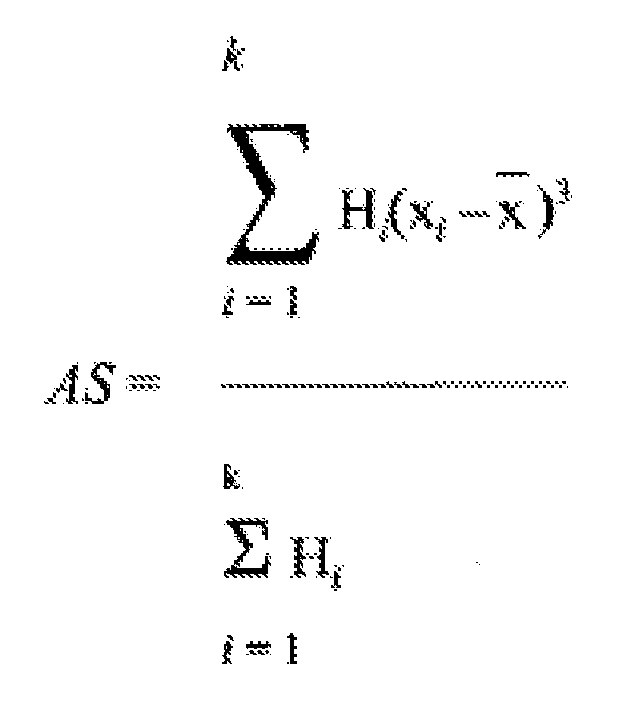
dans laquelle Hi représente la fréquence à laquelle le diamètre de particule xi apparaît et x représente le diamètre des particules de l'agrégat dont le poids correspond à la granulométrie moyenne de l'agrégat de noir de carbone, la somme étant mise en oeuvre dans la plage de 1 à 3000 nm dans un écartement équidistant pour chaque nanomètre ; et/ou(B) une valeur CTAB (ASTM D-3765) dans la plage de 20 à 190 m2/g ; et/ou(C) une valeur d'absorption 24M4-DBP (ASTM D-3493) dans la plage de 40 à 140 cm3/100 g. - Bandage pneumatique selon l'une quelconque des revendications précédentes, dans lequel ladite matière de charge pour le renforcement du caoutchouc, en une quantité de 35 à 120 phr, comprend :(A) à concurrence de 30 à 100 phr, ledit noir de carbone d'inversion nanostructuré ; et(B) à concurrence de 5 à 90 phr, au moins un noir de carbone pour le renforcement du caoutchouc possédant une combinaison d'une valeur d'absorption d'iode (ASTM D-1510) dans la plage de 90 à 150 g/kg et une valeur DBP (ASTM D-2414) dans la plage de 100 à 200 cm3/100 g.
- Bandage pneumatique selon au moins une des revendications précédentes, dans lequel ladite matière de charge pour le renforcement du caoutchouc, en une quantité de 35 à 120 phr, comprend :(A) à concurrence de 5 à 90 phr, ledit noir de carbone d'inversion nanostructuré ; et(B) à concurrence de 10 à 85 phr, de la silice précipitée sur laquelle on trouve des groupes hydroxyle ; et(C) le cas échéant un agent de couplage pour ladite silice précipitée, possédant une fraction apte à réagir avec lesdits groupes hydroxyle sur ladite silice précipitée et une autre fraction différente apte à entrer en interaction avec ledit élastomère de polybutadiène et avec ledit élastomère supplémentaire conjugué à base diénique.
- Bandage pneumatique selon au moins une des revendications précédentes, dans lequel on prépare ladite amine couplée à l'étain et ledit élastomère de polybutadiène fonctionnalisé en faisant réagir du polybutadiène fonctionnalisé possédant une amine « vivante » à son extrémité, contenant du lithium à titre de groupes terminaux, avec du tétrachlorure d'étain.
- Bandage pneumatique selon au moins une des revendications précédentes, dans lequel ledit élastomère supplémentaire conjugué à base diénique représente au moins un membre choisi parmi le groupe comprenant le caoutchouc naturel de cis-1,4-polyisoprène, le caoutchouc synthétique de cis-1,4-polyisoprène, le cis-1,4-polybutadiène, des copolymères de styrène/butadiène, des copolymères d'isoprène/butadiène, des terpolymères de styrène/isoprène/butadiène, du caoutchouc de polybutadiène à haute teneur vinylique contenant des groupes vinyle 1,2 à concurrence de 30 à 90 %, et un élastomère de 3,4-polyisoprène, ledit élastomère de 3,4-polyisoprène étant utilisé dans une plage de 5 à 20 phr dans ladite composition de caoutchouc.
- Bandage pneumatique selon au moins une des revendications précédentes, dans lequel ledit organoalcoxymercaptosilane représente au moins un membre choisi parmi le groupe comprenant le triéthoxy mercaptopropyl silane, le triméthoxy mercaptopropyl silane, le méthyl diméthoxy mercaptopropyl silane, le méthyl diméthoxy mercaptopropyl silane, le diméthyl méthoxy mercaptopropyl silane, le triéthoxy mercaptoéthyl silane, le tripropoxy mercaptopropyl silane, l'éthoxy diméthoxy mercaptopropylsilane, éthoxy diisopropoxy mercaptopropylsilane, l'éthoxy didodécyloxy mercaptopropylsilane et l'éthoxy dihexadécyloxy mercaptopropylsilane.
- Bandage pneumatique selon au moins une des revendications précédentes, dans lequel ladite matière de charge pour le renforcement du caoutchouc comprend en outre de la silice précipitée conjointement avec un agent de couplage, ledit organoalcoxymercaptosilane protégé représentant un 3-octanoylthio-1-propyltriéthoxysilane liquide.
- Bandage pneumatique comprenant, en se basant sur des parties en poids par 100 parties en poids d'élastomère (phr) :(A) à concurrence de 100 phr, des élastomères comprenant :(1) à concurrence de 5 à 50 phr, un élastomère de polybutadiène comprenant un élastomère de polybutadiène fonctionnalisé, du type dont l'extrémité contient une amine couplée à l'étain, et(2) à concurrence de 50 à 95 phr, au moins un élastomère conjugué à base diénique choisi parmi le groupe comprenant des polymères de l'isoprène, des copolymères de l'isoprène et du 1,3-butadiène et des copolymères du styrène et d'au moins un membre choisi parmi le groupe comprenant l'isoprène et le 1,3-butadiène ; et(A) à concurrence de 35 à 120 phr, une matière de charge pour le renforcement du caoutchouc, ladite matière de charge pour le renforcement du caoutchouc comprenant du noir de carbone d'inversion nanostructuré, la composition de caoutchouc comprenant en outre de la silice précipitée conjointement avec un agent de couplage, ledit agent de couplage représentant :une composition d'organoalcoxymercaptosilane répondant à la formule générale (I) :
(I) (X)n(R7O)3-n - Si - R8-SH
dans laquelle X représente un radical choisi parmi un radical de chlore, un radical de brome et un radical alkyle, contenant de 1 à 16 atomes de carbone ; R7 représente un radical alkyle contenant de 1 à 18 atomes de carbone ; R8 représente un radical alkylène contenant de 1 à 16 atomes de carbone, de préférence un radical propylène ; et n prend une valeur moyenne de 0 à 3 ; et dans laquelle, lorsque n est égal à zéro ou est égal à 1, R7 peut être identique ou différent pour chaque fraction (R7O) dans la composition ; ou bienun organoalcoxymercaptosilane sous la forme dudit organoalcoxymercaptosilane répondant à la formule générale I dans lequel la fraction mercapto est protégée avec une fraction qui est en mesure de déprotéger son groupe mercapto.
Applications Claiming Priority (1)
| Application Number | Priority Date | Filing Date | Title |
|---|---|---|---|
| US11/232,569 US20070066744A1 (en) | 2005-09-21 | 2005-09-21 | Tire with tread containing tin coupled amine functionalized polybutadiene and nanostructured inversion carbon black |
Publications (2)
| Publication Number | Publication Date |
|---|---|
| EP1767571A1 EP1767571A1 (fr) | 2007-03-28 |
| EP1767571B1 true EP1767571B1 (fr) | 2008-11-19 |
Family
ID=37309825
Family Applications (1)
| Application Number | Title | Priority Date | Filing Date |
|---|---|---|---|
| EP06120734A Not-in-force EP1767571B1 (fr) | 2005-09-21 | 2006-09-15 | Bande de roulement comportant du polybutadiène à fonction amine couplè par l'étain |
Country Status (4)
| Country | Link |
|---|---|
| US (1) | US20070066744A1 (fr) |
| EP (1) | EP1767571B1 (fr) |
| BR (1) | BRPI0603909A (fr) |
| DE (1) | DE602006003708D1 (fr) |
Families Citing this family (9)
| Publication number | Priority date | Publication date | Assignee | Title |
|---|---|---|---|---|
| US20070293619A1 (en) * | 2006-06-19 | 2007-12-20 | Claude Charles Jacoby | Tire with silica-rich rubber tread for winter performance |
| US8227538B2 (en) * | 2008-06-05 | 2012-07-24 | Continental Ag | Rubber mixture with improved abrasion |
| JP5256262B2 (ja) * | 2009-12-07 | 2013-08-07 | 住友ゴム工業株式会社 | タイヤ用ゴム組成物及び空気入りタイヤ |
| FR2967682B1 (fr) | 2010-11-23 | 2012-12-21 | Michelin Soc Tech | Composition contenant un elastomere dienique particulier et un noir de carbone de surface specifique particuliere |
| FR2967681B1 (fr) * | 2010-11-23 | 2012-11-30 | Michelin Soc Tech | Elastomere dienique a blocs a ip faible fonctionnel a fluage a froid ameliore et composition de caoutchouc le contenant |
| KR101635382B1 (ko) | 2014-04-22 | 2016-07-04 | 한국타이어 주식회사 | 런플랫 타이어용 사이드월 인서트 고무 조성물 및 이를 이용하여 제조한 타이어 |
| US10053559B2 (en) * | 2015-12-16 | 2018-08-21 | The Goodyear Tire & Rubber Company | Tire with tread containing functionalized polybutadiene rubber and reinforcing filler containing precipitated silica |
| US10144819B2 (en) * | 2016-04-05 | 2018-12-04 | The Goodyear Tire & Rubber Company | Rubber composition containing fibrillated aramid fiber micropulp with pre-hydrophobated silica reinforcement and tire with component |
| US10654995B2 (en) | 2017-08-30 | 2020-05-19 | The Goodyear Tire & Rubber Company | Pneumatic tire |
Family Cites Families (7)
| Publication number | Priority date | Publication date | Assignee | Title |
|---|---|---|---|---|
| US5115006A (en) * | 1987-02-16 | 1992-05-19 | Nippon Zeon Co., Ltd. | Rubber composition |
| US6211321B1 (en) * | 1995-11-28 | 2001-04-03 | Nippon Zeon Co., Ltd. | Diene rubber |
| JP3736577B2 (ja) * | 1995-12-29 | 2006-01-18 | 日本ゼオン株式会社 | ゴム組成物及びその製造方法 |
| US6251983B1 (en) * | 1998-04-09 | 2001-06-26 | DEGUSSA - HüLS AKTIENGESELLSCHAFT | Inversion carbon blacks and method for their manufacture |
| US6056933A (en) * | 1998-04-09 | 2000-05-02 | Degussa-Huls Aktiengesellschaft | Inversion carbon blacks and method for their manufacture |
| EP1318172B1 (fr) * | 2001-12-06 | 2006-06-14 | The Goodyear Tire & Rubber Company | Pneu à base de caoutchouc contenant un caoutchouc étain/amino fonctionalisé et du noir de carbone d'inversion |
| JP4113850B2 (ja) * | 2004-03-17 | 2008-07-09 | 住友ゴム工業株式会社 | タイヤ用ゴム組成物およびそれを用いて得られたランフラットタイヤ |
-
2005
- 2005-09-21 US US11/232,569 patent/US20070066744A1/en not_active Abandoned
-
2006
- 2006-09-11 BR BRPI0603909-0A patent/BRPI0603909A/pt not_active IP Right Cessation
- 2006-09-15 DE DE602006003708T patent/DE602006003708D1/de active Active
- 2006-09-15 EP EP06120734A patent/EP1767571B1/fr not_active Not-in-force
Also Published As
| Publication number | Publication date |
|---|---|
| DE602006003708D1 (de) | 2009-01-02 |
| BRPI0603909A (pt) | 2007-08-14 |
| US20070066744A1 (en) | 2007-03-22 |
| EP1767571A1 (fr) | 2007-03-28 |
Similar Documents
| Publication | Publication Date | Title |
|---|---|---|
| US12370831B2 (en) | Tire tread rubber composition | |
| EP0829511B1 (fr) | Composition de caoutchouc et pneu avec bande de roulement à base de cette composition | |
| US7101922B2 (en) | Method for preparing elastomer/silica composite | |
| EP1559586B1 (fr) | Pneumatique comportant un élément ayant une composition caoutchouteuse comprenant un élastomère styrène/butadiène fonctionalisé, de la silice et une résine styrène/alpha méthyle styrène | |
| EP1958983B1 (fr) | Composition de caoutchouc renforcée au silicium et utilisation dans les pneus | |
| US6998448B2 (en) | Tire with tread of CIS 1,4-polybutadiene rich rubber composition which contains a functional styrene/butadiene elastomer, silica and coupling agent | |
| US8349940B2 (en) | Rubber composition containing treated silica and products with component thereof | |
| US20250333585A1 (en) | Tire Tread Rubber Composition | |
| EP1880870A1 (fr) | Pneu avec bande en caoutchouc riche en silicium pour une performance hivernale | |
| EP2202266B1 (fr) | Compositions en caoutchouc riche en silicium et ses procédés de fabrication | |
| US9757983B1 (en) | Tire with rubber component containing reinforcement comprised of precipitated silica and functionalized graphene | |
| CA2284155A1 (fr) | Elastomere renforce prepare, composite elastomere et pneu ayant ce produit comme composant | |
| US20210300117A1 (en) | Tire Tread Rubber Composition | |
| US20210300118A1 (en) | Tire Tread Rubber Composition | |
| US20250230302A1 (en) | Tire Tread Rubber Composition And Related Methods | |
| CN101137518A (zh) | 具有改进的二氧化硅补强的轮胎组合物和其硫化橡胶 | |
| US20130310501A1 (en) | Treatment of pre-hydrophobated silica in situ within a rubber composition, the rubber composition and tire with component | |
| BR102020004308B1 (pt) | Pneu com borracha reforçada contendo óleo de triglicerídeo sililado | |
| US7378468B2 (en) | Tire having component of rubber composition containing a carbonaceous filler composite of disturbed crystalline phrases and amorphous carbon phases | |
| EP2990436B1 (fr) | Composition de caoutchouc préparée avec de la silice prétraitée et pneu | |
| EP1514900B1 (fr) | Pneu pour materiel agricole ayant une bande de roulement à base d'une composition de caoutchouc contenant un matériau composite amidon/plastifiant | |
| US6458882B1 (en) | Silica reinforced rubber composition which contains non-silane coupling agent and article of manufacture, including a tire, having at least one component comprised of such rubber composition | |
| US6251992B1 (en) | Rubber composition containing hydroxyl terminated polyalkylene polymer and tire with tread thereof | |
| US20070066744A1 (en) | Tire with tread containing tin coupled amine functionalized polybutadiene and nanostructured inversion carbon black | |
| EP3959084B1 (fr) | Composition de caoutchouc |
Legal Events
| Date | Code | Title | Description |
|---|---|---|---|
| PUAI | Public reference made under article 153(3) epc to a published international application that has entered the european phase |
Free format text: ORIGINAL CODE: 0009012 |
|
| AK | Designated contracting states |
Kind code of ref document: A1 Designated state(s): AT BE BG CH CY CZ DE DK EE ES FI FR GB GR HU IE IS IT LI LT LU LV MC NL PL PT RO SE SI SK TR |
|
| AX | Request for extension of the european patent |
Extension state: AL BA HR MK YU |
|
| 17P | Request for examination filed |
Effective date: 20070928 |
|
| 17Q | First examination report despatched |
Effective date: 20071105 |
|
| AKX | Designation fees paid |
Designated state(s): DE FR GB IT |
|
| GRAP | Despatch of communication of intention to grant a patent |
Free format text: ORIGINAL CODE: EPIDOSNIGR1 |
|
| GRAS | Grant fee paid |
Free format text: ORIGINAL CODE: EPIDOSNIGR3 |
|
| GRAA | (expected) grant |
Free format text: ORIGINAL CODE: 0009210 |
|
| AK | Designated contracting states |
Kind code of ref document: B1 Designated state(s): DE FR GB IT |
|
| REG | Reference to a national code |
Ref country code: GB Ref legal event code: FG4D |
|
| REF | Corresponds to: |
Ref document number: 602006003708 Country of ref document: DE Date of ref document: 20090102 Kind code of ref document: P |
|
| PLBE | No opposition filed within time limit |
Free format text: ORIGINAL CODE: 0009261 |
|
| STAA | Information on the status of an ep patent application or granted ep patent |
Free format text: STATUS: NO OPPOSITION FILED WITHIN TIME LIMIT |
|
| 26N | No opposition filed |
Effective date: 20090820 |
|
| PGFP | Annual fee paid to national office [announced via postgrant information from national office to epo] |
Ref country code: DE Payment date: 20090930 Year of fee payment: 4 |
|
| PGFP | Annual fee paid to national office [announced via postgrant information from national office to epo] |
Ref country code: IT Payment date: 20090930 Year of fee payment: 4 |
|
| GBPC | Gb: european patent ceased through non-payment of renewal fee |
Effective date: 20100915 |
|
| PG25 | Lapsed in a contracting state [announced via postgrant information from national office to epo] |
Ref country code: IT Free format text: LAPSE BECAUSE OF NON-PAYMENT OF DUE FEES Effective date: 20100915 |
|
| REG | Reference to a national code |
Ref country code: FR Ref legal event code: ST Effective date: 20110531 |
|
| REG | Reference to a national code |
Ref country code: DE Ref legal event code: R119 Ref document number: 602006003708 Country of ref document: DE Effective date: 20110401 |
|
| PG25 | Lapsed in a contracting state [announced via postgrant information from national office to epo] |
Ref country code: DE Free format text: LAPSE BECAUSE OF NON-PAYMENT OF DUE FEES Effective date: 20110401 Ref country code: FR Free format text: LAPSE BECAUSE OF NON-PAYMENT OF DUE FEES Effective date: 20100930 |
|
| PG25 | Lapsed in a contracting state [announced via postgrant information from national office to epo] |
Ref country code: GB Free format text: LAPSE BECAUSE OF NON-PAYMENT OF DUE FEES Effective date: 20100915 |
|
| PGFP | Annual fee paid to national office [announced via postgrant information from national office to epo] |
Ref country code: FR Payment date: 20090916 Year of fee payment: 4 |