EP1768073B1 - Realzeitsystem für die Überwachung des Diebstahlschutzes - Google Patents
Realzeitsystem für die Überwachung des Diebstahlschutzes Download PDFInfo
- Publication number
- EP1768073B1 EP1768073B1 EP06077186A EP06077186A EP1768073B1 EP 1768073 B1 EP1768073 B1 EP 1768073B1 EP 06077186 A EP06077186 A EP 06077186A EP 06077186 A EP06077186 A EP 06077186A EP 1768073 B1 EP1768073 B1 EP 1768073B1
- Authority
- EP
- European Patent Office
- Prior art keywords
- control device
- information
- local control
- central control
- transmitting
- Prior art date
- Legal status (The legal status is an assumption and is not a legal conclusion. Google has not performed a legal analysis and makes no representation as to the accuracy of the status listed.)
- Expired - Lifetime
Links
Images




Classifications
-
- G—PHYSICS
- G08—SIGNALLING
- G08B—SIGNALLING SYSTEMS, e.g. PERSONAL CALLING SYSTEMS; ORDER TELEGRAPHS; ALARM SYSTEMS
- G08B13/00—Burglar, theft or intruder alarms
- G08B13/22—Electrical actuation
- G08B13/24—Electrical actuation by interference with electromagnetic field distribution
- G08B13/2402—Electronic Article Surveillance [EAS], i.e. systems using tags for detecting removal of a tagged item from a secure area, e.g. tags for detecting shoplifting
- G08B13/2451—Specific applications combined with EAS
- G08B13/246—Check out systems combined with EAS, e.g. price information stored on EAS tag
-
- G—PHYSICS
- G06—COMPUTING OR CALCULATING; COUNTING
- G06Q—INFORMATION AND COMMUNICATION TECHNOLOGY [ICT] SPECIALLY ADAPTED FOR ADMINISTRATIVE, COMMERCIAL, FINANCIAL, MANAGERIAL OR SUPERVISORY PURPOSES; SYSTEMS OR METHODS SPECIALLY ADAPTED FOR ADMINISTRATIVE, COMMERCIAL, FINANCIAL, MANAGERIAL OR SUPERVISORY PURPOSES, NOT OTHERWISE PROVIDED FOR
- G06Q10/00—Administration; Management
- G06Q10/08—Logistics, e.g. warehousing, loading or distribution; Inventory or stock management
- G06Q10/087—Inventory or stock management, e.g. order filling, procurement or balancing against orders
-
- G—PHYSICS
- G06—COMPUTING OR CALCULATING; COUNTING
- G06Q—INFORMATION AND COMMUNICATION TECHNOLOGY [ICT] SPECIALLY ADAPTED FOR ADMINISTRATIVE, COMMERCIAL, FINANCIAL, MANAGERIAL OR SUPERVISORY PURPOSES; SYSTEMS OR METHODS SPECIALLY ADAPTED FOR ADMINISTRATIVE, COMMERCIAL, FINANCIAL, MANAGERIAL OR SUPERVISORY PURPOSES, NOT OTHERWISE PROVIDED FOR
- G06Q20/00—Payment architectures, schemes or protocols
- G06Q20/08—Payment architectures
- G06Q20/20—Point-of-sale [POS] network systems
-
- G—PHYSICS
- G06—COMPUTING OR CALCULATING; COUNTING
- G06Q—INFORMATION AND COMMUNICATION TECHNOLOGY [ICT] SPECIALLY ADAPTED FOR ADMINISTRATIVE, COMMERCIAL, FINANCIAL, MANAGERIAL OR SUPERVISORY PURPOSES; SYSTEMS OR METHODS SPECIALLY ADAPTED FOR ADMINISTRATIVE, COMMERCIAL, FINANCIAL, MANAGERIAL OR SUPERVISORY PURPOSES, NOT OTHERWISE PROVIDED FOR
- G06Q20/00—Payment architectures, schemes or protocols
- G06Q20/08—Payment architectures
- G06Q20/20—Point-of-sale [POS] network systems
- G06Q20/206—Point-of-sale [POS] network systems comprising security or operator identification provisions, e.g. password entry
-
- G—PHYSICS
- G07—CHECKING-DEVICES
- G07G—REGISTERING THE RECEIPT OF CASH, VALUABLES, OR TOKENS
- G07G1/00—Cash registers
- G07G1/0036—Checkout procedures
- G07G1/0045—Checkout procedures with a code reader for reading of an identifying code of the article to be registered, e.g. barcode reader or radio-frequency identity [RFID] reader
- G07G1/0054—Checkout procedures with a code reader for reading of an identifying code of the article to be registered, e.g. barcode reader or radio-frequency identity [RFID] reader with control of supplementary check-parameters, e.g. weight or number of articles
-
- G—PHYSICS
- G07—CHECKING-DEVICES
- G07G—REGISTERING THE RECEIPT OF CASH, VALUABLES, OR TOKENS
- G07G3/00—Alarm indicators, e.g. bells
- G07G3/003—Anti-theft control
-
- G—PHYSICS
- G08—SIGNALLING
- G08B—SIGNALLING SYSTEMS, e.g. PERSONAL CALLING SYSTEMS; ORDER TELEGRAPHS; ALARM SYSTEMS
- G08B13/00—Burglar, theft or intruder alarms
- G08B13/22—Electrical actuation
- G08B13/24—Electrical actuation by interference with electromagnetic field distribution
- G08B13/2402—Electronic Article Surveillance [EAS], i.e. systems using tags for detecting removal of a tagged item from a secure area, e.g. tags for detecting shoplifting
- G08B13/2405—Electronic Article Surveillance [EAS], i.e. systems using tags for detecting removal of a tagged item from a secure area, e.g. tags for detecting shoplifting characterised by the tag technology used
- G08B13/2414—Electronic Article Surveillance [EAS], i.e. systems using tags for detecting removal of a tagged item from a secure area, e.g. tags for detecting shoplifting characterised by the tag technology used using inductive tags
- G08B13/2417—Electronic Article Surveillance [EAS], i.e. systems using tags for detecting removal of a tagged item from a secure area, e.g. tags for detecting shoplifting characterised by the tag technology used using inductive tags having a radio frequency identification chip
-
- G—PHYSICS
- G08—SIGNALLING
- G08B—SIGNALLING SYSTEMS, e.g. PERSONAL CALLING SYSTEMS; ORDER TELEGRAPHS; ALARM SYSTEMS
- G08B13/00—Burglar, theft or intruder alarms
- G08B13/22—Electrical actuation
- G08B13/24—Electrical actuation by interference with electromagnetic field distribution
- G08B13/2402—Electronic Article Surveillance [EAS], i.e. systems using tags for detecting removal of a tagged item from a secure area, e.g. tags for detecting shoplifting
- G08B13/2465—Aspects related to the EAS system, e.g. system components other than tags
- G08B13/2482—EAS methods, e.g. description of flow chart of the detection procedure
-
- G—PHYSICS
- G08—SIGNALLING
- G08B—SIGNALLING SYSTEMS, e.g. PERSONAL CALLING SYSTEMS; ORDER TELEGRAPHS; ALARM SYSTEMS
- G08B25/00—Alarm systems in which the location of the alarm condition is signalled to a central station, e.g. fire or police telegraphic systems
- G08B25/14—Central alarm receiver or annunciator arrangements
Definitions
- the invention relates to a system comprising at least one person and/or goods registration device such as a theft security system comprising at least one transceiver device, set up at a passage, for detecting antitheft labels that pass the passage, a person identification and/or registration system, set up at a passage, for registering or identifying persons who pass the passage and/or a cash deck block for registering goods to be checked out by, for instance, scanning, and optionally deactivating or removing antitheft labels attached to the goods.
- a theft security system comprising at least one transceiver device, set up at a passage, for detecting antitheft labels that pass the passage
- a person identification and/or registration system set up at a passage, for registering or identifying persons who pass the passage and/or a cash deck block for registering goods to be checked out by, for instance, scanning, and optionally deactivating or removing antitheft labels attached to the goods.
- Such a system is known from US 5,745,036 .
- Such a system is often placed in stores, such as department stores, where customers themselves can take the merchandise to be purchased from the position where it is displayed to a cash deck to pay for it.
- stores such as department stores, where customers themselves can take the merchandise to be purchased from the position where it is displayed to a cash deck to pay for it.
- it is possible to reach the exit of the store without visiting a cash deck to check out the merchandise. It is therefore fairly easy to steal, since, when leaving the store, the merchandise can be inconspicuously taken along, for instance hidden in a bag, without being paid for.
- To be able to discover theft of merchandise a number of articles are provided with antitheft labels.
- the antitheft labels are so designed that when passing a passage, in this case the exit, a transceiver device set up there can detect the antitheft label.
- an alarm goes off.
- the alarm can be a visible alarm, such as, for instance, a flashing or rotating light attracting attention, or an audible alarm, such as, for instance, a siren.
- a security officer is alarmed by the alarm and will try to find the antitheft label that has been detected by the theft security system and proceed to stop a customer to prevent theft.
- the antitheft label after payment, will be either removed from the article by the employee at the cash deck, or be deactivated.
- the transceiver device can no longer detect the antitheft label then. The customer can leave the store without an alarm going off.
- the object of the invention is to improve the known system.
- the system according to the invention is characterized in that the at least one device is connected with a local control device for providing a communication connection between the at least one device and the local control device, the system further comprising a central control device which is connected with the local control device for exchanging data between the local control device and the central control device, the system being adapted for transmitting from the local control device to the central control device diagnostic information about the operation of the at least one device, for transmitting from the local control device to the central control device information about detected antitheft labels, for transmitting from the local control device to the central control device information about the registered goods, and/or for transmitting from the local control device to the central control device information about the registered or identified persons characterized in that the system is further adapted for transmitting from the central control device to the local control device information for changing settings of the at least one device and/or operating the at least one device.
- This central control device may be located, for instance, at a main office. At the central control device, information can be collected from various local control devices.
- a central control device at a main office in Amsterdam can be provided with real-time information about theft security systems in, for instance, London, Brussels, Paris, Madrid, etc.
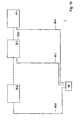
- Fig. 1a a first embodiment of a system according to the invention is shown.
- This system comprises multiple registration devices. This involves both person registration devices and goods registration devices.
- the system comprises a theft security system 2 which is provided with two transceiver devices 4, 6, disposed at two passages, respectively.
- the transceiver devices 4, 6 are each of a type known per se, for detecting antitheft labels which in this example pass the passages 8, 10.
- the system comprises a person registration device in the form of a person identification and/or registration system 14, known per se, disposed at a passage 12, for registering or identifying persons who pass the passage 12.
- the passages 8 and 10 are passages of a store 16.0, via which customers can enter and leave the store.
- the passage 12 is a passage for the personnel of the store 16.0.
- the person identification system 14 is intended for registering the times when identified employees enter the store and leave it again through passage 12.
- the passage 12 can be closed off from shopping space 20 by a door 18.
- the system further comprises two cash deck blocks 22, 24, known per se, which are each provided with a device 36, 38, respectively, for scanning goods to be checked out, and with deactivation devices 30, 32, respectively, for deactivating antitheft labels that may be attached to the goods.
- All registration devices such as the person and goods registration systems, can be provided with identification codes, with which the devices and systems mentioned are identifiable within the system.
- the system of the store 16.0 further comprises a local control device 26 which is connected via the communication device 28 with the antitheft system 4, the person identification system 14 and the cash deck blocks 22, 24.
- the system further comprises a central control device 48.
- Both the local control device 26 and the central control device 48 are connected with the communication device 30.n in order that the local control device 26 and the central control device 48 can exchange real-time information, i.e., real-time data, with each other.
- Fig. 1b further, other stores 16.1, 16.2, ... 16.n are indicated. Each of these stores is provided with person and/or goods registration devices, as well as a local control device 26 such as this has been discussed in connection with the store 16.0.
- These local control devices 26 are connected via the communication device 30.1 to 30.n with the central control device 48.
- the system is adapted for real-time transmission, from the local control device 26 to the central control device 48, of real-time information about the antitheft labels detected by the antitheft system 4, 6. Further, the system is adapted for real-time transmission from the local control device to the central control device of diagnostic information about the operation of the above-mentioned persons and goods identification devices 4, 6, 14, 22, 24. This diagnostic information can also relate to the number of alarms, etc. Naturally, false alarms are to be inputted by hand. This can be done, in this example, at the local control device 26, designed as a computer.
- the system is also adapted for transmitting from the local control device to the central control device real-time information about the goods registered at the cash deck blocks and for transmitting from the central control device to the local control device real-time information for modifying settings of the above-mentioned devices 4, 6, 14, 22, 24 and further for operating these devices.
- To be considered here is, for instance, adjustment of the sensitivity of the transceiver devices 4, 6, etc.
- the system is further adapted for real-time transmission from the local control device to the central control device of real-time information about the registered or identified persons. This involves information obtained by means of the device 14. Also, the system is provided with a plurality of groups of registration devices. In this example, all registration devices included in the store belong to a group. As already set out above, each registration device of a group of the registration devices is connected with a local control device 26.
- the central control device is adapted for statistically processing the diagnostic information, the information about the detected antitheft labels, the information about the registered goods and/or the information about the registered or identified goods. It further holds that the system is adapted for groupwise processing the diagnostic information, the information about the detected antitheft labels, the information about the registered goods and/or the information about the registered or identified persons. It also holds that the system is adapted for processing in combination the information obtained per group. It holds, furthermore, that the system is further adapted for transmitting from the local control device to the central control device information about the identity of an employee operating a cash deck block. In addition, it holds that the system is further adapted for transmitting information about the location of a group from the local control device to the central control device.
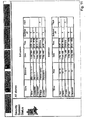
- the central control device comprises a display, the system being designed such that at least the following images can be shown on the display.
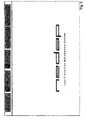
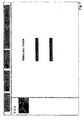
- Fig. 2 shows a first image.
- Fig. 2 shows a menu where, for instance with a mouse, respective icons Customers, EAS system (Electronic Antitheft System), POS (Point-of-Sale), EAS quality and Sourcetagging can be selected. If by means of the mouse the icon Customers is activated, figure 3 appears on the screen.
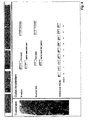
- Fig. 3 shows inter alia all customers who have visited the stores 16.0 to 16.n this week. These customers have been registered by the transceivers 4, 6, which, in this example, are additionally adapted such that they can register a person who enters the store via the passage 8 or 10.
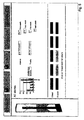
- FIG. 4 When subsequently clicking on, for instance, Amsterdam with the mouse, the screen according to Fig. 4 appears, in which further information is shown regarding the store in Amsterdam about the number of visitors, the buy/visit ratio discussed earlier, and the percentage of the total number of visitors spread over the day.
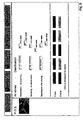
- the screen of Fig. 2 When in the screen of Fig. 2 the icon EAS is energized by means of the mouse, the screen according to Fig. 5 appears. For all stores, this screen shows real-time the number of alarms caused by antitheft labels and the number of actual thefts of goods.
- a bar diagram a distinction is made between alarms caused by a so-called sticker tag and alarms caused by a wafer. This distinction can be carried out in an automatic manner when, for instance, the sticker tag has a different resonance than the wafer.
- the number of alarms is indicated not only for this week but also for the four preceding weeks. Further, as said, a distinction is made between the number of alarms and the number of thefts.
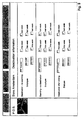
- Fig. 5 Indicated furthermore in Fig. 5 are the five best stores, i.e., where according to a predetermined criterion the least number of alarms and thefts occur. Also indicated are the five worst stores, where, according to a predetermined criterion, apparently most alarms and thefts occur. The newcomers among the five worst stores in this case are Amsterdam and Brussels, colored differently. When by means of the mouse for instance the icon Amsterdam is clicked, the fig. 6 appears. Fig. 6 shows the number of detected antitheft labels. Thus, it appears that in the current week, there have been 46 alarms. In the week before, there were 25 alarms. It also appears that the number of alarms that was due to a customer leaving the store was 64% of the total number of alarms.
- an employee should enter at the local control device 26 in respect of each alarm whether it went off for a customer entering the store or one leaving the store. It is further indicated to what extent the number of alarms this week is higher compared with last week. An 84% increase is involved here. Naturally, an alarm does not necessarily involve theft. Against 'thefts' it is indicated that there were five thefts this week and one theft last week. This, too, cannot be indicated until an employee has checked whether theft is actually involved. The information in question is again entered manually at the local control device 26.
- the store can have a number of passages. Thus, the store can have a passage adjacent a restaurant, a passage for the personnel, a passage to parking facilities, etc. On the screen, it is then also indicated at which passages the least number of alarms are caused and at which passages most alarms are caused. Naturally, this means that at each of these passages a security device 4, 6 is disposed.
- Fig. 7 When in the menu of Fig. 2 the icon POS is energized, the screen according to Fig. 7 is depicted. In this screen, two choices can be made, viz. 'Information on deactivation' and 'Information on transaction'. When 'Information on deactivation' is energized, the screen of Fig. 8 appears. In this screen, it is shown for all stores together that this week 80 goods have been deactivated but not scanned. Possibly, therefore, these 80 goods have been misappropriated by employees. It is also indicated that in the week before, this happened only 68 times. Accordingly, a 17.6% increase is involved, as is clearly shown. The screen also shows the number of cases in which goods have been scanned without being deactivated.
- That no deactivation has taken place can be derived on the basis of the number of alarms at the entrance. Thus, it appears that in this week, this has occurred 471 times, compared with 369 times in the week before. It is indicated that a 27.6% increase is involved. When a commodity is scanned but not deactivated, this can point to failure on the part of an employee, failure of a deactivation device, etc. It is further also indicated when goods are deactivated after closing time 'deactivation after closing'. This may also point to possibly fraudulent acts on the part of employees. It appears that this happened 45 times this week, and 55 times last week. A decrease of 18%.
- the five best stores according to a predetermined criterion are designated again and in a lower row the five worst stores according to a predetermined criterion.
- detail information about the store in question can be obtained.
- the icon Amsterdam is energized, the screen according to Fig. 9 appears.
- the number of times of 'deactivation no scanning' is indicated for this week and the week before. There proves to be a 50% increase.
- an identification number of an employee (529-1489), against which the number of times that he or she has deactivated without scanning this week (4 times) and the week before (3 times). Similarly, this is indicated for an employee having identification number 529-0251.
- the number of times of 'scanning - no deactivation' for this week and last week is indicated. These numbers are likewise specified per employee, in this case for the employee having the identification number 529-8219, and for the employee having the identification number 529-6331. Also indicated for the Amsterdam store is the number of deactivations after closing time: 7 this week and 5 last week. This time a 40% increase is involved, as is also indicated. It is also indicated again per employee how many goods he has deactivated this week and last week after closing time.
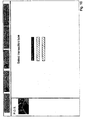
- Fig. 7 When in Fig. 7 'Information on transactions' is selected, the screen according to Fig. 10 appears. Again, a number of icons are visible, which in this example are indicated through bars which can be energized to select particular types of transactions.
- a distinction can be made between goods which have been paid for at the cash deck in cash, via a pin code, with a credit card, etc. It can also be established per store, per cash deck and/or per employee whether goods have been taken back, etc. Such possibilities can each be further analyzed under 'select transaction type'.
- Fig. 2 When in Fig. 2 the icon 'EAS quality' is energized, the screen according to Fig. 11 is shown. In this screen, per store, various information is shown, in this example about the theft security system. Thus, for the Berlin store, on May 3, 1999 from 1.05 p.m to 9.05 p.m. the system in question appears to have been switched off for the entrances 1, 2, 3 and 4. For Prague, it appears that on May 6, 1999, the person identification device 14 at the entrance 12 was defective all day.
- screens may be shown on the basis of which by means of mouse operations and the like settings of the various devices can be changed, devices can be switched on and off, etc. It is also possible by means of the central control device 28 to control the registration devices in question remotely. It is also possible to determine the system configuration remotely. This can here involve the number of antennas, the type of antenna and the width of a passage. It is also possible to change settings of a system remotely. To be considered here are the sensitivity of the detection at a passage, optimizing the system for detecting particular types of labels, setting the length of a period during which a lamp of a theft security system continues to burn when an alarm goes off, etc.
- Such lamps, alarms and the like can be checked remotely. It is even possible via the central control device to download updates of software to the local control device, which updates may thereupon be remotely implemented in the theft security system, the cash deck block, the person identification and registration system, etc. Also, the above-discussed information transmitted from the local control devices to the central control device can be processed in combination for obtaining alarm trends, profiles, etc. It will be clear that on a screen coupled to a local control device information can be shown according to a format analogous to the format as discussed above for the central control system. Naturally, the information on the local systems applies primarily only for information coming from the local system.
- identification code also relates to a system provided with a local control device without this being provided with explicitly provided identification codes because it is inherently known what systems are involved in this case.
- identification code also encompasses the individual connections between the systems and the control device.
- the system can also be equipped with possibilities of registering goods and persons. This is understood to include cameras, with which real-time a situation around a detection system is observed. Such variants are all understood to fall within the scope of the invention.
Landscapes
- Physics & Mathematics (AREA)
- Business, Economics & Management (AREA)
- General Physics & Mathematics (AREA)
- Engineering & Computer Science (AREA)
- Accounting & Taxation (AREA)
- Computer Security & Cryptography (AREA)
- Automation & Control Theory (AREA)
- Electromagnetism (AREA)
- General Business, Economics & Management (AREA)
- Strategic Management (AREA)
- Finance (AREA)
- Theoretical Computer Science (AREA)
- Economics (AREA)
- Human Resources & Organizations (AREA)
- Entrepreneurship & Innovation (AREA)
- Development Economics (AREA)
- Marketing (AREA)
- Operations Research (AREA)
- Quality & Reliability (AREA)
- Tourism & Hospitality (AREA)
- Emergency Management (AREA)
- Burglar Alarm Systems (AREA)
- Alarm Systems (AREA)
Claims (9)
- System mit mindestens einer Personen- und/oder Warenregistriervorrichtung, wie einem Diebstahlsicherheitssystem, mit mindestens einer an einem Durchgang angeordneten Senderempfängervorrichtung zum Erkennen von Diebstahlsicherungsmarken, die den Durchgang passieren, einem an einem Durchgang angeordneten Personenidentifizierungs-und/oder -registriersystem zum Registrieren oder Identifizieren von den Durchgang und/oder einen Kassenplatz passierenden Personen, um zu bezahlende Waren beispielsweise durch Scannen und optionales Deaktivieren oder Entfernen von an den Waren angebrachten Diebstahlsicherungsmarken zu registrieren,
dadurch gekennzeichnet, dass die mindestens eine Vorrichtung mit einer lokalen Steuervorrichtung verbunden ist, um eine Kommunikationsverbindung zwischen der mindestens einen Vorrichtung und der lokalen Steuervorrichtung zu schaffen, wobei das System ferner eine zentrale Steuervorrichtung aufweist, die mit der lokalen Steuervorrichtung zum Austauschen von Daten zwischen der lokalen Steuervorrichtung und der zentralen Steuervorrichtung verbunden ist, wobei das System derart ausgebildet ist, dass es diagnostische Informationen über den Betrieb der mindestens einen Vorrichtung von der lokalen Steuervorrichtung an die zentrale Steuervorrichtung übermittelt, Informationen über erkannte Diebstahlsicherungsmarken von der lokalen Steuervorrichtung zu der zentralen Steuervorrichtung übermittelt, Informationen über die registrierten Waren von der lokalen Steuervorrichtung an die zentrale Steuervorrichtung übermittelt, und/oder Informationen über die registrierten oder identifizierten Personen von der lokalen Steuervorrichtung an die zentrale Steuervorrichtung übermittelt, dadurch gekennzeichnet, dass das System ferner derart ausgebildet ist, dass es von der zentralen Steuervorrichtung an die lokale Steuervorrichtung Informationen zum Ändern von Einstellungen der mindestens einen Vorrichtung und/oder zum Betrieb der mindestens einen Vorrichtung übermittelt. - System nach Anspruch 1, dadurch gekennzeichnet, dass das System derart ausgebildet ist, dass es die Informationen über die erkannten Diebstahlsicherungsmarken von der lokalen Steuervorrichtung an die zentrale Steuervorrichtung übermittelt, die diagnostischen Informationen über den Betrieb der mindestens einen Vorrichtung von der lokalen Steuervorrichtung an die zentrale Steuervorrichtung übermittelt, die Informationen über die registrierten Waren von der lokalen Steuervorrichtung an die zentrale Steuervorrichtung übermittelt, und von der zentralen Steuervorrichtung an die lokale Steuervorrichtung Informationen zum Ändern von Einstellungen der mindestens einen Vorrichtung und/oder zum Betrieb der mindestens einen Vorrichtung übermittelt.
- System nach Anspruch 2, dadurch gekennzeichnet, dass das System ferner derart ausgebildet ist, dass es Informationen über die registrierten oder identifizierten Personen von der lokalen Steuervorrichtung an die zentrale Steuervorrichtung übermittelt.
- System nach einem der vorhergehenden Ansprüche 1-3, dadurch gekennzeichnet, dass das System mehrere Gruppen von Registriervorrichtungen umfasst, wobei jede Registriervorrichtung einer Gruppe von Registriervorrichtungen mit einer lokalen Steuervorrichtung verbunden ist.
- System nach einem der vorhergehenden Ansprüche 1-4, dadurch gekennzeichnet, dass die zentrale Steuervorrichtung derart ausgebildet ist, dass sie die diagnostischen Informationen, die Informationen über die erkannten Diebstahlsicherungsmarken, die Informationen über die registrierten Waren und/oder die Informationen über die registrierten oder identifizierten Personen statistisch verarbeitet.
- System nach den Ansprüchen 4 und 5, dadurch gekennzeichnet, dass das System derart ausgebildet ist, dass es die diagnostischen Informationen, die Informationen über die erkannten Diebstahlsicherungsmarken, die Informationen über die registrierten Waren und/oder die Informationen über die registrierten oder identifizierten Personen gruppenweise verarbeitet.
- System nach Anspruch 6, dadurch gekennzeichnet, dass das System derart ausgebildet ist, dass die pro Gruppe erhaltenen Informationen in Kombination verarbeitet werden.
- System nach einem der Ansprüche 1-7, dadurch gekennzeichnet, dass das System ferner derart ausgebildet ist, dass von der lokalen Steuervorrichtung Informationen bezüglich der Identität eines Angestellten, der einen Kassenplatz betreibt, an die zentrale Steuervorrichtung übermittelt werden.
- System nach Anspruch 6 oder 7, dadurch gekennzeichnet, dass das System ferner derart ausgebildet ist, dass es Informationen über die Position einer Gruppe von der lokalen Steuervorrichtung an die zentrale Steuervorrichtung übermittelt.
Priority Applications (1)
| Application Number | Priority Date | Filing Date | Title |
|---|---|---|---|
| EP08168002A EP2093728B1 (de) | 1999-10-08 | 2000-10-09 | Echtzeitsystem zur Diebstahlschutzüberwachung |
Applications Claiming Priority (3)
| Application Number | Priority Date | Filing Date | Title |
|---|---|---|---|
| NL1013245A NL1013245C2 (nl) | 1999-10-08 | 1999-10-08 | Open systeem technologie. |
| EP04075103A EP1420378B1 (de) | 1999-10-08 | 2000-10-09 | Realzeitsystem für die Überwachung des Diebstahlschutzes |
| EP20000973258 EP1226565B1 (de) | 1999-10-08 | 2000-10-09 | Echtzeit-system für die überwachung des diebstahlschutzes |
Related Parent Applications (1)
| Application Number | Title | Priority Date | Filing Date |
|---|---|---|---|
| EP04075103A Division EP1420378B1 (de) | 1999-10-08 | 2000-10-09 | Realzeitsystem für die Überwachung des Diebstahlschutzes |
Related Child Applications (1)
| Application Number | Title | Priority Date | Filing Date |
|---|---|---|---|
| EP08168002A Division EP2093728B1 (de) | 1999-10-08 | 2000-10-09 | Echtzeitsystem zur Diebstahlschutzüberwachung |
Publications (2)
| Publication Number | Publication Date |
|---|---|
| EP1768073A1 EP1768073A1 (de) | 2007-03-28 |
| EP1768073B1 true EP1768073B1 (de) | 2008-11-26 |
Family
ID=19770016
Family Applications (5)
| Application Number | Title | Priority Date | Filing Date |
|---|---|---|---|
| EP06077186A Expired - Lifetime EP1768073B1 (de) | 1999-10-08 | 2000-10-09 | Realzeitsystem für die Überwachung des Diebstahlschutzes |
| EP04075103A Expired - Lifetime EP1420378B1 (de) | 1999-10-08 | 2000-10-09 | Realzeitsystem für die Überwachung des Diebstahlschutzes |
| EP04075106A Expired - Lifetime EP1411484B1 (de) | 1999-10-08 | 2000-10-09 | Echtzeitsystem für die Überwachung des Diebstahlschutzes |
| EP20000973258 Expired - Lifetime EP1226565B1 (de) | 1999-10-08 | 2000-10-09 | Echtzeit-system für die überwachung des diebstahlschutzes |
| EP08168002A Expired - Lifetime EP2093728B1 (de) | 1999-10-08 | 2000-10-09 | Echtzeitsystem zur Diebstahlschutzüberwachung |
Family Applications After (4)
| Application Number | Title | Priority Date | Filing Date |
|---|---|---|---|
| EP04075103A Expired - Lifetime EP1420378B1 (de) | 1999-10-08 | 2000-10-09 | Realzeitsystem für die Überwachung des Diebstahlschutzes |
| EP04075106A Expired - Lifetime EP1411484B1 (de) | 1999-10-08 | 2000-10-09 | Echtzeitsystem für die Überwachung des Diebstahlschutzes |
| EP20000973258 Expired - Lifetime EP1226565B1 (de) | 1999-10-08 | 2000-10-09 | Echtzeit-system für die überwachung des diebstahlschutzes |
| EP08168002A Expired - Lifetime EP2093728B1 (de) | 1999-10-08 | 2000-10-09 | Echtzeitsystem zur Diebstahlschutzüberwachung |
Country Status (7)
| Country | Link |
|---|---|
| US (2) | US7046149B1 (de) |
| EP (5) | EP1768073B1 (de) |
| AU (1) | AU1178701A (de) |
| DE (4) | DE60033325T2 (de) |
| ES (5) | ES2218239T3 (de) |
| NL (1) | NL1013245C2 (de) |
| WO (1) | WO2001027892A1 (de) |
Families Citing this family (16)
| Publication number | Priority date | Publication date | Assignee | Title |
|---|---|---|---|---|
| WO2002080123A1 (de) * | 2001-03-30 | 2002-10-10 | Bernhard Hesse | Verfahren zur automatischen überwachung und verwaltung von artikeln |
| US20050102183A1 (en) * | 2003-11-12 | 2005-05-12 | General Electric Company | Monitoring system and method based on information prior to the point of sale |
| NL1026951C2 (nl) | 2004-09-02 | 2006-03-09 | Nedap Nv | Elektronisch diefstaldetectiesysteem, alsmede een gegevensverwerkingssysteem en een werkwijze voor het tegengaan van diefstal van artikelen. |
| US20070164845A1 (en) | 2004-12-21 | 2007-07-19 | Checkpoint Systems, Inc. | System and method for monitoring security systems |
| US7546167B2 (en) | 2005-09-12 | 2009-06-09 | Abl Ip Holdings Llc | Network operation center for a light management system having networked intelligent luminaire managers |
| US7817063B2 (en) | 2005-10-05 | 2010-10-19 | Abl Ip Holding Llc | Method and system for remotely monitoring and controlling field devices with a street lamp elevated mesh network |
| US7782207B2 (en) * | 2007-06-12 | 2010-08-24 | Checkpoint Systems, Inc. | Comprehensive theft security system |
| US8594976B2 (en) | 2008-02-27 | 2013-11-26 | Abl Ip Holding Llc | System and method for streetlight monitoring diagnostics |
| EP2476108B1 (de) | 2009-09-09 | 2018-01-10 | Absolute Software Corporation | Alarm für das echtzeitrisiko von diebstählen oder verlusten |
| US8508367B2 (en) * | 2009-09-21 | 2013-08-13 | Checkpoint Systems, Inc. | Configurable monitoring device |
| US8452868B2 (en) * | 2009-09-21 | 2013-05-28 | Checkpoint Systems, Inc. | Retail product tracking system, method, and apparatus |
| NL2007029C2 (nl) * | 2011-02-24 | 2012-08-27 | Cross Point B V | Systeem met artikelbewakingsinrichting, artikelbewakingsinrichting en werkwijze voor het visualiseren van opstellinginformatie. |
| JP6616210B2 (ja) | 2016-02-29 | 2019-12-04 | 東芝テック株式会社 | 無線タグ読取装置の制御装置およびプログラム |
| JP2018115060A (ja) * | 2017-01-19 | 2018-07-26 | コニカミノルタ株式会社 | 後処理装置及び画像形成システム |
| CN107689126A (zh) * | 2017-07-28 | 2018-02-13 | 广东工业大学 | 一种基于加速度检测的网络化物品监控系统 |
| US20240013641A1 (en) * | 2022-07-08 | 2024-01-11 | Sennco Solutions Inc. | Retail monitoring system |
Family Cites Families (6)
| Publication number | Priority date | Publication date | Assignee | Title |
|---|---|---|---|---|
| US4636950A (en) * | 1982-09-30 | 1987-01-13 | Caswell Robert L | Inventory management system using transponders associated with specific products |
| US4972504A (en) * | 1988-02-11 | 1990-11-20 | A. C. Nielsen Company | Marketing research system and method for obtaining retail data on a real time basis |
| US5151684A (en) * | 1991-04-12 | 1992-09-29 | Johnsen Edward L | Electronic inventory label and security apparatus |
| GB9202831D0 (en) * | 1992-02-11 | 1992-03-25 | Shanning Laser Systems Ltd | Security tag |
| AU2463895A (en) * | 1994-05-02 | 1995-11-29 | Catalina Information Resources, Inc. | Method and apparatus for real-time tracking of retail sales of selected products |
| US5745036A (en) * | 1996-09-12 | 1998-04-28 | Checkpoint Systems, Inc. | Electronic article security system for store which uses intelligent security tags and transaction data |
-
1999
- 1999-10-08 NL NL1013245A patent/NL1013245C2/nl not_active IP Right Cessation
-
2000
- 2000-10-09 EP EP06077186A patent/EP1768073B1/de not_active Expired - Lifetime
- 2000-10-09 DE DE60033325T patent/DE60033325T2/de not_active Expired - Lifetime
- 2000-10-09 DE DE60040940T patent/DE60040940D1/de not_active Expired - Lifetime
- 2000-10-09 AU AU11787/01A patent/AU1178701A/en not_active Abandoned
- 2000-10-09 ES ES00973258T patent/ES2218239T3/es not_active Expired - Lifetime
- 2000-10-09 EP EP04075103A patent/EP1420378B1/de not_active Expired - Lifetime
- 2000-10-09 US US10/110,140 patent/US7046149B1/en not_active Expired - Lifetime
- 2000-10-09 DE DE60010743T patent/DE60010743T2/de not_active Expired - Lifetime
- 2000-10-09 WO PCT/NL2000/000726 patent/WO2001027892A1/en not_active Ceased
- 2000-10-09 ES ES06077186T patent/ES2318661T3/es not_active Expired - Lifetime
- 2000-10-09 EP EP04075106A patent/EP1411484B1/de not_active Expired - Lifetime
- 2000-10-09 ES ES04075106T patent/ES2278269T3/es not_active Expired - Lifetime
- 2000-10-09 EP EP20000973258 patent/EP1226565B1/de not_active Expired - Lifetime
- 2000-10-09 ES ES08168002T patent/ES2378114T3/es not_active Expired - Lifetime
- 2000-10-09 DE DE60032826T patent/DE60032826T2/de not_active Expired - Lifetime
- 2000-10-09 EP EP08168002A patent/EP2093728B1/de not_active Expired - Lifetime
- 2000-10-09 ES ES04075103T patent/ES2278268T3/es not_active Expired - Lifetime
-
2006
- 2006-03-31 US US11/394,123 patent/US7405661B2/en not_active Expired - Fee Related
Also Published As
| Publication number | Publication date |
|---|---|
| EP2093728B1 (de) | 2011-11-30 |
| EP1411484A1 (de) | 2004-04-21 |
| US7046149B1 (en) | 2006-05-16 |
| EP1768073A1 (de) | 2007-03-28 |
| DE60010743D1 (de) | 2004-06-17 |
| EP1420378A1 (de) | 2004-05-19 |
| ES2318661T3 (es) | 2009-05-01 |
| WO2001027892A1 (en) | 2001-04-19 |
| ES2378114T3 (es) | 2012-04-09 |
| AU1178701A (en) | 2001-04-23 |
| US7405661B2 (en) | 2008-07-29 |
| DE60033325T2 (de) | 2007-11-22 |
| DE60040940D1 (de) | 2009-01-08 |
| ES2278268T3 (es) | 2007-08-01 |
| ES2218239T3 (es) | 2004-11-16 |
| DE60032826D1 (de) | 2007-02-15 |
| DE60033325D1 (de) | 2007-03-22 |
| EP1420378B1 (de) | 2007-01-03 |
| EP1226565B1 (de) | 2004-05-12 |
| EP2093728A1 (de) | 2009-08-26 |
| EP1226565A1 (de) | 2002-07-31 |
| EP1411484B1 (de) | 2007-02-07 |
| NL1013245C2 (nl) | 2001-04-10 |
| US20060290506A1 (en) | 2006-12-28 |
| DE60032826T2 (de) | 2007-08-16 |
| DE60010743T2 (de) | 2005-05-25 |
| ES2278269T3 (es) | 2007-08-01 |
Similar Documents
| Publication | Publication Date | Title |
|---|---|---|
| EP1768073B1 (de) | Realzeitsystem für die Überwachung des Diebstahlschutzes | |
| US7920063B2 (en) | RFID theft prevention system | |
| US8477033B2 (en) | Inventory control | |
| US7239241B2 (en) | Method and system for inventory control | |
| US20190043002A1 (en) | Fitting Room Management and Occupancy Monitoring System | |
| US20100019905A1 (en) | System for inventory tracking and theft deterrence | |
| EP1817758B1 (de) | System und verfahren zur integrierung von verkaufsort- und elektronischen artikelüberwachungsdaten | |
| US8047434B2 (en) | Known loss data logging | |
| HK1113519B (en) | System and method for integrating point of sale and electronic article surveillance data |
Legal Events
| Date | Code | Title | Description |
|---|---|---|---|
| PUAI | Public reference made under article 153(3) epc to a published international application that has entered the european phase |
Free format text: ORIGINAL CODE: 0009012 |
|
| 17P | Request for examination filed |
Effective date: 20061206 |
|
| AC | Divisional application: reference to earlier application |
Ref document number: 1226565 Country of ref document: EP Kind code of ref document: P Ref document number: 1420378 Country of ref document: EP Kind code of ref document: P |
|
| AK | Designated contracting states |
Kind code of ref document: A1 Designated state(s): DE ES FR GB NL |
|
| AX | Request for extension of the european patent |
Extension state: AL LT LV MK RO SI |
|
| 17Q | First examination report despatched |
Effective date: 20071022 |
|
| AKX | Designation fees paid |
Designated state(s): DE ES FR GB NL |
|
| GRAP | Despatch of communication of intention to grant a patent |
Free format text: ORIGINAL CODE: EPIDOSNIGR1 |
|
| RIC1 | Information provided on ipc code assigned before grant |
Ipc: G07G 3/00 20060101ALI20080530BHEP Ipc: G07G 1/00 20060101ALI20080530BHEP Ipc: G08B 13/24 20060101AFI20080530BHEP |
|
| GRAS | Grant fee paid |
Free format text: ORIGINAL CODE: EPIDOSNIGR3 |
|
| GRAA | (expected) grant |
Free format text: ORIGINAL CODE: 0009210 |
|
| AC | Divisional application: reference to earlier application |
Ref document number: 1420378 Country of ref document: EP Kind code of ref document: P Ref document number: 1226565 Country of ref document: EP Kind code of ref document: P |
|
| AK | Designated contracting states |
Kind code of ref document: B1 Designated state(s): DE ES FR GB NL |
|
| REG | Reference to a national code |
Ref country code: GB Ref legal event code: FG4D |
|
| REF | Corresponds to: |
Ref document number: 60040940 Country of ref document: DE Date of ref document: 20090108 Kind code of ref document: P |
|
| REG | Reference to a national code |
Ref country code: ES Ref legal event code: FG2A Ref document number: 2318661 Country of ref document: ES Kind code of ref document: T3 |
|
| PLBE | No opposition filed within time limit |
Free format text: ORIGINAL CODE: 0009261 |
|
| STAA | Information on the status of an ep patent application or granted ep patent |
Free format text: STATUS: NO OPPOSITION FILED WITHIN TIME LIMIT |
|
| 26N | No opposition filed |
Effective date: 20090827 |
|
| REG | Reference to a national code |
Ref country code: FR Ref legal event code: PLFP Year of fee payment: 16 |
|
| REG | Reference to a national code |
Ref country code: FR Ref legal event code: PLFP Year of fee payment: 17 |
|
| REG | Reference to a national code |
Ref country code: FR Ref legal event code: PLFP Year of fee payment: 18 |
|
| REG | Reference to a national code |
Ref country code: FR Ref legal event code: PLFP Year of fee payment: 19 |
|
| PGFP | Annual fee paid to national office [announced via postgrant information from national office to epo] |
Ref country code: NL Payment date: 20180925 Year of fee payment: 19 |
|
| PGFP | Annual fee paid to national office [announced via postgrant information from national office to epo] |
Ref country code: DE Payment date: 20181019 Year of fee payment: 19 |
|
| PGFP | Annual fee paid to national office [announced via postgrant information from national office to epo] |
Ref country code: ES Payment date: 20181123 Year of fee payment: 19 Ref country code: GB Payment date: 20181019 Year of fee payment: 19 Ref country code: FR Payment date: 20181022 Year of fee payment: 19 |
|
| REG | Reference to a national code |
Ref country code: DE Ref legal event code: R119 Ref document number: 60040940 Country of ref document: DE |
|
| REG | Reference to a national code |
Ref country code: NL Ref legal event code: MM Effective date: 20191101 |
|
| PG25 | Lapsed in a contracting state [announced via postgrant information from national office to epo] |
Ref country code: DE Free format text: LAPSE BECAUSE OF NON-PAYMENT OF DUE FEES Effective date: 20200501 |
|
| PG25 | Lapsed in a contracting state [announced via postgrant information from national office to epo] |
Ref country code: NL Free format text: LAPSE BECAUSE OF NON-PAYMENT OF DUE FEES Effective date: 20191101 |
|
| GBPC | Gb: european patent ceased through non-payment of renewal fee |
Effective date: 20191009 |
|
| PG25 | Lapsed in a contracting state [announced via postgrant information from national office to epo] |
Ref country code: GB Free format text: LAPSE BECAUSE OF NON-PAYMENT OF DUE FEES Effective date: 20191009 Ref country code: FR Free format text: LAPSE BECAUSE OF NON-PAYMENT OF DUE FEES Effective date: 20191031 |
|
| REG | Reference to a national code |
Ref country code: ES Ref legal event code: FD2A Effective date: 20210301 |
|
| PG25 | Lapsed in a contracting state [announced via postgrant information from national office to epo] |
Ref country code: ES Free format text: LAPSE BECAUSE OF NON-PAYMENT OF DUE FEES Effective date: 20191010 |