EP1770921A1 - Verfahren und Vorrichtung zur Reduzierung der Verzögerung und/oder des Energieverbrauchs in einer drahtlosen Multi-Hop-Vorrichtung - Google Patents
Verfahren und Vorrichtung zur Reduzierung der Verzögerung und/oder des Energieverbrauchs in einer drahtlosen Multi-Hop-Vorrichtung Download PDFInfo
- Publication number
- EP1770921A1 EP1770921A1 EP06020088A EP06020088A EP1770921A1 EP 1770921 A1 EP1770921 A1 EP 1770921A1 EP 06020088 A EP06020088 A EP 06020088A EP 06020088 A EP06020088 A EP 06020088A EP 1770921 A1 EP1770921 A1 EP 1770921A1
- Authority
- EP
- European Patent Office
- Prior art keywords
- node
- message
- destination
- wireless network
- nodes
- Prior art date
- Legal status (The legal status is an assumption and is not a legal conclusion. Google has not performed a legal analysis and makes no representation as to the accuracy of the status listed.)
- Withdrawn
Links
- 238000000034 method Methods 0.000 title claims abstract description 73
- 238000005265 energy consumption Methods 0.000 title claims description 10
- 235000008694 Humulus lupulus Nutrition 0.000 description 2
- 230000001934 delay Effects 0.000 description 2
- 230000002411 adverse Effects 0.000 description 1
- 230000005540 biological transmission Effects 0.000 description 1
- 230000007613 environmental effect Effects 0.000 description 1
- 230000001360 synchronised effect Effects 0.000 description 1
Images

Classifications
-
- H—ELECTRICITY
- H04—ELECTRIC COMMUNICATION TECHNIQUE
- H04L—TRANSMISSION OF DIGITAL INFORMATION, e.g. TELEGRAPHIC COMMUNICATION
- H04L45/00—Routing or path finding of packets in data switching networks
- H04L45/12—Shortest path evaluation
- H04L45/122—Shortest path evaluation by minimising distances, e.g. by selecting a route with minimum of number of hops
-
- H—ELECTRICITY
- H04—ELECTRIC COMMUNICATION TECHNIQUE
- H04L—TRANSMISSION OF DIGITAL INFORMATION, e.g. TELEGRAPHIC COMMUNICATION
- H04L1/00—Arrangements for detecting or preventing errors in the information received
- H04L1/12—Arrangements for detecting or preventing errors in the information received by using return channel
- H04L1/16—Arrangements for detecting or preventing errors in the information received by using return channel in which the return channel carries supervisory signals, e.g. repetition request signals
- H04L1/1607—Details of the supervisory signal
-
- H—ELECTRICITY
- H04—ELECTRIC COMMUNICATION TECHNIQUE
- H04L—TRANSMISSION OF DIGITAL INFORMATION, e.g. TELEGRAPHIC COMMUNICATION
- H04L45/00—Routing or path finding of packets in data switching networks
-
- H—ELECTRICITY
- H04—ELECTRIC COMMUNICATION TECHNIQUE
- H04L—TRANSMISSION OF DIGITAL INFORMATION, e.g. TELEGRAPHIC COMMUNICATION
- H04L45/00—Routing or path finding of packets in data switching networks
- H04L45/12—Shortest path evaluation
- H04L45/121—Shortest path evaluation by minimising delays
-
- H—ELECTRICITY
- H04—ELECTRIC COMMUNICATION TECHNIQUE
- H04W—WIRELESS COMMUNICATION NETWORKS
- H04W52/00—Power management, e.g. Transmission Power Control [TPC] or power classes
- H04W52/02—Power saving arrangements
- H04W52/0209—Power saving arrangements in terminal devices
- H04W52/0212—Power saving arrangements in terminal devices managed by the network, e.g. network or access point is leader and terminal is follower
- H04W52/0219—Power saving arrangements in terminal devices managed by the network, e.g. network or access point is leader and terminal is follower where the power saving management affects multiple terminals
-
- H—ELECTRICITY
- H04—ELECTRIC COMMUNICATION TECHNIQUE
- H04W—WIRELESS COMMUNICATION NETWORKS
- H04W52/00—Power management, e.g. Transmission Power Control [TPC] or power classes
- H04W52/02—Power saving arrangements
- H04W52/0209—Power saving arrangements in terminal devices
- H04W52/0225—Power saving arrangements in terminal devices using monitoring of external events, e.g. the presence of a signal
- H04W52/0229—Power saving arrangements in terminal devices using monitoring of external events, e.g. the presence of a signal where the received signal is a wanted signal
-
- H—ELECTRICITY
- H04—ELECTRIC COMMUNICATION TECHNIQUE
- H04L—TRANSMISSION OF DIGITAL INFORMATION, e.g. TELEGRAPHIC COMMUNICATION
- H04L1/00—Arrangements for detecting or preventing errors in the information received
- H04L2001/0092—Error control systems characterised by the topology of the transmission link
- H04L2001/0093—Point-to-multipoint
-
- H—ELECTRICITY
- H04—ELECTRIC COMMUNICATION TECHNIQUE
- H04L—TRANSMISSION OF DIGITAL INFORMATION, e.g. TELEGRAPHIC COMMUNICATION
- H04L1/00—Arrangements for detecting or preventing errors in the information received
- H04L2001/0092—Error control systems characterised by the topology of the transmission link
- H04L2001/0097—Relays
-
- H—ELECTRICITY
- H04—ELECTRIC COMMUNICATION TECHNIQUE
- H04W—WIRELESS COMMUNICATION NETWORKS
- H04W4/00—Services specially adapted for wireless communication networks; Facilities therefor
- H04W4/06—Selective distribution of broadcast services, e.g. multimedia broadcast multicast service [MBMS]; Services to user groups; One-way selective calling services
-
- H—ELECTRICITY
- H04—ELECTRIC COMMUNICATION TECHNIQUE
- H04W—WIRELESS COMMUNICATION NETWORKS
- H04W4/00—Services specially adapted for wireless communication networks; Facilities therefor
- H04W4/12—Messaging; Mailboxes; Announcements
-
- Y—GENERAL TAGGING OF NEW TECHNOLOGICAL DEVELOPMENTS; GENERAL TAGGING OF CROSS-SECTIONAL TECHNOLOGIES SPANNING OVER SEVERAL SECTIONS OF THE IPC; TECHNICAL SUBJECTS COVERED BY FORMER USPC CROSS-REFERENCE ART COLLECTIONS [XRACs] AND DIGESTS
- Y02—TECHNOLOGIES OR APPLICATIONS FOR MITIGATION OR ADAPTATION AGAINST CLIMATE CHANGE
- Y02D—CLIMATE CHANGE MITIGATION TECHNOLOGIES IN INFORMATION AND COMMUNICATION TECHNOLOGIES [ICT], I.E. INFORMATION AND COMMUNICATION TECHNOLOGIES AIMING AT THE REDUCTION OF THEIR OWN ENERGY USE
- Y02D30/00—Reducing energy consumption in communication networks
- Y02D30/70—Reducing energy consumption in communication networks in wireless communication networks
Definitions
- the present invention relates to a method and system to reduce delay and/or energy wastage in multi-hop wireless network communication systems.
- a message from a source node that cannot be directly communicated to the destination node may be sent to an intermediate node which then forwards the message to the destination node, or alternatively, to another intermediate node.
- energy-constrained communication systems to conserve energy reliable links may be used to reduce delays and minimize energy wastage due to, for example, retries, lost communication, errors in communication, etc.
- transmitting may be more "energy hungry” than receiving, that is, it may require more energy to transmit messages than to receive them.
- An exemplary embodiment and/or exemplary method of the present invention may combine certain features of broadcast media and redundant links to reduce the delay and energy consumption in a multi-hop wireless network communication system.
- An exemplary embodiment and/or exemplary method of present invention may conserve energy by using reliable links to reduce delays and/or energy wastage due to, for example, retries, lost communication, errors in communication, etc.
- An exemplary embodiment and/or exemplary method of present invention may use broadcast media and redundant links to reduce the delay and/or forwarding of messages, particularly high-priority messages.
- An exemplary embodiment and/or exemplary method of the present invention is directed to a method of reducing delay and/or conserving energy to send a message from a source node to a destination node of a multi-hop wireless network, which includes broadcasting the message by the source node, receiving the message by at least one other node of the multi-hop wireless network, and providing an acknowledgment by the at least one other node if the at least one other node does not hear an acknowledgment from a node that is closer to the destination node.
- Another exemplary embodiment and/or exemplary method of the present invention is directed to a method of reducing delay and/or conserving energy to send a message from a source node to a destination node of a multi-hop wireless network, which includes retransmitting the message by the source node if an acknowledgment is not received.
- Still another exemplary embodiment and/or exemplary method of the present invention is directed to a method of reducing delay and/or conserving energy to send a message from a source node to a destination node of a multi-hop wireless network, which includes the at least one other node includes an intermediate node between the source node and the destination node.
- Yet another exemplary embodiment and/or exemplary method of the present invention is directed to a method of reducing delay and/or conserving energy to send a message from a source node to a destination node of a multi-hop wireless network, in which the at least one other node includes the destination node.
- Still another exemplary embodiment and/or exemplary method of the present invention is directed to a method of reducing delay and/or conserving energy to send a message from a source node to a destination node of a multi-hop wireless network, in which the at least one other node includes at least two intermediate nodes between the source node and the destination node.
- Yet another exemplary embodiment and/or exemplary method of the present invention is directed to a method of reducing delay and/or conserving energy to send a message from a source node to a destination node of a multi-hop wireless network, in which the at least two intermediate nodes include a first intermediate node and a second intermediate node, the first intermediate node configured to forward the message from the source node to the second intermediate node and the second intermediate node configured to forward the message from the first intermediate node to the destination node.
- Still another exemplary embodiment and/or exemplary method of the present invention is directed to a method of reducing delay and/or conserving energy to send a message from a source node to a destination node of a multi-hop wireless network, in which the first intermediate node only forwards the message to the second intermediate node if the first intermediate node does not provide an acknowledgement of the message.
- Yet another exemplary embodiment and/or exemplary method of the present invention is directed to a method of reducing delay and/or conserving energy to send a message from a source node to a destination node of a multi-hop wireless network, which includes assigning a first time slot for communicating the broadcasted message and subsequent time slots for providing the acknowledgement.
- Still another exemplary embodiment and/or exemplary method of the present invention is directed to a method of reducing delay and/or conserving energy to send a message from a source node to a destination node of a multi-hop wireless network, in which the subsequent times slots are assigned to the destination node and the at least one other node.
- Yet another exemplary embodiment and/or exemplary method of the present invention is directed to a method of reducing delay and/or conserving energy to send a message from a source node to a destination node of a multi-hop wireless network, in which an order of the subsequent time slots corresponds to a hierarchical relationship of the destination node and the at least one other node with respect to other nodes of the multi-hop wireless network.
- Still another exemplary embodiment and/or exemplary method of the present invention is directed to a method of reducing delay and/or conserving energy to send a message from a source node to a destination node of a multi-hop wireless network, which includes broadcasting a message by a source node, the message intended for a destination node, and forwarding the message by another node only if the another node does not hear an acknowledgment of the broadcasted message from one of the destination node and a node closer to the destination node.
- Yet another exemplary embodiment and/or exemplary method of the present invention is directed to a method of reducing delay and/or conserving energy to send a message from a source node to a destination node of a multi-hop wireless network, which includes providing an acknowledgment of the broadcasted message by one of at the destination node and at an intermediate node between the destination node and the source node.
- Still another exemplary embodiment and/or exemplary method of the present invention is directed to a method of reducing delay and/or conserving energy to send a message from a source node to a destination node of a multi-hop wireless network, in which the acknowledgement is provided in a time slot assigned to one of the destination node and an intermediate node between the destination node and the source node.
- Yet another exemplary embodiment and/or exemplary method of the present invention is directed to a method of reducing delay and/or conserving energy to send a message from a source node to a destination node of a multi-hop wireless network,
- the time slot is arranged according to a hierarchical relationship of the one of the destination node and the intermediate node with respect to other nodes in the multi-hop wireless network.
- An exemplary and/or exemplary method of the present invention is directed to a method of communication between nodes in a wireless network, which includes arranging the nodes of the wireless network in a hierarchical manner which corresponds to a primary responsibility of how messages should be forwarded from a source node to a destination node in the wireless network and which nodes should provide acknowledgements to the messages, assigning time slots to the nodes based on the hierarchical relationship, and configuring intermediate nodes to participate directly in forwarding the messages and providing the acknowledgements.
- Another exemplary and/or exemplary method of the present invention is directed to a method of communication between nodes in a wireless network, which includes configuring nodes that are relatively closer to the destination node to participate directly in forwarding the messages and providing the acknowledgements.
- Yet another exemplary and/or exemplary method of the present invention is directed to a method of communication between nodes in a wireless network, in which the nodes that are relatively closer the destination node participate if a node having primary responsibility fails to one of forward and acknowledge a message.
- Still another exemplary and/or exemplary method of the present invention is directed to a method of communication between nodes in a wireless network, which includes configuring the destination node to participate directly in forwarding the messages and providing the acknowledgements.
- Figure 1 shows an exemplary multi-hop wireless network, which includes a first node 1, a second node 2, a third node 3, a fourth node 4, and a base station BS arranged in a hierarchical manner with respect to the forwarding of messages.
- the first node 1 is configured to forward messages to the base station BS
- the second node 2 is configured to forward messages to the first node 1
- the third node 3 is configured to forward messages to the base station BS
- the fourth node 4 is configured to forward messages to the second node 2.
- the base station BS is configured to forward messages to the first node 1 and the third node 3
- the first node 1 is configured to forward messages to the second node 2, which is configured to forward messages to the fourth node 4.
- a node of the exemplary multi-hop wireless network may be configured to forward messages based on link connectivity status indicators, including, for example, the signal strength, packet success rate, or combination thereof, and/or on geographic placement of the node with respect to other nodes and/or the base station BS.
- link connectivity status indicators including, for example, the signal strength, packet success rate, or combination thereof
- geographic placement of the node with respect to other nodes and/or the base station BS In this instance, for example, nodes that are closer to the base station BS are configured to forward messages to/from the nodes that are further away from the base station BS.
- a node of the exemplary multi-hop wireless network may be configured to forward messages based on the certain adverse environmental conditions, which affect the reliability of the links of the exemplary multi-hop wireless network.
- the fourth node 4 may want to send a message to the base station BS but since the fourth node 4 is not configured to communicate directly with the base station BS, the message is first sent to the second node 2, which forwards the message to the first node 1, which forwards the message to the base station BS.
- the fourth node 4 may indeed have a direct link to the first node 1, if this link is not reliable enough, it may be more efficient (e.g., in terms of energy and delay) to relay the message via the second node 2 and the first node 2, which together may have a more reliable link to the base station BS.
- Figure 2 shows the exemplary multi-hop wireless network of Figure 1, in which intermediate nodes of a communication path between a source node and destination node may participate directly with the source node to reduce the delay and/or energy consumption of the exemplary multi-hop wireless network.
- the source node can communicate to more than one node, and the intermediate nodes that serve as "bridges" to reach the destination node can hear the other hop (this assumption may automatically follow from the topology).
- the fourth node 4 may be configured to forward a message to the second node 2, which forwards the message to the first node 1. However, if the fourth node 4 can communicate directly with the first node 1, to reduce relay and energy consumption, the fourth node 4 may broadcast the message to both the first node 1 and the second node 2, and wait for an acknowledgment from either the first node 1 or the second node 2.
- a first time slot 1 may be allocated for the first node 1 to send an acknowledgement (ack) to the fourth node 4
- a second time slot 2 may be allocated for the second node 2 to send an acknowledgement (ack) to the fourth node 4, as shown in Figure 3.
- the fourth node 4 broadcasts the message. If the first node 1 detects the broadcasted message (error-free) the first node 1 provides an acknowledgement in time slot 1. If the second node 2 detects the acknowledgment from the first node 1, the second node 2 does not provide an acknowledgement to the fourth node 4. If the fourth node 4 detects the acknowledgment from the first node 1, the fourth node 4 does not retry to send the message. In this regard, the second node 2 is not required to forward the message.
- transmit energy at the second node 2 is saved. Also, since the second node 2 does not forward the message, one hop may be skipped, thereby reducing the delay in sending the message to the destination. Moreover, if the link or intermediate node to the second node 2 should fail, or if the second node 2 itself fails, the message may still reach the destination due to an increase in redundancy. However, if the first node 1 does not provide an acknowledgement, the second node 2 provides an acknowledgement and forwards the message to the first node 1, so therefore receive energy may be spent at the first node 1 in an attempt to receive certain messages and a slight increase in delay may occur to accommodate the additional time slot 1. Nonetheless, depending on link quality between the first node 1 and the second node 2, greater savings in time and energy may be achieved on average.
- Figure 4 shows an exemplary multi-hop wireless network and associated time-slotted broadcast sequence of messages, in which not only intermediate nodes within the communication path between the source node and the destination can participate to reduce delay, but any other node closer or within communication reach to the destination node may also participate.
- the fourth node 4 is configured to forward a message to the second node 2, which is configured to forward the message to the first node 1, which is configured to forward the message to the base station BS.
- the fourth node 4 may broadcast the message to both the second node 2 and the third node 3, and wait for an acknowledgement from either the second node 2 or the third node 3.
- a time slot 2 may be allocated to the second node 2 to send an acknowledgement (ack) to the fourth node 4 and a time slot 3 may be allocated to the third node 3 to send an acknowledgement (ack) to the fourth node 4. Therefore, according to an exemplary embodiment of the present invention, the fourth node 4 broadcasts a message.
- the third node 3 detects the broadcasted message (error-free) the third node 3 provides an acknowledgement in time slot 3 allocated for the third node 3. If the second node 2 detects the acknowledgement from the third node 3, the second node 2 does not provide an acknowledgment to the fourth node 4. If the fourth node 4 detects the acknowledgment from the third node 3, the fourth node 4 does not try to resend the message. In this regard, the second node 2 is not required to forward the message. Moreover, the first node 1 is also not required to forward the message. Hence, transmit energy at the second node 2 and the first node 1 is saved.
- the second node 2 since the second node 2 does not forward the message one hop may be skipped, thereby reducing the delay in sending the message to the destination. Moreover, if the link to the second node 2 should fail, or even if the second node 2 should fail, the message may still reach the destination due to an increase in redundancy. However, if the third node 3 does not provide an acknowledgement, the second node 2 provides an acknowledgment and forwards the message to the first node 1. In this regard, the third node 3 and the second node 2 must be able to communicate to receive all advantages of the scheme.
- Figure 5 shows an exemplary multi-hop wireless network, in which the destination node (e.g., the base station BS) acknowledges the broadcast message sent by the fourth node 4.
- the fourth node 4 may be configured to forward a message to the second node 2, which is configured to forward the message to the first node 1, which is configured to forward the message to the base station BS.
- the fourth node 4 may broadcast the message to the second node 2 and the base station BS, and wait for an acknowledgement from either the second node 2 or the base station BS.
- a time slot 2 may be allocated to the second node 2 to send an acknowledgement (ack) to the fourth node 4 and a time slot BS may be allocated to the base station BS to send an acknowledgement (ack) to the fourth node 4. Therefore, according to an exemplary embodiment of the present invention, the fourth node 4 broadcasts a message. If the base station BS detects the broadcasted message (error-free) the base station BS provides an acknowledgement (ack) in the time slot BS allocated for the base station BS. If the second node 2 detects the acknowledgement from the base station BS, the second node 2 does not provide an acknowledgment to the fourth node 4.
- the fourth node 4 detects the acknowledgment from the base station BS or the second node 2, the fourth node 4 does not try to resend the message.
- the second node 2 is not required to forward the message.
- the first node 1 is also not required to forward the message.
- transmit energy at the second node 2 and the first node 1 is saved.
- the second node 2 and the first node 1 do not forward the message two hops may be skipped, thereby reducing the delay in sending the message to the destination.
- the link to the second node 2 or the first node 1 should fail, or even if the second node 2 or the first node 1 should fail, the message may still reach the destination due to an increase in redundancy.
- the second node 2 provides an acknowledgment and forwards the message to the first node 1, which forwards the message to the base station BS.
- the base station BS and the second node 2 must be able to communicate to receive all advantages of the scheme.
- This scheme may be used to jump over any number of hops, use any path.
- the forwarding node need not be closer to the destination, if this is the case one advantage might not be very significant.
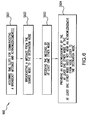
- FIG. 6 shows an exemplary method 600 to reduce delay and/or conserve energy when sending a message from a source node to a destination node of a multi-hop wireless network.
- steps S601 times slots are assigned for communicating a broadcast message and acknowledgements to the broadcast message.
- a first time slot is assigned for communicating the broadcast message from the source node to the destination node, and subsequent time slots are assigned to the destination node and at least one other node for communication an acknowledgement to the broadcasted message.
- the at least one other node may be, for example, one or more intermediate nodes between the source node and the destination node, and the order of the subsequently assigned time slots may correspond, for example, to a hierarchical relationship of the destination node and the intermediate node(s) with respect to other nodes of the multi-hop wireless network.
- the message is broadcasted by the source node to the destination node, which is received by the intermediate node(s).
- the source node broadcasts the message in the time slot assigned for broadcasting the message.
- step S604 an acknowledgement is provided by the intermediate node(s) if the intermediate node(s) do not hear an acknowledgement from a node closer to the destination node.
- the intermediate node(s) provide the acknowledgement in the appropriately assigned time slot, and more than one intermediate node may participate in the providing of the acknowledgement.
Landscapes
- Engineering & Computer Science (AREA)
- Computer Networks & Wireless Communication (AREA)
- Signal Processing (AREA)
- Mobile Radio Communication Systems (AREA)
Applications Claiming Priority (1)
| Application Number | Priority Date | Filing Date | Title |
|---|---|---|---|
| US11/240,434 US20070076740A1 (en) | 2005-09-30 | 2005-09-30 | Method and system to reduce delay and/or energy consumption in a multi-hop wireless system |
Publications (1)
| Publication Number | Publication Date |
|---|---|
| EP1770921A1 true EP1770921A1 (de) | 2007-04-04 |
Family
ID=37434382
Family Applications (1)
| Application Number | Title | Priority Date | Filing Date |
|---|---|---|---|
| EP06020088A Withdrawn EP1770921A1 (de) | 2005-09-30 | 2006-09-26 | Verfahren und Vorrichtung zur Reduzierung der Verzögerung und/oder des Energieverbrauchs in einer drahtlosen Multi-Hop-Vorrichtung |
Country Status (2)
| Country | Link |
|---|---|
| US (1) | US20070076740A1 (de) |
| EP (1) | EP1770921A1 (de) |
Cited By (4)
| Publication number | Priority date | Publication date | Assignee | Title |
|---|---|---|---|---|
| EP2066064A3 (de) * | 2007-11-13 | 2009-07-22 | Thomson Licensing | Vorrichtung und Verfahren zur schnellen Wiederübertragung in einem Netzleitungskommunikationsnetz |
| WO2010041122A3 (en) * | 2008-10-09 | 2010-06-10 | Robert Bosch Gmbh | Method of using acknowledgment tones for data consistency in intra-vehicular wireless networks |
| US8422460B2 (en) | 2009-04-06 | 2013-04-16 | Robert Bosch Gmbh | Method for performing proactive wireless communication handoffs using a mobile client's route information |
| US9158290B2 (en) | 2009-12-16 | 2015-10-13 | Robert Bosch Gmbh | Magnetic field communication arrangement and method |
Families Citing this family (10)
| Publication number | Priority date | Publication date | Assignee | Title |
|---|---|---|---|---|
| US8667116B2 (en) * | 2005-09-30 | 2014-03-04 | Robert Bosch Gmbh | Method and system for providing reliable communication with redundancy for energy constrained wireless systems |
| CN101411096B (zh) * | 2006-03-29 | 2012-10-24 | 松下电器产业株式会社 | 无线传输系统、无线电台及该无线电台所执行的方法 |
| US7843834B2 (en) * | 2006-09-15 | 2010-11-30 | Itron, Inc. | Use of minimal propagation delay path to optimize a mesh network |
| EP1976175B1 (de) * | 2007-03-30 | 2022-03-30 | Samsung Electronics Co., Ltd. | Vorrichtung und Verfahren für die asynchrone Kontrollnachrichtübertragung zur Datenneuübertragung in einem drahtlosen Relaiskommunikationssystem |
| US9185629B2 (en) * | 2009-10-15 | 2015-11-10 | Hewlett-Packard Development Company, L.P. | Multi-hop network having reduced power consumption |
| US8542579B2 (en) * | 2009-11-17 | 2013-09-24 | University Of Maryland | Method and system for cooperative transmission in wireless multi-hop networks |
| FR2964003A1 (fr) * | 2010-08-19 | 2012-02-24 | France Telecom | Procede et dispositif de relayage dans un reseau de communication |
| US20120113896A1 (en) * | 2010-11-10 | 2012-05-10 | Telcordia Technologies, Inc. | Skip Ahead Routing in Wireless Ad Hoc Networks |
| US9292077B2 (en) * | 2013-01-04 | 2016-03-22 | Qualcomm Incorporated | Methods and apparatus for efficient service layer assistance for modem sleep operations |
| US9451524B2 (en) * | 2013-08-28 | 2016-09-20 | Google Inc. | Wireless networking with flexibly-ordered relayers |
Citations (3)
| Publication number | Priority date | Publication date | Assignee | Title |
|---|---|---|---|---|
| GB2369532A (en) * | 2000-11-28 | 2002-05-29 | Stephen Anthony Gerar Chandler | Routing algorithm for distributed telecommunication networks |
| WO2003061176A2 (en) * | 2002-01-10 | 2003-07-24 | Robert Bosch Gmbh | Protocol for reliable, self-organizing, low-power wireless network for security and building automation system |
| US20040165532A1 (en) * | 2002-06-07 | 2004-08-26 | Poor Robert Dunbar | Ad hoc wireless network using gradient routing |
Family Cites Families (1)
| Publication number | Priority date | Publication date | Assignee | Title |
|---|---|---|---|---|
| US6850511B2 (en) * | 2002-10-15 | 2005-02-01 | Intech 21, Inc. | Timely organized ad hoc network and protocol for timely organized ad hoc network |
-
2005
- 2005-09-30 US US11/240,434 patent/US20070076740A1/en not_active Abandoned
-
2006
- 2006-09-26 EP EP06020088A patent/EP1770921A1/de not_active Withdrawn
Patent Citations (3)
| Publication number | Priority date | Publication date | Assignee | Title |
|---|---|---|---|---|
| GB2369532A (en) * | 2000-11-28 | 2002-05-29 | Stephen Anthony Gerar Chandler | Routing algorithm for distributed telecommunication networks |
| WO2003061176A2 (en) * | 2002-01-10 | 2003-07-24 | Robert Bosch Gmbh | Protocol for reliable, self-organizing, low-power wireless network for security and building automation system |
| US20040165532A1 (en) * | 2002-06-07 | 2004-08-26 | Poor Robert Dunbar | Ad hoc wireless network using gradient routing |
Cited By (6)
| Publication number | Priority date | Publication date | Assignee | Title |
|---|---|---|---|---|
| EP2066064A3 (de) * | 2007-11-13 | 2009-07-22 | Thomson Licensing | Vorrichtung und Verfahren zur schnellen Wiederübertragung in einem Netzleitungskommunikationsnetz |
| WO2009063286A3 (en) * | 2007-11-13 | 2009-08-13 | Thomson Licensing | Apparatus and method for fast retransmission in a power line communication network |
| US9026878B2 (en) | 2007-11-13 | 2015-05-05 | Thomson Licensing | Apparatus and method for fast retransmission in a power line communication network |
| WO2010041122A3 (en) * | 2008-10-09 | 2010-06-10 | Robert Bosch Gmbh | Method of using acknowledgment tones for data consistency in intra-vehicular wireless networks |
| US8422460B2 (en) | 2009-04-06 | 2013-04-16 | Robert Bosch Gmbh | Method for performing proactive wireless communication handoffs using a mobile client's route information |
| US9158290B2 (en) | 2009-12-16 | 2015-10-13 | Robert Bosch Gmbh | Magnetic field communication arrangement and method |
Also Published As
| Publication number | Publication date |
|---|---|
| US20070076740A1 (en) | 2007-04-05 |
Similar Documents
| Publication | Publication Date | Title |
|---|---|---|
| AU2003296959B2 (en) | System and method for link-state based proxy flooding of messages in a network | |
| US5504746A (en) | Radio frequency local area network | |
| US6826165B1 (en) | Radio frequency local area network | |
| JP3853326B2 (ja) | アドホックネットワーク環境で確実にブロードキャストするシステム及び方法 | |
| US6895450B2 (en) | Communication network having a plurality of bridging nodes which transmit a beacon to terminal nodes in power saving state that it has messages awaiting delivery | |
| EP1808981B1 (de) | Drahtloses Relais mit selektiver Nachrichtenwiederholung und Betriebsverfahren dafür | |
| US20030227934A1 (en) | System and method for multicast media access using broadcast transmissions with multiple acknowledgements in an Ad-Hoc communications network | |
| US9526030B2 (en) | Device and method for load balancing for data packet transmissions in wireless networks | |
| US9516671B2 (en) | Shared HARQ feedback channels for virtual grouping in a wireless relay network | |
| US7917145B2 (en) | Radio frequency local area network | |
| US7415548B2 (en) | Communication network having a plurality of bridging nodes which transmits a polling message with backward learning technique to determine communication pathway | |
| EP1770921A1 (de) | Verfahren und Vorrichtung zur Reduzierung der Verzögerung und/oder des Energieverbrauchs in einer drahtlosen Multi-Hop-Vorrichtung | |
| US20060268807A1 (en) | Radio frequency local area network | |
| US20070121529A1 (en) | Communication network providing wireless and hard-wired dynamic routing | |
| EP1794945B1 (de) | Verfahren zum Senden einer Bestätigung zu einem Eingangs-Mesh-Punkt in einem Mesh-Netzwerk und Medienzugangs-Steuerrahmenformat | |
| US20210084675A1 (en) | High-performance wireless battery area network | |
| US7522547B2 (en) | Method for transmitting FATIM in mobile ad hoc network and medium access control protocol layer module therefor | |
| JP2009542109A (ja) | フォールト・トレランスのために複数のパスを実現するモバイル・アドホック・ネットワーク(manet)及び方法 | |
| US20090046611A1 (en) | System and method for media access control for a duty cycle network | |
| WO2009042472A2 (en) | A method for arq-enabled pre-transmissions in multicast and broadcast services of relay networks utilizing the idle periods | |
| US20100165916A1 (en) | Wireless Star Network with Standby Central Node | |
| EP1770907A1 (de) | Verfahren und System zur Überwachung mit Redundanten für beschränkte Energie drahtloser Systeme | |
| KR20100109690A (ko) | 무선통신 시스템에서 데이터를 수신하는 방법 및 이를 이용한 무선통신 시스템 | |
| CN101425883B (zh) | 多跳中继网络中harq下行数据反馈延时通知方法 | |
| KR20050110174A (ko) | 모바일 애드 혹 네트워크에서 라우팅 경로 설정 방법 |
Legal Events
| Date | Code | Title | Description |
|---|---|---|---|
| PUAI | Public reference made under article 153(3) epc to a published international application that has entered the european phase |
Free format text: ORIGINAL CODE: 0009012 |
|
| AK | Designated contracting states |
Kind code of ref document: A1 Designated state(s): AT BE BG CH CY CZ DE DK EE ES FI FR GB GR HU IE IS IT LI LT LU LV MC NL PL PT RO SE SI SK TR |
|
| AX | Request for extension of the european patent |
Extension state: AL BA HR MK YU |
|
| 17P | Request for examination filed |
Effective date: 20070509 |
|
| 17Q | First examination report despatched |
Effective date: 20070606 |
|
| AKX | Designation fees paid |
Designated state(s): AT BE BG CH CY CZ DE DK EE ES FI FR GB GR HU IE IS IT LI LT LU LV MC NL PL PT RO SE SI SK TR |
|
| STAA | Information on the status of an ep patent application or granted ep patent |
Free format text: STATUS: THE APPLICATION IS DEEMED TO BE WITHDRAWN |
|
| 18D | Application deemed to be withdrawn |
Effective date: 20071017 |