EP1775892A1 - Mobilkommunikations-zugangssystem, pakettransfereinrichtung und wegwiederherstellungsverfahren - Google Patents
Mobilkommunikations-zugangssystem, pakettransfereinrichtung und wegwiederherstellungsverfahren Download PDFInfo
- Publication number
- EP1775892A1 EP1775892A1 EP05767433A EP05767433A EP1775892A1 EP 1775892 A1 EP1775892 A1 EP 1775892A1 EP 05767433 A EP05767433 A EP 05767433A EP 05767433 A EP05767433 A EP 05767433A EP 1775892 A1 EP1775892 A1 EP 1775892A1
- Authority
- EP
- European Patent Office
- Prior art keywords
- path
- edge device
- mobile terminal
- identification information
- packet transfer
- Prior art date
- Legal status (The legal status is an assumption and is not a legal conclusion. Google has not performed a legal analysis and makes no representation as to the accuracy of the status listed.)
- Withdrawn
Links
Images




Classifications
-
- H—ELECTRICITY
- H04—ELECTRIC COMMUNICATION TECHNIQUE
- H04L—TRANSMISSION OF DIGITAL INFORMATION, e.g. TELEGRAPHIC COMMUNICATION
- H04L45/00—Routing or path finding of packets in data switching networks
- H04L45/50—Routing or path finding of packets in data switching networks using label swapping, e.g. multi-protocol label switch [MPLS]
-
- H—ELECTRICITY
- H04—ELECTRIC COMMUNICATION TECHNIQUE
- H04W—WIRELESS COMMUNICATION NETWORKS
- H04W40/00—Communication routing or communication path finding
- H04W40/34—Modification of an existing route
- H04W40/36—Modification of an existing route due to handover
Definitions
- the present invention relates, in a label switching technology such as MPLS (Multi Protocol Label Switching), which transfers data using a label, to a mobile communication access system, a packet transfer device, and a path re-establishing method for controlling a change in a path.
- MPLS Multi Protocol Label Switching
- non-patent document 1 a standard protocol technique that constitutes an LSP (Label Switch Path) is disclosed in non-patent document 1 below.
- the technique disclosed in non-patent document 1 is a protocol that constitutes a point-to-point path, and enables the exchange of a PATH message and a Resv message by an ingress LSR (Label Switch Router) and an egress LSR, which serve as edges, so as to form a label path and to reserve a band.
- label Switch Router Label Switch Router
- egress LSR Label Switch Router
- standardization is currently performed in order to form a path for a point-to-multipoint path for multicasting, etc., and this technique is disclosed in non-patent document 2 below.
- the technique in non-patent document 2 employs, in a session object, an identifier that is used in common for identifying a point-to-multipoint path, and forms a point-to-multipoint path using a plurality of point-to-point paths (branch LSPs). Specifically, when an Resv message is received by a branch LSR, which is a branch node, the above described identifier in common is acknowledged, and the branch LSPs of multiple point-to-points that belong to the same point-to-multipoint path are merged. In this manner, a point-to-multipoint path is formed.
- branch LSR which is a branch node
- an LSP to be treated as a tunnel for layer 2, so that only the handover process on layer 2 need be performed, by changing an LSP, without requiring the handover process on layer 3.
- a connection node to an external network is regarded as an ingress LSR (input side edge) for an LSP that serves as a layer 2 tunnel, and an accommodated node wherein a mobile terminal is accommodated is regarded as an egress LSR (output side edge).
- Non-patent Document 1 " RSVP-TE: Extensions to RSVP for LSP Tunnels", IETF Standards, RFC 3209
- Non-patent Document 2 " Establishing Point to Multipoint MPLS TE LSPs", draft-raggarwa-mpls-p2mp-te-02.txt
- the LSP is defined as shown in Fig. 9B. Since, as a session object, the address of an ingress LSR is employed instead of an egress LSR, the same value can be used when the egress LSR is changed as the mobile terminal is moved.
- the setup and maintenance of a plurality of routes, relative to a plurality of destinations must be the responsibility of the ingress LSR.
- the setup and maintenance of an LSP must be performed for each mobile terminal, and the process performed by the ingress LSR becomes enormous, as the number of mobile terminals is increased.
- the signal route is established, and it is assumed that the ingress LSR knows the egress LSR is the destination.
- a delay in communication with the ingress LSR for the notification of a change for an egress LSR is also increased in accordance with the increase in the size of a network.
- the present invention has been made to solve the above described problems, and one object of the present invention is to provide a mobile communication access system, and provide a packet transfer device and a path re-establishing method that can eliminate a useless consumption of resources due to route redundancy, reduce a load on the processing, such as the setup of an LSP, performed by an ingress LSR, avoid an increase in the length of a signal route for setting up an LSP, suppress a delay in providing a notification of the change for an egress LSR to which a mobile terminal is to be connected, and perform a fast handover process.
- a mobile communication access system which comprises:
- the packet transfer device that has transmitted the path message changes the path from the first edge device to the second edge device, and then transmits, to the communication destination edge device, a path change notification that includes the identification information for the second edge device.
- the packet transfer device that has transmitted the path message changes the path from the first edge device to the second edge device, and then transmits, to the first edge device, a path re-establishment notification indicating that the path has been re-established.
- the first edge device can determine that a new path has been obtained.
- the first edge device after the first edge device has received the path re-establishment notification, the first edge device transmits, to the mobile terminal, a notification indicating that a new path has been obtained.
- the mobile terminal can determine that a path at a movement destination can be obtained.
- a mobile communication access system comprising:
- the transmission means transmits, to the communication destination edge device, a path change notification that includes the identification information for the second edge device.
- the transmission means transmits, to the first edge device, a path re-establishment notification indicating that the path has been re-established.
- the first edge device can determine that a new path has been obtained.
- a mobile communication access system comprising:
- the path re-establishing method comprises:
- the path re-establishing method comprises:
- the path re-establishing method comprises:
- the mobile communication access system, the packet transfer device and the path re-establishing method of this invention have the above described arrangement.
- an unwanted consumption of resources due to route redundancy can be prevented, a load imposed on the processing, such as the setup of an LSP performed by the ingress LSR, can be reduced, an increase in the length of a signal route for setting up the LSP can be avoided, a delay in the notification of the change of the egress LSP, to which the mobile terminal is to be connected, can be suppressed, and a fast handover process can be performed.
- FIGs. 1A and 1B are configuration diagrams for explaining the configuration of a mobile communication access system according to the mode of the present invention.
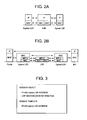
- Figs. 2A and 2B are diagrams for explaining the protocol stacks for the mobile communication access system of the mode of the present invention.
- Fig. 3 is a diagram for explaining the identification of an LSP for the mobile communication access system according to the mode of the invention.
- Fig. 4 is a sequence chart for explaining example operating procedures for the mobile communication access system according to the mode of the invention.
- Figs. 1A and 1B are configuration diagrams for explaining the configuration of a mobile communication access system according to the mode of the present invention.
- Figs. 2A and 2B are diagrams for explaining the protocol stacks for the mobile communication access system of the mode of the present invention.
- Fig. 3 is a diagram for explaining the identification of an LSP for the mobile communication access system according to the mode of the invention.
- Fig. 4 is a sequence chart for explaining example operating procedures for the mobile communication access system according to the
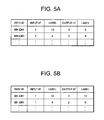
- FIGS. 5A and 5B are diagrams for explaining a transfer table managed by the packet transfer device that serves as a branch node for the mobile communication access system of the mode of the invention.
- Fig. 6 is a flowchart for explaining the processing performed in the mobile communication system of the mode of the invention when an attachment request is received from an edge device before movement.
- Fig. 7 is a configuration diagram for explaining the arrangement of the packet transfer device according to the mode of the invention.
- Fig. 8 is a flowchart for explaining the processing, performed by the packet transfer device according to the mode of the invention, when a path message is received.
- Figs. 1A and 1B The mobile communication system before a mobile terminal 100 was moved is shown in Fig. 1A, and the mobile communication access system after the mobile terminal 100 was moved is shown in Fig. 1B.
- the mobile communication access system for the mode of this invention comprises: the mobile terminal (hereinafter also called an MH (Mobile Host) 100; a pre-movement label switch router (hereinafter also called an Egress LSR-O, and corresponding to a first edge device described above) 101a, which is a label switch router to which the mobile terminal 100 is currently connected; a post-movement label switch router (hereinafter also called an Egress LSR-N, and corresponding to a second edge device described above) 101b, which is a label switch router to which the mobile terminal 100 is to be connected after moving; a communication destination side label switch router (hereinafter also called an Ingress LSR) 101c, which is a label switch router that is connected to a router 104 of an external network 103 and relays communications between the mobile terminal 100 and a communication destination (not shown) for the mobile terminal 100; and label switch routers (hereafter also called LSR-A to LSR-C) 101d to 101f, which are located between the pre-movement label switch router
- An LSP (Label Switch Path) 102a for which identification information allocated to the mobile terminal 100 is provided, is established between the pre-movement label switch router 101a and the communication destination side label switch router 101c.
- the LSP is also simply called a path.
- protocol stacks for the mobile communication access system of this invention are shown in Figs. 2A and 2B.
- a protocol stack for a control plane is shown in Fig. 2A
- a protocol stack for a transfer plane is shown in Fig. 2B.
- the mobile communication access system of the invention is a system that connects the mobile terminal (MH) 100 to an external network, such as the Internet or an ISP network.
- an external network such as the Internet or an ISP network.
- two plane structures are provided: a control plane for performing network control or the setup of an LSP; and a transfer plane for exchanging data concerning the mobile terminal with an external network.
- the control plane is operated as a common IP network, and through routing, a packet is transferred between the individual LSRs.
- the transfer plane is an L2 tunnel along which the mobile terminal and an external network are connected by a layer 2, and an LSP set by the control plane is operated as an L2 tunnel.
- a movement tracking system which is similar to the mobile communication access system of the mode of the invention, is disclosed in Japanese Patent Laid-Open Application No. 2003-244205 .
- the mobile communication access system according to the mode of the invention differs from the movement tracking system disclosed in Japanese Patent Laid-Open Application No. 2003-244205 in its basic arrangement.
- the mobile communication access system of the mode of this invention is provided on the assumption that a point-to-point path is formed between the communication destination side router 101c and the pre-movement label switch router 101a, to which the mobile terminal 100 is connected.
- a QoS (Quality of Service) path is formed by using a TR (Transit Router) as a boundary. From the above description, accordingly, the path re-establishment processing, etc., is different, so that it can be said that each of the two inventions differ from the other.
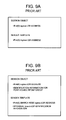
- the components for identifying an LSP will now be explained while referring to Fig. 3.
- the LSP is identified by using a session object and a sender template.
- the session object includes the address of the Ingress LSR 101c, which is a start node address, and identification information for the LSP, which is allocated to the MH 100, and the sender template includes the address of the Egress LSR, which is an end node address.
- the above described identification information for the LSP is an identifier that the Ingress LSR 101c allocates the MH 100, and when the MH 100 has accessed the mobile communication access system of this invention the first time, the MH 100 obtains identification information for the pertinent LSP from the Egress LSR that is connected.
- the mobile terminal 100 When, in accordance with the movement, the mobile terminal 100 has received, from the post-movement label switch router 101b, a beacon that includes, for example, identification information for the post-movement label switch router 101b, and has completed a predetermined process, as shown in the state in Fig. 1B, the mobile terminal 100 is connected to the post-movement label switch router 101b.
- the path 102b which was established between the pre-movement label switch router 101a and the communication destination side label switch router 101c, is re-established, as a path 102b, between the post-movement label switch router 101b and the communication destination side label switch router 101c. It should be noted that the predetermined process will be described later.
- the Egress LSR-N 101b transmits, to the surroundings, a beacon that includes, for example, identification information for the Egress LSR-N 101b (e.g., the IP address of the Egress LSR-N 101b used by the control plane) (step S401).
- the beacon may be transmitted periodically.
- the MH 100 transmits, to the Egress LSR-O 101a, an attachment request that includes identification information for the Egress LSR-N 101b and identification information for the LSP allocated to the MH 100 (step S402).
- the MH 100 employs, for example, the change of a beacon reception intensity to select a new movement destination, and transmits an attachment request. Further, the identification information for the LSP allocated to this MH 100 is stored in a predetermined area of the MH 100.
- the Egress LSR-O 101a When the Egress LSR-O 101a has received an attachment request that includes identification information for the Egress LSR-N 101b and identification information for the LSP allocated to the MH 100, the Egress LSR-O 101a employs the identification information for the Egress LSR-N 101b, which is included in the attachment request, and routing table information for the control plane, which is stored in advance in a predetermined storage area, and decides on an output (destination) interface for routing a packet to the Egress LSR-N 101b. Then, Egress LSR-O 101a determines whether the output interface for the Egress LSR-N 101b that has been decided on is the same as the input interface for the path 102a that has already been established for the MH 100.
- the Egress LSR-O 101a When the interfaces are determined to be the same, the Egress LSR-O 101a generates a path request message, which includes the identification information for the Egress LSR-N 101b and the identification information for the LSP allocated to the MH 100, and transmits the generated path request message to the output interface that has been decided on (step S403).
- the Egress LSR-O 101a When the interfaces are determined not to be the same, the Egress LSR-O 101a generates a path message that includes identification information for the Egress LSR-N 101b and identification information for the LSP allocated to the MH 100, and transmits the generated path message to the output interface that has been decided on.
- the address of the Ingress LSR 101c which served as the ingress LSR when the path for the MH 100 was formed, is employed as the IPv4 (Internet Protocol Version)(6) ingress LSR address for the session object that is included in the output path message.
- the routing table information is information that is used for IP routing for exchanging, for example, a common control packet with the control plane. Further, the processing performed by the Egress LSR-O 101a that has received the attachment request will be described later.
- the LSR-B 101e which has received a path request message, employs the identification information for the Egress LSR-N 101b, included in the path request message, and routing table information, stored in advance in a predetermined storage area, decides on an output (destination) interface for the Egress LSR-N 101b, and determines whether the output interface for the Egress LSR-N 101b that has been decided on is the same as the input interface for the path 102a that has already been established for the MH 100.
- the LSR-B 101e When the interfaces are determined not to be the same, the LSR-B 101e generates a path message that includes identification information for the Egress LSR-N 101b and identification information for the LSP allocated to the MH 100, and transmits the path message to the output interface that has been decided on (step S404). Also in this case, the address of the Ingress LSR 101c is employed as the IPv4(6) ingress LSR address in the session object for the generated path message.
- the path request message is transferred through the output interface that has been decided on to the other packet transfer device that is connected to the LSR-B 101e.
- the LSR-C 101f Upon receiving the path message, the LSR-C 101f processes the path message, and further transfers the path message to the Egress LSR-N 101b in accordance with information included in the path message (step S405). Upon receiving the path message, along the route across which the path message was transferred, the Egress LSR-N 101b obtains a route and a band relative to the path message and transmits a reserve message to allocate a label (step S406).
- the LSR-C 101f Upon receiving the reserve message, the LSR-C 101f examines the received reserve message and establishes a label that is to be used to transfer a packet downstream, and also obtains a route and a band for the received path message and transmits, to the LSR-B 101e that transmitted the path message, a reserve message for allocating a label (step S407). Upon receiving the reserve message, the LSR-B 101e employs the reserve message to change the output interface and a label to be used when a packet transmitted by the MH 100 is to be transferred downstream. As a result, the transfer destination of the path 102a is changed from the Egress LSR-O 101a to the Egress LSR-N 101b.
- the LSR-B 101e transmits, to the Ingress LSR 101c, a notification indicating that the path has been changed (step 408).
- the LSR-A 101d internally changes the egress LSR of the path 102a, and transfers, to the Ingress LSR 101c, the notification indicating the path has been changed (step S409) .
- the LSR-B 101e may transmit, to the Egress LSR-O 101a, a path reconfiguration notification indicating that the path 102b could be reconfigured. Further, upon receiving the path reconfiguration notification, the Egress LSR-O 101a may transmit, to the MH 100, a notification indicating a new path 102a has been obtained. According to this mode, the LSR-B 101e that has received a reserve message has changed the output interface; however, as another arrangement, instead of being changed, an output interface may be added, and a packet may be copied and transferred to both Egress LSRs.
- the Ingress LSR 101c need not perform the calculation for a path and transmit a signal for re-establishing the path. Therefore, when many MHs are accommodated and many paths are controlled, the load imposed on the Ingress LSR 101c can be reduced. Further, since a new path is automatically configured from the Egress LSR-O 101a to the Egress LSR-N 101b, the signaling period can be reduced.
- a branch node of a path since a branch node of a path is automatically determined, a return path from the Egress LSR-O 101a to the Egress LSR-N 101b (a path established between the Egress LSR-O 101a and the LSR-B 101e) need not be configured, and a wasted route, such that a path is reciprocated, can be eliminated. Additionally, since signaling is not performed between a packet transfer device at a branch node and the Ingress LSR 101c, consumption of a band by a configuration consisting of a plurality of paths can be also removed.
- the delay time for transmitting the change notification does not produce a problem for the switching of the path.
- a path can be configured before communication with the Egress LSR-N 101b is established, a more rapid handover can be performed.
- FIGs. 5A and 5B alteration of a transfer table performed when a path is changed will be described by employing, as an example, a transfer table managed by the LSR-B 101e.
- a transfer table managed by the LSR-B 101e paths from individual MHs that are established for the LSR-B 101e are managed in the transfer table.
- the transfer table before and after MH#1 has been moved will be explained below.
- the transfer table before MH#1 has been moved is shown in Fig. 5A
- the transfer table after MH#1 has been moved is shown in Fig. 5B.
- MHID#1 is entered as a path ID
- 1 is entered as an input I/F
- 10 is entered as its label
- 3 is entered as an output I/F
- 5 is entered as its label.
- the LSR-B 101e changes the path 102a established between the LSR-B 101e and the Egress LSR-O 101a, and re-establishes a path 102b extending from the LSR-B 101e to the Egress LSR-N 101b, to which MH#1 is newly connected. It should be noted that the situation, as it pertains to MH#3, is treated in the same manner.
- the Egress LSR-O 101a receives an attachment request that includes identification information for the Egress LSR-N 101b (step S601).
- the Egress LSR-0 101a decides on an output (destination) interface for the Egress LSR-N 101b based on identification information for the Egress LSR-N 101b, included in the attachment request, and routing table information, stored in advance in a predetermined storage area (step S602).
- the Egress LSR-O 101a determines whether the output interface for the Egress LSR-N 101b that has been decided on is the same as the input interface for a path that has already been established for the MH 100 (i.e., determines whether the output interface for the Egress LSR-N 101b is the same as the input interface for the LSP allocated to the MH 100) (step S603).
- the Egress LSR-O 101a generates a path request message that includes the identification information for the Egress LSR-N 101b and the identification information for the LSP allocated to the MH 100, and transmits the generated path request message to the output interface that has been decided on.
- the path request message is transmitted, via the decided on output interface, to the LSR-B 101e connected to the Egress LSR-O 101a (step S604).
- the Egress LSR-0 101a when the interfaces are determined not to be the same, the Egress LSR-0 101a generates a path message that includes identification information for the Egress LSR-N 101b and identification information for the LSP allocated to the MH 100, and transmits the generated path message to the output interface for the Egress LSR-N 101b that has been decided on (step S605).
- the packet transfer device is a device corresponding to the LSR-A 101d, the LSR-B 101e or the LSR-C 101f described above.
- a packet transfer device 700 includes a reception unit 701, a decision unit 702, a determination unit 703, a transmission unit 704 and a re-establishment unit 705, all of which are connected by a bus 706.
- the packet transfer device 700 stores, in a predetermined storage area (not shown), a control program for controlling the operation of the packet transfer device 700, and control is based on the control program.
- the packet transfer device 700 includes an interface (not shown) for performing external communication.
- the reception unit 701 receives, from the Egress LSR-O 101a, a path request message that includes identification information for the Egress LSR-N 101b and identification information for the LSP allocated to the MH 100.
- the reception unit 701 also receives a reserve message from the Egress LSR-N 101b.
- the decision unit 702 employs the identification information for the Egress LSR-N 101b, which is included in the path request message received by the reception unit 701, and routing table information, which is stored in advance in a predetermined storage area, and decides on an output (destination) interface for the Egress LSR-N 101b.
- the determination unit 703 determines whether the output interface for the Egress LSR-N 101b, which is decided on by the decision unit 702, is the same as the input interface of the path 102a that has already been established for the MH 100.
- the transmission unit 704 transfers the path request message through the output interface that has been decided on for the LSR-N 101b to the other packet transfer device that is connected to the packet transfer device 700, or when the determination unit 703 determines that the interfaces are not the same, transmits, to the decided on output interface, a path message that includes identification information for the Egress LSR-N 101b and identification information for the LSP allocated to the MH 100.
- the re-establishment unit 705 changes a label switch transfer table and changes the path 102a from the Egress LSR-O 101a to the Egress LSR-N 101b.
- the reception unit 701 receives, from the Egress LSR-O 101a, a path request message that includes identification information for the Egress LSR-N 101b and identification information for the LSP allocated to the MH 100, and that requests a change in the setup of a path (step S801).
- the decision unit 702 determines whether the path request message has been received on the output side interface for the path 102a (i.e., the path request message has been received on the output side interface for the LSP allocated to the MH 100) (step S802).
- the decision unit 702 When it is determined that the path request message has been received by the output side interface of the path 102a, the decision unit 702 employs identification information for the Egress LSR-n 101b, which is included in the path request message received by the reception unit 701, and routing table information, which is stored in advance in a predetermined storage area, and decides on an output (destination) interface for the Egress LSR-N 101b (step S803). On the other hand, when it is determined at step S802 that the path request message has been received by the output side interface of the path 102a, the received packet is abandoned (step S804).
- the determination unit 703 determines whether the output interface for the Egress LSR-N 101b, which is decided on by the decision unit 702, is the same as the input interface for the path 102a that has already been established for the MH 100 (i.e., determines whether the output interface for the Egress LSR-N 101b is the same as the input side interface for the LSP that has already been employed by the MH 100) (step S805).
- the transmission unit 704 transmits the received path request message via the decided on output interface to the other packet transfer device that is connected to the packet transfer device 700 (step S806).
- the transmission unit 704 transmits, to the output interface that has been decided on for the Egress LSR-N 101b, a path message that includes identification information for the Egress LSR-N 101b and identification information for the LSP allocated to the MH 100 (step S807).
- the Ingress LSR 101c need not perform the calculation for a path and for re-establishing the path. Therefore, when many paths are controlled, the load imposed on the Ingress LSR 101c can be reduced. Further, since a new path is automatically configured from the Egress LSR-O 101a to the Egress LSR-N 101b, the signaling period can be reduced. In addition, during the path configuration, since a branch node for a path is automatically determined, a return path from the Egress LSR-O 101a to the Egress LSR-N 101b need not be configured, and a wasted route can be eliminated.
- the packet transfer device and the path re-establishing method of this invention an unwanted consumption of resources due to route redundancy can be prevented, a load imposed on the processing, such as the setup of an LSP performed by the ingress LSR, can be reduced, an increase in the length of a signal route for setting up the LSP can be avoided, a delay in the notification of the change of the egress LSP, to which the mobile terminal is to be connected, can be suppressed, and a fast handover process can be performed. Therefore, for the label switching technology that employs a label, such as an MPLS, to transfer data, the present invention is useful for a mobile communication access system, a packet transfer device, a path re-establishing method, etc that controls a route change.
Landscapes
- Engineering & Computer Science (AREA)
- Computer Networks & Wireless Communication (AREA)
- Signal Processing (AREA)
- Data Exchanges In Wide-Area Networks (AREA)
- Mobile Radio Communication Systems (AREA)
Applications Claiming Priority (2)
| Application Number | Priority Date | Filing Date | Title |
|---|---|---|---|
| JP2004224963 | 2004-07-30 | ||
| PCT/JP2005/013869 WO2006011570A1 (ja) | 2004-07-30 | 2005-07-28 | 移動通信アクセスシステム、パケット転送装置及びパス張り替え方法 |
Publications (1)
| Publication Number | Publication Date |
|---|---|
| EP1775892A1 true EP1775892A1 (de) | 2007-04-18 |
Family
ID=35786318
Family Applications (1)
| Application Number | Title | Priority Date | Filing Date |
|---|---|---|---|
| EP05767433A Withdrawn EP1775892A1 (de) | 2004-07-30 | 2005-07-28 | Mobilkommunikations-zugangssystem, pakettransfereinrichtung und wegwiederherstellungsverfahren |
Country Status (5)
| Country | Link |
|---|---|
| US (1) | US20090010201A1 (de) |
| EP (1) | EP1775892A1 (de) |
| JP (1) | JPWO2006011570A1 (de) |
| CN (1) | CN1993939A (de) |
| WO (1) | WO2006011570A1 (de) |
Cited By (1)
| Publication number | Priority date | Publication date | Assignee | Title |
|---|---|---|---|---|
| WO2010114437A1 (en) * | 2009-03-31 | 2010-10-07 | Telefonaktiebolaget Lm Ericsson (Publ) | Methods and devices for point to multipoint traffic path encoding |
Families Citing this family (6)
| Publication number | Priority date | Publication date | Assignee | Title |
|---|---|---|---|---|
| CN101383758B (zh) * | 2007-09-07 | 2011-04-20 | 华为技术有限公司 | 多地址空间移动网络架构、路由器及数据发送方法 |
| US8493879B2 (en) * | 2008-11-19 | 2013-07-23 | Nec Corporation | Node apparatus, route control method, route computation system, and route computation apparatus |
| CN102065512B (zh) * | 2009-11-12 | 2013-08-07 | 中兴通讯股份有限公司 | 多层网络中区域边界控制的方法、建立连接的方法和系统 |
| JP6171443B2 (ja) * | 2013-03-21 | 2017-08-02 | 富士通株式会社 | データ転送制御方法、中継装置、及びデータ転送制御装置 |
| CN106257876B (zh) * | 2015-06-16 | 2020-09-15 | 中兴通讯股份有限公司 | 标签处理方法、路由信息下发方法及装置 |
| US10972575B2 (en) * | 2017-06-02 | 2021-04-06 | Huawei Technologies Co., Ltd. | Method and system for supporting edge computing |
Family Cites Families (7)
| Publication number | Priority date | Publication date | Assignee | Title |
|---|---|---|---|---|
| US7061896B2 (en) * | 2000-09-20 | 2006-06-13 | George Mason Intellectual Properties, Inc. | Wireless label switched packet transfer network |
| JP4489925B2 (ja) * | 2000-11-02 | 2010-06-23 | 富士通株式会社 | ネットワーク共有帯域割当て方法及びこれを用いるネットワークシステム |
| US7483411B2 (en) * | 2001-06-04 | 2009-01-27 | Nec Corporation | Apparatus for public access mobility LAN and method of operation thereof |
| JP2003051844A (ja) * | 2001-08-08 | 2003-02-21 | Fujitsu Ltd | ユーザ通信装置,エッジデバイス,及びパケットの中継方法 |
| JP3857148B2 (ja) * | 2001-12-12 | 2006-12-13 | 株式会社エヌ・ティ・ティ・ドコモ | QoS保証パスの移動追従システム、このシステムに用いるルータ装置、移動通信端末、ルータ装置を制御するための制御プログラム |
| US7292575B2 (en) * | 2002-07-24 | 2007-11-06 | Telefonaktiebolaget Lm Ericsson (Publ) | Method and system for multi-protocol label switching (MPLS) based data flow aggregation in a third generation (3G) cellular telecommunication system |
| US20040246962A1 (en) * | 2003-06-06 | 2004-12-09 | Kopeikin Roy A. | Dynamically assignable resource class system to directly map 3GPP subscriber communications to a MPLS-based protocol |
-
2005
- 2005-07-28 JP JP2006527857A patent/JPWO2006011570A1/ja not_active Withdrawn
- 2005-07-28 WO PCT/JP2005/013869 patent/WO2006011570A1/ja not_active Ceased
- 2005-07-28 EP EP05767433A patent/EP1775892A1/de not_active Withdrawn
- 2005-07-28 CN CNA2005800258830A patent/CN1993939A/zh active Pending
- 2005-07-28 US US11/658,491 patent/US20090010201A1/en not_active Abandoned
Non-Patent Citations (1)
| Title |
|---|
| See references of WO2006011570A1 * |
Cited By (2)
| Publication number | Priority date | Publication date | Assignee | Title |
|---|---|---|---|---|
| WO2010114437A1 (en) * | 2009-03-31 | 2010-10-07 | Telefonaktiebolaget Lm Ericsson (Publ) | Methods and devices for point to multipoint traffic path encoding |
| US8923295B2 (en) | 2009-03-31 | 2014-12-30 | Telefonaktiebolaget L M Ericsson (Publ) | Methods and devices for point to multipoint traffic path encoding |
Also Published As
| Publication number | Publication date |
|---|---|
| US20090010201A1 (en) | 2009-01-08 |
| JPWO2006011570A1 (ja) | 2008-05-01 |
| CN1993939A (zh) | 2007-07-04 |
| WO2006011570A1 (ja) | 2006-02-02 |
Similar Documents
| Publication | Publication Date | Title |
|---|---|---|
| US7233569B1 (en) | Tunnel reroute | |
| CN102638388B (zh) | 流标签的协商方法、相关装置以及系统 | |
| WO2015113297A1 (zh) | 数据传输方法、传输控制方法及设备 | |
| EP2719116B1 (de) | Verfahren und vorrichtung zur konfigurierung der dienstgüte | |
| EP4277424A1 (de) | Pfadberechnungsverfahren und -vorrichtung, speichermedium und elektronische vorrichtung | |
| US20140185607A1 (en) | Communication system, communication path establishing method and management server | |
| CN105530184A (zh) | 一种标签分配方法、装置及系统 | |
| EP1775892A1 (de) | Mobilkommunikations-zugangssystem, pakettransfereinrichtung und wegwiederherstellungsverfahren | |
| JP5083168B2 (ja) | 擬似ワイヤの設定方法及び装置 | |
| CN112565083B (zh) | 一种geo卫星网络的多协议标签交换方法 | |
| JP2005295551A (ja) | 移動ネットワーク通信におけるハンドオーバー時のパス形成方法 | |
| EP1783964A1 (de) | Mobilkommunikationssystem, pakettransfereinrichtung und wegwiederherstellungsverfahren | |
| EP1890435A1 (de) | Routeneinstellverfahren und routenverwaltungseinrichtung | |
| EP2624505A1 (de) | Verfahren und system zum herstellen, implementieren und abschneiden eines bidirektionalen punkt-zu-mehrpunkt-label-switching-pfades | |
| JP4144802B2 (ja) | Ipアドレス設定方法及びルータ | |
| KR100459046B1 (ko) | 확장된 rsvp-te를 이용한 mpls 기반의 차세대무선 액세스망의 프로토콜 구조 | |
| CN101075842B (zh) | 在共享网段上进行多播数据传输的方法 | |
| EP1796325A1 (de) | Mobilkommunikations-zugangssystem, edge-einrichtung, pakettransfereinrichtung und paket-verlust-verringerungsverfahren | |
| JP2000216818A (ja) | ネットワ―ク資源予約方法 | |
| JP2007274658A (ja) | 移動制御ネットワークシステム、ルータ及び移動端末 | |
| WO2011067901A1 (ja) | 通信システム | |
| JP2004172819A (ja) | 中継装置及び中継方法 | |
| JP2008236606A (ja) | パス設定方法及び該方法のための通信装置 | |
| JP2003037617A (ja) | パス設定装置及び方法 |
Legal Events
| Date | Code | Title | Description |
|---|---|---|---|
| PUAI | Public reference made under article 153(3) epc to a published international application that has entered the european phase |
Free format text: ORIGINAL CODE: 0009012 |
|
| 17P | Request for examination filed |
Effective date: 20070129 |
|
| AK | Designated contracting states |
Kind code of ref document: A1 Designated state(s): AT BE BG CH CY CZ DE DK EE ES FI FR GB GR HU IE IS IT LI LT LU LV MC NL PL PT RO SE SI SK TR |
|
| AX | Request for extension of the european patent |
Extension state: AL BA HR MK YU |
|
| STAA | Information on the status of an ep patent application or granted ep patent |
Free format text: STATUS: THE APPLICATION HAS BEEN WITHDRAWN |
|
| 18W | Application withdrawn |
Effective date: 20070606 |