EP1777298A1 - Essai multiplex en phase solide pour amplification d'acides nucléiques - Google Patents
Essai multiplex en phase solide pour amplification d'acides nucléiques Download PDFInfo
- Publication number
- EP1777298A1 EP1777298A1 EP06021285A EP06021285A EP1777298A1 EP 1777298 A1 EP1777298 A1 EP 1777298A1 EP 06021285 A EP06021285 A EP 06021285A EP 06021285 A EP06021285 A EP 06021285A EP 1777298 A1 EP1777298 A1 EP 1777298A1
- Authority
- EP
- European Patent Office
- Prior art keywords
- probe
- nucleic acid
- moiety
- family dyes
- target nucleic
- Prior art date
- Legal status (The legal status is an assumption and is not a legal conclusion. Google has not performed a legal analysis and makes no representation as to the accuracy of the status listed.)
- Withdrawn
Links
Images


Classifications
-
- C—CHEMISTRY; METALLURGY
- C12—BIOCHEMISTRY; BEER; SPIRITS; WINE; VINEGAR; MICROBIOLOGY; ENZYMOLOGY; MUTATION OR GENETIC ENGINEERING
- C12Q—MEASURING OR TESTING PROCESSES INVOLVING ENZYMES, NUCLEIC ACIDS OR MICROORGANISMS; COMPOSITIONS OR TEST PAPERS THEREFOR; PROCESSES OF PREPARING SUCH COMPOSITIONS; CONDITION-RESPONSIVE CONTROL IN MICROBIOLOGICAL OR ENZYMOLOGICAL PROCESSES
- C12Q1/00—Measuring or testing processes involving enzymes, nucleic acids or microorganisms; Compositions therefor; Processes of preparing such compositions
- C12Q1/68—Measuring or testing processes involving enzymes, nucleic acids or microorganisms; Compositions therefor; Processes of preparing such compositions involving nucleic acids
- C12Q1/6813—Hybridisation assays
- C12Q1/6816—Hybridisation assays characterised by the detection means
- C12Q1/6823—Release of bound markers
-
- C—CHEMISTRY; METALLURGY
- C12—BIOCHEMISTRY; BEER; SPIRITS; WINE; VINEGAR; MICROBIOLOGY; ENZYMOLOGY; MUTATION OR GENETIC ENGINEERING
- C12Q—MEASURING OR TESTING PROCESSES INVOLVING ENZYMES, NUCLEIC ACIDS OR MICROORGANISMS; COMPOSITIONS OR TEST PAPERS THEREFOR; PROCESSES OF PREPARING SUCH COMPOSITIONS; CONDITION-RESPONSIVE CONTROL IN MICROBIOLOGICAL OR ENZYMOLOGICAL PROCESSES
- C12Q1/00—Measuring or testing processes involving enzymes, nucleic acids or microorganisms; Compositions therefor; Processes of preparing such compositions
- C12Q1/68—Measuring or testing processes involving enzymes, nucleic acids or microorganisms; Compositions therefor; Processes of preparing such compositions involving nucleic acids
- C12Q1/6813—Hybridisation assays
- C12Q1/6834—Enzymatic or biochemical coupling of nucleic acids to a solid phase
- C12Q1/6837—Enzymatic or biochemical coupling of nucleic acids to a solid phase using probe arrays or probe chips
Definitions
- the present invention fulfills this and other needs.
- the present invention provides a method for detecting a target nucleic acid, the method comprising the steps of:
- the solid substrate can be any material that can withstand intermittent and repeated nucleic acid denaturation temperatures (i.e., 80°C-105°C, usually about 95°C) and remain bound to the immobilized probe. Preferred substrates allow for the simultaneous detection of multiple nucleic acid sequences.
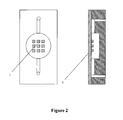
- the solid substrate can be, for example, a multiwell plate, a microscope slide, a polymerase chain reaction (PCR) tube, or a flat-surfaced disk.
- the solid substrate can be any polygonal shape, for example, a circle, an oval, a square, a rectangle, a triangle, a hexagon, and the like.
- the amplification detection is quantitative. In some embodiments, the amplification detection is concurrent with amplification (i.e., "real-time"). In some embodiments the amplification detection is quantitative, and the amplification detection is real-time. In some embodiments, the amplification detection is qualitative (e.g., end-point detection of the presence or absence of a target nucleic acid). In some embodiments, the amplification detection is subsequent to amplification. In some embodiments, the amplification detection is qualitative, and the amplification detection is subsequent to amplification.
- PCR polymerase chain reaction
- nucleic acid, polynucleotide or oligonucleotide can be from a human or non-human mammal, or any other organism, or derived from any recombinant source, synthesized in vitro or by chemical synthesis.
- the primers and probes of the invention can hybridize to an at least partially complementary nucleic acid selectively, as defined below. In certain embodiments, the primers and probes of the invention can hybridize to an at least partially complementary sequence under stringent conditions, as defined below.
- selective or “selective conditions”, as used herein, denote hybridization conditions for the primers and/or probes of the invention that permit amplification, detection and/or quantification of a target nucleic acid in a sample that may contain additional non-targetted nucleic acids.
- the term "probe” refers to an oligonucleotide which can form a duplex structure with a region of a target nucleic acid, due to complementarity of at least one sub-sequence in the probe with a sub-sequence in the target nucleic acid.
- the probe preferably, does not contain a sequence complementary to sequence(s) of a primer.
- the probe can be labeled or unlabeled. The 3' terminus of the probe can be "blocked" to prohibit incorporation of the probe into a primer extension product.
- the term "adjacent" in the context of probe and primer hybridization to a target nucleic acid refers to the positioning of the primer with respect to the probe on the same or the complementary strand of the template nucleic acid.
- the primer and probe may be separated by more than about 150 nucleotides, more than about 125 nucleotides, more than about 100 nucleotides, more than about 80 nucleotides, more than about 60 nucleotides, more than about 50 nucleotides, more than about 40 nucleotides, more than about 30 nucleotides, more than about 20 nucleotides, by about 1 to about 20 nucleotides, by about 1 to about 10 nucleotides, or may directly abut one another without overlapping.
- Taq DNA polymerase has a DNA synthesis-dependent, strand replacement 5'-3'-exonuclease activity (see Gelfand, "Taq DNA Polymerase” in PCR Technology Principles and Applications for DNA Amplification, Erlich, Ed., Stockton Press, N.Y. (1989), Chapter 2). Thus, Taq DNA polymerase does not degrade the probe when it is unbound to template DNA.
- the probe nucleotide sequence can be of any length sufficient to specifically bind a target nucleic acid to be detected.
- the probe comprises at least about 6 nucleotides.
- the probe comprises fewer than about 140 nucleotides.
- the probe can be about 18 to about 45, about 25 to about 35, or about 25 to about 30 nucleotides in length.
- the length and composition of the probe can be chosen to give sufficient thermodynamic stability to ensure hybridization of the probe to the target nucleic acid under the appropriate reaction conditions, which depend on the detection method to be performed.
- the probes are typically designed to have a melting temperature (Tm) that is higher than the Tm of the primers.
- Probes with modified, non-standard, or derivatized nucleotides may be longer or shorter than those with conventional nucleotides while having similar thermodynamic hybridization properties. Examples of such non-standard bases may be found in U.S. Patent Nos. 6,320,005 ; 6,174,998 ; 6,001,611 and 5,990,303 . As another example, probes with G/C-rich sequences may anneal to target sequences at higher temperatures that a probe of similar length with A/T-rich sequences.
- the nucleic acid probes of the invention can additionally comprise other nucleic acid sequences that are not derived from and/or do not hybridize to a target nucleic acid. These additional nucleic acid sequences can be selected by one of skill in the art to provide desired functionality to the probes.
- the nucleic acid probes can comprise additional sequences that allow improved methods of detection. Examples of probes that can comprise additional nucleic acid sequences or can otherwise be adapted for use in the probes, methods, and kits of the invention can be found in U.S. Patent Nos. 6,323,337 ; 6,248,526 ; 6,150,097 ; 6,117,635 ; 6,090,552 ; 5,866,336 and 5,723,591 .
- Thermatoga polymerases that can be used in the methods of the invention include, for example, Thermatoga maritima DNA polymerase and Thermatoga neapolitana DNA polymerase, while an example of a Thermosipho polymerase that can be used is Thermosipho africanus DNA polymerase.
- the sequences of Thermatoga maritima and Thermosipho africanus DNA polymerases are published in International Patent Application No. PCT/US91/07035 with Publication No. WO 92/06200 .
- the sequence of Thermatoga neapolitana may be found in International Patent Publication No. WO 97/09451 .
- more than one primer or immobilized probe may be added to a 5'-nuclease reaction.
- a pair of primers can contact the nucleic acid in a 5'-nuclease reaction.
- the primer can be any primer capable of priming a DNA synthesis reaction. Where only one primer is used, the primer should hybridize to the target nucleic acid upstream of the immobilized probe, i.e ., the 3'-end of the primer should point toward the 5'-end of the immobilized probe. The 3'-end of the primer can hybridize adjacent to the 5'-end of the probe or adjacent to the 3'-end of the primer can hybridize further upstream of the 5'-end of the probe. Where more than one primer is used, at least one primer should hybridize to the nucleic acid to be detected upstream of the immobilized probe, as described above.
- the RNA can be reverse-transcribed in the presence of an immobilized probe, simultaneously producing cDNA that can subsequently be amplified and/or detected and detecting the presence of the RNA by assessing fragmentation of the immobilized probe as described herein.
- the complementary strands are typically longer than either the probe or primer, the strands have more points of contact and thus a greater chance of finding and binding each other over any given period of time.
- a high molar excess of immobilized probe and primer helps shift the equilibrium toward primer and probe annealing to one strand of the target nucleic acid rather than both strands of the target nucleic acid reannealing.
- the immobilized probe preferably hybridizes to the nucleic acid to be detected before the polymerase binds the nucleic acid and primer and begins to extend the new nucleic acid strand from the primer based upon the template of the detectable nucleic acid. It is possible for the polymerase to bind the primer and nucleic acid to be detected before the immobilized probe contacts the detectable nucleic acid; however, this arrangement can result in decreased immobilized probe fragmentation unless multiple cycles of primer extension are performed, as in a preferred PCR based 5'-nuclease reaction as described below. Accordingly, it is preferable that the immobilized probe hybridize to the nucleic acid to be detected before primer extension by the polymerase begins.
- U.S. Pat. No. 4,889,818 discloses a representative thermostable enzyme isolated from Thermus aquaticus. Additional representative temperature stable polymerases include, e.g., polymerases extracted from the thermostable bacteria Thermus flavus, Thermus ruber, Thermus thermophilus, Bacillus stearothermophilus (which has a somewhat lower temperature optimum than the others listed), Thermus lacteus, Thermus rubens, Thermotoga maritima, Thermococcus littoralis, Methanothermus fervidus, and Pyrococcus furiosus (Stratagene, La Jolla, CA).
- polymerases extracted from the thermostable bacteria Thermus flavus, Thermus ruber, Thermus thermophilus, Bacillus stearothermophilus (which has a somewhat lower temperature optimum than the others listed), Thermus lacteus, Thermus rubens, Thermotoga maritima, Therm
- the target nucleic acid After exposure to the immobilized probe and enzyme having 5'-nuclease activity, the target nucleic acid is amplified through a minimal number of denaturation-annealing-extension cycles, usually about 10 cycles or less, for example, about 1, 2, 3, 4, 5, 6, 7, 8, 9, or 10 cycles.
- the kits can contain a composition comprising a primer of the invention.
- the kits can also contain a composition comprising a probe of the invention.
- the kits can further contain a composition comprising a thermostable DNA polymerase.
- the thermostable DNA polymerase is selected from the group of Carboxydothermus hydrogenformans DNA polymerase, Thermosipho africanus DNA polymerase, Bacillus pallidus DNA polymerase, Thermus species Z05 DNA polymerase, Thermus aquaticus DNA polymerase, Thermus thermophilus DNA polymerase, Thermatoga maritima DNA polymerase, Thermatoga neapolitana DNA polymerase and Thermus sps17 DNA polymerase.
- the plate was warmed to 37 °C for 30 minutes, drained, and rinsed three times with 10 mM Tris ⁇ HCl and 0.1 mM EDTA, pH 8.0.
- the dry plate was wrapped in foil and stored at 5 °C.
Landscapes
- Chemical & Material Sciences (AREA)
- Organic Chemistry (AREA)
- Life Sciences & Earth Sciences (AREA)
- Zoology (AREA)
- Wood Science & Technology (AREA)
- Proteomics, Peptides & Aminoacids (AREA)
- Health & Medical Sciences (AREA)
- Engineering & Computer Science (AREA)
- Microbiology (AREA)
- Biochemistry (AREA)
- Physics & Mathematics (AREA)
- Molecular Biology (AREA)
- Biotechnology (AREA)
- Biophysics (AREA)
- Analytical Chemistry (AREA)
- Immunology (AREA)
- Bioinformatics & Cheminformatics (AREA)
- General Engineering & Computer Science (AREA)
- General Health & Medical Sciences (AREA)
- Genetics & Genomics (AREA)
- Measuring Or Testing Involving Enzymes Or Micro-Organisms (AREA)
- Apparatus Associated With Microorganisms And Enzymes (AREA)
Applications Claiming Priority (1)
| Application Number | Priority Date | Filing Date | Title |
|---|---|---|---|
| US72697705P | 2005-10-13 | 2005-10-13 |
Publications (1)
| Publication Number | Publication Date |
|---|---|
| EP1777298A1 true EP1777298A1 (fr) | 2007-04-25 |
Family
ID=37607265
Family Applications (1)
| Application Number | Title | Priority Date | Filing Date |
|---|---|---|---|
| EP06021285A Withdrawn EP1777298A1 (fr) | 2005-10-13 | 2006-10-11 | Essai multiplex en phase solide pour amplification d'acides nucléiques |
Country Status (4)
| Country | Link |
|---|---|
| EP (1) | EP1777298A1 (fr) |
| JP (1) | JP2007105041A (fr) |
| CN (1) | CN1948508A (fr) |
| CA (1) | CA2564464A1 (fr) |
Cited By (3)
| Publication number | Priority date | Publication date | Assignee | Title |
|---|---|---|---|---|
| WO2012053850A2 (fr) | 2010-10-22 | 2012-04-26 | Seegene, Inc. | Détection de séquences cibles d'acide nucléique à l'aide de sondes doublement marquées immobilisées sur une phase solide |
| EP2619317A4 (fr) * | 2010-09-20 | 2014-03-26 | Seegene Inc | Détection de séquences cibles d'acide nucléique par une activité exonucléolytique à l'aide de sondes immobilisées monomarquées sur une phase solide |
| EP2705163A4 (fr) * | 2011-05-04 | 2014-12-31 | Seegene Inc | Détection de séquences d'acides nucléiques cibles par clivage et hybridation de po |
Families Citing this family (5)
| Publication number | Priority date | Publication date | Assignee | Title |
|---|---|---|---|---|
| WO2009121021A1 (fr) * | 2008-03-28 | 2009-10-01 | Life Technologies Corporation | Puces dégradables pour empêcher leur réutilisation |
| WO2014028061A1 (fr) * | 2012-08-16 | 2014-02-20 | NVS Technologies, Inc. | Procédés et systèmes de dosage |
| US11384376B2 (en) * | 2018-05-31 | 2022-07-12 | Roche Molecular Systems, Inc. | Reagents and methods for post-synthetic modification of nucleic acids |
| JP7035972B2 (ja) * | 2018-11-09 | 2022-03-15 | 横河電機株式会社 | 核酸配列計測用デバイス |
| KR102365010B1 (ko) * | 2020-07-30 | 2022-02-21 | 주식회사 진시스템 | 멀티플렉스 pcr 칩 및 이를 이용한 멀티플렉스 pcr 방법 |
Citations (5)
| Publication number | Priority date | Publication date | Assignee | Title |
|---|---|---|---|---|
| EP0792374B1 (fr) * | 1994-11-16 | 2001-01-17 | Perkin-Elmer Corporation | Sonde en fluorescence a auto-extinction et methode de fonctionnement |
| WO2003089654A2 (fr) * | 2002-04-22 | 2003-10-30 | Wisconsin Alumni Research Foundation | Analyse de polymorphismes mononucleotidiques a l'aide de reactions de clivage invasives de surface |
| WO2004020575A2 (fr) * | 2002-06-24 | 2004-03-11 | Exiqon A/S | Procedes et systemes de detection et d'isolation d'une sequence nucleotidique |
| WO2006020933A2 (fr) * | 2004-08-13 | 2006-02-23 | Stratagene California | Sondes fluorescentes a double marquage |
| WO2006062684A2 (fr) * | 2004-11-10 | 2006-06-15 | Attagene, Inc. | Populations de sequences rapporteur et procedes d'utilisation de celles-ci |
-
2006
- 2006-10-11 JP JP2006277853A patent/JP2007105041A/ja active Pending
- 2006-10-11 EP EP06021285A patent/EP1777298A1/fr not_active Withdrawn
- 2006-10-12 CN CNA2006101318500A patent/CN1948508A/zh active Pending
- 2006-10-12 CA CA 2564464 patent/CA2564464A1/fr not_active Abandoned
Patent Citations (5)
| Publication number | Priority date | Publication date | Assignee | Title |
|---|---|---|---|---|
| EP0792374B1 (fr) * | 1994-11-16 | 2001-01-17 | Perkin-Elmer Corporation | Sonde en fluorescence a auto-extinction et methode de fonctionnement |
| WO2003089654A2 (fr) * | 2002-04-22 | 2003-10-30 | Wisconsin Alumni Research Foundation | Analyse de polymorphismes mononucleotidiques a l'aide de reactions de clivage invasives de surface |
| WO2004020575A2 (fr) * | 2002-06-24 | 2004-03-11 | Exiqon A/S | Procedes et systemes de detection et d'isolation d'une sequence nucleotidique |
| WO2006020933A2 (fr) * | 2004-08-13 | 2006-02-23 | Stratagene California | Sondes fluorescentes a double marquage |
| WO2006062684A2 (fr) * | 2004-11-10 | 2006-06-15 | Attagene, Inc. | Populations de sequences rapporteur et procedes d'utilisation de celles-ci |
Non-Patent Citations (3)
| Title |
|---|
| HOLLAND P M ET AL: "Detection of specific polymerase chain reaction product by utilizing the 5'----3' exonuclease activity of Thermus aquaticus DNA polymerase.", PROCEEDINGS OF THE NATIONAL ACADEMY OF SCIENCES OF THE UNITED STATES OF AMERICA 15 AUG 1991, vol. 88, no. 16, 15 August 1991 (1991-08-15), pages 7276 - 7280, XP002415705, ISSN: 0027-8424 * |
| LIU HEPING ET AL: "TaqMan probe array for quantitative detection of DNA targets -", NUCLEIC ACIDS RESEARCH, vol. 34, no. 1, 2006, XP002415703, ISSN: 0305-1048 * |
| LYNDA J. BROWN ET AL.: "Molecular beacons attached to glass beads fluoresce upon hybridisation to target DNA", CHEMICAL COMMUNICATIONS, vol. 7, 2000, pages 621 - 622, XP002415704 * |
Cited By (7)
| Publication number | Priority date | Publication date | Assignee | Title |
|---|---|---|---|---|
| EP2619317A4 (fr) * | 2010-09-20 | 2014-03-26 | Seegene Inc | Détection de séquences cibles d'acide nucléique par une activité exonucléolytique à l'aide de sondes immobilisées monomarquées sur une phase solide |
| KR20150112040A (ko) * | 2010-09-20 | 2015-10-06 | 주식회사 씨젠 | 단일-표지 고정화 프로브 및 엑소핵산 절단 활성을 이용한 고상에서의 타겟 핵산서열 검출 |
| US9518289B2 (en) | 2010-09-20 | 2016-12-13 | Seegene, Inc. | Detection of target nucleic acid sequences by exonucleolytic activity using single-labeled immobilized probes on solid phase |
| WO2012053850A2 (fr) | 2010-10-22 | 2012-04-26 | Seegene, Inc. | Détection de séquences cibles d'acide nucléique à l'aide de sondes doublement marquées immobilisées sur une phase solide |
| EP2630262A4 (fr) * | 2010-10-22 | 2014-05-14 | Seegene Inc | Détection de séquences cibles d'acide nucléique à l'aide de sondes doublement marquées immobilisées sur une phase solide |
| EP2705163A4 (fr) * | 2011-05-04 | 2014-12-31 | Seegene Inc | Détection de séquences d'acides nucléiques cibles par clivage et hybridation de po |
| US9850524B2 (en) | 2011-05-04 | 2017-12-26 | Seegene, Inc. | Detection of target nucleic acid sequences by PO cleavage and hybridization |
Also Published As
| Publication number | Publication date |
|---|---|
| JP2007105041A (ja) | 2007-04-26 |
| CA2564464A1 (fr) | 2007-04-13 |
| CN1948508A (zh) | 2007-04-18 |
Similar Documents
| Publication | Publication Date | Title |
|---|---|---|
| US8846312B2 (en) | Compositions and methods for detecting certain flaviviruses, including members of the Japanese encephalitis virus serogroup | |
| RU2199588C2 (ru) | Способ детектирования присутствия мишеневой последовательности нуклеиновой кислоты, способ детектирования амплификации нуклеиновой кислоты, способ определения свойств последовательности, способ детектирования полиморфизмов и/или аллельной вариации, набор | |
| KR102246600B1 (ko) | 핵산 검정에서 개선된 용융 판별 및 멀티플렉싱을 위한 프로브 | |
| CA2549754C (fr) | Pcr asymetrique couple a une caracterisation post-pcr pour l'identification d'acides nucleiques | |
| US20230332254A1 (en) | COMPOSITIONS AND METHODS FOR RAPID DETECTION OF SARS-CoV-2 | |
| JP2017209112A (ja) | 多数のパラメーターのための対照核酸 | |
| EP2256215A1 (fr) | Système d'analyse utilisant une activité de nucléase d'une polymérase d'acide nucléique | |
| US20120045747A1 (en) | Kit for detecting hepatitis b virus and method for detecting hepatitis b virus using the same | |
| EP1748083A1 (fr) | Procédés et reactifs pour détecter d'acides nucléic cibles | |
| EP1777298A1 (fr) | Essai multiplex en phase solide pour amplification d'acides nucléiques | |
| US8067206B2 (en) | Enhanced coamplification of nucleic acids | |
| US20060115838A1 (en) | Real-time detection of amplicons using nucleic acid repair enzymes | |
| EP3397775B1 (fr) | Procédé générique de stabilisation d'arn spécifique | |
| US8658366B2 (en) | Detection of target variants using a fluorescent label and a soluble quencher | |
| US20170283888A1 (en) | Use of rnase h for the selective amplification of viral dna | |
| HK1106000A (en) | Multiplexed solid-phase nucleic acid amplification assay | |
| HK1093224B (en) | Compositions and methods for detecting certain flaviviruses, including members of the japanese encephalitis virus serogroup |
Legal Events
| Date | Code | Title | Description |
|---|---|---|---|
| PUAI | Public reference made under article 153(3) epc to a published international application that has entered the european phase |
Free format text: ORIGINAL CODE: 0009012 |
|
| AK | Designated contracting states |
Kind code of ref document: A1 Designated state(s): AT BE BG CH CY CZ DE DK EE ES FI FR GB GR HU IE IS IT LI LT LU LV MC NL PL PT RO SE SI SK TR |
|
| AX | Request for extension of the european patent |
Extension state: AL BA HR MK YU |
|
| 17P | Request for examination filed |
Effective date: 20071025 |
|
| 17Q | First examination report despatched |
Effective date: 20071130 |
|
| AKX | Designation fees paid |
Designated state(s): AT BE BG CH CY CZ DE DK EE ES FI FR GB GR HU IE IS IT LI LT LU LV MC NL PL PT RO SE SI SK TR |
|
| STAA | Information on the status of an ep patent application or granted ep patent |
Free format text: STATUS: THE APPLICATION IS DEEMED TO BE WITHDRAWN |
|
| 18D | Application deemed to be withdrawn |
Effective date: 20080411 |