EP1780257B1 - Verwendung von schmierstoffzusammensetzungen - Google Patents
Verwendung von schmierstoffzusammensetzungen Download PDFInfo
- Publication number
- EP1780257B1 EP1780257B1 EP05765664.7A EP05765664A EP1780257B1 EP 1780257 B1 EP1780257 B1 EP 1780257B1 EP 05765664 A EP05765664 A EP 05765664A EP 1780257 B1 EP1780257 B1 EP 1780257B1
- Authority
- EP
- European Patent Office
- Prior art keywords
- lubricating oil
- mass
- ether
- acid
- composition
- Prior art date
- Legal status (The legal status is an assumption and is not a legal conclusion. Google has not performed a legal analysis and makes no representation as to the accuracy of the status listed.)
- Expired - Lifetime
Links
Classifications
-
- C—CHEMISTRY; METALLURGY
- C10—PETROLEUM, GAS OR COKE INDUSTRIES; TECHNICAL GASES CONTAINING CARBON MONOXIDE; FUELS; LUBRICANTS; PEAT
- C10M—LUBRICATING COMPOSITIONS; USE OF CHEMICAL SUBSTANCES EITHER ALONE OR AS LUBRICATING INGREDIENTS IN A LUBRICATING COMPOSITION
- C10M129/00—Lubricating compositions characterised by the additive being an organic non-macromolecular compound containing oxygen
- C10M129/02—Lubricating compositions characterised by the additive being an organic non-macromolecular compound containing oxygen having a carbon chain of less than 30 atoms
- C10M129/16—Ethers
-
- C—CHEMISTRY; METALLURGY
- C10—PETROLEUM, GAS OR COKE INDUSTRIES; TECHNICAL GASES CONTAINING CARBON MONOXIDE; FUELS; LUBRICANTS; PEAT
- C10M—LUBRICATING COMPOSITIONS; USE OF CHEMICAL SUBSTANCES EITHER ALONE OR AS LUBRICATING INGREDIENTS IN A LUBRICATING COMPOSITION
- C10M141/00—Lubricating compositions characterised by the additive being a mixture of two or more compounds covered by more than one of the main groups C10M125/00 - C10M139/00, each of these compounds being essential
- C10M141/10—Lubricating compositions characterised by the additive being a mixture of two or more compounds covered by more than one of the main groups C10M125/00 - C10M139/00, each of these compounds being essential at least one of them being an organic phosphorus-containing compound
-
- C—CHEMISTRY; METALLURGY
- C10—PETROLEUM, GAS OR COKE INDUSTRIES; TECHNICAL GASES CONTAINING CARBON MONOXIDE; FUELS; LUBRICANTS; PEAT
- C10M—LUBRICATING COMPOSITIONS; USE OF CHEMICAL SUBSTANCES EITHER ALONE OR AS LUBRICATING INGREDIENTS IN A LUBRICATING COMPOSITION
- C10M2209/00—Organic macromolecular compounds containing oxygen as ingredients in lubricant compositions
- C10M2209/10—Macromolecular compoundss obtained otherwise than by reactions only involving carbon-to-carbon unsaturated bonds
- C10M2209/103—Polyethers, i.e. containing di- or higher polyoxyalkylene groups
-
- C—CHEMISTRY; METALLURGY
- C10—PETROLEUM, GAS OR COKE INDUSTRIES; TECHNICAL GASES CONTAINING CARBON MONOXIDE; FUELS; LUBRICANTS; PEAT
- C10M—LUBRICATING COMPOSITIONS; USE OF CHEMICAL SUBSTANCES EITHER ALONE OR AS LUBRICATING INGREDIENTS IN A LUBRICATING COMPOSITION
- C10M2209/00—Organic macromolecular compounds containing oxygen as ingredients in lubricant compositions
- C10M2209/10—Macromolecular compoundss obtained otherwise than by reactions only involving carbon-to-carbon unsaturated bonds
- C10M2209/103—Polyethers, i.e. containing di- or higher polyoxyalkylene groups
- C10M2209/108—Polyethers, i.e. containing di- or higher polyoxyalkylene groups etherified
-
- C—CHEMISTRY; METALLURGY
- C10—PETROLEUM, GAS OR COKE INDUSTRIES; TECHNICAL GASES CONTAINING CARBON MONOXIDE; FUELS; LUBRICANTS; PEAT
- C10M—LUBRICATING COMPOSITIONS; USE OF CHEMICAL SUBSTANCES EITHER ALONE OR AS LUBRICATING INGREDIENTS IN A LUBRICATING COMPOSITION
- C10M2215/00—Organic non-macromolecular compounds containing nitrogen as ingredients in lubricant Compositions
- C10M2215/24—Organic non-macromolecular compounds containing nitrogen as ingredients in lubricant Compositions having hydrocarbon substituents containing thirty or more carbon atoms, e.g. nitrogen derivatives of substituted succinic acid
- C10M2215/28—Amides; Imides
-
- C—CHEMISTRY; METALLURGY
- C10—PETROLEUM, GAS OR COKE INDUSTRIES; TECHNICAL GASES CONTAINING CARBON MONOXIDE; FUELS; LUBRICANTS; PEAT
- C10M—LUBRICATING COMPOSITIONS; USE OF CHEMICAL SUBSTANCES EITHER ALONE OR AS LUBRICATING INGREDIENTS IN A LUBRICATING COMPOSITION
- C10M2219/00—Organic non-macromolecular compounds containing sulfur, selenium or tellurium as ingredients in lubricant compositions
- C10M2219/04—Organic non-macromolecular compounds containing sulfur, selenium or tellurium as ingredients in lubricant compositions containing sulfur-to-oxygen bonds, i.e. sulfones, sulfoxides
- C10M2219/044—Sulfonic acids, Derivatives thereof, e.g. neutral salts
-
- C—CHEMISTRY; METALLURGY
- C10—PETROLEUM, GAS OR COKE INDUSTRIES; TECHNICAL GASES CONTAINING CARBON MONOXIDE; FUELS; LUBRICANTS; PEAT
- C10M—LUBRICATING COMPOSITIONS; USE OF CHEMICAL SUBSTANCES EITHER ALONE OR AS LUBRICATING INGREDIENTS IN A LUBRICATING COMPOSITION
- C10M2223/00—Organic non-macromolecular compounds containing phosphorus as ingredients in lubricant compositions
- C10M2223/02—Organic non-macromolecular compounds containing phosphorus as ingredients in lubricant compositions having no phosphorus-to-carbon bonds
- C10M2223/04—Phosphate esters
- C10M2223/045—Metal containing thio derivatives
-
- C—CHEMISTRY; METALLURGY
- C10—PETROLEUM, GAS OR COKE INDUSTRIES; TECHNICAL GASES CONTAINING CARBON MONOXIDE; FUELS; LUBRICANTS; PEAT
- C10N—INDEXING SCHEME ASSOCIATED WITH SUBCLASS C10M RELATING TO LUBRICATING COMPOSITIONS
- C10N2010/00—Metal present as such or in compounds
- C10N2010/04—Groups 2 or 12
-
- C—CHEMISTRY; METALLURGY
- C10—PETROLEUM, GAS OR COKE INDUSTRIES; TECHNICAL GASES CONTAINING CARBON MONOXIDE; FUELS; LUBRICANTS; PEAT
- C10N—INDEXING SCHEME ASSOCIATED WITH SUBCLASS C10M RELATING TO LUBRICATING COMPOSITIONS
- C10N2030/00—Specified physical or chemical properties which is improved by the additive characterising the lubricating composition, e.g. multifunctional additives
- C10N2030/06—Oiliness; Film-strength; Anti-wear; Resistance to extreme pressure
-
- C—CHEMISTRY; METALLURGY
- C10—PETROLEUM, GAS OR COKE INDUSTRIES; TECHNICAL GASES CONTAINING CARBON MONOXIDE; FUELS; LUBRICANTS; PEAT
- C10N—INDEXING SCHEME ASSOCIATED WITH SUBCLASS C10M RELATING TO LUBRICATING COMPOSITIONS
- C10N2030/00—Specified physical or chemical properties which is improved by the additive characterising the lubricating composition, e.g. multifunctional additives
- C10N2030/54—Fuel economy
-
- C—CHEMISTRY; METALLURGY
- C10—PETROLEUM, GAS OR COKE INDUSTRIES; TECHNICAL GASES CONTAINING CARBON MONOXIDE; FUELS; LUBRICANTS; PEAT
- C10N—INDEXING SCHEME ASSOCIATED WITH SUBCLASS C10M RELATING TO LUBRICATING COMPOSITIONS
- C10N2040/00—Specified use or application for which the lubricating composition is intended
- C10N2040/25—Internal-combustion engines
Definitions
- the present invention relates to the use of a lubricating oil composition which contains an ether ashless friction modifier, with a sliding surface having a low friction sliding member and capable of imparting excellent low friction characteristics thereto and, in particular, which is capable of giving a fuel saving effect when applied to an internal combustion engine.
- the sliding member is required to be excellent in wear resistance and to show a low friction coefficient relative to a sliding part of an engine which is exposed to severe environment in friction and wear.
- a hard thin film material has been recently increasingly used for such purposes.
- a diamond-like carbon (DLC) material is expected to serve as a low friction sliding material because of its lower coefficient of friction in the air in the absence of a lubricating oil as compared with wear resisting hard coating material such as TiN and CrN.
- Non-Patent Document 1 It is reported, however, that an ordinary DLC material which shows excellent low friction properties in the air gives only a low level of friction reducing effect, when used for a sliding part in the presence of a lubricating oil (see, for example, Non-Patent Document 1). It is also known that satisfactory effect of reducing friction is not obtainable, when a lubricating oil composition containing an organic molybdenum compound is applied to a sliding part provided with such a DLC material (see, for example, Non-Patent Document 2).
- an object of the present invention is to provide a use of a lubricating oil composition with a sliding surface having a low friction sliding member, such as a DLC member, wherein the lubricating oil composition is capable of imparting excellent low friction characteristics thereto and, in particular, which is capable of giving a fuel saving effect when applied to an internal combustion engine.
- the present inventors have made an earnest study with a view toward developing a lubricating oil composition having the above-described desired properties. As a result, it has been found that the object can be fulfilled by using an ether ashless friction modifier as a friction modifier as specified in appended claim 1.
- the present invention has been completed on the basis of such a finding.
- the present invention provides as follows:
- an ether ashless friction modifier is contained as a friction modifier
- excellent low friction characteristics can be imparted to a sliding surface having a low friction sliding member, such as a DLC member, when applied thereto.
- the present invention provides a use of a lubricating oil composition capable of giving a fuel saving effect to an internal combustion engine.
- the lubricating oil composition to be used in the present invention contains an ether ashless friction modifier as a friction modifier and is applied to a low friction sliding member.
- ether ashless friction modifier there is used a (poly)glycerin ether compound represented by the general formula (I): wherein R 1 represents a hydrocarbon group and n is an integer of 1 to 10.
- (poly)glycerin ether compound is a shorthand term referring to glycerin ether or a polyglycerin ether.
- hydrocarbon group represented by R 1 in the above general formula (I) there may be mentioned an alkyl group having 1 to 30 carbon atoms, an alkenyl group having 3 to 30 carbon atoms, an aryl group having 6 to 30 carbon atoms and an aralkyl group having 7 to 30 carbon atoms.
- the alkyl group having 1 to 30 carbon atoms may be any of linear, branched or cyclic and specific examples thereof include methyl, ethyl, propyl, isopropyl, butyl, isobutyl, tert-butyl, pentyl, isopentyl, neopentyl, tert-pentyl, hexyl, heptyl, octyl, 2-ethylhexyl, nonyl, decyl, undecyl, dodecyl, tridecyl, isotridecyl, tetradecyl, hexadecyl, octadecyl, icocyl, dococyl, tetracocyl, triacontyl, 2-octyldodecyl, 2-dodecylhexadecyl, 2-tetradecyloctadecy
- the alkenyl group having 3 to 30 carbon atoms may be any of linear, branched or cyclic and specific examples thereof include allyl, propenyl, isopropenyl, butenyl, isobutenyl, pentenyl, isopentenyl, hexenyl, heptenyl, octenyl, nonenyl, decenyl, undecenyl, dodecenyl, tetradecenyl, oleyl, cyclopentenyl, cyclohexenyl, methylcyclopentenyl, and methylcyclohexenyl groups.
- aryl group havin 6 to 30 carbon atoms there may be mentioned phenyl, naphthyl, tolyl, xylyl, cumenyl, mesityl, ethylphenyl, propylphenyl, butylphenyl, pentylphenyl, hexylphenyl, heptylphenyl, octylphenyl, and nonylphenyl groups.
- aralkyl group having 7 to 30 carbon atoms there may be mentioned benzyl, phenetyl, naphthylmethyl, benzhydryl, trityl, methylbenzyl, and methylphenethyl groups.
- alkyl group and alkenyl groups having 8 to 20 carbon atoms are preferable from the standpoint of performance and easiness of availability of the (poly)glycerin ether compound.
- n represents a degree of polymerization of the (poly)glycerin and is an integer of 1 to 10, preferably an integer of 1 to 3 for exhibiting a high friction reducing effect.
- Examples of the (poly)glycerin ether compound represented by the above general formula (I) include glycerin monododecyl ether, glycerin monotetradecyl ether, glycerin monohexadecyl ether (chimyl alcohol), glycerin monooctadecyl ether (batyl alcohol), glycerin monooleyl ether (selachyl alcohol), diglycerin monododecyl ether, diglycerin monotetradecyl ether, diglycerin monohexadecyl ether, diglycerin monooctadecyl ether, triglycerin monododecyl ether, triglycerin monotetradecyl ether, triglycerin monohesadecyl ether, and triglycerin monooctadecyl ether.
- these (poly)glycerin ether compounds may be used singly or in combination of two or more thereof.
- the amount of the (poly)glycerin ether compound is in the range of 0.05 to 3 % by mass, more preferably 0.1 to 2.0 % by mass, particularly preferably 0.5 to 1.4 % by mass, based on a total amount of the lubricating oil composition from the stand point of a balance between the friction reducing effect and economy.
- a base oil in the lubricating oil composition to be used in the present invention is not specifically limited and may be suitably selected from conventionally employed mineral and synthetic base oils.
- mineral oils there may be mentioned, for example, distillate oils obtainable by atmospheric distillation of paraffin base crude oils, intermediate base crude oils or naphthene base crude oils or by vacuum distillation of residual oils from the atmospheric distillation, and refine oils obtainable by refining the above distillate oils in a conventional manner, such as solvent refined oils, hydrogenation refined oils, dewaxed oils and clay treated oils.
- a poly( ⁇ -olefin) which is an olefin oligomer having 8 to 14 carbon atoms, polybutene, a polyol ester and an alkylbenzene.
- the above mineral oils may be used singly or in combination of two or more thereof as the base oil.
- the above synthetic oils may be used singly or in combination of two or more thereof.
- one or more mineral oils and one or more synthetic oils may be used in combination.
- the above base oil have a kinematic viscosity at 100°C of generally 2 to 50 mm 2 /s, preferably 3 to 30 mm 2 /s, particularly preferably 3 to 15 mm 2 /s.
- the kinematic viscosity at 100°C is 2 mm 2 /s or more, a loss by evaporation is small.
- the kinematic viscosity is 50 mm 2 /s or less, an energy loss due to viscosity resistance is reduced and the effect for improving the fuel consumption is well exerted.
- the base oil preferably has a viscosity index of at least 60, more preferably at least 70, particularly preferably at least 80.
- the viscosity index is at least 60, a change in viscosity of the base oil by a temperature change is small. Therefore, the base oil can show a stable lubrication performance.
- the lubricating oil composition to be used in the present invention contains a polybutenylsuccinimide and/or a derivative thereof.
- polybutenylsuccinimide there may be mentioned compounds represented by the general formula (II) or general formula (III):
- PIB in the above general formulas (II) and (III) represents a polybutenyl group derived from a polybutene which is obtained by polymerizing high purity isobutene or a mixture of 1-butene and isobutene by using a boron fluoride type catalyst or an aluminum chloride type catalyst and which has a number average molecular weight of generally 900 to 3,500, preferably 1,000 to 2,000.
- the number average molecular weight of the polybutene is 900 or more, a good cleaning effect is obtainable.
- the number average molecular weight is 3,500 or less, a low temperature fluidity is good.
- m is suitably an integer of 1 to 5, preferably an integer of 2 to 4 for reasons of good detergency.
- polybutene is advantageously used after the removal of fluorine components and chlorine components, which are derived from the catalyst used during the manufacture thereof and which remain in a trace amount of, to generally 50 ppm or less, preferably 10 ppm or less, particularly preferably 1 ppm or less.
- the polybutenylsuccinimide may be obtained by, for example, reacting butenylsuccinic acid, which is obtainable by reacting a chlorinated product of the above-mentioned polybutene or a polybutene from which chlorine and fluorine are sufficiently removed with maleic anhydride at about 100 to 200°C, with a polyamine such as diethylenetriamine, triethylenetetramine, tetraethylenepentamine or pentaethylenehexamine.
- polybutenylsuccinimide derivative there may be mentioned a so-called boron-modified compound or acid-modified compound obtained by reacting a compound represented by the above general formula (II) or (III) with a boron compound or an oxygen-containing organic compound to neutralize or amidize a part or whole of remaining amino groups and/or imino groups.
- boron-containing polybutenylsuccinimide particularly a boron-containing bispolybutenylsuccinimide is preferable.
- boric acid As the above-described boron compound, there may be mentioned boric acid, boric acid salts and boric acid esters.
- boric acid examples include orthoboric acid and metaboric acid.
- boric acid salt there may be mentioned ammonium salts.
- suitable boric acid salts are ammonium borates such as ammonium metaborate, ammonium tetraborate, ammonium pentaborate and ammonium octaborate.
- boric acid esters of a boric acid and an alkyl alcohol preferably having 1 to 6 carbon atoms
- suitable examples of which include monomethyl borate, dimethyl borate, triethyl borate, monoethyl borate, diethyl borate, triethyl borate, monopropyl borate, dipropyl borate, tripropyl borate, monobutyl borate, dibutyl borate and tributyl borate.
- the boron-containing polybutenylsuccinimide generally has a mass ratio (B/N) of the boron content B thereof to the nitrogen content N thereof of 0.1 to 3, preferably 0.2 to 1.
- oxygen-containing compound examples include monocarboxylic acids having 1 to 30 carbon atoms such as formic acid, acetic acid, glycolic acid, propionic acid, lactic acid, butyric acid, valeric acid, caproic acid, enanthic acid, caprylic acid, pelargonic acid, capric acid, undecylic acid, lauric acid, tridecanoic acid, myristic acid, pentadecanoic acid, palmitic acid, margaric acid, stearic acid, oleic acid, nonadecanoic acid, and eicosanoic acid; polycarboxylic acids having 2 to 30 carbon atoms such as oxalic acid, phthalic acid, trimellitic acid, and pyromellitic acid; acid anhydrides thereof; esters thereof; alkylene oxides having 2 to 6 carbon atoms; and hydroxyl(poly)oxyalkylene carbonates.
- monocarboxylic acids having 1 to 30 carbon atoms such as formic
- the above-described polybutenylsuccinimides and derivatives thereof may be used singly or in combination of two or more thereof.
- the polybutenylsuccinimides and derivatives thereof may be preferably present in an amount of 0.1 to 15 % by mass, more preferably 1.0 to 12 % by mass, from the standpoint of balance between the detergency effect, demulsification properties and economy.
- the lubricating oil composition to be used in the present invention contains a zinc dithiophosphate.
- a zinc dithiophosphate there may be used a dihydrocarbon zinc dithiophophate represented by the general formula (IV)
- R 2 to R 5 each independently represent a hydrocarbon group.
- hydrocarbon group there may be mentioned an alkyl group having 1 to 24 carbon atoms, an alkenyl group having 3 to 24 carbon atoms, an aryl group havin 6 to 24 carbon atoms and an aralkyl group having 7 to 24 carbon atoms.
- the alkyl group having 1 to 24 carbon atoms may be any of linear, branched or cyclic, and specific examples thereof include methyl and ethyl groups; various propyl, butyl, pentyl, hexyl, heptyl, octyl, nonyl, decyl, decyl, undecyl, dodecyl, tridecyl, tetradecyl, pentadecyl, hexadecyl, heptadecyl, octadecyl, nonadecyl, icocyl, henicocyl dococyl, tricocyl and tetracocyl groups (inclusive of isomeric groups thereof); and cyclopentyl, cyclohexyl, cycloheptyl and alkyl-substituted groups thereof.
- the alkenyl group having 3 to 24 carbon atoms may be any of linear, branched or cyclic and specific examples thereof include allyl, propenyl and isopropenyl groups; various butenyl, pentenyl, hexenyl, heptenyl, octenyl, nonenyl, decenyl, undecenyl, dodecenyl, tridecenyl, tetradecenyl, pentadecenyl, hexadecenyl, heptadecenyl, octadecenyl, nonadecenyl, icocenyl, henicocenyl, dococenyl, tricocenyl, and tetracocenyl groups (inclusive of isomeric groups thereof); and cyclopentenyl, cyclohexenyl, cycloheptenyl and alkyl-substitute
- aryl group having 6 to 24 carbon atoms there may be mentioned phenyl, naphthyl, tolyl, xylyl, ethylphenyl, propylphenyl, ethylmethylphenyl, trimethylphenyl, butylphenyl, propylmethylphenyl, diethylphenyl, ethyldimethylphenyl, tetramethylphenyl, pentylphenyl, hexylphenyl, heptylphenyl, octylphenyl, nonylphenyl, decylphenyl, undecylphenyl, and dodecylphenyl groups.
- aralkyl group having 7 to 24 carbon atoms there may be mentioned benzyl, methylbenzyl, dimethylbenzyl, phenetyl, methylphenethyl, dimethylphenethyl, and naphthylmethyl groups.
- the dihydrocarbon zinc dithiophosphate represented by the above general formula (IV) is suitably a dialkyl zinc dithiophosphate, such as diisopropyl zinc dithiophosphate, diisobutyl zinc dithiophosphate, di-sec-butyl zinc dithiophosphate, di-sec-pentyl zinc dithiophosphate, di-n-hexyl zinc dithiophosphate, di-sec-hexyl zinc dithiophosphate, dioctyl zinc dithiophosphate, di-2-ethylhexyl zinc dithiophosphate, di-n-decyl zinc dithiophosphate, di-n-dodecyl zinc dithiophosphate or diisotridecyl zinc dithiophosphate.
- di-sec-alkyl zinc dithiophosphates are particularly preferable from the standpoint of improvement of wear resistance.
- the above-described zinc dithiophosphates may be used singly or in combination of two or more thereof.
- the amount of the zinc dithiophosphate is preferably in the range of 0.01 to 0.20 % by mass, in terms of phosphorus element, based on a total amount of the composition.
- the amount is 0.01 % by mass or more in terms of phosphorus element, suitable wear resistance and high temperature detergency properties may be obtained.
- the amount is 0.2 % by mass or less, catalyst poisoning of an exhaust gas catalyst can be suppressed.
- the amount of the zinc dithiophosphate is more preferably 0.03 to 0.15 % by mass, particularly preferably 0.06 to 0.10 % by mass, in terms of phosphorus element.
- the lubricating oil composition to be used in the present invention contains a phenol type antioxidant and/or an amine type antioxidant.
- phenol-based antioxidant there may be mentioned, for example, 4,4'-methylenebis(2,6-di-t-butylphenol), 4,4'-bis(2,6-dit-butylphenol), 4,4'-bis(2-methyl-6-t-butylphenol), 2,2'-methylenebis(4-ethyl-6-t-butylphenol), 2,2'-methylenebis(4-methyl-6-t-butylphenol), 4,4'-butylidenebis(3-methyl-6-t-butylphenol), 4,4'-isopropylidenebis(2,6-di-t-butylphenol), 2,2'-methylenebis(4-methyl-6-nonylphenol), 2,2'-isobutylidenebis(4,6-dimethylphenol), 2,2'-methylenebis(4-methyl-6-cyclohexylphenol), 2,6-di-t-butyl-4-methylphenol, 2,6-di-t-butyl-4-eth
- amine-based antioxidant there may be mentioned, for example, monoalkyl diphenylamines such as monooctyldiphenylamines and monononyldiphenylamines; dialkyldiphenylamines such as 4,4'-dibutyldiphenylamine, 4,4'-dipentyldiphenylamine, 4,4'-dihexyldiphenylamine, 4,4'-diheptyldiphenylamine, 4,4'-dioctyldiphenylamine, and 4,4'-dinonyldiphenylamine; polyalkyldiphenylamines such as tetrabutyldiphenylamine, tetrahexyldiphenylamine, tetraoctyldiphenylamine, tetranonyldiphenylamine; and naphthylaimes such as ⁇ -naphthylamine, phenyl- ⁇ -na
- butylphenyl- ⁇ -naphthylamine pentylphenyl- ⁇ -naphthylamine, hexylphenyl- ⁇ -naphthylamine, heptylphenyl- ⁇ -naphthylamine, octylphenyl- ⁇ -naphthylamine, and nonylphenyl- ⁇ -naphthylamine.
- dialkyldiphenylamine type and naphthylamine type antioxidants are preferable.
- the above-described phenol type and amine type antioxidants may be used singly or in combination of two or more thereof.
- the antioxidant is present in an amount of 0.01 to 5 % by mass, more preferably 0.2 to 3 % by mass, from the standpoint of balance between the oxidation preventing effect and economy.
- additives such as a metallic detergent, an anti-wear agent or an extreme pressure agent other than zinc dithiophosphate, other friction modifiers, other ashless dispersants, a viscosity index improver, a pour point depressant, a rust preventive agent, a surfactant or an demulsifying agent, a metal deactivator and a defoaming agent, may be incorporated into the lubricating oil composition to be used in the present invention in such an extent that the objects of the present invention are not adversely affected.
- any compound generally employed as a metallic detergent for lubricating oils may be used.
- alkali metal or alkaline earth metal sulfonates, phenates, salicylates and naphthenates may be used singly or in combination of a plurality thereof.
- Examples of the alkali metal include sodium and potassium, and examples of the alkaline earth metal includes calcium and magnesium.
- metallic detergents are Ca or Mg sulfonate, phenate and salicylate.
- a total base number and an addition amount of the metallic detergent may be arbitrarily determined depending upon the desired performance of the lubricating oil composition.
- the total base number is 0 to 500 mg KOH/g, preferably 50 to 400 mg KOH/g, as determined by the perchloric acid method.
- the addition amount is generally 0.1 to 10 % by mass based on a total amount of the composition.
- anti-wear agent or extreme pressure agent other than zinc dithiophosphate there may be mentioned disulfides; sulfurized fats and oils; sulfurized olefins; phosphoric acid esters, thiophosphoric acid esters, phosphrous acid esters and thiophosphorous acid esters each has one to 3 hydrocarbon groups having 2 to 20 carbon atoms; and amine salts thereof.
- ashless friction modifiers such as fatty acid ester type, aliphatic amine type, boric acid ester type and higher alcohol type ashless friction modifiers
- metal type friction modifiers such as molybdenum dithiophosphate, molybdenum dithiocarbamate and molybdenum disulfide.
- polybutenylbenzylamines and polybutenylamines each having a polybutenyl group with a number average molecular weight of 900 to 3,500 polybutenylsuccinimides having a polybutenyl group with a number average molecular weight of less than 900, and derivatives thereof.
- the viscosity index improver include so called non-dispersion type viscosity index improvers such as copolymers of one or arbitral combinations of various methacrylates, and hydrogenated products thereof; and so called dispersion type viscosity index improvers obtainable by copolymerizing various methacrylates and containg nitrogen compounds.
- non-dispersion type or dispersion type ethylene- ⁇ -olefin copolymers may be, for example, propylene, 1-butene or 1-pentene) and hydrogenated products thereof; polyisobutylenes and hydrogenated products thereof; hydrogenated styrene-diene copolymers; styrene-maleate anhydride copolymers; and polyalkylstyrenes may be exemplified.
- the molecular weight of the viscosity index improver should be selected in view of the shear stability thereof.
- the number average molecular weight of the viscosity index improver is suitably 5,000 to 1,000,000, preferably 100,000 to 800,000, in the case the dispersion and non-dispersion type polymethacrylates, 800 to 5,000 in the case of the polyisobutylene or hydrogenated product thereof, and 800 to 300,000, preferably 10,000 to 200,000 in the case of the ethylene- ⁇ -olefin copolymer or hydrogenated product thereof.
- the above viscosity index improvers can be used alone or in the form of a mixture of two or more thereof.
- the amount of the viscosity index improver is preferably 0.1 to 40.0% by mass based on the total amount of the lubricating oil composition.
- the above viscosity index improvers may be used singly or in combination of two or more thereof.
- the amount of the viscosity index improver is generally 0.1 to 40.0 % by mass based on the total amount of the lubricating oil composition.
- pour point depressant there may be mentioned, for example, polymethacrylate.
- rust preventive agent there may be mentioned alkylbenzene sulfonates, dinonylnaphthalene sulfonates of alkenylsuccinic acid esters, and polyhydric alcohol esters.
- polyalkylene glycol type nonionic surfactants such as polyoxyethylene alkyl ethers, polyoxyethylene alkylphenyl ethers and polyoxyethylene alkylnaphthyl ethers.
- metal deactivator there may be mentioned imidazolines, pyrimidine derivatives, thiadiazole, benzotriazole and thiadiazole.
- silicone oils there may be mentioned silicone oils, fluorosilicone oils and fluoroalkyl ethers.
- the amount of the other friction modifier, the other ashless dispersant, the anti-wear agent or extreme pressure agent, the rust preventive agent and the surfactant or demulsifying agent is about 0.01 to 5 % by mass based on the total amount of the lubricating oil composition, the amount of the metal deactivator is about 0.0005 to 1 % by mass based on the total amount of the lubricating oil composition.
- the lubricating oil composition to be used in the present invention is applied to a sliding surface having a low friction sliding member and is able to impart excellent low friction characteristics thereto.
- the composition is capable of giving a fuel saving effect when applied to an internal combustion engine.
- the sliding surface having a low friction sliding member has one side provided with a DLC (diamond-like carbon) as the low friction sliding member.
- the other member is not specifically limited.
- the sliding surface there may be mentioned, for example, a sliding surface between the DLC member and an iron base member and a sliding surface between the DLC member and an aluminum alloy member.
- the DLC member has a DLC film on a surface thereof.
- the DLC material constituting the film is composed mainly of carbon element and is amorphous.
- the carbon-carbon bonding has both a diamond structure (SP 3 bond) and a graphite bond (SP 2 bond).
- the DLC member examples include a-C (amorphous carbon) consisting only of carbon, hydrogen-containing a-C:H (hydrogen amorphous carbon), and MeC containing as its constituent a metal element such as titanium (Ti) or molybdenum (M).
- a member having a DLC film composed of a hydrogen-free a-C based material is preferably used for the purpose of the present invention.
- the aluminum alloy member As a constituent material of the aluminum alloy member, it is preferable to use a hypoeutectic aluminum alloy or hypereutectic aluminum alloy containing 4 to 20 % by mass of silicon and 1.0 to 5.0 % by mass of copper.
- aluminum alloy examples include AC2A, AC8A, ADC12 and ADC14 (JIS).
- a surface roughness in the DLC member and the iron base member or in the DLC member and the aluminum alloy member be 0.1 ⁇ m or less in terms of an arithmetic mean roughness Ra from the standpoint of stable sliding therebetween.
- the DLC member preferably has a surface hardness of Hv 1,000 to 3,500 in terms of micro Vickers hardness (98 mN load) and a thickness of 0.3 to 2.0 ⁇ m.
- the iron base member preferably has a surface hardness of HRC 45 to 60 in terms of Rockwell hardness (C scale) .
- the aluminum alloy member have a surface hardness of HB 80 to 130 in terms of a Brinell hardness.
- a sliding part to which the lubricating oil composition is applied in the use of the present invention is not specifically limited as long as two metal surfaces are brought into contact with each other at that part and at least one of the two metal surfaces has a low friction sliding material.
- An example of suitable sliding part is a sliding part of an internal combustion engine.
- DLC member there may be mentioned, for example, a flat circular disc shim or lifter top surface in which DLC is coated on a base of a steel material.
- iron base member there may be mentioned a cam lobe of a low alloy chilled cast iron, a carburized steel, a heat treated carbon steel or a material using any combination thereof.
- Lubricating oil compositions having the formulations shown in Table 1 were prepared and subjected to the friction characteristic test shown below to determine the coefficients of friction.
- Friction characteristic tests were performed using a reciprocating friction tester (SRV tester).
- test piece used was a disc of a SUJ-2 material on which DLC was coated. Several drops of a sample oil (lubricating oil composition) were applied directly on the coating.
- Table 1 indicates that the lubricating oil compositions to be used in the present invention (Examples 1 to 3) have a low coefficient of friction and are excellent.
- compositions of Comparative Examples 1 and 2 have a high coefficient of friction.
- Comparative Example 1 in which molybdenum dithiocarbamate (organic molybdenum compound) is used as a friction modifier, has a problem that a low coefficient of friction cannot be maintained for a long period due to deterioration (depletion) of the compound itself.
- the lubricating oil composition for use in the present invention is superior to the organic molybdenum compound with respect to maintenance of its low coefficient of friction.
- the lubricating oil composition described herein is applied to a sliding surface having a low friction sliding member, which is a member having a diamond-like carbon film on a surface thereof, and capable of imparting excellent low friction characteristics thereto and, in particular, capable of giving a fuel saving effect when applied to an internal combustion engine.
Landscapes
- Chemical & Material Sciences (AREA)
- Chemical Kinetics & Catalysis (AREA)
- General Chemical & Material Sciences (AREA)
- Oil, Petroleum & Natural Gas (AREA)
- Organic Chemistry (AREA)
- Lubricants (AREA)
Claims (4)
- Verwendung einer Schmiermittelölzusammensetzung, um einer Gleitoberfläche mit einem Gleitteil niedriger Friktion geringe Friktionseigenschaften zu verleihen, worin die Schmiermittelölzusammensetzung ein Grundöl und einen aschelosen Ether-Friktionsmodifizierer enthält,
worin der aschelose Ether-Friktionsmodifizierer eine (Poly)glycerinetherverbindung mit der allgemeinen Formel (I) ist: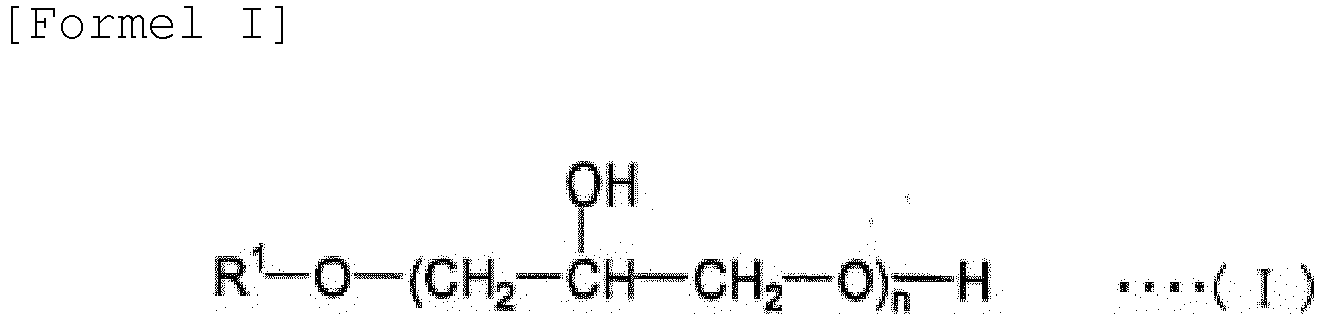
wobei die Schmiermittelölzusammensetzung weiterhin ein Antioxidationsmittel vom Phenoltyp und/oder Antioxidationsmittel vom Amintyp in einer Menge von 0,01 bis 5 Masse-% enthält, bezogen auf eine Gesamtmasse der Zusammensetzung,
worin das Gleitteil mit geringer Friktion ein Teil mit einem diamantartigen Kohlenstofffilm auf einer Oberfläche davon ist, worin eine Menge des aschelosen Ether-Friktionsmodifizierers 0,05 bis 3 Masse-% ist, bezogen auf eine Gesamtmasse der Zusammensetzung. - Verwendung gemäß Anspruch 1, weiterhin enthaltend ein Polybutenylsuccinimid und/oder ein Derivat davon in einer Menge von 0,1 bis 15 Masse-%, bezogen auf eine Gesamtmasse der Zusammensetzung.
- Verwendung gemäß Anspruch 1 oder 2, weiterhin enthaltend ein Zinkdithiophosphat in einer Menge von 0,01 bis 0,20 Masse-%, ausgedrückt als Phosphorelement, bezogen auf eine Gesamtmasse der Zusammensetzung.
- Verwendung gemäß Anspruch 1, worin der diamantartige Kohlenstofffilm ein wasserstofffreies Material auf amorpher Kohlenstoffbasis enthält.
Applications Claiming Priority (2)
| Application Number | Priority Date | Filing Date | Title |
|---|---|---|---|
| JP2004215971A JP4976645B2 (ja) | 2004-07-23 | 2004-07-23 | 内燃機関摺動部用潤滑油組成物及び摺動方法 |
| PCT/JP2005/012849 WO2006009012A1 (ja) | 2004-07-23 | 2005-07-12 | 潤滑油組成物 |
Publications (3)
| Publication Number | Publication Date |
|---|---|
| EP1780257A1 EP1780257A1 (de) | 2007-05-02 |
| EP1780257A4 EP1780257A4 (de) | 2010-03-03 |
| EP1780257B1 true EP1780257B1 (de) | 2018-06-13 |
Family
ID=35785128
Family Applications (1)
| Application Number | Title | Priority Date | Filing Date |
|---|---|---|---|
| EP05765664.7A Expired - Lifetime EP1780257B1 (de) | 2004-07-23 | 2005-07-12 | Verwendung von schmierstoffzusammensetzungen |
Country Status (4)
| Country | Link |
|---|---|
| US (1) | US7803745B2 (de) |
| EP (1) | EP1780257B1 (de) |
| JP (1) | JP4976645B2 (de) |
| WO (1) | WO2006009012A1 (de) |
Families Citing this family (18)
| Publication number | Priority date | Publication date | Assignee | Title |
|---|---|---|---|---|
| JP2006199836A (ja) * | 2005-01-21 | 2006-08-03 | Nissan Motor Co Ltd | 低摩擦摺動機構 |
| JP4840635B2 (ja) * | 2005-02-01 | 2011-12-21 | 日産自動車株式会社 | 低摩擦含油摺動機構 |
| JP5139665B2 (ja) | 2006-11-02 | 2013-02-06 | 出光興産株式会社 | 冷凍機用潤滑油組成物 |
| JP5179043B2 (ja) * | 2006-11-06 | 2013-04-10 | 出光興産株式会社 | 冷凍機油組成物 |
| JP5717314B2 (ja) * | 2008-03-10 | 2015-05-13 | 出光興産株式会社 | 潤滑油組成物 |
| JP5551599B2 (ja) * | 2008-09-19 | 2014-07-16 | 出光興産株式会社 | 内燃機関用潤滑油組成物 |
| JP2011084722A (ja) | 2009-09-15 | 2011-04-28 | Idemitsu Kosan Co Ltd | 潤滑油組成物、該潤滑油組成物を用いた摺動機構 |
| JP5463108B2 (ja) * | 2009-09-15 | 2014-04-09 | 出光興産株式会社 | 潤滑油組成物 |
| EP2508590A4 (de) * | 2009-12-03 | 2013-07-24 | Idemitsu Kosan Co | Schmierölzusammensetzung |
| JP5561546B2 (ja) * | 2010-10-15 | 2014-07-30 | 日産自動車株式会社 | 摺動機構 |
| RU2013149399A (ru) * | 2011-04-07 | 2015-05-20 | Шелл Интернэшнл Рисерч Маатсхаппий Б.В. | Смазочная композиция и способ использования смазочной композиции |
| JP5883315B2 (ja) * | 2012-02-28 | 2016-03-15 | 出光興産株式会社 | 金属加工用潤滑油組成物 |
| JP5990749B2 (ja) | 2012-03-16 | 2016-09-14 | 出光興産株式会社 | 潤滑油組成物、該潤滑油組成物を用いた摺動機構 |
| JP2013216872A (ja) | 2012-03-16 | 2013-10-24 | Idemitsu Kosan Co Ltd | 潤滑油組成物、該潤滑油組成物を用いた摺動機構 |
| JP6088805B2 (ja) * | 2012-11-16 | 2017-03-01 | 出光興産株式会社 | 防錆油組成物 |
| FR3000103B1 (fr) * | 2012-12-21 | 2015-04-03 | Total Raffinage Marketing | Composition lubrifiante a base d'ether de polyglycerol |
| DE102013101246B4 (de) * | 2013-02-08 | 2025-05-08 | Bayerische Motoren Werke Aktiengesellschaft | Reibungsreduziertes Gleitsystem |
| JP6581452B2 (ja) * | 2015-09-17 | 2019-09-25 | シェルルブリカンツジャパン株式会社 | ポリアルキレングリコール及び酸性の含酸素系有機化合物を用いた潤滑油組成物が存在する低摩擦摺動機構 |
Family Cites Families (12)
| Publication number | Priority date | Publication date | Assignee | Title |
|---|---|---|---|---|
| JPS5925890A (ja) * | 1982-08-05 | 1984-02-09 | Mitsubishi Oil Co Ltd | 共通潤滑油組成物 |
| US5241003A (en) * | 1990-05-17 | 1993-08-31 | Ethyl Petroleum Additives, Inc. | Ashless dispersants formed from substituted acylating agents and their production and use |
| JP3554087B2 (ja) * | 1995-08-09 | 2004-08-11 | 旭電化工業株式会社 | 潤滑油組成物 |
| US5858931A (en) * | 1995-08-09 | 1999-01-12 | Asahi Denka Kogyo K.K | Lubricating composition |
| JPH09176668A (ja) * | 1995-10-26 | 1997-07-08 | Asahi Denka Kogyo Kk | 潤滑油組成物 |
| JP4018328B2 (ja) * | 2000-09-28 | 2007-12-05 | 新日本石油株式会社 | 潤滑油組成物 |
| JP4712961B2 (ja) * | 2000-11-21 | 2011-06-29 | Jx日鉱日石エネルギー株式会社 | 二酸化炭素冷媒用冷凍機油及び冷凍機用流体組成物 |
| JP3555891B2 (ja) * | 2002-02-22 | 2004-08-18 | 新日本石油株式会社 | 低摩擦摺動材料及びこれに用いる潤滑油組成物 |
| JP3594190B2 (ja) * | 2002-11-06 | 2004-11-24 | 新日本石油株式会社 | 低摩擦摺動材料及びこれに用いる潤滑油組成物 |
| EP1661971A4 (de) | 2003-08-06 | 2008-12-03 | Nippon Oil Corp | System mit dlc-kontaktflächen, verfahren zum schmieren des systems und schmieröl für das system |
| JP4614427B2 (ja) * | 2003-08-06 | 2011-01-19 | 日産自動車株式会社 | 低摩擦摺動機構、手動変速機及び終減速機 |
| JP4915891B2 (ja) * | 2003-08-21 | 2012-04-11 | 日産自動車株式会社 | 低摩擦摺動部材 |
-
2004
- 2004-07-23 JP JP2004215971A patent/JP4976645B2/ja not_active Expired - Fee Related
-
2005
- 2005-07-12 WO PCT/JP2005/012849 patent/WO2006009012A1/ja not_active Ceased
- 2005-07-12 EP EP05765664.7A patent/EP1780257B1/de not_active Expired - Lifetime
- 2005-07-12 US US11/658,144 patent/US7803745B2/en not_active Expired - Fee Related
Non-Patent Citations (1)
| Title |
|---|
| None * |
Also Published As
| Publication number | Publication date |
|---|---|
| JP2006036850A (ja) | 2006-02-09 |
| JP4976645B2 (ja) | 2012-07-18 |
| EP1780257A4 (de) | 2010-03-03 |
| US20080096775A1 (en) | 2008-04-24 |
| US7803745B2 (en) | 2010-09-28 |
| EP1780257A1 (de) | 2007-05-02 |
| WO2006009012A1 (ja) | 2006-01-26 |
Similar Documents
| Publication | Publication Date | Title |
|---|---|---|
| EP1780257B1 (de) | Verwendung von schmierstoffzusammensetzungen | |
| JP4973971B2 (ja) | 摺動部材 | |
| EP1227145B1 (de) | Schmierölzusammensetzungen | |
| JP4824406B2 (ja) | Dlc接触面を有するシステム、該システムの潤滑方法及び該システム用潤滑油 | |
| JP3555891B2 (ja) | 低摩擦摺動材料及びこれに用いる潤滑油組成物 | |
| JP5058331B2 (ja) | 低摩擦摺動部材 | |
| EP1439217B1 (de) | Schmierölzusammensetzung für verbrennungsmotor | |
| US7790659B2 (en) | Lubricating oil compositions | |
| EP1686167B1 (de) | Schmieröladditiv und schmierölzusammensetzung | |
| JP5463108B2 (ja) | 潤滑油組成物 | |
| EP2077317A1 (de) | Schmierölzusammensetzung | |
| JP3594190B2 (ja) | 低摩擦摺動材料及びこれに用いる潤滑油組成物 | |
| JP2011252073A (ja) | 低摩擦摺動材料用潤滑油組成物、及びこれを用いた摺動機構 | |
| JP2005090489A (ja) | 内燃機関用バルブリフター | |
| JP3594193B1 (ja) | 低摩擦摺動部材及びこれに用いる潤滑油組成物 | |
| JP3965694B2 (ja) | 低摩擦摺動カム・フォロワの組合せ及びこれに用いる潤滑油組成物 | |
| JP4212954B2 (ja) | 硬質炭素被膜摺動部材 | |
| US7732385B2 (en) | Lubricating oil additives, lubricating oil compositions containing such additives and processes for producing such additives and compositions | |
| JP4915891B2 (ja) | 低摩擦摺動部材 | |
| JP3594194B1 (ja) | 低摩擦摺動機構及びこれに用いる潤滑油組成物 | |
| JP2005002888A (ja) | 自動車エンジン用ピストンリング及びこれに用いる潤滑油組成物 | |
| JP2005090738A (ja) | 転がり軸受 | |
| JP2005069008A (ja) | 内燃機関のシリンダとピストンの組合せ | |
| JP2005003094A (ja) | 自動車用エンジン | |
| JP2005061219A (ja) | エンジン用バルブ |
Legal Events
| Date | Code | Title | Description |
|---|---|---|---|
| PUAI | Public reference made under article 153(3) epc to a published international application that has entered the european phase |
Free format text: ORIGINAL CODE: 0009012 |
|
| 17P | Request for examination filed |
Effective date: 20070122 |
|
| AK | Designated contracting states |
Kind code of ref document: A1 Designated state(s): DE FR GB |
|
| RIN1 | Information on inventor provided before grant (corrected) |
Inventor name: KASAI, MORITSUGU |
|
| DAX | Request for extension of the european patent (deleted) | ||
| RBV | Designated contracting states (corrected) |
Designated state(s): DE FR GB |
|
| A4 | Supplementary search report drawn up and despatched |
Effective date: 20100201 |
|
| 17Q | First examination report despatched |
Effective date: 20100517 |
|
| GRAP | Despatch of communication of intention to grant a patent |
Free format text: ORIGINAL CODE: EPIDOSNIGR1 |
|
| STAA | Information on the status of an ep patent application or granted ep patent |
Free format text: STATUS: GRANT OF PATENT IS INTENDED |
|
| INTG | Intention to grant announced |
Effective date: 20180205 |
|
| GRAS | Grant fee paid |
Free format text: ORIGINAL CODE: EPIDOSNIGR3 |
|
| GRAA | (expected) grant |
Free format text: ORIGINAL CODE: 0009210 |
|
| STAA | Information on the status of an ep patent application or granted ep patent |
Free format text: STATUS: THE PATENT HAS BEEN GRANTED |
|
| AK | Designated contracting states |
Kind code of ref document: B1 Designated state(s): DE FR GB |
|
| REG | Reference to a national code |
Ref country code: GB Ref legal event code: FG4D |
|
| REG | Reference to a national code |
Ref country code: DE Ref legal event code: R096 Ref document number: 602005054126 Country of ref document: DE |
|
| REG | Reference to a national code |
Ref country code: FR Ref legal event code: PLFP Year of fee payment: 14 |
|
| REG | Reference to a national code |
Ref country code: DE Ref legal event code: R097 Ref document number: 602005054126 Country of ref document: DE |
|
| PLBE | No opposition filed within time limit |
Free format text: ORIGINAL CODE: 0009261 |
|
| STAA | Information on the status of an ep patent application or granted ep patent |
Free format text: STATUS: NO OPPOSITION FILED WITHIN TIME LIMIT |
|
| 26N | No opposition filed |
Effective date: 20190314 |
|
| GBPC | Gb: european patent ceased through non-payment of renewal fee |
Effective date: 20180913 |
|
| PG25 | Lapsed in a contracting state [announced via postgrant information from national office to epo] |
Ref country code: GB Free format text: LAPSE BECAUSE OF NON-PAYMENT OF DUE FEES Effective date: 20180913 |
|
| PGFP | Annual fee paid to national office [announced via postgrant information from national office to epo] |
Ref country code: FR Payment date: 20210611 Year of fee payment: 17 |
|
| PGFP | Annual fee paid to national office [announced via postgrant information from national office to epo] |
Ref country code: DE Payment date: 20210616 Year of fee payment: 17 |
|
| REG | Reference to a national code |
Ref country code: DE Ref legal event code: R119 Ref document number: 602005054126 Country of ref document: DE |
|
| PG25 | Lapsed in a contracting state [announced via postgrant information from national office to epo] |
Ref country code: FR Free format text: LAPSE BECAUSE OF NON-PAYMENT OF DUE FEES Effective date: 20220731 |
|
| PG25 | Lapsed in a contracting state [announced via postgrant information from national office to epo] |
Ref country code: DE Free format text: LAPSE BECAUSE OF NON-PAYMENT OF DUE FEES Effective date: 20230201 |