EP1781005B9 - Répertoire personnel centralisé dans un réseau de télécommunications - Google Patents
Répertoire personnel centralisé dans un réseau de télécommunications Download PDFInfo
- Publication number
- EP1781005B9 EP1781005B9 EP06011170A EP06011170A EP1781005B9 EP 1781005 B9 EP1781005 B9 EP 1781005B9 EP 06011170 A EP06011170 A EP 06011170A EP 06011170 A EP06011170 A EP 06011170A EP 1781005 B9 EP1781005 B9 EP 1781005B9
- Authority
- EP
- European Patent Office
- Prior art keywords
- calling party
- caller
- character
- digit
- communications network
- Prior art date
- Legal status (The legal status is an assumption and is not a legal conclusion. Google has not performed a legal analysis and makes no representation as to the accuracy of the status listed.)
- Expired - Lifetime
Links
Images


Classifications
-
- H—ELECTRICITY
- H04—ELECTRIC COMMUNICATION TECHNIQUE
- H04M—TELEPHONIC COMMUNICATION
- H04M3/00—Automatic or semi-automatic exchanges
- H04M3/42—Systems providing special services or facilities to subscribers
- H04M3/487—Arrangements for providing information services, e.g. recorded voice services or time announcements
- H04M3/493—Interactive information services, e.g. directory enquiries ; Arrangements therefor, e.g. interactive voice response [IVR] systems or voice portals
- H04M3/4931—Directory assistance systems
-
- H—ELECTRICITY
- H04—ELECTRIC COMMUNICATION TECHNIQUE
- H04M—TELEPHONIC COMMUNICATION
- H04M2201/00—Electronic components, circuits, software, systems or apparatus used in telephone systems
- H04M2201/38—Displays
-
- H—ELECTRICITY
- H04—ELECTRIC COMMUNICATION TECHNIQUE
- H04M—TELEPHONIC COMMUNICATION
- H04M3/00—Automatic or semi-automatic exchanges
- H04M3/42—Systems providing special services or facilities to subscribers
- H04M3/42025—Calling or Called party identification service
- H04M3/42034—Calling party identification service
- H04M3/42042—Notifying the called party of information on the calling party
-
- H—ELECTRICITY
- H04—ELECTRIC COMMUNICATION TECHNIQUE
- H04M—TELEPHONIC COMMUNICATION
- H04M3/00—Automatic or semi-automatic exchanges
- H04M3/42—Systems providing special services or facilities to subscribers
- H04M3/42025—Calling or Called party identification service
- H04M3/42034—Calling party identification service
- H04M3/42059—Making use of the calling party identifier
-
- H—ELECTRICITY
- H04—ELECTRIC COMMUNICATION TECHNIQUE
- H04M—TELEPHONIC COMMUNICATION
- H04M3/00—Automatic or semi-automatic exchanges
- H04M3/42—Systems providing special services or facilities to subscribers
- H04M3/42025—Calling or Called party identification service
- H04M3/42085—Called party identification service
- H04M3/42093—Notifying the calling party of information on the called or connected party
-
- H—ELECTRICITY
- H04—ELECTRIC COMMUNICATION TECHNIQUE
- H04M—TELEPHONIC COMMUNICATION
- H04M3/00—Automatic or semi-automatic exchanges
- H04M3/42—Systems providing special services or facilities to subscribers
- H04M3/42025—Calling or Called party identification service
- H04M3/42085—Called party identification service
- H04M3/42102—Making use of the called party identifier
Definitions
- the present invention relates generally to providing personalized caller identification. More particularly, the present invention relates to providing a centralized personal directory scheme with corresponding digit tree processing within a communications network.
- caller ID is a well known.
- Caller ID is currently used within either landline or mobile telecommunications.
- each caller has a corresponding unique identifier typically in terms of the caller's telephone number.
- a mechanism on the called party end of the communications link is enabled to distinguish and display such unique identifier prior to fully establishing a communication link. While such a system is useful, there is the limitation that the unique identifier in the form of the caller's telephone number is only useful if the called party recognizes the actual telephone number.
- alpha tagging allows users to associate a text string with any given caller ID (or extension number) that is displayed on their telephone set when receiving or making a call involving that caller ID (or extension number).
- the text string is personal to the user and the same caller ID may be included in the personal directory of more than one user. For example, several users may have different alpha tags for the same number - e.g., the number for "Dino's Pizzeria & Take-Out” could be "Pizza" for one user, "Delivery” for another user, and “Dinner” for yet another user.
- Some telephones and other physical telecommunications devices implement alpha tagging by enabling a user to store several phone numbers and associate such phone numbers with an alphabetic name or term.
- (613) 555-2323 may correspond to a particular take-out restaurant focussing on vegetarian food and operating under the name of "Veggies On The Run.”
- a patron of such restaurant may program their telephone to associate "Veggies” to correspond with (613) 555-2323. If such restaurant were to call the patron, the caller ID mechanism with their telephone would recognize (613) 555-2323 and display the associated, prestored term "Veggies" on the patron's caller ID display.
- the same telephone could be used to store other frequent contacts and associated telephone numbers.
- the personal directory of stored alpha tags and numbers is referenced to determine whether a text string has been configured for the instant caller ID (or extension number). If so, the text string is displayed on the device rather than the caller ID (or extension number).
- a system directory can also be referenced when no personal directory entry exists. Additionally, if desired a department/tenant scope directory can also be used before checking the system directory to provide more flexibility in alpha tagging delivery. Such systems are limited, however, by the memory of the telephone or device used to store the alpha tag and number data. While memory storage capacity has become less of a concern as the cost of memory has been reduced over time, access time can be a considerable issue if a significant amount of fixed memory allocation is to be scanned.
- the personal directory may be more centralized as illustrated in US-B1-6 658 455 .
- independent personal directory facilities may exist for a group of users that would require considerable system memory space.
- Such centralized systems often limit each user to a fixed personal directory size of only 10 or 20 possible entries.
- a hash mechanism (or resource management facility) is used to share a pool of personal directory entries between all users or groups of users.
- the hash mechanism identifies a hash table bucket that is a linked list or table of entries. Each entry includes the user identity, the full caller ID (or significant abbreviation), and the associated alpha tag.
- a caller ID (or extension number) is then transformed into a hash table bucket, many to one, and the corresponding bucket entries are searched for the matching caller ID and user identifier.
- the present invention therefore provides a centralized personal directory scheme having corresponding digit tree processing and useful within a communications network.
- the present invention uses digit tree processing along with a non-diallable digit capability in order to provide for direct de-referencing of personal numbers where no searching of entries is required.
- the present invention also prevents collisions in data configuration/manipulation between users (or systems).
- the present invention distinguishes between internal and external numbers (and other categories). Further, the present invention is applicable to corporate alpha tagging as well as personal alpha tagging, including department/tenant delineation.
- the present invention can support a downloadable personal directory for provisioning any applicable software interface by downloading the associated digit tree branch of the present invention. Still further, the present invention can support "wild card" digits and dialling conflict resolution automatically. Moreover, fixed allocation of system memory space is not required for personal directories implemented via the present invention.
- the description describes an apparatus for personalized calling party number determination and identification, the apparatus including an interface for receiving a calling party number corresponding to a calling party, a memory for storing an alpha tag corresponding to the calling party number, and a processor coupled to the interface.
- the processor includes instructions to determine a character indicating presence of a character string including a unique identifier portion, a classification portion, and a calling party portion, wherein the processor correlates the alpha tag to the calling party upon matching the calling party portion of the character string to the calling party number stored in the memory.
- the description describes a method for personalized calling party number determination and identification, the method including receiving from a calling party a call message within a communications network, determining from the call message, a non-diallable character indicating presence of a character string including a unique identifier portion, a classification portion, and a calling party portion, upon determination of the non-diallable character, correlating a stored alpha tag with the calling party upon matching the calling party portion of the character string to a stored calling party number, and displaying the stored alpha tag.
- the description describes a method for personalized calling party number determination and identification, the method including receiving, within a communications network, an outgoing call message to a known calling party number, determining from the call message, a non-diallable character indicating presence of a character string including a unique identifier portion, a classification portion, and a calling party portion, upon determination of the non-diallable character, correlating a stored alpha tag with the known calling party number upon matching the calling party portion of the character string to a stored calling party number; and displaying the stored alpha tag.
- the present invention provides a method and system for providing personalized caller identification including a centralized personal directory scheme with corresponding digit tree processing within a communications network.
- a centralized personal directory scheme with corresponding digit tree processing within a communications network.
- the invention is described in terms of incoming calls only. However, it should be readily apparent that the present invention applies to both incoming and outgoing calls such that a personal directory may be used for outgoing calls as well as incoming calls
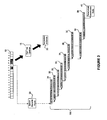
- a basic digit tree building block is shown and includes fields (nodes) for numeric digits 0 through 9 along with the "*" and "#" characters. To avoid increasing the storage requirements of digit string pools, the digit block shown also includes nodes for time out (T), pause (P), and flash (F). Three wildcard digits, N, X, and Y are allotted for other features not related to the present discussion.
- the basic digit tree building block shown also includes a node for a special character (I). This special character is described further below.
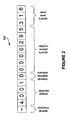
- FIGURE 2 shows one possible embodiment of a special string 200 of the present invention including the special character, unique identifier, classification indicator (i.e., internal/external indicator), caller's phone number, and caller's area code.
- the special character is a " ⁇ " character, but may of course be any single or multiple characters.
- the unique identifier is the given called number that, for instance, may be indicated as "4001" for "extension 4001" within a corporate communications network. Such extensions may of course be longer or shorter and the related unique identifiers would therefore be longer or shorter correspondingly.
- the internal/external indicator may be a single character indicating the nature of the caller's number - e.g., "1" for internal, "0" for external - and may also be other single or multiple characters depending upon the variety of caller types in any given system.
- Traversal of the digit tree is represented by element 15 and is accomplished in a known manner including, but not limited to, a call processing engine is typically used for processing the called number and includes one or more known type of computer processors.
- the called number includes a special character " ⁇ " though it should be understood that not all incoming calls will include such special character such that the incoming call can be processed in like manner with or without the special character to arrive at the termination device 20.
- the call processing engine receives digits and performs digit translation until a termination 20 is found at a device that corresponds to the called number.
- the special character is a hidden, non-diallable digit, for example " ⁇ ", within the system digit tree for use as a prefix to alpha tagging digit tree entries.
- the special character is identified 30 whereby a special string is generated and further processed by a special digit tree processing 100 formed by digit blocks 31 through 39. Blocks between digit blocks 37 and 38 are omitted for clarity of illustration.
- each digit block may be included within each digit block, in addition to numerals 0 through 9 and the special character " ⁇ ", such as field delimiters (not shown for clarity).
- field delimiters may be used to indicate where, for instance, the unique identifier ends and the internal/external indicator begins.
- the field delimiter could be any character such as, but not limited to, "*" or "#”.
- Such field delimiters may be useful especially when the unique identifier is within a range of digits.
- the unique identifier may be only four digits as shown in FIGURE 2 , may be only three, or may be as many as seven digits depending upon the number of extensions within the communications network utilizing the invention.
- the field delimiter may be omitted altogether if the information regarding the internal/external indicator were to be retained upon generation of the special string.
- This information regarding internal/external context could be retained, for instance, within a journal block as an internal/external flag during digit translation along with other information typically retained during normal translation operations.
- the special digit tree processing 100 subsequent to identification of the special character, e.g., " ⁇ " first processes the unique user identifier (preferably the user's extension number) as shown at digit blocks 31 through 34.
- the processing indicated at a block 35 shows processing of a classification indicator.
- the classification indicator shown preferably indicates a "1" for calls made internal to a network (e.g., intra-corporate) and a "0" for call made external to a closed network (e.g., from the public switched telephone network, PSTN).
- the caller ID digits indicating the digits of the calling external number (or extension number if deemed internal) are processed via blocks 36 through 39.
- the example shown may be for a caller ID of "613-592-0000.”
- the area code "613" may or may not be considered in digit translation depending upon the given implementation of the present invention.
- the final block 39 ends with translation of the digit "5" as the final translation before personalized identification 40 is made that associates the abbreviated number 592-0000 with some stored alpha tagging text string - e.g., "Veggies Restaurant” for the caller ID "592-0000.”
- a classification indicator of, for example "1” indicating an internal (e.g., intra-corporate) caller ID may require even less digit translation because only three, four, or five extension digits would be necessarily processed in most types of corporate enterprise systems.
- the caller's phone number obtained as caller ID for an incoming call, or as a keypad entry for an outgoing call would include a standard seven characters along with three more characters for the caller's area code.
- the caller's phone number and caller's area code would preferably be arranged in reverse order.
- the special string 200 shown in FIGURE 2 is indicative of a caller having the phone number (613) 592-0000 where the called extension is 4001. It is possible to implement the present invention without reversing the order of digits.
- any given personalized identification e.g., "Veggies Restaurant”
- digit matching to any given personalized identification would be facilitated by identifying the most specific possible match (i.e., extensions such as "0000") prior to the most general possible match (i.e., area codes such as "613"). This would accordingly reduce processing time in an advantageous manner.
- the classification indicator reveals that the caller is an internal number, and then perhaps only the first four subsequent characters would be necessary to translate in the digit translation process (shown as 100 in FIGURE 3 ).
- FIGURE 4 a flowchart illustrating the methodology of alpha tag de-referencing in accordance with the present invention is shown.
- the incoming call will of course have the call destination determined and if the personal alpha tag feature is deemed present by the identification of the special character, then a special string is generated.
- the special string is built in accordance with that shown in FIGURE 2 by building upon the caller-ID with the called party prefix. If no special character is found, then no further action in regards to the invention is taken. This is of course possible, as the present invention is an optional feature. If found though, and after the special string is generated, the digits are traversed until no further digits remain to traverse.
- the digit traversal will ideally point to a swid (software ID) that will correspond to a stored entry. If no match is made, then of course no action need be taken. However, upon indication of a match, the special string will then de-reference an alpha tag string that corresponds to a personalized entry. That entry is then displayed on some user interface utilizing the present invention.
- Such interface may be a desktop telephone set, a software based computer screen interface, or any related interface including, but not limited to, audio and/or visual mechanisms.
- the alpha tag string may be translated into an audio form by use of a .wav file or the like.
- classification indicators can be used to further distinguish between types of entries in the personal digit tree other than simply internal and external calling parties. Such entries would not be limited to directory numbers but could also apply to alpha tagging for account codes, as an example.
- An indicator of whether the alpha tagging text string is private may also be stored within the digit sequence (or associated with the text string itself). The privacy indicator would be used to prevent display of the entry in a system configuration.
- the hidden, non-diallable digit may be any single identifier or combination of identifiers that would prefix the personal directory entries.
- the use of a digit tree may be replaced by any other mechanism for managing digit translations.
- the digit tree mechanism may be expanded to include alphanumeric characters (in addition to the standard diallable digits) for application in areas where digits are insufficient.
- the present invention could also be applied to management of personal contacts within a corporate contact database (where contacts are indexed by telephone numbers).
- the prefix identifier can be used to ensure only authorized individual(s) can view and/or modify the entries.
- the present invention may be applied when a user has access to personalize (or of limited access) data stored in a centralized (or distributed/replicated) repository. Further, the present invention may be applied where users are uniquely identified by a user ID that are each used to access their data within the repository.
- the special string of the present invention results in a unique and useful method of digit translation.
- a method is implemented to translate a given caller ID (or extension number) into a digit string using a given user identifier.
- the method includes insertion or removal of a text string reference in the digit tree using the digit string provided by the aforementioned method and described in detail above.
- the present inventive digit tree translation method serves to de-reference an associated text string using a digit string and applying appropriate abbreviation matching rules based on classification indicator as described above.
- the Caller ID that a user enters in their personal directory is reversed when stored in the digit tree to facilitate matching of abbreviated digits.
- Abbreviated digits are considered to be any shortened string of digits less than the extended (i.e., full) phone number such as "1-(613)-592-0000".
- the method applies the classification indicator to distinguish between the significant abbreviation that can be applied. Numbers designated as internal cannot be abbreviated and must match exactly (for example, 004 is not a valid match for 2004). Numbers designated as external will match if the abbreviated form matches the caller ID dialed or received on an incoming call. In such a way, the area code may be ignored so long as duplicates do not exist for the abbreviations.
Landscapes
- Engineering & Computer Science (AREA)
- Signal Processing (AREA)
- Telephonic Communication Services (AREA)
- Sub-Exchange Stations And Push- Button Telephones (AREA)
Claims (7)
- Procédé de détermination et d'identification personnalisées de numéro d'appelant, ledit procédé comprenant :- la réception, au niveau d'une interface d'un réseau de communication fermé, de la part d'un appelant, d'un message d'appel comprenant une identification d'appelant standard (affichage du numéro d'appel) associée à l'appelant et comprenant optionnellement un caractère ne pouvant pas être composé,- la détermination, à partir dudit message d'appel, de la présence du caractère ne pouvant pas être composé,- la génération, en utilisant un processeur couplé à l'interface, à la détermination de la présence dudit caractère ne pouvant pas être composé, d'une chaîne de caractères (200) comprenant une partie d'identifiant unique correspondant au numéro appelé, une partie de classification et une partie d'appelant ;- la mise en correspondance de la chaîne de caractères avec une entrée personnalisée stockée qui correspond à une balise alpha stockée, et l'affichage de ladite balise alpha stockée sur une interface utilisateur de l'appelant ou de l'appelé,dans lequel ladite balise alpha stockée est un identifiant alphabétique stocké dans une mémoire centralisée dudit réseau de communication, et
dans lequel ladite étape de détermination et ladite étape de mise en correspondance se déroulent dans un moteur de traitement d'appel couplé à l'interface qui effectue le traitement d'arborescence numérique, et
dans lequel ladite partie de classification de ladite chaîne de caractères comprend un ou plusieurs caractères pour indiquer au moteur de traitement si l'appelant est interne ou externe par rapport au dit réseau de communication fermé. - Procédé selon la revendication 1, dans lequel ledit numéro d'appelant comprend un numéro téléphonique étendu d'appelant.
- Procédé selon la revendication 1 ou 2, dans lequel ladite partie d'appelant est capable d'inclure un numéro téléphonique étendu d'appelant.
- Procédé selon l'une quelconque des revendications précédentes, dans lequel ladite partie d'appelant est capable d'inclure un numéro téléphonique abrégé d'appelant.
- Procédé selon l'une quelconque des revendications précédentes, dans lequel ledit message d'appel est un message entrant dans ledit réseau de communication.
- Procédé selon l'une quelconque des revendications 1 à 4, dans lequel ledit message d'appel est un message sortant dudit réseau de communication.
- Appareil de détermination et d'identification personnalisées de numéro d'appelant, ledit appareil comprenant les éléments suivants :- une interface ;- une mémoire ;- un processeur comprenant un moteur de traitement d'appel;- un moyen de livraison pour livrer la balise alpha à une interface utilisateur selon la revendication 1,dans lequel les éléments susmentionnés effectuent les étapes correspondantes du procédé selon la revendication 1.
Applications Claiming Priority (1)
| Application Number | Priority Date | Filing Date | Title |
|---|---|---|---|
| US11/259,090 US7778400B2 (en) | 2005-10-27 | 2005-10-27 | Centralized personal directory scheme for communications networks |
Publications (3)
| Publication Number | Publication Date |
|---|---|
| EP1781005A1 EP1781005A1 (fr) | 2007-05-02 |
| EP1781005B1 EP1781005B1 (fr) | 2011-05-11 |
| EP1781005B9 true EP1781005B9 (fr) | 2011-09-21 |
Family
ID=37734438
Family Applications (1)
| Application Number | Title | Priority Date | Filing Date |
|---|---|---|---|
| EP06011170A Expired - Lifetime EP1781005B9 (fr) | 2005-10-27 | 2006-05-31 | Répertoire personnel centralisé dans un réseau de télécommunications |
Country Status (3)
| Country | Link |
|---|---|
| US (1) | US7778400B2 (fr) |
| EP (1) | EP1781005B9 (fr) |
| CA (1) | CA2544008C (fr) |
Families Citing this family (6)
| Publication number | Priority date | Publication date | Assignee | Title |
|---|---|---|---|---|
| US8654966B2 (en) * | 2007-01-24 | 2014-02-18 | Audiocodes Ltd. | Method for dial plan parsing and a system incorporating the same |
| JP4905259B2 (ja) * | 2007-06-05 | 2012-03-28 | 富士通株式会社 | 接続システム、接続システム制御方法および接続システム制御プログラム |
| US8175239B2 (en) * | 2008-05-29 | 2012-05-08 | Alcatel Lucent | Method and apparatus for efficient abbreviated dialing |
| JP5882602B2 (ja) * | 2011-05-20 | 2016-03-09 | キヤノン株式会社 | 画像形成装置、画像形成装置の制御方法、及びプログラム |
| US10838913B2 (en) * | 2016-11-14 | 2020-11-17 | Tuxera, Inc. | Systems and methods for storing large files using file allocation table based file systems |
| US10929346B2 (en) | 2016-11-14 | 2021-02-23 | Tuxera, Inc. | Systems and methods for storing large files using file allocation table based file systems |
Family Cites Families (12)
| Publication number | Priority date | Publication date | Assignee | Title |
|---|---|---|---|---|
| US5416831A (en) | 1993-04-15 | 1995-05-16 | Bellsouth Corporation | System for communicating with an ADSI-compatible telephone via a service circuit node |
| CA2119085C (fr) | 1994-03-15 | 2002-01-15 | Mitel Corporation | Systeme de communication adaptatif |
| US6301353B1 (en) | 1996-03-07 | 2001-10-09 | Mitel Corporation | Common automatic route selection leading digit strings |
| WO1998041042A1 (fr) * | 1997-03-13 | 1998-09-17 | Kabushiki Kaisha Toshiba | Autocommutateur prive |
| CA2243781C (fr) | 1997-08-22 | 2006-08-01 | Mitel Corporation | Groupe de communication dynamique |
| US6324272B1 (en) * | 1999-10-29 | 2001-11-27 | Lucent Technologies Inc. | Telecommunication calling party number determination and manipulation |
| US6449475B1 (en) * | 1999-12-20 | 2002-09-10 | Qualcomm, Incorporated | System and method for matching calls to electronic phonebook entries |
| US6658455B1 (en) | 1999-12-30 | 2003-12-02 | At&T Corp. | Method and system for an enhanced network and customer premise equipment personal directory |
| US6542591B1 (en) * | 2000-07-27 | 2003-04-01 | International Business Machines Corporation | Method and system for caller identification callback lists |
| GB2370721A (en) | 2000-10-31 | 2002-07-03 | Advanced American Telephones | Cordless telephone with computer interface |
| JP4791656B2 (ja) * | 2001-07-03 | 2011-10-12 | オーチス エレベータ カンパニー | 階高可変式ダブルデッキエレベータ |
| US6813344B1 (en) * | 2001-08-29 | 2004-11-02 | Palm Source, Inc. | Method and system for providing information for identifying callers based on a partial number |
-
2005
- 2005-10-27 US US11/259,090 patent/US7778400B2/en active Active
-
2006
- 2006-04-18 CA CA2544008A patent/CA2544008C/fr not_active Expired - Lifetime
- 2006-05-31 EP EP06011170A patent/EP1781005B9/fr not_active Expired - Lifetime
Also Published As
| Publication number | Publication date |
|---|---|
| US20070116219A1 (en) | 2007-05-24 |
| CA2544008A1 (fr) | 2007-04-27 |
| EP1781005A1 (fr) | 2007-05-02 |
| US7778400B2 (en) | 2010-08-17 |
| CA2544008C (fr) | 2011-09-20 |
| EP1781005B1 (fr) | 2011-05-11 |
Similar Documents
| Publication | Publication Date | Title |
|---|---|---|
| EP2462735B1 (fr) | Systèmes et procédés de désambiguïsation d'entrées dans une base de données de liste de contacts mis en oeuvre sur un dispositif mobile | |
| US11303748B2 (en) | Location based masked communication | |
| JP4982348B2 (ja) | 携帯電話通信システム及び携帯電話通信方法 | |
| US7039172B2 (en) | Dual language caller ID with asian language support | |
| US9420095B2 (en) | Method and system for providing dynamic speed-dial list | |
| CN107018240A (zh) | 一种隐藏被叫号码的通话方法和系统 | |
| EP2564585A1 (fr) | Procédé et appareil permettant de traiter des appels anonymes | |
| EP1781005B1 (fr) | Répertoire personnel centralisé dans un réseau de télécommunications | |
| JP5318665B2 (ja) | コールバック用電話帳管理システム及びコールバックシステム | |
| US7035393B1 (en) | System and method for creating a personal directory | |
| US20040120504A1 (en) | System for the automatic update of a subscriber's telephone number directory | |
| US20040042613A1 (en) | Method and apparatus for translating a dialed string entered by a calling party | |
| AU734410B2 (en) | Telephone call handling system | |
| FI119673B (fi) | Menetelmä osoitekirjan käsittelemiseksi ja viestintälaite joka hyödyntää sitä | |
| JPH03162052A (ja) | 電話着信管理方式 | |
| JP2000041109A (ja) | 多重電話番号管理方法 | |
| KR100262343B1 (ko) | 광역전화번호안내시스템의발신전화번호를이용한전화번호안내장치및방법 | |
| KR100621727B1 (ko) | 발신번호표시를 지원하는 통신기기의 전화번호 저장방법 | |
| CA2155767A1 (fr) | Numero d'annuaire portatif pour grappe standards automatiques prives | |
| JPH09270854A (ja) | 発信先電話番号の管理方法ならびにその管理システム | |
| ITRM990252A1 (it) | Tecnica di accesso automatico all'elenco informazioni abbonati mediante l'uso della tastiera dei cellulari. |
Legal Events
| Date | Code | Title | Description |
|---|---|---|---|
| PUAI | Public reference made under article 153(3) epc to a published international application that has entered the european phase |
Free format text: ORIGINAL CODE: 0009012 |
|
| 17P | Request for examination filed |
Effective date: 20060622 |
|
| AK | Designated contracting states |
Kind code of ref document: A1 Designated state(s): AT BE BG CH CY CZ DE DK EE ES FI FR GB GR HU IE IS IT LI LT LU LV MC NL PL PT RO SE SI SK TR |
|
| AX | Request for extension of the european patent |
Extension state: AL BA HR MK YU |
|
| 17Q | First examination report despatched |
Effective date: 20070625 |
|
| AKX | Designation fees paid |
Designated state(s): DE FR GB |
|
| GRAP | Despatch of communication of intention to grant a patent |
Free format text: ORIGINAL CODE: EPIDOSNIGR1 |
|
| GRAS | Grant fee paid |
Free format text: ORIGINAL CODE: EPIDOSNIGR3 |
|
| GRAA | (expected) grant |
Free format text: ORIGINAL CODE: 0009210 |
|
| AK | Designated contracting states |
Kind code of ref document: B1 Designated state(s): DE FR GB |
|
| REG | Reference to a national code |
Ref country code: GB Ref legal event code: FG4D |
|
| REG | Reference to a national code |
Ref country code: DE Ref legal event code: R096 Ref document number: 602006021842 Country of ref document: DE Effective date: 20110622 |
|
| PLBE | No opposition filed within time limit |
Free format text: ORIGINAL CODE: 0009261 |
|
| STAA | Information on the status of an ep patent application or granted ep patent |
Free format text: STATUS: NO OPPOSITION FILED WITHIN TIME LIMIT |
|
| 26N | No opposition filed |
Effective date: 20120214 |
|
| REG | Reference to a national code |
Ref country code: DE Ref legal event code: R097 Ref document number: 602006021842 Country of ref document: DE Effective date: 20120214 |
|
| REG | Reference to a national code |
Ref country code: FR Ref legal event code: PLFP Year of fee payment: 11 |
|
| REG | Reference to a national code |
Ref country code: FR Ref legal event code: PLFP Year of fee payment: 12 |
|
| REG | Reference to a national code |
Ref country code: FR Ref legal event code: PLFP Year of fee payment: 13 |
|
| REG | Reference to a national code |
Ref country code: FR Ref legal event code: PLFP Year of fee payment: 18 |
|
| PGFP | Annual fee paid to national office [announced via postgrant information from national office to epo] |
Ref country code: DE Payment date: 20250402 Year of fee payment: 20 |
|
| PGFP | Annual fee paid to national office [announced via postgrant information from national office to epo] |
Ref country code: GB Payment date: 20250401 Year of fee payment: 20 |
|
| PGFP | Annual fee paid to national office [announced via postgrant information from national office to epo] |
Ref country code: FR Payment date: 20250401 Year of fee payment: 20 |
|
| REG | Reference to a national code |
Ref country code: DE Ref legal event code: R071 Ref document number: 602006021842 Country of ref document: DE |
|
| REG | Reference to a national code |
Ref country code: GB Ref legal event code: PE20 Expiry date: 20260530 |
|
| PG25 | Lapsed in a contracting state [announced via postgrant information from national office to epo] |
Ref country code: GB Free format text: LAPSE BECAUSE OF EXPIRATION OF PROTECTION Effective date: 20260530 |