EP1782065B1 - Identifikation von verbindungen zur behandlung von nachstar - Google Patents
Identifikation von verbindungen zur behandlung von nachstar Download PDFInfo
- Publication number
- EP1782065B1 EP1782065B1 EP05776264A EP05776264A EP1782065B1 EP 1782065 B1 EP1782065 B1 EP 1782065B1 EP 05776264 A EP05776264 A EP 05776264A EP 05776264 A EP05776264 A EP 05776264A EP 1782065 B1 EP1782065 B1 EP 1782065B1
- Authority
- EP
- European Patent Office
- Prior art keywords
- lens
- sigma
- epithelial cells
- cells
- capsule
- Prior art date
- Legal status (The legal status is an assumption and is not a legal conclusion. Google has not performed a legal analysis and makes no representation as to the accuracy of the status listed.)
- Expired - Lifetime
Links
Images



Classifications
-
- A—HUMAN NECESSITIES
- A61—MEDICAL OR VETERINARY SCIENCE; HYGIENE
- A61K—PREPARATIONS FOR MEDICAL, DENTAL OR TOILETRY PURPOSES
- A61K31/00—Medicinal preparations containing organic active ingredients
- A61K31/33—Heterocyclic compounds
- A61K31/395—Heterocyclic compounds having nitrogen as a ring hetero atom, e.g. guanethidine or rifamycins
- A61K31/435—Heterocyclic compounds having nitrogen as a ring hetero atom, e.g. guanethidine or rifamycins having six-membered rings with one nitrogen as the only ring hetero atom
- A61K31/439—Heterocyclic compounds having nitrogen as a ring hetero atom, e.g. guanethidine or rifamycins having six-membered rings with one nitrogen as the only ring hetero atom the ring forming part of a bridged ring system, e.g. quinuclidine
-
- A—HUMAN NECESSITIES
- A61—MEDICAL OR VETERINARY SCIENCE; HYGIENE
- A61K—PREPARATIONS FOR MEDICAL, DENTAL OR TOILETRY PURPOSES
- A61K31/00—Medicinal preparations containing organic active ingredients
-
- A—HUMAN NECESSITIES
- A61—MEDICAL OR VETERINARY SCIENCE; HYGIENE
- A61K—PREPARATIONS FOR MEDICAL, DENTAL OR TOILETRY PURPOSES
- A61K31/00—Medicinal preparations containing organic active ingredients
- A61K31/13—Amines
- A61K31/155—Amidines (), e.g. guanidine (H2N—C(=NH)—NH2), isourea (N=C(OH)—NH2), isothiourea (—N=C(SH)—NH2)
-
- A—HUMAN NECESSITIES
- A61—MEDICAL OR VETERINARY SCIENCE; HYGIENE
- A61K—PREPARATIONS FOR MEDICAL, DENTAL OR TOILETRY PURPOSES
- A61K31/00—Medicinal preparations containing organic active ingredients
- A61K31/33—Heterocyclic compounds
- A61K31/395—Heterocyclic compounds having nitrogen as a ring hetero atom, e.g. guanethidine or rifamycins
- A61K31/495—Heterocyclic compounds having nitrogen as a ring hetero atom, e.g. guanethidine or rifamycins having six-membered rings with two or more nitrogen atoms as the only ring heteroatoms, e.g. piperazine or tetrazines
- A61K31/496—Non-condensed piperazines containing further heterocyclic rings, e.g. rifampin, thiothixene or sparfloxacin
-
- A—HUMAN NECESSITIES
- A61—MEDICAL OR VETERINARY SCIENCE; HYGIENE
- A61P—SPECIFIC THERAPEUTIC ACTIVITY OF CHEMICAL COMPOUNDS OR MEDICINAL PREPARATIONS
- A61P27/00—Drugs for disorders of the senses
- A61P27/02—Ophthalmic agents
-
- G—PHYSICS
- G01—MEASURING; TESTING
- G01N—INVESTIGATING OR ANALYSING MATERIALS BY DETERMINING THEIR CHEMICAL OR PHYSICAL PROPERTIES
- G01N33/00—Investigating or analysing materials by specific methods not covered by groups G01N1/00 - G01N31/00
- G01N33/48—Biological material, e.g. blood, urine; Haemocytometers
- G01N33/50—Chemical analysis of biological material, e.g. blood, urine; Testing involving biospecific ligand binding methods; Immunological testing
- G01N33/5005—Chemical analysis of biological material, e.g. blood, urine; Testing involving biospecific ligand binding methods; Immunological testing involving human or animal cells
- G01N33/5008—Chemical analysis of biological material, e.g. blood, urine; Testing involving biospecific ligand binding methods; Immunological testing involving human or animal cells for testing or evaluating the effect of chemical or biological compounds, e.g. drugs, cosmetics
- G01N33/5082—Supracellular entities, e.g. tissue, organisms
Definitions
- the invention relates to a method of testing agents, such as sigma receptor ligands for their potential use in treating posterior capsule opacification (PCO).
- agents such as sigma receptor ligands for their potential use in treating posterior capsule opacification (PCO).
- the present invention also relates to the use of sigma receptor ligands, such as sigma-1 receptor antagonists in the manufacture of a medicament for preventing posterior capsule opacification (PCO).
- sigma receptor ligands such as sigma-1 receptor antagonists in the manufacture of a medicament for preventing posterior capsule opacification (PCO).
- Cataract extraction, followed by artificial lens implantation, is the commonest surgical procedure in the Western world. It is, however, beset by the major problem that in approximately 30-50% of cases the procedures need to be repeated, sometimes multiple times, due to a post-operative complication known as posterior capsule opacification (PCO) which is more common in younger patients (almost 100%). Additionally secondary intervention by Nd-YAG laser can itself result in further complications.
- PCO arises from the inappropriate growth of lens epithelial cells that normally line the anterior face of the "capsule" - the bag within which the lens lies. The capsule is left behind after cataract removal and is the receptacle for the artificial lens implant. PCO occurs when lens epithelial cells in the so-called "equatorial" region of the lens divide and migrate inappropriately along the posterior capsule; this induces wrinkling and progressive opacification of the posterior capsule with marked loss of visual acuity.
- medicaments - applied locally at the time of the operation - would in theory be another way to kill lens epithelial cells.
- such compounds would be required to be selectively toxic to the lens epithelial cells while sparing other ocular cell types and tissues that would be exposed due to local diffusion of the drug. It would also be highly advantageous for these compounds to kill lens cells by a specialized biological process termed apoptosis. Apoptosis causes cells to die in a way that avoids escape of noxious intracellular contents such as enzymes that could cause damage to the intraocular tissue.
- WO96/06863 disclosed that opioid receptor ligands induce apoptosis selectively in tumour cells and also in lens epithelial cells due to common properties of "self-reliance".
- opioid receptor ligands induce apoptosis selectively in tumour cells and also in lens epithelial cells due to common properties of "self-reliance".
- selective killing of lens epithelial cells by opioid receptor ligands would be medically useful in the perioperative management of cataracts to prevent or treat lens epithelial cell re-growth over lens implants, that is, the complication of posterior capsule opacification (PCO).
- Coating of the lens implant with opioids as a method of preventing or treating PCO was claimed as a particular embodiment.
- WO00/00599 disclosed that sigma receptor ligands, which are distinct from opioid receptor ligands, kill selected cell populations including tumour cells and inflammatory cells and are therefore of use in the treatment of cancer and inflammatory disease.
- WO01/74359 disclosed that sigma ligands modulate the survival of microvascular endothelial cells and that sigma-1 antagonists have an anti-angiogenic effect whereas sigma-1 agonists have a pro-angiogenic effect, both classes of agent therefore being of use in particular medical contexts.
- WO02/079779 describes a screening method to identify compounds that would selectively kill tumour, microvascular endothelial and inflammatory cells, whilst sparing many normal cell types.
- This invention disclosed a cell-selective rise in calcium in lens epithelial cells. The death of lens epithelial cells (cultured in isolation from lens capsule) in response to sigma antagonists such as rimcazole has also been disclosed ( Christopher Gribbon's PhD Thesis, University of Dundee 2002 ; and Spruce et al. Cancer Research 2004 Vol. 64 4875-4886 ).
- agents that are potent inducers of apoptosis when lens epithelial cells are cultured in isolation fail to induce apoptosis in the same cells when these cells are in proximity to the anterior surface of an ocular lens capsule, in this case a bovine capsule.
- apoptosis-inducing agents that are rescued by the capsule include sigma antagonists such as rimcazole. Rimcazole is substantially less able to induce apoptosis in lens epithelial cells in the presence of the bovine capsule.
- the invention is based in part on reasoning by the present inventors that, since apoptosis inducers can be selectively rescued by different extracellular matrices (and basement membranes), a sigma-1 receptor antagonist, such as rimcazole would not necessarily be antagonised by the human ocular lens capsule. Furthermore, the inventors also postulated that primary cultures of lens epithelial cells that have been dissociated from and then reintroduced to the lens capsule might behave differently from lens epithelial cells that have remained in proximity with the lens capsule throughout.
- a human capsular bag system for testing agents which selectively kill and/or inhibit human lens epithelial growth
- the human capsular bag system comprises a lens capsule within which lens epithelial cells remain, but from which the fibre cells of the lens have substantially been removed.
- Removal of the capsular bag contents may be carried out, for example, by hydrodissection and phacoemulsification.
- the above system comprises both the anterior and posterior faces of the lens capsule.
- Rimcazole for example, potently induces cell killing in human lens epithelial cells when contained in the human capsular bag system.
- lens epithelial cells are particularly susceptible: cells derived from the equatorial region which divide and migrate and are therefore particularly responsible for lens epithelial regrowth.
- the capsular bag model system is particularly useful in testing sigma receptor ligands, such as sigma receptor antagonists or agonists for their ability to selectively inhibit lens epithelial growth or to induce lens cell killing
- the test agent/sigma receptor ligand is capable of inhibiting growth of the lens epithelial cells present in the lens capsule and more preferably capable of selectively killing the lens epithelial cells.
- the invention provides an in vitro method of identifying an agent, such as a sigma receptor ligand, e.g. a sigma-1 receptor antagonist, potentially suitable for treating PCO, comprising the steps of:
- Candidate sigma receptor ligands may first be identified by classical radioligand binding assays, such as disclosed in, for example, WO00/00599 .
- test agents such as sigma receptor ligands may also be contacted with other cells such as, corneal endothelial and trabecular meshwork or other normal human cells such as fibroblasts grown at low passage in order to ensure the selectively of the test agent/sigma receptor ligand, that is, that the test agent/sigma receptor ligand does not substantially kill and/or prevent growth of cells other than lens epithelial cells.
- Normal cells - with which lens epithelial cells are to be compared - are defined for the purposes of the invention as cells that have normal (typical) properties of survival and growth regulation and that therefore exclude lens epithelial cells and microvascular endothelial cells. Tumour cells and inflammatory cells are also excluded as control cells.
- a cell-selective effect of an agent would be determined when normal cells show an increase in viable cell number compared to baseline (pre-treatment) cell numbers over a period of time, preferably over 48-72 hours when exposed to the test agent.
- lens epithelial cells would show substantially no change or a reduction in viable cell numbers when exposed to the test agent administered at the same concentration and with the cells under similar culture conditions, in particular at a similar cell density.
- Assays to reveal cell-selective growth inhibition or killing (cytotoxicity) are described, for example, in Spruce et al. Cancer Research 2004 and are understandable to those skilled in the art.
- the human lens capsule of the present invention may be supported on a solid substrate such as a plastics or glass surface, e.g. the surface of a petri dish.
- Sigma receptor ligands may be first identified as such by conducting, for example, a radioligand binding assay, such as described in WO 00/00599 to ascertain that the test agent is a sigma receptor ligand, before carrying out the method as described above.
- a radioligand binding assay such as described in WO 00/00599 to ascertain that the test agent is a sigma receptor ligand, before carrying out the method as described above.
- sigma receptor radioligand binding assays determine only that an agent binds to sigma receptor sites and not whether it acts as an agonist or antagonist in functional terms (whether it acts to stimulate or inhibit the receptor).
- Contacting may simply be carried out by pipetting a solution comprising the test agent//sigma ligand onto the surface of the lens capsule and/or into the lens capsule itself, or washing or otherwise bathing the lens capsule in a solution comprising the test agent/sigma ligand.
- Observing a reduction in growth or induction of cell killing by the said test agent on lens epithelial cells may be carried out for example using a microscope, such as a phase contrast microscope. This can be carried out using an automated system.
- the lens epithelial cells would be viewed before and after contacting with the test agent, in order to ascertain the effectiveness of the test agent at inhibiting growth the lens epithelial cells.
- the test agent not only inhibits lens epithelial cell growth, but also kills the lens epithelial cells.
- test agent may also be tested in a cell viability assay, such as described in Spruce et al Cancer Research 2004 in order to ascertain whether or not the test agent also inhibits the growth and/or kills other cell types.
- test agent should not substantially inhibit the growth and/or kill other "normal" cell types, such as corneal endothelial, trabecular meshwork cells or fibroblasts.
- test agents may also be tested in a lens cell culture viability assay as disclosed, for example, in Spruce et al Cancer Research 2004 ) in which lens epithelial cells are grown in culture i.e. not within the lens capsule.
- the present invention therefore provides a method for detecting test agents, such as sigma receptor ligands, which can selectively inhibit the growth and/or kill lens epithelial cells whilst substantially not inhibiting the growth and/or killing other normal cells, such as corneal endothelial cells, trabecular meshwork cells or fibroblasts.
- test agents such as sigma receptor ligands
- sigma-1 receptor antagonists have a particular value as agents to induce tumour cell death ( Spruce et al Cancer Research 2004 ).
- Sigma-1 receptor antagonists are known as such in the art from a traditional pharmacological classification (based for example on inhibition of psychotic behaviour in animal models). Broadly speaking, the same class of agent (defined by traditional pharmacology) also causes selective antagonism of sigma-1 receptor-mediated repression of the death programme in tumour and microvascular endothelial cells. It is proposed herein that the same traditional pharmacological classification of sigma-1 receptor antagonists defines at least one subset of sigma receptor ligand that has therapeutic application in PCO.
- sigma-1 receptor antagonists will broadly have activity against tumor and lens epithelial cells, it is clear that there are differences in potency amongst this class of agent that do not always correlate with affinity of interaction with the sigma receptor in standard radioligand binding assays.
- the agent BD-1047 is a highly selective and potent sigma-1 receptor antagonist but is less potent than other sigma-1 receptor antagonists in its tumour cell killing properties. It has therefore been proposed that the subcellular localisation of the sigma receptor may contribute to the degree of susceptibility to sigma receptor ligands ( Spruce et al Cancer Research 2004 ).
- BD-1047 a highly selective sigma-1 receptor antagonist
- the IC50 the concentration of drug required to produce 50% growth inhibition
- the IC50 for human lens epithelial cells in the capsular bag system
- BD-1047 and/or other sigma-1 receptor antagonists may be agents to treat PCO even though they may be much less effective anti-tumour agents.
- rimcazole Experiments with rimcazole have revealed an additional mechanism by which the sigma-1 receptor antagonists act on lens cells. Concentrations of rimcazole that were sub- or semi-lethal caused an accumulation of melanin pigment granules in the lens cells. The melanin accumulation may be part of a differentiation programme that would also lead to an arrest of lens cells proliferation. Melanin accumulation could therefore act as a biomarker of response during or after a period of sigma antagonist treatment. The sigma-1 receptor antagonist BD1047 also induced pigmentation in the lens cells, indicating that the response is specific to sigma ligands.
- an in vitro method of testing and/or ensuring the efficacy of a sigma receptor ligand, typically a sigma-1 receptor antagonist, in treating/preventing PCO comprising the steps of:
- the above method may be carried out visually, by comparing a degree of pigmentation of the lens epithelial cells, before and after contacting with the signa ligand.
- This may be a manual operation, or could, for example, be automated, using, for example, a CCD camera and appropriate software to compare changes in pigmentation between images.
- any increase in pigmentation is postulated to be due to melanin production in the epithelial cells as a result of adding a sigma receptor ligand, such as sigma-1 receptor antagonist.
- the present invention also provides use of at least one sigma-1 antagonist for the manufacture of a medicament for preventing and/or treating posterior capsule opacification (PCO).
- PCO posterior capsule opacification
- Preferred sigma receptor ligands are Rimcazole and BD1047.
- the sigma receptor ligand may be intended to be administered before, during and/or after cataract surgery. Generally speaking the sigma receptor ligand may be intended to be administered as a topical formulation. However, before and/or during surgery, the sigma receptor ligand could, for example, be injected, or otherwise administered within the lens capsule. Oral administration, as for example with rimcazole, is also a possibility.
- sigma receptor ligands and sigma-1 receptor antagonists in general. Many compounds are known and/or can be identified as being sigma receptor ligands, by, for example, a sigma receptor ligand binding assay such as described in WO 00/00599 .
- Preferred sigma receptor ligands include rimazole and related compounds as disclosed in US 4,379,160 and AU 201630 , BD1063 , BD1047 , AC915 , IPAG, NE-100, haloperidol, reduced haloperidol, BD-1008, BMY 14802, although this is not to be construed as limiting.
- the present invention also encompasses the use of salts and solvates of appropriate sigma receptor ligands and mixtures of sigma receptor ligands, such as a sigma-1 receptor antagonist and sigma-2 receptor agonist, providing such mixtures result in the selective inhibition of growth and/or killing of lens epithelial cells when in situ.
- Figure 1 shows than lens epithelial cells are sensitive to sigma 1 receptor antagonists.
- Microvascular endothelial and lens epithelial cells resemble tumour cells in being susceptible to sigma-1 receptor antagonists.
- Human adult male dermal fibroblasts, adult mammary epithelial cells, adult dermal microvascular endothelial cells and bovine lens epithelial cells at low passage were exposed to 10 ⁇ M concentrations of the sigma-1 receptor antagonists rimcazole and IPAG for up to 72 hours. Change in cell viability over time was measured in the MTS assay; data points represent mean values ( ⁇ SD), obtained from wells in triplicate, expressed relative to baseline (pre-treatment) values.
- Graphs depict representative experiments, performed at least three times.
- Microvascular endothelial cells were protected from rimcazole and IPAG by co-administration of equimolar concentrations of two prototypic sigma-1 receptor agonists (+)-pentazocine (PTZ, dotted lines) and (+)-SKF10,047 (not shown).
- Figure 2 shows that low concentrations of the sigma 1 receptor antagonist Rimcazole inhibits growth of human lens epithelial cells on the posterior capsule. Rate of cell coverage of the posterior capsule beyond the rhexis; 100% represents confluency. Experiments were repeated on 4 occasions. The means and standard errors are displayed.
- Figure 3 shows that low concentrations(equal to rimcazole concentration used in Fig. 2 ) of the sigma 1 receptor antagonist BD 1047 inhibit growth of human lens epithelial cells on the posterior capsule. Rate of cell coverage of the posterior capsule beyond the rhexis; 100% represents confluency. Experiments were repeated on 4 occasions. The means and standard errors are displayed.
- Figure 4 shows that lens epithelial cells have a profile of relative susceptibility to sigma antagonists that differs from tumour cells; 10 micromolar concentrations of the sigma 1 rececptor antagonist BD 1047 (substantially less than concentrations of BD-1047 required to inhibit human tumour cell growth) markedly inhibit growth of human lens epithelial cells on the posterior capsule. Rate of cell coverage of the posterior capsule beyond the rhexis; 100% represents confluency. Experiments were repeated on 4 occasions. The means and standard errors are displayed.
- Figure 5 shows that the growth of the spontaneously immortal lens cell line FHL124 is inhibited by the sigma 1 receptor antagonist Rimcazole.
- the effect of sigma receptor ligands on human lens cell growth in FHL124 cell line maintained in serum-free media (A) or EMEM supplemented with 5%FCS (B).
- the sigma receptor agonist SKF10047 partially rescues the cells from Rimcazole inhibited growth at two concentrations.
- the cells were cultured for 4 days with experimental conditions. Experiments were repeated on 4 occasions. Data are expressed as Mean ⁇ S.E.M., the star represents significant difference from untreated control with rimcazole, and box represents significant difference from untreated control with ( ⁇ )SKF10047 ( t test p ⁇ 0.05). Note that 124 cells do not behave same as native.
- Figure 6 shows that the growth of the spontaneously immortal lens cell line FHL124 is inhibited by the sigma 1 receptor antagonist Rimcazole.
- SKF10047 partially inhibits the effect of Rimcazole.
- the effect of sigma-1 receptor ligands on human lens cell growth in FHL 124 cell line maintained in serum-free media.
- A represents the data of patch area measurement.
- B represents the dye extraction from each stained patch, ie. cell number. The cells were cultured for 4 days with experimental conditions. Experiments were repeated on 4 occasions. Data are expressed as Mean ⁇ S.E.M, the star represents significant difference from untreated control with rimcazole, and ⁇ represents significant difference from untreated control with ( ⁇ )SKF10047 ( t test p ⁇ 0.05).
- Figure 7 shows that the sigma 1 receptor is expressed in the intact lens and epithelial cells migrating across the posterior capsule.
- RT-PCR agarose gels showing the expression of sigma-1 receptor mRNA in the central anterior epithelium (C), equatorial epithelium (E), fibre cells (F) and ex vivo capsular bag (B); M represents markers.
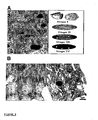
- Figure 8 shows that epithelial cells on the posterior capsule become pigmented in response to a sub-lethal dose of the sigma-1 receptor antagonist Rimcazole.
- Figure 9 shows that TEM confirms that the Rimcazole treated cells contain pigment granules at various stages of maturation. Formation of pigment granules in human epithelial cells.
- FIG. 10 shows that Rimcazole has no effect on the efflux of Dopamine or Tyrosine from lens cells. Efflux of (A) 3 H-dopamine and (B) 14 C-tyrosine from human lens epithelial cells in control (SF) and rimcazole supplemented media. Data are presented as mean ⁇ 6 separate experiments.
- Capsular bags were dissected and donor pairs checked for comparable cell coverage of the remaining anterior capsule by phase-contrast microscopy (see Liu et al for details).
- the bags were maintained in Eagle's minimum essential medium (EMEM) or EMEM supplemented with either 3 ⁇ M Rimcazole dihydrochloride (rimcazole), 10 ⁇ m(+)-SKF 10047 hydrochloride (SKF), and 3 ⁇ M or 10 ⁇ M BD1047 dihydrochloride (BD1047) (all supplied by TOCRIS) and incubate at 35°C in a 5% CO 2 atmosphere. The medium was replaced every 2 days and ongoing observations and analyses were performed as above.
- Lysates were pre-cleared by centrifuging at 1300rpm 4°C for 10 minutes, and the protein content of the soluble fraction was assayed by A Bicinchoninic acid protein assay (Pierce, Rockford, IL). Equal amounts of protein from each sample were loaded onto 10% SDA-PAGE gels for electrophoresis and transfer onto polyvinylidene difluoride (PVDF) membrane (NEN Life Science Products, Boston, MA) with a semidry transfer cell (Trans-Blot; Bio-Rad, Herts, UK).
- PVDF polyvinylidene difluoride
- Proteins were detected using a chemiluminescent blot analysis system (ECL + Amersham Biosciences, Amersham, UK) with Anti-tyrosinase (Upstate Biotechnology, Lake Placid, NY), Anti-tyrosinase related protein 1(TRP1) (SANTA CRUZ BIOTECHNOLOGY, INC), Anti-tyrosinase related protein 2 (TRP2) (SANTA CRUZ BIOTECHNOLOGY, INC) and Anti-Actin (SANTA CRUZ BIOTECHNOLOGY, INC).
- TRP1 Anti-tyrosinase related protein 1
- TRP2 Anti-tyrosinase related protein 2
- Anti-Actin SANTA CRUZ BIOTECHNOLOGY, INC
- RNA was collected from the cells by using a mini kit (RNeasy; Qiagen Ltd., Crawley, UK). RNA (250 ng) was reverse transcribed in a 20 ⁇ l reaction mixture (Superscript TM II RT; Invitrogen Ltd, Paisley, UK).
- cDNA (1 ⁇ l; diluted 1 in 5 in sterile double distilled water) was amplified by PCT in a 20 ⁇ l reaction buffer in the following condition: 0.5 ⁇ M each primer (Invitrogen Ltd, Paisley, UK), 0.8 mM deoxy-nucleoside trisphosphate mixture (Biolin Ltd, London, UK), 10 mM Tris-HCl, 1.5 mM MgCl 2 , 50 mM KCl and 2.5 U TaqDNA polymerase (Roche Diagnostics, Lewes, UK). PCR was performed using the following program with a thermal controller (MJ Research Inc. Reno.
- NV initial denaturation 95°C for 2 minutes; denaturation at 94°C for seconds; annealing at 55°C for 30 seconds; extension at 72°C for 40 seconds. Step 2 through 4 were cycled 27 times (GAPDH); 36 cycles (sigma 1 receptor) with a final extension at 72°C for 10 minutes.
- the oligonucleotide primer (5'-3') sequences specific for the genes examined were as follows:
- Capsular bags were maintained in Eagle's minimum essential medium (EMEM) or EMEM supplemented with 3 ⁇ M Rimcazole dihydrochloride (rimcazole) (TOCRIS) for 7 days (when the pigment granules could be observed in cells). 1 ⁇ Cl/ml of 3 H-dopamine and 2 ⁇ Ci/ml of 14 C-tyrosine (Amersham Biosciences) were then added to each dish for an additional 24 hours. At the end point, 10 ⁇ l of medium were collected from each dish, and transferred into scintillation vials. The bags were washed briefly twice with EMEM and fresh control or experimental media added for one hour. The medium was then collected into scintillation vials and the procedure repeated eights times.
- EMEM Eagle's minimum essential medium
- rimcazole Rimcazole dihydrochloride
- TCA Trichloroacetic acid
- the present inventors have tested a panel of sigma-1 receptor antagonists such as IPAG, BD1047, BD-1063 and BMY 14802 in addition to Rimcazole for their ability to kill lens cells grown on tissue culture plastic plates. These have been compared to the effect of these agents on other cell types, such as tumour cells, previously shown to be susceptible to sigma-1 antagonists as well as primary cells which are resistant to these drugs. Primary bovine lens cells in tissue culture are almost as susceptible to Rimcazole and IPAG as tumour cells ( Figure 1 ).
- Rimcazole inhibits growth of human lens cells on the posterior capsule in the present PCO model at doses comparable or less than the dose required to kill tumour cells (3 ⁇ m: Figure 2 ).
- BD1047 at this dose is less inhibitory but at 10 ⁇ m (still less than is needed to kill tumour cells) it potently inhibits growth of lens cells on the capsule ( Figure 4 ).
- the growth of the spontaneously immortal human lens cell line FHL124 was investigated using a patch assay.
- Rimcazole growth is significantly inhibited in serum free medium but in 5% FCS growth inhibition is less marked at the higher dose ( Figure 5 ).
- the specific sigma-1 agonist (+)-SKF1004partially rescues sigma receptor antagonist-mediated growth inhibition at both concentrations in serum free medium ( Figure 5 ).
- (+)-SKF10047 also partially restores growth to BD1047 inhibited FHL124 cells at the higher concentrations (10 and 30 ⁇ m). ( Figure 6 ).
- BD1047 is less effective at the lower dose (10 ⁇ m) most of its effects seem to be on patch size rather than protein content (i.e. cell number, Figure 6 ). Attentuation of rimcazole and BD-1047-mediated growth inhibition by a highly specific sigma-1 receptor agonist confirms that growth inhibition is at least partly mediated through antagonism of sigma-1 receptor sites.
- RT-PCR demonstrates sigma-1 receptor m-RNA in all regions of the human lens: both in the anterior and equatorial epithelium and in the fibre cells. Additionally epithelial cells migrating across the posterior capsule in the capsular bag model also express sigma-1 receptors ( Figure 7 ).
- Both the sigma-1 receptor specific antagonist BD-1 047 and Rimcazole induce pigmentation in the lens cells if administered at a sub-lethal dose.
- This pigmentation comprises melanin granules of the type seen in melanocytes and is likely to be the result of the upregulation of two enzymes in the melanin synthetic pathway, Tyrosinase and TYRP1, while TRP2 is unaffected, (data not shown).
- lens epithelial cells have the ability to make pigment which may be suppressed by agonistic signalling at the sigma-1 receptor.
- the sigma receptor antagonists used in this study arc potential candidates for the treatment of PCO and as lead compounds for the development of effective strategies for this common problem.
- Melanin accumulation may be used as a marker of transdifferentiation of lens epithelial cells; thus, melanin induction could be a marker of cell cycle exit - that is to say, melanin induction is consistent with proliferation inhibition which, along with apoptosis induction would be a desirable outcome in the context of therapy for PCO.
- agents that may be particularly useful for treatment of PCO would be sigma receptor ligands that, when administered at sublethal concentrations induce melanin (a marker of proliferation inhibition) within lens epithelial cells.
- melanin a marker of proliferation inhibition
- Such agents may be identified by a combination of standard radioligand binding assays to identify sigma receptor binding activity (as described in WO 00/00599 ) and the induction of melanin within cultured lens epithelial cells (using the techniques described herein).
- the determination of melanin accumulation in residual lens epithelial cells may be used as biomarker of response to rimcazole and/or other test agents of the invention. Such an assessment would be useful as an efficacy surrogate for clinical trials in PCO.
Landscapes
- Health & Medical Sciences (AREA)
- Life Sciences & Earth Sciences (AREA)
- Chemical & Material Sciences (AREA)
- Medicinal Chemistry (AREA)
- Engineering & Computer Science (AREA)
- General Health & Medical Sciences (AREA)
- Pharmacology & Pharmacy (AREA)
- Animal Behavior & Ethology (AREA)
- Public Health (AREA)
- Veterinary Medicine (AREA)
- Epidemiology (AREA)
- Biomedical Technology (AREA)
- Immunology (AREA)
- Cell Biology (AREA)
- Urology & Nephrology (AREA)
- Molecular Biology (AREA)
- Hematology (AREA)
- Bioinformatics & Cheminformatics (AREA)
- Biochemistry (AREA)
- Analytical Chemistry (AREA)
- Pathology (AREA)
- Tropical Medicine & Parasitology (AREA)
- Biotechnology (AREA)
- General Physics & Mathematics (AREA)
- Microbiology (AREA)
- Toxicology (AREA)
- Physics & Mathematics (AREA)
- Food Science & Technology (AREA)
- Chemical Kinetics & Catalysis (AREA)
- General Chemical & Material Sciences (AREA)
- Ophthalmology & Optometry (AREA)
- Nuclear Medicine, Radiotherapy & Molecular Imaging (AREA)
- Organic Chemistry (AREA)
- Medicines That Contain Protein Lipid Enzymes And Other Medicines (AREA)
- Pharmaceuticals Containing Other Organic And Inorganic Compounds (AREA)
- Acyclic And Carbocyclic Compounds In Medicinal Compositions (AREA)
- Cephalosporin Compounds (AREA)
- Pyrane Compounds (AREA)
- Medicinal Preparation (AREA)
- Measuring Or Testing Involving Enzymes Or Micro-Organisms (AREA)
Claims (12)
- In vitro-Methode zum Identifizieren eines Sigmarezeptorliganden, der potentiell für die Behandlung von Nachstar (PCO) geeignet ist, umfassend die Schritte des:a) Verwendens eines so genannten Kapselbeutelsystems umfassend eine menschliche Linsenkapsel, aus der die Linseninhalte - hauptsächlich die Linsenfaserzellen - im Wesentlichen entfernt worden sind, die jedoch immer noch anhaftende Linsenepithelzellen enthält;b) Kontaktieren eines Sigmarezeptorliganden mit den Linsenepithelzellen, die sich auf der Linsenkapsel befinden; und wahlweise mit Linsenepithelzellen, die in Abwesenheit einer Kapsel gezüchtet worden sind; undc) Beobachten einer Reduktion der Lebensfähigkeit oder des Wachstums, wenn der Sigmarezeptorligand mit den Linsenepithelzellen in der Nähe der Linsenkapsel kontaktiert wird.
- Methode nach Anspruch 1, wobei der Sigmarezeptorligand ein Signia-1-Antagonist ist.
- Methode nach den Ansprüchen 1 oder 2, wobei die Sigmaliganden auch mit anderen Zellen, wie beispielsweise Hornhautetrdothelzellen und iridokornealem Balkenwerk oder anderen normalen menschlichen Zellen in Kontakt gebracht werden, um die Selektivität des Sigmaliganden sicherzustellen.
- Methode nach einem der vorhergehenden Ansprüche, wobei die Linsenkapsel auf einem festen Substrat getragen wird.
- Methode nach einem der vorhergehenden Ansprüche, wobei das Kontaktieren durch Pipettieren einer Lösung, die das Testagens umfasst, auf die Oberfläche der Linsenkapsel und/oder in die Linsenkapsel selbst oder Waschen oder auf andere Weise Baden der Linsenkapsel in einer das Testagens umfassenden Lösung durchgeführt wird.
- Methode nach einem der vorhergehenden Ansprüche, wobei das Beobachten einer Reduktion des Wachstums oder der Induktion von Zellabtötung durch das Testagens auf den Linsenepithelzellen unter Anwendung eines Mikroskops durchgeführt wird.
- Methode nach einem der vorhergehenden Ansprüche, wobei das Testagens auch in einem Linsenzellkulturlebensfähigkeitsassay getestet wird.
- In vitro-Methode zum Testen und/oder Sicherstellen der Wirksamkeit eines Sigmarezeptorliganden beim Behandeln/Verhindern des PCO umfassend die Schritte des:a) Anwendens eines menschlichen Kapselbeutelsystems umfassend eine Linsenkapsel, an der Linsenepithelzellen anhaften und von der die ursprünglichen Linseninhalte (Faserzellen) im Wesentlichen entfernt worden sind;b) Kontaktierens eines Sigmarezeptorliganden mit den Linsenepithelzellen innerhalb der Linsenkapsel und wahlweise gezüchteten Linsenepithelzellen ohne Vorliegen der Kapsel; undc) Erfassens irgend einer Erhöhung der Pigmentierung der Linsenepithelzellen innerhalb der Linsenkapsel und/oder der gezüchteten Epithelzellen.
- Methode nach Anspruch 8, wobei der Sigmarezeptorligand ein Sigma-1-Rezeptorantagonist ist.
- Methode nach den Ansprüchen 8 oder 9, wobei die Erfassung irgend einer Erhöhung der Pigmentierung der Linsenepithelzellen durch ein automatisiertes System unter Anwendung beispielsweise einer CCD-Kamera und geeigneter Software zum Vergleichen von Änderungen der Pigmentierung zwischen Bildern durchgeführt wird.
- Verwendung von mindestens einem Sigma-1-Antagonisten für die Herstellung eines Medikaments zur Verhinderung und/oder Behandlung von Nachstar (PCO).
- Verwendung nach Anspruch 11, wobei der Sigmarezeptorligand Rimcazol oder BD1047([2-(3,4-Dichlarphenyl)ethyl]-N-methyl-2-(diamino)ethylamin) ist.
Applications Claiming Priority (2)
| Application Number | Priority Date | Filing Date | Title |
|---|---|---|---|
| GBGB0419145.8A GB0419145D0 (en) | 2004-08-27 | 2004-08-27 | Treatment of posterior capsule opacification |
| PCT/GB2005/003373 WO2006021811A2 (en) | 2004-08-27 | 2005-08-26 | Treatment of posterior capsule opacification |
Publications (2)
| Publication Number | Publication Date |
|---|---|
| EP1782065A2 EP1782065A2 (de) | 2007-05-09 |
| EP1782065B1 true EP1782065B1 (de) | 2008-07-23 |
Family
ID=33104737
Family Applications (1)
| Application Number | Title | Priority Date | Filing Date |
|---|---|---|---|
| EP05776264A Expired - Lifetime EP1782065B1 (de) | 2004-08-27 | 2005-08-26 | Identifikation von verbindungen zur behandlung von nachstar |
Country Status (8)
| Country | Link |
|---|---|
| US (1) | US20090036464A1 (de) |
| EP (1) | EP1782065B1 (de) |
| AT (1) | ATE402412T1 (de) |
| CA (1) | CA2578117A1 (de) |
| DE (1) | DE602005008445D1 (de) |
| ES (1) | ES2310365T3 (de) |
| GB (1) | GB0419145D0 (de) |
| WO (1) | WO2006021811A2 (de) |
Families Citing this family (3)
| Publication number | Priority date | Publication date | Assignee | Title |
|---|---|---|---|---|
| GB0821093D0 (en) * | 2008-11-18 | 2008-12-24 | Modern Biosciences Plc | Treatment |
| GB201003124D0 (en) * | 2010-02-25 | 2010-04-14 | Univ East Anglia | Treatment of oxidative stress disorders |
| WO2011146863A1 (en) * | 2010-05-21 | 2011-11-24 | Alcon Research, Ltd. | Surgical compositions containing sigma-receptor agonists |
Family Cites Families (5)
| Publication number | Priority date | Publication date | Assignee | Title |
|---|---|---|---|---|
| US4966577A (en) * | 1988-03-16 | 1990-10-30 | Allergan, Inc. | Prevention of lens-related tissue growth in the eye |
| GB0007842D0 (en) * | 2000-03-31 | 2000-05-17 | Spruce Barbara | Sigma receptor ligands and their medical uses |
| US7985405B2 (en) * | 2002-09-17 | 2011-07-26 | Jin Jun Zhang | Treatment solution and method for preventing posterior capsular opacification by selectively inducing detachment and/or death of lens epithelial cells |
| SE0202924D0 (sv) * | 2002-10-03 | 2002-10-03 | Pharmacia Groningen Bv | Compositions for preventing posterior capsular opacification and the use therefor |
| GB0303640D0 (en) * | 2003-02-17 | 2003-03-19 | Univ Aberdeen | An animal model |
-
2004
- 2004-08-27 GB GBGB0419145.8A patent/GB0419145D0/en not_active Ceased
-
2005
- 2005-08-26 WO PCT/GB2005/003373 patent/WO2006021811A2/en not_active Ceased
- 2005-08-26 AT AT05776264T patent/ATE402412T1/de active
- 2005-08-26 EP EP05776264A patent/EP1782065B1/de not_active Expired - Lifetime
- 2005-08-26 US US11/661,482 patent/US20090036464A1/en not_active Abandoned
- 2005-08-26 DE DE602005008445T patent/DE602005008445D1/de not_active Expired - Lifetime
- 2005-08-26 CA CA002578117A patent/CA2578117A1/en not_active Abandoned
- 2005-08-26 ES ES05776264T patent/ES2310365T3/es not_active Expired - Lifetime
Also Published As
| Publication number | Publication date |
|---|---|
| US20090036464A1 (en) | 2009-02-05 |
| CA2578117A1 (en) | 2006-03-02 |
| GB0419145D0 (en) | 2004-09-29 |
| DE602005008445D1 (de) | 2008-09-04 |
| ATE402412T1 (de) | 2008-08-15 |
| ES2310365T3 (es) | 2009-01-01 |
| EP1782065A2 (de) | 2007-05-09 |
| WO2006021811A3 (en) | 2006-08-10 |
| WO2006021811A2 (en) | 2006-03-02 |
Similar Documents
| Publication | Publication Date | Title |
|---|---|---|
| Rao et al. | Modulation of aqueous humor outflow facility by the Rho kinase–specific inhibitor Y-27632 | |
| van der Ent et al. | Modeling of human uveal melanoma in zebrafish xenograft embryos | |
| Dudakova et al. | Changes in lysyl oxidase (LOX) distribution and its decreased activity in keratoconus corneas | |
| Reyes et al. | Sorafenib and 2-deoxyglucose synergistically inhibit proliferation of both sorafenib-sensitive and-resistant HCC cells by inhibiting ATP production | |
| US20110223177A1 (en) | Treatment of fibrotic eye disorders | |
| Vellonen et al. | Effluxing ABC transporters in human corneal epithelium | |
| Dagorn et al. | A novel direct adenosine monophosphate kinase activator ameliorates disease progression in preclinical models of Autosomal Dominant Polycystic Kidney Disease | |
| Morton et al. | A macrocyclic calpain inhibitor slows the development of inherited cortical cataracts in a sheep model | |
| Chen et al. | Effectively intervening epithelial-mesenchymal transition of retinal pigment epithelial cells with a combination of ROCK and TGF-β signaling inhibitors | |
| Cooksley et al. | Lens capsule advanced glycation end products induce senescence in epithelial cells: Implications for secondary cataracts | |
| Vaden et al. | A cancer-selective zinc ionophore inspired by the natural product naamidine A | |
| Liu et al. | Control of podocyte and glomerular capillary wall structure and elasticity by WNK1 kinase | |
| Da et al. | The inhibitory effect of CTAB on human osteosarcoma through the PI3K/AKT signaling pathway | |
| EP1782065B1 (de) | Identifikation von verbindungen zur behandlung von nachstar | |
| WO2017181943A1 (zh) | 含peitc的药物组合物及其在癌症治疗中的应用 | |
| Cho et al. | Reduction in integrin a3b1 modulates lung cancer motility and invasion through p70S6K-dependent E-cadherin localization | |
| Rajagopalan et al. | Retinal Pigment Epithelium Injury in Pentosan Polysulfate Exposure: Morphologic Changes, Phagocytic Deficits, and Mitochondrial Dysfunction | |
| Lasiste | Metformin inhibits epithelial-to-mesenchymal transition in lens epithelial cells | |
| Vázquez | Role of Connexin43 in tumour progression and drug resistance in BRAF-driven tumours | |
| Collins | Regulation of V-ATPases in Amino Acid Sensing and Function of Subunit a Isoforms in Breast Cancer Growth and Metastasis | |
| Ouyang et al. | Suppression of MERTK inhibits proliferation and migration of pterygium fibroblasts | |
| JP5806168B2 (ja) | 抗浸潤薬の新規スクリーニング法 | |
| Pence | Roles and Regulation of PLEKHA7, an Apical Adherens Junction Protein, in Physiologic and Pathophysiologic States | |
| Gheyas | Mechanisms Involved in the Formation of the Lens Organelle Free Zone | |
| Hongli | PEROXISOME DYSFUNCTION AND AUTOPHAGY: BRIDGING THE GAP |
Legal Events
| Date | Code | Title | Description |
|---|---|---|---|
| PUAI | Public reference made under article 153(3) epc to a published international application that has entered the european phase |
Free format text: ORIGINAL CODE: 0009012 |
|
| 17P | Request for examination filed |
Effective date: 20070301 |
|
| AK | Designated contracting states |
Kind code of ref document: A2 Designated state(s): AT BE BG CH CY CZ DE DK EE ES FI FR GB GR HU IE IS IT LI LT LU LV MC NL PL PT RO SE SI SK TR |
|
| 17Q | First examination report despatched |
Effective date: 20070612 |
|
| RIC1 | Information provided on ipc code assigned before grant |
Ipc: G01N 33/68 20060101ALI20070803BHEP Ipc: G01N 33/50 20060101AFI20070803BHEP |
|
| RTI1 | Title (correction) |
Free format text: IDENTIFICATION OF COMPOUNDS FOR THE TREATMENT OF POSTERIOR CAPSULE OPACIFICATION |
|
| GRAP | Despatch of communication of intention to grant a patent |
Free format text: ORIGINAL CODE: EPIDOSNIGR1 |
|
| DAX | Request for extension of the european patent (deleted) | ||
| GRAS | Grant fee paid |
Free format text: ORIGINAL CODE: EPIDOSNIGR3 |
|
| GRAA | (expected) grant |
Free format text: ORIGINAL CODE: 0009210 |
|
| AK | Designated contracting states |
Kind code of ref document: B1 Designated state(s): AT BE BG CH CY CZ DE DK EE ES FI FR GB GR HU IE IS IT LI LT LU LV MC NL PL PT RO SE SI SK TR |
|
| REG | Reference to a national code |
Ref country code: GB Ref legal event code: FG4D |
|
| REG | Reference to a national code |
Ref country code: CH Ref legal event code: EP |
|
| REG | Reference to a national code |
Ref country code: IE Ref legal event code: FG4D |
|
| REF | Corresponds to: |
Ref document number: 602005008445 Country of ref document: DE Date of ref document: 20080904 Kind code of ref document: P |
|
| REG | Reference to a national code |
Ref country code: CH Ref legal event code: NV Representative=s name: SERVOPATENT GMBH |
|
| REG | Reference to a national code |
Ref country code: SE Ref legal event code: TRGR |
|
| REG | Reference to a national code |
Ref country code: ES Ref legal event code: FG2A Ref document number: 2310365 Country of ref document: ES Kind code of ref document: T3 |
|
| PG25 | Lapsed in a contracting state [announced via postgrant information from national office to epo] |
Ref country code: IS Free format text: LAPSE BECAUSE OF FAILURE TO SUBMIT A TRANSLATION OF THE DESCRIPTION OR TO PAY THE FEE WITHIN THE PRESCRIBED TIME-LIMIT Effective date: 20081123 Ref country code: LT Free format text: LAPSE BECAUSE OF FAILURE TO SUBMIT A TRANSLATION OF THE DESCRIPTION OR TO PAY THE FEE WITHIN THE PRESCRIBED TIME-LIMIT Effective date: 20080723 |
|
| PG25 | Lapsed in a contracting state [announced via postgrant information from national office to epo] |
Ref country code: LV Free format text: LAPSE BECAUSE OF FAILURE TO SUBMIT A TRANSLATION OF THE DESCRIPTION OR TO PAY THE FEE WITHIN THE PRESCRIBED TIME-LIMIT Effective date: 20080723 Ref country code: PT Free format text: LAPSE BECAUSE OF FAILURE TO SUBMIT A TRANSLATION OF THE DESCRIPTION OR TO PAY THE FEE WITHIN THE PRESCRIBED TIME-LIMIT Effective date: 20081223 Ref country code: SI Free format text: LAPSE BECAUSE OF FAILURE TO SUBMIT A TRANSLATION OF THE DESCRIPTION OR TO PAY THE FEE WITHIN THE PRESCRIBED TIME-LIMIT Effective date: 20080723 Ref country code: FI Free format text: LAPSE BECAUSE OF FAILURE TO SUBMIT A TRANSLATION OF THE DESCRIPTION OR TO PAY THE FEE WITHIN THE PRESCRIBED TIME-LIMIT Effective date: 20080723 Ref country code: BG Free format text: LAPSE BECAUSE OF FAILURE TO SUBMIT A TRANSLATION OF THE DESCRIPTION OR TO PAY THE FEE WITHIN THE PRESCRIBED TIME-LIMIT Effective date: 20081023 |
|
| PG25 | Lapsed in a contracting state [announced via postgrant information from national office to epo] |
Ref country code: MC Free format text: LAPSE BECAUSE OF NON-PAYMENT OF DUE FEES Effective date: 20080831 Ref country code: BE Free format text: LAPSE BECAUSE OF FAILURE TO SUBMIT A TRANSLATION OF THE DESCRIPTION OR TO PAY THE FEE WITHIN THE PRESCRIBED TIME-LIMIT Effective date: 20080723 |
|
| PG25 | Lapsed in a contracting state [announced via postgrant information from national office to epo] |
Ref country code: EE Free format text: LAPSE BECAUSE OF FAILURE TO SUBMIT A TRANSLATION OF THE DESCRIPTION OR TO PAY THE FEE WITHIN THE PRESCRIBED TIME-LIMIT Effective date: 20080723 Ref country code: DK Free format text: LAPSE BECAUSE OF FAILURE TO SUBMIT A TRANSLATION OF THE DESCRIPTION OR TO PAY THE FEE WITHIN THE PRESCRIBED TIME-LIMIT Effective date: 20080723 |
|
| PG25 | Lapsed in a contracting state [announced via postgrant information from national office to epo] |
Ref country code: RO Free format text: LAPSE BECAUSE OF FAILURE TO SUBMIT A TRANSLATION OF THE DESCRIPTION OR TO PAY THE FEE WITHIN THE PRESCRIBED TIME-LIMIT Effective date: 20080723 Ref country code: CZ Free format text: LAPSE BECAUSE OF FAILURE TO SUBMIT A TRANSLATION OF THE DESCRIPTION OR TO PAY THE FEE WITHIN THE PRESCRIBED TIME-LIMIT Effective date: 20080723 Ref country code: SK Free format text: LAPSE BECAUSE OF FAILURE TO SUBMIT A TRANSLATION OF THE DESCRIPTION OR TO PAY THE FEE WITHIN THE PRESCRIBED TIME-LIMIT Effective date: 20080723 |
|
| PLBE | No opposition filed within time limit |
Free format text: ORIGINAL CODE: 0009261 |
|
| STAA | Information on the status of an ep patent application or granted ep patent |
Free format text: STATUS: NO OPPOSITION FILED WITHIN TIME LIMIT |
|
| 26N | No opposition filed |
Effective date: 20090424 |
|
| PG25 | Lapsed in a contracting state [announced via postgrant information from national office to epo] |
Ref country code: PL Free format text: LAPSE BECAUSE OF FAILURE TO SUBMIT A TRANSLATION OF THE DESCRIPTION OR TO PAY THE FEE WITHIN THE PRESCRIBED TIME-LIMIT Effective date: 20080723 |
|
| PG25 | Lapsed in a contracting state [announced via postgrant information from national office to epo] |
Ref country code: CY Free format text: LAPSE BECAUSE OF FAILURE TO SUBMIT A TRANSLATION OF THE DESCRIPTION OR TO PAY THE FEE WITHIN THE PRESCRIBED TIME-LIMIT Effective date: 20080723 Ref country code: HU Free format text: LAPSE BECAUSE OF FAILURE TO SUBMIT A TRANSLATION OF THE DESCRIPTION OR TO PAY THE FEE WITHIN THE PRESCRIBED TIME-LIMIT Effective date: 20090124 Ref country code: LU Free format text: LAPSE BECAUSE OF NON-PAYMENT OF DUE FEES Effective date: 20080826 |
|
| PG25 | Lapsed in a contracting state [announced via postgrant information from national office to epo] |
Ref country code: TR Free format text: LAPSE BECAUSE OF FAILURE TO SUBMIT A TRANSLATION OF THE DESCRIPTION OR TO PAY THE FEE WITHIN THE PRESCRIBED TIME-LIMIT Effective date: 20080723 |
|
| PG25 | Lapsed in a contracting state [announced via postgrant information from national office to epo] |
Ref country code: GR Free format text: LAPSE BECAUSE OF FAILURE TO SUBMIT A TRANSLATION OF THE DESCRIPTION OR TO PAY THE FEE WITHIN THE PRESCRIBED TIME-LIMIT Effective date: 20081024 |
|
| PGFP | Annual fee paid to national office [announced via postgrant information from national office to epo] |
Ref country code: CH Payment date: 20100812 Year of fee payment: 6 Ref country code: ES Payment date: 20100915 Year of fee payment: 6 Ref country code: IE Payment date: 20100812 Year of fee payment: 6 Ref country code: NL Payment date: 20100810 Year of fee payment: 6 |
|
| PGFP | Annual fee paid to national office [announced via postgrant information from national office to epo] |
Ref country code: AT Payment date: 20100812 Year of fee payment: 6 Ref country code: DE Payment date: 20100818 Year of fee payment: 6 Ref country code: FR Payment date: 20100824 Year of fee payment: 6 Ref country code: IT Payment date: 20100823 Year of fee payment: 6 |
|
| PGFP | Annual fee paid to national office [announced via postgrant information from national office to epo] |
Ref country code: GB Payment date: 20100825 Year of fee payment: 6 |
|
| PGFP | Annual fee paid to national office [announced via postgrant information from national office to epo] |
Ref country code: SE Payment date: 20110811 Year of fee payment: 7 |
|
| REG | Reference to a national code |
Ref country code: NL Ref legal event code: V1 Effective date: 20120301 |
|
| REG | Reference to a national code |
Ref country code: CH Ref legal event code: PL |
|
| GBPC | Gb: european patent ceased through non-payment of renewal fee |
Effective date: 20110826 |
|
| PG25 | Lapsed in a contracting state [announced via postgrant information from national office to epo] |
Ref country code: LI Free format text: LAPSE BECAUSE OF NON-PAYMENT OF DUE FEES Effective date: 20110831 Ref country code: CH Free format text: LAPSE BECAUSE OF NON-PAYMENT OF DUE FEES Effective date: 20110831 |
|
| REG | Reference to a national code |
Ref country code: FR Ref legal event code: ST Effective date: 20120430 |
|
| REG | Reference to a national code |
Ref country code: IE Ref legal event code: MM4A |
|
| PG25 | Lapsed in a contracting state [announced via postgrant information from national office to epo] |
Ref country code: IT Free format text: LAPSE BECAUSE OF NON-PAYMENT OF DUE FEES Effective date: 20110826 Ref country code: NL Free format text: LAPSE BECAUSE OF NON-PAYMENT OF DUE FEES Effective date: 20120301 |
|
| REG | Reference to a national code |
Ref country code: DE Ref legal event code: R119 Ref document number: 602005008445 Country of ref document: DE Effective date: 20120301 |
|
| PG25 | Lapsed in a contracting state [announced via postgrant information from national office to epo] |
Ref country code: IE Free format text: LAPSE BECAUSE OF NON-PAYMENT OF DUE FEES Effective date: 20110826 |
|
| PG25 | Lapsed in a contracting state [announced via postgrant information from national office to epo] |
Ref country code: FR Free format text: LAPSE BECAUSE OF NON-PAYMENT OF DUE FEES Effective date: 20110831 Ref country code: GB Free format text: LAPSE BECAUSE OF NON-PAYMENT OF DUE FEES Effective date: 20110826 |
|
| REG | Reference to a national code |
Ref country code: AT Ref legal event code: MM01 Ref document number: 402412 Country of ref document: AT Kind code of ref document: T Effective date: 20110826 |
|
| PG25 | Lapsed in a contracting state [announced via postgrant information from national office to epo] |
Ref country code: AT Free format text: LAPSE BECAUSE OF NON-PAYMENT OF DUE FEES Effective date: 20110826 |
|
| REG | Reference to a national code |
Ref country code: SE Ref legal event code: EUG |
|
| REG | Reference to a national code |
Ref country code: ES Ref legal event code: FD2A Effective date: 20130404 |
|
| PG25 | Lapsed in a contracting state [announced via postgrant information from national office to epo] |
Ref country code: SE Free format text: LAPSE BECAUSE OF NON-PAYMENT OF DUE FEES Effective date: 20120827 Ref country code: ES Free format text: LAPSE BECAUSE OF NON-PAYMENT OF DUE FEES Effective date: 20110827 |
|
| PG25 | Lapsed in a contracting state [announced via postgrant information from national office to epo] |
Ref country code: DE Free format text: LAPSE BECAUSE OF NON-PAYMENT OF DUE FEES Effective date: 20120301 |