EP1783178A1 - Noir de carbone et son procede de fabrication a etapes multiples - Google Patents
Noir de carbone et son procede de fabrication a etapes multiples Download PDFInfo
- Publication number
- EP1783178A1 EP1783178A1 EP06023263A EP06023263A EP1783178A1 EP 1783178 A1 EP1783178 A1 EP 1783178A1 EP 06023263 A EP06023263 A EP 06023263A EP 06023263 A EP06023263 A EP 06023263A EP 1783178 A1 EP1783178 A1 EP 1783178A1
- Authority
- EP
- European Patent Office
- Prior art keywords
- carbon black
- group
- introducing
- substance
- yielding feedstock
- Prior art date
- Legal status (The legal status is an assumption and is not a legal conclusion. Google has not performed a legal analysis and makes no representation as to the accuracy of the status listed.)
- Withdrawn
Links
- 239000006229 carbon black Substances 0.000 title claims abstract description 252
- 238000000034 method Methods 0.000 title claims abstract description 128
- 230000008569 process Effects 0.000 title claims abstract description 91
- 239000000126 substance Substances 0.000 claims description 61
- 239000002243 precursor Substances 0.000 claims description 49
- 238000010791 quenching Methods 0.000 claims description 42
- 239000007789 gas Substances 0.000 claims description 28
- 238000006243 chemical reaction Methods 0.000 claims description 24
- 230000000171 quenching effect Effects 0.000 claims description 23
- 239000000446 fuel Substances 0.000 claims description 17
- 230000015572 biosynthetic process Effects 0.000 claims description 15
- ZLMJMSJWJFRBEC-UHFFFAOYSA-N Potassium Chemical compound [K] ZLMJMSJWJFRBEC-UHFFFAOYSA-N 0.000 claims description 14
- 229910052700 potassium Inorganic materials 0.000 claims description 14
- 239000011591 potassium Substances 0.000 claims description 14
- 230000001590 oxidative effect Effects 0.000 claims description 13
- XLYOFNOQVPJJNP-UHFFFAOYSA-N water Substances O XLYOFNOQVPJJNP-UHFFFAOYSA-N 0.000 claims description 11
- 239000012633 leachable Substances 0.000 claims description 7
- 150000003839 salts Chemical class 0.000 claims description 5
- 150000001875 compounds Chemical class 0.000 claims description 4
- 238000001816 cooling Methods 0.000 claims description 4
- 241000872198 Serjania polyphylla Species 0.000 claims description 2
- 238000005507 spraying Methods 0.000 claims 1
- 238000003541 multi-stage reaction Methods 0.000 abstract 1
- 235000019241 carbon black Nutrition 0.000 description 201
- 239000000047 product Substances 0.000 description 31
- 238000002485 combustion reaction Methods 0.000 description 17
- 101100194706 Mus musculus Arhgap32 gene Proteins 0.000 description 15
- 229910052751 metal Inorganic materials 0.000 description 14
- 239000002184 metal Substances 0.000 description 14
- 238000004519 manufacturing process Methods 0.000 description 12
- 229930195733 hydrocarbon Natural products 0.000 description 10
- 150000002430 hydrocarbons Chemical class 0.000 description 10
- VNWKTOKETHGBQD-UHFFFAOYSA-N methane Chemical compound C VNWKTOKETHGBQD-UHFFFAOYSA-N 0.000 description 10
- 239000007800 oxidant agent Substances 0.000 description 8
- OKTJSMMVPCPJKN-UHFFFAOYSA-N Carbon Chemical group [C] OKTJSMMVPCPJKN-UHFFFAOYSA-N 0.000 description 7
- 239000003570 air Substances 0.000 description 7
- 239000000567 combustion gas Substances 0.000 description 7
- 229910052799 carbon Inorganic materials 0.000 description 6
- 239000004215 Carbon black (E152) Substances 0.000 description 5
- 239000003795 chemical substances by application Substances 0.000 description 5
- 239000007788 liquid Substances 0.000 description 5
- 229910021645 metal ion Inorganic materials 0.000 description 5
- 239000000203 mixture Substances 0.000 description 5
- -1 potassium Chemical class 0.000 description 5
- 239000002994 raw material Substances 0.000 description 5
- QVGXLLKOCUKJST-UHFFFAOYSA-N atomic oxygen Chemical compound [O] QVGXLLKOCUKJST-UHFFFAOYSA-N 0.000 description 4
- 238000002347 injection Methods 0.000 description 4
- 239000007924 injection Substances 0.000 description 4
- 239000003345 natural gas Substances 0.000 description 4
- 239000001301 oxygen Substances 0.000 description 4
- 229910052760 oxygen Inorganic materials 0.000 description 4
- 239000002245 particle Substances 0.000 description 4
- SCVFZCLFOSHCOH-UHFFFAOYSA-M potassium acetate Chemical compound [K+].CC([O-])=O SCVFZCLFOSHCOH-UHFFFAOYSA-M 0.000 description 4
- UHOVQNZJYSORNB-UHFFFAOYSA-N Benzene Chemical compound C1=CC=CC=C1 UHOVQNZJYSORNB-UHFFFAOYSA-N 0.000 description 3
- YXFVVABEGXRONW-UHFFFAOYSA-N Toluene Chemical compound CC1=CC=CC=C1 YXFVVABEGXRONW-UHFFFAOYSA-N 0.000 description 3
- 229910052783 alkali metal Inorganic materials 0.000 description 3
- 150000001340 alkali metals Chemical class 0.000 description 3
- 239000000463 material Substances 0.000 description 3
- 238000002156 mixing Methods 0.000 description 3
- 239000007787 solid Substances 0.000 description 3
- 239000000243 solution Substances 0.000 description 3
- IJGRMHOSHXDMSA-UHFFFAOYSA-N Atomic nitrogen Chemical compound N#N IJGRMHOSHXDMSA-UHFFFAOYSA-N 0.000 description 2
- 238000010521 absorption reaction Methods 0.000 description 2
- 150000001339 alkali metal compounds Chemical class 0.000 description 2
- 229910052784 alkaline earth metal Inorganic materials 0.000 description 2
- 150000001342 alkaline earth metals Chemical class 0.000 description 2
- HSFWRNGVRCDJHI-UHFFFAOYSA-N alpha-acetylene Natural products C#C HSFWRNGVRCDJHI-UHFFFAOYSA-N 0.000 description 2
- 230000009286 beneficial effect Effects 0.000 description 2
- 239000006227 byproduct Substances 0.000 description 2
- 238000007796 conventional method Methods 0.000 description 2
- 229920001971 elastomer Polymers 0.000 description 2
- 125000002534 ethynyl group Chemical group [H]C#C* 0.000 description 2
- 239000012530 fluid Substances 0.000 description 2
- 239000000976 ink Substances 0.000 description 2
- 150000002500 ions Chemical class 0.000 description 2
- 239000003921 oil Substances 0.000 description 2
- 239000004033 plastic Substances 0.000 description 2
- 229920003023 plastic Polymers 0.000 description 2
- 235000011056 potassium acetate Nutrition 0.000 description 2
- 239000011541 reaction mixture Substances 0.000 description 2
- 230000003014 reinforcing effect Effects 0.000 description 2
- 239000005060 rubber Substances 0.000 description 2
- ZUROCNHARMFRKA-UHFFFAOYSA-N 4,5-dibromo-1h-pyrrole-2-carboxylic acid Chemical compound OC(=O)C1=CC(Br)=C(Br)N1 ZUROCNHARMFRKA-UHFFFAOYSA-N 0.000 description 1
- OYPRJOBELJOOCE-UHFFFAOYSA-N Calcium Chemical compound [Ca] OYPRJOBELJOOCE-UHFFFAOYSA-N 0.000 description 1
- UGFAIRIUMAVXCW-UHFFFAOYSA-N Carbon monoxide Chemical compound [O+]#[C-] UGFAIRIUMAVXCW-UHFFFAOYSA-N 0.000 description 1
- LFQSCWFLJHTTHZ-UHFFFAOYSA-N Ethanol Chemical compound CCO LFQSCWFLJHTTHZ-UHFFFAOYSA-N 0.000 description 1
- VGGSQFUCUMXWEO-UHFFFAOYSA-N Ethene Chemical compound C=C VGGSQFUCUMXWEO-UHFFFAOYSA-N 0.000 description 1
- 239000005977 Ethylene Substances 0.000 description 1
- 101100431668 Homo sapiens YBX3 gene Proteins 0.000 description 1
- DGAQECJNVWCQMB-PUAWFVPOSA-M Ilexoside XXIX Chemical compound C[C@@H]1CC[C@@]2(CC[C@@]3(C(=CC[C@H]4[C@]3(CC[C@@H]5[C@@]4(CC[C@@H](C5(C)C)OS(=O)(=O)[O-])C)C)[C@@H]2[C@]1(C)O)C)C(=O)O[C@H]6[C@@H]([C@H]([C@@H]([C@H](O6)CO)O)O)O.[Na+] DGAQECJNVWCQMB-PUAWFVPOSA-M 0.000 description 1
- WHXSMMKQMYFTQS-UHFFFAOYSA-N Lithium Chemical compound [Li] WHXSMMKQMYFTQS-UHFFFAOYSA-N 0.000 description 1
- CTQNGGLPUBDAKN-UHFFFAOYSA-N O-Xylene Chemical compound CC1=CC=CC=C1C CTQNGGLPUBDAKN-UHFFFAOYSA-N 0.000 description 1
- 238000000944 Soxhlet extraction Methods 0.000 description 1
- 102100022221 Y-box-binding protein 3 Human genes 0.000 description 1
- 230000004931 aggregating effect Effects 0.000 description 1
- 150000001341 alkaline earth metal compounds Chemical class 0.000 description 1
- 150000001336 alkenes Chemical class 0.000 description 1
- 239000006286 aqueous extract Substances 0.000 description 1
- 125000003118 aryl group Chemical group 0.000 description 1
- 229910052788 barium Inorganic materials 0.000 description 1
- DSAJWYNOEDNPEQ-UHFFFAOYSA-N barium atom Chemical compound [Ba] DSAJWYNOEDNPEQ-UHFFFAOYSA-N 0.000 description 1
- 229910052792 caesium Inorganic materials 0.000 description 1
- TVFDJXOCXUVLDH-UHFFFAOYSA-N caesium atom Chemical compound [Cs] TVFDJXOCXUVLDH-UHFFFAOYSA-N 0.000 description 1
- 229910052791 calcium Inorganic materials 0.000 description 1
- 239000011575 calcium Substances 0.000 description 1
- 229910002091 carbon monoxide Inorganic materials 0.000 description 1
- 239000003054 catalyst Substances 0.000 description 1
- 230000003197 catalytic effect Effects 0.000 description 1
- 238000000576 coating method Methods 0.000 description 1
- 239000000571 coke Substances 0.000 description 1
- 238000005336 cracking Methods 0.000 description 1
- 230000003247 decreasing effect Effects 0.000 description 1
- 238000009792 diffusion process Methods 0.000 description 1
- 239000006185 dispersion Substances 0.000 description 1
- 238000004710 electron pair approximation Methods 0.000 description 1
- 239000000945 filler Substances 0.000 description 1
- 229910052730 francium Inorganic materials 0.000 description 1
- KLMCZVJOEAUDNE-UHFFFAOYSA-N francium atom Chemical compound [Fr] KLMCZVJOEAUDNE-UHFFFAOYSA-N 0.000 description 1
- 239000006232 furnace black Substances 0.000 description 1
- 230000008570 general process Effects 0.000 description 1
- 239000001257 hydrogen Substances 0.000 description 1
- 229910052739 hydrogen Inorganic materials 0.000 description 1
- 150000002431 hydrogen Chemical class 0.000 description 1
- 238000010348 incorporation Methods 0.000 description 1
- 239000003350 kerosene Substances 0.000 description 1
- 229910052744 lithium Inorganic materials 0.000 description 1
- 229910044991 metal oxide Inorganic materials 0.000 description 1
- 150000004706 metal oxides Chemical class 0.000 description 1
- 150000002739 metals Chemical class 0.000 description 1
- 150000002790 naphthalenes Chemical class 0.000 description 1
- 229910052757 nitrogen Inorganic materials 0.000 description 1
- 230000000737 periodic effect Effects 0.000 description 1
- 239000000049 pigment Substances 0.000 description 1
- 229920000642 polymer Polymers 0.000 description 1
- 239000012716 precipitator Substances 0.000 description 1
- 238000000197 pyrolysis Methods 0.000 description 1
- 229910052705 radium Inorganic materials 0.000 description 1
- HCWPIIXVSYCSAN-UHFFFAOYSA-N radium atom Chemical compound [Ra] HCWPIIXVSYCSAN-UHFFFAOYSA-N 0.000 description 1
- 239000011819 refractory material Substances 0.000 description 1
- 239000012744 reinforcing agent Substances 0.000 description 1
- 229910052701 rubidium Inorganic materials 0.000 description 1
- IGLNJRXAVVLDKE-UHFFFAOYSA-N rubidium atom Chemical compound [Rb] IGLNJRXAVVLDKE-UHFFFAOYSA-N 0.000 description 1
- 229930195734 saturated hydrocarbon Natural products 0.000 description 1
- 238000000926 separation method Methods 0.000 description 1
- 238000010008 shearing Methods 0.000 description 1
- 229910052710 silicon Inorganic materials 0.000 description 1
- 239000010703 silicon Substances 0.000 description 1
- 229910052708 sodium Inorganic materials 0.000 description 1
- 239000011734 sodium Substances 0.000 description 1
- 239000007921 spray Substances 0.000 description 1
- 239000007858 starting material Substances 0.000 description 1
- 229910052712 strontium Inorganic materials 0.000 description 1
- CIOAGBVUUVVLOB-UHFFFAOYSA-N strontium atom Chemical compound [Sr] CIOAGBVUUVVLOB-UHFFFAOYSA-N 0.000 description 1
- 239000011269 tar Substances 0.000 description 1
- 150000003505 terpenes Chemical class 0.000 description 1
- 235000007586 terpenes Nutrition 0.000 description 1
- 229930195735 unsaturated hydrocarbon Natural products 0.000 description 1
- 239000002699 waste material Substances 0.000 description 1
- 239000008096 xylene Substances 0.000 description 1
Images
Classifications
-
- C—CHEMISTRY; METALLURGY
- C09—DYES; PAINTS; POLISHES; NATURAL RESINS; ADHESIVES; COMPOSITIONS NOT OTHERWISE PROVIDED FOR; APPLICATIONS OF MATERIALS NOT OTHERWISE PROVIDED FOR
- C09C—TREATMENT OF INORGANIC MATERIALS, OTHER THAN FIBROUS FILLERS, TO ENHANCE THEIR PIGMENTING OR FILLING PROPERTIES ; PREPARATION OF CARBON BLACK ; PREPARATION OF INORGANIC MATERIALS WHICH ARE NO SINGLE CHEMICAL COMPOUNDS AND WHICH ARE MAINLY USED AS PIGMENTS OR FILLERS
- C09C1/00—Treatment of specific inorganic materials other than fibrous fillers; Preparation of carbon black
- C09C1/44—Carbon
- C09C1/48—Carbon black
- C09C1/50—Furnace black ; Preparation thereof
-
- C—CHEMISTRY; METALLURGY
- C08—ORGANIC MACROMOLECULAR COMPOUNDS; THEIR PREPARATION OR CHEMICAL WORKING-UP; COMPOSITIONS BASED THEREON
- C08K—Use of inorganic or non-macromolecular organic substances as compounding ingredients
- C08K3/00—Use of inorganic substances as compounding ingredients
- C08K3/02—Elements
- C08K3/04—Carbon
-
- C—CHEMISTRY; METALLURGY
- C09—DYES; PAINTS; POLISHES; NATURAL RESINS; ADHESIVES; COMPOSITIONS NOT OTHERWISE PROVIDED FOR; APPLICATIONS OF MATERIALS NOT OTHERWISE PROVIDED FOR
- C09C—TREATMENT OF INORGANIC MATERIALS, OTHER THAN FIBROUS FILLERS, TO ENHANCE THEIR PIGMENTING OR FILLING PROPERTIES ; PREPARATION OF CARBON BLACK ; PREPARATION OF INORGANIC MATERIALS WHICH ARE NO SINGLE CHEMICAL COMPOUNDS AND WHICH ARE MAINLY USED AS PIGMENTS OR FILLERS
- C09C1/00—Treatment of specific inorganic materials other than fibrous fillers; Preparation of carbon black
- C09C1/44—Carbon
- C09C1/48—Carbon black
- C09C1/56—Treatment of carbon black ; Purification
-
- C—CHEMISTRY; METALLURGY
- C01—INORGANIC CHEMISTRY
- C01P—INDEXING SCHEME RELATING TO STRUCTURAL AND PHYSICAL ASPECTS OF SOLID INORGANIC COMPOUNDS
- C01P2006/00—Physical properties of inorganic compounds
- C01P2006/12—Surface area
-
- C—CHEMISTRY; METALLURGY
- C01—INORGANIC CHEMISTRY
- C01P—INDEXING SCHEME RELATING TO STRUCTURAL AND PHYSICAL ASPECTS OF SOLID INORGANIC COMPOUNDS
- C01P2006/00—Physical properties of inorganic compounds
- C01P2006/19—Oil-absorption capacity, e.g. DBP values
Definitions
- the present invention relates to carbon black and to processes for making carbon black. More particularly, the present invention relates to unique forms of carbon black and to several multi-stage carbon black forming processes.
- the present invention relates to the production of carbon black such as furnace blacks having many important applications, such as fillers, pigments, and reinforcing agents, in rubbers and plastics.
- the furnace process for preparing these blacks entails the cracking and/or incomplete combustion of a hydrocarbon feedstock such as natural gas or catalytic cracker cycle stock in a closed conversion zone to produce carbon black.
- the carbon black entrained in the gases emanating from the conversion zone is then quenched and collected by any suitable means conventionally used in the art. It has, however, been extremely costly to produce carbon blacks having high surface area with increased structure.
- U.S. Patent No. 5,190,739 to MacKay et al. relates, in part, to a process for preparing carbon blacks having lower-than-normal structure at a given surface area and a lower-than-normal surface area at a given overall combustion level.
- the process can involve the use of a multi-stage furnace wherein a second source of hydrocarbons is added to the stream of hot first-stage gases.
- Certain embodiments of the '739 patent also relate to the use of potassium to make low structure carbon blacks.
- the amount of the auxiliary hydrocarbons used in the '739 patent are considerably lower amounts than in the first stage.
- the '739 patent can optionally use additional fuel and/or oxygen to achieve further combustion upon the introduction of the auxiliary hydrocarbons.
- U.S. Patent No. 4,976,945 a process for producing carbon black is described which uses various amounts of alkali metal, such as potassium, in a carbon black reactor to regulate structure.
- alkali metal such as potassium
- the '945 patent does state that an alkali metal compound and/or alkaline earth metal compound can be added in an amount of 500 to 50,000 ppm relative to the hydrocarbon starting material.
- the '945 patent does not relate to a multi-stage carbon black forming process and shows no partial quenching occurring prior to the complete quenching.
- the '945 patent further states that an alkali metal compound is particularly effective for the production of carbon black where the DBP absorption is at most 90 cc/100g.
- U.S. Patent No. 4,822,588 to Gravely et al. relates to a carbon black reactor which has a first reaction zone and a second reaction zone that are serially connected. In this process, in the second stage, additional carbonaceous feedstock is introduced to form a second reaction mixture. In this process, the goal was to not substantially form carbon black in the first reaction zone. Also, the process didn't use an alkali metal or alkaline earth metal.
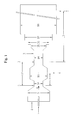
- Figure 1 is cross sectional view of a carbon black reactor that can be used in the present invention.
- Another feature of the present invention is to provide a method of producing carbon black which is cost effective.
- the present invention relates to a method of making a carbon black product.
- the method includes introducing a carbon black yielding feedstock in a first stage of a carbon black reactor and combining this feedstock with a stream of hot gases to form a precursor which essentially is a first carbon black and optionally byproducts. Then, a second carbon black yielding feedstock is subsequently introduced to the precursor to at least partially quench the reaction stream containing the first carbon black and then the process includes completely quenching to form the carbon black product.
- the present invention further relates to a process of making a carbon black product which includes introducing a carbon black yielding feedstock in a first stage of a carbon black reactor and combining this feedstock with a stream of hot gases to form a precursor.
- the precursor contains a first carbon black.
- a second carbon black yielding feedstock is introduced to the precursor, wherein the second carbon black yielding feedstock contains at least 15% by weight of the total amount by weight of the carbon black yielding feedstock utilized during the entire process.
- the present invention relates to a process of making a carbon black product which includes introducing a first carbon black yielding feedstock in a first stage of a carbon black reactor and combining this feedstock with a stream of hot gases to form a precursor which contains a first carbon black. Then, in the process, a second carbon black yielding feedstock is introduced to the precursor, wherein no oxidizing source and no fuel source are introduced after formation of the precursor.
- the present invention relates to a process of making a carbon black product which includes forming a precursor which contains a first carbon black in a first temperature zone and then forming a carbon black product from this precursor in a second temperature zone before a quench zone.
- the first temperature zone and the second temperature zone have a temperature difference of 200°C or more.
- the process can include the introduction of at least one substance containing at least one Group IA or Group IIA element at one or more locations of the process.
- the present invention relates to a carbon black having a DBP range of from about 30 to about 150 cc/100g with a total Group 1A or Group IIA element content of from about 50 to about 5,000 ppm.
- the carbon black can have other physical or chemical attributes including, but not limited to, a leachable Group IA or Group IIA content, a porosity amount, and desirable t-area such as a t-area of from about 10 to about 180 m 2 /g. Other characteristics are further described herein.
- the present invention relates to carbon black products as well as various methods of making carbon black products.
- the methods of making the carbon black product involves the use of a multi-stage carbon black reactor. More preferably, the multi-stage reactor has at least two stages (two, three, four, or more stages) where generally there are at least two feedstock (e.g., two, three, four, or more feedstocks) introductions occurring.
- the carbon black product is preferably a furnace black.
- the present invention relates to a method of making a carbon black product which involves introducing a carbon black yielding feedstock in a first stage of a carbon black reactor.
- the carbon black yielding feedstock is combined with a stream of hot gases to form a precursor.
- the precursor is or at least contains a first carbon black.
- a second carbon black yielding feedstock is then subsequently introduced into the carbon black reactor downstream of the first stage and this second carbon black yielding feedstock is preferably introduced in the presence of the precursor formed in the first stage.
- the second carbon black yielding feedstock at least partially quenches the reactions that are occurring. Afterwards, the complete quenching can occur downstream, wherein the carbon forming reactions are completely stopped or quenched and a carbon black product is formed.
- a multi-stage carbon black reactor can be used such as the ones described in U.S. Patent No. 4,383,973 , U.S. Patent No. 5,190,739 , U.S. Patent No. 5,877,251 , U.S. Patent No. 6,153,684 , or U.S. Patent No. 6,403,695 , all of which are incorporated in their entirety by reference herein.
- the present invention can use a multi-stage furnace process.
- the carbon black yielding feedstock can be any conventional carbon black yielding feedstock which results in the formation of carbon black.
- any hydrocarbon material can be used.
- a suitable feedstock can be any carbon black-yielding hydrocarbon feedstock which is readily volatilizable under the conditions of the reaction.
- unsaturated hydrocarbons such as acetylene; olefins such as ethylene, propylene, butylene; aromatics such as benzene, toluene and xylene; certain saturated hydrocarbons; and other hydrocarbons such as kerosenes, naphthalenes, terpenes, ethylene tars, aromatic cycle stocks and the like may be used.
- the stream of hot gases can also be considered hot combustion gases that can be generated by contacting a solid, liquid, and/or gaseous fuel with a suitable oxidant stream such as, but not limited to, air, oxygen, mixtures of air and oxygen, or the like.
- a preheated oxidant stream may be passed through without adding a liquid or gaseous fuel.
- the fuel suitable for use in contacting the oxidant stream to generate the hot gases include any of the readily combustible gas, vapor, or liquid streams, such as natural gas, hydrogen, carbon monoxide, methane, acetylene, alcohol, or kerosene.
- the oxidant stream may be preheated.
- surface area is maximized by maintaining high temperature preferably after introduction of the first carbon black yielding feedstock, such as by no water cooling, rapid mixing of the hot gases with the carbon black yielding feedstock, and/or short mixing lengths, and the like.
- FIG. 1 illustrates a cross-section of one example of such a reactor.
- Reactors of this type generally use a combustion gas which is mixed with an oxidant such as air.
- the gas mixture is generally introduced into a combustion chamber and ignited by any suitable method. Gas flow is left to right (direction A) in Figure 1. Once ignited, the hot gas mixture can be moved through the reactor, and brought into contact with a hydrocarbon feedstock suitable for producing carbon black.
- fuel can be introduced at location 1 and oxidant can be introduced at location 2.
- Other locations are possible.
- the first location 3 (one or more) is an example of a point of introduction of the first carbon black yielding feedstock.
- the second and third location 3 are examples of points of introduction of the second carbon black yielding feedstock.
- Location 4 is an example of a suitable location of a partial quenching agent, like water.
- Location 5 is an example of a suitable location for complete quenching.
- the double parallel lines signify that the reactor can be any length.
- the various D numbers represent various lengths of the reactor.
- D1 through D8 can be any suitable diameter and can be the same or different. For instance, D2 can be less than D1 and D8, and D1 and D8 can be the same or different.
- Zone L1 or zone L2 are examples of the first temperature zone
- zone L3 is an example of the second temperature zone. If a partial quench agent is used at for instance point 4, then the first temperature zone is typically L1.
- carbon black-yielding feedstock can be injected into a reactor by a plurality of streams 3 (in L-2), shown in Figure 1, which penetrate into the interior regions of the hot combustion gas stream, to insure a high rate of mixing and shearing of the hot combustion gases and the carbon black-yielding feedstock. This insures that the feedstock rapidly and completely decomposes and converts into a first carbon black material.
- the precursor formed in the methods described herein contains a first carbon black and can contain other components such as unused fuel or oxidants or combustion products and can also contain other components such as, but not limited to, inorganic substances, metals, salts, and metal oxides.
- the precursor is a carbon black product. For instance, 80 to 99% and, more preferably, 95% to 99% or greater (e.g., 100%) by weight of the precursor is carbon black.
- this second carbon black yielding feedstock is added downstream of the first stage in an amount to at least partially quench the reactions that are still occurring from the first stage.
- the partial quenching of the reactions means that this introduction of the second carbon black yielding feedstock is not a complete quenching of the reactions but quenches a portion of the reactions.
- the introduction of the second carbon black yielding feedstock does not completely quench the reactions.
- the second carbon black yielding feedstock can be the same type of feedstock or a different feedstock from the carbon black yielding feedstock introduced in the first stage.
- the carbon black yielding feedstock introduced in either stage can be introduced in any conventional way such as a single stream or plurality of streams and the introduction of the feedstocks can occur at any rate. With a plurality of streams, the rates for each stream can be the same or different.
- the subsequent introduction of the carbon black yielding feedstock to the precursor is done by a plurality of streams.
- Any manner in which the second carbon black yielding feedstock can be introduced can be used.
- any conventional cooling and separating means whereby the carbon black is recovered.
- the separation of the carbon black from the gas stream is readily accomplished by conventional means such as a precipitator, cyclone separator or bag filter.
- any conventional means to quench the reaction downstream of the introduction of the second carbon black yielding feedstock can be used and is known to those skilled in the art.
- a quenching fluid can be injected which may be water or other suitable fluids to stop the chemical reaction.
- the method further includes introducing at least one substance that is or that contains at least one Group 1A or Group IIA element (or ion thereof) of the Periodic Table.
- the substance contains at least one alkali metal or alkaline earth metal. Examples include lithium, sodium, potassium, rubidium, cesium, francium, calcium, barium, strontium, or radium, or combinations thereof. Any mixtures of one or more of these components can be present in the substance.
- the substance can be a solid, solution, dispersion, gas, or any combinations thereof. More than one substance having the same or different Group 1A or Group IIA metal can be used. If multiple substances are used, the substances can be added together, separately, sequentially, or in different reaction locations.
- the substance can be the metal (or metal ion) itself, a compound containing one or more of these elements, including a salt containing one or more of these elements, and the like.
- the substance is capable of introducing a metal or metal ion into the reaction that is ongoing to form the carbon black product.
- the substance is introduced prior to the complete quenching as described above.
- the substance can be added at any point prior to the complete quenching, including prior to the introduction of the carbon black yielding feedstock in the first stage; during the introduction of the carbon black yielding feedstock in the first stage; after the introduction of the carbon black yielding feedstock in the first stage; prior to, during, or immediately after the introduction of the second carbon black yielding feedstock to the precursor; or any step after the introduction of the second carbon black yielding feedstock but prior to the complete quenching. More than one point of introduction of the substance can be used.
- the introduction of the substance is prior to the introduction of the second carbon black yielding feedstock and/or during or right after the introduction of the carbon black yielding feedstock in the first stage.
- the amount of the Group IA or Group IIA metal containing substance can be any amount as long as a carbon black product can be formed.
- the amount of the substance can be added in an amount such that 200 ppm or more of the Group IA or Group IIA element is present in the carbon black product ultimately formed.
- Other amounts include from about 200 ppm to about 5000 ppm or more and other ranges can be from about 300 ppm to about 1000 ppm, or from about 500 ppm to about 1000 ppm of the Group IA or Group IIA element present in the carbon black product that is formed. These levels can be with respect to the metal ion concentration.
- these amounts of the Group 1A or Group IIA element present in the carbon black product that is formed can be with respect to one element or more than one Group 1A or Group IIA element and would be therefore a combined amount of the Group IA or Group IIA elements present in the carbon black product that is formed.
- the substance can be added in any fashion including any conventional means. In other words, the substance can be added in the same manner that a carbon black yielding feedstock is introduced.
- the substance can be added as a gas, liquid, or solid, or any combination thereof.
- the substance can be added at one point or several points and can be added as a single stream or a plurality of streams.
- the substance can be mixed in with the feedstock, fuel, and/or oxidant prior to or during their introduction.
- One method by which a substance containing at least one Group IA or Group IIA element such as, for example, potassium can be introduced into the feedstock is by the incorporation of the substance into the feedstock.
- the metal ions Upon combustion, the metal ions can become uniformly incorporated into the carbon black.
- the charge of metal ions provides a repulsive force between individual carbon black particles. This repulsive force can keep particles from aggregating, thus decreasing the overall structure of the carbon black.
- the application of additional feedstock to the preexisting carbon black particles may be repeated any number of times until the reaction of feedstock to carbon black ceases. Each time additional feedstock is added, the temperature of the entire reaction mixture generally goes down, and carbon black particle size increases. In this way the feedstock can act as a quenching agent for the cooling of the carbon black.
- the present invention also relates to a method of making a carbon black product wherein a carbon black yielding feedstock is introduced in a first stage and combined with a stream of hot gases to form a precursor. Furthermore, a second carbon black yielding feedstock is subsequently introduced downstream to the precursor.
- this method is, up to this point, the same as the above-described embodiment and therefore the same conditions and examples would apply to this process.
- the second carbon black yielding feedstock contains at least 15 % by weight of the total amount of the carbon black yielding feedstock utilized during the entire process.
- the second carbon black yielding feedstock can contain from about 15% by weight to about 80% by weight of the total amount of the carbon black yielding feedstock utilized during the entire process.
- Other ranges include from about 25% to about 70% or from about 30% to about 60% by weight of the total amount by weight of the carbon black yielding feedstock utilized during the entire process.
- the introduction of the second carbon black yielding feedstock can be introduced in two or more segments, or stages wherein the segments can be downstream from the first segment. This is quite different from previous multi-stage processes where any subsequent introduction of a carbon black yielding feedstock would be a very low amount such as on the order of 10% by weight or lower. This large amount of the second carbon black yielding feedstock leads to beneficial carbon black products as to be described later. Also, this amount of carbon black can serve as a partial quenching of the reactions that are occurring.
- the present invention relates to a process of making a carbon black product wherein a first carbon black yielding feedstock is introduced in a first stage and combined with a stream of hot gases to form a precursor as with respect to the first and second above-described processes.
- a second carbon black yielding feedstock is then introduced to the precursor and in this process, no oxidizing source and no fuel source are introduced after formation of the precursor.
- any oxidizing source and/or fuel source are only introduced prior to the introduction of the first carbon black yielding feedstock or during the introduction of the first carbon black yielding feedstock.
- the present invention relates to a process of making a carbon black product wherein a precursor containing a first carbon black is formed in a first temperature zone of a carbon black reactor and then a carbon black yielding feedstock can be introduced to the precursor.
- the method then involves forming a carbon black product in a second temperature zone which is located before a quench zone.
- the first temperature zone and the second temperature zone have a temperature difference of 200°C or more, and preferably a temperature difference of 300°C or more. Suitable ranges with respect to the temperature difference can be, for instance, from about 200°C to about 900°C or from about 400° to about 700°C. Other temperature ranges with regard to the temperature difference can be used.
- the first temperature zone has the higher temperature and the second temperature zone has the lower temperature thus creating the temperature difference though this is a preferred embodiment only.
- the difference in temperatures can be achieved any number of ways such as avoiding any further introduction of combustion gases or avoiding or minimizing formation of combustion gases in the second temperature zone. Other means to achieve this difference can be used.
- a Group IA or Group IIA metal containing substance can be used and introduced in the same manner as described above and the details as set forth above apply equally here.
- the Group 1A or Group IIA metal containing substance is introduced in the first temperature zone or at least before the quench zone.
- the Group I A or Group II A metal containing substance can be introduced during or prior or both during and prior to the formation of the precursor.
- a carbon black yielding feedstock can be introduced to the precursor.
- one or more features of the processes can be used in a single process.
- the second carbon black yielding feedstock can be used to partially quench and the first and second temperature zone difference can be 200°C or more. Any combination of process features as described herein can be combined.
- any means to reduce the temperature between the temperature zones or zones where the first carbon black yielding feedstock is introduced compared to where the second carbon black yielding feedstock is introduced can be used.
- a water jacket can be used around the reactor (or parts thereof) where the second carbon black yielding feedstock is introduced or thereafter.
- steam can be introduced at this point.
- other quench agents such as nitrogen, water, or other suitable quench agents, can be used to achieve a reduction in temperature at the point of where the second carbon black yielding feedstock is introduced or thereafter.
- the goal is to maximize surface area.
- it is preferably operated to achieve a high surface area such as from about 100 to about 400 m 2 /g based on BET.
- the first carbon black yielding feedstock which forms the precursor is eventually coated by the subsequent carbon black yielding feedstock which vaporizes and coats the precursor.
- the present invention relates to a method to reduce the grit levels produced during the manufacturing of carbon black.
- Grit typically is a by-product of a carbon black production process and generally is considered undesirable and unwanted since it is not carbon black and would be considered waste that utilizes the raw materials.
- the lower the grit the more desirable the product.
- the present invention involves a method to reduce or lower the grit levels in carbon black by utilizing one or more of the processes described herein. The present inventors have discovered that one or more of the processes of the present invention leads to lower grit levels in the resulting carbon black than conventional carbon black manufacturing techniques.
- the present invention in one or more embodiments of the present invention, relates to a method to increase the yield of the starting raw materials.
- the present invention in one or more embodiments, obtains a higher yield in resulting carbon black. More of the raw materials are converted to carbon black.
- the present invention permits a lower combustion level of raw materials in order to produce carbon black, thus obtaining more carbon black per unit (e.g., lb.) of raw material.
- grit is understood as grit defined under ASTM standard ASTM-D-1514-80. Grit can also be considered total residue or sieve residue.
- grit can include coke, refractory material, catalyst material, and the like.
- the increase in yield and/or decrease in total residue, sieve residue, or grit can be achieved by changing the various conditions, ratio of feedstocks, ratio of feedstocks introduced in the first stage compared to subsequent stages, and the like.
- Table 1 various conditions are provided and one or more of these conditions can be adjusted to obtain an increase in the yield and/or decrease in the total residue, sieve residue, or grit achieved during the production of carbon black.
- two or more, three or more, or four or more of the conditions set forth in Table 1 can be adjusted to achieve the benefits of the present invention. For instance, as more of the oil feedstock is introduced to a second or subsequent stage in the carbon black process, a higher yield can be obtained because of the added oil feedstock in the second or subsequent stage.
- the present invention has the ability to reduce the levels of grit or residue utilizing one or more processes of the present invention by 2% or more based on the ASTM residue level.
- the reduction in grit or residue is from about 2% to about 10% or more, compared to a conventional process.
- the present invention in one or more processes of the present invention, permits the reduction in the combustion needed to obtain the same carbon black compared to conventional methods.
- a conventional method of making carbon black is a non-multi-stage process such as shown in U.S. Patent No. 5,456,750 .
- the reduction in the percent combustion needed to obtain the same carbon black (based on ASTM specifications) having the same or about the same grit or residue level can be on the order of 2% or more, such as from about 2% to about 10%, in the reduction of combustion used in the processes of the present invention.
- the present invention is useful in making all types of carbon blacks, including reinforcing grade carbon blacks, as well as non-reinforcing grade carbon blacks.
- Beneficial carbon black products can be formed, for instance, a carbon black having a DBP range of from about 120 to about 150 cc/100g with a total Group 1A or Group IIA metal content of from about 50 to about 150 ppm can be formed.
- Other DBP ranges include from about 90 to about 120 cc/100g with a total Group 1A or Group IIA metal content of from about 100 to about 500 ppm; a DBP range of from about 60 to about 90 cc/100g with a Group 1A or Group 11A metal containing content of from about 200 to about 1,000 ppm; a DBP range of from about 30 to about 60 cc/100g, with a total Group 1A or Group IIA content of from about 500 ppm to about 5,000 ppm.
- the carbon black of the present invention can have a leachable amount of the Group IA or Group IIA metal.
- the carbon black can have a leachable Group IA or Group IIA metal content of about 20% or less by weight of the Group IA or IIA element present, and more preferably 15 weight % or less, 10 weight % or less, 5 weight % or less, 1 weight % or less, or 1 ⁇ 2 weight % or less. Ranges include, but are not limited to, about 0 weight % to about 20 weight % or about 0.25 weight % to about 10 weight %.
- the leachable amount can be determined by soxhlet extraction of the carbon black followed by analysis of the aqueous extract for potassium, similar in concept to ASTM methods D4527, C871, or EPA methods SW8-1311 and SW8-1312.
- the carbon black can have any porosity amount.
- the carbon black can have a BET surface area (in m 2 /g) to t-area (in m 2 /g) ratio of 1.5 or less, such as 0.9 to 1.5.
- the carbon blacks of the present invention have low levels of microporosity.
- the carbon black can have a t-area of from about 10 m 2 /g to about 180 m 2 /g.
- the carbon black of the present invention contains no appreciable amount of silicon. These carbon blacks and other carbon blacks can have low residue or grit levels.
- the carbon black of the present invention can be used in any product where conventional carbon black is used such as rubber products, tires, inks, ink jets, toners, gas diffusion electrodes, coatings, plastics, polymers, and the like.
- the first carbon black containing feedstock was introduced at a first stage in the presence of a stream of hot gases formed by a primary combustion.
- the first carbon black yielding feedstock was introduced to the process in the varying amounts as shown in Table 1.
- a second carbon black yielding feedstock was then subsequently introduced downstream. This second carbon black yielding feedstock was introduced without any oxidizing source or fuel source present and was introduced before the quench zone.
- Table 1 Example operating conditions 1 2 3 4 5 6 7 Air rate, Nm 3 /hr 1800 1800 1800 1800 1800 Air preheat temp, °C 500 500 500 500 500 500 Overall combustion, % 21 21 21 21 23 21 21 Primary combustion, % 140 140 140 140 140 140 140 140 140 140 140 140 140 140 140 140 140 140 140 140 140 140 140 140 140 140 140 140 140 140 140 140 140 140 140 140 140 140 140 140 140 140 140 140 140 140 140 140 140 140 140 140 140 140 140 140 140 140 140 140 140 140 140 140 140 140 140 140 140 140 140 140 140 140 140 140 140 140 140 140 140 140 140 140 140 140 140 140 140 140 140 140 140 140 140 140 140 140 140 140 140 140 140 140 140 140 140 140 140 140 140 140 140 140 140 140 140 140 140 140 140 140 140 140 140 140 140 140 140 140 140 140 140 140 140 140 140 140 140 140 140 140 140 140 140 140 140 140 140 140 140 140 140 140 140 140 140 140 140 140 140 140 140 140 140 140 140 140 140 140 140 140 140 140 140 140 140 140 140 140 140 140 140 140 140 140 140 140 140 140 140 140 140 140 140
- Example 5 an amount of water was introduced between the two feedstock injections in the amount of 100 kg/hr. This water was introduced as a fine spray by means of an pressurized atomizer.
- Example 6 the second carbon black yielding feedstock was split into two equal amounts. The first part was introduced at L1 of Figure 1 as indicated in Table 1. The second part was introduced 1m downstream.
- the carbon black formed in the reaction was then completely quenched with water downstream of the second carbon black yielding feedstock to form the carbon black product of the present invention.
- the carbon blacks formed had a t-area, BET areas and DBP absorption shown in Table 1.
Landscapes
- Chemical & Material Sciences (AREA)
- Organic Chemistry (AREA)
- Health & Medical Sciences (AREA)
- Chemical Kinetics & Catalysis (AREA)
- Medicinal Chemistry (AREA)
- Polymers & Plastics (AREA)
- Pigments, Carbon Blacks, Or Wood Stains (AREA)
Applications Claiming Priority (1)
| Application Number | Priority Date | Filing Date | Title |
|---|---|---|---|
| US73449405P | 2005-11-08 | 2005-11-08 |
Publications (1)
| Publication Number | Publication Date |
|---|---|
| EP1783178A1 true EP1783178A1 (fr) | 2007-05-09 |
Family
ID=37716053
Family Applications (1)
| Application Number | Title | Priority Date | Filing Date |
|---|---|---|---|
| EP06023263A Withdrawn EP1783178A1 (fr) | 2005-11-08 | 2006-11-08 | Noir de carbone et son procede de fabrication a etapes multiples |
Country Status (2)
| Country | Link |
|---|---|
| EP (1) | EP1783178A1 (fr) |
| CA (1) | CA2567431A1 (fr) |
Cited By (7)
| Publication number | Priority date | Publication date | Assignee | Title |
|---|---|---|---|---|
| DE102007047432A1 (de) | 2007-10-04 | 2009-04-09 | Evonik Degussa Gmbh | Ruß, Verfahren zu seiner Herstellung und seine Verwendung |
| DE102010002244A1 (de) | 2010-02-23 | 2011-08-25 | Evonik Carbon Black GmbH, 63457 | Ruß, Verfahren zu seiner Herstellung und seine Verwendung |
| US8236274B2 (en) | 2006-08-07 | 2012-08-07 | Evonik Carbon Black Gmbh | Carbon black, method of producing carbon black, and device for implementing the method |
| US8574527B2 (en) | 2007-12-12 | 2013-11-05 | Evonik Carbon Black Gmbh | Process for aftertreating carbon black |
| US8915998B2 (en) | 2008-11-27 | 2014-12-23 | Evonik Carbon Black Gmbh | Pigment granulate, method for producing the same and use thereof |
| US9493659B2 (en) | 2008-10-16 | 2016-11-15 | Evonik Carbon Black Gmbh | Carbon black, method for the production thereof, and use thereof |
| WO2018005771A1 (fr) * | 2016-07-01 | 2018-01-04 | Cabot Corporation | Particules composites comportant des agrégats enrobés à noyaux de noir de carbone à structure basse, revêtements et encres à résistivité et à densité optique élevées, dispositifs ainsi fabriqués, et leurs procédés de fabrication |
Citations (4)
| Publication number | Priority date | Publication date | Assignee | Title |
|---|---|---|---|---|
| US4327069A (en) * | 1980-06-25 | 1982-04-27 | Phillips Petroleum Company | Process for making carbon black |
| EP0209908A2 (fr) * | 1985-07-26 | 1987-01-28 | Degussa Aktiengesellschaft | Appareil et procédé de production de noir de carbone |
| US5190739A (en) * | 1991-02-27 | 1993-03-02 | Cabot Corporation | Production of carbon blacks |
| WO2005108504A2 (fr) * | 2004-05-04 | 2005-11-17 | Cabot Corporation | Noir de carbone et son procede de fabrication a etapes multiples |
-
2006
- 2006-11-07 CA CA 2567431 patent/CA2567431A1/fr not_active Abandoned
- 2006-11-08 EP EP06023263A patent/EP1783178A1/fr not_active Withdrawn
Patent Citations (4)
| Publication number | Priority date | Publication date | Assignee | Title |
|---|---|---|---|---|
| US4327069A (en) * | 1980-06-25 | 1982-04-27 | Phillips Petroleum Company | Process for making carbon black |
| EP0209908A2 (fr) * | 1985-07-26 | 1987-01-28 | Degussa Aktiengesellschaft | Appareil et procédé de production de noir de carbone |
| US5190739A (en) * | 1991-02-27 | 1993-03-02 | Cabot Corporation | Production of carbon blacks |
| WO2005108504A2 (fr) * | 2004-05-04 | 2005-11-17 | Cabot Corporation | Noir de carbone et son procede de fabrication a etapes multiples |
Cited By (19)
| Publication number | Priority date | Publication date | Assignee | Title |
|---|---|---|---|---|
| US8236274B2 (en) | 2006-08-07 | 2012-08-07 | Evonik Carbon Black Gmbh | Carbon black, method of producing carbon black, and device for implementing the method |
| WO2009043676A2 (fr) | 2007-10-04 | 2009-04-09 | Evonik Degussa Gmbh | Noir de carbone, son procédé de production et son utilisation |
| WO2009043676A3 (fr) * | 2007-10-04 | 2009-11-12 | Evonik Degussa Gmbh | Noir de carbone, son procédé de production et son utilisation |
| DE102007047432B4 (de) | 2007-10-04 | 2026-05-21 | Orion Engineered Carbons Ip Gmbh & Co. Kg | Ruß, Verfahren zu seiner Herstellung und seine Verwendung |
| US8735488B2 (en) | 2007-10-04 | 2014-05-27 | Orion Engineered Carbons GbmH | Black, method for the production thereof, and use thereof |
| DE102007047432A1 (de) | 2007-10-04 | 2009-04-09 | Evonik Degussa Gmbh | Ruß, Verfahren zu seiner Herstellung und seine Verwendung |
| US8574527B2 (en) | 2007-12-12 | 2013-11-05 | Evonik Carbon Black Gmbh | Process for aftertreating carbon black |
| US9493659B2 (en) | 2008-10-16 | 2016-11-15 | Evonik Carbon Black Gmbh | Carbon black, method for the production thereof, and use thereof |
| US8915998B2 (en) | 2008-11-27 | 2014-12-23 | Evonik Carbon Black Gmbh | Pigment granulate, method for producing the same and use thereof |
| US8852739B2 (en) | 2010-02-23 | 2014-10-07 | Evonik Carbon Black Gmbh | Carbon black, method for the production thereof, and use thereof |
| RU2572321C2 (ru) * | 2010-02-23 | 2016-01-10 | Эвоник Карбон Блэк Гмбх | Сажа, способ ее получения и ее применение |
| EP2361954A1 (fr) | 2010-02-23 | 2011-08-31 | Evonik Carbon Black GmbH | Rouille, son procédé de fabrication et d'utilisation |
| DE102010002244A1 (de) | 2010-02-23 | 2011-08-25 | Evonik Carbon Black GmbH, 63457 | Ruß, Verfahren zu seiner Herstellung und seine Verwendung |
| WO2018005771A1 (fr) * | 2016-07-01 | 2018-01-04 | Cabot Corporation | Particules composites comportant des agrégats enrobés à noyaux de noir de carbone à structure basse, revêtements et encres à résistivité et à densité optique élevées, dispositifs ainsi fabriqués, et leurs procédés de fabrication |
| CN109642091A (zh) * | 2016-07-01 | 2019-04-16 | 卡博特公司 | 具有带有低结构炭黑芯的经包覆的聚集体的复合颗粒、具有高的电阻率和光学密度的涂料和墨、由其制得的器件、以及其制造方法 |
| US10800925B2 (en) | 2016-07-01 | 2020-10-13 | Cabot Corporation | Composite particles having coated aggregates with low structure carbon black cores, coatings and inks with high resistivity and optical density, devices made therewith, and methods for making same |
| TWI735610B (zh) * | 2016-07-01 | 2021-08-11 | 美商客寶公司 | 具有包含低結構碳黑核之經塗覆聚集體的複合顆粒、高電阻率及光學密度之塗料及油墨、由其製成之裝置及彼等之製造方法 |
| CN109642091B (zh) * | 2016-07-01 | 2021-10-08 | 卡博特公司 | 具有带有低结构炭黑芯的经包覆的聚集体的复合颗粒、具有高的电阻率和光学密度的涂料和墨、由其制得的器件、以及其制造方法 |
| US11773269B2 (en) | 2016-07-01 | 2023-10-03 | Cabot Corporation | Composite particles having coated aggregates with low structure carbon black cores, coatings and inks with high resistivity and optical density, devices made therewith, and methods for making same |
Also Published As
| Publication number | Publication date |
|---|---|
| CA2567431A1 (fr) | 2007-05-08 |
Similar Documents
| Publication | Publication Date | Title |
|---|---|---|
| EP1765934B1 (fr) | Noir de carbone et son procede de fabrication a etapes multiples | |
| EP1188801B1 (fr) | Procédé et dispositif de transformation d'une charge d alimentation contenant du carbone en noir de carbone ayant une structure définie | |
| US4879104A (en) | Process for producing carbon black | |
| AU2002213938A1 (en) | Device and method for converting carbon containing feedstock into carbon containing materials, having a defined nanostructure | |
| US20070104636A1 (en) | Carbon black and multi-stage process for making same | |
| CZ283068B6 (cs) | Výroba sazí | |
| US6548036B2 (en) | Method for producing carbon black | |
| US3595618A (en) | Manufacture of carbon black | |
| JP2002121422A (ja) | 高ストラクチャーカーボンブラックおよびその製造方法 | |
| CA2567431A1 (fr) | Noir de carbone et procede de fabrication multietage | |
| KR830000810B1 (ko) | 표면적이 큰 카아본 블랙의 제조 방법 | |
| NL2033169B1 (en) | Methods of producing carbon blacks from low-yielding feedstocks and products made from same | |
| AU708989B2 (en) | Method for producing carbon black | |
| GB2151604A (en) | Production of carbon black | |
| KR102950117B1 (ko) | 저-수율 공급원료로부터 카본 블랙을 생산하는 방법 및 그로부터 생성된 생성물 | |
| EP1593714A1 (fr) | procédé et appareil de production de noirs de carbone | |
| HK1060589A (en) | Device and method for converting carbon containing feedstock into carbon containing materials, having a defined nanostructure |
Legal Events
| Date | Code | Title | Description |
|---|---|---|---|
| PUAI | Public reference made under article 153(3) epc to a published international application that has entered the european phase |
Free format text: ORIGINAL CODE: 0009012 |
|
| AK | Designated contracting states |
Kind code of ref document: A1 Designated state(s): AT BE BG CH CY CZ DE DK EE ES FI FR GB GR HU IE IS IT LI LT LU LV MC NL PL PT RO SE SI SK TR |
|
| AX | Request for extension of the european patent |
Extension state: AL BA HR MK YU |
|
| 17P | Request for examination filed |
Effective date: 20070627 |
|
| 17Q | First examination report despatched |
Effective date: 20070731 |
|
| AKX | Designation fees paid |
Designated state(s): AT BE BG CH CY CZ DE DK EE ES FI FR GB GR HU IE IS IT LI LT LU LV MC NL PL PT RO SE SI SK TR |
|
| STAA | Information on the status of an ep patent application or granted ep patent |
Free format text: STATUS: THE APPLICATION IS DEEMED TO BE WITHDRAWN |
|
| 18D | Application deemed to be withdrawn |
Effective date: 20080212 |