EP1783219A1 - Verfahren zur suche nach neuen wirkstoffindungszielen - Google Patents
Verfahren zur suche nach neuen wirkstoffindungszielen Download PDFInfo
- Publication number
- EP1783219A1 EP1783219A1 EP05758233A EP05758233A EP1783219A1 EP 1783219 A1 EP1783219 A1 EP 1783219A1 EP 05758233 A EP05758233 A EP 05758233A EP 05758233 A EP05758233 A EP 05758233A EP 1783219 A1 EP1783219 A1 EP 1783219A1
- Authority
- EP
- European Patent Office
- Prior art keywords
- dna
- gene
- cell
- expression
- vector
- Prior art date
- Legal status (The legal status is an assumption and is not a legal conclusion. Google has not performed a legal analysis and makes no representation as to the accuracy of the status listed.)
- Withdrawn
Links
Images
Classifications
-
- C—CHEMISTRY; METALLURGY
- C12—BIOCHEMISTRY; BEER; SPIRITS; WINE; VINEGAR; MICROBIOLOGY; ENZYMOLOGY; MUTATION OR GENETIC ENGINEERING
- C12N—MICROORGANISMS OR ENZYMES; COMPOSITIONS THEREOF; PROPAGATING, PRESERVING, OR MAINTAINING MICROORGANISMS; MUTATION OR GENETIC ENGINEERING; CULTURE MEDIA
- C12N15/00—Mutation or genetic engineering; DNA or RNA concerning genetic engineering, vectors, e.g. plasmids, or their isolation, preparation or purification; Use of hosts therefor
- C12N15/09—Recombinant DNA-technology
- C12N15/10—Processes for the isolation, preparation or purification of DNA or RNA
- C12N15/1034—Isolating an individual clone by screening libraries
- C12N15/1079—Screening libraries by altering the phenotype or phenotypic trait of the host
-
- C—CHEMISTRY; METALLURGY
- C12—BIOCHEMISTRY; BEER; SPIRITS; WINE; VINEGAR; MICROBIOLOGY; ENZYMOLOGY; MUTATION OR GENETIC ENGINEERING
- C12N—MICROORGANISMS OR ENZYMES; COMPOSITIONS THEREOF; PROPAGATING, PRESERVING, OR MAINTAINING MICROORGANISMS; MUTATION OR GENETIC ENGINEERING; CULTURE MEDIA
- C12N15/00—Mutation or genetic engineering; DNA or RNA concerning genetic engineering, vectors, e.g. plasmids, or their isolation, preparation or purification; Use of hosts therefor
- C12N15/09—Recombinant DNA-technology
- C12N15/11—DNA or RNA fragments; Modified forms thereof; Non-coding nucleic acids having a biological activity
- C12N15/111—General methods applicable to biologically active non-coding nucleic acids
-
- C—CHEMISTRY; METALLURGY
- C12—BIOCHEMISTRY; BEER; SPIRITS; WINE; VINEGAR; MICROBIOLOGY; ENZYMOLOGY; MUTATION OR GENETIC ENGINEERING
- C12N—MICROORGANISMS OR ENZYMES; COMPOSITIONS THEREOF; PROPAGATING, PRESERVING, OR MAINTAINING MICROORGANISMS; MUTATION OR GENETIC ENGINEERING; CULTURE MEDIA
- C12N2310/00—Structure or type of the nucleic acid
- C12N2310/10—Type of nucleic acid
- C12N2310/11—Antisense
- C12N2310/111—Antisense spanning the whole gene, or a large part of it
-
- C—CHEMISTRY; METALLURGY
- C12—BIOCHEMISTRY; BEER; SPIRITS; WINE; VINEGAR; MICROBIOLOGY; ENZYMOLOGY; MUTATION OR GENETIC ENGINEERING
- C12N—MICROORGANISMS OR ENZYMES; COMPOSITIONS THEREOF; PROPAGATING, PRESERVING, OR MAINTAINING MICROORGANISMS; MUTATION OR GENETIC ENGINEERING; CULTURE MEDIA
- C12N2310/00—Structure or type of the nucleic acid
- C12N2310/10—Type of nucleic acid
- C12N2310/14—Type of nucleic acid interfering nucleic acids [NA]
-
- C—CHEMISTRY; METALLURGY
- C12—BIOCHEMISTRY; BEER; SPIRITS; WINE; VINEGAR; MICROBIOLOGY; ENZYMOLOGY; MUTATION OR GENETIC ENGINEERING
- C12N—MICROORGANISMS OR ENZYMES; COMPOSITIONS THEREOF; PROPAGATING, PRESERVING, OR MAINTAINING MICROORGANISMS; MUTATION OR GENETIC ENGINEERING; CULTURE MEDIA
- C12N2310/00—Structure or type of the nucleic acid
- C12N2310/50—Physical structure
- C12N2310/53—Physical structure partially self-complementary or closed
-
- C—CHEMISTRY; METALLURGY
- C12—BIOCHEMISTRY; BEER; SPIRITS; WINE; VINEGAR; MICROBIOLOGY; ENZYMOLOGY; MUTATION OR GENETIC ENGINEERING
- C12N—MICROORGANISMS OR ENZYMES; COMPOSITIONS THEREOF; PROPAGATING, PRESERVING, OR MAINTAINING MICROORGANISMS; MUTATION OR GENETIC ENGINEERING; CULTURE MEDIA
- C12N2330/00—Production
- C12N2330/30—Production chemically synthesised
- C12N2330/31—Libraries, arrays
-
- G—PHYSICS
- G01—MEASURING; TESTING
- G01N—INVESTIGATING OR ANALYSING MATERIALS BY DETERMINING THEIR CHEMICAL OR PHYSICAL PROPERTIES
- G01N2500/00—Screening for compounds of potential therapeutic value
Definitions
- the present invention relates to siRNA expression systems that suppress gene expression using RNAi effects, libraries thereof, and methods for comprehensive functional analysis of genes and for discovering drug target molecules using the libraries.
- the present invention further relates to genes involved in angiogenesis that are obtained as a result of studies using the libraries.
- Non-patent Document 2 DNA microarrays
- yeast two-hybrid systems Non-patent Document 3
- DNA microarray techniques are based on the changes in gene expression levels that occur during various intracellular processes.
- the yeast two-hybrid system provides a powerful method for detecting direct in vivo protein-protein interactions, and for identifying genes whose products interact with particular proteins obtained from the cDNA libraries.
- this method is limited in that the predicted interactions do not necessarily reflect the roles played in the phenomenon, and false-positive results frequently arise.
- RNA interference abbreviated as "RNAi"
- RNAi is a phenomenon that can suppress expression of a target gene, where disruption of a target gene mRNA is induced by introducing cells or such with a double-stranded RNA (hereinafter abbreviated as "dsRNA") that comprises a sense RNA comprising a sequence homologous to the target gene mRNA, and an antisense RNA comprising a sequence complementary thereto.
- dsRNA double-stranded RNA
- RNAi can suppress target gene exression, it has generated attention as a simple gene knockout method, taking the place of conventional and complicated gene destruction methods based on low efficiency homologous recombination.
- RNAi was originally discovered in Nematoda (Non-patent Document 7), and to date has been observed not only in Nematoda but also in various organisms, such as plants, Nemathelminthes, fruit flies, Protozoa and the like (Non-patent Documents 8 to 11). Target gene expression has been confirmed as actually suppressed upon introducing exogenous dsRNAs to these organisms. RNAi is also being used as a method for creating knockout individuals.
- dsRNAs are known to target mRNAs upon their cleavage in a lysate of early Drosophila embryos or an extract of cultured Drosophila line S2 cells (Non-patent Documents 12 to 14). In vitro RNAi reactions require ATP (Non-patent Document 14).
- Non-patent Document 15 A 3' end having a dinucleotide or trinucleotide protrusion in the siRNA duplex was found to be essential for efficient target cleavage (Non-patent Document 15).
- Such a 3'-protruding end is characteristic of the products of RNase III cleavage, and in cultured Drosophila S2 line cells a multi-domain RNase III, known as Dicer, is required for the cleavage of dsRNAs into siRNAs (Non-patent Document 16).
- the siRNAs are then associated with a multi-component nuclease called "RISC", which was identified in Drosophila, and are thought to induce enzymes involved in sequence-specific mRNA degradation (Non-patent Documents 13, 16, and 17).
- RISC multi-component nuclease
- RNAi provides methods for inactivating target genes, and thus provides powerful tools for studying gene functions in C. elegans, Drosophila, and plants. Specific inhibition of gene expression can also be achieved through the stable and inducible expression of dsRNAs in animals or plants (Non-patent Documents 18, 19, and 10).
- the inactivation of genes by dsRNA has been successfully achieved in mouse embryonic carcinoma (EC) cells and embryonic stem (ES) cells (Non-patent Documents 20 an 21); however, RNAi induction by long dsRNAs in cultured mammalian cells is generally not very successful.
- Non-patent Document 22 2'-5'-oligoadenylate (2-5A) synthetase, which is activated by dsRNAs and enhances the synthesis of 2-5A, which is required for the activation of the sequence-non-specific RNase called RNase L (Non-patent Document 23).
- 2-5A 2'-5'-oligoadenylate
- eIF2 eukaryotic initiation factor 2
- Non-patent Document 25 a 21-nucleotide siRNA duplex was reported to specifically suppress the expression of endogenous genes in some types of mammalian cells.
- the 21-nucleotide siRNA duplex can evade the IFN defense system.
- This finding suggested that an RNAi system or RNAi-related system exists in mammals. Indeed, a number of mammalian homologues of RNAi-related proteins have been identified, such as rde-1, mut-7, and Dicer (Non-patent Documents 26, 27, and 16).
- siRNA expression vectors were developed for more convenient use of such siRNAs.
- the promoters generally used to express siRNAs are PolIII-type, such as H1, U6, and tRNA.
- H1 and U6 an siRNA in which the hairpin-structured portion is 21 nucleotides in length is known to show the most suppression of gene expression; however, for tRNA, an siRNA hairpin-structured portion of about 29 nucleotides in length has been shown to suppress gene expression.
- siRNA sequences having a high gene expression suppressing effect To date, in-silico methods have been most frequently attempted, but are insufficiently reliable.
- Non-patent Documents 28 and 29 a method was reported for preparing siRNA expression vector libraries with the aim of comprehensively suppressing the expression of various genes, wherein the library source materials were fragments produced when arbitrary double-stranded DNAs were digested by DNase in a sequence non-specific manner.
- Each siRNA expression vector clone in the siRNA expression vector library targets some place in the arbitrary double-stranded DNA sequence that was used as its source material.
- the library as a whole expresses siRNAs comprehensively, so as to cover the entire sequence of the arbitrary double-stranded DNA used as its source material. This therefore suggests the possibility of comprehensive screening for genes involved in changes in a certain phenotype, i.e., the possibility that drug target genes with high therapeutic effect can be selected from the enormous quantity of drug target gene candidates.
- Non-patent Document 30 Non-patent Document 30
- therapeutic methods targeting causative genes, and gene therapy in particular require genes to be introduced into every cell of a diseased tissue, which would be impractical considering present gene transfer technologies.
- An objective of the present invention is to provide libraries of expression vectors for stem-loop RNA molecules that enable comprehensive screening of gene function, and to provide comprehensive methods of screening for drug target molecules using these libraries.
- Another objective of the present invention is to identify drug target molecules expected to have elevated effects upon suppression of expression by these methods.
- an objective of the present invention is to identify factors that regulate the expression of target genes under normal conditions, wherein altered expression of these target genes is expected to have a therapeutic effect, and further to control the expression levels of these genes by suppressing their expression. When these factors suppress the expression of a target gene, expression of that target gene can be enhanced by suppressing the expression of the factors. Alternatively, when such factors enhance the expression of a target gene, the expression of that target gene can be suppressed by suppressing the expression of the factors.
- These factors are novel drug targets and further, siRNA molecules that suppress the expression of these factors can be applied to pharmaceuticals having novel drug effects.
- expression vectors for stem-loop RNA molecules that suppress the expression of these factors are thought to be applicable to gene therapy.
- the present inventors conducted dedicated studies to achieve the above-described objectives. As a result, the inventors developed libraries for expression vectors of stem-loop RNA molecules that enable comprehensive screening for gene function, and also developed comprehensive methods of screening for drug target molecules using these libraries. Furthermore, by using these methods, drug target molecules expected to have elevated effects upon suppression of their expression were identified.
- the present invention includes:
- the present invention provides DNAs for screening functional genes, which comprehensively screen for factors that regulate the expression of target genes, and which encode stem-loop RNA molecules with RNAi effect in cells, wherein the DNAs are structured such that a promoter is operatively linked to a DNA encoding an RNA corresponding to a region arbitrarily selected from a known nucleotide sequence, and this is linked to a sequence complementary to that DNA in the opposite direction and via a spacer region.
- RNA interference is a phenomenon that can induce the disruption of target gene mRNA and suppress target gene expression when cells or such are introduced with double-stranded RNAs (hereinafter abbreviated as "dsRNAs") that comprise sense RNAs comprising sequences homologous to that of a target gene mRNA, and antisense RNAs comprising complementary sequences thereof.
- the libraries of siRNA expression vectors allowing comprehensive screening for gene function are prepared by methods producing at least two or more blunt-ended partial fragments of arbitrary double-stranded DNAs.
- the methods preferably comprise the steps of:
- the libraries of siRNA expression vectors allowing comprehensive screening for gene function comprise two or more fragments prepared as described above, which comprise DNA fragments that each comprise a duplicated DNA region of each other.
- DNA fragments are prepared by PCR using double-stranded DNA as a starting material.
- the double-stranded DNAs for use in the present invention are preferably derived from genomic DNAs, and more preferably from cDNAs.
- the prepared DNA fragments are digested with a nicking enzyme to prepare small DNA fragments.
- the nicking enzyme of the present invention is preferably DNase I.
- the prepared small DNA fragments are treated with single-stranded DNA-specific nuclease to eliminate the single-stranded DNAs contained therein.
- Exonuclease VII or Exonuclease I can be used for this treatment.
- DNA extension is carried out with the 3' end of each nick as a synthesis origin.
- Klenow enzyme having 5'-3' polymerase activity may be used for strand replacement synthesis.
- the DNAs thus prepared are dephosphorylated by CIP treatment, and blunt-ended double-stranded DNAs are prepared.
- the present invention's libraries of siRNA expression vectors that allow comprehensive screening for gene function are prepared by methods for preparing double-stranded DNAs comprising inverted repeats whose repeating unit is a partial DNA fragment from a double-stranded DNA. Specifically, the methods comprise the steps of:
- linker A examples include, for example, BL02 linker.
- the linkers for use in the present methods are preferably phosphorylated at their 5' end. Linker phosphorylation may be achieved enzymatically or by adding a phosphate group to the 5' end at the time of linker synthesis.
- T4 DNA ligase can be used for the ligation, for example; however, enzymes with an equivalent function may also be used.
- DNA extension is performed by strand replacement synthesis using the 3' end of the nicks in the prepared DNA as synthesis origins, thus preparing DNA molecules structured such that the above-described blunt-ended partial DNA fragments and hairpin-shaped linker A are linked together.
- the DNA molecule is ligated to the 5' end of the double-stranded DNA linker B, thus preparing a DNA molecule structured such that the 3' end of the DNA molecule is linked with the 5' end of linker B.
- Linker B is a DNA with restriction sites in the DNA region and is preferably a hairpin double-stranded DNA, but does not necessarily have to have a hairpin structure.
- SL02 linker can be used as a hairpin type linker, for example.
- Double-stranded DNAs that comprise inverted repeat sequences whose repeating unit is a blunt-ended partial DNA fragment as described above are prepared by DNA extension, carried out by strand-replacement synthesis using the 3' end of the nicks in the DNA molecules prepared as described above as synthesis origins.
- Enzymes such as Klenow and Bst DNA polymerase can be used for strand-replacement synthesis.
- Klenow enzyme is used in low-temperature reactions to prevent the dissociation of nucleotide N portions (25 to 35 bp) between two nicks in the DNAs.
- Bst DNA polymerase can extend faster than Klenow enzyme, and can thus complete the reaction in a shorter time.
- the end portion derived from the hairpin linker (SL02) is then cleaved off to prepare the hairpin fragment. Sac I is preferably used for cleaving.
- the present invention's libraries of siRNA expression vectors that allow comprehensive screening for gene function are prepared by methods of preparing expression vectors for stem-loop RNA molecules, wherein one strand constituting the stem is a transcript of which corresponds to a partial fragment of a double-stranded DNA. Specifically, the methods comprise steps (a) and (b) as follows:
- a “stem-loop” is also called a “hairpin loop” and refers to a structure in a single-stranded RNA that consists of a double-stranded portion (the stem) formed by hydrogen bonding between inverted repeat sequences, with a loop in between.
- the vector in which the sequence was inserted comprises a "stuffer" portion ( Bam HI -Bam HI) within the hairpin loop, the siRNA expression vector library is constructed after this portion is removed.
- the above-described "stuffer" portion is not limited to the Bam HI- Bam HI fragment described in the Examples, and is determined depending on the type of restriction enzyme used.
- the type, copy number and position of the above promoters may be arbitrarily determined, so long as the promoters enable transcription (expression) of a DNA construct prepared by the above methods of the present invention.
- the above promoters include, for example, polII and polIII promoters.
- preferably used promoters are PolIII promoters, which are suited to the expression of short RNAs, such as siRNAs.
- Such polIII promoters include, for example, U6 promoter, tRNA promoter, retroviral LTR promoter, adenovirus VAI promoter, 5S rRNA promoter, 7SK RNA promoter, 7SL RNA promoter, H1 RNA promoter and the like.
- the U6 promoter described above adds four uridine nucleotides to the 3' end of RNAs; the number of nucleotides protruding at the 3' end of the final siRNA product can be deliberately adjusted to 4, 3, 2, 1, or 0 by providing "A" as the first 0, 1, 2, 3, or 4 nucleotides in the antisense- and sense-encoding DNA. Even when other promoters are used, the number of protruding nucleotides at the ends can be deliberately changed in a similar manner.
- the polII promoters can include cytomegalovirus promoter, T7 promoter, T3 promoter, SP6 promoter, RSV promoter, EF-1 ⁇ promoter, ⁇ -actin promoter, ⁇ -globulin promoter, and SR ⁇ promoter.
- the RNAs synthesized when using polII systems are moderately long, and not short like the polIII systems. Therefore, when using polII systems, antisense or sense RNAs can be generated from the moderately long synthesized RNAs by using, for example, means able to cleave RNAs by self-processing, such as ribozymes.
- Stem-loop RNAs can also be generated by inserting a stem-loop sequence immediately after the polII promoter and then inserting a polyA signal behind it.
- a tRNA promoter can be preferably used as a promoter of the present invention. Whereas a tRNA promoter is located upstream of the gene in procaryotes, in eukaryotes the DNA region corresponding to a D or T loop of a tRNA is known to function as a tRNA promoter. Thus, a tRNA promoter of the present invention generally refers to the DNA region corresponding to a D or T loop of a tRNA. In general, there are many types of tRNA for each amino acid. A tRNA promoter corresponding to valine (Val) (tRNA Val ) can be preferably used as a tRNA promoter of the present invention.
- the phrase "operatively linked" means that the DNA and a tRNA promoter are linked together so that the above hairpin transcript is generated through transcription by the tRNA promoter. Accordingly, tRNA promoters may be downstream or upstream of the DNA; however, they are generally located upstream. Meanwhile, any DNA sequence may be placed in between the DNA and a tRNA promoter, as long as the DNA can be transcribed.
- the tRNA itself is linked with the above stem-loop RNA molecule and serves as a cytoplasmic localization signal.
- the above DNA may optionally be provided with a terminator.
- the terminator is not particularly limited, as long as the terminator can stop transcription from the promoter.
- known terminators can be used, such as sequences of four or more consecutive A (adenine) nucleotides and sequences capable of forming a palindrome structure.
- the DNAs of the present invention comprises single- and double-stranded DNAs.
- the above "region arbitrarily selected from known nucleotide sequences” is preferably 20 to 40 bp long.
- RNA molecules Transcription of an above DNA of the present invention by a tRNA promoter generates a sequence of transcripts (RNA molecules). Since the DNAs of the present invention have inverted repeats with a spacer region in between, the transcripts of the DNAs of the present invention also have a structure comprising the inverted repeat sequences with a spacer region in between. RNA molecules with such structures generally form hydrogen bonds between the repeat sequences, forming a stem and loop from the repeat sequences and spacer region respectively. In the present invention, RNA molecules that form such a stem-loop structure are called "stem-loop RNA molecules”. Stem-loop RNA molecules transcribed from the above DNAs of the present invention are also included in the present invention.
- siRNA molecules that have an RNAi effect in cells and that are generated in cells from the transcripts of the above DNAs of the present invention are also included in the present invention.
- synthetic siRNA molecules that have sequences corresponding to siRNA molecules that have an RNAi effect in cells and that are generated in the cells from the transcripts of the above DNAs of the present invention are also included in the present invention.
- Those skilled in the art can prepare the above "synthetic siRNA molecules" of the present invention accordingly, based on the methods disclosed herein. In this case, when one of the strands is known, those skilled in the art can readily learn the nucleotide sequence of the other strand (the complementary strand).
- the siRNAs of the present invention can be prepared accordingly by those skilled in the art using commercially available nucleic acid synthesizers. Alternatively, general custom synthesis services may be used to synthesize desired RNAs.
- RNAi effect also includes cases where metabolites or such of the stem-loop RNA molecules of the present invention have RNAi effect (for example, products generated via metabolism, such as RNA chain cleavage).
- the length of a DNA constituting a spacer region of the present invention is not particularly limited, as long as the flanking repeat sequences can form hydrogen bonds; the length is typically one to 20 bases, preferably one to ten bases, more preferably three to eight bases, and still more preferably four to six bases.
- the nucleotide sequence of a DNA constituting the spacer region is not particularly limited and can be an arbitrary sequence.
- a spacer region is not necessary required, as long as hydrogen bonds can be formed between inverted repeat sequences, as described above; DNAs with no spacer region are also included in the DNAs of the present invention.
- the double-stranded RNA is known to be digested by the interferon (IFN) defense pathway.
- IFN interferon
- the length of the double-stranded RNA stem region of a stem-loop RNA molecule of the present invention is typically within 40 bp, and preferably 20bp to 40 bp.
- DNAs of the present invention can be prepared, for example, by synthesizing arbitrary sequences using known oligonucleotide synthesis methods.
- the DNAs of the present invention may be expressed in cells by introducing the DNAs as it is into the cell chromosomes; however, the above DNAs are preferably carried by vectors for efficient gene transfer into cells, and the like.
- Vectors comprising the DNAs of the present invention are also included in the present invention.
- the "vectors” that can be used herein can be selected depending on the cells and such to be introduced with that vector.
- vectors for mammalian cells include viral vectors, for example, retroviral vectors, adenoviral vectors, adeno-associated virus vectors, vaccinia virus vectors, lentivirus vectors, herpes virus vectors, alpha-virus vectors, EB virus vectors, papilloma virus vectors, foamy virus vectors and such; and non-viral vectors, such as cationic liposomes, ligand-DNA complexes, and gene guns ( Niitsu Y. et al., Molecular Medicine 35: 1385-1395 (1998) ), but are not limited thereto.
- dumbbell DNAs Zanta M.A.
- the vectors may further have a selection marker or the like, as required, which allows selection of cells that have been introduced with the vectors.
- selection markers include drug resistance markers, such as neomycin resistance gene, hygromycin resistance gene, and puromycin resistance gene; markers that allow selection using enzymatic activity as an indicator, such as galactosidase; or markers that enable selection using fluorescence, luminescence, and the like as an indicator, such as GFP.
- selection markers that allow selection using surface antigens as indicators, such as EGF receptor and B7-2 can also be used. The use of such selection markers thus allows selection of only those cells introduced with the vectors, namely, those cells introduced with a vector of the present invention.
- vectors prolongs the intracellular retention time, and since vectors such as retroviral vectors induce the integration into chromosomes, it becomes possible to stably supply stem-loop RNA molecules from the DNAs of the present invention in cells, depending on the vector.
- target genes are, for example, secretory proteins
- factors that regulates target gene expression are, for example, proteins
- gene expression in a cell can be suppressed by introducing a DNA of the present invention or a vector comprising the DNA into the cell.
- the present invention thus provides methods for producing cells in which target gene expression is suppressed, where the methods comprise the steps of introducing cells with a DNA of the present invention or a vector comprising the DNA and selecting the cells introduced with the above-mentioned vector.
- the present invention also provides cells retaining a DNA of the present invention or a vector comprising that DNA.
- the above cells of the present invention are not particularly limited and desired cells in which suppression of gene expression is intended can be used.
- the DNAs of the present invention or vectors comprising these DNAs enables RNAi induction, even in mammalian cells for which RNAi induction had previously been difficult; thus, mammalian cells can be preferably used as the cells of the present invention.
- Cells such as plant cells in which retention of long-term stable expression is difficult with long dsRNAs are also preferable as the cells to be introduced with the DNAs of the present invention or vectors comprising these DNAs.
- Those skilled in the art can select appropriate methods for introducing the above cells with a DNA of the present invention or a vector comprising that DNA, depending on the type of cells.
- selection can be from calcium phosphate methods ( Virology, Vol.52, p.456 (1973 )), electroporation ( Nucleic Acids Res., Vol.15, p.1311 (1987 )), lipofection ( J. Clin. Biochem. Nutr., Vol.7, p.175 (1989 )), gene transfer methods based on viral infection ( Sci.Am., p.34, March (1994) ), gene guns, and the like.
- Introduction into plant cells can be performed by electroporation ( Nature, Vol.319, p.791 (1986 )), polyethylene glycol methods ( EMBO J., Vol.3, p.2717 (1984 )), particle gun ( Proc. Natl. Acad. Sci. USA, Vo 1.85, p.8502 (1988 )), Agrobacterium -mediated methods ( Nucleic. Acids Res., Vol.12, p.8711 (1984 )), or such.
- Cells introduced with a DNA of the present invention or a vector comprising that DNA can be selected using known methods, such as hybridization and PCR, using as a probe or primer a DNA sequence specific to a DNA of the present invention or a vector comprising that DNA.
- a DNA of the present invention is carried by a vector with a selection marker, the cells can be selected using phenotypes due to the selection marker as an indicator.
- knockdown cells include cells in which target gene expression is completely suppressed and cells in which target gene expression is not completely suppressed but is reduced.
- cells in which target gene expression is suppressed can be prepared by a simple method that comprises simply introducing a DNA of the present invention or a vector comprising that DNA and selecting the introduced cells, without changing target genes on the chromosome.
- the knockdown cells prepared in this way can be used as materials for research into the functional analyses of target genes, and cells where the expression of a target gene that is a causative gene of a disease is suppressed can be used as cellular models for the disease, or such.
- target gene-knockdown animals, model animals for diseases, and such can be created by introducing germ cells with a DNA of the present invention or a vector comprising that DNA and then developing a biological organism from the germs cells comprising this present system.
- the present invention also includes the above knockdown cells produced according to the present invention.
- the present invention also relates to compositions comprising a DNA of the present invention or a vector comprising that DNA.
- the present invention can suppress the expression of desired target genes, and therefore therapeutic or prophylactic effects on a disease are anticipated upon using the present invention to suppress the expression of a gene causing that disease.
- the present invention identifies factors that regulate expression of target genes under normal conditions, where altering the expression level of a target gene is expected to have a therapeutic effect, and it further enables control of the level of gene expression by suppressing the expression of the factors. When such a factor suppresses target gene expression, suppressing the expression of that factor can enhance the expression of the target gene. Alternatively, when the factor enhances target gene expression, suppressing the expression of that factor can suppress the expression of the target gene.
- factors are novel drug targets; at the same time, siRNA molecules that suppress the expression of these factors can be applied to pharmaceuticals having novel drug effects.
- expression vectors for stem-loop RNA molecules that suppress the expression of these factors would be applicable to gene therapy.
- compositions are also useful as reagents to examine functions of desired genes.
- the DNAs of the present invention or vectors comprising these DNA may be formulated as compositions by adding suitable excipients and such.
- the present invention relates to expression vectors for stem-loop RNA molecules.
- These vectors comprise DNAs structured such that a DNA encoding an RNA consisting of an arbitrary sequence is linked in the opposite direction to a sequence complementary to that DNA via a spacer region, which is then operatively linked to a tRNA promoter.
- transcripts expressed from such DNAs are called "stem-loop RNA molecules”.
- Functional genes can be screened by introducing the stem-loop RNA molecules into cells.
- DNAs of the present invention or vectors comprising these DNAs have been able to suppress the expression of particular target genes; however, in the above embodiment, the DNAs can be used to screen novel functional genes by expressing the stem-loop RNAs and suppressing arbitrary genes, for example, genes with unknown functions or sequences.
- the present invention provides methods of screening for functional genes and drug target molecules, which comprise the steps of introducing the above expression vectors for stem-loop RNA molecules into cells, selecting cells introduced with the vectors, and analyzing phenotypes of the selected cells.
- the methods described above preferably comprise the step of analyzing functional genes based on stem-loop RNA sequences within the sequences of vectors in cells whose phenotypes have been analyzed and were found to be altered.
- libraries can also be constructed by collecting expression vectors that can express stem-loop RNA molecules with different sequences. Functional genes can be screened more efficiently by using these libraries.
- the expression vectors for stem-loop RNA molecules can be introduced into the cells as described above.
- cell phenotyping is carried out after selecting cells that were introduced with the expression vectors for stem-loop RNA molecules or libraries. Phenotypes can be analyzed by, for example, comparison with the phenotype of control cells not introduced with the expression vectors for stem-loop RNA molecules. These phenotypes include not only changes which occur on the cell-surface, but also, for example, intracellular alterations.
- Cells found to have altered phenotypes as a result of the above analysis very probably comprise stem-loop RNA molecules that can suppress the expression of certain functional genes.
- probes or primers are prepared based on the DNA sequences encoding the stem-loop RNAs in the expression vectors for stem-loop RNA molecules that are in these cells.
- the functional genes can be cloned by hybridization or PCR using these probes or primers.
- databases can be searched for the functional genes based on the DNA sequences encoding the stem-loop RNAs.
- the present invention also provides methods for confirming the functions of genes identified by the above methods of screening for functional genes. Specifically, the methods comprise the step of introducing an above DNA or vector of the present invention into cells or experimental animals or introducing a synthetic siRNA molecule of the present invention into cells or experimental animals.
- the experimental animals can include, for example, dogs, rats, hamsters, rabbits, pigs, cows, horses, monkeys, sheep, goats, cats and the like.
- the present inventors also provided partial polynucleotide fragments of polynucleotides encoding proteins involved in angiogenesis based on hypoxic stimulation.
- the above polynucleotide sequences of the present invention are shown in SEQ ID NOs: 1 to 224. Sequences complementary to the sequences of SEQ ID NOs: 1 to 224 are also included in the polynucleotides of the present invention.
- polynucleotides provided by the present inventors are partial sequences of genes involved in angiogenesis based on hypoxic stimulation; however, those skilled in the art can readily isolate full-length cDNAs for genes involved in angiogenesis based on hypoxic stimulation based on the sequence information of any one of the polynucleotides of SEQ ID NOs: 1 to 224.
- a full-length cDNA can be obtained, for example, by hybridization-based methods for screening cDNA libraries or the like prepared from various cells using a sequence of any of SEQ ID NOs: 1 to 224 as a probe; or by methods for screening libraries using a sequence of any of SEQ ID NOs: 1 to 224 as a primer and DNA from various cDNA libraries as a template, with the indicator being the amplification of products with a size specific to the primer.
- the full-length cDNAs for genes involved in angiogenesis based on hypoxic stimulation can be obtained by RACE, where PCR is carried out using a sequence of any of SEQ ID NOs: 1 to 224 as a primer and where mRNAs prepared from various cells are converted to single-stranded cDNAs and oligomers are attached to its end ( Frohman, M. A. et al.: Proc. Natl. Acad. Sci. USA, 85: 8992, 1988 ).
- labeled polynucleotides are generally used.
- Labeling methods include, for example, nick translation using DNA polymerase I, terminal labeling using polynucleotide kinase, fill-in terminal labeling using Klenow fragments ( Berger SL, Kimmel AR. (1987) Guide to Molecular Cloning Techniques, Method in Enzymology, Academic Press ; Hames BD, Higgins SJ (1985) Genes Probes: A Practical Approach. IRL Press ; Sambrook J, Fritsch EF, Maniatis T. (1989) Molecular Cloning: a Laboratory Manual, 2nd Edn. Cold Spring Harbor Laboratory Press ), labeling through transcription using RNA polymerase ( Melton DA, Krieg, PA, Rebagkiati MR, Maniatis T, Zinn K, Green MR.
- the present invention provides protein-encoding polynucleotides which comprise a nucleotide sequences of any of SEQ ID NOs: 1 to 224 and are involved in angiogenesis based on hypoxic stimulation.
- the polynucleotides include full-length cDNAs for genes involved in angiogenesis based on hypoxic stimulation, which can be isolated based on the sequence information of any of SEQ ID NOs: 1 to 224.
- the polynucleotides of the present invention also comprise polynucleotides comprising a region of 19 bp or more consecutive nucleotides arbitrarily selected from the sequence of any of SEQ ID NOs: 1 to 224.
- the present invention also includes siRNAs that cleave the transcripts of polynucleotides of the present invention.
- the present invention also includes polynucleotides that specifically hybridize under stringent conditions to polynucleotides comprising a nucleotide sequence of any of SEQ ID NOs: 1 to 224.
- Typical stringent hybridization conditions are "1x SSC, 0.1% SDS, 37°C” or similar conditions; more stringent conditions are “0.5x SSC, 0.1% SDS, 42°C” or similar; and still more stringent conditions are "0.2x SSC, 0.1% SDS, 65°C” or similar.
- the more stringent the hybridization conditions the more hope of successfully isolating DNAs with high homology to the probe sequence.
- the polynucleotides of the present invention can be used as antisense polynucleotides (antisense DNAs/RNAs; for example, antisense RNAs complementary to the transcripts of genes encoding proteins of the present invention and DNAs encoding the RNAs) for suppressing the expression of the above proteins involved in angiogenesis based on hypoxic stimulation or as polynucleotides constituting ribozymes (or DNAs encoding RNAs with ribozyme activity).
- antisense polynucleotides antisense DNAs/RNAs; for example, antisense RNAs complementary to the transcripts of genes encoding proteins of the present invention and DNAs encoding the RNAs
- the action of the antisense polynucleotides in suppressing target gene expression involves many factors, including: transcription inhibition by triplex formation, transcription suppression by the formation of hybrid with a portion of locally opened loop structure generated by RNA polymerase, transcription inhibition by the formation of a hybrid with an RNA being synthesized, suppression of splicing by the formation of a hybrid at an intron-exon junction, suppression of splicing by the formation of a hybrid with the portion responsible for spliceosome formation, suppression of cytoplasmic translocation from the nucleus by the formation of a hybrid with an mRNA, suppression of splicing by the formation of a hybrid with a capping site or poly(A) site, suppression of translation initiation by the formation of a hybrid with a binding site for a translation initiation factor, suppression of translation by the formation of a hybrid with a ribosome-binding site adjacent to the start codon, inhibition of extension of peptide chain by the formation of a hybrid with a translational region or
- the antisense polynucleotides for use in the present invention may suppress target gene expression by any of the actions described above.
- antisense sequences designed to be complementary to the untranslated region adjacent to the 5' end of an mRNA of a gene would effectively inhibit translation of the gene.
- sequences complementary to the coding region or 3' untranslated region can also be used.
- the antisense polynucleotides used in the present invention include not only polynucleotides comprising antisense sequences of translational regions of genes, but also polynucleotides comprising antisense sequences of untranslated regions.
- the antisense polynucleotides to be used are linked downstream of an appropriate promoter, and preferably a transcription termination signal is linked to their 3' end.
- the antisense polynucleotide sequences are preferably sequences complementary to a target gene or portion thereof; however, the sequences do not need to be perfectly complementary as long as they can effectively inhibit gene expression.
- the transcribed RNA is preferably 90% or more, and more preferably 95% or more complementary to the target gene transcript.
- the antisense polynucleotides can be prepared, for example, based on sequence information of the polynucleotides of the present invention (for example, the nucleotide sequence of a gene encoding a protein isolated based on SEQ ID NO: 1), using the phosphorothioate method ( Stein, 1988 Physicochemical properties of phosphorothioate oligodeoxynucleotides. Nucleic Acids Res 16, 3209-21 (1988) ) or such.
- the expression of an endogenous gene can also be suppressed by using polynucleotides encoding ribozymes.
- ribozymes There are various ribozymes with different activities; studies of ribozymes that serve as RNA-cleaving enzymes have enabled the design of ribozymes for site-specific RNA cleavage.
- Ribozymes include those large ribozymes that comprise 400 nucleotides or more, such as group-I intron-type ribozymes and the RNAseP ribozyme M1RNA, as well as ribozymes with an active domain of about 40 nucleotides, called hammerhead- or hairpin-type ribozymes ( Makoto Koizumi and Eiko Otsuka, (1990) Tanpakushitu, Kakusan, Koso (Protein, Nucleic acid and Enzyme), 35:2191 ).
- the autocleavage domain of hammerhead-type ribozymes cleaves G13U14C15 at the 3' end of C15.
- the base pairing of U14 with A at position 9 is important for this activity, and cleavage has been shown to occur even when the nucleotide at position 15 is A or U instead of C ( M. Koizumi et al., (1988) FEBS Lett. 228:225 ).
- a restriction enzyme-like RNA-cleaving ribozyme that recognizes the sequence UC, UU, or UA in the target RNA can be created ( M.
- the transcripts (mRNAs) of the sequences of SEQ ID NOs: 1 to 30 serve as ribozyme target sequences. Therefore, those skilled in the art can readily prepare ribozymes that recognize these sequences as a target sequence. Ribozymes prepared in this way would cleave the transcripts of the present invention's polynucleotides encoding proteins involved in angiogenesis based on hypoxic stimulation. These ribozymes are also included in the present invention.
- the present invention also provides proteins encoded by the polynucleotides of the present invention. These proteins are proteins involved in angiogenesis based on hypoxic stimulation.
- the proteins of the present invention can be produced by any suitable method. Such proteins include naturally occurring proteins that have been isolated, proteins produced by recombination techniques, proteins produced synthetically, and proteins produced by combination of these methods. Such means for producing proteins are well known to those skilled in the art.
- the recombinant proteins can be prepared, for example, by introducing appropriate host cells with a vector introduced with a polynucleotide of the present invention and then purifying the protein expressed in the transformant.
- Naturally occurring proteins can be prepared, for example, using affinity column to which antibodies against the proteins are bound ( Current Protocols in Molecular Biology, eds.
- the present invention also provides vectors containing the polynucleotides of the present invention, host cells retaining the polynucleotides or vectors of the present invention, and methods for producing the polypeptides of the present invention by using these host cells.
- the present invention also provides methods for producing the proteins of the present invention that comprise the step of culturing the host cells and recovering the produced proteins from the host cells or culture supernatants thereof.
- the vectors of the present invention are not particularly limited as long as they stably retain an inserted DNA; for example, when Escherichia coli ( E. coli ) is used as the host, preferred cloning vectors include pBluescript vector (Stratagene). When using vectors to produce the polypeptides of the present invention, expression vectors are particularly useful.
- the expression vectors are not particularly limited as long as the vectors express the polypeptides in vitro, in E. coli, in culture cells, or in a body of an organism. For example, pBEST vector (Promega) is preferred for in-vitro expression; pET vector (Invitrogen) is preferred for E. coli ; pME18S-FL3 vector (GenBank Accession No.
- DNAs of the present invention can be inserted into the vectors by conventional methods, for example, by ligation using restriction sites ( Current protocols in Molecular Biology, eds. Ausubel et al. (1987) Publish. John Wiley & Sons, Section 11.4-11.11 ).
- the host cells to be introduced with the vectors of the present invention are not particularly limited and various host cells can be used depending on the purpose.
- Cells to be used for expressing the polypeptides include, for example, bacterial cells (for example, Streptococcus, Staphylococcus, E. coli, Streptomyces, and Bacillus subtilis) ; fungal cells (for example, yeast and Aspergillus) ; insect cells (for example, Drosophila S2 and Spodoptera SF9), animal cells (for example, CHO, COS, HeLa, C127, 3T3, BHK, HEK293, and Bowes melanoma cell), and plant cells.
- bacterial cells for example, Streptococcus, Staphylococcus, E. coli, Streptomyces, and Bacillus subtilis
- fungal cells for example, yeast and Aspergillus
- insect cells for example, Drosophila S2 and Spodoptera SF9
- animal cells for example
- the vectors can be introduced into host cells by known methods, for example, methods such as a calcium-phosphate precipitation method, electroporation ( Current protocols in Molecular Biology, eds. Ausubel et al. (1987) John Wiley & Sons, Section 9.1-9.9 ), lipofectamine method (GIBCO-BRL), microinjection, and such.
- methods such as a calcium-phosphate precipitation method, electroporation ( Current protocols in Molecular Biology, eds. Ausubel et al. (1987) John Wiley & Sons, Section 9.1-9.9 ), lipofectamine method (GIBCO-BRL), microinjection, and such.
- An appropriate secretory signal may be integrated with a protein of interest such that the expressed protein is secreted into the endoplasmic reticulum lumen, cell periplasmic space, or extracellular environment of the host cells. Those signals may be endogenous or foreign to the target protein.
- the proteins of the present invention can be obtained by recovering the produced proteins from the above host cells or culture supernatants thereof.
- the proteins of the present invention can be recovered by collecting the culture media.
- the proteins of the present invention are produced within the cells, the cells are first lysed and then the proteins are recovered.
- the proteins of the present invention can be recovered and purified from cultures of recombinant cells by using known methods, including ammonium sulfate or ethanol precipitation, acid extraction, anion or cation exchange chromatography, phosphocellulose chromatography, hydrophobic interaction chromatography, affinity chromatography, hydroxyapatite chromatography, and lectin chromatography.
- HRE hypoxia responsive element
- CD4 ⁇ gene was excised from pMACS4.1 at the Eco RI -Hin dIII site, and then inserted into pcDNA3.1(-) vector (Invitrogen) between the Eco RI -Hin dIII site to construct a pcDNA3.1-CD4 ⁇ vector.
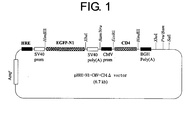
- pcDNA3.1-CD4 ⁇ vector was digested at Nur I -Pvu I site and a fragment comprising CMV promoter, EGFP-N1, and dBGH poly(A) was obtained by partial digestion with Pvu II. The fragment was inserted into the pHRE-N1 vector to construct pHRE-N1-CMV-CD4 ⁇ vector (see Fig. 1).
- HEK293 cells were cultured using D-MEM supplemented with 10% FBS (Invitrogen). Gene transfer was carried out by electroporation using Gene Pulser II (Bio-Rad); then 0.3 ml of cells at a concentration of 1 x 10 7 cells/ml was combined with a 1:10 ratio of pHRE-N1-CMV-CD4A vector (0.5 ⁇ g) and siRNA expression vector library (5 ⁇ g). Electroporation was performed at 0.22 kV voltage and 950 ⁇ F capacitance. The cells introduced with the genes were cultured in collagen-coated type-I6-well plates (150 ⁇ l/well) (Ashahi Techno Glass) under 5% CO 2 for 48 hours.
- pHRE-N1-CMV-CD4 ⁇ vector and siRNA expression vector library were introduced into HEK293 cells by electroporation.
- the cells were harvested after 48 hours, and then stained with anti-human CD4 (Fujisawa Pharmaceutical Co., Ltd). About 10 5 positive cells with an increased expression level of EGFP were collected with FACSCalibur (Becton Dickinson).
- Plasmids were recovered from the harvested cells using QIAamp DNA/Blood Kit (QIAGEN).
- a hairpin was amplified by PCR from the recovered plasmid.
- the primers used were: M13-47 (5'-CGCCAGGGTTTTCCCAGTCACGAC-3'/ SEQ ID NO: 225) and M13-RV (5'-agcggataacaatttcacacagg-3/ SEQ ID NO: 226).
- the enzyme used was 9° Nm DNA Polymerase (NEB).
- the PCR products were treated with EcoRI and Sph I and subjected to 3.5 % PAGE.
- the hairpin fragment was excised, eluted from the gel using Elution buffer (0.5 M AcONH 4 , 10 mM AcOMg, 1 mM EDTA, and 0.1 % SDS) to be purified.
- the purified hairpin was ligated with Eco RI/ Sph I-treated ptRNA/SS using Rapid DNA Ligation Kit (Roche).
- the ligation product was mixed with ElectroMAX DH10B Cells (Invitrogen). Gene transfer was carried out by electroporation using GENE PULSER II (BIO-RAD) in which the electroporation conditions were 2.0 kV of voltage, 25 ⁇ F of capacitance, and 200 ⁇ of resistance. E. coli cells introduced with the genes were plated onto two LB (+Amp) plates (type2 square plates), and incubated at 37°C overnight. The following morning, some were stored as glycerol stocks, and plasmids were recovered from the remainder using a HiSpeed Plasmid Midi Kit (QIAGEN).
- Diluted glycerol stocks were plated onto LB media (Amp) and incubated at 37°C overnight. The colonies were selected and cultured, and then the plasmids were recovered using Multiscreen FB (Millipore). Since it is difficult to sequence the hairpin as is, sequencing was performed after cleaving the loop with Bam HI (NEB). Sequencing was carried out using a DYEnamic ET Terminator Cycle sequencing kit (Amersham Bioscience). Sense and antisense sequences were determined using the M13-47 and M13-RV primers, respectively. The NCBI BLAST program was used to search the obtained sequences for genes from standard databases.
- an evaluation vector comprising HRE and a cDNA siRNA library were co-transfected.
- HRE reporter gene As well as fusing an HRE reporter gene with the evaluation vector, it is also necessary to incorporate a constitutively expressed gene, which is used to confirm whether the plasmid is successfully introduced into cells.
- the evaluation vector (pHRE-N1-CMV-CD4 ⁇ vector) was constructed using EGFP-N1 as an HRE reporter gene, and a CMV promotor into which CD4 ⁇ was incorporated was used to confirm whether the plasmid was introduced into the cells (see Fig. 1).
- siRNAs for genes that suppress the expression of genes downstream of HRE under normal oxygen conditions.
- HEK293 cells were co-transfected with the siRNA expression vector library and pHRE-N1-CMV-CD4 ⁇ vector by electroporation, and cells with elevated EGFP expression as compared with the control were collected by sorting. Plasmids were recovered from the collected cells, and the hairpin fragments were amplified by PCR and cloned. The cloned plasmids were re-introduced into cultured cells and cells with elevated EGFP expression were collected by sorting. The hairpin was amplified by PCR and cloned.
- VHL von-Hippel Lindau syndrome
- the present invention provides libraries of expression vectors for stem-loop RNA molecules that enable comprehensive screening for gene function, and also provides comprehensive methods of screening for drug target molecules using these libraries. These methods also enable the identification of drug target molecules whose suppressed expression is expected to produce elevated effects.
- the present invention suggests the possibility that where altering the expression of target genes is expected to have therapeutic effects, factors regulating target gene expression under normal conditions can be identified, and thus gene expression can be controlled by suppressing the expression of these factors. When such factors suppress target gene expression, suppressing the expression of the factors can enhance target gene expression. Alternatively, when the factors enhance target gene expression, suppressing the expression of the factors can suppress target gene expression. Specifically, the factors identified were those whose repressed expression indirectly enhanced the expression of angiogenesis-enhancing genes downstream of HRE. Such factors are novel drug targets, and at the same time siRNA molecules that suppress the expression of the factors are applicable to pharmaceuticals having novel drug effects. In addition, expression vectors for stem-loop RNA molecules that suppress the expression of the factors would be applicable to gene therapy.
Landscapes
- Health & Medical Sciences (AREA)
- Engineering & Computer Science (AREA)
- Life Sciences & Earth Sciences (AREA)
- Genetics & Genomics (AREA)
- Biomedical Technology (AREA)
- Chemical & Material Sciences (AREA)
- Wood Science & Technology (AREA)
- Organic Chemistry (AREA)
- Biotechnology (AREA)
- General Engineering & Computer Science (AREA)
- Bioinformatics & Cheminformatics (AREA)
- Zoology (AREA)
- Molecular Biology (AREA)
- Physics & Mathematics (AREA)
- Microbiology (AREA)
- Plant Pathology (AREA)
- Biochemistry (AREA)
- General Health & Medical Sciences (AREA)
- Biophysics (AREA)
- Bioinformatics & Computational Biology (AREA)
- Crystallography & Structural Chemistry (AREA)
- Micro-Organisms Or Cultivation Processes Thereof (AREA)
- Measuring Or Testing Involving Enzymes Or Micro-Organisms (AREA)
- Preparation Of Compounds By Using Micro-Organisms (AREA)
- Peptides Or Proteins (AREA)
Applications Claiming Priority (2)
| Application Number | Priority Date | Filing Date | Title |
|---|---|---|---|
| JP2004203672 | 2004-07-09 | ||
| PCT/JP2005/012655 WO2006006520A1 (ja) | 2004-07-09 | 2005-07-08 | 新規創薬標的の探索方法 |
Publications (1)
| Publication Number | Publication Date |
|---|---|
| EP1783219A1 true EP1783219A1 (de) | 2007-05-09 |
Family
ID=35783863
Family Applications (1)
| Application Number | Title | Priority Date | Filing Date |
|---|---|---|---|
| EP05758233A Withdrawn EP1783219A1 (de) | 2004-07-09 | 2005-07-08 | Verfahren zur suche nach neuen wirkstoffindungszielen |
Country Status (3)
| Country | Link |
|---|---|
| EP (1) | EP1783219A1 (de) |
| JP (1) | JPWO2006006520A1 (de) |
| WO (1) | WO2006006520A1 (de) |
Families Citing this family (2)
| Publication number | Priority date | Publication date | Assignee | Title |
|---|---|---|---|---|
| TW200815349A (en) | 2006-06-22 | 2008-04-01 | Astrazeneca Ab | New compounds |
| PT106709B (pt) | 2012-12-21 | 2015-06-09 | Inst Superior Tecnico | Emulsões aquosas reativas para revestimentos compósitos |
Family Cites Families (4)
| Publication number | Priority date | Publication date | Assignee | Title |
|---|---|---|---|---|
| US20030198627A1 (en) * | 2001-09-01 | 2003-10-23 | Gert-Jan Arts | siRNA knockout assay method and constructs |
| WO2004009796A2 (en) * | 2002-07-24 | 2004-01-29 | Immusol Incorporated | Single promoter system for making sirna expression cassettes and expression libraries using a polymerase primer hairpin linker |
| US20080021205A1 (en) * | 2003-12-11 | 2008-01-24 | Helen Blau | Methods and Compositions for Use in Preparing Hairpin Rnas |
| WO2005056750A2 (en) * | 2003-12-11 | 2005-06-23 | Quark Biotech, Inc. | Inversion-duplication of nucleic acids and libraries prepared thereby |
-
2005
- 2005-07-08 JP JP2006528997A patent/JPWO2006006520A1/ja active Pending
- 2005-07-08 EP EP05758233A patent/EP1783219A1/de not_active Withdrawn
- 2005-07-08 WO PCT/JP2005/012655 patent/WO2006006520A1/ja not_active Ceased
Non-Patent Citations (1)
| Title |
|---|
| See references of WO2006006520A1 * |
Also Published As
| Publication number | Publication date |
|---|---|
| JPWO2006006520A1 (ja) | 2008-04-24 |
| WO2006006520A1 (ja) | 2006-01-19 |
Similar Documents
| Publication | Publication Date | Title |
|---|---|---|
| Elbashir et al. | Analysis of gene function in somatic mammalian cells using small interfering RNAs | |
| JP4339852B2 (ja) | 遺伝子サイレンシングに関する方法および組成物 | |
| US20220298228A1 (en) | Novel eukaryotic cells and methods for recombinantly expressing a product of interest | |
| US20220325310A1 (en) | Novel eukaryotic cells and methods for recombinantly expressing a product of interest | |
| Feng et al. | A multifunctional lentiviral-based gene knockdown with concurrent rescue that controls for off-target effects of RNAi | |
| US20070166720A1 (en) | Small interfering RNA libraries and methods of synthesis and use | |
| KR20050026384A (ko) | RNAi효과를 가지는 스템 루프 형 RNA 분자 발현 시스템 | |
| Heggestad et al. | Transposon-based RNAi delivery system for generating knockdown cell lines | |
| CA2487427A1 (en) | Methods and compositions for treating neoplasia relating to hnrnp a1 and a2 nucleic acid molecules | |
| EP1783219A1 (de) | Verfahren zur suche nach neuen wirkstoffindungszielen | |
| Liu et al. | Short hairpin RNA and retroviral vector-mediated silencing of p53 in mammalian cells | |
| Brenz Verca et al. | Development of a species-specific RNA polymerase I-based shRNA expression vector | |
| US20230210960A1 (en) | New use of cmtr1 having sirna production and function enhancing activity | |
| US20060216823A1 (en) | Method for obtaining an enriched population of siRNA-expressing cells | |
| US20080066196A1 (en) | Short interfering rna duplexes targeting an ires sequence and uses therefor | |
| WO2003070932A1 (en) | Polynucleotide for target gene | |
| Ma et al. | Gene Down‐Regulation with Short Hairpin RNAs and Validation of Specificity by Inducible Rescue in Mammalian Cells | |
| JP2005046003A (ja) | RNAi効果を有するステムループ形RNA分子発現システム |
Legal Events
| Date | Code | Title | Description |
|---|---|---|---|
| PUAI | Public reference made under article 153(3) epc to a published international application that has entered the european phase |
Free format text: ORIGINAL CODE: 0009012 |
|
| 17P | Request for examination filed |
Effective date: 20070116 |
|
| AK | Designated contracting states |
Kind code of ref document: A1 Designated state(s): AT BE BG CH CY CZ DE DK EE ES FI FR GB GR HU IE IS IT LI LT LU LV MC NL PL PT RO SE SI SK TR |
|
| DAX | Request for extension of the european patent (deleted) | ||
| STAA | Information on the status of an ep patent application or granted ep patent |
Free format text: STATUS: THE APPLICATION HAS BEEN WITHDRAWN |
|
| 18W | Application withdrawn |
Effective date: 20080215 |