EP1785468A1 - Methode d'hydrocraquage de residus - Google Patents
Methode d'hydrocraquage de residus Download PDFInfo
- Publication number
- EP1785468A1 EP1785468A1 EP06123470A EP06123470A EP1785468A1 EP 1785468 A1 EP1785468 A1 EP 1785468A1 EP 06123470 A EP06123470 A EP 06123470A EP 06123470 A EP06123470 A EP 06123470A EP 1785468 A1 EP1785468 A1 EP 1785468A1
- Authority
- EP
- European Patent Office
- Prior art keywords
- resid
- hydrogen donor
- hydrocracker
- donor solvent
- hydrogen
- Prior art date
- Legal status (The legal status is an assumption and is not a legal conclusion. Google has not performed a legal analysis and makes no representation as to the accuracy of the status listed.)
- Granted
Links
- 238000000034 method Methods 0.000 title claims abstract description 49
- 238000004517 catalytic hydrocracking Methods 0.000 title claims description 5
- 239000000852 hydrogen donor Substances 0.000 claims abstract description 69
- 239000002904 solvent Substances 0.000 claims abstract description 63
- 239000002243 precursor Substances 0.000 claims abstract description 35
- 239000011347 resin Substances 0.000 claims abstract description 31
- 229920005989 resin Polymers 0.000 claims abstract description 31
- UFHFLCQGNIYNRP-UHFFFAOYSA-N Hydrogen Chemical compound [H][H] UFHFLCQGNIYNRP-UHFFFAOYSA-N 0.000 claims abstract description 27
- 229910052739 hydrogen Inorganic materials 0.000 claims abstract description 26
- 239000001257 hydrogen Substances 0.000 claims abstract description 26
- 238000006243 chemical reaction Methods 0.000 claims abstract description 24
- 239000003054 catalyst Substances 0.000 claims description 15
- OKTJSMMVPCPJKN-UHFFFAOYSA-N Carbon Chemical compound [C] OKTJSMMVPCPJKN-UHFFFAOYSA-N 0.000 claims description 6
- 229910052799 carbon Inorganic materials 0.000 claims description 6
- 238000004821 distillation Methods 0.000 claims description 6
- 239000007788 liquid Substances 0.000 claims description 5
- 239000003208 petroleum Substances 0.000 claims description 5
- PNEYBMLMFCGWSK-UHFFFAOYSA-N aluminium oxide Inorganic materials [O-2].[O-2].[O-2].[Al+3].[Al+3] PNEYBMLMFCGWSK-UHFFFAOYSA-N 0.000 claims description 4
- 238000005292 vacuum distillation Methods 0.000 claims description 4
- 239000003245 coal Substances 0.000 claims description 3
- DDTIGTPWGISMKL-UHFFFAOYSA-N molybdenum nickel Chemical compound [Ni].[Mo] DDTIGTPWGISMKL-UHFFFAOYSA-N 0.000 claims description 3
- 239000002028 Biomass Substances 0.000 claims description 2
- QZYDAIMOJUSSFT-UHFFFAOYSA-N [Co].[Ni].[Mo] Chemical compound [Co].[Ni].[Mo] QZYDAIMOJUSSFT-UHFFFAOYSA-N 0.000 claims description 2
- 239000010426 asphalt Substances 0.000 claims description 2
- WHDPTDWLEKQKKX-UHFFFAOYSA-N cobalt molybdenum Chemical compound [Co].[Co].[Mo] WHDPTDWLEKQKKX-UHFFFAOYSA-N 0.000 claims description 2
- 238000005336 cracking Methods 0.000 abstract description 7
- 239000000571 coke Substances 0.000 abstract description 6
- 230000015572 biosynthetic process Effects 0.000 abstract 1
- 239000003921 oil Substances 0.000 description 27
- 239000000047 product Substances 0.000 description 26
- 239000003085 diluting agent Substances 0.000 description 21
- 238000009835 boiling Methods 0.000 description 7
- 238000004519 manufacturing process Methods 0.000 description 7
- 239000007789 gas Substances 0.000 description 6
- 229930195733 hydrocarbon Natural products 0.000 description 6
- 150000002430 hydrocarbons Chemical class 0.000 description 6
- 239000004215 Carbon black (E152) Substances 0.000 description 5
- 230000007423 decrease Effects 0.000 description 5
- 238000004458 analytical method Methods 0.000 description 4
- 125000003118 aryl group Chemical group 0.000 description 3
- CWQXQMHSOZUFJS-UHFFFAOYSA-N molybdenum disulfide Chemical compound S=[Mo]=S CWQXQMHSOZUFJS-UHFFFAOYSA-N 0.000 description 3
- 238000000746 purification Methods 0.000 description 3
- IMNFDUFMRHMDMM-UHFFFAOYSA-N N-Heptane Chemical compound CCCCCCC IMNFDUFMRHMDMM-UHFFFAOYSA-N 0.000 description 2
- PXHVJJICTQNCMI-UHFFFAOYSA-N Nickel Chemical compound [Ni] PXHVJJICTQNCMI-UHFFFAOYSA-N 0.000 description 2
- NINIDFKCEFEMDL-UHFFFAOYSA-N Sulfur Chemical compound [S] NINIDFKCEFEMDL-UHFFFAOYSA-N 0.000 description 2
- 238000004523 catalytic cracking Methods 0.000 description 2
- 230000003197 catalytic effect Effects 0.000 description 2
- 230000002950 deficient Effects 0.000 description 2
- 230000001419 dependent effect Effects 0.000 description 2
- NLPVCCRZRNXTLT-UHFFFAOYSA-N dioxido(dioxo)molybdenum;nickel(2+) Chemical compound [Ni+2].[O-][Mo]([O-])(=O)=O NLPVCCRZRNXTLT-UHFFFAOYSA-N 0.000 description 2
- 230000000694 effects Effects 0.000 description 2
- 238000010828 elution Methods 0.000 description 2
- 238000005194 fractionation Methods 0.000 description 2
- 239000000295 fuel oil Substances 0.000 description 2
- 238000002309 gasification Methods 0.000 description 2
- 238000005984 hydrogenation reaction Methods 0.000 description 2
- 239000000463 material Substances 0.000 description 2
- 238000012986 modification Methods 0.000 description 2
- 230000004048 modification Effects 0.000 description 2
- YNPNZTXNASCQKK-UHFFFAOYSA-N phenanthrene Chemical compound C1=CC=C2C3=CC=CC=C3C=CC2=C1 YNPNZTXNASCQKK-UHFFFAOYSA-N 0.000 description 2
- 239000000376 reactant Substances 0.000 description 2
- 229910052717 sulfur Inorganic materials 0.000 description 2
- 239000011593 sulfur Substances 0.000 description 2
- 239000011269 tar Substances 0.000 description 2
- 238000004227 thermal cracking Methods 0.000 description 2
- ZOKXTWBITQBERF-UHFFFAOYSA-N Molybdenum Chemical compound [Mo] ZOKXTWBITQBERF-UHFFFAOYSA-N 0.000 description 1
- 230000002411 adverse Effects 0.000 description 1
- QVGXLLKOCUKJST-UHFFFAOYSA-N atomic oxygen Chemical compound [O] QVGXLLKOCUKJST-UHFFFAOYSA-N 0.000 description 1
- 230000009286 beneficial effect Effects 0.000 description 1
- 125000004432 carbon atom Chemical group C* 0.000 description 1
- KYYSIVCCYWZZLR-UHFFFAOYSA-N cobalt(2+);dioxido(dioxo)molybdenum Chemical compound [Co+2].[O-][Mo]([O-])(=O)=O KYYSIVCCYWZZLR-UHFFFAOYSA-N 0.000 description 1
- 150000001875 compounds Chemical class 0.000 description 1
- 230000009849 deactivation Effects 0.000 description 1
- 230000003247 decreasing effect Effects 0.000 description 1
- 230000008021 deposition Effects 0.000 description 1
- 238000010586 diagram Methods 0.000 description 1
- XXPBFNVKTVJZKF-UHFFFAOYSA-N dihydrophenanthrene Natural products C1=CC=C2CCC3=CC=CC=C3C2=C1 XXPBFNVKTVJZKF-UHFFFAOYSA-N 0.000 description 1
- 238000007865 diluting Methods 0.000 description 1
- 238000010790 dilution Methods 0.000 description 1
- 239000012895 dilution Substances 0.000 description 1
- 239000000386 donor Substances 0.000 description 1
- 238000011143 downstream manufacturing Methods 0.000 description 1
- 239000012530 fluid Substances 0.000 description 1
- 238000010438 heat treatment Methods 0.000 description 1
- 239000012263 liquid product Substances 0.000 description 1
- 229910052751 metal Inorganic materials 0.000 description 1
- 239000002184 metal Substances 0.000 description 1
- 150000002739 metals Chemical class 0.000 description 1
- 239000000203 mixture Substances 0.000 description 1
- 229910052750 molybdenum Inorganic materials 0.000 description 1
- 239000011733 molybdenum Substances 0.000 description 1
- 229910052759 nickel Inorganic materials 0.000 description 1
- 230000003647 oxidation Effects 0.000 description 1
- 238000007254 oxidation reaction Methods 0.000 description 1
- 229910052760 oxygen Inorganic materials 0.000 description 1
- 239000001301 oxygen Substances 0.000 description 1
- 239000003209 petroleum derivative Substances 0.000 description 1
- 238000006116 polymerization reaction Methods 0.000 description 1
- 239000011148 porous material Substances 0.000 description 1
- 230000001376 precipitating effect Effects 0.000 description 1
- 230000000153 supplemental effect Effects 0.000 description 1
- 238000010977 unit operation Methods 0.000 description 1
- 229910052720 vanadium Inorganic materials 0.000 description 1
- GPPXJZIENCGNKB-UHFFFAOYSA-N vanadium Chemical compound [V]#[V] GPPXJZIENCGNKB-UHFFFAOYSA-N 0.000 description 1
- 239000002912 waste gas Substances 0.000 description 1
Images
Classifications
-
- C—CHEMISTRY; METALLURGY
- C10—PETROLEUM, GAS OR COKE INDUSTRIES; TECHNICAL GASES CONTAINING CARBON MONOXIDE; FUELS; LUBRICANTS; PEAT
- C10G—CRACKING HYDROCARBON OILS; PRODUCTION OF LIQUID HYDROCARBON MIXTURES, e.g. BY DESTRUCTIVE HYDROGENATION, OLIGOMERISATION, POLYMERISATION; RECOVERY OF HYDROCARBON OILS FROM OIL-SHALE, OIL-SAND, OR GASES; REFINING MIXTURES MAINLY CONSISTING OF HYDROCARBONS; REFORMING OF NAPHTHA; MINERAL WAXES
- C10G21/00—Refining of hydrocarbon oils, in the absence of hydrogen, by extraction with selective solvents
- C10G21/06—Refining of hydrocarbon oils, in the absence of hydrogen, by extraction with selective solvents characterised by the solvent used
- C10G21/12—Organic compounds only
- C10G21/14—Hydrocarbons
-
- C—CHEMISTRY; METALLURGY
- C10—PETROLEUM, GAS OR COKE INDUSTRIES; TECHNICAL GASES CONTAINING CARBON MONOXIDE; FUELS; LUBRICANTS; PEAT
- C10G—CRACKING HYDROCARBON OILS; PRODUCTION OF LIQUID HYDROCARBON MIXTURES, e.g. BY DESTRUCTIVE HYDROGENATION, OLIGOMERISATION, POLYMERISATION; RECOVERY OF HYDROCARBON OILS FROM OIL-SHALE, OIL-SAND, OR GASES; REFINING MIXTURES MAINLY CONSISTING OF HYDROCARBONS; REFORMING OF NAPHTHA; MINERAL WAXES
- C10G21/00—Refining of hydrocarbon oils, in the absence of hydrogen, by extraction with selective solvents
- C10G21/003—Solvent de-asphalting
-
- C—CHEMISTRY; METALLURGY
- C10—PETROLEUM, GAS OR COKE INDUSTRIES; TECHNICAL GASES CONTAINING CARBON MONOXIDE; FUELS; LUBRICANTS; PEAT
- C10G—CRACKING HYDROCARBON OILS; PRODUCTION OF LIQUID HYDROCARBON MIXTURES, e.g. BY DESTRUCTIVE HYDROGENATION, OLIGOMERISATION, POLYMERISATION; RECOVERY OF HYDROCARBON OILS FROM OIL-SHALE, OIL-SAND, OR GASES; REFINING MIXTURES MAINLY CONSISTING OF HYDROCARBONS; REFORMING OF NAPHTHA; MINERAL WAXES
- C10G45/00—Refining of hydrocarbon oils using hydrogen or hydrogen-generating compounds
- C10G45/02—Refining of hydrocarbon oils using hydrogen or hydrogen-generating compounds to eliminate hetero atoms without changing the skeleton of the hydrocarbon involved and without cracking into lower boiling hydrocarbons; Hydrofinishing
- C10G45/24—Refining of hydrocarbon oils using hydrogen or hydrogen-generating compounds to eliminate hetero atoms without changing the skeleton of the hydrocarbon involved and without cracking into lower boiling hydrocarbons; Hydrofinishing with hydrogen-generating compounds
- C10G45/28—Organic compounds; Autofining
-
- C—CHEMISTRY; METALLURGY
- C10—PETROLEUM, GAS OR COKE INDUSTRIES; TECHNICAL GASES CONTAINING CARBON MONOXIDE; FUELS; LUBRICANTS; PEAT
- C10G—CRACKING HYDROCARBON OILS; PRODUCTION OF LIQUID HYDROCARBON MIXTURES, e.g. BY DESTRUCTIVE HYDROGENATION, OLIGOMERISATION, POLYMERISATION; RECOVERY OF HYDROCARBON OILS FROM OIL-SHALE, OIL-SAND, OR GASES; REFINING MIXTURES MAINLY CONSISTING OF HYDROCARBONS; REFORMING OF NAPHTHA; MINERAL WAXES
- C10G47/00—Cracking of hydrocarbon oils, in the presence of hydrogen or hydrogen- generating compounds, to obtain lower boiling fractions
- C10G47/24—Cracking of hydrocarbon oils, in the presence of hydrogen or hydrogen- generating compounds, to obtain lower boiling fractions with moving solid particles
- C10G47/30—Cracking of hydrocarbon oils, in the presence of hydrogen or hydrogen- generating compounds, to obtain lower boiling fractions with moving solid particles according to the "fluidised-bed" technique
-
- C—CHEMISTRY; METALLURGY
- C10—PETROLEUM, GAS OR COKE INDUSTRIES; TECHNICAL GASES CONTAINING CARBON MONOXIDE; FUELS; LUBRICANTS; PEAT
- C10G—CRACKING HYDROCARBON OILS; PRODUCTION OF LIQUID HYDROCARBON MIXTURES, e.g. BY DESTRUCTIVE HYDROGENATION, OLIGOMERISATION, POLYMERISATION; RECOVERY OF HYDROCARBON OILS FROM OIL-SHALE, OIL-SAND, OR GASES; REFINING MIXTURES MAINLY CONSISTING OF HYDROCARBONS; REFORMING OF NAPHTHA; MINERAL WAXES
- C10G67/00—Treatment of hydrocarbon oils by at least one hydrotreatment process and at least one process for refining in the absence of hydrogen only
- C10G67/02—Treatment of hydrocarbon oils by at least one hydrotreatment process and at least one process for refining in the absence of hydrogen only plural serial stages only
- C10G67/04—Treatment of hydrocarbon oils by at least one hydrotreatment process and at least one process for refining in the absence of hydrogen only plural serial stages only including solvent extraction as the refining step in the absence of hydrogen
- C10G67/0454—Solvent desasphalting
- C10G67/049—The hydrotreatment being a hydrocracking
Definitions
- This invention pertains in general to resid hydrocracking methods and in particular to methods for the production and use of hydrogen donor solvents to increase the efficiency of processes to convert hydrocarbon residua (“resid”) feedstocks to lower boiling hydrocarbon liquid products.
- U.S. Patent 3,238,118 teaches the use of a gas oil hydrocracker to produce hydrogen donor diluent precursor.
- U.S. Patent 4,090,947 teaches the use of a premium coker gas oil as the hydrogen donor precursor.
- U.S. Patent 4,292,168 provides guidance on the desired hydrogen donor diluent properties using model compounds, but does not provide any guidance on commercially viable methods to produce a hydrogen donor diluent with the required properties.
- U.S. Patent 4,363,716 teaches production of the hydrogen donor diluent precursor by contacting a gas oil stream with a molybdenum on alumina catalyst and hydrogen at 500 psia and 500°C with a 0.5 hour residence time.
- One problem with all these processes is that the more aromatic hydrogen donor precursor is diluted with the less aromatic gas oil product from the hydrogen donor cracking product.
- U.S. Patent 2,873,245 teaches the use of a second thermal cracking stage with catalytic cracking cycle (or decant) oil as make-up hydrogen donor diluent precursor.
- U.S. Patent 2,953,513 teaches the use of a second thermal cracking stage with a thermal tar hydrogen donor diluent precursor.
- U.S. Patent 4,698,147 teaches the use of high temperature, short residence time operating conditions to increase the maximum resid conversion.
- U.S. Patent 4,002,556 teaches the use of multiple point hydrogen donor diluent addition points to decrease the hydrogen requirement.
- Patents 6,183,627 and 6,274,003 teach the use of a deasphalter to recover and recycle deasphalted oil to increase the maximum operable resid conversion to distillates by selectively removing coke precursors in the asphaltene product stream.
- U.S. Patent 6,702,936 further increases the process efficiency by using partial oxidation of the asphaltene product to produce hydrogen for the hydrogen donor diluent cracking process.
- U.S. Patent 4,640,765 demonstrates that the addition of a hydrogen donor diluent to a batch ebullated bed hydrocracker increases the rate of residua conversion to distillates.
- the addition of the hydrogen donor diluent also decreases the concentration of the residual oil in the ebullated bed hydrocracker.
- the adverse dilution effect is much greater than the beneficial effect of the more rapid resid conversion kinetics.
- efforts to increase the ebullated bed hydrocracker process maximum resid conversion and process efficiency have primarily focused on methods to selectively remove coke precursors from the reactor ( U.S. Patents 4,427,535 ; 4,457,830 ; and 4,411,768 ) and preventing coke precursors from precipitating in the process equipment ( U.S. Patents 4,521,295 and 4,495,060 ).
- U.S. Patents 5,980,730 and 6,017,441 introduce the concept of using a solvent deasphalter to remove coke precursors and recycle hydrotreated deasphalted oil to the ebullated bed resid hydrocracker. However, this process does not provide a method to control the hydrogen donor precursor properties required to produce an effective hydrogen donor solvent and recycles undesirable more paraffinic residual oil species to the ebullated bed resid hydrocracker.
- Patent 5,228,978 teaches using a solvent deasphalting unit to separate the cracked resid product from an ebullated bed resid hydrocracker into an asphaltene coker feed stream, a resin stream that is recycled to the ebullated bed resid hydrocracker, and a more paraffinic residual oil stream that is fed to a conventional catalytic cracking unit.
- U.S. Patent 4,686,028 teaches the use of a deasphalter to separate a resid oil feed into asphaltene, resin, and oil fractions and upgrading the resin fraction by visbreaking or hydrogenation.
- the present invention provides for a method to use a process derived hydrogen donor solvent to increase the maximum resid conversion and resid conversion rate in an ebullated bed resid hydrocracker.
- the hydrogen donor solvent is produced by hydroreforming and cracking reactions within typically an ebullated bed resid hydrocracker, recovered as the resin fraction using a solvent deasphalting unit, regenerated in a separate hydrotreater reactor, and fed to the ebullated bed resid hydrocracker.
- a method for increasing the maximum resid conversion and resid conversion rate in a resid hydrocracker upgrader comprising the steps:
- the invention also provides a method as claimed in claim 11.
- Hydrogen donor solvent precursor is typically also produced by the hydrocracking of the resid feed in the resid hydrocracker upgrader.
- a simplified reaction system may be useful to illustrate the hydrogen donor process concept and differentiate this invention from the prior art.
- this reaction system uses a phenanthrene hydrogen donor diluent precursor to illustrate the hydrogen donor process.
- this invention advantageously uses a much higher molecular weight, more complex, and higher boiling point resin hydrogen donor solvent.
- the hydrogen donor process typically starts by hydrogenating a hydrogen donor precursor solvent or diluent at moderate temperature and high pressure in the presence of a catalyst such as nickel-molybdate, to partially saturate the conjugated aromatic ring structure, which is represented by dihydrophenanthrene.
- the hydrogen donor solvent or diluent is mixed with the residual oil and fed to a resid hydrocracker upgrader.
- Hydrogen radicals (H) are produced by the hydrogen donor solvent or diluent to decrease the polymerization rate of the cracked products. Then, the spent hydrogen donor solvent is recovered by distillation and deasphalting and is recycled to the hydrotreating step.
- the prior art exclusively uses distillation or the combination of reaction and distillation to produce a distillate process derived hydrogen donor diluent precursor.
- This invention uses solvent deasphalting to produce a non-distillable resin hydrogen donor solvent precursor.
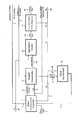
- a resid feed stream 1 is sent to a resid hydrocracker upgrader 2.
- the preferred operating conditions are highly dependent on the properties of the resid feed 1.
- the residual oil feed may be derived from a wide variety of hydrocarbon sources, e.g., petroleum oil, bitumen, coal derived liquids, or biomass. Distillates are preferably removed from the hydrocarbon resid source by conventional vacuum distillation. Preferably 95% of the components in the resid feed by weight have normal boiling points greater than 450°C, more preferably greater than 480°C, and more preferably about 520°C.
- an appropriate resid feed has a Conradson Carbon content greater than 10 weight %, a sulfur content in the order of or greater than 1 weight % sulfur, a vanadium and nickel content greater than 100 ppm, a heptane insoluble fraction greater than about 5 weight %, and a hydrogen to carbon atomic ratio of less than about 1.2 1, and a density greater than about 1.0 gm/cm 3 .
- the resid hydrocracker upgrader 2 converts the resid feed 1, recycle donor solvent feed 3 from a resid hydrotreater 14, and optional oil product feed 5 from a deasphalter 6 to a petroleum distillates product which is taken through line 7 and a cracked resid stream which flows into line 8.
- the resid hydrocracker upgrader 2 typically consists of a conventional ebullated bed hydrocracker (see U.S. Patent 4,686,028 for process details), an atmospheric distillation column, and a vacuum distillation column.
- the ebullated bed hydrocracker typically operates in a hydrogen partial pressure range between 50 and 210 bar and typically about 140 bar, a temperature range of 410 to 530°C and typically about 470°C, and a hydrogen donor solvent to resid feed weight ratio range of 0.1:1 to 1:1.
- the liquid reactant residence time is adjusted to provide a resid-to-distillate conversion between 30% and 90% and typically about 70%.
- the ebullated bed hydrocracker typically uses a conventional cobalt-molybdenum, nickel-molybdenum or nickel-cobalt-molybdenum on alumina catalyst in a spherical or extrudate form with a means to periodically replace a portion of the catalyst inventory with fresh catalyst during normal operations.
- a conventional colloidal molybdenum sulfide catalyst may be advantageously used.
- the preferred ebullated bed hydrocracker operating conditions are highly dependent on the source of the resid feed 1 and are best determined based on pilot plant tests.
- An ebullated bed hydrocracker typically operates with a temperature between 415 and 450°C, a hydrogen partial pressure 140 and 210 bar, a ratio of the hourly resid volumetric feed rate to reactor volume between 0.25:1 and 5:1, and a cobalt-molybdate or nickel-molybdate catalyst bed at between 5 and 30% volume expansion.
- the cracked resid product in line 8 is typically produced by first removing gas and distillate components in a distillation column operating at a pressure slightly greater than atmospheric pressure and then removing a majority of the remaining distillate components in a vacuum distillation to produce the upgraded distillate oil product stream that flows to line 7 and the cracked resid feed that flows via line 8 to deasphalter 6.
- deasphalter products can theoretically be produced by progressively decreasing the solvent's effectiveness and removing the separated phase.
- Both the deasphalter unit operation and laboratory heavy oil analytical methods use the sequential elution fractionation to separate heavy oil into fractions for analysis and products. See, for example, Klaus H. Altgelt and Mieczyslaw M. Boduszynski, "Composition and analysis of heavy petroleum fractions," Marcel Dekker, 1994, ISBN 0-8247-84946-6, page 63 .
- a typical deasphalter unit is generally designed to produce two or three products.
- a two product deasphalter produces an asphaltene stream and deasphalted oil stream with the asphaltene stream having the lower solubility in the solvent.
- a three product deasphalter additionally produces a resin product with intermediate solubility between the oil and asphaltene products.
- the deasphalter operating conditions are adjusted to provide the desired asphaltene, resin, and oil properties.
- the asphaltene product yield should be minimized with the constraint that the asphaltene product passing through line 10 can be handled by the downstream processing unit, e.g., an asphaltene gasifier 12 in the Figure.
- Oxygen is fed to the asphaltene gasifier 12 through line 15.
- a reasonable resin yield can be estimated based on the resin hydrogen to carbon ratio as a function of the resin yield.
- Analysis of laboratory scale sequential elution fractionations can be used to determine the effect of oil, resin, and asphaltene weight fraction yield on the oil, resin, and asphaltene product stream properties.
- the hydrogen donor solvent precursor should have a hydrogen to carbon atomic ratio that is preferably less than 1.5:1, more preferably less than 1.3:1, and most preferably less than 1.2:1.
- the deasphalter oil product in line 5 contains essentially the components in deasphalter feed 8 that do not enter either the asphaltene or resin products, which are fed to the asphaltene gasifier 12 and resid hydrotreater 11, respectively.
- the deasphalter oil product in line 5 may be recycled to the ebullated bed resid hydrocracker 2.
- this deasphalter oil product is a poor ebullated bed resid hydrocracker feedstock because it has a lower cracking rate than either resin or asphaltenes and is also is a relatively poor solvent for coke precursors. This material is therefore preferably fed to a fluid catalytic cracker or coker (not shown).
- the resin product of the solvent deasphalter that is sent to line 11 and a flow of hydrogen in line 13 are fed to a resid hydrotreater 14.
- the resid hydrotreater 14 may be a conventional trickle-bed, down-flow, ebullated bed, or entrained flow resid hydrotreating reactor.
- the trickle-bed and ebullated bed reactors would typically use a nickel-molybdenum on alumina catalyst with sufficient pore diameter to allow ready access of the resin feedstock.
- the entrained flow reactor would typically use a colloidal molybdenum sulfide catalyst.
- the ebullated bed reactor could also use a colloidal molybdenum sulfide catalyst in addition to the supported catalyst.
- the molecular hydrogen feed is generally between 250 and 500 Nm 3 H 2 /m 3 resin, and is fed to resid hydrotreater 14 via line 13.
- the resid hydrotreater 14 operating pressure is preferably greater than the ebullated bed resid hydrocracker upgrader 2 operating pressure to allow the hydrogen donor solvent and unreacted hydrogen to flow to the ebullated bed resid hydrocracker via line 3.
- the resid hydrotreater 14 generally operates in the range of about 370° to 430°C, significantly lower than the 410° to 530° C typical operating temperature range for the ebullated bed resid hydrocracker.
- the resid hydrotreater 14 has a catalyst bed volume that is adjusted such that the hydrogen consumption is between 100 and 200 Nm 3 H 2 /m 3 resin.
- the method according to the invention offers a number of advantages relative to earlier processes.
- the resid hydrotreater is much more efficient than the ebullated bed resid hydrocracker because the catalyst deactivation rate due to metals and carbon deposition is much lower.
- the resid hydrotreater can operate at the optimum temperature for hydrogenation.
- the hydrogen donor solvent significantly improves the performance of the ebullated bed resid hydrocracker.
- the maximum operable resid conversion in an ebullated bed resid hydrocracker tends to decrease with increasing reactor operating temperature, e.g., see U.S. Patent 4,427,535 . Therefore, there is a decrease in reactor operability associated with an increase in the resid cracking rate.
- the hydrogen use efficiency and maximum operable resid conversion increases with increasing temperature e.g. see U.S Patents 4,698,147 and 4,002,556.
- the major advantage of a process derived resin hydrogen donor solvent relative to distillate hydrogen donor diluent is that a process derived resin hydrogen donor solvent provides the opportunity to significantly increase resid hydrocracker operability at high temperature without diluting the resid reactant with a distillate hydrogen donor diluent.
Landscapes
- Chemical & Material Sciences (AREA)
- Oil, Petroleum & Natural Gas (AREA)
- Engineering & Computer Science (AREA)
- Chemical Kinetics & Catalysis (AREA)
- General Chemical & Material Sciences (AREA)
- Organic Chemistry (AREA)
- Production Of Liquid Hydrocarbon Mixture For Refining Petroleum (AREA)
Applications Claiming Priority (2)
| Application Number | Priority Date | Filing Date | Title |
|---|---|---|---|
| US73639705P | 2005-11-14 | 2005-11-14 | |
| US11/499,923 US7594990B2 (en) | 2005-11-14 | 2006-08-07 | Hydrogen donor solvent production and use in resid hydrocracking processes |
Publications (2)
| Publication Number | Publication Date |
|---|---|
| EP1785468A1 true EP1785468A1 (fr) | 2007-05-16 |
| EP1785468B1 EP1785468B1 (fr) | 2009-07-08 |
Family
ID=37714675
Family Applications (1)
| Application Number | Title | Priority Date | Filing Date |
|---|---|---|---|
| EP06123470A Not-in-force EP1785468B1 (fr) | 2005-11-14 | 2006-11-03 | Methode d'hydrocraquage de residus |
Country Status (5)
| Country | Link |
|---|---|
| US (1) | US7594990B2 (fr) |
| EP (1) | EP1785468B1 (fr) |
| AT (1) | ATE435902T1 (fr) |
| CA (1) | CA2566164A1 (fr) |
| DE (1) | DE602006007656D1 (fr) |
Cited By (4)
| Publication number | Priority date | Publication date | Assignee | Title |
|---|---|---|---|---|
| WO2009003634A1 (fr) * | 2007-06-29 | 2009-01-08 | Eni S.P.A. | Processus de conversion de charges d'alimentation d'hydrocarbure lourdes en distillats avec auto production d'hydrogène |
| WO2009003633A1 (fr) * | 2007-06-29 | 2009-01-08 | Eni S.P.A. | Processus de conversion de charges d'alimentation d'hydrocarbure lourdes en distillats avec auto production d'hydrogène |
| ES2527346R1 (es) * | 2012-03-19 | 2015-02-10 | Foster Wheeler Usa Corporation | Integración de desasfaltado con disolvente con hidroprocesamiento de resina y coquización retardada |
| US10081769B2 (en) | 2014-11-24 | 2018-09-25 | Husky Oil Operations Limited | Partial upgrading system and method for heavy hydrocarbons |
Families Citing this family (35)
| Publication number | Priority date | Publication date | Assignee | Title |
|---|---|---|---|---|
| US10941353B2 (en) | 2004-04-28 | 2021-03-09 | Hydrocarbon Technology & Innovation, Llc | Methods and mixing systems for introducing catalyst precursor into heavy oil feedstock |
| ES2585891T3 (es) | 2004-04-28 | 2016-10-10 | Headwaters Heavy Oil, Llc | Métodos y sistemas de hidroprocesamiento en lecho en ebullición |
| WO2005104786A2 (fr) * | 2004-04-28 | 2005-11-10 | Headwaters Heavy Oil, Llc | Procedes et systemes d'hydrotraitement a lit fixe et procedes d'amelioration d'un systeme a lit fixe existant |
| US7578928B2 (en) * | 2004-04-28 | 2009-08-25 | Headwaters Heavy Oil, Llc | Hydroprocessing method and system for upgrading heavy oil using a colloidal or molecular catalyst |
| US9315733B2 (en) * | 2006-10-20 | 2016-04-19 | Saudi Arabian Oil Company | Asphalt production from solvent deasphalting bottoms |
| US8034232B2 (en) | 2007-10-31 | 2011-10-11 | Headwaters Technology Innovation, Llc | Methods for increasing catalyst concentration in heavy oil and/or coal resid hydrocracker |
| US8142645B2 (en) * | 2008-01-03 | 2012-03-27 | Headwaters Technology Innovation, Llc | Process for increasing the mono-aromatic content of polynuclear-aromatic-containing feedstocks |
| US20100206772A1 (en) * | 2009-02-18 | 2010-08-19 | Marathon Petroleum Company Llc | Process for the fractionation of diluted bitumen for use in light sweet refinery |
| US20100206773A1 (en) * | 2009-02-18 | 2010-08-19 | Marathon Petroleum Company Llc | Conversion of a light sweet refinery to a heavy sour refinery |
| US8287720B2 (en) * | 2009-06-23 | 2012-10-16 | Lummus Technology Inc. | Multistage resid hydrocracking |
| US20110094937A1 (en) * | 2009-10-27 | 2011-04-28 | Kellogg Brown & Root Llc | Residuum Oil Supercritical Extraction Process |
| US20110198265A1 (en) * | 2010-02-12 | 2011-08-18 | Colvar James J | Innovative heavy crude conversion/upgrading process configuration |
| US9206361B2 (en) | 2010-12-20 | 2015-12-08 | Chevron U.S.A. .Inc. | Hydroprocessing catalysts and methods for making thereof |
| US9790440B2 (en) | 2011-09-23 | 2017-10-17 | Headwaters Technology Innovation Group, Inc. | Methods for increasing catalyst concentration in heavy oil and/or coal resid hydrocracker |
| US9644157B2 (en) | 2012-07-30 | 2017-05-09 | Headwaters Heavy Oil, Llc | Methods and systems for upgrading heavy oil using catalytic hydrocracking and thermal coking |
| US9028674B2 (en) * | 2013-01-17 | 2015-05-12 | Lummus Technology Inc. | Conversion of asphaltenic pitch within an ebullated bed residuum hydrocracking process |
| US9650312B2 (en) | 2013-03-14 | 2017-05-16 | Lummus Technology Inc. | Integration of residue hydrocracking and hydrotreating |
| MX380336B (es) | 2014-11-06 | 2025-03-11 | Mexicano Inst Petrol | Uso de polimeros como donadores de hidrogeno heterogeneos para reacciones hidrogenacion. |
| US9534176B2 (en) | 2014-12-12 | 2017-01-03 | Quantex Research Corporation | Process for depolymerizing coal to co-produce pitch and naphthalene |
| US11414607B2 (en) | 2015-09-22 | 2022-08-16 | Hydrocarbon Technology & Innovation, Llc | Upgraded ebullated bed reactor with increased production rate of converted products |
| US11414608B2 (en) | 2015-09-22 | 2022-08-16 | Hydrocarbon Technology & Innovation, Llc | Upgraded ebullated bed reactor used with opportunity feedstocks |
| US10603657B2 (en) | 2016-04-11 | 2020-03-31 | Saudi Arabian Oil Company | Nano-sized zeolite supported catalysts and methods for their production |
| US11084992B2 (en) | 2016-06-02 | 2021-08-10 | Saudi Arabian Oil Company | Systems and methods for upgrading heavy oils |
| US11421164B2 (en) | 2016-06-08 | 2022-08-23 | Hydrocarbon Technology & Innovation, Llc | Dual catalyst system for ebullated bed upgrading to produce improved quality vacuum residue product |
| JP6905056B2 (ja) | 2016-10-18 | 2021-07-21 | マウェタール エルエルシー | 燃料及びその製造方法 |
| SG11201807108PA (en) * | 2016-10-18 | 2018-09-27 | Mawetal Llc | Fuel compositions from light tight oils and high sulfur fuel oils |
| EP3529339A4 (fr) | 2016-10-18 | 2020-07-29 | Mawetal LLC | Carburant marin respectueux de l'environnement |
| MX2018002577A (es) | 2017-03-02 | 2018-11-09 | Hydrocarbon Tech & Innovation Llc | Reactor de lecho en ebullicion mejorado con menos sedimento de ensuciamiento. |
| US11732203B2 (en) | 2017-03-02 | 2023-08-22 | Hydrocarbon Technology & Innovation, Llc | Ebullated bed reactor upgraded to produce sediment that causes less equipment fouling |
| US10689587B2 (en) * | 2017-04-26 | 2020-06-23 | Saudi Arabian Oil Company | Systems and processes for conversion of crude oil |
| MX2017009054A (es) | 2017-07-10 | 2019-02-08 | Mexicano Inst Petrol | Procedimiento de preparacion de agentes de transferencia de hidrogeno solidos mejorados para el procesamieno de crudos pesados, extrapesados y residuos, y producto resultante. |
| KR102472273B1 (ko) | 2017-07-17 | 2022-12-02 | 사우디 아라비안 오일 컴퍼니 | 중질유 개질에 이은 증기 분해에 의한 중질유 처리 시스템 및 방법 |
| CA3057131C (fr) | 2018-10-17 | 2024-04-23 | Hydrocarbon Technology And Innovation, Llc | Reacteur a lit bouillonnant ameliore sans accumulation liee au recyclage d'asphaltenes dans des residus de tour sous vide |
| US11834616B2 (en) * | 2021-08-17 | 2023-12-05 | Hydrocarbon Technology & Innovation, Llc | Efficient hydroprocessing and solvent deasphalting of heavy oil with sequential addition of dispersed catalyst |
| US12497569B2 (en) | 2022-05-26 | 2025-12-16 | Hydrocarbon Technology & Innovation, Llc | Method and system for mixing catalyst precursor into heavy oil using a high boiling hydrocarbon diluent |
Citations (25)
| Publication number | Priority date | Publication date | Assignee | Title |
|---|---|---|---|---|
| US2843530A (en) | 1954-08-20 | 1958-07-15 | Exxon Research Engineering Co | Residuum conversion process |
| US2953513A (en) | 1956-03-05 | 1960-09-20 | Exxon Research Engineering Co | Hydrogen donor diluent cracking process |
| US4002556A (en) | 1976-04-12 | 1977-01-11 | Continental Oil Company | Multiple point injection of hydrogen donor diluent in thermal cracking |
| US4090947A (en) | 1976-06-04 | 1978-05-23 | Continental Oil Company | Hydrogen donor diluent cracking process |
| US4115246A (en) | 1977-01-31 | 1978-09-19 | Continental Oil Company | Oil conversion process |
| US4363716A (en) | 1981-02-26 | 1982-12-14 | Greene Marvin I | Cracking of heavy carbonaceous liquid feedstocks utilizing hydrogen donor solvent |
| EP0078689A2 (fr) | 1981-11-02 | 1983-05-11 | Mobil Oil Corporation | Craquage thermique en présence d'un diluant cédant de l'hydrogène |
| US4411768A (en) | 1979-12-21 | 1983-10-25 | The Lummus Company | Hydrogenation of high boiling hydrocarbons |
| US4457830A (en) | 1981-12-28 | 1984-07-03 | Hri, Inc. | Petroleum hydroconversion using acid precipitation of preasphaltenes in resid recycle |
| US4495060A (en) | 1982-12-27 | 1985-01-22 | Hri, Inc. | Quenching hydrocarbon effluent from catalytic reactor to avoid precipitation of asphaltene compounds |
| US4521295A (en) | 1982-12-27 | 1985-06-04 | Hri, Inc. | Sustained high hydroconversion of petroleum residua feedstocks |
| US4640765A (en) | 1984-09-04 | 1987-02-03 | Nippon Oil Co., Ltd. | Method for cracking heavy hydrocarbon oils |
| EP0216448A1 (fr) * | 1985-06-28 | 1987-04-01 | Gulf Canada Resources Limited | Procédé pour améliorer le rendement de matières distillables dans le craquage en présence de diluants donneurs d'hydrogène |
| US4686028A (en) | 1985-04-05 | 1987-08-11 | Driesen Roger P Van | Upgrading of high boiling hydrocarbons |
| US4698147A (en) | 1985-05-02 | 1987-10-06 | Conoco Inc. | Short residence time hydrogen donor diluent cracking process |
| US4715946A (en) | 1985-04-05 | 1987-12-29 | Institut Francais Du Petrole | Process for deasphalting a hydrocarbon charge containing asphaltenes |
| US4810367A (en) | 1986-05-15 | 1989-03-07 | Compagnie De Raffinage Et De Distribution Total France | Process for deasphalting a heavy hydrocarbon feedstock |
| US5228978A (en) | 1989-07-18 | 1993-07-20 | Amoco Corporation | Means for and methods of low sulfur and hydrotreated resids as input feedstreams |
| US5914010A (en) | 1996-09-19 | 1999-06-22 | Ormat Industries Ltd. | Apparatus for solvent-deasphalting residual oil containing asphaltenes |
| US5919355A (en) | 1997-05-23 | 1999-07-06 | Ormat Industries Ltd | Method of and apparatus for processing heavy hydrocarbons |
| US5958365A (en) | 1998-06-25 | 1999-09-28 | Atlantic Richfield Company | Method of producing hydrogen from heavy crude oil using solvent deasphalting and partial oxidation methods |
| US5980730A (en) | 1996-10-02 | 1999-11-09 | Institut Francais Du Petrole | Process for converting a heavy hydrocarbon fraction using an ebullated bed hydrodemetallization catalyst |
| US6017441A (en) | 1996-10-02 | 2000-01-25 | Institut Francais Du Petrole | Multi-step catalytic process for conversion of a heavy hydrocarbon fraction |
| US6106701A (en) | 1998-08-25 | 2000-08-22 | Betzdearborn Inc. | Deasphalting process |
| US6274003B1 (en) | 1998-09-03 | 2001-08-14 | Ormat Industries Ltd. | Apparatus for upgrading hydrocarbon feeds containing sulfur, metals, and asphaltenes |
Family Cites Families (8)
| Publication number | Priority date | Publication date | Assignee | Title |
|---|---|---|---|---|
| US2873245A (en) | 1954-12-15 | 1959-02-10 | Exxon Research Engineering Co | Heavy oil conversion process |
| US3238118A (en) | 1962-11-06 | 1966-03-01 | Exxon Research Engineering Co | Conversion of hydrocarbons in the presence of a hydrogenated donor diluent |
| US4292168A (en) | 1979-12-28 | 1981-09-29 | Mobil Oil Corporation | Upgrading heavy oils by non-catalytic treatment with hydrogen and hydrogen transfer solvent |
| GB2127320B (en) * | 1981-06-09 | 1985-10-23 | Chiyoda Chem Eng Construct Co | Process for hydrogenolysis of hydrocarbons |
| US4427535A (en) | 1981-11-02 | 1984-01-24 | Hydrocarbon Research, Inc. | Selective operating conditions for high conversion of special petroleum feedstocks |
| US4451354A (en) * | 1983-01-03 | 1984-05-29 | Exxon Research And Engineering Co. | Process for upgrading hydrocarbonaceous oils |
| US5286371A (en) * | 1992-07-14 | 1994-02-15 | Amoco Corporation | Process for producing needle coke |
| US6702936B2 (en) | 2001-12-26 | 2004-03-09 | Ormat Industries Ltd. | Method of and apparatus for upgrading and gasifying heavy hydrocarbon feeds |
-
2006
- 2006-08-07 US US11/499,923 patent/US7594990B2/en not_active Expired - Fee Related
- 2006-10-30 CA CA002566164A patent/CA2566164A1/fr not_active Abandoned
- 2006-11-03 DE DE602006007656T patent/DE602006007656D1/de active Active
- 2006-11-03 AT AT06123470T patent/ATE435902T1/de not_active IP Right Cessation
- 2006-11-03 EP EP06123470A patent/EP1785468B1/fr not_active Not-in-force
Patent Citations (25)
| Publication number | Priority date | Publication date | Assignee | Title |
|---|---|---|---|---|
| US2843530A (en) | 1954-08-20 | 1958-07-15 | Exxon Research Engineering Co | Residuum conversion process |
| US2953513A (en) | 1956-03-05 | 1960-09-20 | Exxon Research Engineering Co | Hydrogen donor diluent cracking process |
| US4002556A (en) | 1976-04-12 | 1977-01-11 | Continental Oil Company | Multiple point injection of hydrogen donor diluent in thermal cracking |
| US4090947A (en) | 1976-06-04 | 1978-05-23 | Continental Oil Company | Hydrogen donor diluent cracking process |
| US4115246A (en) | 1977-01-31 | 1978-09-19 | Continental Oil Company | Oil conversion process |
| US4411768A (en) | 1979-12-21 | 1983-10-25 | The Lummus Company | Hydrogenation of high boiling hydrocarbons |
| US4363716A (en) | 1981-02-26 | 1982-12-14 | Greene Marvin I | Cracking of heavy carbonaceous liquid feedstocks utilizing hydrogen donor solvent |
| EP0078689A2 (fr) | 1981-11-02 | 1983-05-11 | Mobil Oil Corporation | Craquage thermique en présence d'un diluant cédant de l'hydrogène |
| US4457830A (en) | 1981-12-28 | 1984-07-03 | Hri, Inc. | Petroleum hydroconversion using acid precipitation of preasphaltenes in resid recycle |
| US4495060A (en) | 1982-12-27 | 1985-01-22 | Hri, Inc. | Quenching hydrocarbon effluent from catalytic reactor to avoid precipitation of asphaltene compounds |
| US4521295A (en) | 1982-12-27 | 1985-06-04 | Hri, Inc. | Sustained high hydroconversion of petroleum residua feedstocks |
| US4640765A (en) | 1984-09-04 | 1987-02-03 | Nippon Oil Co., Ltd. | Method for cracking heavy hydrocarbon oils |
| US4715946A (en) | 1985-04-05 | 1987-12-29 | Institut Francais Du Petrole | Process for deasphalting a hydrocarbon charge containing asphaltenes |
| US4686028A (en) | 1985-04-05 | 1987-08-11 | Driesen Roger P Van | Upgrading of high boiling hydrocarbons |
| US4698147A (en) | 1985-05-02 | 1987-10-06 | Conoco Inc. | Short residence time hydrogen donor diluent cracking process |
| EP0216448A1 (fr) * | 1985-06-28 | 1987-04-01 | Gulf Canada Resources Limited | Procédé pour améliorer le rendement de matières distillables dans le craquage en présence de diluants donneurs d'hydrogène |
| US4810367A (en) | 1986-05-15 | 1989-03-07 | Compagnie De Raffinage Et De Distribution Total France | Process for deasphalting a heavy hydrocarbon feedstock |
| US5228978A (en) | 1989-07-18 | 1993-07-20 | Amoco Corporation | Means for and methods of low sulfur and hydrotreated resids as input feedstreams |
| US5914010A (en) | 1996-09-19 | 1999-06-22 | Ormat Industries Ltd. | Apparatus for solvent-deasphalting residual oil containing asphaltenes |
| US5980730A (en) | 1996-10-02 | 1999-11-09 | Institut Francais Du Petrole | Process for converting a heavy hydrocarbon fraction using an ebullated bed hydrodemetallization catalyst |
| US6017441A (en) | 1996-10-02 | 2000-01-25 | Institut Francais Du Petrole | Multi-step catalytic process for conversion of a heavy hydrocarbon fraction |
| US5919355A (en) | 1997-05-23 | 1999-07-06 | Ormat Industries Ltd | Method of and apparatus for processing heavy hydrocarbons |
| US5958365A (en) | 1998-06-25 | 1999-09-28 | Atlantic Richfield Company | Method of producing hydrogen from heavy crude oil using solvent deasphalting and partial oxidation methods |
| US6106701A (en) | 1998-08-25 | 2000-08-22 | Betzdearborn Inc. | Deasphalting process |
| US6274003B1 (en) | 1998-09-03 | 2001-08-14 | Ormat Industries Ltd. | Apparatus for upgrading hydrocarbon feeds containing sulfur, metals, and asphaltenes |
Non-Patent Citations (1)
| Title |
|---|
| KLAUS H. ALTGELT; MIECZYSLAW M. BODUSZYNSKI: "Composition and analysis of heavy petroleum fractions", 1994, MARCEL DEKKER, pages: 63 |
Cited By (5)
| Publication number | Priority date | Publication date | Assignee | Title |
|---|---|---|---|---|
| WO2009003634A1 (fr) * | 2007-06-29 | 2009-01-08 | Eni S.P.A. | Processus de conversion de charges d'alimentation d'hydrocarbure lourdes en distillats avec auto production d'hydrogène |
| WO2009003633A1 (fr) * | 2007-06-29 | 2009-01-08 | Eni S.P.A. | Processus de conversion de charges d'alimentation d'hydrocarbure lourdes en distillats avec auto production d'hydrogène |
| AP3276A (en) * | 2007-06-29 | 2015-05-31 | Eni Spa | Process for the conversion of heavy hydrocarbon feedstocks to distillates with the self-production of hydrogen |
| ES2527346R1 (es) * | 2012-03-19 | 2015-02-10 | Foster Wheeler Usa Corporation | Integración de desasfaltado con disolvente con hidroprocesamiento de resina y coquización retardada |
| US10081769B2 (en) | 2014-11-24 | 2018-09-25 | Husky Oil Operations Limited | Partial upgrading system and method for heavy hydrocarbons |
Also Published As
| Publication number | Publication date |
|---|---|
| DE602006007656D1 (de) | 2009-08-20 |
| CA2566164A1 (fr) | 2007-05-14 |
| US7594990B2 (en) | 2009-09-29 |
| US20070108100A1 (en) | 2007-05-17 |
| EP1785468B1 (fr) | 2009-07-08 |
| ATE435902T1 (de) | 2009-07-15 |
Similar Documents
| Publication | Publication Date | Title |
|---|---|---|
| EP1785468B1 (fr) | Methode d'hydrocraquage de residus | |
| CN107889498B (zh) | 用于转化重质烃原料的改进的方法 | |
| CN110139919B (zh) | 多级渣油加氢裂化 | |
| EP3221430B1 (fr) | Procédé et système pour valoriser des résidus sous vide partiellement convertis | |
| KR102558074B1 (ko) | 2-단계 히드로크래킹 및 수소처리 공정의 통합 공정 | |
| CA2516562C (fr) | Procede et installation faisant intervenir un desasphaltage au solvant et un traitement en lit bouillonnant | |
| CA2764971C (fr) | Hydrocraquage multietage de residus | |
| US7431831B2 (en) | Integrated in-line pretreatment and heavy oil upgrading process | |
| TW201930574A (zh) | 轉化重質燃料油為化學品之技術 | |
| AU2011347042B2 (en) | Method for converting hydrocarbon feedstock comprising a shale oil by hydroconversion in an ebullating bed, fractionation by atmospheric distillation and hydrocracking | |
| EP0216448A1 (fr) | Procédé pour améliorer le rendement de matières distillables dans le craquage en présence de diluants donneurs d'hydrogène | |
| EP3209753B1 (fr) | Procédé d'hydrocraquage intégré avec un procédé de distillation sous vide et un procédé de déparaffinage par solvant pour réduire l'accumulation d'hydrocarbures lourds aromatiques polycycliques | |
| CN104395437A (zh) | 溶剂脱沥青与树脂加氢处理以及延迟焦化的集成 | |
| CN114072483A (zh) | 包括加氢处理、脱沥青、加氢裂化和蒸汽裂化的烯烃制备方法 | |
| CN113383057A (zh) | 包括在第二加氢裂化步骤下游进行的氢化步骤的生产石脑油的两步加氢裂化方法 | |
| AU2011346959B2 (en) | Method for converting hydrocarbon feedstock comprising a shale oil by decontamination, hydroconversion in an ebullating bed, and fractionation by atmospheric distillation | |
| WO2020043758A1 (fr) | Procédé de production de carburants hydrocarbonés à partir de deux charges de départ lourdes | |
| WO2013126364A2 (fr) | Procédé d'hydroconversion de pétrole lourd à double catalyse, monobloc, à deux zones, utilisant un hydrotraitement amélioré | |
| WO2014145891A1 (fr) | Processus d'hydrocraquage de pétrole lourd | |
| JP2008524390A (ja) | 単一プロセスにおける燃料水素化分解及び留分供給原料の水素化脱硫 |
Legal Events
| Date | Code | Title | Description |
|---|---|---|---|
| PUAI | Public reference made under article 153(3) epc to a published international application that has entered the european phase |
Free format text: ORIGINAL CODE: 0009012 |
|
| AK | Designated contracting states |
Kind code of ref document: A1 Designated state(s): AT BE BG CH CY CZ DE DK EE ES FI FR GB GR HU IE IS IT LI LT LU LV MC NL PL PT RO SE SI SK TR |
|
| AX | Request for extension of the european patent |
Extension state: AL BA HR MK YU |
|
| 17P | Request for examination filed |
Effective date: 20071003 |
|
| 17Q | First examination report despatched |
Effective date: 20071122 |
|
| AKX | Designation fees paid |
Designated state(s): AT BE BG CH CY CZ DE DK EE ES FI FR GB GR HU IE IS IT LI LT LU LV MC NL PL PT RO SE SI SK TR |
|
| RAP1 | Party data changed (applicant data changed or rights of an application transferred) |
Owner name: LINDE, INC. |
|
| GRAP | Despatch of communication of intention to grant a patent |
Free format text: ORIGINAL CODE: EPIDOSNIGR1 |
|
| GRAS | Grant fee paid |
Free format text: ORIGINAL CODE: EPIDOSNIGR3 |
|
| GRAA | (expected) grant |
Free format text: ORIGINAL CODE: 0009210 |
|
| AK | Designated contracting states |
Kind code of ref document: B1 Designated state(s): AT BE BG CH CY CZ DE DK EE ES FI FR GB GR HU IE IS IT LI LT LU LV MC NL PL PT RO SE SI SK TR |
|
| REG | Reference to a national code |
Ref country code: GB Ref legal event code: FG4D |
|
| REG | Reference to a national code |
Ref country code: CH Ref legal event code: EP |
|
| REG | Reference to a national code |
Ref country code: IE Ref legal event code: FG4D |
|
| REF | Corresponds to: |
Ref document number: 602006007656 Country of ref document: DE Date of ref document: 20090820 Kind code of ref document: P |
|
| PG25 | Lapsed in a contracting state [announced via postgrant information from national office to epo] |
Ref country code: SI Free format text: LAPSE BECAUSE OF FAILURE TO SUBMIT A TRANSLATION OF THE DESCRIPTION OR TO PAY THE FEE WITHIN THE PRESCRIBED TIME-LIMIT Effective date: 20090708 |
|
| NLV1 | Nl: lapsed or annulled due to failure to fulfill the requirements of art. 29p and 29m of the patents act | ||
| REG | Reference to a national code |
Ref country code: RO Ref legal event code: EPE |
|
| PG25 | Lapsed in a contracting state [announced via postgrant information from national office to epo] |
Ref country code: LT Free format text: LAPSE BECAUSE OF FAILURE TO SUBMIT A TRANSLATION OF THE DESCRIPTION OR TO PAY THE FEE WITHIN THE PRESCRIBED TIME-LIMIT Effective date: 20090708 Ref country code: IS Free format text: LAPSE BECAUSE OF FAILURE TO SUBMIT A TRANSLATION OF THE DESCRIPTION OR TO PAY THE FEE WITHIN THE PRESCRIBED TIME-LIMIT Effective date: 20091108 Ref country code: ES Free format text: LAPSE BECAUSE OF FAILURE TO SUBMIT A TRANSLATION OF THE DESCRIPTION OR TO PAY THE FEE WITHIN THE PRESCRIBED TIME-LIMIT Effective date: 20091019 Ref country code: FI Free format text: LAPSE BECAUSE OF FAILURE TO SUBMIT A TRANSLATION OF THE DESCRIPTION OR TO PAY THE FEE WITHIN THE PRESCRIBED TIME-LIMIT Effective date: 20090708 Ref country code: AT Free format text: LAPSE BECAUSE OF FAILURE TO SUBMIT A TRANSLATION OF THE DESCRIPTION OR TO PAY THE FEE WITHIN THE PRESCRIBED TIME-LIMIT Effective date: 20090708 |
|
| PG25 | Lapsed in a contracting state [announced via postgrant information from national office to epo] |
Ref country code: LV Free format text: LAPSE BECAUSE OF FAILURE TO SUBMIT A TRANSLATION OF THE DESCRIPTION OR TO PAY THE FEE WITHIN THE PRESCRIBED TIME-LIMIT Effective date: 20090708 Ref country code: PL Free format text: LAPSE BECAUSE OF FAILURE TO SUBMIT A TRANSLATION OF THE DESCRIPTION OR TO PAY THE FEE WITHIN THE PRESCRIBED TIME-LIMIT Effective date: 20090708 Ref country code: NL Free format text: LAPSE BECAUSE OF FAILURE TO SUBMIT A TRANSLATION OF THE DESCRIPTION OR TO PAY THE FEE WITHIN THE PRESCRIBED TIME-LIMIT Effective date: 20090708 |
|
| PG25 | Lapsed in a contracting state [announced via postgrant information from national office to epo] |
Ref country code: BG Free format text: LAPSE BECAUSE OF FAILURE TO SUBMIT A TRANSLATION OF THE DESCRIPTION OR TO PAY THE FEE WITHIN THE PRESCRIBED TIME-LIMIT Effective date: 20091008 Ref country code: PT Free format text: LAPSE BECAUSE OF FAILURE TO SUBMIT A TRANSLATION OF THE DESCRIPTION OR TO PAY THE FEE WITHIN THE PRESCRIBED TIME-LIMIT Effective date: 20091109 |
|
| PG25 | Lapsed in a contracting state [announced via postgrant information from national office to epo] |
Ref country code: DK Free format text: LAPSE BECAUSE OF FAILURE TO SUBMIT A TRANSLATION OF THE DESCRIPTION OR TO PAY THE FEE WITHIN THE PRESCRIBED TIME-LIMIT Effective date: 20090708 Ref country code: EE Free format text: LAPSE BECAUSE OF FAILURE TO SUBMIT A TRANSLATION OF THE DESCRIPTION OR TO PAY THE FEE WITHIN THE PRESCRIBED TIME-LIMIT Effective date: 20090708 |
|
| PLBE | No opposition filed within time limit |
Free format text: ORIGINAL CODE: 0009261 |
|
| STAA | Information on the status of an ep patent application or granted ep patent |
Free format text: STATUS: NO OPPOSITION FILED WITHIN TIME LIMIT |
|
| PG25 | Lapsed in a contracting state [announced via postgrant information from national office to epo] |
Ref country code: BE Free format text: LAPSE BECAUSE OF FAILURE TO SUBMIT A TRANSLATION OF THE DESCRIPTION OR TO PAY THE FEE WITHIN THE PRESCRIBED TIME-LIMIT Effective date: 20090708 Ref country code: SK Free format text: LAPSE BECAUSE OF FAILURE TO SUBMIT A TRANSLATION OF THE DESCRIPTION OR TO PAY THE FEE WITHIN THE PRESCRIBED TIME-LIMIT Effective date: 20090708 |
|
| 26N | No opposition filed |
Effective date: 20100409 |
|
| PG25 | Lapsed in a contracting state [announced via postgrant information from national office to epo] |
Ref country code: MC Free format text: LAPSE BECAUSE OF NON-PAYMENT OF DUE FEES Effective date: 20091130 |
|
| REG | Reference to a national code |
Ref country code: FR Ref legal event code: ST Effective date: 20100730 |
|
| PG25 | Lapsed in a contracting state [announced via postgrant information from national office to epo] |
Ref country code: FR Free format text: LAPSE BECAUSE OF NON-PAYMENT OF DUE FEES Effective date: 20091130 Ref country code: GR Free format text: LAPSE BECAUSE OF FAILURE TO SUBMIT A TRANSLATION OF THE DESCRIPTION OR TO PAY THE FEE WITHIN THE PRESCRIBED TIME-LIMIT Effective date: 20091009 Ref country code: IE Free format text: LAPSE BECAUSE OF NON-PAYMENT OF DUE FEES Effective date: 20091103 |
|
| PGFP | Annual fee paid to national office [announced via postgrant information from national office to epo] |
Ref country code: CZ Payment date: 20101013 Year of fee payment: 5 Ref country code: DE Payment date: 20101027 Year of fee payment: 5 Ref country code: RO Payment date: 20101013 Year of fee payment: 5 |
|
| PG25 | Lapsed in a contracting state [announced via postgrant information from national office to epo] |
Ref country code: IT Free format text: LAPSE BECAUSE OF FAILURE TO SUBMIT A TRANSLATION OF THE DESCRIPTION OR TO PAY THE FEE WITHIN THE PRESCRIBED TIME-LIMIT Effective date: 20090708 |
|
| PG25 | Lapsed in a contracting state [announced via postgrant information from national office to epo] |
Ref country code: LU Free format text: LAPSE BECAUSE OF NON-PAYMENT OF DUE FEES Effective date: 20091103 |
|
| PG25 | Lapsed in a contracting state [announced via postgrant information from national office to epo] |
Ref country code: HU Free format text: LAPSE BECAUSE OF FAILURE TO SUBMIT A TRANSLATION OF THE DESCRIPTION OR TO PAY THE FEE WITHIN THE PRESCRIBED TIME-LIMIT Effective date: 20100109 |
|
| REG | Reference to a national code |
Ref country code: CH Ref legal event code: PL |
|
| GBPC | Gb: european patent ceased through non-payment of renewal fee |
Effective date: 20101103 |
|
| PG25 | Lapsed in a contracting state [announced via postgrant information from national office to epo] |
Ref country code: LI Free format text: LAPSE BECAUSE OF NON-PAYMENT OF DUE FEES Effective date: 20101130 Ref country code: CH Free format text: LAPSE BECAUSE OF NON-PAYMENT OF DUE FEES Effective date: 20101130 |
|
| PG25 | Lapsed in a contracting state [announced via postgrant information from national office to epo] |
Ref country code: TR Free format text: LAPSE BECAUSE OF FAILURE TO SUBMIT A TRANSLATION OF THE DESCRIPTION OR TO PAY THE FEE WITHIN THE PRESCRIBED TIME-LIMIT Effective date: 20090708 |
|
| PG25 | Lapsed in a contracting state [announced via postgrant information from national office to epo] |
Ref country code: CY Free format text: LAPSE BECAUSE OF FAILURE TO SUBMIT A TRANSLATION OF THE DESCRIPTION OR TO PAY THE FEE WITHIN THE PRESCRIBED TIME-LIMIT Effective date: 20090708 |
|
| PG25 | Lapsed in a contracting state [announced via postgrant information from national office to epo] |
Ref country code: GB Free format text: LAPSE BECAUSE OF NON-PAYMENT OF DUE FEES Effective date: 20101103 |
|
| PG25 | Lapsed in a contracting state [announced via postgrant information from national office to epo] |
Ref country code: CZ Free format text: LAPSE BECAUSE OF NON-PAYMENT OF DUE FEES Effective date: 20111103 |
|
| REG | Reference to a national code |
Ref country code: DE Ref legal event code: R119 Ref document number: 602006007656 Country of ref document: DE Effective date: 20120601 |
|
| PG25 | Lapsed in a contracting state [announced via postgrant information from national office to epo] |
Ref country code: SE Free format text: LAPSE BECAUSE OF FAILURE TO SUBMIT A TRANSLATION OF THE DESCRIPTION OR TO PAY THE FEE WITHIN THE PRESCRIBED TIME-LIMIT Effective date: 20090708 |
|
| PG25 | Lapsed in a contracting state [announced via postgrant information from national office to epo] |
Ref country code: RO Free format text: LAPSE BECAUSE OF NON-PAYMENT OF DUE FEES Effective date: 20111103 |
|
| PG25 | Lapsed in a contracting state [announced via postgrant information from national office to epo] |
Ref country code: DE Free format text: LAPSE BECAUSE OF NON-PAYMENT OF DUE FEES Effective date: 20120601 |