EP1785904A2 - Verfahren und System zur Verwaltung von digitalen Rechten - Google Patents
Verfahren und System zur Verwaltung von digitalen Rechten Download PDFInfo
- Publication number
- EP1785904A2 EP1785904A2 EP06123324A EP06123324A EP1785904A2 EP 1785904 A2 EP1785904 A2 EP 1785904A2 EP 06123324 A EP06123324 A EP 06123324A EP 06123324 A EP06123324 A EP 06123324A EP 1785904 A2 EP1785904 A2 EP 1785904A2
- Authority
- EP
- European Patent Office
- Prior art keywords
- drm
- roap
- server
- issuance authority
- playback device
- Prior art date
- Legal status (The legal status is an assumption and is not a legal conclusion. Google has not performed a legal analysis and makes no representation as to the accuracy of the status listed.)
- Ceased
Links
Images





Classifications
-
- G—PHYSICS
- G06—COMPUTING OR CALCULATING; COUNTING
- G06F—ELECTRIC DIGITAL DATA PROCESSING
- G06F17/00—Digital computing or data processing equipment or methods, specially adapted for specific functions
-
- G—PHYSICS
- G06—COMPUTING OR CALCULATING; COUNTING
- G06F—ELECTRIC DIGITAL DATA PROCESSING
- G06F21/00—Security arrangements for protecting computers, components thereof, programs or data against unauthorised activity
- G06F21/10—Protecting distributed programs or content, e.g. vending or licensing of copyrighted material ; Digital rights management [DRM]
Definitions
- Methods and systems consistent with the present invention relate to a rights object storage method in a digital rights management system and, more particularly, to a digital rights management method and system that can transmit information about a changed rights object to a rights object issuance authority and store it therein.
- DRM digital rights management
- Figure 1 is a diagram showing the concept of typical DRM. Principal details of the DRM relate to the handling of content (hereinafter referred to as encrypted content), which is protected using an encryption method or a scrambling method, and a license that enables access to the encrypted content. Encrypted content refers to content protected by DRM. In this case, an RO associated with the content is necessary to play it back.
- Figure 1 illustrates devices A and B 11 and 15 that desire to access the encrypted content, a content provider 12 that supplies content, an RO issuance authority 13 that issues ROs, including licenses for using content, and a certification authority 14 that issues certificates.
- Device A 11 can acquire desired content from the content provider 12.
- the content is encrypted content.
- Device A 11 can purchase an RO, in which a license enabling the use of the encrypted content is included, from the RO issuance authority 13.
- Device A 11, which has purchased the RO can use the encrypted content.
- the encrypted content can be unrestrainedly circulated or distributed, so that device A 11 can unrestrainedly transfer the encrypted content to device B 15.
- device B 15 In order to play back the transferred encrypted content, device B 15 also requires an RO.
- Such an RO can be acquired from the RO issuance authority 13.
- the certification authority 14 issues certificates that contain messages indicating the identifiers of devices whose public keys have been identified, certificate serial numbers, the name of the certification authority that issued the certificates, the public keys of the corresponding devices, and the times of expiration of the certificates.
- the respective devices determine whether devices with which they communicate are certified devices using certificates issued by the certification authority 14. Although the certificates are embedded in the respective devices at the time of manufacture of the devices 11 and 15, they can be reissued by the certification authority 14 in the case where the available period of the certificates expired.
- the respective certificates are signed using private keys issued by the certification authority 14 in order to indicate that the authentication thereof has been made, so that the respective devices can identify the certificates of other devices with which they communicate, using the public keys issued by the certification authority 14.
- OMA Open Mobile Alliance
- Figures 2A is a diagram showing the construction of a related art OMA DRM system
- Figure 2B is a diagram showing a process of operating the related art OMA DRM system
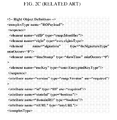
- Figure 2C is a diagram showing the extensible Markup Language (XML) schema of an RO in the related art OMA DRM system.
- XML extensible Markup Language
- the OMA DRM system of Figure 2A will be described first. Three elements, that is, a playback device 30, an RO issuance authority 20, and a content provision authority 40, operate in conjunction with each other.
- the playback device 30 includes a DRM agent 32 that performs DRM-related operation, a storage unit 34 that stores DRM content, and a playback unit 36 that plays back the DRM content.
- the function of the DRM agent 32 is defined in the OMA DRM, and the functions of the storage unit 34 and the playback unit 36 are excluded from the technical range handled by the OMA DRM.
- the content provision authority 40 provides the DRM content in an encrypted form.
- the RO issuance authority 20 operates in conjunction with the content provision authority 40 and provides an RO for playing back the DRM content.
- the playback device 30 including the DRM agent 32, registers itself with the RO issuance authority to use the OMA DRM system at operation S21, and receives a response for the registration at operation S22.
- the registered playback device 30 requests a search for the DRM content, which is possessed by the content provision authority 40, through the DRM agent 32 at operation S23, and downloads found DRM content at operation S24.
- the DRM content acquired through the DRM agent 32 is stored in the storage unit 34 of the playback device 30 at operation S26.
- the DRM agent 32 requests an RO, which is necessary for playback, from the RO issuance authority 20 to play back the stored content at operation S27, and receives the requested RO at operation S28.
- the payment of cost for the use of the DRM content may be made at the time at which the RO is acquired.
- the DRM agent 32 extracts an encryption key from the RO to decrypt the encrypted DRM content and performs the decryption thereof at operation S29 and transfers the decrypted content to the playback unit 36 at operation S30, and playback is finally performed at operation S31.
- restrictions on use of the DRM content may be described in the RO, so that DRM agent 32 must perform a function of checking the authority of the use thereof based on details described in the RO.
- the RO in the OMA DRM has the form of an XML type document in which the authority for use of the DRM content will be described.
- the RO is classified as a domain RO or a content RO, which is shown in Figure 2C. Since the XML schema shown in Figure 2C has already been defined in the OMA DRM system to provide details of the RO, a detailed description thereof is omitted here.
- Changeable status information such as restrictions on the number of times the DRM content may be used (for example, for playback and printing), is recorded in the RO, so that the DRM agent 32 must store the RO therein to repeatedly use DRM content within a range of corresponding authority for use.
- This is accompanied by the assumption that the playback device 30 must have a non-volatile storage device therein.
- a playback device that supports a playback function such as a data streaming function
- cases where the non-volatile storage device does not exist occur.
- a problem occurs in that, if DRM content is used only once after the acquisition of an RO from the RO issuance authority, the DRM content cannot be reused.
- the RO for the corresponding DRM content is acquired again from the RO issuance authority, the payment of a charge for repeated acquisition of the RO may be made, therefore a problem occurs in that the payment of the charge is unreasonable for users.
- Exemplary embodiments of the present invention overcome the above disadvantages and other disadvantages not described above. Also, the present invention is not required to overcome the disadvantages described above, and an exemplary embodiment of the present invention may not overcome any of the problems described above.
- the present invention provides a DRM method and system, which, when a playback device that cannot store an RO whose status can be changed is used, can return a changed RO to an RO issuance authority and store it therein without storing the changed RO in the playback device.
- a DRM method including a DRM playback device changing details of a RO; transmitting the changed RO to an RO issuance authority; and the RO issuance authority receiving and storing the transmitted RO.
- the transmitting of the changed RO includes setting a location, at which the changed RO will be stored in the RO issuance authority, to a Uniform Resource Locator (URL), and the DRM playback device transmitting the RO to the RO issuance authority via the URL.
- URL Uniform Resource Locator
- the transmitting of the changed RO may include constructing the changed RO according to a newly defined Rights Object Acquisition Protocol (ROAP) extended protocol format, and transmitting the RO, which has been constructed according to the protocol format, to the RO issuance authority.
- ROAP Rights Object Acquisition Protocol
- a DRM system including a DRM playback device playing back DRM content and an RO issuance authority issuing an RO, wherein the DRM playback device transmits the RO, details of which has been changed, to the RO issuance authority; and the RO issuance authority receives the transmitted RO and stores the received RO therein.
- the DRM playback device includes a DRM agent acquiring information about a location in the RO issuance authority in which the changed RO will be stored; and an RO transmission unit transmitting the RO to the RO issuance authority according to the acquired information about a location.
- the DRM playback device may include a DRM agent transmitting the RO, which has been constructed to conform to a newly defined ROAP extended protocol format, to the RO issuance authority.
- RO may be regarded as a kind of license, including the right to use encrypted content and constraints on the right.
- the RO includes not only the definition of the right to content and the constraints on the right, but also the rights for the RO itself.
- An example of the right to the content may be playback, and examples of the constraints may be the number of times for playback, and playback period limits.
- the rights for the RO itself are exemplified by "move” or "copy.” That is, an RO granting the right to move may be moved to other devices or to a Secure Multimedia Card (SMC), and an RO granting the right to copy may be copied to the other devices or the SMC.
- SMC Secure Multimedia Card
- a first method is to store an RO using a Uniform Resource Locator (URL) obtained by extending the XML schema of the RO, which is illustrated in Figures 3 to 5.
- a second method is to store an RO using a new extension ROAP protocol obtained by extending an ROAP protocol, which is illustrated in Figures 6 to 8.
- URL Uniform Resource Locator
- Figure 3 is a block diagram showing the construction of a DRM system to which, of DRM methods according to an exemplary embodiment of the present invention, a storage method using a URL is applied
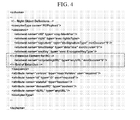
- Figure 4 is a diagram showing an extended RO XML schema used for the method applied to Figure 3
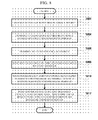
- Figure 5 is a diagram showing the overall flow of the method of Figure 3.
- the DRM system using the first method includes a playback device 300 that functions to transmit an RO, details of which have been changed, to the RO issuance authority, and the RO issuance authority 400 that receives the transmitted RO and stores it therein.
- the playback device 300 includes a playback unit 310, a DRM agent 320, an RO transmission unit 325, and a content storage unit 330.
- the RO issuance authority 400 includes an ROAP server 410, an RO manager 420, an RO server 425, and an RO database 430.
- the playback unit 310 functions to play back the acquired DRM content, and performs the playback according to details and constraints assigned to the RO.
- the DRM agent 320 functions to acquire a path for a location at which the RO will be stored, from the RO issuance authority 400.
- the RO transmission unit 325 functions to transmit the RO to the RO issuance authority 400 according to the location information acquired using the above-described method.
- the RO is transmitted to the RO server 425, which will be described later, using the Hyper Text Transfer Protocol (HTTP) POST method.
- HTTP Hyper Text Transfer Protocol
- the location information is provided by adding the value of an element for a URL to the XML schema, including details of the changed RO.
- An extended XML schema, to which the value of the element is added, is illustrated in a box indicated by the dotted line in Figure 4.
- An URL generally refers to a method of indicating the exact location of a corresponding web document on the Internet.
- an URL refers to a standard instruction system that indicates locations of various resources on the Internet. From Figure 4, it can be seen that the value of the element for the URL is assigned "roUpdatingURL.”
- the content storage unit 330 is a unit in which the content has been stored to play it back, and functions to transfer found content to the playback unit 310 under the control of the DRM agent 320 when the playback of the content is performed.
- the functions of the elements of the RO issuance authority 400 are described.
- the RO server 425 functions to receive the RO transmitted by the RO transmission unit 325.
- the RO manager 420 functions to receive the RO from the RO server 425.
- the RO database 430 functions to receive the RO from the RO manager 420 and store the received RO according to the value of the element for the URL added to the XML schema.
- the ROAP server 410 functions to receive the signal, extract the RO according to the received signal, and transmit the extracted RO to the DRM agent 320 again.
- the operation of setting the storage location of the RO to the URL is performed using a method of adding the value of the element for the URL to an XML schema for the changed RO.
- the result of the addition is illustrated in a box that is indicated by the dotted line in Figure 4.
- the RO server 425 which has received the transmitted location information, transmits the RO to the RO manager 420 at operation S508.
- the RO manager 420 receives the RO, and the received RO is stored at the predetermined location in the RO database 430, which is designated by the URL at operation S510.
- the ROAP server 410 withdraws the RO and transmits the withdrawn RO to the DRM agent 320 at operation S512.
- Figure 6 is a block diagram showing the construction of a DRM system to which, of DRM methods according to an exemplary embodiment of the present invention, a storage method using an extended ROAP is applied
- Figure 7 is a diagram showing the protocol used for the storage method using an extended ROAP, which is one of the DRM methods according to an exemplary embodiment of the present invention
- Figure 8 is a diagram showing the overall flow of the method of Figure 6.
- the construction of the DRM system based on the second method is similar to that of the system based on the first method. That is, the DRM system based on the second method includes the playback device 350 that functions to transmit the RO whose details have been changed to an RO issuance authority 450, and the RO issuance authority 450 that receives the transmitted RO and stores it therein.
- the DRM playback device 350 does not include the RO transmission unit 325.
- the DRM playback device 350 includes the playback unit 310, the DRM agent 320, and the content storage unit 330.
- the RO issuance authority 450 does not include the RO server 425.
- the RO issuance authority 450 includes the ROAP server 410, the RO manager 420, and the RO database 430. For these reasons, the construction of the DRM system based on the second method is somewhat different from that of the system based on the first method.
- the DRM agent 320 processes commands based on the extended ROAP protocol, so that the element that is the RO transmission unit, having a function of transmitting the RO, is not necessary, therefore the DRM agent 320 is responsible for transmitting the RO, which has been constructed so as to conform to the extended ROAP protocol format, to the RO issuance authority 400.
- the first method is not a storage method based on the ROAP protocol, so that the DRM agent 320, which functions to process the commands based on the ROAP protocol, cannot transmit an RO depending on URL information, therefore the RO transmission unit 325 that transmits the RO exists separately.
- the ROAP server 410 of the RO issuance authority 450 functions to receive the RO from the DRM agent 320
- the RO manager 420 functions to receive the RO from the ROAP server 410.
- the RO database 430 functions to receive the RO from the RO manager 420 and store it according to the newly defined ROAP extended protocol format.
- the ROAP server 410 functions to extract the RO and transmit the extracted RO to the DRM agent 320.
- the overall flow of the storage method based on the second method will be described with reference to Figure 8.
- the ROAP schema is extended, and information about the changed RO is constructed according to the ROAP extended protocol format, which is based on a new protocol that is newly defined in advance, at operation S804.
- the term "ROAP extended protocol” refers to a new protocol obtained by extending an existing ROAP schema and newly defining a message format to conform to the ROAP schema, which is illustrated in Figure 7.
- the ROAP extended protocol is used to transmit the RO based on the ROAP protocol.
- the ROAP server 410 of the RO issuance authority 450 receives the transmitted RO and transmits the received RO to the RO manager 420 at operation S808, the RO manager 420 receives the RO and stores it at an assigned location in the RO database 430 according to the extended protocol format at operation S810.
- the operation of the ROAP server 410 withdrawing the RO and transmitting the withdrawn RO to the DRM agent 320 may be additionally performed at operation S812.
- a module means, but is not limited to, a software or hardware component, such as a Field Programmable Gate Array (FPGA) or Application Specific Integrated Circuit (ASIC), which performs certain tasks.
- a module may advantageously be configured to reside on the addressable storage medium and be configured to execute on one or more processors.
- a module may include, by way of example, components, such as software components, object-oriented software components, class components and task components, processes, functions, attributes, procedures, subroutines, segments of program code, drivers, firmware, microcode, circuitry, data, databases, data structures, tables, arrays, and variables.
- components such as software components, object-oriented software components, class components and task components, processes, functions, attributes, procedures, subroutines, segments of program code, drivers, firmware, microcode, circuitry, data, databases, data structures, tables, arrays, and variables.
- the functionality provided for in the components and modules may be combined into fewer components and modules or may be further separated into additional components and modules.
- components and modules may be implemented to operate on one or more Central Processing Units (CPUs) residing in a device or a security multimedia card.
- CPUs Central Processing Units
- the storage location of the RO which is assumed by the OMA DRM system, is not limited to the playback device, and the RO can be assigned to the RO issuance authority and stored and managed therein in the case where a playback device, in which a permanent storage device is not provided, is used.
Landscapes
- Engineering & Computer Science (AREA)
- Theoretical Computer Science (AREA)
- Software Systems (AREA)
- Physics & Mathematics (AREA)
- General Engineering & Computer Science (AREA)
- General Physics & Mathematics (AREA)
- Computer Security & Cryptography (AREA)
- Multimedia (AREA)
- Technology Law (AREA)
- Computer Hardware Design (AREA)
- Mathematical Physics (AREA)
- Databases & Information Systems (AREA)
- Data Mining & Analysis (AREA)
- Storage Device Security (AREA)
- Management, Administration, Business Operations System, And Electronic Commerce (AREA)
- Two-Way Televisions, Distribution Of Moving Picture Or The Like (AREA)
Applications Claiming Priority (1)
| Application Number | Priority Date | Filing Date | Title |
|---|---|---|---|
| KR1020050107134A KR100746014B1 (ko) | 2005-11-09 | 2005-11-09 | 디지털 저작권 관리 방법 및 시스템 |
Publications (2)
| Publication Number | Publication Date |
|---|---|
| EP1785904A2 true EP1785904A2 (de) | 2007-05-16 |
| EP1785904A3 EP1785904A3 (de) | 2010-12-22 |
Family
ID=37806610
Family Applications (1)
| Application Number | Title | Priority Date | Filing Date |
|---|---|---|---|
| EP06123324A Ceased EP1785904A3 (de) | 2005-11-09 | 2006-11-01 | Verwaltungssystem und Methode für digitale Rechte |
Country Status (5)
| Country | Link |
|---|---|
| US (1) | US20070112679A1 (de) |
| EP (1) | EP1785904A3 (de) |
| JP (1) | JP2007133877A (de) |
| KR (1) | KR100746014B1 (de) |
| CN (1) | CN100472549C (de) |
Families Citing this family (8)
| Publication number | Priority date | Publication date | Assignee | Title |
|---|---|---|---|---|
| US7610630B2 (en) * | 2002-03-05 | 2009-10-27 | Panasonic Corporation | Method of transferring information specifying a tool utilized for processing a content protected by IPMP |
| CN100533452C (zh) * | 2006-06-26 | 2009-08-26 | 国际商业机器公司 | 用于数字权利管理的方法和装置 |
| KR101000693B1 (ko) * | 2008-10-21 | 2010-12-10 | 엘지전자 주식회사 | 디지털 저작권 관리에서 사용권리 이동 방법 |
| US9015611B2 (en) * | 2009-03-23 | 2015-04-21 | Adobe Systems Incorporated | Transferring component hierarchies between applications |
| KR101649528B1 (ko) * | 2009-06-17 | 2016-08-19 | 엘지전자 주식회사 | 메모리 카드에 저장되어 있는 권리를 업그레이드하는 방법 및 장치 |
| US10657507B2 (en) * | 2010-05-17 | 2020-05-19 | Adobe Inc. | Migration between digital rights management systems without content repackaging |
| US9184917B2 (en) * | 2011-05-27 | 2015-11-10 | Google Technology Holdings LLC | Method and system for registering a DRM client |
| KR101306996B1 (ko) * | 2011-11-22 | 2013-09-16 | 주식회사 디알엠인사이드 | 전자책 저작권 보호시스템에서의 라이선스 생성 방법, 그 관리 방법 및 이를 적용한 전자책 열람 장치 |
Citations (1)
| Publication number | Priority date | Publication date | Assignee | Title |
|---|---|---|---|---|
| US20040133448A1 (en) | 2002-12-20 | 2004-07-08 | Akio Higashi | Content history log collecting system, terminal device and server device |
Family Cites Families (20)
| Publication number | Priority date | Publication date | Assignee | Title |
|---|---|---|---|---|
| US5892900A (en) * | 1996-08-30 | 1999-04-06 | Intertrust Technologies Corp. | Systems and methods for secure transaction management and electronic rights protection |
| US6226618B1 (en) * | 1998-08-13 | 2001-05-01 | International Business Machines Corporation | Electronic content delivery system |
| US6697948B1 (en) * | 1999-05-05 | 2004-02-24 | Michael O. Rabin | Methods and apparatus for protecting information |
| US7346582B2 (en) * | 1999-12-21 | 2008-03-18 | Sony Corporation | Electronic money, electronic use right, charging system, information processing apparatus, and reproducing method and reproduction control method of contents data |
| JP2002073421A (ja) * | 2000-08-31 | 2002-03-12 | Matsushita Electric Ind Co Ltd | ライセンス発行装置、コンテンツ再生装置、ライセンス発行方法、およびコンテンツ再生方法 |
| JP2004521414A (ja) * | 2000-12-08 | 2004-07-15 | 松下電器産業株式会社 | 配信装置、端末装置、及びこれらで用いられるプログラム、方法。 |
| JP2002229991A (ja) * | 2001-01-31 | 2002-08-16 | Fujitsu Ltd | サーバ,ユーザ端末,情報提供サービスシステムおよび情報提供サービス方法 |
| JP2003085321A (ja) * | 2001-09-11 | 2003-03-20 | Sony Corp | コンテンツ利用権限管理システム、コンテンツ利用権限管理方法、および情報処理装置、並びにコンピュータ・プログラム |
| JP2005532610A (ja) * | 2002-03-14 | 2005-10-27 | コンテントガード ホールディングズ インコーポレイテッド | 変調された信号を使用して使用権を表現するシステム及び方法 |
| KR100551892B1 (ko) * | 2002-06-21 | 2006-02-13 | 주식회사 케이티 | 라이센스 발급 장치 및 그를 이용한 디지털 저작권 관리시스템 및 그 방법 |
| US7827156B2 (en) * | 2003-02-26 | 2010-11-02 | Microsoft Corporation | Issuing a digital rights management (DRM) license for content based on cross-forest directory information |
| US20040177044A1 (en) * | 2003-03-03 | 2004-09-09 | General Instrument Corporation | Processing of copy control information for digital rights management |
| JP2005018378A (ja) * | 2003-06-25 | 2005-01-20 | Sony Corp | 情報サーバ、情報機器、情報処理システム、情報処理方法および情報処理プログラム |
| KR100567827B1 (ko) * | 2003-10-22 | 2006-04-05 | 삼성전자주식회사 | 휴대용 저장 장치를 사용하여 디지털 저작권을 관리하는방법 및 장치 |
| US20050131831A1 (en) * | 2003-12-11 | 2005-06-16 | Belin Fieldson | Web-based digital rights management (DRM) encoder |
| KR101254209B1 (ko) * | 2004-03-22 | 2013-04-23 | 삼성전자주식회사 | 디바이스와 휴대용 저장장치간에 권리 객체를 이동,복사하는 방법 및 장치 |
| JP4487607B2 (ja) * | 2004-03-23 | 2010-06-23 | ソニー株式会社 | 情報処理システム、情報処理装置および方法、記録媒体、並びにプログラム |
| KR20050096040A (ko) * | 2004-03-29 | 2005-10-05 | 삼성전자주식회사 | 휴대형 저장장치와 디바이스간에 디지털 저작권 관리를이용한 콘텐츠 재생방법 및 장치와, 이를 위한 휴대형저장장치 |
| KR101100391B1 (ko) * | 2004-06-01 | 2012-01-02 | 삼성전자주식회사 | 휴대형 저장장치와 디바이스간에 디지털 저작권 관리를이용한 콘텐츠 재생방법 및 장치와, 이를 위한 휴대형저장장치 |
| KR100677344B1 (ko) * | 2004-07-29 | 2007-02-02 | 엘지전자 주식회사 | 권리객체 처리를 위한 메시지 및 이를 이용한 권리객체 처리 방법 및 시스템 |
-
2005
- 2005-11-09 KR KR1020050107134A patent/KR100746014B1/ko not_active Expired - Fee Related
-
2006
- 2006-11-01 EP EP06123324A patent/EP1785904A3/de not_active Ceased
- 2006-11-08 CN CNB2006101444880A patent/CN100472549C/zh not_active Expired - Fee Related
- 2006-11-08 JP JP2006302386A patent/JP2007133877A/ja active Pending
- 2006-11-09 US US11/594,765 patent/US20070112679A1/en not_active Abandoned
Patent Citations (1)
| Publication number | Priority date | Publication date | Assignee | Title |
|---|---|---|---|---|
| US20040133448A1 (en) | 2002-12-20 | 2004-07-08 | Akio Higashi | Content history log collecting system, terminal device and server device |
Also Published As
| Publication number | Publication date |
|---|---|
| CN100472549C (zh) | 2009-03-25 |
| CN1963833A (zh) | 2007-05-16 |
| KR100746014B1 (ko) | 2007-08-06 |
| EP1785904A3 (de) | 2010-12-22 |
| US20070112679A1 (en) | 2007-05-17 |
| JP2007133877A (ja) | 2007-05-31 |
| KR20070049874A (ko) | 2007-05-14 |
Similar Documents
| Publication | Publication Date | Title |
|---|---|---|
| KR100467929B1 (ko) | 디지털 컨텐츠의 보호 및 관리를 위한 시스템 | |
| JP4742682B2 (ja) | コンテンツ保護装置及びコンテンツ保護解除装置 | |
| TWI220620B (en) | Method of protecting and managing digital contents and system for using thereof | |
| KR101219839B1 (ko) | 콘텐츠 저작권 관리 시스템에서의 유연한 라이센싱아키텍처 | |
| CN109376504A (zh) | 一种基于区块链技术的图片隐私保护方法 | |
| EP1517216A2 (de) | Verfahren zum Einräumen von DRM Lizenzen das mehrere Geräte unterstützt | |
| US20040205333A1 (en) | Method and system for digital rights management | |
| KR20130086380A (ko) | 인터넷 사이트에 업로드되는 멀티미디어에서 사용자의 프라이버시를 보호하는 시스템 및 방법 | |
| CN101171592A (zh) | 数字权利管理系统、内容服务器及便携终端 | |
| KR20040054688A (ko) | 컨텐츠 분배 애플리케이션에서의 디지털 저작권 관리 방법및 시스템 | |
| JP2006510975A (ja) | コンテンツ・データをクライアントに提供する方法 | |
| KR20060089632A (ko) | 컴퓨팅 장치상에서 다수의 특성을 포함하는 어플리케이션을사용하기 위한 사용 라이센스를 획득하는 방법 및 그러한어플리케이션과 사용 라이센스 | |
| JP2006504176A (ja) | コンテンツ操作を許可する方法及び装置 | |
| KR20050089746A (ko) | 유연한 권리 템플릿을 이용하여 권리 관리 시스템에서디지털 컨텐츠에 대한 서명된 권리 라벨(srl)을 얻기 | |
| KR20130085560A (ko) | 클라우드 기반의 디지털 저작권 관리 서비스를 제공하는 방법 및 장치와 그 시스템 | |
| US20090044278A1 (en) | Method of transmitting drm content | |
| US20050044397A1 (en) | Method and system for secure time management in digital rights management | |
| US20120096560A1 (en) | Method and a Device for Protecting Private Content | |
| KR20210037274A (ko) | 저작물 관리 장치 및 방법 | |
| US20250310133A1 (en) | Information processing system, information processing method, and program | |
| CN103617378B (zh) | 基于移动智能终端的drm内容保护系统及方法 | |
| Zhang et al. | A novel approach to rights sharing-enabling digital rights management for mobile multimedia | |
| JP2007537509A (ja) | セキュリティー保障されたコンテンツをインターネットを介して送信する方法 | |
| EP1785904A2 (de) | Verfahren und System zur Verwaltung von digitalen Rechten | |
| KR20090089673A (ko) | 디지털 콘텐츠의 권리객체 회수 방법 및 시스템 |
Legal Events
| Date | Code | Title | Description |
|---|---|---|---|
| PUAI | Public reference made under article 153(3) epc to a published international application that has entered the european phase |
Free format text: ORIGINAL CODE: 0009012 |
|
| 17P | Request for examination filed |
Effective date: 20061101 |
|
| AK | Designated contracting states |
Kind code of ref document: A2 Designated state(s): AT BE BG CH CY CZ DE DK EE ES FI FR GB GR HU IE IS IT LI LT LU LV MC NL PL PT RO SE SI SK TR |
|
| AX | Request for extension of the european patent |
Extension state: AL BA HR MK YU |
|
| PUAL | Search report despatched |
Free format text: ORIGINAL CODE: 0009013 |
|
| AK | Designated contracting states |
Kind code of ref document: A3 Designated state(s): AT BE BG CH CY CZ DE DK EE ES FI FR GB GR HU IE IS IT LI LT LU LV MC NL PL PT RO SE SI SK TR |
|
| AX | Request for extension of the european patent |
Extension state: AL BA HR MK RS |
|
| 17Q | First examination report despatched |
Effective date: 20120423 |
|
| RAP1 | Party data changed (applicant data changed or rights of an application transferred) |
Owner name: SAMSUNG ELECTRONICS CO., LTD. |
|
| APBK | Appeal reference recorded |
Free format text: ORIGINAL CODE: EPIDOSNREFNE |
|
| APBN | Date of receipt of notice of appeal recorded |
Free format text: ORIGINAL CODE: EPIDOSNNOA2E |
|
| APBR | Date of receipt of statement of grounds of appeal recorded |
Free format text: ORIGINAL CODE: EPIDOSNNOA3E |
|
| APAF | Appeal reference modified |
Free format text: ORIGINAL CODE: EPIDOSCREFNE |
|
| APBT | Appeal procedure closed |
Free format text: ORIGINAL CODE: EPIDOSNNOA9E |
|
| STAA | Information on the status of an ep patent application or granted ep patent |
Free format text: STATUS: THE APPLICATION HAS BEEN REFUSED |
|
| 18R | Application refused |
Effective date: 20161018 |