EP1800151B1 - Lichtpolarisierende feste beschichtungszusammensetzung, optische linse damit und herstellungsverfahren dafür - Google Patents
Lichtpolarisierende feste beschichtungszusammensetzung, optische linse damit und herstellungsverfahren dafür Download PDFInfo
- Publication number
- EP1800151B1 EP1800151B1 EP20050800565 EP05800565A EP1800151B1 EP 1800151 B1 EP1800151 B1 EP 1800151B1 EP 20050800565 EP20050800565 EP 20050800565 EP 05800565 A EP05800565 A EP 05800565A EP 1800151 B1 EP1800151 B1 EP 1800151B1
- Authority
- EP
- European Patent Office
- Prior art keywords
- polarizing
- composition according
- coating layer
- particles
- light
- Prior art date
- Legal status (The legal status is an assumption and is not a legal conclusion. Google has not performed a legal analysis and makes no representation as to the accuracy of the status listed.)
- Expired - Lifetime
Links
Images


Classifications
-
- G—PHYSICS
- G02—OPTICS
- G02B—OPTICAL ELEMENTS, SYSTEMS OR APPARATUS
- G02B5/00—Optical elements other than lenses
- G02B5/30—Polarising elements
-
- G—PHYSICS
- G02—OPTICS
- G02B—OPTICAL ELEMENTS, SYSTEMS OR APPARATUS
- G02B1/00—Optical elements characterised by the material of which they are made; Optical coatings for optical elements
- G02B1/08—Optical elements characterised by the material of which they are made; Optical coatings for optical elements made of polarising materials
-
- G—PHYSICS
- G02—OPTICS
- G02B—OPTICAL ELEMENTS, SYSTEMS OR APPARATUS
- G02B3/00—Simple or compound lenses
-
- Y—GENERAL TAGGING OF NEW TECHNOLOGICAL DEVELOPMENTS; GENERAL TAGGING OF CROSS-SECTIONAL TECHNOLOGIES SPANNING OVER SEVERAL SECTIONS OF THE IPC; TECHNICAL SUBJECTS COVERED BY FORMER USPC CROSS-REFERENCE ART COLLECTIONS [XRACs] AND DIGESTS
- Y10—TECHNICAL SUBJECTS COVERED BY FORMER USPC
- Y10T—TECHNICAL SUBJECTS COVERED BY FORMER US CLASSIFICATION
- Y10T428/00—Stock material or miscellaneous articles
- Y10T428/31504—Composite [nonstructural laminate]
Definitions
- the present invention relates to the field of optical articles polarizing light, in particular optical glasses such as spectacle lenses, and more specifically to the development of solid coatings polarizing light.
- obtaining an optical glass having the property of polarizing light can be achieved (i) by treating the mass of the glass (substrate), for example by dispersing a silver halide in the mass a molten mineral glass, or (ii) coating at least one of the organic or inorganic optical glass surfaces with a layer of a light-polarizing coating.
- light-polarizing polymers have been used for the manufacture of polarizing filters.
- the PET polarizing film also comprises a naphthalene dicarboxylic acid in crystalline or semi-crystalline form, such as poly (ethylene naphthalate), or a copolymer derived from ethylene glycol, from naphthalene dicarboxylic acid or other acids such as terephthalic acid, as described in US Pat. US 5,882,774 .
- a naphthalene dicarboxylic acid in crystalline or semi-crystalline form such as poly (ethylene naphthalate), or a copolymer derived from ethylene glycol, from naphthalene dicarboxylic acid or other acids such as terephthalic acid, as described in US Pat. US 5,882,774 .
- a monomer gel comprising particles of a ferromagnetic material whose surface is covered with a conductive film is prepared.
- the optical glass is then covered, on at least one of its surfaces, with the monomer gel, then the assembly is placed in a magnetic field in order to align the ferromagnetic particles made conductive.
- the monomer (s) contained in the gel is (are) cured, so as to fix the alignments of the ferromagnetic conductive particles in a polymer mass.
- an alkoxylated derivative is used, such as tetraethoxysilane, methyltriethoxysilane, 3-aminopropyltriethoxysilane or trifluoropropyltrimethoxysilane, which is hydrolysed in solution, by the addition of water, to form the gel.
- an alkoxylated derivative such as tetraethoxysilane, methyltriethoxysilane, 3-aminopropyltriethoxysilane or trifluoropropyltrimethoxysilane, which is hydrolysed in solution, by the addition of water, to form the gel.
- a ferromagnetic material exclusively chromium dioxide (CrO 2 ) particles in the form of flakes coated with a conductive metal film such as gold, silver, copper, nickel or tin are described.
- the production of polarizing films based on magnetic particles is also described in the application PCT No. WO 90/13052 .
- the magnetic particles are added to a viscous medium containing one or more pre-polymer or polymeric materials. Then, the viscous medium is applied on a support, in order to form a layer. The assembly is then subjected to a magnetic field, in order to align the magnetic particles, before proceeding to a curing step of the pre-polymer or polymeric materials.
- pre-polymer or polymeric materials mention is made of polyurethanes, acrylics, methacrylics, polyesters such as glycol and phthalate esters, nylons®, polyolefins or, more generally, thermoplastic or thermosetting resins, in particular organic polymer resins.
- magnetic particles used are magnetic particles incorporated in plastic balls, for example polystyrene, said plastic balls also comprising carbon black or other pigments. It is also envisaged to incorporate the material in pigments, or to coat magnetite particles with pigments or opaque filler materials.
- the applicant has shown that, in the manufacture of a solid coating for optical glass, the polarization properties of light are obtained when using, as starting material, a suspension in a solvent, preferably aqueous, containing at the same time particles of a magnetic material and one or more dichroic dyes, with or without creation of a polymer network.
- the Alignment of the magnetic particles also causes the alignment of the molecules of the dye (s).
- the alignment of these two types of compounds is preserved after drying of the liquid film and thus creates a solid coating layer on the surface of the transparent substrate, said layer having excellent light polarization properties.
- particles of a magnetic material do not polarize light when incorporated in a solid coating layer having no oriented matrix, in particular no polymer network.
- the invention therefore relates to a light-polarizing solid coating composition
- a light-polarizing solid coating composition comprising, in suspension in a solvent, (i) particles of at least one magnetic material, (ii) at least one dichroic dye compound and optionally (iii) ) at least one surfactant.
- the solvent is water, better deionized water.
- magnetic material is meant a material having a preferentially permanent magnetic moment, even in the absence of an external magnetic field.
- the magnetic materials that can be used are ferromagnetic or ferrimagnetic materials.
- the ferromagnetic or ferrimagnetic particles may be of any known type, commonly used in the state of the art in light polarization systems.
- Ferromagnetic materials are generally metals or conductive metal alloys such as iron, cobalt, nickel, gadolinium, dysprosium, and various ferrites.
- Ferrimagnetic materials are generally metal oxide ceramics, poorly conductive or insulating.
- the particles of at least one magnetic material used in a composition according to the invention are preferably chosen from particles consisting of Fe 2 O 3 or particles consisting of a material of formula MO.Fe 2 O 3 , in which M signifies Zn, Cd, Fe, Ni, Cu, Co, Mg, Cr or Mn.
- the particles of Fe 2 O 3 are preferably particles of ⁇ -Fe 2 O 3 , also called maghemite.
- the particles may also consist of ferrimagnetic particles of formula MO.Fe 2 O 3 , in which M signifies a metal among those listed above. They may be, for example, CoFe 2 O 4 particles, as illustrated in the examples.
- the particles of at least one magnetic material are in the form of a ferrofluid.
- the term "ferrofluid” means particles of a ferromagnetic or ferrimagnetic material having a very small particle size, ranging from 0.001 ⁇ m to 0.3 ⁇ m, preferably from 0.003 ⁇ m to 0.2 ⁇ m and better still from 0.005 ⁇ m. 0.1 ⁇ m, which have a substantially spherical or elongated shape, and which are suspended in an inert solvent, preferably an aqueous medium, for example deionized water.
- a ferrofluid according to the invention consists of a colloidal suspension of particles of a ferrimagnetic material.
- a ferrofluid according to the invention may be coated with a layer of one or more surfactants in the suspension solution of the particles.
- the term "dichroic dye” means a dye which absorbs light, for a determined wavelength range, from one of the two orthogonal polarization components and which transmits the other orthogonal polarization component.
- a dichroic dye has the property of polarizing light so linear.
- a dichroic dye transmits, at the absorption wavelength, a linearly polarized light beam, characterized in that its vibration plane is determined by the orientation of the molecules of this dye in the medium in which it is contained.
- the dichroic dye compounds included in a solid coating composition according to the invention are chosen from the disodium salt of 4-amino-3 - ((4 '- ((1-hydroxy-4-sulpho-2- naphthalenyl) azo) -3,3'-dimethoxy (1,1'-biphenyl) -4-yl) azo) -1-naphthalene sulfonic acid, C 32 H 30 N 5 NaO 8 S 2 [Direct Violet 51], C 34 H 28 N 6 O 16 S 4 .4 Na [Chicago Skye Blue 6B], C 22 H 16 N 4 O-4- [4- (phenylazo) -1-naphthylazo] phenol [Disperse Orange 13], TCF® (Thin Crystal Film) by Optiva and Sterling Vari-Light® Solution No. 2P dye.
- a composition according to the invention is generally used for the manufacture of an optical glass polarizing light, and particularly for the manufacture of a tinted optical glass, including a solar optical glass.
- the type of dichroic dye, and the number of dichroic dyes, included in a composition as defined above vary according to the type of use sought, ie the final shade of the glass that one seeks to get. It may be noted that the final shade of the polarizing optical glass that is manufactured depends on all the dyes present in the optical glass, namely the dyes present in the polarizing solid coating layer, but also the dyes that can be incorporated into the substrate mass or dyes that may be present in one or more of the additional functional coating layers, distinct from the polarizing solid coating layer.
- a composition for solid coating according to the invention comprises at least two distinct dichroic dyes, and advantageously from two to six, better still from two to four different dichroic dyes.
- the agent (s) surfactant (s) present (s) in the composition for solid coating according to the invention allow a substantially homogeneous statistical distribution of the magnetic particles and the or dyes, throughout the volume of the aqueous suspension, when this composition is prepared.
- the agent (s) surfactant (s) promote the achievement of good alignment of the particles and the or dye (s) in the direction of the magnetic field, in particular by reducing or blocking the formation of particulate aggregates in the suspension.
- Such particulate aggregates must be avoided because such aggregates would necessarily contain many non-aligned particles in the direction of the applied magnetic field, which would significantly reduce the polarization properties of the final solid coating layer light.
- Such aggregates can be made to diffuse light.
- the light scattering induces an at least partial depolarization of the light and can thus lead to reducing or canceling the desired effect.
- a surfactant used in a polarizing solid coating composition according to the invention may be any known surfactant compound or a mixture of such compounds, preferably a surfactant compound which is transparent to light and does not induce aggregation of the other compounds of the solution. .
- a surfactant compound used in a polarizing solid coating composition according to the invention is of the nonionic surfactant compound type (fluorinated, silicone or simply hydrocarbon).
- a surfactant compound is selected from EFKA 3034 and Nonyl Phenol Ethoxylate (NPE).
- the best light polarization properties of the final solid coating layer are obtained with a composition as defined above, for which the ratio by weight of ferrimagnetic particles (solid material) / dichroic dye (s) (solid material) varies from 1/1 to 1/100, better from 1/5 to 1/50, this ratio by weight of dry matter preferably ranging from 1/7 to 1/33.
- the weight ratio is defined according to the magnetic nanoparticles and the dyes used.
- the minimum ratio is the weight ratio below which too few magnetic nanoparticles are present in the final solid film, inducing the alignment of only a part of the dichroic dyes present in the film, the alignment being not optimal.
- the maximum weight ratio is the weight ratio beyond which too few dichroic dyes are present in the final solid film. Even if all the dyes present are aligned, they are too few and the dichroic effect of the film is not optimal.
- the amount of particles of at least one magnetic material varies from 0.1 to 1% by weight, preferably 0.3 to 0.8% by weight.
- the particles of at least one magnetic material consist of spherical particles. It is also possible to use anisotropic particles, in particular particles in the shape of a needle or a cylinder.
- the magnetic particles may be of the core / shell type with a core of a magnetic material and an organic or organic / inorganic shell or shell.
- the coating material may comprise an alkoxysilane type material, preferably an epoxysilane material.
- the particles of at least one ferrimagnetic material have an average particle size ranging from 0.001 ⁇ m to 0.3 ⁇ m, preferably from 0.003 ⁇ m to 0.2 ⁇ m and better still from 0.005 ⁇ m to 0.1 ⁇ m.
- the amount of dichroic dye (s) present in a polarizing solid coating composition according to the invention can vary considerably, depending on the desired final shade for the optical glass. However, too little dichroic dye (s) should be avoided as it negatively affects the polarization properties of the final solid coating layer.
- the particles of magnetic material can cause the orientation of the dichroic dyes, not directly but through a compound acting as a relay.
- this compound which can be in monomeric, oligomeric or preferentially polymeric form which is oriented by the action of the magnetic particles.
- a liquid crystal type compound in "guest host” type systems as described for example in the patent US 6245399 .
- the amount of the dichroic dye (s) varies from 1 to 10%, preferably from 4 to 6% by weight of the coating composition of the invention.
- the amount of surfactant compound (s) present in a solid coating composition according to the invention varies considerably, depending on the type of compound used and its own surfactant properties.
- the amount of the surfactant compound (s) used can be easily determined by those skilled in the art, depending on the nature of the surfactant compound (s) used, using his general knowledge.
- the amount of surfactant compound (s) contained in a solid coating composition according to the invention varies from 0.5 to 2 percent by weight, relative to the total weight of the composition.
- the solvent used to make the polarizing coating composition of the invention is preferably water, more preferably deionized water.
- Said aqueous solution may also comprise one or more colorless solvents which are miscible with water, for example an alcohol, especially an alkanol such as ethanol, methanol, propanol or butanol.
- the polarizing coating composition of the invention may also comprise an oligomeric or polymeric binder soluble in the aforementioned solvent and which cures during or after evaporation of the solvent.
- This binder may optionally comprise reactive functional groups, in particular (meth) acrylate functions, activatable under photoirradiation, which make it possible to crosslink the binder.
- water-soluble binders such as polyvinyl alcohol (PVA), polymethacrylamides are used.
- composition for polarizing coating may comprise polymerizable monomers, preferably under photoirradiation.
- the polarizing coating compositions comprise a photopolymerization initiator.
- polymerizable monomers can be used alone or in combination (mixture) with the aforementioned binder.
- the liquid film is obtained by any technique known per se, particularly in the field of producing coating layers on an optical substrate, such as by dipping or by centrifugation.
- the liquid film is obtained, in step a), by depositing one or more drops of the coating composition according to the invention, followed by centrifugation, the film being formed under the effect of centrifugal force due to rotation of the substrate of the optical article.
- the speed of rotation varies from 500 to 1000 revolutions per minute, for an acceleration ranging from 300 to 5000 revolutions per minute per second ("rpm"), the acceleration being generally 5000 rpm.
- the duration of the centrifugation preferably varies from 10 to 30 seconds.
- step b) the optical article coated with a film of the polarizing coating liquid composition is placed in a magnetic field, the direction of the magnetic field being parallel to the surface of the substrate to be treated.
- drying of said film of step c) is carried out at least partially concomitantly with the action of said magnetic field, and better the action of said field is maintained during the entire drying.
- the magnetic field is maintained the time necessary to obtain the required polarization effect and can therefore vary in large proportions.
- a time of one hour is generally sufficient, but the film of the liquid composition can be subjected to, for example, 24 hours.
- the magnetic field applied in step b) is preferably orientated and of constant value throughout the step.
- a magnetic field whose value varies from 0.01 to 1 Tesla, preferably of the order of 0.2 Tesla, is applied.
- the optical article to be treated is placed, in step b) of the method, between the poles of a permanent magnet.
- the method of the invention has a very great flexibility for producing areas with modulation and / or polarization variation.
- the optical article can be subjected to a spatially modulated magnetic field and / or in time.
- Another embodiment is to cause faster drying of certain areas of the liquid composition film, while preserving the orientation of the magnetic material particles and dichroic dyes in this area.
- This step can be repeated as many times as necessary, depending on the number of different polarization zones that one wishes to achieve.
- the above method comprises an additional step d) of fixing the light-polarizing solid coating layer.
- step d) is carried out by dipping the polarizing optical glass obtained at the end of step c) in a bath of fixing agent.
- BaCl 2 is preferably used as a fixing agent.
- the fixing step d) is carried out in a BaCl 2 bath at a pH ranging from 3 to 4, better at a pH of 3.5, for a period of 5 seconds to 1 minute, better from 10 seconds to 40 seconds, and even better by 20 seconds.
- the actual fixing step is followed by at least one rinsing step, preferably at least three rinsing steps in distilled water, followed by drying, preferably a drying at room temperature, which can be from 3 to 30 minutes, better 15 minutes.
- the binding step allows complexation of the fixing agent with accessible chemical groups of the dichroic dye (s).
- the barium ions are complexed with the anionic chemical groups of the dichroic dye (s).
- the method of the invention is indifferently applied with an optical substrate of mineral glass or organic glass.
- the above method may also comprise, prior to step a), a step of acidic or basic pretreatment of the surface of the optical glass, more specifically in the embodiment in which the step a) is carried out with bare optical glass, comprising no previous coating layer.
- This pre-treatment step of the surface of the glass to be treated improves the conditions of attachment of the polarizing solid coating layer on said surface.
- a pretreatment stage is preferably carried out under acidic conditions, for example with an aqueous solution of acetic acid at a concentration ranging from 2% to 8%. %, better from 3% to 7%, even better at 5% by weight.
- the acid pre-treatment step is conventionally carried out under hot conditions, at a temperature of between 40 ° C. and 60 ° C., the temperature preferably being 48 ° C.
- the duration of the acid pretreatment stage is typically 30 minutes.
- a pre-treatment stage is preferably carried out under basic conditions, for example with an aqueous solution of sodium hydroxide at a concentration ranging from 2% to 8%. better from 3% to 7%, even better at 5% by weight.
- the basic pre-treatment step is conventionally carried out hot, at a temperature of between 40 ° C. and 60 ° C., the temperature preferably being 50 ° C.
- the duration of the basic pre-treatment step is typically 4 to 5 minutes, preferably 4.5 minutes.
- the polarizing coating layer according to the invention has excellent light polarization properties.
- a "CR" spectrum is obtained, which defines the polarization properties of the light of the polarizing coating layer according to the invention.
- dichroic dyes a mixture of sterling dyes
- a CR value of about 20 is obtained.
- dichroic dyes the dye of the company Optiva
- a value of CR greater than 30 is obtained.
- the CR value is very similar, if not identical, for a biplane ophthalmic lens and a corrective ophthalmic lens.
- the polarizing solid coating layer may be deposited directly on the bare substrate or on a substrate already coated with one or more additional functional layers. Also, these additional functional layers can be deposited on the polarizing coating layer according to the invention.
- the polarizing solid coating layer according to the invention is applied directly to the bare glass.
- the polarizing solid coating layer according to the invention is applied to an optical glass whose surface is already coated with one or more functional coating layers, among the functional coating layers conventionally used in the field of optics.
- the polarizing solid coating layer according to the invention which is applied indifferently to a bare glass or an already coated glass of one or more functional coating layers, is covered with one or more additional functional coating layers.
- the above method may also comprise, after step c), or after step b) when step c) is omitted, one or more additional coating steps of the polarizing solid coating layer with one or more additional coating layers.
- the functional coating layer (s), which constitute the final optical glass produced, is (are) generally chosen from conventional coating layers in the field of optics, such as a anti-reflective coating layer, an anti-abrasion coating layer, an anti-shock coating layer, a photochromic coating layer, an opto-electronic coating layer, an electro-photochromic coating layer, a colored coating layer or a layer of printing coating such as a logo.
- the above coating layer (s) is (are) used in the form of a stack in which is incorporated the polarizing coating layer of the invention.
- the total thickness of the stack of the various layers of the anti-reflection (AR), among those indicated above varies from 80 nm to 800 nm.
- the thickness of the abrasion-resistant layer preferably ranges from 1 to 10 micrometers, more preferably from 2 to 6 micrometers.
- the thickness of the anti-shock primer layer preferably ranges from 0.5 to 3 micrometers.
- the invention also relates to a light-polarizing optical glass of which at least one of its surfaces is covered with a layer of a light-polarizing solid coating comprising the combination (i) of particles of a magnetic material and (ii) a dichroic dye compound.
- Said optical glass is preferably obtained according to the method as defined above in the present description.
- the light-polarizing coating layer is obtained from a light-polarizing solid coating composition as defined above in the present description.
- the optical glass according to the invention consists of an ophthalmic lens, preferably a spectacle lens.
- the surface of the optical glass which is covered with a polarizing coating layer according to the invention is the surface opposite the surface located on the side of the eye.
- the optical glass comprises at least one other functional coating layer, chosen from the functional coating layers described above, said other functional coating layer being stacked indifferently above or below the polarizing coating layer. light.
- the other functional coating layer or layers are stacked above the light-polarizing coating layer according to the invention.
- said other coating layer is preferably selected from an anti-reflective layer or an anti-abrasion coating layer.
- An advantage of the invention is to be able to obtain a strong polarizing effect for layers of low thickness (typically of the order of 2 microns or less, when the layer of the polarizing coating does not contain a binder). It is possible to adjust the contrast ratio by increasing the thickness of the layer.
- the Figure 1 represents, for a coating comprising magnetic particles (Berlin Heart Ferrofluid MT25-31) without dichoic dye, microscopy images illustrating the transmission of a polarized light source, respectively parallel to the expected polarization plane ( Figure 1A ) and perpendicular to the expected plane of polarization ( Figure 1 B) .
- the Figure 2 represents, for a coating comprising magnetic particles (Ferrofluid MT25-31 from Berlin Heart) and a mixture of dichoic dyes (Vari-Light from Sterling Optics), microscopy images illustrating the transmission of a polarized light source, respectively in parallel to the expected polarization plane ( Figure 2A ) and perpendicular to the expected plane of polarization ( Figure 2B ).
- magnetic particles Ferrofluid MT25-31 from Berlin Heart
- dichoic dyes Vari-Light from Sterling Optics
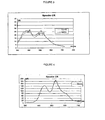
- the Figure 3 illustrates the spectrum of contrast ratio (CR) values, from 350 nm to 800 nm, for a polarizing coating layer according to the invention comprising particles of a magnetic material (Berlin Heart Ferrofluid MT25-31) and a mixture of dyes dichroic (Vari-Light from Sterling).
- a magnetic material Berlin Heart Ferrofluid MT25-311
- a mixture of dyes dichroic Vari-Light from Sterling
- the Figure 4 illustrates the spectrum of contrast ratio (CR) values, from 350 nm to 800 nm, for a polarizing coating layer according to the invention comprising particles of a magnetic material (Berlin Heart Ferrofluid MT25-31) and a mixture of dichroic dyes (TCF from Optiva).
- a magnetic material Bosset Magnetic Fluorescence MT25-311
- TCF dichroic dyes
- the Figure 5 illustrates the spectrum of the values of the contrast ratio (CR), from 350 nm to 800 nm, for a polarizing coating layer according to the invention comprising particles of a magnetic material (ferrofluide EMG 805 Ferrotec) and a mixture dichroic dyes (TCF from Optiva).
- a magnetic material ferrrofluide EMG 805 Ferrotec
- TCF mixture dichroic dyes
- the Figure 6 illustrates the spectrum of the values of the contrast ratio (CR), from 350 nm to 800 nm, for a polarizing coating layer according to the invention comprising particles of a magnetic material (ferrofluid EMG 1111 Ferrotec) and a mixture dichroic dyes (TCF from Optiva).
- a magnetic material ferrrofluid EMG 1111 Ferrotec
- TCF mixture dichroic dyes
- aqueous suspension comprising a ferrofluid of cobalt ferrite (MT-2531 sold by Berlin Heart) was deposited by "spin coating" on a substrate consisting of a mineral biplane glass.
- the film is dried for 24 hours at room temperature between the poles of a permanent magnet (air gap 70 mm, magnetic field of 0.15 Tesla), in order to obtain a solid coating layer.
- a permanent magnet air gap 70 mm, magnetic field of 0.15 Tesla
- the polarization properties were investigated by using a polarizing filter microscope and directing the linearly polarized light, respectively parallel and vertically, with respect to the expected polarization plane of the coating layer. The results are represented on the figure 1 .
- the results show a total transmission of the light polarized by the coating layer, that it is polarized linearly parallel ( Figure 1A ) or vertically ( Figure 1B ) with respect to the expected plane of polarization of said coating layer.
- Polarizing coating layer according to the invention comprising a mixture of dichroic dyes [Vari-Light from the company STERLING]
- a polarizing solid coating composition according to the invention was prepared by preparing a mixture of 0.132 g of ferrofluid (MT25-31, available from Berlin Heart), 6.6 g of the dichroic dye mixture (Vari- Light, marketed by STERLING), and 0.022 g of surfactant (Nonyl Phenol Ethoxylate or NPE, marketed by Sterling Optics).
- the above coating layer composition is spin-coated on each of the two pretreated glass substrates at a speed of 500 rpm, an acceleration of 5000 rpm / sec, for a duration of 30 sec.
- the glasses having a surface coated with a liquid film of the composition for a polarizing coating layer are placed between the two poles of a permanent magnet (70mm gap) applying a magnetic field of 0.15 Tesla whose orientation is parallel to the surface of the article to be treated and undergo a drying step, for 24 hours at room temperature.
- the polarization properties were investigated by using a polarizing filter microscope and directing the linearly polarized light, respectively parallel and vertically, with respect to the expected polarization plane of the coating layer.
- the CR spectrum was determined by measurements made in accordance with ISO 8980-3.
- Table 1 below presents the results of CR measurements, which are also illustrated over the entire spectrum of wavelengths from 350 nm to 800 nm in the Figure 3 .
- Table 1 Measuring CR report ⁇ / u> Sample Parallel TV (%) Perpendicular TV (%) CR Glass (-2,00) 50.89 2.62 19.4 Biplane 52.10 2.45 21.2
- Polarizing coating layer according to the invention comprising a dichroic dye mixture from the company Optiva
- a composition for a polarizing solid coating layer according to the invention was prepared by preparing a mixture of 0.61 g of ferrofluid (MT25-31, sold by Berlin Heart), 15.65 g of the dichroic dye mixture TCF (Thin Crystal Film) of Optiva, and 0.182g of surfactant (Nonyl Phenol Ethoxylate or NPE, marketed by Sterling Optics Inc.) and 15.67g of distilled water.
- ferrofluid MT25-31, sold by Berlin Heart
- TCF Thin Crystal Film
- surfactant Nonyl Phenol Ethoxylate or NPE, marketed by Sterling Optics Inc.
- the above coating layer composition is deposited by centrifugation on each of the two pretreated glass substrates, a speed of 500 rpm, an acceleration of 5000 rpm / sec, for a duration of 10 sec.
- the glasses having a surface coated with a liquid film of the composition for a polarizing coating layer are placed between the two poles of a permanent magnet (70mm air gap and 0.15 Tesla magnetic field) whose orientation the field is parallel and undergo a drying step, for 24 hours at room temperature, under said magnetic field.
- a permanent magnet 70mm air gap and 0.15 Tesla magnetic field
- the thickness of the polarizing coating layer is 1.10 ⁇ m.
- the CR spectrum was determined by measurements made in accordance with ISO 89803.
- Table 2 below presents the results of CR measurements, which are also illustrated over the entire wavelength spectrum from 350 nm to 800 nm in the Figure 4 .
- Table 2 Measuring CR report ⁇ / u> Sample TV parallel (%) TV perpendicular (%) CR Biplane 68.19 0.66 103
- a composition for a polarizing solid coating layer according to the invention was prepared by preparing a mixture consisting of 0.13 g of ferrofluid (EMG 805, sold by Ferrotec), 3.40 g of the dichroic dye mixture TCF (Thin Crystal Film). ) of Optiva, and 0.037g of surfactant (Nonyl Phenol Ethoxylate or NPE, marketed by Sterling Optics Inc. and 3.41 g of distilled water.
- EMG 805 ferrofluid
- TCF Thixin Crystal Film
- surfactant Nonyl Phenol Ethoxylate or NPE, marketed by Sterling Optics Inc.
- the above coating layer composition is spin-coated on each of the two pretreated glass substrates at a rate of 500 rpm, an acceleration of 5000 rpm / sec, for a duration of 10 sec.
- the glasses having a surface coated with a liquid film of the composition for a polarizing coating layer are placed between the two poles of a permanent magnet (70mm air gap and 0.15 Tesla magnetic field) whose orientation the field is parallel and undergo a drying step, for 24 hours at room temperature, under said magnetic field.
- a permanent magnet 70mm air gap and 0.15 Tesla magnetic field
- the thickness of the polarizing coating layer is 0.89 ⁇ m.
- the CR spectrum was determined by measurements made in accordance with ISO 89803.
- Table 3 below presents the results of CR measurements, which are also illustrated over the entire spectrum of wavelengths from 350 nm to 800 nm in the Figure 5 .
- Table 3 CR Report Measurement ⁇ / u> Sample Parallel TV (%) Perpendicular TV (%) CR Biplane 70.42 1.59 44
- a composition for a polarizing solid coating layer according to the invention was prepared by preparing a mixture consisting of 0.21 g of ferrofluid (EMG 1111, sold by Ferrotec), 5.22 g of the dichroic dye mixture TCF (Thin Crystal). Film) of Optiva, and 0.060g of surfactant (Nonyl Phenol Ethoxylate or NPE, marketed by Sterling Optics Inc.) and 5.22g of distilled water.
- EMG 1111 ferrofluid
- TCF Thixin Crystal
- surfactant Nonyl Phenol Ethoxylate or NPE, marketed by Sterling Optics Inc.
- the above coating layer composition is spin-coated on each of the two pretreated glass substrates at a rate of 500 rpm, an acceleration of 5000 rpm / sec, for a duration of 10 sec.
- the glasses having a surface coated with a liquid film of the composition for a polarizing coating layer are placed between the two poles of a permanent magnet (70mm air gap and 0.15 Tesla magnetic field) whose orientation the field is parallel and undergo a drying step, for 24 hours at room temperature, under said magnetic field.
- a permanent magnet 70mm air gap and 0.15 Tesla magnetic field
- the thickness of the polarizing coating layer is 0.72 ⁇ m.
- the CR spectrum was determined by measurements made in accordance with ISO 89803.
- Table 4 below presents the results of the CR measurements, which are also illustrated over the entire spectrum of wavelengths from 350 nm to 800 nm in the Figure 6 .
- Table 4 Measuring CR report ⁇ / u> Sample Parallel TV (%) Perpendicular TV (%) CR Biplane 73,11 1.75 42
- Polarizing coating layer comprising a mixture of dichroic dyes from Optiva and a binder.
- a mixture is prepared by adding 10 g of PVA / water solution, 0.096 g of MT25-31, 2.38 g of Optiva TCF dye and 0.066 g of NPE.
- the biplane lens surface of Orma ® type from Essilor International was pre-treated by soaking in a 5% sodium hydroxide bath at 50 ° C. and then rinsing in water baths.
- the above coating layer composition is spin-coated on the pretreated substrate at a speed of 500 rpm, an acceleration of 5000 rpm / sec, for a duration of 10 sec.
- the glass with a surface coated with a liquid film of the polarizing coating composition is placed in the permanent magnet under the conditions of Example 2 and dried for 24 hours in the magnet at room temperature.
- EXAMPLE 7 Polarizing coating layer according to the invention comprising a mixture of dichroic dyes from the company Optiva.
- composition for polarizing solid coating layer according to the invention was made by depositing said layer on an initial layer of PVA / ferrofluid previously subjected to a magnetic field.
- a mixture is prepared by adding 15.03 g of PVA / water solution to 0.0157 g of MT25-31.
- the above coating layer composition is spin-coated on the pretreated substrate at a speed of 500 rpm, an acceleration of 5000 rpm / sec, for a duration of 10 sec.
- the glass After depositing the solution, the glass is placed in the permanent magnet under the conditions of Example 2 and dried for 24 hours in the magnet at room temperature and a solid PVA / ferrofluid layer is obtained.
- a dye solution is then prepared by mixing 4 g of Optiva TCF dyes with 4 g of distilled water and 0.048 g of NPE.
- This solution is deposited on the solid layer of PVA / ferrofluid by spin coating at a speed of 1000 rpm, an acceleration of 5000 rpm / sec, for a duration of 10 sec.
- the glass is then dried for 24 hours at room temperature.
- the polarization properties of the final glass obtained are measured in the same manner as in Example 2.
Landscapes
- Physics & Mathematics (AREA)
- General Physics & Mathematics (AREA)
- Optics & Photonics (AREA)
- Polarising Elements (AREA)
- Paints Or Removers (AREA)
- Surface Treatment Of Optical Elements (AREA)
- Glass Compositions (AREA)
- Eyeglasses (AREA)
Claims (25)
- Zusammensetzung für eine feste lichtpolarisierende Beschichtung umfassend, in Suspension in einem Lösungsmittel, (i) Partikel aus mindestens einem magnetischen Material, dadurch gekennzeichnet, dass sie (ii) mindestens eine dichroitische Farbstoffverbindung umfasst.
- Zusammensetzung nach Anspruch 1, dadurch gekennzeichnet, dass das Lösungsmittel eine wässrige Lösung ist.
- Zusammensetzung nach Anspruch 1 oder 2, dadurch gekennzeichnet, dass sie mindestens ein Tensid umfasst.
- Zusammensetzung nach einem der vorhergehenden Ansprüche, dadurch gekennzeichnet, dass das magnetische Material ein ferromagnetisches oder ferrimagnetisches Material ist.
- Zusammensetzung nach Anspruch 1, dadurch gekennzeichnet, dass die Partikel aus ferrimagnetischem Material ausgewählt sind unter den Partikeln gebildet aus Fe2O3 oder den Partikeln gebildet aus einem Material der Formel MO.Fe2O3, in weicher M Zn, Cd, Fe, Ni, Cu, Co, Mg, Cr und Mn bedeutet
- Zusammensetzung nach einem der vorhergehenden Ansprüche, dadurch gekennzeichnet, dass die dichroitische(n) Farbstoffverbindung(en) ausgewählt ist (sind) unter dem Dinatriumsalz der 4-Amino-3-((4'-((1-hydroxy-4-sulfo-2-naphthalenyl)azo)-3,3'-dimethoxy(1,1'-biphenyl)-4-yl)azo)-1-naphtalensulfonsäure, C32H30N5NaO8S2 [Dircet Violet 51], das C34H28N6O16S4.4Na [Chicago Skye Blue 6B], C22H16N4O-4-[4-(phenylazo)-1-naphtylazo]phenol [Disperse Orange 13].
- Zusammensetzung nach einem der vorhergehenden Ansprüche, dadurch gekennzeichnet, dass sie 2 bis 4 verschiedene dichroitische Farbstoffverbindungen umfasst.
- Zusammensetzung nach einem der Ansprüche 3 bis 7, dadurch gekennzeichnet, dass die oberflächenaktive(n) Verbindung(en) ausgewählt ist (sind) unter dem EFKA 3034 und dem Nonylphenolethoxylat (NPE).
- Zusammensetzung nach einem der vorhergehenden Ansprüche, dadurch gekennzeichnet, dass das Gewichtsverhältnis, in der Trockensubstanz, magnetische Partikel/dichroitische(r) Farbstoff(e) 1/1 bis 1/100, vorzugsweise 1/5 bis 1/50 and besser 1/7 bis 1/33 ist.
- Zusammensetzung nach einem der vorhergehenden Ansprüche, dadurch gekennzeichnet, dass die Menge an Partikeln aus mindestens einem magnetischem Material von 0,1 bis 1%, vorzugsweise von 0,3 bis 0,8% im Verhältnis zum Gewicht der Zusammensetzung variiert.
- Zusammensetzung nach einem der vorhergehenden Ansprüche, dadurch gekennzeichnet, dass die Partikel aus mindestens einem magnetischen Material aus sphärischen Partikeln bestehen.
- Zusammensetzung nach einem der vorhergehenden Ansprüche, dadurch gekennzeichnet, dass die Partikel aus mindestens einem magnetischen Material eine mittlere Partikelgröße von 0,001 µm bis 0,3 µm, vorzugsweise von 0,003 µm bis 0,2 µm, bestenfalls von 0,005 µm bis 0,1 µm haben.
- Zusammensetzung nach einem der vorhergehenden Ansprüche, dadurch gekennzeichnet, dass die Menge des oder der dichroitischen Farbstoffe(s) von 1 bis 10 Gew.-% vorzugsweise von 4 bis 6 der Zusammensetzung variiert.
- Zusammensetzung nach einem der Ansprüche 3 bis 13, dadurch gekennzeichnet, dass die oberflächeiiaktive(n) Verbindung(en) mit 0,5 bis 2 Gew.-% repräsentiert sind, im Verhältnis zum Gesamtgewicht der Zusammensetzung.
- Zusammensetzung nach einem der vorhergehenden Ansprüche, dadurch gekennzeichnet, dass sie mindestens einen oligomeren oder polymeren Binder umfasst.
- Zusammensetzung nach Anspruch 15, dadurch gekennzeichnet, dass der Binder Polyvinylalkohol ist.
- Zusammensetzung nach einem der Ansprüche 1 bis 14, dadurch gekennzeichnet, dass sie eine Mittlerverbindung bei monomerer, oligomerer oder polymerer Form umfasst, um die Orientierung der dichroitischen Farbstoffe zu provozieren.
- Zusammensetzung nach Anspruch 17, dadurch gekenntzeichnet, dass die Mittierverbindung ein flüssiger Kristall ist.
- Verfahren zur Herstellung eines optischen Artikels, von dem mindestens die eine der Seiten beschichtet ist mit einer Schicht der festen lichtpolarisierenden Beschichtung, besagtes Verfahren umfassend die folgenden Schritte:a) Bilden eines flüssigen Films einer Zusammensetzung für eine feste polarisierende Beschichtung umfassend magnetische Partikel in Suspension in einem Lösungsmittel auf der Oberfläche eines nackten oder mit einer oder mehreren Schichten der funktionellen Beschichtung beschichteten optischen Artikels;b) Exponieren des mit dem flüssigen Film der Zusammensetzung beschichteten optischen Artikels, wie zum Beispiel am Ende des Schrittes a), der Wirkung eines magnetischen Feldes undc) Durchführen der Trocknung von besagtem Film, dadurch gekennzeichnet, dass sich mindestens eine dichroitische Farbstoffverbindung in besagtem flüssigen Film während des Schrittes a) befindet oder auf der Oberfläche des besagten Films nach dem Schritt c) abgelagert wird, vorzugsweise befindet sie sich in besagtem Film während des Schrittes a).
- Verfahren nach Anspruch 19, dadurch gekennzeichnet, dass die Trocknung von besagtem Film des Schrittes c) mindestens teilweise gleichzeitig mit der Wirkung des besagten magnetischen Feldes erfolgt.
- Verfahren nach Anspruch 19 oder 20, dadurch gekennzeichnet, dass es einen zusätzlichen Schritt d) der Fixierung der Schicht der festen lichtpolarisierenden Beschichtung umfasst.
- Verfahren nach einem der Ansprüche 19 bis 21, dadurch gekennzeichnet, dass es, vor dem Schritt a), einen Schritt der sauren oder basischen Vorbehandlung der Oberfläche des optischen Glases umfasst.
- Verfahren nach einem der Ansprüche 19 bis 22, dadurch gekennzeichnet, dass es, nach dem Schritt d) oder nach dem Schritt c), wenn der Schritt d) ausgelassen wird, einen oder mehrere zusätzliche Schritte der Beschichtung der Schicht der festen polarisierenden Beschichtung mit einer oder mehreren zusätzlichen Schichten der Beschichtung umfasst.
- Lichtpolarisierender optischer Artikel, von dem mindestens die eine seiner Oberflächen mit einer Schicht einer festen lichtpolarisierenden Beschichtung umfassend die Verbindung (i) von Partikeln aus einem magnetischen Material und (ii) aus einer dichroitischen Farbstoffverbindung überzogen ist.
- Polarisierender optischer Artikel nach Anspruch 24, dadurch gekennzeichnet, dass die Schicht der festen polarisierenden Beschichtung aus einer Zusammensetzung nach einem der Ansprüche 1 bis 18 erhalten wird.
Applications Claiming Priority (2)
| Application Number | Priority Date | Filing Date | Title |
|---|---|---|---|
| FR0452248A FR2876190B1 (fr) | 2004-10-04 | 2004-10-04 | Composition pour revetement solide polarisant la lumiere verre optique polarisant comprenant un tel revetement, et son procede de fabrication. |
| PCT/FR2005/050800 WO2006037916A1 (fr) | 2004-10-04 | 2005-09-30 | Composition pour revetement solide polarisant la lumiere, verre optique polarisant comprenant un tel revetement, et son procede de fabrication |
Publications (2)
| Publication Number | Publication Date |
|---|---|
| EP1800151A1 EP1800151A1 (de) | 2007-06-27 |
| EP1800151B1 true EP1800151B1 (de) | 2011-03-23 |
Family
ID=34949284
Family Applications (1)
| Application Number | Title | Priority Date | Filing Date |
|---|---|---|---|
| EP20050800565 Expired - Lifetime EP1800151B1 (de) | 2004-10-04 | 2005-09-30 | Lichtpolarisierende feste beschichtungszusammensetzung, optische linse damit und herstellungsverfahren dafür |
Country Status (10)
| Country | Link |
|---|---|
| US (1) | US8062542B2 (de) |
| EP (1) | EP1800151B1 (de) |
| JP (1) | JP4772054B2 (de) |
| KR (1) | KR20070073768A (de) |
| CN (1) | CN100523882C (de) |
| AT (1) | ATE503200T1 (de) |
| CA (1) | CA2583141A1 (de) |
| DE (1) | DE602005027094D1 (de) |
| FR (1) | FR2876190B1 (de) |
| WO (1) | WO2006037916A1 (de) |
Families Citing this family (4)
| Publication number | Priority date | Publication date | Assignee | Title |
|---|---|---|---|---|
| ES2718461T3 (es) * | 2007-02-28 | 2019-07-02 | Corning Inc | Artículos polarizantes de la luz y método de confección de los mismos |
| CN104583843B (zh) * | 2012-08-21 | 2016-12-14 | 三菱瓦斯化学株式会社 | 太阳镜用偏光透镜 |
| JP6706898B2 (ja) * | 2015-10-20 | 2020-06-10 | 株式会社三城ホールディングス | 視力矯正機具 |
| DE102018002384C5 (de) | 2018-03-22 | 2022-03-10 | Shape Engineering GmbH | Verfahren zur Herstellung eines Brillenglases |
Family Cites Families (19)
| Publication number | Priority date | Publication date | Assignee | Title |
|---|---|---|---|---|
| US1873951A (en) * | 1925-11-10 | 1932-08-30 | Gen Electric | Polarizers of light and a method of preparation |
| US3927930A (en) * | 1972-07-10 | 1975-12-23 | Polaroid Corp | Light polarization employing magnetically oriented ferrite suspensions |
| JPS56101150A (en) * | 1980-01-16 | 1981-08-13 | Mita Ind Co Ltd | One-component magnetic developer for developing and transferring positive charge image |
| JPS62267703A (ja) * | 1986-05-16 | 1987-11-20 | Saiteku Kk | 着色偏光板 |
| US5104210A (en) * | 1989-04-24 | 1992-04-14 | Monsanto Company | Light control films and method of making |
| NL8901167A (nl) * | 1989-05-10 | 1990-12-03 | Philips Nv | Methode voor de vervaardiging van een polarisatiefilter, een aldus verkregen polarisatiefilter en een display dat voorzien is van het polarisatiefilter. |
| JPH04325423A (ja) * | 1991-04-25 | 1992-11-13 | Hoya Corp | 偏光ガラスの製造方法 |
| US5882774A (en) | 1993-12-21 | 1999-03-16 | Minnesota Mining And Manufacturing Company | Optical film |
| US5671211A (en) * | 1994-11-24 | 1997-09-23 | Fuji Xerox Co., Ltd. | Data recording medium |
| US5943156A (en) | 1997-04-25 | 1999-08-24 | Tdk Corporation | Polarizing plate and method of manufacturing polarizing plate |
| RU2124746C1 (ru) * | 1997-08-11 | 1999-01-10 | Закрытое акционерное общество "Кванта Инвест" | Дихроичный поляризатор |
| EP0961175B1 (de) * | 1998-05-26 | 2006-01-25 | Canon Kabushiki Kaisha | Toner mit negativer triboelektrischer Aufladbarkeit und Bildherstellungsverfahren |
| US6245399B1 (en) | 1998-10-14 | 2001-06-12 | 3M Innovative Properties Company | Guest-host polarizers |
| RU2155978C2 (ru) * | 1998-10-28 | 2000-09-10 | ОПТИВА, Инк. | Дихроичный поляризатор и способ его изготовления |
| JP2002180052A (ja) * | 2000-12-14 | 2002-06-26 | Fuji Photo Film Co Ltd | 水溶性二色性色素、光学フイルム、偏光素子、二色性色素のミセルを配向させる方法および光学フイルムの製造方法 |
| JP2002293943A (ja) * | 2001-03-29 | 2002-10-09 | Mitsui Chemicals Inc | ポリ乳酸系樹脂の配向方法及び光学素子 |
| RU2207603C2 (ru) * | 2001-06-04 | 2003-06-27 | Хан Ир Гвон | Оптическое устройство для получения и/или преобразования поляризованного электромагнитного излучения и оптическое устройство в виде жидкокристаллического дисплея |
| US6788452B2 (en) * | 2001-06-11 | 2004-09-07 | Sipix Imaging, Inc. | Process for manufacture of improved color displays |
| US20100279125A1 (en) * | 2009-04-29 | 2010-11-04 | Kent State University | Film comprising substrate-free polymer dispersed liquid crystal; fiber, fabric, and device thereof; and methods thereof |
-
2004
- 2004-10-04 FR FR0452248A patent/FR2876190B1/fr not_active Expired - Fee Related
-
2005
- 2005-09-30 US US11/576,670 patent/US8062542B2/en active Active
- 2005-09-30 CA CA 2583141 patent/CA2583141A1/fr not_active Abandoned
- 2005-09-30 WO PCT/FR2005/050800 patent/WO2006037916A1/fr not_active Ceased
- 2005-09-30 KR KR1020077007746A patent/KR20070073768A/ko not_active Ceased
- 2005-09-30 EP EP20050800565 patent/EP1800151B1/de not_active Expired - Lifetime
- 2005-09-30 CN CNB2005800414415A patent/CN100523882C/zh not_active Expired - Fee Related
- 2005-09-30 JP JP2007534066A patent/JP4772054B2/ja not_active Expired - Fee Related
- 2005-09-30 AT AT05800565T patent/ATE503200T1/de not_active IP Right Cessation
- 2005-09-30 DE DE200560027094 patent/DE602005027094D1/de not_active Expired - Lifetime
Also Published As
| Publication number | Publication date |
|---|---|
| US8062542B2 (en) | 2011-11-22 |
| JP4772054B2 (ja) | 2011-09-14 |
| EP1800151A1 (de) | 2007-06-27 |
| US20080111098A1 (en) | 2008-05-15 |
| ATE503200T1 (de) | 2011-04-15 |
| FR2876190A1 (fr) | 2006-04-07 |
| DE602005027094D1 (de) | 2011-05-05 |
| KR20070073768A (ko) | 2007-07-10 |
| WO2006037916A1 (fr) | 2006-04-13 |
| FR2876190B1 (fr) | 2006-12-08 |
| CA2583141A1 (fr) | 2006-04-13 |
| CN101069110A (zh) | 2007-11-07 |
| JP2008516268A (ja) | 2008-05-15 |
| CN100523882C (zh) | 2009-08-05 |
Similar Documents
| Publication | Publication Date | Title |
|---|---|---|
| EP2310883B1 (de) | Optischer artikel mit hervorragenden transmissionseigenschaften und mit antistatik-schicht zur begrenzung von interferenzsäumen, und sein herstellungsverfahren | |
| EP0100705A1 (de) | Transparente und polarisierende beschichtete Gläser und Verfahren zu deren Herstellung | |
| EP1842087B1 (de) | Verfahren zum färben einer optischen linse mit einem druckprimer und optische farblinse mit einem derartigen druckprimer | |
| WO1995007474A1 (en) | Polarizer, polarizing plate and process for production thereof | |
| WO2014185314A1 (ja) | 反射防止フィルム、偏光板、カバーガラス、画像表示装置、反射防止フィルムの製造方法、反射防止フィルム清掃用布、反射防止フィルムと清掃用布を含むキット、反射防止フィルムの清掃方法 | |
| JP5223695B2 (ja) | 不溶化異方性膜並びに不溶化処理液及びそれを用いた不溶化異方性膜の製造方法並びにそれを用いた光学素子 | |
| CN1478208A (zh) | 光学器件 | |
| US20090310067A1 (en) | Optical filter | |
| EP1362014B1 (de) | Verfahren zum beimengen von eines zusatzes in eine auf ein substrat gebildete dünnschicht und dessen verwendung in der ophthalmischen optik | |
| FR2894340A1 (fr) | Procede de fabrication d'un article optique et article ainsi obtenu | |
| KR20080042029A (ko) | 컬러필터 및 이것을 사용한 액정표시장치 | |
| WO2006037916A1 (fr) | Composition pour revetement solide polarisant la lumiere, verre optique polarisant comprenant un tel revetement, et son procede de fabrication | |
| US9322968B2 (en) | Polarizing lens | |
| JPH07261024A (ja) | 偏光素子、偏光板およびその製造方法 | |
| CN115437056A (zh) | 偏光板和包括偏光板的光学显示设备 | |
| WO2010034936A1 (fr) | Revêtements anti-reflet comprenant des objets dispersés présentant deux domaines séparés ayant des indices de réfraction distincts | |
| US20200110209A1 (en) | Methods of forming optical articles | |
| WO2021166746A1 (ja) | 液晶ナノカプセル及びその製造方法、並びに該液晶ナノカプセルを有する液晶ナノカプセル分散液及び液晶表示素子 | |
| CN118584573A (zh) | 偏光板和光学显示设备 | |
| US12072520B2 (en) | Linear polarizers and methods of forming a linear polarizer | |
| FR2869039A1 (fr) | Latex colore par des pigments et procede de traitement d'un substrat transparent a l'aide dudit latex colore. | |
| CN119126288A (zh) | 偏光板及光学显示设备 | |
| TW200916910A (en) | Liquid crystal display element | |
| JP2004004944A (ja) | 偏光素子、偏光板およびその製造方法 | |
| TW202609351A (zh) | 光學積層體之製造方法及影像顯示裝置之製造方法 |
Legal Events
| Date | Code | Title | Description |
|---|---|---|---|
| PUAI | Public reference made under article 153(3) epc to a published international application that has entered the european phase |
Free format text: ORIGINAL CODE: 0009012 |
|
| 17P | Request for examination filed |
Effective date: 20070504 |
|
| AK | Designated contracting states |
Kind code of ref document: A1 Designated state(s): AT BE BG CH CY CZ DE DK EE ES FI FR GB GR HU IE IS IT LI LT LU LV MC NL PL PT RO SE SI SK TR |
|
| DAX | Request for extension of the european patent (deleted) | ||
| GRAP | Despatch of communication of intention to grant a patent |
Free format text: ORIGINAL CODE: EPIDOSNIGR1 |
|
| GRAS | Grant fee paid |
Free format text: ORIGINAL CODE: EPIDOSNIGR3 |
|
| GRAA | (expected) grant |
Free format text: ORIGINAL CODE: 0009210 |
|
| AK | Designated contracting states |
Kind code of ref document: B1 Designated state(s): AT BE BG CH CY CZ DE DK EE ES FI FR GB GR HU IE IS IT LI LT LU LV MC NL PL PT RO SE SI SK TR |
|
| REG | Reference to a national code |
Ref country code: GB Ref legal event code: FG4D Free format text: NOT ENGLISH |
|
| REG | Reference to a national code |
Ref country code: CH Ref legal event code: EP |
|
| REG | Reference to a national code |
Ref country code: IE Ref legal event code: FG4D |
|
| REF | Corresponds to: |
Ref document number: 602005027094 Country of ref document: DE Date of ref document: 20110505 Kind code of ref document: P |
|
| REG | Reference to a national code |
Ref country code: DE Ref legal event code: R096 Ref document number: 602005027094 Country of ref document: DE Effective date: 20110505 |
|
| REG | Reference to a national code |
Ref country code: NL Ref legal event code: VDEP Effective date: 20110323 |
|
| PG25 | Lapsed in a contracting state [announced via postgrant information from national office to epo] |
Ref country code: LV Free format text: LAPSE BECAUSE OF FAILURE TO SUBMIT A TRANSLATION OF THE DESCRIPTION OR TO PAY THE FEE WITHIN THE PRESCRIBED TIME-LIMIT Effective date: 20110323 Ref country code: GR Free format text: LAPSE BECAUSE OF FAILURE TO SUBMIT A TRANSLATION OF THE DESCRIPTION OR TO PAY THE FEE WITHIN THE PRESCRIBED TIME-LIMIT Effective date: 20110624 Ref country code: LT Free format text: LAPSE BECAUSE OF FAILURE TO SUBMIT A TRANSLATION OF THE DESCRIPTION OR TO PAY THE FEE WITHIN THE PRESCRIBED TIME-LIMIT Effective date: 20110323 Ref country code: SE Free format text: LAPSE BECAUSE OF FAILURE TO SUBMIT A TRANSLATION OF THE DESCRIPTION OR TO PAY THE FEE WITHIN THE PRESCRIBED TIME-LIMIT Effective date: 20110323 |
|
| LTIE | Lt: invalidation of european patent or patent extension |
Effective date: 20110323 |
|
| PG25 | Lapsed in a contracting state [announced via postgrant information from national office to epo] |
Ref country code: BG Free format text: LAPSE BECAUSE OF FAILURE TO SUBMIT A TRANSLATION OF THE DESCRIPTION OR TO PAY THE FEE WITHIN THE PRESCRIBED TIME-LIMIT Effective date: 20110623 Ref country code: AT Free format text: LAPSE BECAUSE OF FAILURE TO SUBMIT A TRANSLATION OF THE DESCRIPTION OR TO PAY THE FEE WITHIN THE PRESCRIBED TIME-LIMIT Effective date: 20110323 Ref country code: FI Free format text: LAPSE BECAUSE OF FAILURE TO SUBMIT A TRANSLATION OF THE DESCRIPTION OR TO PAY THE FEE WITHIN THE PRESCRIBED TIME-LIMIT Effective date: 20110323 Ref country code: SI Free format text: LAPSE BECAUSE OF FAILURE TO SUBMIT A TRANSLATION OF THE DESCRIPTION OR TO PAY THE FEE WITHIN THE PRESCRIBED TIME-LIMIT Effective date: 20110323 Ref country code: CY Free format text: LAPSE BECAUSE OF FAILURE TO SUBMIT A TRANSLATION OF THE DESCRIPTION OR TO PAY THE FEE WITHIN THE PRESCRIBED TIME-LIMIT Effective date: 20110323 |
|
| REG | Reference to a national code |
Ref country code: IE Ref legal event code: FD4D |
|
| PG25 | Lapsed in a contracting state [announced via postgrant information from national office to epo] |
Ref country code: PT Free format text: LAPSE BECAUSE OF FAILURE TO SUBMIT A TRANSLATION OF THE DESCRIPTION OR TO PAY THE FEE WITHIN THE PRESCRIBED TIME-LIMIT Effective date: 20110725 Ref country code: EE Free format text: LAPSE BECAUSE OF FAILURE TO SUBMIT A TRANSLATION OF THE DESCRIPTION OR TO PAY THE FEE WITHIN THE PRESCRIBED TIME-LIMIT Effective date: 20110323 |
|
| PG25 | Lapsed in a contracting state [announced via postgrant information from national office to epo] |
Ref country code: IS Free format text: LAPSE BECAUSE OF FAILURE TO SUBMIT A TRANSLATION OF THE DESCRIPTION OR TO PAY THE FEE WITHIN THE PRESCRIBED TIME-LIMIT Effective date: 20110723 Ref country code: ES Free format text: LAPSE BECAUSE OF FAILURE TO SUBMIT A TRANSLATION OF THE DESCRIPTION OR TO PAY THE FEE WITHIN THE PRESCRIBED TIME-LIMIT Effective date: 20110704 Ref country code: SK Free format text: LAPSE BECAUSE OF FAILURE TO SUBMIT A TRANSLATION OF THE DESCRIPTION OR TO PAY THE FEE WITHIN THE PRESCRIBED TIME-LIMIT Effective date: 20110323 Ref country code: RO Free format text: LAPSE BECAUSE OF FAILURE TO SUBMIT A TRANSLATION OF THE DESCRIPTION OR TO PAY THE FEE WITHIN THE PRESCRIBED TIME-LIMIT Effective date: 20110323 Ref country code: CZ Free format text: LAPSE BECAUSE OF FAILURE TO SUBMIT A TRANSLATION OF THE DESCRIPTION OR TO PAY THE FEE WITHIN THE PRESCRIBED TIME-LIMIT Effective date: 20110323 |
|
| PG25 | Lapsed in a contracting state [announced via postgrant information from national office to epo] |
Ref country code: NL Free format text: LAPSE BECAUSE OF FAILURE TO SUBMIT A TRANSLATION OF THE DESCRIPTION OR TO PAY THE FEE WITHIN THE PRESCRIBED TIME-LIMIT Effective date: 20110323 |
|
| PLBE | No opposition filed within time limit |
Free format text: ORIGINAL CODE: 0009261 |
|
| STAA | Information on the status of an ep patent application or granted ep patent |
Free format text: STATUS: NO OPPOSITION FILED WITHIN TIME LIMIT |
|
| PG25 | Lapsed in a contracting state [announced via postgrant information from national office to epo] |
Ref country code: IE Free format text: LAPSE BECAUSE OF FAILURE TO SUBMIT A TRANSLATION OF THE DESCRIPTION OR TO PAY THE FEE WITHIN THE PRESCRIBED TIME-LIMIT Effective date: 20110323 |
|
| 26N | No opposition filed |
Effective date: 20111227 |
|
| PG25 | Lapsed in a contracting state [announced via postgrant information from national office to epo] |
Ref country code: PL Free format text: LAPSE BECAUSE OF FAILURE TO SUBMIT A TRANSLATION OF THE DESCRIPTION OR TO PAY THE FEE WITHIN THE PRESCRIBED TIME-LIMIT Effective date: 20110323 Ref country code: DK Free format text: LAPSE BECAUSE OF FAILURE TO SUBMIT A TRANSLATION OF THE DESCRIPTION OR TO PAY THE FEE WITHIN THE PRESCRIBED TIME-LIMIT Effective date: 20110323 |
|
| BERE | Be: lapsed |
Owner name: ESSILOR INTERNATIONAL (COMPAGNIE GENERALE D'OPTIQ Effective date: 20110930 |
|
| REG | Reference to a national code |
Ref country code: DE Ref legal event code: R097 Ref document number: 602005027094 Country of ref document: DE Effective date: 20111227 |
|
| PG25 | Lapsed in a contracting state [announced via postgrant information from national office to epo] |
Ref country code: MC Free format text: LAPSE BECAUSE OF NON-PAYMENT OF DUE FEES Effective date: 20110930 |
|
| REG | Reference to a national code |
Ref country code: CH Ref legal event code: PL |
|
| PG25 | Lapsed in a contracting state [announced via postgrant information from national office to epo] |
Ref country code: IT Free format text: LAPSE BECAUSE OF FAILURE TO SUBMIT A TRANSLATION OF THE DESCRIPTION OR TO PAY THE FEE WITHIN THE PRESCRIBED TIME-LIMIT Effective date: 20110323 |
|
| PG25 | Lapsed in a contracting state [announced via postgrant information from national office to epo] |
Ref country code: BE Free format text: LAPSE BECAUSE OF NON-PAYMENT OF DUE FEES Effective date: 20110930 |
|
| PG25 | Lapsed in a contracting state [announced via postgrant information from national office to epo] |
Ref country code: CH Free format text: LAPSE BECAUSE OF NON-PAYMENT OF DUE FEES Effective date: 20110930 Ref country code: LI Free format text: LAPSE BECAUSE OF NON-PAYMENT OF DUE FEES Effective date: 20110930 |
|
| PG25 | Lapsed in a contracting state [announced via postgrant information from national office to epo] |
Ref country code: LU Free format text: LAPSE BECAUSE OF NON-PAYMENT OF DUE FEES Effective date: 20110930 |
|
| PG25 | Lapsed in a contracting state [announced via postgrant information from national office to epo] |
Ref country code: TR Free format text: LAPSE BECAUSE OF FAILURE TO SUBMIT A TRANSLATION OF THE DESCRIPTION OR TO PAY THE FEE WITHIN THE PRESCRIBED TIME-LIMIT Effective date: 20110323 |
|
| PG25 | Lapsed in a contracting state [announced via postgrant information from national office to epo] |
Ref country code: HU Free format text: LAPSE BECAUSE OF FAILURE TO SUBMIT A TRANSLATION OF THE DESCRIPTION OR TO PAY THE FEE WITHIN THE PRESCRIBED TIME-LIMIT Effective date: 20110323 |
|
| REG | Reference to a national code |
Ref country code: FR Ref legal event code: PLFP Year of fee payment: 12 |
|
| REG | Reference to a national code |
Ref country code: FR Ref legal event code: PLFP Year of fee payment: 13 |
|
| REG | Reference to a national code |
Ref country code: DE Ref legal event code: R082 Ref document number: 602005027094 Country of ref document: DE Representative=s name: 24IP LAW GROUP SONNENBERG FORTMANN, DE Ref country code: DE Ref legal event code: R081 Ref document number: 602005027094 Country of ref document: DE Owner name: ESSILOR INTERNATIONAL, FR Free format text: FORMER OWNER: ESSILOR INTERNATIONAL (COMPAGNIE GENERALE D'OPTIQUE), CHARENTON-LE-PONT, FR |
|
| REG | Reference to a national code |
Ref country code: GB Ref legal event code: 732E Free format text: REGISTERED BETWEEN 20180517 AND 20180523 |
|
| REG | Reference to a national code |
Ref country code: FR Ref legal event code: TP Owner name: ESSILOR INTERNATIONAL, FR Effective date: 20180601 |
|
| REG | Reference to a national code |
Ref country code: FR Ref legal event code: PLFP Year of fee payment: 14 |
|
| P01 | Opt-out of the competence of the unified patent court (upc) registered |
Effective date: 20230525 |
|
| PGFP | Annual fee paid to national office [announced via postgrant information from national office to epo] |
Ref country code: GB Payment date: 20230927 Year of fee payment: 19 |
|
| REG | Reference to a national code |
Ref country code: DE Ref legal event code: R082 Ref document number: 602005027094 Country of ref document: DE Representative=s name: SONNENBERG HARRISON PARTNERSCHAFT MBB PATENT- , DE |
|
| PGFP | Annual fee paid to national office [announced via postgrant information from national office to epo] |
Ref country code: FR Payment date: 20230925 Year of fee payment: 19 Ref country code: DE Payment date: 20230927 Year of fee payment: 19 |
|
| REG | Reference to a national code |
Ref country code: DE Ref legal event code: R119 Ref document number: 602005027094 Country of ref document: DE |
|
| GBPC | Gb: european patent ceased through non-payment of renewal fee |
Effective date: 20240930 |
|
| PG25 | Lapsed in a contracting state [announced via postgrant information from national office to epo] |
Ref country code: DE Free format text: LAPSE BECAUSE OF NON-PAYMENT OF DUE FEES Effective date: 20250401 |
|
| PG25 | Lapsed in a contracting state [announced via postgrant information from national office to epo] |
Ref country code: GB Free format text: LAPSE BECAUSE OF NON-PAYMENT OF DUE FEES Effective date: 20240930 |
|
| PG25 | Lapsed in a contracting state [announced via postgrant information from national office to epo] |
Ref country code: FR Free format text: LAPSE BECAUSE OF NON-PAYMENT OF DUE FEES Effective date: 20240930 |