EP1802003B1 - Procédé de communication mobile, station mobile et station de base - Google Patents
Procédé de communication mobile, station mobile et station de base Download PDFInfo
- Publication number
- EP1802003B1 EP1802003B1 EP20050783358 EP05783358A EP1802003B1 EP 1802003 B1 EP1802003 B1 EP 1802003B1 EP 20050783358 EP20050783358 EP 20050783358 EP 05783358 A EP05783358 A EP 05783358A EP 1802003 B1 EP1802003 B1 EP 1802003B1
- Authority
- EP
- European Patent Office
- Prior art keywords
- mobile station
- transmission antenna
- downlink
- antenna diversity
- base station
- Prior art date
- Legal status (The legal status is an assumption and is not a legal conclusion. Google has not performed a legal analysis and makes no representation as to the accuracy of the status listed.)
- Expired - Lifetime
Links
Images






Classifications
-
- H—ELECTRICITY
- H04—ELECTRIC COMMUNICATION TECHNIQUE
- H04B—TRANSMISSION
- H04B7/00—Radio transmission systems, i.e. using radiation field
- H04B7/02—Diversity systems; Multi-antenna system, i.e. transmission or reception using multiple antennas
- H04B7/04—Diversity systems; Multi-antenna system, i.e. transmission or reception using multiple antennas using two or more spaced independent antennas
- H04B7/06—Diversity systems; Multi-antenna system, i.e. transmission or reception using multiple antennas using two or more spaced independent antennas at the transmitting station
- H04B7/0686—Hybrid systems, i.e. switching and simultaneous transmission
- H04B7/0689—Hybrid systems, i.e. switching and simultaneous transmission using different transmission schemes, at least one of them being a diversity transmission scheme
-
- H—ELECTRICITY
- H04—ELECTRIC COMMUNICATION TECHNIQUE
- H04B—TRANSMISSION
- H04B7/00—Radio transmission systems, i.e. using radiation field
- H04B7/02—Diversity systems; Multi-antenna system, i.e. transmission or reception using multiple antennas
- H04B7/04—Diversity systems; Multi-antenna system, i.e. transmission or reception using multiple antennas using two or more spaced independent antennas
- H04B7/06—Diversity systems; Multi-antenna system, i.e. transmission or reception using multiple antennas using two or more spaced independent antennas at the transmitting station
- H04B7/0613—Diversity systems; Multi-antenna system, i.e. transmission or reception using multiple antennas using two or more spaced independent antennas at the transmitting station using simultaneous transmission
-
- H—ELECTRICITY
- H04—ELECTRIC COMMUNICATION TECHNIQUE
- H04B—TRANSMISSION
- H04B7/00—Radio transmission systems, i.e. using radiation field
- H04B7/02—Diversity systems; Multi-antenna system, i.e. transmission or reception using multiple antennas
- H04B7/04—Diversity systems; Multi-antenna system, i.e. transmission or reception using multiple antennas using two or more spaced independent antennas
- H04B7/0413—MIMO systems
- H04B7/0452—Multi-user MIMO systems
-
- H—ELECTRICITY
- H04—ELECTRIC COMMUNICATION TECHNIQUE
- H04L—TRANSMISSION OF DIGITAL INFORMATION, e.g. TELEGRAPHIC COMMUNICATION
- H04L1/00—Arrangements for detecting or preventing errors in the information received
- H04L1/02—Arrangements for detecting or preventing errors in the information received by diversity reception
- H04L1/06—Arrangements for detecting or preventing errors in the information received by diversity reception using space diversity
- H04L1/0618—Space-time coding
- H04L1/0625—Transmitter arrangements
-
- H—ELECTRICITY
- H04—ELECTRIC COMMUNICATION TECHNIQUE
- H04W—WIRELESS COMMUNICATION NETWORKS
- H04W72/00—Local resource management
- H04W72/20—Control channels or signalling for resource management
- H04W72/23—Control channels or signalling for resource management in the downlink direction of a wireless link, i.e. towards a terminal
-
- H—ELECTRICITY
- H04—ELECTRIC COMMUNICATION TECHNIQUE
- H04W—WIRELESS COMMUNICATION NETWORKS
- H04W88/00—Devices specially adapted for wireless communication networks, e.g. terminals, base stations or access point devices
- H04W88/08—Access point devices
-
- H—ELECTRICITY
- H04—ELECTRIC COMMUNICATION TECHNIQUE
- H04B—TRANSMISSION
- H04B7/00—Radio transmission systems, i.e. using radiation field
- H04B7/02—Diversity systems; Multi-antenna system, i.e. transmission or reception using multiple antennas
- H04B7/04—Diversity systems; Multi-antenna system, i.e. transmission or reception using multiple antennas using two or more spaced independent antennas
- H04B7/06—Diversity systems; Multi-antenna system, i.e. transmission or reception using multiple antennas using two or more spaced independent antennas at the transmitting station
- H04B7/0613—Diversity systems; Multi-antenna system, i.e. transmission or reception using multiple antennas using two or more spaced independent antennas at the transmitting station using simultaneous transmission
- H04B7/0615—Diversity systems; Multi-antenna system, i.e. transmission or reception using multiple antennas using two or more spaced independent antennas at the transmitting station using simultaneous transmission of weighted versions of same signal
- H04B7/0619—Diversity systems; Multi-antenna system, i.e. transmission or reception using multiple antennas using two or more spaced independent antennas at the transmitting station using simultaneous transmission of weighted versions of same signal using feedback from receiving side
- H04B7/0621—Feedback content
- H04B7/0634—Antenna weights or vector/matrix coefficients
-
- H—ELECTRICITY
- H04—ELECTRIC COMMUNICATION TECHNIQUE
- H04B—TRANSMISSION
- H04B7/00—Radio transmission systems, i.e. using radiation field
- H04B7/02—Diversity systems; Multi-antenna system, i.e. transmission or reception using multiple antennas
- H04B7/04—Diversity systems; Multi-antenna system, i.e. transmission or reception using multiple antennas using two or more spaced independent antennas
- H04B7/06—Diversity systems; Multi-antenna system, i.e. transmission or reception using multiple antennas using two or more spaced independent antennas at the transmitting station
- H04B7/0613—Diversity systems; Multi-antenna system, i.e. transmission or reception using multiple antennas using two or more spaced independent antennas at the transmitting station using simultaneous transmission
- H04B7/0667—Diversity systems; Multi-antenna system, i.e. transmission or reception using multiple antennas using two or more spaced independent antennas at the transmitting station using simultaneous transmission of delayed versions of same signal
- H04B7/0669—Diversity systems; Multi-antenna system, i.e. transmission or reception using multiple antennas using two or more spaced independent antennas at the transmitting station using simultaneous transmission of delayed versions of same signal using different channel coding between antennas
Definitions
- the present invention relates to a mobile communication method, a mobile station and a base station for improving communication performance (such as a communication capacity and radio communication quality) of a mobile communication system.
- this invention relates to techniques applicable to a "W-CDMA” system and a "CDMA2000” system which are third generation mobile communication systems.
- transmission and reception of signals are performed via radio links (or a downlink and an uplink) between a mobile station and a base station.
- a base station Node-B transmits a signal to a mobile station UE via a downlink (DL), and the mobile station UE transmits a signal to the base station Node-B via an uplink (UL).
- DL downlink
- UL uplink
- the base station Node-B and the mobile station UE use various channels set up on the downlink and the uplink, respectively, for signal transmission.
- the base station Node-B configured to use two antennas to divide transmission power into equal halves and transmit downlink signals (or DL signals) as shown in Fig. 2 (b) can improve radio communication quality, as compared to that configured to simply use a single antenna to transmit a downlink signal (or a DL signal) as shown in Fig. 2(a) .
- the configuration shown in Fig. 2(b) is called a “transmission antenna diversity”
- the base station Node-B that implements the transmission antenna diversity is called a “transmission diversity station”.
- the transmission antenna diversities fall into two broad categories: an "open loop transmission antenna diversity” shown in Fig. 3 (a) and a “closed loop transmission antenna diversity” shown in Fig. 3(b) .
- the transmission diversity station (or the base station Node-B) applies different signal patterns, different weights of transmission power, and the like to two antennas, when transmitting downlink signals with the two antennas.
- the "open loop transmission antenna diversity" shown in Fig. 3 (a) is the system that does not require feedback information from the mobile station UE by applying predetermined signal patterns, predetermined weights of transmission power, and the like.
- the "closed loop transmission antenna diversity" shown in Fig. 3 (b) is the system that regularly receives optimum signal patterns, optimum weights of transmission power, and the like, as feedback information, from the mobile station UE according to the status of radio.
- the "closed loop transmission antenna diversity" is applied to dedicated channels of each mobile station UE, because the application of the “closed loop transmission antenna diversity” can achieve an improvement in the radio communication quality, as compared to the application of the "open loop transmission antenna diversity".
- the "open loop transmission antenna diversity" is applied to a common channel through which a plurality of mobile stations UE receive signals, because the common channel cannot be adapted to feedback information from a specific mobile station UE.
- DPDCH Dedicated Physical Data Channel
- DPCCH Dedicated Physical Control Channel
- communications between the mobile station UE and the base station Node-B are accomplished, by setting the DPDCH/DPCCH for the uplink and the downlink, bidirectionally.
- the transmission antenna diversity can be implemented in the base station Node-B.
- the "STTD (Space Time block coding based Transmission antenna Diversity)" which is a type of open loop transmission antenna diversity, and the "CL TxDivmode-1 (Closed Loop Transmission diversity mode-1)" or the “CL TxDiv mode-2” which is a type of open loop transmission antenna diversity, can be applied to the downlink DPDCH/DPCCH.
- the "CL TxDivmode-1" and the “CL TxDiv mode-2” will hereinafter be collectively called "CL TxDiv”.
- Non-patent Document 1 " 3GPP TS 25.211 v6.0.0,” December 2003
- the 3GPP promotes the study of an "uplink high efficient transmission method (EUL: Enhanced Up Link)", in order to enhance the efficiency of data signal transmission via the uplink.
- EUL uplink high efficient transmission method
- E-HICH E-DCH HARQ Acknowledgement Indicator Channel
- E-RGCH Enhanced Relative Grant CHannel
- E-AGCH Enhanced Absolute Grant CHannel
- the transmission diversity station has to apply the transmission antenna diversity to all downlink channels, the 3GPP does not give specifications that define how the transmission antenna diversity should be applied to the E-HICH, the E-RGCH and the E-AGCH.
- a mobile communication system If a mobile station is in a soft handover region, the mobile station determines weight information for a DPCH and a PDSCH depending on DPCH signals and PDSCH signals received from base stations. Then, the mobile station transmits the determined weight information to the base station. Then, the base station determines weights of the DPCH signals and the PDSCH signals to be transmitted to the mobile station depending on feedback information received from the mobile station and transmits the determined weights to the mobile station along with the DPCH signals and the PDSCH signals, respectively.
- An object of the present invention is to provide a mobile communication method, a mobile station and a base station, which are designed to specify how a transmission diversity station that implements the EUL should apply a transmission antenna diversity to an E-HICH, an E-RGCH and an E-AGCH.
- a first aspect of the present invention is summarized as a mobile communication method for transmitting a signal from a base station to a mobile station via a downlink having the features of claim1.
- the open loop transmission antenna diversity can be STTD.
- a second aspect of the present invention is summarized as a mobile station to which a signal is transmitted from a base station via a downlink having the features of claim 3.
- the open loop transmission antenna diversity can be STTD.
- a third aspect of the present invention is summarized as a base station for transmitting a signal to a mobile station via a downlink having the features of claim 5.
- the open loop transmission antenna diversity can be STTD.
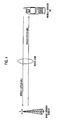
- Fig. 5 illustrates a method for applying a transmission antenna diversity to downlink channels in the mobile communication system according to the first embodiment of the present invention.
- the EUL is applied to an uplink between a base station Node-B and a mobile station UE.
- the mobile station UE is transmitting dedicated data signal to the base station Node-B through an E-DPDCH (Enhanced DPDCH) in the uplink.
- E-DPDCH Enhanced DPDCH
- the base station Node-B is transmitting a dedicated data signal and a dedicated control signal to each mobile station UE through a DPDCH and a DPCCH, respectively, in the downlink.
- the base station Node-B implements the transmission antenna diversity and applies "CL TxDiv" to the downlink DPDCH/DPCCH.
- the base station Node-B is transmitting a dedicated E-HICH to each mobile station in the downlink, since the EUL is applied to the uplink.
- the E-HICH is a physical channel that acts to transmit layer 1 acknowledgement channel dedicated to eachmobile station.
- the E-HICH is configured to transmit "ACK/NACK" as an E-DPDCH acknowledgement signal.
- the "CL TxDiv" should be applied to the E-HICH as in the case of the DPDCH/DPCCH, since the E-HICH originally transmits a signal dedicated to each mobile station.
- the "STTD” rather than the "CL TxDiv” is applied to the E-HICH, so as to enable achieving a further improvement in the radio communication quality, since due to its nature the E-HICH needs to be operated in the region with a low error rate.
- the base station even when applying the "CL TxDiv" to the downlink DPDCH/DPCCH, applies the "STTD" to the E-HICH, thereby makes it possible to improve the radio communication quality in the E-HICH, and thus achieves an increase in the capacity of the mobile communication system.
- Fig. 7 illustrates a method for applying a transmission antenna diversity to downlink channels in the mobile communication system according to the second embodiment of the present invention. Also in the mobile communication system according to the second embodiment, the EUL is applied to an uplink between a base station Node-B and a mobile station UE, as in the case of the mobile communication system according to the first embodiment described above.
- the mobile station UE is transmitting a dedicated data signal to the base station Node-B through an E-DPDCH, in the uplink.
- the base station Node-B is transmitting a dedicated data signal and a dedicated control signal to each mobile station UE through a DPDCH and a DPCCH, respectively, in the downlink.
- the base station Node-B implements the transmission antenna diversity and applies "CL TxDiv" to the downlink DPDCH/DPCCH.
- the base station Node-B is transmitting a dedicated E-RGCH to each mobile station in the downlink, since the EUL is applied to the uplink.
- the E-RGCH is a dedicated physical channel that acts to transmit uplink rate assignment information dedicated to each mobile station.
- the E-RGCH is configured to notify each mobile station of a relative transmission rate (up/down/keep) that directs each mobile station to increase, decrease or keep the transmission rate of uplink user data.
- the transmission rates of the uplink user data include a transmission datablock size (or a maximum transmission data block size) of the uplink user data, and a transmission power ratio (or a maximum transmission power ratio) between the E-DPDCH and the DPCCH.
- the "CL TxDiv" should be applied to the E-RGCH as in the case of the DPDCH/DPCCH, since the E-RGCH originally transmits a signal dedicated to each mobile station.
- the "STTD” rather than the "CL TxDiv” is applied to the E-RGCH, so as to enable achieving a further improvement in the radio communication quality, since due to its nature the E-RGCH needs to be operated in the region having a low error rate.
- the E-RGCH is sometimes transmitted at shorter transmission time intervals TTI, as compared to the downlink DPDCH. Consequently, the application of the "STTD" capable of achieving a diversity effect makes it possible to achieve a further improvement in the radio communication quality.
- the base station (or a transmission diversity station), even when applying the "CL TxDiv" to the downlink DPDCH/DPCCH, applies the "STTD" to the E-RGCH, thereby makes it possible to improve the radio communication quality in the E-RGCH, and thus achieves an increase in the capacity of the mobile communication system.
- Fig. 9 illustrates a method for applying a transmission antenna diversity to downlink channels in the mobile communication system according to the third embodiment of the present invention. Also in the mobile communication system according to the third embodiment, the EUL is applied to an uplink between a base station Node-B and a mobile station UE, as in the case of the mobile communication systems according to the first and second embodiments described above.
- the mobile station UE is transmitting a dedicated data signal to the base stationNode-B through an E-DPDCH, in the uplink.
- the base station Node-B is transmitting a dedicated data signal and a dedicated control signal to each mobile station UE through a DPDCH and a DPCCH, respectively, in the downlink.
- the base station Node-B implements the transmission antenna diversity and applies "CL TxDiv" to the downlink DPDCH/DPCCH.
- the base station Node-B is transmitting a dedicated E-AGCH to each mobile station in the downlink, since the EUL is applied to the uplink.
- the E-AGCH is a dedicated physical channel that acts to transmit uplink rate assignment information dedicated to each mobile station.
- the E-AGCH is configured to notify each mobile station of an absolute transmission rate indicating the transmission rate of uplink user data (or information indicative of the transmission rate).
- the transmission rates of the uplink user data include the transmission data block size (or the maximum transmission data block size) of the uplink user data, and the transmission power ratio (or the maximum transmission power ratio) between the E-DPDCH and the DPCCH.
- the "CL TxDiv" should be applied to the E-AGCH as in the case of the DPDCH/DPCCH, since the E-AGCH originally transmits a signal dedicated to each mobile station.
- the "STTD” rather than the "CL TxDiv” is applied to the E-AGCH, so as to enable achieving a further improvement in the radio communication quality, since due to its nature the E-AGCH needs to be operated in the region having a low error rate.
- the E-AGCH is sometimes transmitted at shorter transmission time intervals TTI, as compared to the downlink DPDCH. Consequently, the application of the "STTD" which is capable of achieving the diversity effect makes it possible to achieve a further improvement in the radio communication quality.
- the base station even when applying the "CL TxDiv" to the downlink DPDCH/DPCCH, applies the "STTD" to the E-AGCH, thereby makes it possible to improve the radio communication quality in the E-AGCH, and thus achieves an increase in the capacity of the mobile communication system.
- the "STTD” is used as a type of transmission diversity in open loop mode.
- the “STTD” can achieve the diversity effect by use of two antennas.
- the "STTD” is diversity technology that makes it possible to perform a maximum ratio combining diversity for signals from two antennas, by manipulating symbol patterns of an antenna #2 of the base station Node-B. In this case, error correcting coding, rate matching and interleaving take place as in the case where the "STTD" is not applied.
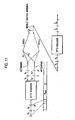
- Fig. 11 shows the general configuration of an STTD encoder and an STTD decoder.
- ⁇ 1 and ⁇ 2 denote fading vectors of propagation paths extending from antennas #1 and #2, respectively.
- the STTD encoder when two symbols (S 1 , S 2 ) are outputted to the antenna #1, two symbols (-S 2 *, S 1 *) are outputted to the antenna #2. Specifically, the STTD encoder reverses the two symbols (S 1 , S 2 ) in time, represents the symbols as conjugate complex numbers, reverses the polarity of the odd-numbered symbol, and outputs the resultant symbols to the antenna #2.
- R 1 ⁇ 1 ⁇ S 1 - ⁇ 2 ⁇ S 2 *
- R 2 ⁇ 1 ⁇ S 2 + ⁇ 2 ⁇ S 1 *
- Fig. 12 shows the block configuration of a transmitter (e.g., the base station Node-B) in which a closed loop transmission diversity is applied to a DPCH.
- a transmitter e.g., the base station Node-B
- channel coding, interleaving and spread take place as in the case where the transmission diversity is not applied.
- the transmitter multiplies a spread complex signal by complex antenna weights w 1 and w 2 , so as to control the phases or amplitudes of the antennas #1 and #2.
- the antenna weights w 1 and w 2 are selected by a receiver (e.g., the mobile station UE), and are transmitted to the transmitter (e.g., the base station Node-B) by using D bit in an FBI field on the uplink DPCCH.
- a receiver e.g., the mobile station UE
- the transmitter e.g., the base station Node-B
- the closed loop transmission diversity includes two modes.
- Fig. 13 gives specifications of the modes.
- N FBD denotes the number of FBI bits in a slot
- N W denotes an FB signal message length
- N po denotes the number of phase bits that exist in each FB signal message
- N ph denotes the number of amplitude bits that exist in each FB signal message.
- the E-RGCH, the E-HICH and the E-AGCH are transmitted at transmission time intervals TTI of 2 ms, which are shorter than transmission time intervals TTI of 10 to 40 ms at which typical dedicated channels are transmitted.
- a dedicated channel transmitted at intervals TTI of 10 ms can compensate for the error in the FBI, by obtaining the gain of closed loop transmission power from any slot other than a slot where the error in the FBI occurs.
- the transmission diversity can possibly be turnedoff for these channels.
- this makes it impossible to equalize outputs from the transmitting antennas and consequently makes it impossible for a transmitting amplifier to operate with efficiency.
- the "STTD" that is an open loop transmission power control is therefore used to obtain diversity gain and thereby enable high-quality reception of each channel, while avoiding the foregoing problems.
- the present invention can provide a mobile communication method, a mobile station and a base station which are designed to specify how a transmission diversity station that implements the EUL should apply a transmission antenna diversity to an E-HICH, an E-RGCH and an E-AGCH.
Landscapes
- Engineering & Computer Science (AREA)
- Computer Networks & Wireless Communication (AREA)
- Signal Processing (AREA)
- Mobile Radio Communication Systems (AREA)
- Radio Transmission System (AREA)
Claims (6)
- Procédé de communication mobile destiné à transmettre un signal de commande et un signal de données à partir d'une station de base à une station mobile via une liaison descendante, caractérisé par :une diversité d'antennes d'émission en boucle fermée est appliquée à un canal de données physique dédié de liaison descendante (DPDCH) et à un canal de commande physique dédié de liaison descendante (DPCCH) ; etune diversité d'antennes d'émission en boucle ouverte est appliquée à un canal de commande dédié de liaison descendante (E-HICH) utilisé dans une liaison montante améliorée, dite liaison EUL, pour transmettre des informations d'accusé de réception de couche-1 individuelle dédiées à chaque station mobile (UE) ou à un canal de commande dédié de liaison descendante (E-RGCH, E-AGCH) utilisé dans la liaison EUL pour transmettre des informations d'attribution de vitesse de liaison montante dédiées à chaque station mobile (UE).
- Procédé de communication mobile selon la revendication 1, dans lequel la diversité d'antennes d'émission en boucle ouverte est une diversité d'antennes de transmission par codage de blocs spatio-temporels, dite diversité STTD.
- Station mobile, dite station UE à laquelle un signal, qui est un signal de commande ou un signal de données, est transmis à partir d'une station de base (Noeud-B) via une liaison descendante, caractérisée par
la station mobile (UE) étant configurée pour recevoir un canal de données physique dédié de liaison descendante (DPDCH) et un canal de commande physique dédié de liaison descendante (DPCCH), auxquels une diversité d'antennes de transmission en boucle fermée est appliquée, et
la station mobile (UE) étant configurée pour recevoir un canal de commande dédié de liaison descendante (E-HICH) utilisé dans une liaison montante améliorée, dite liaison EUL, pour transmettre des informations d'accusé de réception de couche-1 individuelle dédiées à chaque station mobile ou un canal de commande dédié de liaison descendante (E-RGCH, E-AGCH) utilisé dans la liaison EUL pour transmettre des informations d'attribution de vitesse de liaison montante dédiées à chaque station mobile (UE), en appliquant un décodage de diversité d'antennes de transmission en boucle ouverte. - Station mobile selon la revendication 3, dans laquelle la diversité d'antennes de transmission en boucle ouverte est une diversité d'antennes de transmission par codage de blocs spatio-temporels, dite diversité STTD.
- Station de base (Noeud-B) destinée à transmettre un signal, qui est un signal de commande ou un signal de données, à une station mobile (UE) via une liaison descendante, caractérisée par
la station de base (Noeud-B) est configurée pour transmettre un canal de données physique dédié de liaison descendante (DPDCH) et un canal de commande physique dédié de liaison descendante (DPCCH), en appliquant une diversité d'antennes de transmission en boucle fermée, et
la station de base (Noeud-B) étant configurée pour transmettre un canal de commande dédié de liaison descendante (E-HICH) utilisé dans une liaison montante améliorée, dite liaison EUL, pour transmettre des informations d'accusé de réception de couche-1 individuelle dédiées à chaque station mobile (UE) ou un canal de commande dédié de liaison descendante (E-RGCH, E-AGCH) utilisé dans la liaison EUL pour transmettre des informations d'attribution de vitesse de liaison montante dédiées à chaque station mobile (UE), en appliquant une diversité d'antennes de transmission en boucle ouverte. - Station de base selon la revendication 5, dans laquelle la diversité d'antennes de transmission en boucle ouverte est une diversité d'antennes de transmission par codage de blocs spatio-temporels, dite diversité STTD.
Applications Claiming Priority (3)
| Application Number | Priority Date | Filing Date | Title |
|---|---|---|---|
| JP2004272402 | 2004-09-17 | ||
| JP2004272408 | 2004-09-17 | ||
| PCT/JP2005/017195 WO2006030916A1 (fr) | 2004-09-17 | 2005-09-16 | Procédé de communication mobile, station mobile et station de base |
Publications (4)
| Publication Number | Publication Date |
|---|---|
| EP1802003A1 EP1802003A1 (fr) | 2007-06-27 |
| EP1802003A4 EP1802003A4 (fr) | 2008-08-27 |
| EP1802003B1 true EP1802003B1 (fr) | 2012-12-12 |
| EP1802003B8 EP1802003B8 (fr) | 2013-01-23 |
Family
ID=36060163
Family Applications (1)
| Application Number | Title | Priority Date | Filing Date |
|---|---|---|---|
| EP20050783358 Expired - Lifetime EP1802003B8 (fr) | 2004-09-17 | 2005-09-16 | Procédé de communication mobile, station mobile et station de base |
Country Status (8)
| Country | Link |
|---|---|
| US (1) | US8073404B2 (fr) |
| EP (1) | EP1802003B8 (fr) |
| JP (1) | JP4362515B2 (fr) |
| KR (2) | KR100915161B1 (fr) |
| CN (1) | CN101023602B (fr) |
| BR (1) | BRPI0515389B1 (fr) |
| RU (1) | RU2354053C2 (fr) |
| WO (1) | WO2006030916A1 (fr) |
Families Citing this family (7)
| Publication number | Priority date | Publication date | Assignee | Title |
|---|---|---|---|---|
| WO2009044537A1 (fr) * | 2007-10-01 | 2009-04-09 | Panasonic Corporation | Dispositif de radiocommunication et procédé d'étalement de signal de réponse |
| US20110161987A1 (en) * | 2009-12-30 | 2011-06-30 | Anqi Andrew Huang | Scaling notifications of events in a social networking system |
| CN102571173B (zh) * | 2010-12-30 | 2014-08-13 | 联芯科技有限公司 | 开环模式下终端选择传输天线的方法、装置和移动终端 |
| CN102938689B (zh) * | 2011-08-16 | 2017-06-13 | 中兴通讯股份有限公司 | 一种控制上行闭环发射分集的方法和系统 |
| WO2013085353A1 (fr) * | 2011-12-07 | 2013-06-13 | 엘지전자 주식회사 | Procédé pour la surveillance d'un canal de commande sur la liaison descendante, et dispositif sans fil correspondant |
| CN103378958B (zh) * | 2012-04-16 | 2018-01-02 | 马维尔国际有限公司 | E‑hich译码优化方法和设备 |
| WO2013157046A1 (fr) * | 2012-04-20 | 2013-10-24 | 富士通株式会社 | Station sans fil et système de communication sans fil |
Family Cites Families (20)
| Publication number | Priority date | Publication date | Assignee | Title |
|---|---|---|---|---|
| US6088408A (en) * | 1998-11-06 | 2000-07-11 | At & T Corp. | Decoding for generalized orthogonal designs for space-time codes for wireless communication |
| US6643338B1 (en) * | 1998-10-07 | 2003-11-04 | Texas Instruments Incorporated | Space time block coded transmit antenna diversity for WCDMA |
| DE69929788T2 (de) * | 1999-06-18 | 2006-11-09 | Nokia Corp. | Verfahren und vorrichtung zur diversitätsübertragung |
| RU2233032C2 (ru) * | 2000-05-25 | 2004-07-20 | Самсунг Электроникс Ко., Лтд. | Устройство и способ разнесения передачи с использованием более двух антенн |
| KR100526499B1 (ko) * | 2000-08-22 | 2005-11-08 | 삼성전자주식회사 | 두 개 이상 안테나를 사용하는 안테나 전송 다이버시티방법 및 장치 |
| US7062294B1 (en) * | 2000-09-29 | 2006-06-13 | Arraycomm, Llc. | Downlink transmission in a wireless data communication system having a base station with a smart antenna system |
| JP3786918B2 (ja) * | 2000-10-11 | 2006-06-21 | サムスン エレクトロニクス カンパニー リミテッド | 移動通信システムにおける物理ダウンリンク共有チャネルの伝送アンテナアレイ制御装置及び方法 |
| US7499499B2 (en) * | 2001-06-04 | 2009-03-03 | Alcatel-Lucent Usa Inc. | Method for multiple antenna transmission |
| US7174178B2 (en) * | 2001-07-19 | 2007-02-06 | Intel Corporation | Deriving a more accurate estimate from prediction data in closed loop transmit diversity modes |
| JP3540782B2 (ja) * | 2001-08-06 | 2004-07-07 | 三洋電機株式会社 | 無線基地装置、無線端末装置、移動体通信システム、および受信動作制御プログラム |
| KR100615888B1 (ko) * | 2001-08-25 | 2006-08-25 | 삼성전자주식회사 | 안테나 어레이를 포함하는 이동 통신 장치 및 방법 |
| KR100596413B1 (ko) * | 2001-10-24 | 2006-07-03 | 삼성전자주식회사 | 송/수신 다중 안테나를 포함하는 이동 통신 장치 및 방법 |
| KR100548311B1 (ko) * | 2002-06-07 | 2006-02-02 | 엘지전자 주식회사 | 이동 통신 시스템에서의 송신 다이버시티 장치와 방법 |
| KR100640470B1 (ko) * | 2002-06-29 | 2006-10-30 | 삼성전자주식회사 | 패킷 서비스 통신 시스템에서 전송 안테나 다이버시티방식을 사용하여 데이터를 전송 장치 및 방법 |
| US6862434B2 (en) * | 2002-07-26 | 2005-03-01 | Qualcomm Inc. | Transmission diversity systems |
| US8320301B2 (en) * | 2002-10-25 | 2012-11-27 | Qualcomm Incorporated | MIMO WLAN system |
| US7630339B2 (en) * | 2003-01-23 | 2009-12-08 | Qualcomm Incorporated | Methods and apparatus of providing transmit diversity in a multiple access wireless communication system |
| KR100575930B1 (ko) * | 2003-05-16 | 2006-05-02 | 삼성전자주식회사 | 송신다이버시티를 사용하는 이동통신 시스템에 있어송신다이버시티의 방식 전환 장치 및 방법 |
| US7146171B2 (en) * | 2003-05-30 | 2006-12-05 | Nokia Corporation | Method and apparatus providing enhanced reservation access mode for a CDMA reverse channel |
| US7039369B2 (en) * | 2003-10-31 | 2006-05-02 | Mitsubishi Electric Research Laboratories, Inc. | Transmit diversity gain for wireless communications networks |
-
2005
- 2005-09-16 CN CN2005800313560A patent/CN101023602B/zh not_active Expired - Lifetime
- 2005-09-16 JP JP2006535237A patent/JP4362515B2/ja not_active Expired - Lifetime
- 2005-09-16 KR KR1020077008746A patent/KR100915161B1/ko not_active Expired - Lifetime
- 2005-09-16 BR BRPI0515389A patent/BRPI0515389B1/pt active IP Right Grant
- 2005-09-16 US US11/662,901 patent/US8073404B2/en active Active
- 2005-09-16 KR KR1020097010330A patent/KR20090061677A/ko not_active Ceased
- 2005-09-16 EP EP20050783358 patent/EP1802003B8/fr not_active Expired - Lifetime
- 2005-09-16 RU RU2007114279A patent/RU2354053C2/ru active
- 2005-09-16 WO PCT/JP2005/017195 patent/WO2006030916A1/fr not_active Ceased
Also Published As
| Publication number | Publication date |
|---|---|
| JP4362515B2 (ja) | 2009-11-11 |
| BRPI0515389B1 (pt) | 2018-09-25 |
| WO2006030916A1 (fr) | 2006-03-23 |
| EP1802003A4 (fr) | 2008-08-27 |
| EP1802003B8 (fr) | 2013-01-23 |
| KR20070056149A (ko) | 2007-05-31 |
| CN101023602B (zh) | 2012-12-19 |
| CN101023602A (zh) | 2007-08-22 |
| EP1802003A1 (fr) | 2007-06-27 |
| RU2007114279A (ru) | 2008-10-27 |
| BRPI0515389A (pt) | 2008-07-22 |
| JPWO2006030916A1 (ja) | 2008-05-15 |
| US20070254621A1 (en) | 2007-11-01 |
| KR100915161B1 (ko) | 2009-09-03 |
| US8073404B2 (en) | 2011-12-06 |
| RU2354053C2 (ru) | 2009-04-27 |
| KR20090061677A (ko) | 2009-06-16 |
Similar Documents
| Publication | Publication Date | Title |
|---|---|---|
| US8077794B2 (en) | Reception device, communication control method in mobile communication system | |
| EP2656666B1 (fr) | Procédés et appareils de commande de puissance de transmission mimo dans la liaison mentante | |
| EP1826922B1 (fr) | Système de communication mobile, station mobile, et station de base de radio | |
| US7889130B2 (en) | Multi-antenna transmitting apparatus and retransmittal method of multi-antenna transmitting apparatus | |
| JP2005510173A (ja) | 符号分割多重接続移動通信システムにおける逆方向送信電力制御装置及び方法 | |
| US7319868B2 (en) | Derivation of optimal antenna weights during soft handover | |
| US8073404B2 (en) | Mobile communication method, mobile station and base station | |
| US8824576B2 (en) | Method and transmitter for iteratively modifying beamforming vector | |
| EP1753153A2 (fr) | Dispositif avec fonction de diversité de transmission et procédé de commande de celui-ci dans un système de communications mobiles | |
| EP1816757B1 (fr) | Station de base, station de contrôle de ligne radio et méthode de communication radio | |
| JP4751724B2 (ja) | 移動局装置及び移動局装置の制御方法 | |
| EP1794897B1 (fr) | Obtention de ponderations d'antennes optimales pendant un transfert intercellulaire sans coupure | |
| US20140056236A1 (en) | Methods and Devices for Uplink MIMO Operation | |
| WO2006115055A1 (fr) | Station mobile et procede de generation d’informations de retour | |
| EP1526657A1 (fr) | Dispositif radia et dispositif de station de base | |
| WO2012096609A1 (fr) | Procédés et appareils pour transmissions mimo en liaison montante | |
| JP3660352B2 (ja) | 通信装置及び通信方法 | |
| JP2005051807A (ja) | 通信装置及び通信方法 |
Legal Events
| Date | Code | Title | Description |
|---|---|---|---|
| PUAI | Public reference made under article 153(3) epc to a published international application that has entered the european phase |
Free format text: ORIGINAL CODE: 0009012 |
|
| 17P | Request for examination filed |
Effective date: 20070417 |
|
| AK | Designated contracting states |
Kind code of ref document: A1 Designated state(s): AT BE BG CH CY CZ DE DK EE ES FI FR GB GR HU IE IS IT LI LT LU LV MC NL PL PT RO SE SI SK TR |
|
| DAX | Request for extension of the european patent (deleted) | ||
| A4 | Supplementary search report drawn up and despatched |
Effective date: 20080728 |
|
| 17Q | First examination report despatched |
Effective date: 20081030 |
|
| GRAP | Despatch of communication of intention to grant a patent |
Free format text: ORIGINAL CODE: EPIDOSNIGR1 |
|
| GRAS | Grant fee paid |
Free format text: ORIGINAL CODE: EPIDOSNIGR3 |
|
| GRAA | (expected) grant |
Free format text: ORIGINAL CODE: 0009210 |
|
| AK | Designated contracting states |
Kind code of ref document: B1 Designated state(s): AT BE BG CH CY CZ DE DK EE ES FI FR GB GR HU IE IS IT LI LT LU LV MC NL PL PT RO SE SI SK TR |
|
| REG | Reference to a national code |
Ref country code: GB Ref legal event code: FG4D |
|
| REG | Reference to a national code |
Ref country code: CH Ref legal event code: EP |
|
| REG | Reference to a national code |
Ref country code: AT Ref legal event code: REF Ref document number: 588759 Country of ref document: AT Kind code of ref document: T Effective date: 20121215 |
|
| RAP2 | Party data changed (patent owner data changed or rights of a patent transferred) |
Owner name: NTT DOCOMO, INC. |
|
| REG | Reference to a national code |
Ref country code: IE Ref legal event code: FG4D |
|
| REG | Reference to a national code |
Ref country code: DE Ref legal event code: R096 Ref document number: 602005037415 Country of ref document: DE Effective date: 20130207 |
|
| REG | Reference to a national code |
Ref country code: SE Ref legal event code: TRGR |
|
| PG25 | Lapsed in a contracting state [announced via postgrant information from national office to epo] |
Ref country code: ES Free format text: LAPSE BECAUSE OF FAILURE TO SUBMIT A TRANSLATION OF THE DESCRIPTION OR TO PAY THE FEE WITHIN THE PRESCRIBED TIME-LIMIT Effective date: 20130323 Ref country code: LT Free format text: LAPSE BECAUSE OF FAILURE TO SUBMIT A TRANSLATION OF THE DESCRIPTION OR TO PAY THE FEE WITHIN THE PRESCRIBED TIME-LIMIT Effective date: 20121212 |
|
| REG | Reference to a national code |
Ref country code: NL Ref legal event code: VDEP Effective date: 20121212 |
|
| REG | Reference to a national code |
Ref country code: AT Ref legal event code: MK05 Ref document number: 588759 Country of ref document: AT Kind code of ref document: T Effective date: 20121212 |
|
| REG | Reference to a national code |
Ref country code: LT Ref legal event code: MG4D |
|
| PG25 | Lapsed in a contracting state [announced via postgrant information from national office to epo] |
Ref country code: LV Free format text: LAPSE BECAUSE OF FAILURE TO SUBMIT A TRANSLATION OF THE DESCRIPTION OR TO PAY THE FEE WITHIN THE PRESCRIBED TIME-LIMIT Effective date: 20121212 Ref country code: GR Free format text: LAPSE BECAUSE OF FAILURE TO SUBMIT A TRANSLATION OF THE DESCRIPTION OR TO PAY THE FEE WITHIN THE PRESCRIBED TIME-LIMIT Effective date: 20130313 Ref country code: SI Free format text: LAPSE BECAUSE OF FAILURE TO SUBMIT A TRANSLATION OF THE DESCRIPTION OR TO PAY THE FEE WITHIN THE PRESCRIBED TIME-LIMIT Effective date: 20121212 |
|
| PG25 | Lapsed in a contracting state [announced via postgrant information from national office to epo] |
Ref country code: BE Free format text: LAPSE BECAUSE OF FAILURE TO SUBMIT A TRANSLATION OF THE DESCRIPTION OR TO PAY THE FEE WITHIN THE PRESCRIBED TIME-LIMIT Effective date: 20121212 Ref country code: SK Free format text: LAPSE BECAUSE OF FAILURE TO SUBMIT A TRANSLATION OF THE DESCRIPTION OR TO PAY THE FEE WITHIN THE PRESCRIBED TIME-LIMIT Effective date: 20121212 Ref country code: IS Free format text: LAPSE BECAUSE OF FAILURE TO SUBMIT A TRANSLATION OF THE DESCRIPTION OR TO PAY THE FEE WITHIN THE PRESCRIBED TIME-LIMIT Effective date: 20130412 Ref country code: AT Free format text: LAPSE BECAUSE OF FAILURE TO SUBMIT A TRANSLATION OF THE DESCRIPTION OR TO PAY THE FEE WITHIN THE PRESCRIBED TIME-LIMIT Effective date: 20121212 Ref country code: CZ Free format text: LAPSE BECAUSE OF FAILURE TO SUBMIT A TRANSLATION OF THE DESCRIPTION OR TO PAY THE FEE WITHIN THE PRESCRIBED TIME-LIMIT Effective date: 20121212 Ref country code: EE Free format text: LAPSE BECAUSE OF FAILURE TO SUBMIT A TRANSLATION OF THE DESCRIPTION OR TO PAY THE FEE WITHIN THE PRESCRIBED TIME-LIMIT Effective date: 20121212 Ref country code: BG Free format text: LAPSE BECAUSE OF FAILURE TO SUBMIT A TRANSLATION OF THE DESCRIPTION OR TO PAY THE FEE WITHIN THE PRESCRIBED TIME-LIMIT Effective date: 20130312 |
|
| PG25 | Lapsed in a contracting state [announced via postgrant information from national office to epo] |
Ref country code: RO Free format text: LAPSE BECAUSE OF FAILURE TO SUBMIT A TRANSLATION OF THE DESCRIPTION OR TO PAY THE FEE WITHIN THE PRESCRIBED TIME-LIMIT Effective date: 20121212 Ref country code: PT Free format text: LAPSE BECAUSE OF FAILURE TO SUBMIT A TRANSLATION OF THE DESCRIPTION OR TO PAY THE FEE WITHIN THE PRESCRIBED TIME-LIMIT Effective date: 20130412 Ref country code: NL Free format text: LAPSE BECAUSE OF FAILURE TO SUBMIT A TRANSLATION OF THE DESCRIPTION OR TO PAY THE FEE WITHIN THE PRESCRIBED TIME-LIMIT Effective date: 20121212 Ref country code: PL Free format text: LAPSE BECAUSE OF FAILURE TO SUBMIT A TRANSLATION OF THE DESCRIPTION OR TO PAY THE FEE WITHIN THE PRESCRIBED TIME-LIMIT Effective date: 20121212 |
|
| PLBE | No opposition filed within time limit |
Free format text: ORIGINAL CODE: 0009261 |
|
| STAA | Information on the status of an ep patent application or granted ep patent |
Free format text: STATUS: NO OPPOSITION FILED WITHIN TIME LIMIT |
|
| PG25 | Lapsed in a contracting state [announced via postgrant information from national office to epo] |
Ref country code: DK Free format text: LAPSE BECAUSE OF FAILURE TO SUBMIT A TRANSLATION OF THE DESCRIPTION OR TO PAY THE FEE WITHIN THE PRESCRIBED TIME-LIMIT Effective date: 20121212 |
|
| 26N | No opposition filed |
Effective date: 20130913 |
|
| PG25 | Lapsed in a contracting state [announced via postgrant information from national office to epo] |
Ref country code: CY Free format text: LAPSE BECAUSE OF FAILURE TO SUBMIT A TRANSLATION OF THE DESCRIPTION OR TO PAY THE FEE WITHIN THE PRESCRIBED TIME-LIMIT Effective date: 20121212 |
|
| PGFP | Annual fee paid to national office [announced via postgrant information from national office to epo] |
Ref country code: GB Payment date: 20130911 Year of fee payment: 9 |
|
| PG25 | Lapsed in a contracting state [announced via postgrant information from national office to epo] |
Ref country code: IT Free format text: LAPSE BECAUSE OF FAILURE TO SUBMIT A TRANSLATION OF THE DESCRIPTION OR TO PAY THE FEE WITHIN THE PRESCRIBED TIME-LIMIT Effective date: 20121212 |
|
| REG | Reference to a national code |
Ref country code: DE Ref legal event code: R097 Ref document number: 602005037415 Country of ref document: DE Effective date: 20130913 |
|
| PG25 | Lapsed in a contracting state [announced via postgrant information from national office to epo] |
Ref country code: MC Free format text: LAPSE BECAUSE OF FAILURE TO SUBMIT A TRANSLATION OF THE DESCRIPTION OR TO PAY THE FEE WITHIN THE PRESCRIBED TIME-LIMIT Effective date: 20121212 |
|
| REG | Reference to a national code |
Ref country code: CH Ref legal event code: PL |
|
| REG | Reference to a national code |
Ref country code: IE Ref legal event code: MM4A |
|
| PG25 | Lapsed in a contracting state [announced via postgrant information from national office to epo] |
Ref country code: LI Free format text: LAPSE BECAUSE OF NON-PAYMENT OF DUE FEES Effective date: 20130930 Ref country code: IE Free format text: LAPSE BECAUSE OF NON-PAYMENT OF DUE FEES Effective date: 20130916 Ref country code: CH Free format text: LAPSE BECAUSE OF NON-PAYMENT OF DUE FEES Effective date: 20130930 |
|
| GBPC | Gb: european patent ceased through non-payment of renewal fee |
Effective date: 20140916 |
|
| PG25 | Lapsed in a contracting state [announced via postgrant information from national office to epo] |
Ref country code: TR Free format text: LAPSE BECAUSE OF FAILURE TO SUBMIT A TRANSLATION OF THE DESCRIPTION OR TO PAY THE FEE WITHIN THE PRESCRIBED TIME-LIMIT Effective date: 20121212 |
|
| PG25 | Lapsed in a contracting state [announced via postgrant information from national office to epo] |
Ref country code: LU Free format text: LAPSE BECAUSE OF NON-PAYMENT OF DUE FEES Effective date: 20130916 Ref country code: HU Free format text: LAPSE BECAUSE OF FAILURE TO SUBMIT A TRANSLATION OF THE DESCRIPTION OR TO PAY THE FEE WITHIN THE PRESCRIBED TIME-LIMIT; INVALID AB INITIO Effective date: 20050916 Ref country code: GB Free format text: LAPSE BECAUSE OF NON-PAYMENT OF DUE FEES Effective date: 20140916 |
|
| REG | Reference to a national code |
Ref country code: FR Ref legal event code: PLFP Year of fee payment: 12 |
|
| REG | Reference to a national code |
Ref country code: FR Ref legal event code: PLFP Year of fee payment: 13 |
|
| REG | Reference to a national code |
Ref country code: FR Ref legal event code: PLFP Year of fee payment: 14 |
|
| P01 | Opt-out of the competence of the unified patent court (upc) registered |
Effective date: 20230517 |
|
| PGFP | Annual fee paid to national office [announced via postgrant information from national office to epo] |
Ref country code: DE Payment date: 20240918 Year of fee payment: 20 Ref country code: FI Payment date: 20240918 Year of fee payment: 20 |
|
| PGFP | Annual fee paid to national office [announced via postgrant information from national office to epo] |
Ref country code: FR Payment date: 20240924 Year of fee payment: 20 |
|
| PGFP | Annual fee paid to national office [announced via postgrant information from national office to epo] |
Ref country code: SE Payment date: 20240919 Year of fee payment: 20 |
|
| REG | Reference to a national code |
Ref country code: DE Ref legal event code: R071 Ref document number: 602005037415 Country of ref document: DE |
|
| REG | Reference to a national code |
Ref country code: SE Ref legal event code: EUG |